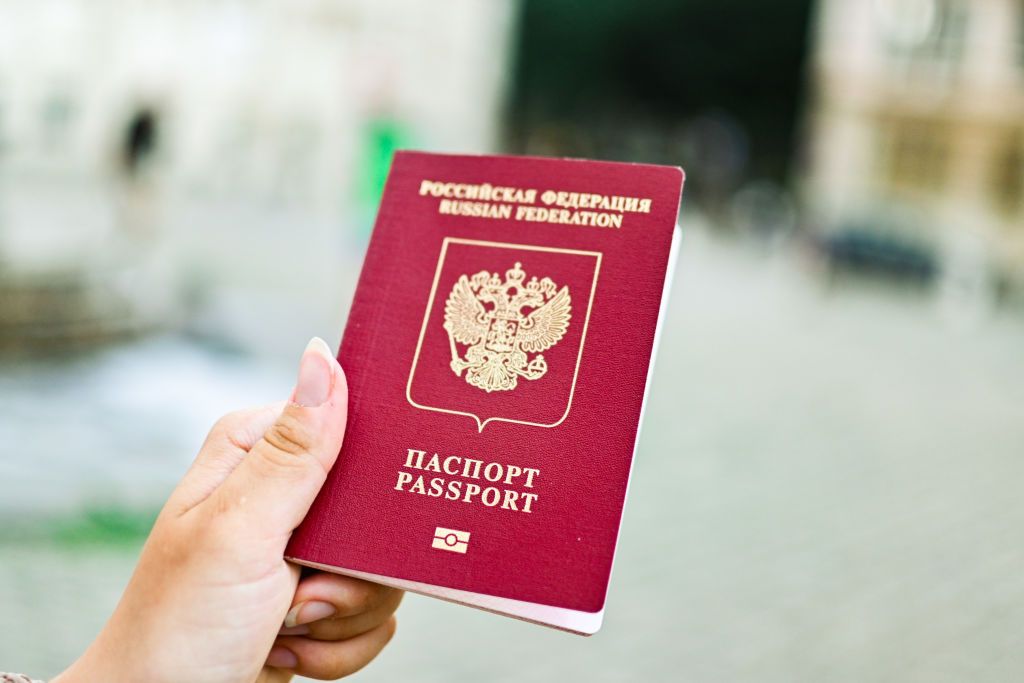
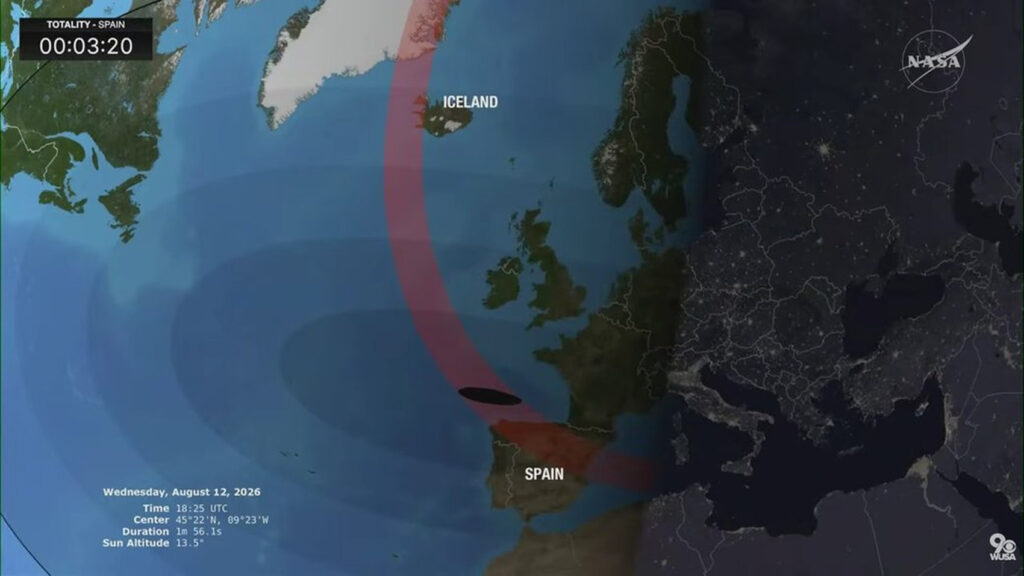
On the evening of 12 August 2026, NASA displayed a map on which Crimea was marked as Russian. It happened during the live broadcast of a total solar eclipse: on the graphic, the peninsula was separated from mainland Ukraine by a border line and presented as part of Russia.
Crimea is a Ukrainian region that Russia occupied after its illegal annexation in 2014. Ukraine and the overwhelming majority of the world's states do not recognize that annexation, and no cartographic error changes the peninsula's status under international law. Each uncorrected map treats as ordinary what international law still calls an illegal occupation.
What happened during the broadcast
The US agency streamed the total eclipse, whose path crossed Greenland, Iceland, and Spain, live to a global audience. The error appeared on one of the visibility maps NASA showed during the broadcast: on it, Russia's border was drawn along the land boundary between mainland Ukraine and the peninsula, creating the impression that Crimea belongs to Russia.
In December 2024, FIFA eventually apologized for a map it displayed during the qualifying draw for the 2026 World Cup that left occupied Crimea outside Ukraine's borders. The graphic was meant to show pairs of teams that cannot be drawn against each other for geopolitical reasons, among them Spain and Gibraltar, Kosovo and Serbia, and Ukraine and Belarus. It marked out Ukraine but drew the country without the peninsula. Ukraine's Foreign Ministry spokesman Heorhii Tykhyi objected, Kyiv called the omission an unacceptable error, and football's world governing body pulled the image.
On 24 September 2024, the British broadcaster Sky News published an investigation into a scheme for supplying sanctioned goods to Russia through third countries, Georgia among them. The report was accompanied by three maps of vehicle-transport routes into Russia, on each of which Crimea was marked as Russian territory, Detector Media reports. The maps have since been edited, and Crimea is now marked as part of Ukraine.
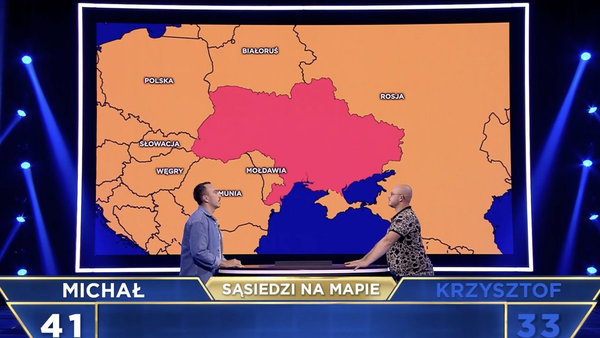
The Polish broadcaster TVN showed a map of Ukraine on which occupied Crimea was marked in a separate color during the entertainment show The Floor. The episode aired on Polish television, and the broadcaster published its video on its website in 2025.
Map of Ukraine without Crimea aired on Polish TV channel TVN during The Floor. Photo: Screenshot from the TVN website
Explaining the annexation, Putin spoke not of the military but of sacred things. In his December 2014 address to the Federal Assembly, he called Crimea a place of "enormous civilizational and sacral significance," comparing the peninsula to the Temple Mount in Jerusalem. Europe rejected that mythology: just ten days after the sham referendum, the UN General Assembly passed Resolution 68/262 by a vote of 100 to 11 and declared the annexation illegal.
Putin arrived in annexed Sevastopol, where he took part in a ceremony marking the launch of the Balaklava Thermal Power Plant. 18 March 2019. Photo: TASS
But behind Moscow's "spiritual" rhetoric lay a different purpose for Crimea. Sevastopol, its airfields, and its logistics turned the peninsula into a springboard for the 2022 invasion, and it is largely for this reason that Ukraine's forces are now focused on striking Crimea. Robert "Madyar" Brovdi, commander of the Unmanned Systems Forces on 10 August said that the strikes are the first phase of a campaign meant to render the peninsula unusable for Russian troops.
"Crimea is one of the key conceptual pillars on the path to ending the war," Madyar told the Associated Press.
Ukrainian-language American broadcasting is coming back after more than a year of silence. Voice of America (VOA) is restoring service and returning part of its Ukrainian department staff to work, the outlet's head, Ruslan Petrychka, announces.
The return revives an American voice countering Russian propaganda in Ukraine at a moment when Russia is escalating both its strikes and its disinformation.
Petrychka called the decision very important, especially now that Russia cynically shells Kyiv and other Ukrainian cities daily, kills civilians, and continues large-scale propaganda campaigns against Ukraine.
"My colleagues are already preparing to resume broadcasts next week. I hope that even more employees of our service will return to work soon," he added.
Broadcasts resume next week
Petrychka said the service is already preparing to return to the air. His colleagues are getting ready to resume broadcasts next week, and he said he hoped more of the service's staff would return to work soon.
The Ukrainian service had gone dark along with the rest of VOA. Its staff, like the broadcaster's employees generally, were placed on administrative leave in May 2025, which suspended its broadcasting.
The shutdown followed a Trump order
The silence began with a White House decision. In March 2025, US President Donald Trump signed an executive order aimed at cutting the US Agency for Global Media (USAGM), the parent company of VOA, Radio Free Europe/Radio Liberty, and other US-funded international broadcasters, EP reported at the time. USAGM funding was to be cut to a minimum, and VOA employees were sent on leave.
Representatives of these organizations sued to challenge the decision.
A court forced the restoration
The revival came through the courts, not a change of heart. In March 2026, US federal judge Royce Lamberth ordered the Trump administration to restore VOA's work, after much of the broadcaster had effectively been shut down a year earlier, CBS News reported.
The Ukrainian service's return is one piece of that court-ordered restoration finally taking effect.
Polish prosecutors have identified the cruise missile that crashed in eastern Poland during Russia's mass overnight attack on Ukraine yesterday, according to Ukrinform. Investigators traced the weapon to a recent Russian production run and dated its manufacture, with a Ukrainian expert helping confirm the find.
Russia's air war on Ukraine keeps spilling beyond the front, with its drones and aircraft regularly breaching allied airspace along NATO's eastern edge and exposing how hard the bloc finds it to respond.
Prosecutors trace the missile to a Moscow-area plant
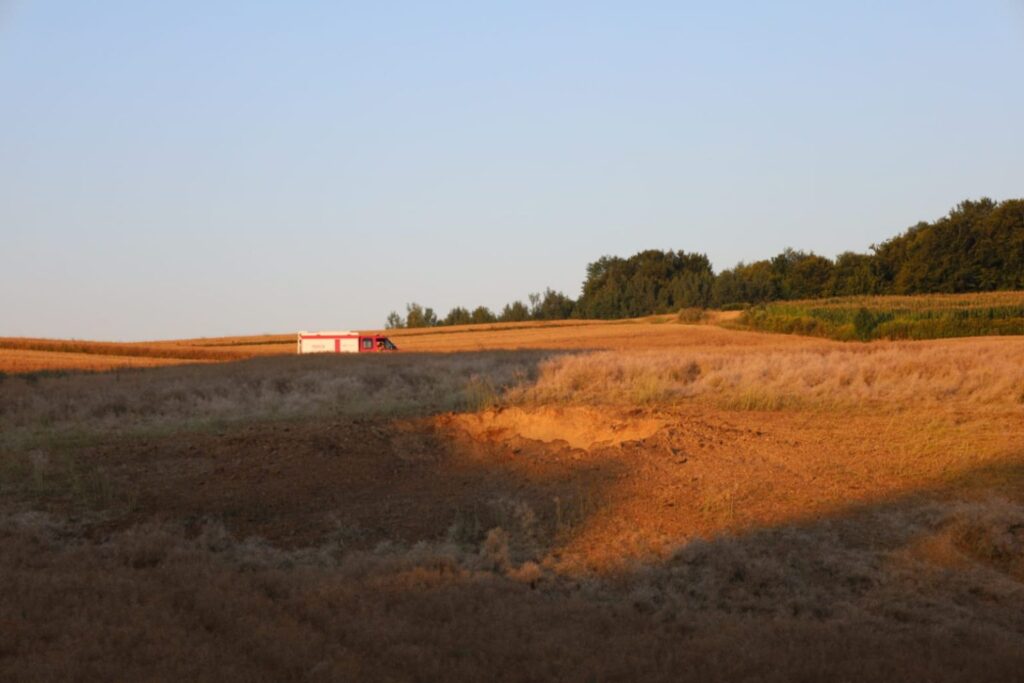
Marcin Kozak, spokesman for the District Prosecutor's Office in Lublin, spoke at a media briefing on Friday, a Ukrinform correspondent reported on 31 July. He said the fallen weapon was a Russian Kh-101 cruise missile. Investigators reached that conclusion after examining the impact site in Lublin Voivodeship and the fragments recovered there. The same work let them date the weapon's manufacture and trace where in Russia it was built.
"Preliminary work examining the site and the traces found — that is, elements of the aerial object — allows us to state unequivocally what object we are dealing with," Kozak said. "This is a Kh-101 missile, manufactured in the second quarter of 2026 at one of the enterprises in Moscow Oblast."
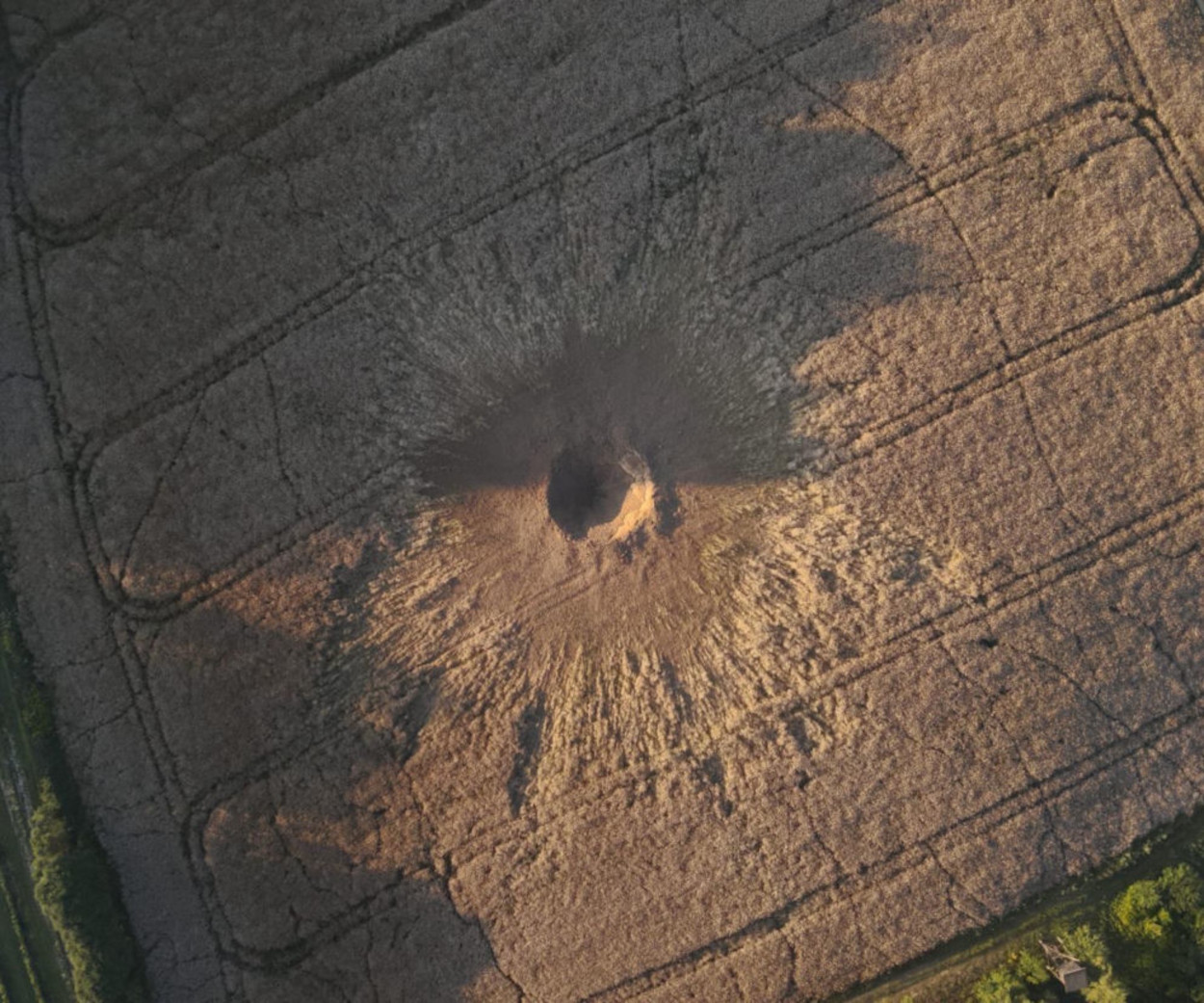
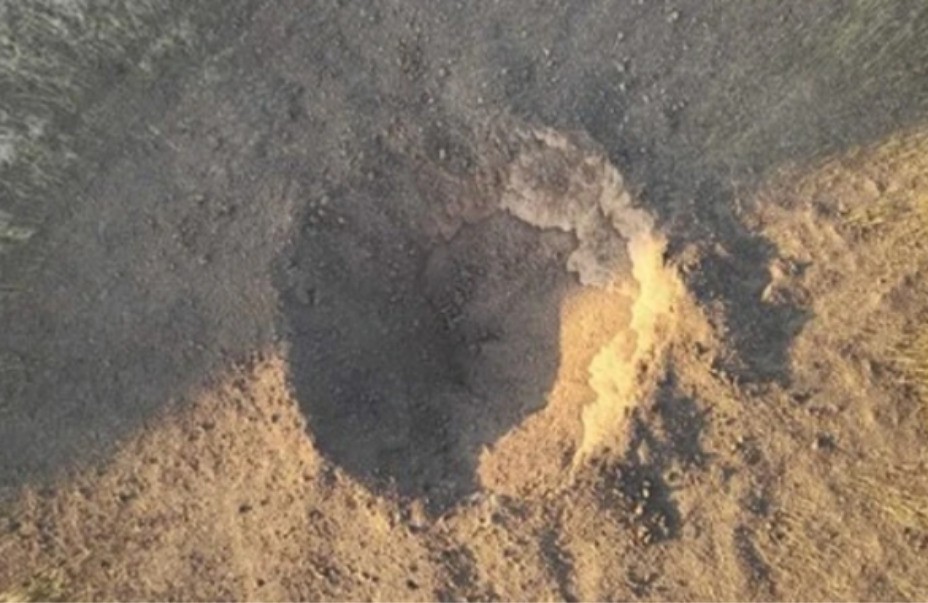
Crater left by a Russian Kh-101 cruise missile in a field in Poland, 30 July 2026. Photo: Radio ESKA
That places the weapon's origin at a plant in the Moscow area, the region ringing the Russian capital. A Ukrainian expert arrived in Poland yesterday evening and joined the identification.
Explore further
Warsaw confirms a Russian Kh-101 cruise missile overshot Ukraine and hit a field in Poland
How the missile crossed into Poland
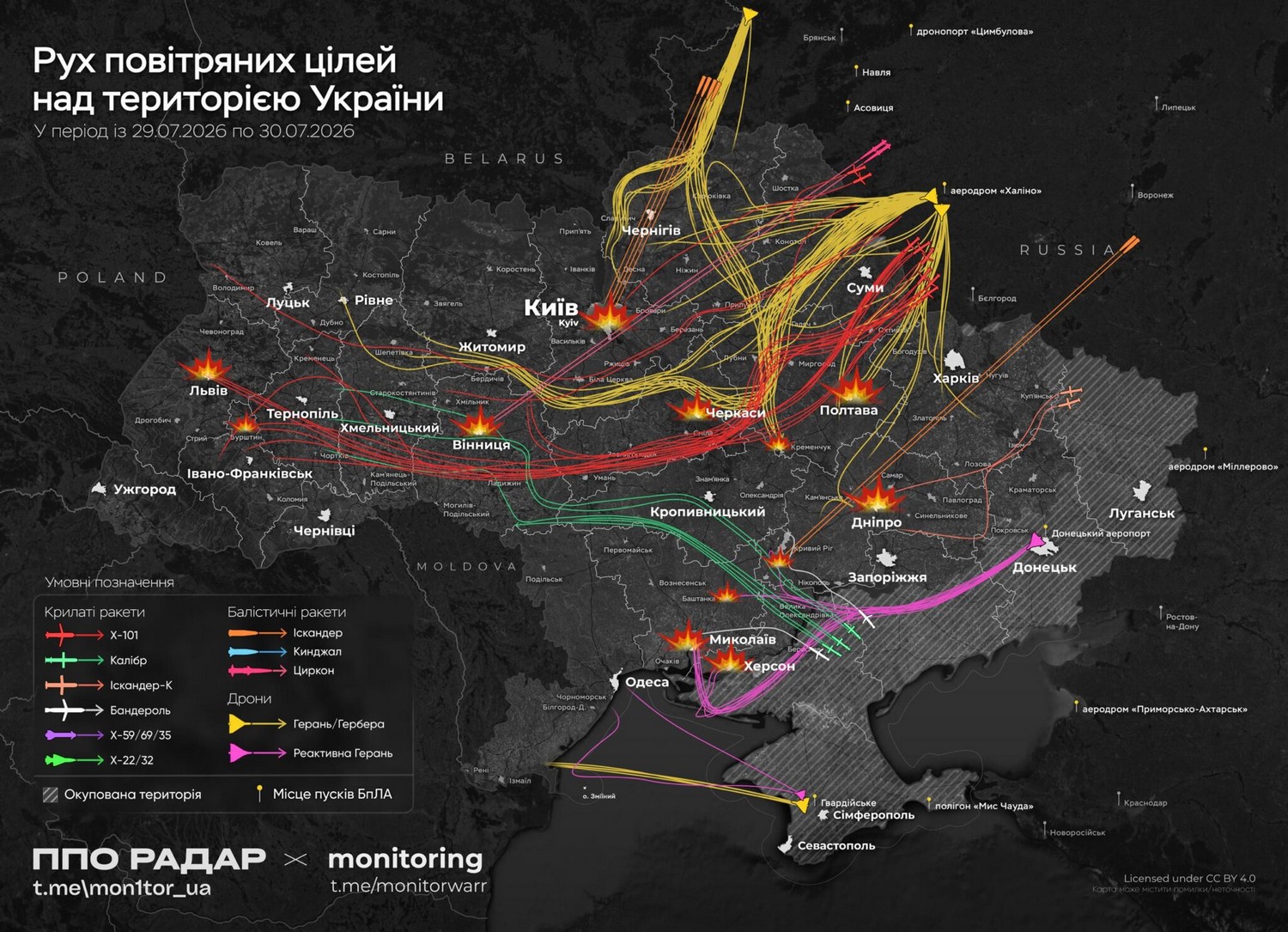
Yesterday, Polish Prime Minister Donald Tusk confirmed that a Kh-101 had crossed into Polish airspace during the overnight barrage. It came down about 50 kilometers from Lublin, leaving behind a crater where its warhead exploded. Poland put its air defenses on alert and scrambled military aircraft as Russia's missiles neared the border. Air raid sirens sounded in Lublin around 03:50 local time, and crews later found the crater and scattered debris around 95 km into Poland.
Routes of Russian missiles and drones during the attack on Ukraine, one track crossing into Poland, 30 July 2026. Map: PPO RADAR / monitor_ua
The Russian missile either strayed into Poland or was deliberately directed there during Russia's mass attack on Ukraine overnight on 30 July. Russia sent missiles and drones across the country, and several areas reported hits and fires. Its strikes hit Lviv, Kyiv, and Dnipropetrovsk Oblast, where the barrage also killed civilians in central Ukraine.
After the missile fell, two disinformation campaigns spread through Poland's information space, one aimed at Ukraine and the other at the Polish government.
Tusk also signaled that Warsaw would soon weigh sending Ukraine more missiles for its Patriot air defense systems.
On April 24, Brazil’s competition authority, the Administrative Council for Economic Defense (CADE) announced it was opening an investigation to assess whether Google’s use of news content amounted to unfair competition practices against the Brazilian press. The announcement was welcomed by civil society organizations that have tried to push regulation to limit the reckless power of Big Tech for years. Ajor, Brazil’s Digital News Association, said that “a balanced relationship between digital platforms and journalism organizations is fundamental to the flourishing of journalism committed to the public interest. By ensuring a fair competitive environment, Cade directly advances that goal.”
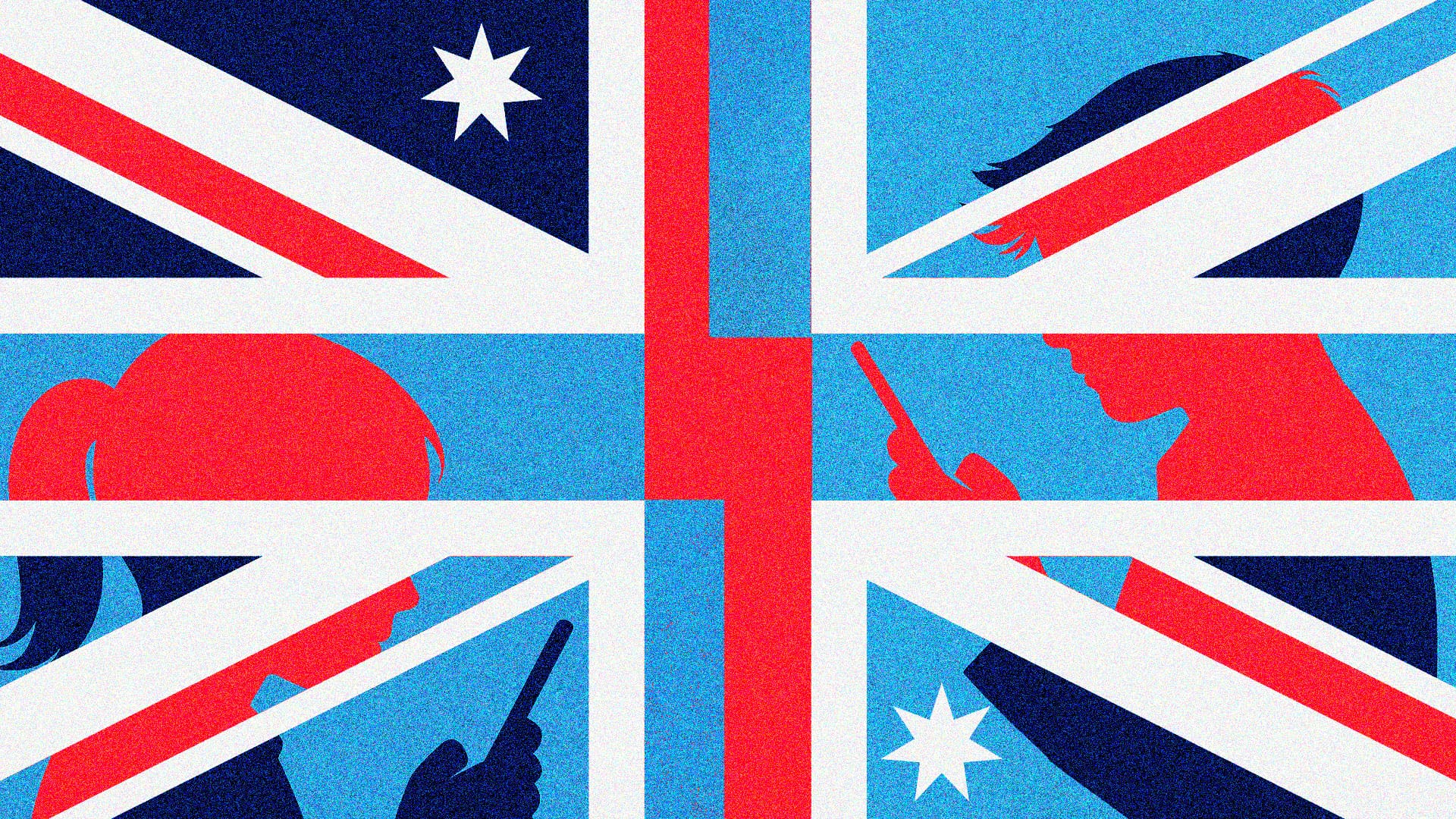
In spirit and intent, CADE’s investigation into Google is similar to legislation in Australia that recognized that value is being extracted from news publishers without proportionate recompense. In Brazil, the case has been debated since 2019, but the adoption of AI Overviews helped alter the perspective of Brazilian judges. The overviews are artificially generated summaries that synthesize information from several sources and appear at the top of Google Search results. They “raise potentially more concerns,” ruled Judge Camila Cabral Pires Alves, “as they may more profoundly alter the economic function of the interface and expand the ability to retain attention within the platform's own environment.”
CADE will now investigate whether Google should be sanctioned for “alleged abusive exploitation of a dominant position, in light of the technological evolution of the conduct.” While there is perhaps a greater global appetite to regulate the impacts of AI – even the Trump administration has recently acknowledged that some oversight may be necessary – the CADE judges have been under considerable pressure from Big Tech executives to stop investigations into how their control of the market harms Brazilian businesses.
For those of us who have reported on Big Tech, this aggressive lobbying is not surprising. Companies like Google, Meta, Twitter, TikTok, Amazon, and Microsoft have long attempted to interfere in any decision or legislation that can harm their interests in Latin America. According to a joint investigation by journalists across 13 countries, Big Tech lobbyists got away with convincing legislators in Colombia to weaken a rule meant to protect children’s mental health and prevent enforcement of privacy regulations in Ecuador. It took a team of over 40 journalists from 13 countries to uncover this while reporting on the ‘Big Tech Lobby’ in the continent and across the world.
Threats by the U.S. government to retaliate against any country or international entity that sought to regulate Big Tech added another layer to an already complicated and uneven relationship with Silicon Valley. “Digital Taxes, Digital Services Legislation, and Digital Markets Regulations are all designed to harm, or discriminate against, American Technology,” wrote Donald Trump on social media. “Show respect to America and our amazing Tech Companies or consider the consequences!” During the past year, Trump’s envoys have forced dozens of governments around the world to dilute or even shelve regulation in exchange for lifting tariffs.
In “Big Tech’s Invisible Hands,” which I coordinated alongside Maria Teresa Ronderos, from CLIP (Centro Latinoamericano de Investigación Periodistica), journalists mapped a total of 75 executives that were part of “public policy” or “government relations” teams in Brazil. Tech companies utilized a “revolving door” in which public sector employees could go straight into highly paid jobs leveraging their contacts and influence. Doors opened more easily. Invitations to hangouts and events were more likely to be accepted.
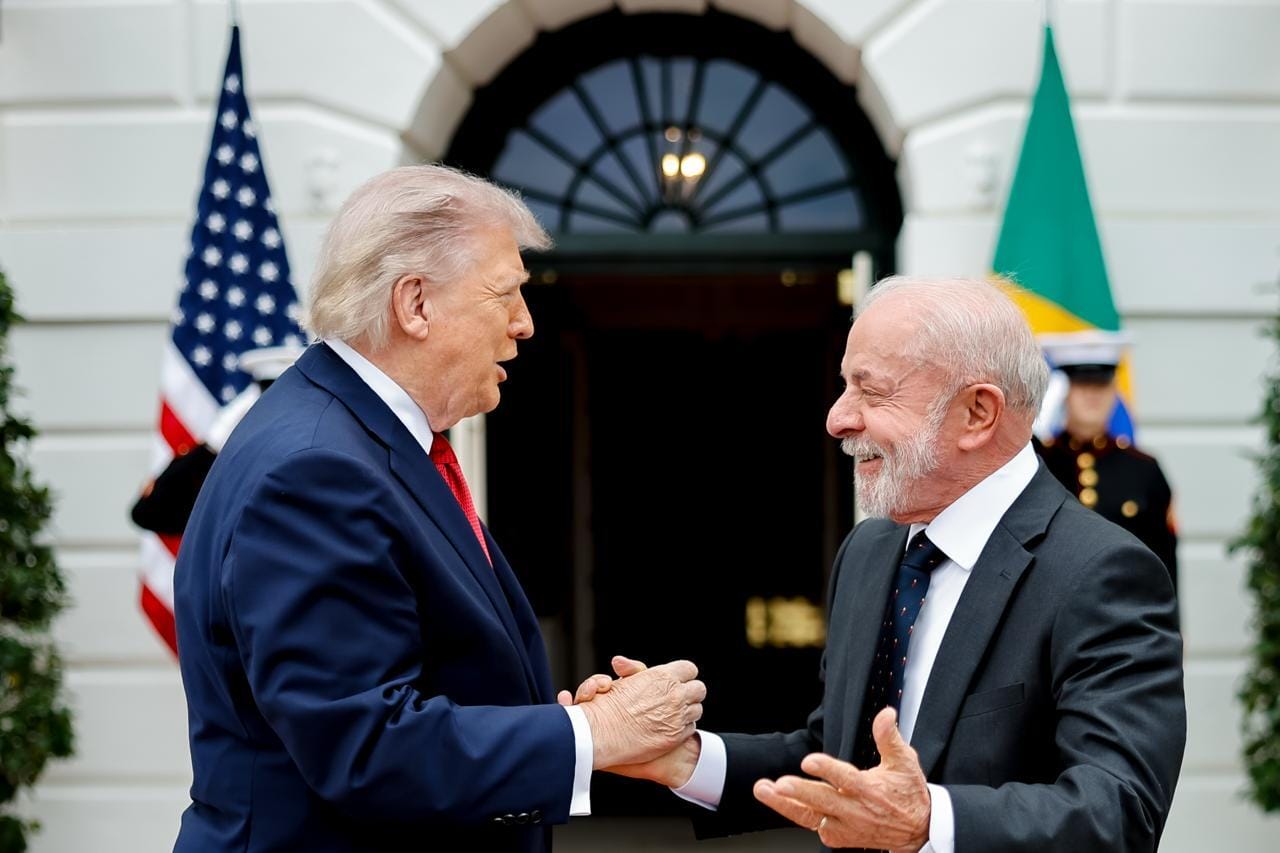
Brazilian President Luiz Inacio Lula da Silva meets with U.S. President Donald Trump at the White House on May 7, 2026. Brazilian Government / Ricardo Stuckert / Handout/Anadolu via Getty Images.
Lobbying in Brazil is dialed up to eleven. The country has 163 million internet users, with over 150 million on WhatsApp, and over 120 million on YouTube, Instagram and Facebook. With AI, Brazil is a similarly large, influential market. Portuguese is the sixth most widely-spoken language in the world, with 70% of speakers based in Brazil. Which means that, if an LLM has been trained in this language, it probably used content created by millions of Brazilians going about their business of making friends, debating politics and football online. It’s not just about journalists; we are all unpaid labor for Big Tech.
In the words of Arthur Lira, the Speaker in Brazil’s Congress who filed a criminal complaint against Big Tech executives in 2023, companies adopted a variety of tactics “to shut down democratic debate and intimidate lawmakers” and defeat any attempt at using legislation to force accountability. Google, he said, used its search homepage, used by over 85% of Brazilians, to spread fear that proposed laws would “make the internet worse” or “make it harder to know what is true or false on the internet.” A report by the Federal University of Rio de Janeiro found that Google invested in ads on its own platform so extensively that it tweaked the search, prominently featuring the word “censorship” in connection to the Brazilian bill. Google also hired Michael Temer, a lawyer and former President of Brazil, to influence lawmakers and Supreme Court Justices. Of course, it was not Google alone. Meta executives, for instance, even argued that proposed legislation in Brazil could lead to the Bible being censored.
But Brazilian lawmakers, the Supreme Court, and civil society have persisted. On August 28, 2025, the “Felca Law” was approved, after a video by the influencer Felca denounced the exploitation and exposure of children on social media. The law establishes that digital platforms must take measures like verifying user age, implementing parental controls, and preventing children's exposure to adult content, gambling, and pornography. They must create reporting channels and may face fines of up to 10% of their annual revenue in Brazil.
Brazil’s president Luiz Inácio Lula da Silva and Donald Trump have had a testy relationship, in part because of Lula’s criticism of Big Tech. In February, at the AI Impact Summit in New Delhi, Lula called for global governance of AI, warning: “When few control the algorithms, it is not innovation, but domination. Regulating the so-called Big Tech companies is linked to the imperative of safeguarding human rights in the digital sphere, promoting information integrity, and protecting our countries’ creative industries.”
By sticking to his guns, Lula may now be seeing the tide turn. He was in the White House on May 7, and though neither he nor Trump took questions, both appeared encouraged by the meeting. “Very dynamic,” was how Trump described Lula, while Lula said he was “very, very satisfied” with how the talks went. With a general election in Brazil approaching in October, Lula will be sensitive to how the White House, as it has done in other elections, and Big Tech might offer vocal support for right wing candidates.
But his willingness to stand up to Big Tech is popular with voters. A recent poll found that 78% of Brazilians want to see tech companies being held responsible for the content they publish. Another poll found that 55% of Brazilians defend regulating Big Tech, with 43.9% against it.
And as scams, fake news, and AI slop dominate ever larger swathes of all our digital space, in Brazil, as in much of the rest of the world, the entire experience of the internet is becoming more unappealing. Big Tech, with the assistance of the U.S. government, may be succeeding in slowing down the pace of regulation and watering down the content of that regulation, but in the long run its victories might be pyrrhic. People have had enough and their governments might be forced to listen.
A coup is underway in Mali, though it has not brought down the governing junta just yet. The country’s military leader, General Assimi Goïta has, after days in hiding, appeared in public to claim, unconvincingly, that the “situation is under control.” But rebel forces — an alliance of Al-Qaeda affiliates and Tuareg separatists — have taken over provincial cities and are calling for a blockade of the capital Bamako. Mali’s military junta hangs on by a thread, in a familiar regional story of violence, civilian suffering and international intrigue.
On April 25, coordinated attacks across Mali exposed the junta’s fragile hold over the country. Jamaat Nusrat al-Islam wal-Muslimin (JNIM), the al-Qaeda affiliate that has driven insurgency across the region for over a decade, joined forces for the first time with Tuareg separatist groups — who have been fighting the central government for even longer — to simultaneously strike cities hundreds of miles apart, including the capital Bamako, Gao, Kidal, Sévaré, and the garrison town of Kati. A suicide car bomber drove into the residence of defence minister General Sadio Camara, killing him along with his wife, two grandchildren, and several civilians. Camara was one of the most influential figures in Mali's ruling junta and had been widely seen as a possible future leader of the country. He was also the key architect of Mali's military alliance with Russia. Mali, Burkina Faso and Niger, which together form the Alliance of Sahel States (AES), have all in recent years realigned away from France, the former colonial power in the region, and towards Russia.
Russian mercenaries, in the form of the Wagner Group and more recently the Africa Corps, have backed military juntas in the Sahel, after coups in Mali, Burkina Faso and Niger led to the withdrawal of French troops from France’s former colonies. But during these latest rebel strikes, it was Russian fighters that were chased out of the northern city of Kidal to the sound of jeers. Africa Corps, the Kremlin-controlled paramilitary group, described the insurgent attacks as a "coup attempt" backed by "Western intelligence services." RT amplified these claims, accusing France and the West of orchestrating the violence, even as it claimed Russian fighters successfully repelled rebels. In 2024, Ukraine’s military agency said it had provided information to help Tuareg rebels ambush and rout a Wagner convoy, killing dozens of Russian mercenaries. Both Mali and Niger have cut diplomatic ties with Kyiv. Burkina Faso has described Kyiv as a destabilizing force in the region, making the Sahel effectively a front in Russia’s war with Ukraine.
The Kremlin’s combination of misinformation and mercenaries helped exploit growing anti-Western sentiments in the Sahel to give Russia a propaganda win in the region. Former colonial powers such as France didn’t help themselves, as can be seen even now in Madagascar, the latest nation to expel a French diplomat and accuse Paris of fomenting unrest. But the success of Russian propaganda hasn’t been matched on the ground. As Mali struggles to contain a rebel alliance that has fresh impetus and energy, Moscow’s control is weakening and the effectiveness of its military support is under question. Already, with Russian weapons in short supply because of war with Ukraine, it is China that the Malian junta turns to for arms. China’s strategic efforts in the Sahel have been similar to its efforts in the rest of the African continent – a focus on securing infrastructure contracts as part of the Belt and Road Initiative and securing access to mineral resources. But rebel attacks in the Sahel are bad for Chinese business. In February, the Chinese embassy in Niamey, the capital of Niger, warned Chinese companies to take their workers out of the firing line as rebels increasingly targeted Chinese infrastructure projects, including a $4.5 billion oil pipeline from Niger to Benin.
In 2024, the United States was forced to leave neighboring Niger after a coup, to withdraw from a $100 million base. It seemed the U.S. was losing ground to both Russia and China in the Sahel. Earlier this year, though, as security concerns in the Sahel escalated sharply, the U.S. adjusted its approach, choosing to deal pragmatically with military juntas. By late February, the U.S. lifted sanctions on top Malian officials, including General Camara, the recently slain defence minister. It may see closer cooperation with Sahel countries as essential to its security interests and a way to undercut Chinese access to Sahelian resources.
The three Sahel states, Mali, Burkina Faso and Niger, have turned away from France and Europe and towards Russia, while increasingly flirting with the U.S. and reliant on Chinese weapons. The result has been disaster. All three Sahel states are ranked in the top 5 for countries impacted by terrorism. And the humanitarian toll has been severe. Millions of people face internal displacement across the region and cuts in aid programmes mean many millions, especially children, also face acute hunger. But, as the great powers circle the region, jockeying for geopolitical gain, the talk remains about the logistics of propping up failing juntas, providing military solutions to human crises, and maintaining power rather than confronting problems.
Mali, Burkina Faso and Niger – all led by military authorities that came to power in a coup – have also isolated themselves from the rest of their neighbors by withdrawing from the West African regional bloc, Ecowas. Meanwhile, they sell their model as an alternative to Western-style democracy, a narrative that Russian propaganda networks have been all too eager to promote. But the strength of the insurgency against Mali’s government, and Russia’s apparent inability to protect it, sends a different message to the rest of the African continent.
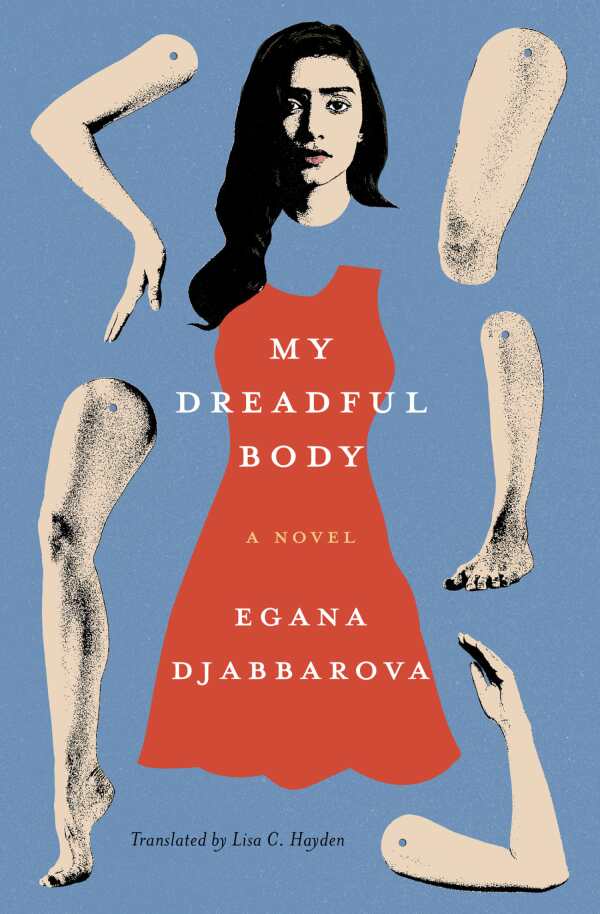
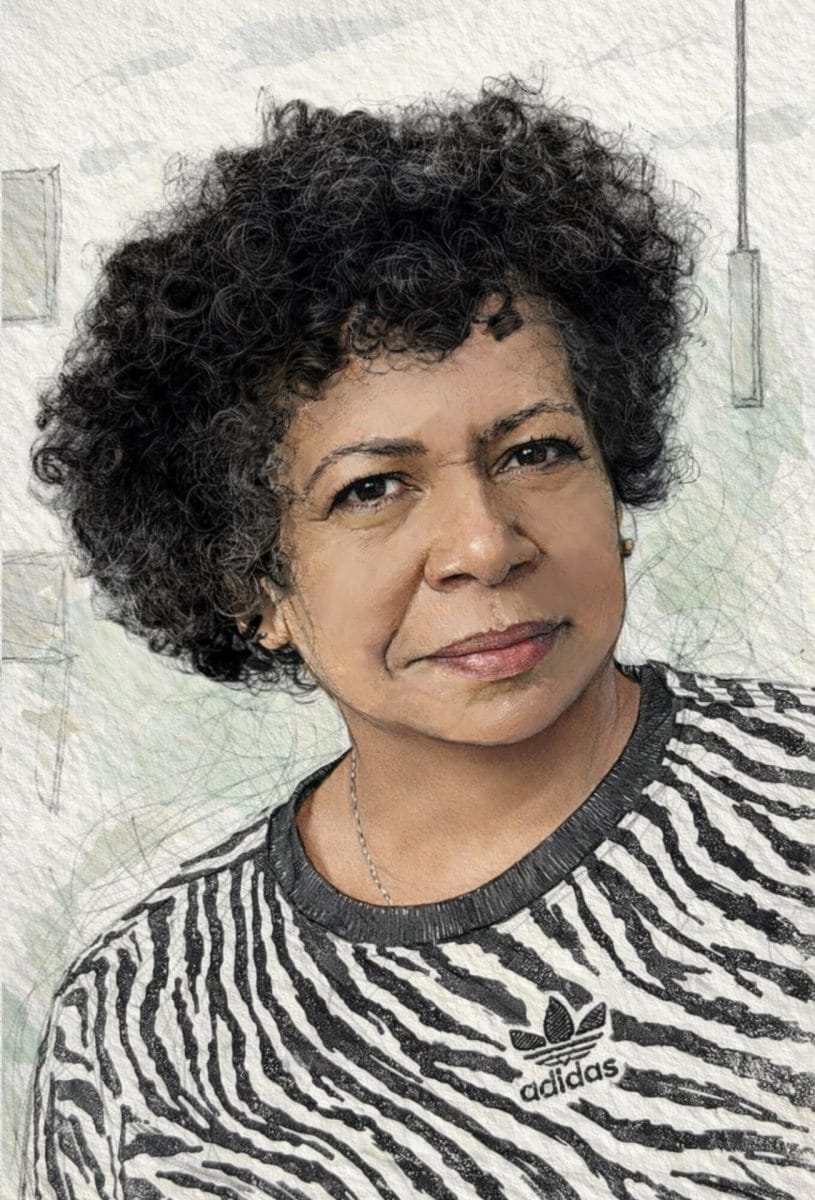
On the night of January 16, 2024, Egana Djabbarova was awoken by her wife and told that she needed to leave the country immediately. Djabbarova, her wife said, had been denounced by pro-war activists and framed as an enemy of the country. She had recently published her novel, “My Dreadful Body,” with a small, indie press that had been praised by mainstream critics, unexpectedly propelling her into the public eye. One of the book's central themes is surveillance: growing up in a community with strict behavioural codes, the protagonist's every move is under scrutiny.
In a dark echo of her work, Djabbarova was now under online surveillance herself. “I was just the perfect enemy,” she tells me, “because I’m queer, I’m not Slavic, I worked on decolonial and feminist projects… So boom, it happened.”
She is speaking to me from Hamburg, where she now lives. Djabbarova is part of the so-called fifth wave of writers exiled from Russia, alongside Maria Stepanova, Lyudmila Ulitskaya, and Maxim Osipov to name a few. Her upbeat tone during our call gives little indication of the arduous journey she has endured since fleeing Russia. Upon receiving a humanitarian visa from Germany, she spent months in a refugee camp. She lived, she says, “in a container house, literally a shipping container. You feel like you're not a subject, not a human being.”
More permanent accommodation has provided a degree of safety and stability, but a sense of precariousness lingers. She describes her position as an exile as “strange” — on the one hand she has been welcomed into Germany’s cultural elite in winning the Hamburger Literaturpreis; on the other, she feels like a “ghost,” unable to express herself in German and often bewildered by the unfamiliarity of everyday tasks in a new country, and in a new city which, she tells me jokingly, is quaint and polite like the well-behaved boy next door.
But there’s a deeper, historical layer to Djabbarova’s story of exile. Her father was a refugee from the region of Nagorno-Karabakh, while her mother was forced out of her family home. “Homelessness and exile — this is my heritage,” she says. Being othered became a common theme of Djabbarova’s childhood, as a child of Azeri parents living in Yekaterinburg. “In Russia you are constantly reminded that you're not Russian,” she says. “Then during the summer you visit your relatives in Azerbaijan and they laugh because you cannot speak Azerbaijani properly.”
This sense of double estrangement is mirrored in “My Dreadful Body”(published in Russian in 2023 and recently translated into English by Lisa Hayden). At only a touch over 100 pages, it is a slim but powerful account of the pressures on one woman growing up among the strict codes of an Azerbaijani family living in Russia. A sense of surveillance and conditional belonging defines the narrator’s upbringing: “In the world where I grew up,” she writes, “gazes penetrated every little corner. The evil eye, the neighbors’ eyes, the relatives’ eyes, the random pedestrian’s eyes, the unscrupulous men’s eyes, the women’s unhappy eyes. Life in the community was reminiscent of a reality show with constant video surveillance: no action, word, or undertaking went unnoticed.”
The story is based on Djabbarova’s own life. “Maybe 70-80% of this story is absolutely true”, she confirms. The narrator is named Egana, she grows up in an Azerbaijani family in Russia, too Russian for the family, not Russian enough for her friends at school. She also, like Djabbarova, suffers from a debilitating autoimmune disorder that is eventually diagnosed as dystonia, a neurological disorder that causes involuntary muscle contractions. During one episode, she describes her body as resembling “willow branches gone mad from a strong wind” — a potent image of struggle against external forces. Djabbarova describes the book as a way to reclaim her body through language. “I was trying to tell this story in a poetic way. I wanted to change my body into poetry.”
Each chapter of “My Dreadful Body”begins with a different body part (“Eyebrows,” “Eyes,” “Hair” and so on), like the poetic blazons spun by Renaissance poets. Where those poems encouraged an idealized, sensationalized reading of each body part, Djabbarova’s chapters are more sober explorations of the physical limits — and personal and cultural stories — these body parts contain.
In one of many poignant scenes, the narrator’s head is shaved in preparation for a procedure. She cries on seeing her “shorn scalp,” but the sadness is not aesthetic, it’s ancestral; the act marks a symbolic rupture with her lineage. “My past,” she writes, “the past of all the women in my family, the memory of my ancestors, the history of a single body — all that now lay on the cold floor.” After this scene, her grandmother’s dictum that only long hair was considered beautiful, rings even more sharply.
Illness then emerges as another form of exile, from one’s sense of self, from what’s perceived as “normal” in society, from the culture and community one belongs to. “They do not see you as a subject, as a human being, and they do not recognize your existence… I realized if I wanted to be seen as a subject, I needed to do it myself.” Djabbarova is talking about the plight to be believed about her symptoms here, but she could easily be talking about the often dehumanizing experience of exile. In both instances there is something fundamental under question, or as Djabbarova puts it, “You’re trying to prove that you have the right of being. You’re trying not to be erased.”
We often talk about exile in the context of loss, but how might exile liberate? Paradoxically, Djabbarova tells me, her diagnosis became a form of liberation. “I always felt I had so many expectations on me as a girl, as a woman, so when I was finally diagnosed it was a liberation because my parents realized I would never be this type of girl.” Exile breeds a particular creative liberation, too, evidenced by the fact Djabbrova wrote the novel from Taiwan where she was briefly teaching Russian. “Here I had enough distance from my own life and my own experience,” she says. “Maybe it’s easier to write about your story being on an island in the Pacific Ocean.”
Writing is arguably the real heroine of Djabbarova's novel. For the narrator Egana, it is a place free from surveillance and a source of protection, “like an invisible amulet.” Poetry, she told me “was the only safe space for me because nobody was asking anything of me. It's the only place where I don't feel judged. I don’t feel ashamed. I don’t feel questioned.”
The chapter “Hands” opens: “The most important parts of a woman’s body were her hands: they prepared food, rocked children, did laundry, ironed men’s shirts, sewed clothes, swept, washed the floor, and dusted.… Any woman in our family knew that her hands were not given to her for writing.” To use her hands, then, to write becomes both a symbolic and quite literal form of resistance against such gendered codes.
Notably, Djabbarova is not alone in invoking the body as a space to explore the upheavals of exile. In Maria Stepanova’s autofictional work “The Disappearing Act” — recently translated into English by Sasha Dugdale — the narrator attempts to purge herself by volunteering to be cut in half as part of a circus trick. Djabbarova’s approach to reclaim identity and agency through the body is less literal, and more personal, but through this specificity she has landed somewhere indisputably universal.
“I realized the only way I can write this novel is through my body,” she says. “Because the only way I can rehabilitate my being, my agency, my subjectivity is through my body. And that's why I wanted every reader to feel my body… It's really important for all of us not to forget that this right of being is basic. It's not given. It's something you have from birth."
At the end of our conversation, Djabbarova (who has been speaking in English) struggles to recall a word and jokes that learning German is slowly pushing her English out. “Certain words I only remember in German!” she laughs. Is this the beginnings of a kind of homemaking for Djabbarova, a sign that the seeds she has scattered in her new country are taking root? Like her protagonist, who finds solace and safety in words, it seems that Djabbarova’s most trusted tool for survival, for managing the condition of exile, is language.
The Age of Exile
This story is part of our Age of Exile series, which explores how displacement has evolved from historical punishment into a defining condition of our time—one that reveals profound transformations in how we construct identity, maintain community, and exercise power across borders. In an era where digital connection enables presence without physical proximity, exile has become more complex, more global, and more central to understanding our world. Explore The Age of Exile series
A funny thing happened on the day OpenAI announced it was shutting down Sora, its video generation app: Iran went all in on synthetic propaganda and very quickly started winning the global meme war. The timing is a coincidence, no doubt, but it is the kind of coincidence that illuminates.
Watching the explosive virality of the clips offers a powerful lesson in asymmetric media operations. They deploy cultural sophistication, an understanding of online communities and the enormously powerful creation tools made available by American tech companies, tools that give everyone on the internet access to a personal reality distortion field — drones, but for your feed.
On Wednesday, as Donald Trump was trying desperately to talk down the oil markets with hints of a deal, a stream of videos, carefully calibrated for U.S., regional and third country audiences rolled out on X via embassy accounts, Russia Today, and disaffected Maga influencers. The clips, by broad social media consensus, are good. Some lean heavily on the extremely online grammar of the U.S. right. Some remix Hollywood characters and likenesses in exactly the way that OpenAI’s now nixed billion-dollar deal with Disney was supposed to sanction. Others lean more heavily into Islamic iconography, featuring Donald Trump and Benjamin Netanyahu as worshippers of Baal, the foreign demon god who figures in both the Quran and the Hebrew Bible. The Lego movie is an especially rich resource, but so are TikTok formats, and the kind of idealized AI figures beloved of Trump administration meme makers. You can watch a few of them here.
Notably, faked war footage is far from the dominant format. All of these clips foreground and celebrate their own artificiality: some are sentimental, some triumphal, many are full of the gleeful adolescent wit of gamers on discord forums.
Researchers have long been warning that generative tools will undercut the authority of visual evidence, compounding and accelerating the damage created by slower, cruder forms of fakery: photoshop, selective editing, even gaming clips passed off as combat footage. Of course, we are already there, and have been for a while. Russia has been the paramount master of this game, in Ukraine and in its ongoing influence operations around the world. But others have learned quickly. Last year, when India and Pakistan were engaged in a brief aerial battle, social media bullshit overwhelmed and compromised traditional coverage. More recently, Israel’s obliteration of Gaza was accompanied by a sustained and comprehensive blizzard of visually compelling misinformation, propaganda, and official lies.
That continues. On March 28, Israel killed three journalists in a targeted strike in Southern Lebanon, claiming without evidence that one of them, Ali Shoaib, was a member of Hezbollah’s Radwan forces. They later distributed a photograph of him in military fatigues to reinforce the point, but explained to Fox news that in fact, they’d had to photoshop the uniform in because no such picture existed.
Meanwhile, in the Trump administration’s domestic war on immigrants and political opponents, we’ve seen a complete resetting of norms around the tone of official communication and any expectation that it is rooted in fact. Nowhere was that more evident than in the altered footage posted by the White House of the arrest of the prominent Minneapolis activist Nekima Levy Armstrong in January. In the video, shared by the official White House handle, a handcuffed Levy Armstrong is sobbing, her skin visibly darkened. In fact, she had faced arrest calmly.
Questioned by reporters about this blatant falsification, deputy White House communications director Kaelan Dorr responded: "Enforcement of the law will continue. The memes will continue.” Collapsing the distinction between a meme and the factual record with the aid of AI is the final step in this administration's insistence that its preferred narrative simply is reality.
The problem for the White House and its allies is that their choices in tech policy, official communication, and press freedom level the playing field for information war in ways that Tehran’s media strategists understand and they, for all their immersion in online worlds, do not.
Iranian propagandists know that the currency of visual information online has already been completely debased. They’ve dealt with it plenty, and no doubt practiced it themselves in regional battles for narrative dominance. Their insight is that as cheap and easy as it is to create and distribute fakes, returns on the effort of mobilizing what disinformation researchers call “coordinated inauthentic action” are diminishing. They still do it, but it isn’t where the action is.
Sam Altman, Elon Musk and Mark Zuckerberg have, in a very practical sense, wrought this moment in concert with Peter Thiel, Alex Karp, JD Vance and Donald Trump. At their urging, the U.S. has surrendered unrivaled dominance in scarce, expensive information and cultural assets in exchange for a political economy of media that widely distributes cheap, abundant ones.
Tech leaders and conservative politicians have worked consistently for a decade to deprecate the trustworthiness of American journalism and constrain its liberties. They have smeared its practitioners as “enemies of the people”; they have captured the commanding heights of the broadcast and culture industries through crony deals, and they have launched an assault on both press freedom and standards, two assets that once made American news outlets the envy of the world. Needless to say, the economic collapse of traditional media companies fostered by Google’s and Meta’s advertising duopoly only served to deepen the damage. Jeff Bezos’s Washington Post shuttered its Middle East bureaus just days before the war began.
Meanwhile, lying from agency podiums and the Oval Office, makes Karoline Leavitt barely distinguishable from Baghdad Bob, Iraq’s minister of information in 2003 whose surreal, truth-dodging press conferences during the U.S.-led invasion made him a global laughingstock. And the DOGEing of both the nominally independent Voice of America, as well as the state department’s Global Engagement Center leaves the administration with neither broadcast nor digital counter-propaganda assets.
When no one can be trusted with the actual truth, we are left with the AI equivalent of 19th-century editorial cartoons, produced at industrial scale and distributed globally. America has little advantage in that war, particularly when it is at a moral, political and legal nadir.
If anything, Iran, which combines repression with an enormously rich literary culture, film scene and advertising market brings serious capabilities to the fight.
Of course, the ebbing of information power was already under way during the first Trump administration, and during Joe Biden’s term in ways that are indissociable from broader democratic decline. The “trust and safety” architecture adopted by big platform companies was designed — implicitly if not always visibly — to conserve information authority, and ensure that it functioned in broadly pro-democratic ways.
After the disastrous failures of the Rohingya genocide — which rights groups and UN investigators blamed Facebook for facilitating — and the fears surrounding the manipulation of the U.S. electoral environment in 2016, there was a clear threat to the commercial and political health of Twitter, Facebook and YouTube. Tech companies, governments, researchers and human rights experts devised rules and norms for content moderation grounded in existing standards, tools for detecting coordinated inauthentic behavior, and a framework for crisis response.
The community of practitioners and institutions that sprung up to combat the flesh-eating virus attacking the body politic were working with bandaids in the battlefield hospital even before Covid, a coordinated attack from the right, and the second Trump victory hit them, but they succeeded in imposing some limits. That project now lies in ruins.
The Stanford Information Laboratory has been shut down. Trust and Safety teams at Meta and X have been disbanded. The national security arm of the project, centered around the State Department is gone, and private funding for countering misinformation has largely dried up.
Where are the hyperscalers, the AI titans, whose tools are being so effectively deployed, in all of this?
The trust and safety people who do work at OpenAI are dutifully putting out reports every few months. They are detailing how they foiled efforts to use ChatGPT for a Chinese influence campaign aimed at Sanae Takaichi, the Japanese prime minister, and exposing a Russian content mill feeding African newspapers. “Pro-tip for governments,” wrote Head of National Security policy Sasha Baker on LinkedIn of the February report. “Please don’t use our products to spread lies online.”
Governments, in the world of Sam Altman’s “democratic AI” do not include that of the United States. OpenAI has not mentioned a single U.S. ally — let alone the administration itself — in these reports.
OpenAI has hired multiple ex-Clinton, Obama and Biden officials, and in their work a weird, attenuated piece of the old national security approach to information integrity lives on, alongside the project of selling products to the Pentagon. The company’s leaders clearly treat these issues as a complement to messaging around Western AI, or a picayune adjunct to the bigger questions of AI risk, which are handled way up in the organizational stratosphere, as they are at Anthropic.
Perhaps the larger lesson is that you can’t really shut down Sora, or put AI-generated video back in its box. If you choose to prosecute an illegal war of choice after surrendering the hard-won high ground of a robust, democratic information environment, high tech weaponry will not offset the deficit. On the contrary, you will have compounded the risk of both tactical failure and strategic geopolitical defeat. When that happens, and in some ways it already has, those who made this war, and their enablers in Silicon Valley, will have only themselves to blame.
Julia E, an 18-year-old influencer from Germany, was hanging out with her family on the Palm Jumeirah beach when she heard a blast and saw a fireball erupt into the sky. She knew tension was mounting following the U.S.-Israeli attack on Iran the previous day, but she didn’t imagine Dubai would be on the frontline. “I was a little scared,” she says. “Usually you just read about it in the newspapers, you see it online, but when you see it in front of you, it’s a different feeling — like your heart just drops.”
The fear was not an emotion she expressed on Instagram. Julia’s family moved to Dubai from Germany in 2024, tempted by the business potential of an emirate that aggressively marketed itself as the influencer capital of the world — a digital utopia carved out of the desert, with its gleaming skyscrapers and Insta-ready waterfronts. Dubai’s state-backed Creator HQ offers content creators long-term residencies, legal support, networking opportunities, training and an environment geared towards digital entrepreneurship. Influencers need a permit to legally operate in Dubai but taxes are negligible — 5% VAT on taxable income from clients in the UAE over AED 375,000 (about $102,000), and a flat 9% corporate tax on income exceeding AED 1,000,000 (about $272,000). It has attracted over 50,000 content creators to Dubai, which has a population of about 4 million.
With 60,000 followers on TikTok and Instagram, Julia is looking to build her own marketing company in Dubai. In an effort, she says, to comfort her younger brother, she recorded a video shortly after witnessing the explosion. It showed Julia, a palm tree and the glittering night skyline behind her, with the caption: “You live in Dubai, aren’t you scared?” The video cuts to a montage of Mohamed bin Zayed Al Nahyan and other Emirati sheikhs: “No, because I know who protects us.” The short video is set to an AI-generated rendition of the Belgian singer Stromae’s ‘Papaoutai’, a song that laments the loss of a father.
According to Julia, she was the first content creator to post an ‘Are you safe?’-style video, a now viral trend across the Gulf as influencers counter the narrative of a region in turmoil.
“I decided to make that video,” she says, “because I did feel safe. And I wanted to spread some positivity and my perspective that we are still being protected and we still have someone behind us here.” As Iranian drones hit the Gulf, including luxury tourist hotels destinations like Fairmont, The Palm hotel and the Burj Al Arab hotel, there was a wave of schadenfreude online. Some users outside Dubai could not contain their glee that the city’s glossy surface, its influencer-curated image of sunkissed luxury, had been ripped apart. The distress of those who spend their working hours flaunting luxury and throwing shade at the cities they come from, were, it has to be admitted, amusing to many.
But Dubai’s influencers doubled down, as the war spiralled and airports shut down, stressing the city’s safety, walking around in crowded public spaces, praising “the best air defense systems” and the men behind it: a reaction so seemingly choreographed that people questioned whether it was part of a government PR campaign.
On March 3, the UAE’s president and crown prince were conspicuously filmed on a stroll through a Dubai mall, reassuring bewildered shoppers. It was eerily reminiscent of Volodymyr Zelensky’s “The President is here” video from four years ago, when Russia invaded Ukraine. Vogue Arabia, headquartered in the UAE, praised Gulf leaders and wrote about the influencer campaigns and the people’s “unwavering faith in their nation’s leadership and its steadfast commitment to protecting those who call it home.”
As inviting as Dubai is to influencers, they must acquire advertiser permits that can cost up to $4,000 and are told to respect the state and avoid circulating rumors and unverified information or any content that can harm the UAE’s foreign relations or “offend or compromise national unity or social cohesion.” In the wake of Iran’s strikes, the UAE’s Public Prosecution announced that "anyone who shares or republishes content from unknown sources may face legal accountability under the country’s applicable laws, even if they are not the original creator of the content.”
There is a sense of vulnerability among Dubai’s influencers, says Zoe Hurley, associate professor of media at the American University of Sharjah and author of the 2023 book ‘Social Media Influencing in the City of Likes: Dubai and the Postdigital Condition’. “They haven't necessarily been trained professionally. They don't have institutional guardrails protecting them, or any formal buffer zones that might have protected people who are putting themselves out there.” she said. Hurley made a distinction between “influencers who are here on holiday who don't live here and who are followed by, say, people in the UK” and homegrown ones, representing diasporas in Dubai — from South Asia, the Levant and Europe — “who people are turning to because they're the thought leaders in their communities.”
None of the influencers we contacted in Dubai or across the Gulf confirmed ever being prompted or paid to post positive content. The German NTV network, however, reported concerns voiced by German influencers: "I don't know what I'm allowed to say and what I'm not allowed to say," one posted, "We're not allowed to post anything!” said another. These stories and reels have since been deleted.
Julia recorded a second video in response to the backlash she faced.
Julia made another video, responding to the accusations that influencers were essentially providing a PR service for Dubai. “I will tell you exactly how much I got paid,” she says. “Dubai pays me in business… in safety… in connections… with weather.” She adds that, unlike in Dubai, she would never venture outside alone in her native Germany after 8 at night.
This point about Dubai’s safety — leaving things in the car without being scared to be robbed, or walking alone at night — is echoed widely among European expatriates in the Emirates and Saudi Arabia who compare it to the relative anxiety they feel in Europe. Telegram’s CEO, Pavel Durov recently made the same point: “Unfortunately, I had to leave Dubai for Europe a week ago — so I’m not only missing the free fireworks from Iran, but also exposing myself to greater risk. Given Europe’s crime rates, Dubai is statistically safer even with missiles flying.” Elon Musk shared the sentiment, writing that “No country is perfect, but Dubai and UAE broadly are objectively safer and better run than many areas of Europe.” Notorius influencer and ‘manosphere’ icon, Andrew Tate, still facing human trafficking and rape charges in Romania, posted a video of himself dancing on a yacht “as bombs fall.” His brother Tristan Tate chimed in, comparing air attacks in Dubai to stabbings in London.
What these influencers don’t discuss is Dubai’s underbelly, an invisible city occupied by an underpaid migrant workforce, their treatment explained away on the grounds that they make more money in Dubai than they would in the poor countries in South Asia and Africa that they come from. While the influencers enjoy government-sponsored benefits and status, these other migrant workers remain bound under the kafala (sponsorship) system that binds their residency status to their employer. Despite reforms, under the system their status remains uncertain, their earnings precarious, and imprisonment or fines for relatively minor offences is common. There are no golden visas for laborers and maids, never mind darkerreports about human trafficking and sexual and physical abuse.
London-based barrister Caoilfhionn Gallagher described the UAE’s exploitation of migrant workers as a “grubby reality, with rampant human rights abuses.” She said she had “acted for people prosecuted and jailed in the UAE for daring to work with human rights organisations or criticise the authorities,” referring to the mass trial in 2024, when 43 people, among them human rights activists, had been “subjected to enforced disappearance, solitary confinement and incommunicado detention.”
The contrast between the city that influencers show their followers and the city built on the abuse of migrant labor is one that governments across the Gulf want to bury. The UAE’s 2031 vision sees creative industries contributing up to 5% of the country’s GDP.
For decades now, the UAE has been trying to diversify its economy, to pivot away from its reliance on hydrocarbons. It is betting on the digital economy and tourism to be the cornerstones of economic growth.
But for all the bravado on display, rich people and Western influencers are fleeing the Gulf, as war with Iran continues. Influencers unable or unwilling to leave, must keep grinding. Narcissus could not stop staring at his reflection even as he was dying. Will Dubai’s influencers be allowed to look away from their reflections in the city’s famous mirrored skyscrapers?
Hundreds of journalists are forced into exile each year, from every corner of the world. As authoritarianism and censorship rise, reporters are among the first to feel the pressure — pushed out of their homes and separated from the careers, sources and communities they’ve built. The number of journalists forced into exile is rising. In Latin America alone, more than 900 journalists were forced into exile between 2018 and 2024. Almost half of the journalists killed around the world last year were by Israeli forces in Gaza; the tally is close to 300 for the duration of the war. The genocide created impossible conditions for Palestinian journalists, forcing some to flee the Gaza strip entirely.
In a digitized, connected world, exile doesn’t mean silence. Using open source intelligence techniques, encrypted messaging, and data, journalists can report in real time from thousands of miles away, serving communities they can no longer reach in person.
We spoke to four journalists from four countries who have spent the past decade working in exile. Some left gradually, step by step. Others had only hours to abandon their lives. Every year, hundreds more join them — barred from returning home, facing imprisonment or persecution if they do, uncertain when or whether they’ll see their families again.
Still, they keep reporting. These are their stories.
Ekaterina Fomina – Russia
When Ekaterina Fomina was working as a reporter in Moscow, her favorite kind of journalism was old-school shoeleather reporting: traveling to far-flung regions of Russia, knocking on doors, talking to rural families who lived most of their lives offline. “My main tools were my legs and arms,” she said.
In the lead-up to Russia’s invasion of Ukraine, Fomina began to grasp that one day soon, she might have to leave the country. Media outlets across Russia were facing intense pressure. As each day passed, the government implemented new censorship and repression laws. “We knew that if the government labeled us an “undesirable organization”— a criminal label in Russia — we could be arrested,” she said. Every newsroom had some kind of contingency plan in place for leaving, but the plans were vague and abstract. Fomina and her colleagues made sure they had visas ready in their passports for Europe, in case they had to leave quickly. “But we were not ready for a real tragedy.”
Russia launched its full-scale invasion of Ukraine in February 2022, and Fomina went into overdrive, covering the war.
“The polarization, the open war towards another country, made me realize that my position in society was completely different from those of many people around me. It was very difficult for me to accept that my fellow citizens could support such cruelty,” she said. “In the first weeks of the war, seeing this support made me realize that it would be very hard to live in this country.”
Fomina — who was reporting for the independent outlet iStories — understood it would be impossible to cover the war from inside the country without facing prosecution. “The only option was to leave the country and continue covering the war openly.”
It was not immediately obvious how long she would be away for. Her friends and colleagues reassured her that this wouldn’t last forever, but she wasn’t so sure. “Everything was unpredictable, and it was unclear how it would affect our destinies,” she said. She had no illusions that she would ever come back to Russia.
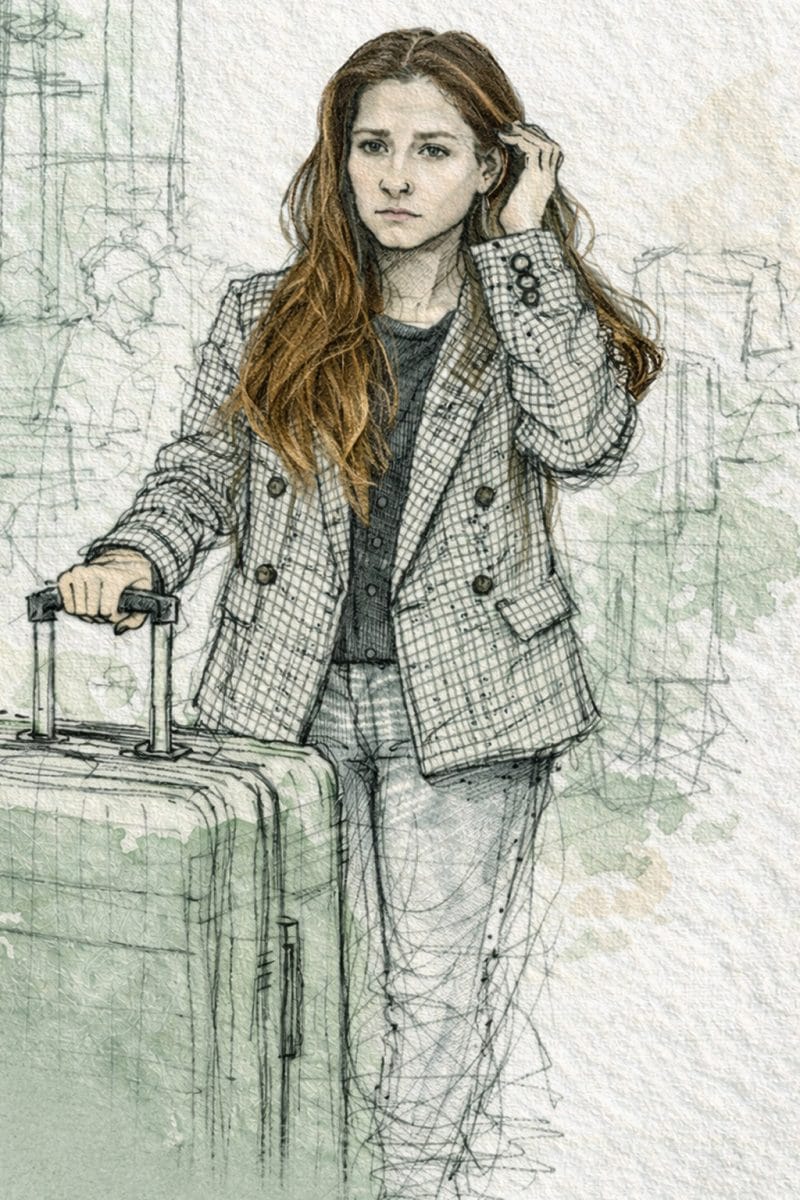
“I don’t even remember the whole process of escape, because in the very first days of the war my colleagues and I were constantly working — covering events, talking to people on both sides, but especially people in Ukraine.” In the meantime, she packed up her life in one day. She packed just one suitcase, giving a few things to her mother, and throwing the rest away. She took a handful of souvenirs from Russia — gifts from friends and family, a T-shirt with Cyrillic letters on it, talismans of the life she was leaving behind.
In the middle of a cold March night in Moscow, she said goodbye to her mother and grandmother, not knowing when she would see them again. “The scale of my personal tragedy couldn’t be compared to the scale of the tragedy happening in Ukraine. Only years later can I evaluate how awful, how tragic, and how traumatic those events were for me. But at that moment, it was just a feeling of adrenaline,” she said. “At an intuitive level, I felt that this was the last peaceful moment of my life in Russia.”
Living in exile in Europe, Fomina began to reorient her reporting techniques. She could no longer be a shoeleather reporter, using her legs and arms as tools and knocking on doors. She began investigating war crimes using open-source intelligence techniques.
Subscribe to our coda currents newsletter
Insights from the Coda newsroom on the global forces that shape local crises.
Not long into her exile, she investigated Russian soldiers who had been there during the massacre in Bucha. She started by tracing evidence from a survivor’s phone. The phone and its calling credit had been confiscated by Russian soldiers, then used to call their families back home. When it ran out of credit, the soldiers left it behind. One survivor recovered it and gave it to Fomina. Using investigative techniques and leaked data, she identified the numbers on the call log as belonging largely to relatives — mothers and wives — of Russian soldiers. She was then able to verify precisely which soldiers had been deployed in the area.
For her work on this investigation, Fomina was arrested in Russia in absentia in the summer of 2024. Then, on March 31, 2025, a Moscow court sentenced Fomina to 8.5 years in prison for disseminating “fake news” about Ukraine out of “political hatred.”
“On the one hand, you know that you did everything right,” Fomina said, describing her schooling, her education, her constant pursuit of the truth in journalism. “But on the other hand, you are facing such limitations and such punishment.”
“I suppress my trauma in order to continue doing this,” she said. “But I can’t stop doing my work because the war crimes are continuing.”
It is now four years since Fomina fled Russia. Barring a dramatic regime change in the future, there’s no prospect she’ll ever return.
Luz Mely Reyes - Venezuela
Luz Mely Reyes left Venezuela in slow motion. In 2015, she was the editor-in-chief Efecto Cocuyo, a small newspaper in Caracas. “Our heart as journalists was not to be too close to power. Power can be very seductive. But when you are too close to power you can lose the heart of your duty. So we tried always to be close to the common people,” she said.
In 2018, a Venezuelan politician and opposition member called Fernando Albán mysteriously fell from a tenth-floor window while being held in custody. Nicolás Maduro’s government said he jumped. Reyes wasn’t so sure. “I asked questions on my Twitter account — why was he on the 10th floor, how did he jump?” she recalled. After tweeting, she turned her phone off to focus on writing. Suddenly, her husband’s phone began to ring. It was a tip-off: police were discussing Reyes’ tweet online, and talking about detaining her. Reyes scrambled to leave the country, only coming back a few months later when the dust had settled.
All too soon, she had to leave Venezuela again — this time because of her coverage of a journalist who had been arrested in the middle of a blackout.
And so her wandering years began. Whenever Reyes felt too much pressure from the authorities, she would leave Venezuela for extended periods, spending time in neighboring Brazil and Colombia, before slipping back into Venezuela when she felt it was safe.
“I had to accept that I wouldn’t be able to live in Venezuela anymore,” she said. But she continued to shuttle back and forth. The authorities canceled her passport twice, threatened to imprison her, increasing the pressure all the time. Her team told her how it didn’t make sense to be in Venezuela — that she couldn’t do her work properly while she was constantly in hiding, on high alert.
Finally, after five years of this, she booked a one-way ticket out of Venezuela. She now lives in Austin, Texas, and doesn’t know if she’ll ever go home.
“I had been struggling for about five years to accept that the government was expelling me from the country. I finally accepted that I was in exile — because if you can’t return to your country without the risk of being persecuted, well, you’re an exile.”
Reyes hasn’t stopped working for the people of Venezuela. During the US military strike on Venezuela and the capture of Maduro, she mobilized her sources and contacts across the country. She and her team livestreamed updates for ten hours straight, confirming the facts, debunking disinformation as the extraordinary events of January 3 unfolded.
She feels the pain of being away from home acutely. “They say there are seven stages of grief when you’re forced to migrate. One grief I always have is for the landscape, for the weather, for the beach, for the space I was in, for the sun,” she said. “It’s very physical. I feel like a tree that has been ripped out of the ground.”
There is no job she would rather do, though. “If I had to do it all over again, I would choose to be a journalist.”
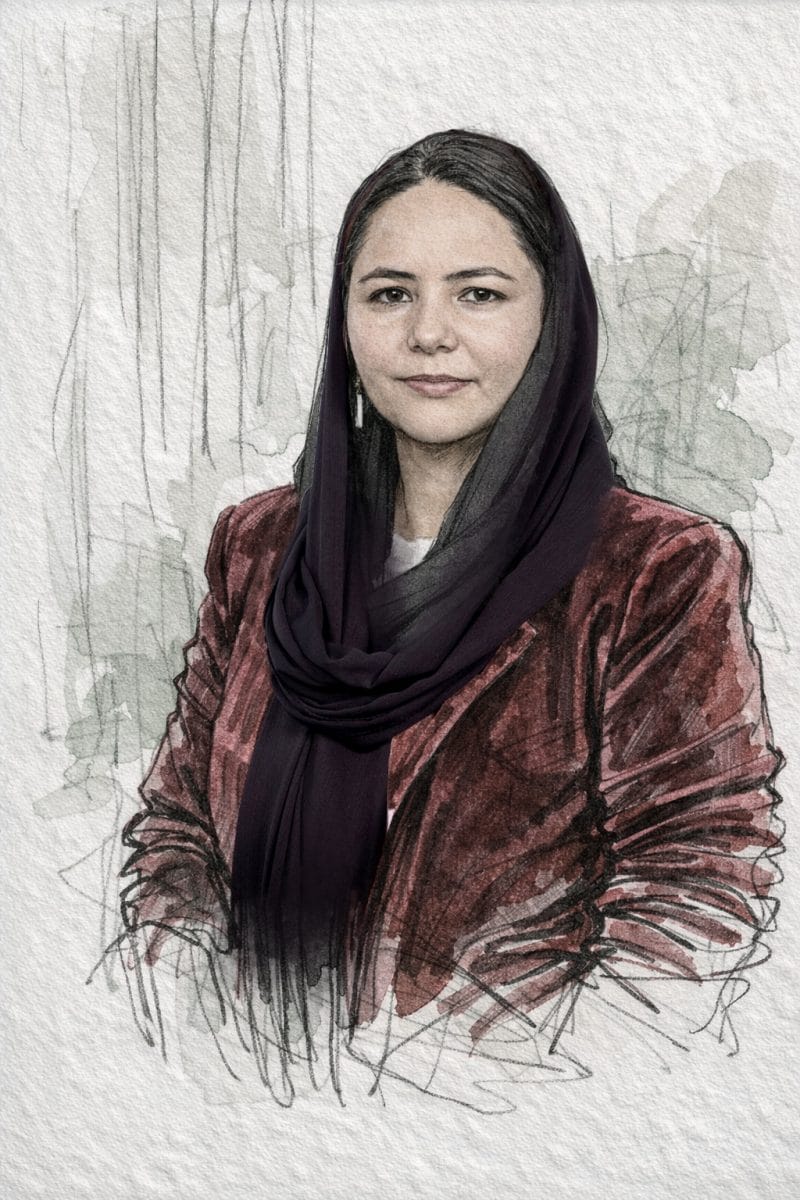
Zahra Joya - Afghanistan
Zahra Joya’s world changed forever over just a few days in August 2021. On August 14, she was working in Kabul as editor-in-chief of Rukhshana Media, an Afghan women’s journalism platform. The following day, Kabul fell to the Taliban. Joya joined the chaos of people fleeing the country out of Kabul airport. She arrived in a hotel room in London on August 26 — in less than a fortnight, everything she knew was gone. “Everything vanished overnight,” Joya said. From her hotel, she couldn’t stop reporting.
“I personally was safe, but when I looked back to all our achievements, to all the work that we had done, it gave me this chance to rethink my circumstances. I realized I could not stop my work. So we continued.”
Rukhshana Media’s burgeoning team scattered to the four winds following the collapse — some made it out of Afghanistan like her, others took shelter within the country, where it was no longer safe for them to keep working openly.
Founded in 2020, Rukhshana Media is a platform for female journalists — a space for stories by and about women in Afghanistan. It was named after an Afghan teenager who was stoned to death after being accused of adultery in 2015.
Joya had to find a way to keep Rukhshana Media alive. She began, frantically, to build a completely new team, from thousands of miles away.
“It was a terrible moment of my life. It was something I never, ever imagined I would go through,” she said. ““It was impossible for me to not think about Afghanistan just because I was outside.”
Joya scoured social media for new reporters. Then came the complex problem of how to hire them. How to look after journalists on the ground in Afghanistan under Taliban rule, keep them anonymous, and keep them safe, from thousands of miles away? She drew up a security plan and a code of conduct for her team. “I tell my colleagues, “please prioritize your safety. No information is worth your safety.”” She decided not to tell each reporter who their colleagues were, so that if they were captured by the Taliban, they would have no information to hand over under interrogation.
Bathed in the glow of her computer in her government-issued hotel room in London — where she stayed for a year — Joya worked and worked to publish as many stories as possible from on the ground in Afghanistan.
“For the women of Afghanistan, one of the only ways to raise their voices is through media,” Joya said, describing how Afghan families often call her asking for help, asking if she can write about their situation. Families of female activists call Joya as soon as their relatives are imprisoned by the Taliban.
“I feel guilty sometimes because people rely on me. They’re inside the country and they want to raise their voice,” she said. “My colleagues are taking their life in their hands to gather information.”
To evade capture, Rukhshana Media’s reporters often need to switch phone numbers without warning, meaning people can go dark at any time, and there are panicked moments where Joya doesn’t know what’s happened to them.
In September 2025, the entire country went dark without warning. The Taliban had shut down the internet completely — stating it was being blocked "for the prevention of vices." All of Joya’s contacts, reporters and sources stopped responding.
“Afghanistan was cut off from the world. It was terrible. It reminded us of the fall of Kabul all over again. We had no idea what was going on in the country,” she said. When the internet came back on, her work continued, the pace relentless — and it hasn’t stopped since.
Jesús Adonis Martínez Peña- Cuba
The idea for El Estornudo — a narrative journalism magazine covering Cuba — started on a balcony in Havana in 2015. A group of young people, many of them university students, gathered together and talked about their dream to tell the stories of Cuba on their own terms.
“It was a time of bilateral tension between the United States and Cuba, and the situation in Cuba wasn't as serious in terms of the social, political, and economic crisis as it is now,” remembers the editor-in-chief of El Estornudo, Jesús Adonis Martinez Peña. Widespread internet had not yet arrived in Cuba, but more and more people were getting access every day, and new media outlets were springing up –– “basically in what had been, up until that point, a wasteland in terms of independent media.”
Together, the young journalists drafted a manifesto for their magazine, which they published on March 16, 2015, Journalist’s Day in Cuba.
“In Cuba, the press is a neo-colonial republic. With flags, coats of arms, statutes, organizations, prizes, forums, infinite debates — but without independence,” they wrote. “If you want to know Cuba beyond the clash of slogans and the three or four topics recycled by the contemporary media world, you have to read this magazine.”
They decided to call their magazine ‘El Estornudo’ — The Sneeze. The name, they said, reflected their own reflexive need to “react against the prevailing climate, the urgent need to expel something.”
More than a decade has passed since that balcony brainstorming session. “Ten years later, and here we are. And most of our founders are scattered around the world,” Peña, who is now based in Chicago, said. Peña himself believes he can still go back to Cuba if he stays low-profile, doesn’t work, and just sees his family. But a number of his colleagues can’t. “My colleague who edits the magazine with me, they wouldn’t even let him board the American Airlines flight.”
The situation for Cuban journalists is specific to the island. “In Cuba, no one is going to shoot us in the head for journalism,” the Estornudo staff wrote in their founder’s letter ten years ago. This still holds true today — and it’s important, Peña said, “to respectfully acknowledge the realities for our colleagues in the region, in Central America, in countries like Mexico, where there are journalists being killed. We have the imperative, the duty, to do journalism under our own specific conditions of totalitarianism.” Reporters in Cuba exist within an insidious culture of fear and control. “The press is constantly under siege by state security. They monitor our colleagues, restrict their movements within the island, put police patrols in front of their houses — it functions almost like a temporary house arrest,” Peñam said. “There have been arrests, interrogations; they put pressure on the families of journalists too, pushing them into exile too.”
Since the Trump administration’s kidnapping of Venezuelan President Nicolás Maduro and the subsequent blocking of Venezuelan oil to Cuba, the country has been plunged into fresh crisis. President Trump has called on Cuba to “make a deal before it’s too late” and threatened to implement Secretary of State Marco Rubio as the “next President of Cuba.” Looking on, Peña’s team has been on high alert. They’re preparing themselves for every outcome — from a spiralling social crisis resulting from the U.S.-imposed fuel blockade, to a direct American attack on Havana. “We are considering every scenario, and we are not ruling anything out. And whatever happens, we are ready to report.”
Drop in Illustrations by Teona Tsintsadze.
The Age of Exile
This story is part of our Age of Exile series, which explores how displacement has evolved from historical punishment into a defining condition of our time—one that reveals profound transformations in how we construct identity, maintain community, and exercise power across borders. In an era where digital connection enables presence without physical proximity, exile has become more complex, more global, and more central to understanding our world. Explore The Age of Exile series
Argentina has uncovered a Russian intelligence operation working to spread pro-Kremlin disinformation and influence public opinion, Argentine presidential spokesperson Manuel Adorni announced on June 18, citing the country's intelligence, according to AFP and Infobae.
The La Compania network, which is allegedly linked to the Russian government and the Kremlin's Project Lakhta, was led by Russian nationals Lev Konstantinovich Andriashvili and his wife Irina Yakovenko, who are both residents of Argentina, according to authorities.
The U.S. Treasury Department has previously accused the Project Lakhta, reportedly formerly overseen by late Russian oligarch Yevgeny Prigozhin, of election interference in the United States and Europe.
Prigozhin led the Russian Wagner mercenary group that was deployed in some of the deadliest battles in Ukraine, like the siege of Bakhmut. The oligarch was killed in a plane crash under suspicious circumstances in August 2023, around two months after leading a brief armed rebellion against the Kremlin.
Andriashvili and Yakovenko are accused of receiving financial support to recruit local collaborators and run influence operations aimed at advancing Moscow's geopolitical interests.
Their objective was to "form a group loyal to Russian interests" to develop disinformation campaigns targeting the Argentine state, Adorni said at a press briefing.
The spokesperson added that the alleged operation included producing social media content, influencing NGOs and civil society groups, organizing focus groups with Argentine citizens, and gathering political intelligence.
"Argentina will not be subjected to the influence of any foreign power," Adorni said, noting that while some findings have been declassified, much of the investigation remains a state secret.
Since Russia's full-scale invasion of Ukraine in February 2022, there has been a significant uptick in Russian migration to Argentina, some of which officials fear could be linked to covert intelligence operations.
Authorities reportedly said these espionage activities are often facilitated by a 2009 bilateral agreement between Argentina and Russia allowing visa-free travel, a deal that remains in effect despite growing security concerns.
In response to the threat, Adorni announced the creation of a new Federal Investigations Department (DFI) within Argentina's Federal Police, modeled in part on the U.S. FBI. The agency will focus on countering organized crime, terrorism, and foreign espionage, with investigators trained in advanced techniques and bolstered by experts in law, psychology, and computer science.

 Connexion
https://t.co/CwbEoWw3Eq pic.twitter.com/mZRukcYnZd