Move is latest attempt to challenge states with competitive midterm races that could determine control of Congress
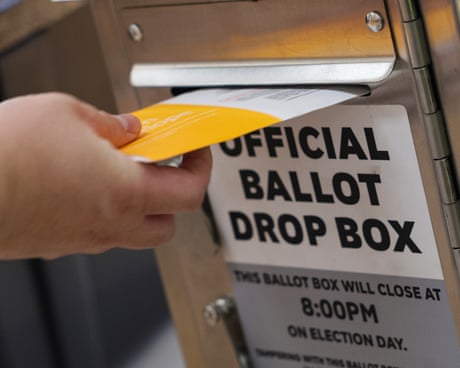
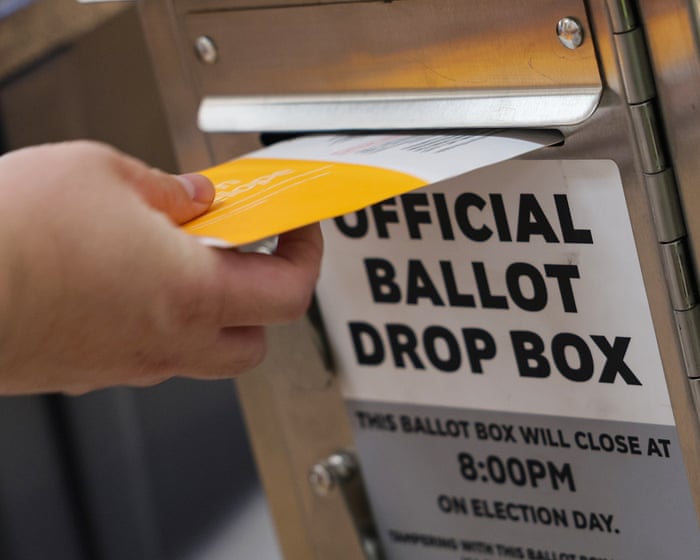
The Trump administration on Monday asked Washington state to set aside any ballots received from more than 400 people it alleges are registered to vote without US citizenship, less than two weeks after making a similar demand in California.
The announcement is the latest sign of the administration’s attempts to sow doubts about the election or its outcome in states with races that will help determine control of the US Senate and House.
Polish Sejm Speaker Włodzimierz Czarzasty has called for Russia’s actions to be monitored on a daily basis, saying the threat from Moscow is growing, although there is no reason to panic.
Newsom accuses Trump of ‘assault on democracy’ as DoJ claims 20,000 registered voters in state are non-citizens
A US federal appeals court rejected the Trump administration’s move to block California from counting the ballots of 20,000 registered voters that the justice department claims are non-citizens.
The court on Monday ruled 2-1 against Donald Trump’s justice department in the dispute, denying the administration’s demand that election officials segregate the thousands of ballots until people on the list could verify their citizenship. The justice department had given the California secretary of state 48 hours to carry out the order, which state election officials refused – leading to the lawsuit.
President’s comments come ahead of November midterm elections and follow his claims of widespread voter fraud
Donald Trump has announced a $1m reward for reports of voter fraud in past elections and the upcoming midterm elections, with payment contingent on the arrest and conviction of those responsible.
In a Truth Social post on Monday, the president wrote: “Anybody reporting Voter Fraud in the past Elections, or the upcoming 2026 Midterm Election, will be paid $1,000,000 upon the arrest and conviction of those that created the Fraud! Thank you for your attention to this matter.”
Comey, an outspoken critic of Donald Trump, accused of leaking information related to US national defense
The justice department charged former FBI director James Comey on Monday with two counts of leaking information related to national defense, the third time the Trump administration has filed criminal charges against one of Donald Trump’s most despised foes.
The charges, filed in federal court in Washington DC, provide few details about what Comey is alleged to have leaked. The government alleges that the former FBI director leaked the information in 2016 and conspired with an unnamed person to give the information to a national news outlet.
Republican and Democrat come together for a rare joint endorsement of candidate in unexpected competitive race
Two South Carolina former governors, David Beasley and Jim Hodges, a Republican and Democrat respectively, have come together for a rare joint endorsement for Democrat Annie Andrews’s Senate bid.
Andrews, a pediatrician, is looking to flip the seat, currently held by Darline Graham, the Trump-endorsed sister of the late senator Lindsey Graham, in what has become an unexpectedly competitive race for the usually reliably red state.
President Volodymyr Zelensky discussed with the newly elected President of Estonia, Ülle Madise, the issue of achieving peace in Ukraine and emphasized the importance of Europe’s participation in peace talks.
Ukrainian President Volodymyr Zelensky and Seimas Speaker Juozas Olekas of the Republic of Lithuania discussed Ukraine’s European integration and the priorities of Lithuania’s presidency of the Council of the EU in the first half of 2027.
The Russian authorities have committed crimes against humanity by attacking Ukraine’s energy infrastructure and recruiting foreign nationals to participate in hostilities on the side of their armed forces in Ukraine, the UN Commission stated.
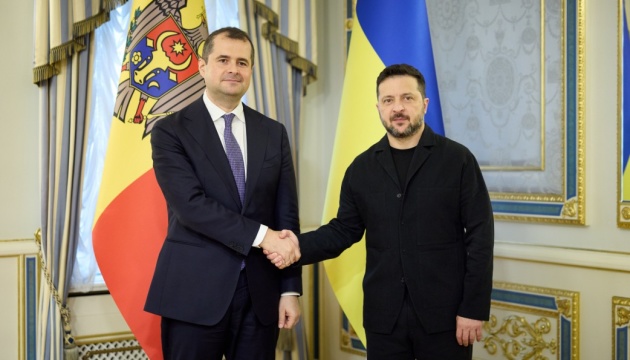
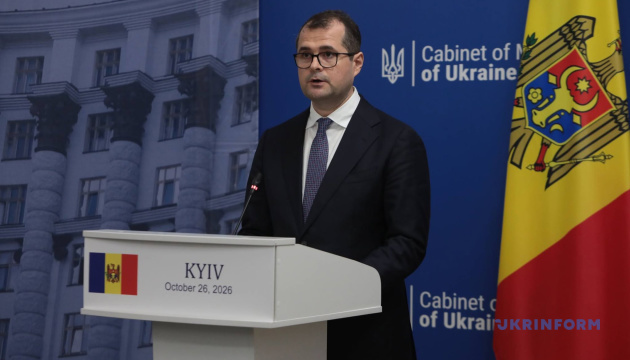
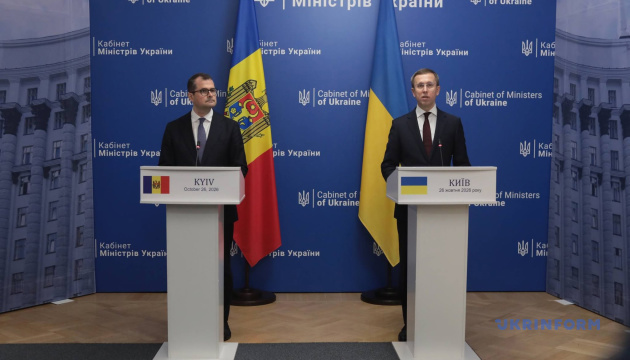
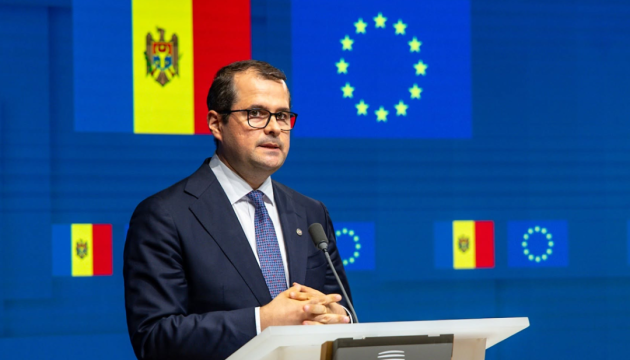
President Volodymyr Zelensky held a meeting with Moldovan Prime Minister Vasile Tofan, during which they discussed security issues, including Transnistria, European integration, and the strengthening of military cooperation between the two countries.
Russia has sent a diplomatic note to the Dutch Ministry of Foreign Affairs in response to Defence Minister Dilan Yeşilgöz-Zegerius’s statement that Russia is not merely an aggressor, but an enemy.
Daughter of ex-FBI director James Comey, a Trump foe, was dismissed in 2025 despite her work being widely praised
Maurene Comey, the daughter of the former FBI director James Comey, was unlawfully fired from her job as a federal prosecutor in New York last year, a federal judge ruled on Monday.
Judge Jesse Furman said that Comey, who was an assistant US attorney for a decade, was illegally fired in July 2025 despite her work on some of the nation’s highest-profile cases and consistently receiving “the highest accolades from supervisors and peers alike”.
Moldova’s airspace has been violated more than 100 times since the start of the Russian-Ukrainian war, with drones and missile fragments falling on its territory. This is why Moldova wants to draw on Ukraine’s experience in countering drones.
Trump lashes out on Maher after the host interviewed former White House press secretary Karoline Leavitt
Donald Trump launched a 1,300-word social media rant against the late-night US TV host Bill Maher on Sunday evening, calling him a “TOTAL LOSER” in a fresh assault on the media.
“Let’s talk about this COMPLETE AND TOTAL LOSER, Bill Maher,” the US president wrote. “He’s got a Low Rated Show on equally Low Rated HBO, which was once, long ago, a Network of Quality and Excitement – But that’s all gone.”
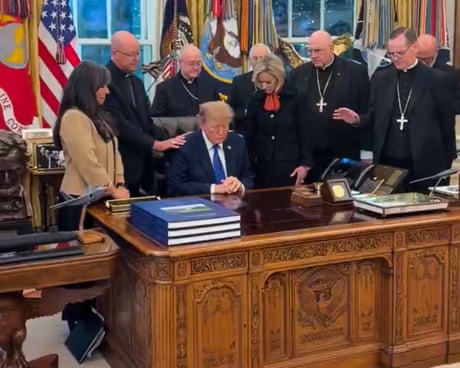
Two bishops express regret after the White House posts photos and video of a prayer with them in the Oval Office
Two Catholic bishops who bowed their heads with Donald Trump in the Oval Office now say they regret it, accusing the White House of turning a private prayer into a campaign photo opportunity before next week’s US elections.
Archbishop Jeffrey Grob of Milwaukee and Bishop William Joensen of Des Moines, who were among the 12 bishops who met administration officials last Thursday, issued separate statements of regret over the weekend.
From the 17th to the 20th century, Ukrainian lands were split between empires and states. Their rulers tried to assimilate Ukrainians and block their self-determination by going after what set them apart: their language and culture.
Nobody has an exact count of the bans. Historian Pavlo Hai-Nyzhnyk says there were more than 100 and that the real number is likely higher, because governors issued local bans too.
These measures differed in purpose and reach. Some restricted publishing, schooling, or official use; others suppressed cultural institutions or pushed assimilation. Most served the forced Russification of Ukrainians in the Russian Empire and the USSR. The timeline below is a selection of documented events, not a count of bans.
Russia has not stopped. Since 2014, schooling in Ukrainian has collapsed in the territories it occupies, and in 2025 it removed Ukrainian from the federal school programs it imposes there.
Here are some of the most important restrictions on Ukrainian language and cultural life imposed by the regimes ruling over Ukraine.
Graphic by Ganna Naronina from the article A short guide to the linguicide of the Ukrainian language. Click to enlarge.
17th century
1627: Muscovy. Moscow church authorities condemn Kyrylo Trankvilion-Stavrovetskyi’s Didactic Gospel, a collection of sermons printed in Ukraine in 1619, and order copies burned in Moscow.
1697: Polish-Lithuanian Commonwealth. An act requires tribunal and court decisions in the Grand Duchy of Lithuania to be written in Polish, displacing Ruthenian in those courts.
18th century
1720: Russian Tsardom. Peter I’s decree restricts the Kyiv and Chernihiv presses to approved reprints of church books and requires them to conform to Russian editions, suppressing local textual and linguistic differences.
1728: Russian Empire. Under the Decisive Points (Reshytelni punkty), the legal texts used in the Hetmanate’s courts are to be translated into Russian and compiled into a single code.
1730s: Russian Empire. Under Empress Anna, Kyiv’s archbishop is instructed to replace older locally printed church books with Moscow editions.
1769: Russian Empire. The Holy Synod refuses the Kyiv-Pechersk Lavra permission to print primers in the local language and tells it not to submit such requests again.
1775: Russian Empire. A Russian army destroys the Zaporozhian Sich, the Cossacks’ last stronghold and one of Ukraine’s own political institutions.
1780s: Russian Empire. Samuil Myslavskyi, metropolitan of Kyiv from 1783, insists on literary Russian as the only language of instruction at the Kyiv-Mohyla Academy.
1789: Polish-Lithuanian Commonwealth. The Commission of National Education orders the Ukrainian parish schools of Right-Bank Ukraine Polonized.
19th century
1847: Russian Empire. After suppressing the Cyril and Methodius Brotherhood, a secret society that called for a federation of free Slavic peoples, the authorities ban and withdraw from sale specified works by Taras Shevchenko, Panteleimon Kulish, and Mykola Kostomarov.
1859: Austrian Empire. Austrian officials back a plan to replace the Cyrillic alphabet used for Ukrainian in Galicia with a Latin one. Ukrainian opposition defeats the plan in what became known as the “alphabet war.”
1862: Russian Empire. The authorities close the Sunday schools, free schools for working adults and young people, including Ukrainian ones. They begin reopening under tighter control in 1864.
1863: Russian Empire. Interior Minister Pyotr Valuev’s circular tells censors not to approve Ukrainian religious, school, and popular-reading books, while still allowing fiction under censorship. It claims that most Little Russians themselves argue that “there was not, is not, and cannot be any special Little Russian language.”
1864: Russian Empire. The 1864 statute requires Russian as the teaching language in the elementary schools it regulates.
1869: Austria-Hungary. Polish becomes the internal language of administration and the courts in Galicia. The 1867 school arrangements had already strengthened Polish dominance, while leaving limited room for Ukrainian-language schooling.
1876: Russian Empire. Alexander II’s secret Ems Ukaz severely restricts Ukrainian publishing and bans Ukrainian publications from abroad, Ukrainian stage performances and public readings, and Ukrainian lyrics printed with music. Exceptions allow historical documents in their original spelling and fiction in Russian spelling under censorship.
1881: Russian Empire. New rules ease parts of the Ems Ukaz: Ukrainian plays may be staged with a governor’s special permission. Theater troupes performing only in Ukrainian stay banned.
1883: Russian Empire. Kyiv Governor-General Aleksandr Drenteln bars Ukrainian theater troupes from performing in the Kyiv, Podillia, Volhynia, Poltava, and Chernihiv governorates.
1910: Russian Empire. A circular from Pyotr Stolypin’s interior ministry tells governors to refuse registration to non-Russian national societies, Ukrainian ones included, and to review existing ones for closure. Kyiv’s Prosvita is dissolved the same year.
1914–15, 1916–17: Russian Empire. Russian occupation authorities suppress Ukrainian institutions and publications in Galicia and Bukovyna. The first occupation brings mass arrests and deportations, the destruction of Ukrainian books, and the arrest of Metropolitan Andrei Sheptytskyi.
1923: Soviet Ukraine. Dmytro Lebid, second secretary of the Communist Party of Ukraine, sets out the “theory of the struggle of two cultures,” which holds that the Russian culture of the city is more advanced than the Ukrainian culture of the village. The party rejects it and adopts Ukrainization the same year.
1924: Poland. Three laws of 31 July make Polish the state language of administration and the courts, keep limited rights for minority languages, and set school rules that favor Polish-Ukrainian bilingual schools over separate Ukrainian ones.
1924: Romania. The primary education law requires citizens of Romanian origin who have “lost their mother tongue” to send their children to Romanian schools. Ukrainian historians say it was applied to Ukrainians in Bukovyna.
1925: Poland. The Lviv Underground Ukrainian University, which had taught clandestinely since 1921, stops teaching after police raids and the Polish state’s refusal to recognize it.
1926: USSR. In a letter to Kaganovich and the Ukrainian Politburo, Stalin attacks Oleksandr Shumskyi and Mykola Khvylovyi and rejects Ukrainizing Russian workers “from above,” while still backing controlled Ukrainization of official institutions.
1932–33: USSR. A secret resolution of 14 December 1932 orders the Ukrainian-language paperwork and press of the North Caucasus switched to Russian at once and its schools prepared for teaching in Russian. In Soviet Ukraine, it puts Ukrainization under tighter party control and demands purges of “nationalist” elements. The repression of 1933 dismantles Ukrainization.
1938: USSR. A decree of 13 March makes Russian a compulsory subject in the non-Russian schools of the national republics and regions.
1947: Poland. In Operation Vistula, Polish authorities forcibly resettle about 150,000 Ukrainians to northern and western Poland, under an assimilation policy that sought to keep them below 10% of any locality.
1958–59: USSR. The school reform expands parents’ choice of teaching language and makes the study of Ukrainian optional in Russian-language schools in Soviet Ukraine.
1960s–70s: Romania and Poland. Romania nearly eliminates Ukrainian-language schooling from the mid-1960s. In Poland, Ukrainian schools and Ukrainian classes shrink.
1972: USSR. The party’s resolution on the USSR’s 50th anniversary promotes the “new historical community, the Soviet people,” an idea first voiced in 1961. Soviet ethnographers wrote that the spread of Russian among non-Russian peoples played the paramount role in forming this community.
1978: USSR. The USSR Council of Ministers orders wider study of Russian in the union republics. Ukraine’s implementing resolution of 2 November requires Russian from first grade in Ukrainian-language schools from the 1980/81 school year.
1983: USSR. A resolution of 26 May gives specified teachers of Russian in non-Russian schools in villages and small towns a 15% pay raise from 1984.
1984: USSR. The school reform resolution of 12 April adds two to three hours of Russian a week in grades 2 to 11 of non-Russian schools.
1989: USSR. The Communist Party’s party platform of 20 September calls for making Russian, by law, the language of the whole country alongside the republics’ state languages.
1990: USSR. The April 1990 law on the languages of the peoples of the USSR makes Russian the official language of the Soviet Union, while letting the republics set their own state languages.
21st century
2014–18: Crimea. Under Russian occupation, schooling in Ukrainian collapses. In 2013/14, 12,694 children studied in Ukrainian in 7 schools and 829 classes; by 2017/18, 318 children did, in one school and 13 classes, the UN human rights office reports, noting the figures conflict in places.
2020: DNR and LNR. The so-called DNR votes to amend its “constitution” on 6 March, dropping Ukrainian as a “state language” and leaving only Russian. The so-called LNR does the same in June.
2022: Occupied Kherson and Zaporizhzhia oblasts. Russia’s Education Ministry says on 12 August that schools in newly occupied areas will teach in Russian, with Ukrainian allowed only as an optional “native” language. Occupation authorities then cap Ukrainian at three hours a week, Human Rights Watch reports.
2023: Occupied Donetsk and Luhansk oblasts. Russia removes nearly all Ukrainian literature from local libraries, most likely destroying it, Ukraine’s National Resistance Center reports. The so-called LNR publishes a list of banned books.
2024: International Court of Justice. On 31 January, the court ruled, 13 votes to 2, that Russia violated the UN convention against racial discrimination in how it ran school education in Ukrainian in occupied Crimea.
2025: Russia. Education Ministry Order No. 729, in force since 15 December, removes Ukrainian language and literature from Russia’s federal primary and lower-secondary programs, the UN human rights office reports. Russia imposes these programs on schools in the occupied territories, where about 582,000 children study, the Almenda center says.
What we changed in October 2026
Editor’s note, 27 October 2026: We first published this timeline in 2017. Like many lists of bans on Ukrainian that circulate online, it repeated some claims that have no document behind them. In October 2026, we went back to historians’ work and to the decrees themselves.
We removed about fifteen entries. Most we could not confirm; a few were not about language. We corrected others where the documents say something different: some bans had exceptions, some dates were off by a year, and the end of Ukrainization came in 1932–33. We replaced the old count of 60 bans, which we could not trace, with a historian’s estimate. And we added what Russia has done to the Ukrainian language in the territories it has occupied since 2014.
If you have a document for something we left out, write to us.
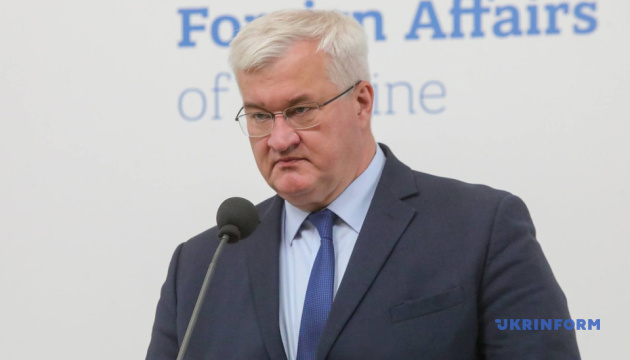
Ukrainian Foreign Minister Andrii Sybiha has reacted with irony to the idea of nominating former Hungarian Prime Minister Viktor Orbán for the post of UN Secretary-General.
Law would open two-year window for child sexual abuse victims to file lawsuits beyond statute of limitations
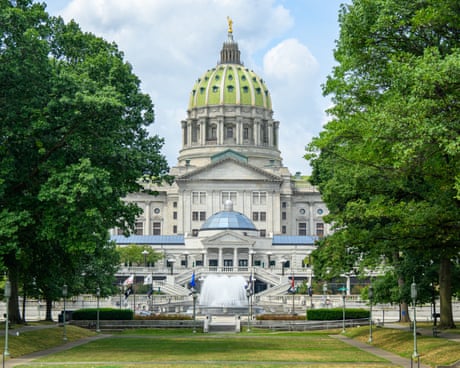
Child sexual assault survivors in Pennsylvania are on the verge of being denied the opportunity to sue their attackers after a bill to temporarily waive filing deadlines stalled again in the state’s legislature.
Democrats have accused the Republican senate majority of playing politics with the bipartisan move to amend the state constitution and open a two-year window for victims to file molestation claims from years ago.
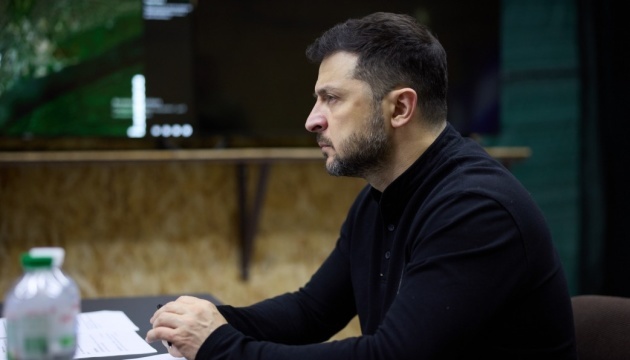
President Volodymyr Zelensky said Ukraine has been waiting for nearly a month for U.S. Secretary of War Pete Hegseth to sign off on the supply of missiles for Patriot and NASAMS air defense systems.
Democrats in the midterms are finally backing Medicare for All as a campaign issue amid a rising tide of voter support
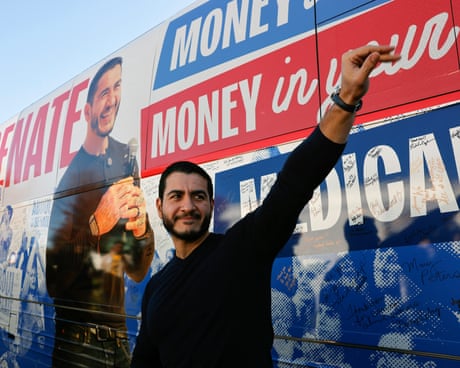
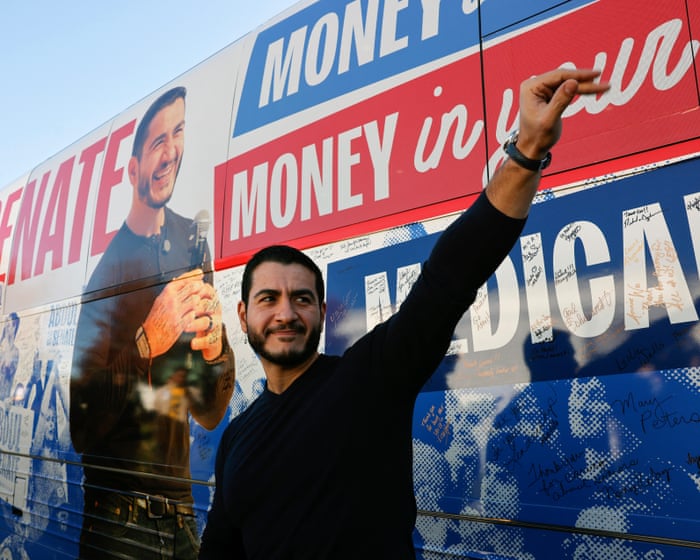
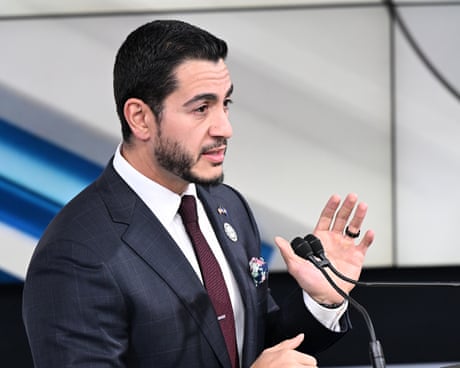
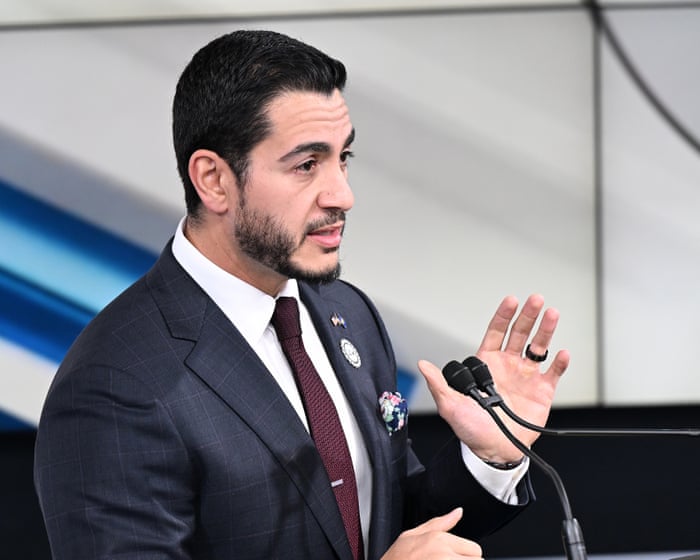
Abdul El-Sayed, the Democratic US Senate candidate, starts this day on the campaign trail in Escanaba, Michigan, where nearby Wisconsin dairy country spills into dense forests and the sandy shores of Green Bay.
This is the upper peninsula – the “UP” – a rural slash of land north of Michigan’s mitt. Electorally, it’s crimson. Donald Trump won some districts near Escanaba by more than 41%. But at the county fairgrounds, past sheds labeled “Beef” and “Swine”, hundreds of locals on the political left have gathered in the hangar-size 4H Club meeting hall to hear El-Sayed speak.
The president’s policies have taken such a toll on farmers that Republicans face trouble in deep-red states
Donald Trump’s policies have been a disaster for the nation’s farmers, so much so that a near electoral miracle may soon happen: Kansas, one of the deepest red, most rural states, may elect its first Democratic senator in nearly a century.
Since Trump won farm country handily in 2024, many rural voters in Kansas, Iowa and elsewhere have soured on him because the price of diesel fuel, a key input for farming, has soared by nearly 70%, because farm bankruptcies have surged and because Trump’s trade wars have significantly reduced agricultural exports.
Steven Greenhouse is a journalist and author, focusing on labor and the workplace, as well as economic and legal issues
President Volodymyr Zelensky stated that the victory of the opposition movement “Student List” in Serbia’s parliamentary elections marks a new chapter in the history of the country and its people.
In a post to social media on Monday, Ukrainian president Volodymyr Zelenskyy said that Ukraine was facing dwindling stocks of Patriot interceptor missiles after Pete Hegseth, Trump’s defense secretary, had delayed authorizing new supplies.
“We have been waiting for nearly a month for Mr. Hegseth to sign off on missiles for Patriots and NASAMS,” Zelenskyy wrote. “I instructed our team to raise this with the American side once again. Conversations with other countries are also ongoing.”
In a reliably red state, candidates say dissatisfied voters tell them they’re planning to vote Democrat for the first time
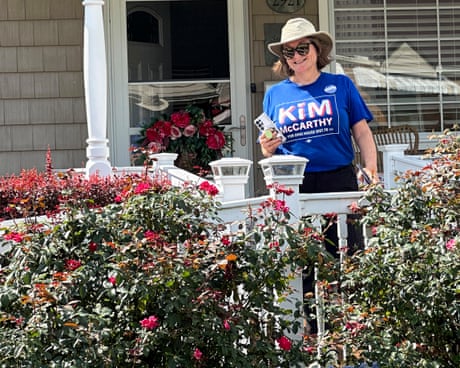
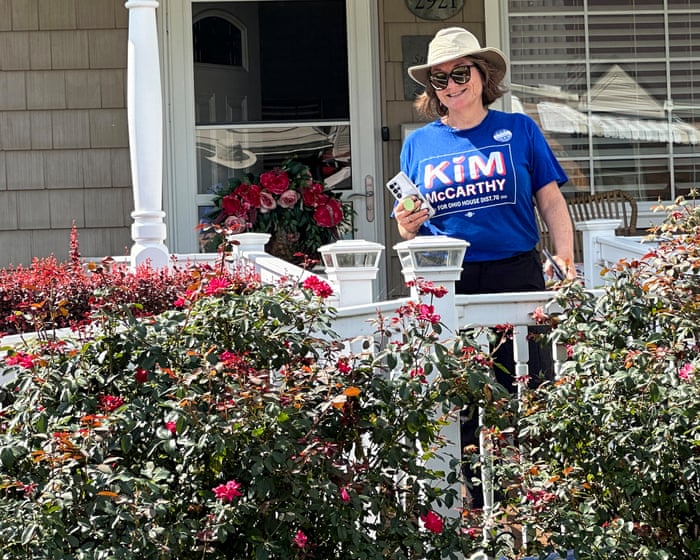
Democrat Kim McCarthy is canvassing in a middle-class Ohio neighborhood of four-bedroom, three-bathroom homes. There are $70,000 trucks in the driveways and robot lawnmowers at work.
“This is a neighborhood of two incomes and young families; people working hard,” says McCarthy, who is running against a three-time Republican incumbent for a seat in Ohio’s house of representatives.
Health secretary’s effort to alter makeup of ACIP panel means no new recommendations coming – even as new vaccines are approved
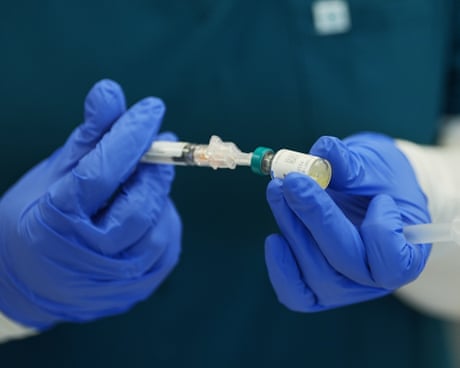
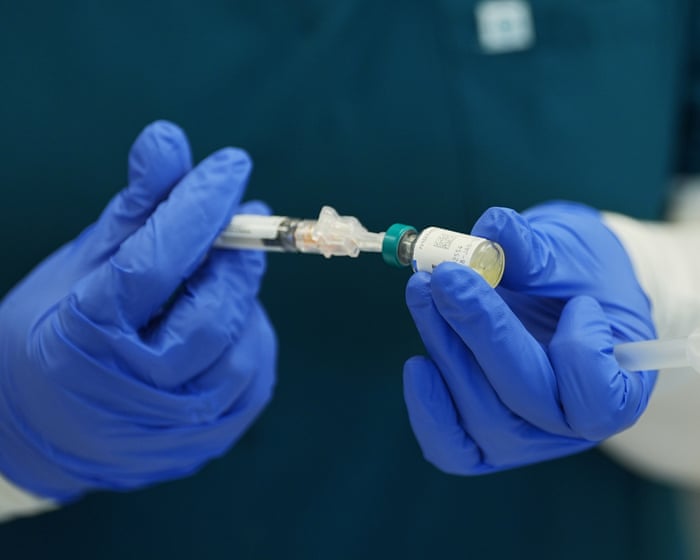
US vaccine recommendations are in limbo, access to vaccines is suffering, and some of the uncertainty may continue for years following major blows to vaccination by the Trump administration, experts say.
Robert F Kennedy Jr, the secretary of the US Department of Health and Human Services (HHS), has made sweeping changes to vaccination policy, cutting childhood immunization recommendations by a third and replacing experts on the Advisory Committee on Immunization Practices (ACIP) with his own handpicked allies.
No election outcome ever interprets itself. So how will Democrats interpret these results once they are known?
Whichever metaphor one prefers – landslide, earthquake, wave – it seems increasingly like the Democrats can expect a significant victory in the midterms.
As the joke goes, every gas station display of prices has become an ad for Democrats; what’s more, some of them have managed to connect the relatively abstract issue of corruption to the daily misery of many Americans.
US voters will decide whether Republicans will retain control of Congress or whether Democrats will rise up to stymie Trump’s agenda
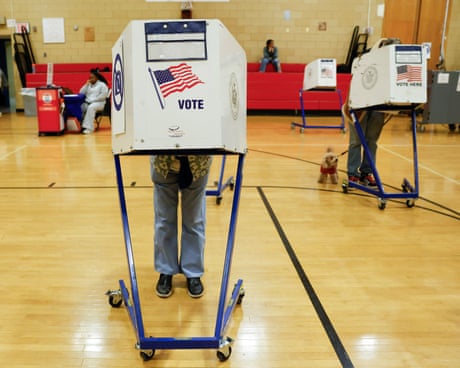
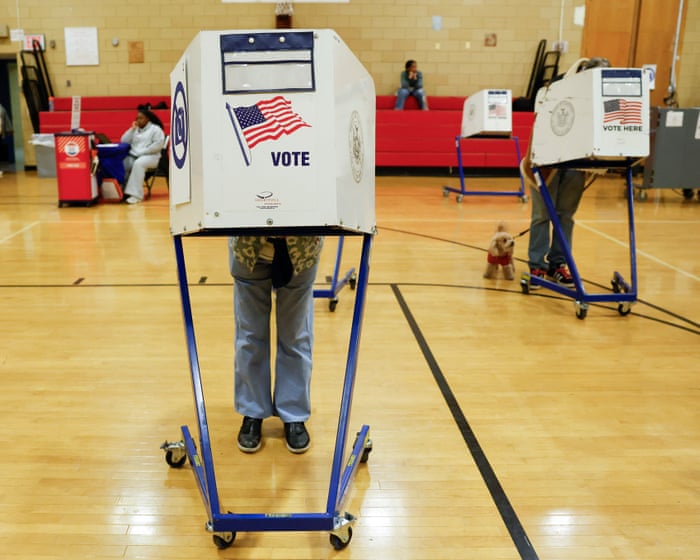
Donald Trump will still be US president on the morning of 4 November. But he could be facing a very different political landscape, depending on the results of the US midterm elections held the previous day.
As the name implies, midterm elections fall nearly halfway through a president’s term. They are often a telling referendum on the sitting president’s performance, something Trump is actively encouraging by telling voters “pretend I’m on the ballot”. In this case, voters will decide whether Trump’s Republican party can retain its grip on Congress.
All 435 seats in the House of Representatives. Republicans are defending a narrow majority, with Democrats needing a net gain of four seats to take control.
35 seats in the Senate. Thirty-three seats are up in regular elections, along with two special elections in Florida and Ohio to fill the remainder of terms that were vacated early. Republicans currently hold 53 seats, against 47 held by Democrats and independents who caucus with them. Democrats need to gain four seats to secure a majority.
39 governorships. Voters will choose governors in 36 states and three US territories.
Thousands of state legislative seats, as well as local offices, judicial contests and ballot measures on issues including taxes, abortion rights and voting rules.
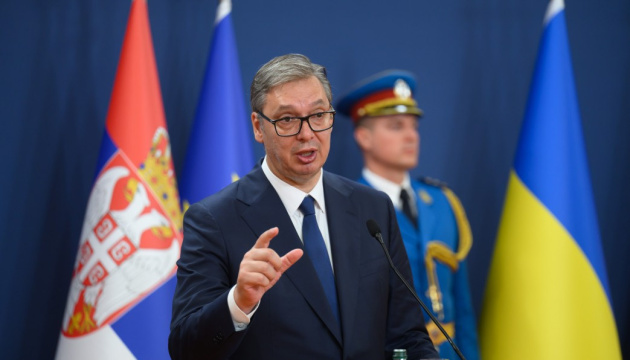
Aleksandar Vučić, who until recently served as Serbia’s President, has conceded that his party lost the parliamentary election to a student-led protest movement.
The Trump Administration is backing former Hungarian Prime Minister Viktor Orbán for the post of UN Secretary-General, hoping to secure support from Russia and China, according to media reports.
Andrii Sybiha responded to remarks by Russian presidential aide Yuri Ushakov, who said Moscow had expected the United States to put pressure on Ukraine following Donald Trump’s meeting with Vladimir Putin in Alaska.
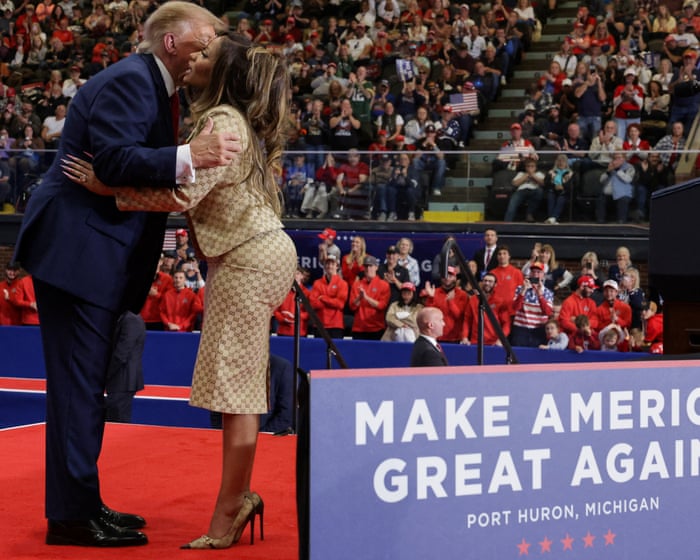
Trump again congratulated Ohio senator’s rear end before his cheeky comment about rapper being ‘hard to miss’
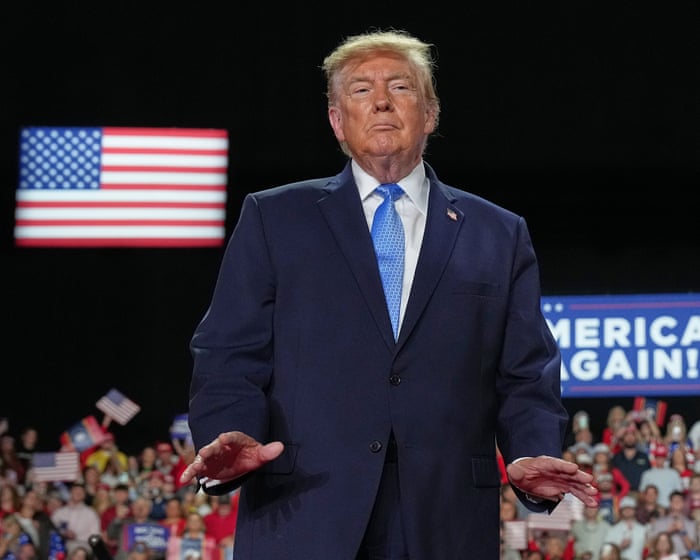
Donald Trump reiterated his apparent love for ample backsides during a rally in Michigan on Sunday where he encouraged the crowd to compliment rapper Nicki Minaj’s behind.
Trump’s cheeky comments about Minaj’s derriere came as he explained his recent observation on the Republican Ohio senator Jon Husted’s rear end. Earlier in October, Trump said of the former college football player: “I don’t do this with men very often. I started examining his body, because I didn’t know he was a great athlete. And I looked and I watched up and down. I looked at his ass and I looked at the whole – and then I looked at his hands. Look at his hands. He’s got these, like, claws.
Major European powers do not want to restore energy alliances with Russia, but some countries on the continent remain dependent on gas and oil from Russia.
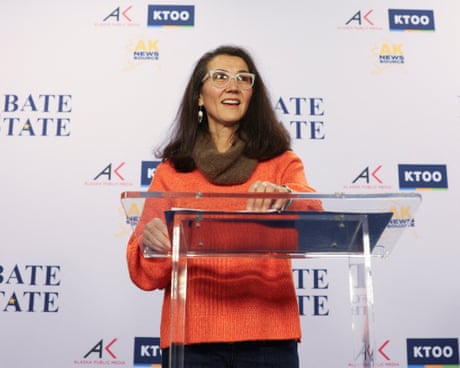
Peltola and her family sustained minor injuries after a driver struck the car transporting group to campaign stop
Mary Peltola, a Democrat who is running for US Senate in Alaska, and her family suffered minor injuries in a car crash while driving to a campaign stop on Saturday, her campaign said.
The family was on its way to the Alaska Federation of Natives annual banquet when another vehicle crashed into the one transporting Peltola and her family, her campaign said in a statement on Sunday. Peltola required medical attention after the collision.
A security meeting involving representatives from the U.S., Ukraine, the EU, and NATO will take place in Brussels this week, during which initiatives to end the war will be discussed.
President Volodymyr Zelensky called for no sanctions against Russia to be lifted until the war is truly over and for the government not to buy the Kremlin’s loyalty in this way.
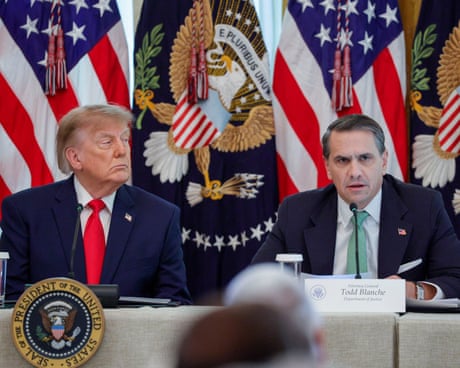
Todd Blanche, Donald Trump’s attorney general, lashed out during an interview on Sunday while defending the justice department’s pre-emptive lawsuit to block certification of Alaska’s US Senate results if the GOP incumbent loses, calling a TV host’s question “crazy”.
The testy repartee unfolded on CNN’s State of the Union over the DoJ’s unprecedented legal action, which alleges that there could be “voter confusion” due to two candidates named Dan Sullivan on Alaska’s ballot. Trump told reporters, “I’m the one that said do it” when asked about the suit.
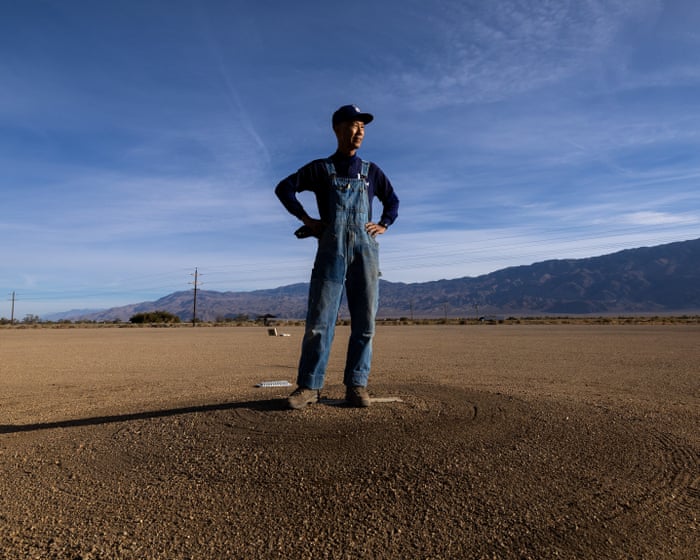
How a rebuilt, historic California baseball diamond embodies ‘the contradictions in America’s legacy’
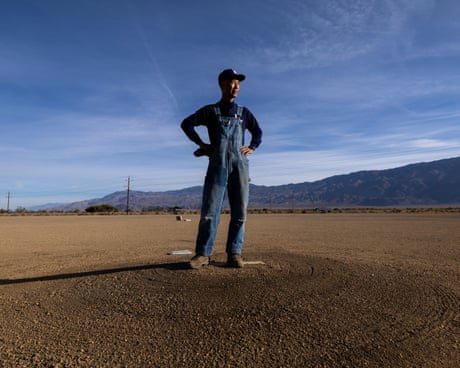
When Dan Kwong first dreamed of staging baseball games at the Japanese American concentration camp where his family was held captive during the second world war, he thought of it as an exercise in living history, an eye-catching way to convey the trauma of 120,000 men, women and children who were locked up in the wake of the Japanese attack on Pearl Harbor.
Baseball was a passion for Kwong, a 71-year-old performance artist from Los Angeles. He knew that the wartime internees had played the game not just as a distraction from their predicament, but as a quiet expression of their loyalty to the United States. He wanted to stage an event that would cast the game as an act of resistance, and teach new generations about the damage governments do when they strip a whole segment of the population of their constitutional rights.
VW investment, creating 4,500 jobs in Georgia, comes amid Trump’s damaging tariffs, intense Chinese competition and costly shift towards EVs
Audi has said it will spend $4bn (£3bn) to build its first factory in the US, as its parent company, Volkswagen, struggles with the impact of steep tariffs imposed by Donald Trump.
The German brand’s chief executive, Gernot Döllner, joined Trump on stage at a campaign rally on Saturday night to announce the factory in Macon, Georgia, in an unusual move by a big European brand just days before the US midterm elections.
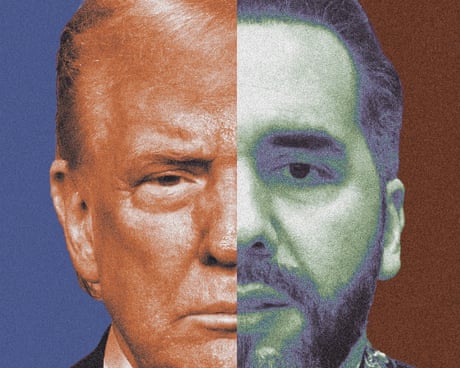
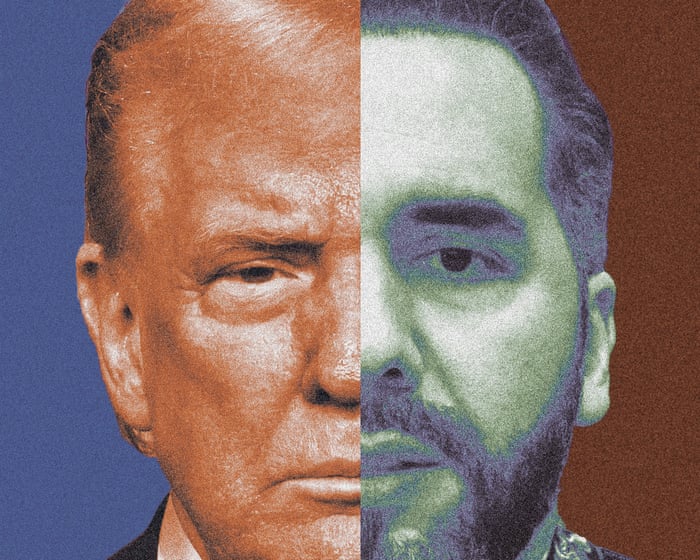
To understand where Trump is trying to take the US, we should look to the authoritarian playbook of his favorite ally: El Salvador’s Nayib Bukele
One afternoon last year, Donald Trump welcomed “a friend” to the White House – El Salvador’s Nayib Bukele, the world’s most popular authoritarian. “I knew him as a very young man,” the US president said before the cameras. “He’s done a fantastic job. Mr President, it’s an honor to have you.”
Since March 2022, when gangs in El Salvador murdered 87 people over a weekend, Bukele has maintained a state of emergency in which key civil liberties are suspended and 2% of the adult population has been jailed – about 100,000 people, at least half of whom are probably not gang members, say local rights groups. The narrative of “the Bukele miracle” – that he swiftly dismantled fearsome gangs and restored order – has made him an icon across Latin America, where a new host of rightwing leaders have sought to replicate his heavy-handed tactics. And in the US, Bukele’s overnight success as a strongman has made him a hero of the American right.
Shasta has embraced the Maga movement with gusto – can Democrats ever win back the rural, working-class voters they once relied upon?
A crucial election was approaching and the country was desperate. Despite promises that economic conditions were improving, nearly a quarter of the US was out of work as voters headed to the polls in 1932.
It was the darkest time since the civil war, a period so dire that in California’s capital people fought each other for work. In early 1931, a crowd of 200 men scuffled over a handful of temporary jobs moving back-breaking loads of granite, the Sacramento Bee reported.
This gives the company an advantage in tracking objects in orbit, raising national security concerns and fears of greater control over the space industry
The US military has given Elon Musk’s SpaceX access to restricted space tracking data, raising a new round of questions about whether the Trump administration is attempting to hand over traffic control in Earth’s orbit to a controversial donor.
The access also raises new national security questions, industry observers say.

 Connexion