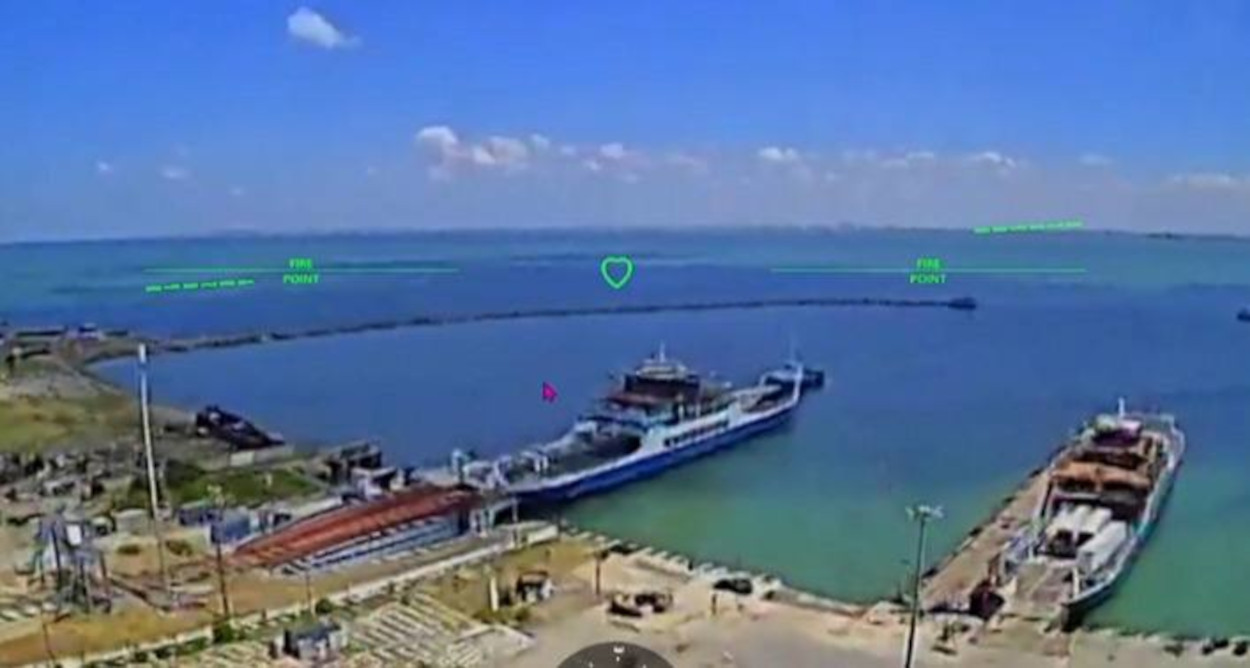
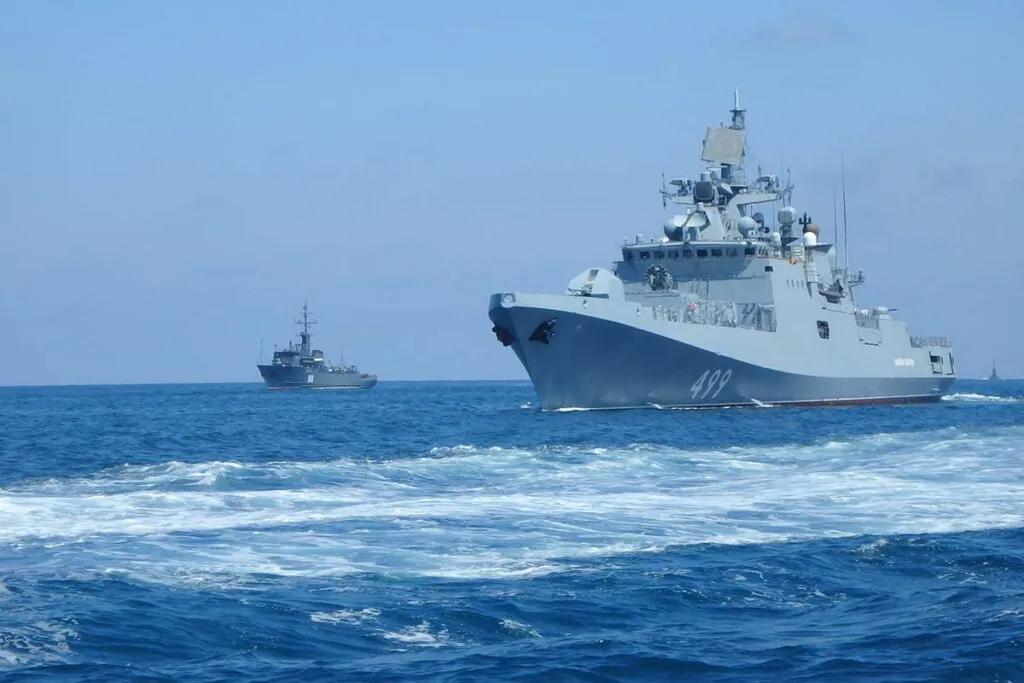
Ukraine reached the port where Russia's Black Sea Fleet took shelter and hit four of its warships. On the night of 12 August 2026, in a joint operation, Ukraine's Defense Forces struck the naval base at Novorossiysk in Russia's Krasnodar Krai, the General Staff reported.
Novorossiysk became Russia's main Black Sea naval base after Ukrainian strikes and sea drones drove the fleet out of occupied Sevastopol in Crimea, so reaching its warships there strikes at the refuge that was supposed to be safe.
The ships that were hit
The four vessels are among the fleet's more capable surface combatants. The two Project 11356 frigates, Admiral Makarov and Admiral Essen, are among the newest and most important surface ships Russia has kept in the Black Sea, both capable of launching Kalibr cruise missiles at Ukraine.
The Buyan-M is another Kalibr shooter. The Project 21631 small missile ship carries the same cruise missiles Russia fires at Ukrainian cities, and the Vasily Bykov is a patrol ship of the class Ukraine has struck before, so the strike damaged both major missile-carrying combatants and a patrol vessel in one night.
The overall damage at the base is still being assessed.
The fleet has no safe harbor left
The strike extends a campaign that has steadily pushed Russia's fleet eastward and out of action. Ukraine drove the Black Sea Fleet from Sevastopol without a navy of its own, using drones and missiles, forcing Russia to pull its ships back to Novorossiysk, farther from Ukraine but not out of reach.
This means that Russia holds no waters it can use and now no harbor where its ships are safe. Ukraine's Defense Forces said they consistently reduce Russia's capacity to continue its armed aggression, and damaging four warships at their fallback base is the naval form of that pressure.
Russia has found a way to defeat Ukraine's Flamingo cruise missiles
Russian air force A-50U radar planes see the missiles coming
One mapper counts 10 of the last 11 Flamingos shot down
Russia has been shooting down most of Ukraine's best long-range cruise missiles as fast as Ukraine can launch them. Just one or two of the $500,000 Fire Point FP-5 Flamingo missiles have hit their targets in recent weeks.
That means Russian air defenses are working for now. Whether they'll continue to work is the critical question for Ukrainian strike planners.
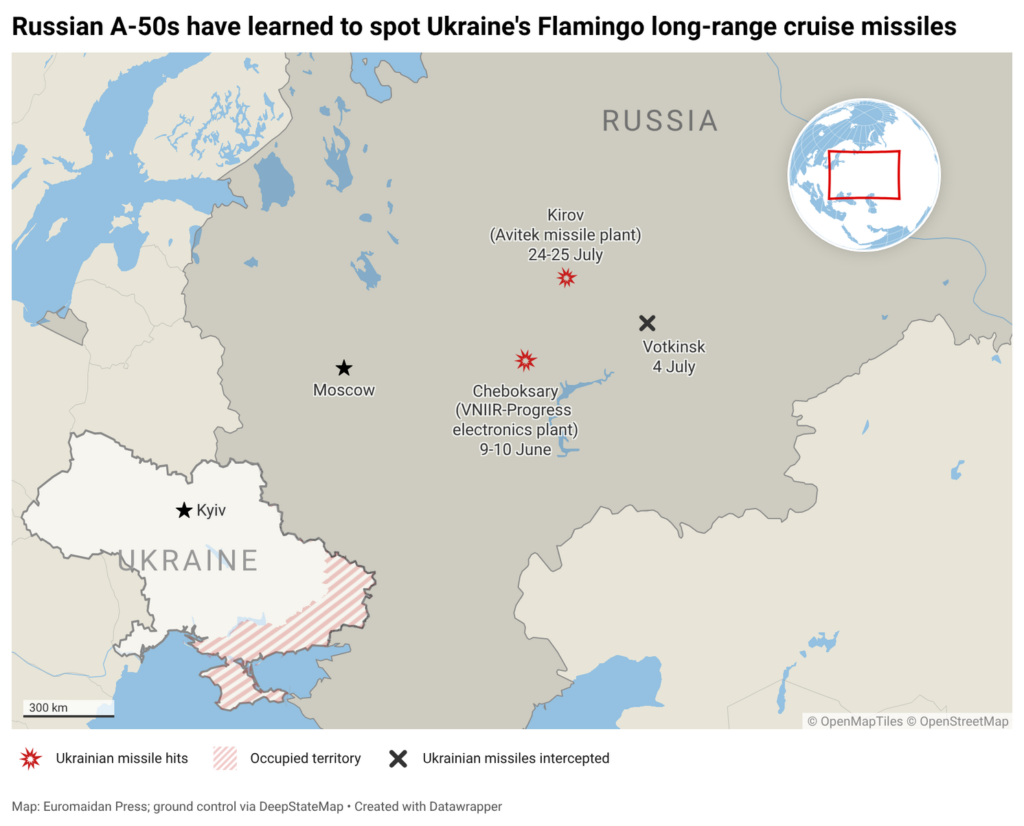
Under the cover of darkness on 6 August, the Ukrainian army's 19th Missile Brigade launched at least three of the six-ton, jet-propelled Flamingos toward Tyumen Oblast in western Siberia. The missiles traveled around 2,500 km before disappearing, according to mapper AMK Mapping.
The apparent shoot-downs capped a difficult week for Ukraine's deep strike campaign. AMK Mapping claimed the Russians shot down 10 of 11 launched Flamingos since 1 July. That count is one mapper's, based on open-source tracking, and no official Ukrainian or Russian figures exist to check it against.
Approximate flight route of the 5 Ukrainian FP-5 Flamingo cruise missiles.
They disappeared over Tyumen Oblast, likely after being shot down once again by Russian air defence.
The mapper may be off by one. Between 24 and 25 July, at least one Flamingo struck the Vyatka Machine-Building Enterprise Avitek missile plant in Kirov Oblast 1,300 km from the border with Ukraine. Michael Bohnert, an analyst with the RAND think tank in California, concluded that two Flamingos hit the plant, causing visible damage.
Map: Euromaidan Press
It was a potentially powerful blow. Among other things, Avitek produces parts for the Tor medium-range surface-to-air missile system. Slowing Tor production "will have the most impact," Bohnert explained. And the Ukrainian system that a Tor slowdown might benefit the most is ... the Flamingo.
After all, the Tor is one of the air defense systems the Russians could use to shoot down Flamingos. "Any slow-down in the production of these could greatly improve the prospects of FP-5 performance over time," Bohnert noted.
Ukrainian Firepoint FP-5 Flamingo missiles just smashed the Avitek plant in Kirov, Russia (July 24 and 25) — and the biggest hit is to SA-15 Tor production.
Here are the facts and why it matters
On July 24th and 25th, Ukrainian Firepoint FP-5 Flamingo Missiles hot the Vyatka… pic.twitter.com/Ii8VsJCumi
At present, however, it seems that the Flamingo's biggest problem is in the air, not on the ground. Russia is shooting down most of the incoming FP-5s because it has eyes in the sky.
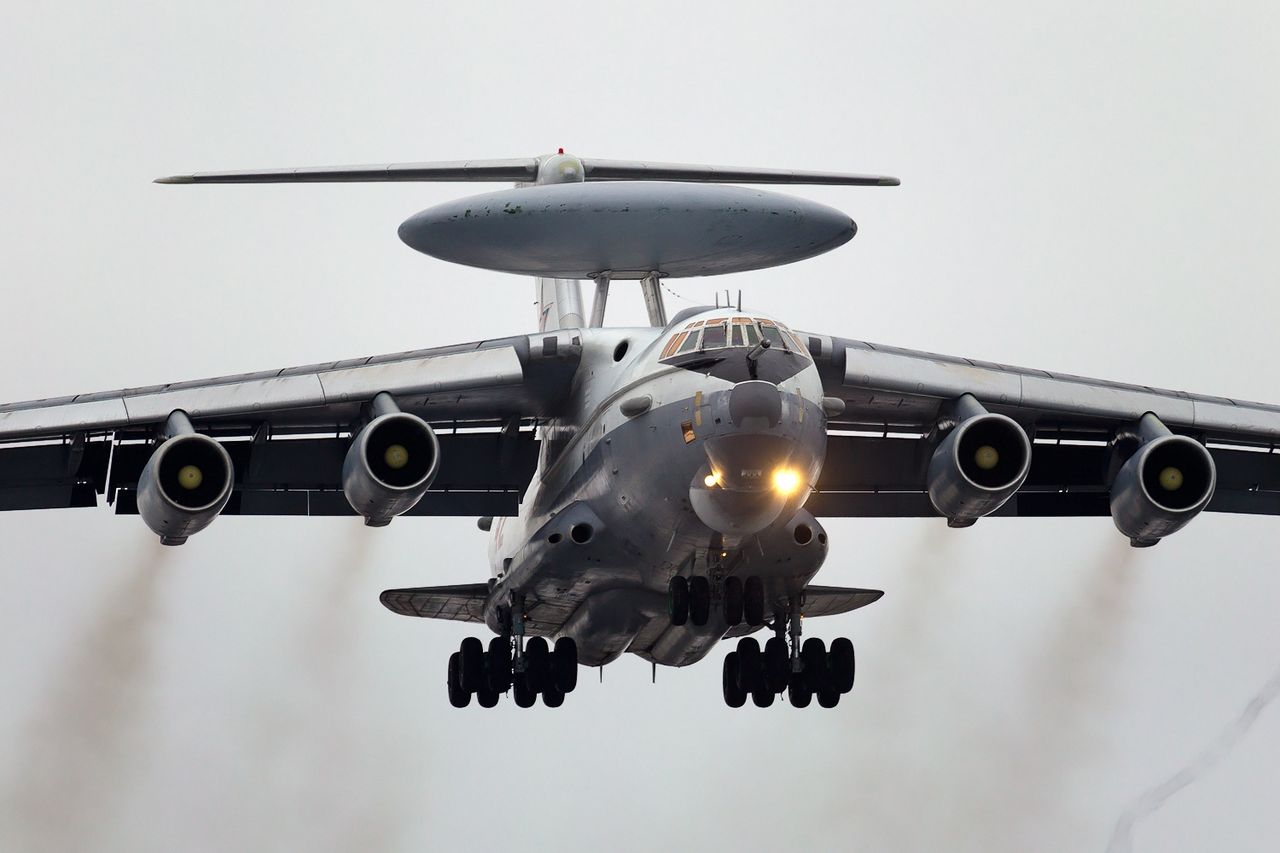
The Russian air force's fleet of lumbering Beriev A-50U radar early-warning planes now has one mission and one mission only: the A-50Us with their fuselage-mounted radars patrol over the likeliest flight paths for Flamingos motoring into the Russian interior to strike strategic industries.
The A-50Us are effective in the role. As recently as June, more Flamingos were getting through Russian defenses. Between 9 and 10 June, the 19th Missile Brigade launched five Flamingos at the VNIIR-Progress electronics plant in Cheboksary, in western Russia, 960 km from the Ukraine border.
Two missiles struck the plant, punching right through anti-drone protections and inflicting major blast and fire damage with their 1,150-kg warheads, the biggest on any Ukrainian deep strike munition.
Russia adapted fast. On 4 July, an A-50U helped missile batteries on the ground spot and shoot down five FP-5s flying toward Votkinsk, 1,360 km from Ukraine. From its perch thousands of feet in the air, the A-50U has a much longer detection range against low targets than any radar on the ground can manage.
Explore further
To catch Ukraine’s cruise missiles, Russia is risking the scarce A-50 radar planes it has no way to rebuild
Targeting A-50Us on the ground and in the air in a series of drone and missile ambushes, the Ukrainians have destroyed two A-50Us and damaged at least two others, reducing the fleet to no more than five. Russia has no way to build replacements. But those five planes are now fully committed to the anti-Flamingo fight.
On 7 July, the Russians reportedly launched four of the irreplaceable planes at the same time in order to coordinate the Flamingo shoot-downs. Now, almost all Flamingos go down in flames before they reach their targets.
Ukraine isn't powerless. Fire Point has been working hard to improve the Flamingo and make it harder to shoot down. Perhaps most importantly, it seems the company tweaked the missile's altimeter in order to help it fly lower. The lower a missile flies, the better chance it has of hiding among the radar clutter created by surrounding terrain.
But if a lower-flying Flamingo is harder to shoot down, the improvement hasn't yet registered in the statistics. For now, Russia has figured out how to take out almost all of Ukraine's heaviest deep-strike missiles.
Ukraine struck a Russian drone-control relay station and two other military targets in occupied Crimea and the occupied south overnight on 12 August, its General Staff said. Explosions rolled across the peninsula through the night, Sevastopol declared repeated air-raid alerts, and towns across occupied Crimea lost power, according to Ukrainian monitoring channels and Russian occupation authorities.
Russia launches its attack drones at Ukraine from sites inside Russia and across occupied territory every day, and relay stations let it steer those drones over long distances. Occupied Crimea is the logistical spine of Russia's hold on southern Ukraine, the funnel through which fuel, ammunition, and reinforcements reach the front, and its fixed airfields, power plants, and control stations sit within reach of Ukraine's growing long-range arsenal.
What the General Staff says was hit
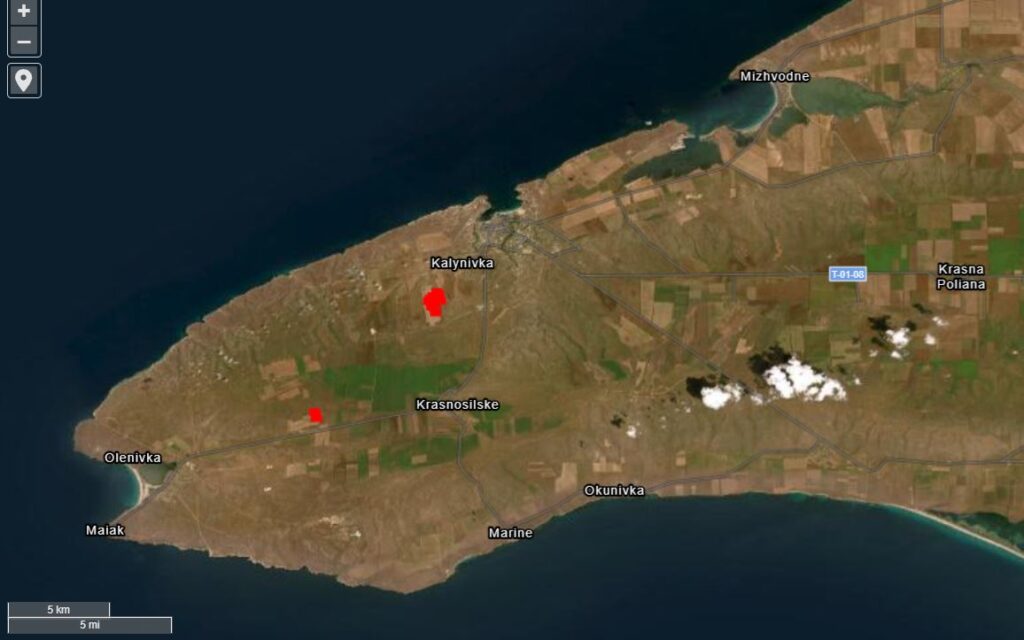
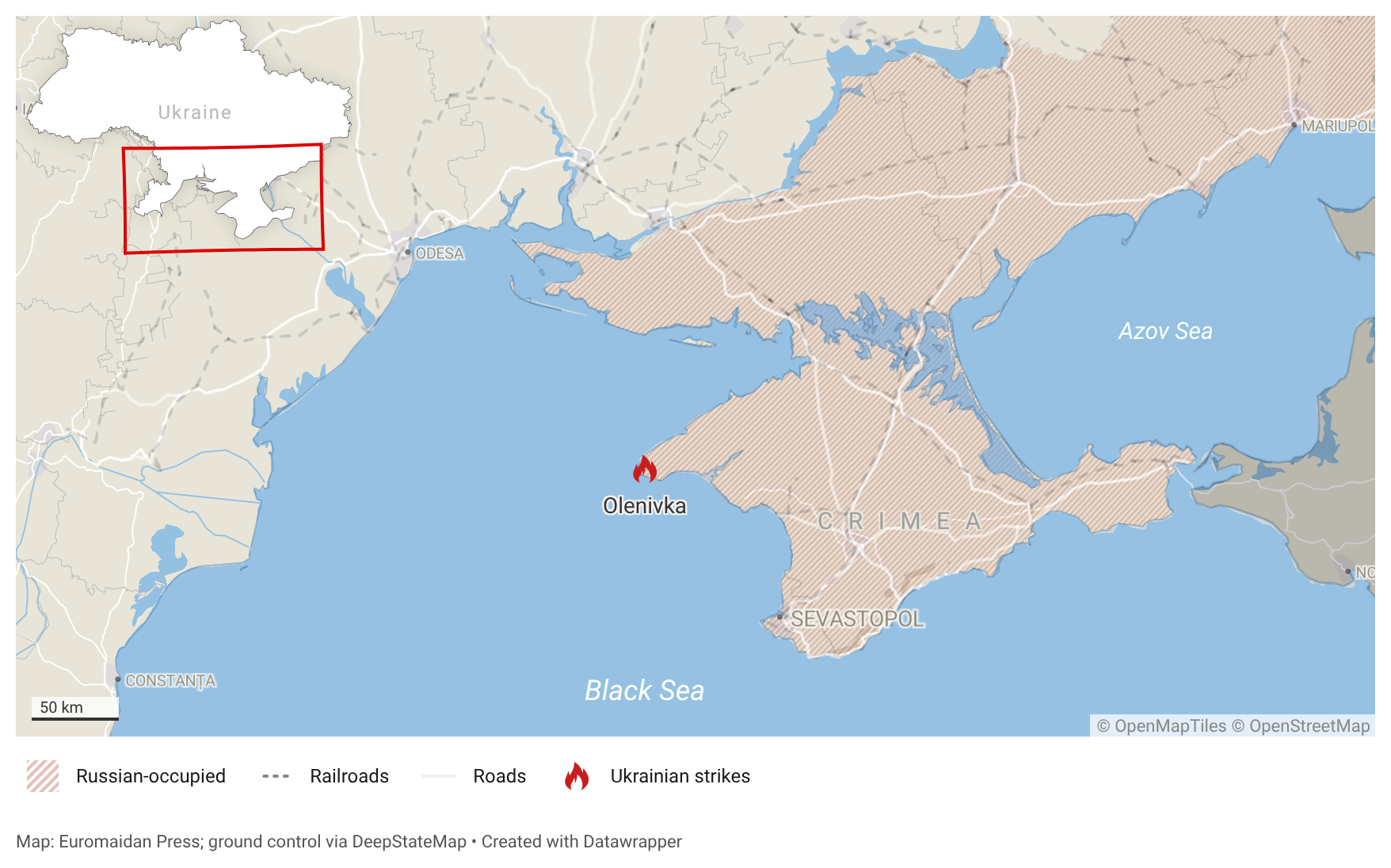
Ukraine's Defense Forces struck three targets overnight, the General Staff reported. The first was a ground relay station used to control Geran and Gerbera attack drones near Olenivka in occupied Crimea. The others were a Russian repair unit near Mariupol in Donetsk Oblast and a staging point for an enemy drone unit near Marivka in Luhansk Oblast.
Hitting these sites weakens Russia's ability to command its attack drones, keep its military vehicles running, and sustain its units, the General Staff said.
Occupied Crimea has three villages named Olenivka, and the General Staff did not say which one it meant. The likeliest is in the Yevpatoria district, at the tip of the Tarkhankut peninsula—Crimea's westernmost cape and its closest point across the Black Sea to mainland Ukraine's Odesa Oblast, a frequent target of Russian drones launched from the peninsula.
Euromaidan Press could not independently verify the strikes and damage.
Explore further
Ukraine’s Crimea campaign could strike seven times more targets with faster funding, Brovdi says
Russia flies these drones through a chain of ground repeaters, often mounted on mobile-operator towers or similar tall structures, boost the control signal so operators inside Russia can steer Geran and Gerbera drones over Ukraine from hundreds of kilometers away. Kyiv has dismantled similar relay networks before, including one Russia had built on towers and rooftops in Belarus.
Explosions and blackouts across occupied Crimea
Sevastopol declared three air-raid alerts, and the Russian-installed governor Mikhail Razvozhaev claimed Russian forces downed more than 30 drones, with the heaviest activity over the Balaklava district and no one hurt.
The Ukrainian monitoring channel Krymsky Veter reported explosions in Feodosia and Kerch, and drones close to the Kacha and Belbek airfields. Residents reported air-defense activity near major cities.
The channel said explosions sounded near the Balaklava thermal power plant, a mobile gas-turbine station, and a substation in Sevastopol. Power cut out across parts of occupied Crimea, leaving Sevastopol, Simferopol, and several more cities and districts without electricity.
Explore further
Sea drones, jet drones, and Neptune missiles hit one Russian port in a single night
After the attack, Krymsky Veter's monitoring group reported two large fires near Sevastopol, citing satellite data. One sat by a road junction near the village of Pervomaiske under Balaklava, where a bridge crosses the railway. The other burned near one of the local beaches. The group also logged an already-extinguished fire in the Inzhyr tract that had been reported the day before.
The same night, Ukraine also struck Russia's naval base at Novorossiysk, the fleet's main Black Sea base since late 2023.
Part of the campaign to isolate Crimea
The overnight strikes fit Ukraine's months-long effort to cut occupied Crimea off from the forces and supplies that sustain it. Ukrainian drones have severed road and rail links to the peninsula, left it rationing fuel under rolling blackouts, and pushed the campaign onto the sea by hunting the tankers that supply it.
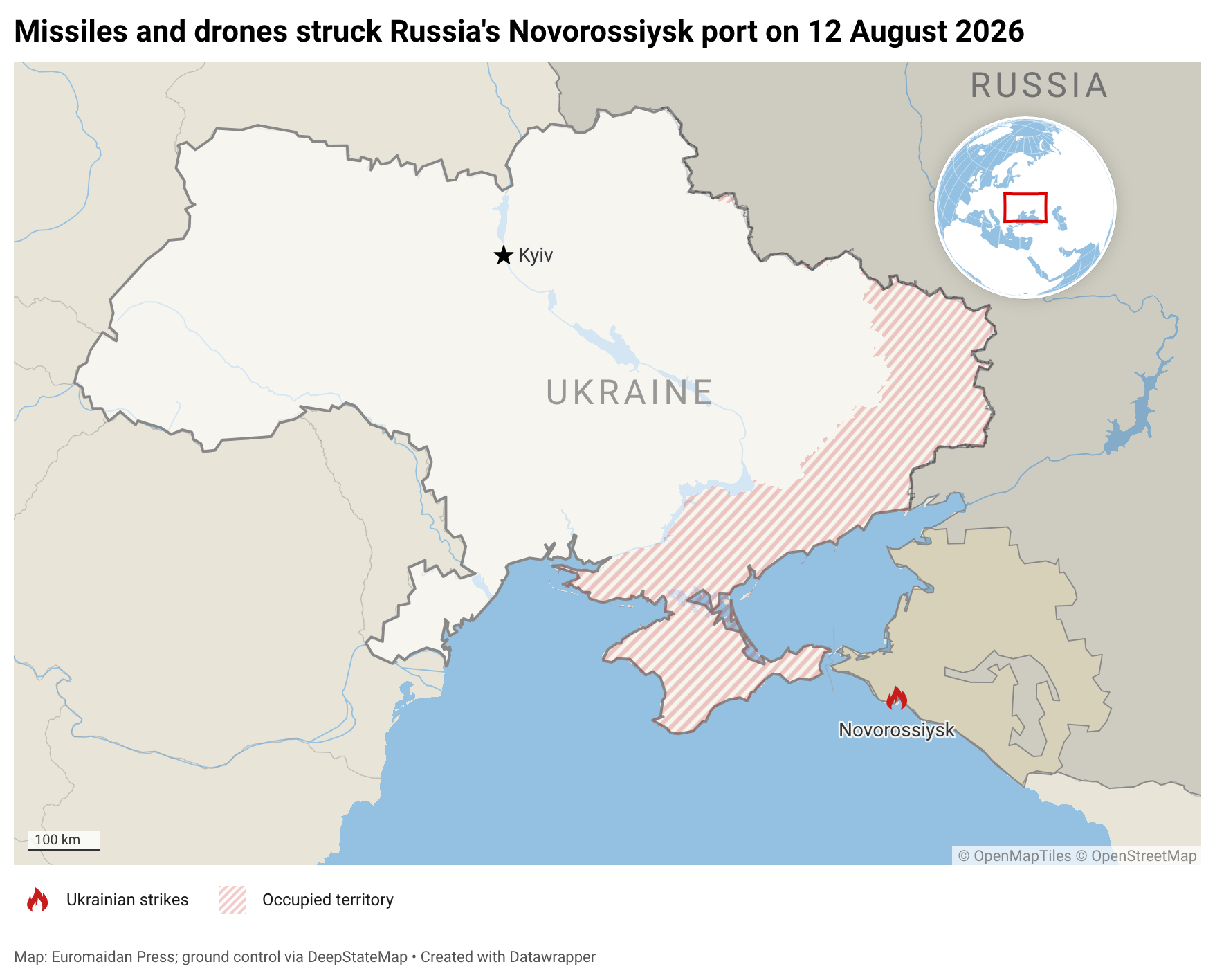
On 12 August 2026, Ukraine targeted Russia's main Black Sea naval base and oil terminal at Novorossiysk overnight. Fires broke out at the port's oil and fleet facilities, two of Russia's largest grain terminals stopped work, and debris damaged homes across the city, according to Ukrainian monitoring channels and local Russian authorities. Ukrainian President Volodymyr Zelenskyy confirmed the operation hours later.
Russia's southern coast is where much of the war is paid for, the loading point for the oil revenue and grain exports that keep the invasion running, and it now sits within reach of Kyiv's long-range weapons.
Kyiv calls it a "unique operation" on the fleet's last big base
Zelenskyy said Ukraine's Defense Forces hit the Novorossiysk naval base overnight on 12 August. The port city is situated more than 350 kilometers from the front line on Russia's eastern Black Sea coast. The Ukrainian president described the assault as a unique operation against the last main outpost of Russia's Black Sea Fleet.
"Our Palianytsia jet drones, Neptune missiles, and naval uncrewed systems precisely struck the designated targets," he said, adding that hits were confirmed on air-defense positions, piers, and seaport infrastructure.
Fires at the Sheskharis oil terminal and the naval harbor
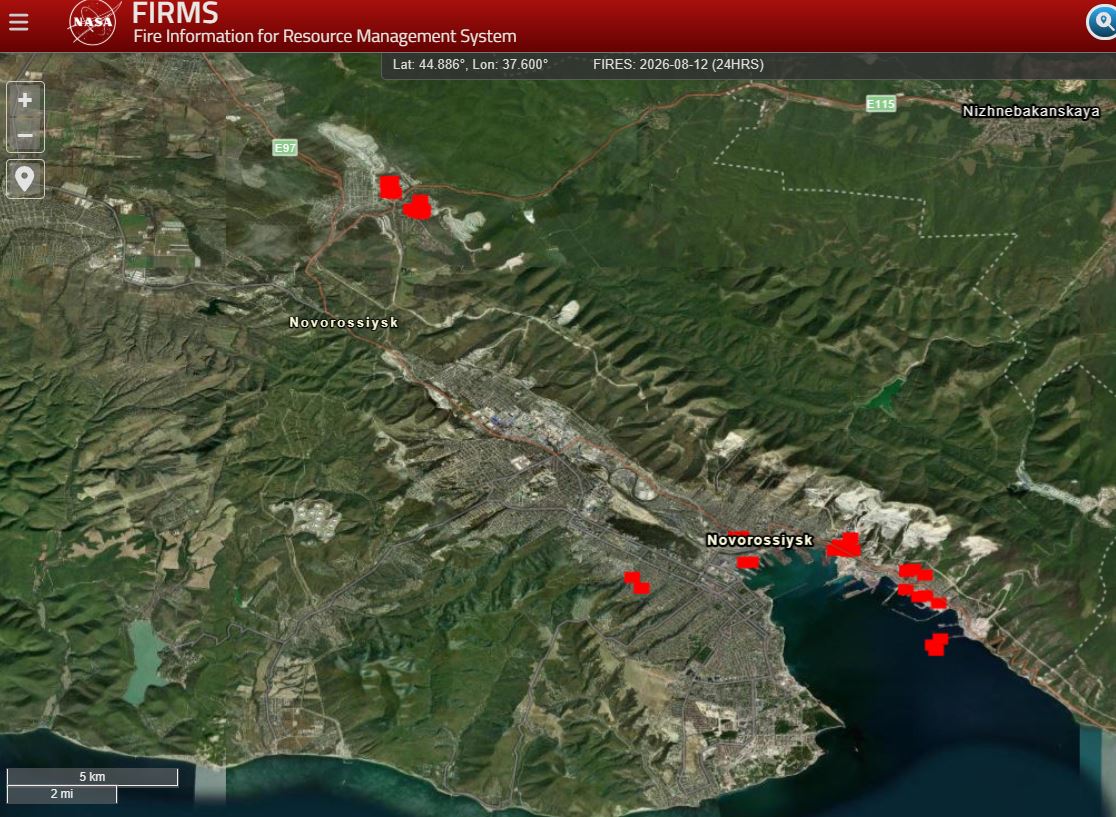
Ukrainian drones hit the oil terminal and the naval base, the Ukrainian defense outlet Militarnyi reported. Its analysis of NASA satellite fire data placed blazes at the Sheskharis complex, where crude loads onto tankers, and near the naval base and fuel-storage tanks.
A NASA FIRMS map shows fires detected in and around Novorossiysk on 12 August 2026. Map: NASA FIRMS
Sheskharis is the endpoint of Transneft's main pipelines and a key export point for Russian crude on the Black Sea. Novorossiysk ships 600,000 to 700,000 barrels of oil a day.
The Ukrainian monitoring channel Krymsky Veter said fires broke out near the Sheskharis pier and the military harbor where Black Sea Fleet ships and submarines dock. Russia moved vessels to Novorossiysk after Ukrainian strikes pushed the fleet out of occupied Crimea.
Two grain terminals stop at the world's top wheat exporter
Novorossiysk's two largest grain-handling terminals halted work after the strikes, Reuters reported, citing four industry sources. The world's top wheat seller, Russia sends most of its exports out through Black Sea ports.
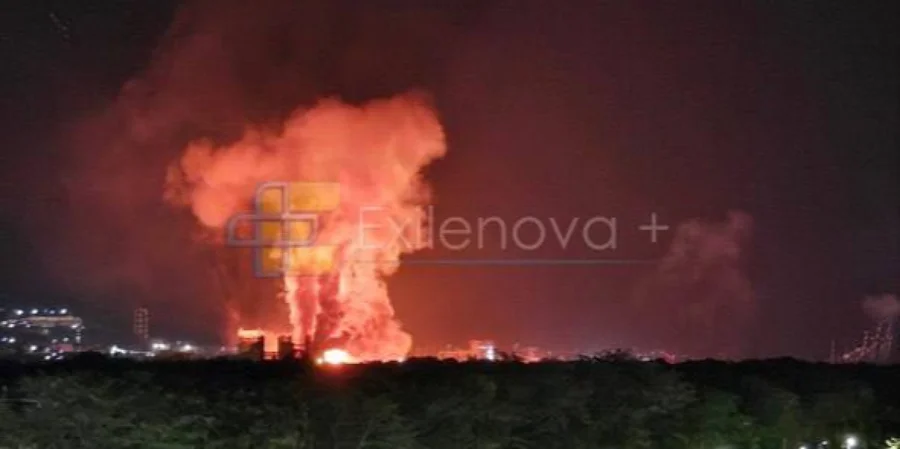
The Novorossiysk grain terminal, which can move 8.5 million tons a year, halted work as owner Demetra Holding assessed the damage. NKHP, a terminal handling 7.1 million tons a year, also stopped, its main owner OZK said, adding that no one was hurt. The Ukrainian monitoring Telegram channel Exilenova+ described NKHP, Russia's largest deepwater grain terminal, as one of the sites hit.
The strikes extend Ukraine's effort to deny Russia the grain and oil revenue that funds the war, a mirror of Russia's own summer campaign against Ukraine's ports: as Moscow strikes Odesa's terminals to choke Ukrainian exports, Kyiv works to shut Russia's own.
Russia says its own drone debris damaged homes and killed two
Krasnodar Krai Governor Veniamin Kondratyev claimed several hundred drones attacked the region overnight and that falling debris struck 21 residential buildings and four enterprises in Novorossiysk. He claimed two people were killed, including an eight-year-old child, and 13 wounded across the krai, with about 90 residents moved to temporary shelters.
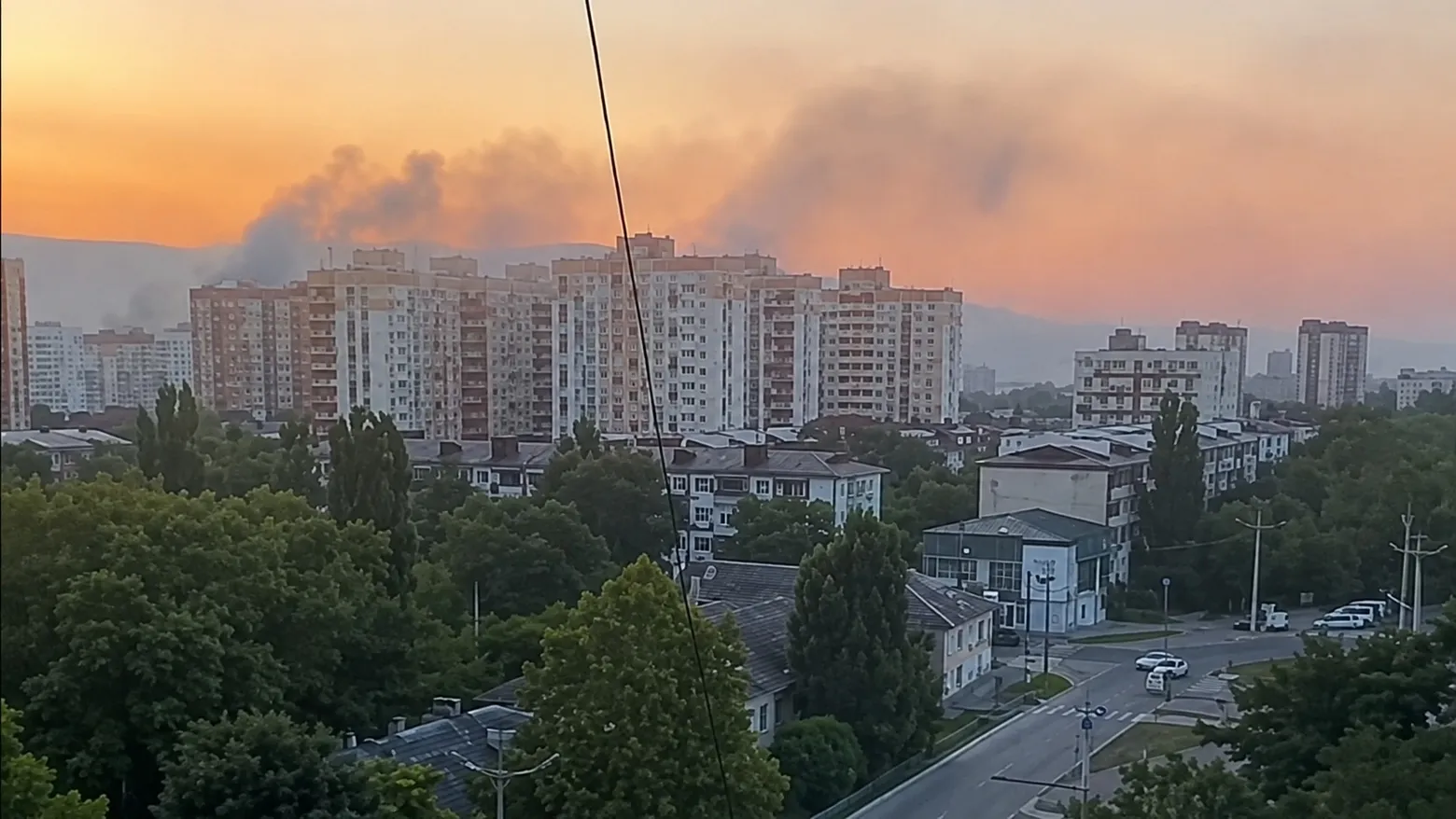
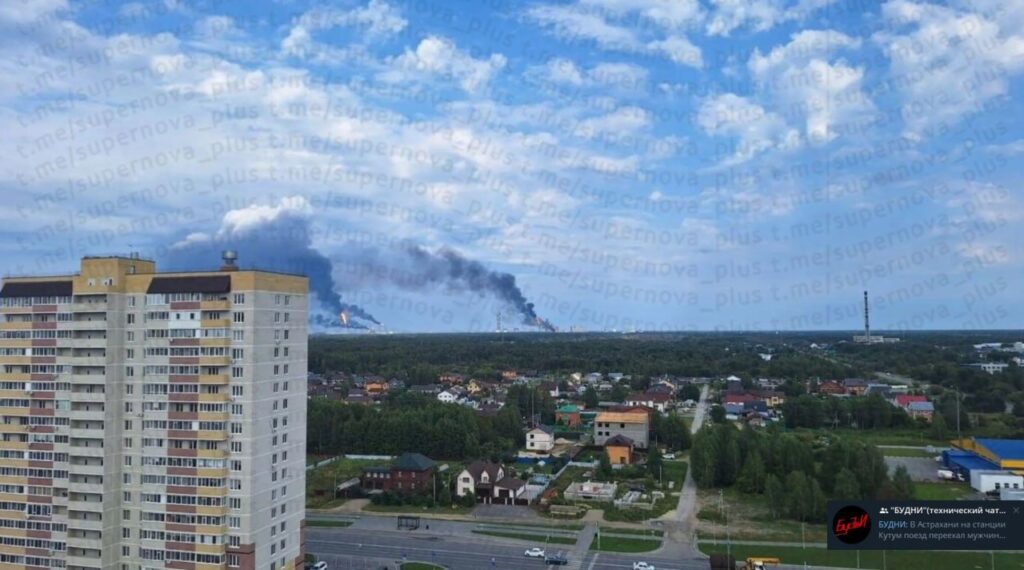
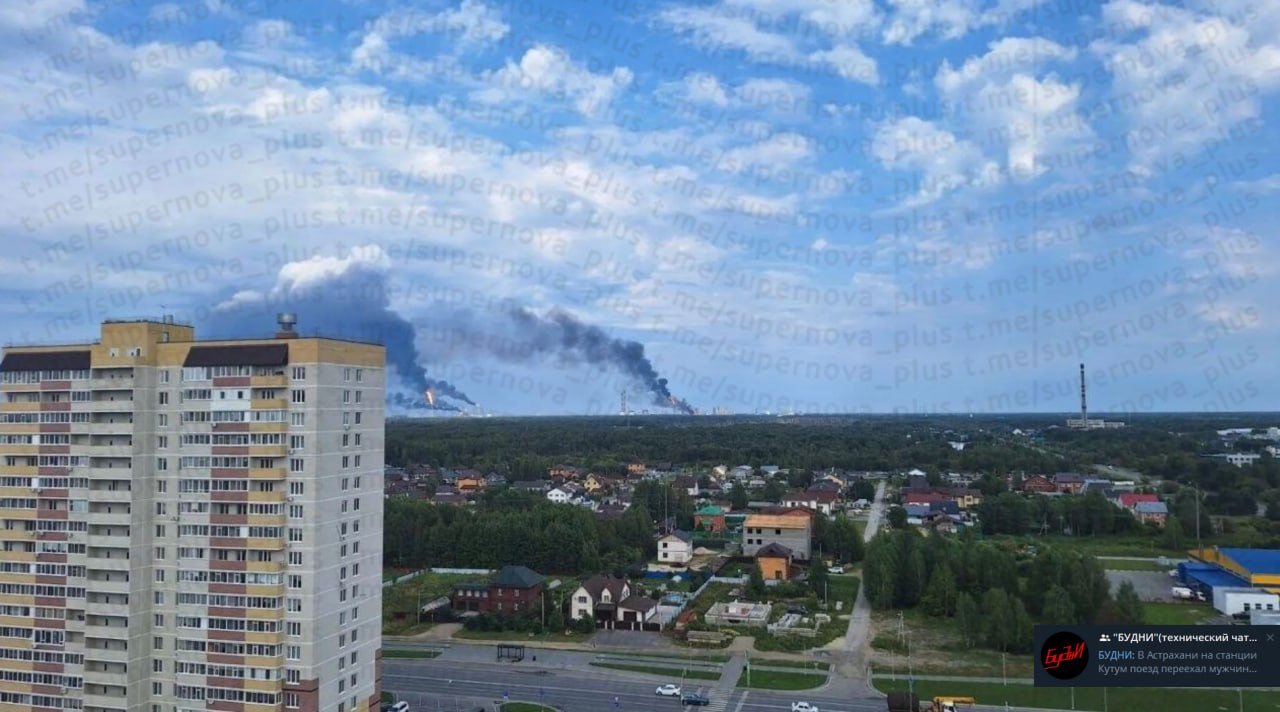
Smoke rises over Novorossiysk after a Ukrainian strike on the Russian Black Sea port, 12 August 2026. Screenshot from a video: Exilenova+
Novorossiysk Mayor Andrei Kravchenko claimed debris hit six residential buildings, a commercial building, and a construction site, and that there were casualties.
The Russian news Telegram channel Astra reported that a café burned on Sukhumskoye Shosse, across the road from the entrance to the Novorossiysk naval base. Astra also found that a strike damaged School No. 15 near the fleet's ship berths.
Part of a widening summer campaign
The strike fits a broader Ukrainian effort this summer to carry the war onto Russian soil and drain the Kremlin's ability to fight. A day earlier, Ukrainian drones set a Wildberries logistics complex ablaze near Voronezh and hit an oil refinery in Orsk. Overnight on 10 August, drones struck a petrochemical plant in Tobolsk and a refinery in Tatarstan.
A Ukrainian drone strike shut the plant that produces 40% of Russia’s liquefied petroleum gas on 10 August, and the country’s fuel crisis snapped back across at least 16 regions within days.
The shutdown of the Sibur ZapSibNefteKhim complex in Tobolsk, western Siberia, removes about six million metric tons of annual LPG capacity from a fuel system that was already under strain.
Explore further
“This is money of his accomplices burning”: Russian partisans and Ukraine hit Siberian plant tied to Putin’s inner circle
Gasoline restrictions had begun easing across Russia at the end of July, when Ukrainian drones temporarily shifted to other targets. When the strikes resumed in early August, fuel rationing returned immediately, the independent Russian outlet 7×7 reported.
Three industry sources told Reuters on Tuesday that the complex stopped operations indefinitely “while the extent of the damage and its consequences are being assessed.”
No LPG volumes were offered from the Tobolsk delivery point on Russia’s commodity exchange—a point that earlier this year handled about 4,000 metric tons of propane-butane mix per day. Sibur declined to comment.
The shutdown of the Sibur ZapSibNefteKhim complex in western Siberia, removes six million metric tons of annual LPG capacity from a fuel system already under strain.
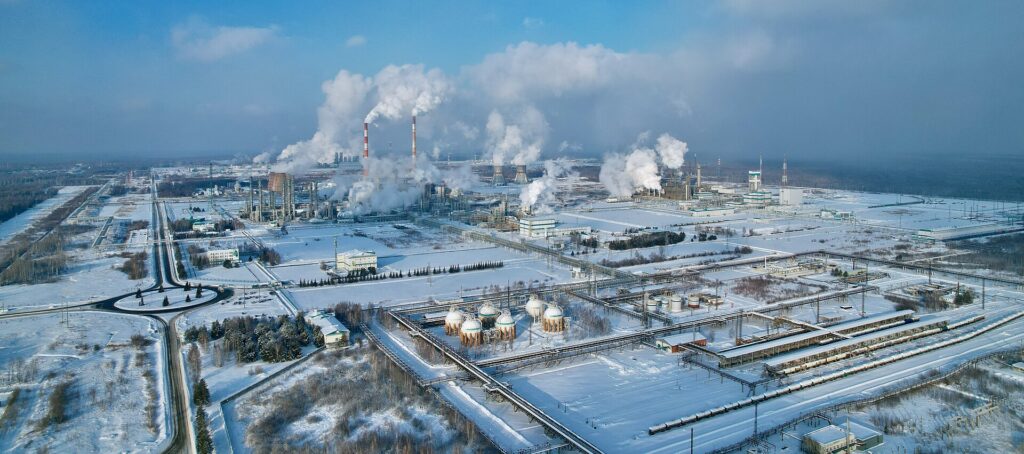
The ZapSibNefteKhim and Tobolsk-Polymer industrial sites in Tobolsk, western Siberia, seen in February 2023. A Ukrainian drone strike shut ZapSibNefteKhim indefinitely on 10 August 2026, taking 40% of Russia’s LPG production offline. Photo: Vyacheslav Bukharov/Wikimedia Commons, CC BY-SA 4.0.
A strike on one unit stopped the entire plant
Tyumen Oblast Governor Aleksandr Moor confirmed a fire at an industrial site following a drone attack but did not identify the facility.
Ukraine’s Special Operations Forces Deep Strike units, working with the Russian insurgent movement Chornaya Iskra (Black Spark), claimed the strike. The plant sits more than 2,200 kilometers from the front line.
Militarnyi’s OSINT analysis identified the specific target as the complex’s central gas fractionation unit—the plant’s entry point, where raw hydrocarbons are separated into usable products before anything else in the production chain can run. About half of ZapSibNefteKhim’s output feeds Sibur’s own petrochemical complex in Tobolsk; the rest goes to market.
Sibur held contracts to supply feedstock to defense-industry enterprises, including the Kamenskiy Kombinat, which produces solid rocket fuel and motors for the Grad, Smerch, and Uragan rocket systems.
Sibur also supplied the Perm Gunpowder Plant, which makes charges for multiple-launch rocket systems, air-defense complexes, and cruise missile boosters, Militarnyi also reported. The Sverdlov Plant and Biysk Oleum Plant, both explosives manufacturers, were also Sibur clients.
Sochi Mayor Andrei Proshunin meets with city officials as fuel remains available at only 38 of the resort’s 58 gas stations. Photo: Andrei Proshunin/Telegram
Fuel rationing returned within days
Across at least 16 regions, the fuel restrictions that had briefly eased in July are back, 7×7 reported.
In Sochi—Russia’s most famous beach resort—Mayor Andrei Proshunin said on Telegram that fuel was available at only 38 of the city’s 58 gas stations. Deputy Mayor Vyacheslav Bauer told residents and tourists to use public transport or stop driving, the Moscow Times reported.
In Bashkortostan, authorities banned gasoline sales in canisters, leaving at least one resident unable to fuel his lawnmower—as he complained to regional head Radiy Khabirov during a televised address, a Bashkortostan outlet reported. Production at the Ufa petrochemical complex is unaffected by the drone strikes, Khabirov said.
Still, the shortage persists for a different reason: every time a drone-alert protocol is activated, fuel tankers halt en route to gas stations, regional official Elena Prochakovsky explained at a briefing reported by Prufy. Three districts remain in a fuel “red zone,” and 19 of 26 gas stations in Sterlitamak are operating.
Lipetsk Oblast Governor Igor Artamonov told residents not to expect improvement for one to two weeks, Lipetsk outlet Ploshchad reported. “If you can leave 10 liters unfilled, the person arriving on empty will thank you,” he said.
Russia’s fuel system was already breaking
The Tobolsk shutdown lands on an already fractured system. By mid-July, fuel rationing had spread to more than half of Russia’s regions. Ukraine’s drone campaign had struck Russian refineries 194 times in the first half of 2026 alone—eleven times the previous year’s pace—knocking nearly half the country’s refining capacity offline, Ukraine’s General Staff reported on 4 July.
Repair timelines keep slipping because sanctions block the spare parts Russian plants need. To plug the gap, Russia has banned gasoline exports, permitted lower-grade fuel, and begun importing gasoline from India and Morocco, refined from its own crude—shipping it 14,000 kilometers home because its refineries cannot meet domestic demand.
The Tobolsk shutdown removes more LPG output than any single strike of the war. Russia was already rationing fuel in more than half its regions before this strike.

 Connexion

 (@AMK_Mapping_)