
 Connexion
Iskander Russia fired at Kyiv Oblast in July held 62 American parts. Ukraine has now named more than 100 Russian ballistics producers and wants its allies to sanction all of them
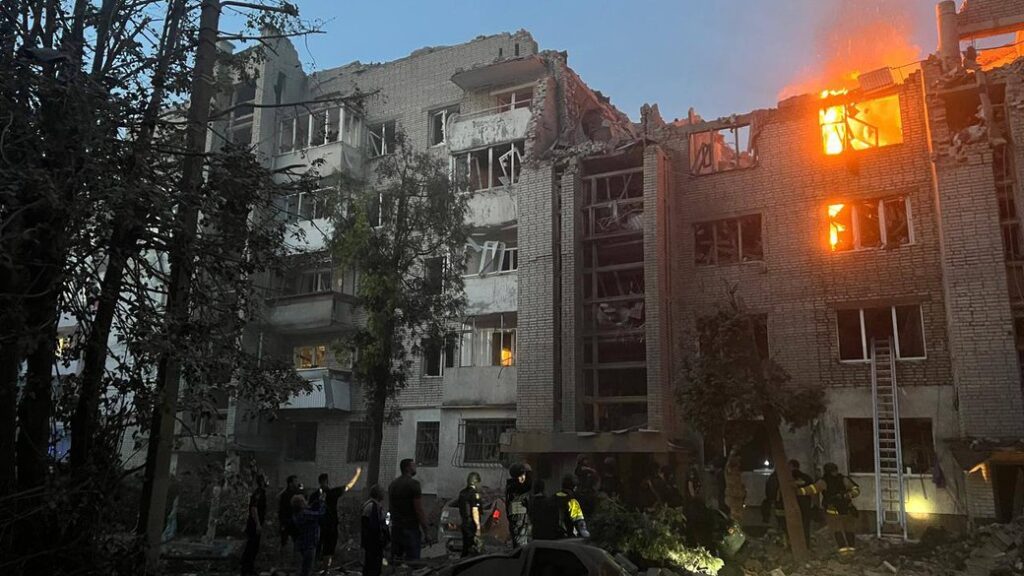
Ukraine has drawn up a list of those who build Russia's ballistic missiles and wants all of them sanctioned by its allies. Kyiv is asking partners to impose sanctions on more than 100 Russian ballistics producers, presidential sanctions commissioner Vladyslav Vlasiuk said at a press conference in Kyiv, according to Ukrinform.
The demand rests on physical evidence. An Iskander that Russia fired at Kyiv Oblast on 10 July held more than 140 foreign components, 62 of them American, alongside parts from Switzerland, Germany, Taiwan, China, and Japan, Vlasiuk reported in July. Most were made recently, which means the parts are still reaching Russia. Naming the factories is Ukraine's attempt to close the gap at the production end rather than chase each shipment.
The plan runs on synchronization
The commissioner laid out several parts of the plan at the press conference. The first is getting the same producers sanctioned everywhere at once, so a firm blocked in one country cannot operate through another. He said the files were handed to partners a few weeks ago, and Ukrainian specialists expect to identify every producer on allied lists by September or October.
The plan also covers what Vlasiuk called kinetic sanctions, meaning strikes on Russian defense-industry sites. He named the Kamensky Combine, which makes components for rocket fuel, as one such target.
The critical parts are still foreign
Ukraine keeps finding Western microelectronics in identified Russian ballistics, including Iskander-M missiles and those used by the S-400 system, with parts traced to the US, Japan, Germany, Taiwan, France, Britain, and Switzerland. The most sensitive elements are the Kometa satellite navigation system and autonomous inertial guidance units, which run on American, Swiss, and French microelectronics.
Ballistics is the most demanding product for quality and precision, Vlasiuk said, which is why those two systems are the chokepoint.
Ukraine wants smaller packages, sooner
The commissioner asked partners to adopt more stringent export controls, up to licensing or banning the export of sensitive components to third countries that help Russia evade sanctions. Ukraine has also compiled a list of more than 10 critical materials, including ammonium perchlorate, aluminum powder, and tungsten, as well as the numerically controlled machine tools Russia needs to build the missiles.
The EU has already begun work on a large 22nd sanctions package. Ukraine is urging it not to wait, asking instead for an interim ballistics package in September and another in October, moving in small steps as Ukraine, Britain, and Canada already do.
Read also
-
Russia’s number two online retailer reports drone attacks on logistics hubs in two regions
-
Ukraine to get 90% of drones under planned Finnish production deal, Finland’s president says
-
Norway’s Air Force put its first anti-drone system into service at the fighter base—and wants its own drones doing the same job
