❌

Vue normale

  • ✇Euromaidan Press
  • First time since 2018: NATO’s top military body went to Kyiv to study the war it may one day face
    NATO's Military Committee, the Alliance's highest military body, visited Kyiv on 6 October to reaffirm support for Ukraine, its chair, Admiral Giuseppe Cavo Dragone, said. It was the committee's first official visit to Ukraine's capital in eight years. The officers came to hear how Ukraine is fighting Russia and to draw lessons for NATO's own defense, and Dragone used the visit to warn Moscow. Russia's war no longer stays inside Ukraine: its drones, saboteurs, and pressure campaigns inc
     

First time since 2018: NATO’s top military body went to Kyiv to study the war it may one day face

7 octobre 2026 à 09:52

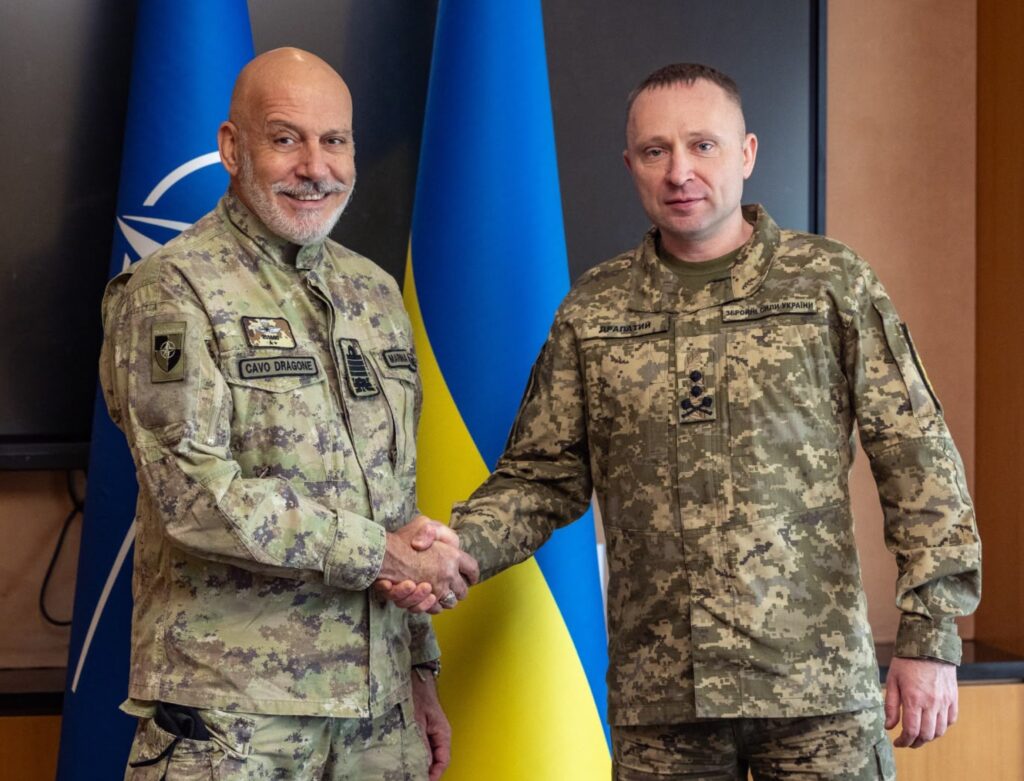
first time since 2018 nato's military chiefs went kyiv study war one day face · post chair nato committee admiral giuseppe cavo dragone (left) commander-in-chief ukraine's armed forces mykhailo drapatyi

NATO's Military Committee, the Alliance's highest military body, visited Kyiv on 6 October to reaffirm support for Ukraine, its chair, Admiral Giuseppe Cavo Dragone, said. It was the committee's first official visit to Ukraine's capital in eight years. The officers came to hear how Ukraine is fighting Russia and to draw lessons for NATO's own defense, and Dragone used the visit to warn Moscow.

Russia's war no longer stays inside Ukraine: its drones, saboteurs, and pressure campaigns increasingly reach NATO members. That turns Ukraine, the only European army facing Russia in combat, from a country the Alliance helps into one it learns from.

All 32 allies at the table

Dragone brought the military representatives of all 32 member states to hear the latest battlefield assessment directly from Ukraine's commander-in-chief, Mykhailo Drapatyi, and his staff. They also came to learn what more NATO can do to support Ukraine, he said in an address recorded in Kyiv.

"After eight years, the NATO Military Committee comes back to Kyiv for an official visit. But while we were not physically present here, Ukraine is in our thoughts, in our discussions, in our decisions and following action every single day," Dragone said.

The visit fulfilled a promise he made to Drapatyi during their last conversation in August, the admiral said. It also follows a June visit to Kyiv by the North Atlantic Council, NATO's main political decision-making body. "We are here in full strength with a clear message. The bond between NATO and Ukraine is stronger and stronger," he said.

With the whole NATO Military Committee, we visited Kyiv, yesterday, to reaffirm unwavering support for #Ukraine.

Discussions with Major General Drapatyi, Commander-in-Chief of the 🇺🇦 Armed Forces, focussed on Ukraine’s military priorities and lessons learned to strengthen… pic.twitter.com/kar2l1Xlq4

— Admiral Giuseppe CAVO DRAGONE - NATO CMC (@CMC_NATO) October 7, 2026

Lessons from Ukraine's commanders

The talks with Drapatyi focused on Ukraine's military priorities and lessons learned to strengthen Allied preparedness for current and future threats, Dragone wrote on X. The delegation also paid respects at the Wall of Remembrance of the Fallen for Ukraine in Kyiv.
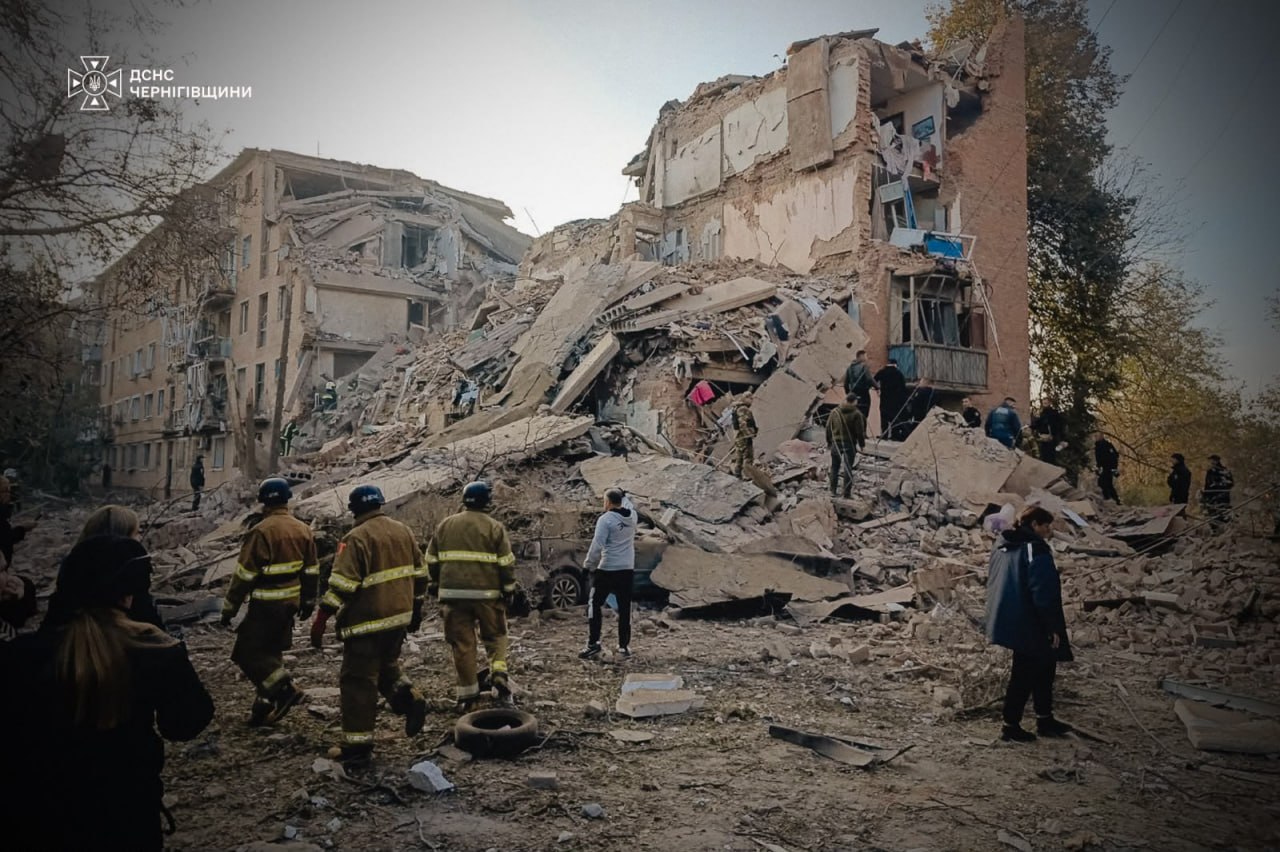
five dead pryluky two each kyiv kremenchuk oleksandriia russia's night 70 missiles · post rescuers collapsed section apartment building chernihiv oblast after russian missile strike 7 2026 ukraine news ukrainian
Explore further

14 dead in Pryluky, two each in Kyiv, Kremenchuk, and Oleksandriia: Russia’s night of 70 missiles

In his address, Dragone said Ukraine's courageous and resilient spirit remains unbreakable and serves as an example to other nations.

"An example that combines with all the lessons we can learn from your commanders, from their experience, which will ultimately help our Alliance too to better face today's and tomorrow's threats," he said.

To Russia: "You are failing"

Dragone also addressed Russia directly. NATO stands unwavering with Ukraine in the face of Russia's continued aggression and its reckless hybrid activities in member countries, he said.

"To those who think that by perpetrating acts of sabotage, cyberattacks, and violation of the airspace in national NATO territory they will undermine this support and our resolve, I will respond: You are failing. NATO support for Ukraine continues to grow, and our unity is stronger than ever."

Commander-in-Chief of Ukraine's Armed Forces Mykhailo Drapatyi (right) speaks at talks with the NATO Military Committee as its chair, Admiral Giuseppe Cavo Dragone (center), listens, Kyiv, 6 October 2026
Commander-in-Chief of Ukraine's Armed Forces Mykhailo Drapatyi (right) speaks at talks with the NATO Military Committee as its chair, Admiral Giuseppe Cavo Dragone (center), listens, Kyiv, 6 October 2026. Photo: Admiral Giuseppe Cavo Dragone/X

Russia bears full responsibility for such dangerous and unacceptable behavior, and allies will keep sharpening their tools and strengthening deterrence and defense, the admiral added.

Drapatyi became Ukraine's commander-in-chief in July, when President Volodymyr Zelenskyy replaced Oleksandr Syrskyi after a week of political turmoil.

Kyiv under fire, Russian troops pushed back near Lyman

The day after the visit, Russia struck Kyiv and 12 oblasts with about 70 missiles. In recent weeks, Russian attacks have cratered the capital's bridges and hit a school, a café, and warehouses, as well as a maternity hospital. Ukrainian troops also retook ground near Lyman in the Vivaldi counteroffensive.

ISW connects drone crashes in Moldova and Romania, a Starlink fire in Poland, and a Berlin airport shutdown into one Russian pattern

25 septembre 2026 à 09:11

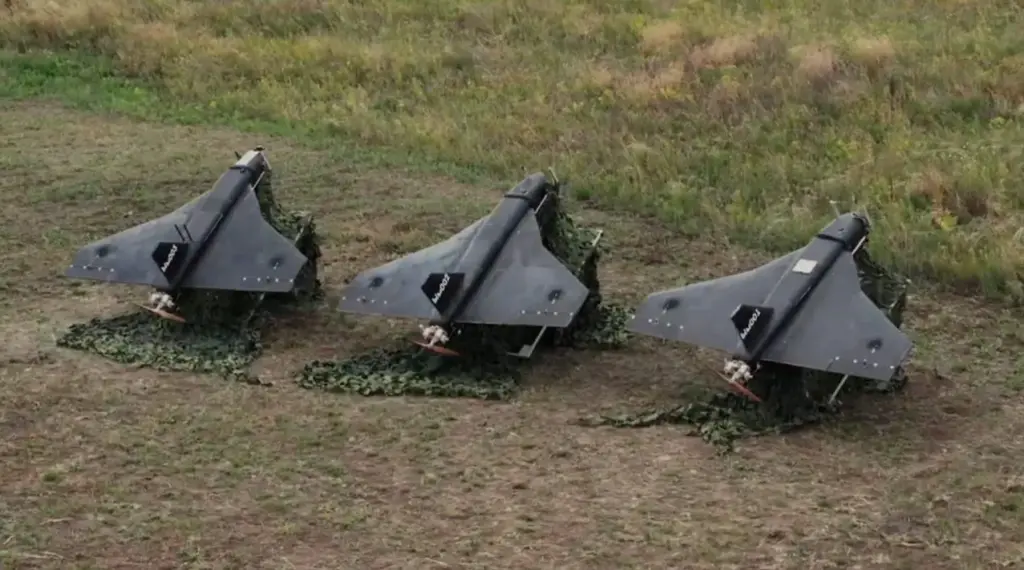
Three gray, triangular-wing drones sit on camouflage netting in a grassy field.

Several recent incidents across Europe were conducted by Russia or are likely attributable to Russia, ISW assessed in its 24 September report, though authorities have not officially linked the Polish and German incidents to Moscow.

Russia's full-scale war against Ukraine has expanded into a parallel campaign of provocations against European defense and logistical infrastructure. The Kremlin is using drones, arson, and undersea cable sabotage to degrade Europe's will and ability to support Ukraine, while deliberately intensifying the frequency of airspace violations to erode the boundary between hybrid and kinetic war.

Drones over Moldova and Romania

Four Russian drones flew over Bukovyna and targeted an energy facility and border crossings with Moldova and Romania, Chernivtsi Oblast Military Administration head Ruslan Osypenko reported. Ukrainian forces shot down three. The fourth flew toward Suceava County in northeastern Romania.

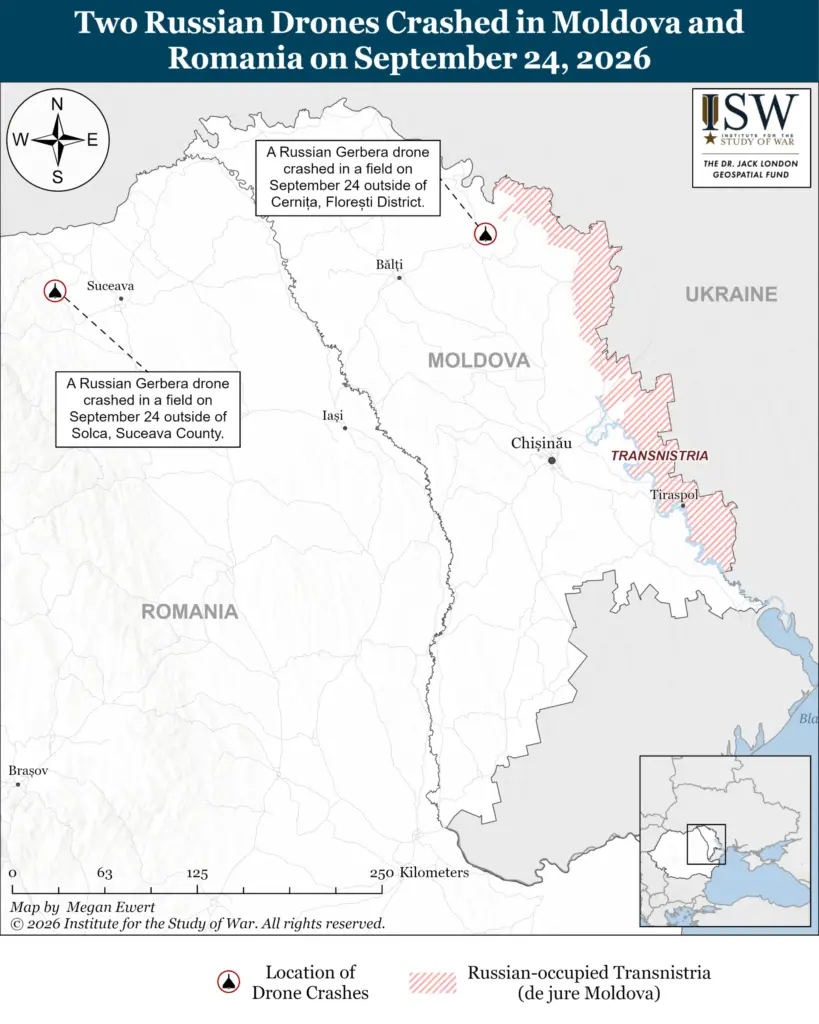
isw drone incursions sabotage intelligence warnings across europe coincidences—they russian operations · post two gerbera crash sites moldova romania 24 2026 two-russian-drones-crashed-in-moldova-and-romania-on-september-24-2026-scaled ukraine news ukrainian reports
ISW map showing two Russian Gerbera drone crash sites in Moldova and Romania on 24 September 2026. Map: ISW

A drone crashed in Cernița, Florești district, Moldova—preliminarily identified as a Russian Gerbera type, the first such device found in the country. It carried an onboard camera, hit a tree, and exploded, Moldovan police said. Romania's Defense Ministry reported a second aerial vehicle entered Romanian airspace for four minutes and crashed near Solca in the same border region; geolocated footage confirmed it was also a Gerbera, ISW noted. Poland evacuated the Hrubieszów and Dorohusk border crossings for 30 minutes, Prime Minister Donald Tusk said. Three countries were put on alert by a single night of Russian strikes.

"Intentional and accidental Russian drone incursions into NATO and Moldovan airspaces are likely part of the Kremlin's efforts to normalize airspace violations by intensifying their frequency," ISW assessed.

Sabotage in Poland and Germany

A fire engulfed the power system and backup generator at a Starlink ground station in Wola Krobowska, central Poland, on the evening of 23 September. Deputy Prime Minister Krzysztof Gawkowski confirmed it was sabotage aimed at cutting internet access, including for Ukraine's military. Authorities have not identified who was responsible, but the act aligns with Russia's "new" doctrine of attacks, Gawkowski said. The station is now operating normally.

German authorities suspended operations at Berlin-Brandenburg airport for 45 minutes the same evening after staff reported a drone sighting, Die Zeit reported. Federal police could not confirm it. ISW assessed both incidents fit Russia's wider pattern of sabotage against European defense assets, though neither has been officially attributed to Russia.

Scattered debris and a scorched patch of ground in a cornfield beneath a cloudy sky.
Explore further

Russian attack puts three countries on alert as drones enter Moldova and Romania

Western intelligence warnings

A Lithuanian Defense Ministry source reported on 23 September that Russia could launch Gerbera drones from a shipping container in the Mediterranean against Spain, France, and Italy. Danish Defense Intelligence assessed on 24 September that Russia will intensify its hybrid war in coming months, including destructive cyber attacks and sabotage carrying a high risk of casualties, and that there is a low but growing risk of a limited Russian military attack on a NATO border state. It sees no indications of an outright invasion. The CIA reportedly warned Poland that Russia may sabotage underwater cables to disrupt its banking system, according to Newsweek Polska journalists.

NATO tracked and confronted Russian submersibles rehearsing deployment of a new cable-disabling weapon near Svalbard in spring 2026—no cables were damaged, but the operation demonstrated Moscow's intent, Reuters reported. Shadow fleet vessels likely served as drone-launch platforms for incursions into NATO airspace, ISW noted.

"The increasing frequency of such warnings suggests that Western intelligence agencies are picking up indicators that the Kremlin is looking to diversify its platforms and means for conducting attacks against NATO and European states and is considering conducting such attacks," ISW assessed.

ISW said it has not yet seen evidence that Russia has conducted the attacks the warnings describe.

Denmark's assessment—that a limited Russian military strike on a NATO border state could come in the coming months—suggests the boundary between hybrid provocations and military action is narrower than European policy has assumed. ISW's synthesis reframes what governments have treated as separate incidents into one campaign.

"Intentional and accidental Russian drone incursions into NATO and Moldovan airspaces are likely part of the Kremlin's efforts to normalize airspace violations by intensifying their frequency," ISW assessed.
"The increasing frequency of such warnings suggests that Western intelligence agencies are picking up indicators that the Kremlin is looking to diversify its platforms and means for conducting attacks against NATO and European states and is considering conducting such attacks," ISW assessed.
❌