❌

Vue normale

Postal service Nova Post says it has already shot down Russian Shahed drones, as Ukrainian businesses take air defense into their own hands
27 octobre 2026 à 11:48

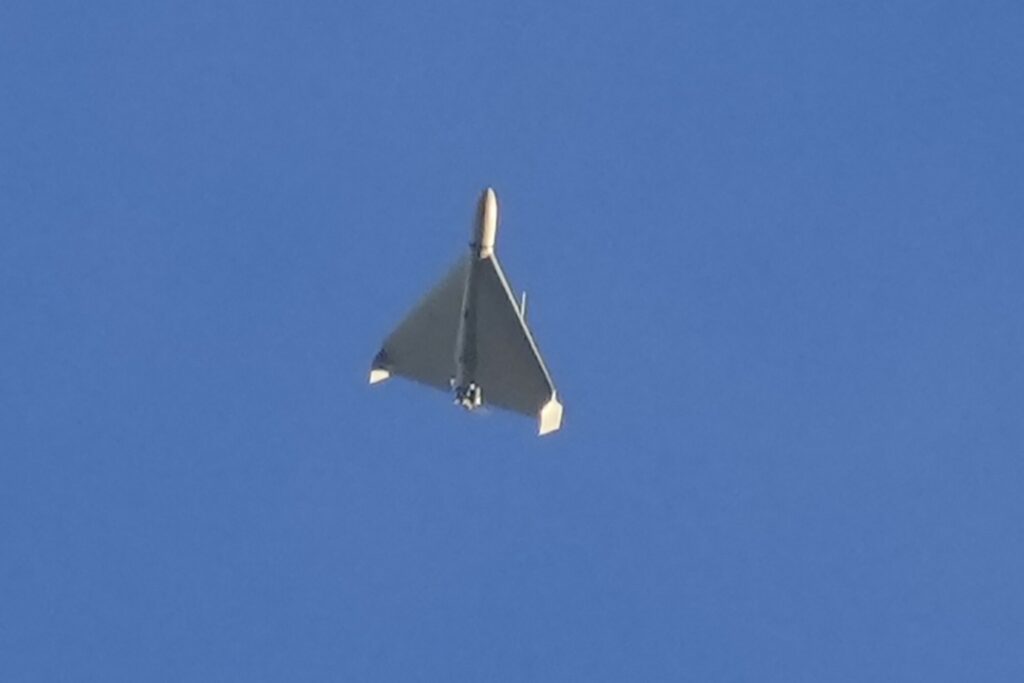
shahed-136 Geran-2 iranian airborne A drone is seen in the sky seconds before it attacked buildings in Kyiv, Ukraine, on Oct. 17, 2022. The Russian military has been using the Iranian Shahed exploding drones to strike Ukraine's vital infrastructure for more than a year. (AP Photo/Efrem Lukatsky/EastNews

Ukrainian postal company Nova Post has established its own private air defense capability and has already shot down Russian Shahed attack drones, company co-owner Viacheslav Klymov said on 27 October, according to Interfax-Ukraine.

As Russia increasingly targets Ukrainian factories, warehouses, transport hubs, and other civilian infrastructure, localized air defense is becoming more important. Ukraine’s expanding private air defense program allows businesses to help protect their facilities while operating within the country’s military air defense command system.

“We are one of the few companies that has implemented this project. I don’t want to disclose figures, but we have Shahed shootdowns,” Klymov said at the 12th Kyiv International Economic Forum, according to Interfax-Ukraine.

Klymov also argued that businesses can take on responsibilities that were previously considered exclusively the state’s domain. He pointed to firefighting as another area where companies can strengthen their own response capabilities.

Nova Post employees already extinguish many fires caused by Russian attacks on the company’s facilities without waiting for the State Emergency Service of Ukraine (DSNS) to arrive, he said. Large businesses are also looking for fire engines in Europe to establish their own firefighting units.

Aftermath of Russian strikes on a Nova Poshta warehouse in Sviatopetrivske near Kyiv on 28 August 2026. Photo: Anton Ovsienko/Facebook

Private air defense expands across Ukraine

Ukraine began allowing private companies to establish air defense units under a government-approved framework in November 2025. These units operate under Air Force command, with the military coordinating their missions and integrating them into the national air defense network.

Nearly 100 companies have reportedly joined the experimental program. About 50 air defense groups had been formed, and crews from six companies were already carrying out combat missions. By 14 October, the groups had downed more than 60 aerial targets, mostly Russian drones, according to Ukraine’s Defense Ministry.

The program allows participating businesses to help defend industrial sites and critical infrastructure using capabilities that include interceptor drones and remotely operated heavy machine guns. The approach adds another layer of protection without requiring the military to cover every facility with its own units.

The need for such protection has grown as Russia continues launching long-range attack drones against civilian and industrial targets across Ukraine. Localized air defense can help protect specific sites and reduce the burden on military units, although it remains part of a coordinated national system rather than an independent replacement for military air defense.
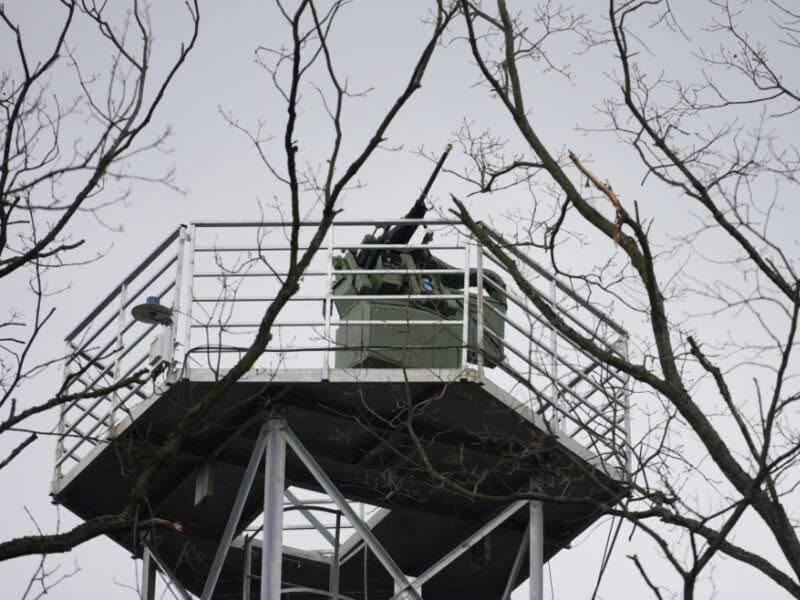
Remote-controlled machine gun turret used in a privately developed air defense system in Ukraine. Photo: Serhii Beskrestnov
Explore further

Ukraine’s air defense goes private: businesses can now buy point coverage for their own sites

Not every company sees private air defense as the answer

The approach has its limits. On 26 October, Kateryna Zahorii, chair of the board of directors of major pharmaceutical company Darnytsia, said her company had studied private air defense but decided against deploying it, Interfax-Ukraine reported.

Zahorii said the changing nature of the threat could make the investment difficult to sustain, as companies might need to keep upgrading their defenses. Darnytsia is instead prioritizing attack monitoring, employee shelters, and safety procedures. The company has been hit by Russian forces three times in September, according to NV.

To scale up air defense without straining the front, Ukraine enlists business. In under year nearly 100 companies have joined, their crews downing 60-plus targets

14 octobre 2026 à 20:17

Ukraine's mobile gun team. Photo: Ukraine's Air Force via Facebook

Ukraine is handing its factories the right to shoot back at the Russian drones hunting them. Nearly 100 companies have joined Ukraine’s experimental program that allows private enterprises to operate their own air defenses, granting them authority to conduct air defense operations and form their own crews, the Defense Ministry says.

Russian drones strike Ukrainian factories, warehouses and power sites so relentlessly that the state cannot shield every one, so the Defense Ministry is enlisting the businesses being hit to defend themselves.

The program has grown quickly, from 24 companies in April to 81 by mid-September and nearly 100 now, and its crews have already destroyed a substantial number of Russian aerial targets.

The companies range from operators of critical infrastructure to state and private firms across the economy. The project is carried out under a Cabinet resolution dated 19 November 2025, which mobilizes enterprise resources to support Ukraine’s defense against air threats.

Civilian crews that answer to the Air Force, not themselves

These teams do not fire into a shared sky on their own. About 50 air-defense groups have been formed and are operating under the relevant Air Force commands, and crews from six enterprises are already carrying out combat missions, the ministry says. The rest are training or finishing preparation before they join.

As of 14 October, the groups have downed more than 60 aerial targets, mostly Russian drones, using interceptor drones and automated turrets with heavy machine guns, according to the ministry. The Air Force command sets each group’s targets based on its weapons and tasks, and, jointly with the company, defines its sector, personnel, and equipment.

Who pays, and who pulls the trigger

The arrangement splits cost and control. Some weapons the enterprises buy with their own money, holding end-user status, while a company can also ask the Air Force to lend arms and ammunition from military stocks.

Private air defense is one layer of a multi-tiered shield, meant to protect industrial capacity, critical infrastructure and civilian staff from systematic drone attacks. The crews began combat work in 2026.

From making interceptors to guarding sky: Ukrainian drone maker gets its own private air defense unit and will pay for it from weapon sales

5 octobre 2026 à 15:28

ukraine spent three years learning catch russian drones—so russia made fly faster · post geran-3 jet-powered attack drone wild hornets c1c840787fca380485636007cf683d71 news ukrainian reports

A Ukrainian drone maker just got its own air defense unit, and says it has already downed Russian jet-powered drones. Ukraine's Defense Ministry has issued an order granting the Night Hornets, the anti-Shahed unit of interceptor maker Wild Hornets, the status of a private air defense, and the company announced it is starting to build its own network of remotely launched interceptor drones.

Russia has sharply increased its use of jet-powered Shahed drones, which cuts the reaction time of Ukraine's mobile fire groups from about a minute to as little as six seconds. Now, a private company joins the air defense line, while Ukrainian military intelligence says Russia is producing up to 500 Geran-4 and Geran-5 jet drones a month.

The planned network will combine remote-control centers, a grid of remote interceptor launches built on the company's Hornet Vision Ctrl technology, and field positions. Wild Hornets will not sell protection for individual sites and will pay for the unit from drone sales profit.

"The unit has more than 50 downed Shaheds to its name, including jet-powered ones. We create technologies that work. We use them ourselves to protect our country," the company says.

Air Force commanders will direct the crews

The crews already go on daily combat duty alongside the military and will take orders from the Air Force command. The unit draws on Wild Hornets instructors and test pilots, including veterans of the war and pilots who rose from beginners to instructors. The company wants to fold private air defense into the country's overall system, including over Kyiv.

Air alerts now swallow nearly a third of mall hours

Due to Russia's jet-powered drones, air-raid alerts covered 30.8 percent of shopping-center operating hours across Ukraine in September, a record, up from 22 percent in August and 14.1 percent a year earlier, the Ukrainian Council of Shopping Centers reports. The average mall has now lost 176.5 working days since the full-scale invasion, including 9.6 in September alone.

Kyiv shows the sharpest jump. The share of alert time during mall hours in the capital rose from 11.6 percent in August to 32.7 percent in September, the council said.

The damage reaches well beyond the malls. Ukraine's Economy Ministry expects losses from Russian strikes to reach up to $10 billion this year, Economy Minister Oleksandr Kravchenko said on 12 September.

❌