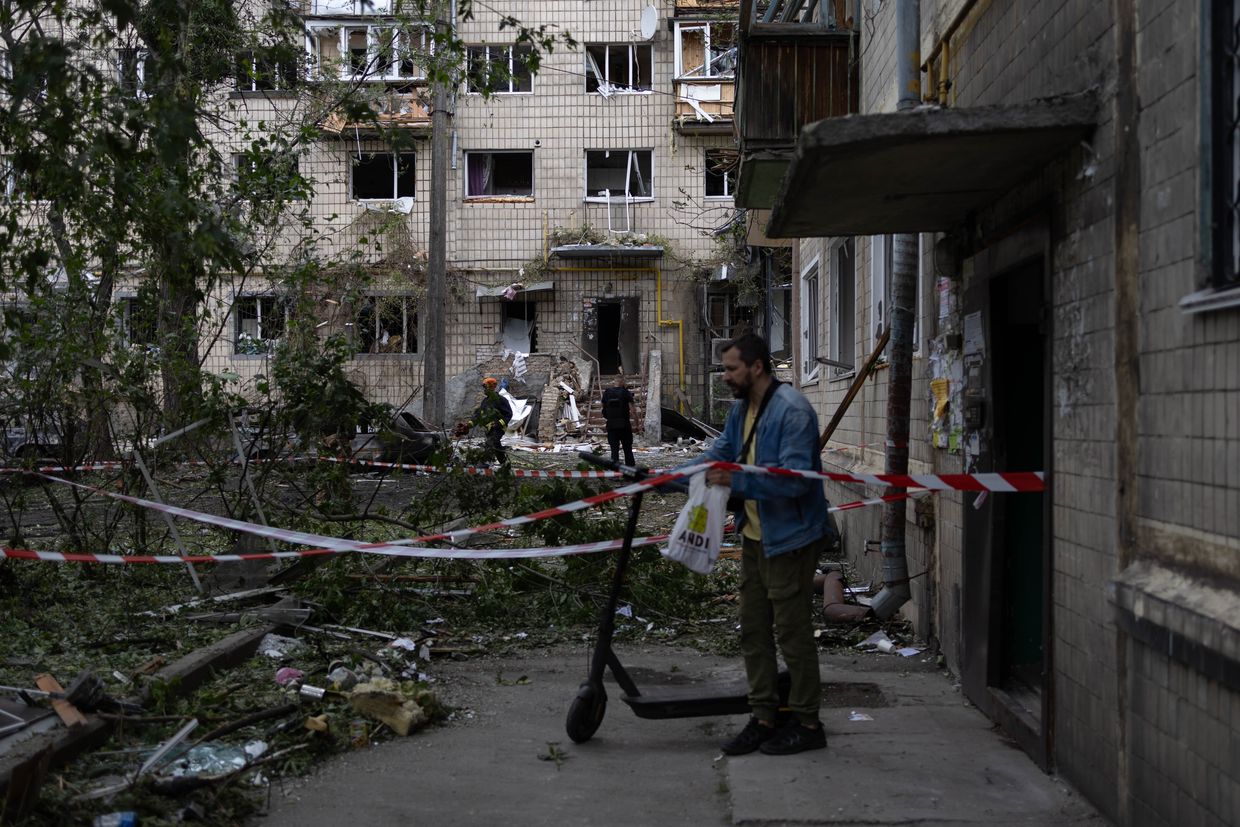
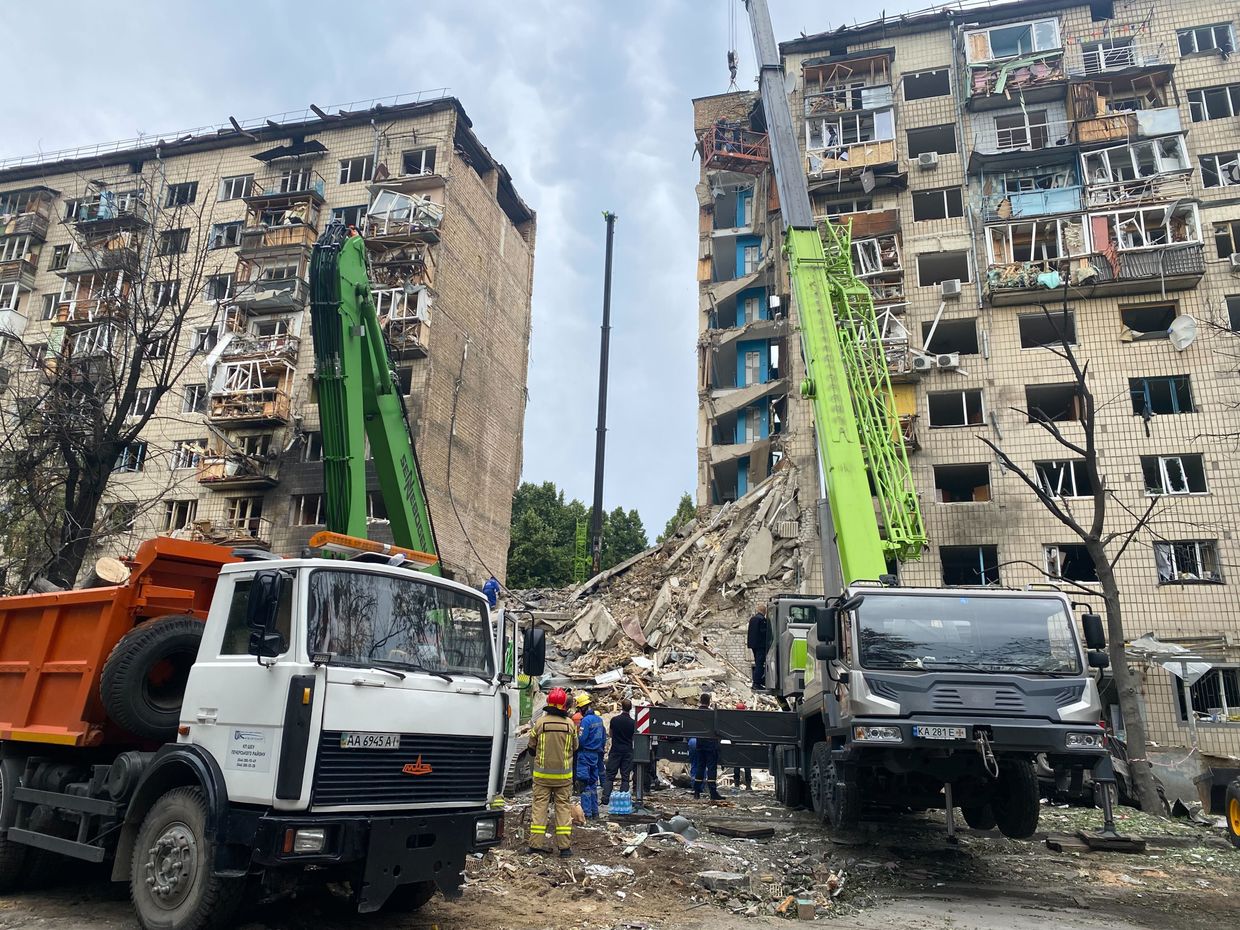
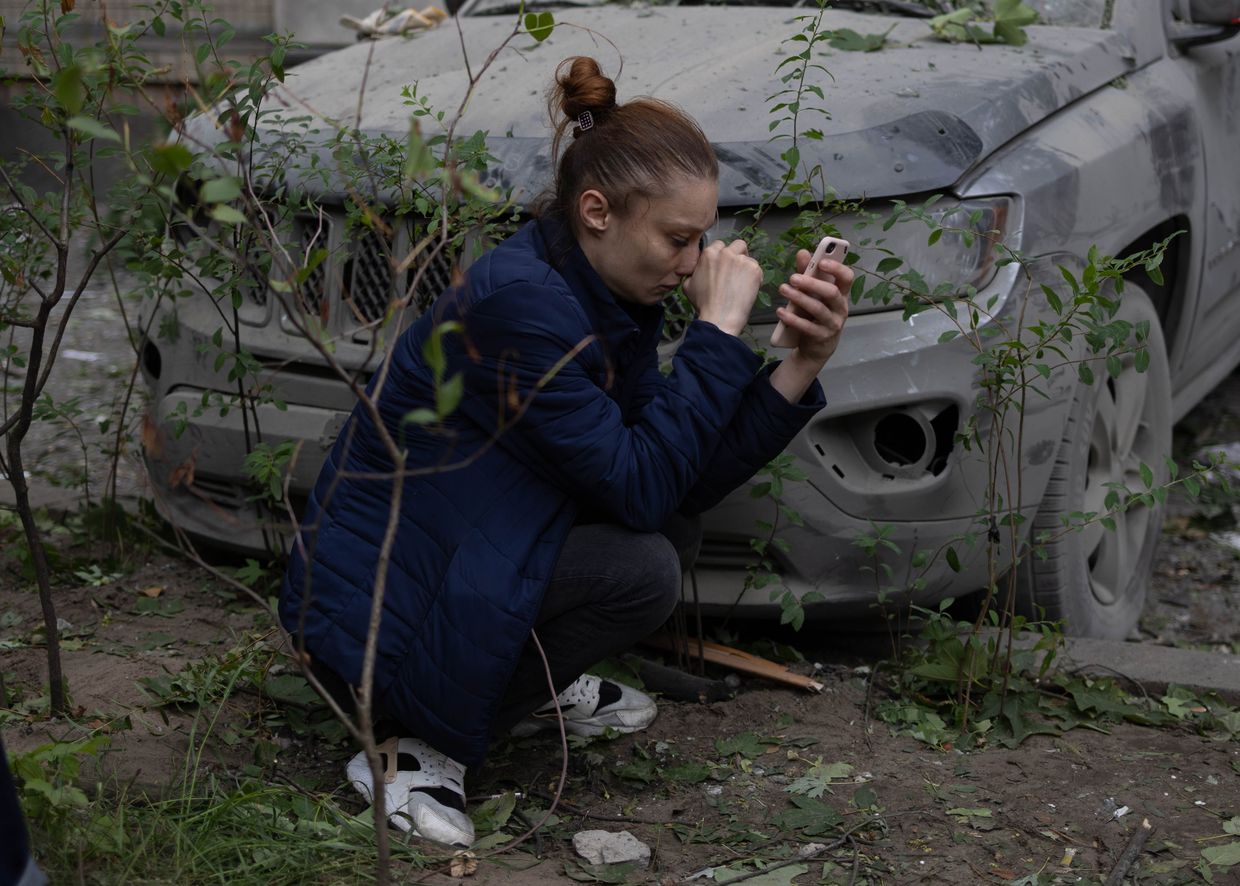
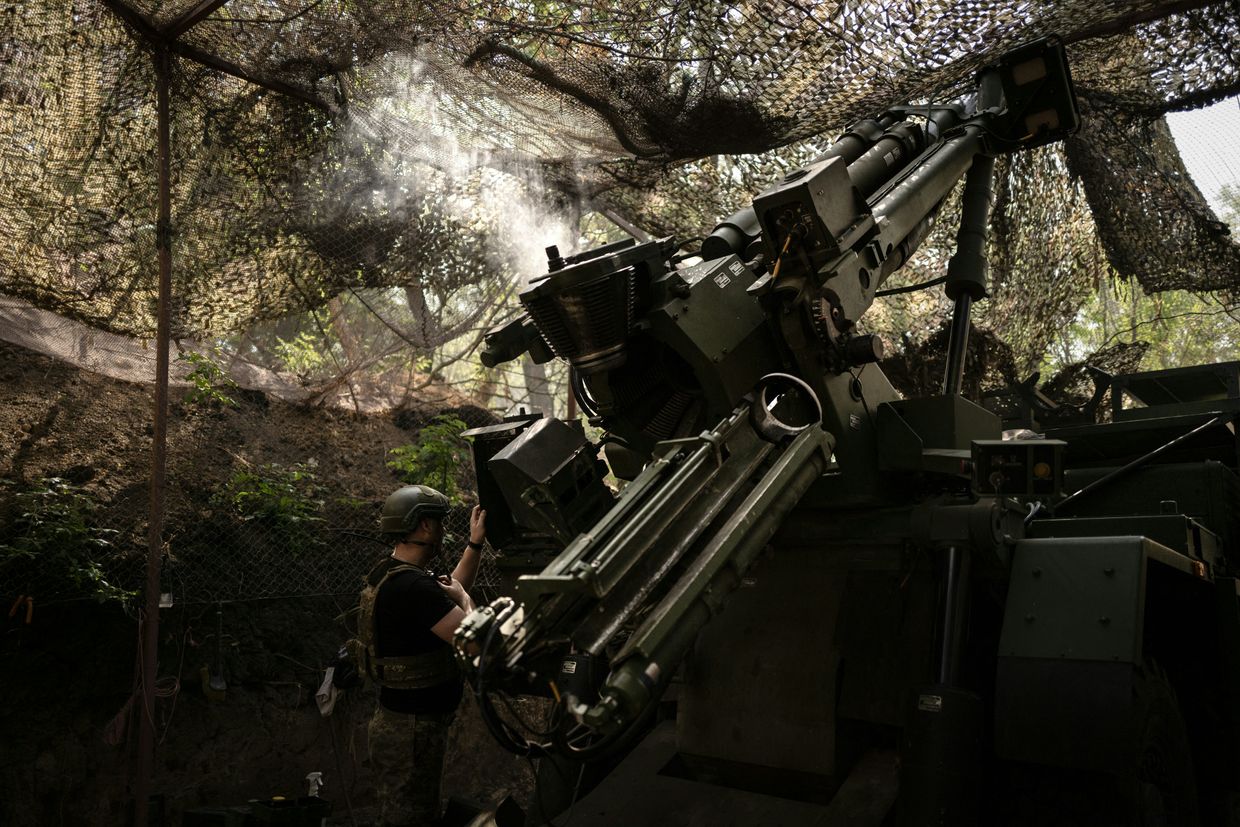
Editor's note: This is a developing story and is being updated.Russian forces struck residential buildings in Odesa overnight on June 20, killing a civilian and injuring at least 14 others, including three emergency workers, the Prosecutor General's Office reported.The attack, which the service described as "massive," rang out around 1 a.m. local time. The attack drones struck over 10 targets, including seven residential buildings, and led to multiple large-scale fires. At the site of one of the
Editor's note: This is a developing story and is being updated.
Russian forces struck residential buildings in Odesa overnight on June 20, killing a civilian and injuring at least 14 others, including three emergency workers, the Prosecutor General's Office reported.
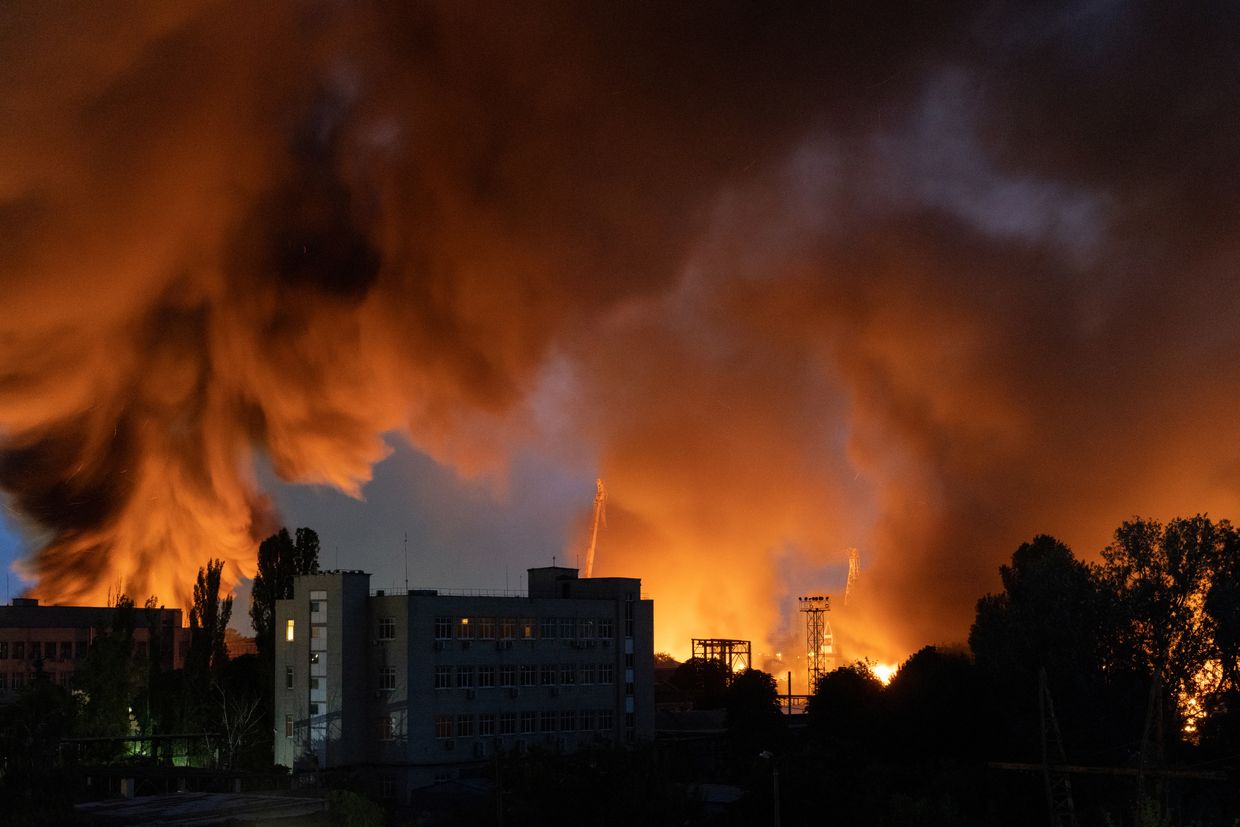
The attack, which the service described as "massive," rang out around 1 a.m. local time. The attack drones struck over 10 targets, including seven residential buildings, and led to multiple large-scale fires.
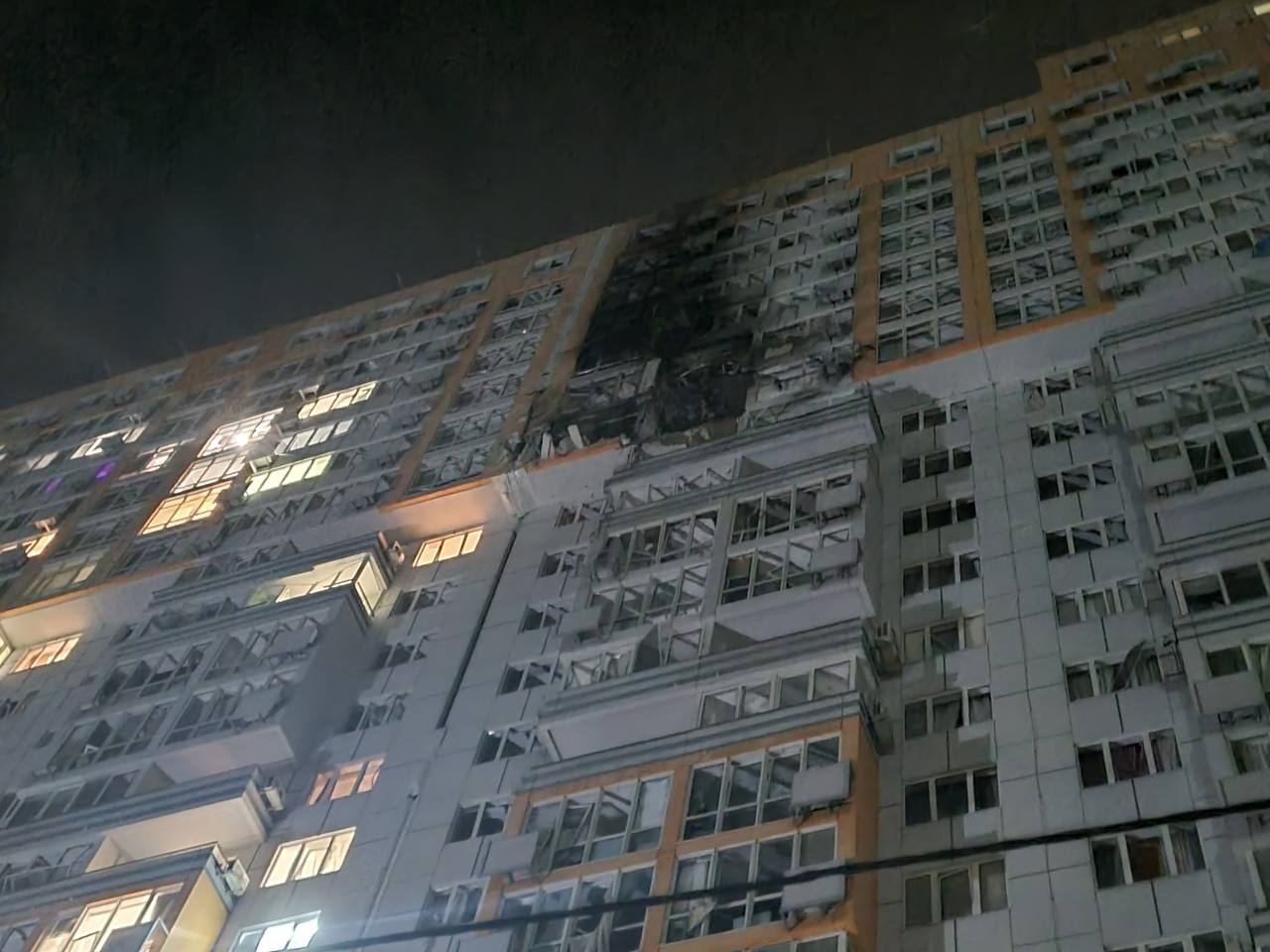
At the site of one of the attacks, a 23-story residential building caught fire between the 18th and 20th floors, and led to the evacuation of over 600 people.
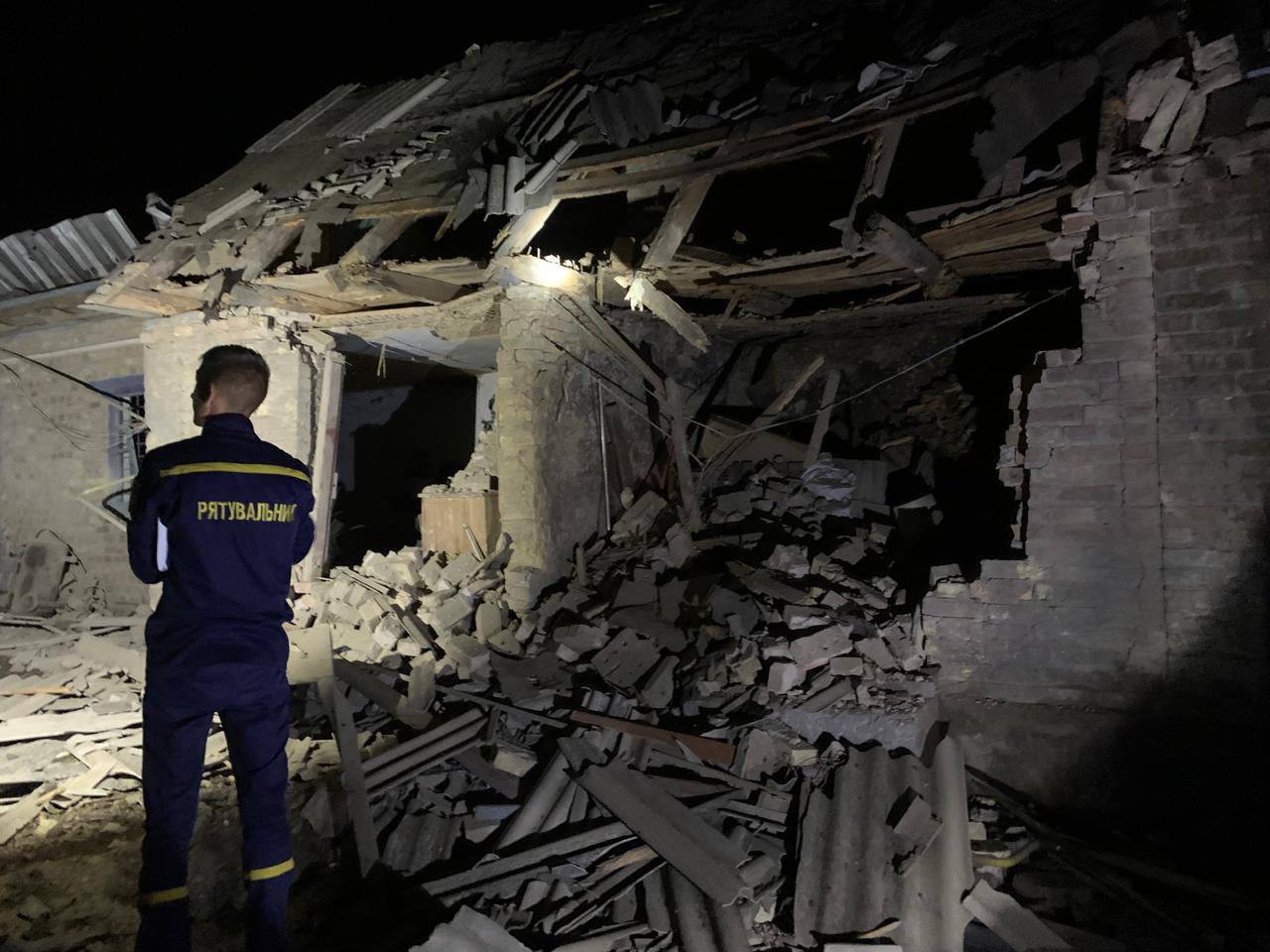
In a separate attack on a four-story building within the city, three firefighters were injured when structural elements collapsed on the responders. The building is described as being "completely engulfed in flames," according to the State Emergency Service.
The three injured firefighters are currently hospitalized in stable condition. Additional information on the attacks, as well as casualties, is being clarified as search efforts under rubble and debris continue.
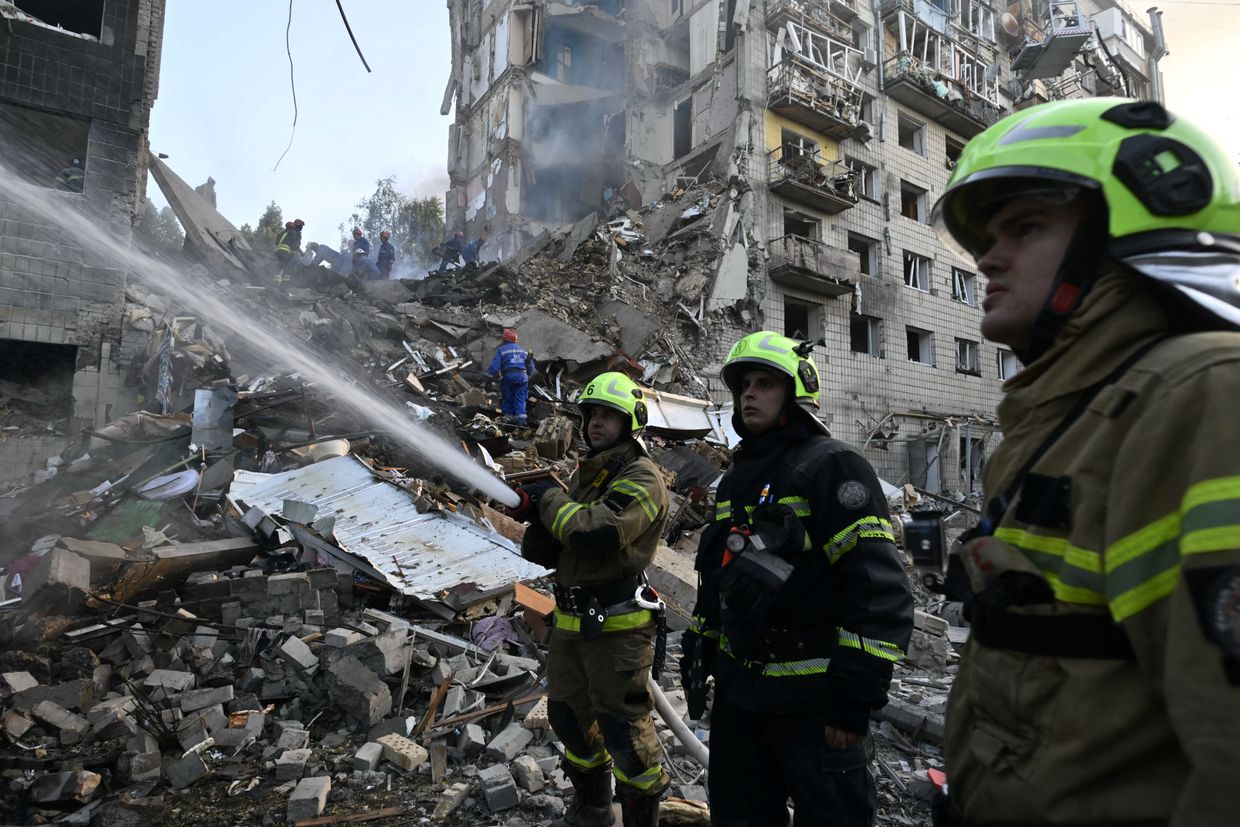
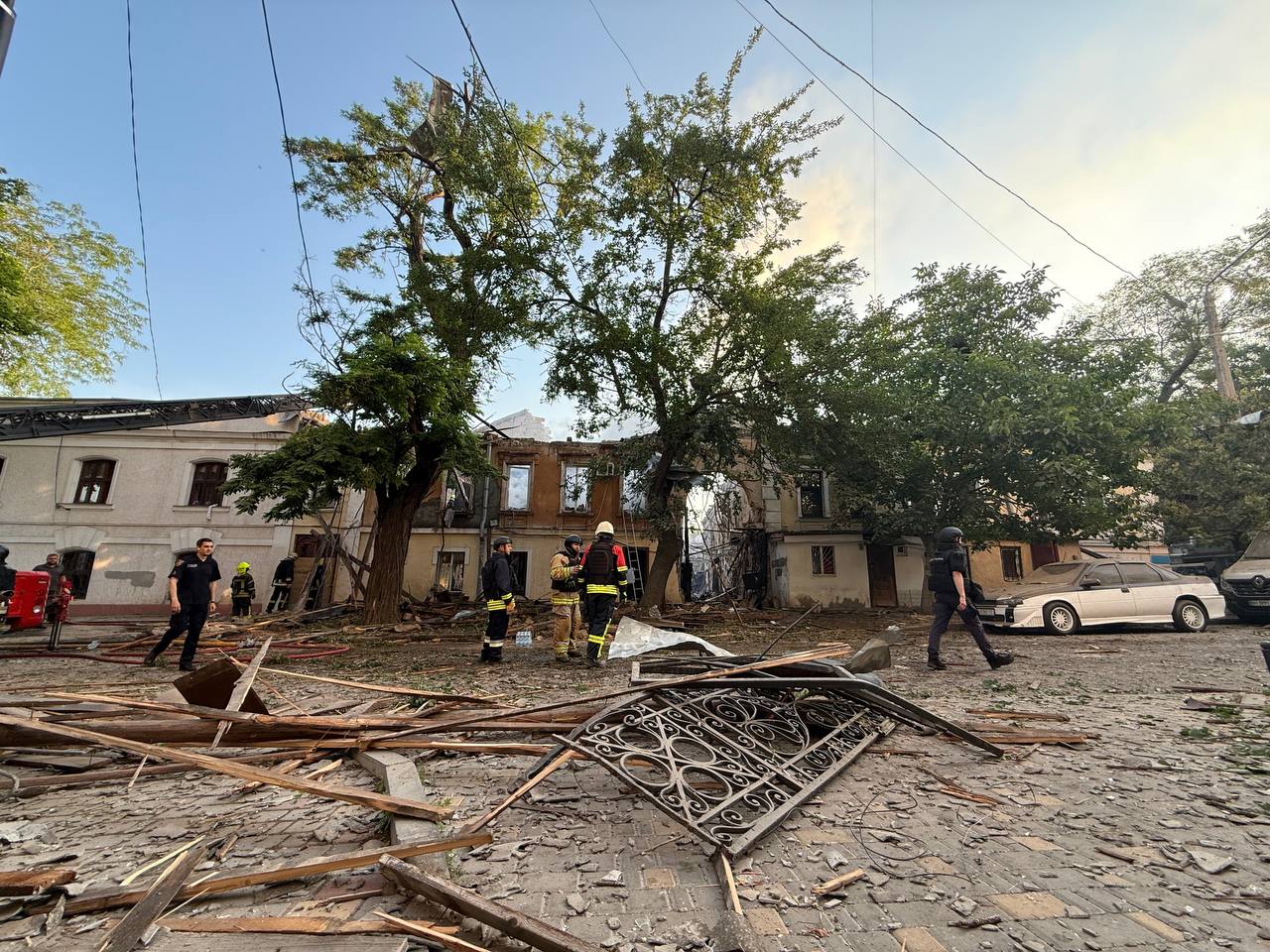
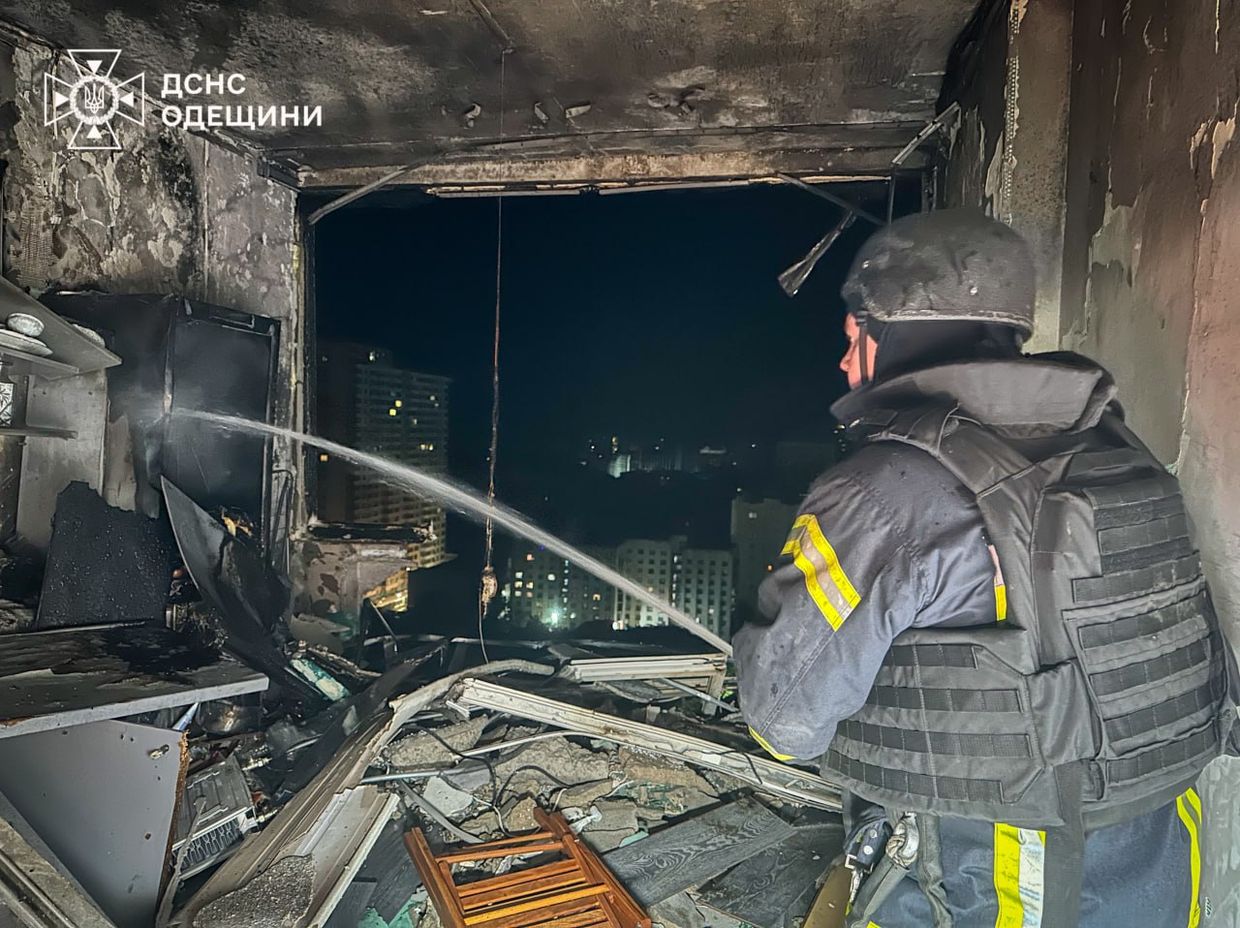
Firefighters extinguish a fire at a residential building in Odesa on June 20, 2025 following a Russian drone attack that injured at least 13 people, including three firefighters. (Ukraine State Emergency Service/Telegram)
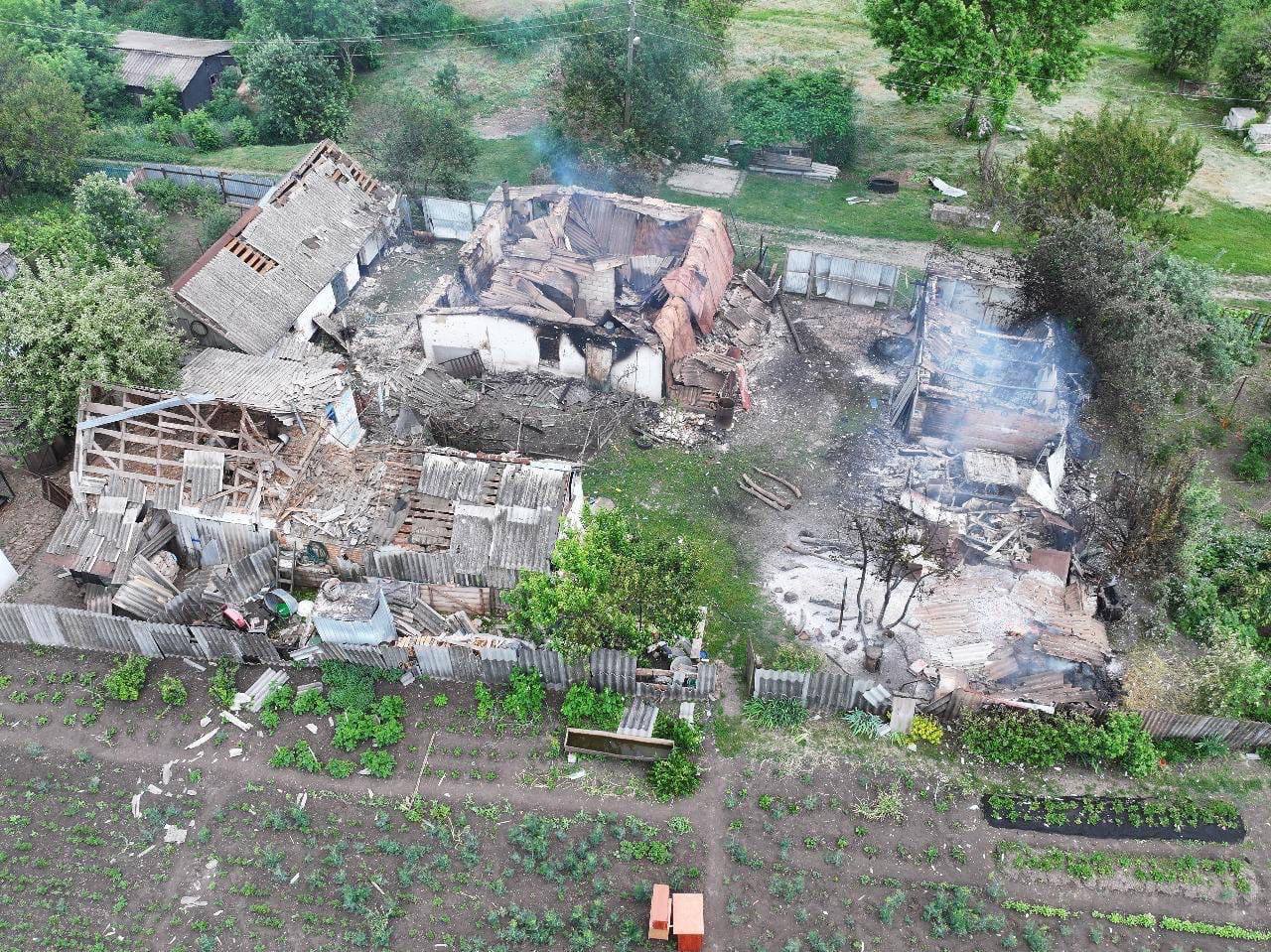
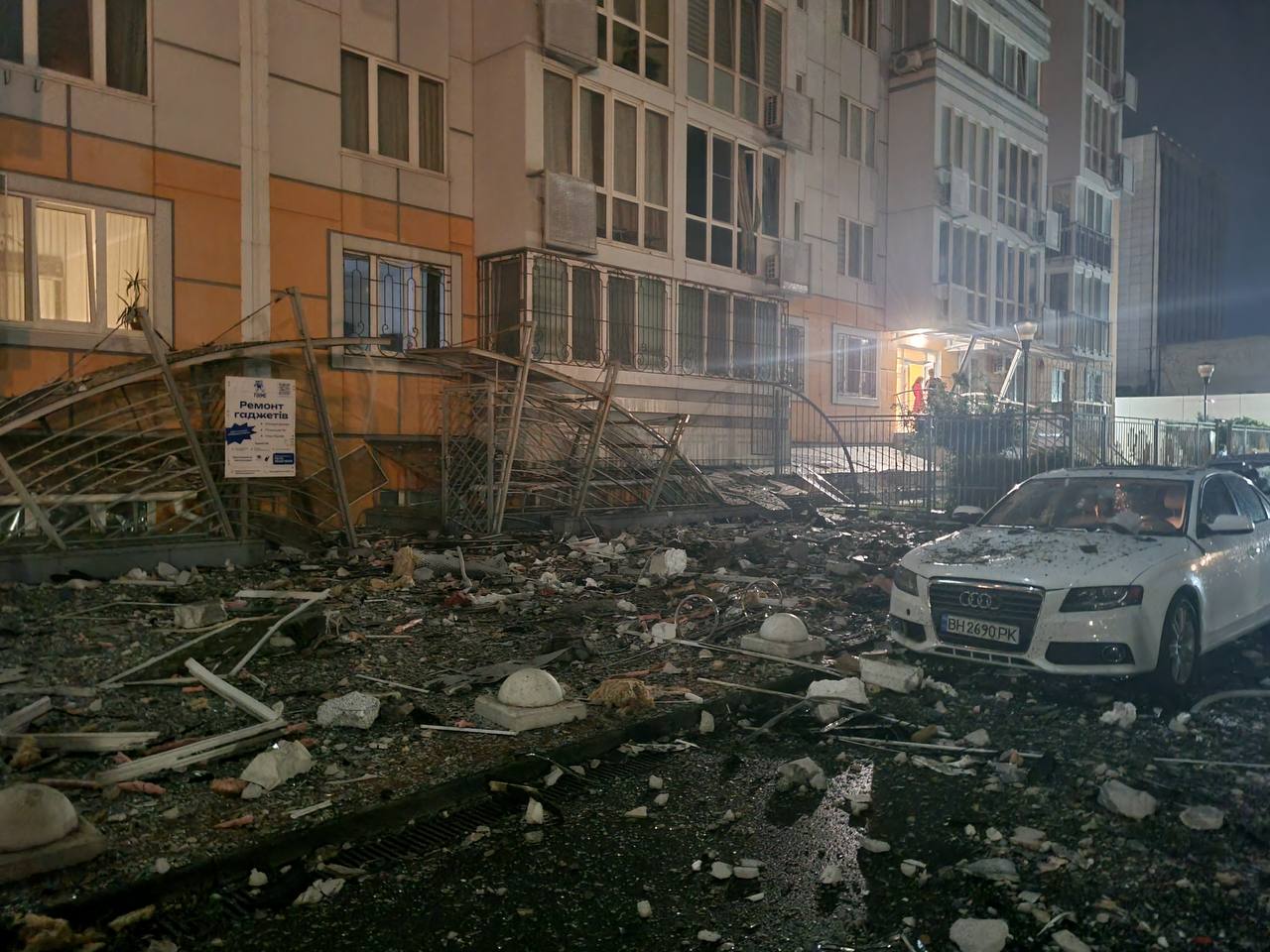
The aftermath of a Russian drone attack on a residential building in Odesa on June 20, 2025. The attacks on the city injured at least 13 people, including three firefighters. (Odesa Oblast Governor Oleh Kiper/Telegram)
In addition to the buildings, Odesa's main train station also had infrastructure damaged as a result of the drone attack, Ukraine's railway agency Ukrzaliznytsia reported.
Odesa, a port city on Ukraine’s Black Sea coast with a population of around 1 million, has been a frequent target of Russian attacks throughout the full-scale war.
"The overhead contact line and the rail and sleeper grid were affected," the agency wrote in a statement, adding that no injuries had been reported.
On June 10, a missile and drone attack on Odesa killed two people and injured eight.
Russia has continued to increase the frequency and severity of its attacks on Ukrainian cities, while rejecting a ceasefire in Ukraine. Overnight on June 17, Russia launched one of its largest attacks on Kyiv since the start of full-scale war in February 2022, killing 30 people and injuring 172 others.
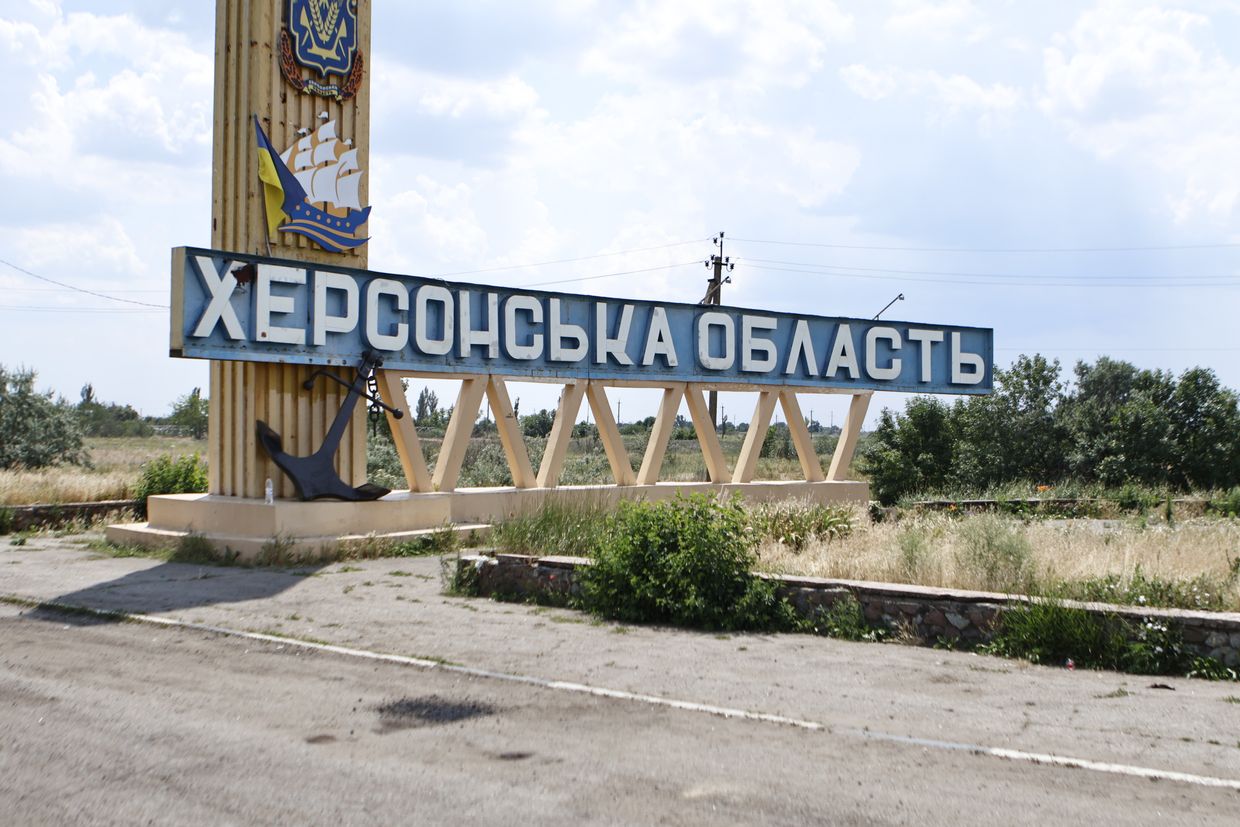
Russian attacks on Kherson Oblast injured nine people and damaged residential infrastructure on June 18-19, according to local authorities. Thirty-four settlements were reportedly targeted with artillery and drones.On June 18 at 6:00 p.m. local time, eight civilians were reported injured, including two men in Komyshany and Romashkovo, and six others in Bilozerka, Beryslav, Antonivka, and the regional capital Kherson. One more person has been injured since then.Civilian infrastructure, including
On June 18 at 6:00 p.m. local time, eight civilians were reported injured, including two men in Komyshany and Romashkovo, and six others in Bilozerka, Beryslav, Antonivka, and the regional capital Kherson. One more person has been injured since then.
Civilian infrastructure, including private homes and residential buildings, was also damaged in the attacks. A gas pipeline, emergency medical clinic, and fire department were also damaged, according to the latest reports.
Kherson Oblast is located in southern Ukraine, just north of Russian-occupied Crimea, and has been relentless targeted by Russian forces throughout the war.
Ukrainian forces liberated the city of Kherson, the regional capital, in November 2022.
Russian troops continue to occupy large parts of the region and regularly launch attacks on civilian areas using artillery, guided bombs, and drones.
Russian President Vladimir Putin is facing renewed pressure from hardliners to formally declare war on Ukraine, with critics inside the Kremlin warning what he calls his "special military operation" no longer goes far enough. Anger intensified following Ukraine’s June 1 drone strike, dubbed Operation Spiderweb, which targeted four Russian air bases deep inside the country and reportedly damaged at least 20 Russian nuclear bombers. "Shock and outrage" is how one senior official described to the T
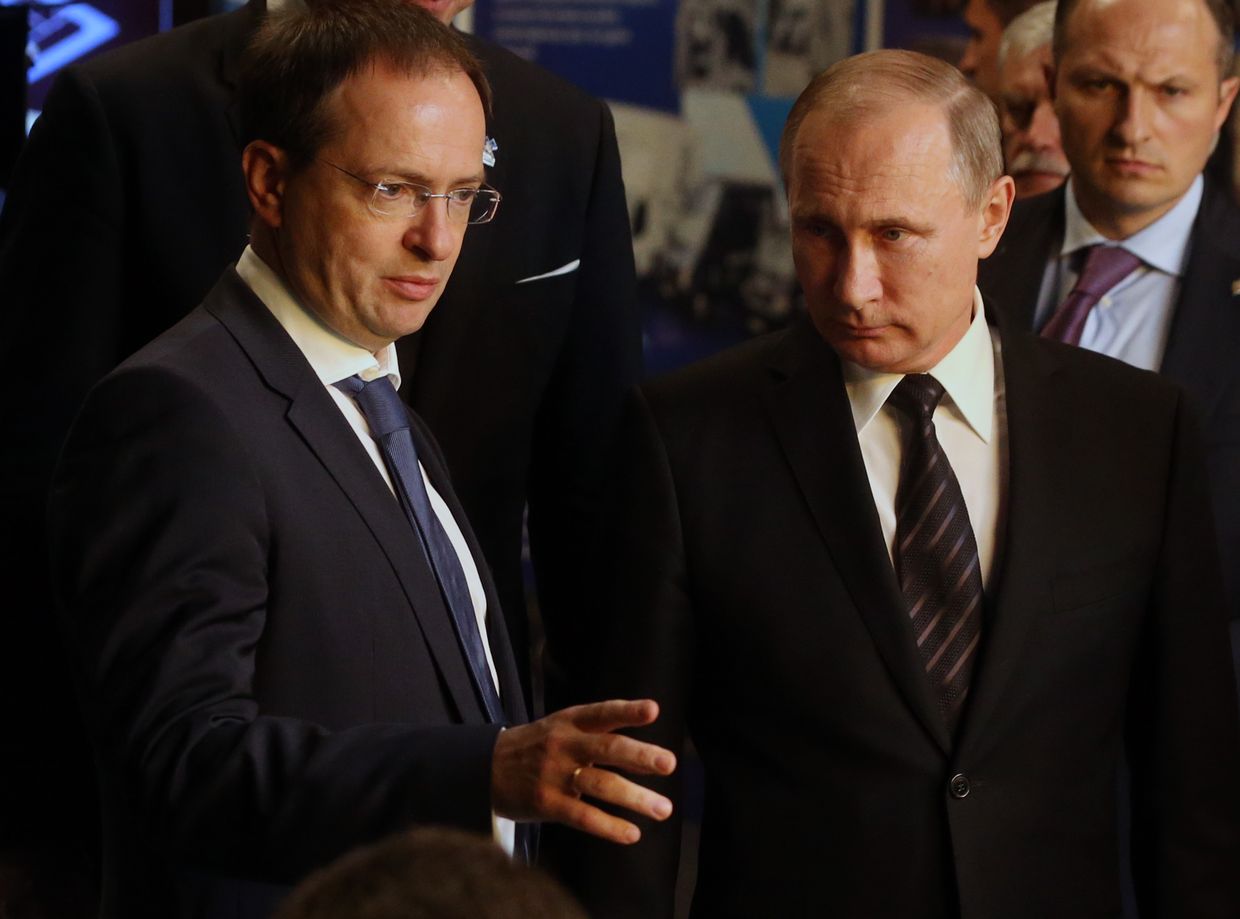
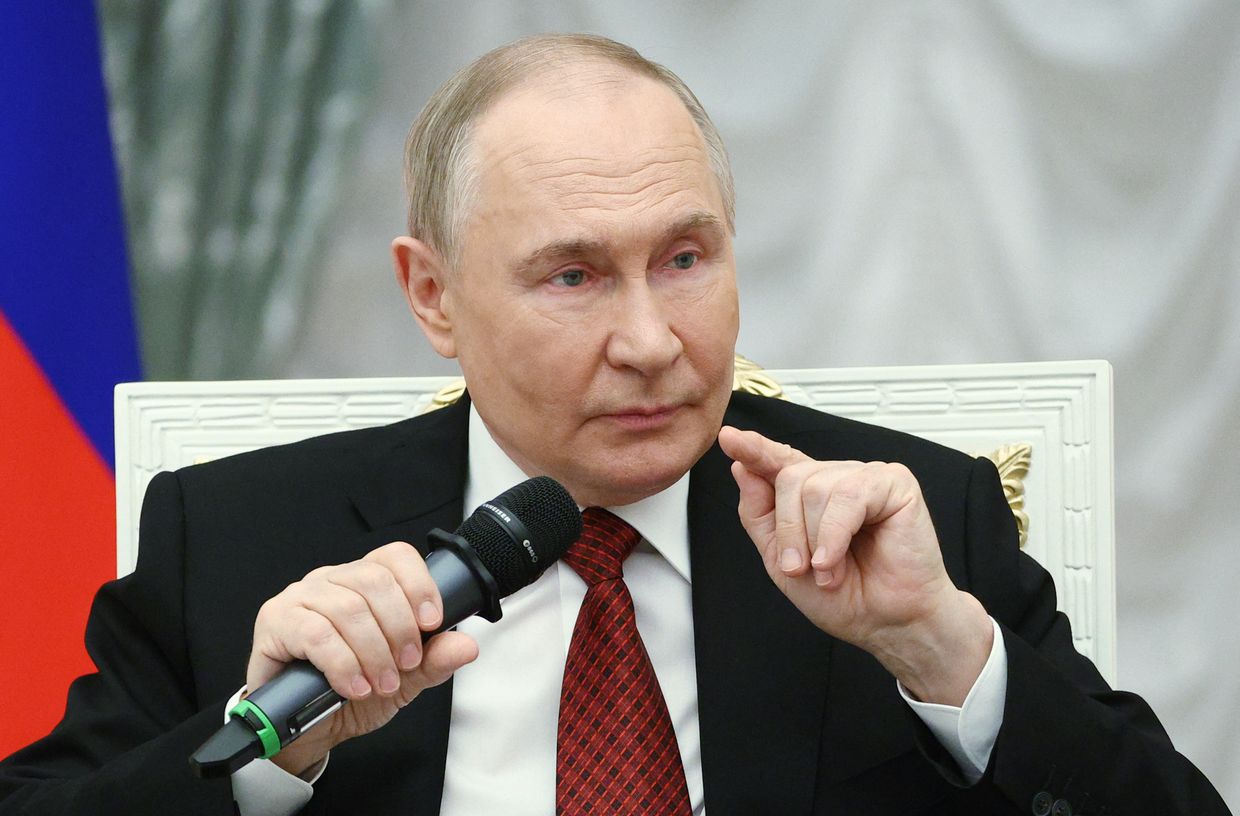
Russian President Vladimir Putin is facing renewed pressure from hardliners to formally declare war on Ukraine, with critics inside the Kremlin warning what he calls his "special military operation" no longer goes far enough.
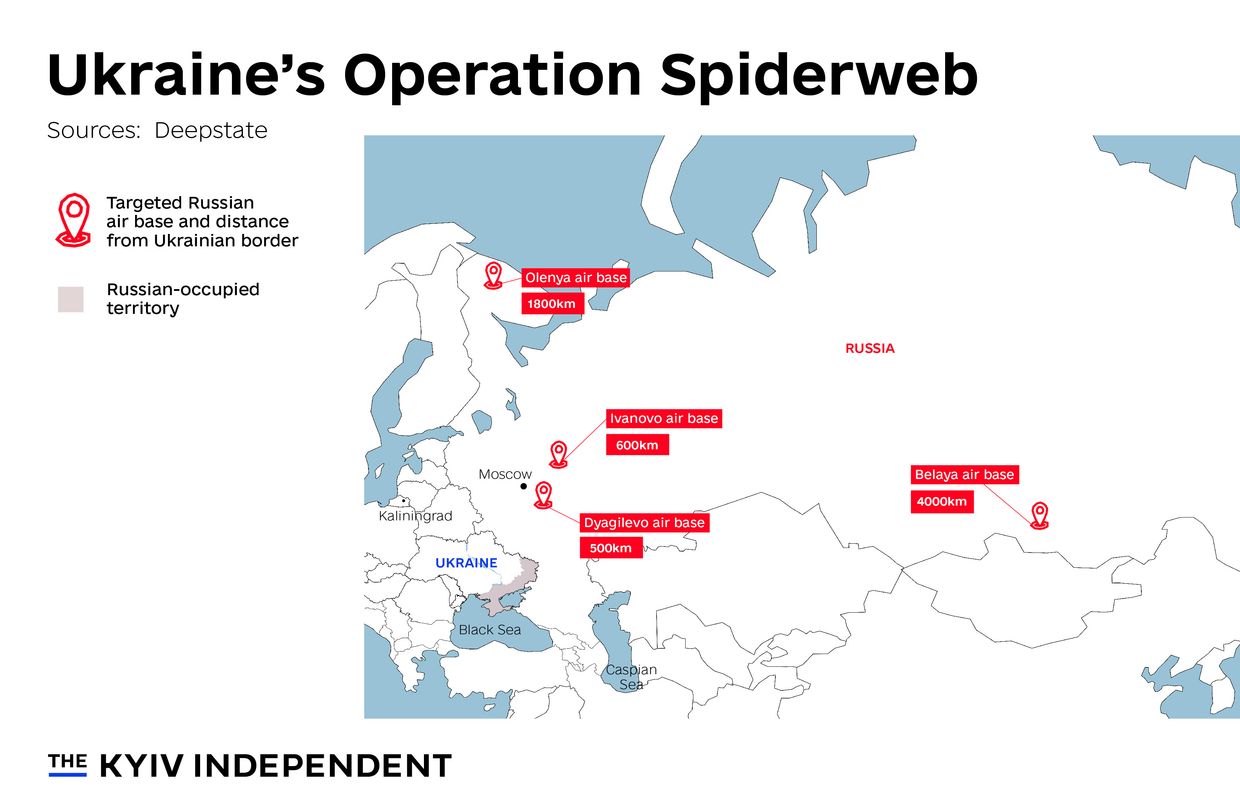
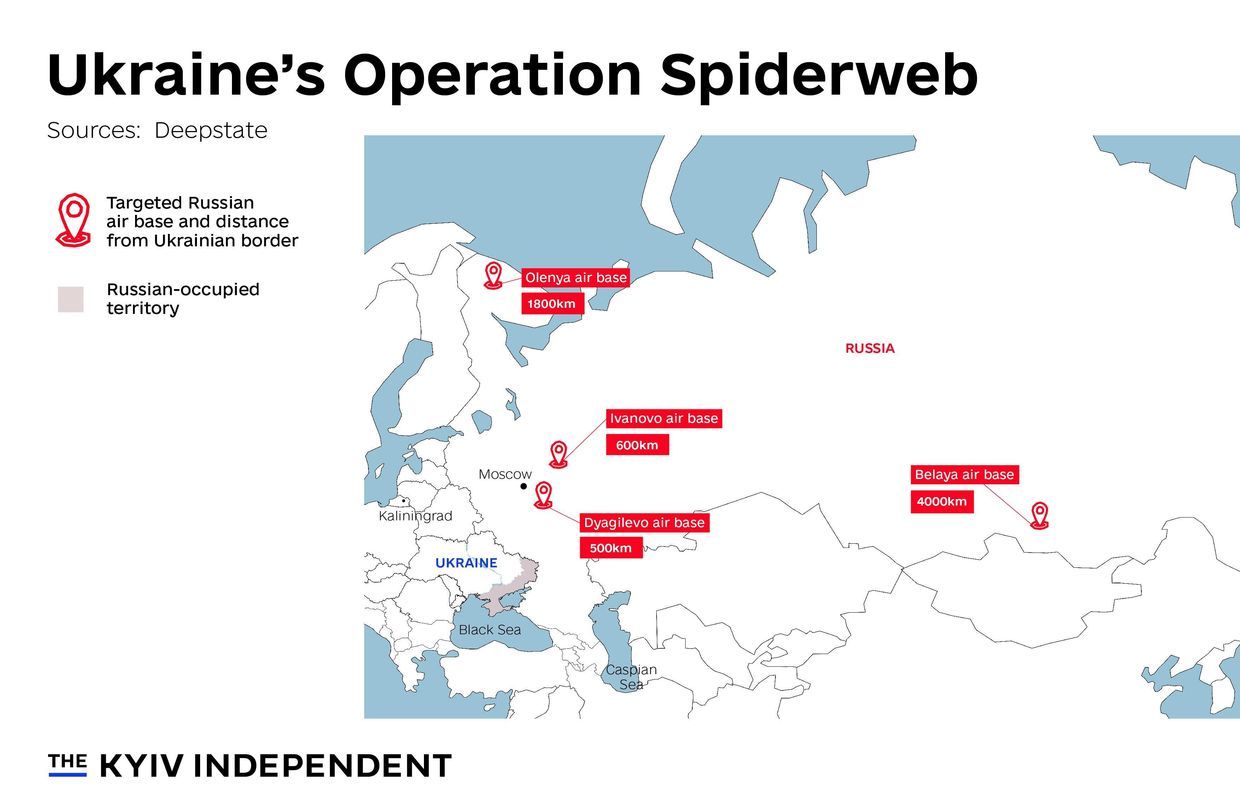
Anger intensified following Ukraine’s June 1 drone strike, dubbed Operation Spiderweb, which targeted four Russian air bases deep inside the country and reportedly damaged at least 20 Russian nuclear bombers. "Shock and outrage" is how one senior official described to the Telegraph the mood in the Kremlin, while another called the attack "a personal tragedy."
Russia has apparently redeployed dozens of long-range bombers to more remote bases within the country following the strike, Russian independent media outlet Agentstvo reported on June 11, citing OSINT analyst AviVector.
Despite the escalation, the Kremlin has so far avoided any dramatic shift in strategy. "This did not catalyse a political discussion or a change in the format of military operations," a former Kremlin official told the Telegraph. Another source close to the Russian Defense Ministry said, "Could the president declare war on Kyiv? Right now, unlikely. As cynical as it may sound, the leadership is satisfied with the current situation."
Hardliners argue that only a formal war declaration would permit true escalation—full-scale mobilization, regular missile strikes, and potentially the use of tactical nuclear weapons. One analyst told the Telegraph that a formal war declaration would give the Russian government sweeping authority to shift the country fully onto a wartime footing.
However, despite record levels of defense spending, the Kremlin has avoided taking that step—seeking instead to preserve the illusion of control and protect the broader population from the immediate impact of the war.
The Kremlin is projected to allocate 6.3 percent of its GDP to defense this year — the highest level since the Cold War — yet still far below what would typically indicate a country fully mobilized for war. By contrast, Ukraine spent 34 percent of its GDP on defense last year, while British military spending surpassed 50 percent of GDP during the Second World War.
"Mobilization undermines economic stability," said one current government employee. According to him, those in Putin’s inner circle have convinced the president that large-scale mobilization could trigger the collapse of the war effort. "And why is it needed now? We have Kalibr missiles, we have volunteers. Their resources are not yet exhausted," he was quoted as saying.
U.S. President Donald Trump was unaware of a deadly Russian drone and missile strike on Kyiv that killed at least 15 people and injured over 120, when asked about the attack by reporters on June 17.On board Air Force One as he flew back from Canada, Trump was questioned about the attack by a reporter. A clock in the plane shows it was shortly after 1:30 a.m. Washington time, 8:30 a.m. Kyiv time, two-and-a-half hours after the nine-hour-long attack ended, and after reports of casualties had been
U.S. President Donald Trump was unaware of a deadly Russian drone and missile strike on Kyiv that killed at least 15 people and injured over 120, when asked about the attack by reporters on June 17.
On board Air Force One as he flew back from Canada, Trump was questioned about the attack by a reporter. A clock in the plane shows it was shortly after 1:30 a.m. Washington time, 8:30 a.m. Kyiv time, two-and-a-half hours after the nine-hour-long attack ended, and after reports of casualties had been made public.
When asked for his reaction, he responded: "When was that? When?"
The reporter then says the "Russian drone attack on Kyiv" occurred "very recently."
"Just now? You mean as I’m walking back to see you, that’s when it took place? Sounds like it. I’ll have to look at it," Trump replies.
At the time of writing some seven hours later, the White House has still yet to comment on the attack.
The comments came a few hours after Ukraine endured the largest aerial attack on Kyiv in 2025. According to Ukraine's Air Force, Russia launched 472 aerial weapons overnight, including nearly 280 Shahed-type attack drones, 16 Kh-101 cruise missiles, two Kinzhal ballistic missiles, and other guided munitions, primarily targeting the capital.
Air defenses downed 428 of them, including 239 Shaheds and 15 cruise missiles, while at least one Kinzhal was intercepted.
The almost nine-hour assault killed 15 people and injured 124, according to local authorities. A nine-story residential building in the Solomianskyi district was struck and partially collapsed, killing residents.
Kyiv Mayor Vitali Klitschko said cluster munitions were discovered in the city, a type of weapon banned under international conventions due to their indiscriminate nature and long-term threat to civilians. June 18 has been declared an official day of mourning in Kyiv.
President Volodymyr Zelensky called the strike "one of the most horrifying attacks on Kyiv" and urged international partners to respond decisively. Foreign Minister Andrii Sybiha said the timing of the strike, as G7 leaders meet, was a deliberate message from the Kremlin.
Civilian sites hit in the capital include kindergartens, residential areas, a university dormitory, and production facilities. Ukrainian manufacturer Fahrenheit, which produces military and civilian clothing, announced its factory was damaged and all orders suspended indefinitely. Ukrposhta, the national postal service, lost two branches. A Ukrainian Railways train carrying grain was also struck, temporarily halting traffic.
Russia has escalated attacks on Ukrainian cities in recent weeks, including mass strikes on energy infrastructure and residential areas.
Editor's note: This is a developing story and is being updated.Russian drone strikes on Odesa early June 17 killed 2 people and injured 17 others, including a pregnant woman and a child, regional authorities said.The body of a 60-year-old woman was recovered from the rubble of a collapsed building, along with the remains of another woman born in 1947, Odesa Oblast Prosecutor's Office reported."My sincere condolences to her family and loved ones," Odesa Oblast Governor Oleh Kiper wrote. One pers
Editor's note: This is a developing story and is being updated.
Russian drone strikes on Odesa early June 17 killed 2 people and injured 17 others, including a pregnant woman and a child, regional authorities said.
The body of a 60-year-old woman was recovered from the rubble of a collapsed building, along with the remains of another woman born in 1947, Odesa Oblast Prosecutor's Office reported.
"My sincere condolences to her family and loved ones," Odesa Oblast Governor Oleh Kiper wrote.
One person remains hospitalized as of 9 a.m., while the rest of the injured are receiving outpatient treatment.
The strike damaged multiple residential buildings in Odesa’s historic city center, as well as a kindergarten and an inclusive support center. Emergency services and volunteers continue clearing debris and responding to the aftermath.
The attack also damaged civilian infrastructure across the city, including residential buildings.
Emergency services and volunteers are working at the scene to clear debris.
Overnight, Russia also launched a mass attack on Kyiv, injuring at least 18 people.
Odesa, a port city on Ukraine’s Black Sea coast with a population of around 1 million, has been a frequent target of Russian attacks throughout the full-scale war.
The Nevinnomyssk Azot chemical plant — one of Russia’s largest producers of nitrogen fertilizer and ammonia and a key supplier to the Kremlin's military-industrial complex — has suspended production, Russian independent media outlet Astra reported on June 16.According to Astra, the chemical plant suspended production as a direct result of Ukrainian drone strikes. The strike — which was confirmed by Ukraine’s General Staff on June 14 — targeted two major military-industrial facilities in Russia,
The Nevinnomyssk Azot chemical plant — one of Russia’s largest producers of nitrogen fertilizer and ammonia and a key supplier to the Kremlin's military-industrial complex — has suspended production, Russian independent media outlet Astra reported on June 16.
According to Astra, the chemical plant suspended production as a direct result of Ukrainian drone strikes. The strike — which was confirmed by Ukraine’s General Staff on June 14 — targeted two major military-industrial facilities in Russia, including the Nevinnomyssk Azot plant in Stavropol Krai. The facility reportedly supplied raw materials and components for Russia’s weapons and fuel production.
Nevinnomyssk Azot is among Russia's top producers of ammonia and nitrogen fertilizers and hosts the country’s only production lines for methyl acetate and high-purity acetic acid. It also operates Russia’s first melamine production facility, according to open-source data.
According to Andrii Kovalenko, head of Ukraine's Center for Countering Disinformation at the National Security and Defense Council, the plant produces up to one million tons of ammonia and over one million tons of ammonium nitrate annually, is "a critical element of Russia's military-industrial complex."
Kovalenko noted that ammonium nitrate is a key component for explosives and artillery shells. He added that the plant also synthesizes dual-use chemicals such as melamine, acetic acid, methanol, and potassium nitrate — all frequently used in the production of grenade launchers, mines, and rocket charges.
Since 2024, the plant has also been producing water-soluble fertilizers, which he said have been adapted to serve military chemical needs as part of Russia's war in Ukraine.
The chemical plant is part of the EuroChem Group, owned by Russian billionaire Andrey Melnichenko, who is currently sanctioned by Canada, the European Union, Japan, and the United Kingdom.
Editor's note: This is a developing story and is being updated as new details emerge.At least 14 people have been killed and 117 others injured after a mass Russian missile and drone attack on Kyiv overnight on June 17.Ukraine's National Police initially reported 15 dead and 124 injured in the attack, but Interior Minister Ihor Klymenko later revised the death toll to 10. The State Emergency Service subsequently updated the figure to 14. Klymenko said operational data may change, as body parts f
Editor's note: This is a developing story and is being updated as new details emerge.
At least 14 people have been killed and 117 others injured after a mass Russian missile and drone attack on Kyiv overnight on June 17.
Ukraine's National Police initially reported 15 dead and 124 injured in the attack, but Interior Minister Ihor Klymenko later revised the death toll to 10. The State Emergency Service subsequently updated the figure to 14.
Klymenko said operational data may change, as body parts found during rescue efforts can sometimes be mistakenly counted as multiple victims.
According to the State Emergency Service, one body has been recovered from the rubble of the nine-story building, and rescue operations are still ongoing.
The almost nine-hour-long attack saw Moscow's forces launch large numbers of kamikaze attack drones, as well as cruise and ballistic missiles at Ukraine's capital.
Kyiv Independent journalists on the ground reported the sounds of drones, missiles, and multiple rounds of explosions throughout the night.
The Ukrainian Air Force confirmed that Russia launched 472 aerial weapons overnight, including nearly 280 Shahed-type attack drones and two Kinzhal ballistic missiles. The strike primarily targeted Kyiv.
Ukraine's air defense forces reportedly destroyed 428 air targets, including 239 Shahed drones and 15 Kh-101 cruise missiles. Air defenses also intercepted one Kinzhal missile, while another was reportedly lost from radar tracking.
President Volodymyr Zelensky called the assault "one of the most horrifying attacks on Kyiv," saying more than 440 drones and 32 missiles were launched across Ukraine overnight.
"Such attacks are pure terrorism," he said in a statement on social media. "And the whole world, the U.S., and Europe must finally respond as civilized societies respond to terrorists."
The aftermath of the Russian missile attack on a residential building in Kyiv, Ukraine on June 17, 2025. (Anna Donets / The Kyiv Independent)
Zelensky confirmed that damage had been reported in eight districts of Kyiv, with emergency workers still searching for survivors beneath the rubble of a destroyed apartment block.
In a video posted on Telegram, Kyiv Mayor Vitali Klitschko said cluster munitions had been found in one area of the city. He later added that June 18 would be an official day of mourning in Kyiv.
Many of the deaths and injuries occurred when a Russian missile hit a nine-storey residential building in the Solomianskyi district, "completely destroying" one section, Ukraine's State Emergency Service said.
"I saw the missile because it was low," Olena Kushnirova, a 46-year-old nurse who lives in a neighboring building to the one that was hit, told the Kyiv Independent.
Olena Kushnirova, 46, a nurse who lives in a neighbouring house in Kyiv, Ukraine, on June 17, 2025. (Anna Donets / The Kyiv Independent)
"I grabbed my daughter by the hand and shouted 'run!' It was literally 15 seconds. We ran to the toilet, and then there was a very powerful explosion."
During the attack on the capital, a 62-year-old U.S. citizen died in the Solomianskyi district in a building across from where medics were assisting the injured, Klitschko reported. Medical personnel confirmed biological death.
Foreign Minister Andrii Sybiha also condemned the attack, calling it a "massive and brutal strike" timed deliberately to coincide with the G7 summit.
"Putin does this on purpose... He sends a signal of total disrespect to the United States and other partners who have called for an end to the killing," Sybiha said. "Only strong steps and real pressure on Moscow can prove him wrong."
A partially destroyed residential building after a mass Russian missile and drone attack overnight in Kyiv, Ukraine on June 17, 2025. (Katya Denisova/The Kyiv Independent)Victoria Smirnova, 37, waits for her father to be pulled up from under the rubble of the house that was struck by a Russian missile in Kyiv, Ukraine on June 17, 2025. (Anna Donets / The Kyiv Independent)
A Russian drone also hit a multi-storey building Darnytskyi District.
"At first there was shock," Tatiana Bratus, a 50-year-old resident of the building told the Kyiv Independent.
"People started running outside, shouting, some in panic, because the attack wasn't over yet. They said there were still rockets flying. People ran to the bomb shelter.
A kindergarten in the Darnytskyi district was also damaged, Tymur Tkachenko, the head of the Kyiv City Military Administration said. No casualties were reported at the site.
The upper floors of residential buildings in the Solomianskyi and Shevchenkivskyi districts were also damaged.
A dormitory at the Kyiv Aviation Institute was hit by drones during the attack, the news outlet Suspilne reported. Drones struck the institute's 10th floor and broke windows on three other floors.
Outside the capital, the attacks also caused damage and injured civilians in Kyiv Oblast towns. At least one woman was injured and multiple homes were damaged, according to the regional administration.
The Russian strike damaged the production facility of Fahrenheit, a Ukrainian clothing manufacturer that supplies apparel and undergarments for both civilians and the military. The company announced it was forced to cancel all current orders and suspend new ones indefinitely following the destruction of its Kyiv site.
Russian forces also hit a Ukrainian Railways (Ukrzaliznytsia) freight train carrying grain. Several railcars overturned, temporarily halting operations and spilling grain from the damaged wagons. Ukrzaliznytsia said the damage would be "promptly repaired" and train traffic would not be affected.
Ukrposhta, Ukraine's national postal service, reported the destruction of two of its branches in Kyiv during the attack, according to CEO Ihor Smiliansky. The company's team is working to "quickly restore services," he said.
The attack followed a series of drone strikes overnight on June 16 targeting Kyiv Oblast, including both the capital and surrounding settlements. In the Obukhiv district, a 60-year-old man was injured, according to regional authorities.
Russian attacks against Ukraine have intensified in May and June, with Moscow launching several record-breaking mass strikes against Kyiv and other cities.
Editor's note: This is a developing story and is being updated as new details emerge.Russia launched a series of drone attacks on Kyiv Oblast overnight on June 15-16, targeting both the capital city and regional settlements, according to government officials.In the Obukhiv district of Kyiv Oblast, a 60-year-old man was injured as a result of Russia's drone strike, reported regional governer Mykola Kalashnyk at 1:37 a.m. local time.The injured man received medical assistance, Kalashnyk confirmed.
Editor's note: This is a developing story and is being updated as new details emerge.
Russia launched a series of drone attacks on Kyiv Oblast overnight on June 15-16, targeting both the capital city and regional settlements, according to government officials.
In the Obukhiv district of Kyiv Oblast, a 60-year-old man was injured as a result of Russia's drone strike, reported regional governer Mykola Kalashnyk at 1:37 a.m. local time.
The injured man received medical assistance, Kalashnyk confirmed.
Civilian targets, including a private home, were also damaged in the attack. Emergency services are currently working at the scene.
Earlier in the night, explosions were also heard in Kyiv.
Kyiv Mayor Vitali Klitschko confirmed that the city's air defenses were operating and that drones were entering the city late on Sunday night, at about 11:29 p.m. local time.
Editor's Note: June 15: This article has been updated to include confirmation of the attack from Ukrainian authorities.Ukraine allegedly launched drones at Russia’s Tatarstan region, killing one and injuring 13, regional governor Rustam Minnikhanov reported on June 15. The Ukrainian drones were reportedly shot down, but the debris fell on a plant in the town of Yelabuga, where Russian Shahed-type attack drones are manufactured, causing a fire.According to Minnikhanov, it was an automobile plant,
Editor's Note: June 15: This article has been updated to include confirmation of the attack from Ukrainian authorities.
Ukraine allegedly launched drones at Russia’s Tatarstan region, killing one and injuring 13, regional governor Rustam Minnikhanov reported on June 15.
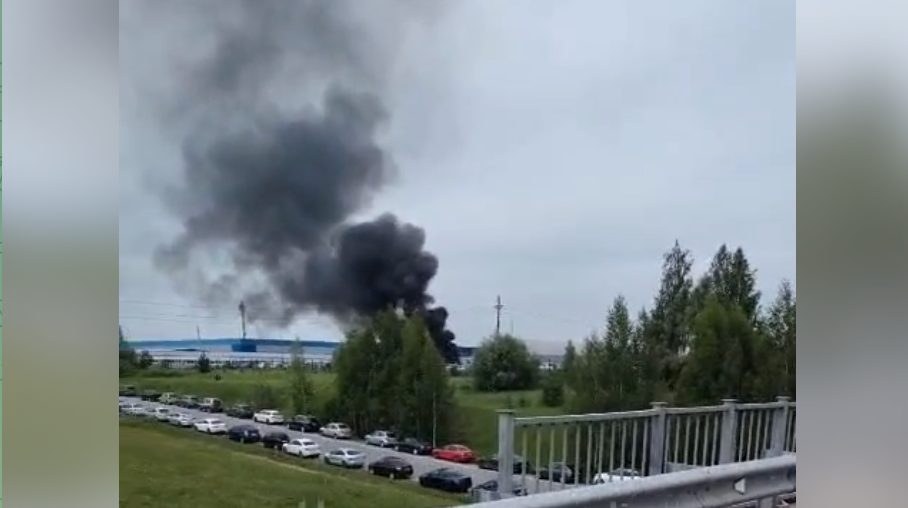
The Ukrainian drones were reportedly shot down, but the debris fell on a plant in the town of Yelabuga, where Russian Shahed-type attack drones are manufactured, causing a fire.
According to Minnikhanov, it was an automobile plant, but some Telegram channels, including Astra, speculate that the well-known drone factory was the target.
Ukraine's General Staff subsequently confirmed details of the strike, including that it was directed at Shahed-style drone production in Yelabuga.
“Despite the attempt to sow fear and panic, all enterprises and life support facilities in the republic are operating stably. Emergency services are on constant alert,” said Minnikhanov.
A video of the attack was shared on Telegram, showing smoke billowing over the town, which lies some 1,500 kilometers from Kyiv. There has been no official statement from Kyiv on the alleged strike, and the Kyiv Independent could not independently verify these claims.
The so-called Alabuga Special Economic Zone hosts a factory producing Shahed-type long-range attack drones as well as other reconnaissance drones, and has been repeatedly targeted by Ukrainian forces since its launch in 2022.
The factory aims to produce 6,000 Shahed-type drones a year, with each one estimated to cost as little as $20,000.
Last year, Ukraine confirmed attacking military facilities in Tatarstan at least twice with long-distance drone strikes. Most recently, Ukrainian drones reportedly struck the plant on May 25.
Facing a workforce problem, the factory began recruiting African women under false pretences via a work-study program. As a result, Interpol began an investigation into the company in April for human trafficking.
Editor's note: This story has been updated to reflect the most recent casualty numbers.Russia attacked Ukraine with nearly 200 missiles and drones and shelled residents in Kherson and Donetsk oblasts, killing one and injuring three, Ukrainian authorities reported on June 15. Russian forces unleashed drones, artillery, and airstrikes on Kherson Oblast and the city over the last day, killing one person and injuring seven, the oblast administration reported. Russian attacks damaged apartments, home
Editor's note: This story has been updated to reflect the most recent casualty numbers.
Russia attacked Ukraine with nearly 200 missiles and drones and shelled residents in Kherson and Donetsk oblasts, killing one and injuring three, Ukrainian authorities reported on June 15.
Russian forces unleashed drones, artillery, and airstrikes on Kherson Oblast and the city over the last day, killing one person and injuring seven, the oblast administration reported. Russian attacks damaged apartments, homes, and gas pipelines, as well as other infrastructure.
In Donetsk Oblast, Russian attacks injured two people in Pokrovsk and Myrnohrad, regional governor Vadym Filashkin reported.
Russia’s combined mass missile and drone strikes largely targeted Kremenchuk in Poltava Oblast. No one was injured or killed, but the attacks hit energy and agricultural facilities, said Poltava governor Volodymyr Kohut.
Of 183 drones Russia launched, Ukrainian air defense neutralized 159, the Air Force said in their morning update. Ukraine also shot down 2 Kinzhal air-launched ballistic missiles and six out of eight cruise missiles.
Drones were also spotted flying through Kyiv and Kyiv Oblast, Chernihiv, Sumy, Dnipropetrovsk, Kirovohrad, Mykolaiv, Zaporizhzhia, and Donetsk oblasts.
Despite talks of peace negotiations, Russia has amped up its drone attacks on Ukraine over the last month. On May 26, Russia launched 355 drones at Ukraine, a record that was broken on June 1 with 472 drones, and on June 9, when Russia fired 479 drones and 20 missiles against Ukrainian cities.
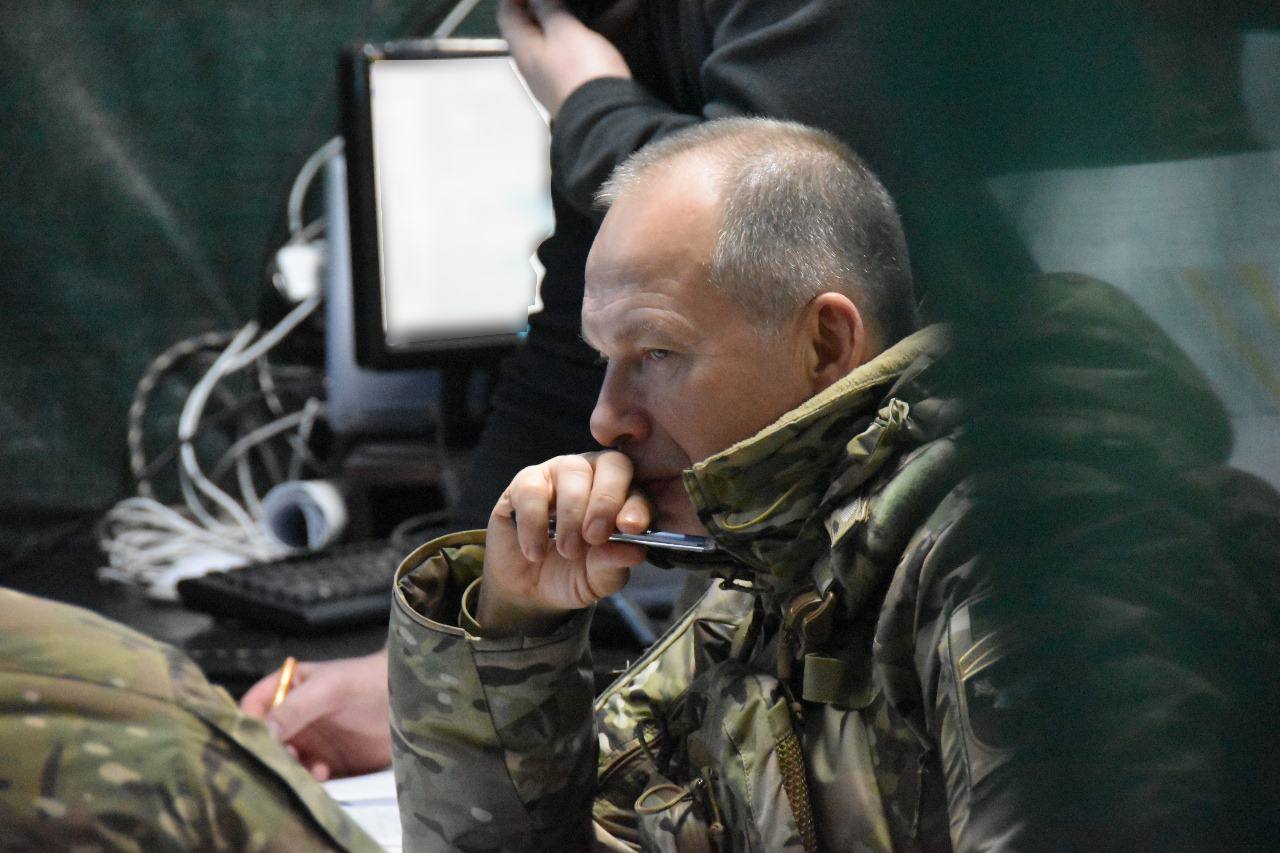
Efforts are underway to rapidly expand Ukraine's ability to counter Russian drone attacks, Commander-in-Chief of Ukraine's Armed Forces, Oleksandr Syrskyi, said on June 14.In a statement shared on Telegram, Syrskyi said he held a meeting focused on strengthening defenses against Russian strike drones, particularly Iranian-designed Shahed drones used by Russian forces to target Ukrainian cities."Task number one is scaling up the systems that already work effectively," Syrskyi said. "First and for
Efforts are underway to rapidly expand Ukraine's ability to counter Russian drone attacks, Commander-in-Chief of Ukraine's Armed Forces, Oleksandr Syrskyi, said on June 14.
In a statement shared on Telegram, Syrskyi said he held a meeting focused on strengthening defenses against Russian strike drones, particularly Iranian-designed Shahed drones used by Russian forces to target Ukrainian cities.
"Task number one is scaling up the systems that already work effectively," Syrskyi said. "First and foremost, that means increasing the number of drone interceptors."
Russia has been escalating drone attacks against Ukraine over the past weeks, launching record 400-500 UAVs (unmanned aerial vehicles) per night.
Syrskyi emphasized the need for a comprehensive approach that incorporates all available capabilities. "(Russia) is constantly modifying the characteristics of its Shaheds and changing their tactics," he said.
Ukrainian officials discussed ways to improve early detection of incoming drones and ensure their timely destruction. Syrskyi said he had set clear priorities and tasked military leaders accordingly.
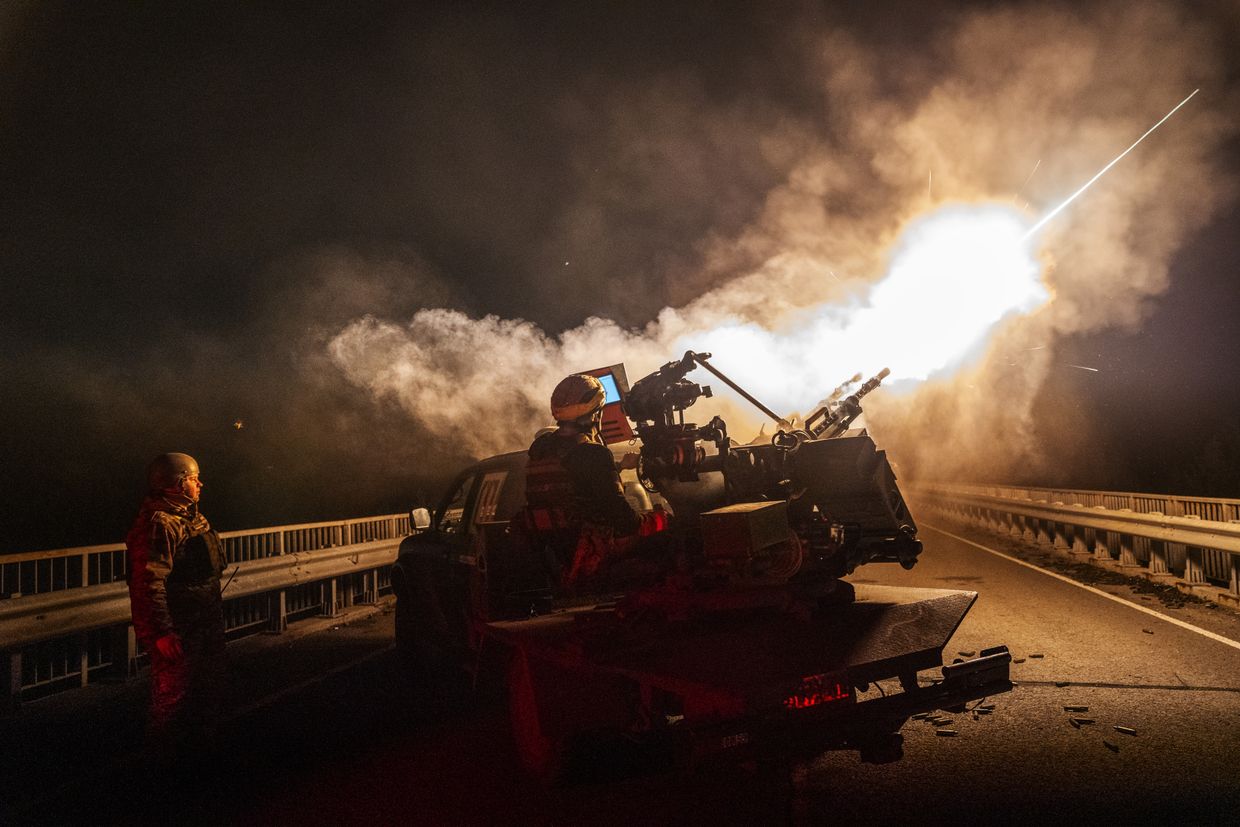
Russia has repeatedly targeted Ukrainian cities with waves of attack drones, often striking energy infrastructure and residential buildings overnight. Ukraine's defense forces use a mix of electronic warfare, air defense systems, and drone-on-drone interception to repel the assaults.
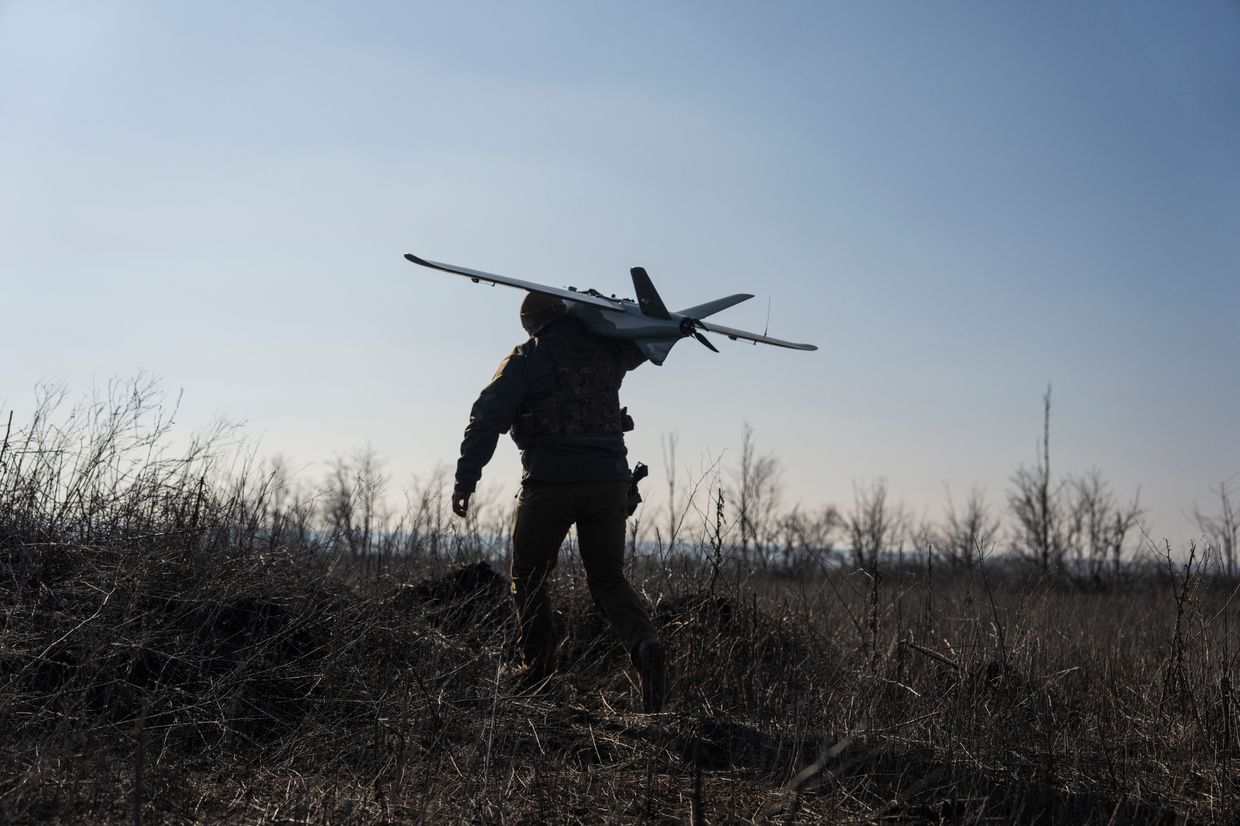
Drones have become one of the defining tools of the full-scale war, used extensively by both Ukraine and Russia for surveillance, long-range strikes, and tactical battlefield advantage. In recent weeks, Russia has intensified its drone and missile attacks on Ukrainian cities and infrastructure.
Earlier on June 9, Ukraine's Air Force said it intercepted 479 drones and missiles during one of the largest attacks since the start of the war. Russia launched 499 weapons overnight, including 479 Shahed-type drones and multiple ballistic and cruise missiles.
Editor's Note: This story was updated to include confirmation from Ukraine's General Staff.Ukraine's General Staff confirmed on June 14 that overnight drone strikes targeted two major military-industrial facilities in Russia, according to a statement of the military. "As part of efforts to reduce (Russia's) ability to produce explosives and ammunition, the Ukrainian Armed Forces' drone systems, in coordination with other Defense Forces units, struck critical facilities of Russia's military-indus
Editor's Note: This story was updated to include confirmation from Ukraine's General Staff.
Ukraine's General Staff confirmed on June 14 that overnight drone strikes targeted two major military-industrial facilities in Russia, according to a statement of the military.
"As part of efforts to reduce (Russia's) ability to produce explosives and ammunition, the Ukrainian Armed Forces' drone systems, in coordination with other Defense Forces units, struck critical facilities of Russia's military-industrial complex overnight," Ukraine's General Staff said in a statement.
The strikes reportedly hit the Nevinnomyssk Azot chemical plant in Stavropol Krai and the Novokuybyshevsk Catalyst Plant in Samara Oblast. Both sites are described by Ukrainian officials as key suppliers of raw materials and components for Russia's weapons and fuel production.
Stavropol Governor Vladimir Vladimirov said drone debris fell in the city's industrial zone, confirming the strike was aimed at the Nevinnomyssk Azot plant. He initially reported one person injured, but later clarified there were no casualties. Footage circulating online showed explosions and drones flying over the city.
Nevinnomyssk Azot is among Russia's top producers of ammonia and nitrogen fertilizers, and hosts the country's only production lines for methyl acetate and high-purity acetic acid. It also operates Russia’s first melamine production facility, according to open-source data.
The plant, which produces up to one million tons of ammonia and over one million tons of ammonium nitrate annually, is "a critical element of Russia's military-industrial complex," Andrii Kovalenko, head of Ukraine's Center for Countering Disinformation at the National Security and Defense Council, said.
Kovalenko noted that ammonium nitrate is a key component for explosives and artillery shells. He added that the plant also synthesizes dual-use chemicals such as melamine, acetic acid, methanol, and potassium nitrate, frequently used in the production of grenade launchers, mines, and rocket charges.
Since 2024, the plant has been producing water-soluble fertilizers, which he said have been adapted to serve military chemical needs.
Ukraine's General Staff said the strike caused explosions and a fire at the site.
In Russia's Samara Oblast, a separate drone strike reportedly damaged the NovokuybyshevskCatalyst Plant, the country's largest specialized facility for producing catalysts used in petroleum refining and petrochemicals. The region's governor, Vyacheslav Fedorishchev, confirmed an attempted drone attack overnight on an industrial site in Novokuybyshevsk.
Kovalenko said the plant has a strategic role, stating that without its output, Russia's oil refineries, and by extension, its supply of aviation fuel, diesel for armored vehicles, and rocket propellant, would be severely affected.
Russia's Defense Ministry claimed it intercepted a total of 66 drones overnight across several regions, including 30 over Voronezh Oblast, 10 over Belgorod Oblast, 8 over Stavropol Krai, 6 over occupied Crimea, 1 over Samara Oblast, and 11 over the Azov Sea.
Editor's note: This story has been updated to include the latest injury figures confirmed by Zaporizhzhia Governor Ivan Fedorov.At least three people were killed and 11 injured in Russian attacks across Ukraine over the past day, Ukrainian officials said on June 14.According to Ukraine's Air Force, Russia launched 58 attack drones, primarily Shahed-type UAVs, and decoys from multiple directions. Air defenses destroyed 43 of the drones.In Donetsk Oblast, one civilian was killed and two others wer
Editor's note: This story has been updated to include the latest injury figures confirmed by Zaporizhzhia Governor Ivan Fedorov.
At least three people were killed and 11 injured in Russian attacks across Ukraine over the past day, Ukrainian officials said on June 14.
According to Ukraine's Air Force, Russia launched 58 attack drones, primarily Shahed-type UAVs, and decoys from multiple directions. Air defenses destroyed 43 of the drones.
In Donetsk Oblast, one civilian was killed and two others were injured in Russian shelling of Yablunivka, Governor Vadym Filashkin said. Russian forces attacked settlements in the region 27 times over the past day.
In Kherson Oblast, five people were injured as Russia struck 23 settlements with drones, artillery, and airstrikes, Governor Oleksandr Prokudin reported. Residential buildings in Kherson city, Antonivka, and other towns were damaged, including a multi-story apartment block, six houses, a gas station, and some vehicles.
In Zaporizhzhia Oblast, at least one person was killed and four others injured in attacks targeting Zaporizhzhia and Polohy districts, Governor Ivan Fedorov said. Russian forces launched 438 strikes on 16 settlements, including 11 airstrikes and 266 drone attacks, mainly using FPV (first-person view) drones.
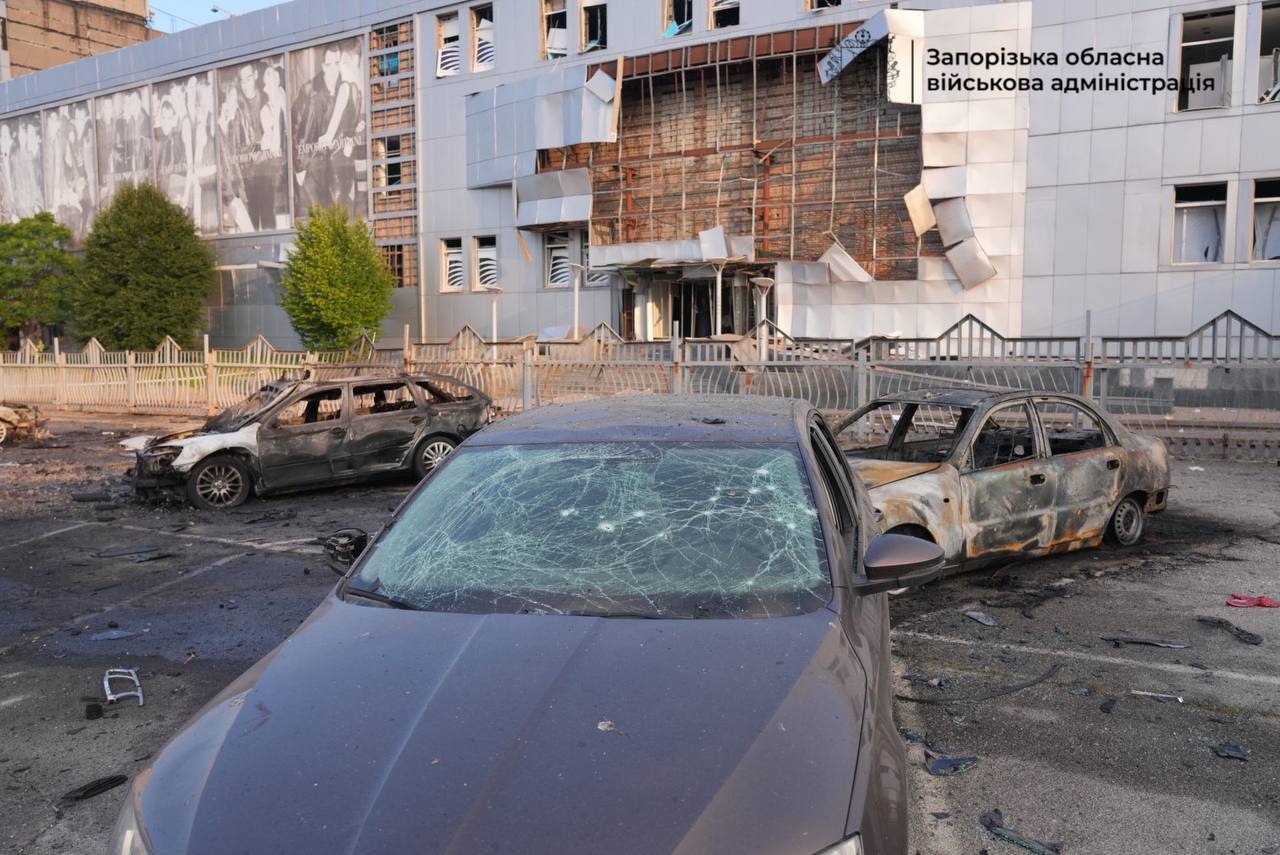
In a morning strike on Zaporizhzhia, more than 10 cars were burned at a parking lot, and at least 15 buildings were damaged. One person was injured.
According to Radio Free Europe/Radio Liberty, the Russian attack also destroyed a humanitarian aid warehouse in Zaporizhzhia. Over 100 metric tons of humanitarian supplies reportedly burned in the fire. The aid had recently arrived in five trucks and was intended for displaced people and residents of front-line areas. The damage is estimated at around $3 million.
Editor's note: The story is being updated.Explosions could be heard across Crimea early on June 13, including in Sevastopol and Simferopol, the Crimean Wind Telegram channel reported amid Russian claims of Ukrainian drone attacks.Atesh partisans reported "precise hits" against Russian military facilities near Simferopol."Our agents report that due to the negligence of the (Russian) command, valuable equipment was damaged, probably an air defense missile system," the group said on Telegram."There
Explosions could be heard across Crimea early on June 13, including in Sevastopol and Simferopol, the Crimean Wind Telegram channel reported amid Russian claims of Ukrainian drone attacks.
Atesh partisans reported "precise hits" against Russian military facilities near Simferopol.
"Our agents report that due to the negligence of the (Russian) command, valuable equipment was damaged, probably an air defense missile system," the group said on Telegram.
"There are also losses among the troops," Atesh said, adding that the exact numbers are difficult to establish.
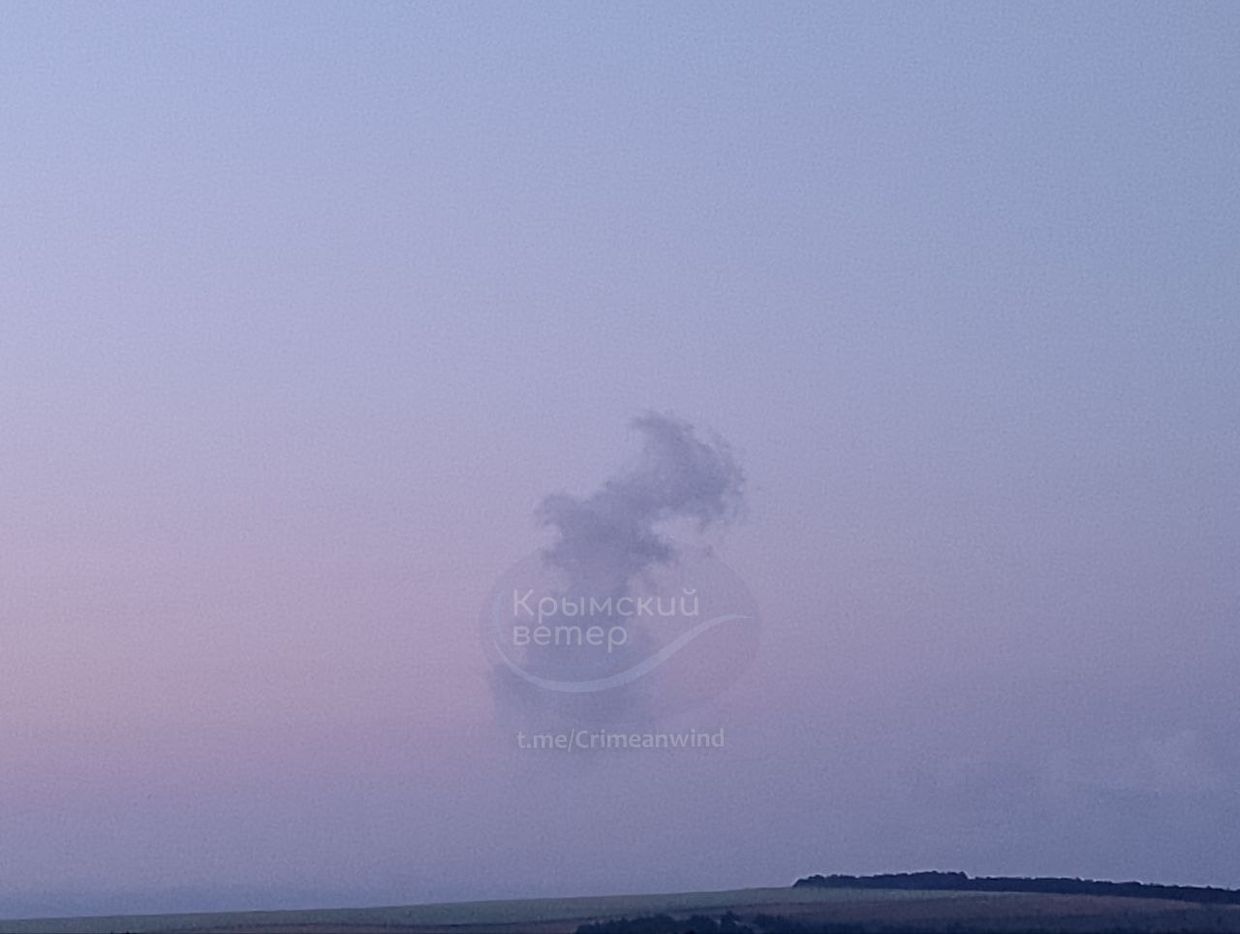
The pro-Ukrainian Crimean Wind Telegram channel reported a hit in Simferopol, Crimea's capital, sharing a photo of a plume of smoke rising in the vicinity of a local power station and of the village of Perevalne. Blasts in Yevpatoriia, Saki, Fedosia, and elsewhere were also reported.
Russia's Defense Ministry claimed its air defenses shot down 125 Ukrainian drones overnight on June 13, including 70 over Crimea and seven over the Black Sea. Russian officials did not comment on possible damage.
The Kyiv Independent could not verify the claims. Ukraine has not commented on the alleged attacks.
Russia has illegally occupied Crimea since 2014, transforming the peninsula into a heavily militarized stronghold to support its war against Ukraine.
Ukrainian forces have repeatedly targeted the peninsula with missiles and drones since the outbreak of the full-scale war in 2022. Most recently, Ukrainian drones attacked an ammunition depot used by Russia's 126th Coastal Defense Brigade near the village of Perevalne.
At least four civilians were killed and 24 injured over the past day in Russian attacks across Ukraine, Ukrainian officials said on June 13.According to the Ukrainian Air Force, Russia targeted the country with 55 Shahed-type attack drones and decoy unmanned aerial vehicles (UAVs), as well as four Iskander-M/KN-23 ballistic missiles launched from Russian territory. Ukraine's air defenses shot down 28 drones, while 15 were intercepted by electronic warfare or disappeared from radars.In Kherson Ob
At least four civilians were killed and 24 injured over the past day in Russian attacks across Ukraine, Ukrainian officials said on June 13.
According to the Ukrainian Air Force, Russia targeted the country with 55 Shahed-type attack drones and decoy unmanned aerial vehicles (UAVs), as well as four Iskander-M/KN-23 ballistic missiles launched from Russian territory.
Ukraine's air defenses shot down 28 drones, while 15 were intercepted by electronic warfare or disappeared from radars.
In Kherson Oblast, Governor Oleksandr Prokudin said Russian troops shelled and launched drone and air strikes on dozens of settlements, including Kherson city. The attacks hit residential areas and critical infrastructure, damaging four apartment buildings and 13 houses. One person was killed and seven were wounded.
In Kharkiv Oblast, Governor Oleh Syniehubov reported that seven civilians were injured, including an 11-year-old child, during Russian attacks on seven settlements. Russian forces used 16 unguided rockets, six guided bombs, and over 20 drones, including Shaheds and first-person view (FPV) units. Civilian infrastructure, including houses and factory buildings in Kupiansk, Izium, and Bohodukhiv districts, sustained significant damage.
In Sumy Oblast, two people were injured when a Russian drone struck civilian infrastructure in the Mykolaivka community, regional officials said. Over the past 24 hours, Russia carried out more than 50 attacks on 25 settlements using FPV drones, multiple-launch rocket systems, and guided bombs.
In Zaporizhzhia Oblast, Governor Ivan Fedorov said one person was killed and three injured in Russian attacks on the region. Russian forces launched nearly 500 strikes across the region, including 283 drone attacks, mainly FPV types, and 10 air strikes.
In Donetsk Oblast, Governor Vadym Filashkin said two civilians were killed, while five others were injured across the region.
Russia has redeployed dozens of long-range bombers to more remote bases within the country, Russian independent media outlet Agentstvo reported on June 11, citing OSINT analyst AviVector.The relocation comes in the wake of Ukraine's Operation Spiderweb, the unprecedented mass drone strike on June 1 that targeted four Russian air bases deep inside the country. The Security Service of Ukraine (SBU) said 117 drones were launched from hidden positions across Russia, damaging 41 aircraft, including
Russia has redeployed dozens of long-range bombers to more remote bases within the country, Russian independent media outlet Agentstvo reported on June 11, citing OSINT analyst AviVector.
The relocation comes in the wake of Ukraine's Operation Spiderweb, the unprecedented mass drone strike on June 1 that targeted four Russian air bases deep inside the country.
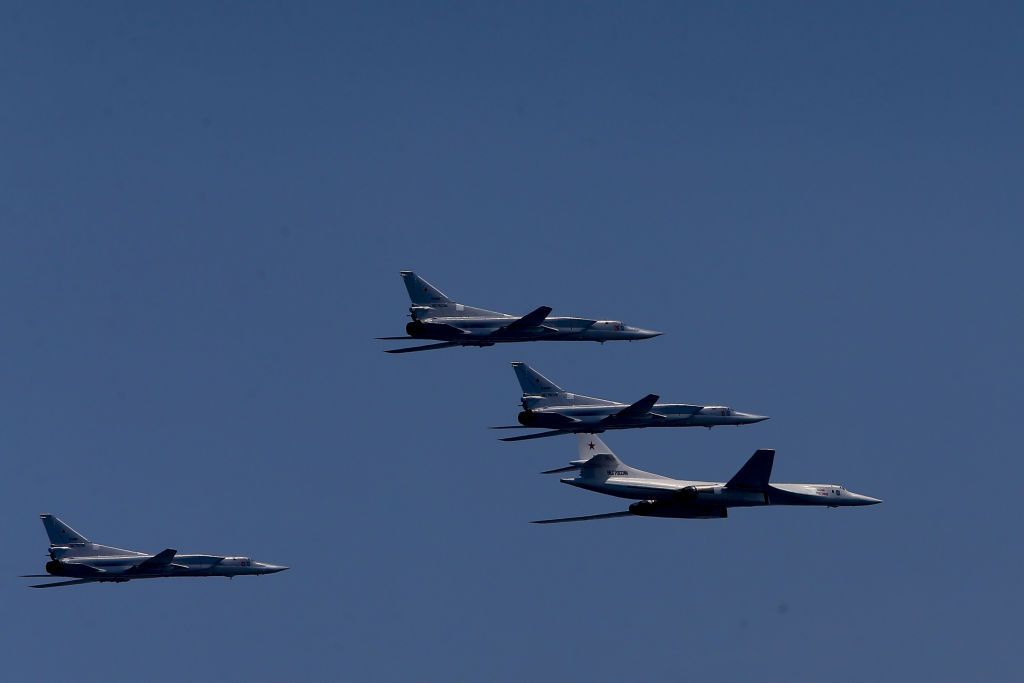
The Security Service of Ukraine (SBU) said 117 drones were launched from hidden positions across Russia, damaging 41 aircraft, including Tu-95, Tu-22M3, and Tu-160 bombers.
According to Agentstvo, all Tu-160 bombers have been evacuated from Belaya airfield in Irkutsk Oblast and Olenya airfield in Murmansk Oblast. Some were relocated to Anadyr in Chukotka, Yelizovo in Kamchatka, and Borisoglebskoye in Tatarstan.
Tu-22M3 and Tu-95MS bombers were also redeployed. Eleven Tu-22M3s and all Tu-95MS aircraft near Murmansk reportedly relocated to the Ukrainka airfield in Amur Oblast, Engels-2 in Saratov Oblast, Borisoglebskoye in Tatarstan, and Mozdok in North Ossetia.
The reported relocation of bombers is the latest sign that Ukraine's drone warfare is forcing the Kremlin to rethink its strategic posture, even far from the front lines.
Western analysts and military officials praised Ukraine's ingenuity in the Spiderweb operation. NATO Admiral Pierre Vandier called the mission a modern reinvention of the "Trojan Horse," demonstrating Ukraine's growing technical sophistication and deep-strike capability.
President Volodymyr Zelensky claimed that roughly half of the targeted aircraft are damaged beyond repair. Russia has acknowledged losses but insisted all damaged aircraft will be restored.

 Connexion
 The Kyiv IndependentOlena Goncharova