“You have so many people who have worked their entire lives in the federal government, and then all of a sudden, the rug is pulled from under them,” said Shayla Adams-Stafford, a Prince George’s County Council member who helped bring the store to the community.
Azerbaijan's top diplomat stood in the town that stopped Russia's drive on Kyiv and offered Ukraine help. Foreign Minister Jeyhun Bayramov has visited Irpin in Kyiv Oblast as part of an official visit to Ukraine, Azerbaijan's Foreign Ministry said on X.
The visit is a marker of how far Baku has swung toward Kyiv as its relations with Moscow have collapsed. Ukrainian-Azerbaijani ties improved sharply in 2024 and 2025 after a series of aggressive Russian actions, includin
Azerbaijan's top diplomat stood in the town that stopped Russia's drive on Kyiv and offered Ukraine help. Foreign Minister Jeyhun Bayramov has visited Irpin in Kyiv Oblast as part of an official visit to Ukraine, Azerbaijan's Foreign Ministry said on X.
The visit is a marker of how far Baku has swung toward Kyiv as its relations with Moscow have collapsed. Ukrainian-Azerbaijani ties improved sharply in 2024 and 2025 after a series of aggressive Russian actions, including Russian forces shooting down an Azerbaijani airliner near Grozny in December 2024, killing 38, and later raids that killed two Azerbaijani citizens, prompting Baku to openly strengthen ties with Kyiv.
Bayramov chose to visit Irpin, the town that became a legendary bulwark against Russia's 2022 advance on Kyiv, where Russia killed some 300 civilians and left over 70% of housing destroyed before its liberation on 28 March 2022, Ukrainska Pravda reports.
Baku offers gas and energy cooperation
At a joint press conference with Ukrainian Foreign Minister Andrii Sybiha, Bayramov made a specific offer. Azerbaijan is ready to supply gas to Ukraine if needed and to expand cooperation on energy security, including the use of Ukraine's underground gas storage, he said, per Ukrinform.
Energy is the anchor of the relationship. Bayramov called energy cooperation one of the most important areas of economic ties between the countries, noting that Azerbaijan's state oil company, SOCAR, has been present on the Ukrainian market for a decade and has plans for future energy cooperation.
Ukraine's gas storage is an asset
Bayramov called Ukraine's underground gas storage system, the largest in Europe, a very important asset and said an extremely dynamic dialogue is underway between Baku and Kyiv on key elements of energy cooperation.
That storage matters strategically. Ukraine's vast underground capacity offers a route to move Caspian gas into Europe as an alternative to Russian supplies, part of why Russia has bombed Ukraine's southern gas infrastructure. An Azerbaijani offer to use it deepens a partnership Russia has reason to want severed.
The pilot, identified only by his initials, also tested positive for ecstasy and cocaine when he was arrested last week at the Jakarta airport, the Indonesian police said.
The pilot, identified only by his initials, also tested positive for ecstasy and cocaine when he was arrested last week at the Jakarta airport, the Indonesian police said.
The biometric system for non-E.U. citizens is causing long delays and short tempers at airports. Officials say the rocky rollout will get better and will improve security.
The biometric system for non-E.U. citizens is causing long delays and short tempers at airports. Officials say the rocky rollout will get better and will improve security.
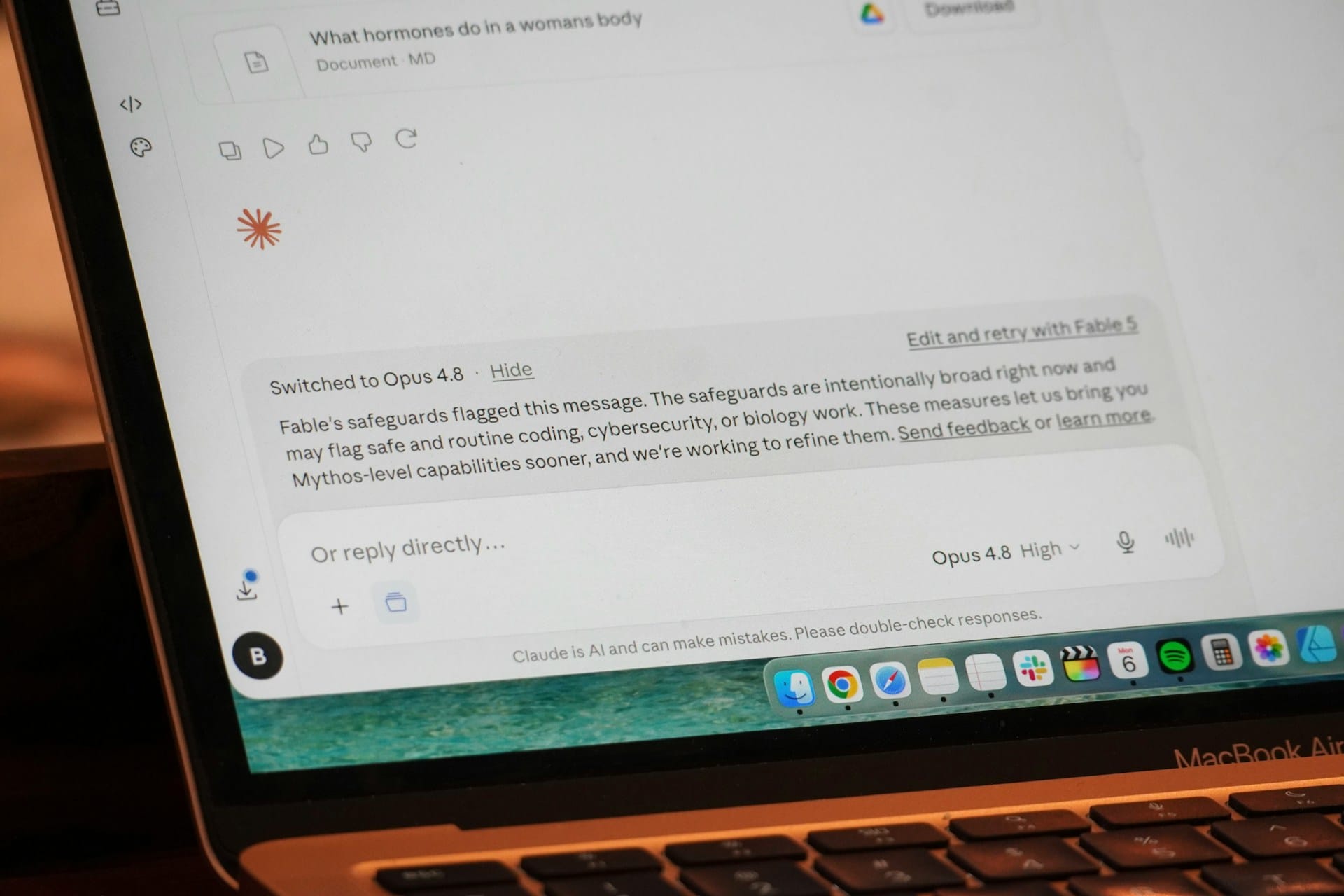
Claude is exposing a wealth of users’ chats and creations in Google search results, meaning anyone can dig through conversations or other material that people used Claude to make but may not have realized were publicly available for strangers to see.
Claude is exposing a wealth of users’ chats and creations in Google search results, meaning anyone can dig through conversations or other material that people used Claude to make but may not have realized were publicly available for strangers to see.
Ukraine's Cabinet of Ministers rejected a nominee to lead the economic crimes agency, drawing swift criticism from lawmakers and businesses over alleged interference in the selection process.The agency, the Bureau of Economic Security, was created in 2021 to investigate economic crimes. It has since faced accusations of being used to pressure — and in some cases extort — businesses, prompting multiple calls and efforts to overhaul it.Selecting a new director of the agency by the end of July is o
Ukraine's Cabinet of Ministers rejected a nominee to lead the economic crimes agency, drawing swift criticism from lawmakers and businesses over alleged interference in the selection process.
The agency, the Bureau of Economic Security, was created in 2021 to investigate economic crimes. It has since faced accusations of being used to pressure — and in some cases extort — businesses, prompting multiple calls and efforts to overhaul it.
Selecting a new director of the agency by the end of July is one of Ukraine's obligations to the EU and International Monetary Fund as part of international financing packages extended to the war-torn country by the institutions.
As part of a recent attempt to relaunch the bureau, Oleksandr Tsyvinsky on June 30 was officially nominated by the bureau's selection commission that consists of six members — three from the government and three international experts. Tsyvinsky is known for exposing schemes involving illegal land seizures in Kyiv..
But Ukraine's government on July 8 said it had rejected Tsyvinsky following alleged concerns raised by the country's intelligence service of potential Russian connections.
The government unanimously decided to ask the commission to submit two new candidates who meet all security requirements, the government press service wrote on its official Telegram channel, a move it claims aligns with the law.
Following Tsyvinsky's nomination, it was revealed that his father holds a Russian passport. He has said he hasn't spoken to his father, who lives in Russia, in years.
Tsyvinsky holds clearance for state secrets and has passed special vetting, backed by over 20 years in law enforcement, including nearly a decade at the National Anti-Corruption Bureau of Ukraine (NABU).
Opposition lawmaker Yaroslav Zhelizniak, said the government had no grounds to reject a properly nominated candidate, claiming President Volodymyr Zelensky's office is behind the blocking of the nomination.
"The (bureau's) legislation provides no legal grounds for the cabinet to demand a new shortlist or impose additional, undefined requirements such as 'security criteria.' The term itself is absent from any statute and therefore has no legal force," Zhelizniak said.
"The SBU letter in this case is nothing more than an indicator of the winner's disloyalty to the President's Office and a desire to block the appointment," said Olena Shcherban, deputy executive director of the AntAC in a statement following the news.
Major business associations have called on Zelensky, Parliament Speaker Ruslan Stefanchuk, and Prime Minister Denys Shmyhal to reverse the government's decision.
The business groups warned that failing to reform the agency will harm investment decisions, particularly as Ukraine's wartime economy needs to attract capital.
"War is a time for radical changes in the rule of law and business climate, otherwise the economy cannot ensure the country's survival," the businesses wrote in an open letter.
The European Bank for Reconstruction and Development (EBRD) will enable Ukrainian banks to provide up to 900 million euros ($1.05 billion) in new loans by sharing credit risks, the EBRD announced in a press release on July 7.The loans will target companies in agribusiness, manufacturing, pharmaceuticals, transport and logistics, as well as energy security projects.The mechanism will be announced at the Ukraine Recovery Conference (URC) in Rome on July 10-11. This represents the largest risk-shar
The European Bank for Reconstruction and Development (EBRD) will enable Ukrainian banks to provide up to 900 million euros ($1.05 billion) in new loans by sharing credit risks, the EBRD announced in a press release on July 7.
The loans will target companies in agribusiness, manufacturing, pharmaceuticals, transport and logistics, as well as energy security projects.
The mechanism will be announced at the Ukraine Recovery Conference (URC) in Rome on July 10-11. This represents the largest risk-sharing facility implemented in Ukraine since the war began, according to the EBRD's press release.
Russian forces have damaged most of Ukraine's thermal power plants and about 30% of power stations, disrupting nearly two-thirds of the country's total electricity generation, the bank says.
The EU, together with other EBRD donors, has developed plans to de-risk renewable energy investments to attract more private capital, which they will announce at the URC.
Nearly one-third of EBRD's wartime financing to Ukraine — 2.4 billion euros ($2.8 billion) — has gone to the energy sector. This includes support for state-owned electricity transmission and gas companies, as well as financing for hydropower and small-scale distributed generation.
In a pre-URC press release, the EBRD also expressed interest in supporting the development of a natural graphite deposit in Ukraine following the U.S.-Ukraine minerals agreement. Graphite is a strategic material used in batteries and defense applications.
The bank will launch the second phase of digitizing Ukraine's paper-based geological data archive to make information about mineral deposits more accessible, the EBRD reports.
Since Russia's full-scale invasion in 2022, the EBRD has invested over 7.2 billion euros ($8.4 billion) in Ukraine's economy.
The U.S. Treasury Department's Office of Foreign Assets Control (OFAC) has imposed sanctions on the Russian IT company Aeza Group for hosting infostealers and ransomware operations, according to a press release published on July 1.Restrictions were imposed on two subsidiaries and four members of the Aeza Group's management as well, the statement read.The U.S. Treasury Department characterized Aeza as a "bulletproof hosting service" that provided services to the Meduza and Lumma infostealers, as
The U.S. Treasury Department's Office of Foreign Assets Control (OFAC) has imposed sanctions on the Russian IT company Aeza Group for hosting infostealers and ransomware operations, according to a press release published on July 1.
Restrictions were imposed on two subsidiaries and four members of the Aeza Group's management as well, the statement read.
The U.S. Treasury Department characterized Aeza as a "bulletproof hosting service" that provided services to the Meduza and Lumma infostealers, as well as to the BianLian and RedLine ransomware groups.
Aeza Group also hosted the Russian-language darknet marketplace for illegal drugs, BlackSprut.
According to the U.S. Treasury Department, Aeza Group sells access to specialized servers that help cybercriminals avoid detection and resist attempts by law enforcement agencies to suppress their criminal activities.
Sanctions against the company involve blocking all assets of the named individuals located in the U.S. Any legal entities that are owned, directly or indirectly, individually or in the aggregate, by 50% or more by one or more of the mentioned individuals are also blocked.
Violation of the U.S. sanctions may result in civil or criminal penalties.
The news comes as Ukraine continues to call on the U.S. to strengthen sanctions against Russia. Despite Russia's refusal to accept the ceasefire proposal and its army's ongoing advance across Ukrainian territory, the Trump administration has not yet imposed new restrictions.
Meanwhile, Senators Lindsey Graham (R) and Richard Blumenthal (D) introduced a bill to impose a 500% tariff on imports from countries that continue to buy Russian oil and raw materials.
The legislation currently has broad bipartisan support, with 82 out of 100 U.S. senators backing it. U.S. House Speaker Mike Johnson also voiced his support for the bill.
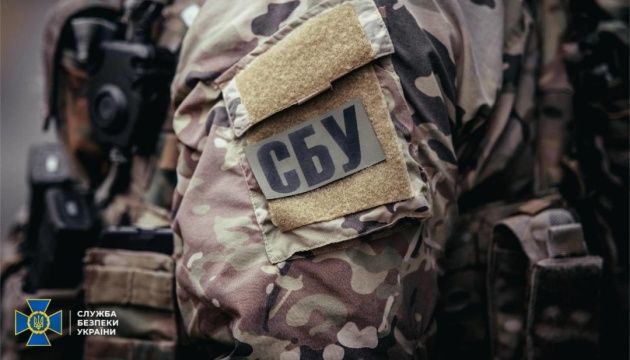
Ukraine's security service (SBU) is teaching teenagers how to avoid recruitment by Russian intelligence online, the New York Times (NYT) reported on June 21."Maybe not all of these special operations are reported in the media — but believe me, the enemy is not sleeping... They are working actively and carrying out illegal activities, as strange as it may sound, directly inside your phones," SBU spokesperson Roksolana Yavorska-Isaienko told students.Approximately 22% of Ukrainians recruited by Ru
Ukraine's security service (SBU) is teaching teenagers how to avoid recruitment by Russian intelligence online, the New York Times (NYT) reported on June 21.
"Maybe not all of these special operations are reported in the media — but believe me, the enemy is not sleeping... They are working actively and carrying out illegal activities, as strange as it may sound, directly inside your phones," SBU spokesperson Roksolana Yavorska-Isaienko told students.
Approximately 22% of Ukrainians recruited by Russian intelligence to conduct sabotage or terrorist attacks are minors, Artem Dekhtiarenko, SBU spokesperson, said on April 2.
Russian intelligence attempts to recruit Ukrainian civilians online, offering easy money in return for sharing sensitive data or preparing sabotage or terrorist acts.
Russian intelligence finds its recruits using social platforms, including Telegram, Discord, and TikTok.
Unsuspecting teenagers are often offered hundreds or even thousands of dollars to conduct simpler tasks such as delivering packages or taking photos of energy sites, the NYT reports.
More serious tasks are commonly assigned to teenagers once they have been blackmailed for conducting less serious operations beforehand or when their phones are hacked to reveal compromising photos.
Russian intelligence is actively attempting to recruit Ukrainian nationals for illegal operations across the EU, Ukraine's military intelligence agency (HUR) said on June 2.
"The recruitment of Ukrainians for hostile operations in Europe is yet another tool of hybrid aggression that the Russian Federation is waging against Ukraine and the entire European community," HUR said.
The SBU caught a Russian agent as he was filming a military airfield in preparation for a Russian strike, the agency reported on June 15.
The Russian Federal Security Service (FSB) recruited the unemployed 24-year-old via the Telegram messaging app to collect coordinates for air attacks on airfields and logistic depots, the SBU said.
The Russian FSB allegedly offered "easy money" and instructed the recruit to find military facilities and carry out reconnaissance on the ground.
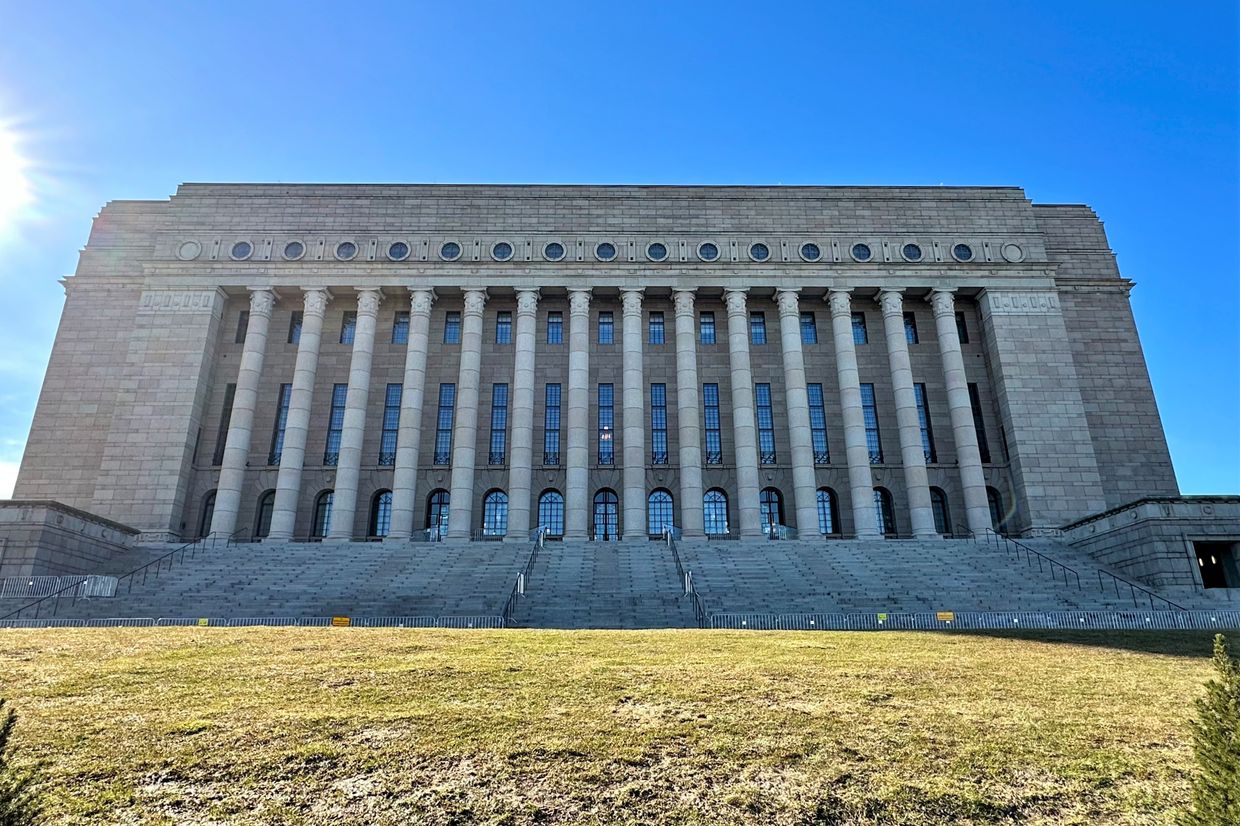
Finland's parliament voted on June 19 to withdraw from the Ottawa Convention banning anti-personnel landmines, citing growing security concerns from Russia's aggressive posture and the threat it poses to the region, Reuters reported.The vote aligns Finland with its Baltic allies, Estonia, Latvia, and Lithuania, whose parliaments have already approved similar exits from the treaty.Defending the decision earlier this week, Finnish President Alexander Stubb said the security reality along Finland's
Finland's parliament voted on June 19 to withdraw from the Ottawa Convention banning anti-personnel landmines, citing growing security concerns from Russia's aggressive posture and the threat it poses to the region, Reuters reported.
The vote aligns Finland with its Baltic allies, Estonia, Latvia, and Lithuania, whose parliaments have already approved similar exits from the treaty.
Defending the decision earlier this week, Finnish President Alexander Stubb said the security reality along Finland's 1,300-kilometer (800-mile) border with Russia had changed dramatically since the full-scale invasion of Ukraine, according to TVP.
"The reality in the endgame is that we have as our neighboring country an aggressive, imperialist state called Russia, which itself is not a member of the Ottawa Treaty and which itself uses landmines ruthlessly," Stubb said.
Russia has widely deployed landmines across Ukrainian territory since launching its invasion in 2022, a tactic condemned by human rights organizations and Western governments.
Finland, which joined NATO in 2023, has significantly ramped up its defense posture amid growing concern over potential Russian provocations. The country closed its border with Russia over a year ago, accusing Moscow of orchestrating a "hybrid operation" by directing asylum seekers toward Finnish territory. Helsinki claims such hybrid tactics have intensified since it joined the alliance.
The Finnish Border Guard completed the first 35 kilometers (22 miles) of a planned 200-kilometer (124-mile) fence along its eastern frontier on May 21. The move came amid growing evidence of Russian military infrastructure expansion near the Finnish border.
Finland is "closely monitoring and assessing Russia's activities and intentions," Finland's Defense Minister Antti Hakkanen told AFP on May 22.
"We have excellent capabilities to observe Russian operations. As a member of the alliance, Finland holds a strong security position."
Russia's Defense Minister Andrei Belousov said in December 2024 that Moscow must be ready for a potential conflict with NATO within the next decade. Western officials have repeatedly warned of the possibility that Moscow could target NATO members in the coming years.

 Connexion