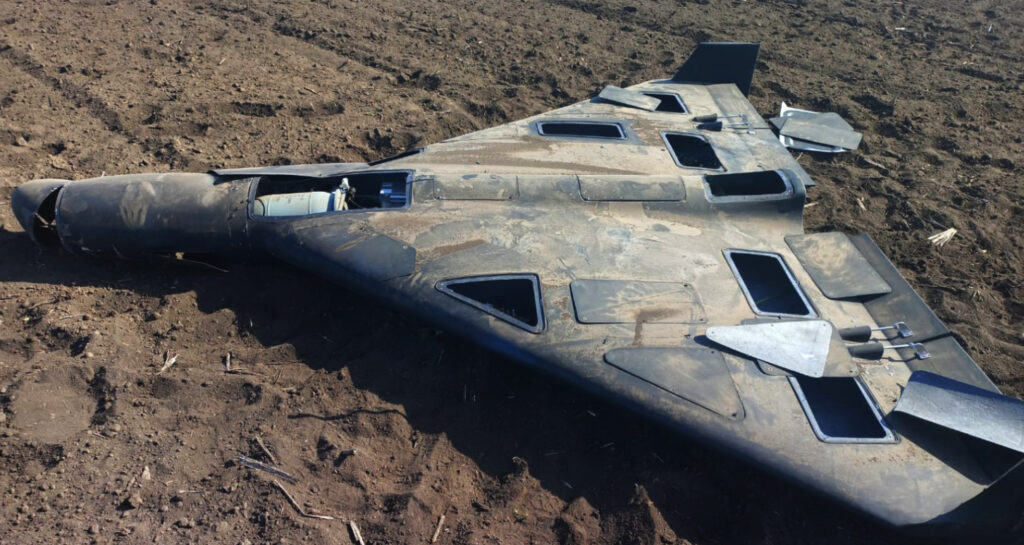
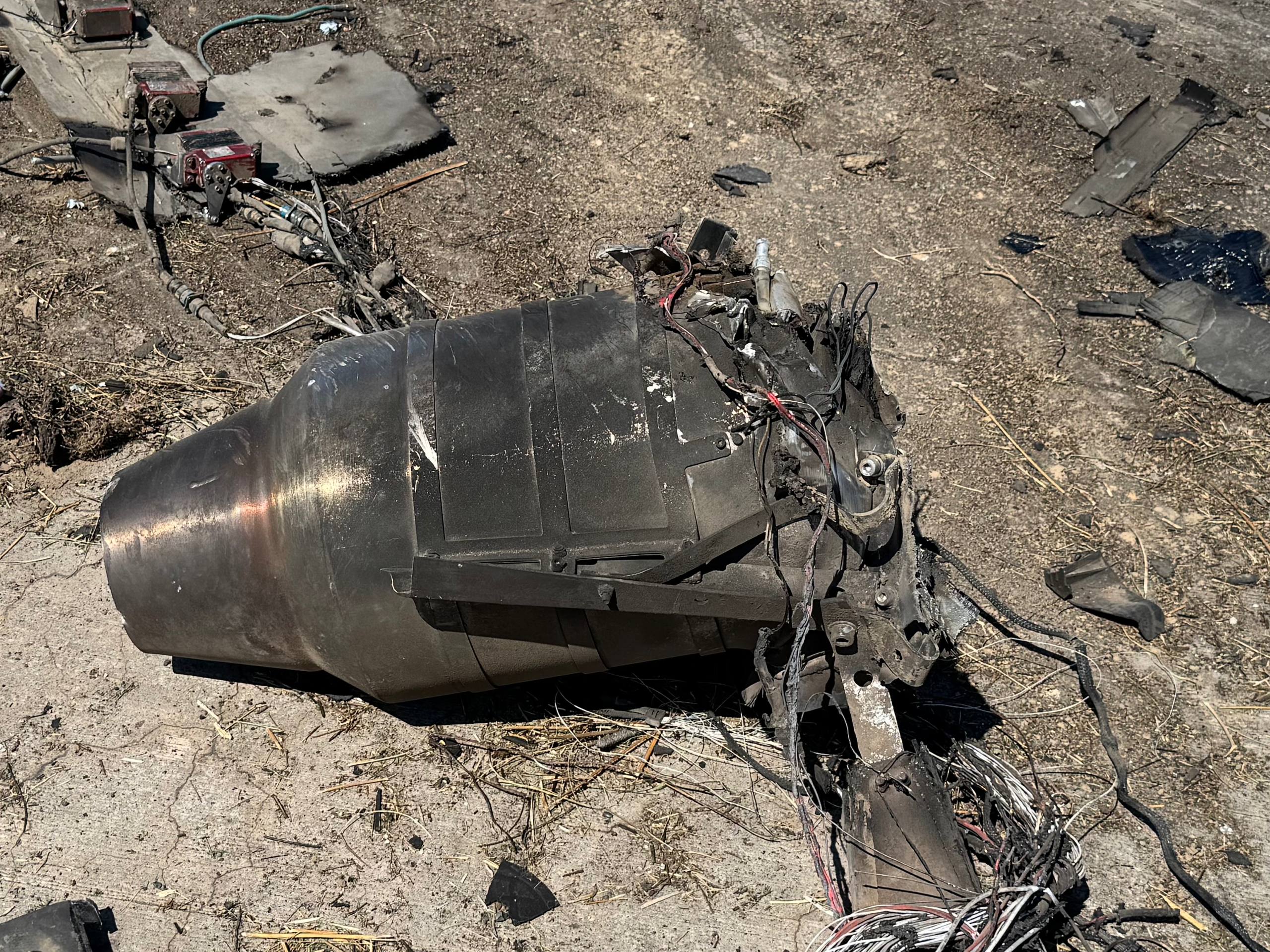
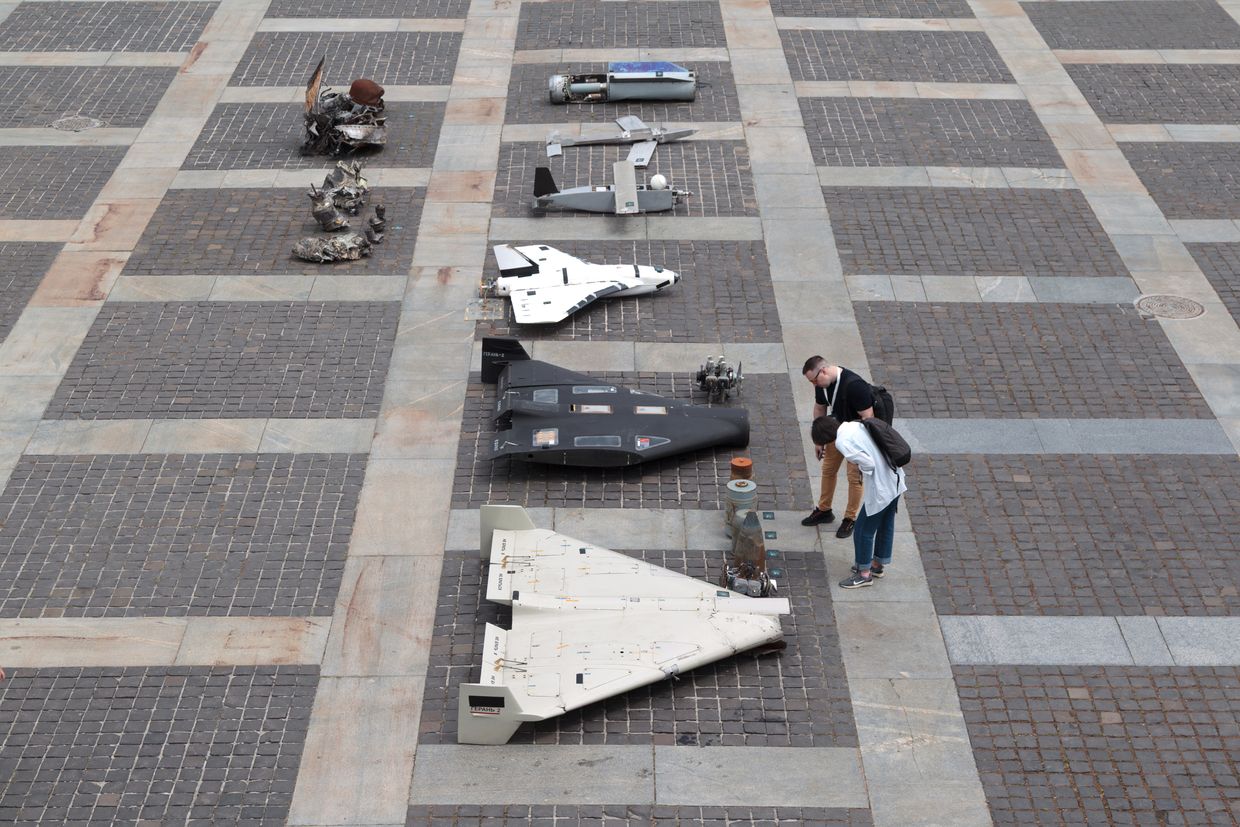
Russia has ceased producing its Geran-3 jet-powered attack drone, Ukraine’s Military Intelligence (HUR) told the Ukrainian defense outlet Militarnyi. The agency estimates Russian industry now makes about 3,000 newer Geran-4 and Geran-5 drones per month.
Russia is shifting toward faster jet drones as Ukraine’s low-cost interceptors have become more effective against slower Shaheds. The Geran-4 and Geran-5 leave defenders less time to react, requiring faster interceptors
Russia has ceased producing its Geran-3 jet-powered attack drone, Ukraine’s Military Intelligence (HUR) told the Ukrainian defense outlet Militarnyi. The agency estimates Russian industry now makes about 3,000 newer Geran-4 and Geran-5 drones per month.
Russia is shifting toward faster jet drones as Ukraine’s low-cost interceptors have become more effective against slower Shaheds. The Geran-4 and Geran-5 leave defenders less time to react, requiring faster interceptors or short-range air defenses. At the reported production rate, these newer Geran models, previously used in limited numbers, could become a regular feature of Russian attacks.
HUR said Russia has established serial assembly of the two newer models at the Alabuga complex in Tatarstan, with other Russian companies supplying components. The agency also said Russia’s Defense Ministry wants to expand Alabuga’s capacity. Construction began in May. Satellite imagery showed large-scale work by early July 2026, although the purpose of the new buildings remains unknown.
From Geran-3 to newer jet drones
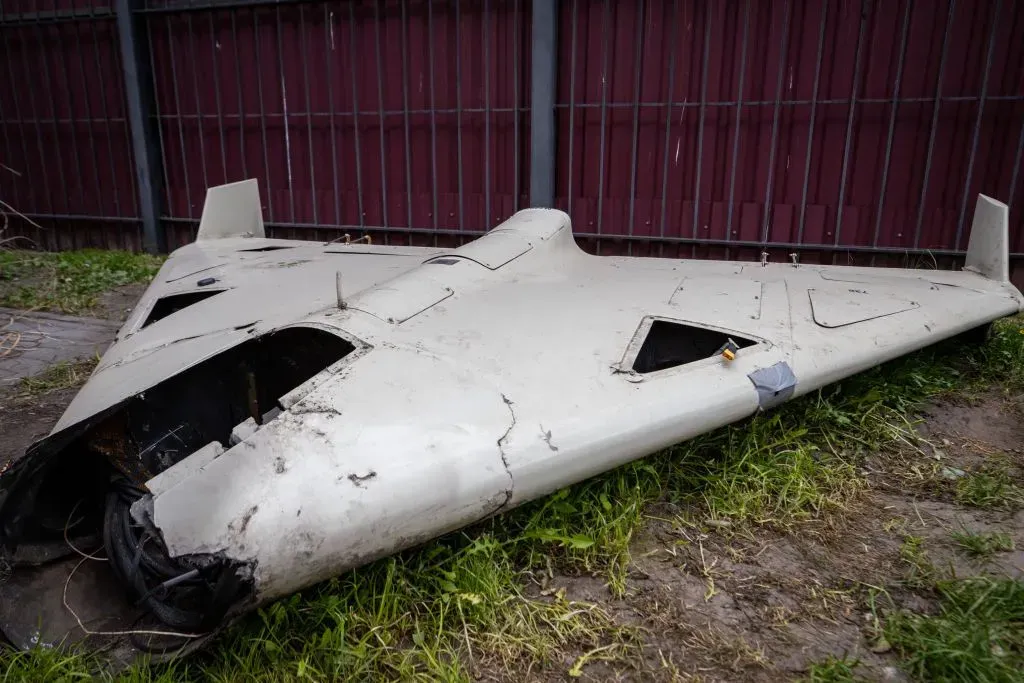
Russia first used Geran-3 drones in large numbers during a combined nighttime attack on Ukraine on 30 July 2025. At least eight flew alongside propeller-driven Shaheds and decoys. The model retained the Geran-2 airframe but replaced its piston engine with a Chinese Telefly JT80 turbojet. HUR gave it a speed of 300–370 kilometers per hour and a range of up to 1,000 kilometers.
In May, then-Defense Ministry adviser Serhii “Flash” Beskrestnov said Ukrainian defenses stopped 95% of incoming Shaheds during the most recent documented strike and predicted Moscow would produce more jet-powered Geran variants.
The newer Geran-4 has a more robust airframe than the Geran-3 and is designed for high-speed flight and maneuvers. It can reach 500 kilometers per hour.
The larger Geran-5 carries a roughly 90-kilogram warhead and has a stated range of up to 1,000 kilometers. HUR has said Russia may equip it with R-73 air-to-air missiles, potentially threatening aircraft sent to intercept it.
The Chinese engines that Russia itself can't build
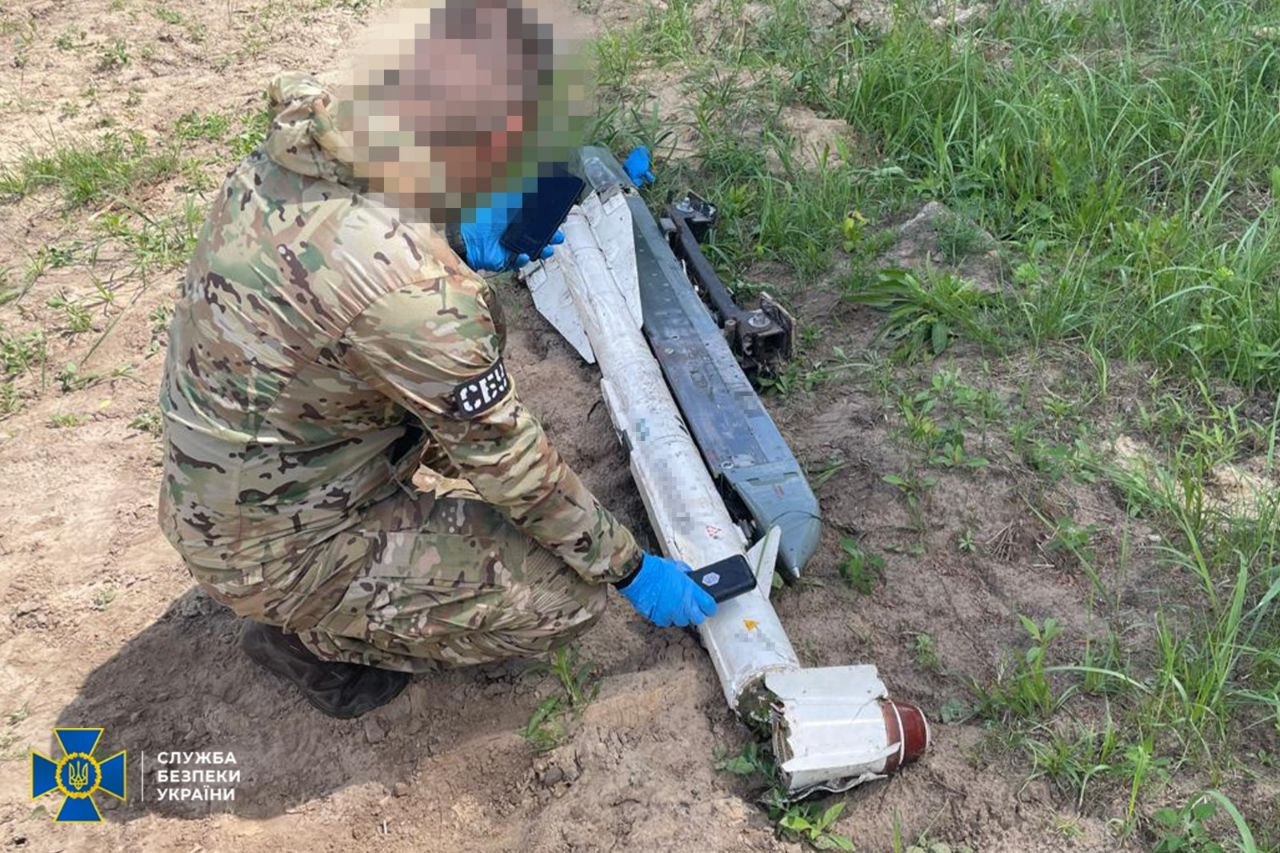
The Geran line combines Iranian designs, Russian assembly, and imported technology. HUR described the Geran-3 as a localized version of Iran’s Shahed-238. It found 45 foreign components inside, including parts from the United States, China, Switzerland, Germany, Britain, and Japan.
Russia depends on China for the turbojet engines in newer Geran models. HUR deputy chief Vadym Skibitskyi told RBC-Ukraine that Russia remains fully dependent on Chinese turbojet engines for the Geran-4 and Geran-5. Each costs about $35,000–$40,000, he said.
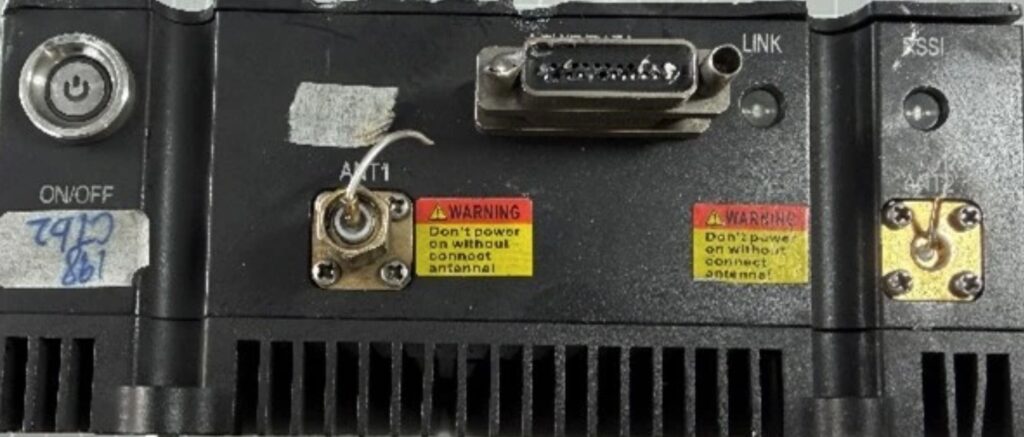
A Chinese XK-F358 mesh radio recovered from a Geran-5 also helps Russian drones resist jamming. Its manufacturer remains outside the US, EU, UK, and Ukrainian sanctions, according to a review by Euromaidan Press.
As a vice premier and then premier, he helped transform China into the world’s leading manufacturing power and led his country into the World Trade Organization.
As a vice premier and then premier, he helped transform China into the world’s leading manufacturing power and led his country into the World Trade Organization.
The radio that makes Russia's strike drones resistant to Ukrainian jamming is a Chinese-made part sold openly, and the company that makes it has escaped the sanctions hitting the rest of the drone supply chain, the OSINT group Frontelligence Insight found. The part, a mesh radio modem, has been pulled from downed Russian drones even as Western and Ukrainian sanctions expanded to cover the engines, navigation, motors, cameras, and chips around it.
Russia's war on Ukr
The radio that makes Russia's strike drones resistant to Ukrainian jamming is a Chinese-made part sold openly, and the company that makes it has escaped the sanctions hitting the rest of the drone supply chain, the OSINT group Frontelligence Insight found. The part, a mesh radio modem, has been pulled from downed Russian drones even as Western and Ukrainian sanctions expanded to cover the engines, navigation, motors, cameras, and chips around it.
Russia's war on Ukraine now runs on drones built largely from Chinese parts—a flow China keeps open to Moscow while restricting the same goods to Kyiv.
The part that isn't on any list
The modem is the XK-F358 mesh radio made by Shenzhen Xingkai Technology Co., Ltd. of Guangdong. It sells openly online. The company's Made-in-China storefront lists it at $8,100 to $9,000 apiece, and Serhii "Flash" Beskrestnov previously put the price near $7,000.
Ukraine and its partners have sanctioned Chinese suppliers of drone engines, navigation receivers, motors, cameras, and chips—one Ukrainian round aimed explicitly at parts for drones built to bypass electronic warfare—but not the radios.
Explore further
Ukraine finds uranium in six more Russian drones. Their radiation readings ran up to 80 times background
Recovered from downed drones, and hard to jam
Ukraine's Defense Intelligence photographed an XK-F358 recovered from a downed Geran-5, and Beskrestnov photographed another taken from a Gerbera, Militarnyi reported on 19 January 2026.
Russia's response to electronic warfare wasn't a single solution. It evolved along two major paths: fiber-optic drones and mesh networks. This thread summarizes Frontelligence Insight analysis based on OSINT data and a report by the Center for Defense Reforms. Threadpic.twitter.com/k0v0ZeWKYB
The modem uses COFDM modulation and a mesh design in which each unit relays traffic for the rest, so packets reroute automatically when a node drops.
The same modem also turns up under a second name—HX-50, in a more industrial variant—and its use is no experiment: it spread onto Russia's Shahed-136/Geran-2 strike drones from July 2025 and reached serial integration by early September.
Mesh Network XK-F358 modem from the Geran-5 drone. Photo: Defense Intelligence of Ukraine
The network keeps working after losing roughly 80% of its nodes and can link drones across more than 100 kilometers, or up to 600 in relay chains, according to Beskrestnov, a Ukrainian defense adviser who has examined the recovered units. That is why conventional jamming struggles against it: an attacker has to suppress every node at once rather than break a single link.
What sanctions cover, and what they skip
Ukraine's National Security and Defense Council (NSDC) has sanctioned Chinese makers of navigation receivers, motors, cameras, and chips. The US Treasury designated Xiamen Limbach and Redlepus in October 2024, the EU added Shenzhen Minghuaxin in June 2026. No maker of radio or data-link modems appears among them.
None of the four sanctions regimes that have pursued Russia's Chinese drone suppliers—the US, EU, UK, and Ukraine—lists Shenzhen Xingkai, a direct check of each register by Euromaidan Press confirms.
Explore further
US sanctions 13 Iran-Belarus-China entities supplying Iran’s IRGC. That’s three of four “Axis of Upheaval” states
The gap cuts both ways. Ukrainian battalion commanders and industry sources put the share of parts in a standard Ukrainian FPV drone—batteries, motor magnets, fiber-optic cable—at up to 65% Chinese-made, and Ukraine buys from Shenzhen too.
Cutting one supplier, then the next
Tatarigami, who founded Frontelligence Insight, argues the fix is to extend controls beyond individual firms to the entire chain—down to the optical fiber, the reels it ships on, and the machines that make it. Fiber-optic drones already make up about 60% of Russian FPVs in key sectors, Euromaidan Press reports. The record on firm-by-firm designation is discouraging: after Washington hit Xiamen Limbach, Beijing Xichao took over the engine shipments, Reuters found, and Kupol's Garpiya order climbed from 2,000 drones in 2024 to more than 6,000 this year. But among all component categories in a Geran drone, the one that enables jam-resistant control is the only one absent from the registers.
Explore further
“They hit what was in parking lot”: Russian drone operator adapted strike on Ukraine’s largest online retailer’s warehouse in real time
What controls can reach, and what they can't
Xingkai also markets the modem for civilian work—mining, firefighting, maritime. And as the Xichao case shows, cutting off one company rarely halts the flow.
China's foreign ministry claims it knew nothing of the parts exports, says it controls dual-use goods under its own law, and rejects sanctions it calls baseless.
The harder problem is that the same civilian electronics feeding Russia also stock Ukraine's drone lines, so any workable control has to reach named military buyers without severing the dual-use trade Kyiv still needs. And sanctions may not decide this contest at all: Ukraine is already testing electronic-warfare methods built to break the very mesh networks these radios create.
The innovations include air-conditioned apparel, refrigerators for humans and hand-held fans that use the science behind semiconductors. Governments are making cooling devices central to heat adaptation.
The innovations include air-conditioned apparel, refrigerators for humans and hand-held fans that use the science behind semiconductors. Governments are making cooling devices central to heat adaptation.
After a trip to the Winter Olympics in Italy, already marred by anger and protests at the presence of ICE agents at the games, JD Vance will embark on a victory lap of Armenia and Azerbaijan. It will be the first ever visit by a U.S. vice president to the Armenian capital Yerevan and the first to Baku since Dick Cheney’s brief 2008 whistlestop tour of the region. At war for decades, Armenia and Azerbaijan agreed to make peace in Washington, DC in August last year. The deal included the building
After a trip to the Winter Olympics in Italy, already marred by anger and protests at the presence of ICE agents at the games, JD Vance will embark on a victory lap of Armenia and Azerbaijan. It will be the first ever visit by a U.S. vice president to the Armenian capital Yerevan and the first to Baku since Dick Cheney’s brief 2008 whistlestop tour of the region. At war for decades, Armenia and Azerbaijan agreed to make peace in Washington, DC in August last year. The deal included the building of a “Trump Route for International Peace and Prosperity” (TRIPP), a 21st century version of a Panama-style “canal zone” — a narrow strip of land that decides who moves energy, freight, and data between continents, and who gets paid for the privilege. And, vitally, a U.S.-backed counter to infrastructure being built by China.
TRIPP is more than a photo-op or a vanity project. The South Caucasus, particularly since Russia’s full-scale invasion of Ukraine, has become an area of critical strategic value as a corridor between East and West and a new arena of superpower competition. “Vance is not well known for flying around the world just for fun,” said Svante Cornell, Research Director of the Central Asia-Caucasus Institute in Stockholm. “The U.S. is serious about the TRIPP Corridor and they want everybody in the region to know that.”
Armenia and Azerbaijan have fought two wars over disputed Nagorno-Karabakh since the late-1980s, as the Soviet Union collapsed. It has been a brutal, society-shaping conflict, followed in 2023 by Azerbaijan’s rapid takeover of Nagorno-Karabakh and the flight of nearly the entire ethnic Armenian population.
Russia, though formally cast as a mediator, spent years manipulating the conflict: arming both sides, managing ceasefires and preventing resolution in a familiar imperial tactic later perfected in Ukraine: manufacturing and freezing instability until it could be turned into full-scale war on Moscow’s terms. But Trump changed the narrative by brokering a peace that has continued to hold. In December, officials from both countries discussed “lasting peace” and a “joint future” at a summit in the Qatari capital Doha. Armenia and Azerbaijan are also deep in discussion about integrating their energy systems. And Washington is now trying to lock that peace into concrete: rails, roads, and fiber that physically re-route the region away from Russian and Iranian gatekeeping.
This, wrote Trump on Truth Social recently, “was a nasty War… but now we have peace and prosperity.” For once, the self-congratulation isn’t entirely empty. Trump – who has confused Armenia for Albania and talked about settling its war with “Aber-baijan” in Davos just weeks ago – can legitimately take credit for making geopolitical gains in what Russia considered its backyard.
The US president has repeatedly quoted Vladimir Putin as telling him: “‘I cannot believe you got this war settled’... cause it’s his territory.” That line matters because the South Caucasus is to Russia what the Caribbean Basin and the Panama “backyard” once was to the United States: a strategic near-abroad where outside powers aren’t supposed to build permanent leverage.
Hemispheric defense, the Trump administration has made clear when it comes to Latin America, is at the heart of its defense strategy and that it expects other superpowers to be similarly focused on their spheres of influence. Thus, Russia’s inability to be a reliable ally to Armenia will be seen as weakness to be preyed upon by rival powers. Armenia is now even talking to Turkey, a historical adversary, about opening their shared border and establishing diplomatic relations.
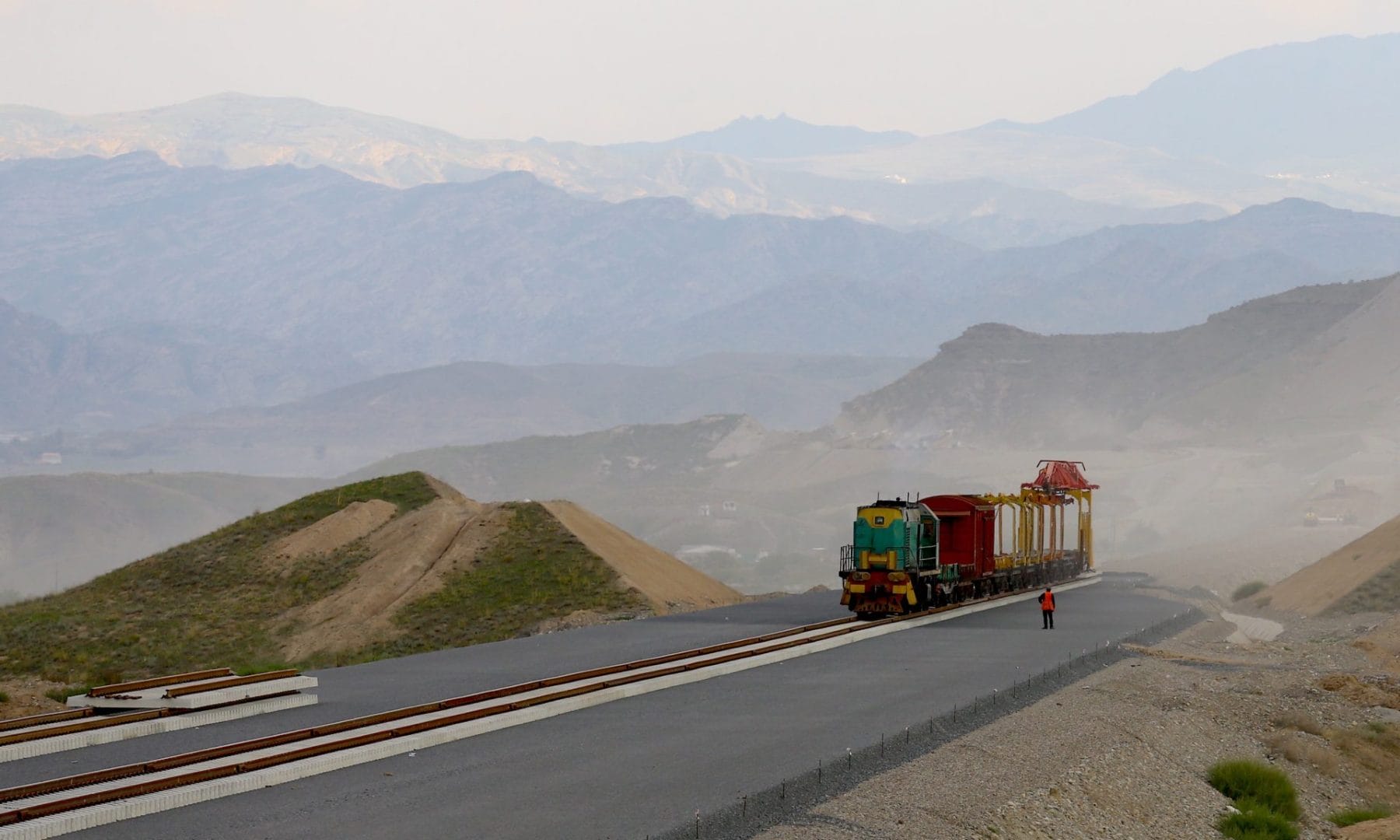
Construction of roads and railways is underway through the Zangezur Corridor, one of the routes extending from China to Central Asia. Resul Rehimov/Anadolu via Getty Images.
Still, Armenia remains a member of the Russian-led Eurasian Economic Union and has its railway networks handled by Russia’s RZhD national rail operator — a factor Russia tried to use in an attempt to get involved with TRIPP. “Regarding the 'Trump Road' project, as it's being called, we confirm our readiness to explore possible options for our involvement,” Russian Foreign Ministry spokeswoman, Maria Zakharova said in January. Armenia’s Parliament Speaker shot down the possibility as “absurd.”
As for Azerbaijan, Trump said on Truth Social that part of Vance’s visit to Baku would be dedicated to “the sale of Made in the U.S.A. Defense Equipment,” a prospect that won’t please Moscow.
Georgia, once considered Washington's closest partner in the South Caucasus, is notably absent from JD Vance’s itinerary and being left behind is as consequential as being included.
For two decades, Georgia’s power and growing prosperity came from being the corridor: the place where pipelines, highways, and rail lines had to pass if Europe wanted Caspian energy without Russian control. The Baku–Tbilisi–Ceyhan pipeline was the signature project of that era, an “East–West energy corridor” literally running through Georgia. TRIPP threatens to redraw that map. A corridor through southern Armenia that becomes the new headline route doesn’t just “leave Georgia behind” — it means Georgia loses its most significant geopolitical bargaining chip because transit was the card it could play with Washington, Brussels, Ankara and Baku.
Now, as Washington invests in a new flagship corridor, countries like Georgia that fall outside it are forced to hedge. Over the past decade, Georgia has deepened ties with China through trade deals, cultural exchanges, and visa-free travel, while simultaneously sliding back toward Russia despite Moscow’s 2008 invasion of South Ossetia and Abkhazia. Under the Georgian Dream government, repressive legislation and violent crackdowns on protest have widened the gap with the EU and the U.S. Georgian prime minister Irakli Kobakhidze has appealed directly to Trump for a reset, but TRIPP makes clear where Washington’s priorities now lie. With Azerbaijan and Armenia at the heart of a new U.S.-backed route, influence in the South Caucasus is reorganizing around infrastructure — and power is flowing along it.
TRIPP, even if it exists just on paper for now, indirectly challenges the Chinese Belt and Road Initiative, a network of railways, ports, pipelines, and trade corridors aimed at boosting international trade under Beijing’s leadership. It enables the moving of goods while bypassing Russia and, where possible, Iran — an approach that became more urgent after 2022. And it undermines China, which has been busy paving routes to Iran. Both countries have been in intense contact with Central Asian countries and last summer inaugurated a railway route that connects China and Iran through Kazakhstan, Turkmenistan, and Uzbekistan.
The South Caucasus is just a small piece in a puzzle that fits together over 140 Belt and Road countries — and Cornell is skeptical about the scale of China’s ambition versus its actual investment. “Belt and Road maps include a lot of infrastructure in this part of the world that has nothing to do with China,” he told me. “Most everything that's been built in the region has been built as a result of the funding from the countries in the region, not by Chinese funds.“ In keeping with this strategy, a fully operational TRIPP might be seen by China as a benefit, a way to trade while avoiding unreliable maritime routes. But researchers in China say that the problem will be if TRIPP “becomes securitized or if Washington leverages its control for geopolitical influence.” And with U.S. foreign policy increasingly waged as a battle with China for resources and global influence, TRIPP could become a threat to Chinese influence in the region.
Vice President Vance’s visit is a sign of sustained U.S. engagement in the region and a sign that Trump’s attention has not waned after a ceremonial peace agreement in Washington.
The simplest way to read TRIPP is as a 27-mile project with an outsized consequence: it reorders who controls the “land bridge” between Europe and Central Asia and it tells every capital nearby who Washington thinks matters.
And China will have to prepare for an economic standoff in terrain it once assumed was ripe for Chinese dominance. Russia, meanwhile, finds itself on slippery ground, no longer the indispensable broker it once was in its immediate neighborhood. TRIPP also adds an unexpected edge to the Ukraine-shaped narrative of a Trump administration willing to accommodate Moscow at every turn, suggesting instead a relationship that is less uniform and more selectively disruptive than it first appears.
Subscribe to our coda currents newsletter
Insights from the Coda newsroom on the global forces that shape local crises.
President Volodymyr Zelensky signed an order on July 8 imposing sanctions on five Chinese-registered companies accused of supplying components found in Russian Shahed-type drones used to attack Ukraine.The decree follows a statement by Ukraine's Security Service (SBU), which said it recovered Chinese-made parts from downed drones during a July 4 air assault on Kyiv.Sanctions were imposed on Central Asia Silk Road International Trade, Suzhou Ecod Precision Manufacturing, Shenzhen Royo Technology,
President Volodymyr Zelensky signed an order on July 8 imposing sanctions on five Chinese-registered companies accused of supplying components found in Russian Shahed-type drones used to attack Ukraine.
The decree follows a statement by Ukraine's Security Service (SBU), which said it recovered Chinese-made parts from downed drones during a July 4 air assault on Kyiv.
Sanctions were imposed on Central Asia Silk Road International Trade, Suzhou Ecod Precision Manufacturing, Shenzhen Royo Technology, Shenzhen Jinduobang Technology, and Ningbo BLIN Machinery.
The list was published on the Presidential Office's website alongside the official decision by Ukraine's National Security and Defense Council.
Russia's domestically produced drones based on Iran's Shahed-136 is a loitering munition extensively used by Russia to target Ukrainian cities, and is assembled with components sourced from around the world. Kyiv has warned that some of these parts continue to flow through countries that have not joined Western sanctions.
China has emerged as one of Moscow's key wartime partners, helping Russia circumvent sanctions and becoming the largest supplier of dual-use goods aiding its defense sector.
Vladyslav Vlasiuk, the Ukrainian president's commissioner for sanctions, told journalists on July 7 that Russia's growing ability to sustain weapons production is being driven by a flow of Chinese components and materials.
Zelensky has repeatedly accused China of backing Russia and providing technological and logistical support for its war effort. On May 29, he said Beijing had blocked the sale of drones to Ukraine while continuing to supply them to Russia.
Ukraine has already sanctioned several Chinese companies tied to Russia's war effort.
As Russian-Chinese relations deepen, Russian President Vladimir Putin is expected to visit China in September, where he is scheduled to meet with Chinese leader Xi Jinping.
Russia’s growing ability to sustain weapons production despite Western sanctions is being driven by a flow of Chinese components and materials, Vladyslav Vlasiuk, the Ukrainian president’s commissioner for sanctions, told journalists on July 7.Vlasiuk’s statement comes as Russia escalates its drone and missile strikes on Ukraine, while the U.S. continues to hold back on imposing tougher sanctions against Moscow and foreign-made components are still being found in Russian weapons used in the atta
Russia’s growing ability to sustain weapons production despite Western sanctions is being driven by a flow of Chinese components and materials, Vladyslav Vlasiuk, the Ukrainian president’s commissioner for sanctions, told journalists on July 7.
Vlasiuk’s statement comes as Russia escalates its drone and missile strikes on Ukraine, while the U.S. continues to hold back on imposing tougher sanctions against Moscow and foreign-made components are still being found in Russian weapons used in the attacks.
Ukraine has previously documented that Chinese companies have contributed electronics and materials used in the production of these drones.
Just days earlier, after a large-scale Russian attack on July 4, Foreign Minister Andrii Sybiha shared on social media a photo of a component from a Shahed-136/Geran-2 combat drone discovered in Kyiv. According to Sybiha, the part was manufactured in China and delivered recently.
"The trend of China’s (role) is increasing," Vlasiuk told journalists.
He said that the presence of Chinese-made components and materials in Russian weapons is on the rise, adding that Beijing is expanding its technological capabilities and can now replicate some American technologies.
What an irony. Following tonight's massive Russian air attack on Ukraine, we discovered in Kyiv a component of a Russian-Iranian "Shahed-136"/"Geran-2" combat drone, which was made in China and supplied just recently.
When asked by Kyiv about the Chinese parts found in Russian weapons, Beijing responded by claiming that such support is "non-lethal," the president's commissioner for sanctions said.
Beijing remains one of Russia's key wartime partners, helping Moscow evade Western sanctions and emerging as the leading supplier of dual-use goods used by the Russian defense industry.
In April, President Volodymyr Zelensky said that China, alongside Iran and North Korea, is supplying weapons to Russia.
His remarks followed reports that Ukrainian soldiers had captured Chinese nationals fighting together with Russia's army in Donetsk Oblast. Later, Zelenskyrevealed that at least "several hundred" Chinese nationals are fighting on Russia's side in Ukraine.
Ukraine has already sanctioned several Chinese companies tied to Russia’s war effort.
The South China Morning Post reported that China's Foreign Minister Wang Yi reportedly told the EU's top diplomat Kaja Kallas on July 3 that the country cannot afford for Russia to lose the war in Ukraine amid fears Washington would shift focus towards Beijing.
U.S. President Donald Trump said on July 6 that his administration will impose an additional 10% tariff on countries aligning themselves with what he described as the BRICS group's "anti-American policy.""There will be no exceptions to this policy," Trump wrote on the social network Truth Social.The announcement coincided with the BRICS summit in Brazil, where member states, including Russia, China, and India, adopted a declaration condemning strikes on Iran and Israel's operations in Gaza. The
U.S. President Donald Trump said on July 6 that his administration will impose an additional 10% tariff on countries aligning themselves with what he described as the BRICS group's "anti-American policy."
"There will be no exceptions to this policy," Trump wrote on the social network Truth Social.
The announcement coincided with the BRICS summit in Brazil, where member states, including Russia, China, and India, adopted a declaration condemning strikes on Iran and Israel's operations in Gaza.
The document did not explicitly name the U.S. but criticized actions perceived as destabilizing. On June 21, the country carried out strikes on three major Iranian nuclear sites: Fordow, Natanz, and Isfahan.
Trump's latest trade threat escalates tensions with the BRICS group, which has increasingly sought to reduce dependence on the U.S. dollar and shift toward a multipolar world order.
Kirill Dmitriev, head of Russia's sovereign wealth fund, described the summit as the start of a new "Global South" era, highlighting the group's aim to reshape the global order.
Though Russian President Vladimir Putin said in October 2024 that there are no immediate plans to create a BRICS currency, he highlighted the group's goal of financial sovereignty.
In January, Trump warned of 100% tariffs on BRICS members if they attempt to adopt a new or existing currency to replace the U.S. dollar in international trade.
Russian Foreign Minister Sergey Lavrov attended the BRICS summit in person, while Putin participated via video due to an outstanding International Criminal Court (ICC) warrant. Brazil, the summit's host, is an ICC member and obligated to arrest Putin if he enters the country.
The declaration also condemned incidents on Russian railway infrastructure and called for a negotiated settlement in the war against Ukraine. However, it avoided urging Russia to halt its full-scale invasion.
BRICS expanded in 2024, admitting Egypt, Ethiopia, Iran, and the United Arab Emirates as new members. In October 2024, Putin hosted a BRICS forum in Kazan, attended by 36 world leaders.
If China attacks Taiwan, Beijing may ask Moscow to open a second front against NATO states, NATO Secretary General Mark Rutte said in an interview with The New York Times (NYT) published on July 5.Fears of escalating Chinese military intervention in Taiwan have risen sharply since Russia launched its full-scale invasion of Ukraine in February 2022. The war has served as a possible model of how both Taipei and the international community might respond if Beijing decides to invade."There's an incr
If China attacks Taiwan, Beijing may ask Moscow to open a second front against NATO states, NATO Secretary General Mark Rutte said in an interview with The New York Times (NYT) published on July 5.
Fears of escalating Chinese military intervention in Taiwan have risen sharply since Russia launched its full-scale invasion of Ukraine in February 2022. The war has served as a possible model of how both Taipei and the international community might respond if Beijing decides to invade.
"There's an increasing realization, and let's not be naive about this: If Xi Jinping would attack Taiwan, he would first make sure that he makes a call to his very junior partner in all of this, Vladimir Vladimirovich Putin, residing in Moscow, and telling him, 'Hey, I'm going to do this, and I need you to keep them busy in Europe by attacking NATO territory,'" Rutte said.
"That is most likely the way this will progress. And to deter them, we need to do two things. One is that NATO, collectively, being so strong that the Russians will never do this. And second, working together with the Indo-Pacific — something President (Donald) Trump is very much promoting," Rutte added.
Western officials and analysts point to Russia's surging military expenditures amid its ongoing full-scale invasion of Ukraine.
In 2024, Russia's defense budget reportedly rose 42% in real terms, reaching $462 billion, surpassing the combined spending of all European nations, according to the International Institute for Strategic Studies.
NATO allies have cited Russia's military buildup, sabotage campaigns, and continued aggression against Ukraine as reasons to accelerate defense investments.
Rutte previously warned that Russia could rebuild its military capacity to threaten NATO territory within five years, urging members to act with urgency.
A Russian missile and drone strike on Odesa on July 3 damaged the building of the Chinese Consulate General, Foreign Minister Andrii Sybiha said on July 4."Following tonight's massive Russian air attack on Ukraine, we discovered in Kyiv a component of a Russian-Iranian Shahed-136/Geran-2 combat drone, which was made in China and supplied just recently," Sybiha wrote on X. "And right on the eve, the Chinese Consulate General's building in Odesa suffered minor damage."The July 3 assault on Odesa k
A Russian missile and drone strike on Odesa on July 3 damaged the building of the Chinese Consulate General, Foreign Minister Andrii Sybiha said on July 4.
"Following tonight's massive Russian air attack on Ukraine, we discovered in Kyiv a component of a Russian-Iranian Shahed-136/Geran-2 combat drone, which was made in China and supplied just recently," Sybiha wrote on X.
"And right on the eve, the Chinese Consulate General's building in Odesa suffered minor damage."
The July 3 assault on Odesa killed two people and injured six others. China has not publicly acknowledged the incident or reported any damage to its diplomatic premises in the city.
The Shahed-136 drone, a loitering munition used by Russia in its attacks on Ukrainian cities, has been assembled in large numbers in Russia with components sourced globally.
Ukraine has previously documented that Chinese companies have contributed electronics and materials used in the production of these drones.
Beijing remains one of Russia's key wartime partners, helping Moscow evade Western sanctions and emerging as the leading supplier of dual-use goods used by the Russian defense industry.
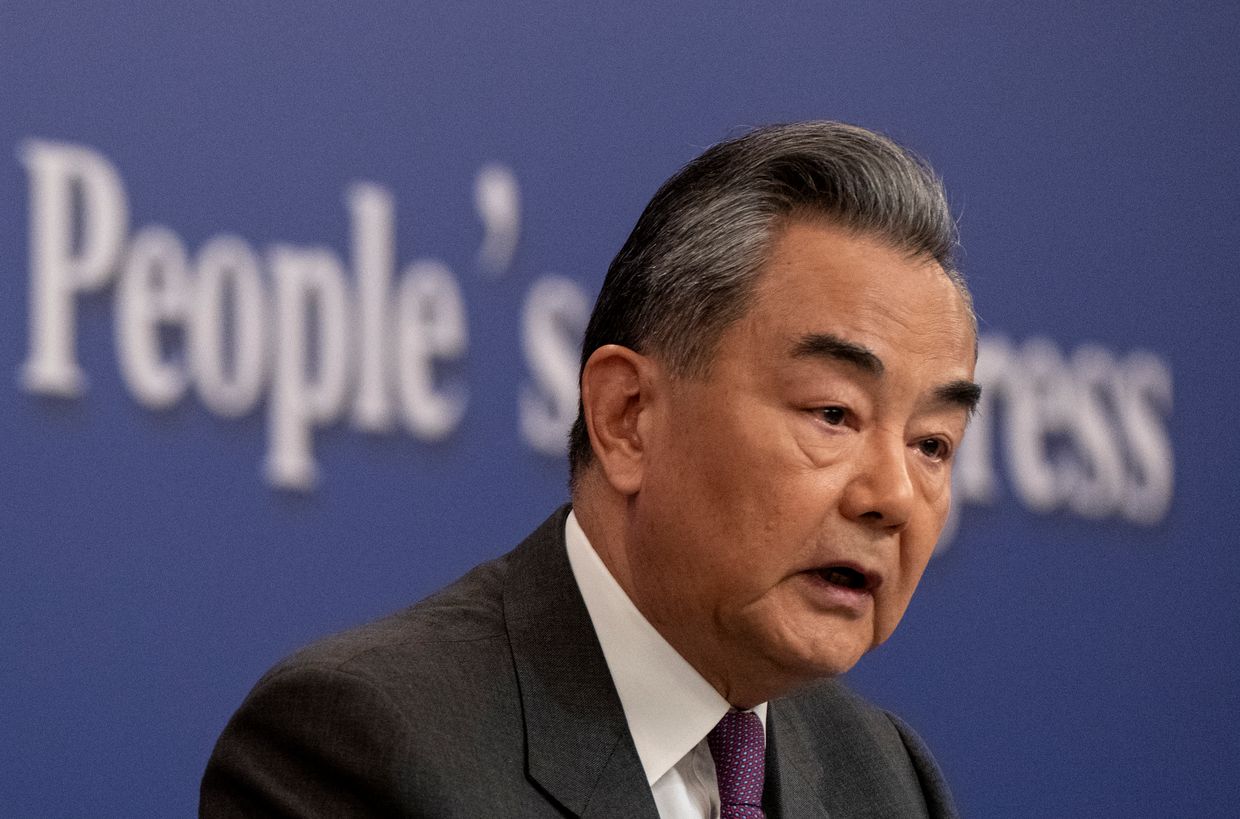
China's Foreign Minister Wang Yi reportedly told EU foreign policy chief Kaja Kallas on July 3 that Beijing cannot afford for Russia to lose the war in Ukraine, according to the South China Morning Post, which cited unnamed sources familiar with the conversation.
The reported statement adds to growing concerns in Kyiv over China's expanding role in supporting Russia's war effort. President Volodymyr Zelensky has repeatedly accused China of siding with Moscow.
As Russian-Chinese relations deepen, Russian President Vladimir Putin is expected to visit China in September for the Shanghai Cooperation Organization summit, where he is scheduled to meet with Chinese leader Xi Jinping.
China's Foreign Minister Wang Yi reportedly told the EU's top diplomat Kaja Kallas on July 3 that the country cannot afford for Russia to lose the war in Ukraine amid fears the U.S. would shift focus towards Beijing, the South China Morning Post (SCMP) reported, citing sources familiar with the conversation.As the war in Ukraine drags on, Wang's reported comments suggest that Russia's war in Ukraine may serve China's strategic needs as focus is deviated away from Beijing's mounting preparation t
China's Foreign Minister Wang Yi reportedly told the EU's top diplomat Kaja Kallas on July 3 that the country cannot afford for Russia to lose the war in Ukraine amid fears the U.S. would shift focus towards Beijing, the South China Morning Post (SCMP) reported, citing sources familiar with the conversation.
As the war in Ukraine drags on, Wang's reported comments suggest that Russia's war in Ukraine may serve China's strategic needs as focus is deviated away from Beijing's mounting preparation to launch its own possible invasion into Taiwan.
China has been a key ally to Russia during its full-scale war, helping Moscow evade Western sanctions and becoming the leading source of dual-use goods fueling the Russian defense industry.
U.S. President Donald Trump, who has not managed to broker a promised ceasefire between Moscow and Kyiv, has long viewed China as the United States' main adversary and is predominantly focused on relations between the two nations.
In June, Bloomberg reportedTrump is pulling back from pressuring China over its support for Russia’s war effort, instead prioritizing other aspects of the U.S.-China relationship. The publication reported that the administration lowered the issue of Russia's war against Ukraine on its list of foreign policy priorities and is focusing on bilateral issues with Beijing, though they noted Trump could still shift course.
The frankness of Wang's reported admission was greeted with surprise by EU official, according to Hong Kong-based SCMP, amid China's past public statements in favor of a peace deal. Two sources familiar with the meeting told SCMP that they believed Wang was providing Kallas with a lesson in realpolitik during the four-hour encounter.
Wang on July 3 again reportedly rejected Western accusations that it was providing funding and weaponry to support Moscow's war effort in Ukraine.
President Volodymyr Zelensky has repeatedly accused Beijing of providing weaponry to Moscow. On May 29, Zelensky said that China had stopped selling drones to Ukraine and Western countries while continuing to supply them to Russia.
Wang's comments come amid waning support from Kyiv's main military backer, the United States. On July 1, the U.S. Defense Department paused shipments of key weapons systems to Ukraine, including Patriot air defense missiles and precision-guided munitions.
As Russian-Chinese relations continue to grow, Russian President Vladimir Putin agreed to meet Chinese President Xi Jingping in September in China for the Shanghai Cooperation Organization summit.
Russian President Vladimir Putin and Chinese President Xi Jinping agreed to meet in August and September and noted the supposed "rough edges" that emerged among G7 leaders during their summit, said Putin's aide, Yuri Ushakov, on June 19.In a phone call, the two leaders agreed to meet at the Shanghai Cooperation Organization summit in Tianjin, China, between Aug. 31 and Sept. 1, and hold bilateral talks on Sept. 2, Ushakov said, according to the state news agency TASS.China has been a key ally to
Russian President Vladimir Putin and Chinese President Xi Jinping agreed to meet in August and September and noted the supposed "rough edges" that emerged among G7 leaders during their summit, said Putin's aide, Yuri Ushakov, on June 19.
In a phone call, the two leaders agreed to meet at the Shanghai Cooperation Organization summit in Tianjin, China, between Aug. 31 and Sept. 1, and hold bilateral talks on Sept. 2, Ushakov said, according to the state news agency TASS.
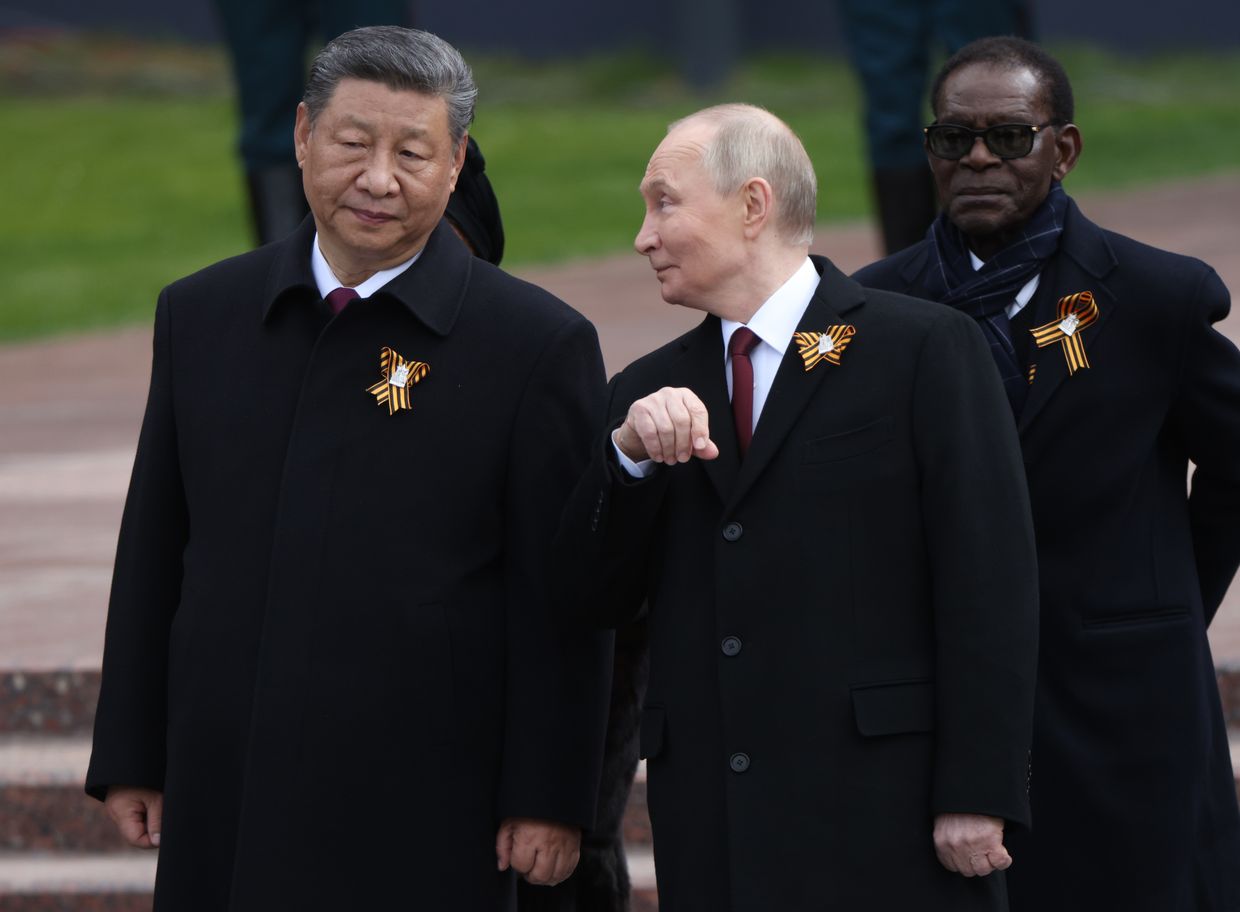
China has been a key ally to Russia during its full-scale war, helping Moscow evade Western sanctions and becoming the leading source of dual-use goods fueling the Russian defense industry. Xi and Putin previously met during the Victory Day celebrations in Moscow in May.
While their phone call focused on the escalating security situation in the Middle East, the leaders also touched upon the G7 summit, noting "the well-known rough edges that emerged among the participants of this meeting," Ushakov said.
Putin and Xi also reportedly made mocking comments toward President Volodymyr Zelensky, saying it was not his "most successful trip abroad."
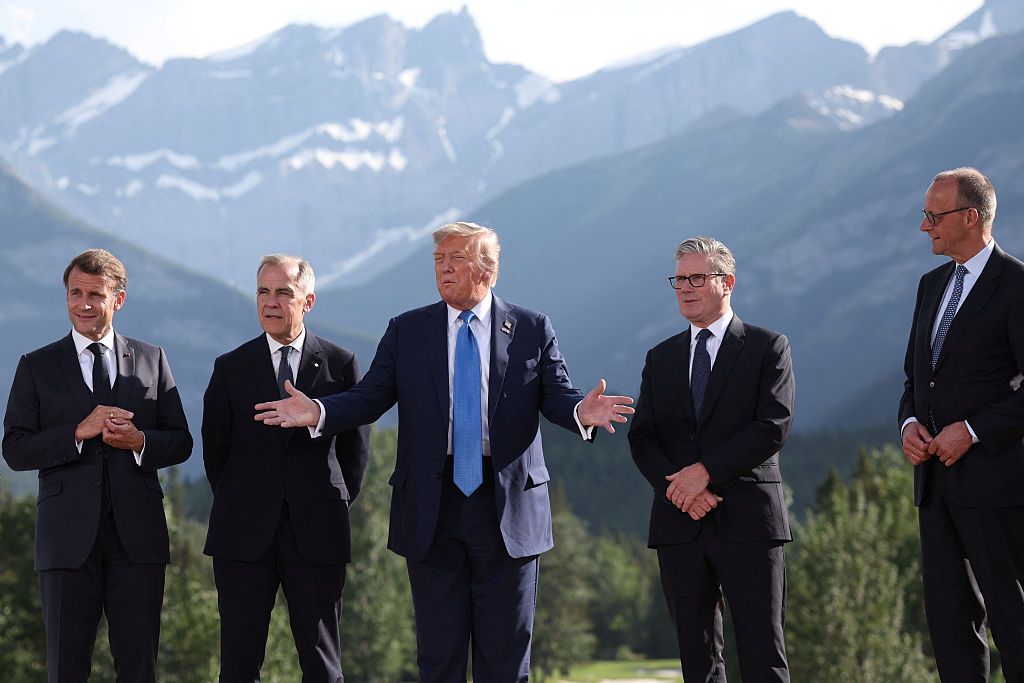
Zelensky was expected to meet U.S. President Donald Trump at the G7 summit in Canada, held from June 15 to 17, to discuss ways to increase pressure on Russia to end the war. Before Zelensky even arrived, Trump left the summit to address the escalating crisis in the Middle East, snubbing the meeting with the Ukrainian leader.
The G7 leaders were also unable to agree on a joint statement as the U.S. pushed for watered-down language on Russia. Instead, Canadian Prime Minister Mark Carney issued a summary saying that "G7 leaders expressed support for President Trump’s efforts to achieve a just and lasting peace in Ukraine."
"They recognized that Ukraine has committed to an unconditional ceasefire, and they agreed that Russia must do the same. G7 leaders are resolute in exploring all options to maximize pressure on Russia, including financial sanctions," the statement read.
While initially pledging to broker a swift peace deal between Kyiv and Moscow, Trump has become increasingly disengaged with the effort and resisted calls to increase pressure on Russia via additional sanctions.
Despite Trump's departure and disagreements with the U.S., Zelensky left the G7 summit with additional pledges of military support from Canada and new sanctions imposed against Russia's energy sector.
"Today, we have concrete decisions on increased military support, new tranches of aid funded by frozen Russian assets, and additional sanctions targeting what fuels Russia’s war," Zelensky said after the summit.
Zelensky also told the G7 leaders that "diplomacy is now in a state of crisis" and urged allies to press Trump "to use his real influence" to force an end to the war.

 Connexion