Vue normale

  • ✇Euromaidan Press
  • No GPS, no landmarks—how Ukraine’s drones hunt Russian spy drones far out over the Black Sea
    Ukraine is building a sea-facing layer of air defense along its southern coast, Kyrylo Liukov, head of the unmanned technologies department at the Serhii Prytula Foundation, wrote in a column for RBC-Ukraine. Winged interceptors now reach the Russian spy drones that guide strikes in the south. Russia's nightly drone strikes on Ukrainian cities have turned air defense into a race to close every corridor Russia can fly through, over land first and now over the open sea. K
     

No GPS, no landmarks—how Ukraine’s drones hunt Russian spy drones far out over the Black Sea

24 août 2026 à 08:58

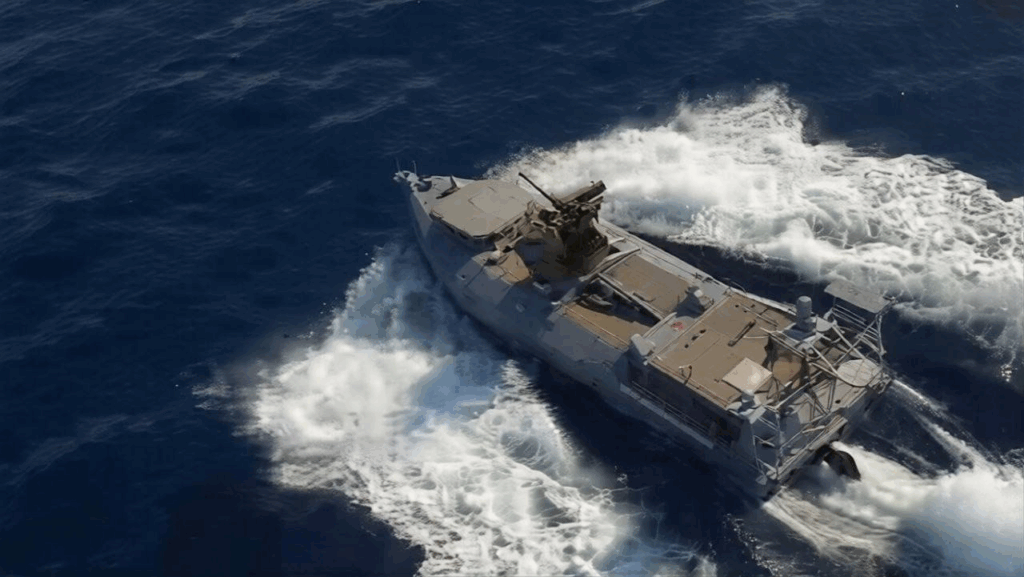
Ukraine sea drone USV machine gun naval

Ukraine is building a sea-facing layer of air defense along its southern coast, Kyrylo Liukov, head of the unmanned technologies department at the Serhii Prytula Foundation, wrote in a column for RBC-Ukraine. Winged interceptors now reach the Russian spy drones that guide strikes in the south.

Russia's nightly drone strikes on Ukrainian cities have turned air defense into a race to close every corridor Russia can fly through, over land first and now over the open sea. Kyiv does it with cheap interceptors rather than costly missiles, and keeps having to chase Russian workarounds. The sea was the stretch air defense could not reach, and it is where Russia keeps the spotters that make its Shahed swarms steerable.

Land and sea are two different fights

Defending the sky over land and over open water are two different problems, Liukov wrote. Multirotor copters are fast and simple to launch near the coast, but past roughly 25 km offshore, a multirotor is almost useless. Russia builds its mission routes so that drones cross dozens of kilometers over sea before they turn toward Ukrainian targets. Fixed-wing drones close the gap. Built like gliders, they loiter for over an hour and hold a link at 40 km and beyond, helped by an open radio horizon that land's terrain and buildings deny them.

Recon drones are the priority target for a reason. Beyond spotting and confirming hits, they work as relays in a MESH network for a group of strike drones. In that setup, Russian crews can steer Shaheds by hand right up to the moment of impact, Liukov wrote.

Southern units recently set three distance records with foundation-supplied interceptors. The 18th aviation commandant's office of Air Command South downed a Russian Orlan-30 reconnaissance drone 110 km out. It used a Wovkulaka Spitfire interceptor, the longest kill on record for that system.

The 12th Separate Special Purpose Center set the other two, flying a system from the miltech company TechnoTaras: an Orlan downed at 86 km, and a 145 km hunt measured from the takeoff point that held a stable digital link the whole way, Liukov wrote. That leaves Russia's drones exposed much farther from shore than its planners assume, he added—and if such results become routine, Russia has to pull its transit routes farther out still.

The Maiachnia beacon line

A less obvious problem was navigation, not shooting. A drone flying without GPS steers by landmarks, and over open sea, there are none. Late last year, the foundation, the 12th Separate Special Purpose Center, and TechnoTaras launched a project called Maiachnia. It strings radio beacons on the Skyline system along the coast from Ochakiv to Izmail. The beacons work on their own and keep backup power, tied to a central network that operators can adjust remotely. An operator can then track the drone even under GPS jamming, bad weather, or a temporary loss of link, and bring it home. More than five southern units now fly the foundation's winged drones.

The real stakes sit offshore—the southern ports and the Black Sea grain corridor that Russian drones threaten and that land-based copters can barely reach. Keeping Russian drones farther offshore would buy room there. But Russia is scaling up a faster, jet-powered Shahed, and the interceptor answer to it is early—so the offshore edge just won will have to be defended again.

  • ✇Euromaidan Press
  • Third one down: Ukraine keeps destroying Russia’s $1.8 million Starlink jammers
    Satellite imagery has confirmed that Ukraine's Defense Forces destroyed a Russian electronic-warfare system built to jam Starlink at Gelendzhik in southern Russia, the Ukrainian defense outlet Militarnyi reported. Ukrainian drones hit the machine on the grounds of a Russian border-guard base during their sweep of the Black Sea coast. It is one more of these costly jammers Russia has lost, even as Ukraine's long-range drones cannot use Starlink over Russia. Ukraine's
     

Third one down: Ukraine keeps destroying Russia’s $1.8 million Starlink jammers

9 août 2026 à 07:59

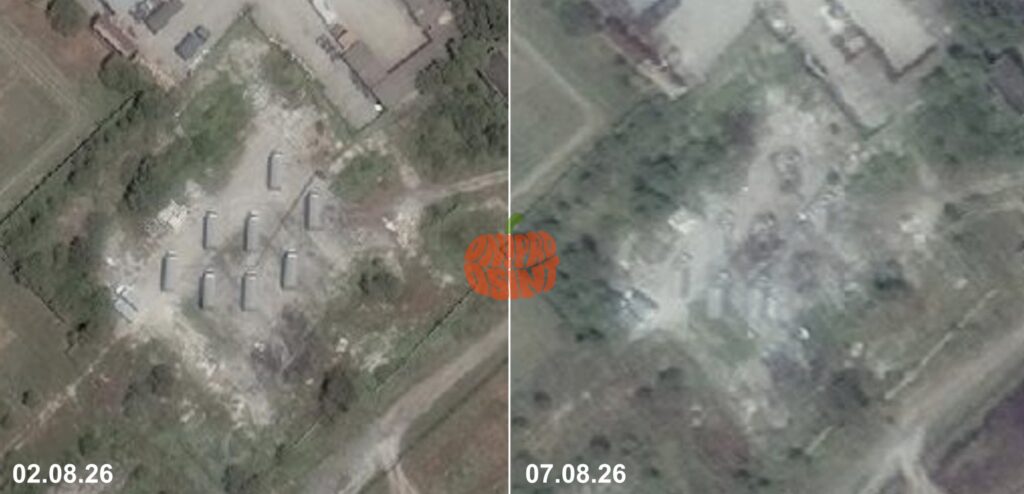
third one down ukraine keeps destroying russia's $18 million starlink jammers · post satellite images russian volna kupol garant starlink-jamming site gelendzhik krasnodar krai russia 2 (left) 7 2026 (right)

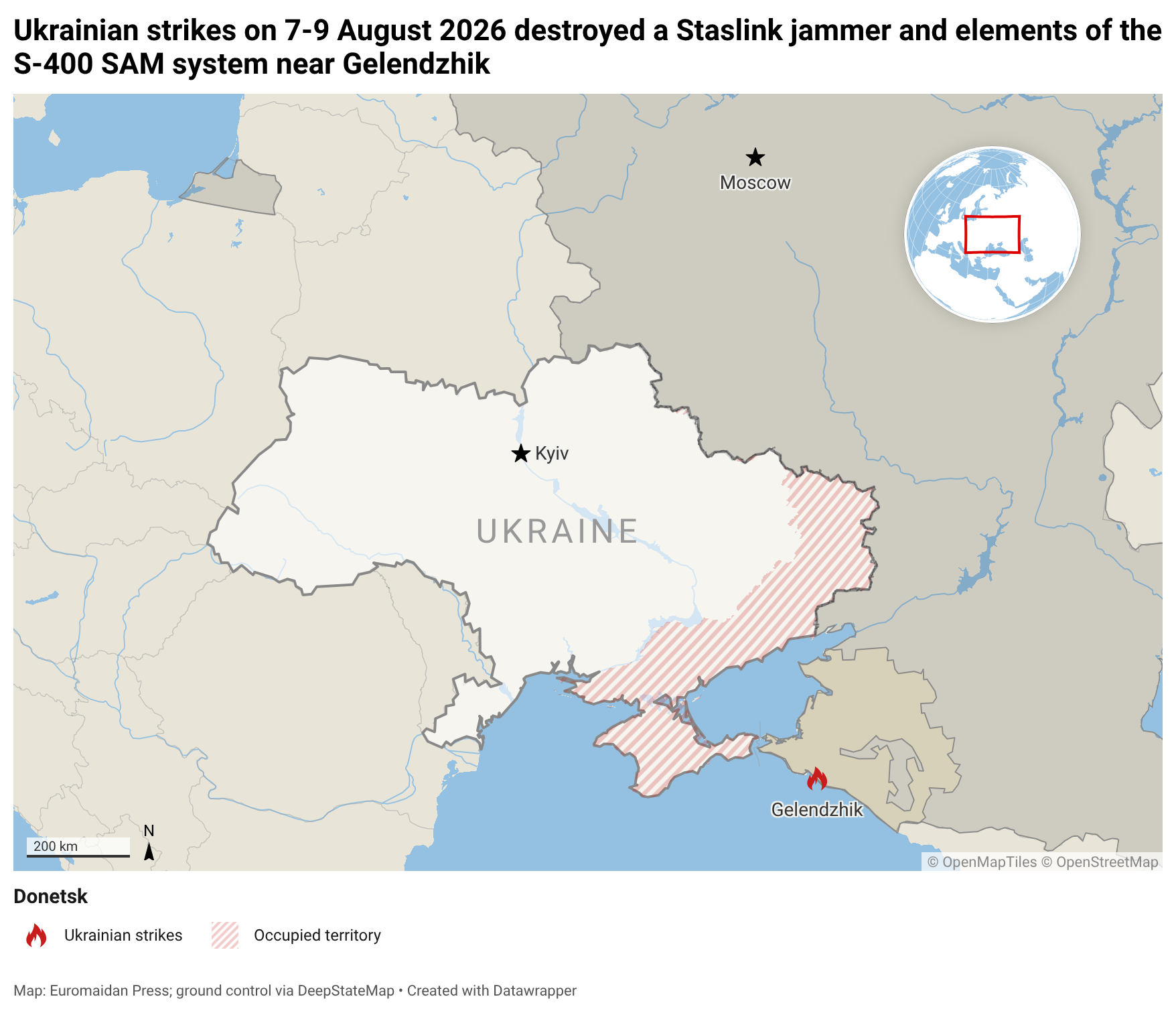
Satellite imagery has confirmed that Ukraine's Defense Forces destroyed a Russian electronic-warfare system built to jam Starlink at Gelendzhik in southern Russia, the Ukrainian defense outlet Militarnyi reported. Ukrainian drones hit the machine on the grounds of a Russian border-guard base during their sweep of the Black Sea coast. It is one more of these costly jammers Russia has lost, even as Ukraine's long-range drones cannot use Starlink over Russia.

Ukraine's deep strikes, targeting oil production, e-commerce, and military production, now reach hundreds to thousands of kilometers into Russia. At the same time, Ukrainian drone crews increasingly aim at the air-defense batteries, radars, and jammers in the occupied territory and the adjacent Russian regions — the hardware Moscow relies on to keep those drones out. Such attacks make subsequent Ukrainian strikes more successful.

Satellites caught the before and after

Satellite images published by the OSINT community Dnipro Osint show the site cleared at Gelendzhik, in Russia's Krasnodar Krai. The Volna Kupol Garant complex is gone. Researchers called it the third destruction of this jammer recorded in open sources. The strike landed on the grounds of military unit 2156, the Novorossiysk border detachment of Russia's FSB Border Service.

Ukrainian drones likely hit it alongside a 7 August strike on cargo ships near Novorossiysk and Gelendzhik. Geolocated photos from residents point to a repeat strike on the base on 8 August.

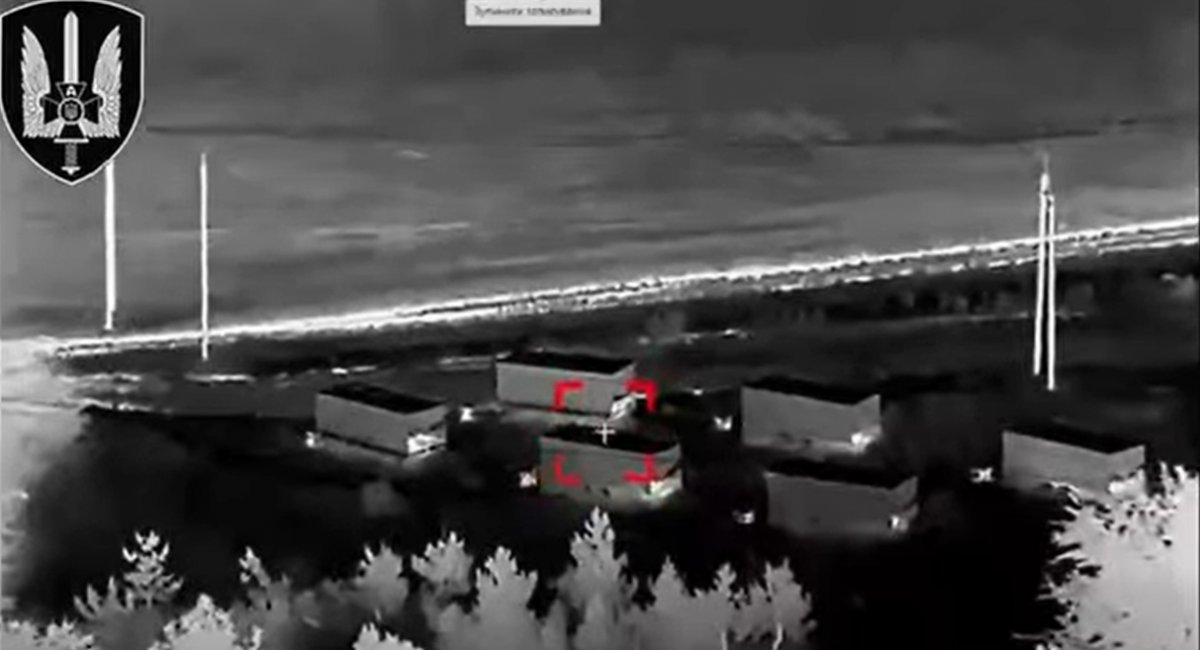
A Volna Kupol Garant system burns.
Explore further

Ukraine’s newest drones don’t need Starlink. Russia spends $1.5 million to jam it anyway.

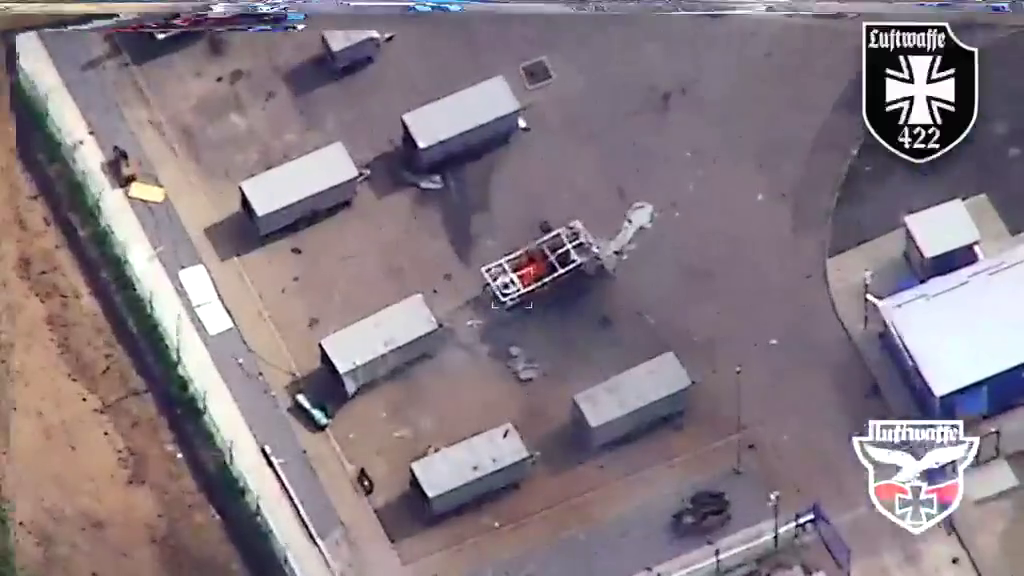
The Volna Kupol Garant is built from trailers carrying satellite antennas. It tracks a passing Starlink satellite and beams a strong signal that scrambles the terminals below across up to 20 km². Starlink is the SpaceX satellite-internet network that Ukrainian drones rely on to reach their operators. Each unit costs about $1.8 million. A same-named firm registered in occupied Simferopol builds it. The developer also makes the Volna 3M jammer that Russia has fitted to Mi-8AMTSh helicopters to block drone satellite navigation.

Ukraine has knocked out these jammers before. The 422nd Unmanned Systems Regiment, the Security Service of Ukraine's (SBU) Alpha special-operations center, and other Ukrainian units have struck such systems, including in occupied Crimea. The complex's weakness is its own power: beaming enough energy to reach a satellite makes it loud and easy to find. 

Russian Volna Kupol Garant system, meant to jam Starlink signals in a 20-kilometer area, shortly before being struck by a Ukrainian attack drone. (Video Still: 422nd Separate Unmanned Systems Battalion "Luftwaffe")
Explore further

Russians deploy massive $1.5M Starlink jammers, Ukrainians are blowing them up

And deep inside Russia, there is little Ukrainian Starlink to jam — SpaceX geofences the network to Ukrainian territory, and Elon Musk has refused Kyiv's push to use it for strikes into Russia so far.

The wider hunt

Ukraine's drone crews have spent 2026 tearing into Russia's air defenses and rear. The same run of Black Sea strikes that wrecked this jammer also burned a Russian S-400 air-defense system on the Gelendzhik coast. 

❌