Vue normale

  • ✇Euromaidan Press
  • Russia’s number two online retailer reports drone attacks on logistics hubs in two regions
    Ukrainian drones attacked two Ozon logistics centers overnight on 27 August, one in Ufa and one in Orenburg Oblast, Russia's second-largest online store said. Staff were evacuated at both sites, and preliminary information indicated no casualties. Video published by Ukrainian monitoring channel Exilenova+ shows a drone reaching the Bashkortostan warehouse and exploding. Ukraine's deep-strike campaign has spread across Russian refineries and fuel depots, chemical plants,
     

Russia’s number two online retailer reports drone attacks on logistics hubs in two regions

27 août 2026 à 11:38

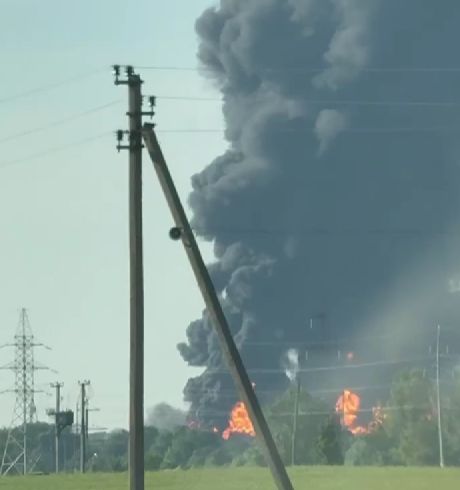
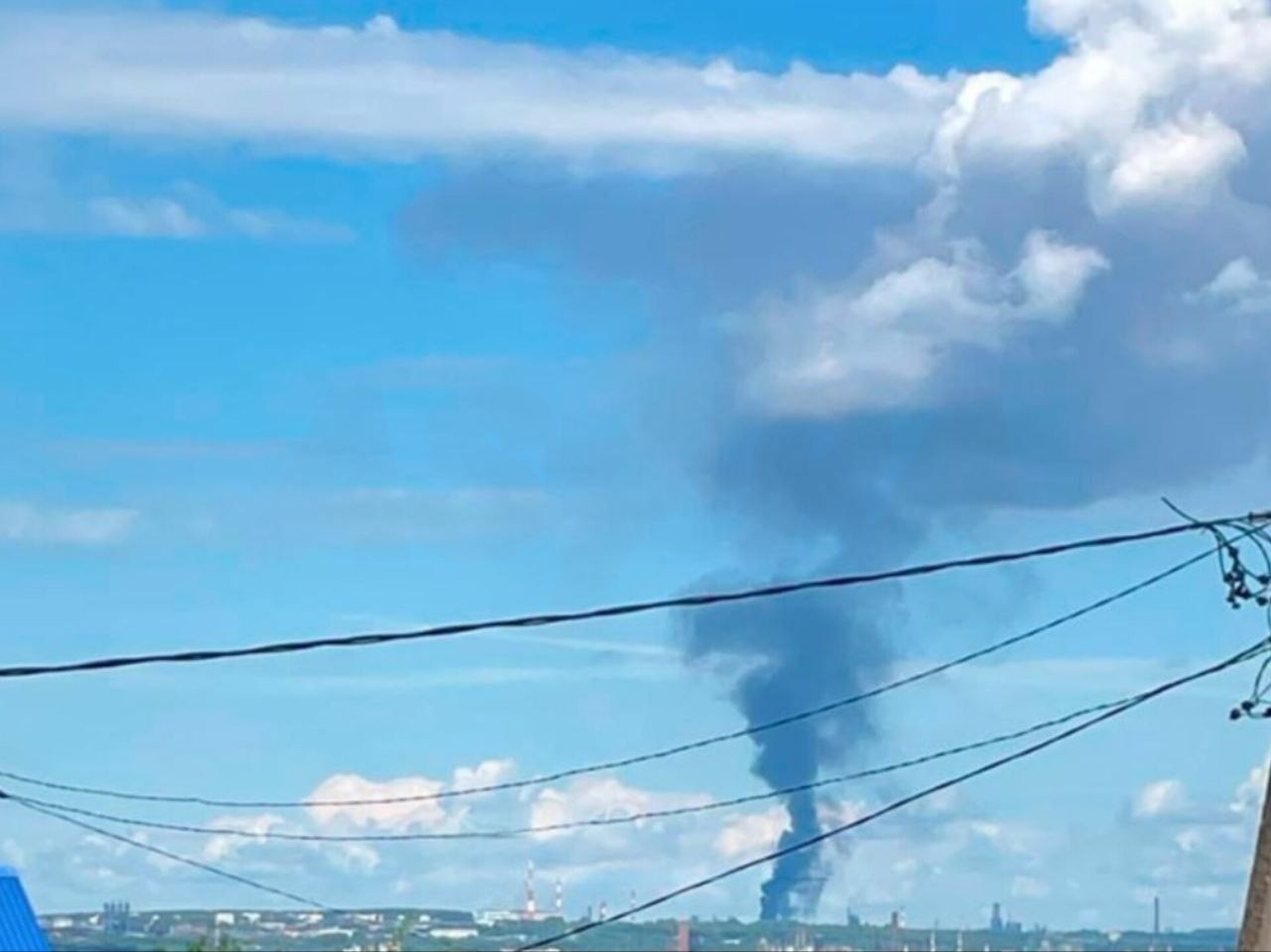
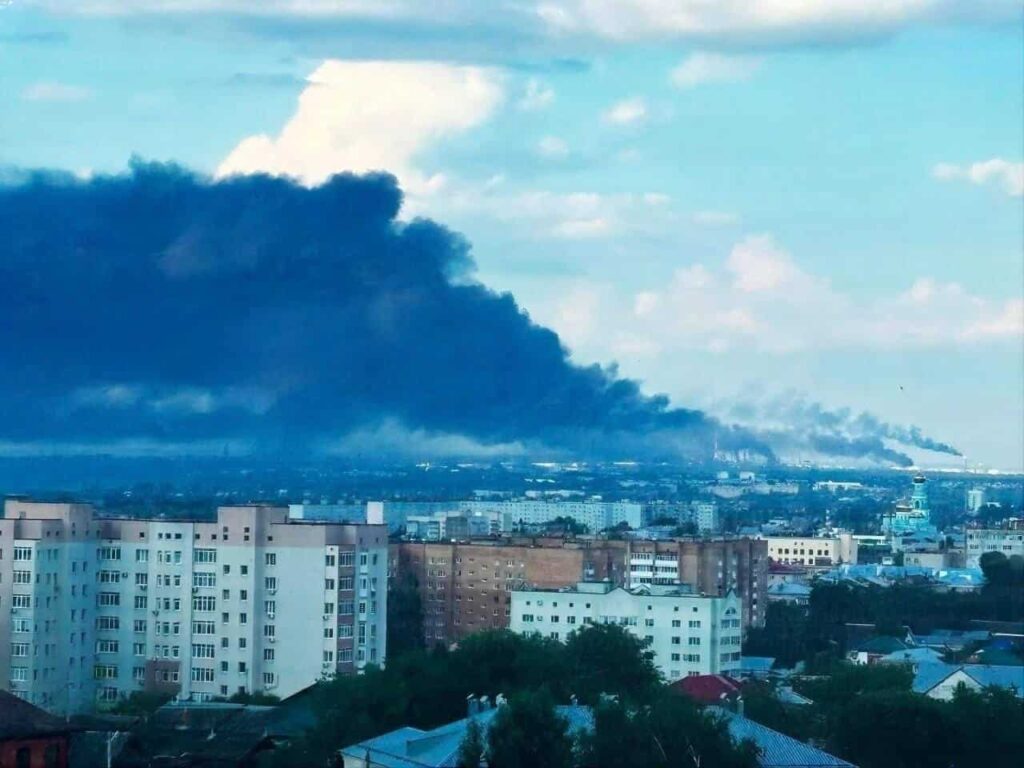
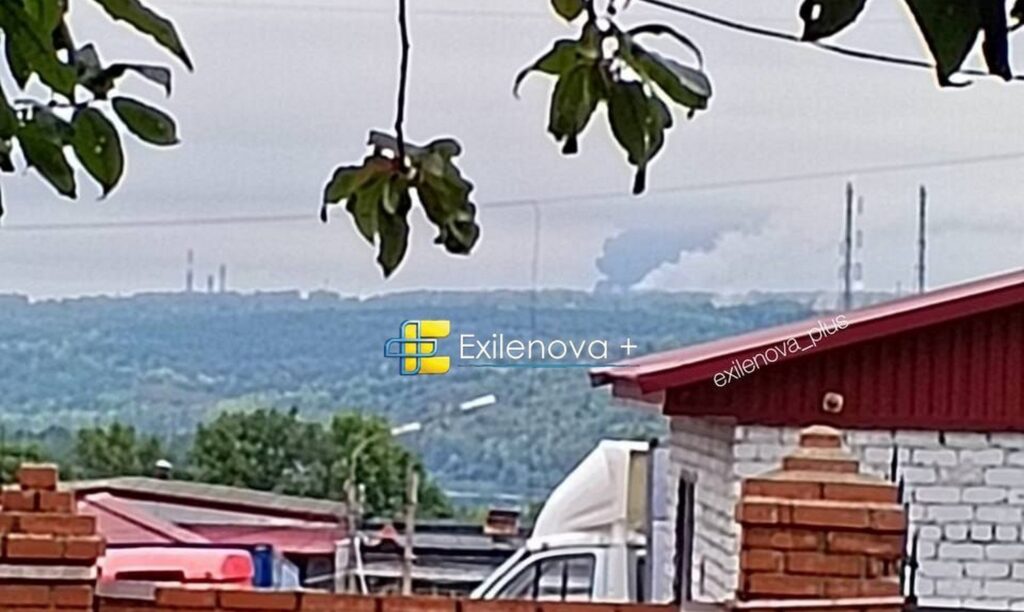
russia's number two online retailer reports drone attacks logistics hubs regions · post smoke rising beyond residential area blagoveshchensk bashkortostan russia 27 2026 exilenova ukraine news ukrainian

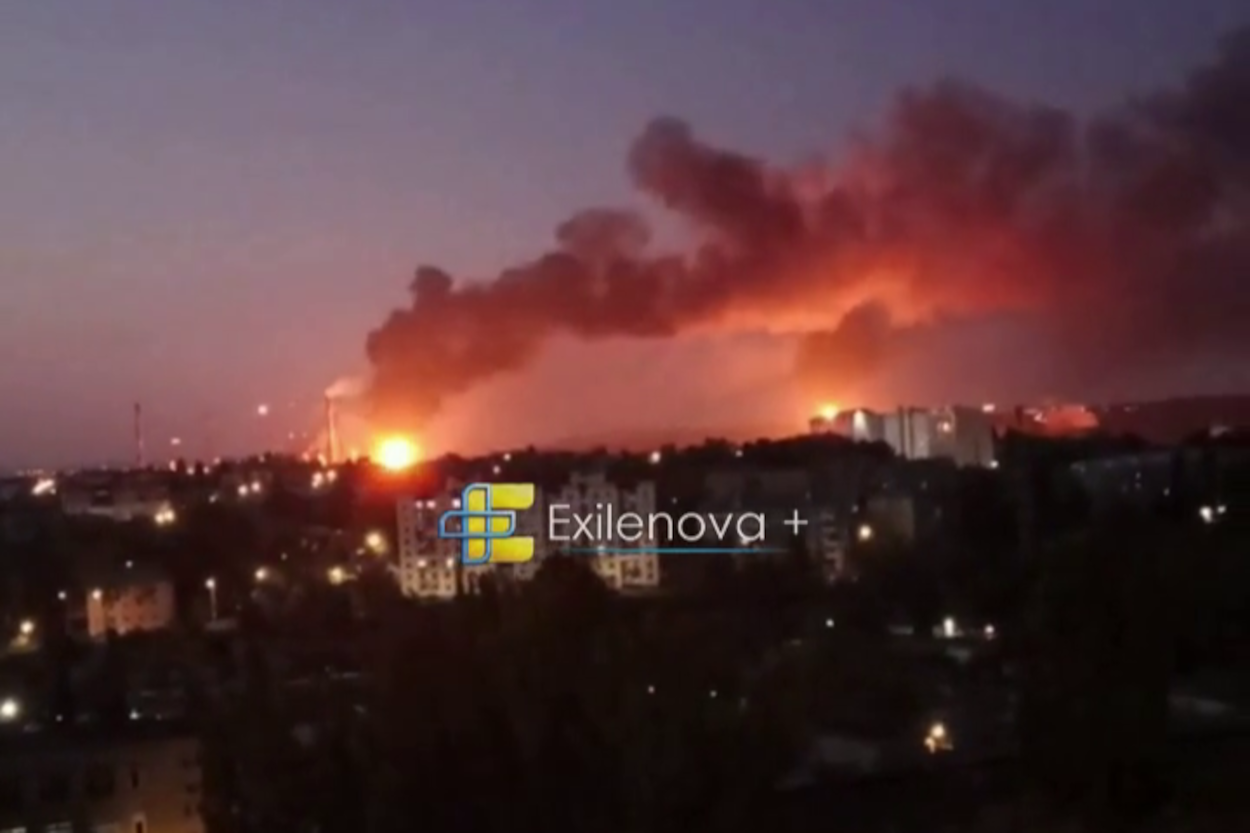
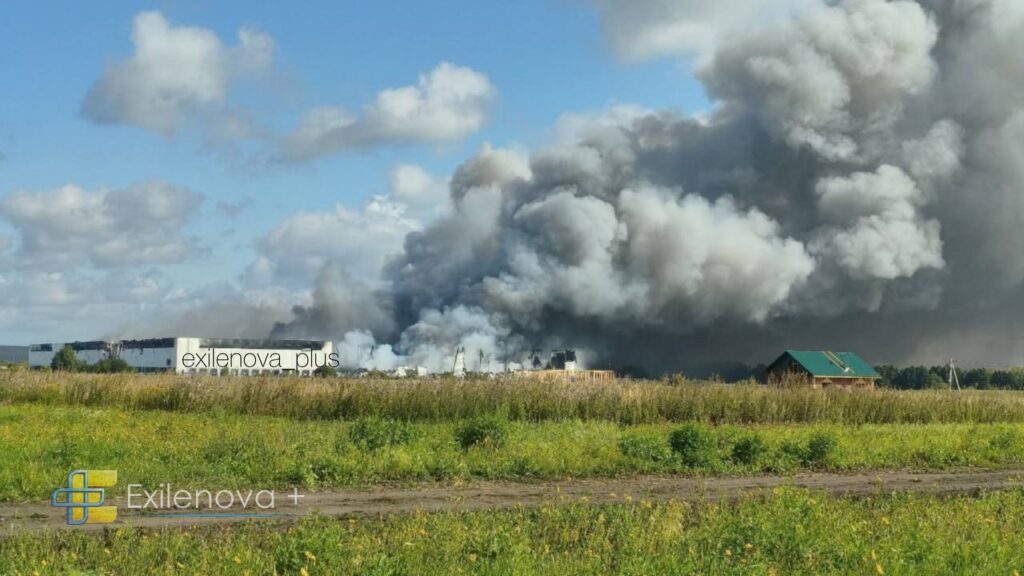
Ukrainian drones attacked two Ozon logistics centers overnight on 27 August, one in Ufa and one in Orenburg Oblast, Russia's second-largest online store said. Staff were evacuated at both sites, and preliminary information indicated no casualties. Video published by Ukrainian monitoring channel Exilenova+ shows a drone reaching the Bashkortostan warehouse and exploding.

Ukraine's deep-strike campaign has spread across Russian refineries and fuel depots, chemical plants, arms factories, railways, and the warehouses that move consumer goods. Together the strikes take refining capacity, storage space, and freight throughput out of service repeatedly, and sanctions leave Russia fewer parts and crews to restore them with.

The strike on camera

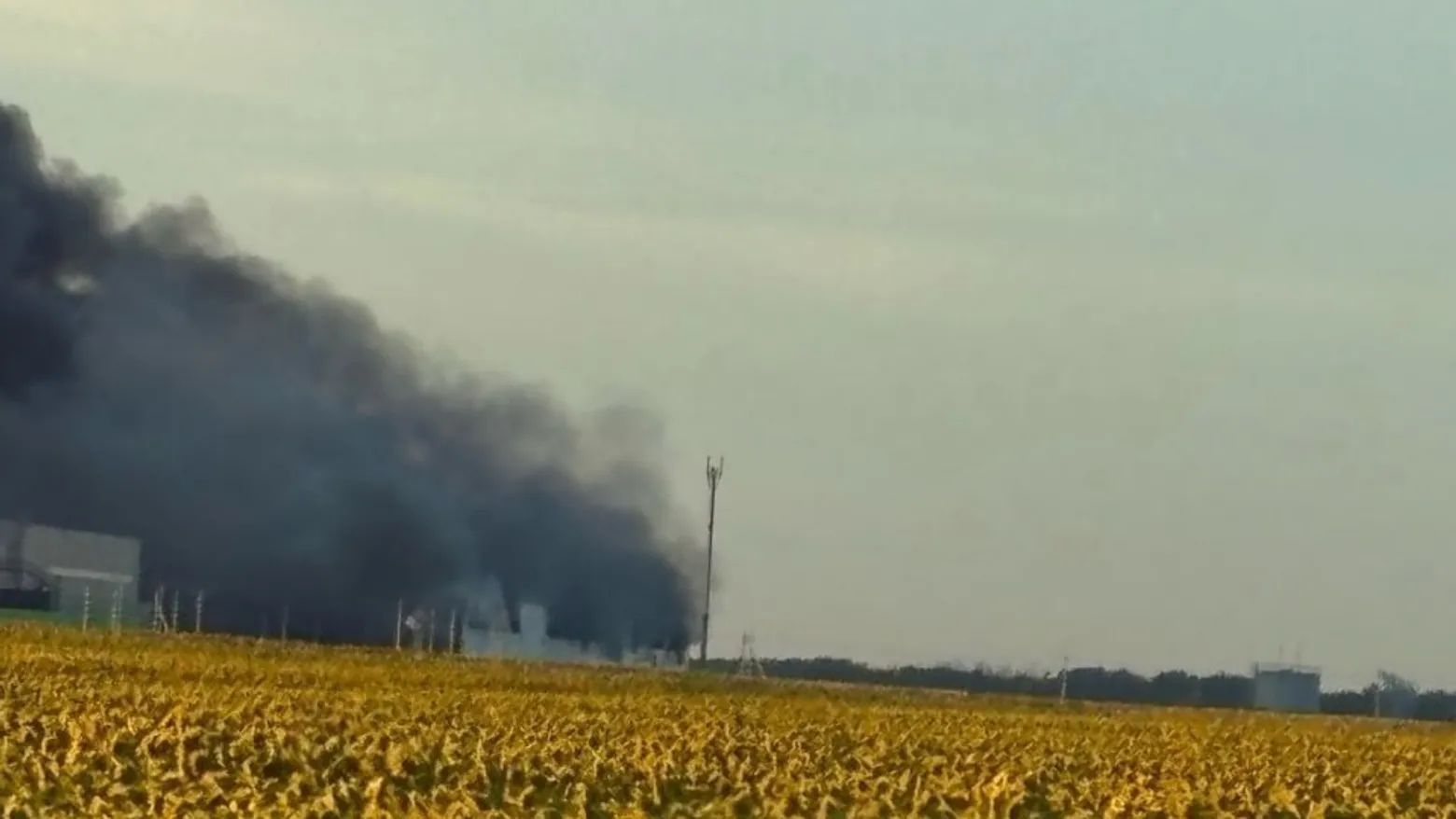
Exilenova+ reported in the morning that an Ozon warehouse was burning after impacts in Blagoveshchensk, a town north of Ufa. The Bashkortostan capital lies roughly 1,300 kilometers from the war zone in Ukraine. Around midday the channel published eyewitness video of what it called the moment of a drone attack on the site, and said the warehouse had not caught fire. The footage shows a drone reaching the site and detonating there.

Drone hit another Russian warehouse

Eyewitness video from Blagoveshchensk in Bashkortostan shows the moment a Ukrainian drone reached Ozon's fulfillment center — the largest logistics complex the online retailer runs in the Volga area — and detonated. The channel that published… pic.twitter.com/oHUgjRz0v0

— Euromaidan Press (@EuromaidanPress) August 27, 2026

Earlier, the channel reported that residents of Sterlitamak, Bashkortostan's second-largest city, about 120 kilometers from Ufa, had written about explosions, with nothing then known about impacts. Astra later placed smoke over what it said was probably the Bashkir Soda Company works there.


Ozon said the Orenburg site—about 1,200 kilometers from the war zone—has resumed work. The one it placed in Ufa sustained what it called minor damage but remains closed, because the grounds need a thorough inspection. It is not accepting deliveries.

Russian news Telegram channel Astra identified the damaged facility from the eyewitness footage as Ozon's UFA_RFC fulfillment center in Blagoveshchensk. When it opened in late 2024 it was billed as the largest Ozon logistics complex in Russia's Volga federal district, with a total area of 93,000 square meters.

Smoke over the Ufa refineries

Astra also traced smoke in eyewitness footage to the Bashneft-Ufaneftekhim refinery in Ufa. The plant is one of Rosneft's leading refineries and a dual-use site: it supplies specialized fuel to Russia's armed forces and petrochemical feedstock for defense-grade materials. It burned after a strike on 1 August.
Bashneft runs three refineries side by side in Ufa's northern industrial zone—Ufaneftekhim, Novoil, and UNPZ—forming one of Russia's largest refining complexes, with a combined capacity of up to 23.5 million tons of feedstock a year.
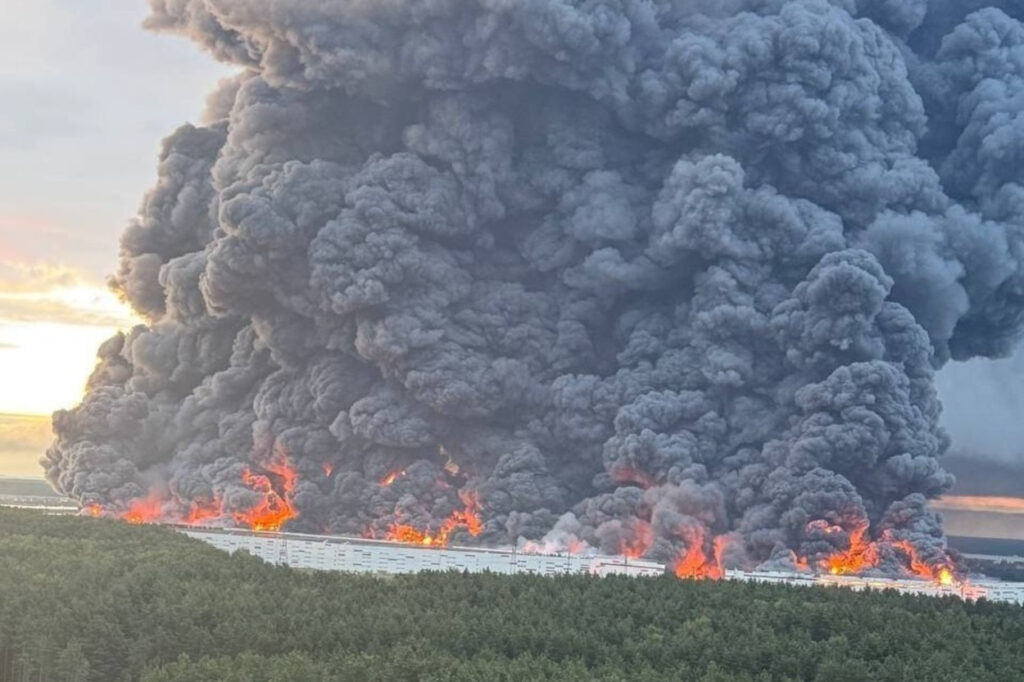
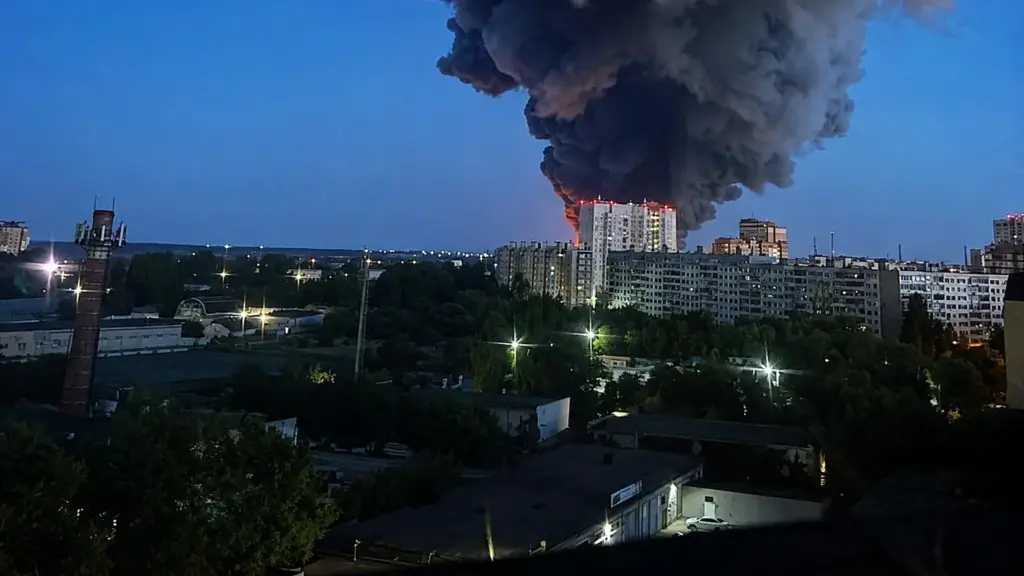
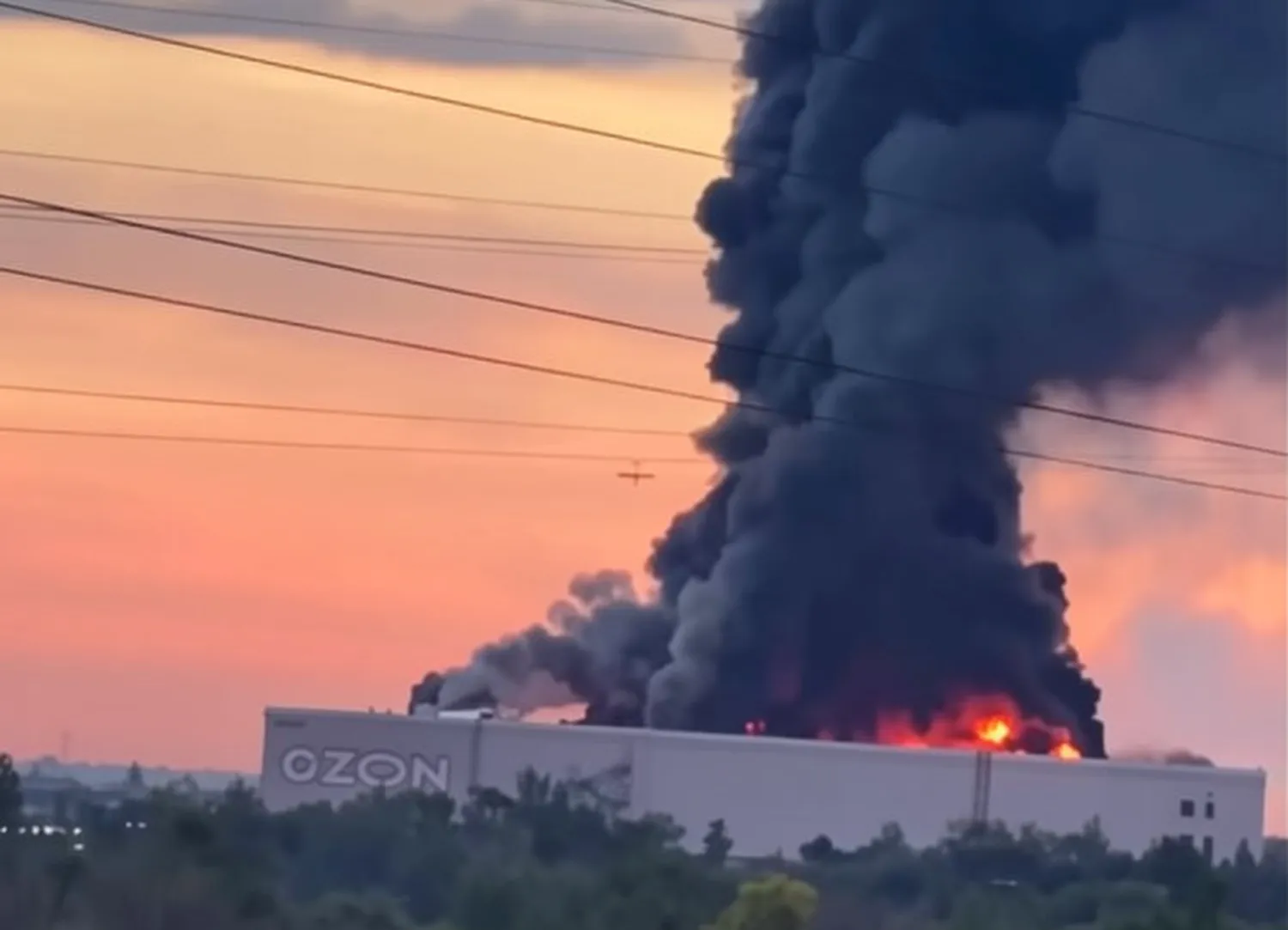
Thick black smoke and flames rise from an Ozon warehouse in Chapayevsk, Russia, at sunset.
Explore further

Ukrainian drones hit warehouse belonging to Russian online retailer Ozon for the first time

What officials said, and didn't

Bashkortostan's authorities did not report the attack. Orenburg Oblast governor Yevgeny Solntsev mentioned drone danger in his region but gave no account of consequences. Ufa closed its airport.

Russia's Defense Ministry claimed air defenses destroyed 267 Ukrainian fixed-wing drones overnight across Russian regions, Bashkortostan among them.

The campaign so far

Ukraine's warehouse campaign began with Wildberries, Russia's largest online marketplace, which lost eight warehouses and roughly 860,000 square meters of storage in July alone. It reached Ozon for the first time on 22 August at Chapayevsk in Samara Oblast, where more than 500 employees evacuated and people were hurt. Four more Ozon hubs were hit across southern Russia two nights later.
  • ✇Euromaidan Press
  • A warehouse built to hold up to 54 million items burned down in Tambov Oblast, Russia
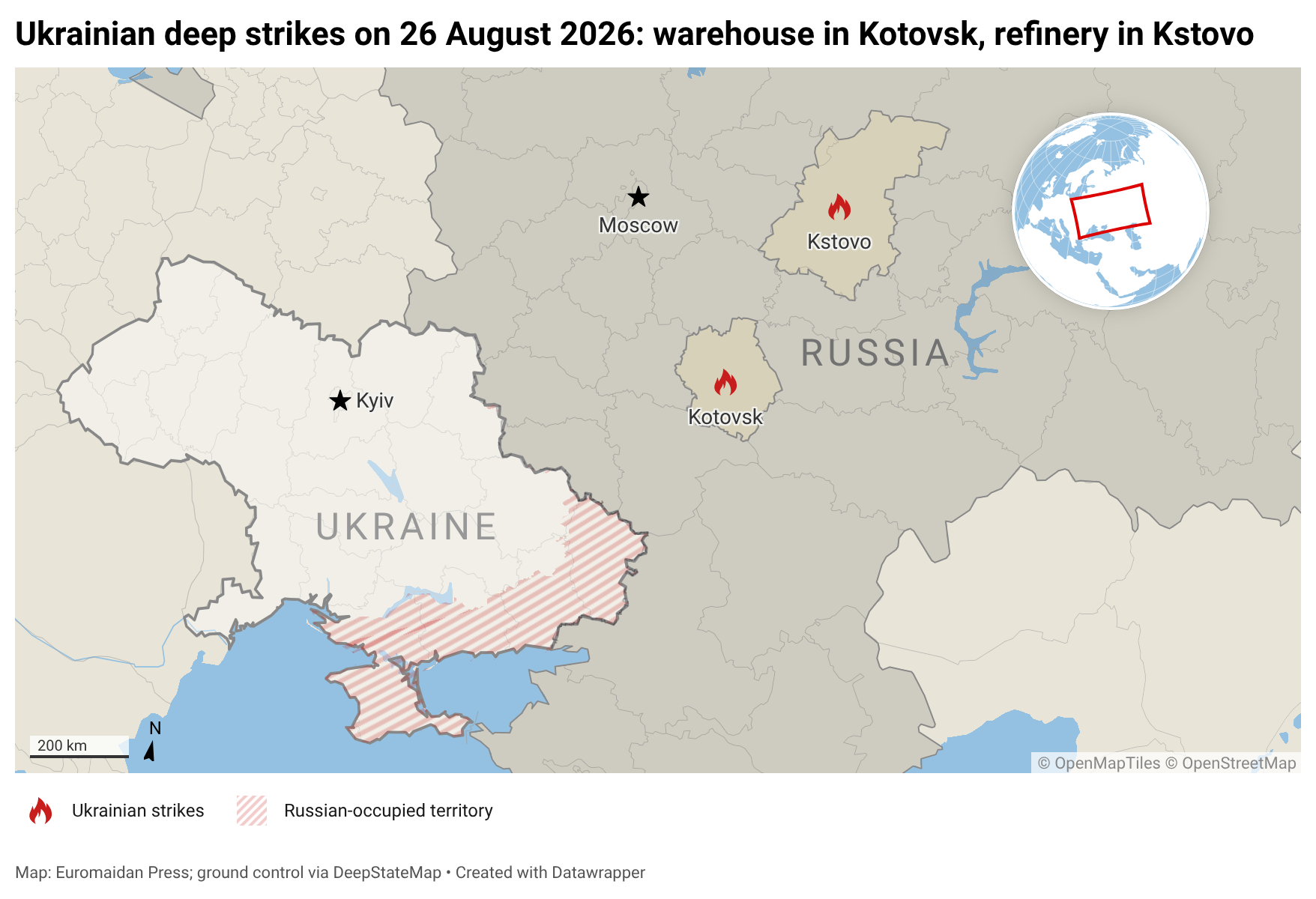
    Ukrainian drones struck the Wildberries logistics hub in the Russian town of Kotovsk for the second time in six weeks, Ukrainian monitoring channel Exilenova+ reported. A fire took hold across most of the 108,000-square-meter complex, and by late morning, the regional governor said the warehouse was destroyed. Wildberries, Russia's biggest online store, had restarted the site after a July strike. The facility is located in Tambov Oblast, about 420 km from the war zone i
     

A warehouse built to hold up to 54 million items burned down in Tambov Oblast, Russia

26 août 2026 à 09:13

warehouse built hold 54 million items fire tambov oblast russia · post burned-out buildings wildberries logistics center kotovsk 26 2026 exilenova+ ukraine news ukrainian reports

Ukrainian drones struck the Wildberries logistics hub in the Russian town of Kotovsk for the second time in six weeks, Ukrainian monitoring channel Exilenova+ reported. A fire took hold across most of the 108,000-square-meter complex, and by late morning, the regional governor said the warehouse was destroyed. Wildberries, Russia's biggest online store, had restarted the site after a July strike. The facility is located in Tambov Oblast, about 420 km from the war zone in Ukraine.

Since mid-July, Kyiv's long-range drones have been burning through the depots of Wildberries and Ozon, Russia's two biggest online stores, alongside the refineries and fuel depots that remain on the target list. Marketplace hubs are wide, flat, and largely uncovered by air defense, and the space takes months to replace, so the campaign now reaches the part of the Russian economy that touches every household.

The second fire at the same hub

Exilenova+ reported the strike at 01:24, saying Ukraine's Defense Forces had hit the site again and that a fire was burning. Later, the channel continued to share photos and videos from Kotovsk. The Russian news Telegram channel Astra reported that local residents described the warehouse as attacked and alight. Witnesses counted at least 10 explosions in 40 minutes. Wildberries said a drone attack damaged its logistics facility in the oblast and started a fire, and that the site had stopped accepting new deliveries.

warehouse built hold 54 million items fire tambov oblast russia · post smoke rising wildberries logistics center after drone strike kotovsk 26 2026 supernova+ ukraine news ukrainian reports
Smoke rising from the Wildberries logistics center after the drone strike in Kotovsk, Tambov Oblast, Russia, 26 August 2026. Photo: Supernova+

What the governor said, and what changed by morning

Tambov Oblast governor Yevgeny Pervyshov confirmed the attack and put the burning area at more than 100,000 square meters. He claimed air defenses and mobile fire groups of a regional volunteer reserve unit destroyed 16 drones. He initially reported one Wildberries employee hurt, with concussion from a blast wave, and said a downed Ukrainian drone set a house on fire in a dacha settlement.

warehouse built hold 54 million items fire tambov oblast russia · post helicopter carrying water bucket above burning wildberries logistics center kotovsk 26 2026 exilenova+ ukraine news ukrainian reports
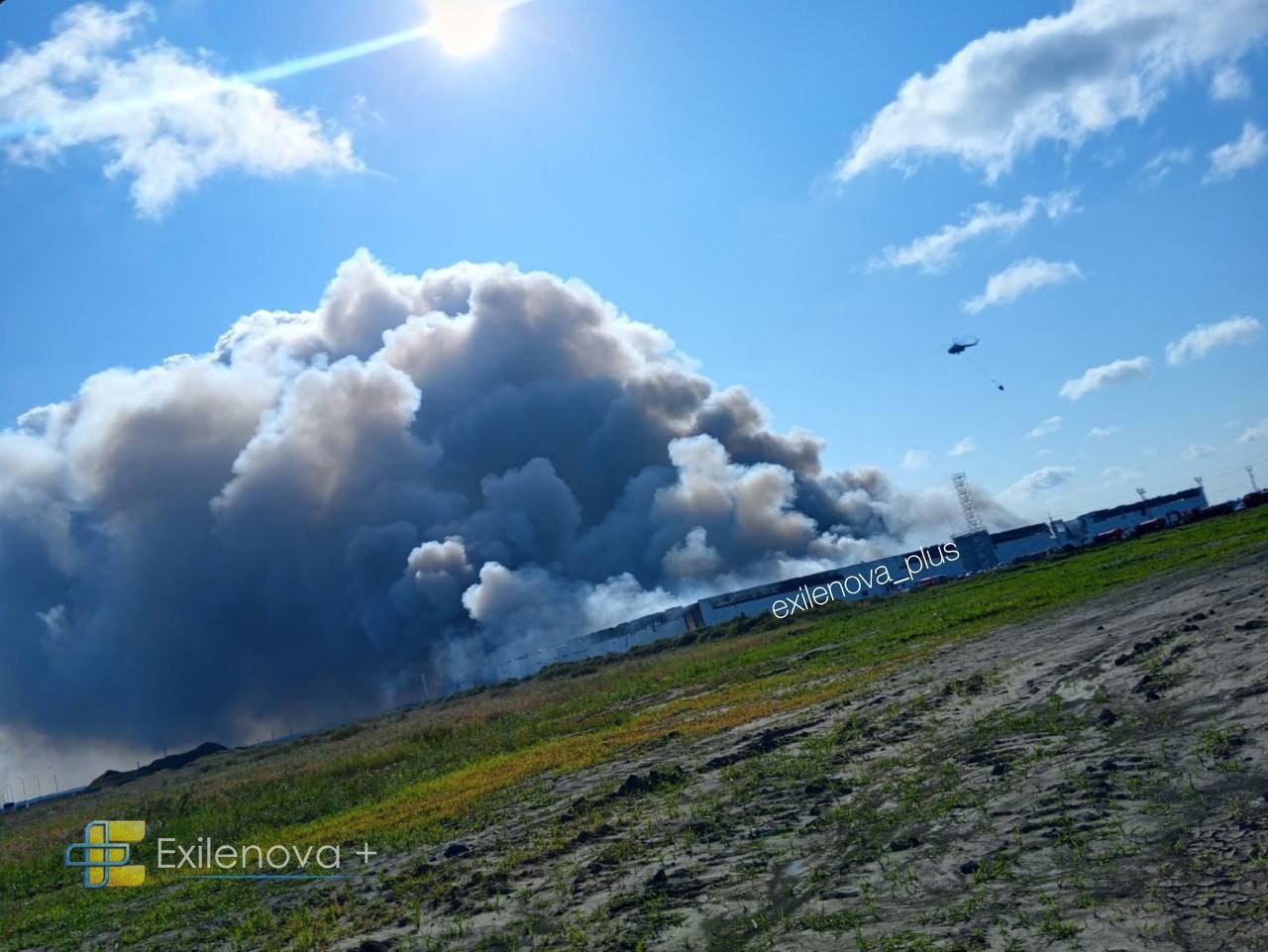
A helicopter carrying a water bucket above the burning Wildberries logistics center in Kotovsk, Tambov Oblast, Russia, 26 August 2026. Photo: Exilenova+

By 11:17, Pervyshov's account had changed. Fire had destroyed the warehouse completely, and two people were injured, he said. Three strike drones had reached the building, the official stated. He closed by again urging men in the oblast to join the defense of its skies. Earlier, Kotovsk's mayor asked residents not to leave their homes for two days, citing the risk of carbon monoxide poisoning from the burning warehouse.

Russia's Defense Ministry separately claimed it destroyed 426 drones overnight across the country.

Last night, Ukrainian drones struck another warehouse in Russia

The Wildberries hub in Kotovsk, Tambov Oblast, caught fire and the company announced a "temporary" suspension of its operations.

📹Exilenova+ pic.twitter.com/qH0Qi3f6YV

— Euromaidan Press (@EuromaidanPress) August 26, 2026

Ukrainian President Volodymyr Zelenskyy said Ukrainian forces hit 16 targets in Russia over the past day, naming oil facilities — "the Russian oil wallet that finances the war" — along with airfields, a missile unit, a military plant, and Russian logistics. War has to return to where it came from, he said.

Almost no storage left in central Russia

The Kotovsk hub opened in 2025 as one of Wildberries' key logistics sites for central Russia, built to hold up to 54 million items at full capacity. Drones first hit it overnight on 18 July, when seven warehouse staff died and, by the governor's count, 25 more were hurt. The company suspended operations then, too.

By the end of July, the retailer had already lost more than a million square meters of warehouse space, Exile+ calculated, which leaves it physically almost no free capacity in the center of the country.

From one marketplace to the next

Ukrainian drones destroyed eight Wildberries warehouses in July alone, roughly 860,000 square meters or about 15.4% of the company's storage. The campaign widened to Ozon, Russia's second-largest online store, with its biggest Russian complex hit in Orenburg on 23 August, and three southern hubs struck the next night.

Ukraine says it hit an Iskander launcher near the border—part of a dedicated hunt for Russia’s ballistic launch sites

23 août 2026 à 06:44

ukraine says hit iskander launcher near border—part dedicated hunt russia’s ballistic launch sites · post russian missile under ukrainian drone attack taganrog russia 30 2026 1st separate center unmanned systems

Ukraine has struck a Russian Iskander launcher near its border as part of a dedicated operation against nearby ballistic-missile launch positions, Ukrainian President Volodymyr Zelenskyy told journalists, according to Ukrinform

Russia continues using ballistic missiles against Ukrainian cities while Ukraine has rationed Patriot interceptors and warned of acute shortages, pushing Kyiv to combine interception with strikes on the systems and positions used to launch those missiles.

President says Ukraine hit an Iskander launcher

President Zelenskyy described the strike as a success but said the sensitivity of the operation prevented him from providing many details.

We struck an Iskander launcher near our borders,” he said. “I am grateful to our warriors who are carrying this out. This is our operation to hunt their systems positioned nearby.”

The president, however, didn't disclose where the launcher was located or what weapon Ukrainian forces used to hit it.

Zelenskyy said strikes on launchers are one way Ukraine is trying to counter Russian ballistic attacks when anti-ballistic interceptor stocks are limited.

When our anti-ballistic missile stocks are at a minimum, there is another tactic. It is more difficult, and we developed it,” he said. “It is hunting their nearby positions from which ballistic missiles are launched.

He described the effort as a separate program and operation. Euromaidan Press could not independently verify the reported strike.

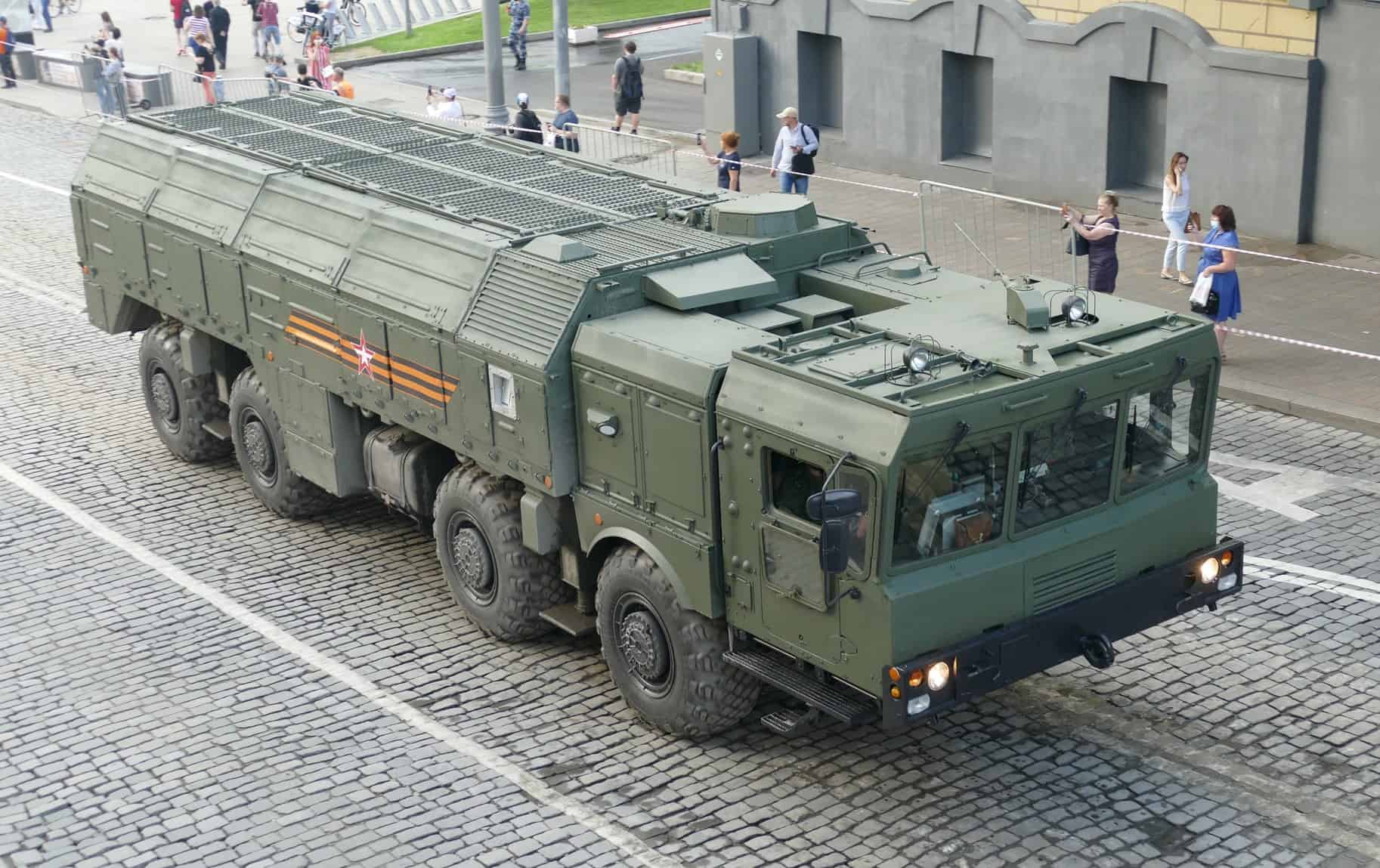
Russian Iskander-M missile system, 2020. Illustrative photo. Photo from Russian government sources via Militarnyi

Ukraine has already targeted Russian ballistic missile infrastructure in several operations this year. In April, Ukrainian drone forces reported strikes on two bases linked to Iskander systems in occupied Crimea.

On 30 May, Ukraine’s Unmanned Systems Forces said they destroyed an Iskander system at a launch position near Taganrog in Russia’s Rostov Oblast.

Ukrainian President Volodymyr Zelenskyy, 7 July 2026. Photo: Zelenskyy / Telegram
Explore further

5% of US Patriot stocks gets Ukraine through winter, 10% ends the ballistic threat — and Zelenskyy has just 1%, he tells CNN

SpaceX rejected Ukraine’s request to use Starlink inside Russia

The launcher strike comes as Ukraine is also looking for better ways to operate long-range drones against military targets in Russia. Zelenskyy said SpaceX ultimately refused to let Ukraine use Starlink inside Russia because of escalation concerns.

Kyiv had wanted Starlink to work over Russian territory for defense operations, including drone strikes on Russian ballistic-missile launchers near the border. The Defense Ministry asked him in the first half of 2026 to raise the issue with US President Donald Trump, Zelenskyy said. Zelenskyy said Trump relayed that decision to him at a later meeting. Ukraine continues discussing the issue with the US side.

Ukraine and European partners are separately developing the FREYJA anti-ballistic system, with Kyiv seeking a prototype capable of demonstrating practical results by mid-2027. The project is intended to combine Ukrainian missile technology with European radars, sensors, and command systems.

  • ✇Euromaidan Press
  • Lukoil’s Perm refinery struck 1,530 km from Ukraine’s northern border, Kyiv confirms
    Ukraine struck one of Russia's largest oil refineries deep in the Urals and a military airfield overnight in a long-range attack, Ukrainian President Volodymyr Zelenskyy announced on 21 August. The Ukrainian Army's General Staff confirmed the refinery and airfield hits, while Zelenskyy said the same night also reached the Black Sea and brought fresh damage from earlier strikes on a Russian warplane and a drone-launch site. Ukraine's long-range drone campaign has spent t
     

Lukoil’s Perm refinery struck 1,530 km from Ukraine’s northern border, Kyiv confirms

21 août 2026 à 11:14

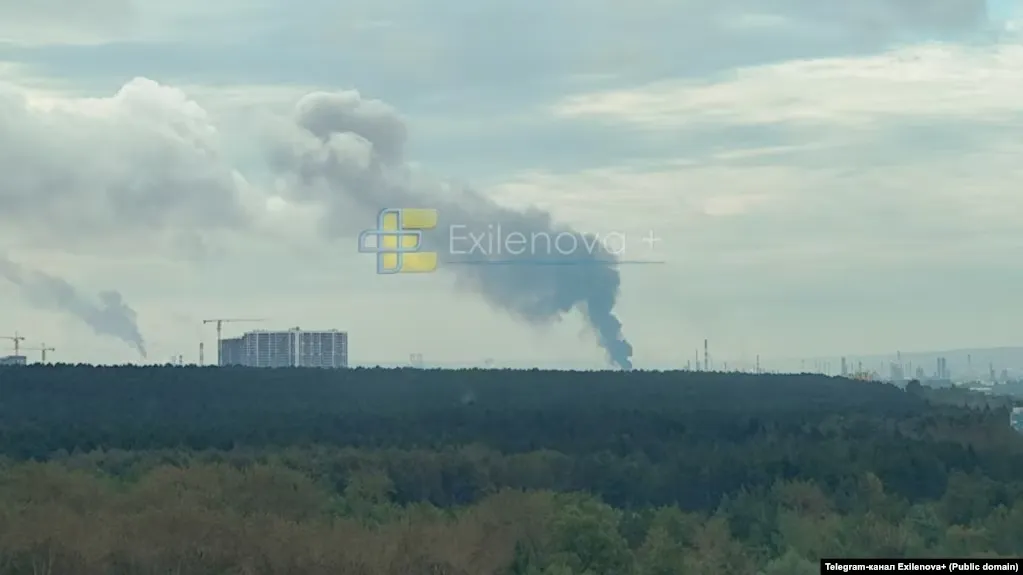
lukoil's perm refinery struck 1530 km ukraine's northern border kyiv confirms · post smoke rises over russia after ukrainian drone strike lukoil-permnefteorgsintez oil 21 2026 morning 08 exilenova ukraine news

Ukraine struck one of Russia's largest oil refineries deep in the Urals and a military airfield overnight in a long-range attack, Ukrainian President Volodymyr Zelenskyy announced on 21 August. The Ukrainian Army's General Staff confirmed the refinery and airfield hits, while Zelenskyy said the same night also reached the Black Sea and brought fresh damage from earlier strikes on a Russian warplane and a drone-launch site.

Ukraine's long-range drone campaign has spent the year reaching ever deeper into Russian territory, forcing Moscow to spread its air defenses across thousands of kilometers and driving fuel shortages that now reach beyond its borders. Each strike on Russia's oil backbone compounds the strain on its refining and export earnings, even as the Kremlin diverts chemicals meant for weapons into keeping filling stations supplied.

Fire at a major Lukoil refinery in Perm

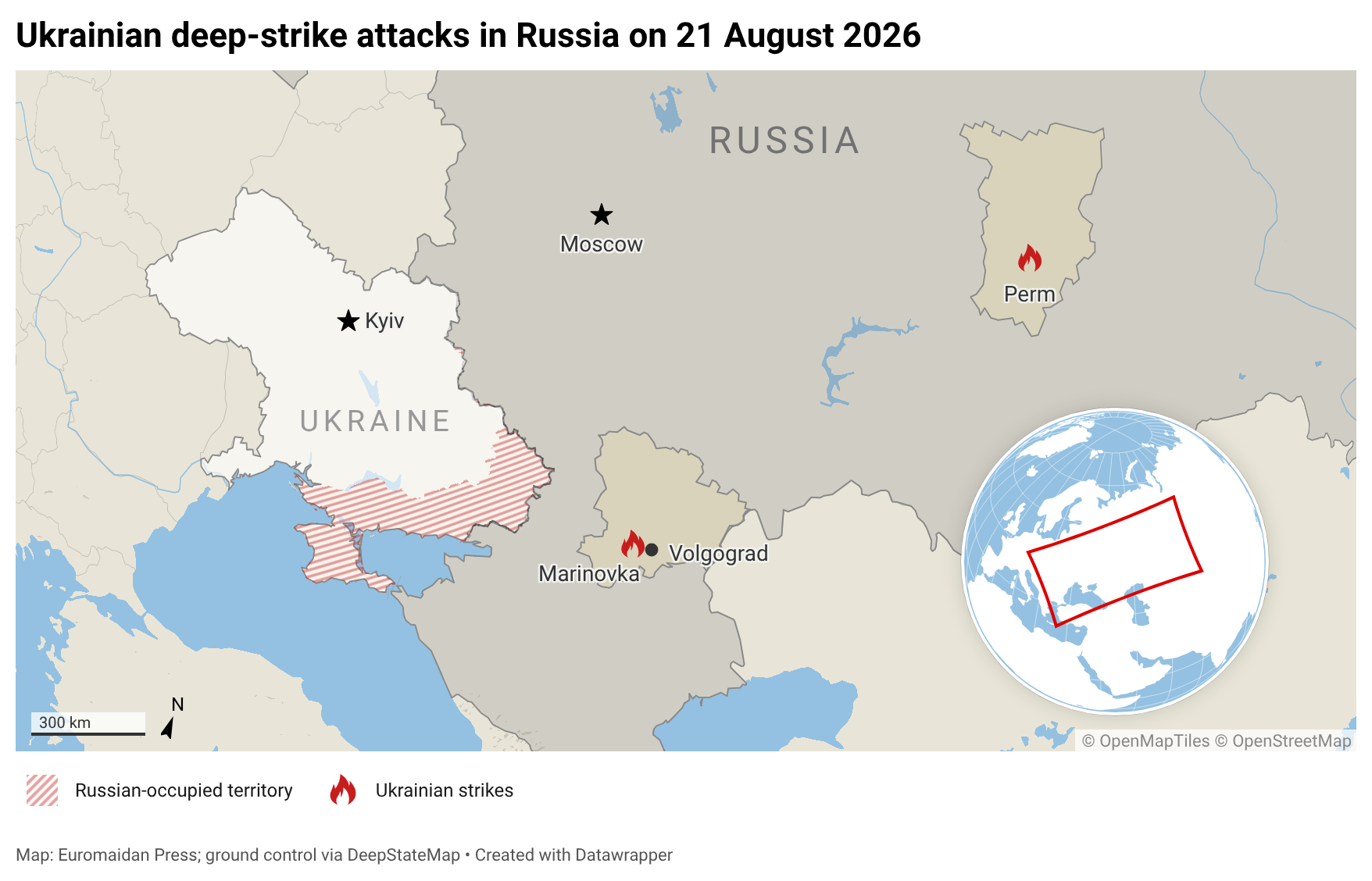
Zelenskyy said the overnight drones hit the Lukoil-Permnefteorgsintez refinery — known as PNOS — in Perm, where the General Staff recorded a fire on the plant's grounds. The target sits more than 1,500 km from Ukraine's northern border, in a region near the Ural Mountains.

The refinery is one of Russia's largest, able to process more than 13 million tons of crude a year, with more than half its output sold abroad until recently. It supplies fuel to both Russia's economy and its army.

lukoil's perm refinery struck 1530 km ukraine's northern border kyiv confirms · post w6umk-ukrainian-deep-strike-attacks-in-russia-on-21-august-2026- ukraine news ukrainian reports

Ukrainian Telegram channels Supernova+ and Exilenova+ shared footage of explosions and a rising plume, with locals reporting a series of blasts at the site. Russia's Perm Krai authorities claimed they repelled the attack and downed 16 drones.

Oil refinery in Perm continues to burn pic.twitter.com/pKeCNbycMQ

— Exilenova+ (@Exilenova_plus) August 21, 2026

Kyiv has repeatedly hit the plant through the year. After a strike at the end of July, it had been running well below capacity.

Airfield, Black Sea, and other targets the same night

The General Staff said the same night's drones also struck the Marinovka military airfield in Volgograd Oblast, located in Russia's Volga region, with the damage still being assessed, while Zelenskyy added that Ukraine achieved unspecified results in the Black Sea. The military also reported hitting a drone storage and launch site near Donetsk, a materiel warehouse in occupied Crimea, two command posts in Donetsk and Zaporizhzhia oblasts, and six relay stations in Crimea used to steer Russia's Geran and Gerbera attack drones.

Zelenskyy also confirmed damage from earlier strikes: a Russian Su-34 fighter-bomber hit at the Akhtubinsk airfield, about 600 km from the front line, and a drone store and launch site struck at Primorsko-Akhtarsk, roughly 180 km away. The strike extends a run of deep hits this month, from the TANECO refinery in Tatarstan and a Black Sea oil terminal to three refineries hit in one night and an Omsk refinery struck 2,500 km away in Siberia.

  • ✇Euromaidan Press
  • Ukraine planned 1,000 AI-guided drones a night to shut Moscow airports, Atlantic reports
    President Volodymyr Zelenskyy allowed preparations for an AI-guided drone campaign against Moscow-area airports, The Atlantic reported on 20 August, citing two anonymous sources with direct knowledge of the proposal. The reported plan sought to keep civilian flights grounded long enough to pressure Russia’s elite. Had it proceeded, it would have moved Ukraine toward large-scale autonomous strikes, raising questions under the laws of war about attacks without human confi
     

Ukraine planned 1,000 AI-guided drones a night to shut Moscow airports, Atlantic reports

21 août 2026 à 09:11

Smoke rises behind illuminated apartment buildings in Moscow at night following a reported Ukrainian drone attack.

President Volodymyr Zelenskyy allowed preparations for an AI-guided drone campaign against Moscow-area airports, The Atlantic reported on 20 August, citing two anonymous sources with direct knowledge of the proposal.

The reported plan sought to keep civilian flights grounded long enough to pressure Russia’s elite. Had it proceeded, it would have moved Ukraine toward large-scale autonomous strikes, raising questions under the laws of war about attacks without human confirmation. The Atlantic's disclosure follows months of reported Ukrainian attacks that repeatedly forced Moscow-area airport closures and sent increasingly large drone swarms toward the capital.

How the drone operation would have worked

Code-named M&Ms, the operation called for as many as 1,000 drones to fly toward Moscow-area airports each night and overwhelm Russian air defenses, one source said.

Onboard cameras would compare live views with preloaded maps and target images. They would also allow the drones to strike without pilot confirmation and to navigate without a remote-control link that is vulnerable to Russian electronic jamming, the sources said.

One source said prolonged airport closures were intended to pressure Kremlin-linked elites and push Vladimir Putin toward negotiations.

The plan was presented to Zelenskyy during the winter of 2025–26, The Atlantic reported. Preparations stopped after Zelenskyy dismissed Defense Minister Mykhailo Fedorov, whom The Atlantic described as the operation’s mastermind, in July, both sources said. One source said another team could revive the project within about three months.

Both sources said Zelenskyy allowed preparations despite concerns that a drone could hit a civilian airliner. Planners proposed warning airlines, according to one source.

A Zelenskyy spokesperson declined to comment. Another unnamed presidential office official called the report “total nonsense,” saying Ukraine lacked long-range weapons reliable enough to strike the airports without posing undue risks to civilians.

Previous Ukrainian strikes on Moscow

The alleged M&Ms operation never launched, but other reported Ukrainian drone attacks repeatedly disrupted Moscow’s airports.

From 5 to 7 May 2026, restrictions imposed amid reported Ukrainian drone attacks delayed more than 450 flights at Moscow airports. Limits at Vnukovo remained in place for nearly 18 hours, EP reported, citing the independent Russian investigative outlet Agentstvo.

Earlier this week, Russian authorities claimed that 620 drones flew toward Moscow in one night, EP reported. The Atlantic placed Russia’s nationwide interception claim for that night at 791 drones. Ukraine’s military did not claim the attack.

Ukraine hits major Russian refinery and Black Sea oil terminal as drones strike substation powering occupied Crimea

20 août 2026 à 08:01

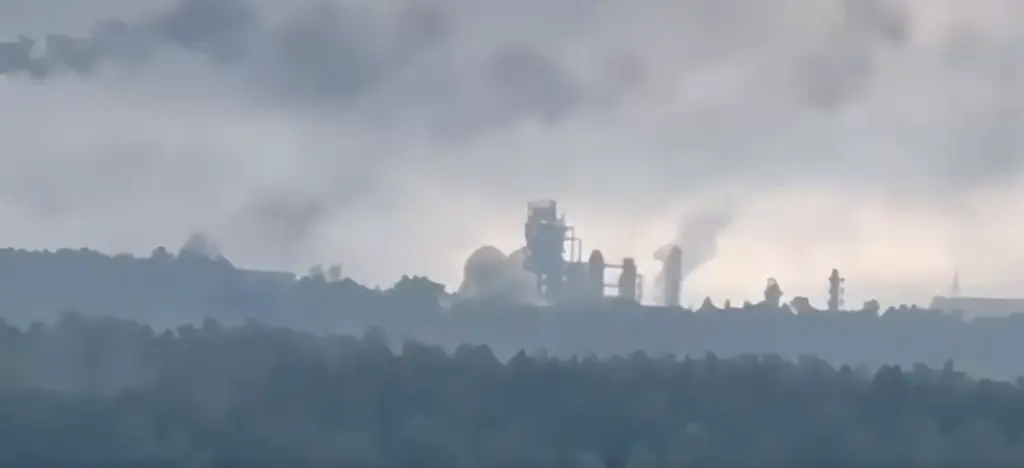
Distant refinery structures silhouetted beneath a cloudy sky, with several gray plumes rising above the industrial complex.

Ukraine’s Defense Forces struck a major oil refinery and a Black Sea oil terminal on 19 August and overnight into 20 August, Ukraine’s General Staff reported. Drones also hit a key mainland electricity hub supplying occupied Crimea, Militarnyi reported after analyzing NASA satellite data.

Together, the reported strikes put three parts of Russia’s war machine under attack within hours: fuel production, Black Sea oil exports, and the mainland electricity bridge to occupied Crimea. They continue a deep-strike campaign intended to disrupt fuel supplies and logistics supporting Russia's invasion

A major refinery deep inside Russia

Ukraine struck the TANECO refinery in Nizhnekamsk, in the Russian republic of Tatarstan, where the General Staff reported a fire at the production site. Militarnyi had earlier identified the same facility from eyewitness footage showing a drone reaching the city’s industrial zone despite Russian air-defense fire.

Ukrainian attack drones swarmed Russia’s Nizhnekamsk Oil Refinery this morning, scoring multiple hits and setting the plant on fire.

Seen here, a Ukrainian Fire Point FP-1 maneuvers and then dives into one of the already-burning Russian refinery’s process units. pic.twitter.com/3v9AjEZFs5

— OSINTtechnical (@Osinttechnical) August 20, 2026

Owned by Tatneft, TANECO is one of Russia’s newest, largest, and most technologically advanced refineries. It can process more than 16 million tons of crude annually and produces gasoline, diesel, aviation fuel, marine fuel, and other petroleum products.

Neither the General Staff nor the available imagery established whether processing equipment was damaged or production stopped.

A Black Sea terminal moving about 20 million tons a year

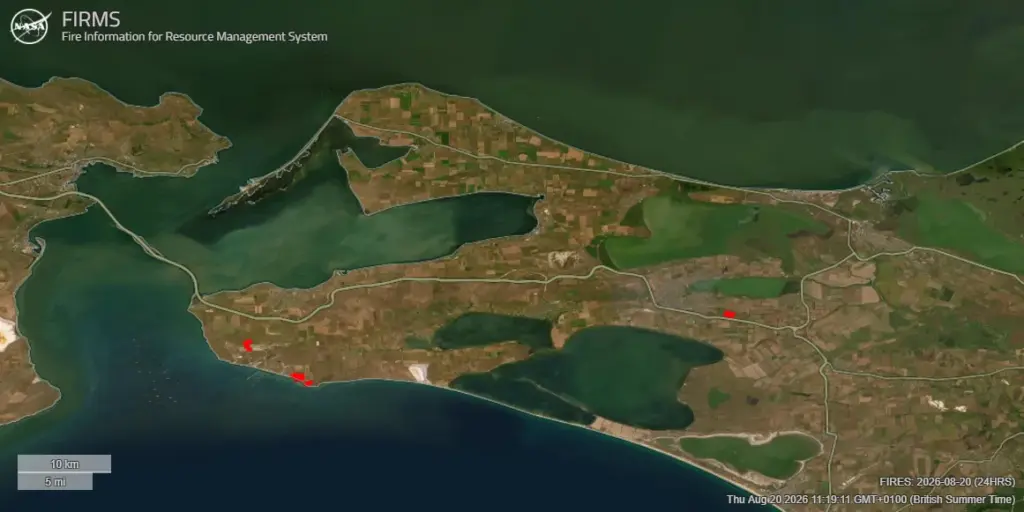
Ukraine also hit the Tamanneftegaz oil and gas terminal in the village of Volna, Krasnodar Krai, where the General Staff reported another fire. Militarnyi found a corresponding fire in NASA Fire Information for Resource Management System (FIRMS) data and assessed that storage tanks were likely burning.

Taman Peninsula with FIRMS data showing 20 August  Ukrainian strikes
Thermal anomalies on NASA FIRMS from left to right: Tamanneftegaz terminal and Taman 500-kilovolt substation. Source: NASA FIRMS

Militarnyi described Tamanneftegaz as southern Russia’s largest private oil terminal. The complex can handle about 19.9 million tons annually, while its tank farm held more than 1 million cubic meters before Ukrainian attacks began.

The Tamanneftegaz terminal receives, stores, and loads petroleum products onto tankers, making it an important link in Russia’s Black Sea exports. Drones previously hit three tanks and pipelines there on 30 July.

The mainland electricity gateway to occupied Crimea

Drones hit the Taman 500-kilovolt substation in Krasnodar Krai, where NASA satellite data recorded a fire, Militarnyi reported. All four lines of Russia’s power bridge across the Kerch Strait pass through this high-voltage hub, making it the principal mainland gateway for electricity sent to occupied Crimea, Militarnyi reported.

⚠ Confirmed: Metrics show a sudden decline in internet connectivity across Russian-controlled Crimea with high impact to Sevastopol and Simferopol corresponding to a power blackout after overnight Ukrainian drone attacks targeting energy infrastructure 🔌 pic.twitter.com/dqCXzTDcWO

— NetBlocks (@netblocks) August 20, 2026

Power failed in Simferopol, Sevastopol, Kerch, Feodosia, and Yalta around 1:45 a.m., according to Suspilne Crimea. Electric transport stopped in several cities. Sevastopol’s occupation chief said restrictions were lifted after about 90 minutes, although the grid remained unstable and some nearby settlements still lacked electricity. Social facilities in Sevastopol switched to backup power.

Crimean Wind also reported explosions near the Kafa and Malorechenske substations inside Crimea, Suspilne Crimea reported. The available evidence therefore does not establish that the Taman strike alone caused the outages.

Ukraine’s sustained long-range strike campaign

Ukraine's long-range strikes on Russian targets have ramped up in recent months. One day earlier, drones hit a key crude-processing unit at the Bashneft-UNPZ refinery in Ufa, Militarnyi reported. Ukraine had also struck TANECO on 10 August and both Nizhnekamsk refineries on 12 June, Suspilne reported.

Euromaidan Press reported that Ukrainian deep strikes hit 18 Russian oil and gas facilities in May, making it the heaviest month of 2026 at that point. On 6 August, drones attacked a top-five refinery in Yaroslavl for the seventh time this year. Five days later, they reached Orsk, about 1,500 kilometers from Ukraine.

Russia warns UK of “consequences” over British-made drones in Ukraine’s deep strikes. London vows to continue supporting Kyiv

18 août 2026 à 12:23

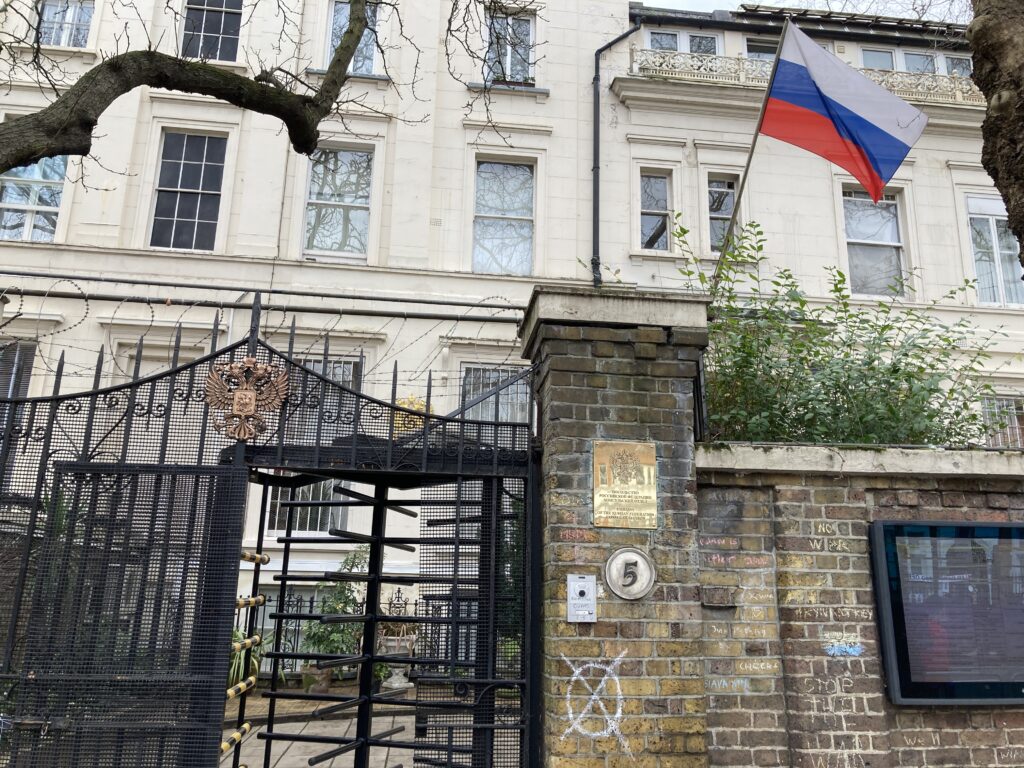
Russian Embassy in London, 2022. Photo via Wikimedia Commons.

Russia has threatened Britain with “consequences” over reports that Ukrainian forces used drones manufactured by UK companies to carry out strikes inside Russia.

The Russian Embassy in London accused the UK of deliberately escalating the war by supporting Ukraine’s long-range strike campaign, saying Britain was seeking to “contain Russia and inflict maximum damage on it by proxy.” It warned that the deeper Britain becomes involved, “the higher the price it will pay.”

The threat followed news that Ukrainian forces had used two British-built drone systems to strike targets inside Russia for the first time. The Sunday Times, citing Ukrainian military sources, reported that the drones had been used against targets including oil refineries in Volgograd and Yaroslavl over the past six months.

Moscow warns Britain of “consequences”

The Russian Embassy said in a statement that the reported use of British-made drones “confirms that London is deliberately opting for an escalation of the Ukraine crisis.”

It warned that British actions would “inevitably carry consequences for which it will have to answer,” without specifying what form those consequences could take.

The warning comes as Ukraine has significantly expanded its long-range strike campaign against Russian military and energy targets. Kyiv has increasingly used large drone swarms to hit targets deep inside Russia, seeking to disrupt military production, logistics, and energy revenues while forcing Moscow to spread its air defenses across a much larger area.

Burnham says UK will continue backing Ukraine

UK Prime Minister Andy Burnham rejected Moscow’s warning, saying Britain would continue supporting Ukraine despite Russian threats, The Independent reported on Tuesday.

“This is the UK doing what it has long said it would do, which is to support Ukraine 100 per cent against this illegal war led by Vladimir Putin,” Burnham said during a visit to Wolverhampton.

“We are providing support so that Ukraine can defend itself,” he said, adding: “We are not fair weather friends. We will be there in Ukraine’s hour of need, and that won’t change.”

UK Work and Pensions Minister Lilian Greenwood similarly said Britain’s resolve to support Ukraine remained “completely steadfast” and that the country would continue providing the military equipment Kyiv needs.

The UK Ministry of Defence also said Russia should have “no doubt” about the government's resolve to oppose Russian aggression in Ukraine and against Britain and its allies.

UK Prime Minister Andy Burnham and Ukrainian President Volodymyr Zelenskyy aboard the Ukrainian Navy’s Cherkasy minehunter at Portsmouth Naval Base, UK, 27 July 2026. Photo: Zelenskyy

British drones expand Ukraine’s deep-strike capabilities

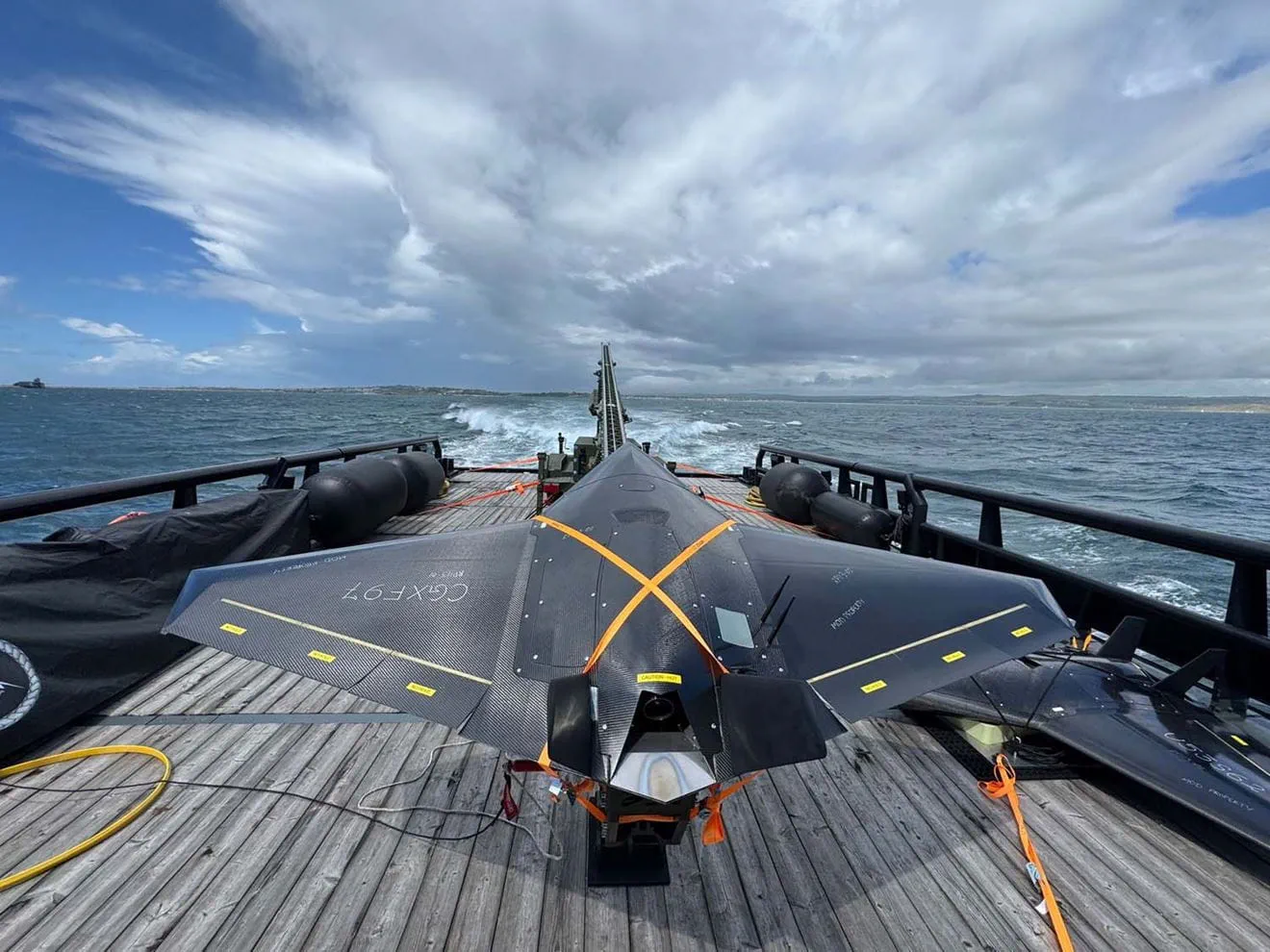
According to The Sunday Times, one of the British systems used by Ukraine is the Nyan, a jet-powered one-way attack drone produced by BAE Systems subsidiary Callen-Lenz, with a reported range of more than 150 miles.

The second system has a reported range exceeding 600 miles, although its manufacturer was not identified for security reasons. The drones provide Ukraine with additional long-range strike capacity that can be produced and deployed in larger numbers than more expensive Western cruise missiles.

Black Nyan one-way attack drone secured to a launcher on the deck of a Royal Navy vessel at sea.
Explore further

British drones hit Russia for first time in Ukraine’s deep-strike campaign – The Sunday Times

The reported deployment marks a further expansion of UK military support for Ukraine as Kyiv increasingly takes the fight to Russian military and energy infrastructure inside Russia.

  • ✇Euromaidan Press
  • Russia’s most-used map app is erasing a Baltic missile site that Western maps still show
    Russia's most-used mapping service has digitally hidden a military missile site near Finland by copying a fake forest over it on satellite imagery, Finnish public broadcaster Yle reported. Western map services still show the same position, and a Finnish military analyst called the concealment careless and self-defeating. The clumsy edit points to Moscow's growing fear of Ukrainian drones. Ukraine's drones now reach thousands of kilometers into Russia, striking refin
     

Russia’s most-used map app is erasing a Baltic missile site that Western maps still show

17 août 2026 à 07:51

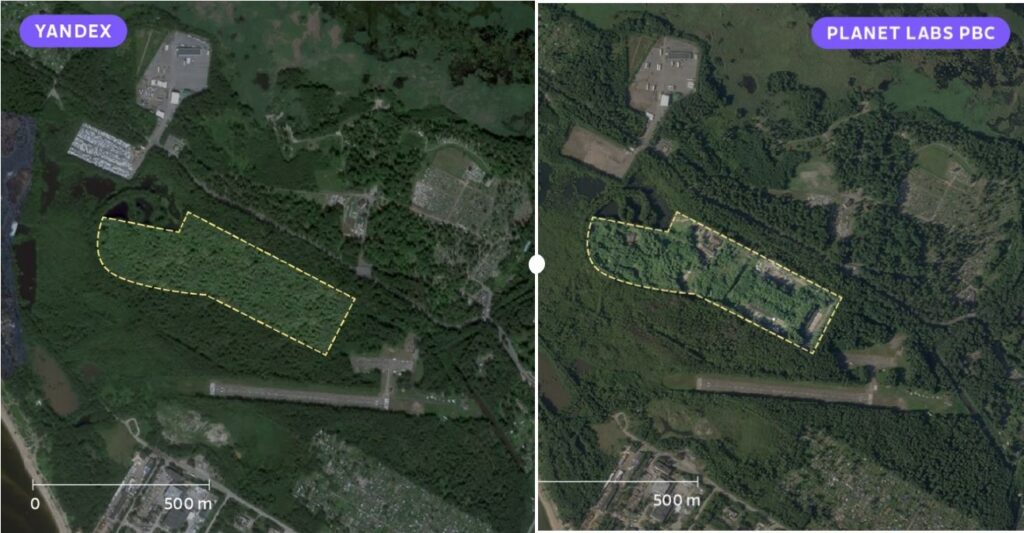
berlin weighs closing russian house spying yet federal ministry just moved beside · post left yandex maps right planet labs pbc imagery 4 2026 undated yle uses because societal significance

Russia's most-used mapping service has digitally hidden a military missile site near Finland by copying a fake forest over it on satellite imagery, Finnish public broadcaster Yle reported. Western map services still show the same position, and a Finnish military analyst called the concealment careless and self-defeating. The clumsy edit points to Moscow's growing fear of Ukrainian drones.

Ukraine's drones now reach thousands of kilometers into Russia, striking refineries, defense plants, and naval yards once thought safe. That expanding reach has upended Moscow's sense of a protected rear across the war.

What Yandex tried to erase

The concealed site sits beside the Kronstadt naval base, on Kotlin Island off St. Petersburg in the Gulf of Finland. Editing software copied trees from another image and laid them over the missile position. Until now, Russia mostly blurred sensitive locations rather than deleting them, but this edit tries to hide the target's existence outright. The same battery still appears on Google, Apple, and Microsoft satellite maps. In the covered zone, Russia has previously kept Bastion anti-ship missiles and their radar and reconnaissance systems.

berlin weighs closing russian house spying yet federal ministry just moved beside · post yandex's service electronic warfare base near kronstadt kuvakaappaus yandexin karttapalvelusta kronstadtin lähellä sijaitsevasta elektronisen sodankäynnin tukikohdasta
A screenshot from Yandex's map service showing an electronic warfare base near Kronstadt. Photo: Yandex

A cover-up that gives itself away

Marko Eklund, a military expert and former Finnish intelligence officer, called the secrecy pointless. Western and Ukrainian analysts read their own satellite images, not Yandex, so the edit protects nothing in practice. He believes an administrative order drove it, and that the work was done sloppily. Anyone who knows what to look for can spot the seams and repeating patterns. 

Ukrainian drones struck Russia's Baltic Fleet base at Kronstadt near St. Petersburg overnight, flying nearly 1,000 km. Source: Zelenskiy
Explore further

Kronstadt, Russia’s major naval Base after Black Sea Fleet losses, gets hit by Ukrainian drones (VIDEO)

A pattern set by Ukraine's drones

Russia's map cover-ups have tracked Ukraine's deep strikes. A Moscow court ordered Yandex to mask an oil refinery in Ryazan in 2024 after repeated Ukrainian strikes, and a Nordic-Baltic investigation later counted 119 blurred sites near Russia's northwestern border. Blurring shows up at once, while cloned forest hides the tampering itself.

Kronstadt gives Russia one of its main Baltic Fleet bases, and Ukraine's drones have already reached it. In early June, they set a Russian missile corvette ablaze in dry dock there.

  • ✇Euromaidan Press
  • “One of the most massive” Ukrainian drone attacks hits Moscow Oblast: two major warehouses ablaze
    A drone hit a major Wildberries warehouse at Koledino near Moscow overnight on 16 August 2026 and set it ablaze, Moscow Oblast Governor Andrey Vorobyov said. Vorobyov described the overnight swarm as “one of the most massive drone attacks in recent times.” It comes amid an expanding Ukrainian campaign against Wildberries, Russia's largest online retailer with a vast network of warehouses and logistics centers, that has reached warehouses from Moscow Oblast to the Urals.
     

“One of the most massive” Ukrainian drone attacks hits Moscow Oblast: two major warehouses ablaze

16 août 2026 à 08:15

Wildberries warehouse burning in Russia's Koledino following a Ukrainian drone strike, 16 August 2026. Photo: Exilenova+

A drone hit a major Wildberries warehouse at Koledino near Moscow overnight on 16 August 2026 and set it ablaze, Moscow Oblast Governor Andrey Vorobyov said. Vorobyov described the overnight swarm as “one of the most massive drone attacks in recent times.”

It comes amid an expanding Ukrainian campaign against Wildberries, Russia's largest online retailer with a vast network of warehouses and logistics centers, that has reached warehouses from Moscow Oblast to the Urals. Ukrainian authorities say Wildberries facilities are used to supply components for Russian drone production and navigation equipment, making them part of Russia’s wartime logistics network.

The Koledino fire puts a major part of Wildberries’ storage and sorting capacity at risk. At about 250,000 square meters, the complex is one of the retailer’s largest logistics hubs. Ukrainian sources say the marketplace has moved drone parts and other military-linked goods. Wildberries denies supporting Russia’s military. 

Wildberries’ parent company, RWB, confirmed the fire, saying workers had been evacuated and deliveries rerouted. 

Unlike the 28 July fire at Koledino industrial park, the latest blaze was confirmed at Wildberries’ own Koledino warehouse. Initial reports in July had also pointed to Wildberries, but open-source investigators later identified the burning building as a neighboring warehouse run by a third-party logistics company.

The entire Wildberries logistics hub in Koledino, Moscow Oblast, is engulfed in flames following today’s attack.

The complex covers around 250,000 m² and has long been one of Wildberries’ largest and most important logistics centers. https://t.co/qqrrsLFB3Y pic.twitter.com/YivkijfyeT

— Special Kherson Cat 🐈🇺🇦 (@bayraktar_1love) August 16, 2026

A second fire broke out at Warehouse No. 15 in MLP Severnoye Domodedovo, a multimodal logistics complex near one of Moscow’s main airports. Vorobyov said the warehouse stores medications.

Vorobyov claimed an 83-year-old man was killed after a drone fell on a private home in the Ramenskoye district, while at least six other people were injured across the region.

Moscow Mayor Sergei Sobyanin claimed that Russian air defenses destroyed 201 drones approaching the region.

Ukraine confirms Wildberries warehouse was targeted

Ukraine’s Defense Ministry confirmed that the Wildberries logistics hub in the Koledino industrial park was put out of operation during the overnight drone attack.

The ministry said the facility, which covered 250,000 square meters, was Wildberries’ largest warehouse by area. It also said Ukraine has now disabled seven of the company’s 10 largest logistics centers.

Ukraine’s campaign against Wildberries keeps growing

Ukraine’s campaign against Wildberries began on 18 July 2026, when drones struck warehouses in Elektrostal and Kotovsk. Reported attacks have since reached the retailer’s sites across Russia, including a newly opened hub near Voronezh and a warehouse in Tver targeted three times in two weeks.

By 14 August, Agentstvo had counted fires at more than 20 Wildberries sites. The sustained attacks had already prompted Wildberries to prohibit warehouse workers from bringing smartphones to work, citing concerns that photos and videos taken during drone alerts could pose a security risk. 

The effects on Russia’s economy

The number and geographic spread of Ukraine’s strikes have put sustained pressure on the retailer’s nationwide warehouse network and Russia’s economy at large. 

Earlier fires destroyed goods belonging to independent sellers, The Moscow Times reported. Wildberries said it was considering compensation, although its contracts do not require the company to cover losses caused by drone attacks. 

In response to Ukraine’s strikes, the company has also reportedly sought additional storage in Kazakhstan, giving local warehouse operators greater leverage as it tries to replace capacity lost in Russia.

The physical disruption was followed on 15 August by a Ukrainian cyberattack targeting Wildberries’ payment and customer service systems. The hackers said customers could not make payments or reach the company through its main online support channel. 

Russia plans to make upcoming winter unsurvivable for Ukrainian civilians: Moscow is hitting Ukraine’s gas extraction sites to make heating impossible in cold

9 août 2026 à 11:20

Blaze at Ukrainian gas facility following Russian strike, 3 October, 2025

Russia is trying to knock out Ukraine's gas production before the cold comes. Russia carried out massive strikes on the assets of the Naftogaz Group in eastern, western, and central Ukraine, the company reported.

The strikes target Ukraine's ability to produce the gas it needs for winter. The Russians aim to inflict maximum damage on Ukrainian production and other critical infrastructure to make preparation for the heating season impossible, acting Naftogaz chairman Serhii Fedorenko said, calling the intensity of attacks on oil-and-gas infrastructure sharply higher in recent days.

The strikes hit extraction across the country

Russia targeted the sites where Ukraine pulls gas from the ground. On the night of 9 August, the extraction assets of Ukrnafta and a company drilling site came under massive attack, with Russian forces using dozens of strike drones against the extraction infrastructure.

The damage stopped production. There is substantial destruction at the site; part of the equipment has been put out of commission, and the asset's operation has been halted. However, safety measures meant that workers at the attacked facilities were unhurt.

Fuel stations and production sites were also hit

The campaign extended to Naftogaz's retail and production network. On 7 and 8 August, seven UKRNAFTA filling complexes in Dnipropetrovsk, Zaporizhzhia, and Mykolaiv oblasts came under drone attack, and a worker at one station was injured and is in hospital receiving care.

Central Ukraine was struck, too. On 8 August, Russia attacked Naftogaz production facilities in the central part of the country with jet-powered drones, and the facility suffered serious destruction, though staff were in shelter at the time of the strike.

The target is the heating season

The strikes match the warning from First Deputy Prime Minister and Energy Minister Denys Shmyhal, who has said Russia's aim this winter is to destroy the systems Ukrainians need to survive the cold, from power to water, Politico reported. Damaging gas production now, months before winter, is meant to leave Ukraine unable to heat itself when temperatures drop, turning the coming season into another front against civilians in Russia's war.

  • ✇Euromaidan Press
  • Third one down: Ukraine keeps destroying Russia’s $1.8 million Starlink jammers
    Satellite imagery has confirmed that Ukraine's Defense Forces destroyed a Russian electronic-warfare system built to jam Starlink at Gelendzhik in southern Russia, the Ukrainian defense outlet Militarnyi reported. Ukrainian drones hit the machine on the grounds of a Russian border-guard base during their sweep of the Black Sea coast. It is one more of these costly jammers Russia has lost, even as Ukraine's long-range drones cannot use Starlink over Russia. Ukraine's
     

Third one down: Ukraine keeps destroying Russia’s $1.8 million Starlink jammers

9 août 2026 à 07:59

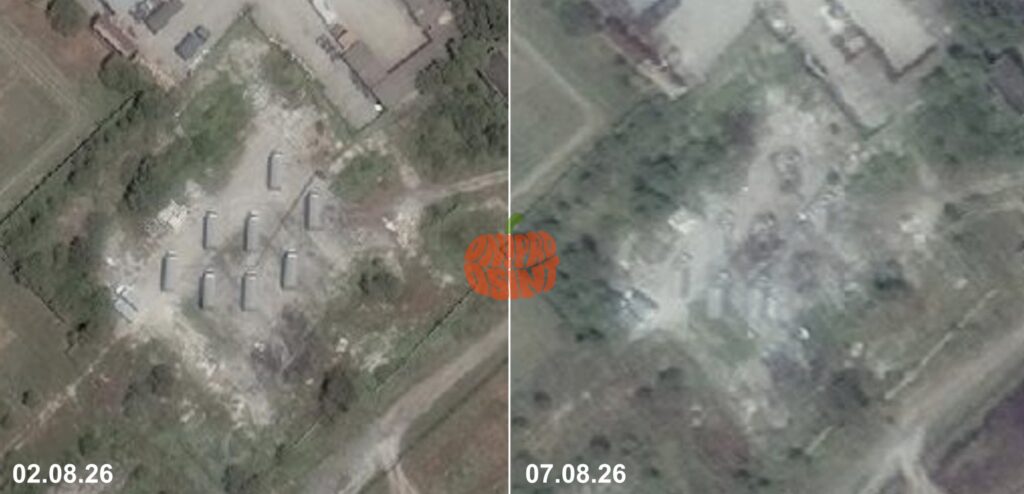
third one down ukraine keeps destroying russia's $18 million starlink jammers · post satellite images russian volna kupol garant starlink-jamming site gelendzhik krasnodar krai russia 2 (left) 7 2026 (right)

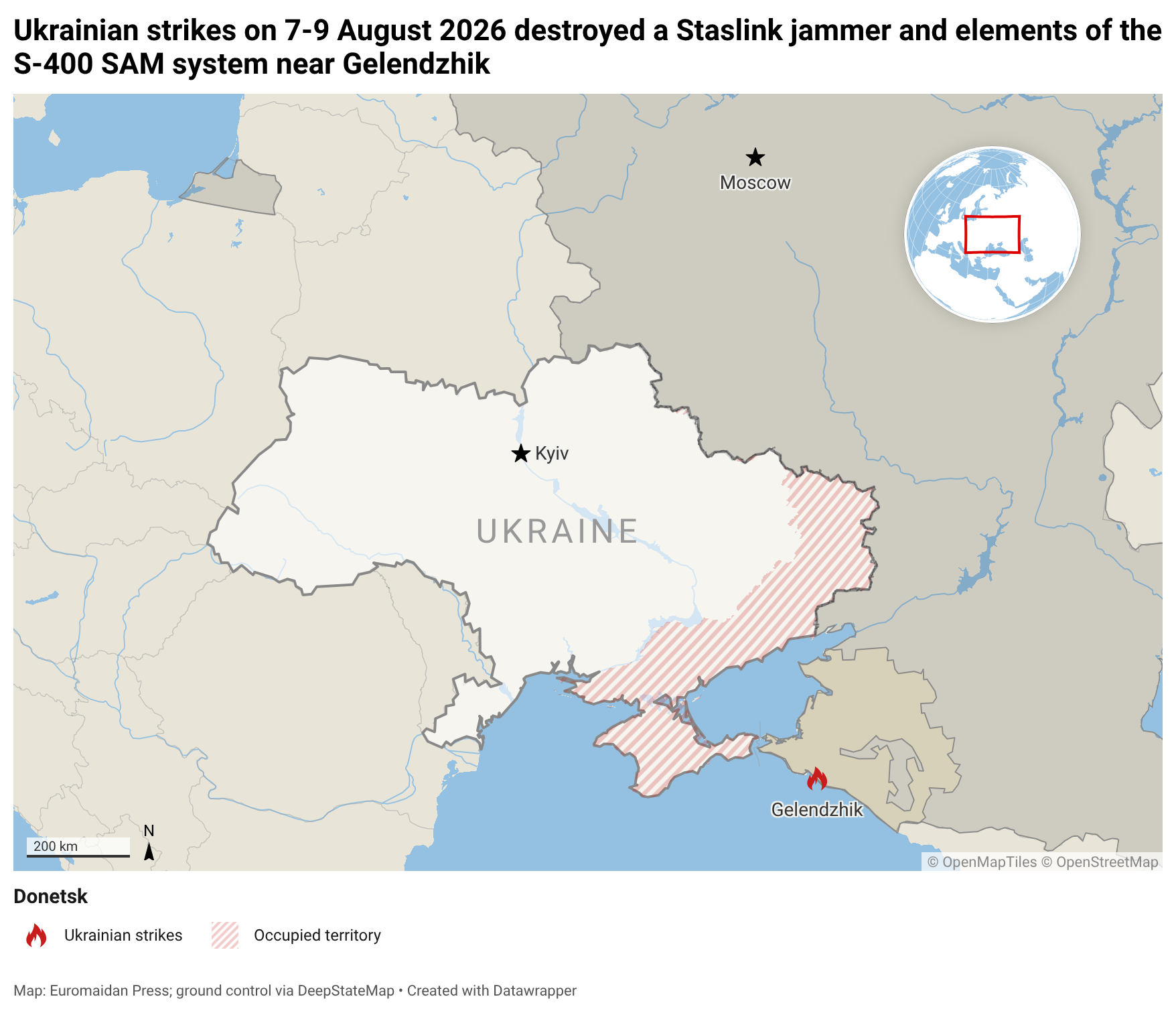
Satellite imagery has confirmed that Ukraine's Defense Forces destroyed a Russian electronic-warfare system built to jam Starlink at Gelendzhik in southern Russia, the Ukrainian defense outlet Militarnyi reported. Ukrainian drones hit the machine on the grounds of a Russian border-guard base during their sweep of the Black Sea coast. It is one more of these costly jammers Russia has lost, even as Ukraine's long-range drones cannot use Starlink over Russia.

Ukraine's deep strikes, targeting oil production, e-commerce, and military production, now reach hundreds to thousands of kilometers into Russia. At the same time, Ukrainian drone crews increasingly aim at the air-defense batteries, radars, and jammers in the occupied territory and the adjacent Russian regions — the hardware Moscow relies on to keep those drones out. Such attacks make subsequent Ukrainian strikes more successful.

Satellites caught the before and after

Satellite images published by the OSINT community Dnipro Osint show the site cleared at Gelendzhik, in Russia's Krasnodar Krai. The Volna Kupol Garant complex is gone. Researchers called it the third destruction of this jammer recorded in open sources. The strike landed on the grounds of military unit 2156, the Novorossiysk border detachment of Russia's FSB Border Service.

Ukrainian drones likely hit it alongside a 7 August strike on cargo ships near Novorossiysk and Gelendzhik. Geolocated photos from residents point to a repeat strike on the base on 8 August.

A Volna Kupol Garant system burns.
Explore further

Ukraine’s newest drones don’t need Starlink. Russia spends $1.5 million to jam it anyway.

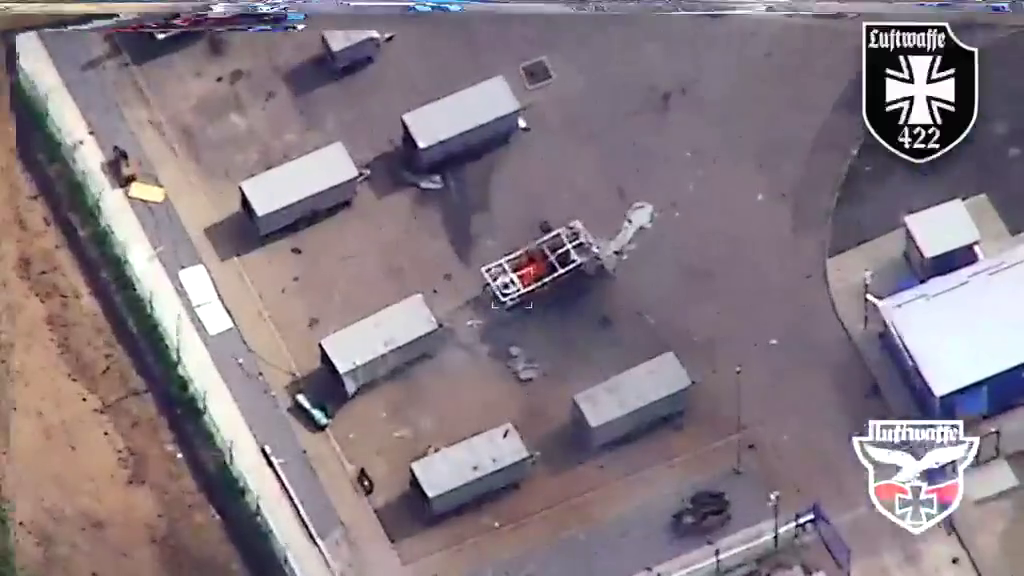
The Volna Kupol Garant is built from trailers carrying satellite antennas. It tracks a passing Starlink satellite and beams a strong signal that scrambles the terminals below across up to 20 km². Starlink is the SpaceX satellite-internet network that Ukrainian drones rely on to reach their operators. Each unit costs about $1.8 million. A same-named firm registered in occupied Simferopol builds it. The developer also makes the Volna 3M jammer that Russia has fitted to Mi-8AMTSh helicopters to block drone satellite navigation.

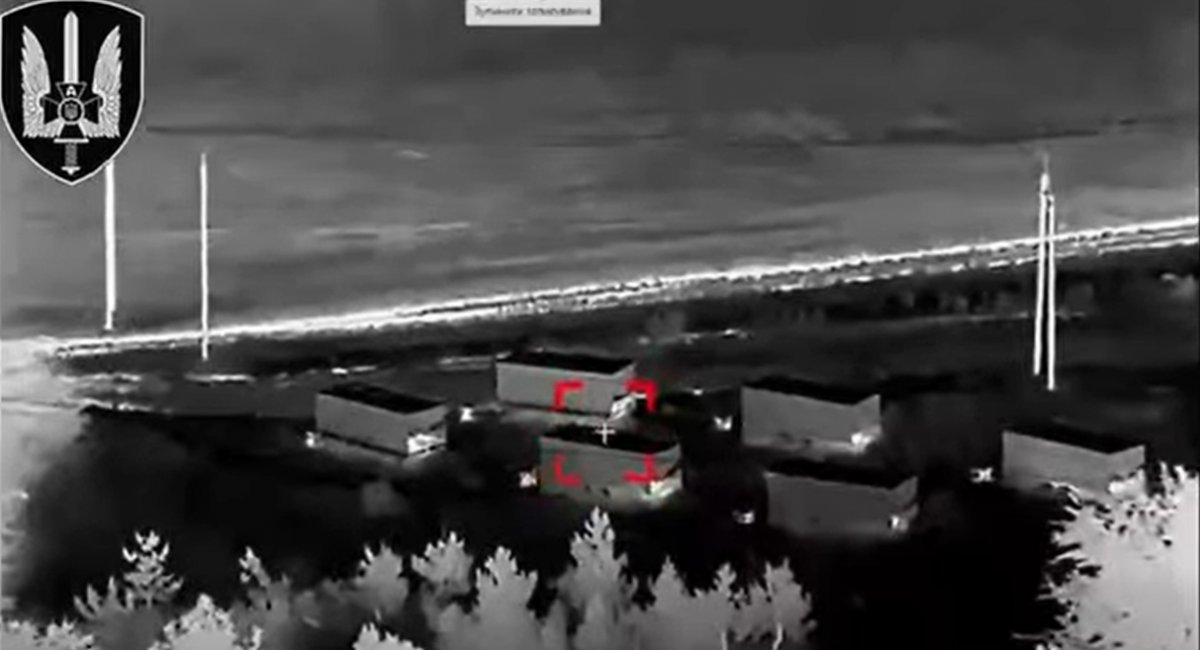
Ukraine has knocked out these jammers before. The 422nd Unmanned Systems Regiment, the Security Service of Ukraine's (SBU) Alpha special-operations center, and other Ukrainian units have struck such systems, including in occupied Crimea. The complex's weakness is its own power: beaming enough energy to reach a satellite makes it loud and easy to find. 

Russian Volna Kupol Garant system, meant to jam Starlink signals in a 20-kilometer area, shortly before being struck by a Ukrainian attack drone. (Video Still: 422nd Separate Unmanned Systems Battalion "Luftwaffe")
Explore further

Russians deploy massive $1.5M Starlink jammers, Ukrainians are blowing them up

And deep inside Russia, there is little Ukrainian Starlink to jam — SpaceX geofences the network to Ukrainian territory, and Elon Musk has refused Kyiv's push to use it for strikes into Russia so far.

The wider hunt

Ukraine's drone crews have spent 2026 tearing into Russia's air defenses and rear. The same run of Black Sea strikes that wrecked this jammer also burned a Russian S-400 air-defense system on the Gelendzhik coast. 

  • ✇Euromaidan Press
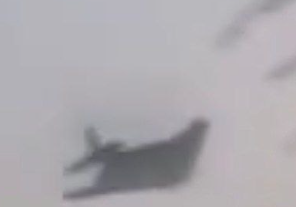
  • Mystery drone resembling America’s F-117 stealth jet filmed over a Russian refinery
    Footage from a recent Ukrainian strike on a Russian oil refinery captured an unidentified drone resembling the US F-117 Nighthawk stealth jet, though on a far smaller, drone-sized scale, according to RBC-Ukraine. Online observers suspect a new Ukrainian jet-powered strike drone, or a test of an allied foreign one, but no official body has confirmed what the aircraft is. If the guesses hold, Ukraine may be fielding a faster, longer-reaching class of weapon for hitting t
     

Mystery drone resembling America’s F-117 stealth jet filmed over a Russian refinery

4 août 2026 à 06:21

mystery drone resembling america's f-117 stealth jet filmed over russian refinery · post struck oil ufa area russia 2 2026 exilenova+ video ukraine news ukrainian reports

Footage from a recent Ukrainian strike on a Russian oil refinery captured an unidentified drone resembling the US F-117 Nighthawk stealth jet, though on a far smaller, drone-sized scale, according to RBC-Ukraine. Online observers suspect a new Ukrainian jet-powered strike drone, or a test of an allied foreign one, but no official body has confirmed what the aircraft is. If the guesses hold, Ukraine may be fielding a faster, longer-reaching class of weapon for hitting targets deep inside Russia.

Ukraine has spent the past year turning Russia's interior into contested space, sending long-range drones ever deeper toward the oil, defense, and logistics sites the Kremlin once treated as untouchable. Each new type that surfaces marks another step from short-range drones toward missile-like machines.

An unfamiliar silhouette over the refinery


The drone appeared during a 2 August Ukrainian drone strike on a refinery near Ufa, more than 1,300 kilometers from the Ukrainian border. The clip shows an aircraft shaped unlike most Ukrainian long-range drones, likely powered by a jet engine. The open-source monitoring channel Clash Report, which first shared the footage, believes it may be the Bravo drone or a modified version.

drones flew 1300 km russia’s ufa—then struck bashneft refineries · post black smoke rises over oil refinery ufa bashkortostan after ukrainian drone strike 25 2026 5325714827084766386 ukraine news reports
Explore further

Drones flew 1,300 km to Russia’s Ufa—then struck Bashneft refineries

What the Bravo could do, and why it would matter


If the aircraft is indeed a Triada Robotics product, the company describes Bravo as a single-use, jet-powered drone intended for long-range strike missions. According to the developer, its range exceeds 2,000 km (about 1,240 miles)—enough to reach much of the refinery and defense-industrial infrastructure Russia keeps far from the front lines.

👍⚡ Mysterious Jet Drone Attacks Ufa
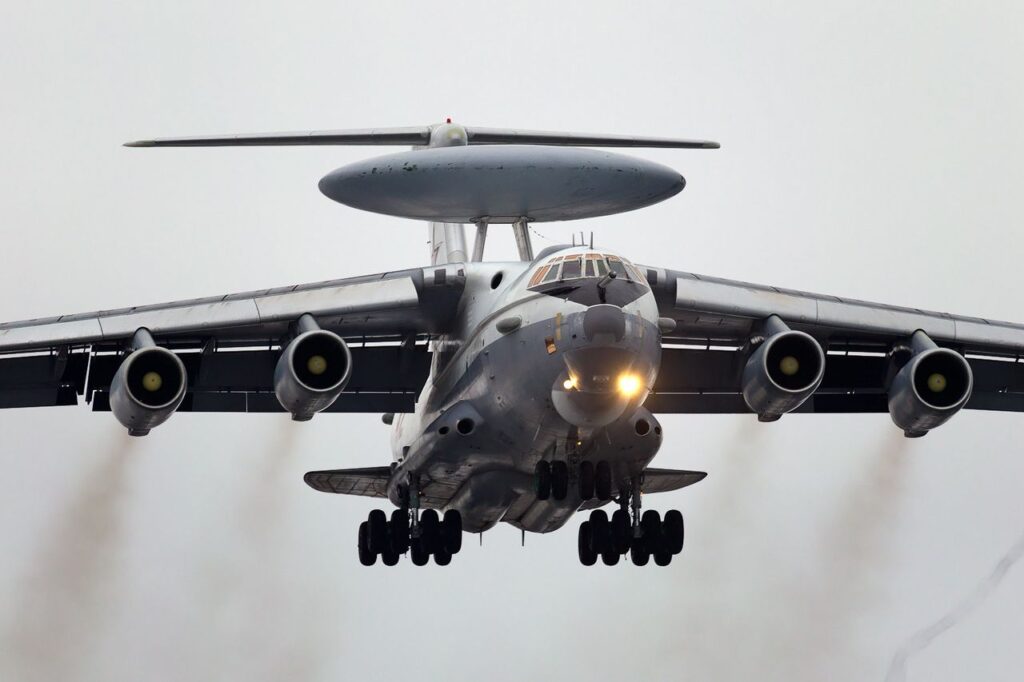
During the attack on the oil refinery in the Ufa area on July 2nd, an unidentified drone was spotted, resembling the American F-117 in shape. Theoretically, it could be the Bravo Deep-Strike UAV Platform from Triada Robotics, but there is no… pic.twitter.com/LnplWeRAul

— Gianl1974 (@Gianl1974) August 4, 2026

Triada Robotics says the drone cruises at about 600 km/h and can accelerate to roughly 800 km/h (around 500 mph) during the final phase of flight. The company also lists a warhead weighing more than 100 kg (220 lb), a payload that could threaten facilities such as fuel depots or refineries.


The developer pitches it as a cheaper stand-in for a cruise missile—long-range reach at a fraction of the cost—so Ukraine could fly more strikes at distant targets.

Flames at Russia's Saratov Oil Refinery after reported Ukrainian drone strike, 2 August 2026. Screenshot from video: Exilenova+
Explore further

Oil refinery, strategic airbase, and drone facilities: Overnight strikes hit key pillars of Russia’s war effort

Why observers compare it to the F-117

The comparison rests on the drone's silhouette. Watchers noted its outline echoes the F-117 Nighthawk, the US jet built with radar-evading shaping. A similar shape, though, does not prove full stealth. Such geometry can also sharpen aerodynamics or dodge only certain radar types. Even so, the aircraft's identity stays unconfirmed, and its edge rests on the maker's claims rather than proven use.

  • ✇Euromaidan Press
  • This Russian refinery makes the jet fuel for Moscow’s warplanes—and Ukraine keeps setting it on fire
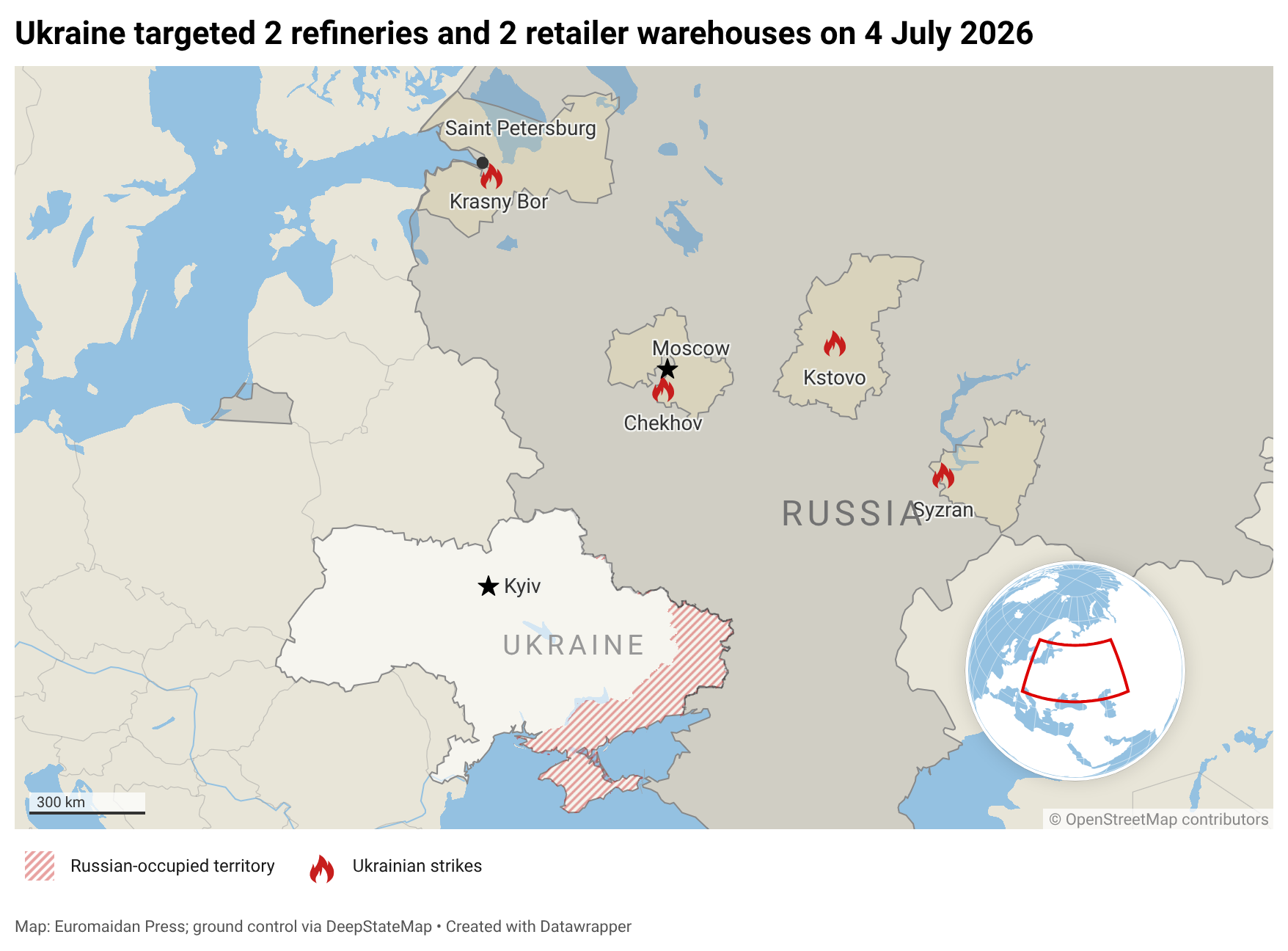
    Ukrainian drones struck across four Russian regions before dawn on 4 August, setting fires at a Rosneft oil refinery and targeting two logistics hubs of Russia's largest online retailer, Militarnyi reported. The raid reached Samara, Leningrad, Moscow, and Nizhny Novgorod oblasts, hitting both the fuel that powers Russia's military and the warehouses that Kyiv says supply its army. Russian regional officials confirmed damage while claiming air defenses repelled much of t
     

This Russian refinery makes the jet fuel for Moscow’s warplanes—and Ukraine keeps setting it on fire

4 août 2026 à 04:28

russian refinery makes jet fuel moscow's warplanes—and ukraine keeps setting fire · post column black smoke over syzran after drone strike city's oil samara oblast 12 2026 пожежа на території

Ukrainian drones struck across four Russian regions before dawn on 4 August, setting fires at a Rosneft oil refinery and targeting two logistics hubs of Russia's largest online retailer, Militarnyi reported. The raid reached Samara, Leningrad, Moscow, and Nizhny Novgorod oblasts, hitting both the fuel that powers Russia's military and the warehouses that Kyiv says supply its army. Russian regional officials confirmed damage while claiming air defenses repelled much of the attack.

Oil sales and a functioning supply chain keep Russia's war effort moving, and Ukraine has spent 2026 pushing its drones far past the front to reach both — the plants that turn crude into military fuel and the logistics that carry equipment to the army. Each fuel plant forced offline narrows the repair window Russia has left, and every hub burned pushes the retailer to guard, disperse, or replace space it treated as safe rear. Widening the target set from refineries to warehouses stretches Russian air defense across more ground than it can fully cover.

Syzran refinery burns again

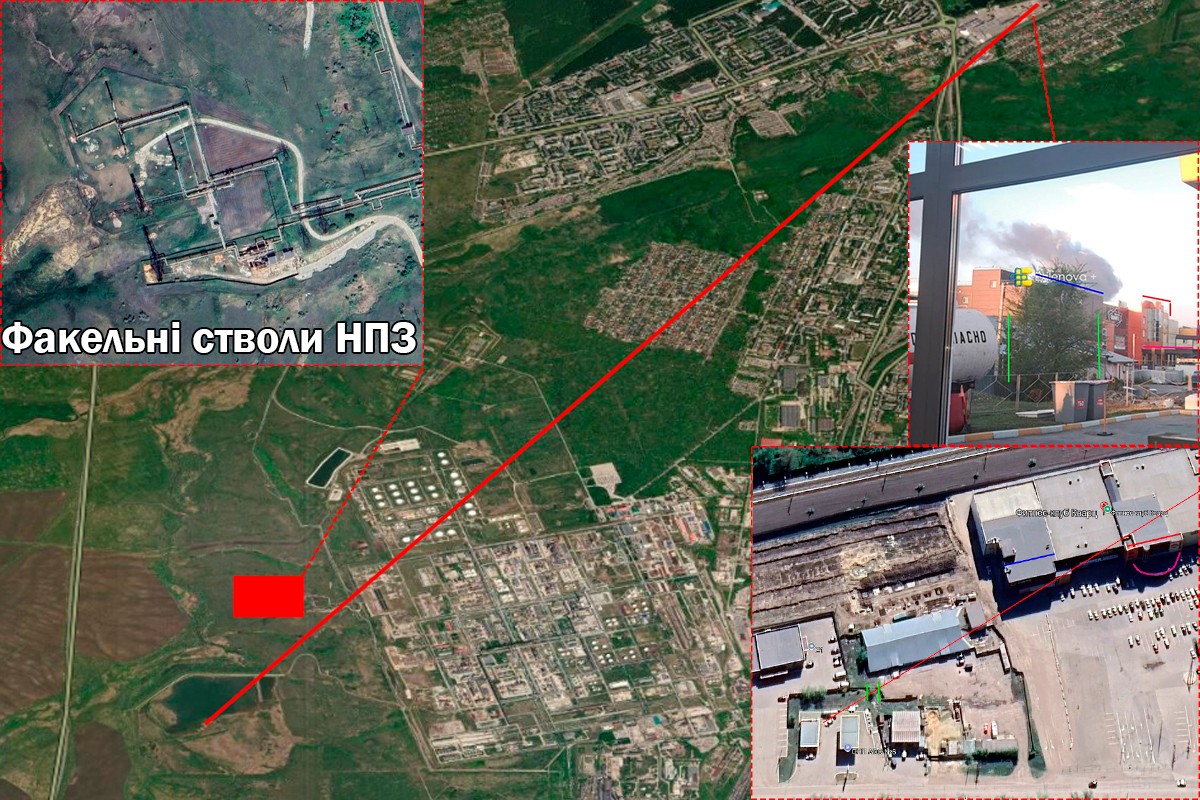
Ukrainian drones attacked the Syzran oil refinery in Samara Oblast overnight more than 800 km from the war zone in Ukraine, and Militarnyi geolocated the rising smoke to the plant. A drone-danger alert went up in the region after 1 a.m., and residents then reported explosions in the city before a column of smoke climbed over the refinery.

The plant belongs to Rosneft and processes more than 8.5 million tons of crude a year, more than 3% of Russia's national total. It turns out gasoline, diesel, aviation kerosene, and bitumen, and supplies fuel to Samara, Saratov, and Penza oblasts as well as parts of central Russia. It also feeds airfields and military units of Russia's Central and Southern military districts. The refinery sits more than 800 km from Ukraine's border.

russian refinery makes jet fuel moscow's warplanes—and ukraine keeps setting fire · post geolocation analysis marking drone's path toward syzran oil samara oblast 4 2026 задимлення на нпз в сизрані
A geolocation analysis marking the drone's path toward the Syzran oil refinery, Samara Oblast, 4 August 2026. Source: Militarnyi

Ukraine's Defense Forces have hit this refinery many times before. Drones struck it overnight on 11-12 July, starting a large fire that analysts assessed reached every primary crude-processing unit. Samara Oblast Governor Vyacheslav Fedorishchev said a fire from the attack in the region was being extinguished.

Astra says residents of Kstovo in Nizhny Novgorod Oblast reported a fire after the attack, though the struck object there stayed unclear. The city is home to a Lukoil oil refinery about 800 km from Ukraine.

Warehouses near St. Petersburg and Moscow

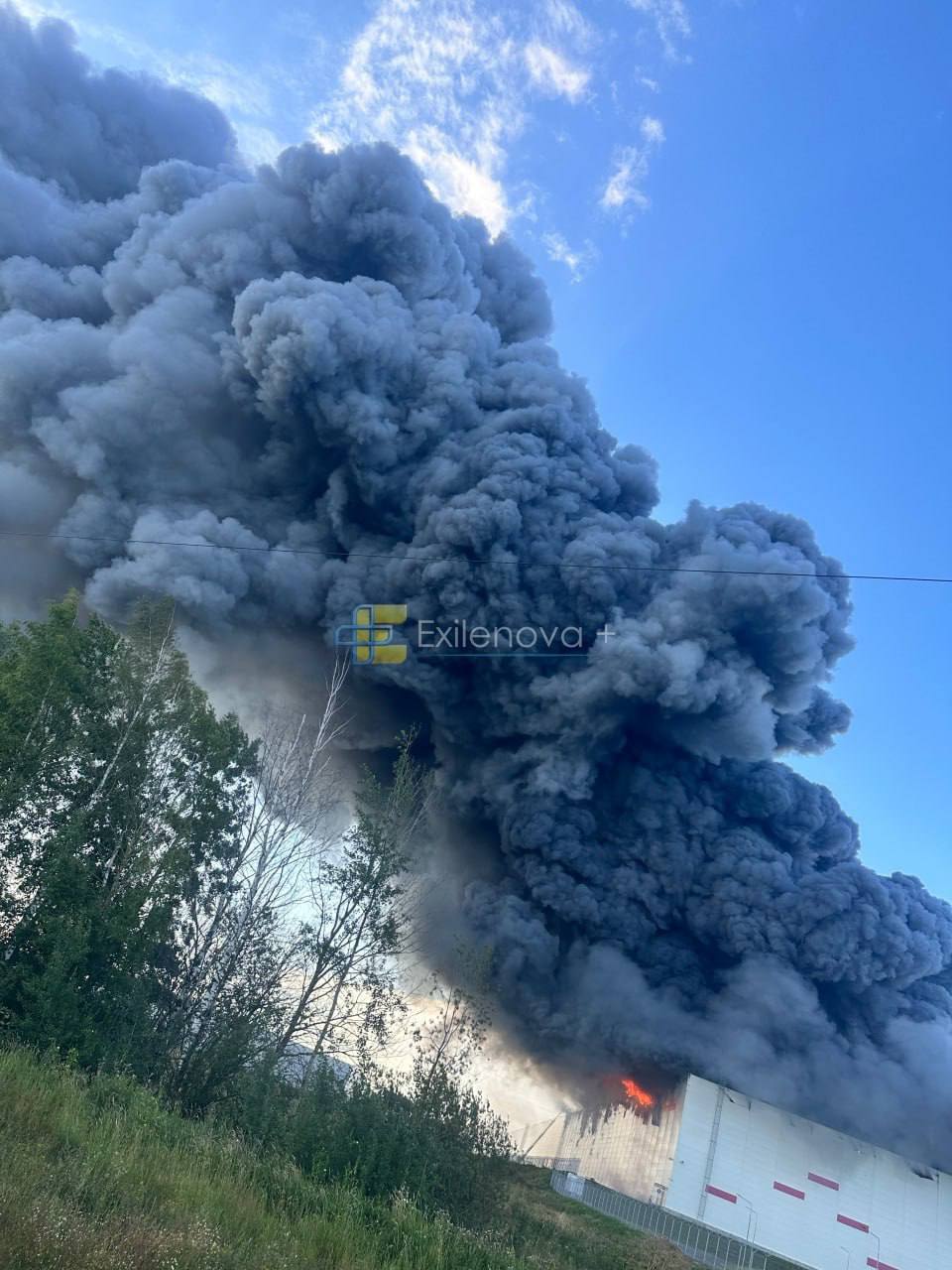
In the morning, Ukrainian drones hit a logistics compound near Krasny Bor in the Tosnensky district of Leningrad Oblast, roughly 820 km from Ukraine's northern border. Eyewitnesses filmed a heavy fire, and Wildberries confirmed a blaze at its facility there.

russian refinery makes jet fuel moscow's warplanes—and ukraine keeps setting fire · post black smoke rises over burning wildberries logistics complex leningrad oblast after ukrainian drone strike 4 2026 5445360929345313906
Black smoke rises over the burning Wildberries logistics complex in Leningrad Oblast after the Ukrainian drone strike, 4 August 2026. Photo: Exilenova+

Its Krasny Bor site covers 154,000 square meters, one of the retailer's largest surviving logistics hubs in the region. Ukrainian drones burned two others in Leningrad Oblast on 24 July.

Leningrad Oblast Governor Alexander Drozdenko claimed air defenses downed 17 drones overnight and confirmed damage to the warehouse zone near Krasny Bor. An OSINT analyst at the Russian Telegram channel Astra, reviewing eyewitness video, placed the smoke over a site holding two complexes: the Wildberries hub and a Lenta depot of 70,000 square meters. The analyst said the damaged complex could belong to either.

Flames at Russia's Saratov Oil Refinery after reported Ukrainian drone strike, 2 August 2026. Screenshot from video: Exilenova+
Explore further

Oil refinery, strategic airbase, and drone facilities: Overnight strikes hit key pillars of Russia’s war effort

Ukraine's drones hit a Wildberries warehouse near St. Petersburg

Ukrainian drones struck the logistics site at Krasny Bor, in Leningrad Oblast southeast of St. Petersburg, and a large fire broke out. Bystanders filmed thick black smoke rising over the area. The site holds a… pic.twitter.com/mCPjEk3Y1N

— Euromaidan Press (@EuromaidanPress) August 4, 2026

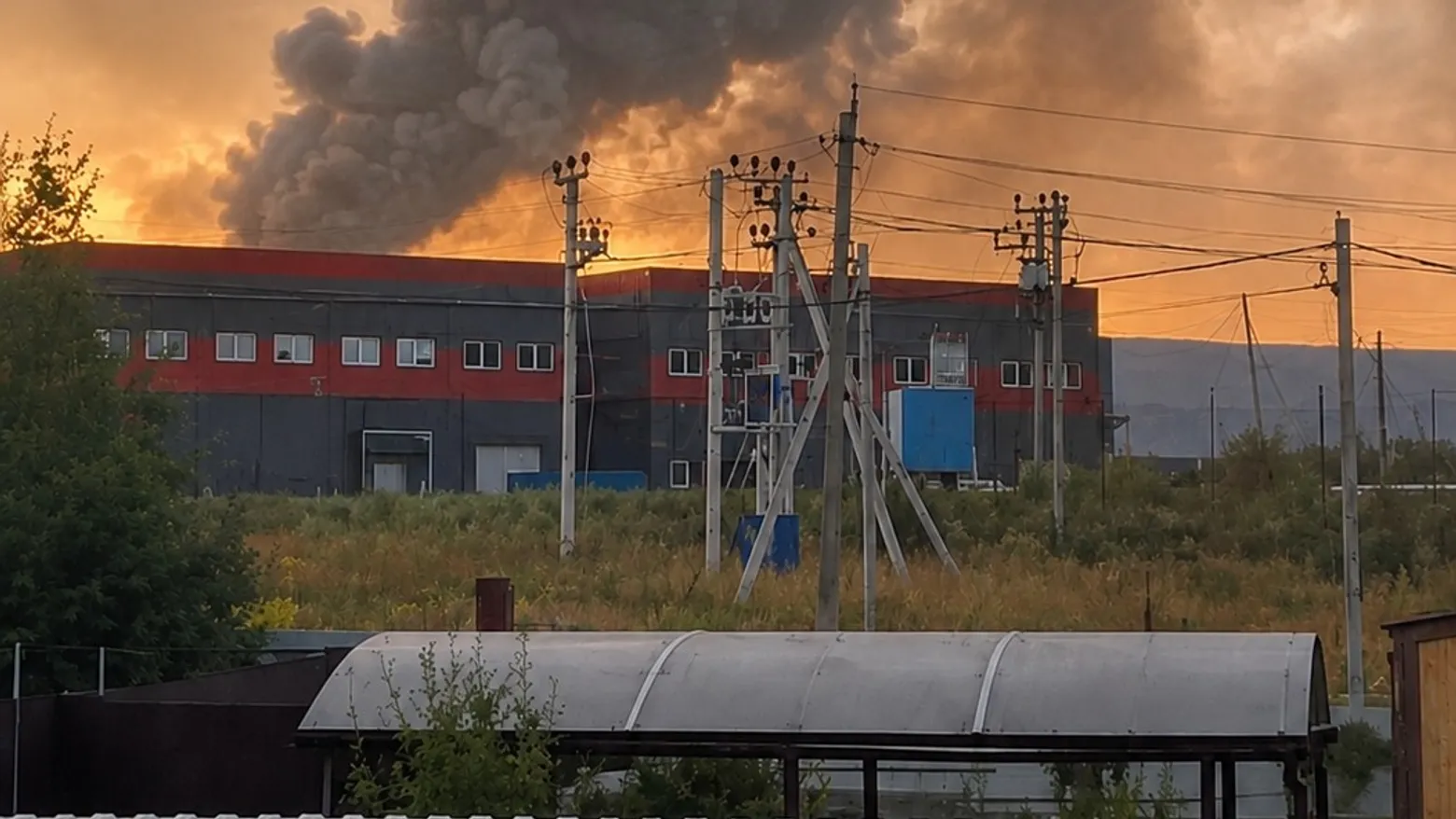
Drones also struck Chekhov near Moscow, about 400 km from Ukraine, where Astra identified the likely target as a Wildberries warehouse. Moscow Oblast Governor Andrei Vorobyov confirmed the strike and claimed five people were killed and six injured. 

russian refinery makes jet fuel moscow's warplanes—and ukraine keeps setting fire · post smoke rises over warehouse moscow oblast after ukrainian drone strike 4 2026 video supernova+ влучання у московській
Smoke rises over a warehouse in Moscow Oblast after a Ukrainian drone strike, 4 August 2026. Screenshot from video: Supernova+

Why the warehouses

President Volodymyr Zelenskyy has previously explained that Ukraine strikes what he calls "Russia's AliExpress" because the marketplace supplies occupying forces with sanctioned components for drones and navigation equipment. Ukraine's military command lists Wildberries among its long-range targets as a retailer that also moves non-lethal military gear.

Ukraine's Defense Forces began striking Wildberries logistics sites on 18 July. The company tightened rules on 3 August, allowing warehouse staff only button phones without cameras, after employees filmed the strikes and shared the footage.

Russia’s largest retailer is taking cameras away from its own workers month after eight of its warehouses burned

3 août 2026 à 18:09

drones hit volgograd kept flying 1100 km tatarstan · post large fire black smoke over russia after ukrainian drone strike wildberries logistics center 31 2026 exilenova+ ukraine news reports

Russia's biggest online retailer is trying to stop its own workers from filming air defenses. From 3 August, Wildberries has allowed warehouse employees to bring only button mobile phones without cameras to work, a decision taken after staff began filming drones and the aftermath of their strikes and spreading the material, Russian Telegram channels reported.

The ban is a reaction to Ukrainian strikes. On 31 July, employees received a message stating that photo and video recording during air-raid alerts at the warehouses supposedly poses a security threat, could reveal the location of air-defense forces, and violates Russian law, according to "Ostorozhno, novosti".

Wildberries said that after workers were allowed to bring smartphones onto warehouse grounds, cases of filming drones and their attacks, and sharing that footage, were recorded.

The camera ban follows a month of burning warehouses

The timing ties the ban directly to Ukraine's campaign. Ukrainian drones destroyed eight Wildberries warehouses in July, about 15.4% of the marketplace's total storage, killing one employee at its Elektrostal facility.

Workers inside those facilities filmed the strikes as they happened, and the footage spread across social media, documenting the fires and the damage in real time. The camera ban is Wildberries' answer to remove the phones that turned its own employees into witnesses.

The stated reason is security, the effect is silence

Wildberries framed the ban as protection. To "eliminate such risks," from 3 August, only button phones without cameras are allowed at logistics centers, the company said, adding that such devices let workers stay in touch with family while meeting security requirements.

The security rationale doubles as information control. Footage of burning warehouses is evidence of a campaign hurting a flagship Russian company, and by stripping cameras from the workforce, Wildberries removes the most direct source of that evidence. The move is a quiet admission of how much the strikes have landed: a company does not confiscate its workers' phone cameras over attacks that are not doing damage.

  • ✇Euromaidan Press
  • To catch Ukraine’s cruise missiles, Russia is risking the scarce A-50 radar planes it has no way to rebuild
    Russia has shifted its scarce fleet of A-50U airborne radar aircraft to near-daily operations, according to an analysis by Ukrainian OSINT channel Cyberboroshno. After barely flying against Ukraine for most of June, the aircraft are now patrolling almost nightly to detect Ukrainian drones, operating from airfields deep inside Russia and, on 7 July, four were airborne at once—almost the country's entire combat-ready fleet. The shift reflects how Ukraine's expanding deep-stri
     

To catch Ukraine’s cruise missiles, Russia is risking the scarce A-50 radar planes it has no way to rebuild

3 août 2026 à 09:20

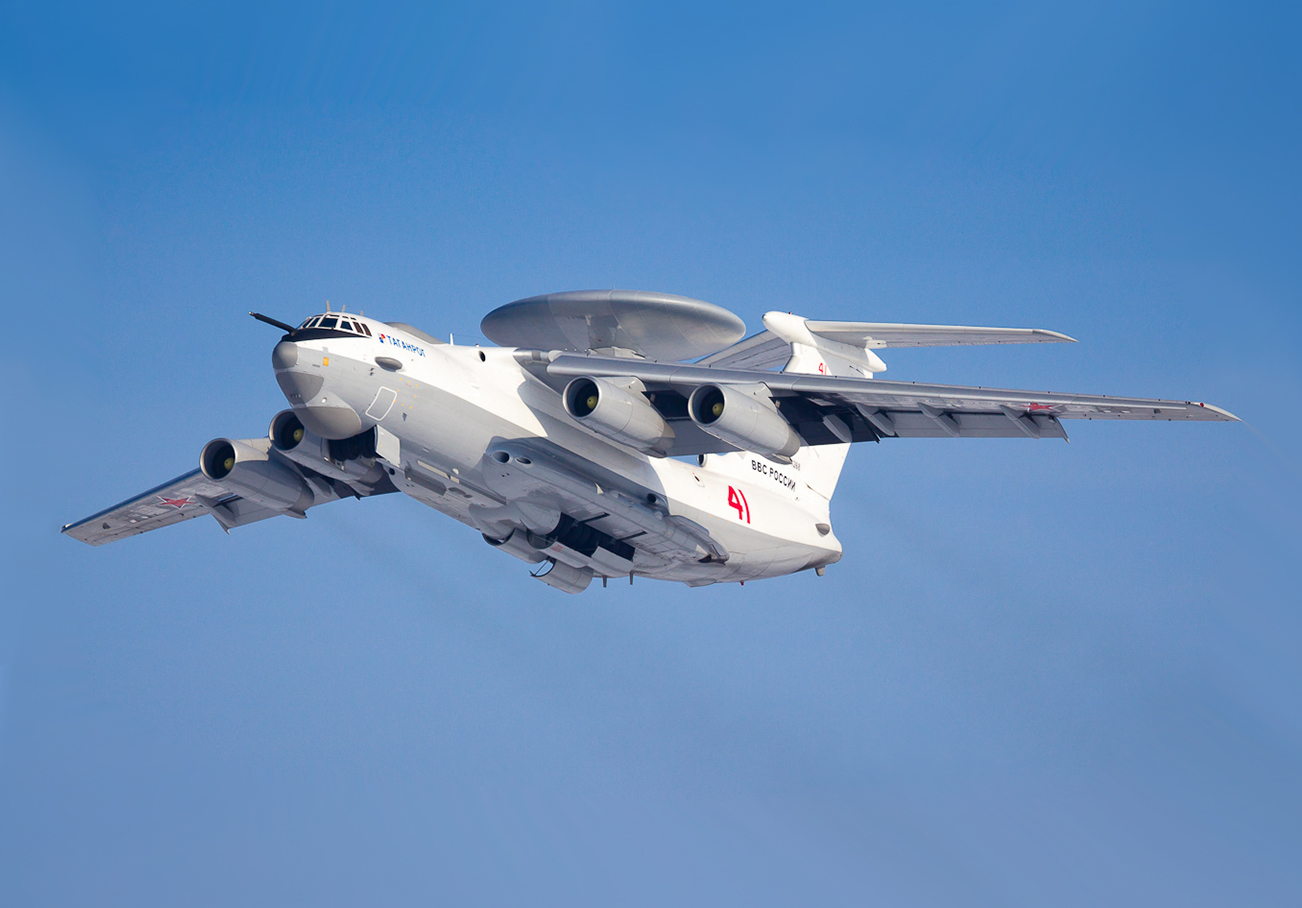
A Russian A-50U.

Russia has shifted its scarce fleet of A-50U airborne radar aircraft to near-daily operations, according to an analysis by Ukrainian OSINT channel Cyberboroshno. After barely flying against Ukraine for most of June, the aircraft are now patrolling almost nightly to detect Ukrainian drones, operating from airfields deep inside Russia and, on 7 July, four were airborne at once—almost the country's entire combat-ready fleet.

The shift reflects how Ukraine's expanding deep-strike campaign is forcing Russia to rely more heavily on one of its scarcest military assets. Wartime losses and sanctions have left Moscow with only a handful of combat-ready A-50Us and no quick way to replace them, making each aircraft increasingly valuable even as Russia depends on them to detect incoming cruise missiles beyond the reach of its ground-based air defenses.

From barely flying to daily duty

For most of June, Russia hardly sent its A-50U airborne radar planes up against Ukraine, according to Cyberboroshno. Its analysts studied more than 1,600 reports between 4 June and 2 August. Early in that window, the only real activity involved a repaired aircraft, tail number Red 47, returning to service.

A Russian A-50U.
A Russian A-50U. Photo via Wikimedia Commons(Maxim Maksimov)

That changed on 23 June, when one plane began patrolling over Russia's interior above Ulyanovsk and Samara oblasts, mostly at night. Those flights continued for the rest of the period, roughly 60 sorties in all. Basing later shifted deeper into the rear, from Ivanovo and Ulyanovsk to airfields near Perm, Orenburg, and Chelyabinsk. On 7 July, Russia put four A-50U planes in the air at once—close to its entire combat-ready fleet.

Ukraine's missiles are what's driving the surge

Russia's ground defenses struggle to catch Ukraine's long-range cruise missiles, so airborne radar helps spot them early. On 4 July, Cyberboroshno said an A-50U played a decisive role in helping repel one such Ukrainian missile strike.

A Russian A-50U.
Explore further

Drones destroy what Russia can’t rebuild: Sole plant repairing A-50 early-warning planes

Why every one of these planes matters

The A-50U is Russia's flying radar—an airborne command post that scans the sky for hundreds of kilometers and guides fighters and missiles. Ukraine shot one down over the Sea of Azov on 14 January 2024, and says it downed the second over Russia's Krasnodar Krai on 23 February 2024. 

Russia entered its all-out war with fewer than ten of these aircraft in service, and the only plant that builds and maintains them has since slid into deep losses, with a strike destroying the prototype of the successor meant to replace them. A single A-50U can track aircraft and cruise missiles out to 700 km. Every sortie forced by Ukraine’s attacks eats into the aircraft’s limited flight life and risks a plane Russia cannot replace.

❌