❌

Vue normale

Ukraine’s Navy says it hit six Su-34 bombers at a Russian airbase with Neptune missiles—the jets that drop glide bombs on Ukrainian towns (updated)

15 octobre 2026 à 04:54

borisoglebsk

Ukraine’s Navy hit six Su-34M bombers at Russia’s Borisoglebsk military airfield in Voronezh Oblast with Neptune missiles overnight into 15 October, the Navy said. Residents filmed a large fire at the base after a missile alert, and the Navy’s count has not been independently confirmed. The facility is about 400 km from the frontline.

Glide bombs are now central to how Russia’s army fights, used to pin down Ukrainian defenders, including drone teams, before small infantry groups move in. They also hit frontline cities and the civilians who live in them.

Six bombers and flight equipment hit, the Navy says

The Neptune coastal missile system also hit technical equipment that supports flights, the Navy said. It recorded secondary detonations and a fire on the airfield and said details were still being clarified.

The Su-34M can carry several guided and high-explosive aerial bombs at once, along with missiles, the Navy noted. It called the jet one of Russia’s key tools for glide-bomb strikes on Ukrainian positions and frontline towns. In September, a Ukrainian Neptune missile reached a Russian warship at its own pier.
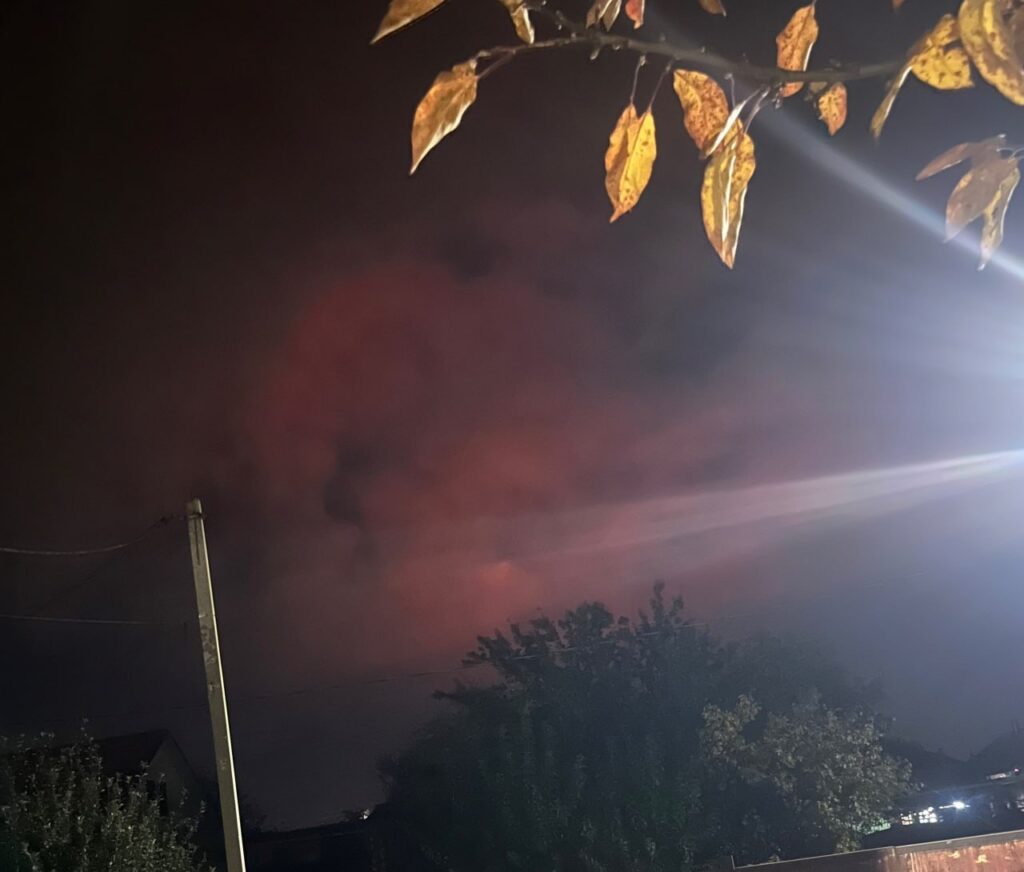
Smoke over Borisoglebsk during the fire at the military airfield, 14 October 2026.
Smoke over Borisoglebsk in Voronezh Oblast, Russia, during the fire at the town’s military airfield, 14 October 2026. Photo: Supernova+/Telegram

Fire over the airfield late on 14 October

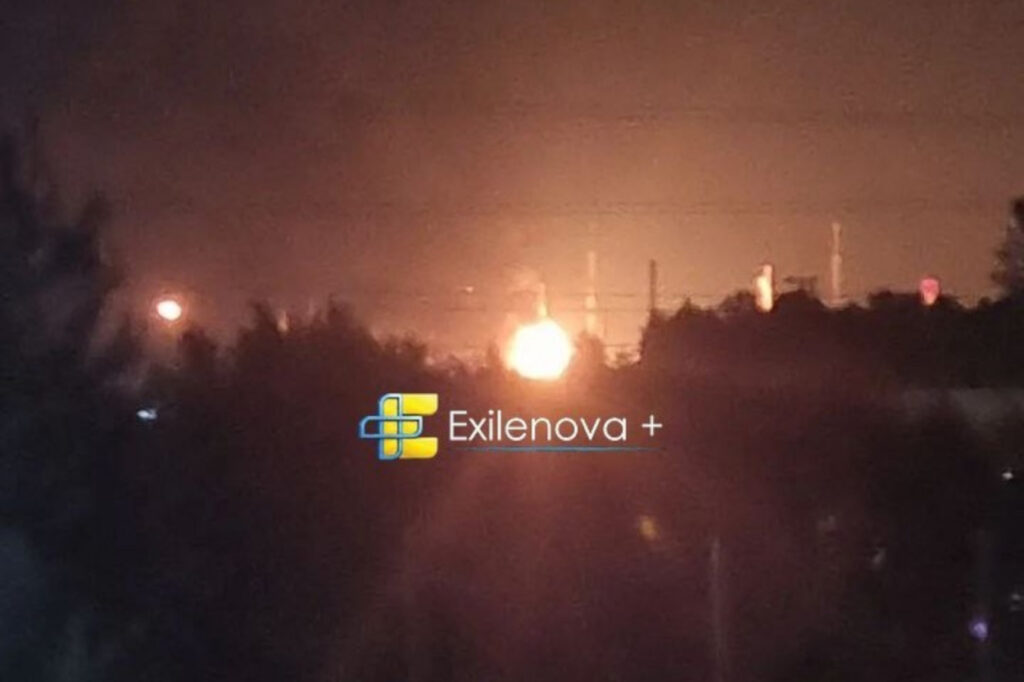
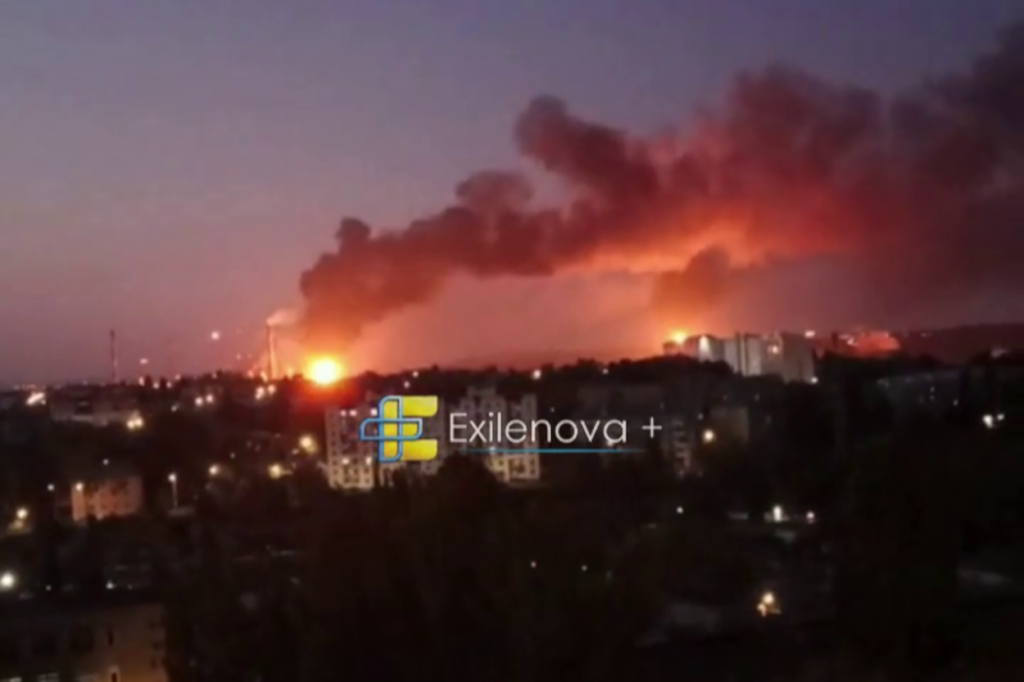
Voronezh Oblast Governor Aleksandr Gusev declared a missile alert across the region shortly before 22:00 local time on 14 October. Within an hour, Ukrainian monitoring channel Exilenova+ reported explosions and a fire, preliminarily at the Borisoglebsk airfield. It later wrote that the airfield had come under missile attack and a fire was burning there. Ukrainian monitoring channel Supernova+ posted footage from the town showing the blaze.

A large fire is raging at the site of the missile strike. https://t.co/l4aqVvNJIg pic.twitter.com/JYjhM57GYh

— Exilenova+ (@Exilenova_plus) October 14, 2026

On the morning of 15 October, Gusev claimed that 33 drones and several jet-powered aerial targets had been downed over the oblast overnight. He did not mention the airfield.

A base Ukraine has hit before

The airfield hosts the 783rd training aviation center and units of the 105th composite aviation division of Russia’s Aerospace Forces, which flies Su-34, Su-35S, and Su-30SM jets, Ukrainian defense outlet Militarnyi reported. In summer 2026, it had no permanently based combat jets, and Russia used it mainly as a stopover to refuel and rearm aircraft striking Ukraine, the outlet said, citing satellite observation.

Ukrainian drones hit the airfield overnight on 8 July, starting a fire, and satellite images later showed its fuel and lubricants depot destroyed. Drones also attacked the base’s pilot training center in July 2025.

The same night, Ryazan Oblast Governor Pavel Malkov reported a fire at an oil refinery in Ryazan. It came as Ukrainian President Volodymyr Zelenskyy said Ukraine was resuming strikes on Russian refineries.

Update: Satellite imagery confirms the strike

New satellite images show damage at Borisoglebsk airbase and six Su-34 bombers positioned in the affected area two days earlier, although the extent of the aircraft losses remains unconfirmed.
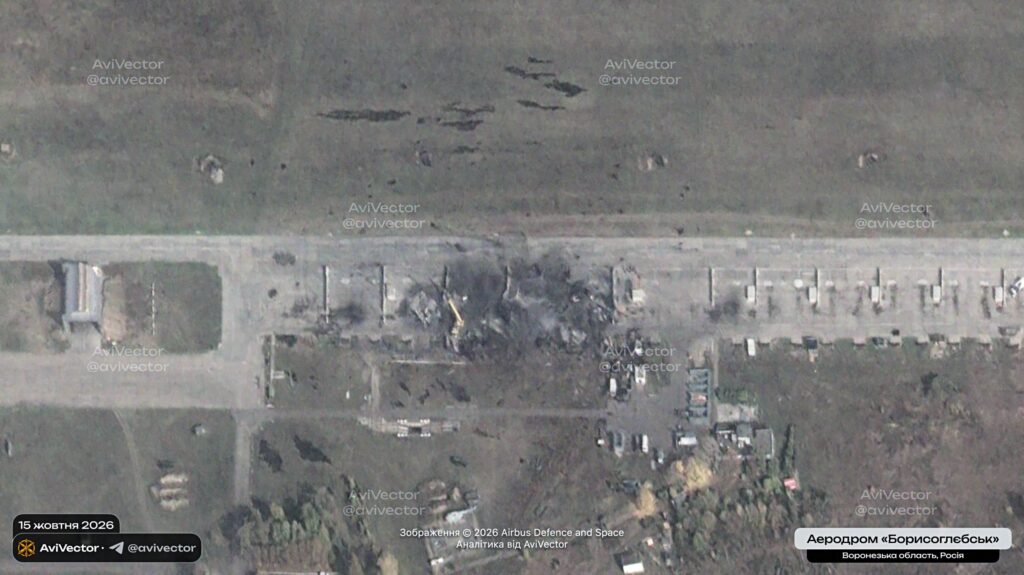
Satellite image shows the aftermath of Ukraine's strike on Borisoglebsk airbase in Russia's Voronezh Oblast on 15 October 2026. Image: Airbus Defence and Space / AviVector.
Satellite image from 13 October shows six Russian Su-34 fighter-bombers parked in the area later struck at Borisoglebsk airbase. Image: Exilenova+.

The monitoring channel Exilenova+ reports that 4 airframes were completely destroyed, while 2 others sustained significant damage.

Ukraine says it hit 12 Russian refineries in September. No refinery strikes reported since Trump’s “energy ceasefire”
13 octobre 2026 à 09:45

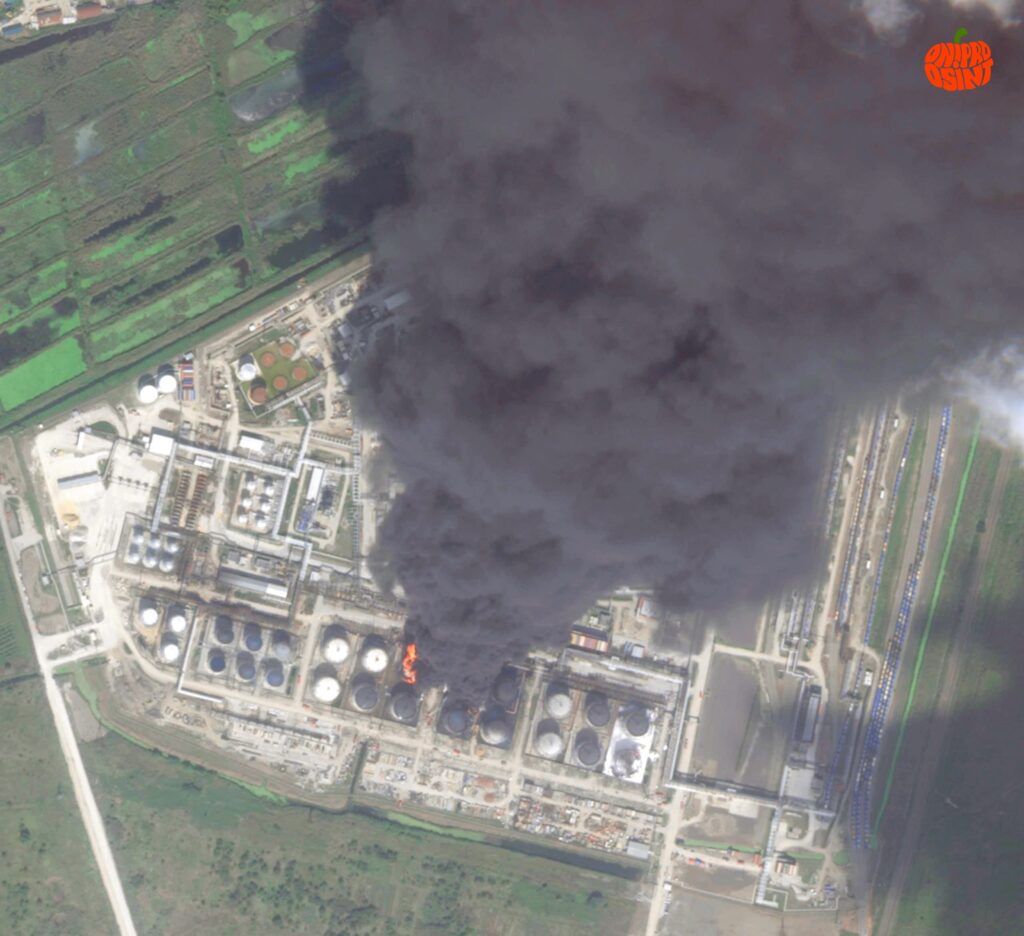
Satellite imagery of the Slavyansk oil refinery after a nighttime UAV attack on 13 September. Part of the refinery is obscured by thick smoke from a fire in the tank farm, Krasnodar Krai, Russia. Photo: Dnipro Osint

Ukrainian forces hit 12 large Russian refineries in September, Ukraine’s Ministry of Defense said, according to ArmyInform on 12 October. The farthest on the ministry’s list, Lukoil’s refinery in Perm, lies about 1,500 kilometers from Ukraine’s border. Since Trump's 11 October announcement, Euromaidan Press has found no reports of new Ukrainian refinery strikes in the official and unofficial Ukrainian and Russian sources it monitors.

A refinery-for-refinery pause would limit Ukraine’s ability to disrupt Russia’s oil industry while leaving Moscow free to keep attacking Ukraine’s energy system, giving Russia an advantage in a war where both sides use energy infrastructure as a target. The issue has become urgent since Trump announced an “energy ceasefire” on 11 October, after which Ukraine reported holding off strikes on Russian energy facilities while Zelenskyy said Russia attacked several Ukrainian energy sites.

The campaign continued into October. Ukraine’s General Staff said Ukrainian forces struck the Samara oil pumping station overnight into 10 October, the third attack on the station that month, according to Radio Svoboda.

Ukraine held off, Russia hit six energy sites

Zelenskyy said Ukraine had refrained from striking Russian energy facilities overnight on 11–12 October following Trump's announcement. Monitoring channels and official Russian sources did not report any new refinery strikes on 13 October.

“Last night, we did not attack any energy facilities on the territory of Russia because President Trump said that there would be an energy ceasefire,” Ukrainian President Volodymyr Zelenskyy said.

He added that Ukraine does not announce its next operational steps. Zelenskyy said Russia attacked six Ukrainian energy facilities on 12 October alone, according to Radio Svoboda.

Refineries first, power plants possibly later

A White House official told Axios that the proposal would begin with both sides halting attacks on oil refineries, with a possible agreement covering power plants to follow. Axios reported that Russia had not accepted a ceasefire.

The Institute for the Study of War (ISW) said the proposal, as described, would give Russia a major concession without offering Ukraine anything in return: Russia has scores of operating refineries, while Ukraine has one. ISW also said the proposal would allow Russia to continue its winter strikes on Ukrainian power stations.

  • ✇Euromaidan Press
  • Ukraine says its strikes have knocked out more than 51% of Russia’s oil refining capacity
    Ukraine's Security and Defense Forces have "put out of action" more than 51% of Russia's oil refining capacity through recent long-range strikes, Defense Minister Yevhenii Khmara said in a statement published by the Defense Ministry on 4 October. These "carefully thought-out" actions were aimed at "bleeding the Russian war machine" and "destroying its military-economic potential," Khmara said. Ukraine treats Russia's refineries as a priority target because their revenue helps fund the w
     

Ukraine says its strikes have knocked out more than 51% of Russia’s oil refining capacity

5 octobre 2026 à 11:08

ukraine says its strikes have knocked out 51% russia's oil refining capacity · post flames saratov refinery after reported ukrainian drone strike 2 2026 image_2026-08-02_14-32-39 news reports

Ukraine's Security and Defense Forces have "put out of action" more than 51% of Russia's oil refining capacity through recent long-range strikes, Defense Minister Yevhenii Khmara said in a statement published by the Defense Ministry on 4 October. These "carefully thought-out" actions were aimed at "bleeding the Russian war machine" and "destroying its military-economic potential," Khmara said.

Ukraine treats Russia's refineries as a priority target because their revenue helps fund the war. Even Russian President Vladimir Putin claimed on 1 October that the strikes had cost Russia 1% of its GDP and had "partially" achieved their goal, Interfax reported.

The ministry did not publish how it calculated the figure.

"The consequences of Ukrainian operations are not always visible immediately. But the effect accumulates and produces a tangible result," the ministry said.

Ukrainian deep strikes continue to bring the war to Russian territory

The ministry named eight recently struck facilities, among others. One of them is the Moscow Oil Refinery, which Ukraine targeted in a massive drone attack on the night of 20 September, Ukrainian President Volodymyr Zelenskyy said. The refinery, operated by Gazprom Neft in Moscow's Kapotnya district, supplies about 40% of Moscow's fuel market and 70% of the Moscow region's demand for gasoline and aviation fuel, according to Russian news Telegram channel Astra.

Another was KINEF, which Ukraine has attacked repeatedly. It is Russia's second-largest oil refinery by capacity, and the Ukrainian military struck it on the night of 30 August, setting off a fire at the facility.

Fire reported at Russia's Kirishi/KINEF oil refinery following an overnight Ukrainian drone attack, 29–30 August 2026. Photo: Exilenova+

The ministry also named the Yaroslavl, Perm, Ilsky, Saratov, and Syzran refineries and the Ust-Luga port complex.

Ukraine triples production and procurement of long-range drones—and this is not the end

This year, Ukraine has tripled the production and procurement of long-range attack drones, the ministry said.

"This is not the limit. We will continue to scale up deep-strike capabilities," the statement said.

International cooperation is part of that push. Berlin will fund the production of additional DeepStrike-class long-range drones in Ukraine, German Defense Minister Boris Pistorius said after a meeting of the Ukraine Defense Contact Group on 15 April. The sides also agreed to jointly develop and produce a medium- and long-range drone system.

Ukraine and Germany also signed an agreement on the joint production of Bars drones, Ukrainian Foreign Minister Andrii Sybiha said on 8 July. The Bars' modular design allows it to be used for deep strikes, among other missions.

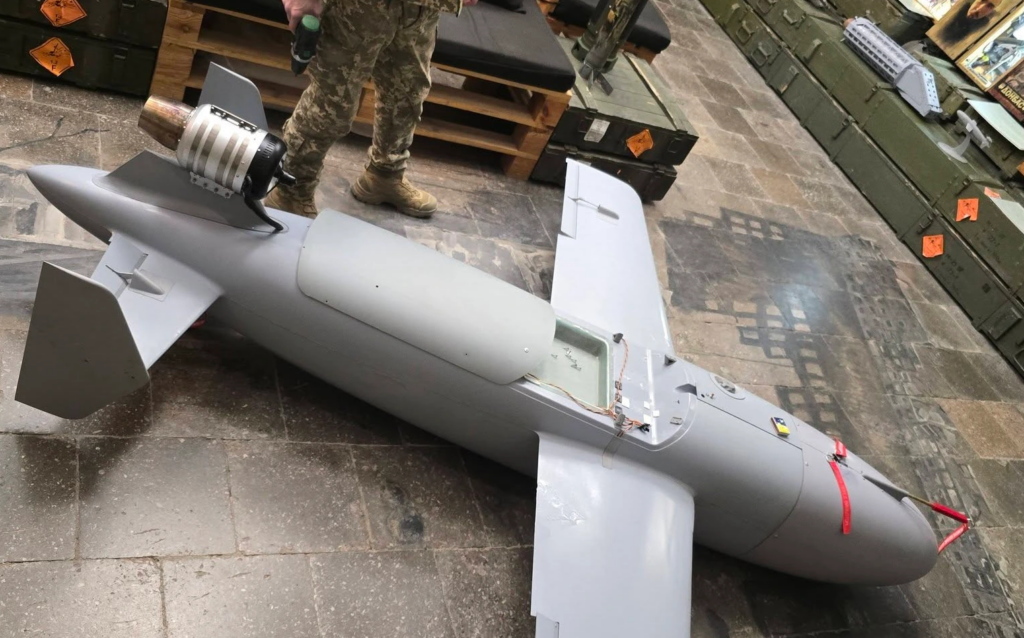
Bars jet-powered drone. Photo: Museum of the Russian-Ukrainian War

Oil refinery output has fallen

Russian refineries cut crude oil processing by 14% in the first nine months of the year compared with the same period last year amid Ukrainian drone attacks, according to calculations by two industry sources.

Experts' estimates of the decline differ widely. In August, Serhii Vakulenko of the Carnegie Russia Eurasia Center put it at 25–28%, while Russian economic commentator Vyacheslav Shiryaev put it at 65–70%, according to Defense-Aerospace.

Fuel production data give a more concrete picture: in July, Russia's gasoline and diesel output was about a quarter to a third lower than in March 2026, the outlet reported.

❌