A Washington referendum has drawn broad opposition from adults who work with queer and trans teensFor Kelsey Gellner, a Seattle-based pediatric nurse, a statewide proposal to bar trans girls from sports participation feels like a violation of her duty as a medical professional. The ballot initiative includes a requirement she calls “invasive and extreme”: all students who wish to compete on girls’ teams would have to undergo genital exams.“I tell my kids and patients that my No 1 job is to keep
A Washington referendum has drawn broad opposition from adults who work with queer and trans teens
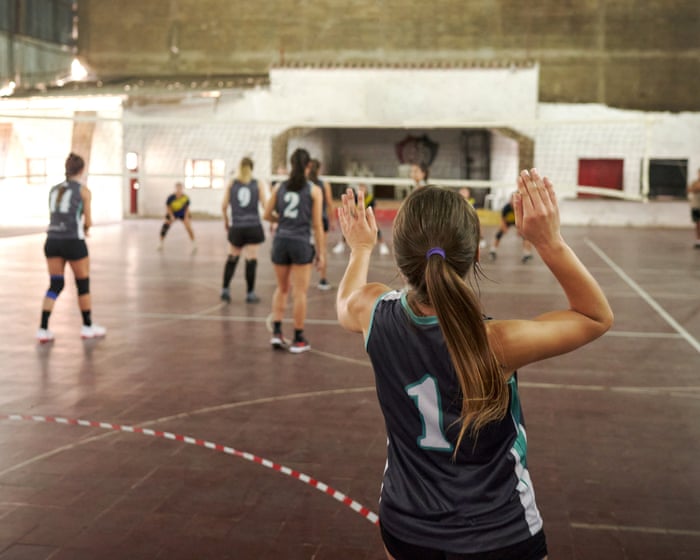
For Kelsey Gellner, a Seattle-based pediatric nurse, a statewide proposal to bar trans girls from sports participation feels like a violation of her duty as a medical professional. The ballot initiative includes a requirement she calls “invasive and extreme”: all students who wish to compete on girls’ teams would have to undergo genital exams.
“I tell my kids and patients that my No 1 job is to keep them safe,” said Gellner, who is also a board member of the Washington State Nurses Association. “I can say with confidence that girls do not want to have an unnecessary exam that creates an unsafe barrier.”
The driver of the vehicle is in custody, and two juveniles were in the vehicle, according to Wichita police departmentTwo people, including a child, were killed during a soccer game in Wichita, Kansas, when a person drove a vehicle through the field at Stryker soccer complex, police have confirmed. Multiple other people were injured.The driver of the vehicle is in custody, Aaron Moses of the Wichita police department said Saturday in a news conference. There were two juveniles in the vehicle, he
The driver of the vehicle is in custody, and two juveniles were in the vehicle, according to Wichita police department
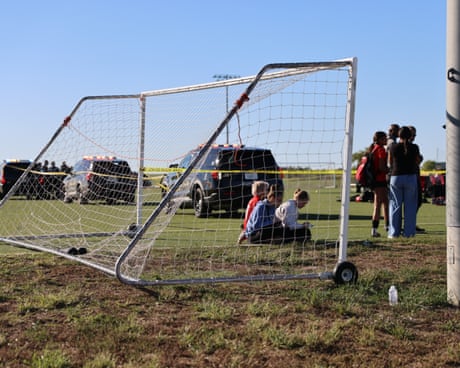
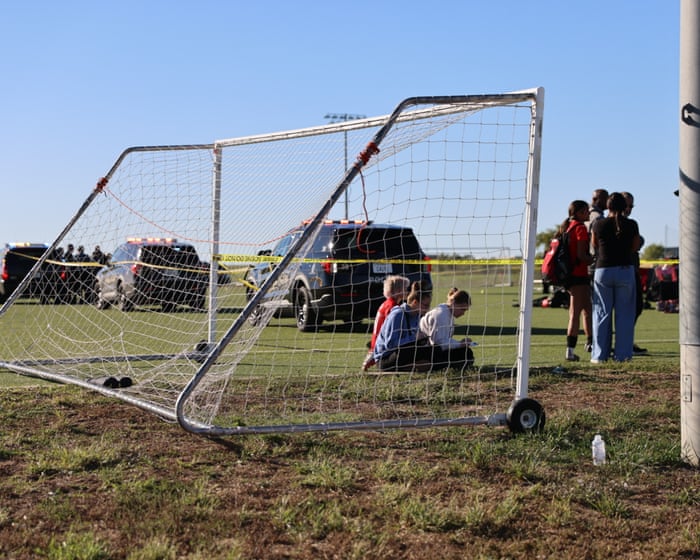
Two people, including a child, were killed during a soccer game in Wichita, Kansas, when a person drove a vehicle through the field at Stryker soccer complex, police have confirmed. Multiple other people were injured.
The driver of the vehicle is in custody, Aaron Moses of the Wichita police department said Saturday in a news conference. There were two juveniles in the vehicle, he said.
A shooting at an elementary school in Bend on Thursday left three children and one teacher deadFor three long hours on Thursday afternoon, Joe Camarlinghi waited at a Bend, Oregon, church for word about his daughter.Camarlinghi had received an alert about a shooting at Silver Rail elementary, heard sirens and quickly headed to campus, where he was directed to the church along with other parents. Parents and teachers cried and hugged, and waited. Continue reading...
A shooting at an elementary school in Bend on Thursday left three children and one teacher dead
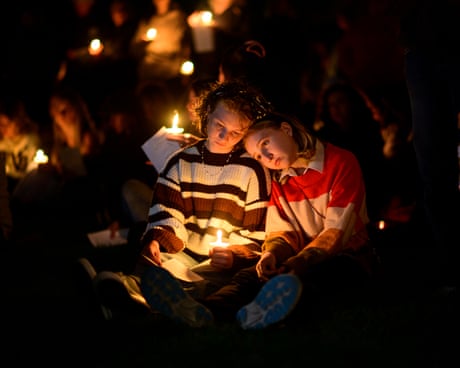
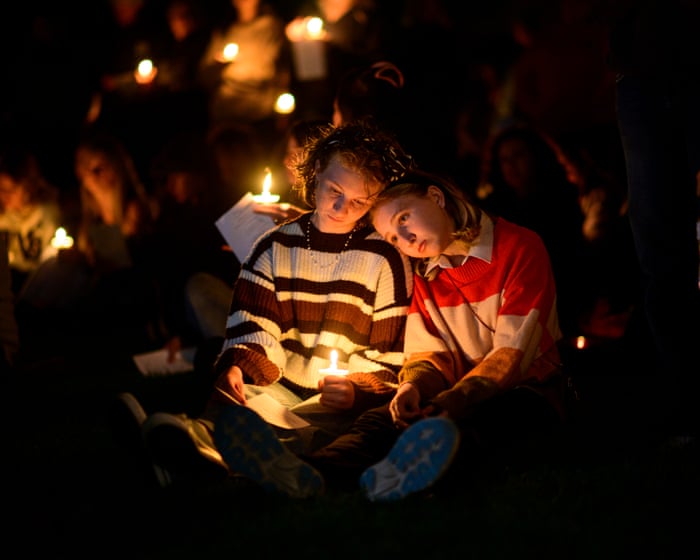
For three long hours on Thursday afternoon, Joe Camarlinghi waited at a Bend, Oregon, church for word about his daughter.
Camarlinghi had received an alert about a shooting at Silver Rail elementary, heard sirens and quickly headed to campus, where he was directed to the church along with other parents. Parents and teachers cried and hugged, and waited.
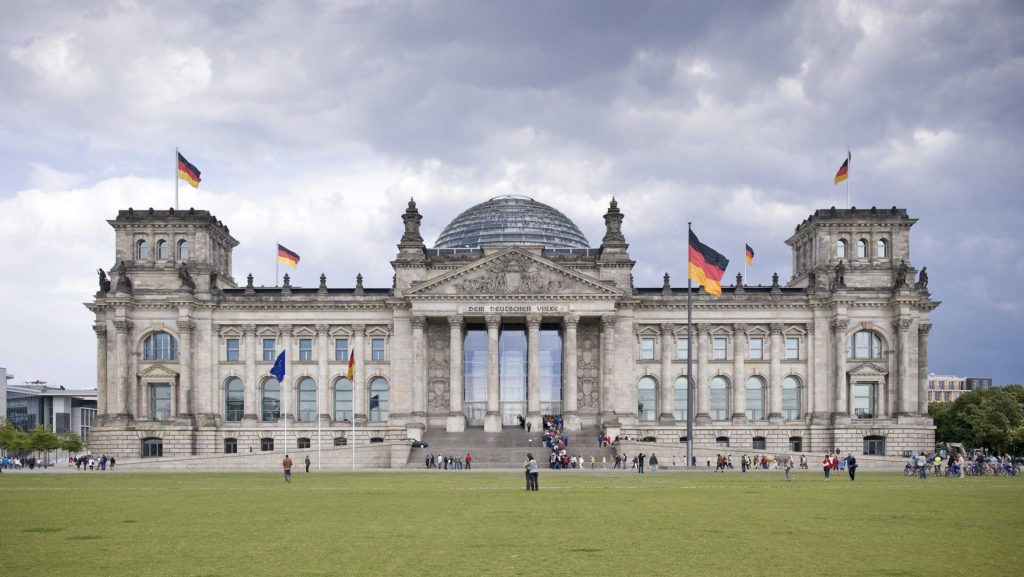
The German Bundestag has made a historic decision, officially recognizing Germany’s special responsibility to Ukraine for the crimes of Nazism. On 9 October, it adopted two resolutions ahead of the 85th anniversary of the Babyn Yar massacre and linked that responsibility to Germany’s current help for Ukraine amid Russian aggression, Oleksii Makeiev, Ukraine’s ambassador to Berlin, says.
Babyn Yar in Kyiv became one of Europe’s largest sites of the mass murder of Jews during the Holocaus
The German Bundestag has made a historic decision, officially recognizing Germany’s specialresponsibility to Ukraine for the crimes of Nazism. On 9 October, it adopted two resolutions ahead of the 85th anniversary of the Babyn Yar massacre and linked that responsibility to Germany’s current help for Ukraine amid Russian aggression, Oleksii Makeiev, Ukraine’s ambassador to Berlin, says.
Babyn Yar in Kyiv became one of Europe’s largest sites of the mass murder of Jews during the Holocaust, where more than 100,000 people were killed over two years of Nazi occupation. Germany now casts a debt from that war as a moral duty to help defend Kyiv against Russia today.
Both motions stress the importance of researching Nazi crimes in Ukraine and preserving the memory of their victims. One came from the governing CDU/CSU and SPD parties, the other from the opposition Greens, a rare alignment of coalition and opposition on a single theme.
“The situation is unique: two motions on this subject were approved at once, from the coalition and the opposition. By the usual parliamentary logic, that should not happen,” Makeiev says.
A debt turned into support for Kyiv
The coalition motion backs research and documentation of Nazi crimes in Ukraine and closer work among German, Ukrainian, and other European archives and memorial institutions. It also calls for countering antisemitism, racism, and historical revisionism, and for continued political, economic, financial, humanitarian, and military support for Ukraine.
Makeiev says he felt a sense of deja vu watching the debate from the visitors’ gallery.
“I was in that same gallery in the fall of 2022. I saw how German democratic parliamentary groups can demonstrate unity on what matters most. At that time, the Bundestag recognized the Holodomor of 1932–1933 as genocide,” he adds.
A clause on the deported children
A separate point of the resolution concerns Ukrainian children and teenagers who Russia has illegally taken from Ukraine. The document calls for efforts to return about 20,000 of them to their parents or relatives, folding the issue into Germany’s wider policy toward Ukraine.
The director of the Babyn Yar National Historical and Memorial Preserve, Rosa Tapanova, considers the Bundestag’s decision an important step toward re-examining the shared history of Ukraine and Germany and overcoming distortions of historical memory propagated for decades by the Soviet authorities and now being exploited by Russia.
“The Bundestag’s decision marked an important step toward Germany’s recognition of its historical responsibility toward Ukraine," she says.
The Bundestag’s decision and the participation of German representatives in commemorative events underscore the importance of continued Ukrainian-German dialogue. For the Babyn Yar National Historical and Memorial Preserve, this work encompasses historical research, the documentation of testimonies, educational and memorial projects, and international cooperation.
Kateryna Rashevska can trace exactly how one Ukrainian child disappears into Russia: the occupied-territory orphanage, the foster placement with a Kremlin-connected family, the re-education camp, the military uniform, the draft notice that arrives at sixteen. A legal expert at Ukraine's Regional Center for Human Rights, she has filed submissions to the International Criminal Court, documented the cases behind recent EU sanctions, and spent years building the argument that this is not only
Kateryna Rashevska can trace exactly how one Ukrainian child disappears into Russia: the occupied-territory orphanage, the foster placement with a Kremlin-connected family, the re-education camp, the military uniform, the draft notice that arrives at sixteen. A legal expert at Ukraine's Regional Center for Human Rights, she has filed submissions to the International Criminal Court, documented the cases behind recent EU sanctions, and spent years building the argument that this is not only a war crime but genocide.
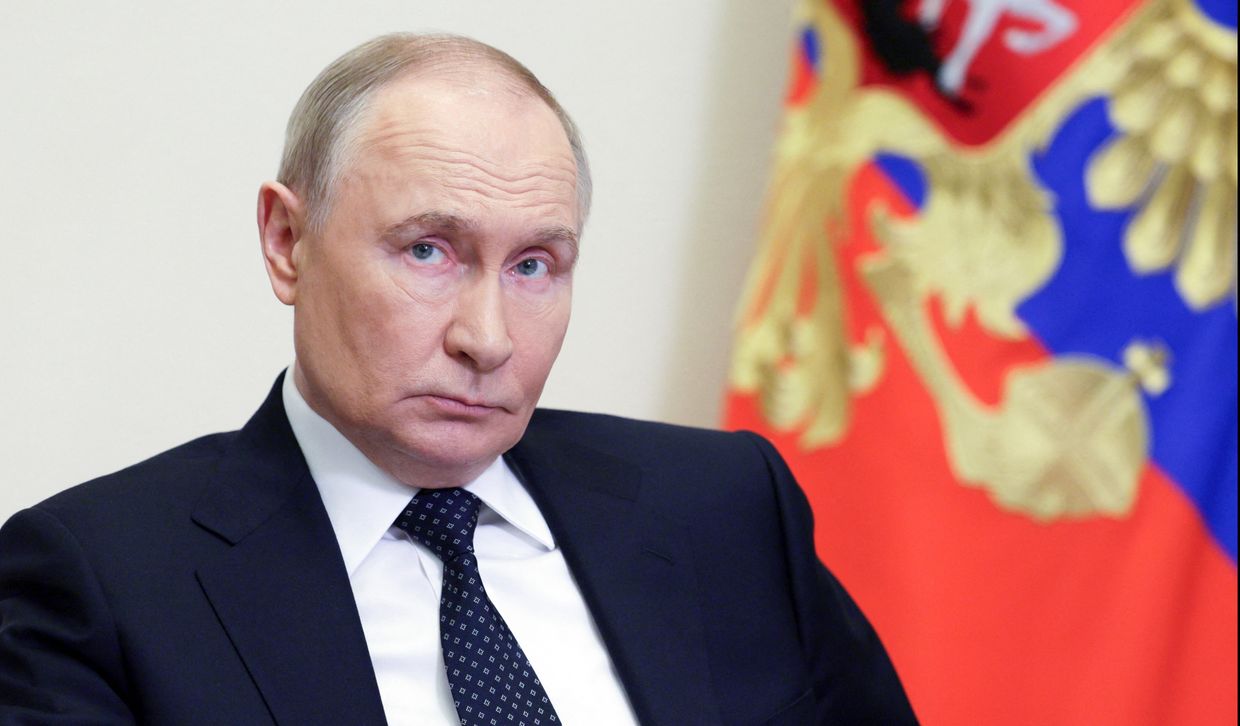
The law, she says, is ready. In less than five years of war, Russia has forcibly transferred at least 20,651 Ukrainian children from occupied Ukraine, a crime that has already put President Vladimir Putin and his children's-rights commissioner Maria Lvova-Belova in the dock of the ICC. The 1948 Genocide Convention lists the forcible transfer of children as one of the acts that constitute genocide, and the ICC's Ukraine investigation has been mandated to examine the charge since 2022. More than 150 states have signed that convention. None has been willing to say the word about Russia.
"We don't need to change any legal framework," Rashevska says. "We simply still lack the political will to call the crimes by their proper names." She presses the point because, for her, justice is not an afterthought but a deterrent: "Without justice, Russia will feel this resentment in several years, and they will repeat their actions."
And the court that could deliver that justice is collapsing. The ICC is in the deepest crisis of its existence: its prosecutor, Karim Khan, removed, 13 of its judges and prosecutors sanctioned by the United States, and on 9 October 2026 the court itself sanctioned by Washington for the first time, with Secretary of State Marco Rubio vowing to dismantle it "brick by brick." The court called the move unprecedented and warned that "history will judge this moment."
Meanwhile the children remain. Of the more than 20,000 taken, only 2,665 have been returned, as of 7 October 2026. The rest are placed in Russia's adoption system and foster homes, taught to forget they are Ukrainian, to love Russia, and to be willing to die for it: Rashevska cites 344,000 Ukrainian children drawn into the Movement of the First and 55,000 into the Yunarmiya youth army.
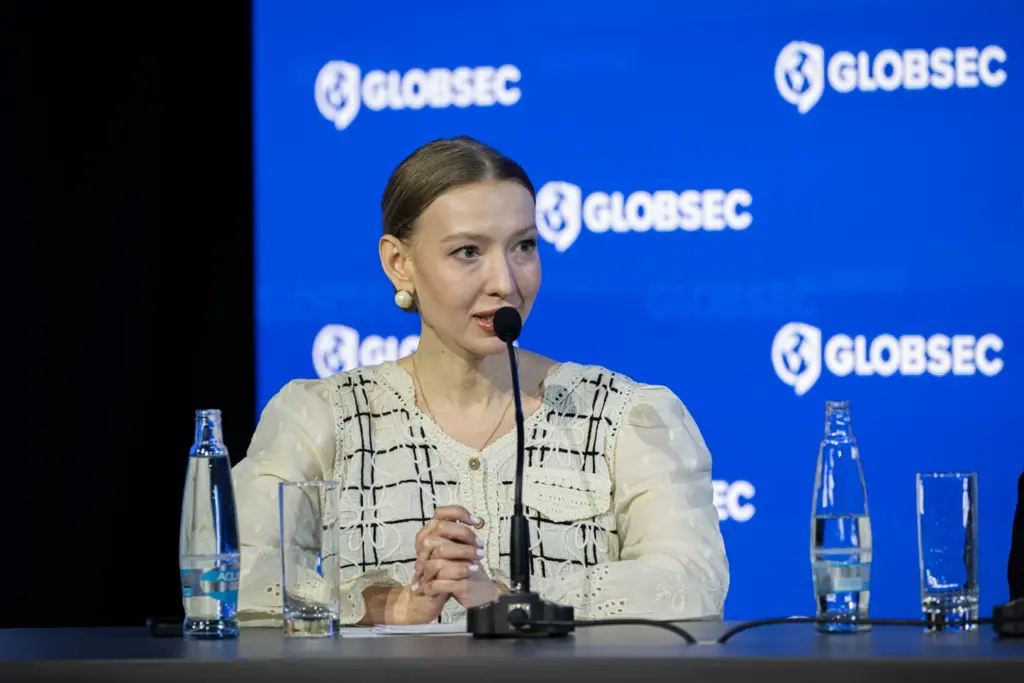
Euromaidan Press spoke with Rashevska on the sidelines of GLOBSEC 2026 in Prague about the machine Russia built to steal a generation, and why the world still won't name it.
Alya: You say that Russia’s forcible transfer of Ukrainian children is the crime of genocide. In international law, genocide is defined by Article 6 of the Rome Statute. What would it take to change this legal framework to include the deportation and militarization of Ukrainian children? And is the Office of the Prosecutor in any position to do that work under current US sanctions and Karim Khan’s leave?
Kateryna: We don’t need to change any legal frameworks to prosecute what the Russians are doing with Ukrainian children. Militarization and political indoctrination, as well as Russification of young Ukrainians, is a part of Russia’s bigger strategy to destroy Ukraine as a sovereign state and to subjugate everything in the Ukrainian nation to the Russian influence and control. I don’t see legal problems; we simply still lack the political will to call the crimes by their proper names.
The UN’s 1948 Genocide Convention posits that all states that signed the convention, 154 as of today, should act to stop it—not only those affected by genocide. If the international community recognized what the Russians are doing as a crime of genocide, it would mean that yet another time in history the international community was not able to prevent genocide, to recognize some early warnings, to react properly to what the Russians did, for example, in occupied Crimea or Donbas before 2022. It is not easy, and the international community and world political leaders should be mature enough to face all these challenges, recognize that they were involved in the commission of these crimes through silence and inaction, and finally stop it.
So that is why, according to the Rome Statute, the Office of the Prosecutor can start an investigation of the crime of genocide in the Ukrainian context. It is possible: the ICC’s Ukraine-situation investigation in March 2022, supported by 43 states, included not only war crimes and crimes against humanity, but also the crime of genocide. So we have all the legal tools and means, but politically it is very difficult.
Recently, there has been a global shift towards this—in the context of the war between Arabian states and Israel, not Ukraine. But for example, Israel’s attacks against Gaza’s education have already been termed "scholasticide," so as a part of the genocidal intent, as a part of the crime of genocide. So for us lawyers and human rights defenders, this is the task—to push the international community to do the same with Russia. It is not easy because Russia is one of the five "world policemen" expected to maintain this international legal order.
I believe that, perhaps in decades, but we will see how Russia’s actions will be recognized as the crime of genocide. The forcible transfer of children from one group to another group is the fifth universally recognized element of the crime of genocide.
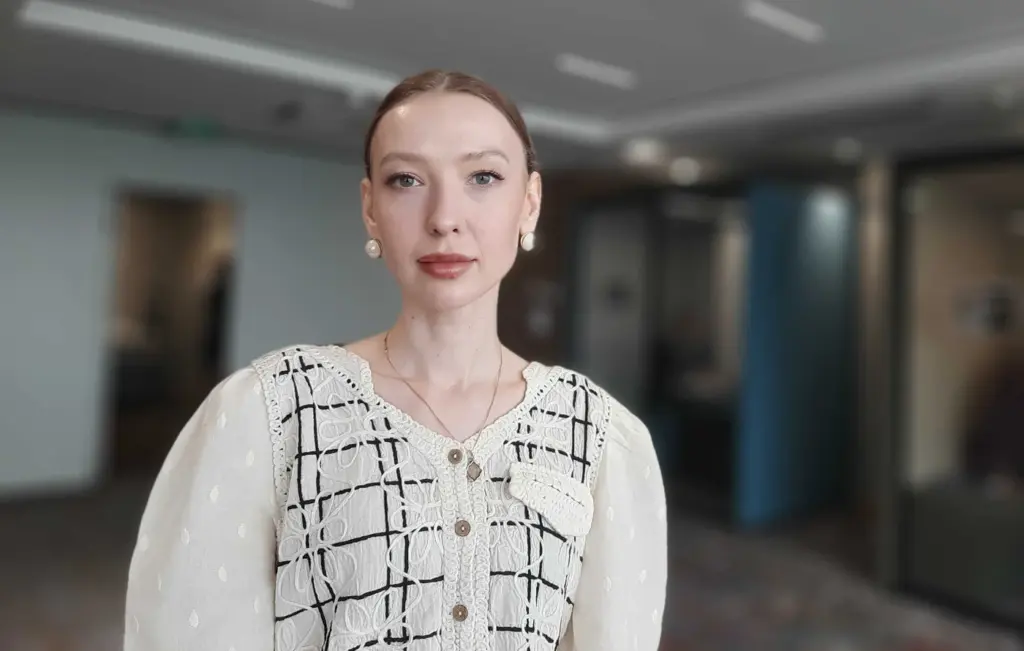
Kateryna Rashevska, legal expert at the Regional Center for Human Rights. Photo: Alya Shandra/Euromaidan Press
Alya: Your organization was involved in documenting this. How does this pipeline actually work?
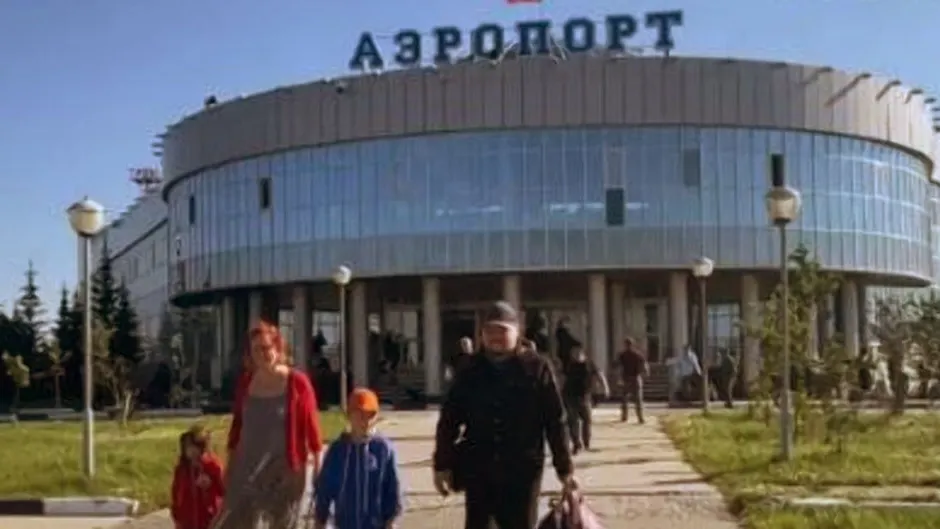
Kateryna: Yes, let's take Olga Druzhinina, who fostered four children from the occupied territories of Ukraine. Her story is very interesting: first, it seemed that she could be just an ordinary Russian brainwashed by TV shows about children from Donbas. But then we found that Olga is very close to [former Russian President] Medvedev, and through Medvedev to President Putin. Olga is the head of one non-governmental organization, "Semia Arktiki" [Family of the Arctic], and this organization aims to find foster parents for orphans— now including orphans from occupied territories of Ukraine. The co-head of this organization also fostered Ukrainian children.
It is a very well-built, pre-planned architecture of people involved in the commission of this crime—not some sporadic reaction to the full-scale invasion. They planned to do it. And I will not be surprised if, in the future, we find that these families also adopted children from Crimea or from Donbas even before 2022.
Her husband is a veteran of the Russian Armed Forces. He participated in many wars of the Russian regime, including the wars in Chechnya. It was clearly against the child's best interest to be sent to the family of this Russian serviceman and his wife. So their case was widely publicized. We recorded many different details. Later, we found photos of these children in the "Warrior Center" camp in Novosibirsk, and her foster daughter from occupied Ukraine wearing a St.George’s [Russian imperial] ribbon and in military uniform.
So the Ukrainian identity of these children was completely eradicated. It was prohibited to mention that they were Ukrainians, and the main goal of this family was to repress their unloyalty to the Russian state, to re-educate them, mold them into Russian patriots. Unfortunately, I don’t know the fate of these teenagers from Mariupol, but as far as I know, they were not returned to Ukraine. And now they are already young adults—meaning they will soon be conscripted into the Russian army. They have this military duty because they were forcibly given Russian citizenship. And young children also remain under the control of Olga and his husband.
Olga and her husband are members of the so-called "Putin Team." They were recognized many times as the best family of the Yamalo-Nenets region. The governor of Yamal-Nenets is also Putin's person. His candidacy was supported by Putin for re-election to this position. And this governor has many times mentioned that Ukrainian children from the occupied territories of Ukraine were accepted by foster families from his region, even without the proper documents.
Olga Druzhinina and her husband at Salekhard airport with two children brought from occupied Donetsk Oblast, July 2022. Screenshot: Yamal-Media via Sever-Press
It is very difficult to influence their behavior without sanctions. In this sphere of foster care, the balance between placing children in Russian institutions and Russian families is hard to find. Russia presents only two options for the forcibly transferred Ukrainian children: Russian boarding institutions or Russian foster families. And of course, ordinary people think: a family is better than a boarding institution. The truth is that there is a third option: just return these children to Ukraine, to their homes.
And I would like to highlight that, according to the order of Ukrainian President Zelenskyy, these children from institutions will not be returned to boarding institutions in Ukraine. They will inevitably be placed with a foster family, and they can participate in choosing this family or changing it. Ukraine is doing its best to guarantee that its actions comply with the Convention on the Rights of the Child, but unfortunately, Russians are very hard to persuade to return these orphanage children.
Alya: On 11 May 2026, the EU Council sanctioned 16 individuals and seven entities for the systematic unlawful deportation, forced transfer, and forced assimilation of Ukrainian children, including through indoctrination and militarized education. Your organization pushed for these sanctions. Are they working?
Kateryna: In January–February 2026, we criticized the European Union’s sanctions policy. New persons were being added to lists, but we found that the level of coordination and harmonization of sanctions policies was only 5%. Only 13 individuals and three organizations were under sanctions in all jurisdictions analyzed by us: Ukraine, the United Kingdom, Canada, the United States, the European Union, Switzerland, and Japan. It was terrifying because sanctions exist, yet they are riddled by many loopholes and are actually inefficient.
That is why we started persuading them to do something with this system. And on 11 May, Canada, the United Kingdom, and the European Union synchronized their sanctions packages: the people are included in all jurisdictions. For us, this is a big achievement.
Kateryna Rashevska, legal expert at the Regional Center for Human Rights. Photo: GLOBSEC
Another achievement: a shift in their perception of where this vertical of guilty persons ends. Putin and Maria Lvova-Belova—okay; ministers, children's rights ombudspersons at the regional level, heads of the occupation authorities—okay. But what about the "ordinary" Russian people who fostered poor Ukrainian children and now contribute to their militarization? The 11 May sanctions saw the United Kingdom and Canada listing ordinary Russians, like the family from Yamalo-Nenets that fostered four Ukrainian children, including teenagers from Mariupol, and then sent them to re-education camps of the "Center Warrior" to be militarized as Russian soldiers.
If these results of our work seem small, we must remember that for the Russians, it is a very sensitive issue. They are mad because of the sanctions—and this was visible when the “Yolochka” boarding institution in occupied Crimea’s Simferopol, called a “concentration camp” by ordinary Russians, was sanctioned. Already in December 2014 [after Russia’s occupation of east Ukraine], the first Ukrainian orphans were sent to Russian foster families from this “Yolochka.” 12 years later, children from Kherson boarding institutions also went through “Yolochka.”
Alya: You've documented over 20,500 deported children. How many of that cohort are approaching Russian conscription age?
Kateryna: It is hard to tell because the way the Ukrainian side is collecting statistics is not good enough. So you should address this question to the competent bodies of Ukraine.
But according to our calculations, just to describe the situation in general: all Ukrainian teenagers under Russian control start receiving draft notices at the age of 16. According to the Russian legislation, it should be at the age of 17, but they're so afraid that these children will escape or will return to Ukrainian-controlled territories, that they start this process in violation of their own legislation.
Everything is organized around schools. They’re not about education under occupation, but have become additional buildings of the military commissariat. Specific teachers are responsible for this conscription process. Boys aged 16-17 are being brought to the military commissariat in organized groups. You cannot escape, you cannot refuse, because you will hear “knock-knock” on your door: the occupation authorities and your teacher will ask: “Where are you? You should go.”
Another problem: Russia and Belarus started exchanging data, meaning that if this child receives a draft notice at the age of 18, he will not be able to cross the border—which matters because the checkpoint of Mokrany-Domanove between Belarus and Ukraine is the main point of returning Ukrainian children from Russian control. Every year, the Russians amend their legislation to impose more obstacles to the repatriation process.
So the only way for a Ukrainian teenage boy to escape is to do this several days before a "povestka" [draft notice] comes to his house at 16 years.
Kateryna Rashevska, legal expert at the Regional Center for Human Rights. Photo: Alya Shandra/Euromaidan Press
According to our intelligence, since 2014, 48,000 Ukrainians from occupied territories were forcibly mobilized by Russians, including those from occupied Crimea. Some of them participated in the "special military operation.” Around 20% of all prisoners of war in Ukrainian camps for Russians are originally Ukrainians who were forced to sign a military contract. Many of them were forced, manipulated, or brainwashed, so it was not done of their own will.
But I would like to highlight that the average age of a Russian soldier is 35. This is not the war of young Ukrainians who reached the age of majority and were sent to the battlefield as cannon fodder. We see that the Russians’ main goal is to rebuild the army degraded by the Ukrainian side during the first month of the full-scale invasion, to have officers and other qualified personnel who will develop a strategy and conquer more and more territory. That is why they're investing in all these military patriotic movements and centers.
That is why I was really impressed when I saw that their All-Russian championship on drone racing will be for children aged seven. Should we next expect that children in kindergartens will assemble and disassemble a rifle? Their society is very militarized. This is the biggest problem. And now, Russian soldiers are those who are teaching Ukrainian children to fight tomorrow.
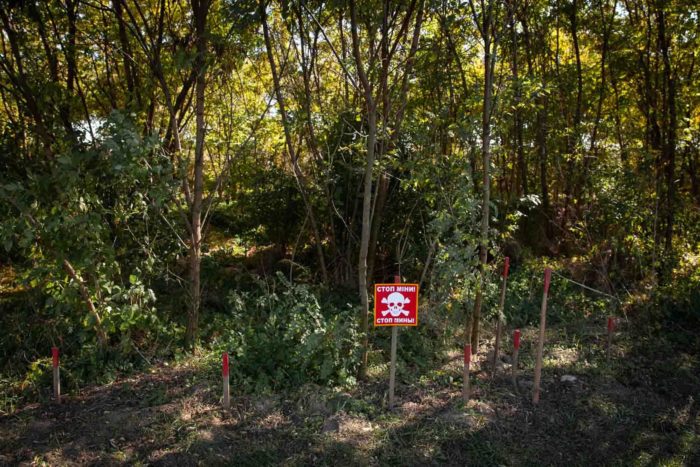
Two 14-year-old boys were killed when an explosive device detonated in the evening in the Konotop district of Sumy Oblast, according to the statement by Oleh Hryhorov, head of the Sumy Regional Military Administration. The children encountered the dangerous device in a field, suffered severe injuries, and died at the scene, the statement said.
In 2022, Russian forces occupied parts of Sumy Oblast, but Ukraine liberated the region in April. Russia intensified its offensive again in 2025.
Two 14-year-old boys were killed when an explosive device detonated in the evening in the Konotop district of Sumy Oblast, according to the statement by Oleh Hryhorov, head of the Sumy Regional Military Administration. The children encountered the dangerous device in a field, suffered severe injuries, and died at the scene, the statement said.
In 2022, Russian forces occupied parts of Sumy Oblast, but Ukraine liberated the region in April. Russia intensified its offensive again in 2025. Today, mines, unexploded ordnance and Russian drones shot down over the region pose a danger, as their warheads can detonate after falling. Overall, 146 children in Ukraine have suffered mine-related injuries, former Interior Minister Ihor Klymenko reported in April. For example, two months ago, an 11-year-old boy and a 15-year-old boy in Sumy Oblast were injured when an explosive device detonated.
Hryhorov expressed his condolences to the parents and relatives of the victims and urged people to remain cautious:
“Please be as careful as possible and remind children: do not approach unknown or suspicious objects, touch them, or try to move them. Take care of yourselves and your loved ones,” Hryhorov said.
Demining efforts continue in Sumy Oblast
On 24 February 2022, Russian forces entered the territory of Sumy Oblast. The first battles in the region took place that same day. In particular, Russian forces attempted to break through to Sumy, but Ukrainian troops repelled the offensive. On 11 April 2022, Ukraine restored control over the entire Sumy region.
As early as 7 June 2022, deminers were working in the Konotop, Sumy, and Okhtyrka districts, according to the Government Portal. That day, they surveyed areas and neutralized explosive devices.
The work of deminers remains deadly dangerous. In September 2024, two pyrotechnicians from Dnipropetrovsk Oblast were hit by a mine while demining Sumy Oblast: one died, while the other was hospitalized. In July 2025, deminer Oleh Petrenko was killed during humanitarian demining operations in Shostka District when a Russian FPV drone detonated, the State Emergency Service of Ukraine reported. Another pyrotechnician was injured, the statement said.
Nevertheless, the work continues despite the danger. In 2025, State Emergency Service deminers in the Sumy Oblast found and neutralized 5,283 explosive devices, the agency said in April. Sumy Oblast ranked sixth among all Ukrainian regions by this figure.
Twenty-two percent of Ukraine’s territory is potentially contaminated with explosive devices — more than 133,000 square kilometers, former Interior Minister Ihor Klymenko reported in April this year. Since the beginning of the full-scale invasion, State Emergency Service and National Police deminers have surveyed more than 248,000 hectares of territory and found more than 1 million 112 thousand explosive devices, the statement said.
Kazakhstan detained Ukrainian citizen Liubov Rozhanska in Astana on 1 October at Russia’s request, after she traveled there to receive her grandson, a Ukrainian boy whose father has sought his return to Ukraine, Deutsche Welle (DW) reported.
Russia accuses Rozhanska of attempting to abduct the child and is seeking her detention through the Collective Security Treaty Organization (CSTO), a Russia-led security alliance that includes Kazakhstan.
She could now face deportation to Russia
Kazakhstan detained Ukrainian citizen Liubov Rozhanska in Astana on 1 October at Russia’s request, after she traveled there to receive her grandson, a Ukrainian boy whose father has sought his return to Ukraine, Deutsche Welle (DW) reported.
Russia accuses Rozhanska of attempting to abduct the child and is seeking her detention through the Collective Security Treaty Organization (CSTO), a Russia-led security alliance that includes Kazakhstan.
She could now face deportation to Russia, despite never having entered the country, according to her lawyers cited by DW.
A Ukrainian child Russia wants to keep
The case involves a boy born in Odesa in 2018. His mother took him from Ukraine to Russia’s Kaliningrad Oblast in 2021, before Russia’s full-scale invasion. In 2022, she and the child obtained Russian citizenship.
The boy’s Ukrainian father challenged the child’s residence in court. In March 2025, Ukraine’s Supreme Court ruled that the boy should live in Odesa with his father.
According to Rozhanska’s lawyer, Oleksii Pryanishnikov, the boy’s stepfather and step-grandfather contacted her in July 2026 about arranging the child’s transfer to his Ukrainian father and grandmother.
By August, a Kaliningrad court had issued a warrant to detain Rozhanska in connection with an alleged attempt to abduct the child. Russian investigators were also preparing documents to seek her extradition through the CSTO, according to documents cited by DW.
Rozhanska then traveled to Astana and was detained at the airport after arriving from Istanbul.
Kazakh lawyer Riza Nurbaeva told DW that Rozhanska did not know about the Russian criminal case and had never entered Russia. She said the Ukrainian was detained under the Kaliningrad court’s warrant.
Lawyer alleges political motive
Pryanishnikov described the detention as a “planned operation” by Russia’s Federal Security Service and alleged that it has a political dimension connected to Russia’s war against Ukraine.
His allegation comes in the context of Russia’s documented transfer and deportation of Ukrainian children to Russia and efforts to assimilate them into Russian society, grant them Russian citizenship and sever their ties to Ukraine.
In this case, Russia is using international legal mechanisms to potentially prevent a Ukrainian child from returning to his father in Ukraine.
Rozhanska is currently being held in a Kazakh pretrial detention center. A court hearing is expected within three days, according to DW.
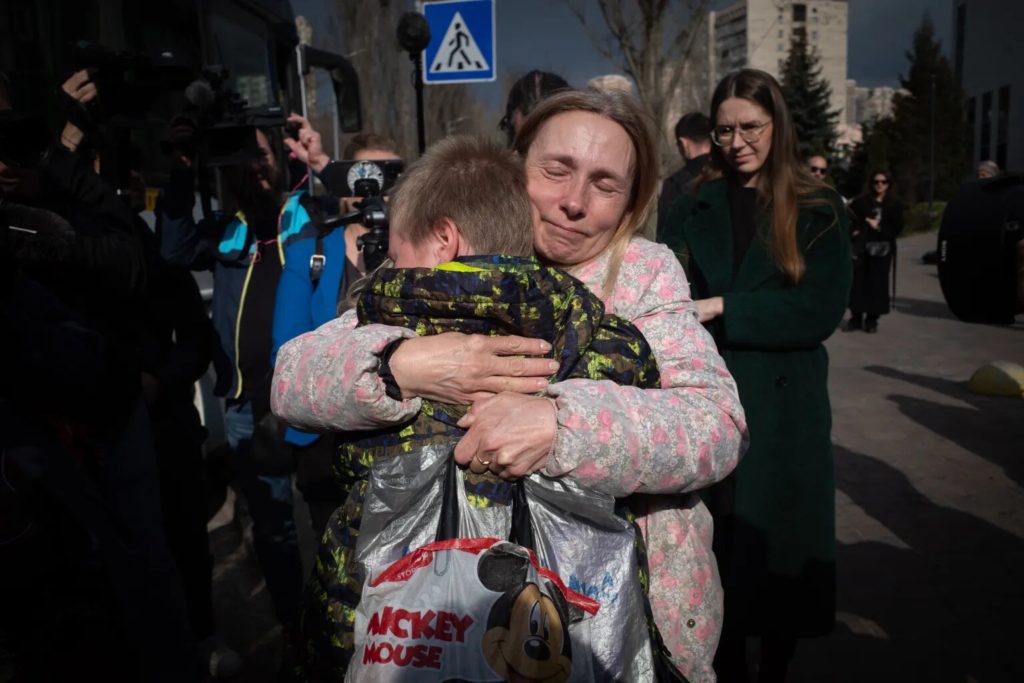
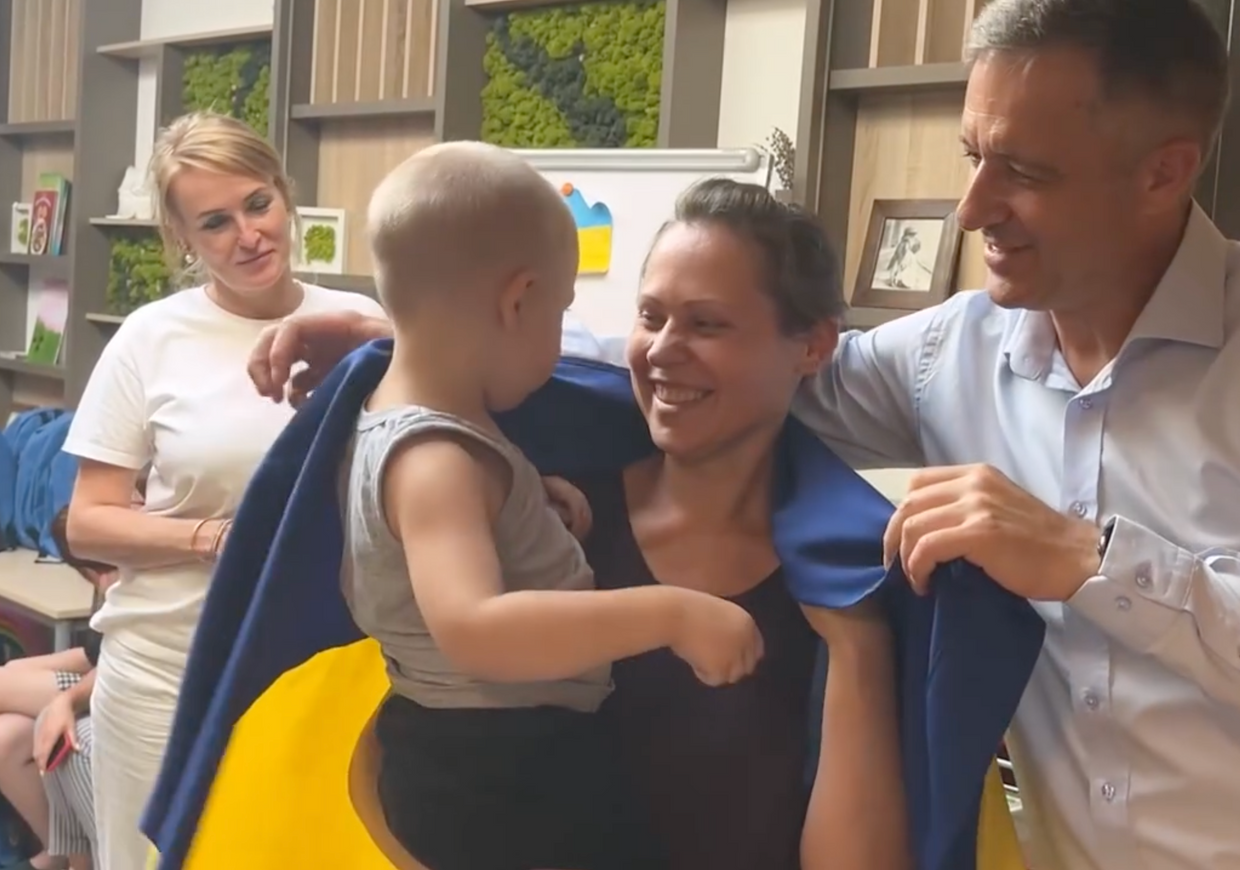
Fourteen more Ukrainian children have crossed from Russian-occupied Kherson Oblast back onto Ukrainian-held ground, the oblast's military administration said on 29 September. They join a years-long effort to recover children from land Russia seized in 2022, with thousands more still deported or unaccounted for.
Ukrainian authorities say Russia has deported nearly 20,000 children since its 2022 full-scale invasion, and Zelenskyy insists the true figure is far higher. Those taken to Russi
Fourteen more Ukrainian children have crossed from Russian-occupied Kherson Oblast back onto Ukrainian-held ground, the oblast's military administration said on 29 September. They join a years-long effort to recover children from land Russia seized in 2022, with thousands more still deported or unaccounted for.
Ukrainian authorities say Russia has deported nearly 20,000 children since its 2022 full-scale invasion, and Zelenskyy insists the true figure is far higher. Those taken to Russia are placed in institutions or Russian families and pushed through Russian "re-education" aimed at erasing their Ukrainian identity.
These 14 add to roughly 2,000 children Ukraine has brought back since 2022—a recovery effort still dwarfed by the numbers Russia holds and keeps adding to.
Who made it out
The 14 are four boys and 10 girls, aged 6 to 17, said Oleksandr Prokudin, who heads the administration. Rescuers also brought back one young adult who had been deprived of parental care.
Each case shows what pushed the children toward the return. One 16-year-old boy was being forced onto Russia's military registration rolls under occupation, part of a pipeline that moves teenagers from a Russian passport toward conscription at 18. A 17-year-old girl had sought a Ukrainian education despite the risks and Russian control, Prokudin said. A 10-year-old girl, he added, had longed to come home and did all she could to reach safety.
The running tally
The children left through Bring Kids Back UA, the repatriation program President Volodymyr Zelenskyy launched in 2023, working with the Ukrainian charity Save Ukraine. That brings to 204 the number of children returned from occupied Kherson Oblast since the start of 2026, regional authorities said.
The wider deportation campaign
In 2023, the International Criminal Court in The Hague issued arrest warrants for Russian leader Vladimir Putin and his children's rights commissioner, Maria Lvova-Belova, over the illegal deportation of children from occupied Ukraine to Russia.
Editor's Note: This story has been updated with additional details from Ukraine's Foreign Ministry. A bus carrying Ukrainian children veered off the road and overturned on a Hungarian highway on July 6, leaving 21 people injured, Ukraine's embassy in Hungary reported.The accident occurred at around 5 a.m. local time between the settlements of Kunszentmarton and Tiszafoldvar. According to preliminary information, the driver lost control of the bus and veered off the road into a ditch. Further det
Editor's Note: This story has been updated with additional details from Ukraine's Foreign Ministry.
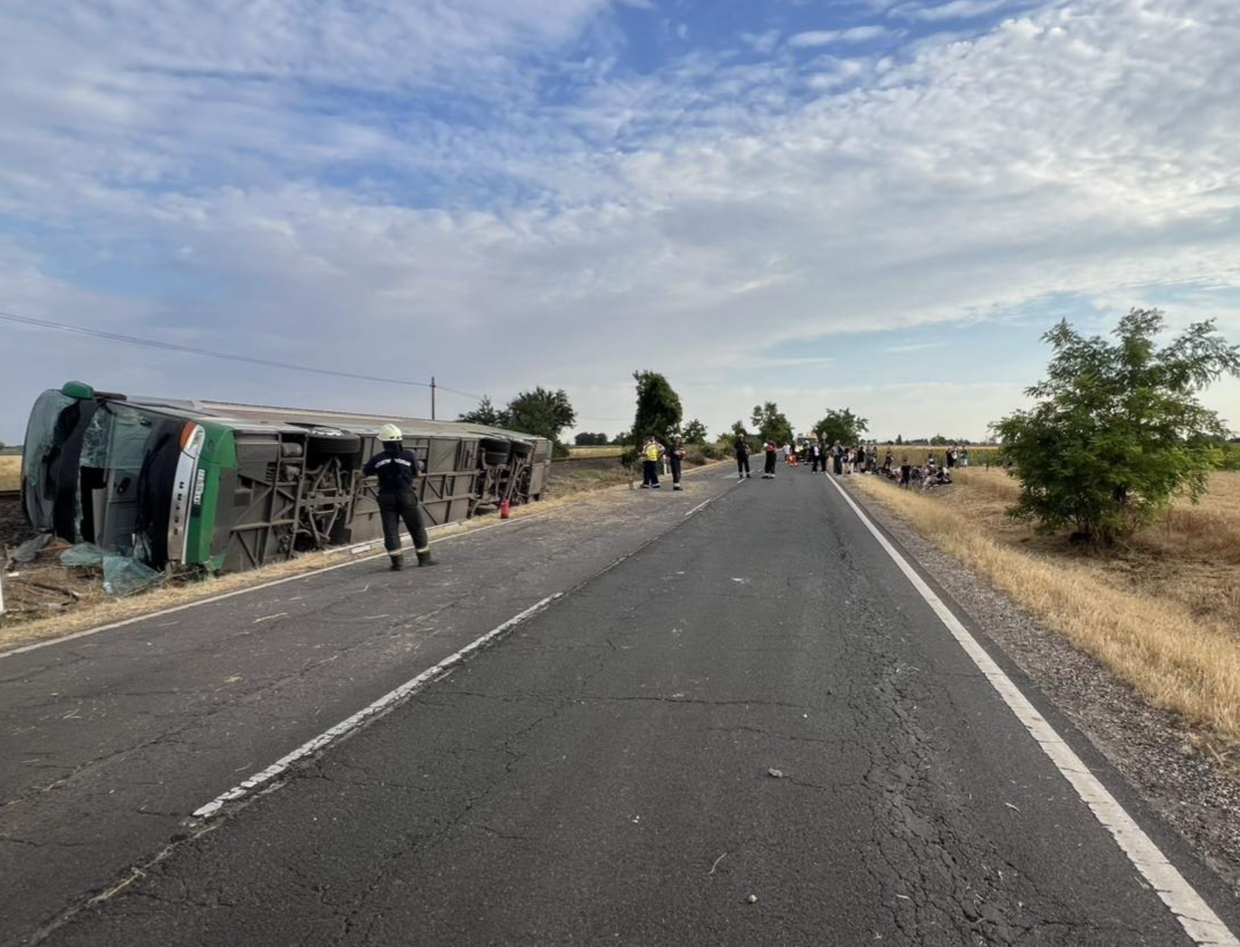
A bus carrying Ukrainian children veered off the road and overturned on a Hungarian highway on July 6, leaving 21 people injured, Ukraine's embassy in Hungary reported.
The accident occurred at around 5 a.m. local time between the settlements of Kunszentmarton and Tiszafoldvar. According to preliminary information, the driver lost control of the bus and veered off the road into a ditch. Further details as to the cause of the crash have not yet been determined.
The bus was carrying a children's ensemble from the Ukrainian city of Lviv to Ohrid in North Macedonia for a dance festival. There were 77 people aboard at the time of the accident, including two drivers, chaperones, and ensemble members.
Twenty-one people were injured, with four of them reported to be in serious condition. Two of the seriously injured victims are teenagers (ages 14 and 18) while the other two are adults (ages 67 and 71). Four more children suffered moderate injuries, while the remaining victims suffered minor injuries.
No one was killed, according to the embassy's statement.
The victims were transferred to hospitals in the towns of Szolnok, Kecskemetre, and Szentes.
Rescuers are working at the crash site, along with Ukrainian Ambassador Fegyir Sandor and consuls assisting Ukrainian citizens.
The rest of the passengers are staying temporarily at the Kunszentmarton Cultural Center, where they have been provided food and a place to rest. Those suffering moderate and mild injuries will join the main group at this location.
The bus carrier is reportedly taking measures to prevent additional accidents.
Life for children in Ukraine has become increasingly dangerous and deadly, according to the latest U.N. figures, which show a threefold jump in the number of deaths and injuries among children over the three months ending in May. From March through May, 222 children were killed or injured, compared to 73 in the preceding three months, according to a press release from the U.N. Humanitarian Aid Organization for Children (UNICEF) on July 4. The statement noted that "the ongoing use of explosive we
Life for children in Ukraine has become increasingly dangerous and deadly, according to the latest U.N. figures, which show a threefold jump in the number of deaths and injuries among children over the three months ending in May.
From March through May, 222 children were killed or injured, compared to 73 in the preceding three months, according to a press release from the U.N. Humanitarian Aid Organization for Children (UNICEF) on July 4.
The statement noted that "the ongoing use of explosive weapons in populated areas has been particularly deadly and destructive."
"There is no respite from the war for children across Ukraine," UNICEF Regional Director for Europe and Central Asia, Regina De Dominicis, said. "The situation for children is at a critical juncture, as intense attacks continue to not only destroy lives but disrupt every aspect of childhood."
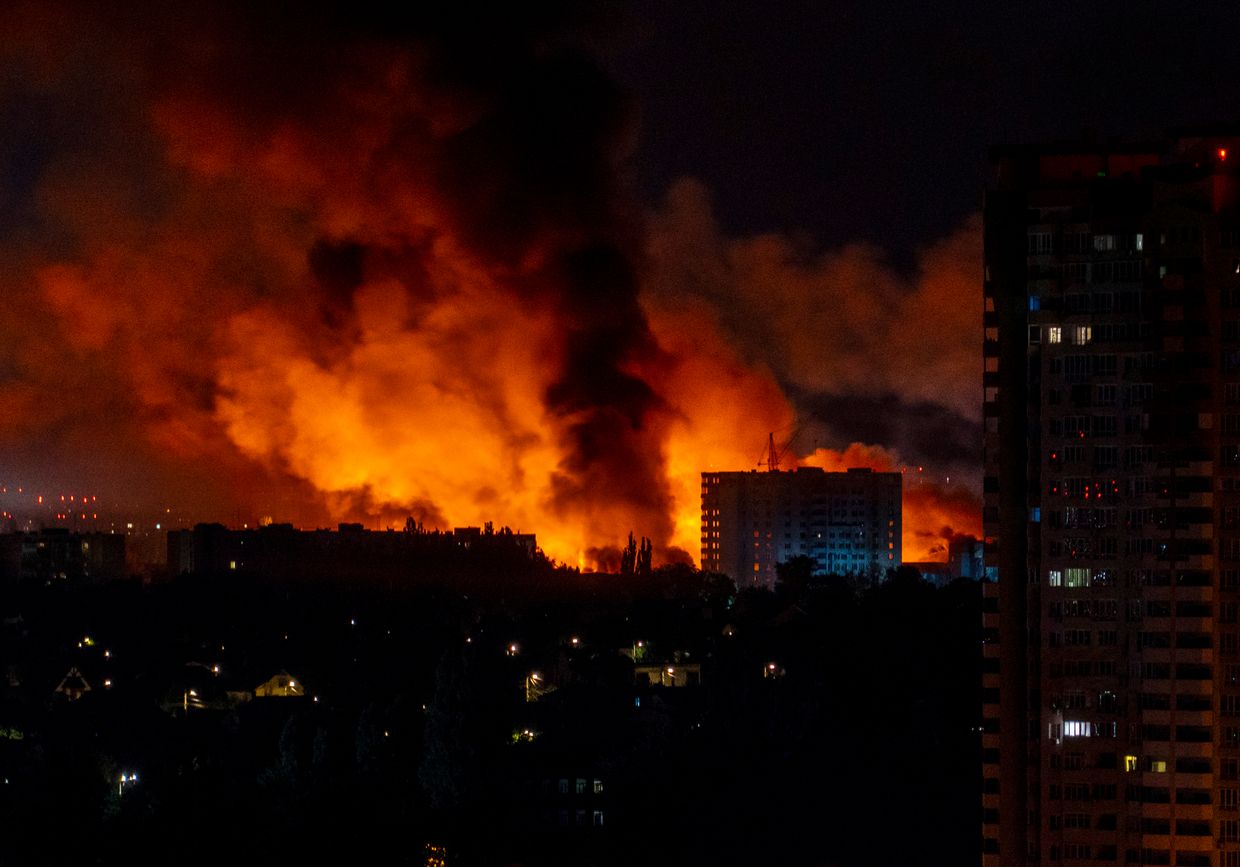
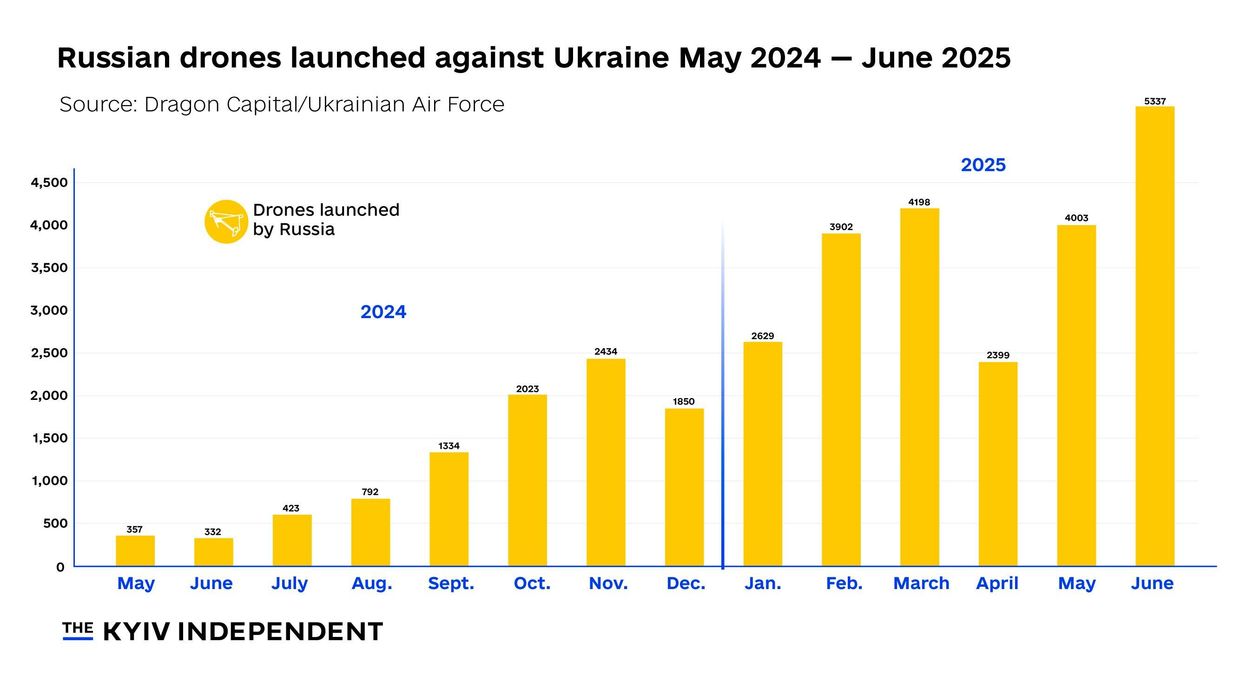
Recent months have seen some of the war's deadliest attacks on civilians, as Russia steps up its aerial strikes on civilian areas and launches record numbers of drones. Russia has dramatically increased its production of these weapons and is now capable of launching in a single night as many drones as it did over an entire month in early summer 2024.
A bipartisan group of U.S. lawmakers introduced a resolution in Congress demanding the return of Ukrainian children abducted by Russia, according to a press release published on June 30.Kyiv estimates that Russia has abducted or forcibly displaced at least 19,500 Ukrainian children since the outbreak of the full-scale invasion of 2022, and has deported them to Russia, Belarus, or the occupied territories of Ukraine.The resolution, introduced in the U.S. House of Representatives by Democratic Con
A bipartisan group of U.S. lawmakers introduced a resolution in Congress demanding the return of Ukrainian children abducted by Russia, according to a press release published on June 30.
Kyiv estimates that Russia has abducted or forcibly displaced at least 19,500 Ukrainian children since the outbreak of the full-scale invasion of 2022, and has deported them to Russia, Belarus, or the occupied territories of Ukraine.
The resolution, introduced in the U.S. House of Representatives by Democratic Congressman Gregory Meeks and Michael McCaul, a Republican chair of the Foreign Affairs Committee, condemns the abductions and calls for the repatriation of children even before a potential peace deal.
Senators Chuck Grassley (Republican) and Amy Klobuchar (Democrat) introduced the resolution in the Senate.
"These children have been stripped of their national identity, adopted into Russian families, or indoctrinated as soldiers for the Kremlin," McCaul said in a statement.
"Russia’s mass-scale child abduction is nothing short of evil; the United States must demonstrate moral leadership by demanding every child be returned to his or her family in Ukraine before true peace can be achieved."
The Trump administration has previously cut funding for a Yale University-based Ukraine Conflict Observatory tracking the abduction of Ukrainian children. Nathaniel Raymond, the executive director of the Humanitarian Research Lab overseeing the effort, has said the operation would cease on July 1 due to the lack of funds.
Since its launch in May 2022, the observatory has compiled evidence of Russian war crimes, including the deportation of Ukrainian children, many of whom were sent to reeducation camps or adopted by Russian families.
The database suggested that the actual number of abducted Ukrainian children could be higher than the figure provided by Ukraine's Children of War database, placing it as high as 30,000. Over 1,360 children have been brought back home.
According to the resolution newly introduced in Congress, "Russia's abduction and Russification of Ukrainian children demonstrates the intent of the Government of the Russian Federation to erase the Ukrainian nation and identity."
The document also says that Russia's invasion "has significantly increased the risks of children being exposed to human trafficking and exploitation, child labor, sexual violence, hunger, injury, trauma, deprivation of education and shelter, and death."
Andriy Yermak, President Volodymyr Zelensky's chief of staff, called the resolution "an important step in support of justice and peace."
The abductions have been widely denounced as war crimes and violations of international law. In 2023, the International Criminal Court issued arrest warrants for Russian President Vladimir Putin and children’s rights ombudsman Maria Lvova-Belova over their roles in the deportation of Ukrainian minors.
Russia is using financial incentives to recruit teachers, cultural workers, and coaches to work in occupied parts of Ukraine in a campaign aimed at reshaping local identity and fostering loyalty to Moscow’s regime, according to a report published by the Center for European Policy Analysis (CEPA) on June 26. The Kremlin is offering up to two million rubles (around $22,000) to Russian teachers who agree to work for five years in occupied areas of Donetsk, Luhansk, Zaporizhzhia, and Kherson oblasts
Russia is using financial incentives to recruit teachers, cultural workers, and coaches to work in occupied parts of Ukraine in a campaign aimed at reshaping local identity and fostering loyalty to Moscow’s regime, according to a report published by the Center for European Policy Analysis (CEPA) on June 26.
The Kremlin is offering up to two million rubles (around $22,000) to Russian teachers who agree to work for five years in occupied areas of Donetsk, Luhansk, Zaporizhzhia, and Kherson oblasts, and one million rubles for positions in Crimea.
The initiative, an extension of Russia’s “Zemskyi Uchitel” (Rural Teacher) program, which originally targeted underserved regions in Russia, was formally launched in the newly occupied Ukrainian territories in 2024 — though Russian educators began arriving as early as 2022.
Over 100 teachers have relocated to Crimea through the program, according to Ukraine’s Regional Center for Human Rights/ Most of them arrived from regions including Krasnodar, Altai Krai, Tomsk, Novosibirsk, Saratov, Tyumen, Ivanovo, and the Republic of Udmurtia.
“We have documented cases of teachers — and people assigned to managerial roles, such as school principals and deputy heads — arriving as early as 2022,” said Kateryna Rashevska of Ukraine’s Regional Center for Human Rights. “The first group came from Dagestan, arriving in the occupied Zaporizhzhia region, and by 2024, there were already 37 teachers from Dagestan working there.”
According to Rashevska, these teachers often lead courses in Russian language, history, and “basics of life safety and defense of the Motherland” — classes focused on conscription and military training. “These people are also involved in reprogramming Ukrainian children, attempting to raise them as Russian patriots and future members of the Russian armed forces,” she added.
In parallel, Russia is also exerting pressure on Ukrainian teachers in occupied areas to adopt the Russian curriculum. Those who refuse face serious consequences. "In Berdiansk, a school principal was deported for refusing to open the school under Russian standards," said Mariia Sulialina, head of Ukrainian NGO Almenda. Sulialina noted that teachers are now required to praise President Vladimir Putin and report "extremist behavior" among students — often defined as pro-Ukrainian views.
Human rights experts say these efforts amount to colonization and are violations of international law, including Article 49 of the Geneva Convention and Article 8 of the Rome Statute.
“Russia plans to move another 100 teachers into occupied areas in 2025 — a clear example of colonization,” Rashevska said. Despite existing legal tools, she added, “The International Criminal Court still doesn’t prioritize colonization… even though these federally coordinated programs involving teachers, cultural workers, and coaches create a clear chain of command.”
Russia has transferred 50 children from the occupied Antratsyt district of Luhansk Oblast to a so-called rehabilitation camp in Kalmykia, Ukraine’s Center for Countering Disinformation (CCD) reported on June 14.Kalmykia is about 1,170 km (726 miles) by air from Moscow, and its western border lies roughly 300 km (186 miles) from the nearest point on the Russia–Ukraine border. According to the center, while the "Lesnaya Skazka" ("Forest Fairy Tale") camp is officially described as hosting sports a
Russia has transferred 50 children from the occupied Antratsyt district of Luhansk Oblast to a so-called rehabilitation camp in Kalmykia, Ukraine’s Center for Countering Disinformation (CCD) reported on June 14.
Kalmykia is about 1,170 km (726 miles) by air from Moscow, and its western border lies roughly 300 km (186 miles) from the nearest point on the Russia–Ukraine border.
According to the center, while the "Lesnaya Skazka" ("Forest Fairy Tale") camp is officially described as hosting sports and creative activities, in fact, it functions as a site of "round-the-clock ideological brainwashing, systemic Russification, and an attempt to erase Ukrainian identity."
Since February 2022, at least 20,000 Ukrainian children have been abducted from Russian-occupied territories and sent to other Russian-controlled areas of Ukraine or to Russia itself, according to a Ukrainian national database, "Children of War." Only 1,359 children have been returned thus far.
The center compared the camp in Kalmykia to "Krasnaya Gvozdika," ("Red Carnation") a facility in occupied Zaporizhzhia Oblast, saying both are used not for recreation, but as tools of Russia’s war strategy.
“These camps have become instruments of assimilation where Ukrainian children are taught distorted history, exposed to Russian propaganda, and conditioned to show loyalty to the Putin regime,” the center said. “War and hostility are normalized, with children being groomed as human resources for future conflicts.”
The watchdog emphasized that separating children from their families, culture, and language places them under the full control of the occupying power — a practice it says constitutes a violation of international humanitarian law and forms part of Russia’s broader genocidal policy toward Ukraine.
In response to Russia’s efforts to indoctrinate Ukrainian children, President Volodymyr Zelensky on June 10 imposed sanctions on 48 individuals and nine organizations associated with the deportation of Ukrainian children, according to a decision of Ukraine's National Security and Defense Council (NSDC).
Ukraine successfully brought back five children who had been forcibly taken to Russia as well as Russian-occupied territory, Presidential Office head Andriy Yermak announced on June 12.The children have been returned home under the President of Ukraine’s initiative, Bring Kids Back UA, according to Yermak."We are fulfilling the President's mission — to bring back every Ukrainian child," Yermak said in an statement.Since February 2022, at least 20,000 Ukrainian children have been abducted from Ru
Ukraine successfully brought back five children who had been forcibly taken to Russia as well as Russian-occupied territory, Presidential Office head Andriy Yermak announced on June 12.
The children have been returned home under the President of Ukraine’s initiative, Bring Kids Back UA, according to Yermak.
"We are fulfilling the President's mission — to bring back every Ukrainian child," Yermak said in an statement.
Since February 2022, at least 20,000 Ukrainian children have been abducted from Russian-occupied territories and sent to other Russian-controlled areas of Ukraine or to Russia itself, according to a Ukrainian national database, "Children of War." Only 1,359 children have been returned thus far.
Dmytro Lubinets, Ukrainian Parliament’s Commissioner for Human Rights, estimated that Russia has unlawfully deported up to 150,000 Ukrainian children, while the Children’s Ombudswoman, Daria Herasymchuk, puts the figure at 200,000–300,000.
In March 2023, the International Criminal Court (ICC) issued arrest warrants for Russian President Vladimir Putin and Children's Commissioner Maria Lvova-Belova, citing their involvement in the unlawful transfer of Ukrainian children. Russia dismissed the ICC's decision as "outrageous and unacceptable."
Under orders from Putin, children were transported via military aircraft in 2022, reclassified in Russian databases as native-born, and subjected to pro-Russian re-education before being adopted into Russian families. Ukrainian children had been transported to at least 21 regions throughout Russia.
Child abductions have played a key part of U.S.-Russia peace negotiations — all of which Russia has thus far rejected. Ukrainian officials have named their return as a key condition for any future peace agreement with Russia.
President Volodymyr Zelensky said on June 3 that during the Istanbul negotiations, Russian representatives dismissedthe issue of abducted Ukrainian children as a "show for childless European old ladies" and acknowledged deporting several hundred children.
CNN reported on June 11 that the Yale University-based Humanitarian Research Lab, which spearheads the Ukraine Conflict Observatory is preparing to shut down after its funding was terminated by the Trump administration.
A Yale study published on Dec. 3 detailed Russia's systematic program of deporting and forcibly assimilating Ukrainian children.

 Connexion