Vue normale

  • ✇Euromaidan Press
  • Russia is squeezing independent gas stations out of its fuel market
    Russia can’t refine its way out of its fuel crisis, so it is changing who controls the already existing fuel. Months of Ukrainian drone strikes on refineries have driven shortages and rationing across much of the country. The government’s answer isn’t more fuel—it is a different market.Faced with the shortage, the Kremlin had options. In June, analysts urged it to raise the exchange quota to push more fuel onto the open market and toward the regions running dry. The gov
     

Russia is squeezing independent gas stations out of its fuel market

7 août 2026 à 10:01

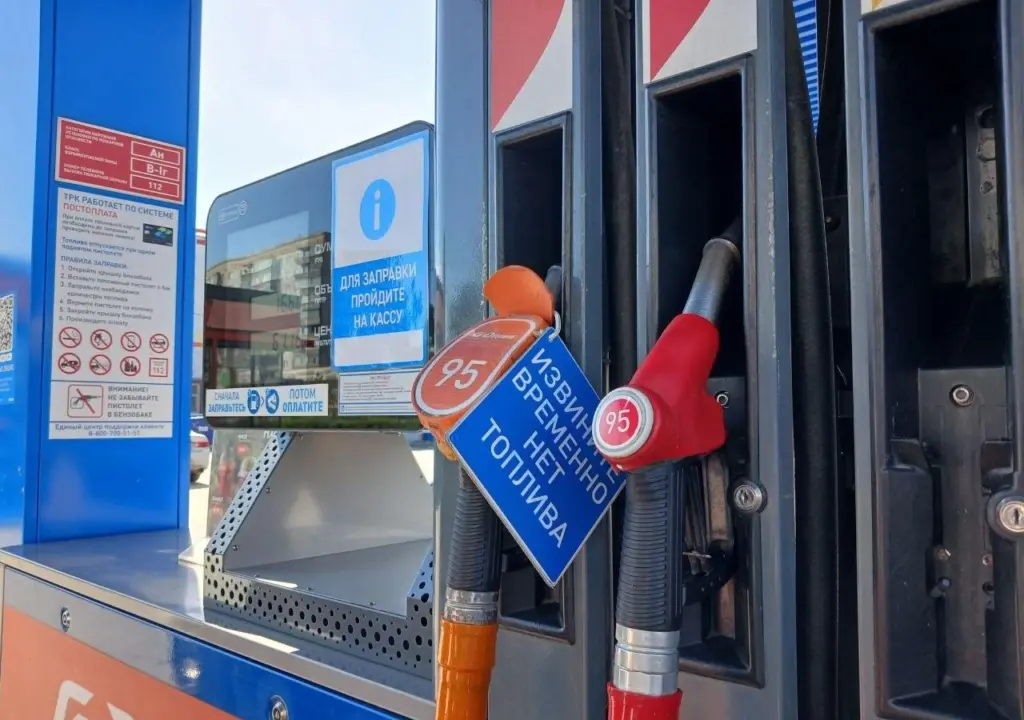
a dry pump at a russian gas station, july 2026

Russia can’t refine its way out of its fuel crisis, so it is changing who controls the already existing fuel. Months of Ukrainian drone strikes on refineries have driven shortages and rationing across much of the country. The government’s answer isn’t more fuel—it is a different market.

Faced with the shortage, the Kremlin had options. In June, analysts urged it to raise the exchange quota to push more fuel onto the open market and toward the regions running dry.

The government’s answer isn’t more fuel—it is a different market.

It did the opposite. The mandatory share of gasoline that producers must sell on the open exchange was cut from 15% to 10%, with the majors pushing for 2%, and the exchange was closed to anyone but buyers who will use the fuel themselves, shutting out traders who bought to resell.

That choice adds no fuel. It moves distribution off the exchange that set prices for a decade and into direct contracts between the big producers and the buyers they pick—handing the majors the chain from refinery to pump. Part of the package came straight from proposals Rosneft head Igor Sechin sent to President Vladimir Putin.

Winners and losers

The winners are the big, vertically integrated oil companies, which refine up to three-quarters of Russia’s oil. Direct deals let them keep the margin that once went to middlemen and choose who gets supplied; drop the quota to 2%, and about 5 million tonnes of gasoline a year move into their private channels.

The losers are the independent stations—60% to 72% of Russia’s roughly 25,000 gas stations, depending on who’s counting, and now unable to buy at the exchange price.

Alexander Moiseev, who owns the Kostroma Fuel Company, has been hauling gasoline from Surgut, 2,000 kilometers away, at 118 rubles a liter ($1.45) with freight, because the majors won’t sell to him wholesale. He works on a minimal markup. Rosneft, meanwhile, has multiplied sales at its own pumps.

What stabilization there is has been narrow. Prices eased mainly where supply was steered—Moscow, St. Petersburg, the big cities—while regions thick with independent gas stations stayed short, independent analyst Kirill Rodionov told Kommersant.

None of this is hidden. Facing the crunch, the government also let refiners sell banned Euro-2 gasoline again; online marketplaces pulled fuel listings; and Deputy Prime Minister Alexander Novak called the market “challenging but under control.”

In occupied Crimea it goes furthest: this week, the occupation authorities announced fuel sales were stabilizing, even as they capped each car at 20 liters and fixed the price of AI-92, the Crimean Tatar Resource Center reported.
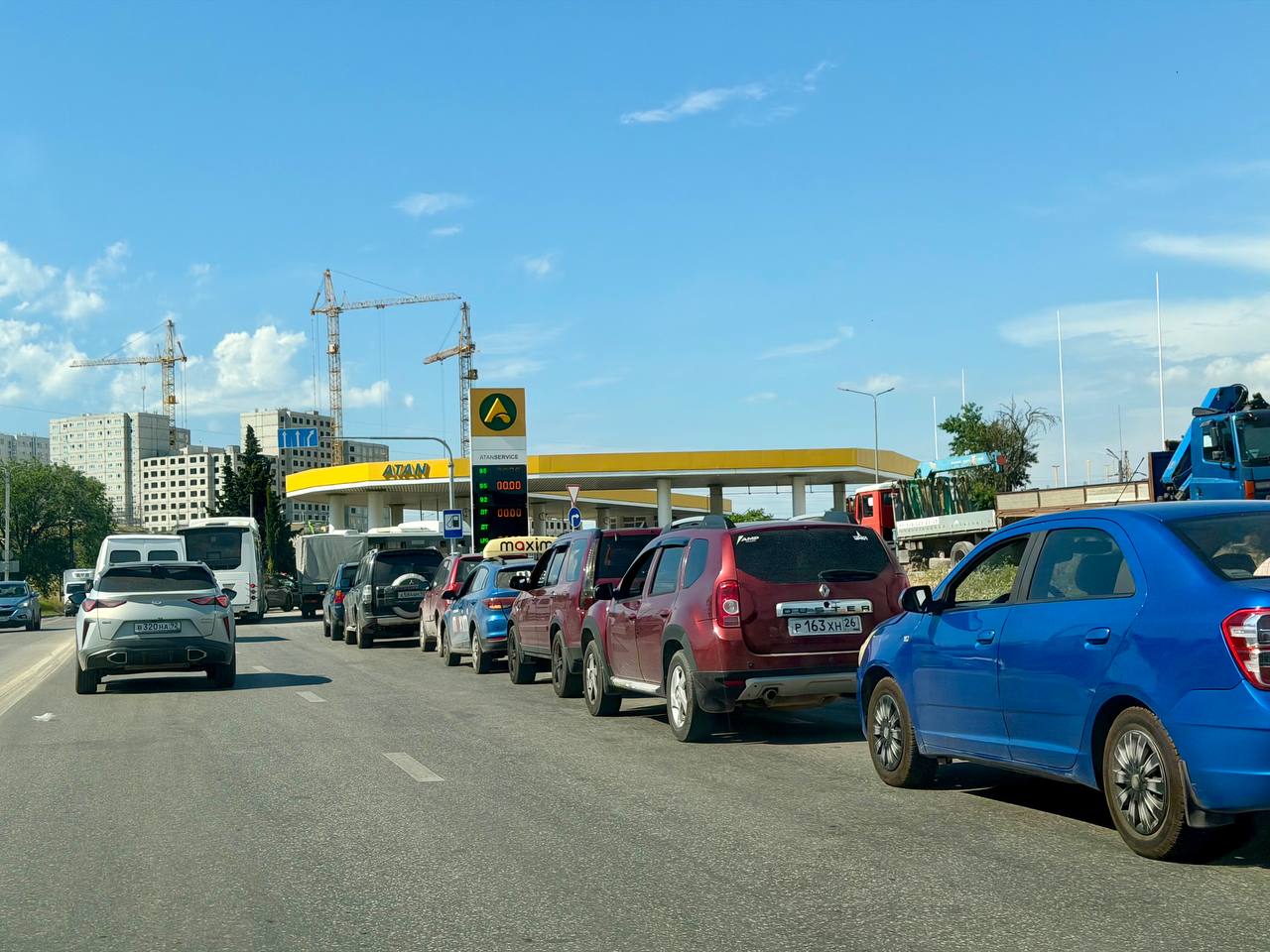
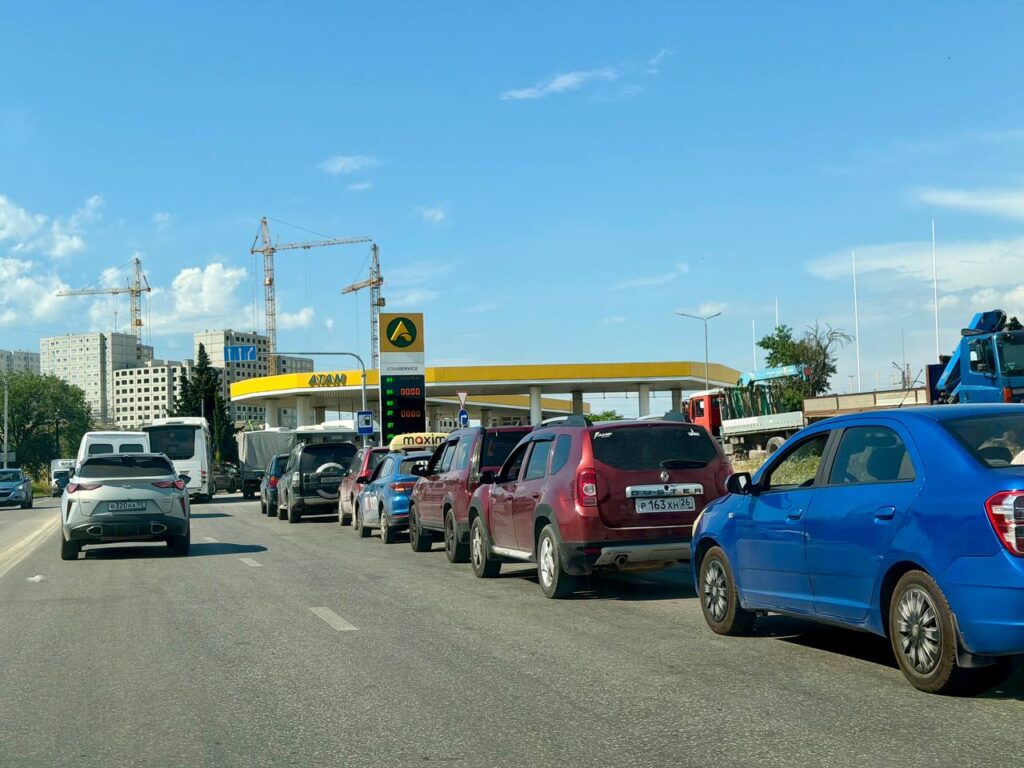
cars queue at an atan fuel station in occupied sevastopol in july 2026
Explore further

Occupied Sevastopol puts fuel back on open sale—then caps every car at 20 liters

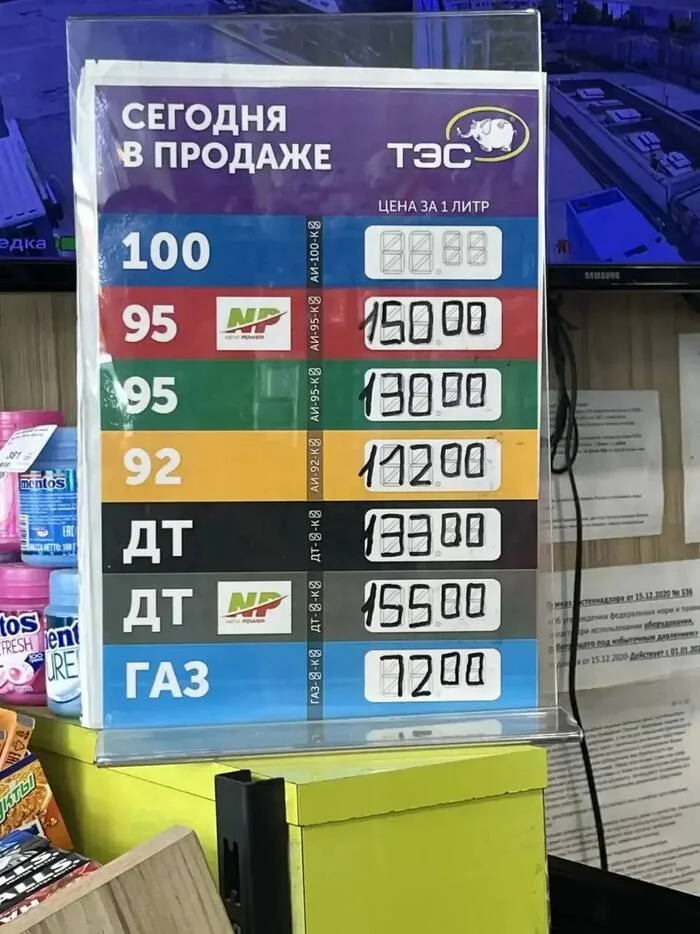
handwritten fuel prices in sevastopol, 27 june 2026
Fuel prices written by hand at a Sevastopol filling station, 27 June 2026—changed manually as often as prices shift. Sales were restricted to holders of QR codes issued the previous day; resellers charged 350 rubles ($4.53) per liter for AI-95 outside. Photo: Nishebrodushka / Pikabu

The market goes dark

As the exchange shrinks, its prices no longer reflect the market, and the state publishes less information on output, stocks, and regional supply. The people who most need to see where Russia’s fuel balance is breaking—regulators at home, and the sanctions monitors and energy analysts abroad who read that data—are left with less to look at, market participants told Kommersant. The market is going dark.

Whether the change sticks is contested. Some read the cuts as a passing emergency. Others expect the market to keep sliding toward closed, bilateral deals—less transparent, harder for newcomers, the independent stations ever more tied to the majors, Viktoria Trifonova, Senior Analyst at Yakov & Partners, told Kommersant. The state has reached for limits, subsidies, and hands-on redistribution ever since the 2018 price crisis.

Keeping the independent gas station chains alive was never the goal, NEFT Research’s Dmitry Prokofiev wrote in Kommersant—it was to keep fuel flowing to the big cities of European Russia and, above all, to the priority government sector.
Russia launches 147 drones overnight, injuring civilians and damaging infrastructure in Sumy, Dnipropetrovsk oblasts

7 août 2026 à 07:31

Since the evening of 6 August, Russia has attacked Ukraine with various types of drones, including decoys, the Ukrainian Air Force Command said. Although 114 of those 147 were shot down, some hit their targets, killing at least 2 people and injuring more than 10.

The Russian military has repeatedly used drone decoys to distract Ukrainian air defenses from real targets. By overloading Ukrainian air defenses, more drones reach their targets, which often include Ukrainian civilian infrastructure. In particular, attacks on post offices have become increasingly targeted.

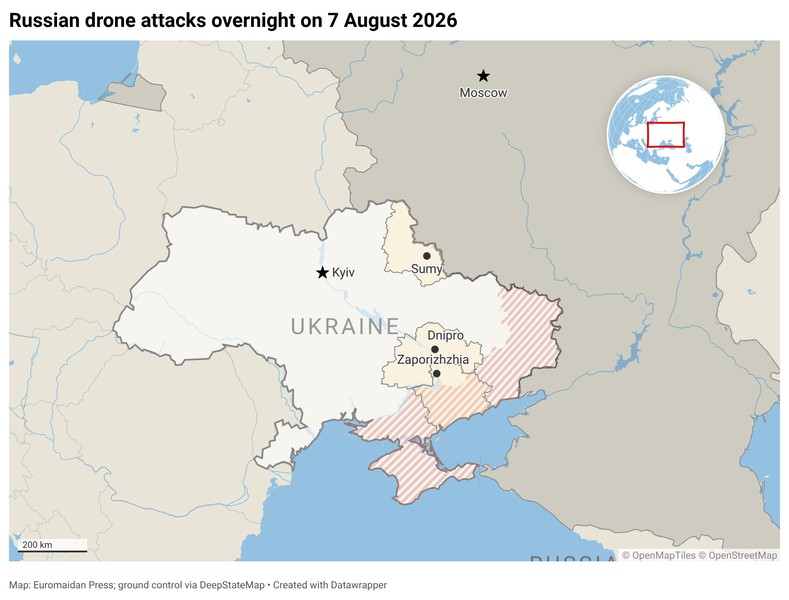
Russian drone attacks overnight on 7 August 2026/Euromaidan Press map

Strike on Sumy Oblast

A Russian drone struck a market in Bilopillia community, Sumy Oblast, on the morning of 7 August, injuring 10 people. Two of them are in serious condition, head of Sumy Oblast Oleh Hryhorov said.

Overnight into 7 August, Russia attacked Sumy Oblast with aerial bombs and various types of drones, Hryhorov said. The attacks damaged infrastructure, non-residential buildings, vehicles, and private homes. Two civilians were injured, but their condition is not serious. One was a 57-year-old man wounded after one of two aerial bombs struck near his home, Sumy City Military Administration Head Serhii Kryvosheienko said. A drone also struck a post office in the Hlukhiv community.

Over the past 24 hours, Russian forces struck 34 settlements across Sumy Oblast in 48 attacks, injuring 13 people, including a child, Sumy Oblast police reported.

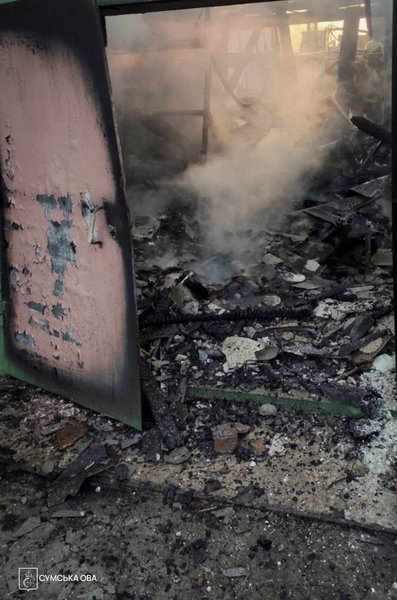
Consequences of Russian strikes on Sumy Oblast overnight into 7 August, 2026. Photo: Sumy Oblast Administration

Strike on Dnipropetrovsk Oblast

At the same time, Russia attacked five districts of Dnipropetrovsk Oblast with artillery and various types of drones, with no casualties reported initially, Dnipropetrovsk Oblast Head Oleksandr Hanzha said. He added that the strikes damaged private homes, an administrative building, vehicles, and infrastructure. In Nikopol district, a post office and a gymnasium were damaged in the Russian attack.

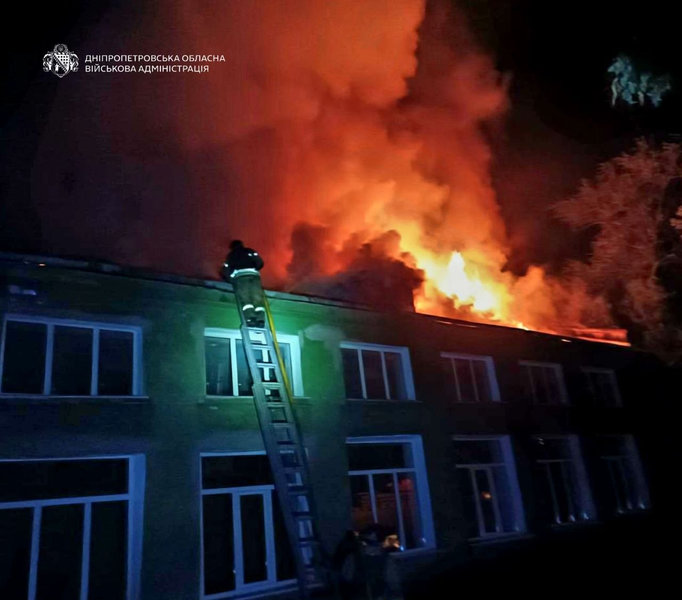
A firefighting crew extinguishes a fire following Russian strikes on Dnipropetrovsk Oblast overnight into 7 August, 2026. Photo: Dnipropetrovsk Oblast Administration

Russia continues to strike civilian infrastructure

On the night of 7 August, Russian forces also struck Zaporizhzhia. A drone damaged an office building, causing a fire.

Aftermath of Russia’s attack on a Ukrposhta sorting depot and the base for mobile post offices in Pavlohrad, Dnipropetrovsk Oblast, on 6 August, 2026. Photo: Ihor Smilianskyi

On 6 August, a Russian Banderol cruise missile struck a Ukrposhta sorting depot and a base for mobile post offices. Two Ukrposhta employees were killed, and a mechanic was injured in the strike, Ukrposhta CEO Ihor Smilianskyi said.

“The enemy wanted to stop our movement here, but we will not let them do it. All backup schemes are already working. Pensions, medicines, parcels and letters are being delivered on schedule,” Smilianskyi said.

  • ✇Euromaidan Press
  • Bosch is second German brand in one night to lose its Ukraine warehouse to Russian strike
    Russia destroyed a Bosch warehouse in Ukraine overnight into 5 August, the German manufacturer said. The strike wiped out its stock of household goods and industrial technology. No Bosch employee or worker for its logistics partner was injured. The strike was part of Russia's intensified attacks on the warehouses and distribution centers that supply Ukraine. Destroying these facilities eliminates stored goods and disrupts the delivery of food, parcels, equipment, and ot
     

Bosch is second German brand in one night to lose its Ukraine warehouse to Russian strike

7 août 2026 à 07:22

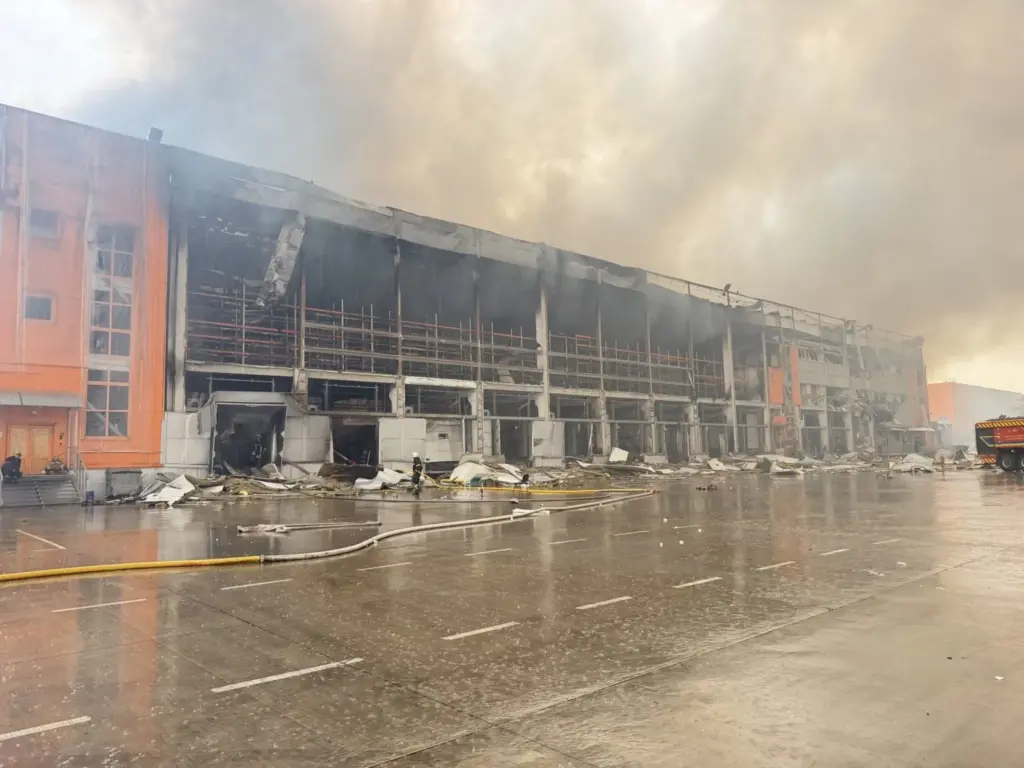
Russia destroyed a Bosch warehouse in Ukraine overnight into 5 August, the German manufacturer said. The strike wiped out its stock of household goods and industrial technology. No Bosch employee or worker for its logistics partner was injured.

The strike was part of Russia's intensified attacks on the warehouses and distribution centers that supply Ukraine. Destroying these facilities eliminates stored goods and disrupts the delivery of food, parcels, equipment, and other essential products. Recent attacks have hit both Ukrainian companies and international brands operating in the country.

Bosch said the warehouse premises belonged to its logistics partner. The company's preliminary assessment found that all Bosch products stored there had been destroyed. It did not disclose the location.

Bosch and its logistics partner are now assessing the damage. They are also seeking ways to maintain operations and meet commitments to customers and business partners.

Russia launches anti-ship missiles on stocks

The Bosch loss came during the same overnight barrage that devastated warehouses and production sites across Kyiv and the surrounding region. Russian strikes destroyed facilities used by Rozetka, Nova Poshta, and Epicentr. The three companies distribute parcels, household goods, and construction supplies across Ukraine.

That attack killed 17 people and wounded 44. Ukraine intercepted none of the 24 ballistic missiles or four anti-ship missiles Russia launched, according to Ukrainian officials.

Ukraine is looking for ways to protect its businesses

The same night, a strike burned down the central Ukraine warehouse of German automotive-products maker Liqui Moly. All employees escaped injury, and the company said it would continue operating.

Russia's overnight barrage burned down the Ukrainian warehouse of a German household brand, Liqui Moly. Source: Liqui Moly

Two nights earlier, a Russian drone attack outside Dnipro set food warehouses ablaze. On 1 August, another Russian drone hit a Rozetka warehouse where 270 people were working, killing one employee.

The campaign comes as Russia launches more missiles than Ukraine can reliably stop. Moscow fired 376 missiles in July, including 126 ballistic weapons, Euromaidan Press previously reported.

Ukrainian presidential adviser Serhii Beskrestnov said Russia had intensified attacks on warehouses and production sites. He warned businesses to disperse their stocks. Russia can sustain about 100 ballistic-missile launches a month and locate commercial targets using cheap local informants, he said.

  • ✇Euromaidan Press
  • Occupied Sevastopol puts fuel back on open sale—then caps every car at 20 liters
    Occupation officials in Sevastopol and occupied Crimea are telling residents the fuel crisis is easing—and this week they resumed “free sale” at a handful of named stations. From 6 August, every grade would again be sold openly on the TES network, occupation governor Mikhail Razvozhaev said, and AI-92, he noted, has been cut and fixed at no more than 100 rubles per liter ($1.23).The catch is in the same announcement: no more than 20 liters per car, volumes the governor him
     

Occupied Sevastopol puts fuel back on open sale—then caps every car at 20 liters

7 août 2026 à 05:54

cars queue at an atan fuel station in occupied sevastopol in july 2026

Occupation officials in Sevastopol and occupied Crimea are telling residents the fuel crisis is easing—and this week they resumed “free sale” at a handful of named stations. From 6 August, every grade would again be sold openly on the TES network, occupation governor Mikhail Razvozhaev said, and AI-92, he noted, has been cut and fixed at no more than 100 rubles per liter ($1.23).

The catch is in the same announcement: no more than 20 liters per car, volumes the governor himself called small, and—at ATAN’s seven stations the same day—no filling canisters.

Crimea is caught in a shortage that now stretches across Russia, from filling stations to farms.

In occupied Crimea, the ATAN network capped diesel at 30 liters per customer and charged 119 rubles per liter ($1.46), the Crimean Tatar Resource Center reported.

Occupation authorities blame logistics and promise the caps will loosen and prices will fall once supply stabilizes. But shortages, high prices, and rationing show that the peninsula’s supply problems are far from solved, the center said. Crimea is caught in a shortage that now stretches across Russia, from filling stations to farms.

first pumps harvest now commute—russia's fuel shortage keeps finding new victims · post tram vladivostok russia 2024 vladivostok1ru lines ukraine news ukrainian reports
Explore further

First the pumps, then the harvest, now the commute—Russia’s fuel shortage keeps finding new victims

None of this is new. Sevastopol restricted fuel sales on 22 May, Crimea on 29 May, and for weeks drivers have been buying by QR code. Through the summer, Ukraine’s drone campaign has been draining the seaborne lifeline that feeds the peninsula. The worsening supply of fuel, power, and water is a natural consequence of the war and the occupation, Ukraine’s military intelligence said.

❌