Vue normale

  • ✇Euromaidan Press
  • More than 100 drones detected near Romania in four days, NATO jets scrambled seven times
    More than 100 drones were detected near Romania over the past 96 hours, with NATO fighter jets scrambled seven times in response to the increased aerial activity, Romanian Defense Minister Radu Miruță said, according to Antena 3 CNN. The figures come as Romania faces a growing number of drone incidents linked to Russia’s war against Ukraine. Romanian forces have recently shifted from monitoring and escorting drones to actively destroying those that enter Romanian airspa
     

More than 100 drones detected near Romania in four days, NATO jets scrambled seven times

14 août 2026 à 16:42

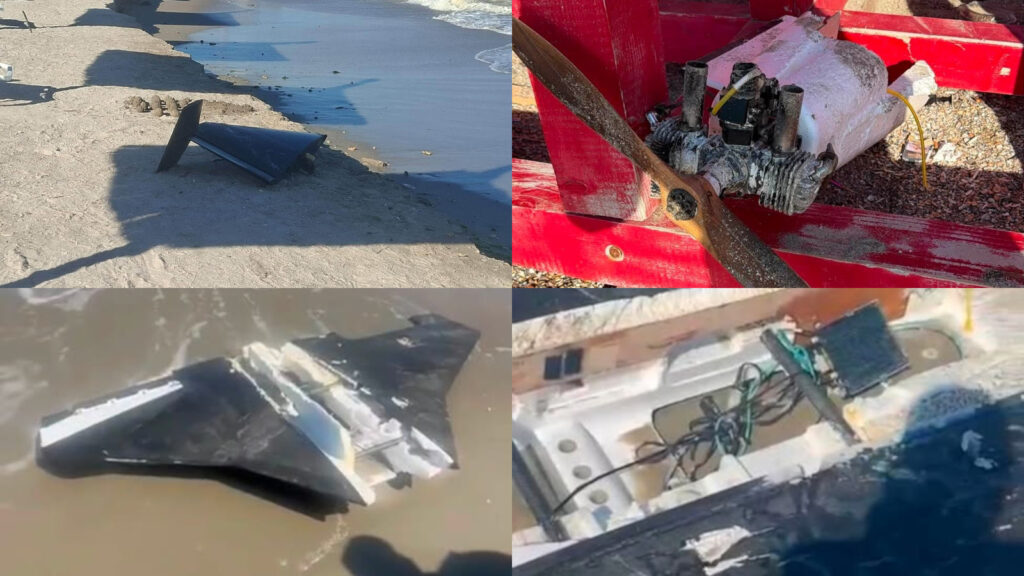
Drone debris washed ashore in Romania after Russian attacks on Ukraine, 13-14 August 2026. Photos: Radu Miruță

More than 100 drones were detected near Romania over the past 96 hours, with NATO fighter jets scrambled seven times in response to the increased aerial activity, Romanian Defense Minister Radu Miruță said, according to Antena 3 CNN.

The figures come as Romania faces a growing number of drone incidents linked to Russia’s war against Ukraine. Romanian forces have recently shifted from monitoring and escorting drones to actively destroying those that enter Romanian airspace, while NATO aircraft are increasingly being called on to respond to aerial threats along the alliance’s eastern flank.

NATO aircraft repeatedly activated

According to Miruță, Romanian authorities detected more than 100 drones in the vicinity of Romanian territory during the four-day period. NATO fighter jets participating in air-policing missions were activated seven times.

Miruță did not report how many of the detected drones entered Romanian airspace, nor how many were identified as Russian or Ukrainian.

Miruță said most of the drones were destroyed by Ukrainian air defenses outside Romania, but close enough for their debris to reach Romanian shores.

“[Russia’s war in Ukraine] is a real war, with real consequences. That is why we are taking every measure we can to limit the indirect consequences that are also being felt here,” Miruță wrote on Facebook.

The report comes shortly after Romania destroyed two Russian Gerbera-type drones that were found drifting in the Black Sea near the Neptun Deep offshore gas project on 11 August. Romanian military divers carried out controlled detonations after Ukraine confirmed the drones were not Ukrainian.

Romania has begun shooting down drones

The latest figures follow a significant change in Romania’s response to drone incursions.

In late July, Romanian F-16s shot down three drones over Romanian territory and territorial waters in three consecutive days. One of the drones was identified as a Russian Shahed-type attack drone, while investigations were conducted into the others.

The July incidents marked a shift from Romania’s previous approach of tracking or escorting drones that crossed into its airspace during Russian attacks on Ukraine. Four of the five drones shot down in EU and NATO countries at that point had been neutralized by Romanian military pilots, according to Miruță.

Romanian President Nicușor Dan called the repeated violations of Romanian airspace “inadmissible and intolerable” and Bucharest prepared a diplomatic protest to Moscow after one of the downed drones was identified as Russian.
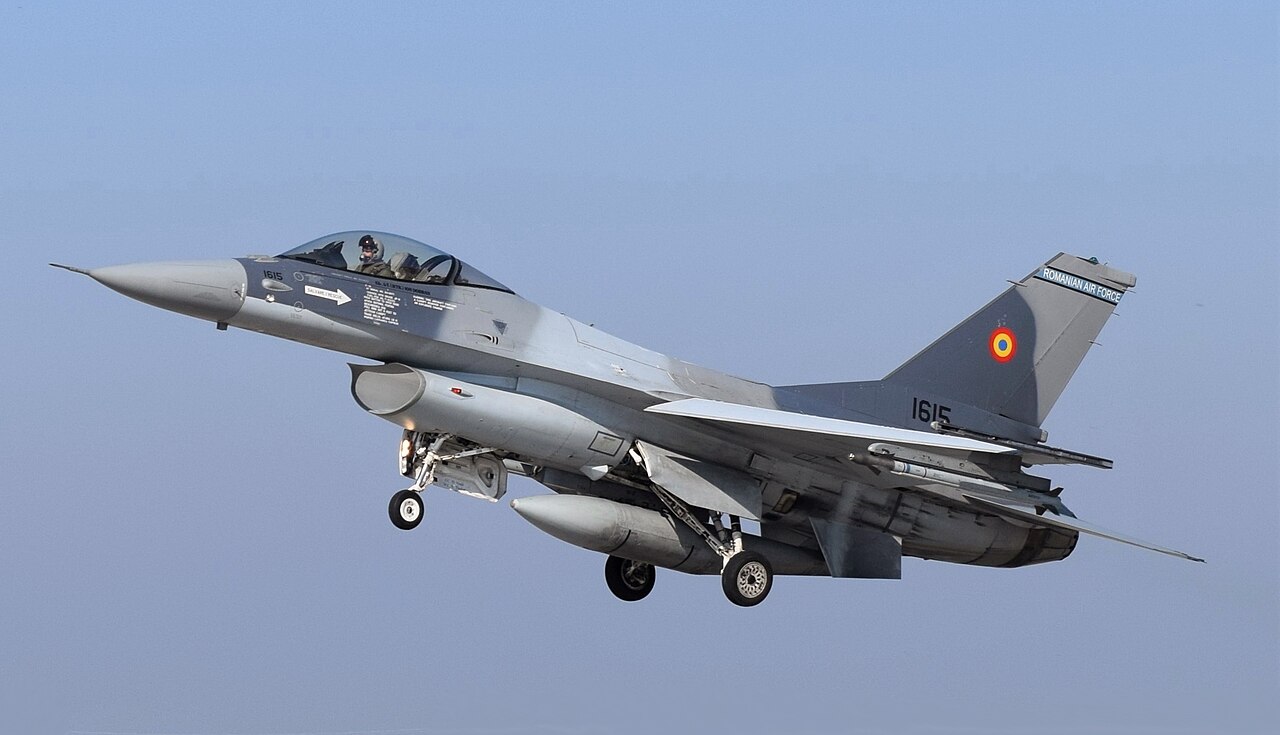
romania knocks third drone its sky 72 hours · post romanian air force f-16 fighting falcon fighter jet lands borcea base 2023 dvidshubnet romanian_f-16_fighting_falcon_lands_at_borcea_air_base_romania ukraine news ukrainian reports
Explore further

Romania knocks a third Russian drone from its sky in 72 hours

Drone war reaches beyond Ukraine

Romania has repeatedly dealt with drones crossing its border during Russian attacks on Ukrainian territory, particularly in the vicinity of Ukrainian ports on the Danube and the Black Sea.

In June, a Ukrainian sea drone that had lost control, which Kyiv attributed to Russian electronic warfare, exploded near an oil terminal in the Romanian port of Constanța. No one was injured, but more than 1,000 people were evacuated from the area as a precaution.

The incidents have also extended beyond Romania. On 14 August, NATO fighter jets shot down a foreign drone after it entered Latvian airspace. Latvia said the drone had entered its airspace as a result of Russian electronic warfare activity.

The repeated incidents have made drone activity around NATO’s eastern border an increasingly regular consequence of Russia’s war against Ukraine.

  • ✇Euromaidan Press
  • Armor can barely reach Ukraine’s front now—so robots drive and soldiers walk
    Drones have pushed armored vehicles off the roads to Ukraine's front line, a Ukrainian brigade commander told RBC-Ukraine. Denys Perch, who commands the 107th Territorial Defense Brigade, says the drone-saturated belt has grown so deep that pickups no longer reach forward positions. The one enemy weapon his jammers can't touch is the fiber-optic drone. The war has become a contest over who can pull people off the battlefield fastest, as cheap drones make any human movem
     

Armor can barely reach Ukraine’s front now—so robots drive and soldiers walk

14 août 2026 à 07:02

A Russian tank destroyed in Kharkiv Oblast, Ukraine

Drones have pushed armored vehicles off the roads to Ukraine's front line, a Ukrainian brigade commander told RBC-Ukraine. Denys Perch, who commands the 107th Territorial Defense Brigade, says the drone-saturated belt has grown so deep that pickups no longer reach forward positions. The one enemy weapon his jammers can't touch is the fiber-optic drone.

The war has become a contest over who can pull people off the battlefield fastest, as cheap drones make any human movement near the front a target. Ukraine keeps out-inventing Russia at the front, but Russia copies each advance and floods the line with it at state scale.

When armor becomes the target

Until recently, armored vehicles still drove supplies to logistics hubs near the front. That is now almost impossible. Perch says that when a large, armored machine appears, Russian forces treat it as a prize target and swarm it with dozens of drones and munitions. Perch would sooner park his armor than seat soldiers inside it.

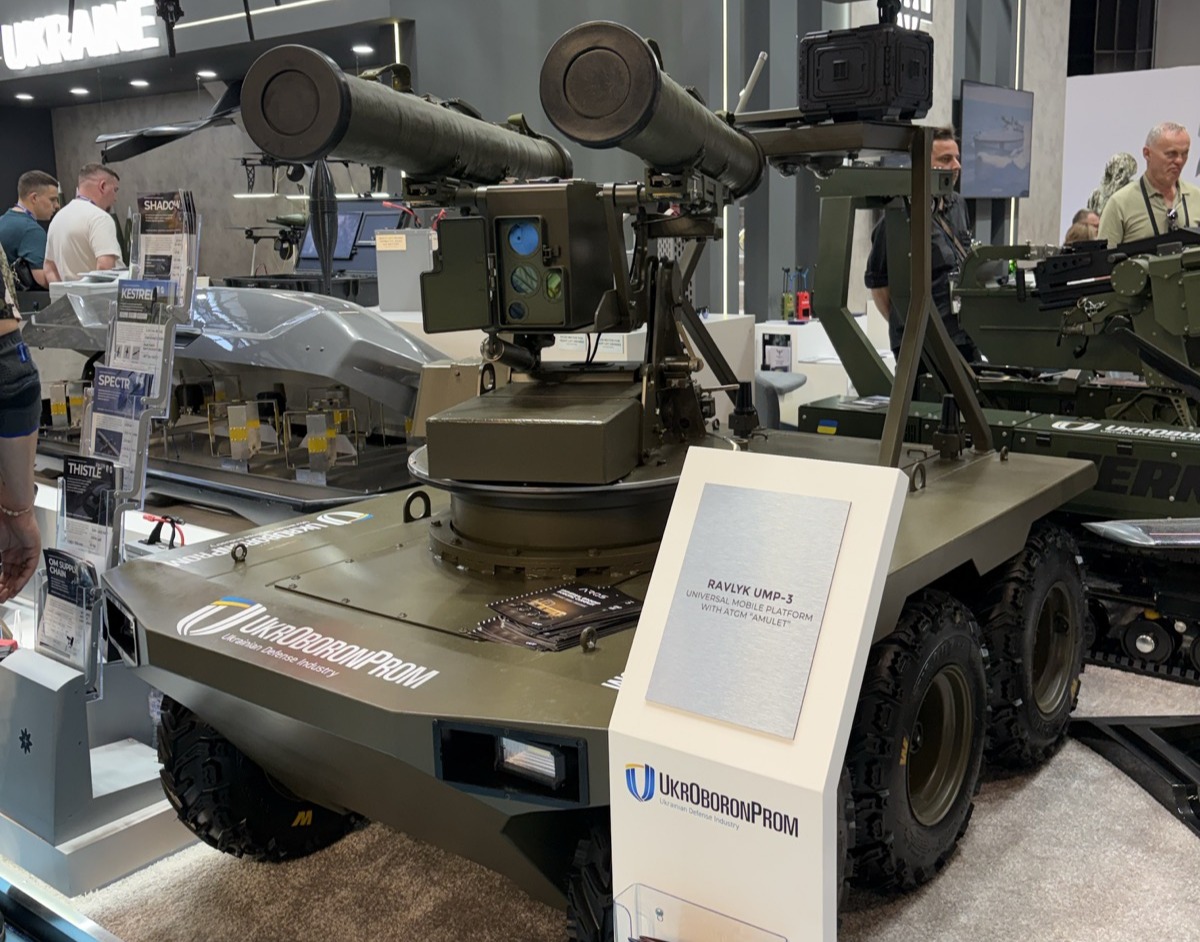
A Ravlyk UGV from Ukrainian Unmanned Technologies displayed at Eurosatory 2026, here mounting twin anti-tank launchers from Ukroboronprom. (Photo: Ukrainian Unmanned Technologies)
Explore further

This Ukrainian UGV, beloved by Ukrainian intel, is now winning over NATO countries and global defense giants

A kill zone that keeps widening

On the busiest sectors, Perch says, the kill zone—the drone-ruled strip around the contact line—now runs 15 to 20 kilometers deep. Some positions take three days to reach on foot. Where troops once drove most of the way and walked the last stretch, they now walk it all.

Robots take the drive

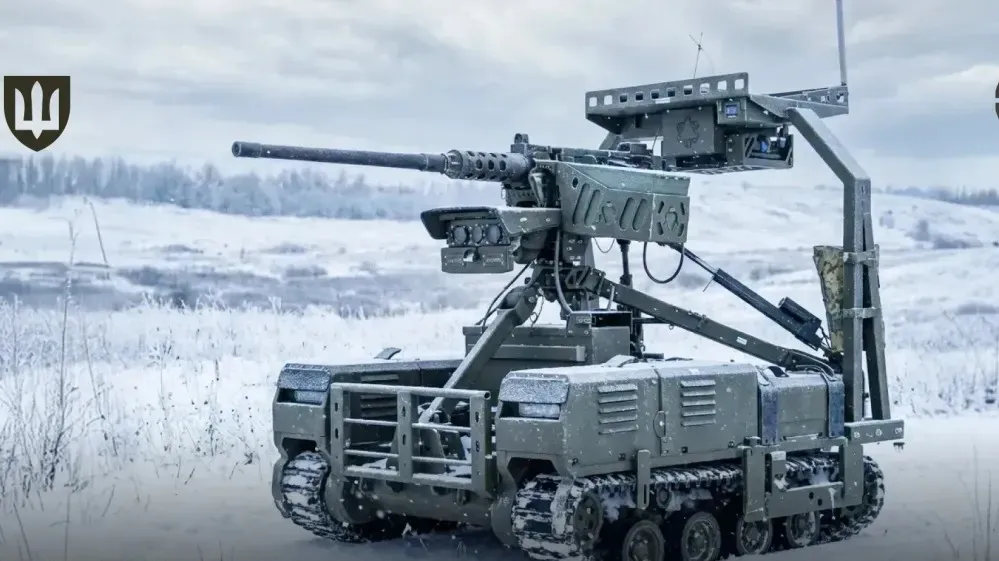
Under Perch, the brigade climbed, by his account, from around 22nd to third among Ukraine's Territorial Defense forces on the military's strike-results leaderboard, the home-guard units now fighting on the front. Ground robots—unmanned ground vehicles (UGVs)—do the work that armor cannot. They haul supplies and evacuate the wounded, though the robot often can't be brought back. His brigade runs over 1,500 logistics missions a month by heavy bomber drones alone, and still more by first-person-view (FPV) drones and robots. Russia hunts those bombers, he says, with interceptors that scramble the moment they hear one take off, so his crews mix high and low flight to slip past. Perch expects robots to move from supply runs into combat, hitting Russian troops in their rear.

A ground robotic system. The Ukrainian Defense Ministry
Explore further

Ukraine wants robots doing 100% of frontline logistics. In June, they ran nearly 17,000 supply and evacuation runs

The drone his jammers can't touch

Both armies now field fiber-optic drones—machines guided by a hair-thin glass thread instead of radio. No signal means nothing to jam. Ukraine learned to block radio and digital drones, cutting their controls and video, Perch said. The glass-fiber ones his electronic warfare cannot reach, because there is no radio link to attack. His brigade still has no counter to them, Perch said, and he wants a technical fix that stops them.

  • ✇Euromaidan Press
  • They find a sword, we find a shield: Ukrainian soldier on why drones will never replace infantry
    Serafim Hordiienko enlisted at 19 in 2022, fought as a mortarman near the front line, then moved into drone warfare as it grew central to Russia's war on Ukraine. In an interview with RBC-Ukraine, he pushed back on the idea that unmanned systems are phasing out infantry, arguing the two perform separate functions neither can absorb. The debate is live inside Ukraine's own military. Ukraine's Third Army Corps has said it plans to replace roughly 30% of its infantry with
     

They find a sword, we find a shield: Ukrainian soldier on why drones will never replace infantry

14 août 2026 à 04:58

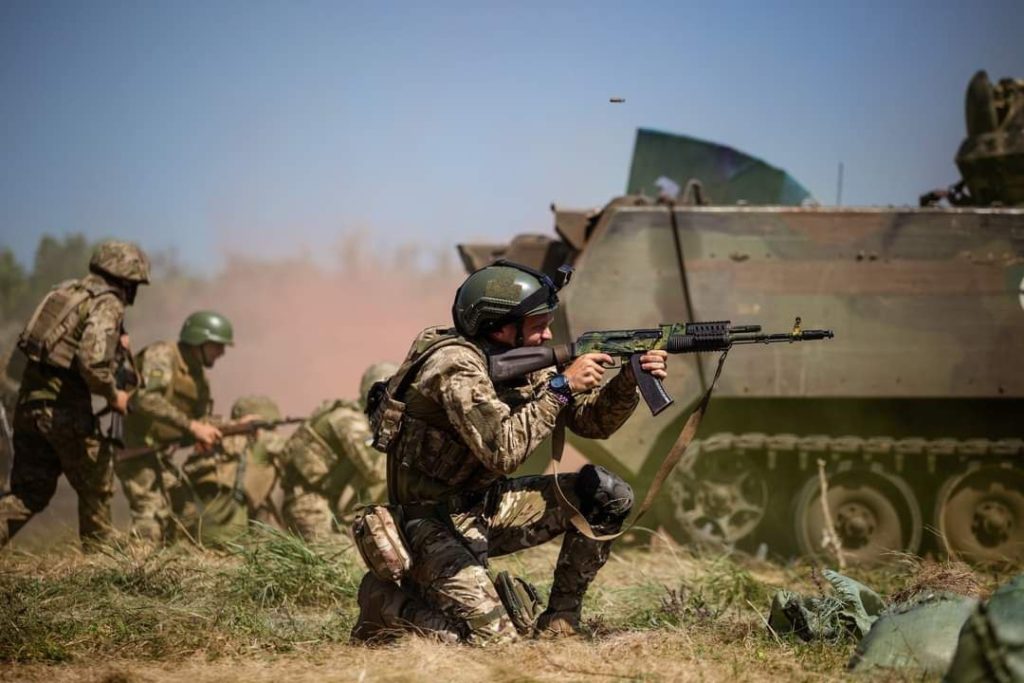
Ukrainian soldiers

Serafim Hordiienko enlisted at 19 in 2022, fought as a mortarman near the front line, then moved into drone warfare as it grew central to Russia's war on Ukraine. In an interview with RBC-Ukraine, he pushed back on the idea that unmanned systems are phasing out infantry, arguing the two perform separate functions neither can absorb.

The debate is live inside Ukraine's own military. Ukraine's Third Army Corps has said it plans to replace roughly 30% of its infantry with ground robotic systems by the end of 2026, and other officers have called full infantry replacement an eventual goal. Hordiienko's account, shaped by his own shift from rifle-and-mortar combat to drone operations, argues against that trajectory ever completing — infantry holds ground; drones strike and surveil; neither substitutes for the other.

"Different functions of war"

Hordiienko compared infantry and drones to two halves of a single system rather than competing tools. Infantry cannot operate without supporting fire and reconnaissance, he said, and drones — while efficient at surveillance and strikes — cannot hold territory the way ground troops can. If war is still fought over front lines and captured ground, he argued, only infantry can perform that function; drones deliver cost-effective damage but do not occupy space.

He traced Ukraine's drone advantage not to hardware alone but to the system around it — production, battlefield communication, and rapid adaptation to frontline needs. Ukrainian manufacturers he named, including Skyeton, Ukrspetssystems, DeviRO, and Firepoint, built reconnaissance and strike capabilities under resource shortages that Russia's more centralized, state-linked defense industry did not face in the same way, he said.

The end of romanticized war

Hordiienko dates a turning point in how Ukrainian soldiers relate to the war to the 2023 Zaporizhzhia counteroffensive. Before it, he said, volunteers who joined in 2022 operated in an emotionally charged, maximalist mode — young men competing to reach combat before the war, as they assumed, ended quickly. After the counteroffensive stalled, he said, that gave way to a more systematic, mechanized phase he calls "a war of military machines."

He illustrated the shift with a sword-and-shield framework: each side develops a new method of attack, the other adapts a defense, and the balance resets every few months. The side that adapts and scales fastest gains the advantage, he said — a dynamic he sees as running through the drone war specifically.

Hordiienko enlisted through an unusual path. He and three other volunteers, all under 21 and already carrying combat experience from the war's opening months, could not sign standard military contracts because of their age. They were enlisted only after Ukraine's then-commander-in-chief, Valerii Zaluzhnyi, issued a personal order on their behalf.

What newer recruits are owed

Speaking about troops mobilized later in the war — arriving without the volunteer surge's initial urgency — Hordiienko said commanders now owe recruits honesty rather than appeals to abstract duty. He described his approach as a direct exchange: a commander sets out the conditions of service, and the soldier meets specific obligations in return, with consequences if either side breaks that arrangement. Motivation, in his account, rests less on invoking "fighting for Ukraine" and more on concrete terms of service, fair treatment, and — where the national cause doesn't land for a given recruit — the practical case that military service builds expertise, particularly in drone and other technical specialties, that carries into civilian life.

❌