Vue normale

Four times pixels of anything before it: Ukrainian firm’s rare thermal camera aims to see targets from much farther away
22 août 2026 à 10:42

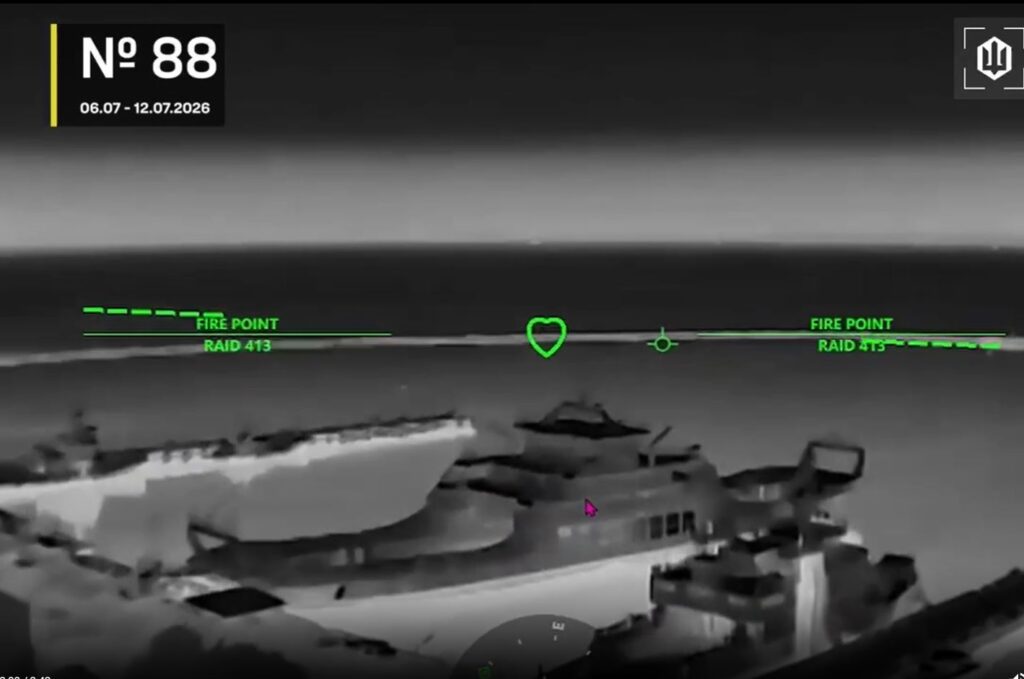
one russian ship every 112 minutes over six days ukraine hits 14 more vessels total tally nears 100 · post ukrainian drone approaches ferry mariya port occupied kerch crimea 6–12

A Ukrainian company is building a thermal camera sharp enough to spot targets far beyond what its drones can see now. Ukrainian firm Oko Camera is developing the Oko HD, with a 1280×1024 sensor, company representatives told the defense outlet Oboronka at DALO Industry Days 2026, Scandinavia's largest defense industry exhibition, in Herning, Oboronka writes.

The camera's sensor has four times as many pixels as the company's previous lines, extending the range at which targets can be detected and recognized, directly affecting how far the drone or robot fitted with it can spot a target.

HD long-wave infrared cameras are rare on the global market and, the company says, are not currently available in Ukraine at all.

The sensor is built for long-range detection

One of the camera's main tasks is observing objects at great distances, and the higher-resolution sensor should let it detect and recognize targets from farther away, though the company has not disclosed the specific range, Oko Camera said.

Its type is what makes it uncommon.

"LWIR cameras, that is, long-wave infrared cameras with HD resolution, are not common on the world market," the company's partnerships manager said.

In Ukraine, they essentially do not yet exist, giving a drone or robotic system fitted with one a longer detection range than current domestic options allow.

It is aimed at production in 2027

The Oko HD is still a prototype. The company plans to make its first working samples by the end of 2026 and hand them to clients who have already requested the cameras, Oko Camera said.

It is meant to be both affordable and capable. The company expects the Oko HD to become one of the most accessible thermal HD cameras on the world market, and after testing confirms its specifications, plans to launch it into production in 2027.
  • ✇Euromaidan Press
  • Ukraine says its drones hit major Russian refinery amid deepening fuel shortages
    Ukrainian forces struck production facilities at the Novokuybyshevsk oil refinery in Russia’s Samara Oblast overnight on 22 August, sparking a fire at the Rosneft-owned plant, Ukraine’s General Staff said. The extent of the damage remains under assessment. Ukraine has repeatedly targeted Russia’s oil refineries to restrict military fuel supplies and reduce the energy revenues supporting Moscow’s war. The latest strike came as gasoline rationing returned to Moscow and St
     

Ukraine says its drones hit major Russian refinery amid deepening fuel shortages

22 août 2026 à 10:02

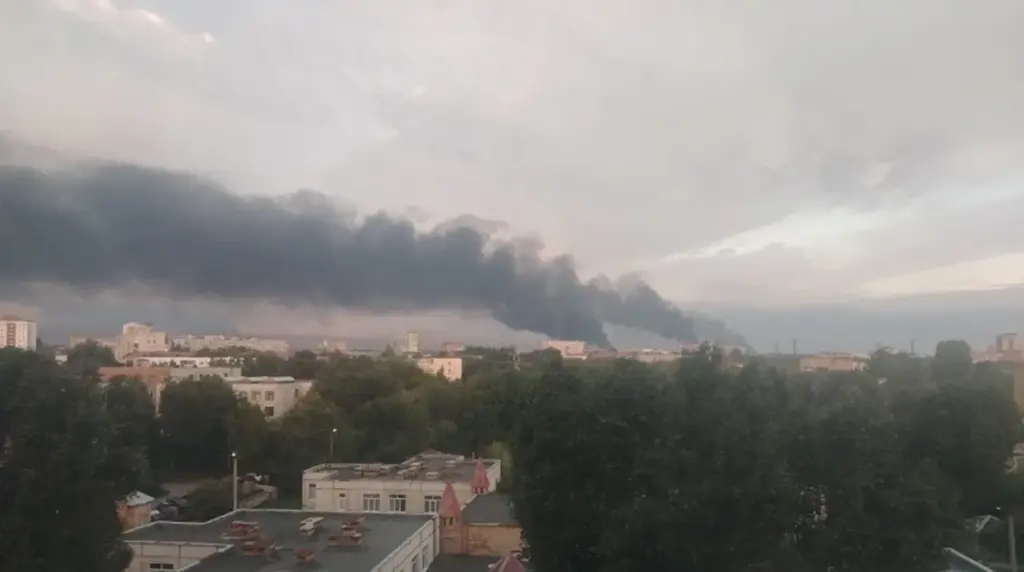
Thick black smoke rises over Novokuybyshevsk following a reported Ukrainian strike on the city’s oil refinery on 22 August 2026.

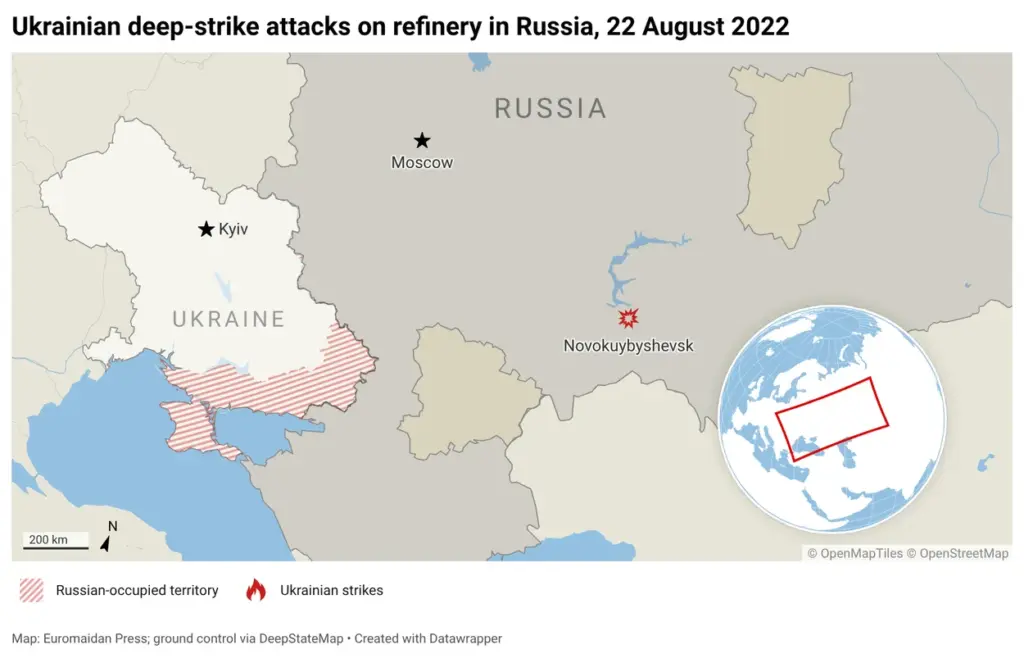
Ukrainian forces struck production facilities at the Novokuybyshevsk oil refinery in Russia’s Samara Oblast overnight on 22 August, sparking a fire at the Rosneft-owned plant, Ukraine’s General Staff said. The extent of the damage remains under assessment.

Ukraine has repeatedly targeted Russia’s oil refineries to restrict military fuel supplies and reduce the energy revenues supporting Moscow’s war. The latest strike came as gasoline rationing returned to Moscow and St. Petersburg, and Rosneft capped nationwide purchases. Militarnyi described the plant as one of Russia’s 10 largest refineries.

The Rosneft-owned refinery can process about 8.8 million metric tons of crude annually and produces more than 20 petroleum products, including aviation fuel and diesel, Ukraine’s General Staff said.

Fire Point said FP-1 long-range drones were used to strike the refinery.

Map of Ukrainian strike on Novokuybyshevsk

The same overnight wave also hit an Ozon logistics center in Chapayevsk, where people were injured, and work was halted, Reuters reported, citing the company.

Novokuybyshevsk Oil Refinery last night and now. pic.twitter.com/aZmL7M8wBe

— Exilenova+ (@Exilenova_plus) August 22, 2026

Neither the damage to the refinery nor any interruption to production has been independently confirmed.

Ukraine keeps pressure on Russian fuel supplies

The strike came one day after Ukraine confirmed hitting Lukoil’s Perm refinery, approximately 1,530 kilometers from Ukraine’s northern border. That attack also caused a fire, according to the General Staff.

At least four Russian refineries went offline during August amid continuing Ukrainian attacks.

By mid-August, filling stations in at least 12 Russian regions were experiencing hours-long lines. Some areas had reintroduced purchase limits or rationing based on license-plate numbers, according to the same report.

Gasoline limits had also been reinstated in Moscow and St. Petersburg, while Rosneft had capped sales at 30 liters per vehicle across its nationwide filling-station network. Diesel purchases remained unrestricted.

  • ✇Euromaidan Press
  • Ukraine is buying jam-proof fiber-optic drones for first time to single standard, so any maker can compete
    Ukraine is buying the strike drones that Russian jamming cannot touch, and for the first time, to a common standard. The Defense Procurement Agency (DOT) has announced its first purchase of fiber-optic FPV kamikaze drones built to specifications defined by the Defense Ministry, the ministry announced. By defining the specifications a fiber-optic FPV must meet, the Defense Ministry lets any maker compete by hitting that standard rather than having each model approved ind
     

Ukraine is buying jam-proof fiber-optic drones for first time to single standard, so any maker can compete

22 août 2026 à 01:07

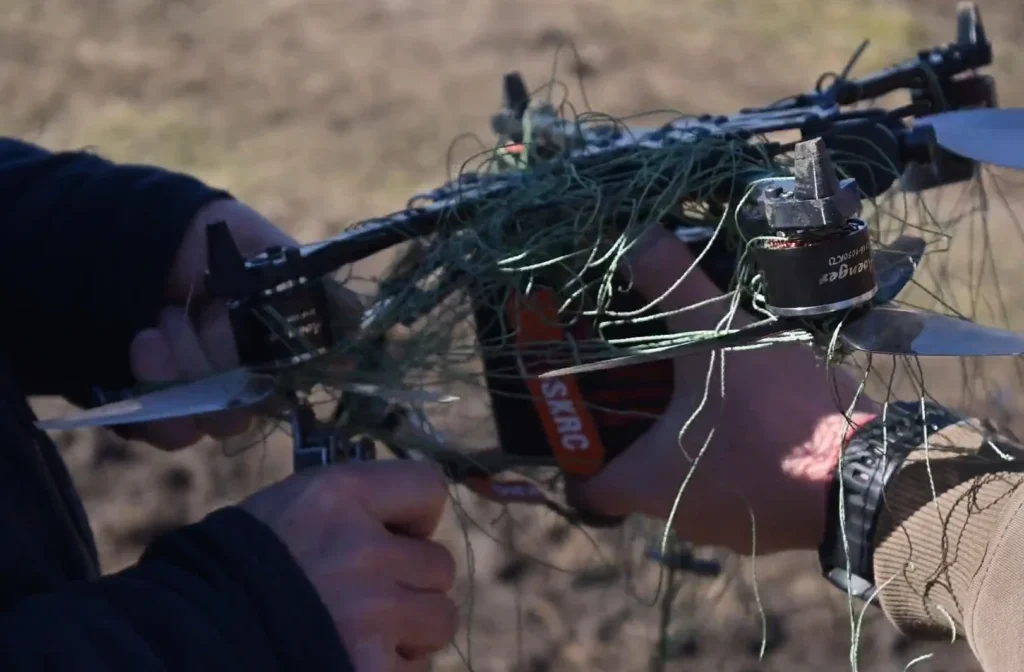
An FPV drone snared by a net fired from a Chipa net gun, developed by BlueBird Tech. Photo: BlueBird Tech via Defense Blog

Ukraine is buying the strike drones that Russian jamming cannot touch, and for the first time, to a common standard. The Defense Procurement Agency (DOT) has announced its first purchase of fiber-optic FPV kamikaze drones built to specifications defined by the Defense Ministry, the ministry announced.

By defining the specifications a fiber-optic FPV must meet, the Defense Ministry lets any maker compete by hitting that standard rather than having each model approved individually.

That is what makes it possible to split the purchase into competing lots among many suppliers, both large and mid-sized, and to buy the jam-proof drones at scale without relying on any single producer.

Why fiber-optic drones matter

The Ukrainian Defense Ministry is looking for a specific type of drone. They use a fiber-optic cable to connect to the operator, and unlike ordinary FPV drones that need a radio signal for control and video, these fiber-optic drones do not depend on the radio channel, so they work far better in the presence of active electronic warfare.

Fiber-optic drones let an operator keep control where radio-controlled drones lose their signal, and Defense Minister Yevhenii Khmara said the drones give Ukraine's forces added ability to disrupt Russian assaults and conduct their own operations, striking enemy manpower.

The standard opens the field to any maker

The buy is not tailored to one producer. It is not conducted for a specific manufacturer or model, and producers can offer their own drones if they meet the defined characteristics, with the drones sorted into classes by parameters such as range (the length of the fiber-optic cable) and camera type.

The lot structure spreads the orders

Deputy Defense Minister Mstyslav Banik said the tender is structured so that various suppliers can participate. Each tender is divided into lots, with four lots per class of fiber-optic FPVs, and no participant may win more than 50% of a class's total volume.

That structure guards supply while also driving competition.

"This creates an environment for healthy competition among manufacturers, and at the same time minimizes the risks of supply disruptions," Banik added.

❌