Connexion

Byron Donalds Holds Slim Lead in Florida’s Race for Governor
New polls in Florida, South Carolina and Minnesota illuminate the head winds that Republicans are facing.


© Jillian Vordick/The New York Times

© Ohad Zwigenberg/Associated Press

© Charly Triballeau/Agence France-Presse — Getty Images

© Emily Najera for The New York Times

© Ryan David Brown for The New York Times

© Clayton Steward for The New York Times

© Jillian Vordick/The New York Times

© Michael M. Santiago/Getty Images

© Kerry Tasker/Reuters

© Jillian Vordick/The New York Times

© Julia Demaree Nikhinson/Associated Press

© Angelina Katsanis for The New York Times

© Avishag Shaar-Yashuv for The New York Times

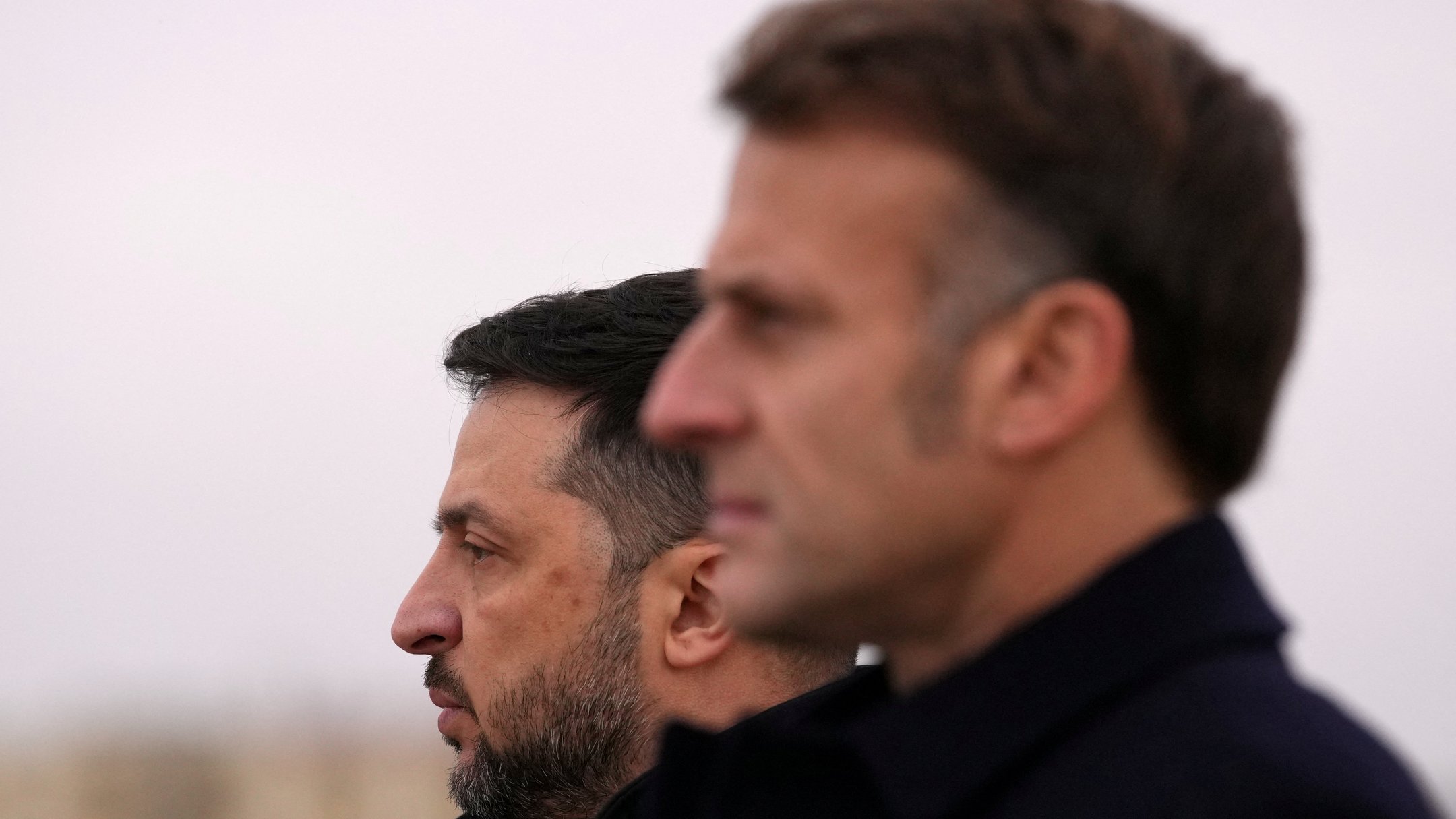
On 18 October, President Zelenskyy accused Donald Trump of trying to pressure Ukraine into capitulating to Russia.
Asked by NBC whether Ukraine could win the war without the US, he answered: "Without United States support it's very difficult. But if United States will support Putin, it's historic mistake and big tragedy.... If the United States officially will take the side of Russia, if these two countries will be together, of course we will not prevail and we will not be able to stand."
He said Ukraine hopes Trump will be on its side, or at least "in the middle," and that he will "change his decisions" on Russia, as "it's all mistakes, it will not help us, and it will not help United States." In an interview with NBC's Meet the Press, when asked whether Trump is still an ally of Ukraine, Zelenskyy said: "I hope so." Not a definitive yes, but a weak maybe.
As diplomacy goes, statements do not come much stronger than this. What triggered them?
Probably the sum of all things. We all remember Trump and Vance humiliating Zelenskyy in the White House on 28 February 2025. Trump told the Ukrainian President that he was "gambling with" a third world war. Zelenskyy was told to come back "when he is ready for peace". Most will also remember that the USA enacted the decision to halt its aid to Ukraine across two separate, sweeping actions taken during the first months of the second Trump administration in early 2025. Presently, it is only delivering military aid decided by former President Biden.
Some might have forgotten that Trump called Zelenskyy a "dictator without elections," suggested Ukraine started the war, and pushed a "peace plan" whose original 28-point draft gave Russia terms more favorable than what Moscow sought at the 2022 Istanbul talks.
After 640 days in office, Trump's disdain for Ukraine and admiration for Russia seem to grow by the day, and his kakistocracy—government by the least qualified—keeps undermining Ukraine's defense. In less than two weeks:
Less than two weeks, summarized.
This is how Trump's administration talks about, and acts towards, the victim of an unjustified, unprovoked and horrendous war. Trump's USA (TUSA) is siding with autocracy against democracy and the rules-based world order. It talks about America's former allies in a similar manner: derogatory and disrespectful. None of the above is the word or deed of an ally.
When one chooses to see the world as it is, Zelenskyy's statements become both necessary and important. This is not only about Ukraine's self-respect and survival. Once we acknowledge the realities—that Europe is in an undeclared war with Russia at a moment when the USA has chosen to become a strategic adversary—we stand better prepared to defend ourselves: to accept that our present security system does not work and new solutions are urgently needed, and that diplomacy alone does not work and military force is essential to protect freedom, democracy and international law.
More than a year ago, German Chancellor Friedrich Merz warned that Europe is "not at war, but no longer at peace either" with Russia. Other heads of state have echoed him. NATO has since shifted from a peacetime alliance to one focused on urgent wartime readiness. Unfortunately, the process started years too late.
By seeing the world as it is, European leaders might reach the long-overdue conclusion that Russia's wars in Ukraine and Europe can only be stopped by a demonstration of strength: an alliance willing and capable of using military force to stop Russia. The alliance Russia fears isn't NATO. It's a coalition that will actually fight.
European courage and action are urgently needed. Ukraine is exposed to a two-front war, defending itself against both Russia and TUSA, and their attacks are increasing in scale and scope. Both Moscow and Washington want to end the war this year and are ramping up their assaults on Ukraine accordingly.
Irrespective of one's view of Ukraine, it is commonly understood that it is stopping Russia from advancing and increasing its border with NATO and the EU. Ukraine is defending European values and principles, ensuring the rest of us can continue living in something resembling peace. The consequences of its defeat would be truly devastating.
There can be no European strategic autonomy without Ukraine. There can be no European security and stability without Ukraine. Europe can never become a Great Power without Ukraine. And neither Russia nor the USA want Europe to achieve any of the above.
It is time to act according to the present-day realities and face down Europe's two strategic adversaries. In the worst case, Ukraine's destiny might be decided in November already.

Editor's note. The opinions expressed in our Opinion section belong to their authors. Euromaidan Press' editorial team may or may not share them.
Submit an opinion to Euromaidan Press

© Associated Press

© Allison Robbert/Associated Press

© Amit Elkayam for The New York Times

© Alex Kent/The New York Times

© Robert F. Bukaty/Associated Press

© David Robert Elliott for The New York Times

© Doug Mills/The New York Times

© Charly Triballeau/Agence France-Presse — Getty Images

© Jillian Vordick/The New York Times

© Hannah McKay/Reuters
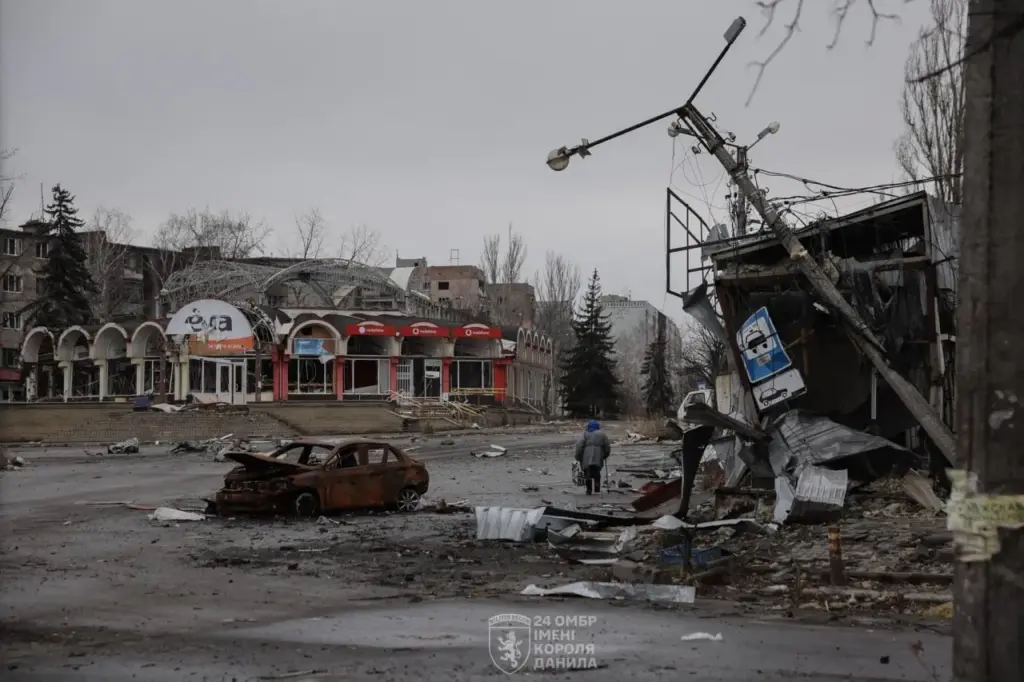
A majority of Ukrainians reject handing all of Donbas to Russia in exchange for US and European security guarantees. Some 62% are ready to endure the war for as long as it takes, a survey by the Kyiv International Institute of Sociology shows.
Russia has spent the fall hammering Ukrainian cities, and Washington has eased sanctions on Russian diesel and cut Ukraine’s intelligence and Starlink speed, both apparently aimed at wearing Ukrainians down toward a capitulation. Instead, the majority calls the withdrawal of troops from Donbas categorically unacceptable, with 35% willing to accept it and 4% undecided, a position essentially unchanged since late summer.
The pressure campaign tracked the other way. Among those polled on 8-9 October, before the diesel deal and the pressure that followed, 57% were categorically opposed. Among those polled on 10-16 October, the figure rose to 62% afterward, KIIS reports.
In every region, at least half reject the trade. Resistance is firmest in Kyiv, which has borne a relentless campaign of ballistic and jet-drone strikes, where 66% are categorically against, the highest figure of any region. Even in the east, around Kharkiv, where the most are open to a compromise at 45%, 51% still rule it out.
Few Ukrainians expect a quick end. Only 10% think the war will end by the close of 2026 and 13% in the first half of 2027, while 56% expect it to run into the second half of 2027 or beyond, the institute reports.
The poll also measured who is seen as the obstacle. Asked to choose, 78% said Russia’s drive to subjugate Ukraine is what blocks peace, against 12% who blamed an inflexible Ukrainian government, and 92% said Russia strikes economic sites to wreck the economy and force capitulation, not in retaliation.
“The enemy, with its vile strikes by ballistic missiles and drones, is unable to break the spirit and will of Ukrainians,” KIIS executive director Anton Hrushetskyi says.
He argues that what Ukraine needs is “packages of interceptors for Patriot systems,” not an election or one-sided concessions dressed up as peace. The survey polled 1,031 adults across government-controlled Ukraine from 8-16 October.

© The New York Times
© The New York Times

© Haiyun Jiang/The New York Times
© Haiyun Jiang/The New York Times
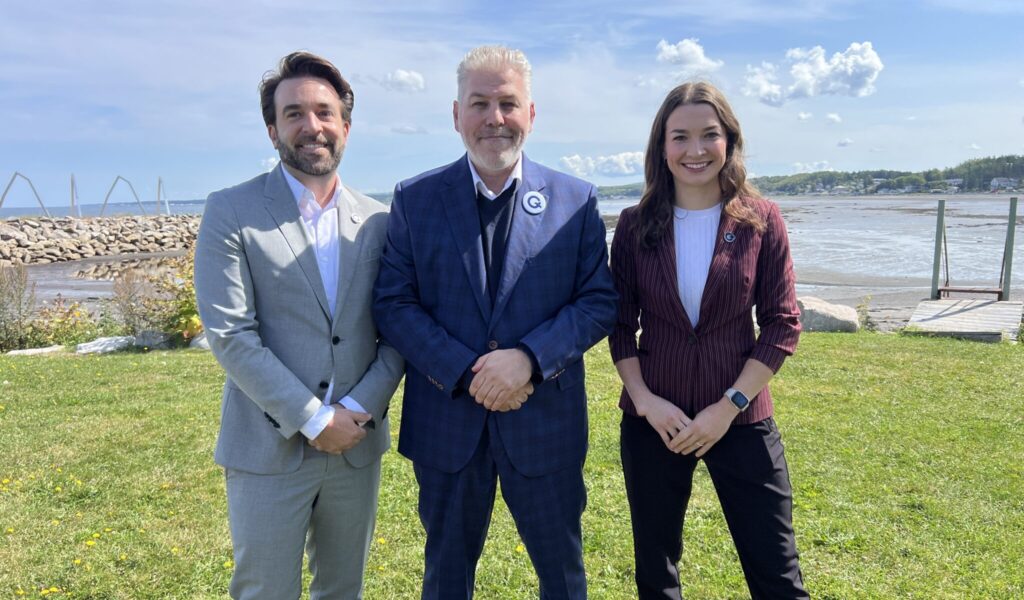
Les 39 jours de la course électorale sont maintenant derrière nous. Je tiens à féliciter tous les candidats et particulièrement les députés qui ont été élus dans notre région du Bas-Saint-Laurent : Yohann St-Pi-erre, Ariane Boyer, Frédéric Poulin, sans oublier Pascal Bérubé, qui devient du même coup le doyen de l’Assemblée nationale, même s’il est encore dans la fleur de l’âge!
Par le préfet de la MRC de La Mitis, Bruno Paradis
Plus qu’une course, cette élection fut un véritable marathon. Je me permets de souligner deux choses qui apparaissent importantes à mes yeux.
Premièrement, il faut remercier tous les candidats et candidates qui se prêtent au jeu d’une élection. S’exposer ainsi demande à la fois une bonne dose de courage et de conviction.
Dans un deuxième temps, je souhaite rappeler que collectivement, nous sommes privilégiés de vivre dans une démocratie. Comme Winston Churchill le disait : « La démocratie est un mauvais système, mais elle est le moins mauvais de tous les systèmes ».
Bien des citoyens et citoyennes d’ailleurs sur la planète nous envient et aimeraient eux aussi pouvoir avoir leur mot à dire sur la direction que devrait prendre leur gouvernement, avoir des débats d’idées, pouvoir émettre leur opinion, échanger à propos de leurs besoins et de leurs aspirations.
Cela étant dit, je tiens quand même à partager une certaine déception.
Les élections sont l’occasion de proposer des idées, de tenter de trouver de nouvelles façons de faire, de développer de nouveaux angles d’approches pour aborder les problèmes et enjeux qui nous touchent.
J’ai pu lire trop de commentaires dans lesquels les candidats ou leurs partisans étaient insultés, trop de commentaires injurieux, irrespectueux et même violents. Imaginons la charge émotionnelle, l’anxiété et le stress que ces propos ont pu apporter aux candidats, en plus de nous éloigner de l’essentiel : l’échange des idées.
Cette élection étant à présent derrière nous, je crois qu’il est temps de se questionner collectivement sur le vivre-ensemble et freiner cet élan individualiste de commentaires haineux, tout comme les divisions issues des médias sociaux.
Pour faire face aux défis de notre époque, il est essentiel de s’unir et de se rassembler!


© Jeffrey McWhorter for The New York Times

© Jeffrey McWhorter for The New York Times

© Haiyun Jiang/The New York Times

© Jillian Vordick/The New York Times

© Doug Mills/The New York Times
© Doug Mills/The New York Times

© Hilary Swift for The New York Times

On 11 October, Trump declared an “energy ceasefire” between Russia and Ukraine. It binds only Ukraine. In the two days that followed, Kyiv held its fire while Russia kept hitting Ukrainian energy and critical infrastructure across 19 regions. A Russian strike collapsed an apartment stairwell in Kharkiv and killed three. And before Russia’s latest ballistic missile strike, five missiles and more than 100 drones, Ukraine received no early warning at all. Washington then said both sides were to blame.
This is what one of Trump’s decisions looks like on the ground. There were four of them, in three days, 9 to 11 October.
Three days that further weaken the West and undermine liberal democracies. Three days that encourage Putin to continue his war against Ukraine and his hybrid war against Europe. Like China, the US has sided with Russia against Ukraine and Europe. Whatever the motives in Washington—diesel prices before the midterms, a long feud with the court—the effect is the same.
On 9 October, the Trump administration announced new sanctions against the International Criminal Court (ICC), an institution crucial for holding Putin and the Kremlin responsible for the war of aggression and its atrocities. The sanctions came hours after the Nobel Peace Prize went to Navi Pillay, a former ICC judge.
"We will ban transactions with this rogue court, cutting off their resources and crippling its ability to operate," Secretary of State Marco Rubio said. "Either the ICC will end its threats, or we will end the ICC." He expects allies, many of them ICC members that rely on American servicemembers for their defense, to rein in the court.
The ICC exists to investigate, prosecute, and try individuals accused of the world's gravest international crimes. Washington wants to end it. The court called the measures an assault on the rule of law and the foundations of the international legal order.

On 9 October, Trump also lifted sanctions on Russian diesel exports. The deal comes less than a month after he signed the sweeping Russia sanctions law dedicated to the memory of Sen. Lindsey Graham, which allows tariffs on buyers of Russian oil. Multiple US lawmakers argue the move violates federal law. Congress banned Russian energy imports in 2022, and a bipartisan group of seven senators, including Republicans Thom Tillis and Lisa Murkowski, stated that the decision "runs directly counter to that law." They also argue that the administration failed to consult Congress or justify its decision as the statute requires.
Western sanctions and Ukraine's strikes on Russian refineries—its own "sanctions"—aim at the same effect: making the war unaffordable for Russia. Trump's decision does the opposite: it helps Russia pay for the war. It also breaks with the principle of unity of effort, further undermining Western cohesion.
Zelenskyy said the deal showed US weakness, as Washington had secured no concessions in return: "What did [Trump] get? That he will have more diesel? For whom? More Russian diesel for Americans? ... It looks like Alaska No. 2. You know, it looks like a happy birthday present for Putin. It looks absolutely terrible."
On 10 October, Trump said of the elected president of a country fighting off Russia's full-scale invasion: "I think it's time for Ukraine to get a new president... I suggest they get a new leader who can make a deal, because he could have made many deals and, for some reason, he never does." He claimed Zelenskyy could have ended the war many times, and insisted that Zelenskyy "wants to make problems for the world" by authorizing strikes on Russian refineries.
The Trump Administration conspicuously ignores the Swiss Summit on Peace in Ukraine, President Zelenskyy’s 10-point peace plan based on international law, and not least, the international effort to establish unity of efforts to enforce a just peace.
Zelenskyy has repeatedly proposed talks and shown willingness to compromise for a peace that guarantees Ukraine's sovereignty. On 18 July, he said: "This year alone, we have reached out to Russia dozens of times with proposals to stop this war—but all we got in return were refusals."
The "deals" Trump alludes to would not have secured peace or guaranteed Ukraine's future existence, nor safeguarded Europe against future Russian aggression. They were not rooted in international law, but in the prospect of great wealth for Trump and his associates—business deals dressed up as "peace plans”. Ukraine and its European partners instead proposed amendments and defined red lines to bring the drafts up to the standards of international law.
The Kremlin itself exposed the absurdity of Trump's claim. In a phone call with Trump, Putin categorically ruled out resuming peace talks, his aide Yuri Ushakov said, and sought to convince Trump that Ukrainian resistance has "no prospects whatsoever."
On 11 October, Trump announced: "Effective immediately, there is an ENERGY CEASEFIRE in the War between Russia and Ukraine. Both parties have agreed. Do not break it!"
He gave no details. Zelenskyy had no prior knowledge, but said Ukraine would agree if Russia did. He had already offered to stop striking Russian refineries if Russia stopped attacking Ukraine's energy infrastructure.
It was not an energy ceasefire. It was a gift to Putin. A White House official told Axios that, as Trump understands it, the term means only that Russia and Ukraine stop attacking each other's oil refineries—and that this is what Washington expects Ukraine to do. Ukraine has one refinery, while Russia has 38, of which 21 have been targeted by Ukrainian drones.

To most of the world, an energy ceasefire covers the whole energy sector: nuclear power, oil refineries, power plants, the grid down to local transformers. But not in Trump's world. The official said a deal on power plants and grids could come next—if Ukraine first stops striking the refineries fueling Russia's war.
Axios wrote that White House officials see Ukraine's refinery strikes as doing more damage to Zelenskyy's relationship with Trump than to Russia. The administration has reportedly threatened to cut Ukraine off from US intelligence if the strikes continue.
Forcing Ukraine to halt its refinery strikes, while Russia keeps hitting not only power plants and the grid but heating and water systems, hospitals, schools, railways, ports and civilians, does not motivate Russia to stop. Within hours of Trump's announcement, Russia struck a power plant in Kharkiv. Trump's one-sided pressure encourages Russia to continue.
Moscow paints Ukraine as the intransigent party, though Russia has offered no concessions and rejected numerous compromise proposals from the US and Ukraine. Still, Trump insists that Ukraine, not Russia, is the problem.
In three days, Trump has sanctioned the court that could hold Russia accountable, called on Zelenskyy to step down, secured revenue for the Kremlin's war, and declared an "energy ceasefire" that only asks Ukraine to stop striking Russian refineries, while Russia goes on turning winter into a weapon.
The call for Zelenskyy to step down led Marie-Agnes Strack-Zimmermann, chair of the European Parliament's Committee on Security and Defence, to say: "If Trump calls on Zelenskyy to step down, he is clearly siding with a murderer. Only the Ukrainian people can decide who leads Ukraine in free elections, not the White House, and certainly not the Kremlin." Her conclusion: "By once again attacking allies and democratic institutions, Trump is weakening the West and undermining democracy. [...] Europe must therefore remain firmly on course and support Ukraine, because the US can no longer be relied on."
The US's latest National Security Strategy does not merely shift America's foreign policy priorities. It aligns them with Moscow's on seven separate issues, while explicitly calling for Washington to "cultivate resistance to Europe's current trajectory" by backing nationalist parties against sitting EU-aligned governments.
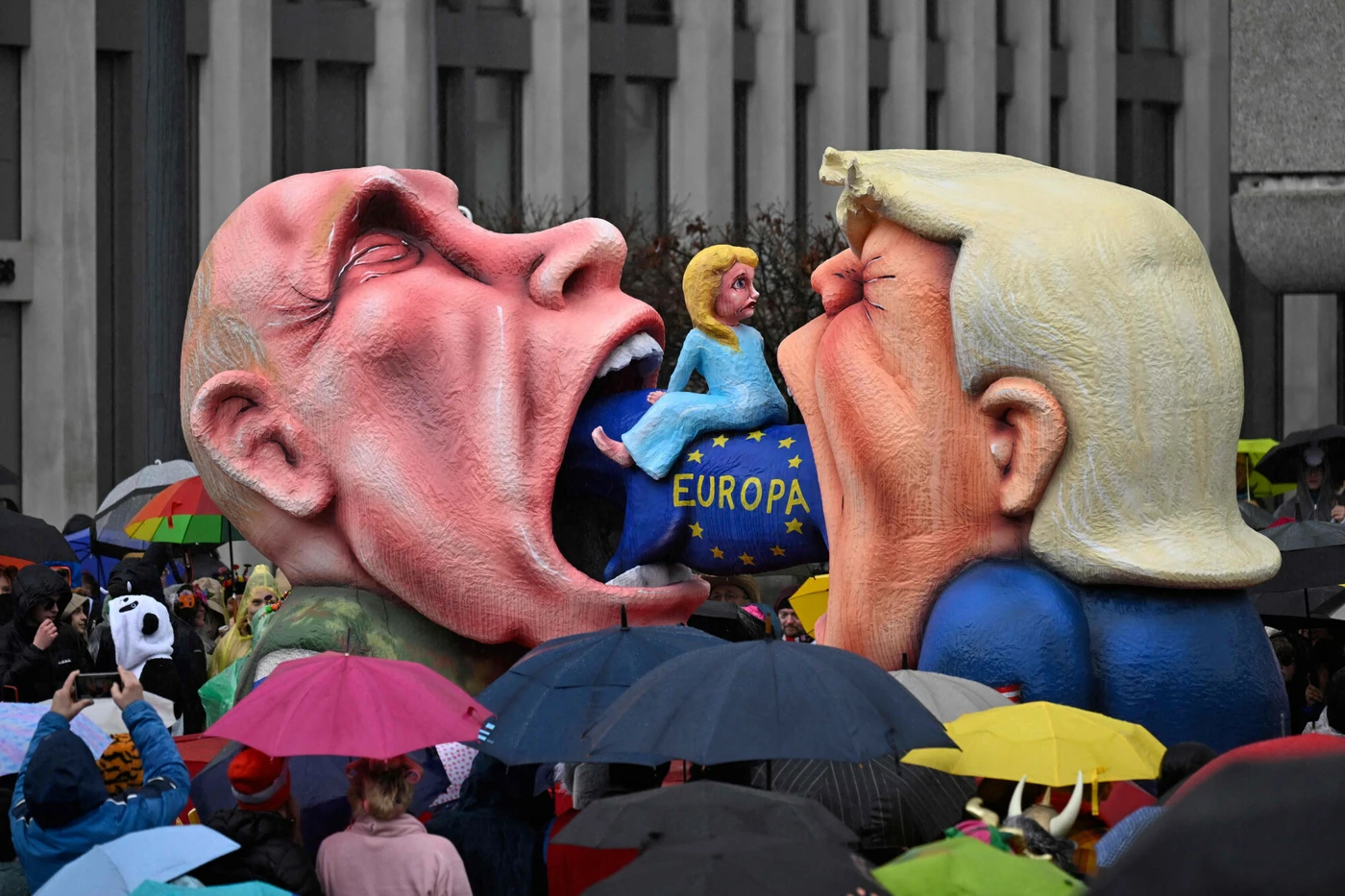
The last three days demonstrate that the US is no longer an ally, but a strategic adversary. None of Trump's recent decisions helps end the war on Ukrainian or European terms. On the contrary, they encourage Putin and push any realistic hope of peace years away. They undermine international law and support the notion that might makes right.
Worse still, they help explain why war between Russia and Europe by 2029 is becoming more likely. Trump—Putin's close ally—leaves office on 20 January 2029.
Europe must stress its support for continued Ukrainian strikes on Russian refineries unless the Kremlin agrees to a comprehensive energy ceasefire in line with Ukraine’s demands.
Europe urgently needs to distance itself from the US and its foreign policy. Heads of state must join Canada's efforts to unite middle and small powers in common defense against increasingly aggressive great powers. As this series has repeatedly argued, Europe must build a Coalition of Like-Minded countries strong enough to confront Russia, China and, sadly, the US.
Editor's note. The opinions expressed in our Opinion section belong to their authors. Euromaidan Press' editorial team may or may not share them.
Submit an opinion to Euromaidan Press

© Abdul Saboor/Reuters

Au fil des années, Mont-Joli fête Noël est devenu bien plus qu’une activité locale. Cet événement s’est progressivement imposé comme un grand rendez-vous familial pour Mont-Joli, La Mitis et toute la région.
Par le maire de Mont-Joli, Martin Soucy
L’an dernier, près de 8 000 personnes ont participé aux différentes activités. Cette année, nous souhaitons franchir un nouveau cap et accueillir environ 10 000 visiteurs.
Cette croissance démontre à quel point l’événement répond à un besoin : celui de se retrouver, de célébrer ensemble et de profiter d’activités accessibles à toute la famille.
Du 27 au 29 novembre, plusieurs incontournables seront de retour, dont le traditionnel et impressionnant défilé de Noël et son feu d’artifice de clôture, place de la famille au beau milieu du centre-ville, les spectacles jeunes et adultes tout au long du week-end, et différentes activités qui font maintenant partie de la programmation.
Quelques nouveautés, à venir, viendront également bonifier la programmation et rendre cette quatrième édition encore plus rassembleuse.
Cette année, nous ajoutons aussi une dimension qui nous tient particulièrement à cœur en nous associant à l’Association du cancer de l’Est-du-Québec.
Cette collaboration permettra de soutenir une organisation bien présente dans notre région et qui accompagne quotidiennement des personnes touchées par le cancer ainsi que leurs proches.
L’Association jouera également un rôle important dans la recherche de partenaires, de commanditaires et dans la mobilisation entourant le défilé.
Et puisque Mont-Joli fête Noël est désormais un événement régional, cette mobilisation doit elle aussi dépasser les frontières de notre ville. Les entreprises de Mont-Joli et de La Mitis seront sollicitées, mais également celles de Rimouski et des municipalités environnantes.
C’est ensemble que nous pouvons faire grandir cet événement.
Mont-Joli fête Noël, c’est une occasion de faire rayonner notre ville et notre région, de soutenir nos commerces, d’accueillir des familles de partout dans la région et de redonner à notre communauté.
La programmation officielle sera disponible au début du mois de novembre sur toutes les plates-formes de la Ville de Mont-Joli et de l’Association du cancer de l’Est-du-Québec.
Je vous invite donc à venir célébrer avec nous, du 27 au 29 novembre, à Mont-Joli. La programmation complète sera dévoilée au début du mois de novembre.