❌

Vue lecture

Finland and Norway leaders make rare direct call to Putin, breaking with the West’s diplomatic isolation of the Russian leader to influence Ukraine peace talks

Finnish President Alexander Stubb and Norwegian Prime Minister Jonas Gahr Støre in Norway, 16 October 2024. Photo: President of the Republic of Finland

Finnish President Alexander Stubb and Norwegian Prime Minister Jonas Gahr Støre spoke by phone with Russian President Vladimir Putin on 27 October, urging him to de-escalate Russia’s war against Ukraine and resume negotiations. The roughly 90-minute call was coordinated with Kyiv and came ahead of planned trilateral talks between Ukrainian, US, and Russian officials in Abu Dhabi in November.

The initiative marks a rare direct contact between Western European leaders and Putin since Russia launched its full-scale invasion in February 2022. The Nordic leaders are reportedly seeking to influence peace efforts increasingly shaped by US President Donald Trump, amid concerns in Europe that Washington is shifting toward Moscow’s position and sidelining Ukraine’s European partners.

Stubb and Støre said they discussed Russia’s war against Ukraine, upcoming negotiations, and security in Europe. Ukrainian President Volodymyr Zelenskyy said the two leaders had urged Putin to take concrete steps toward de-escalation, particularly regarding attacks on Ukraine’s energy infrastructure.

Zelenskyy says leaders urged energy de-escalation

After the call, Zelenskyy said he had spoken with Stubb and Støre to receive a detailed briefing. He thanked them for supporting Ukraine’s diplomatic efforts and said they had clearly told the Russian leader that real de-escalation steps were needed regarding Ukraine’s energy sector and infrastructure.

Zelenskyy also said the leaders discussed preparations for a trilateral meeting planned for November involving Ukrainian, US, and Russian negotiating teams.

In a joint statement, Stubb and Støre said the call followed their 20 October meeting in Oslo and was held in consultation with Ukraine. They emphasized that Finland and Norway, which both share borders with Russia, would continue their longstanding support for Ukraine.

“The discussion was frank and substantive,” Stubb said, adding that the war’s outcome would directly affect Nordic and broader European security. Støre stressed the war’s enormous human and material costs and said the leaders had emphasized the importance of de-escalation.
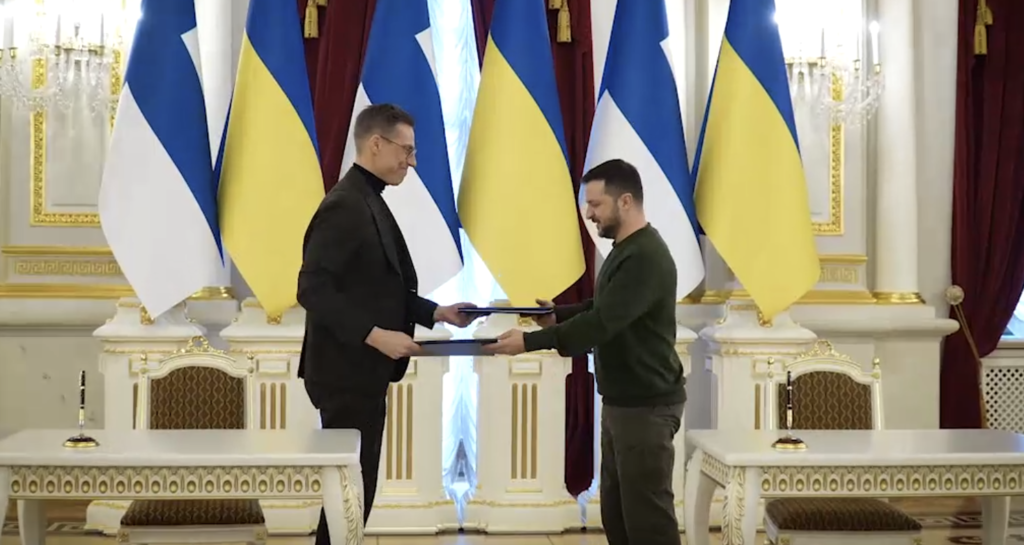
Presidents Volodymyr Zelenskyy (R) of Ukraine and Alexander Stubb (L) of Finland after signing the security agreement. Kyiv, 3 April 2024. Screenshot: Telegram/Zelenskyy Official

Moscow gives no sign of changing its position

The Kremlin’s account of the call offered no indication that Putin was prepared to soften his demands, according to Reuters. It said a just and lasting peace was possible only if Russia’s “legitimate interests” were fully taken into account, while blaming EU and NATO policies for prolonging the fighting.

Russian Foreign Minister Sergei Lavrov dismissed the call as offering nothing new on the conflict and accused European countries of seeking a role in negotiations.

A source close to the Kremlin told Reuters that Putin had said the war must end while taking “the realities on the ground” into account. The source interpreted this as meaning Moscow would not compromise on its goal of capturing the entire Donbas region.

Russia has continued its attacks on Ukraine while demanding territorial concessions. Kyiv, meanwhile, has called for meaningful de-escalation and a settlement that preserves Ukraine’s sovereignty and security.

Nordic initiative draws criticism from European partners

The call comes as European governments seek a greater role in peace efforts led by Trump. Western European leaders have largely avoided direct contact with Putin since the invasion, hoping to isolate Moscow, but concerns have grown that Europe is being sidelined in negotiations.

Stubb said Ukraine had sought to open a new channel of communication and that Europe could no longer remain a bystander to peace efforts. He said the initiative had been discussed with Western allies.

However, Danish Prime Minister Mette Frederiksen criticized the move, saying she saw no signs that Russia wanted peace and arguing that Europe should act together rather than pursue separate initiatives, according to Reuters. 

Reuters added that Swedish Prime Minister Ulf Kristersson said other European leaders had not been informed of the talks and expressed low expectations for the conversation. Polish Prime Minister Donald Tusk also urged caution.

Stubb and Støre stressed that they had acted as leaders of Finland and Norway, not on behalf of Europe as a whole. They said their countries would continue supporting Ukraine while pursuing diplomatic efforts to end the war.

  •  

Trump Explores Lifting Sanctions on Russia’s Flagship Investment Fund

The move would be the latest U.S. concession to Moscow as President Trump pursues economic incentives he hopes will secure an end to war in Ukraine.

© Ramil Sitdikov/Reuters

Steve Witkoff and Jared Kushner, President Trump’s envoys, with Kirill Dmitriev, the head of the Russian Direct Investment Fund, in Moscow last month.
  •  

“Our future cannot be the subject of agreements between Trump and Putin”: Ukraine supporters protest US policy on Russia in Europe, US, and Australia

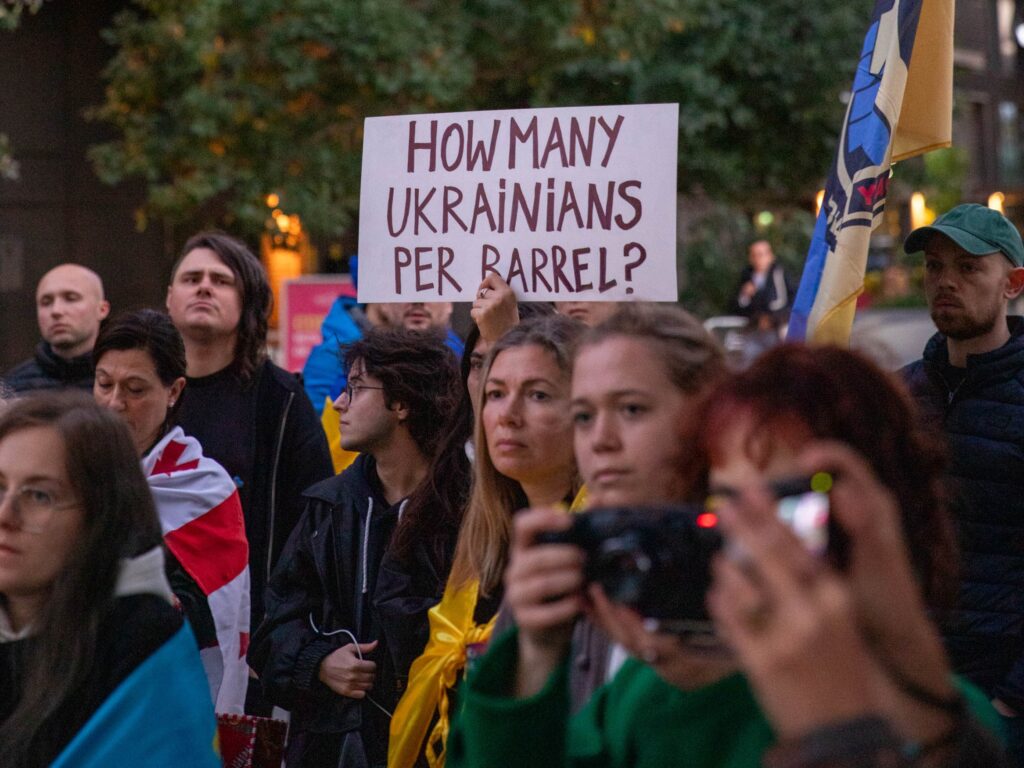
Pro-Ukraine protesters rally in London, England, against US policy toward Russia, 16 October 2026. Photo: Khrystyna Shebunchak

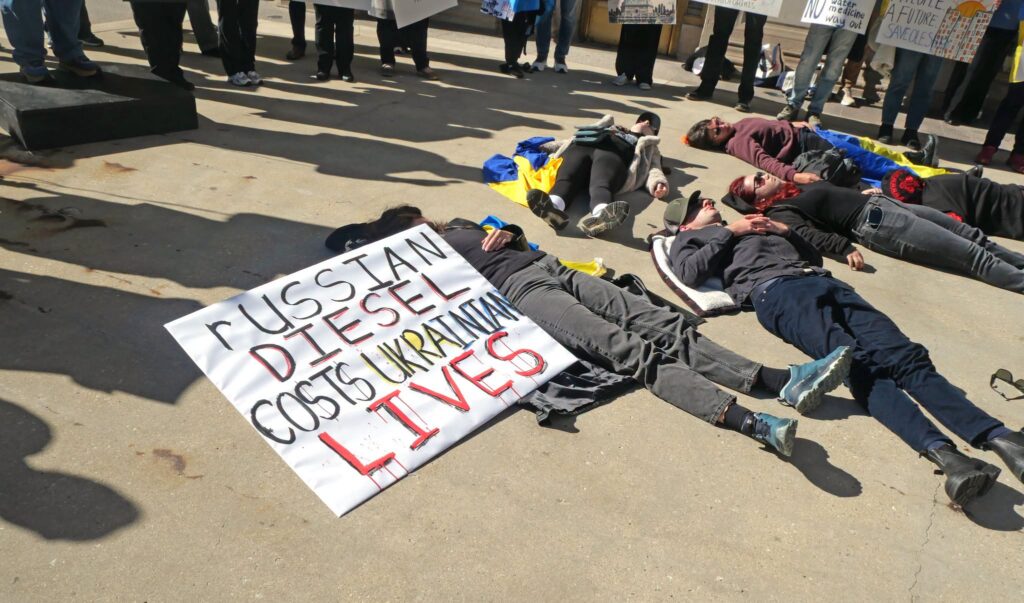
Pro-Ukraine demonstrations took place in more than 10 cities across Europe, North America, and Australia over the past week, with protesters opposing US President Donald Trump’s agreement to resume Russian diesel shipments, the easing of sanctions on Moscow, and restrictions affecting Ukraine’s military support.

The protests were organized by Ukrainian diaspora groups and international supporters of Ukraine, who called on Washington to maintain pressure on the Kremlin, restore Ukraine’s access to Starlink, and stop using military aid and intelligence sharing as leverage against Kyiv. 

The International Center for Ukrainian Victory (ICUV) said the actions reflected growing concern over US decisions that could benefit Russia while its war against Ukraine continues.

Pro-Ukraine protesters rally in Chicago, USA, against US policy toward Russia, 13 October 2026. Photo: Radio UA Chicago
Pro-Ukraine protesters rally outside the US consulate in Edinburgh, Scotland, against US policy toward Russia, 21 October 2026. Photo: Ukraine Solidarity Campaign

The demonstrations followed Trump’s announcement on 9 October that Russia would supply diesel to US and global markets. The US Treasury’s Office of Foreign Assets Control subsequently issued a temporary license authorizing transactions involving Russian-origin diesel, including imports into the United States, through 7 April 2027. 

The decision reversed part of Washington’s restrictions on Russian fuel imposed after Russia’s full-scale invasion of Ukraine in 2022.

“We are witnessing a dangerous situation today: Russia, which attacks Ukrainian cities every day, is being offered economic agreements and sanctions relief, while Ukraine is being asked to make concessions. But Ukrainians cannot simply stop fighting. For us, this is a matter of our state’s existence. Our future cannot be the subject of agreements between Trump and Putin. It belongs to Ukrainians,” said Olena Ivashchenko, founder of Campaign for Ukraine.

Pro-Ukraine protesters rally in Sydney, Australia, against US policy toward Russia, 16 October 2026. Photo: Ukrainians in Sydney
Pro-Ukraine protesters rally in Rome, Italy, against US policy toward Russia, 21 October 2026. Photo: Ukrainian World Congress

Protests target Russian fuel deal and pressure on Kyiv

In London, hundreds of protesters gathered outside the US Embassy on 16 October, according to organizers from Campaign for Ukraine and partner groups. Participants included Ukrainians, Britons, Americans, and members of other national communities. British lawmakers also raised the issue in Parliament.

Demonstrators carried signs reading “How Many Ukrainians per Barrel?” and “Occupation Is Not Peace,” calling on Washington to preserve sanctions and reject pressure on Ukraine to make territorial concessions.

Pro-Ukraine protesters rally in London, England, against US policy toward Russia, 16 October 2026. Photo: Khrystyna Shebunchak
Pro-Ukraine protesters rally in Sydney, Australia, against US policy toward Russia, 16 October 2026. Photo: Ukrainians in Sydney
Pro-Ukraine protesters rally in Chicago, USA, against US policy toward Russia, 13 October 2026. Photo: Radio UA Chicago

Protests also took place in Edinburgh, Chicago, Houston, Boston, San Diego, Prague, Rome, Stockholm, and Sydney. In Prague, two Ukrainian activists staged a protest outside the US Embassy on 21 October, pouring a red liquid resembling blood onto the road to symbolize the human cost of the policy.

Ukrainian activists stage a protest outside the US Embassy in Prague on 21 October, pouring red liquid onto the road to symbolize the bloodshed caused by Russia’s war against Ukraine and condemn US policies toward Moscow. Photo: Kaputin

Participants in several cities also condemned restrictions on Starlink, delays in ammunition supplies, and disruptions to intelligence sharing with Ukraine.

The diesel agreement has drawn criticism in Ukraine because Russian fuel exports generate revenue for Moscow while its forces continue attacking Ukrainian cities and infrastructure. A Russian diesel tanker carrying 40,000 metric tons of fuel departed Russia’s Baltic port of Primorsk on 22 October bound for New York, according to shipping data reported by Reuters. It was expected to arrive on 7 November.

Pro-Ukraine protesters rally in Chicago, USA, against US policy toward Russia, 13 October 2026. Photo: Radio UA Chicago
Pro-Ukraine protesters rally in Stockholm, Sweden, against US policy toward Russia, October 2026. Photo: Nordic Ukraine

Organizers warn against easing pressure on Moscow

Protest organizers argued that restoring Russian fuel sales and relaxing sanctions risk helping Moscow finance its war. They also opposed any US effort to secure concessions from Kyiv without requiring Russia to end its aggression.

The demonstrations reflect concerns among Ukraine’s international supporters that Washington’s pursuit of economic agreements with Moscow could undermine efforts to isolate Russia and strengthen Kyiv’s position.

Trump has defended the diesel arrangement as a way to increase fuel supplies and lower prices. His administration has also presented engagement with Moscow as part of its broader effort to end the war, while critics question whether easing economic pressure will produce meaningful concessions from the Kremlin.

Pro-Ukraine protesters rally in Boston, USA, against US policy toward Russia, 13 October 2026. Photo: Boston Supports Ukraine
  •  

European Leaders Split Over Phone Call to Putin

The diplomatic outreach was part of an effort to push talks to end the war in Ukraine, though it was not welcomed by all European leaders.

© Pool photo by Maxim Shipenkov

President Vladimir Putin of Russia in Moscow on Friday.
  •  

The Guardian view on the far right’s plans for Brussels: doing the work of Xi, Putin and Trump | Editorial

Par : Editorial

If ever enacted, proposals by Marine Le Pen and the AfD leader, Alice Weidel, to hollow out EU institutions would be a continental act of self-harm

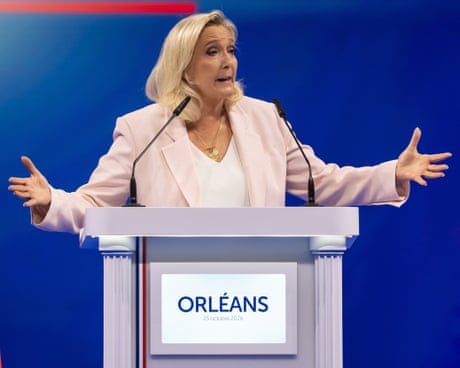
Following the Brexit referendum in 2016, Marine Le Pen was in a predictably celebratory mood. Britain’s vote to leave the European Union, she told one interviewer, was the first breach in the “Brussels Wall”. Ms Le Pen’s Front National party was at that point committed to taking France down the same path, given the chance. But as the UK’s self-inflicted economic wounds became a cautionary tale for the rest of Europe, the notion of Frexit was put on ice.

Instead, Ms Le Pen now hopes to lead far-right allies in hollowing out the EU from within. This month, both she and the leader of Alternative für Deutschland, Alice Weidel, outlined their visions of a “Europe of nations” in which EU institutions would be stripped of both cash and power. Ms Weidel’s “new deal for Europe” would abolish elections to the European parliament, and seek German opt-outs in areas such as migration, defence and common borrowing. Ms Le Pen’s party, now called National Rally, proposes slashing French contributions to the EU budget by 60% over a five-year presidential term, and ending the role of Brussels in proposing common policies for the 27 member states.

Do you have an opinion on the issues raised in this article? If you would like to submit a response of up to 300 words by email to be considered for publication in our letters section, please click here.

Continue reading...

© Photograph: Christophe Petit-Tesson/EPA

© Photograph: Christophe Petit-Tesson/EPA

© Photograph: Christophe Petit-Tesson/EPA

  •  

Trump Explores Lifting Sanctions on Russia’s Flagship Investment Fund

The move would be the latest U.S. concession to Moscow as President Trump pursues economic incentives he hopes will secure an end to war in Ukraine.

© Ramil Sitdikov/Reuters

Steve Witkoff and Jared Kushner, President Trump’s envoys, with Kirill Dmitriev, the head of the Russian Direct Investment Fund, in Moscow last month.
  •  
❌