Ohio State Professor Who Tackled a Filmmaker on Campus Resigns

© USA TODAY Network, via Reuters


© USA TODAY Network, via Reuters


French and US maritime patrol planes are watching the western Black Sea, where drones keep hitting merchant ships, Romanian outlet Curs de Guvernare reported on 19 October, citing flight-tracking data. Romania blames Russia for the attacks, while Bulgaria says it cannot prove who launched them.
Ukraine’s three small Danube ports have kept its grain exports from collapsing further, and Russia has pounded those ports since the summer. The ships serving them are now being hit in the economic zones of two NATO members. Many were anchored near or heading to the Sulina Canal, which links the Danube to the sea. That puts the allied patrols over these waters in the middle of the fight over Ukraine’s grain trade.

A French Navy Atlantique 2 maritime patrol plane arrived in Constanța, Romania’s main Black Sea port, on the evening of 18 October, Curs de Guvernare said. On 24 October, French Foreign Minister Jean-Noël Barrot said in the Bulgarian port of Varna that a French patrol plane had been operating in the area under NATO for two weeks and had contributed to rescue operations.
Meanwhile, a US Navy P-8A Poseidon flew into Varna from Sicily on 18 October, AFP reported, citing flight-tracking data. Two days later, Bulgarian Prime Minister Rumen Radev said it had begun reconnaissance patrols after Sofia asked allies for help, and that some allies had responded quickly. Bulgarian Defense Minister Dimitar Stoyanov called the deployment a joint decision of Bulgaria and NATO. He said the plane cannot strike targets and passes its data to NATO, Anadolu Agency reported.
On 20 October, NATO’s North Atlantic Council met at Romania’s request. Afterward, the alliance said it would send more maritime patrol aircraft, radar systems, and drones to the Black Sea. NATO military spokesman Col. Martin O’Donnell added that allies have sent or will send intelligence personnel and explosives-forensics teams. NATO itself has not attributed the attacks to any country.
Romania has been blunter. On 15 October, after four merchant ships were hit within a day, acting Foreign Minister Oana Țoiu wrote on X that “Russia bears full responsibility for these developments.” On 17 October, Romanian F-16s shot down two jet-powered Russian Geran drones near Sulina, Romania’s Defense Ministry said.
Unitățile aeriene și navale ale Gărzii de Coastă (GdC/MAI) și ale Inspectoratului General pentru Situații de Urgență (IGSU/MAI) sunt implicate activ în operațiunile de căutare și salvare, în vederea găsirii membrilor dați dispăruți ai echipajului navei care a fost atacată în…
— Toiu Oana (@oana_toiu) October 15, 2026
On 23 October, a drone sank the cargo ship Khoryv off Constanța, killing a Ukrainian sailor, and President Nicușor Dan blamed Russia too. “It is part of Russia’s escalation process in its war in Ukraine,” Dan said.
Bulgaria is more cautious. Radev told parliament on 14 October that the attacks worked in Russia’s favor but that Sofia could not prove it. Since taking office in May, he has sought a thaw in ties with Moscow.


© Carlos Giusti/GFR Media, via Imago


© Haiyun Jiang for The New York Times


© Haiyun Jiang for The New York Times


© Al Drago for The New York Times


© Al Drago for The New York Times


© Sam Mellish/In Pictures, via Getty Images


US President Donald Trump’s envoys told Kyiv that letting Russia sell diesel could draw Moscow back to peace talks, Reuters reported. In the same meeting, they said Russia’s leader was not ready to negotiate. Since then, Moscow has offered nothing in return, and Trump has brushed off claims that Russia helps Iran.
Washington is pressing Ukraine to stop striking Russian refineries and offering Moscow economic incentives to return to peace talks, even though Russia has made no commitment in return. Yesterday, Russian ballistic missiles hit Kyiv before air raid sirens sounded, amid disputed warnings that the US could cut intelligence support. Meanwhile, Ukraine is being asked to halt its long-range campaign against the oil infrastructure that fuels and finances Russia's war.
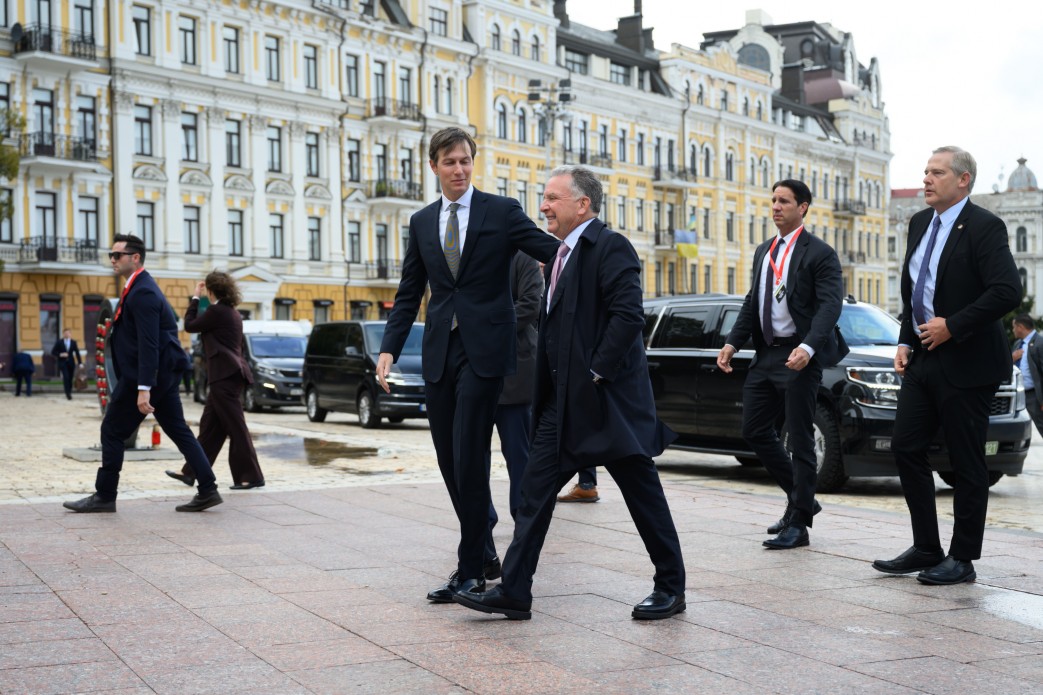
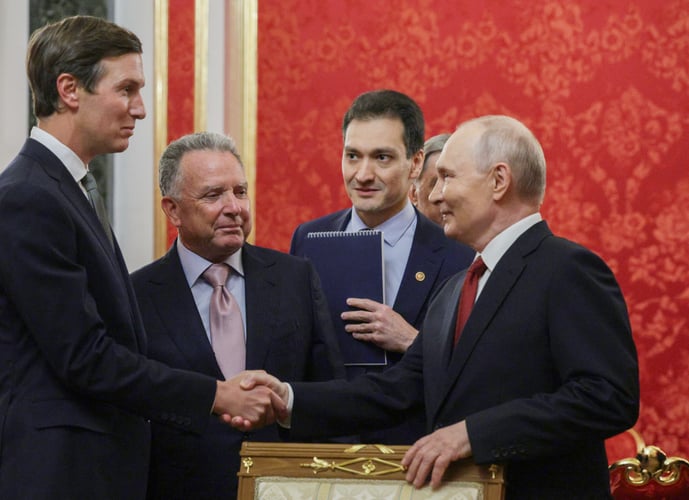
Trump’s Middle East envoy Steve Witkoff and Trump’s son-in-law Jared Kushner met the Ukrainian delegation in Miami on 9 October. They described Russian President Vladimir Putin as unprepared to negotiate but said the diesel deal could help restart three-way talks, two of the sources said.
The third source said the deal could “soften” Moscow because it “sends a signal that Trump is open to do things” with Russia. One of the sources described the plan:
“The idea was that the US could go back to Russia and say ‘See, the Ukrainians stopped striking and we gave you this deal. Now it’s your turn to do something.’”
Ukraine’s part was to stop hitting Russian refineries. Kushner repeated Trump’s request at the meeting, noting the administration had made it several times, two sources said.
The Ukrainians agreed to nothing formally, Reuters’ sources said. They signaled they would accept an energy ceasefire if Russia did the same, but saw the US approach as an attempt to appease Russia with business deals.
Two days later, Trump declared an energy ceasefire, and Ukrainian President Volodymyr Zelenskyy said Ukraine was ready if Russia reciprocated. Euromaidan Press has monitored official and unofficial Ukrainian and Russian sources and found no reports of new Ukrainian strikes on Russian refineries after Trump’s announcement. One of the last, on the night of the diesel announcement, knocked out more than half the tanks at a fuel-export terminal in Rostov-on-Don.
Three sources told Reuters the envoys did not threaten to cut US support over the refinery strikes. A Ukrainian official told Axios, however, that the envoys warned Trump could cut Ukraine off from US intelligence, which a US official denied. US officials are also believed to have told European allies that Trump would halt PURL, the NATO scheme for Europe-funded US weapons for Ukraine, unless the strikes stopped, according to FT.
A person close to the Kremlin told Reuters that Putin would return to the table only when he gets “the remaining 11% of Donbas.” Ukraine refuses to cede more land. During the 9 October call that produced the deal, Putin declined to commit to resuming talks, his aide Yuri Ushakov told reporters, Axios reported.
Moscow has not confirmed the energy ceasefire either. Trump insisted on 12 October that the sides had agreed “because I said they agreed,” RFE/RL reported. On the evening of 12 October, Russian munitions collapsed an apartment stairwell in Kharkiv, killing four people. Russian Deputy Prime Minister Aleksandr Novak, meanwhile, claimed diesel exports could reach 3.0–3.5 million tons a month by year-end, above the volumes Trump announced.
Late on 12 October, Trump wrote on Truth Social that he did not believe Russia and China were helping Iran, since they have “too much to lose.” In March, he told Fox News that Putin “might be helping them a little bit.” Asked about Russia’s possible support for Iran, Treasury Secretary Scott Bessent told Fox News on 2 September that his message to everyone was to “stay away.” That month, a Financial Times investigation found Russia secretly helping Iran develop supersonic cruise missiles that could threaten US warships.


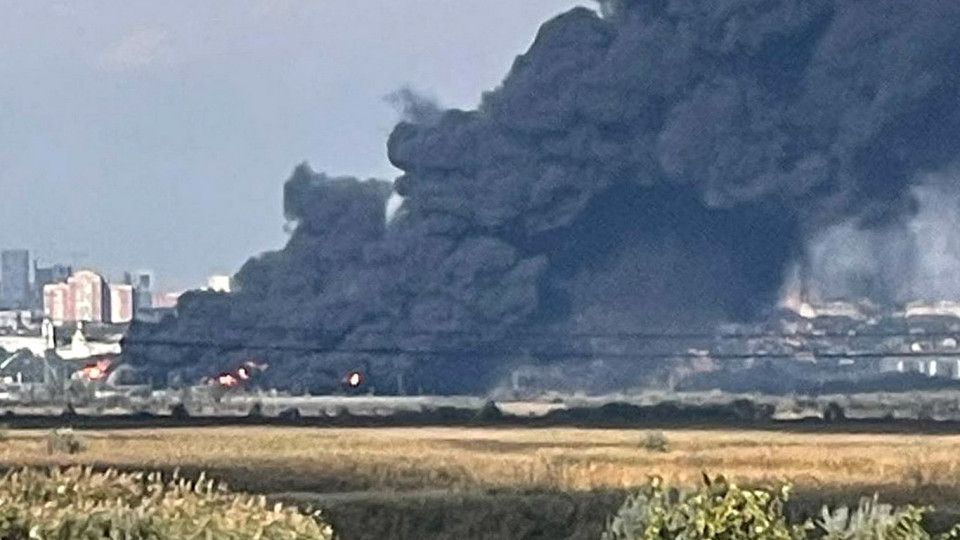
A drone strike on 10 October put more than half of the large fuel tanks out of action at an oil-loading terminal in Russia’s Rostov-on-Don, Russian news Telegram channel Astra found. The terminal loads fuel onto river and sea tankers for export, and it burned for two days while a local channel wrote that reeds might be on fire. Neither Kyiv nor Moscow has officially acknowledged the hit. It came hours after US President Donald Trump announced a diesel deal with Russian leader Vladimir Putin.
Russia has spent the autumn hammering Ukraine’s power grid ahead of winter. Ukraine’s long-range drones keep hitting the refineries, depots, and terminals that fuel Russia’s army and earn it export revenue. Every burned tank turns that revenue into repair bills, while Moscow is already subsidizing its own fuel pumps. A refinery-only truce of the kind the White House described a day after the strike would shield the Russian plants that feed terminals like this one.
Astra’s analysts concluded from eyewitness footage that at least seven of the terminal’s 12 large tanks had been knocked out. Ukrainian monitoring channel Supernova+ counted seven burned-out tanks and one more scorched by the fire.
The fire was still burning in the early hours of 12 October. Local channel Rostov Glavny posted video of the burning tank farm, passing on rumors that reeds were on fire and noting the city’s second day under smoke, The Moscow Times reported. Footage filmed in the daytime on 12 October showed no more open flames, only gray smoke, according to Astra.

The site is the oil-loading terminal of the Novoshakhtinsk Oil Products Plant, formerly known as Yug Rusi, in Rostov-on-Don’s Zheleznodorozhny District. It receives, stores, and transships fuel onto river and sea tankers, including for export, Ukrainian monitoring channel Exilenova+ said.
The terminal also supplies fuel to the Russian army and earns Moscow hard currency, ZN reported. The Moscow Times put its loading capacity at 3.5 million tons a year and its tank farm at about 60,000 cubic meters, roughly 16 million gallons.
The refinery itself stands in the town of Novoshakhtinsk near the border with Russian-occupied Luhansk Oblast. The terminal sits on the Don River with access to the Sea of Azov, Ukrainian military outlet Militarnyi noted. Ukraine hit the refinery in June, and Ukraine’s General Staff reported striking the Yug Rusi terminal on 9 July, placing it in Bataysk.
Exilenova+ posted images of the burning terminal in the early hours of 10 October. It presented them as the site after Trump’s phone call with Putin. The channel later shared NASA satellite fire data showing the blaze.
Rostov Oblast Governor Yuri Slyusar claimed the attack injured six people. Slyusar further stated air defenses downed more than 100 drones over the region. Radio Liberty’s Russian Service noted that neither side had officially confirmed the hit on the terminal.

The strike came hours after Trump announced on 9 October that Russia had agreed to supply diesel to US and global markets. The US Treasury then cleared the trade with a sanctions license.
On 11 October, Trump declared an “energy ceasefire” between Russia and Ukraine. Under it, he expects Ukraine to stop striking Russian refineries, a White House official told Axios.
Ukrainian President Volodymyr Zelenskyy said that evening that Ukraine’s armed forces had received all relevant orders. Neither Ukrainian monitoring channels nor Russian officials have reported a new strike on a Russian oil facility since. On 13 October, Zelenskyy said Ukraine was ready to guarantee an energy ceasefire if Russia took matching steps.


© Patrick Doyle/Reuters
La Caq permettrait aux médecins spécialistes d’exercer à la fois dans le réseau public et au privé.
Christine Fréchette couperait 1 milliard $ dans les dépenses administratives de Santé Québec.
Le Parti conservateur supprimerait l’interdiction d’explorer et d’exploiter les hydrocarbures.
Éric Duhaime lancerait des projets pilotes de puits de gaz de schiste.
Le Parti libéral miserait sur le préfabriqué pour construire, à terme, 100 000 logements par an.
Charles Milliard instaurerait un programme de prêts sans intérêt pour les entreprises du préfabriqué.
Le Parti québécois réduirait les coûts de rémunération du secteur public de 4,7 milliards $ en un mandat.
Paul St-Pierre Plamondon créerait un secrétariat à l’efficacité gouvernementale.
Québec solidaire réduirait de moitié le décrochage scolaire.
Ruba Ghazal embaucherait 1500 membres du personnel de soutien et 500 professionnels supplémentaires.
[L'article Campagne électorale au Québec: l’essentiel des promesses faites hier a d'abord été publié dans InfoBref.]
Caq
Christine Fréchette était à Québec.
Elle fait de la guerre commerciale avec les États-Unis la question de l’urne, et a désigné Donald Trump comme son «véritable adversaire».
Parti conservateur du Québec
Éric Duhaime était dans Bellechasse, dans Chaudière-Appalaches, où il se présente.
Il soutient que les Québécois ne s’intéressent pas aux positions de ses candidats – l’un d’entre eux s’était dit en faveur de l’annexion du Canada par les États-Unis – mais plutôt aux solutions pour «dégraisser» l’État québécois.
Parti libéral du Québec
Charles Milliard était à Québec.
Milliard affirme qu’il est temps d’offrir aux Québécois des solutions.
Il a fait plusieurs annonces pour la Capitale-Nationale, dont des mesures visant à améliorer la mobilité.
Parti québécois
Paul St-Pierre Plamondon était dans sa circonscription, Camille-Laurin, à Montréal.
Il refuse de laisser la guerre commerciale «confisquer» l’élection, et affirme que le Parti québécois est l’«équipe économique la plus solide» face à Donald Trump.
Québec solidaire
Ruba Ghazal et Sol Zanetti étaient au Vieux-Port de Montréal.
Ils placent le logement, le coût de l’épicerie, le transport collectif, la redistribution de la richesse et l’indépendance en tête de leurs priorités.
[L'article Voici comment les chefs des cinq partis ont entamé leur campagne a d'abord été publié dans InfoBref.]
Paul St-Pierre Plamondon a annoncé hier que si le Parti québécois remporte les élections en octobre:
Le second mandat de Trump doit se terminer en janvier 2029.
Le mandat du prochain gouvernement québécois doit, lui, se terminer en octobre 2030.
Le chef péquiste soutient que l’avenir politique du Québec exige «un débat éclairé et serein», et que ce débat ne doit pas «être confisqué par les coups d’éclat d’un président imprévisible».
[L'article Un gouvernement péquiste attendrait le départ de Trump pour tenir un référendum a d'abord été publié dans InfoBref.]


Le chef du Parti québécois a indiqué hier qu’il ferait aujourd’hui «une déclaration importante» sur la proposition d’un référendum sur l’indépendance du Québec.
Selon La Presse, le chef péquiste aurait l’intention d’apporter des précisions sur son engagement à tenir un référendum s’il est porté au pouvoir en octobre.
Dans un sondage Léger-Le Journal-TVA publié la semaine dernière, 31% des personnes interrogées disaient qu’elles appuyaient la souveraineté.
[L'article Paul St-Pierre Plamondon s’apprête à faire une annonce sur le référendum a d'abord été publié dans InfoBref.]
Les péquistes s’engagent à réduire, avant 2034, les émissions de gaz à effet de serre de 42,5% par rapport aux niveaux de 1990.
Pour atteindre son objectif, le PQ compte miser sur des incitatifs financiers, notamment pour l’achat de véhicules électriques et de thermopompes.
Il s’engage à instaurer une passe universelle de transport collectif à 95 $ par mois.
En 2022, le PQ avait proposé une passe de transport collectif à environ 30 $ par mois.
[L'article Le Parti québécois a dévoilé son plan pour l’environnement a d'abord été publié dans InfoBref.]