Vue normale

  • ✇Euromaidan Press
  • Ukraine’s Soviet S-300 air defenses ran low—now the US and Ukraine are working to revive their missiles
    The United States and Ukraine are working together to put fresh missiles into Ukraine's aging Soviet-era S-300 air defenses, retired US Army colonel Robert Hamilton told PBS NewsHour. These long-range systems shoot down aircraft, but the missiles that feed them have been depleted. The effort—retrofitting old rounds or building a newer variant—would revive launchers Ukraine already owns. Ukraine's air defense runs on a shrinking supply of interceptors, with Russian b
     

Ukraine’s Soviet S-300 air defenses ran low—now the US and Ukraine are working to revive their missiles

7 août 2026 à 09:20

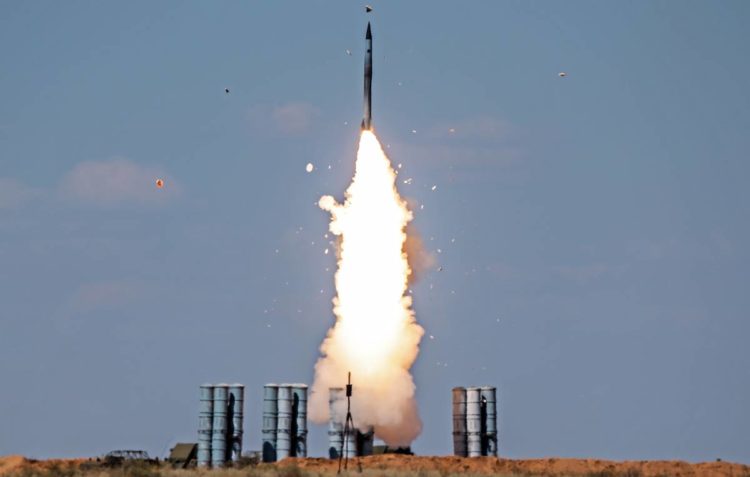
s-300 missile launch ground battery

The United States and Ukraine are working together to put fresh missiles into Ukraine's aging Soviet-era S-300 air defenses, retired US Army colonel Robert Hamilton told PBS NewsHour. These long-range systems shoot down aircraft, but the missiles that feed them have been depleted. The effort—retrofitting old rounds or building a newer variant—would revive launchers Ukraine already owns.

Ukraine's air defense runs on a shrinking supply of interceptors, with Russian ballistic and drone strikes outpacing what allies can ship. The chokepoint is production capacity, not willingness—and Hamilton frames the S-300 rebuild as one of the slower-burn fixes that ease the strain on scarce Western systems rather than replace them.

A working system near the end of 2026

Hamilton, who heads the Delphi Global Research Center, said the joint effort should come online near the end of 2026 and could turn out "100 or a couple of hundred" anti-aircraft missiles a year. He described the work as an effort to "essentially retrofit or upgrade the old S-300 missiles or a newer variant of the S-300" and give the system better capabilities.

blackouts donetsk
Explore further

Ukraine drones hit Crimea’s S-300/S-400 near Kerch—and knocked out power across four occupied territories overnight

In September 2024, then-US Defense Secretary Lloyd Austin announced at the Ramstein contact group that Washington, in partnership with several European companies, was working with Ukraine to "design and build a substitute" for the Soviet S-300 and the R-27 air-to-air missile used by fighter jets. He never spelled out what that substitute would be.

Why Ukraine's S-300s ran law

When Russia launched its full-scale invasion in 2022, Ukraine held roughly 25-30 S-300PT/PS battalions in varying states of readiness. As the missiles ran out, Kyiv came to lean on Western air defense systems and interceptors while Russia keeps launching mass strikes.

Smoke billows over Kirov, Russia, following a reported Ukrainian strike on the Avitek defense plant, 25 July 2026. Photo: Exilenova+
Explore further

“Very good results” – Wave of Ukrainian strikes across Russia and Caspian Sea overnight target warships, air defenses, logistics

Anything Ukraine can build or rebuild on its own soil is a supply that no foreign stockpile or political fight can cut off.

That same logic is pushing Kyiv toward co-producing Patriots with US firms and fielding its own ballistic interceptor—a race to turn air defense into a domestic industry before the next winter of strikes.

  • ✇Euromaidan Press
  • American tank missiles, an Israeli radar, a Dutch truck—Ukraine welded them into one drone-killer
    Ukraine has publicly shown off a homemade air-defense weapon that turns American anti-tank missiles into a drone-killer, The Defence Blog reported. The launcher stacks spare parts from three countries onto an ordinary military truck. It hands Ukraine a cheaper way to knock down the Russian attack drones that hit its cities. Ukraine has become a proving ground for cheap air defense, forced there by a Russian bombing campaign that leans on mass and low cost. Then what
     

American tank missiles, an Israeli radar, a Dutch truck—Ukraine welded them into one drone-killer

5 août 2026 à 09:37

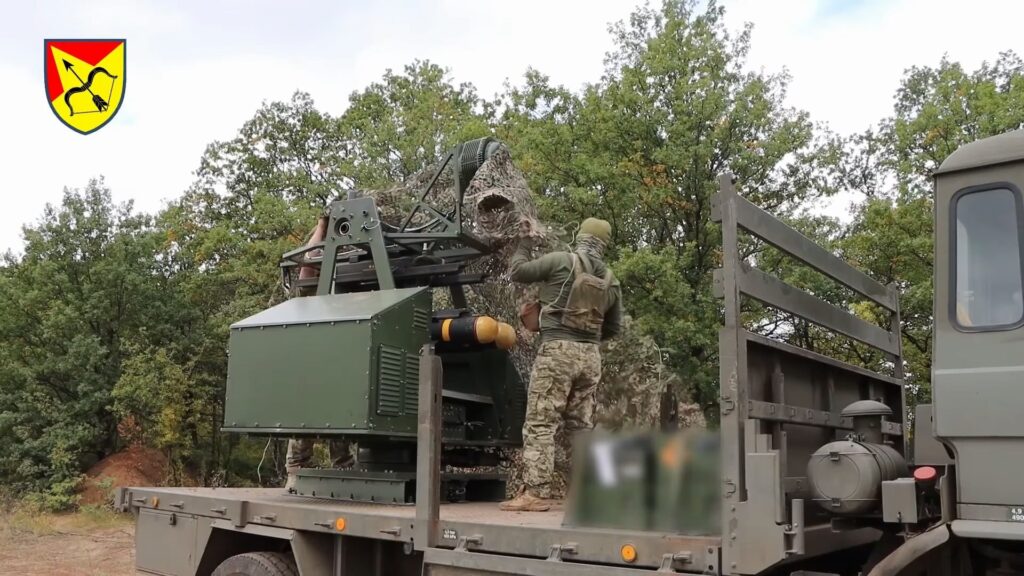
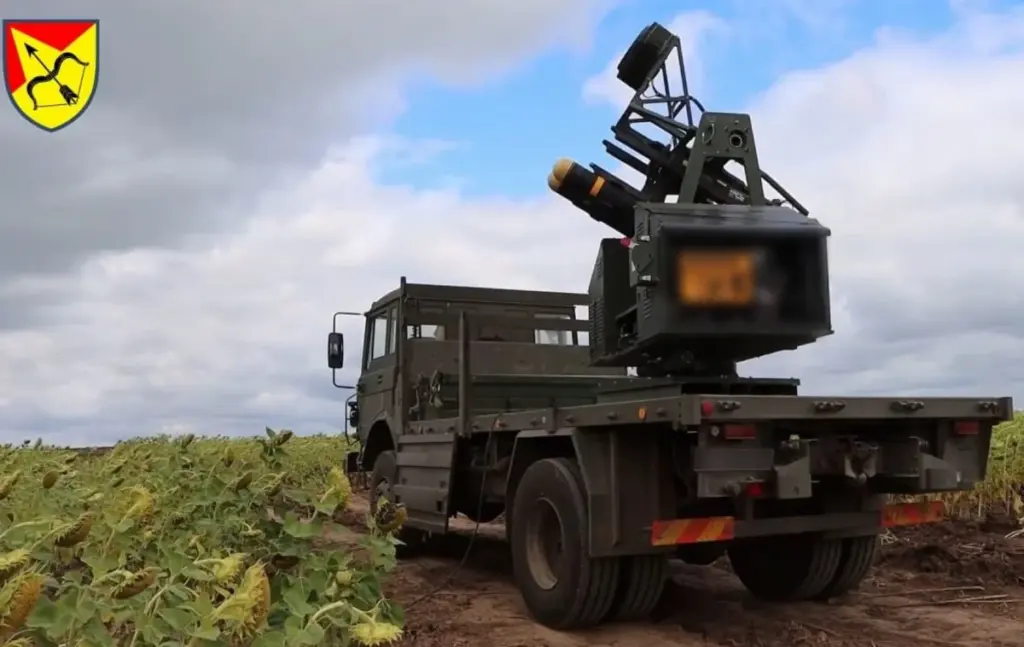
The STASH air defense system mounted on a truck chassis. Ukraine, August 2026

Ukraine has publicly shown off a homemade air-defense weapon that turns American anti-tank missiles into a drone-killer, The Defence Blog reported. The launcher stacks spare parts from three countries onto an ordinary military truck. It hands Ukraine a cheaper way to knock down the Russian attack drones that hit its cities.

Ukraine has become a proving ground for cheap air defense, forced there by a Russian bombing campaign that leans on mass and low cost. Then what works over Ukrainian cities is increasingly getting copied abroad.

Three countries' parts, one Ukrainian drone-killer

Ukraine's 302nd Anti-Aircraft Missile Brigade released an official video of the weapon, called STASH. Clips had leaked online for months, but this is the first time the military has shown it openly.

High-quality images of another variant of Ukraine's STASH short-range air defense system, this time mounted on a DAF YA 4442 truck and operated by the 302nd Anti-Aircraft Missile Brigade.

The STASH system can carry up to four AGM-114L Longbow Hellfire missiles for engaging UAVs.… pic.twitter.com/ewCiLHoJlj

— OSINTWarfare (@OSINTWarfare) August 3, 2026

The build is a patchwork. The missile is American. The radar comes from RADA, an Israeli maker of defense electronics. The truck is a Dutch DAF, a type that the Netherlands has long supplied to Ukraine. Crews bolted them together into a single launcher.

Why a tank missile now hunts drones

The missile at the core is the Hellfire, built to punch through tanks and armored vehicles when fired from helicopters. Ukraine repurposed it to shoot things out of the sky instead.

Ukraine's mobile gun team. Photo: Ukraine's Air Force via Facebook
Explore further

Ukraine’s private air defense has quadrupled since spring: businesses are now shooting down Shaheds over their own sites

Not just any Hellfire, though. This is the radar-guided Longbow version (AGM-114L), not the common laser-guided one. After launch, the missile picks out its target and stays on it without further help from the crew. The crew does not have to keep pointing anything at the drone. They can fire without staying locked in place to guide the missile. The Israeli radar spots small, low-flying drones that slip past standard air-defense sets.

What it can and can't do

The weapon reaches about 10 kilometers (6.2 miles). That makes it a short-range system, built to guard one specific site rather than cover wide stretches of sky the way Patriot batteries do.

The STASH air defense system mounted on a truck chassis. Ukraine, August 2026
The STASH air defense system mounted on a truck chassis. Ukraine, August 2026. Screenshot from a video by the 302nd Anti-Aircraft Missile Brigade.

It is built to stop Russia's Shahed and Geran attack drones—including the newer jet-powered versions that now fly too fast for Ukraine's cheap interceptor drones to chase down. What it cannot reach are Russia's cruise and ballistic missiles, which travel much faster still.

The cost math behind the welding

A single Patriot interceptor runs into the millions of dollars. A Shahed-type drone sets Russia back just a few tens of thousands of dollars, and it launches them in swarms of hundreds during a single night. Trading costly missiles for cheap drones is a losing exchange, and it drains Ukraine's limited stock of interceptors.

STASH is how Ukraine tries to rebalance those numbers. It leans on anti-tank missiles that are cheaper and more available than purpose-built interceptors, carried on plain trucks rather than the permanent emplacements a full battery demands. Ukraine has been chasing cheaper ways to stop drones for a while now.

antónio costa, volodymyr zelenskyy and ursula von der leyen in kyiv on 24 february 2026
Explore further

EU releases another €3.47 billion for Ukraine’s “urgent needs” – drones, missiles, air defense, and Gripen jets

Not the first improvisation

STASH is not brand-new. It draws its missile and radar from a prior system, Tempest, built by the American contractor V2X and reportedly already flying with Ukraine's Air Force. Footage of Tempest downing drones at night surfaced in January 2026. STASH appears to strip that idea down, swapping the buggy-style chassis for a simpler truck or trailer launcher—less mobile, but cheaper to run and better for guarding fixed sites.

Ukraine has welded mismatched gear together like this before, pairing donated missiles with whatever launchers and trucks it can find.

  • ✇Euromaidan Press
  • US has burned through 80% of THAAD interceptors, sources tell CNN
    The US military has used up nearly 80% of its THAAD interceptors and roughly half of its Patriot stock during the five-month war with Iran, according to two sources familiar with the latest Pentagon inventory report, CNN reported. Senior US military commanders are warning the Pentagon's munitions stockpile is "dangerously low," according to multiple sources familiar with the matter. The disclosure on THAAD levels has not been previously reported. Before the war began, t
     

US has burned through 80% of THAAD interceptors, sources tell CNN

5 août 2026 à 03:24

us weapon

The US military has used up nearly 80% of its THAAD interceptors and roughly half of its Patriot stock during the five-month war with Iran, according to two sources familiar with the latest Pentagon inventory report, CNN reported.

Senior US military commanders are warning the Pentagon's munitions stockpile is "dangerously low," according to multiple sources familiar with the matter. The disclosure on THAAD levels has not been previously reported. Before the war began, the US had around 2,200 Patriot interceptors of the platform's two most modern variants and 452 THAAD missiles, according to Center for Strategic and International Studies (CSIS) estimates. CSIS has assessed the war with Iran drained over half the global Patriot stockpile within its first 39 days.

The Patriot and THAAD systems are the same interceptor families that arm Ukraine's own air defense against Russian ballistic strikes - Kyiv depends on to stop Russian ballistic missiles. Thus a stockpile "dangerously low" for Washington is one that's already left Ukrainian Patriot launchers running empty during Russian barrages.

Commanders call stockpiles dangerously low

The US Army has fired "virtually all" of its long-range, surface-to-air precision weapons during the war, one source told CNN, referring to Army Tactical Missile Systems (ATACMS) and Precision Strike Missiles (PrSM). Close to half of the US Tomahawk cruise missile stockpile has also been used, a source said, up from nearly 30% reported by CNN in April.

Gulf allies have raised concerns that the shortage could limit their own ability to intercept Iranian retaliation, particularly if Washington resumes strikes. Replenishment is slow: the Pentagon is currently receiving about 15 new Tomahawks and 20 new Patriot missiles a month, and CSIS estimates rebuilding THAAD stocks to prewar levels will take three years or more.

Weekend strikes called off over stockpile concerns

The munitions warnings, combined with intelligence on the risks of striking Iranian energy infrastructure and concerns raised by Gulf states, were factors in President Donald Trump's decision to call off planned strikes over the weekend, according to CNN's sources. Trump had authorized the operation Friday, with Defense Secretary Pete Hegseth receiving the final order to proceed, a senior Trump official said. Trump reversed course Saturday after Middle East allies told him they feared Iranian retaliation against their energy infrastructure, the official said. He told Hegseth to stand down for now but has not ruled out strikes at a later date.

Pentagon spokesman Sean Parnell said in a statement that the US military "has everything it needs to execute at the time and place of the President's choosing." White House spokesperson Anna Kelly said the military has "more than enough munitions, ammo, and stockpiles to serve all of President Trump's strategic goals and beyond."

Joint Chiefs Chairman Gen. Dan Caine raised the stockpile issue in a separate White House meeting last month, CNN previously reported, where officials also discussed the risk of mass civilian casualties from a resumed US campaign inside Iran.

The shortage extends beyond Iran

CNN's sources said the depleted stockpile could affect the US military's ability to fight a future war involving China, Russia, or North Korea. "The lack of interceptors means that conventional attacks can backfire if the suicide drones start making it through in-masse," one source said. "Tit-for-tat will never end this."

Euromaidan Press has reported that the same Patriot shortage has already strained deliveries to Ukraine, which depends on PAC-3 interceptors as its only defense against Russian ballistic missiles. A senior Ukrainian official has told the Financial Times that deliveries to Kyiv faced delays since the war with Iran began, and President Volodymyr Zelenskyy has said late arrivals have left Patriot launchers empty during Russian missile barrages.

Analysts expect a slow recovery. The Precision Strike Missile and Joint Air-to-Surface Standoff Missile inventories should return to prewar levels by mid-to-late 2027, according to CSIS. The Defense Department has signed two deals this week to expand Patriot and THAAD rocket motor production, though a Pentagon spokesperson declined to say when the expansion would show results.

Trump on Monday called Iranian leadership "unbelievably duplicitous" after Tehran denied that negotiations would resume, and said Tehran had one "last chance" to sign a deal.

❌