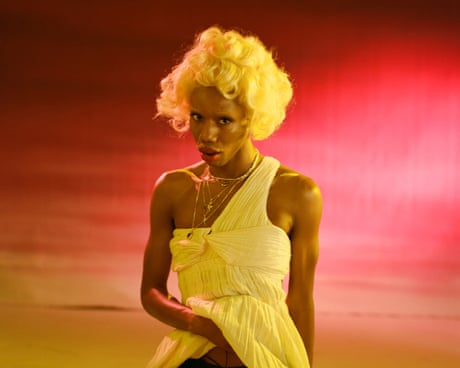
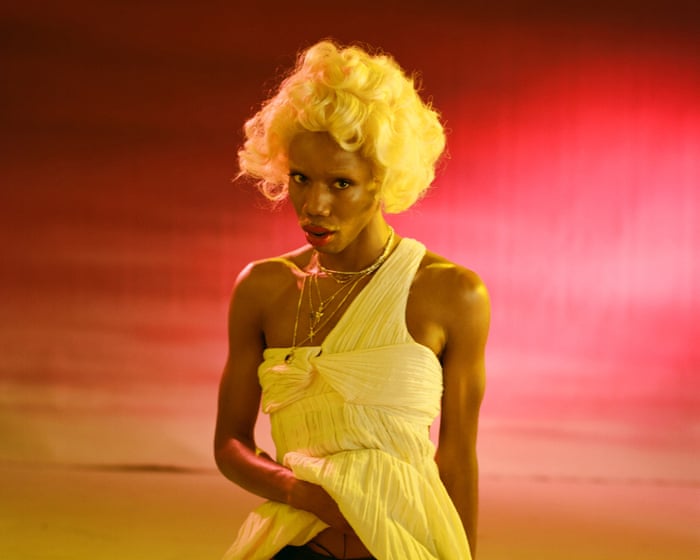
Through thoughtful conversations and dynamic images, Quil Lemons’s new book Quiladelphia explores how Black men navigate desire and masculinity as well as the stereotypes placed on them. With a foreword by Brontez Purnell and including Lemons in dialogue with musician Santigold and artist Lyle Ashton Harris, Lemons asks the audience to consider who can embody the American dream Continue reading...
Through thoughtful conversations and dynamic images, Quil Lemons’s new book Quiladelphia explores how Black men navigate desire and masculinity as well as the stereotypes placed on them. With a foreword by Brontez Purnell and including Lemons in dialogue with musician Santigold and artist Lyle Ashton Harris, Lemons asks the audience to consider who can embody the American dream
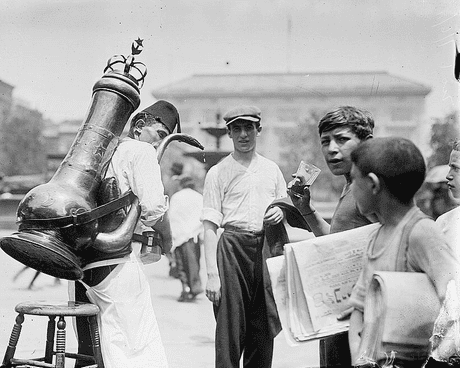
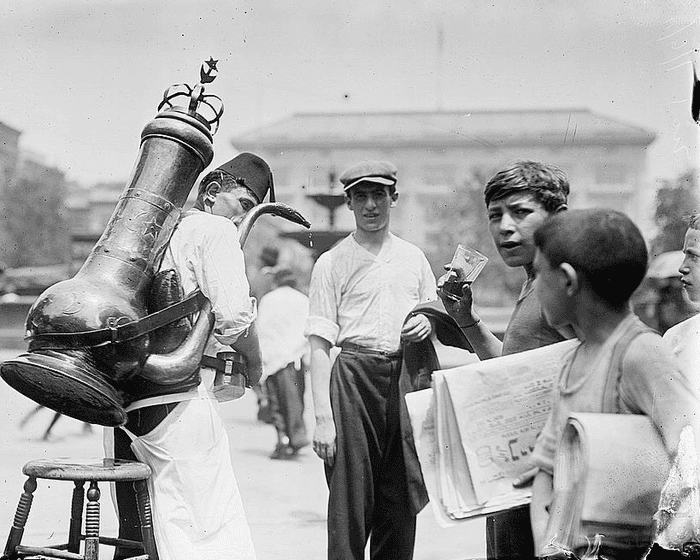
Lebanese officials were furious, claiming the city erased Gibran’s identity. Yet there was a time when Arab immigrants in the US thought ‘we were all Syrians’This is Muslim New York: artists, thinkers and politicos on defining a new era for the cityOn the morning of 30 April, in the shadow of the financial district’s skyscrapers, a gold cloth slid off a bright yellow sculpture of painted stainless steel, 7ft (2 metres) tall, that spells an Arabic word: “al Qalam”, the pen.The monument, Al Qalam:
Lebanese officials were furious, claiming the city erased Gibran’s identity. Yet there was a time when Arab immigrants in the US thought ‘we were all Syrians’
On the morning of 30 April, in the shadow of the financial district’s skyscrapers, a gold cloth slid off a bright yellow sculpture of painted stainless steel, 7ft (2 metres) tall, that spells an Arabic word: “al Qalam”, the pen.
The monument, Al Qalam: Poets in the Park, stands in Elizabeth H Berger Plaza and honors the writers of the vanished neighborhood that New Yorkers once called Little Syria: an Arabic-speaking immigrant community that ran along Washington Street, blocks from where the World Trade Center would later rise. The monument was the first commemorative artwork unveiled under Mayor Zohran Mamdani. Little Syria produced one of the most famous poets ever to live in New York: Kahlil Gibran, author of The Prophet, a book of poetic prose that has never gone out of print. The monument honors the Pen League, the circle of writers Gibran led in Little Syria in the early 20th century.
The Avant-Première preview of the Art Basel Paris fair attracted major collectors despite an escalation of anti-government protests, riots and looting across French cities.
The Avant-Première preview of the Art Basel Paris fair attracted major collectors despite an escalation of anti-government protests, riots and looting across French cities.
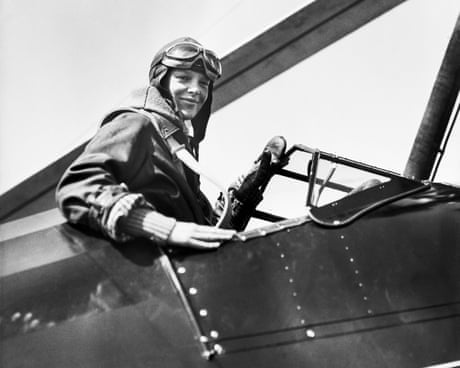
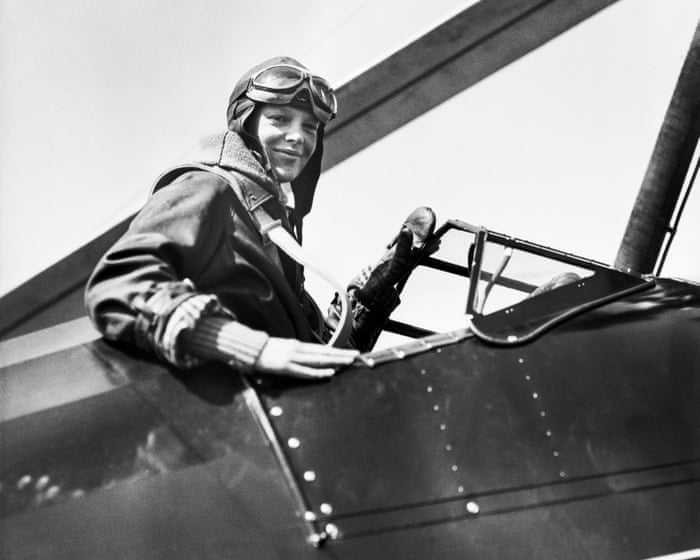
Expedition was drawn to Nikumaroro after spotting what was described as a metallic glint in waters off uninhabited islandA US expedition that voyaged to a remote Pacific island in the hope of solving the mystery of what happened to pioneering pilot Amelia Earhart has said an object they suspected to be her plane was a clump of washed-up trees.“Unfortunately, we weren’t able to find that smoking gun,” said Steve Schultz of Purdue University, standing on the sand in front of a blue lagoon on the a
Expedition was drawn to Nikumaroro after spotting what was described as a metallic glint in waters off uninhabited island
A US expedition that voyaged to a remote Pacific island in the hope of solving the mystery of what happened to pioneering pilot Amelia Earhart has said an object they suspected to be her plane was a clump of washed-up trees.
“Unfortunately, we weren’t able to find that smoking gun,” said Steve Schultz of Purdue University, standing on the sand in front of a blue lagoon on the atoll of Nikumaroro, about halfway between Australia and Hawaii.
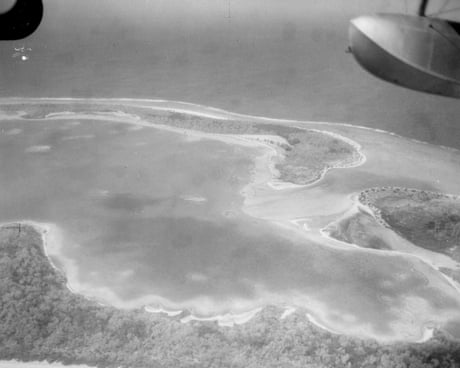
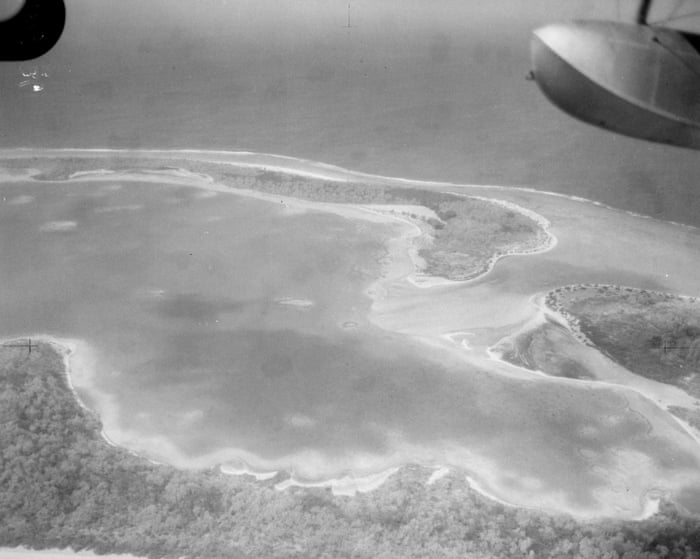
Images from New Zealand aerial survey of Nikumaroro in 1938 offer new clues over aviator’s disappearanceA New Zealand museum has released nearly 50 photos from a 1938 aerial survey of the island where Amelia Earhart is believed to have crash-landed, offering amateur sleuths new evidence to scour for traces of the pioneering aviator and her plane.The black-and-white images were published by the Air Force Museum of New Zealand after renewed interest in one of the biggest mysteries of the 20th cent
Images from New Zealand aerial survey of Nikumaroro in 1938 offer new clues over aviator’s disappearance
A New Zealand museum has released nearly 50 photos from a 1938 aerial survey of the island where Amelia Earhart is believed to have crash-landed, offering amateur sleuths new evidence to scour for traces of the pioneering aviator and her plane.
The black-and-white images were published by the Air Force Museum of New Zealand after renewed interest in one of the biggest mysteries of the 20th century, spurred by a US expedition to the Pacific atoll of Nikumaroro in search of new clues.
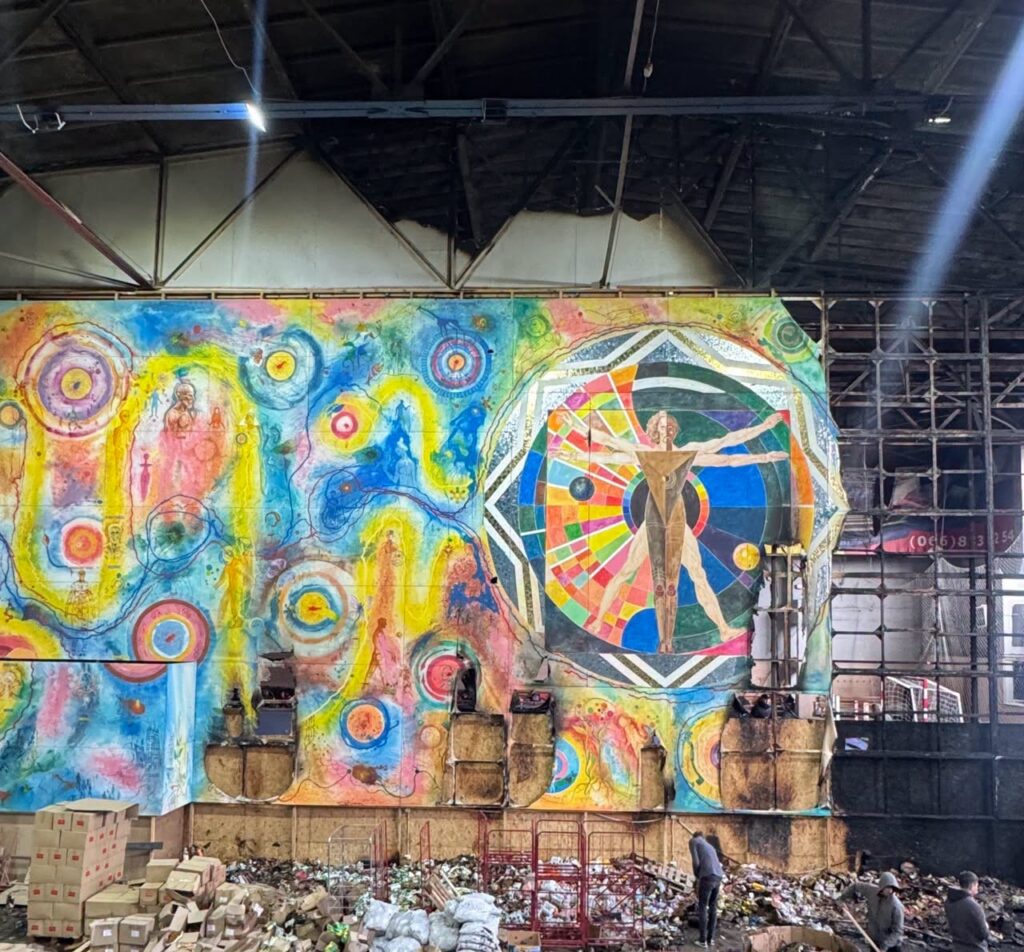
Debris from a Russian drone damaged Cosmogony, a painting that set a national record in Ukraine, the Korsaks Museum of Contemporary Ukrainian Art in Lutsk, where the artwork was exhibited, reported on 14 October. A fire destroyed part of the painting’s final section, titled The Future, according to the statement.
Russian drones continue to attack Ukraine. Overnight into 15 October alone, Ukrainian air defense forces downed or suppressed 536 Russian unmanned aerial vehicles (UAVs). In re
Debris from a Russian drone damaged Cosmogony, a painting that set a national record in Ukraine, the Korsaks Museum of Contemporary Ukrainian Art in Lutsk, where the artwork was exhibited, reported on 14 October. A fire destroyed part of the painting’s final section, titled The Future, according to the statement.
Russian drones continue to attack Ukraine. Overnight into 15 October alone, Ukrainian air defense forces downed or suppressed 536 Russian unmanned aerial vehicles (UAVs). In recent days, Lutsk, a city in northwestern Ukraine, has been among the cities damaged by Russian attacks. Russian UAV attacks set fire to an oil depot, a wholesale warehouse, and a shopping center. At the museum, located on the shopping center’s premises, the fire damaged Ukraine’s largest painting, which covers a canvas of more than 2,000 square meters.
Russian attack damages museum in Lutsk
A fire broke out at the Adrenalin City shopping and entertainment complex, where the museum is located, Suspilne Lutsk reported. The blaze damaged the last of the painting’s six sections, according to the report.
“By destroying art and culture, they are also trying to destroy Ukrainians,” Tetiana Repnytska, director of the Museum of Contemporary Ukrainian Art in Lutsk, told Suspilne Lutsk.
A section of Petro Antyp’s painting Cosmogony before a Russian drone attack on Lutsk on 13 October 2026. Photo: Korsaks Museum of Contemporary Ukrainian Art/Facebook
Museum staff also had to evacuate more than 300 works by Ukrainian artist Emma Andiievska, which were exhibited alongside Cosmogony, Oles Tomakh, the museum’s chief curator, told Suspilne Lutsk. Some works could not be removed in time, resulting in shattered glass. However, the museum’s other exhibition halls were unaffected, the chief curator said.
The museum is weighing whether to fully restore the damaged fragment or keep the fire’s traces as a reminder of the war, and will decide after consulting the artist, Petro Antyp, and restoration specialists, it said. Repnytska told Suspilne Lutsk that the painting’s authors could also create a new section.
“Despite the shelling, we will continue to develop contemporary Ukrainian art and preserve it,” the museum director said.
Cosmogony—Ukraine’s largest painting
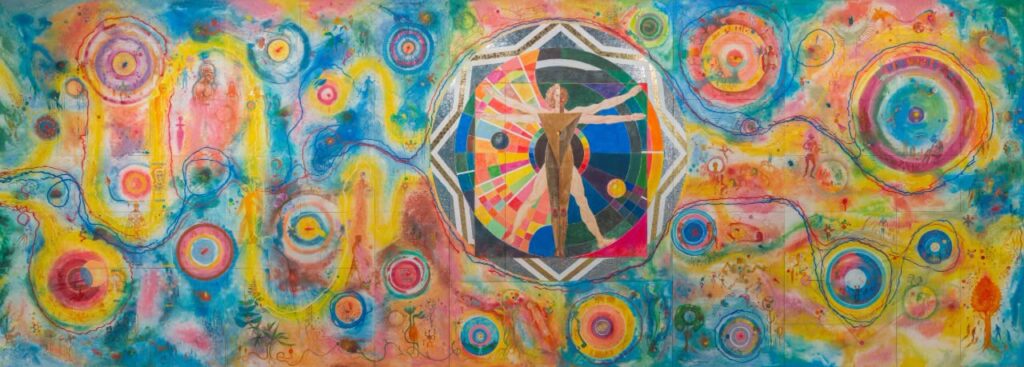
Artist Petro Antyp began working on the painting in November 2022, Suspilne Lutsk reported, and it took almost two years to complete, according to the museum’s website. The painting covers an area of 2,086 square meters.
In September 2024, the project set a national record as Ukraine’s largest painting.
The artwork explores the evolution of the universe, Earth, nature, humanity, society, culture, and science. Its six sections combine myths, legends, scientific theories, and symbols from different cultures, according to the museum’s website.
A section of Petro Antyp’s painting Cosmogony. Photo: Taras Luchko
The project extends beyond the canvas, as the museum presents a multimedia performance that combines light, sound, and art.
Civilians killed and injured in Russia’s latest attack on Lutsk
Around noon on 14 October, a Russian jet-powered Shahed drone attacked Lutsk. Drone debris damaged a wholesale goods warehouse and a residential building, Roman Romaniuk, acting head of the Volyn Regional Military Administration, told Suspilne.
Falling drone debris sparked a large fire at the Yevrohurt wholesale warehouse. A nine-story residential building on Sobornosti Avenue was also damaged, Romaniuk later reported on social media.
Six people were killed in the strike on the warehouse: five were found at the scene, and another person died in the hospital. Eleven more people were injured, Romaniuk said.
Aftermath of Russia’s attack on Lutsk on 14 October 2026. Photo: Volyn Regional State Emergency Service
Two other people, including a child, were injured in the residential building. Twelve people remained hospitalized, one of whom was in serious condition, according to the report.
In Iqaluit, the only city in Canada’s Arctic, a new generation of Inuit writers and artists is turning questions of language, land and identity into books, films and even tattoos.
In Iqaluit, the only city in Canada’s Arctic, a new generation of Inuit writers and artists is turning questions of language, land and identity into books, films and even tattoos.
The museum has been struggling to fit ticket holders into the exceptionally popular display, and it’s also up against the constraints of protecting the artwork.
The museum has been struggling to fit ticket holders into the exceptionally popular display, and it’s also up against the constraints of protecting the artwork.
Visitors to the British Museum’s Bayeux Tapestry exhibition were initially allowed to take photos, but that practice has since been banned to move people along more quickly.
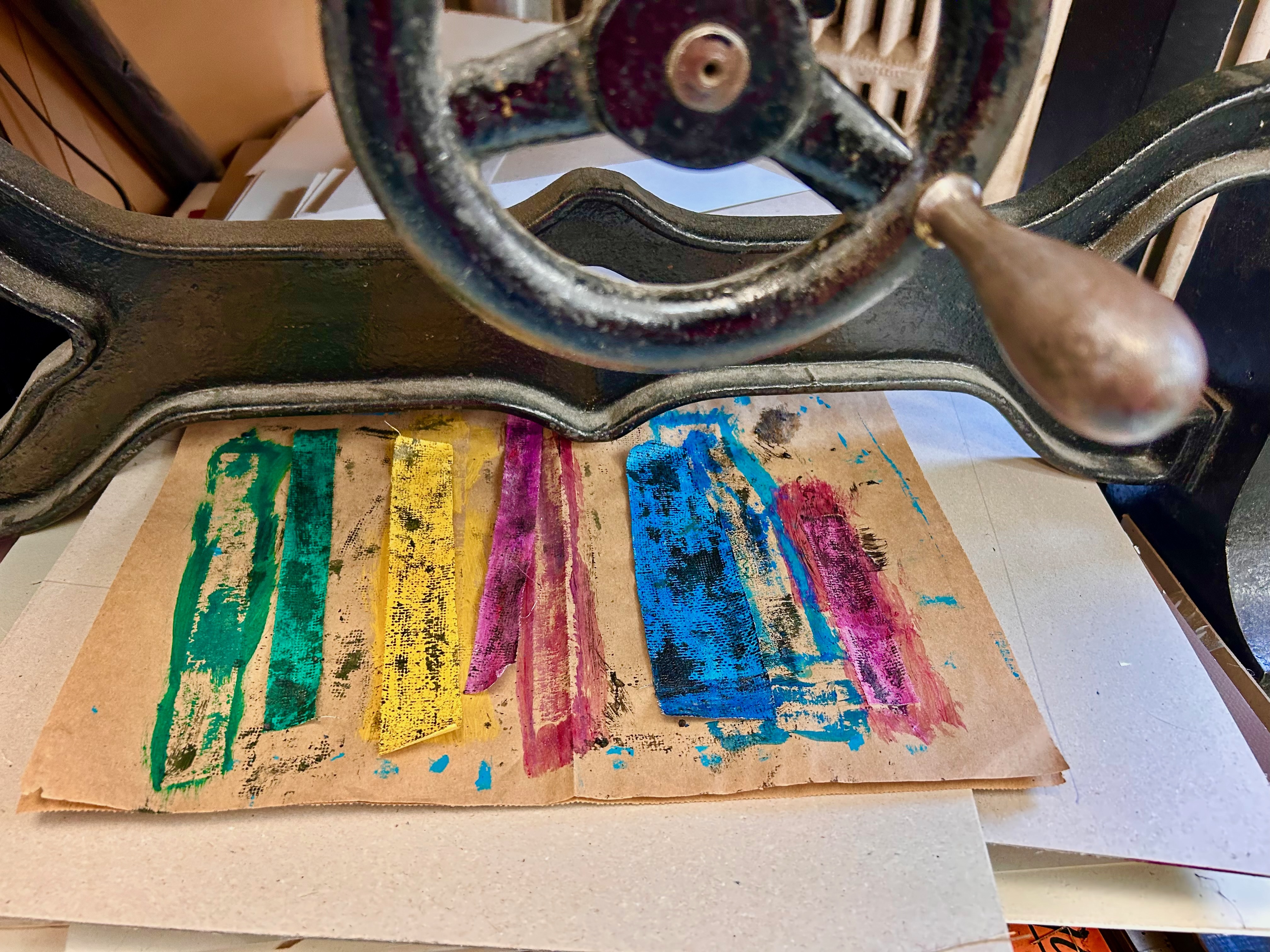
Les impressions créées à partir de la plaque en gel (ou gel plate) lors de l’atelier offert à cette occasion par Catherine Gaumerd.
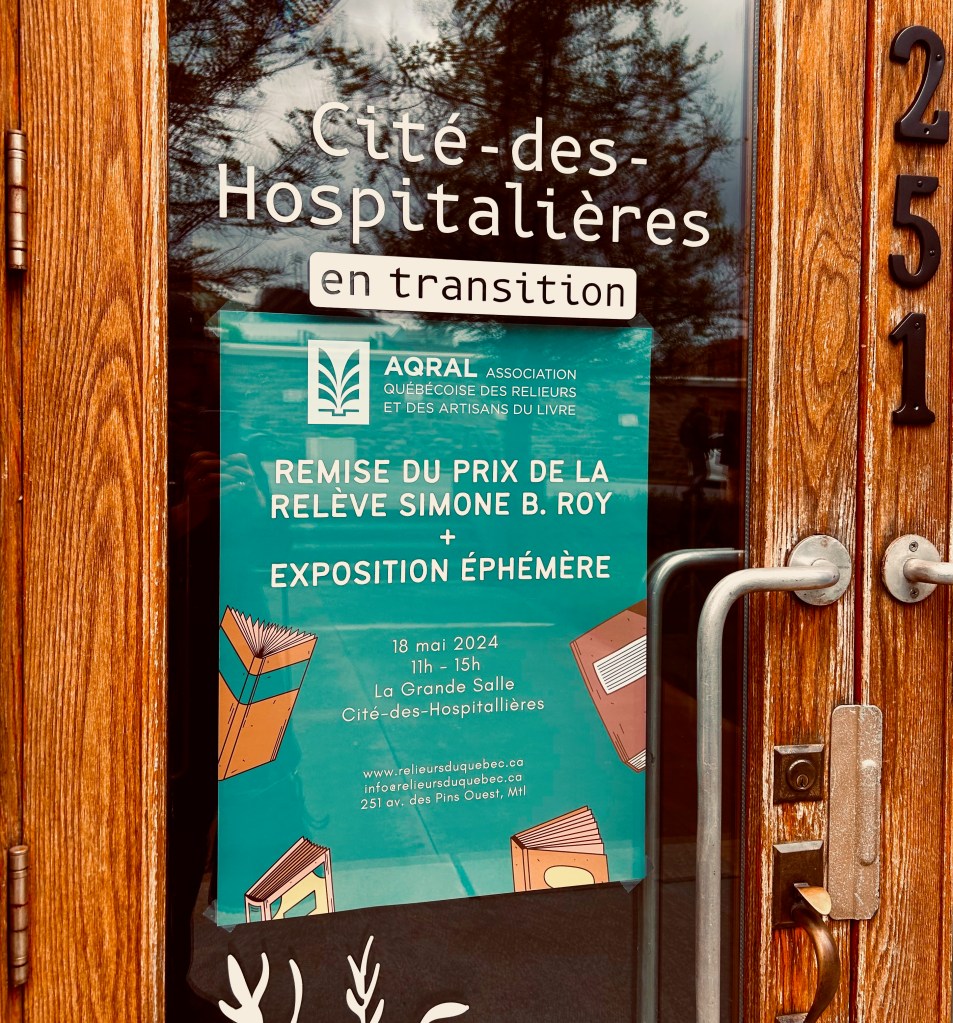
J’ai eu le plaisir de participer à l’exposition éphémère de l’Association québécoise des relieurs et des artisans du livre (AQRAL) qui s’est tenue le 18 mai. Ce rendez-vous, discret mais foisonnant, a mis en lumière la richesse des savoirs manuels, des matériaux et des récits, dans une fête du livre comme objet d’art et de transmission.
Chaque création ex
Les impressions créées à partir de la plaque en gel (ou gel plate) lors de l’atelier offert à cette occasion par Catherine Gaumerd.
J’ai eu le plaisir de participer à l’exposition éphémère de l’Association québécoise des relieurs et des artisans du livre (AQRAL) qui s’est tenue le 18 mai. Ce rendez-vous, discret mais foisonnant, a mis en lumière la richesse des savoirs manuels, des matériaux et des récits, dans une fête du livre comme objet d’art et de transmission.
Chaque création exposée témoignait d’un lien engagé et amoureux avec la matière, la mémoire et le geste. Différentes techniques utilisées en reliure artisanale, reliure d’art, restauration, reliures modernes et créatives étaient représentées au cours de cet événement qui se déroulait à la Cité-des-Hospitalières.
Une reconnaissance bien méritée
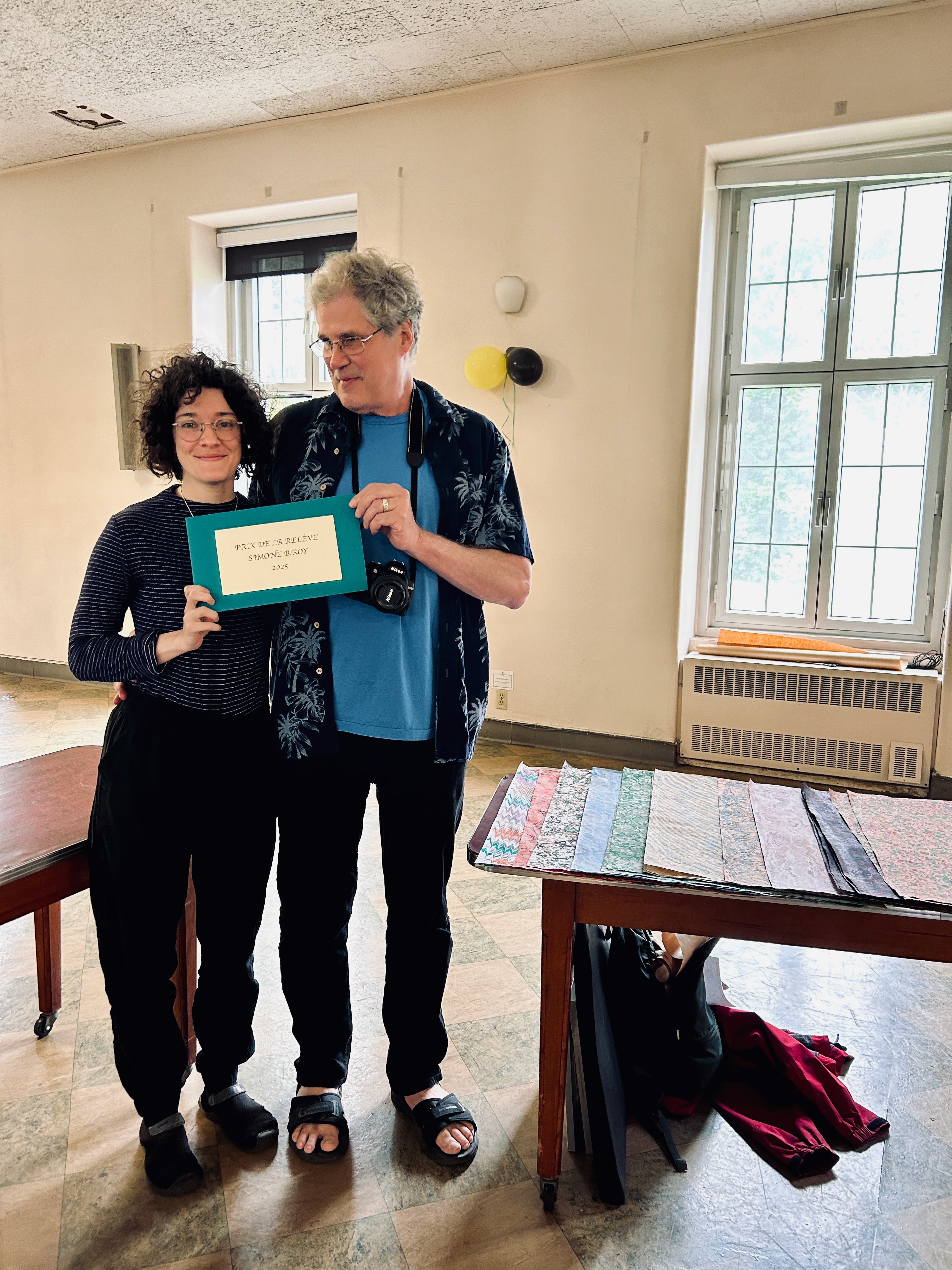
Un coup de chapeau bien mérité à Catherine Savignac, qui s’est vu attribuer le Prix de la relève Simone B. Roy. Simone Benoît Roy (1929–2017) est une figure emblématique de la reliure d’art au Québec. Originaire de la ville de Québec, pionnière dans ce domaine, elle a consacré sa vie à l’art du livre. À sa mort en 2017, elle a légué une somme importante à l’AQRAL, permettant la création du Fonds Simone Benoît Roy.
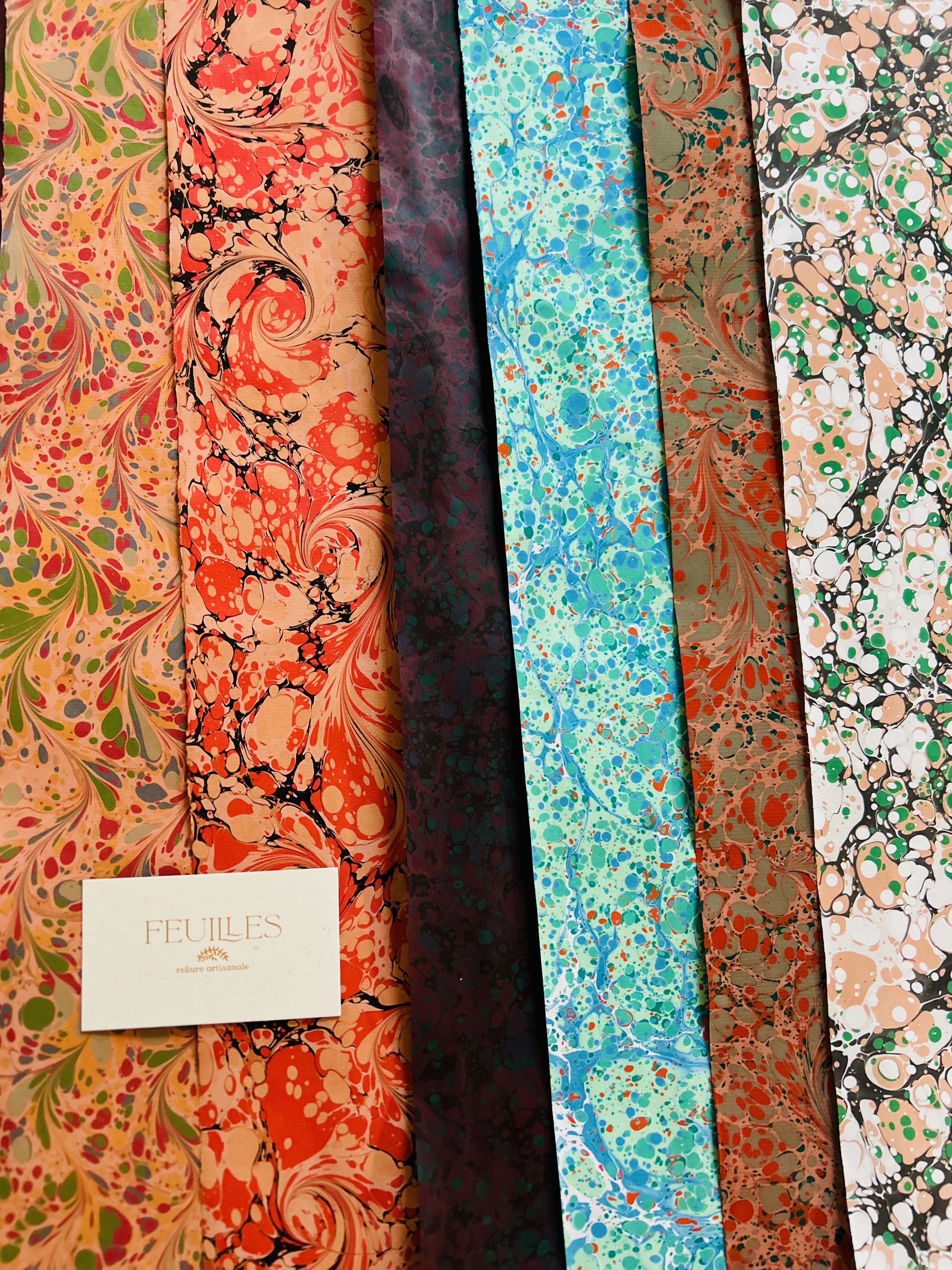
Le travail délicat et inspirée de Catherine Savignac sur le papier ne cesse d’émerveiller. Cette distinction lui permettra de poursuivre son perfectionnement auprès de Lucie Lapierre, grande spécialiste des techniques traditionnelles de papier marbré. Ce lien entre générations d’artisanes du livre, entre pratiques traditionnelles et réinventions, est au cœur de ce que célèbre l’AQRAL.
Catherine Savignac qui reçoit son prix du président de l’AQRAL, Jean-Marc Lefebvre; à droite, les papiers marbrés de la récipiendaire.
Un moment de partage personnel
J’ai profité de l’occasion pour présenter quelques créations qui me tiennent à cœur, conçues dans cet esprit de filiation.
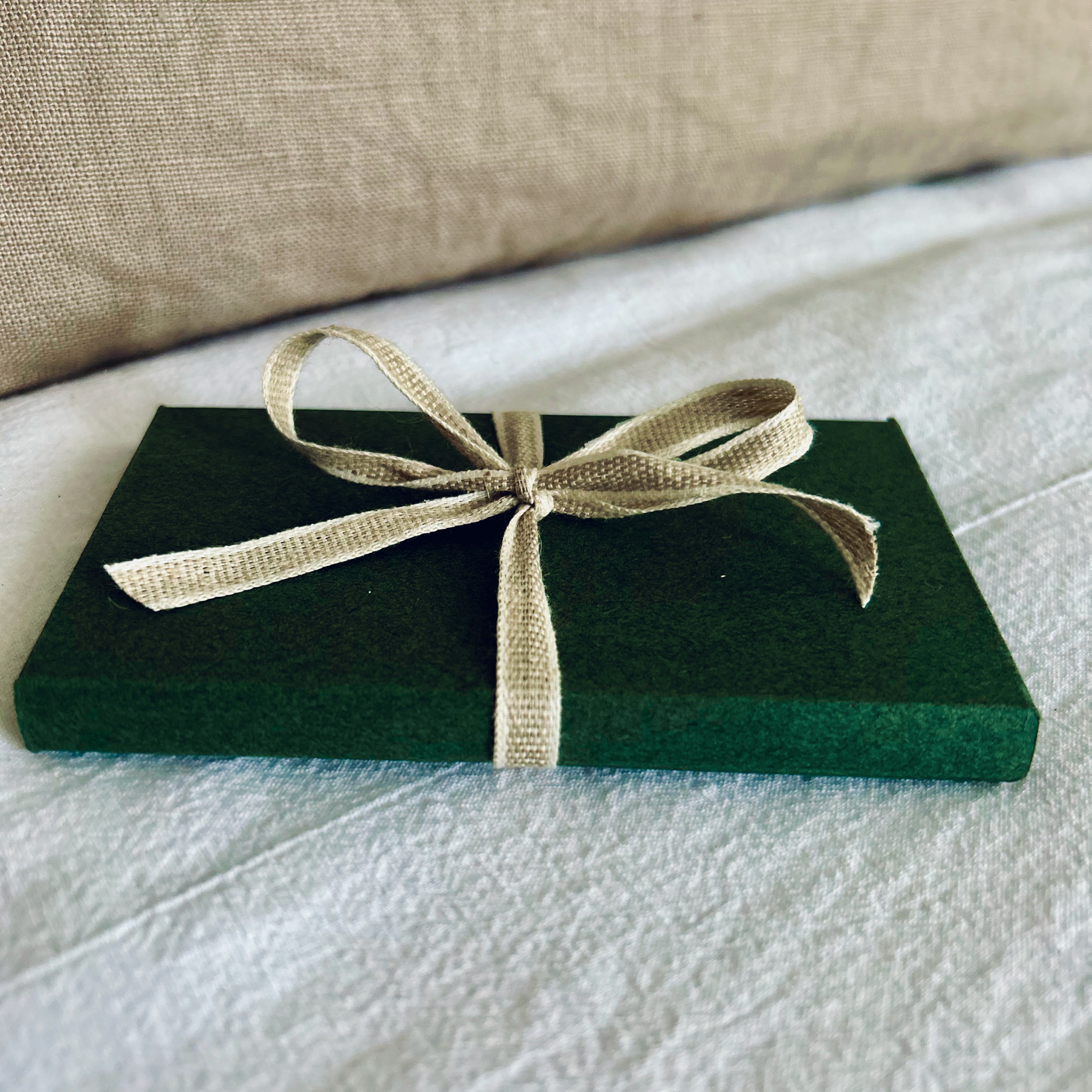
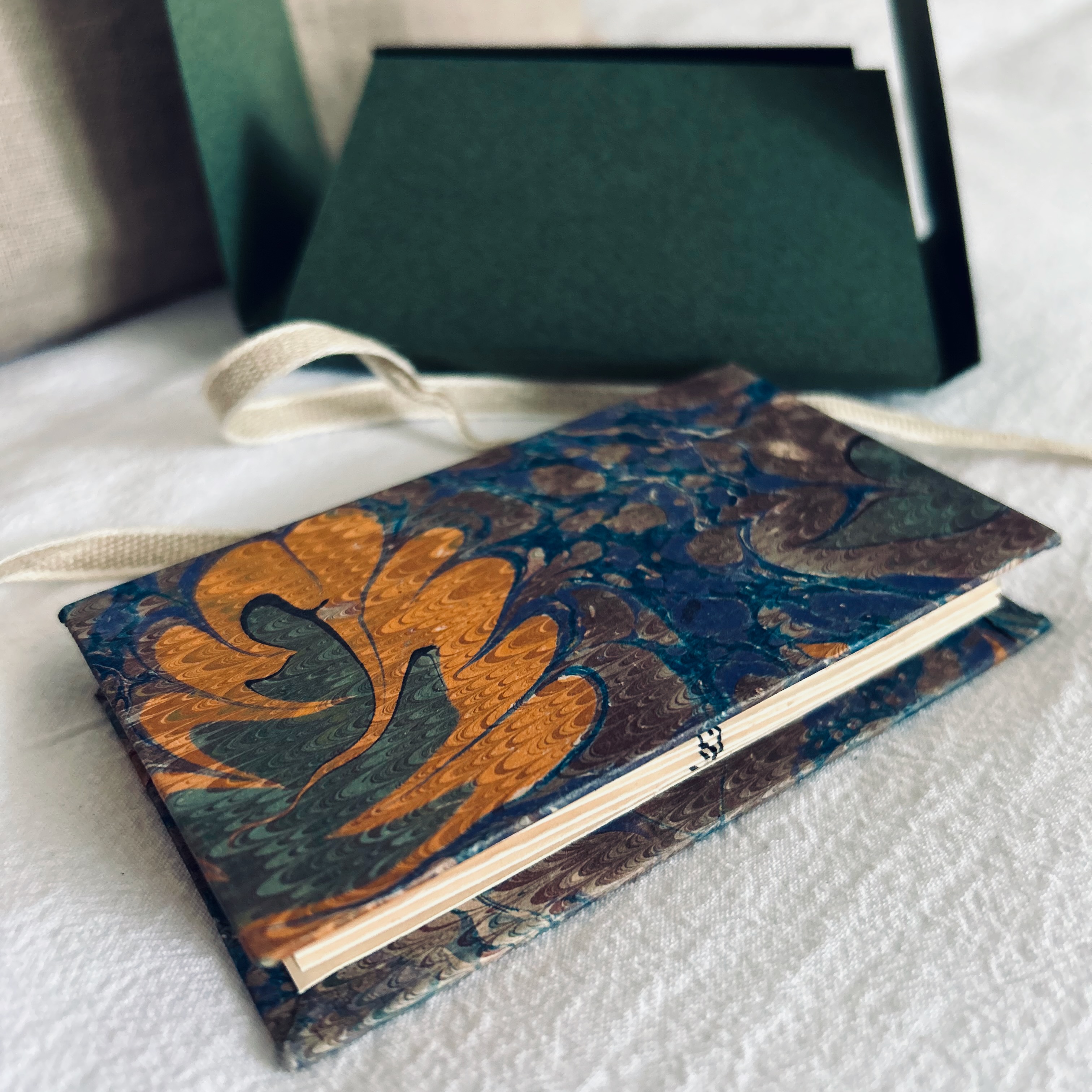
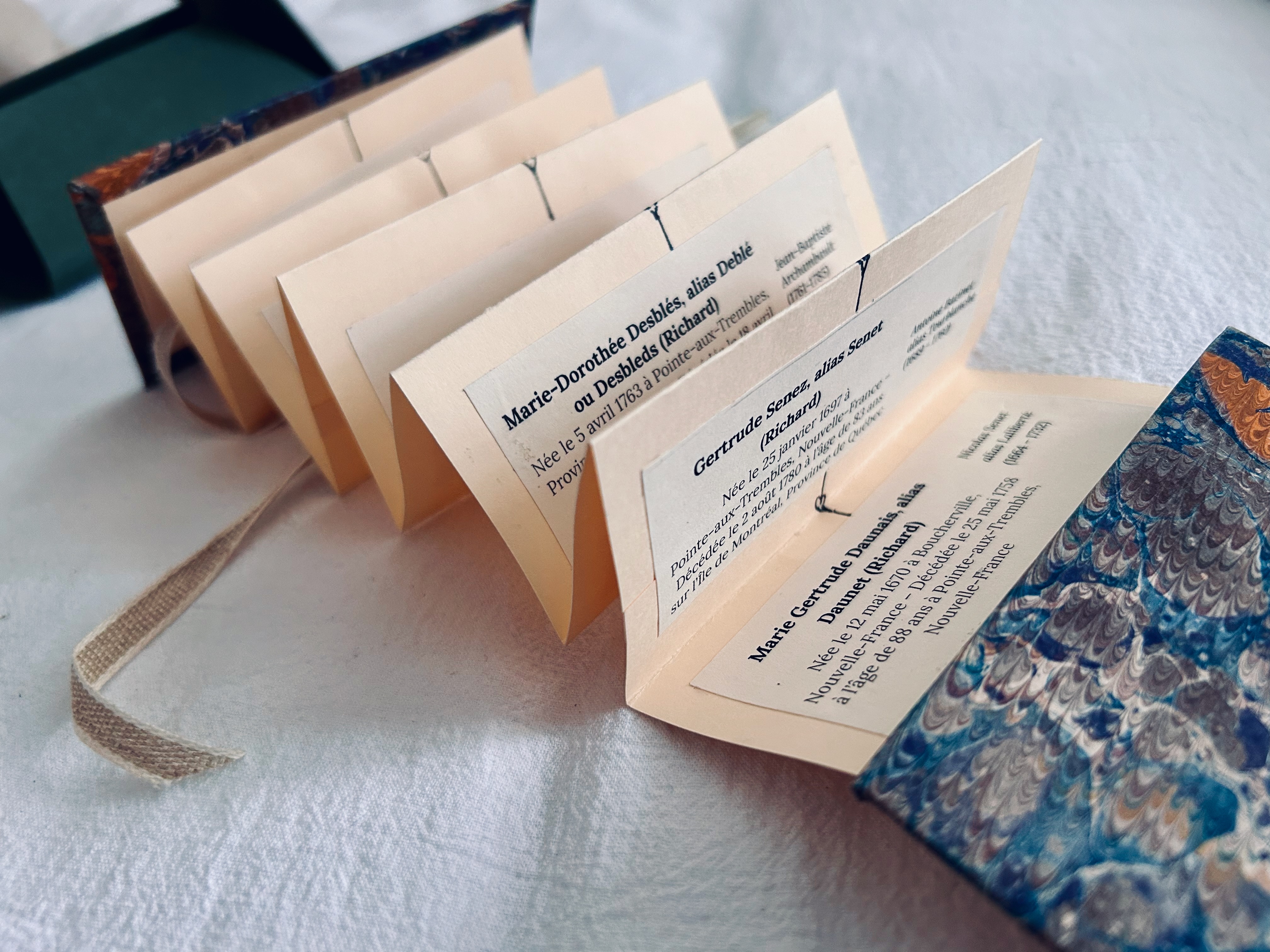
D’abord, mon « livre des mères », un leporello (ou concertina), que j’ai imaginé en hommage aux femmes qui m’ont précédée, issues de Marie Anne Richard, fille du Roy, et donc, à partir d’une généalogie matrilinéaire. Offert récemment à mes proches, lors de la fête des mères, ce livre frise, comme on l’appelle également, évoque un héritage fragmenté, inscrit en creux dans la mémoire familiale. C’est aussi une réappropriation féministe de la forme accordéon, en clin d’œil à Leporello, le valet de Don Giovanni, qui présentait la liste des conquêtes de son maître : ici, ce sont les noms, les traces des femmes de ma lignée qui s’y déploient, déplient, dans un mouvement inversé, réparateur et poétique, mais révélateur aussi de l’ascendance coloniale.
Il a été réalisé avec un très beau papier signé Lucie Lapierre, dont la qualité artisanale confère une présence forte et une densité matérielle à cette quête intime.
J’ai également présenté un second leporello, d’une grande simplicité formelle, mais rehaussé par un papier somptueux signé Catherine Savignac. Il suggère une mise en valeur de ce dialogue sensible entre les mains, les fibres et la narration que l’on déplie lentement, page après page.
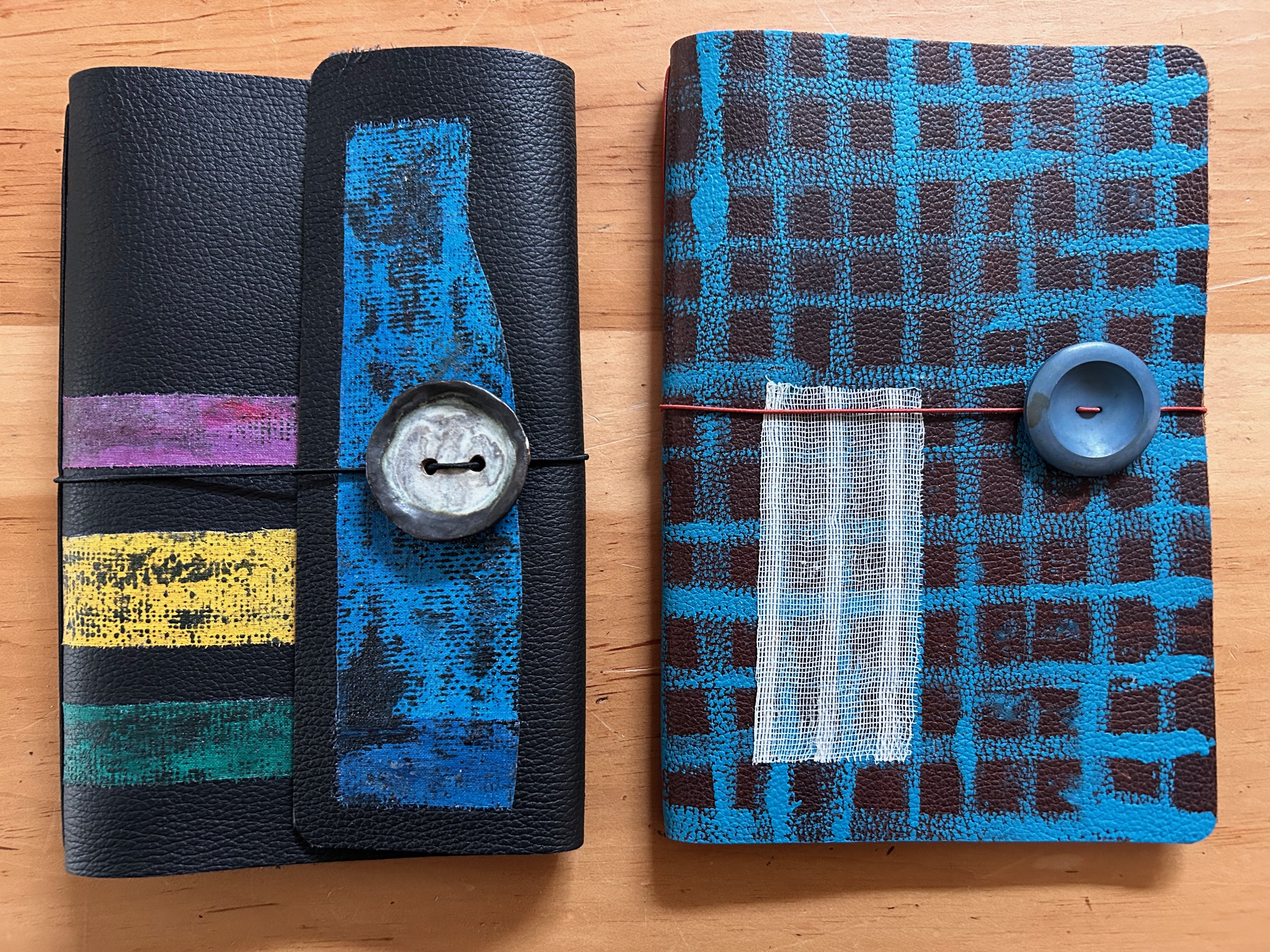
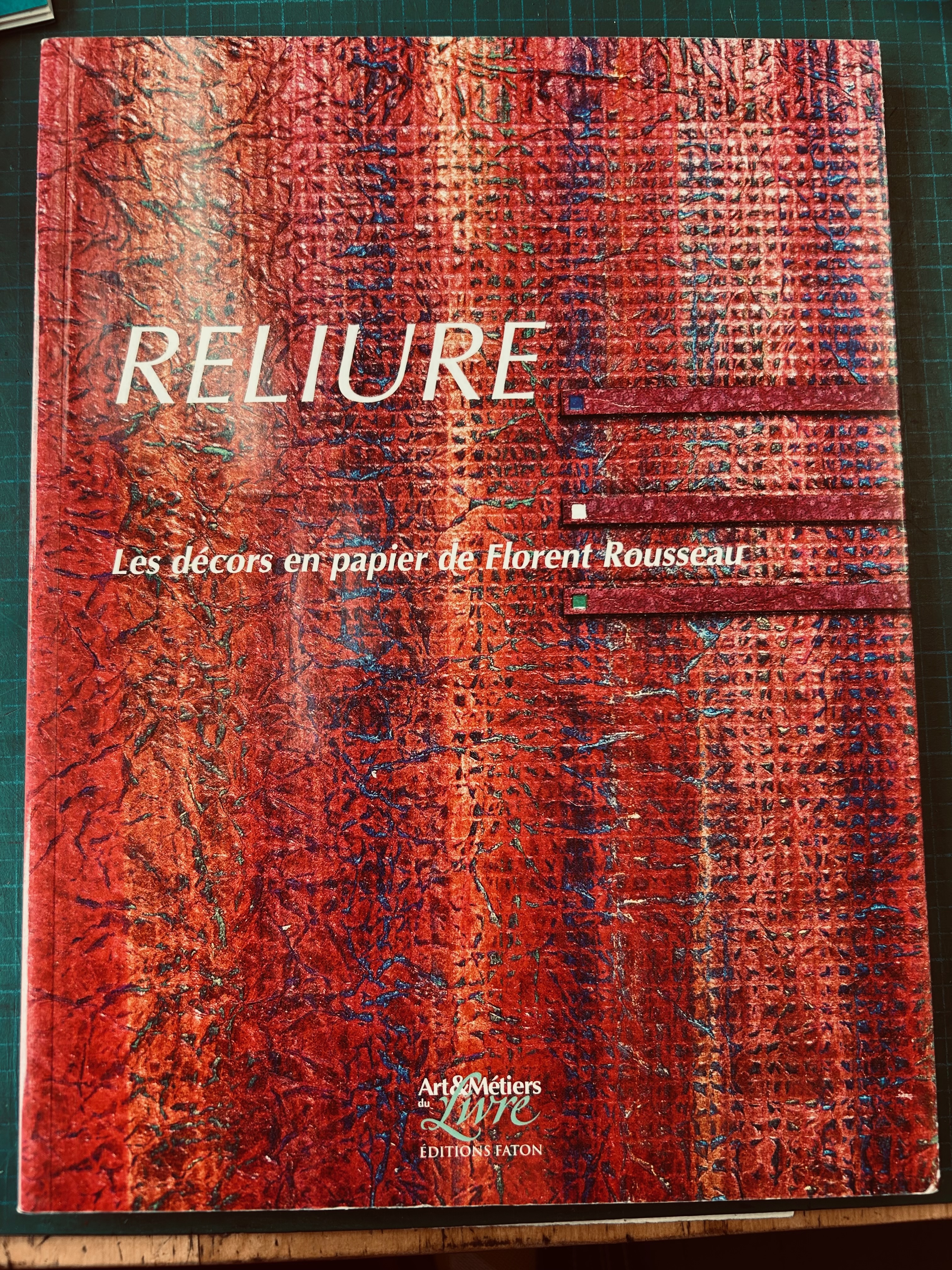
Enfin, j’ai aussi montré quelques-uns de mes carnets de voyage, créés à l’atelier de reliure de Catherine Gaumerd, un espace vibrant de création, de réflexion et de transmission. Mes carnets constituent une réinterprétation personnelle de certaines œuvres de Florent Rousseau, relieur et décorateur du livre français, reconnu pour son approche innovante de la reliure et sa production pédagogique.
Une pratique habitée et collective
Nous avons profité d’un moment de partage joyeux, où les techniques anciennes croisent les expressions plus neuves, et où le livre devient à la fois support, sculpture, archive et expérience. Un rappel aussi que le livre, au-delà de la technologie et du contenu, est un objet sensible, façonné avec soin, investi, transmis. Et, une œuvre en soi.
Merci à l’AQRAL pour cette belle initiative, et longue vie à ces pratiques artisanales qui font du livre un terrain d’exploration toujours renouvelé.

 Connexion