Vue normale

  • ✇Euromaidan Press
  • Russia’s biggest electronics chain delays seller payments as it expands online
    Independent businesses selling through M.Video, Russia’s largest electronics chain, waited months to receive customer payments for goods already sold. One seller received it only after filing a formal demand that usually precedes a lawsuit, according to a Vedomosti report. The sellers are independent businesses using M.Video’s website as their storefront. Under M.Video’s seller contract, a customer buys from the independent business while M.Video collects the payment as
     

Russia’s biggest electronics chain delays seller payments as it expands online

24 août 2026 à 10:18

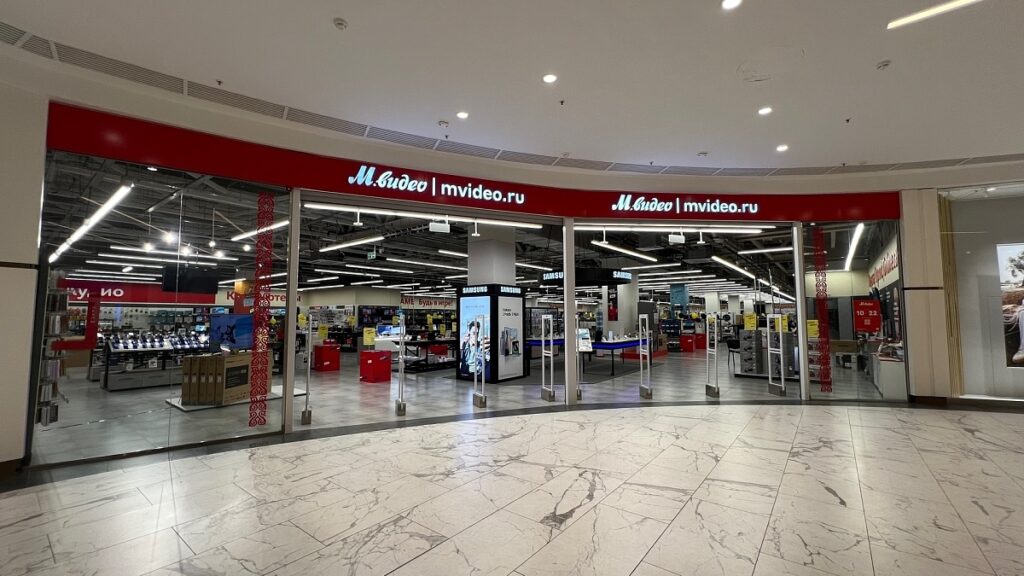
v.mideo store at grozny mall in chechnya

Independent businesses selling through M.Video, Russia’s largest electronics chain, waited months to receive customer payments for goods already sold. One seller received it only after filing a formal demand that usually precedes a lawsuit, according to a Vedomosti report.

The sellers are independent businesses using M.Video’s website as their storefront. Under M.Video’s seller contract, a customer buys from the independent business while M.Video collects the payment as the seller’s agent.

The business pays M.Video a commission for listing the product and handling payment and delivery. Until M.Video transfers the proceeds, the seller has already handed over the product but has not received the money from the sale.

Some sellers turn to legal demands

Sellers said payments for goods sold in May and June were still missing in August. One sent M.Video a formal demand on 13 August, giving the company five days to pay and waiving interest. The money arrived on 18 August.

Another business said its demand went unanswered, while its assigned manager stopped responding. It continued shipping orders until mid-July because M.Video had promised to transfer payment for its May sales.

Similar complaints had already surfaced two months earlier. M.Video told ABN that transfers were regular, but rapid growth sometimes required additional checks before funds could be released. The same report cited a business that had waited 24 working days after approving its sales statement; its previous transfer had also arrived late.

Independent sellers are taking a larger role in M.Video’s business. M.Video’s annual results show that products from these sellers accounted for one in every ten orders in 2025. According to its half-year marketplace update, turnover from these businesses quadrupled year-on-year as M.Video expanded beyond electronics. The number of products listed grew nearly sixfold.

The shift follows heavy losses in M.Video’s store-based business. M.Video’s annual results show that it lost about 64 billion rubles (about $770 million)—nearly one-fifth of its annual revenue. The chain closed hundreds of underperforming stores and opened only 11.

  • ✇Euromaidan Press
  • Russia lowered its 2030 electronics-independence target from 80% to 59%
    Russia has lowered its benchmark for technological independence. A revised government target now requires domestic hardware to make up 58.7% of state technology projects by 2030—down from the 80% Moscow had long promised—a reduction proposed by Russia’s own Ministry of Industry and Trade and set by a decree signed in July 2026 by Prime Minister Mikhail Mishustin. Funding collapsed as deadlines slipped The scale of the retreat was laid out by Ukraine’s Foreign Intelli
     

Russia lowered its 2030 electronics-independence target from 80% to 59%

31 juillet 2026 à 10:11

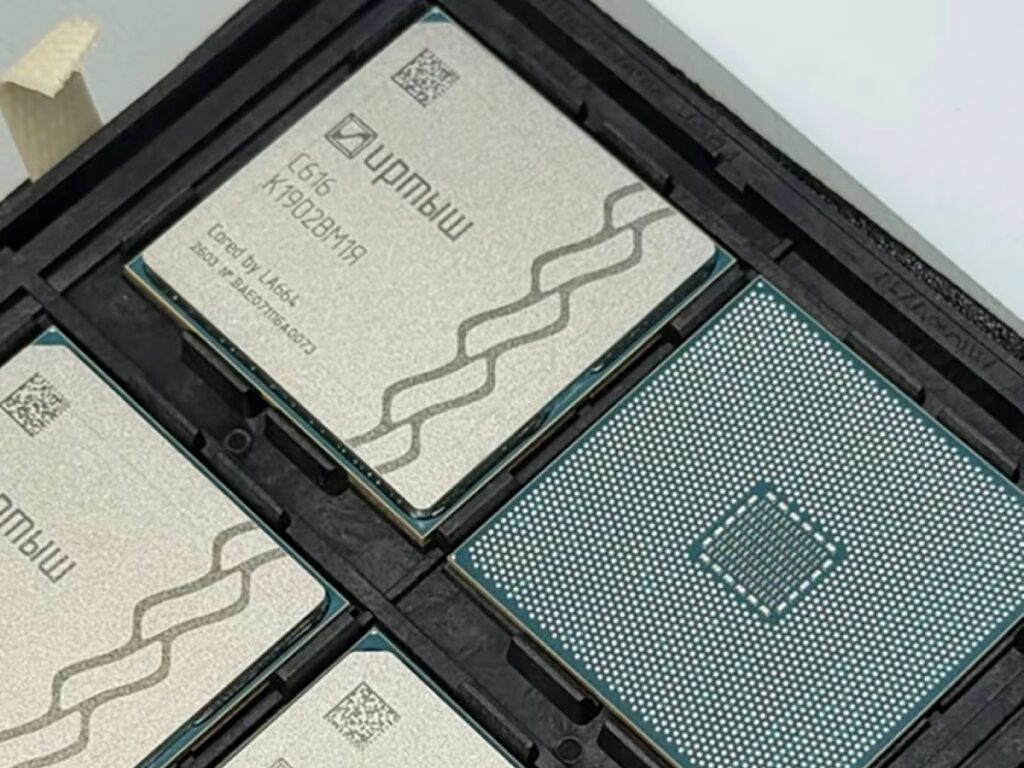
russian irtysh server processor

Russia has lowered its benchmark for technological independence. A revised government target now requires domestic hardware to make up 58.7% of state technology projects by 2030—down from the 80% Moscow had long promised—a reduction proposed by Russia’s own Ministry of Industry and Trade and set by a decree signed in July 2026 by Prime Minister Mikhail Mishustin.

Funding collapsed as deadlines slipped

The scale of the retreat was laid out by Ukraine’s Foreign Intelligence Service, which called the downgrade a capitulation to reality. Funding for the flagship state program collapsed roughly fivefold, from $338.4 million in 2024 to $62.6 million in 2026, and the broader electronics-engineering development program faces a $422.7 million shortfall for 2026–2028, the service said.

Several microelectronics-equipment projects were canceled outright, and deadlines for domestic processors and modems have slipped to 2032. The “Irtysh” processor Moscow presented as a homegrown design for critical infrastructure is, by the service’s account, effectively a copy of China’s Loongson chip, and the Kurchatov Institute missed its deadline to build replacements for Intel, Marvell, Broadcom, and Integrated Device Technology parts.

Russian specialists themselves say localizing more than 60% is impossible without domestic production of chips at 28 nanometers and below, which sanctions and the loss of Western tooling put out of reach.

The GRU buys abroad what Russia cannot make

What Russia cannot build, it increasingly smuggles. Estonia’s Foreign Intelligence Service reported in February 2026 that Russian military intelligence—the GRU—takes an active role in acquiring sanctioned dual-use goods, running import-export front companies to route Western and Asian components home.

One such firm, Moscow-registered Neptun Ko, is directed by an identified GRU officer, Aleksandr Matrossov, and moved more than €500,000 ($540,000) worth of critical semiconductors to Russia’s defense industry through a Chinese intermediary in the first year of the full-scale war, the Estonian service found.

yevgeniy pluzhnik in kuala lumpur
Explore further

Russian businessman runs Hong Kong pipeline feeding European electronics to Kremlin’s weapons labs

Every chip Russia’s factories cannot make is one it must source abroad, through the third-country sanctions loopholes that still route Western components into Russian missiles and drones—which is where the practical fight over Russia’s electronics now lies, whatever share Moscow prints as its goal for 2030.

❌