President Abelardo De La Espriella, left, and his vice president, José Manuel Restrepo, led an earthquake response meeting in Bogotá, the Colombian capital, on Monday.
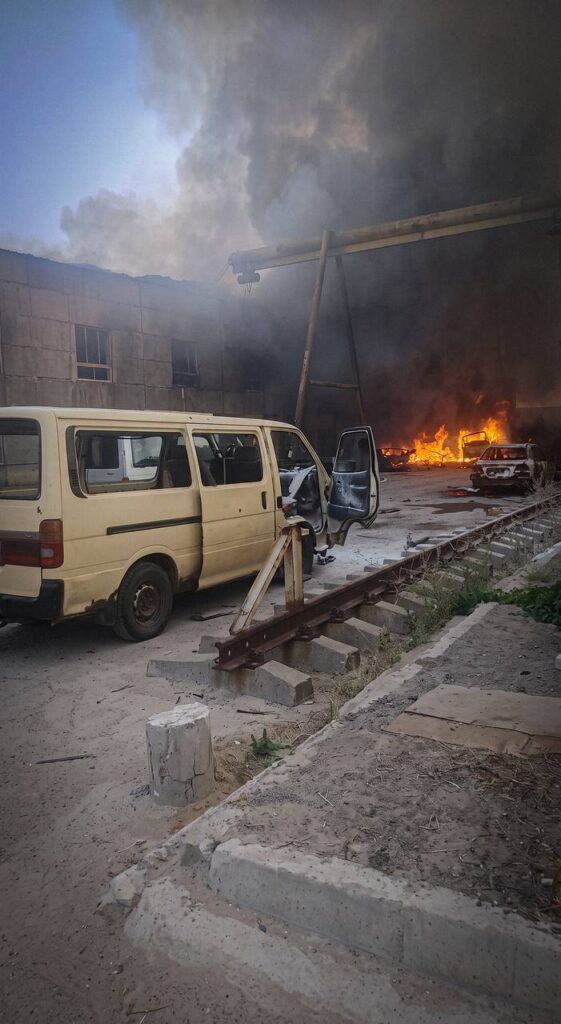
A World Health Organization humanitarian warehouse in Dnipro was destroyed in a strike on 7 August, WHO Director-General Tedros Adhanom Ghebreyesus reported on 9 August, without naming those responsible.
Ghebreyesus's account added to a pattern the organization has tracked since the start of Russia's full-scale invasion: 3,148 strikes on Ukrainian healthcare facilities, which have killed 240 people and injured 1,055 more, according to World Health Organization Ukraine d
A World Health Organization humanitarian warehouse in Dnipro was destroyed in a strike on 7 August, WHO Director-General Tedros Adhanom Ghebreyesus reported on 9 August, without naming those responsible.
Ghebreyesus's account added to a pattern the organization has tracked since the start of Russia's full-scale invasion: 3,148 strikes on Ukrainian healthcare facilities, which have killed 240 people and injured 1,055 more, according to World Health Organization Ukraine data.
The warehouse held humanitarian medical supplies intended for medical facilities at the front line, Ghebreyesus said.
Evacuation before the strike
A WHO staff member and drivers helping evacuate cargo were working at the site before the strike that destroyed it. Before the attack began, they managed to remove 130 of approximately 300 pallets of medical supplies. Preliminarily, no one was injured.
Ghebreyesus withholds blame
Ghebreyesus said he had no data on who struck the warehouse and did not name a culprit. Similar caution from international organizations in describing attacks in Ukraine has occurred before, including after the strike on the Kyiv-Pechersk Lavra.
"Attacks on healthcare facilities MUST STOP. Otherwise people are left without life-saving medical care. Even wars have their rules. One of them—health must be protected!" Ghebreyesus added.
Other recent strikes on healthcare infrastructure
On 6 August, five people were killed in Dnipropetrovsk oblast—three in Kamianske district and two in Pavlohrad, where an Ukrposhta depot was also destroyed. On the night of 1 August, Russia struck the territory of Kyivmedspetstrans twice, burning five ambulances. On 2 June, five medical facilities in the capital were damaged by Russian strikes.
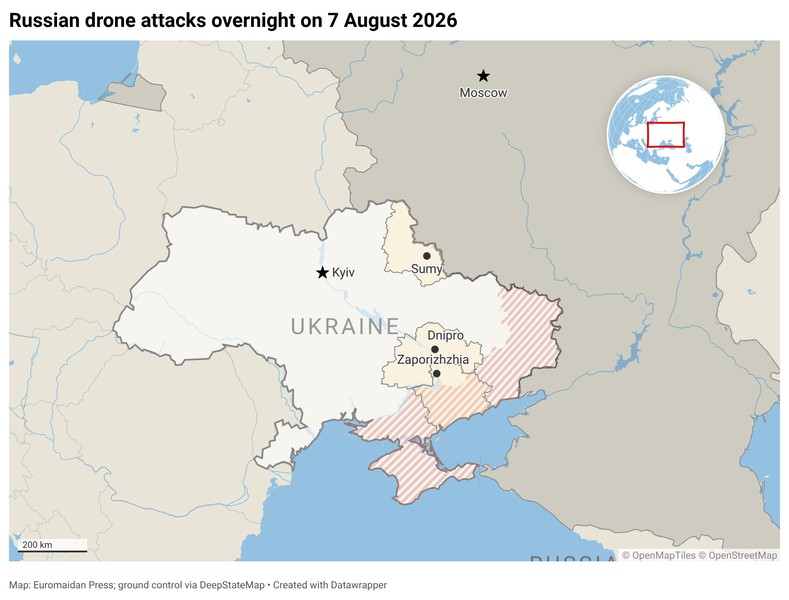
Since the evening of 6 August, Russia has attacked Ukraine with various types of drones, including decoys, the Ukrainian Air Force Command said. Although 114 of those 147 were shot down, some hit their targets, killing at least 2 people and injuring more than 10.
The Russian military has repeatedly used drone decoys to distract Ukrainian air defenses from real targets. By overloading Ukrainian air defenses, more drones reach their targets, which often include Ukr
Since the evening of 6 August, Russia has attacked Ukraine with various types of drones, including decoys, the Ukrainian Air Force Command said. Although 114 of those 147 were shot down, some hit their targets, killing at least 2 people and injuring more than 10.
The Russian military has repeatedly used drone decoys to distract Ukrainian air defenses from real targets. By overloading Ukrainian air defenses, more drones reach their targets, which often include Ukrainian civilian infrastructure. In particular, attacks on post offices have become increasingly targeted.
Russian drone attacks overnight on 7 August 2026/Euromaidan Press map
Strike on Sumy Oblast
A Russian drone struck a market in Bilopillia community, Sumy Oblast, on the morning of 7 August, injuring 10 people. Two of them are in serious condition, head of Sumy Oblast Oleh Hryhorov said.
Overnight into 7 August, Russia attacked Sumy Oblast with aerial bombs and various types of drones, Hryhorov said. The attacks damaged infrastructure, non-residential buildings, vehicles, and private homes. Two civilians were injured, but their condition is not serious. One was a 57-year-old man wounded after one of two aerial bombs struck near his home, Sumy City Military Administration Head Serhii Kryvosheienko said. A drone also struck a post office in the Hlukhiv community.
Over the past 24 hours, Russian forces struck 34 settlements across Sumy Oblast in 48 attacks, injuring 13 people, including a child, Sumy Oblast police reported.
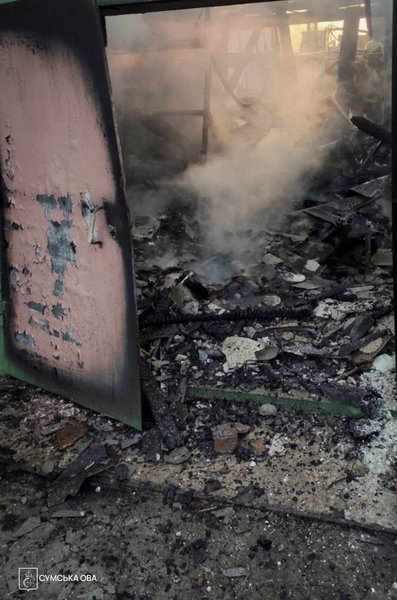
Consequences of Russian strikes on Sumy Oblast overnight into 7 August, 2026. Photo: Sumy Oblast Administration
Strike on Dnipropetrovsk Oblast
At the same time, Russia attacked five districts of Dnipropetrovsk Oblast with artillery and various types of drones, with no casualties reported initially, Dnipropetrovsk Oblast Head Oleksandr Hanzha said. He added that the strikes damaged private homes, an administrative building, vehicles, and infrastructure. In Nikopol district, a post office and a gymnasium were damaged in the Russian attack.
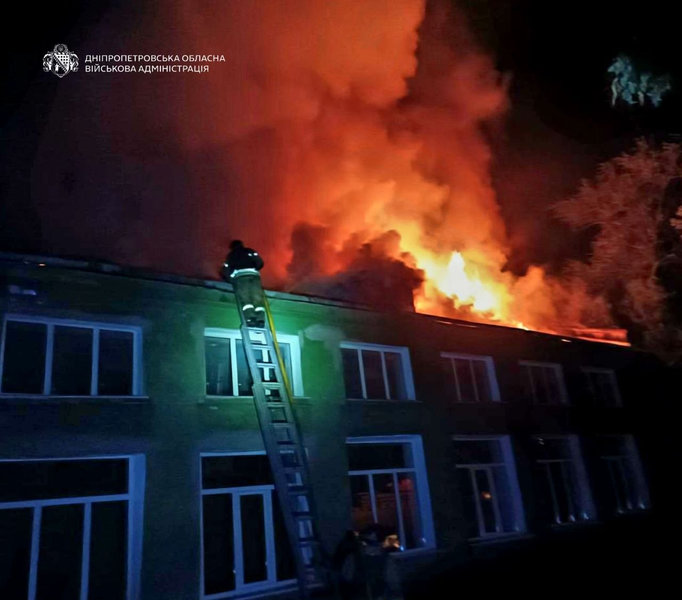
A firefighting crew extinguishes a fire following Russian strikes on Dnipropetrovsk Oblast overnight into 7 August, 2026. Photo: Dnipropetrovsk Oblast Administration
Russia continues to strike civilian infrastructure
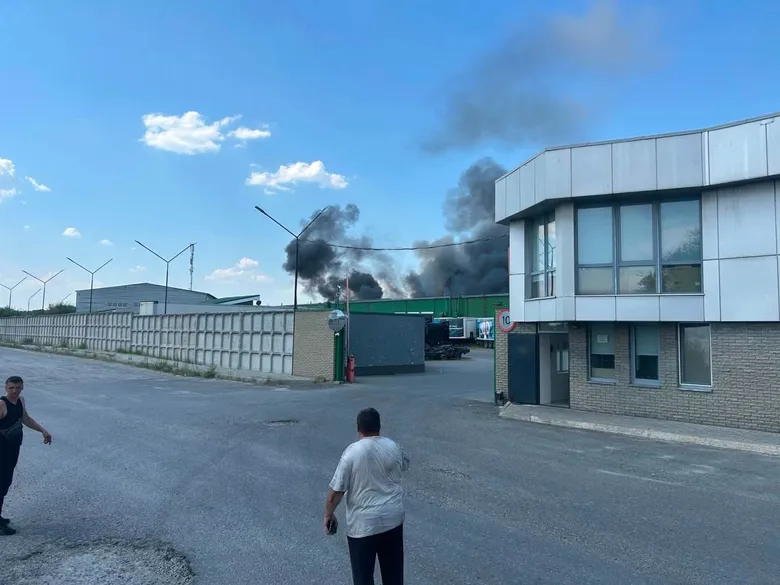
On the night of 7 August, Russian forces also struck Zaporizhzhia. A drone damaged an office building, causing a fire.
Aftermath of Russia’s attack on a Ukrposhta sorting depot and the base for mobile post offices in Pavlohrad, Dnipropetrovsk Oblast, on 6 August, 2026. Photo: Ihor Smilianskyi
On 6 August, a Russian Banderol cruise missile struck a Ukrposhta sorting depot and a base for mobile post offices. Two Ukrposhta employees were killed, and a mechanic was injured in the strike, Ukrposhta CEO Ihor Smilianskyi said.
“The enemy wanted to stop our movement here, but we will not let them do it. All backup schemes are already working. Pensions, medicines, parcels and letters are being delivered on schedule,” Smilianskyi said.
The government turned to the world to respond to twin quakes. But years of shrinking budgets and political repression weakened its ability to rescue countless people trapped in rubble.
The government turned to the world to respond to twin quakes. But years of shrinking budgets and political repression weakened its ability to rescue countless people trapped in rubble.
Dozens of volunteers and family members searched for survivors in a building at a public housing complex in Caraballeda, La Guaira state, that collapsed during back-to-back earthquakes on June 24.
Russia's overnight missile-and-drone barrage on Kyiv and its surrounding region on 5 August destroyed the warehouses and production sites of several of Ukraine's largest retail and logistics companies, killed 17 people and wounded 44 more, and laid bare the country's dwindling ability to intercept ballistic missiles, according to Ukrainian officials.
Russia's main target on 5 August: Ukraine's warehouses
Russia has spent this year pushing its air war toward the balli
Russia's overnight missile-and-drone barrage on Kyiv and its surrounding region on 5 August destroyed the warehouses and production sites of several of Ukraine's largest retail and logistics companies, killed 17 people and wounded 44 more, and laid bare the country's dwindling ability to intercept ballistic missiles, according to Ukrainian officials.
Russia's main target on 5 August: Ukraine's warehouses
Russia has spent this year pushing its air war toward the ballistic missiles that Ukrainian defenses struggle most to stop, launching more of them than Ukraine can shoot down while its Patriot interceptor stocks run dry, and pairing them with drone waves that keep reaching homes, transit and the warehouses that feed the country.
Three Russian ballistic missiles destroyed the largest distribution center operated by Rozetka, Ukraine’s biggest online retailer, near Kyiv overnight on 5 August. Rozetka co-founder Iryna Chechotkina said the warehouse had processed more than 100,000 online orders each day and was beyond repair.
By dawn, the attack had torn through the civilian logistics network moving parcels, groceries, household goods and construction materials across the capital and its suburbs. At least 17 people were killed and 44 injured in the broader barrage, according to President Volodymyr Zelenskyy.
Russia launched a massed missile and drone attack on Kyiv and Kyiv Oblast overnight, killing 14 people and injuring 27.
Fires burned across three raions. A residential building collapsed in Kyiv's Holosiivskyi district, where rescuers are searching for people under the rubble…
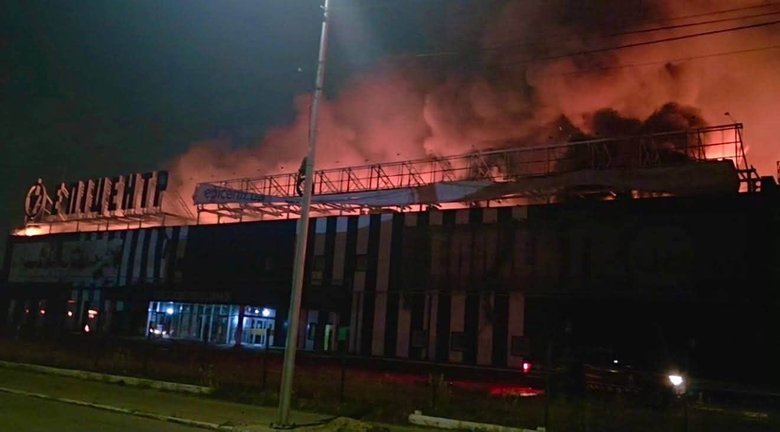
In its 5 August 2026 strikes, Russia destroyed a sorting center owned by Nova Poshta, Ukraine’s largest private parcel carrier, as well as major facilities operated by Epicentr, the country’s largest home-improvement retailer. Sites belonging to Novus and Fozzy Group, two major Ukrainian grocery retailers, were also damaged.
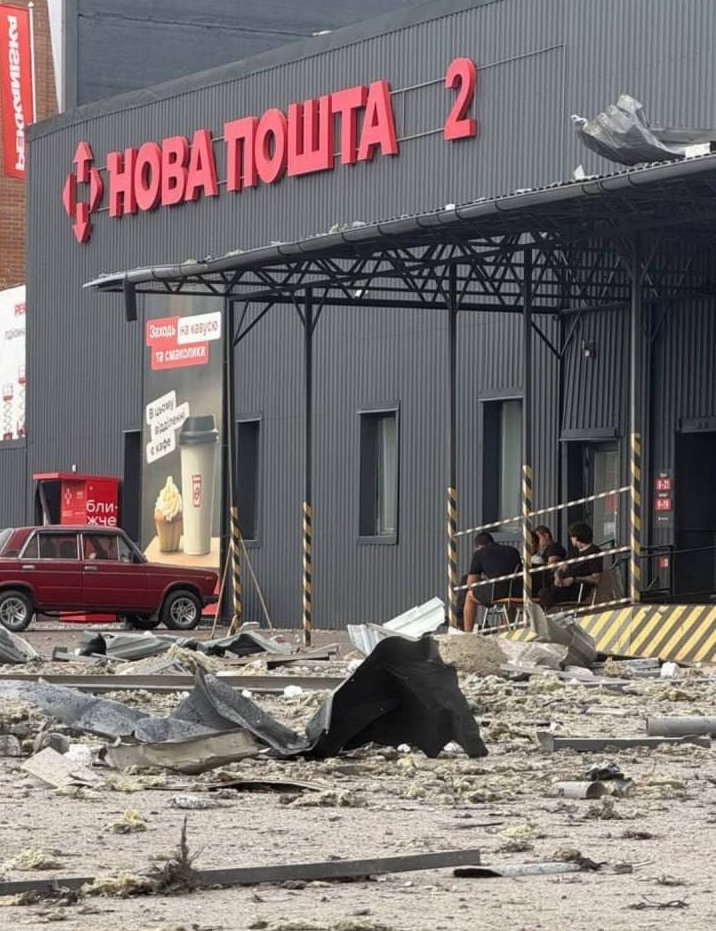
Nova Poshta saidcluster munitions—bombs that scatter smaller explosives across a wide area—destroyed its Kyiv sorting center. Three people were killed and eight injured. Two of those killed were drivers for a partner carrier, while the third worked for a contractor.
Debris covers the grounds of a Nova Poshta sorting center in Kyiv after a Russian strike on 5 August 2026. Source: Kyiv24 via Censor.NET.
Epicentr lost two major warehouse complexes and much of its ceramic-tile production. One employee was killed, and three were hospitalized at the company’s complex in Kalynivka. Its logistics center on Kyiv’s Viskozna Street burned completely, while another Russian missile destroyedthe factory's kilns.
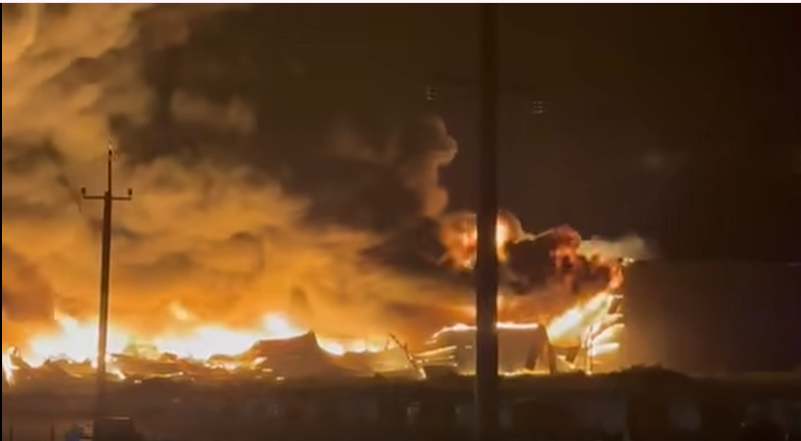
During a separate overnight attack on 3-4 August, a Russian drone destroyeda Biosphere warehouse storing household and personal-care products in Dnipro, although all employees reached shelter and no one was injured.
Fire engulfs a warehouse complex in Dnipro after a Russian drone strike overnight on 3–4 August 2026. The complex included a 20,000-square-meter warehouse operated by Biosphere. Source: screenshot from a video posted by Andriy Zdesenko, Biosphere’s founder and CEO, on Facebook
The Kyiv attack extended beyond commercial facilities. Russia's attack killed eight people waiting for a delayed train at Kvitneva station, a commuter stop near Brovary, east of Kyiv. Missiles also hit homes and offices, damaged an ambulance and caused an ammonia leak at a non-residential site.
8 Passengers waiting for a delayed train were killed at "Kvitneva" station in Kyiv Oblast
Radio Svoboda published footage from the "Kvitneva" station in the Kyiv Oblast, where 8 people were killed as a result of a Russian missile strike.
An earlier Euromaidan Press report detailedthe destruction across Kyiv and the surrounding region.
Why Ukraine intercepted none of the missiles
Russia launched 24 ballistic missiles and four Zircon and Oniks anti-ship missiles, high-speed weapons designed primarily to strike naval targets but also used against Ukrainian cities.
Ukraine intercepted none of the 28, the Ukrainian Air Force said. Air defenses shot down or electronically disabled 98 of the 115 accompanying drones.
Missiles and 17 drones struck 26 locations, while debris fell at another six.
Zelenskyy said ballistic-missile interceptors could have saved those killed. Ukraine’s stocks of Patriot missiles, its only reliable defense against Russian ballistic weapons, arecritically depleted.
A global interceptor shortage means manufacturers cannot produce advanced air-defense missiles fast enough to meet demand.
Russia exploited the same gap on 1 August 2026, when itfired27 ballistic missiles at Kyiv and Ukraine intercepted only one.
Moscow may point to recent Ukrainian strikes on Wildberries logistics centers to frame its attacks as retaliation. Ukrainian officials say the Russian retailer transports military goods, including drone components and navigation equipment. The Kremlin denies that Wildberries carries military cargo.
Ukraine’s acting Foreign Minister Andrii Sybiha rejected any comparison between the attacks. "Russian attacks cannot be justified by anything, including any actions by Ukraine," he said.
Editor's note: This is a developing story and is being updated. Russia launched a deadly missile attack on the Ukrainian city of Dnipro on June 24, striking civilian infrastructure and a passenger train, killing at least 17 people and injuring scores of others, local officials reported.Dnipropetrovsk Oblast Governor Serhii Lysak said the morning strike ignited a large fire and also damaged a dormitory, a gymnasium, and an administrative building in the city.The Russian military also struck the n
Editor's note: This is a developing story and is being updated.
Russia launched a deadly missile attack on the Ukrainian city of Dnipro on June 24, striking civilian infrastructure and a passenger train, killing at least 17 people and injuring scores of others, local officials reported.
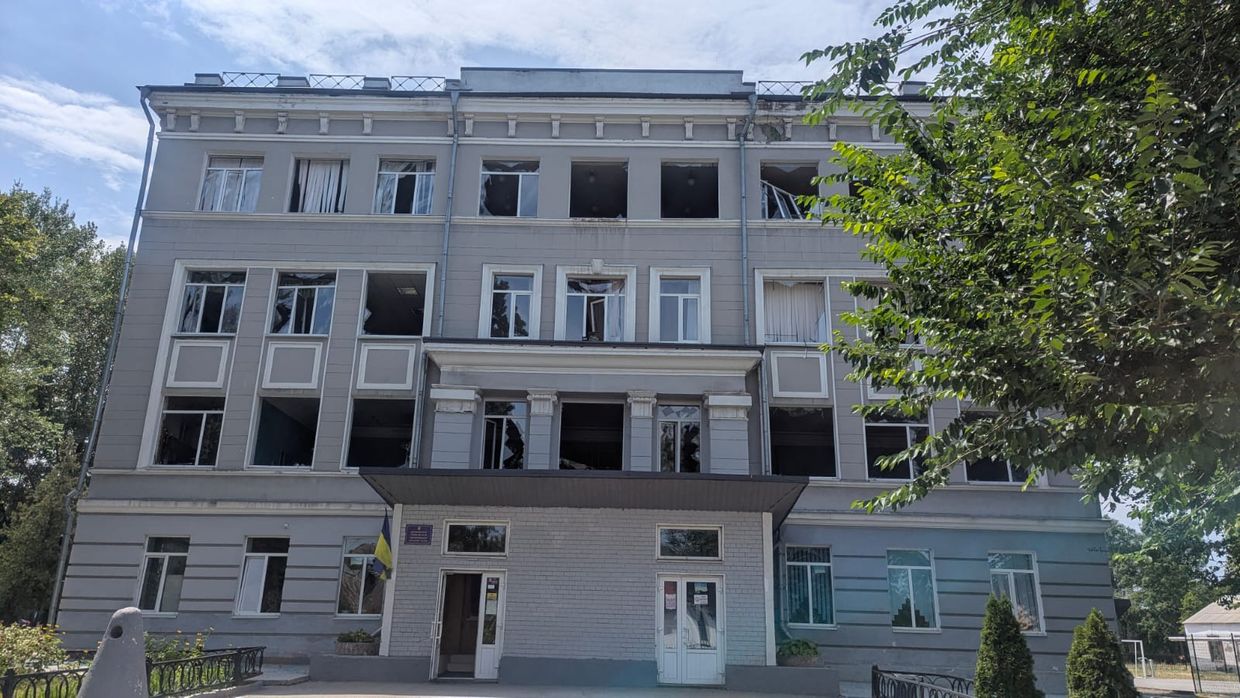
Dnipropetrovsk Oblast Governor Serhii Lysak said the morning strike ignited a large fire and also damaged a dormitory, a gymnasium, and an administrative building in the city.
The Russian military also struck the nearby town of Samarske, Lysak said. Casualties were reported in both locations.
"Unfortunately, there are dead and wounded everywhere," he said.
An school in Dnipro that was damaged in Russia's ballistic missile attack on June 24, 2025. (Dnipro.media)
Multiple cars got damaged in Dnipro during Russia's ballistic missile attack on June 24, 2025. (Dnipro.media)
Multiple cars got damaged in Dnipro during Russia's ballistic missile attack on June 24, 2025. (Dnipro.media)
In Samarske, two people were killed, and 14 injured. Eight were hospitalized, with half of them in critical condition.
"As of now, more than 160 people are known to have been injured. Unfortunately, 11 people have died," President Volodymyr Zelensky said in a post on social media, adding: "The rubble is still being cleared, so the death toll may, unfortunately, increase."
Around 8:30 p.m. local time, the death toll rose to 17, while the number of wounded increased to 279, including 27 children, Lysak reported.
Almost a hundred of the victims remain in hospital, according to Lysak.
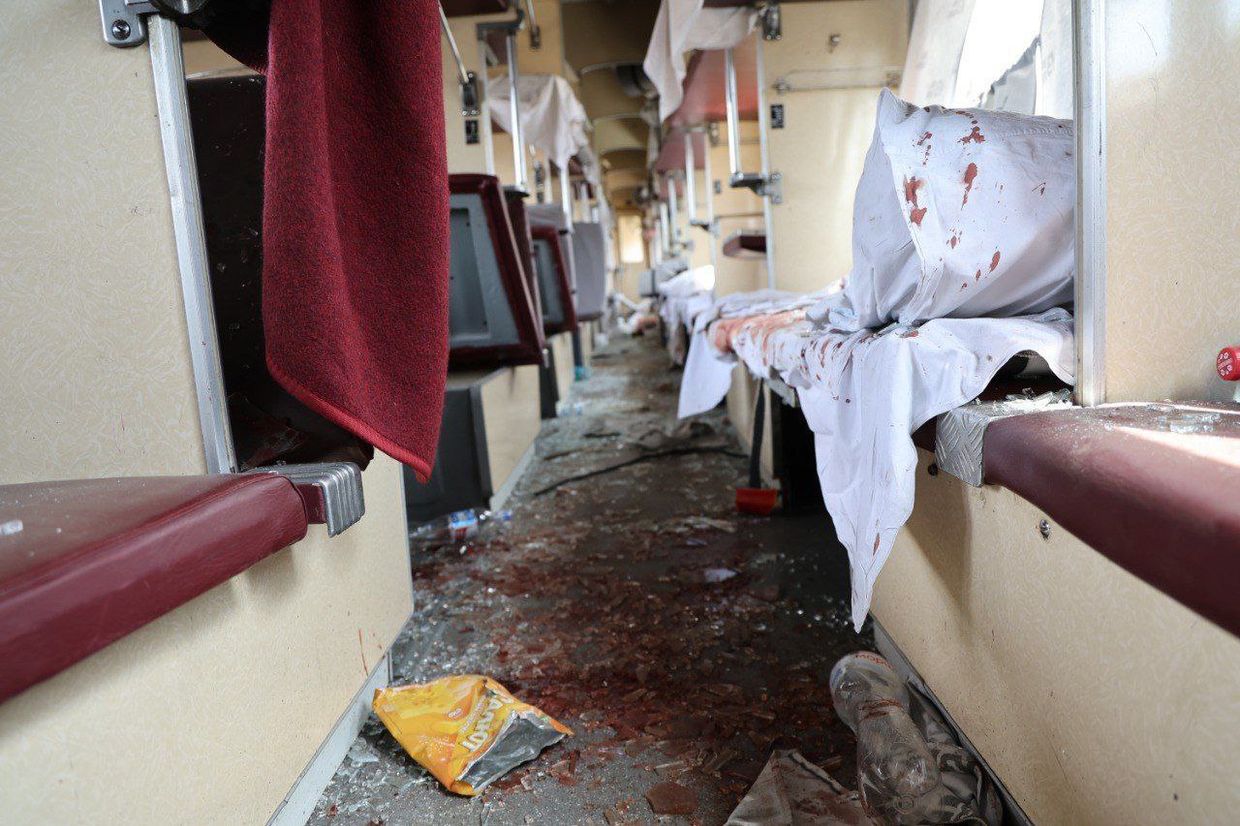
Ukraine's national railway company, Ukrzaliznytsia, said that a train traveling from Odesa to Zaporizhzhia was damaged in the attack.
"Ukrzaliznytsia is preparing a replacement train in Dnipro to evacuate passengers to Zaporizhzhia," the company said in a statement.
A damaged passenger train at a station in Dnipro Oblast, Ukraine after a Russian missile strike on June 25, 2025. (Ukrzaliznytsia / Telegram)
In an update, Ukrzaliznytsia said no passengers or railway workers were killed in the attack, though several people sustained injuries and are receiving medical care.
The attack came as NATO leaders convened for a high-level summit in The Hague. NATO Secretary General Mark Rutte warned on June 23 that Russia remains the alliance's most immediate and long-term threat.

 Connexion