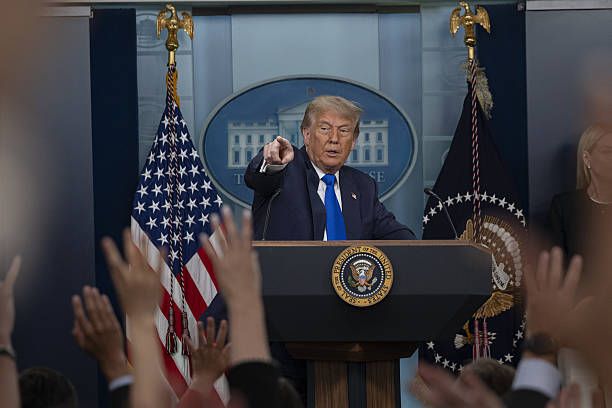
In response to a threat against the jet last month, the president was clandestinely removed in a catering container. But the plane was sent into the skies anyway with government employees and reporters onboard.
In response to a threat against the jet last month, the president was clandestinely removed in a catering container. But the plane was sent into the skies anyway with government employees and reporters onboard.
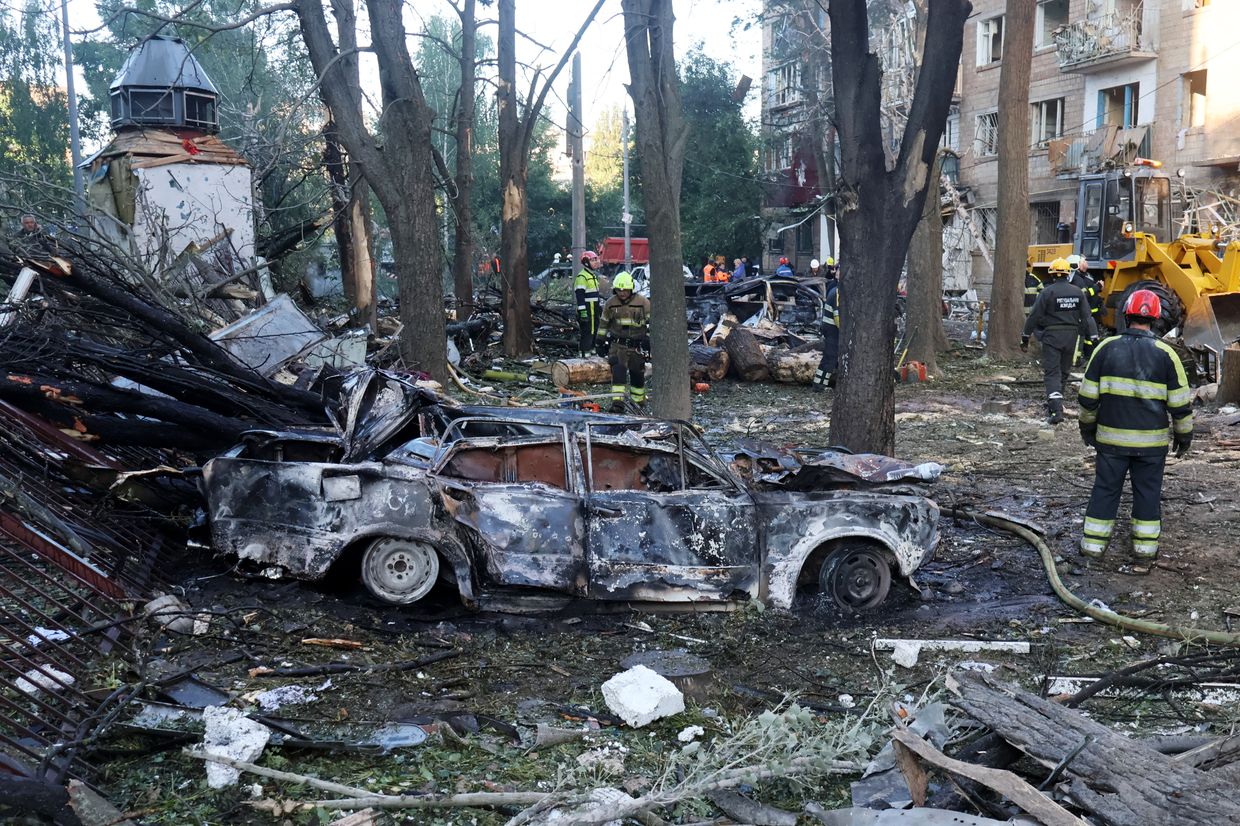
The Iranian strikes that killed three U.S. soldiers in Jordan show how quickly Iran’s war-fighting skills have evolved, as the Pentagon runs low on interceptors.
The Iranian strikes that killed three U.S. soldiers in Jordan show how quickly Iran’s war-fighting skills have evolved, as the Pentagon runs low on interceptors.
Iran has become a more skilled adversary as its war against the United States has progressed, learning how to evade U.S. air defenses as it widened the battlefield to include most of the Middle East.
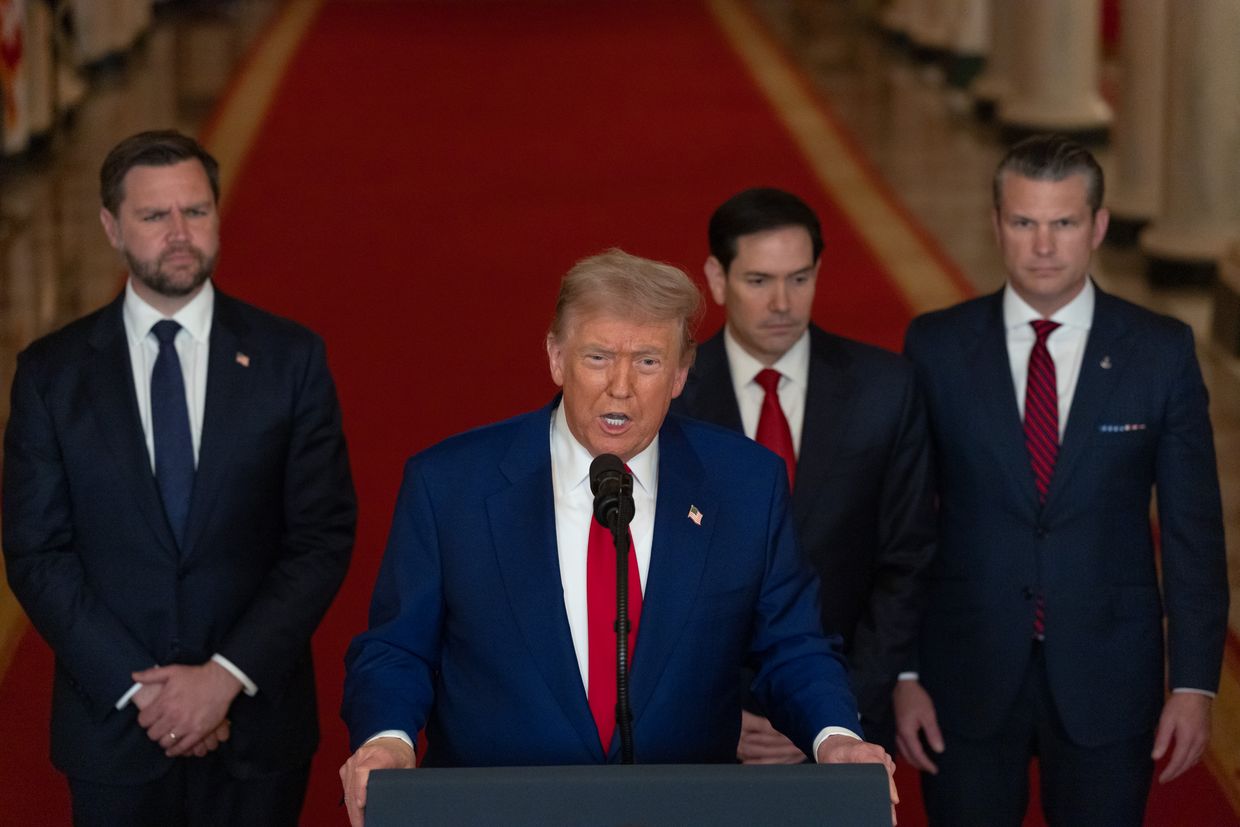
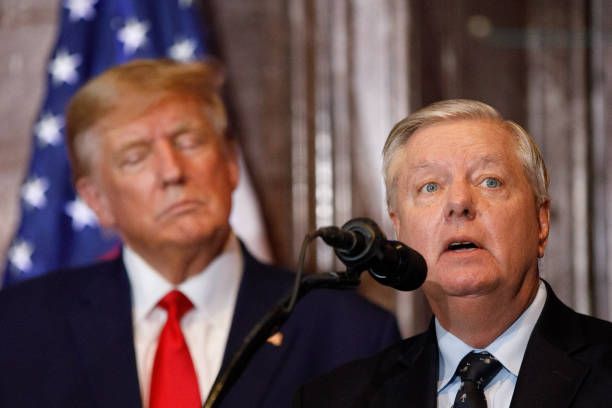
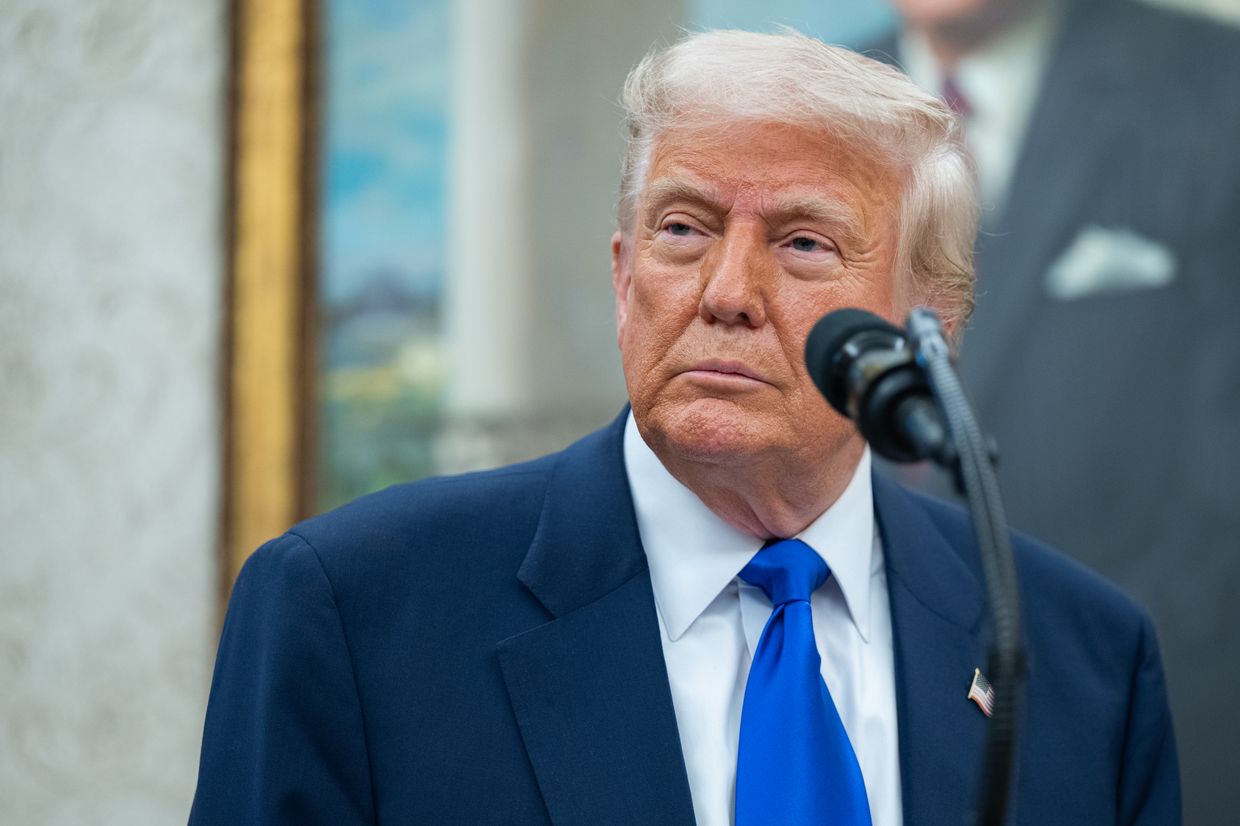
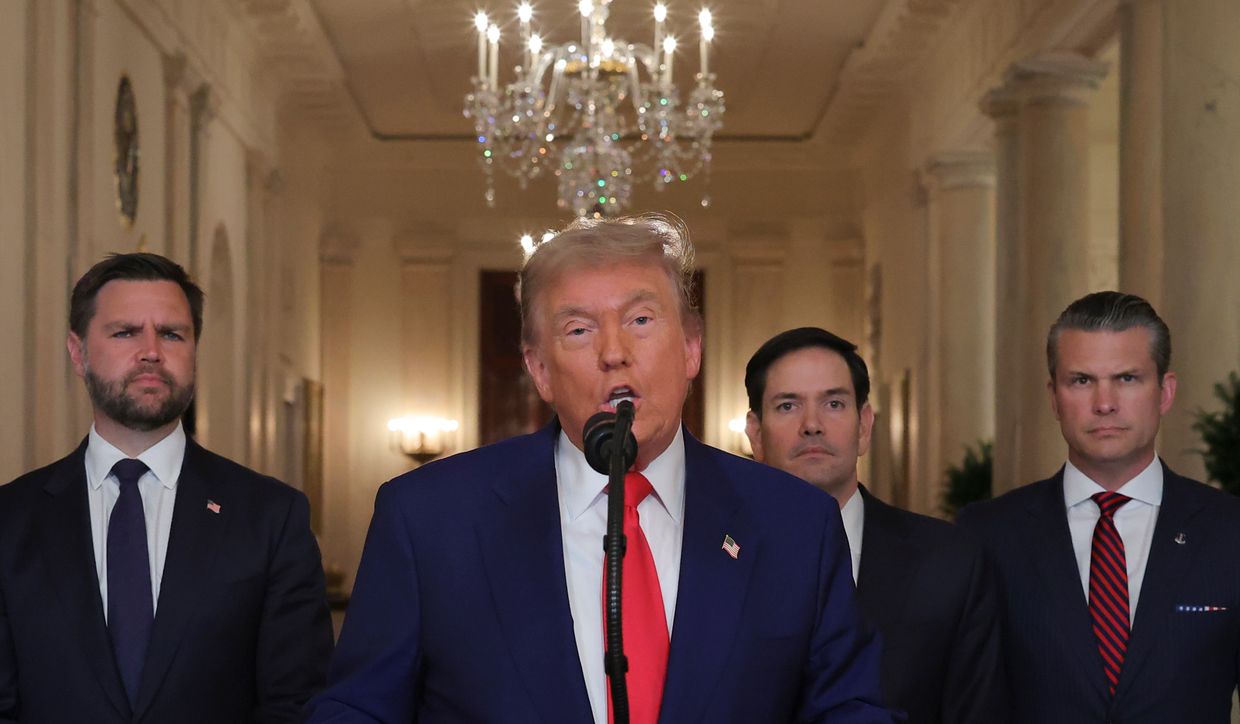
President Trump hid in an airport catering container and was taken to a military jet for a secret flight out of country after the NATO summit last month.
President Trump hid in an airport catering container and was taken to a military jet for a secret flight out of country after the NATO summit last month.
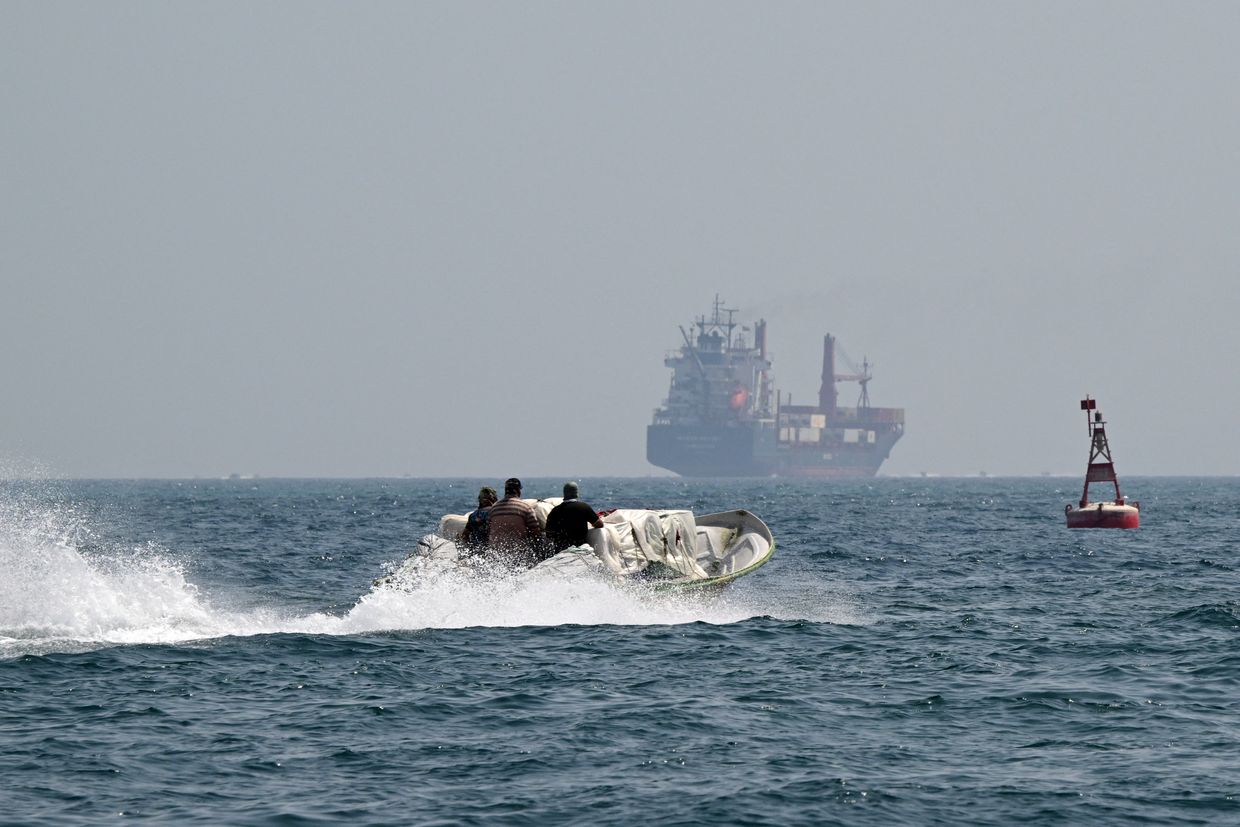
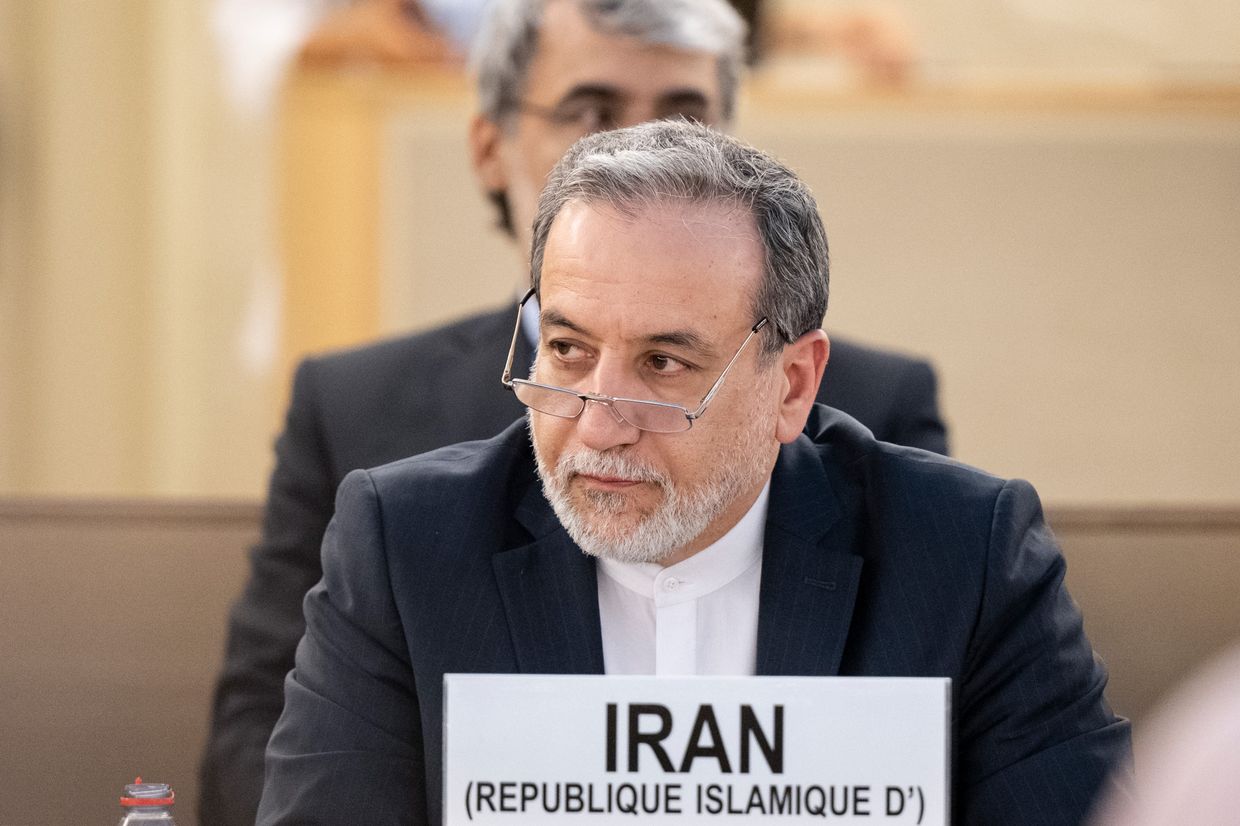
A spokesman for the Iranian Foreign Ministry said that talks with Oman on shipping routes in the Strait of Hormuz were “separate” from discussions to fully reopen the waterway.
A spokesman for the Iranian Foreign Ministry said that talks with Oman on shipping routes in the Strait of Hormuz were “separate” from discussions to fully reopen the waterway.
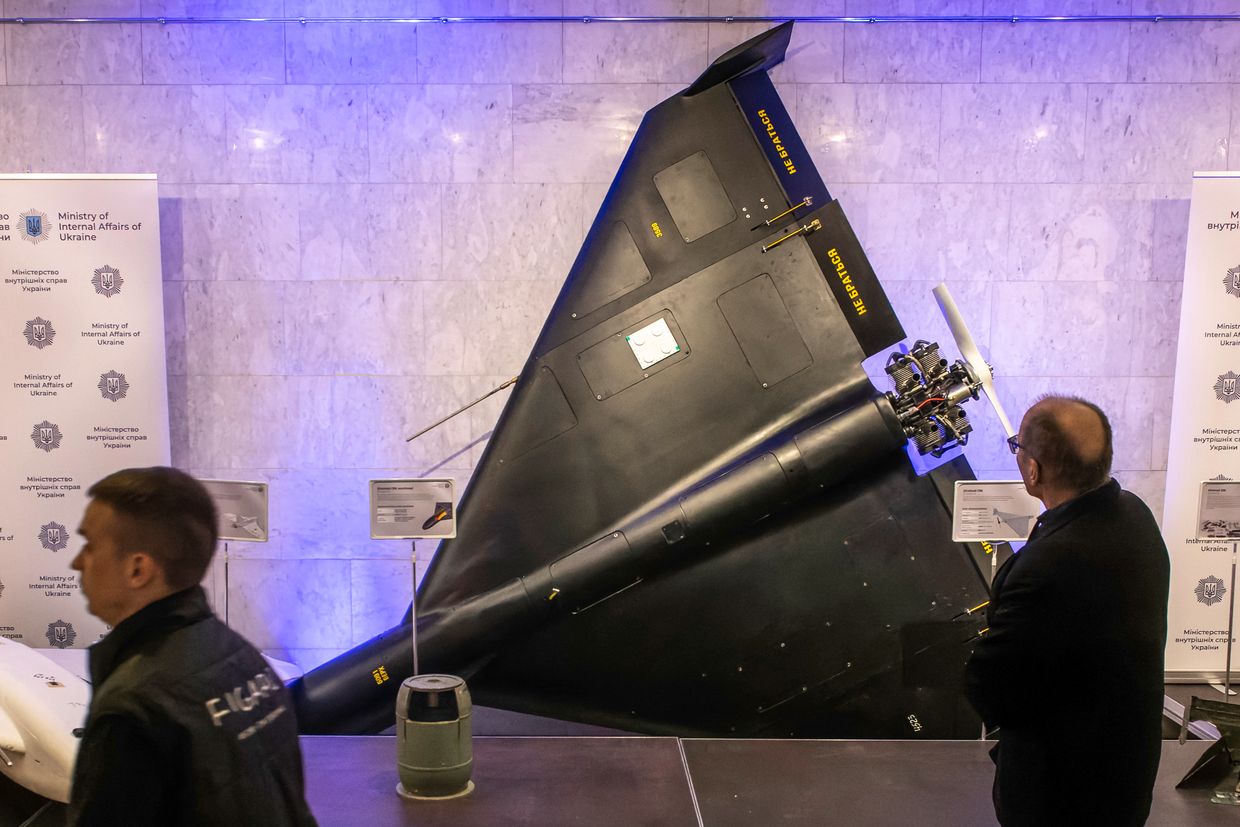
Iran is using the war in Ukraine to make its attack drones deadlier. Iran has been refining its Shahed-107 kamikaze drones based on the experience of the war in Ukraine, military analyst Oleksandr Kovalenko said.
Ukraine has become the testing ground where Iran improves the weapons, and Russia then fires at it. The Shahed-107's warheads have received additional shrapnel elements, and a detailed aerodynamic study shows a significant improvement in the drone's structure,
Iran is using the war in Ukraine to make its attack drones deadlier. Iran has been refining its Shahed-107 kamikaze drones based on the experience of the war in Ukraine, military analyst Oleksandr Kovalenko said.
Ukraine has become the testing ground where Iran improves the weapons, and Russia then fires at it. The Shahed-107's warheads have received additional shrapnel elements, and a detailed aerodynamic study shows a significant improvement in the drone's structure, Kovalenko explains.
The Shahed is being upgraded from combat experience
Kovalenko said the modifications come directly from how the drones perform in Ukraine. The warheads now carry extra fragmentation elements, increasing their lethality against people and soft targets, and the airframe's aerodynamics have been reworked.
A new loitering munition may be coming
Kovalenko also warned about a weapon already appearing over Ukraine. Karar drones have recently begun reaching Ukraine, not yet on a large scale, but enough to cause some confusion in identifying the weapon. He said he would not be surprised if they appear more widely soon.
He described its specifications.
"The Karar is a loitering munition, more a flying bomb than a drone by classification, equipped with a DLE 111 gasoline engine, with a range of about 300 kilometers on a 28-liter tank and a 15-kilogram warhead," Kovalenko said.
He called it an extremely cheap means of terror for the middle rear zone.
The warning is about the rear
Kovalenko's concern is where such a weapon reaches. A cheap loitering munition with a 300-kilometer range could strike areas well behind the front that have been relatively safe, extending the threat deeper into Ukraine.
Kovalenko framed the weapon's arrival in stark terms, saying that when it appears, people should simply accept what will happen, and declining even to name the region where he expects it to appear. That is his characterization: a single analyst's warning about a weapon whose wider use he anticipates but that has not yet reached scale. EP cannot independently verify Karar's specifications or its deployment.
The appointment of Mohsen Rezaei, a longtime military commander, to a top security post suggests that the country’s establishment is consolidating power.
The appointment of Mohsen Rezaei, a longtime military commander, to a top security post suggests that the country’s establishment is consolidating power.
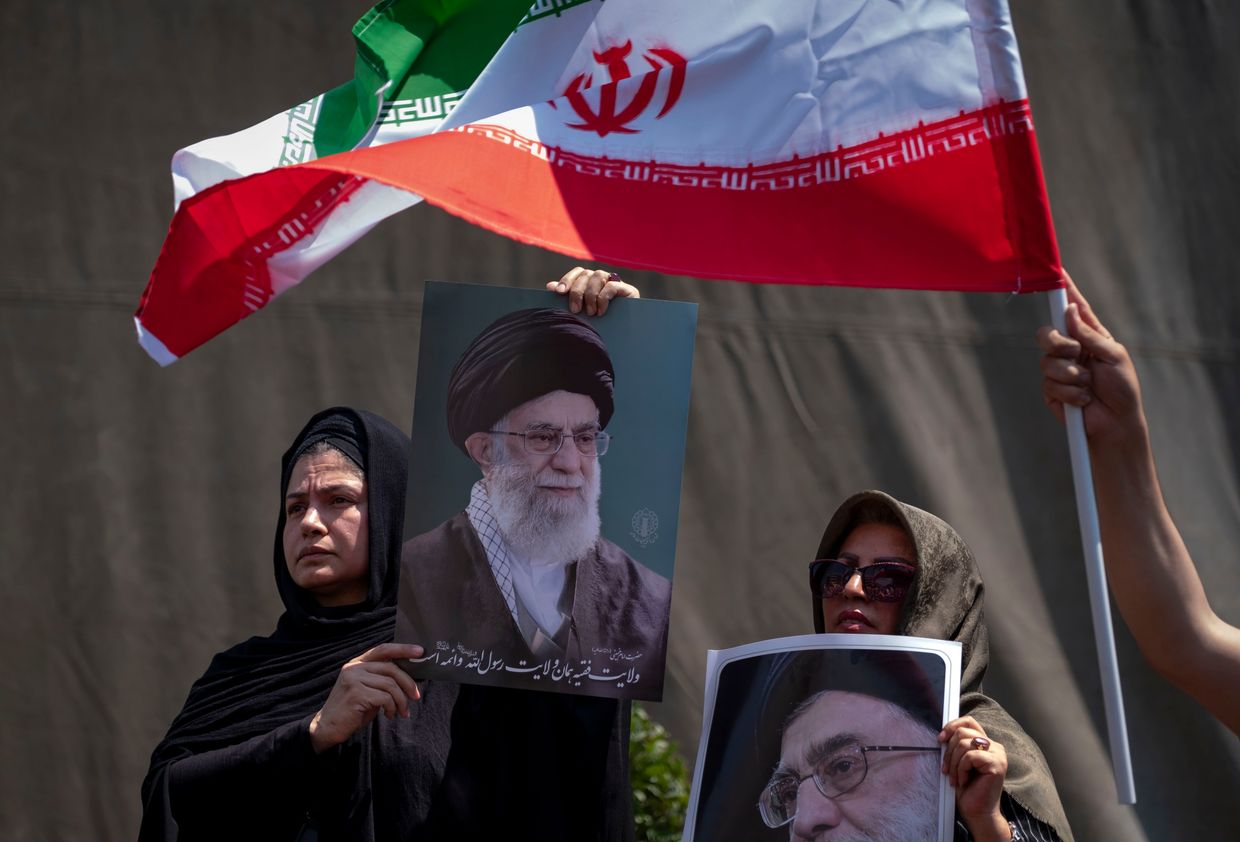
Mohsen Rezaei, an adviser to Iran’s supreme leader, Ayatollah Mojtaba Khamenei, attending a funeral ceremony for Mr. Khamenei’s father and predecessor, in Tehran last month.
The head of Iran’s Supreme National Security Council said that the Strait of Hormuz would remain closed until the United States met certain conditions.
The head of Iran’s Supreme National Security Council said that the Strait of Hormuz would remain closed until the United States met certain conditions.
The inhabitants of the Chagos Islands were expelled by the British 60 years ago. Refugees were anxious to return this year, but their hopes have been caught in a morass of geopolitics.
The inhabitants of the Chagos Islands were expelled by the British 60 years ago. Refugees were anxious to return this year, but their hopes have been caught in a morass of geopolitics.
Roseline Rabouine, who was forced to leave Chagos Islands when she was 8, attending mass in Port Louis, Mauritius, last month.
Recent escalating tensions between the Iran-backed group and the Yemeni government have prompted fears that a truce in place since 2022 is nearing collapse.
Recent escalating tensions between the Iran-backed group and the Yemeni government have prompted fears that a truce in place since 2022 is nearing collapse.
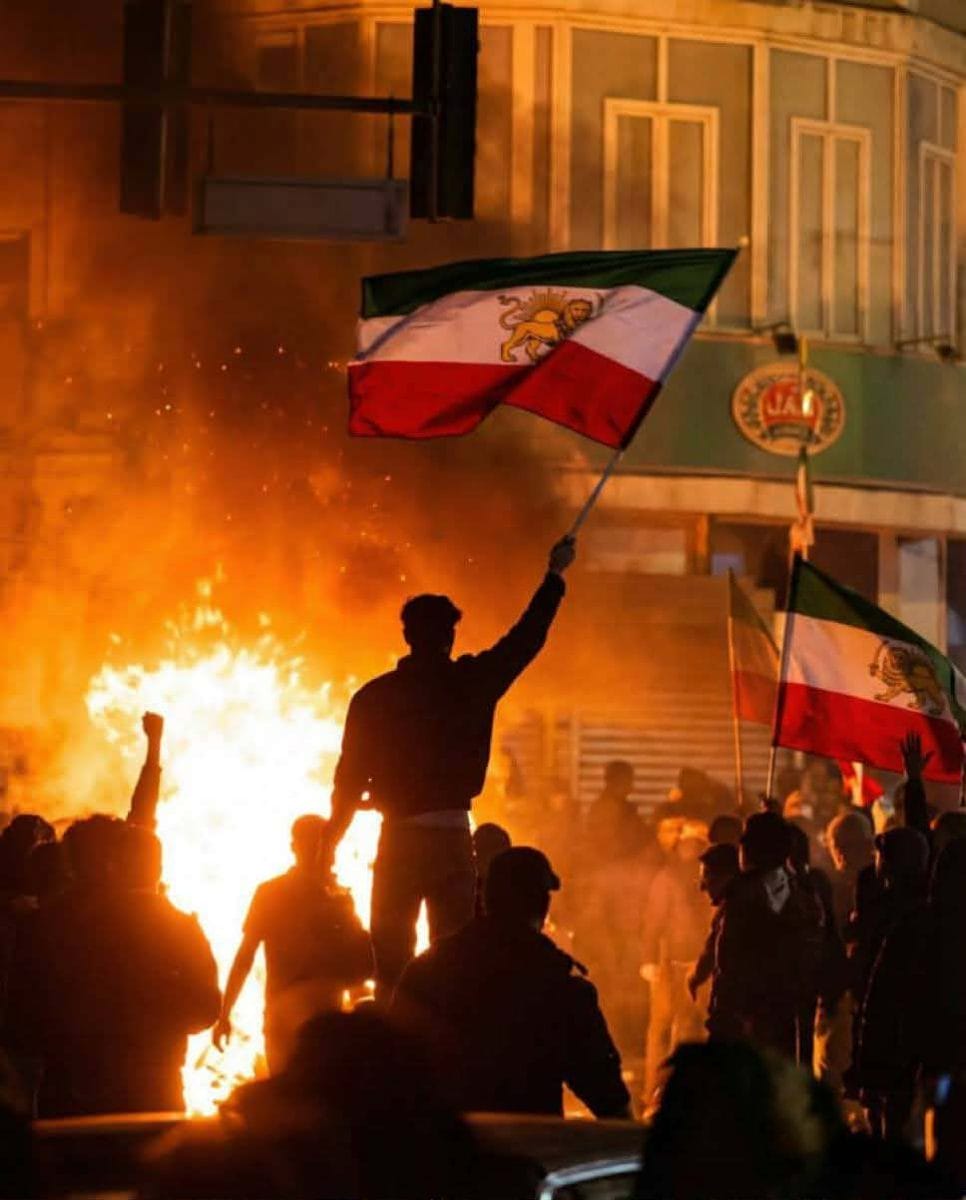
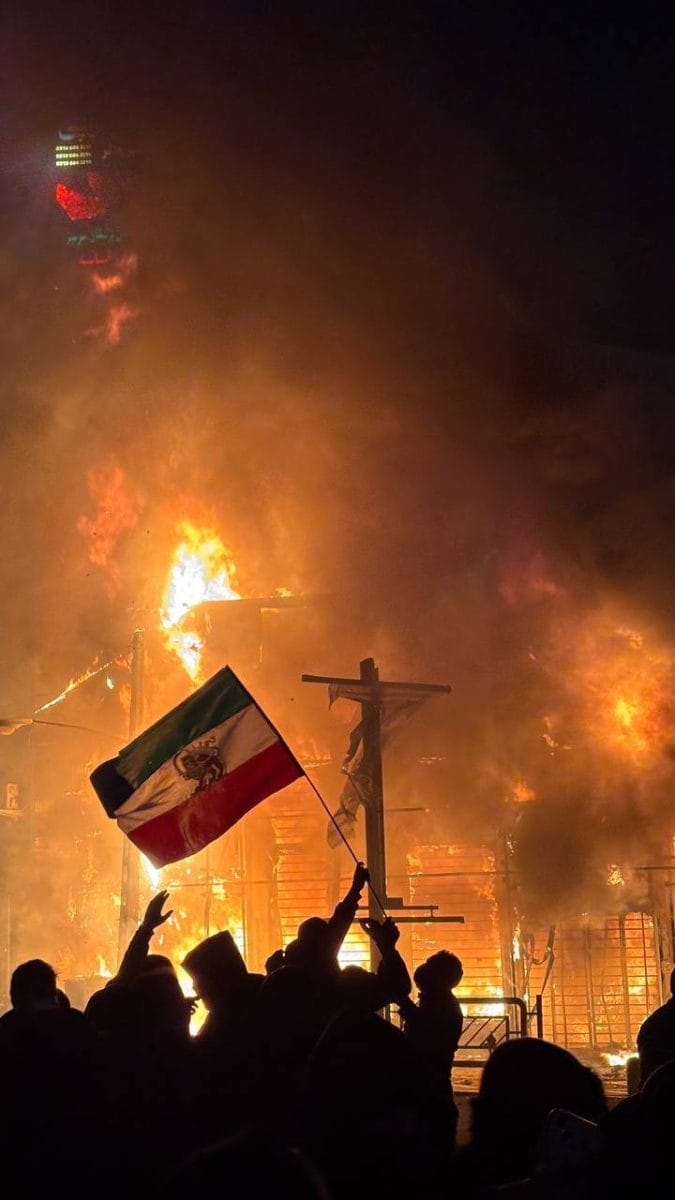
As President Trump struggles to extricate the United States from the war in Iran, his promises to protesters in the country have fallen by the wayside.
As President Trump struggles to extricate the United States from the war in Iran, his promises to protesters in the country have fallen by the wayside.
Anti-government protesters in Tehran in January. Iran has executed at least 26 people in connection with the protests since President Trump made his promise.
The Iranian-backed militia said it had targeted the armed forces in two resource-rich provinces, as escalating violence in Yemen imperils a fragile truce.
The Iranian-backed militia said it had targeted the armed forces in two resource-rich provinces, as escalating violence in Yemen imperils a fragile truce.
Iran was prepared to carry out strikes on Ukraine after Kyiv attacked an Iranian cargo ship in the Caspian Sea last month but suspended the plan after Ukraine said the strike had been unintended, a senior adviser to Iran's supreme leader has claimed.
According to Radio Svoboda, Mohsen Rezaei, an adviser to Iran's Supreme Leader Ali Khamenei, made the remarks during an interview with Iranian state television on 3 August.
"We were ready to strike three locations in Ukr
Iran was prepared to carry out strikes on Ukraine after Kyiv attacked an Iranian cargo ship in the Caspian Sea last month but suspended the plan after Ukraine said the strike had been unintended, a senior adviser to Iran's supreme leader has claimed.
According to Radio Svoboda, Mohsen Rezaei, an adviser to Iran's Supreme Leader Ali Khamenei, made the remarks during an interview with Iranian state television on 3 August.
"We were ready to strike three locations in Ukraine, but after they said the attack was a mistake, we suspended our response to consider their claim," Rezaei said. "In any case, they will have to pay for their attack."
Ukraine had not publicly responded to Rezaei's latest comments.
Caspian Sea strike sparked diplomatic contacts
The remarks follow a Ukrainian strike on an Iranian cargo vessel in the Caspian Sea on 25 July.
Tehran said the ship was carrying civilian cargo and that an Iranian sailor was killed in the attack. Ukraine, however, said the vessel was transporting Iranian drone and missile components to Russia for use in its war against Ukraine.
Following the incident, Ukrainian Foreign Minister Andrii Sybiha said he had spoken with his Iranian counterpart, Abbas Araghchi, to prevent further escalation.
Sybiha said Ukraine's actions were directed solely at defending the country from Russian aggression and "never intended to target civilian vessels or people." He added that Russia was "the root cause of all incidents" and bore "full responsibility for all provocations and casualties."
He also urged Iran to avoid escalatory steps and end its military support for Russia's war.
I called Iran’s Foreign Minister @araghchi for a frank conversation. Diplomacy is about direct conversation, even when it’s difficult. I stressed that our goal is to avoid unnecessary escalation.
I reiterated that all of Ukraine’s actions are aimed solely at defending our…
Iran has repeatedly threatened retaliation over the Caspian Sea strike, while Kyiv has dismissed the warnings.
Military ties between Tehran and Moscow have deepened since Russia launched its full-scale invasion of Ukraine. Iran has supplied Russia with Shahed attack drones, which have become a mainstay of Moscow's long-range strikes against Ukrainian cities. Ukraine has previously argued that Iran's military assistance makes it complicit in Russia's war.
Rezaei's statement is the clearest public claim so far that Iran had considered direct military action against Ukraine before deciding against it.
Des avions de chasse américains et saoudiens ont bombardé, dans l’est de l’Irak, plusieurs bases appartenant à des groupes armés pro-iraniens.
L’Irak a de longues frontières communes avec l’Iran et avec l’Arabie saoudite.
Les frappes auraient fait au moins 20 morts et une trentaine de blessés.
L’armée américaine a présenté l’opération comme une réponse à de récentes attaques de drones iraniens.
L’Arabie saoudite accuse par ailleurs les groupes ciblés par les frappes d’avoir
An endless purgatory: How an exiled Iranian waits and watches
“They’re shooting smoke at protesters.”
“They broke doors.”
“They brought an armored vehicle.”
In Aarhus, Denmark, Hemad Nazari lay in bed, refreshing his phone.
It was early evening in Iran on January 8, when the messages began arriving from Rasht, the northern city where he grew up.
Nearly two hours later, another message appeared: “We are trapped in our home.”
Then the messages stopped.
For the next eight da
An endless purgatory: How an exiled Iranian waits and watches
“They’re shooting smoke at protesters.”
“They broke doors.”
“They brought an armored vehicle.”
In Aarhus, Denmark, Hemad Nazari lay in bed, refreshing his phone.
It was early evening in Iran on January 8, when the messages began arriving from Rasht, the northern city where he grew up.
Nearly two hours later, another message appeared: “We are trapped in our home.”
Then the messages stopped.
For the next eight days, Hemad heard nothing from his family.
He wasn’t the only one. Several million Iranians are part of an educated, relatively prosperous diaspora spread across the world, particularly North America and Europe, a diaspora that grew from the mass emigration of professionals and intellectuals after the 1979 Iranian revolution.
Nazari lives in Aarhus, Denmark’s second-largest city. He works for a real estate company. He’s a photographer, an active part of the local climbing community, and over the past year, he has been cycling across the world with his girlfriend.
It looks and feels like freedom. And in many ways, it is.
But Nazari hasn’t set foot in Iran for eight years. In that time, he has met his parents three times — twice in Turkey, once in Nepal.
As for now, with a nationwide internet blackout still in effect amid a flickering, faltering peace process, he can, like everyone else around the world, only watch — and wait.
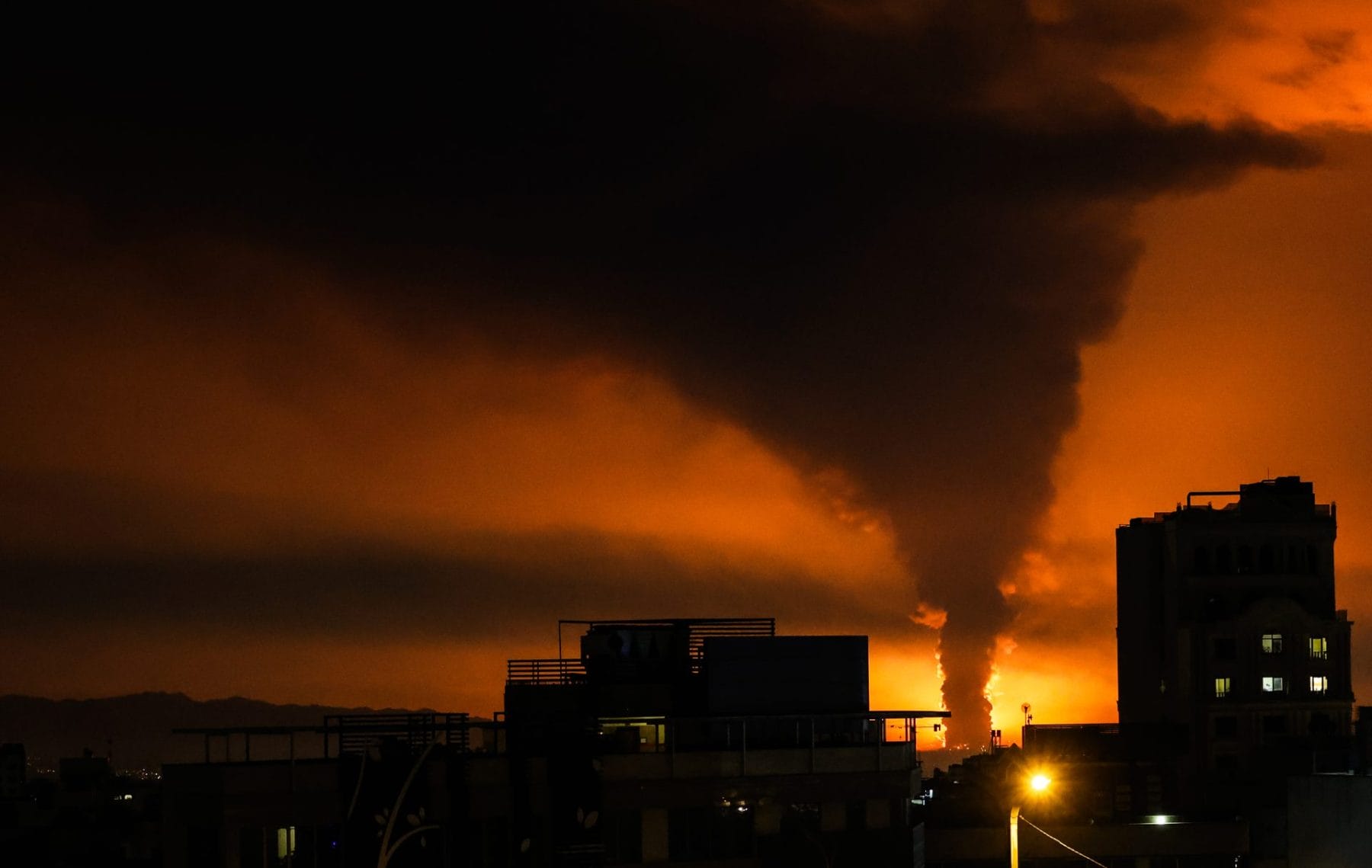
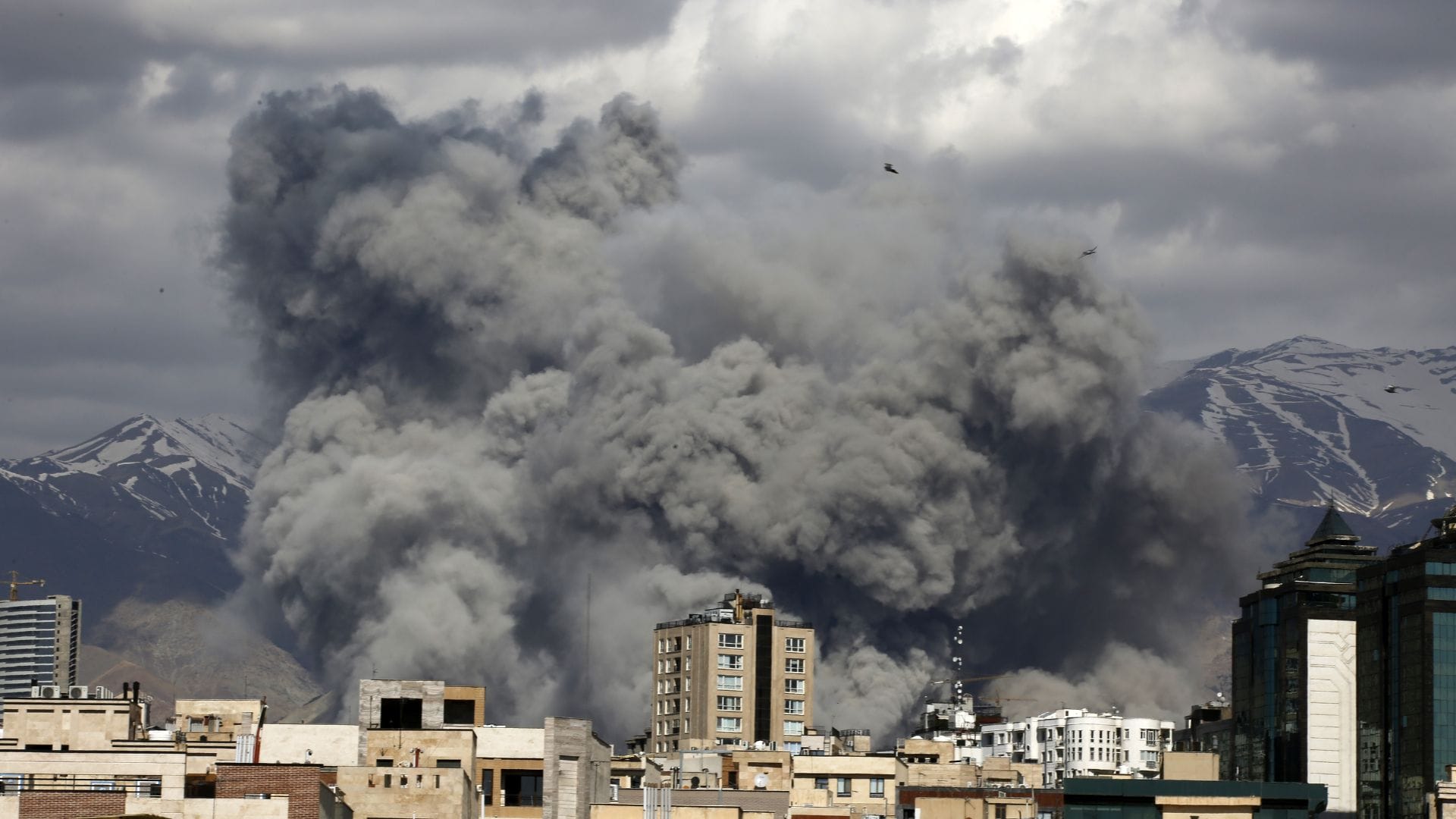
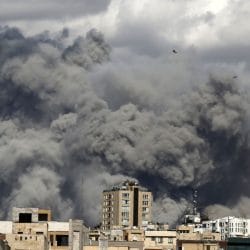
A large plume of smoke rises over Tehran after explosions were reported in the city during the night on March 07, 2026 in Tehran. Contributor/Getty Images.
Hemad Nazari left Iran in 2016, at 27. He was not at the time a political exile. He was a civil engineer with a steady job and a passport that made most borders difficult to cross. He wanted to travel. To see the world. To live somewhere else for a while.
The sanction-ridden Iranian economy was in a state of collapse. Nazari’s salary, once worth a few hundred dollars a month, shrank rapidly as the currency fell. Saving money became meaningless. Planning a future felt abstract — a concept more than a tangible goal.
So he left. He went to Vietnam first. Then Nepal, Georgia, Turkey. What began as travel, slowly turned into something more permanent.
“I didn’t leave because I thought Iran would change,” he told me. “I left because I could see that it wouldn’t.”
And it wasn’t because people were satisfied, or afraid of change. The January protests, in which many thousands of Iranians were killed, were no eruption, no sudden flaring of anger.
Since 2019, Iran has experienced three major waves of mass protest. That year, demonstrations sparked by a sudden rise in fuel prices spread rapidly across the country. The response was immediate. There was, typically, a near-total internet shutdown and, according to a Reuters investigation, as many as 1,500 people may have been killed during the crackdown. Human rights groups said more than 10,000 people were arrested during and after the protests, with many of them held incommunicado and at risk of being tortured or facing capital punishment.
The demonstrations ultimately collapsed under isolation and fear.
For Nazari, whose travels had enabled him to put distance between himself and his homeland, the 2019 protests made it apparent that Iran was no longer an option for him, no longer a place he wanted to call home. He was not a persona non grata. There was no letter. No summons. No official declaration. Nothing that could be quoted or appealed.
Instead, he had changed.
When the internet inside Iran is shut down, information can only escape through fragments: phone calls, short videos, people with rare access still intact. From abroad, Iranians like Nazari become intermediaries by default. He translated. Shared. Verified. Some of his posts were picked up by Persian-language television channels broadcasting from outside Iran, including BBC Persian and Iran International. Channels watched closely by the authorities.
Nazari did not think much of it at first. He was not an activist by profession. He did not belong to an organization. He was simply using his name, his language, his access. But others who had said less had been detained on arrival in Iran. Cartoonists. Writers. Ordinary social media users. Some disappeared into prison for years. Some emerged broken. Some did not emerge at all.
“You don’t need to be told,” Hemad says about knowing he couldn’t go back. “You understand.”
In early 2020, after Iranian forces shot down a Ukrainian passenger plane and initially denied responsibility, crowds returned to the streets. Once again, arrests followed. So did the silence.
Hemad Nazari’s activity increased again. His real name was public. His face was visible; he didn’t hide. It was a choice he made despite the risk not just to himself, but to his family. “If they can’t get to you,” he told me, “they get to the people around you.”
Since then, eight years have passed.
“It’s not that I chose not to go to Iran,” he says. “It’s that every time I tried, the door closed again.” He does not refer to it as exile. But, in a manner of speaking, he had been made stateless, effectively stopped from going home, from seeing his family, from resuming the life he knew.
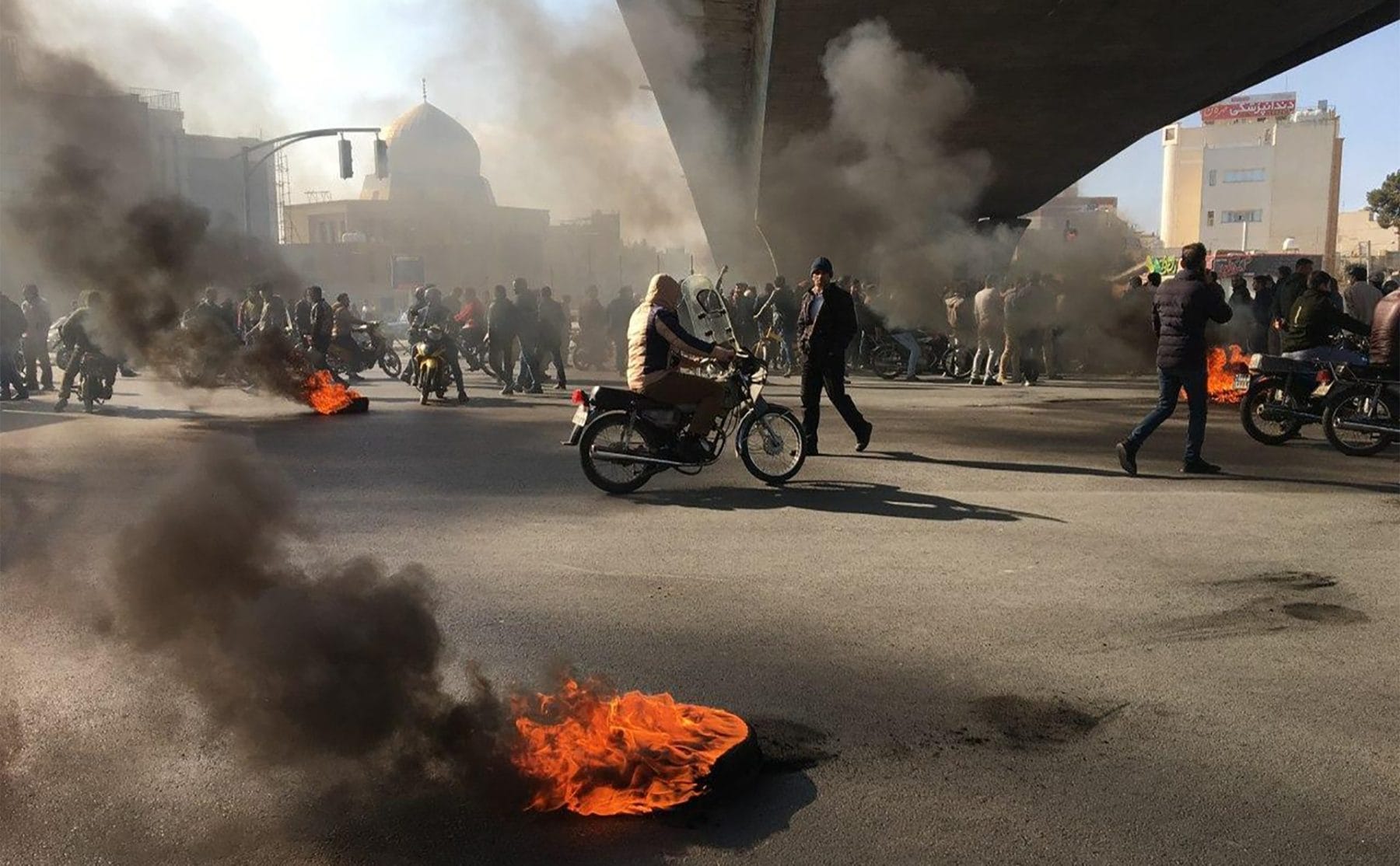
Iranian protesters rally amid burning tires during a demonstration against an increase in gasoline prices, in the central city of Isfahan on November 16, 2019. AFP via Getty Images.
By late December 2025, daily life in Iran once again became untenable. Food prices surged, paychecks were worth less every day, and families thought only about short term survival, unable to think even a month ahead.
According to Nazari, official inflation figures — though already extremely high — failed to capture the reality on the ground. By February, he told me, the cost of basic goods rivaled those in Denmark. Wages, he said, stagnated “at around $110 or $120 a month, with many people earning much less than that.” The minimum wage, the official figures from Iran’s Supreme Labor Council show, increased by 45% and still only reached $110 per month.
“The protests were fuelled by the economy,” Hemad says. “When shopkeepers and traders joined, it was a sign that frustration had reached a boiling point. But people don’t just want better prices. They want freedom. They want new leadership.”
In Rasht, his hometown in northern Iran, even families with children took to the streets in protest. “In my city, a lot of mosques are gone,” he says. “They burned them down. That tells you something.” What struck Nazari most, though, was not only who was protesting, but what they were saying, what they appeared to want.
“For the first time, the main chant on the street was the name of the prince,” he told me. “The son of the former shah: Reza Pahlavi.” Nazari is quick to stress that he himself is “principally a believer in democracy.” But the chants were telling.
“For 40 years, only loyalists dared utter the name Pahlavi. Now it’s spoken openly across all layers of society,” It was not about restoring the past. Instead, suggests Nazari, “for the first time, we had a plan.” People, he says, “were asking, ‘what happens if the regime collapses?’ And for the first time, there was an answer.”
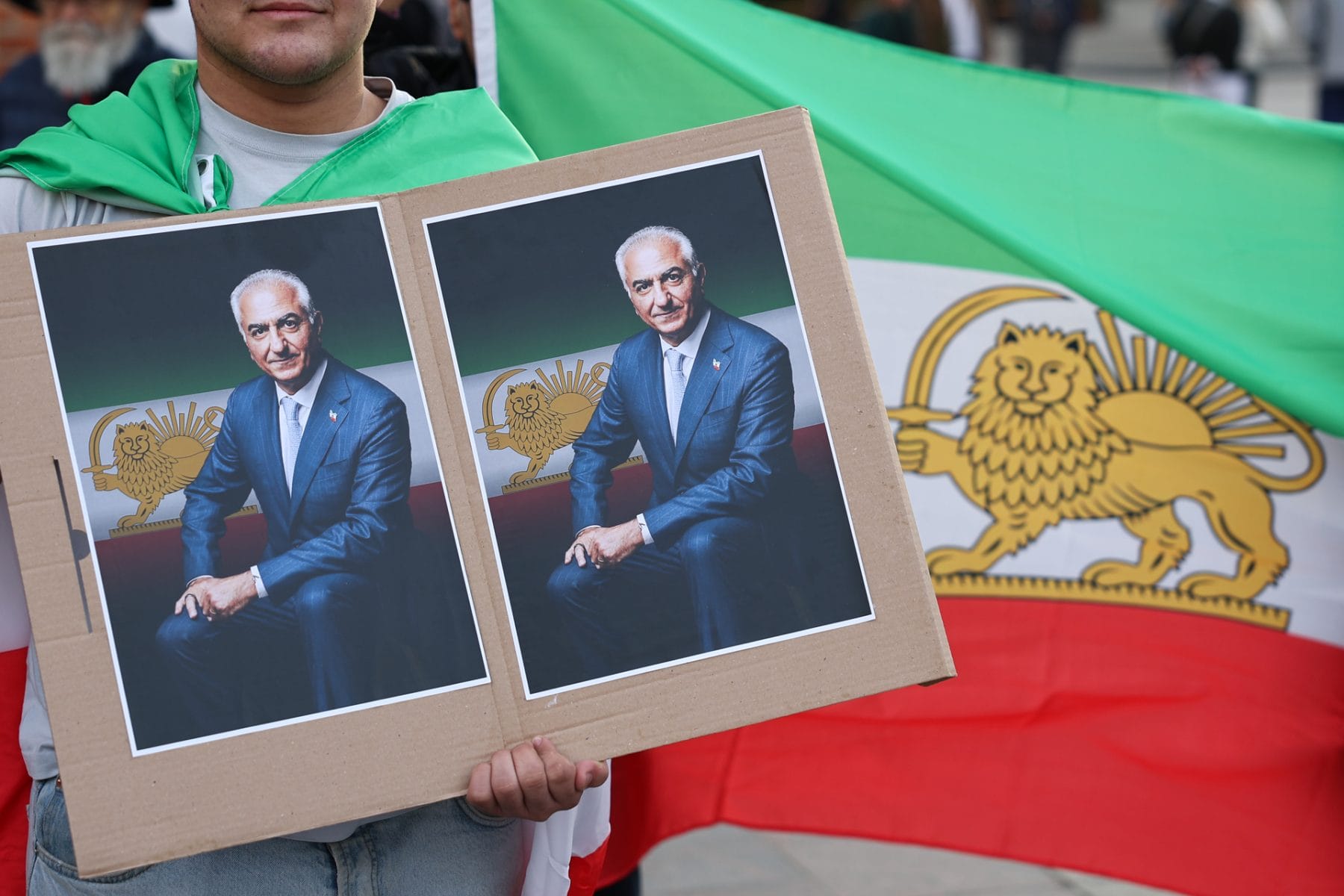
A person holds images of Reza Pahlavi during the demonstration supporting American-Israeli intervention in Iran, at Main Square in Krakow, Poland on March 8, 2026. Jakub Porzycki/NurPhoto via Getty Images.
In January, there was, as Nazari describes it, a rare sense of readiness among people he knew inside Iran. Friends who had never protested before were sending messages saying they would go. Family members spoke with a kind of cautious hope. This time, it felt different. It felt like change was possible.
Two days earlier, the son of the former shah had issued a public call for people to take to the streets on January 8 and 9 — not to follow a detailed program, but to say openly what they had long been afraid to say.
From Denmark, Nazari watched the buildup hour by hour. On January 8, as protests reached their peak, the internet went dark. The blackout was not unprecedented. Iran’s authorities had used these tactics before. Inevitably, as access disappeared, reports of mass arrests and the use of live ammunition to dispel crowds spread through the few remaining channels still connected to the outside world.
In Rasht, Nazari’s close friends sent him a video from their apartment window. Smoke drifted through the street. Shouting echoed between buildings. Gunfire cut through the noise.
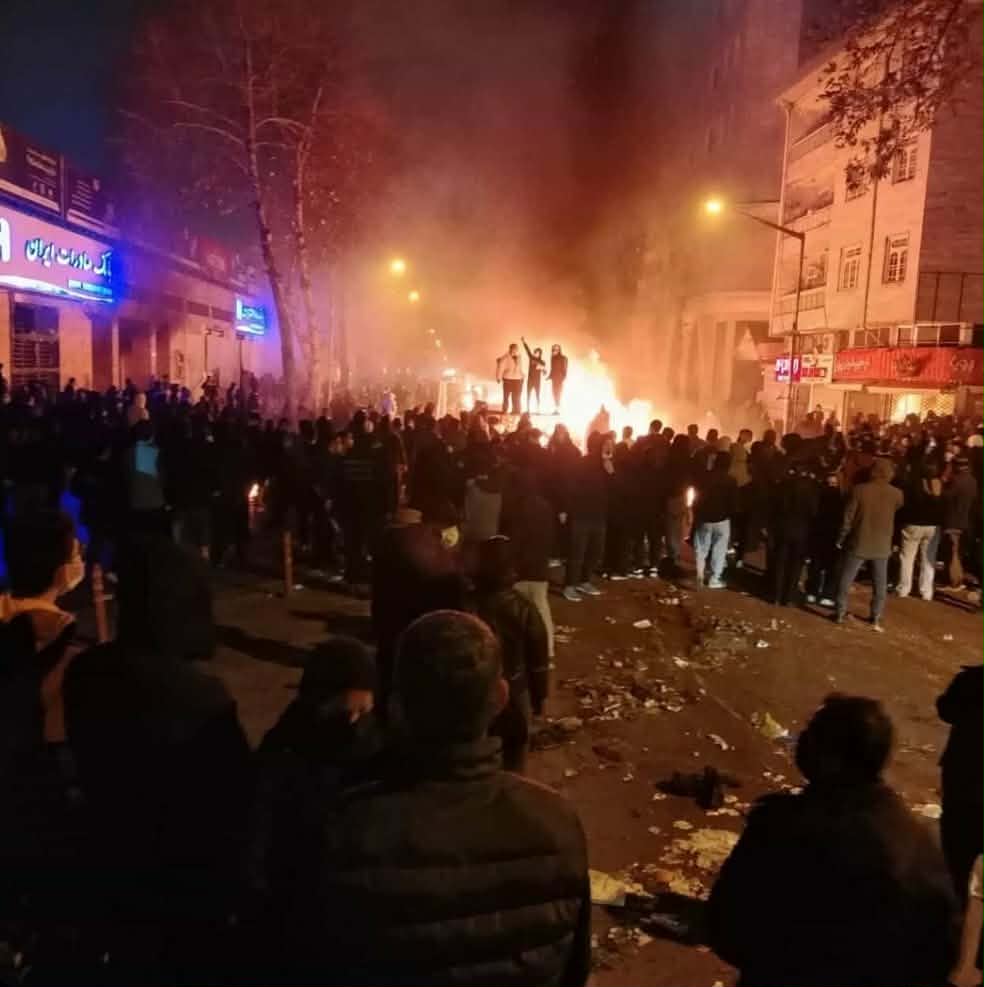
Protest in Rasht. From the personal archive of Hemad Nazari.
During the blackout, Nazari continued to receive fragments of information — through people with Starlink terminals, through friends who still had limited access. By January 10, the informal network of activists and diaspora Iranians he was part of believed that at least 2,000 people had been killed.
Eventually, his mother managed to call him. “We’ve been trying to reach you,” she said. With international charges for calls piling up every second, they had been trying to call him for days. Since that brief call, contact has been sporadic. A snatched few minutes. And then silence again.
“People showed everything they had,” Nazari says of the protests. “They did what they could do.” He’s trying not to romanticize what happened in January, he tells me. He’s not saying, he insists, that the protests were heroic. “Iranians,” he says, “are just desperate.” As for Nazari, he tells me up until the U.S. and Israel attacked Iran, he was “constantly debating whether to go home.” Right now, he adds, “it could have severe consequences, potentially a death sentence.” But, he pauses, “if it comes to civil war, I will go. My life doesn’t matter.”
For years, Nazari believed — as many Iranians did — that pressure, negotiations, sanctions, or appeals to international institutions might eventually force the regime to change. Over time, that belief had eroded. By January, he says, “it was gone.” It’s why he supported the attacks on Iran by Israel and the U.S., the execution of Ayatollah Khamenei and key regime figures.
“I’ve been saying for years that they are not going to leave peacefully,” he says. “They will fight. If the choice is that many people die, including me and my family, but the country becomes free — and then in 10 years we are back as a people, it will be worth it.”
He stops himself.
“I don’t say this because I like death, I say it because I don’t see another way. There is no peaceful path left.”
Protest in Tehran. From the personal archive of Hemad Nazari
But the hope Nazari felt when Donald Trump said the United States would respond forcefully if Iranian authorities continued killing their own people, has also now died.
On February 28, when U.S. and Israeli strikes on Iranian leadership and critical infrastructure began, some diaspora Iranians gathered to celebrate what they saw as the fall of a regime figurehead they had opposed for decades. Others responded with shock, caution, or grief, warning of what might follow.
In Denmark, where roughly 25,000 people of Iranian origin live, that divide played out in public. In Aarhus, several hundred Iranian Danes gathered in the city center with flags, music and open calls for regime change. Some thanked the U.S. and Israel for the strikes. At the same time, a pro-regime memorial for Ayatollah Khamenei in Copenhagen drew around 200 participants.
Their response to U.S. actions were playing out in a country where the broad view of the U.S. as a friend and force for good in the world had shifted sharply. In Denmark, as war in Iran broke out, people were still thinking of Greenland and Trump’s threats to annex the territory. In a January 2026 poll, 60% of Danes said they now see the U.S. as an opponent rather than an ally, while just 17% still considered it an ally.
Among Iranians, inside Denmark as in the wider diaspora, this ambivalence towards the U.S. is all too familiar. In a recent article in the Dagbladet Information, Iranian-born activist Nahid Riazi warned against celebrating a war that seemed to have little to do with emancipation for Iranians.
“Who says that war brings freedom?” she wrote. “It is us who are being hit. It is our children who are being destroyed.”
Nezari says he has heard this argument. He does not dismiss it. But, he asks, “what is the alternative?” If the war stops, he says, “and the regime stays, how do you guarantee they won’t keep killing people like they have since 1979? How do you guarantee they won’t start the street executions again?”
Trump, despite the failure of the first 21 hours of peace talks in Pakistan, continues to say the war is “very close to over,” that the Iranian government wants to make a deal. A deal, presumably, that enables them to stay in power.
The Islamic Republic may have been dealt a devastating blow, but it remains intact. Its leadership structure has shifted but not collapsed. To Nazari, that does not show resilience so much as the nature of the system itself.
He rejects the idea that the Islamic Republic functions like a government in any conventional sense. It behaves, he says, more like a cartel or an armed network — something held together not by institutions, but by force and succession. Too many powerful men remain alive, still able to operate. And a system like this, he argues, does not surrender because its center has been hit. It keeps going until every center is removed.
“Not until all the heads are cut off,” he says.
But U.S. attempts to bully the world into joining a war where the goals remain so varied and nebulous have been unsuccessful. The popularity of the war inside the U.S., even among Trump supporters, is low. The uncomfortable question now is what comes next — and whether anything has truly changed.
Still, Nazari argues that the current state of purgatory, in which the war is neither ongoing nor over, is not evidence of failure, but of what was always going to happen.
“We were not living in Iran,” he says. “We were living in a military compound with cities in between.” Even if negotiations resume, he believes something irreversible has already happened. The fact that the regime’s leaders now have to hide underground means, to him, that there is no real return to the old order.
“There’s no going back to how it was,” he says. But for now, Nazari is still in Denmark. His family is still in Iran. He still holds his phone close, hoping for news. Any news. Like Iranian exiles everywhere, and like the war itself, he is trapped in stasis, caught between distance and a sense of responsibility to his homeland — deeply involved, fundamentally powerless, yet unable to look away.
The Age of Exile
This story is part of our Age of Exile series, which explores how displacement has evolved from historical punishment into a defining condition of our time—one that reveals profound transformations in how we construct identity, maintain community, and exercise power across borders. In an era where digital connection enables presence without physical proximity, exile has become more complex, more global, and more central to understanding our world. Explore The Age of Exile series
As the Iran war pushes oil prices over $100 a barrel, and ships are attacked and mines are being laid in the Strait of Hormuz, a taboo has been broken and nuclear energy is back in fashion. European Commission president Ursula von der Leyen acknowledged that “the current Middle East crisis is a stark reminder” that it was “a strategic mistake for Europe to turn its back on” nuclear energy.
She was speaking at an International Atomic Agency summit hosted by France. Just days before the summit
As the Iran war pushes oil prices over $100 a barrel, and ships are attacked and mines are being laid in the Strait of Hormuz, a taboo has been broken and nuclear energy is back in fashion. European Commission president Ursula von der Leyen acknowledged that “the current Middle East crisis is a stark reminder” that it was “a strategic mistake for Europe to turn its back on” nuclear energy.
She was speaking at an International Atomic Agency summit hosted by France. Just days before the summit, French president Emanuel Macron spoke — a nuclear submarine looming behind him — of the need to increase the country’s stockpile of nuclear warheads for the first time in several decades. “In this dangerous and uncertain world,” Macron said, “you have to be feared if you want to be free.”
In February, the ‘New START treaty’, a mutual agreement between Russia and the U.S. to reduce and limit their nuclear arsenal, officially expired. The U.S. said China had conducted secret tests and that Beijing had to be part of any future non-proliferation agreement. For its part, the Chinese accused the U.S. government of seeking to mask its own expansionist ambitions. In the wake of the Iran war, started apparently because the Iranian regime was just days away from securing a bomb, other countries have spoken openly of their nuclear ambitions. After the start of the Iran war, North Korean leader Kim Jong Un spoke pointedly about preparing a nuclear-ready navy while inspecting a new destroyer and observing the testing of nuclear-capable cruise missiles. Even Polish prime minister Donald Tusk said Poland “will not want to be passive when it comes to nuclear security in a military context.”
On X, Tusk posted that Poland is in talks with France about joining its nuclear deterrence program. “We are arming together with our friends,” he wrote, “so that our enemies will never dare to attack us.” France is the only nuclear-capable European country, its systems (unlike the UK’s) completely independent of the U.S. and its new deterrence framework will include collaborations with Germany, Poland, Greece, Sweden, Denmark, the Netherlands and Belgium. Macron is calling France’s new strategy “advance deterrence,” a willingness to spread French nuclear armaments across the continent. A senior Pentagon official said the U.S. would “obviously at a minimum strenuously oppose” European countries seeking to acquire nuclear weapons. The U.S., as part of a NATO agreement, already deploys over 100 nuclear weapons in Europe — in Germany, Belgium, Italy, the Netherlands, and Turkey.
Europe’s anti-nuclear tradition grew out of grassroots movements in the 1970s. In West Germany, protests against a planned nuclear plant in the small wine-growing town of Wyhl began when local farmers feared pollution would destroy their land and crops. By the 1980s, millions of Europeans were protesting nuclear weapons and the deployment of NATO missiles across the continent, bringing nuclear security debates into the public arena and pushing governments toward disarmament efforts. The political impact of those protests were long-lasting. Across Europe, nuclear energy programs were curtailed or abandoned entirely. Denmark banned nuclear power plants in 1985, Germany shut down its last nuclear reactors in 2023, and several countries imposed strict limits on nuclear development. Nuclear technology, whether for energy or weapons, remained politically toxic in much of Europe. But, as Denmark’s Mette Frederiksen said European deterrence “is necessary because the military threat from Russia is expected to increase,” and its reliance on U.S. military support can arguably no longer be taken for granted.
At the Paris summit, China, Brazil, Belgium and Italy all signed up to a pledge to triple global nuclear capacity by 2050. South Africa signed the pledge earlier this month. The war in Iran has once again made clear that the world must wean itself off fossil fuels. The U.S. — which imposed additional tariffs on India for buying Russian oil and thus helping to finance the continuation of the war in Ukraine — has, since the start of the attack on Iran, told India it can continue to buy Russian oil. Delhi promptly bought 30 million barrels of Russian crude oil. But this month India also signed a deal with Canada to receive uranium to expand its nuclear energy program. But in 1974, Canada provided India with nuclear technology for peaceful uses that were promptly put towards the building of nuclear weapons. Nuclear collaborations between the two countries were suspended for decades. It’s not a coincidence that those ties are once again being revived in the current geopolitical context. A growing clamor for nuclear energy has clear proliferation risks.
While France has been talking about greater nuclear deterrence, most European states are speaking about a revival of nuclear energy as an alternative to fossil fuels and as a means to achieve climate goals. The vast energy requirements of AI and data centres is also prompting nations to adopt an “atoms for algorithms” strategy, to be, as Macron said, “at the heart of the artificial intelligence challenge.” But to talk about energy alone is to ignore the appeal nuclear deterrence has for nation states trying to navigate dangerous geopolitical straits. Iran was attacked ostensibly because it was on the verge of having a bomb. Favored nations such as Saudi Arabia are able to sign nuclear pacts that remove non-proliferation guardrails, but the actions of the U.S. and Israel in Iran will make the bomb attractive to many more as a national security strategy.
A version of this story was published in this week’s Coda Currents newsletter. Sign up here.
Between them, the United States and Israel struck more than 2,000 targets within the first 24 hours of their war with Iran.
For even the largest militaries, it is an almost impossible task to identify, select and then precisely locate such a high volume of targets. But the U.S. military had some help. Claude, the “next generation AI assistant” built by Anthropic, was used in the planning of ‘Operation Epic Fury’. This, even though the Department of War recently labeled Anthropic a “supply cha
Between them, the United States and Israel struck more than 2,000 targets within the first 24 hours of their war with Iran.
For even the largest militaries, it is an almost impossible task to identify, select and then precisely locate such a high volume of targets. But the U.S. military had some help. Claude, the “next generation AI assistant” built by Anthropic, was used in the planning of ‘Operation Epic Fury’. This, even though the Department of War recently labeled Anthropic a “supply chain risk”.
Anthropic is one of the world’s leading AI companies. Together with Palantir, another Big Tech company, it has been working since 2024 with the Pentagon to embed its systems in military decision-making – creating what is arguably the operating platform of present-day U.S. warfare and intelligence. Even though secretary of defense Pete Hegseth said the company “delivered a master class in arrogance and betrayal” and that the government would “cease all use of Anthropic's technology,” the company is too integrated into modern U.S. warfare for it not to be essential to the U.S. attack on Iran. The question might be not whether companies like Anthropic can ringfence their tech but whether the Pentagon might just commandeer it.
Craig Jones, an academic who studies automated kill chains at the University of Newcastle, has told reporters that “the AI machine is making recommendations for what to target, which is actually much quicker in some ways than the speed of thought.” Similar AI systems have been used by Israel to coordinate its bombing campaign in Gaza, which is among the most destructive in human history.
Among the first hits in the United States and Israel’s aerial bombardment of Iran was the Shajarah Tayyebeh primary school for girls, in the southern town of Minab. It was a Saturday morning, and school was in session. According to Iranian state media, at least 165 people were killed, mostly young girls between the ages of seven and 12. Another 96 were severely injured. Eyewitness and open source intelligence reports corroborate the claims of mass civilian casualties. Both Iran and Israel have denied responsibility. The United States has said it is “looking into” allegations that the school was destroyed by one of its missiles. Maybe, given the volume of the bombardment, they’ve lost track.
It is too soon to know why the school was targeted – or whether it was an error. Either way, the U.S. military’s reliance on AI raises difficult questions.
AIs get things wrong all the time. Maybe it’s an extra finger in an AI-generated image, or a ‘hallucinated’ reference in a research report. Or, maybe, an algorithm sends a missile to the wrong address. That’s why Anthropic CEO Dario Amodei has said that weapons “that take humans out of the loop entirely and automate selecting and engaging targets” are simply not reliable enough. That position — along with Anthropic’s refusal to allow Claude to be used for mass domestic surveillance (although they are just fine with foreignsurveillance) — led to the Pentagon cancelling a $200-million contract with the company on Friday, the day before the attacks on Iran began. The Department of War immediately signed a new deal, minus any ethical guardrails, with OpenAI.
Anthropic’s confrontation with the Pentagon has burnished its reputation as an “ethical” AI company. But it may have found its ethical backbone too late. Critics argue that even within Anthropic’s “red lines”, there is enormous potential for abuse, while a “human in the loop” does not necessarily prevent mistakes — raising questions about who, exactly, is responsible when these mistakes result in fatalities. Francesca Albanese, the United Nations special rapporteur for Palestine, accused Amazon, Google and Microsoft in a 2025 of being “complicit in genocide” for providing cloud storage systems to the Israeli military. Anthropic’s integration into the U.S. military has been much deeper.
While Israel and the U.S. are waging an AI-powered war, Iran is responding with a technological revolution of its own. The Islamic Republic has pioneered the production of low-cost one-way attack drones, most notably the Shahed-136, which costs just $34,000 to produce and as much as $4 million to shoot down. These are battle-tested: Russia has launched an estimated 57,000 Shahed-type drones in its war against Ukraine. Despite U.S. reliance on its own high-tech AI-powered systems, an American version of the Shahed also made its debut, alongside Claude, in the attack on Iran.
In response, Iran has aimed more than 1000 drones at neighboring Gulf states since the war broke out on Saturday. Hundreds have been shot down, but even the most sophisticated air defences struggle with this sheer volume, and dozens have struck their targets, threatening to prolong this war and cause more damage to U.S. allies than anticipated. It is significant that these targets included at least three Amazon data centers in Dubai and Bahrain. Just last month, Amazon announced that it was making Anthropic’s Claude available to its Middle Eastern customers. Claude experienced two global outages this week — it is not clear if these were related to the data center attacks.
Tech evangelists promise that artificial intelligence will, one day, cure cancer, end poverty and greatly increase our quality of life. But the new technology’s most obvious impact has been on warfare. For those with access to them, AI systems like Claude make it dramatically easier to bomb hundreds of targets at the same time — and much harder to figure out who is accountable when something goes wrong. On Truth Social, Donald Trump — who has promised to stop wars, not start them — posted approvingly that technology and munitions now mean Wars “can be fought ‘forever,’ and very successfully.”
As the bombing of Iran continues, we are not far from a time when AI not only parses data to select targets, it actually chooses when to pull the trigger. And advanced AI models have far fewer qualms, for instance, about deploying nuclear weapons than humans faced with similar scenarios. One day, when — if — war crimes investigators are able to pin down exactly who is responsible for killing dozens of young girls in Minab, tech bosses may find themselves implicated alongside military and political leaders. “The AI did it” can’t be their defense.
A version of this story was published in this week’s Coda Currents newsletter. Sign up here.
That Iran's Supreme Leader, Ayatollah Ali Khamenei, should disappear, or be disappeared, from the scene was not a novel notion.
Throughout my nearly five years in Tehran at the turn of this century, speculation about his health and longevity was a near-constant background hum. He was reported, or rumoured, to be mortally stricken by prostate cancer, his constitution already weakened by an assassination attempt in 1981 that left his right arm largely useless. Who would succeed him was far f
That Iran's Supreme Leader, Ayatollah Ali Khamenei, should disappear, or be disappeared, from the scene was not a novel notion.
Throughout my nearly five years in Tehran at the turn of this century, speculation about his health and longevity was a near-constant background hum. He was reported, or rumoured, to be mortally stricken by prostate cancer, his constitution already weakened by an assassination attempt in 1981 that left his right arm largely useless. Who would succeed him was far from clear, and the object of further speculation.
As he lived on into more recent times, reaching the same age of 86 attained by his predecessor – the Islamic Republic's founding father Ayatollah Ruhollah Khomeini – the prospect of his demise became a more immediate issue, though the question of succession remained equally shrouded in uncertainty. As Supreme Leader, Ayatollah Khamenei was the commanding voice behind the ruthless crackdown that took the lives of tens of thousands of citizens early this year in the latest and greatest of many escalating protests, at which the slogan "Marg Bar Diktator!" — Death to the Dictator! — became an increasingly prominent slogan.
Their wish was confirmed to be true at 5 a.m. local time on Sunday morning by Iranian broadcasters. The previous morning, Khamenei’s compound in Tehran was demolished as the Israeli-American onslaught got under way while the Ayatollah was heading a meeting of the Defence Council. That ensured that top military figures were also killed, including the commander of the Revolutionary Guards, Mohammad Pakpour, the Army Chief of Staff Abdolrahim Musavi, and Khamenei's top military adviser, Ali Shamkhani, who had been wounded but survived the attack in June last year.
The Iranian leadership appears to have been caught by surprise, as it was last year when the opening Israeli strike, which culled many top military leaders as well as nuclear scientists, was launched between two rounds of indirect negotiations between Iran and the U.S. Oman, which was mediating the talks, was furious then, denouncing Israel as the real destabilising factor in the region.
Perhaps the Iranian leaders — and the Omani mediators — thought that such a dirty trick could only be pulled once. But it has happened again, with no evidence that the talks in Geneva had broken down. The chief Omani negotiator, Badr Albusaidi, was livid. Only hours before the strike, he was in Washington for meetings “to explain that a peace agreement between the U.S. and Iran is now within reach. No nuclear weapons. Not ever. Zero stockpiling. Comprehensive verification. Peacefully and permanently. Let’s support the negotiators in closing the deal.”
After learning of the attack, he expressed his outrage in another tweet: “I am dismayed. Active and serious negotiations have yet again been undermined. Neither the interests of the United States nor the cause of global peace are well served by this. And I pray for the innocents who will suffer. I urge the United States not to get sucked in further. This is not your war.”
But Donald Trump and the U.S. were already thoroughly sucked in, and it was indeed their war, or at least his. According to the Israelis, the date had been decided jointly weeks before, after months of planning. Which meant that the Geneva negotiations, focused on the nuclear issue, were simply deceptive camouflage designed to give time for the U.S. to complete the marshalling of its biggest naval and air buildup in the region since the 2003 invasion of Iraq.
Trump and the Israeli prime minister Benjamin Netanyahu soon made it clear that the campaign now had little to do with the niceties of Iran's nuclear programme: the agenda was regime change in Tehran, and a surprise attack to decapitate the regime was an essential element.
With Iran's air defences largely taken out in last year's 12 days of war, it was like shooting fish in a barrel. Hundreds of air, missile and drone strikes were carried out on missile launchers, military bases and other targets around the country, with inevitable "collateral damage", including a girl's primary school in the southern town of Minab where scores of children were reported killed.
People gathered in Tehran's Revolution Square to mourn the assassination of Iran's Supreme Leader Ayatollah Ali Khamenei on March 1, 2026.
The Iranians did their best to live up to their dire warnings of deadly reprisals against Israel, and against American bases and allies on the Arab side of the Gulf and elsewhere. Missiles hailed down on airports and other installations in Kuwait, Bahrain, the UAE, Saudi Arabia and even Oman, despite its active mediation. While some U.S. bases may have been hit, so too were many civilian sites such as Dubai's iconic Burj al Arab hotel. Explosions too are being heard in Beirut, after Hezbollah fired rockets and drones at northern Israel to "avenge" Khamenei's death and the Israel Defense Forces struck back.
Air traffic was halted throughout a region rich in international hubs, sowing chaos worldwide. Iran's declaration that the strategic Strait of Hormuz was closed to shipping forced cargo shippers to suspend the voyages that transport some 20% of the world's oil and a lot of liquid gas, causing tremors through international markets. Once again, a decision taken by a tiny circle of men in Washington, Jerusalem and Tehran instantly rewired daily life, reminding us who actually gets to pull the global emergency brake.
What all this would do to Iran's relations with the Arab side of the Gulf was one of many open questions. While Oman was actively mediating, the other Arab oil states had been pressing the Americans not to allow a campaign that would predictably destabilise the region, and declaring their airspace not available for any hostilities. But any sympathy for Tehran quickly evaporated when the missiles started flying in: the Gulf Arab states closed ranks.
Trump and the Israelis made it clear that this was not one quick spectacular strike, but an ongoing campaign that would last days, perhaps even weeks. Presumably at the end, Iran would find its missile capabilities "obliterated," in Trump's favourite term, along with any nuclear activities.
Once the bombs stop falling, Trump and Netanyahu urged, the Iranians should come out of their basements and take over a government that would be theirs for the taking. A historic opportunity that would likely not recur for generations, Iranians were told.
But it is hard to imagine such regime change being wrought remotely from the skies. The regime lost little time in filling the leadership vacuum, setting up a three-man ruling council in line with the constitution, composed of the President, Masood Pezeshkian, the head of the Judiciary, Gholamhossein Mohseni-Ejei, and Ayatollah Alireza Arafi from the Council of Guardians. All regime loyalists, and the latter two noted hard-liners. So business as usual as far as they are concerned. But the fact is that the assassination of the Supreme Leader and the attendant bludgeoning of the regime's capabilities will inevitably usher in a new and unpredictable phase in Iran's turbulent history.
On the streets, reactions were fractured: jubilation in areas that had long chanted “Death to the dictator”, state-promote mourning in others, but also fear and a grim resignation, an understanding that power vacuums are often filled with fresh repression or civil war.
A smooth transition to a peaceful democracy is about the least likely scenario among the many possibilities. So too is an imminent return of the monarchy, with a comeback by Israeli-backed Reza Pahlavi, son of the Shah ousted by the 1979 revolution. So far there has been no sign visible to the outside world of a split in the ranks of the defenses built up by the Islamic Republic, which still has regular military forces numbering around 400,000, Revolutionary Guards of up to 190,000, and its auxiliary militia enforcers, the Basij, who may be able to mobilise around a million at street level.
There must be much anger among regime loyalists, which may fall on the heads of any opposition protestors who imagine they can move in and take over the reins of government from the bombed-out wreckage of the Islamic Republic. The U.S. military is not likely to be able to remain engaged in the detail of defanging the regime once the main thrust of the campaign is done. But Israel likely will. Its equivalent of the CIA, the Mossad, has spent years building up formidable intelligence at street level, and will be doing its utmost to continue hamstringing the regime from within and fomenting opposition.Among the many unanswerable questions is whether all this will lead simply to chaos and fragmentation, which is probably Israel's preferred outcome, or to a more compliant regime willing to compromise with the U.S. in order to get crippling economic sanctions lifted. As Trump concedes the war might last weeks, who knows what Iran will eventually emerge from the smoke and the rubble?
Will he or won't he? The Middle East is on tenterhooks as the U.S. continues to build up a massive and menacing military posture around Iran, threatening an attack that could trigger a conflagration whose tremors would be felt throughout the region.
If anybody hoped that the man on whose word it all hangs, President Donald Trump, might clarify his intentions in his State of the Union address on Tuesday night, they were disappointed.
Speaking 36 hours before a third round of indirect an
Will he or won't he? The Middle East is on tenterhooks as the U.S. continues to build up a massive and menacing military posture around Iran, threatening an attack that could trigger a conflagration whose tremors would be felt throughout the region.
If anybody hoped that the man on whose word it all hangs, President Donald Trump, might clarify his intentions in his State of the Union address on Tuesday night, they were disappointed.
Speaking 36 hours before a third round of indirect and ultimately inconclusive talks with the Iranians in Geneva on Thursday, he said, "My preference is to stop this problem through diplomacy but one thing is for certain, I will never allow the world's number one sponsor of terror, which they are by far, to have a nuclear weapon...they want to make a deal, but we haven't heard those secret (sic) words, 'We will never have a nuclear weapon.’”
In the run-up to the Geneva talks, led on the U.S. side by real estate moguls Steve Witkoff and Trump son-in-law Jared Kushner, Iranian officials voiced optimism that a deal could be struck and insisted they would be flexible on the nuclear issue. Various formulas were being bandied around, such as Iran sending abroad half of its estimated 300kg of highly enriched uranium and diluting the rest under supervision, participating in a regional consortium for peaceful enrichment and so on.
In theory, for Iran to say "We will never have a nuclear weapon" should not be an issue — it has said all along that it is not pursuing that goal, which is banned by a fatwa. Iranian foreign minister Abbas Araghchi posted on X this week that Tehran “will under no circumstances ever develop a nuclear weapon.” Which begs the question as to why it has enriched uranium to 60% — short of weapons grade but well beyond the levels needed for peaceful civilian purposes.
Witkoff and Kushner will be vigilant for signs of Iranian duplicity and foot-dragging. But with another set of talks ending with no deal apart from promises of more talks, both sides might simply be playing for time, Iran to delay the feared blow, and the U.S. to finish assembling the assault force, its biggest mobilization of naval and air power in the region since the 2003 invasion of Iraq.
There is strong apprehension in the region that the huge and costly U.S. buildup must mean business. American bombs and missiles would hit Iran. The Iranians would make good on their threat to make it a regional war, not a symbolic retaliation as happened in the 12-day war in June last year after American bunker-buster bombs hit Iran's nuclear facilities in Isfahan, Natanz and Fordow. This time Iranian missiles would target U.S. military assets, bases on the Arab side of the Gulf and elsewhere, and perhaps oil installations. And Israel. The Israelis would hit back hard. Hezbollah in Lebanon would do its best to join in, prompting a further massive Israeli response.
There were ominous straws in the wind. The U.S. withdrew non-essential personnel from bases in the Gulf, and from its embassy in Beirut. The Israelis reportedly warned Lebanon that if Hezbollah joined in, they would hit back at government targets, including Beirut airport, which were unscathed throughout the earlier hostilities. They stepped up their daily attacks on suspected Hezbollah targets, including a big missile attack on February 20 on the eastern Beqaa valley which left 12 dead, including eight Hezbollahis. Since the November 2024 ceasefire, Hezbollah has not fired so much as a peashooter at Israel while well over 400 of their people have been killed in Israeli attacks on Lebanon.
Does all this mean the doomsday scenario is inexorable? Are the Americans set on a clear game plan, with identified objectives and the means to attain them?
Apparently not. Trump is reportedly receiving divided counsel from his advisers, military and political, some more hawkish and others more cautious than others. Above all, he has an eye on the looming mid-term elections in November. He was elected on a platform of ending the "forever" wars in the Middle East, yet could be on the brink of starting another one, which would not go down well with part of his MAGA base or the public in general.
The signs are that he was hoping the swashbuckling display of power would intimidate the Iranians into buckling. Witkoff admitted Trump was puzzled that Iran had not capitulated. “Why, under this pressure, with the amount of sea power and naval power over there, why haven’t they come to us and said, ‘We profess we don’t want a weapon, so here’s what we’re prepared to do?’ And, yet, it’s sort of hard to get them to that place,” he told Fox News. Iran's Foreign Minister Abbas Araqchi explained: "It's because we're Iranian."
Trump's adrenalin was clearly set pumping by the adventure in Venezuela, where a similar military buildup culminated in the operation to abduct President Nicolas Maduro. But Iran is not Venezuela. It is a highly militarized regime which has spent 47 years preparing its internal and external defences, and which has different power bases that make it hard simply to decapitate. There is no magic bullet that might not set the region on fire.
Taking out the Supreme Leader, Ayatollah Ali Khamene'i (who is also a religious leader, and this is Ramadan) would not be likely to bring about a change in regime behavior as in Venezuela. Bringing the regime down altogether would require a prolonged and detailed campaign that the U.S. military machine might not be able to sustain.
That's where Israel comes in. Some White House advisers reportedly believe it would play better politically for Israel to strike first rather than the U.S., and thus force Iran to retaliate. Like Trump, Israel’s Prime Minister Benjamin Netanyahu is a man with an eye on impending elections (October at the latest) is Prime Minister Benjamin Netanyahu, who makes no secret of his ambition to see the Iranian regime brought down. Netanyahu — backed by almost the entire Israeli political spectrum — is clearly champing at the bit, but aware of the danger of being seen to drag the U.S. into a potentially messy embroilment. One reason perhaps for the unusually discreet nature of Netanyahu's sixth visit to the White House on February 11 — in through the back door, no lovefest press appearances.
Which may also actually have been a sign that the two allies might not be on the same strategic page. Plunging Iran into fragmentation and chaos would absolutely fit Israel's playbook, but not necessarily America's. The two are working at cross-purposes in Syria, where the Israelis are pushing against a strong central government which the U.S. is supporting, even against its erstwhile Kurdish allies in the north-east.
If there are two constants in the current equation, they are that the Iranian people’s disillusionment and rage against the regime will not go away, and neither will Israel's desire to overthrow it. But if Trump does not share that goal, he will have to find a face-saving way to wriggle off the hook he has created with his ostentatious military buildup.
A version of this story was published in this week’s Coda Currents newsletter.Sign up here.
Russian Foreign Minister Sergey Lavrov reiterated Moscow's offer to mediate disputes over Iran’s nuclear program, during a meeting with his Iranian counterpart at the BRICS summit in Rio de Janeiro, Reuters reported on July 6.Lavrov met with Iranian Deputy Foreign Minister Abbas Araqchi to discuss the situation, condemning recent Israeli and U.S. strikes on Iran, including attacks on nuclear sites under IAEA safeguards. Moscow reaffirmed its support for Iran’s right to nuclear energy, and also o
Russian Foreign Minister Sergey Lavrov reiterated Moscow's offer to mediate disputes over Iran’s nuclear program, during a meeting with his Iranian counterpart at the BRICS summit in Rio de Janeiro, Reuters reported on July 6.
Lavrov met with Iranian Deputy Foreign Minister Abbas Araqchi to discuss the situation, condemning recent Israeli and U.S. strikes on Iran, including attacks on nuclear sites under IAEA safeguards.
Moscow reaffirmed its support for Iran’s right to nuclear energy, and also offered to store Iranian uranium as part of a potential solution.
Although Iran officially denies intentions to pursue nuclear weapons, tensions with the U.S. and Israel remain high following the Iran-Israel conflict in June, which has currently settled into an uncertain ceasefire.
Ukraine’s Foreign Ministry said on June 22 that Iran’s nuclear program must be dismantled to prevent it from threatening the Middle East or the wider world, following U.S. air strikes on Iranian nuclear facilities.
“Iran is complicit in the crime of aggression against Ukraine. The Iranian regime is providing military assistance to Russia, including the supply of UAVs and technologies that Russia consistently uses to kill people and destroy critical infrastructure,” the statement read.
Russia and Iran have deepened ties since the start of the full-scale invasion. Notably, Iran has provided Russia with thousands of Shahed drones used in attacks against Ukrainian cities, as well as short-range ballistic missiles.
Iran is reportedly preparing to mine the Strait of Hormuz, a move that would spike global oil prices and give a significant boost to the Russian economy and its war machine in Ukraine.Reuters reported on July 1 that Iran loaded naval mines onto vessels in the Persian Gulf last month, citing two U.S. officials, who said the preparations had been detected after Israel launched its "preemptive" attack against Iran on June 13.Amid the conflict with Israel which has currently settled into an uneasy c
Iran is reportedly preparing to mine the Strait of Hormuz, a move that would spike global oil prices and give a significant boost to the Russian economy and its war machine in Ukraine.
Reuters reported on July 1 that Iran loaded naval mines onto vessels in the Persian Gulf last month, citing two U.S. officials, who said the preparations had been detected after Israel launched its "preemptive" attack against Iran on June 13.
Amid the conflict with Israel which has currently settled into an uneasy ceasefire, Iran has repeatedly threatened to block the Strait of Hormuz as a means of deterrence.
If the Strait were mined, Iran could block one-fifth of global oil demand and spike world energy prices — a boon for Russia's oil-dependent economy.
"Any disruption to Gulf supplies would push up global crude prices. Prices for Russian crude would rise in line," John Gawthrop, Argus Eurasia Energy editor, told the Kyiv Independent.
Russia’s energy sector made up 35-40% of its budget revenues pre-full-scale invasion and is powering its war machine.
Western sanctions on Russian energy and the G7’s Russian oil price cap of $60 per barrel have hampered its profits, with Russia losing more than $150 billion over the last three years, but have yet to deal a crippling blow.
The conflict between Israel and Iran caused a spike in prices — Brent crude, the global benchmark, on June 13 jumped from $69.36 to $75 per barrel, a surge that looked like it could grant Russia's economy a reprieve.
Until the Israeli attacks, the future for Russian crude wasn’t looking so bright. Europe was planning its 18th sanctions package targeting Russia's energy sector, and the G7 was pushing for a $45 price cap. Hungary and Slovakia have since blocked the sanctions package.
Prices have since settled along with the conflict and on July 2 Brent crude was $67.50, but if Iran does go ahead with mining the Strait of Hormuz, blocking one-fifth of global oil demand, another surge would follow.
This would also mean Iran blocks its own oil exports too, so it would only be a last resort from Tehran, David Fyfe, chief economist at Argus Media, a market analyst group, told the Kyiv Independent last month.
The Iranian Foreign Ministry has summoned the Ukrainian charge d'affaires to protest "inappropriate remarks" by Kyiv regarding recent Israeli and U.S. strikes on Iran, the ministry said on July 1.Tehran threatened Ukraine with unspecified "consequences" should such statements be repeated.The diplomatic spat follows a wave of Israeli and U.S. air strikes targeting Iran's nuclear program, with Iranian forces attacking Israel and a U.S. base in Qatar in response.Highlighting Iran's military support
The Iranian Foreign Ministry has summoned the Ukrainian charge d'affaires to protest "inappropriate remarks" by Kyiv regarding recent Israeli and U.S. strikes on Iran, the ministry said on July 1.
Tehran threatened Ukraine with unspecified "consequences" should such statements be repeated.
The diplomatic spat follows a wave of Israeli and U.S. air strikes targeting Iran's nuclear program, with Iranian forces attacking Israel and a U.S. base in Qatar in response.
Highlighting Iran's military support for Russian aggression against Ukraine, Kyiv responded by calling for the dismantling of the Iranian nuclear program to prevent it from threatening the Middle East or the wider world.
In response, Shahram Farsaei, head of the Iranian Foreign Ministry's Eurasian affairs department, relayed a protest note to Ukraine via the Ukrainian envoy in Iran, Kyrylo Pozdniakov. The ministry did not specify what exact comments prompted the reaction from the Iranian side.
Tehran also said that Ukrainian officials have "disregarded Ukraine's international legal obligations concerning respect for the principles and purposes of the U.N. Charter as well as the four Geneva Conventions."
Iran has provided ballistic missiles and thousands of Shahed drones to Russia, directly backing its armed aggression in Ukraine, itself launched in violation of international law and the U.N. Charter.
Moscow has backed Iran diplomatically after U.S. and Israeli attacks, urging a response from the U.N. Security Council and calling the attacks an "unprovoked aggression."
CIA Director John Ratcliffe told U.S. lawmakers that recent American military strikes dealt a major blow to Iran’s nuclear program by destroying the country’s only metal conversion facility, a U.S. official told Associated Press on June 29. Speaking on condition of anonymity due to the sensitivity of the intelligence, the official explained that Ratcliffe outlined the significance of the strike during a classified briefing last week, calling it a major setback that would take Tehran years to rec
CIA Director John Ratcliffe told U.S. lawmakers that recent American military strikes dealt a major blow to Iran’s nuclear program by destroying the country’s only metal conversion facility, a U.S. official told Associated Press on June 29.
Speaking on condition of anonymity due to the sensitivity of the intelligence, the official explained that Ratcliffe outlined the significance of the strike during a classified briefing last week, calling it a major setback that would take Tehran years to recover from.
Ratcliffe also told lawmakers that most of Iran’s stockpile of enriched uranium likely remains buried under rubble at the Isfahan and Fordo nuclear sites, two of the three key facilities targeted by U.S. strikes.
While the uranium may still be intact, the official emphasized that the destruction of the metal conversion facility has left Iran without a crucial component needed to build a nuclear weapon. "You can’t do a nuclear weapon without a conversion facility," Secretary of State Marco Rubio said during the NATO summit. "We can’t even find where it is, where it used to be on the map. You can’t even find where it used to be because the whole thing is just blackened out. It’s gone. It’s wiped out."
President Donald Trump has continued to defend the operation, which came just before a ceasefire between Israel and Iran took effect last Tuesday.
"It was obliterating like nobody’s ever seen before," Trump said in an interview with Fox News. "And that meant the end to their nuclear ambitions, at least for a period of time." Defense Secretary Pete Hegseth echoed that assessment, stating the sites were “destroyed.”
A preliminary report by the U.S. Defense Intelligence Agency, however, concluded the strikes inflicted significant damage but did not completely demolish the Fordo, Natanz, and Isfahan facilities.
Rafael Grossi, Director General of the International Atomic Energy Agency, said on CBS’ "Face the Nation" that three major Iranian nuclear sites with “capabilities in terms of treatment, conversion and enrichment of uranium have been destroyed to an important degree.”
However, he cautioned against overstating the damage. “Some is still standing,” Grossi said, adding, “If they so wish, they will be able to start doing this again.” He emphasized that inspectors must be allowed in to fully assess the extent of the destruction. “Frankly speaking, one cannot claim that everything has disappeared, and there is nothing there,” he said.
The destroyed metal conversion facility, located at the Isfahan nuclear site, had played a central role in Iran’s nuclear weapons development. The facility’s function—to convert enriched uranium gas into dense metal—is a critical step in producing the explosive core of a nuclear bomb. Ratcliffe emphasized this point during the classified hearing, describing the facility’s elimination as a strategic win that effectively undercuts Iran’s ability to weaponize its uranium.
Ratcliffe also told lawmakers that the 12-day U.S. assault severely weakened Iran’s air defense systems. According to the U.S. official, the CIA director explained that Iran now lacks the capability to defend against future Israeli airstrikes, making any attempts to rebuild its nuclear program highly vulnerable.
The United States would consider bombing Iran again if the country's nuclear program once again became of concern, U.S. President Donald Trump told reporters during a press briefing on June 27.When asked whether Trump would consider bombing Iran if the country were able to enrich uranium to a concerning level, Trump responded: "Sure. Without question, absolutely."On June 21, the United States conducted strikes on three major Iranian nuclear sites, Fordow, Natanz, and Isfahan, dropping over a doz
The United States would consider bombing Iran again if the country's nuclear program once again became of concern, U.S. President Donald Trump told reporters during a press briefing on June 27.
When asked whether Trump would consider bombing Iran if the country were able to enrich uranium to a concerning level, Trump responded: "Sure. Without question, absolutely."
On June 21, the United States conductedstrikes on three major Iranian nuclear sites, Fordow, Natanz, and Isfahan, dropping over a dozen bunker buster bombs on the sites and causing significant damage to the country's nuclear program.
"Turned out to be unbelievable," Trump said of the strikes on June 27, despite mixed reports on the success of the strikes.
A leaked U.S. Defense Intelligence Agency (DIA) assessment, reported by CNN, found that the strikes did not destroy the core of Tehran's nuclear program. Instead, the intelligence suggests the attacks likely delayed Iran's progress by "a few months."
Despite the leak, Trump administration officials have rebuffed reports that the strikes did not fully fulfill its object, amid reports of Iran having possibly moved its enriched uranium away from the sites.
"The objective was to eliminate enrichment in Iran… and he achieved that objective," U.S. Special Envoy to the Middle East Steve Witkoff said on June 24, adding that he personally reviewed damage assessments and saw "no doubt" that key nuclear infrastructure was destroyed.
Trump's comments on future attacks comes as Iran's Supreme Leader Ayatollah Ali Khamenei downplayed the success of the strikes, claiming victory over Israel and the United States.
"I SAVED (Khamenei) FROM A VERY UGLY AND IGNOMINIOUS DEATH," Trump wrote on Truth social on June 27, adding that he has halted plans to potentially ease sanctions on Iran. "The sanction are BITING," Trump wrote.
"Iran has to get back into the World Order flow, or things will only get worse for them," he added.
On June 24, Trump announced that a ceasefire between Iran and Israel had come into effect, following the U.S. strikes on Iranian nuclear facilities and a retaliatory Iranian attack on a U.S. military base in Qatar.
U.S. Special Envoy to the Middle East Steve Witkoff condemned on June 24 the leak of an intelligence assessment that undercuts U.S. President Donald Trump's claims of having "obliterated" Iran's nuclear program.His remarks follow a leaked U.S. Defense Intelligence Agency (DIA) assessment, reported by CNN, which found that strikes on three major Iranian nuclear sites, Fordow, Natanz, and Isfahan, did not destroy the core of Tehran's nuclear program. Instead, the intelligence suggests the attacks
U.S. Special Envoy to the Middle East Steve Witkoff condemned on June 24 the leak of an intelligence assessment that undercuts U.S. President Donald Trump's claims of having "obliterated" Iran's nuclear program.
His remarks follow a leaked U.S. Defense Intelligence Agency (DIA) assessment, reported by CNN, which found that strikes on three major Iranian nuclear sites, Fordow, Natanz, and Isfahan, did not destroy the core of Tehran's nuclear program. Instead, the intelligence suggests the attacks likely delayed Iran's progress by "a few months."
"It goes without saying that leaking that type of information, whatever the information, whatever side it comes out on, is outrageous. It's treasonous," Witkoff said during an appearance on Fox News. "It ought to be investigated, and whoever is responsible should be held accountable."
Witkoff, who served as Assistant to the U.S. president and led peace mission efforts during the recent conflict between Israel and Iran, defended Trump's portrayal of the U.S.-led strikes as a decisive success.
"The objective was to eliminate enrichment in Iran… and he achieved that objective," Witkoff said, adding that he personally reviewed damage assessments and saw "no doubt" that key nuclear infrastructure was destroyed.
The report leaked in media contradicts public statements from Trump and Defense Secretary Pete Hegseth, who had described the operation as delivering "total obliteration." Trump, for his part, stood by the claim on June 24. "Those targets were obliterated," he said. "That place is demolished."
According to the DIA assessment, though the strikes damaged above-ground infrastructure, most of the centrifuges and the enriched uranium stockpile reportedly remain intact. The assessment also noted that underground sections of the sites, where Iran's most sensitive work is done, were largely unaffected. Two officials told CNN that Iran likely retains operational nuclear facilities that were not targeted.
Witkoff dismissed the report as "preposterous," insisting that the Isfahan conversion facility, critical to Iran's ability to weaponize enriched uranium, was "completely destroyed" by a 30,000-pound bunker buster bomb.
"Without conversion, you can't begin or end enrichment," he said. "They cannot weaponize, even if they've enriched to 90%."
Witkoff also claimed successful targeting of Fordow and Natanz, saying the U.S. dropped more than a dozen bunker busters on the sites that made the facilities inoperable.
The White House acknowledged the assessment’s existence but strongly dismissed it. "This alleged assessment is flat-out wrong and was classified as ‘top secret’ but was still leaked to CNN by an anonymous, low-level loser in the intelligence community," press secretary Karoline Leavitt said.
"The leaking of this alleged assessment is a clear attempt to demean President Trump, and discredit the brave fighter pilots who conducted a perfectly executed mission to obliterate Iran’s nuclear program. Everyone knows what happens when you drop fourteen 30,000 pound bombs perfectly on their targets: total obliteration."
Trump, for his part, stood by his assessment of the mission's success. "I think it’s been completely demolished," he said on June 24. "Those pilots hit their targets. Those targets were obliterated, and the pilots should be given credit.” Asked if Iran could rebuild, Trump responded: "That place is under rock. That place is demolished."
While both Trump and Hegseth praised the strikes as decisive, others expressed caution. Chairman of the Joint Chiefs of Staff Dan Caine said it was "way too early" to determine whether Iran retained nuclear capabilities.
Recent U.S. strikes on three Iranian nuclear facilities did not eliminate the core components of Tehran’s nuclear program and likely delayed it by only a few months, according to an early assessment by the U.S. Defense Intelligence Agency (DIA), CNN reported on June 24, citing four sources familiar with the findings.The analysis, based on a battle damage report from U.S. Central Command, contradicts public statements by President Donald Trump and Defense Secretary Pete Hegseth, who claimed the o
Recent U.S. strikes on three Iranian nuclear facilities did not eliminate the core components of Tehran’s nuclear program and likely delayed it by only a few months, according to an early assessment by the U.S. Defense Intelligence Agency (DIA), CNN reported on June 24, citing four sources familiar with the findings.
The analysis, based on a battle damage report from U.S. Central Command, contradicts public statements by President Donald Trump and Defense Secretary Pete Hegseth, who claimed the operation had "obliterated" Iran’s nuclear capabilities.
"So the (DIA) assessment is that the U.S. set them back maybe a few months, tops," one source told CNN, adding that Iran’s stockpile of enriched uranium was not destroyed and that most centrifuges remain “intact.”
The White House acknowledged the assessment’s existence but strongly dismissed it. "This alleged assessment is flat-out wrong and was classified as ‘top secret’ but was still leaked to CNN by an anonymous, low-level loser in the intelligence community," press secretary Karoline Leavitt said. “The leaking of this alleged assessment is a clear attempt to demean President Trump, and discredit the brave fighter pilots who conducted a perfectly executed mission to obliterate Iran’s nuclear program. Everyone knows what happens when you drop fourteen 30,000 pound bombs perfectly on their targets: total obliteration.”
Trump, for his part, stood by his assessment of the mission's success. “I think it’s been completely demolished,” he said on Tuesday. “Those pilots hit their targets. Those targets were obliterated, and the pilots should be given credit.” Asked if Iran could rebuild, Trump responded: “That place is under rock. That place is demolished.”
While both Trump and Hegseth praised the strikes as decisive, others expressed caution. Chairman of the Joint Chiefs of Staff Dan Caine said it was “way too early” to determine whether Iran retained nuclear capabilities.
Republican Rep. Michael McCaul, former chair of the House Foreign Affairs Committee, also avoided endorsing the president’s characterization. “I’ve been briefed on this plan in the past, and it was never meant to completely destroy the nuclear facilities, but rather cause significant damage,” McCaul told CNN. “But it was always known to be a temporary setback.”
The DIA’s assessment reportedly found that damage at the Fordow, Natanz, and Isfahan sites was mostly limited to aboveground infrastructure, such as power systems and uranium metal processing buildings. The underground facilities—where Iran's most sensitive nuclear work takes place—were largely unaffected, the sources said.
According to CNN, Israel had been carrying out its own strikes on Iranian nuclear facilities prior to the U.S. operation, but relied on U.S. B-2 bombers equipped with 30,000-pound “bunker buster” bombs to finish the job. Despite over a dozen bombs being dropped on Fordow and Natanz, the sites’ key components remain intact, the sources said.
The U.S. also reportedly used Tomahawk missiles launched from a submarine to target Isfahan, rather than deploying bunker busters. A source said this was due to doubts over whether the bombs could penetrate Isfahan’s deep underground levels, which are believed to be even more fortified than Fordow.
Two sources also told CNN that Iran likely retains undisclosed nuclear facilities that were not targeted and remain operational.
Meanwhile, classified briefings for lawmakers on the strikes were postponed. The all-Senate briefing was rescheduled for Thursday, and the House briefing’s new date remains unclear.
Ukraine's military intelligence agency (HUR) and the Foreign Ministry have evacuated 31 Ukrainian citizens from Iran on the instructions of President Volodymyr Zelensky, the agency said on June 24.The news follows a war between Iran and Israel that began on June 13. The countries reached a ceasefire deal on June 24. Israel and Iran attacked each other hours after the ceasefire was announced. Despite the initial violations, the agreement appears to be holding now. Ukraine evacuated 14 children, 1
Ukraine's military intelligence agency (HUR) and the Foreign Ministry have evacuated 31 Ukrainian citizens from Iran on the instructions of President Volodymyr Zelensky, the agency said on June 24.
The news follows a war between Iran and Israel that began on June 13. The countries reached a ceasefire deal on June 24.
Israel and Iran attacked each other hours after the ceasefire was announced. Despite the initial violations, the agreement appears to be holding now.
Ukraine evacuated 14 children, 12 women, and five men, according to HUR.
The evacuation was carried out through Azerbaijan and Moldova to Kyiv, the statement read.
"We felt completely unprotected all the time in Tehran because there were no air raid alerts. In addition, the Internet was down, and we had no idea what was happening," Varvara from Kyiv Oblast, who was evacuated from Iran, told HUR's press service.
Earlier, Ukraine evacuated 176 people from Israel, including 133 Ukrainian citizens. The evacuation from Iran is the final stage of a joint operation by HUR and the Foreign Ministry to rescue Ukrainian citizens from high-risk areas, according to the agency's statement.
Tensions between Iran and Israel had already been rising after Iran launched missile strikes on Tel Aviv and other Israeli cities on June 13, killing multiple civilians, including five Ukrainian nationals. The attack came in retaliation for Israeli military action.
On June 24, Trump announced that a ceasefire between Iran and Israel had come into effect, following the U.S. strikes on Iranian nuclear facilities and a retaliatory Iranian attack on a U.S. military base in Qatar.
U.S. President Donald Trump said on June 24 that his Russian counterpart Vladimir Putin had called him and offered to help resolve the conflict between Iran and Israel, Fox News reported."As you know, Vladimir called me up. He said, can I help you with Iran? I said, 'no, I don't need help with Iran. I need help with you.' And I hope we're going to be getting a deal done with Russia, which is a shame. Six thousand soldiers died last week," Trump told journalists while heading to a NATO summit.Tru
U.S. President Donald Trump said on June 24 that his Russian counterpart Vladimir Putin had called him and offered to help resolve the conflict between Iran and Israel, Fox News reported.
"As you know, Vladimir called me up. He said, can I help you with Iran? I said, 'no, I don't need help with Iran. I need help with you.' And I hope we're going to be getting a deal done with Russia, which is a shame. Six thousand soldiers died last week," Trump told journalists while heading to a NATO summit.
Trump's remarks come as The Hague hosts the NATO summit on June 24-25, at which the American leader is expected to meet Ukraine's President Volodymyr Zelensky.
Trump added he would like "to see a deal with Russia," which recently launched a new summer offensive against Ukraine, disregarding calls by Kyiv and its Western partners for an unconditional ceasefire.
The U.S. president did not provide further details on a potential deal with Russia.
Russia has deepened military and political ties with Tehran during the full-scale invasion of Ukraine.
Iran has supplied Moscow with thousands of Shahed attack drones used in routine strikes on Ukrainian cities.
Russia and Iran have cooperated to develop their own nuclear programs as both countries face Western sanctions. Russia supplied Iran with the Middle East's first nuclear power plant despite objections from the West.
Tensions between Iran and Israel had already been rising after Iran launched missile strikes on Tel Aviv and other Israeli cities on June 13, killing multiple civilians, including five Ukrainian nationals. The attack came in retaliation for Israeli military action.
Following several days of escalating conflict, Trump announced a ceasefire between Israel and Iran, but it was violated within hours of the American president's statement.
Editor's note: This is a developing story and is being updated.Israel launched airstrikes on Iranian territory on June 24, defying U.S. President Donald Trump's call for calm just few hours after he announced a ceasefire between the two countries, according to the Times of Israel.The attack comes less than an hour after Trump told reporters that "Israel needs to calm down" as he criticized both countries for undermining the ceasefire he says he brokered. "We basically have two countries that hav
Editor's note: This is a developing story and is being updated.
Israel launched airstrikes on Iranian territory on June 24, defying U.S. President Donald Trump's call for calm just few hours after he announced a ceasefire between the two countries, according to the Times of Israel.
The attack comes less than an hour after Trump told reporters that "Israel needs to calm down" as he criticized both countries for undermining the ceasefire he says he brokered.
"We basically have two countries that have been fighting so long and so hard that they don't know what the f*ck they're doing," Trump said on June 24.
Hours after Trump said the ceasefire came into effect, Israel accused Tehran of launching missiles toward its territory — an allegation Iran denied.
Following Iran's alleged missile strike, Trump and Israeli Prime Minister Benjamin Netanyahu reportedly spoke on the phone and agreed that Israel would carry out a limited response. The air force strike targeted a single "symbolic" radar installation.
Ahead of Israel's strike, Trump wrote on Truth Social that all of the Israeli planes "turn around and head home, while doing a friendly 'Plane Wave" to Iran."
According to the Times of Israel, Israeli officials said Trump was still sending messages promising that Israel would not attack Iran "after he knew we would attack," a senior official told the Kan public broadcaster.
Editor's note: This story was updated to include comments made by U.S. President Donald Trump.Iran launched missiles toward Israel on June 24, just hours after U.S. President Donald Trump announced a ceasefire between the two countries had come into effect, the Israeli military said. Iran denied the accusation."A short while ago, sirens sounded in northern Israel following the identification of missiles launched from Iran toward the State of Israel," the Israel Defense Forces (IDF) said in a sta
Editor's note: This story was updated to include comments made by U.S. President Donald Trump.
Iran launched missiles toward Israel on June 24, just hours after U.S. President Donald Trump announced a ceasefire between the two countries had come into effect, the Israeli military said. Iran denied the accusation.
"A short while ago, sirens sounded in northern Israel following the identification of missiles launched from Iran toward the State of Israel," the Israel Defense Forces (IDF) said in a statement.
"At this time, the IAF (Israeli Air Force) is operating to intercept and strike where necessary to eliminate the threat," the statement read.
Israeli Defense Minister Israel Katz instructed the army to respond forcefully to Iran's ceasefire violation, Reuters reported. Katz said that Israel will continue to strike Iran after the "utter violation" of the ceasefire.
Shortly after Israel's statement, Iranian state media reported that Tehran denied firing missiles at Israel after the ceasefire began.
A senior security official in Iran told CNN that “no missiles have been fired at the enemy" after the ceasefire.
The reports come after days of escalating hostilities in the Middle East. Early on June 24, Trump declared in a Truth Social post that a ceasefire had begun, writing, "The ceasefire is now in effect. Please do not violate it!"
Israeli Prime Minister Benjamin Netanyahu said on June 24 Israel had agreed to Trump's ceasefire proposal, claiming that Israel had "achieved its goal of removing the Iranian nuclear and ballistic missile threat," according to Reuters.
Trump said later on June 24 that Israel needs to "calm down" after what he described as violations of the ceasefire by both sides.
"I gotta get Israel to calm down now," Trump said as he left the White House. "Israel, as soon as we made the deal, they came out and they dropped a load of bombs, the likes of which I've never seen before, the biggest load that we've seen."
He added: "We basically have two countries that have been fighting so long and so hard that they don't know what the f*ck they're doing."
Trump also wrote on Truth Social that "Israel is not going to attack Iran."
"Nobody is going to be hurt. The Ceasefire in in the effect," U.S. president wrote,
Previously, the U.S. launched airstrikes on Iran's nuclear facilities in Fordow, Natanz, and Esfahan on June 21. In response, Iran fired missiles at U.S. military bases in the region, including at least 10 targeting Al Udeid Air Base in Qatar and one aimed at a base in Iraq.
The Pentagon confirmed that Iran launched several short- and medium-range missiles at Al Udeid but reported no U.S. casualties. Trump dismissed the attacks as "limited and largely ineffective."
Iran is a key arms supplier to Russia, providing Shahed drones used in attacks on Ukrainian cities and pledging to send ballistic missiles. Israel, while home to a significant Russian-speaking population, has not joined Western sanctions against Moscow.
U.S. President Donald Trump announced on June 24 that a ceasefire between Iran and Israel had come into effect, following the U.S. strikes on Iranian nuclear facilities and retaliatory attack on U.S. military base in Qatar."The ceasefire is now in effect. Please do not violate it!" Trump said in a post on Truth Social on June 24.The announcement follows days of intensifying conflict after the U.S. conducted airstrikes on Iranian nuclear facilities on June 21, targeting sites in Fordow, Natanz, a
U.S. President Donald Trump announced on June 24 that a ceasefire between Iran and Israel had come into effect, following the U.S. strikes on Iranian nuclear facilities and retaliatory attack on U.S. military base in Qatar.
"The ceasefire is now in effect. Please do not violate it!" Trump said in a post on Truth Social on June 24.
The announcement follows days of intensifying conflict after the U.S. conducted airstrikes on Iranian nuclear facilities on June 21, targeting sites in Fordow, Natanz, and Esfahan.
In response, Iran launched multiple missiles at U.S. military bases in the region, including at least 10 toward the Al Udeid Air Base in Qatar and at least one toward a base in Iraq, Axios reported, citing an Israeli source.
The Pentagon confirmed that Iran fired several short- and medium-range missiles at Al Udeid, but said no American personnel were harmed. Trump downplayed the attack, calling it "limited and largely ineffective."
Israeli Prime Minister Benjamin Netanyahu said on June 24 that Israel has agreed to a U.S.-brokered ceasefire with Iran, thanking Trump for his support in defending Israel and "removing the Iranian nuclear threat," according to Reuters.
"Israel has achieved its goal of removing the Iranian nuclear and ballistic missile threat," Netanyahu said in a statement. "Israel thanks President Trump for his support and participation in removing the Iranian nuclear threat."
Iran is a key arms supplier to Russia, providing Shahed drones used in attacks on Ukrainian cities and pledging to send ballistic missiles. Israel, while home to a significant Russian-speaking population, has not joined Western sanctions against Moscow.
Tensions between Iran and Israel had already been rising after Iran launched missile strikes on Tel Aviv and other Israeli cities on June 13, killing multiple civilians, including five Ukrainian nationals. The attack came in retaliation for Israeli military action.
Trump, who has long styled himself as a dealmaker and peacemaker, has come under criticism for his failure to deliver on promises to reach a ceasefire between Russia and Ukraine. During his electoral campaign, he pledged to end the war between Russia and Ukraine within 24 hours of taking office. More than 100 days after Ukraine accepted a U.S.-backed proposal for a ceasefire, no progress has been made.
"It has been exactly 100 days since Ukraine unconditionally accepted the U.S. peace proposal to completely cease fire, put an end to the killing, and move forward with a genuine peace process," Ukrainian Foreign Minister Andrii Sybiha said on June 19. "Russia continues to choose war."
Ukraine backed the proposal during talks in Jeddah on March 11, agreeing to a 30-day unconditional ceasefire. Russia has rejected the offer, continuing its assault on Ukrainian cities and pushing for maximalist demands.
"It is time to act now and force Russia to peace," Sybiha said. "Peace through strength, increased sanctions, and enhanced capabilities for Ukraine."
Editor's note: This story is being updated. Iran launched multiple missiles at U.S. military bases in the Middle East, targeting sites in Qatar and Iraq, a day after the U.S. conducted air strikes on nuclear sites in Iran. At least 10 missiles were reportedly fired at the Al Udeid Air Base in Qatar and at least one toward a base in Iraq, Axios reported, citing an Israeli source. The U.S. Defense Department confirmed that Iran launched several short- and medium-range missiles at Al Udeid Air Base
Iran launched multiple missiles at U.S. military bases in the Middle East, targeting sites in Qatar and Iraq, a day after the U.S. conducted air strikes on nuclear sites in Iran.
At least 10 missiles were reportedly fired at the Al Udeid Air Base in Qatar and at least one toward a base in Iraq, Axios reported, citing an Israeli source.
The U.S. Defense Department confirmed that Iran launched several short- and medium-range missiles at Al Udeid Air Base, the New York Times reported. According to the Pentagon, there have been no reports of American casualties.
President Donald Trump downplayed Iran's response to the recent U.S. strike on its nuclear facilities, describing Tehran’s retaliation as limited and largely ineffective. "There have been 14 missiles fired — 13 were knocked down, and 1 was 'set free,' because it was headed in a nonthreatening direction," Trump said in a statement on Truth Social. He emphasized that no Americans were harmed and that the damage was minimal.
Trump went on to say, "Most importantly, they’ve gotten it all out of their ‘system,’ and there will, hopefully, be no further HATE." Ending on a conciliatory note, Trump added that he would "enthusiastically encourage Israel" to pursue peace in the region.
Iranian President Masoud Pezeshkian wrote on X that his country "neither initiated the war nor wanted it, but we will not leave the aggression against the great Iran unanswered."
Iran's targeting of U.S. assets marks a dangerous widening of the conflict, raising fears of further destabilization in the region.
The missile strikes come in response to the June 21 U.S. air campaign that targeted three nuclear facilities in Iran — Fordow, Natanz, and Esfahan — as Washington joined Israel's military operation against Tehran's nuclear program.
The escalation follows Israel's June 13 attack that prompted Iran to retaliate with missile attacks on Tel Aviv and other cities, killing multiple civilians, including five Ukrainian citizens.
Iran is a key supplier of weapons to Russia, including Shahed-type drones and ballistic missiles used in attacks on Ukrainian cities. Israel, which hosts a significant Russian-speaking population, has not joined Western sanctions against Moscow.
On June 13, Kyiv expressed concern over the security situation in the Middle East, describing Tehran as a "source of problems" in the region and beyond.
Russian President Vladimir Putin has condemned U.S. strikes on Iran as "completely unprovoked aggression," more than three years into his completely unprovoked full-scale invasion of Ukraine.Putin made the comments at the Kremlin during a meeting with Iran's Foreign Minister Abbas Araghchi on June 23, after U.S. President Donald Trump's announcement of successful air strikes on three nuclear facilities in Iran, Fordow, Natanz, and Esfahan, conducted in coordination with Israel over the weekend."
Russian President Vladimir Putin has condemned U.S. strikes on Iran as "completely unprovoked aggression," more than three years into his completely unprovoked full-scale invasion of Ukraine.
Putin made the comments at the Kremlin during a meeting with Iran's Foreign Minister Abbas Araghchi on June 23, after U.S. President Donald Trump's announcement of successful air strikes on three nuclear facilities in Iran, Fordow, Natanz, and Esfahan, conducted in coordination with Israel over the weekend.
"The completely unprovoked aggression against Iran has no basis and no justification," Putin said, adding that Russia "is making efforts to provide assistance to the Iranian people."
Since Russia launched its full-scale invasion of Ukraine, Moscow has killed tens of thousands of Ukrainian civilians, and the true extent of the death toll is simply not known.
Russia's full-scale invasion of Ukraine was a clear and direct violation of both international law and the UN Charter.
Earlier on June 23, President Volodymyr Zelensky on highlighted Russia's hypocrisy for describing U.S. strikes on Iran as "grossly violating international law" just hours before launching yet another deadly mass missile and drone strike on Ukraine.
"After the strikes on Iran's nuclear facilities, there was an uproar from Moscow," Zelensky said.
"The Russian leadership demonstratively condemned the 'missile and bomb' actions. Today, Moscow is silent — after its own army launched a cynical attack using Russian-Iranian 'Shaheds' and missiles on civilian infrastructure in Kyiv and other cities."
Moscow on June 22 condemned the recent U.S. strikes against Iranian nuclear facilities.
"The irresponsible decision to subject the territory of a sovereign state to missile and bomb strikes, no matter what arguments are used, is grossly violating international law, the U.N. Charter, and the resolutions of the U.N. Security Council," the Russian Foreign Ministry said in a statement.
Overnight on June 23 a devastating Russian missile and drone strike on Kyiv killed at least 7 people and injured dozens more, including children.
The attack was one of the largest air assaults on the capital this year, with 368 aerial weapons launched, including 159 Iranian-made Shahed drones and 16 missiles, according to Ukraine's Air Force.
Russia has deepened military and political ties with Tehran since and Iran has supplied Moscow with thousands of Shahed-type attack drones used in routine strikes on Ukrainian cities, as well as short-range ballistic missiles.
Russia and Iran have cooperated to develop their own nuclear programs as both countries face Western sanctions. Russia supplied Iran with the Middle East's first nuclear power plant despite objections from the West.
President Volodymyr Zelensky on June 23 highlighted Russia's hypocrisy for describing U.S. strikes on Iran as "grossly violating international law" just hours before launching yet another deadly mass missile and drone strike on Ukraine."After the strikes on Iran's nuclear facilities, there was an uproar from Moscow," Zelensky said. "The Russian leadership demonstratively condemned the 'missile and bomb' actions. Today, Moscow is silent — after its own army launched a cynical attack using Russian
President Volodymyr Zelensky on June 23 highlighted Russia's hypocrisy for describing U.S. strikes on Iran as "grossly violating international law" just hours before launching yet another deadly mass missile and drone strike on Ukraine.
"After the strikes on Iran's nuclear facilities, there was an uproar from Moscow," Zelensky said.
"The Russian leadership demonstratively condemned the 'missile and bomb' actions. Today, Moscow is silent — after its own army launched a cynical attack using Russian-Iranian 'Shaheds' and missiles on civilian infrastructure in Kyiv and other cities."
Moscow on June 22 condemned the recent U.S. strikes against Iranian nuclear facilities.
"The irresponsible decision to subject the territory of a sovereign state to missile and bomb strikes, no matter what arguments are used, is grossly violating international law, the U.N. Charter, and the resolutions of the U.N. Security Council," the Russian Foreign Ministry said in a statement.
Overnight on June 23 a devastating Russian missile and drone strike on Kyiv killed at least 7 people and injured dozens more, including children.
The attack was one of the largest air assaults on the capital this year, with 368 aerial weapons launched, including 159 Iranian-made Shahed drones and 16 missiles, according to Ukraine's Air Force.
After the strikes on Iran's nuclear program facilities, there was a lot of uproar from Moscow — the Russian leadership performatively condemned the “missile-and-bomb” actions. Today, Moscow is silent after the Russian army carried out a completely cynical strike using… pic.twitter.com/xq6TUsfWM2
— Volodymyr Zelenskyy / Володимир Зеленський (@ZelenskyyUa) June 23, 2025
Air defenses intercepted most, but not all. The attack hit six locations directly, causing destruction in 25 separate sites across Kyiv and the wider region.
Governor of Kyiv Oblast Tymur Tkachenko reported 6 people were killed, with 25 other injured in Kyiv alone, including four children.
In his remarks, Zelensky also warned of a growing alliance between Russia, Iran, and North Korea — a "coalition of killers," he said, and urged countries near these regimes to consider whether they can defend themselves if such a bloc continues to spread terror.
"Each country neighboring Russia, Iran, and North Korea should ask whether their own defenses are enough if this axis of evil preserves and remains unchecked," he said.
Zelensky, speaking ahead of meetings with British officials during his visit to the U.K., said he would push for stronger collective air defense and tougher sanctions on Russia.
Zelensky's comments came just a day after Ukraine's Foreign Ministry called for the dismantling of Iran's nuclear program following U.S. air strikes on Iranian nuclear sites.
"Iran is complicit in the crime of aggression against Ukraine," the ministry said in a June 22 statement. "The Iranian regime is providing military assistance to Russia, including the supply of UAVs and technologies that Russia consistently uses to kill people and destroy critical infrastructure."
The statement followed U.S. President Donald Trump's announcement of successful air strikes on three nuclear facilities in Iran, Fordow, Natanz, and Esfahan, conducted in coordination with Israel.
Moscow, which condemned the U.S. and Israeli strikes on Iran, has long cooperated with Tehran on nuclear and military matters. Russia supplied Iran with its first nuclear power plant and has relied on Iranian drones throughout its invasion of Ukraine.
Ukraine’s Foreign Ministry said on June 22 that Iran’s nuclear program must be dismantled to prevent it from threatening the Middle East or the wider world, following U.S. air strikes on Iranian nuclear facilities.“The Iranian regime’s aggressive actions and long-standing destructive policy aimed at undermining global peace and security – particularly its hostility toward Israel and others – have led to the current situation,” the ministry said in an official statement.These comments come after
Ukraine’s Foreign Ministry said on June 22 that Iran’s nuclear program must be dismantled to prevent it from threatening the Middle East or the wider world, following U.S. air strikes on Iranian nuclear facilities.
“The Iranian regime’s aggressive actions and long-standing destructive policy aimed at undermining global peace and security – particularly its hostility toward Israel and others – have led to the current situation,” the ministry said in an official statement.
These comments come after U.S. President Donald Trump announced on June 21 that the U.S. air strikes targeted three nuclear sites in Iran, Fordow, Natanz, and Esfahan, joining Israel's campaign against Iran's nuclear program amid the escalating conflict in the Middle East.
The ministry added that Iran continues to destabilize the region through its support of proxy groups and is complicit in Russia’s war against Ukraine.
“Iran is complicit in the crime of aggression against Ukraine. The Iranian regime is providing military assistance to Russia, including the supply of UAVs and technologies that Russia consistently uses to kill people and destroy critical infrastructure,” the statement read.
The ministry noted that although the U.S. and other nations have made peaceful diplomatic efforts to curb Iran’s nuclear ambitions, these efforts have ultimately failed to produce meaningful results.
“As early as this spring, the United States warned Iran of the consequences in the absence of constructive steps.”
Ukraine also asserted its unique moral position on nuclear issues, having given up the world’s third-largest nuclear arsenal in the 1990s, and argued that the elimination of Iran’s nuclear ambitions would enhance global safety.
Meanwhile, Moscow has diplomatically backed Iran after Israel launched the initial air strikes against Iranian military and nuclear targets on June 13, an operation that sparked further waves of aerial attacks from both sides.
In its statement, the Russian Foreign Ministry urged a response from the U.N. Security Council, saying that "the confrontational actions of the U.S. and Israel must be collectively rejected."
Iran's Foreign Minister Abbas Araghchi confirmed that he plans to travel to Russia on June 22 to meet with Russian President Vladimir Putin following the recent U.S. strikes on Iranian nuclear facilities.The statement was made during Araghchi's press conference in Istanbul on June 22, according to Associated Press."We enjoy a strategic partnership and we always consult with each other and coordinate our positions," Araghchi said with reference to Russia.Araghchi also said that there is "no red l
Iran's Foreign Minister Abbas Araghchi confirmed that he plans to travel to Russia on June 22 to meet with Russian President Vladimir Putin following the recent U.S. strikes on Iranian nuclear facilities.
The statement was made during Araghchi's press conference in Istanbul on June 22, according to Associated Press.
"We enjoy a strategic partnership and we always consult with each other and coordinate our positions," Araghchi said with reference to Russia.
Araghchi also said that there is "no red line" that the U.S. has not crossed in its recent actions against Iran.
Earlier that day, Russia condemned the U.S. strikes against Iranian nuclear facilities, calling them a violation of international law and Iran's sovereignty, a statement in stark contrast to Russia's full-scale war against Ukraine.
The Russian Foreign Ministry urged a response from the U.N. Security Council, saying that "the confrontational actions of the U.S. and Israel must be collectively rejected."
Tehran provides Moscow with ballistic missiles and thousands of Shahed attack drones for its war against Ukraine as part of Russia and Iran's close strategic partnership.
Russia and Iran have cooperated to develop their own nuclear programs as both countries face Western sanctions. Russia supplied Iran with the Middle East's first nuclear power plant despite objections from the West.
Ukraine's diplomatic corps and military intelligence (HUR) evacuated 176 Ukrainian and foreign citizens from Israel to Egypt ahead of U.S. attacks on Iran, President Volodymyr Zelensky announced on June 22."Evacuation efforts are also ongoing from Iran to Azerbaijan," Zelensky said on X after the U.S. launched air strikes against three Iranian nuclear facilities, joining Israel's campaign against Iran's nuclear program.The foreign nationals evacuated by Ukraine included citizens of the U.S., Mol
Ukraine's diplomatic corps and military intelligence (HUR) evacuated 176 Ukrainian and foreign citizens from Israel to Egypt ahead of U.S. attacks on Iran, President Volodymyr Zelensky announced on June 22.
"Evacuation efforts are also ongoing from Iran to Azerbaijan," Zelensky said on X after the U.S. launched air strikes against three Iranian nuclear facilities, joining Israel's campaign against Iran's nuclear program.
The foreign nationals evacuated by Ukraine included citizens of the U.S., Moldova, Latvia, Azerbaijan, and Estonia.
"We are responding to every request and will continue evacuation efforts," Zelensky added.
The latest chapter of hostilities between Iran and Israel began with Israeli air strikes against the Iranian nuclear program and military leaders on June 13. Israel has accused Iran of developing a nuclear weapon, a claim that Tehran denied.
U.S. President Donald Trump reportedly hopes that the U.S. attacks will push the Iranian leadership to the negotiating table, as the conflict was preceded by Trump's efforts to find a diplomatic solution to Tehran's nuclear aspirations.
Ukraine's Foreign Ministry announced already on June 18 that evacuations of Ukrainian citizens from Iran and Israel are being prepared.
According to the Iranian Health Ministry, over 400 Iranians have been killed and over 3,000 wounded in Israeli attacks. In turn, at least 29 Israeli citizens have been killed and 900 injured in Iranian attacks.
Moscow condemned on June 22 the recent U.S. strikes against Iranian nuclear facilities, calling them a violation of international law and Iran's sovereignty, a statement in stark contrast to Russia's full-scale war against Ukraine.U.S. President Donald Trump announced on June 21 that the U.S. air strikes targeted three nuclear sites in Iran, Fordow, Natanz, and Esfahan, joining Israel's campaign against Iran's nuclear program amid the escalating conflict in the Middle East."The irresponsible dec
Moscow condemned on June 22 the recent U.S. strikes against Iranian nuclear facilities, calling them a violation of international law and Iran's sovereignty, a statement in stark contrast to Russia's full-scale war against Ukraine.
U.S. President Donald Trump announced on June 21 that the U.S. air strikes targeted three nuclear sites in Iran, Fordow, Natanz, and Esfahan, joining Israel's campaign against Iran's nuclear program amid the escalating conflict in the Middle East.
"The irresponsible decision to subject the territory of a sovereign state to missile and bomb strikes, no matter what arguments are used, is grossly violating international law, the U.N. Charter, and the resolutions of the U.N. Security Council," the Russian Foreign Ministry said in a statement.
The ministry also warned of possible radiological consequences, despite Moscow's own record of repeatedly placing nuclear facilities at risk during its full-scale invasion of Ukraine and threatening to use nuclear weapons.
Russia and Iran are close strategic partners, with Tehran providing Moscow with ballistic missiles and thousands of Shahed attack drones for its war against Ukraine.
Moscow has diplomatically backed Iran after Israel launched the initial air strikes against Iranian military and nuclear targets on June 13, an operation that sparked further waves of aerial attacks from both sides.
In its statement, the Russian Foreign Ministry urged a response from the U.N. Security Council, saying that "the confrontational actions of the U.S. and Israel must be collectively rejected."
"Of particular concern is the damage caused by the attacks on Iranian nuclear facilities to the global non-proliferation regime based on the Treaty on the Non-Proliferation of Nuclear Weapons (NPT)."
Israel has increasingly warned that Iran is developing a nuclear weapon, an assertion backed by Trump despite U.S. intelligence previously disputing the claim. Tehran has rejected having a nuclear weapons program.
Though Trump announced a complete "obliteration" of Iran's nuclear enrichment facilities in the recent attacks, the scale of damage is not immediately clear. The International Atomic Energy Agency (IAEA) said it had detected no increase in radiation at the targeted sites, while the Iranian state media and officials sought to downplay the damage.
Iran has called for an emergency meeting of the U.N. Security Council in the wake of the attacks. Both the U.S. and Russia hold a permanent seat and a veto power in the council.
Israeli Prime Minister Benjamin Netanyahu praised Trump for the operation, saying, "First comes strength, then comes peace. And tonight, (President Donald) Trump and the United States acted with a lot of strength.
In turn, Iran's Foreign Minister Abbas Araghchi said that the U.S. "has committed a grave violation of the U.N. Charter, international law and the NPT by attacking Iran's peaceful nuclear installations."
Washington's European partners have issued cautious responses to the U.S. attacks, calling for a diplomatic resolution while affirming that Iran's nuclear program is a danger to international security.
"Iran must not be allowed to develop a nuclear weapon, as it would be a threat to international security," top EU diplomat Kaja Kallas said on X.
"I urge all sides to step back, return to the negotiating table, and prevent further escalation."
The United States conducted air strikes on nuclear sites in Iran, U.S. President Donald Trump said on June 21, calling the attacks a "spectacular success.""We have completed our very successful attack on the three nuclear sites in Iran, including Fordow, Natanz, and Esfahan. All planes are now outside of Iran air airspace," Trump said.Iran's Foreign Minister Abbas Araghchi condemned the U.S. attacks and warned they will have "everlasting consequences," with Tehran requesting an emergency U.N. Se
The United States conducted air strikes on nuclear sites in Iran, U.S. President Donald Trump said on June 21, calling the attacks a "spectacular success."
"We have completed our very successful attack on the three nuclear sites in Iran, including Fordow, Natanz, and Esfahan. All planes are now outside of Iran air airspace," Trump said.
Iran's Foreign Minister Abbas Araghchi condemned the U.S. attacks and warned they will have "everlasting consequences," with Tehran requesting an emergency U.N. Security Council meeting.
Israel and Iran have exchanged strikes in recent days as Israel voices concern over Tehran's continued development of nuclear weapons.
The White House has backed Israel, remaining cautious in escalating its role in the conflict. The strikes mark U.S. military involvement in the conflict.
"A full payload of bombs was dropped on the primary site, Fordow. All planes are safely on their way home. Congratulations to our great American Warriors," Trump said.
The U.S. president shared a separate post with a screenshot that said, "Fordow is gone."
The International Atomic Energy Agency (IAEA) said it had detected no increase in radiation at the targeted sites, while the Iranian state media and officials sought to downplay the damage.
"Iran must now agree to end this war," Trump then said in another post on social media.
Trump later held a live address where he reiterated calls for Iran to join negotiations as the U.S. and Israel demand that Iran abandon its nuclear program.
"This cannot continue. There will be either peace or there will be tragedy for Iran, far greater than we have witnessed over the last eight days. Remember, there are many targets left," Trump said.
Trump has called for Tehran to negotiate an end to the conflict as Israel and Iran exchange strikes.
The U.S. president hopes that the strikes will push Iran to the negotiating table, sources familiar with the matter told CNN, adding that the U.S. is not planning additional military actions in Iran.
Democratic Senate Minority Leader Chuck Schumer has condemned Trump's decision to conduct air strikes without congressional approval.
"President Trump must provide the American people and Congress clear answers on the actions taken tonight and their implications for the safety of Americans," Schumer said.
Israel asked the U.S. to join military operations targeting Iran’s nuclear program, including a strike on the fortified Fordow uranium enrichment site, Axios reported on June 14, citing two Israeli officials.
Trump suggested in a conversation with Israeli Prime Minister Benjamin Netanyahu that he would consider joining the operation if needed, an Israeli official told Axios.
A White House official denied that claim on June 13. Another U.S. official confirmed that Israel had urged the U.S. to take part, but said Washington is not currently considering involvement.
Israeli Ambassador to the U.S. Yechiel Leiter told Fox News on June 13 that "the entire operation… really has to be completed with the elimination of Fordow."
Russia and Iran have cooperated to develop their own nuclear programs as both countries face Western sanctions.
Russia supplied Iran with the Middle East's first nuclear power plant despite objections from the West.
Iran has assisted Russia in its war against Ukraine, providing drones and missiles. Tehran has helped Moscow develop weapons of its own. Russia's Geran drone is modelled after the Iranian Shahed drone.
Russian drone attacks against Ukraine might decrease due to Iranian Shahed production capabilities being targeted in Israeli strikes, Estonian military intelligence commander Ants Kiviselg said on June 20, according to the ERR broadcaster.The comments come as Russian drone strikes across Ukraine have been breaking records in recent weeks, with nearly 500 drones and missiles launched overnight on June 9."While it can be assessed that Russia has been able to largely localize and transfer the produ
Russian drone attacks against Ukraine might decrease due to Iranian Shahed production capabilities being targeted in Israeli strikes, Estonian military intelligence commander Ants Kiviselg said on June 20, according to the ERR broadcaster.
The comments come as Russian drone strikes across Ukraine have been breaking records in recent weeks, with nearly 500 drones and missiles launched overnight on June 9.
"While it can be assessed that Russia has been able to largely localize and transfer the production of Shahed and Geran-type drones to Russia, it can be assumed that some critical nodes for drone production continue to come from Iran," Kiviselg said.
Israel initiated a series of air strikes against Iranian military and nuclear facilities on June 13, with Tehran responding with waves of drone and missile attacks, further escalating tensions in the Middle East.
Iran has been a key ally to Moscow and provided the country with ballistic missiles and thousands of Shahed "kamikaze" drones for its war against Ukraine. Russia has also launched production of its own Shahed equivalents called Geran.
While Israeli strikes targeted and destroyed a Geran-type drone factory in Isfahan, Ukrainian forces have been attacking the Russian plant in Alabuga in Tatarstan, the Estonian intelligence chief noted.
"So there is a possibility that in the near future we may see a certain decline in the use of drones," Kiviselg said. Estonian intelligence is nevertheless convinced that Moscow is planning steps to not only maintain, but also "increase" its drone production.
Russia has been regularly deploying Shahed-type drones for nighttime attacks on Ukrainian cities and infrastructure, overwhelming Ukrainian air defenses with massive swarms.
Ukraine's intelligence has warned that the Russian defense industry seeks to ramp up the production of the strike drones, aiming to deliver 500 unmanned aircraft per month for Russia's war effort.
In turn, the Ukrainian side has also increasingly invested in its drone capabilities, and more than doubled its production of long-range drones in 2024 compared to the previous year.

 Connexion


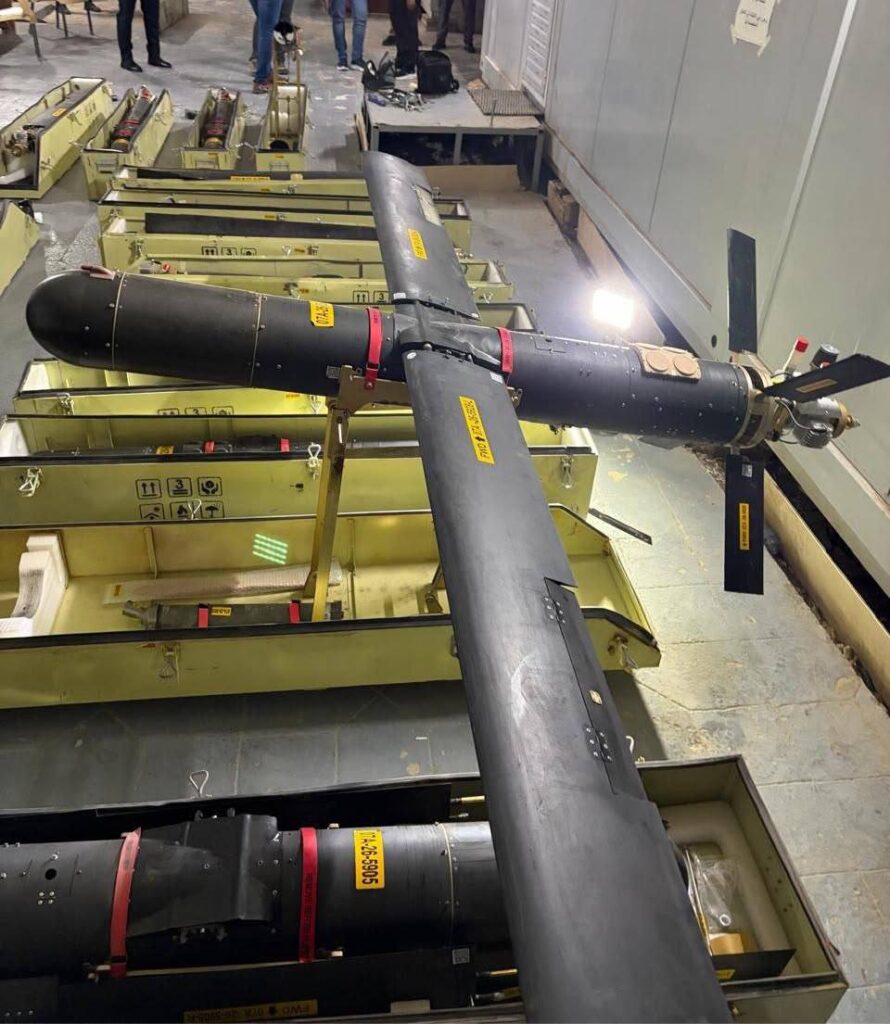


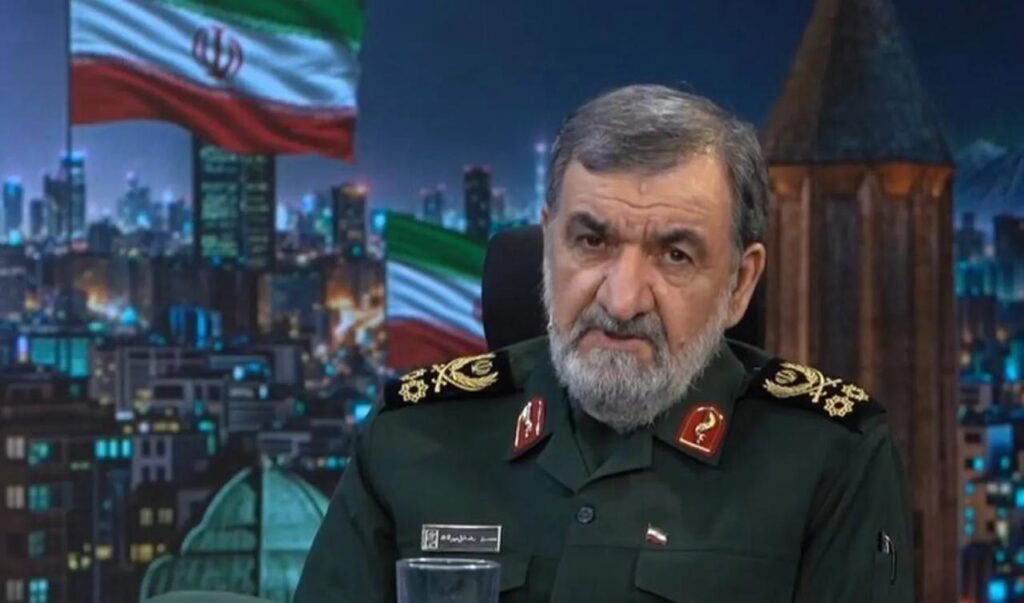
 (@andrii_sybiha)