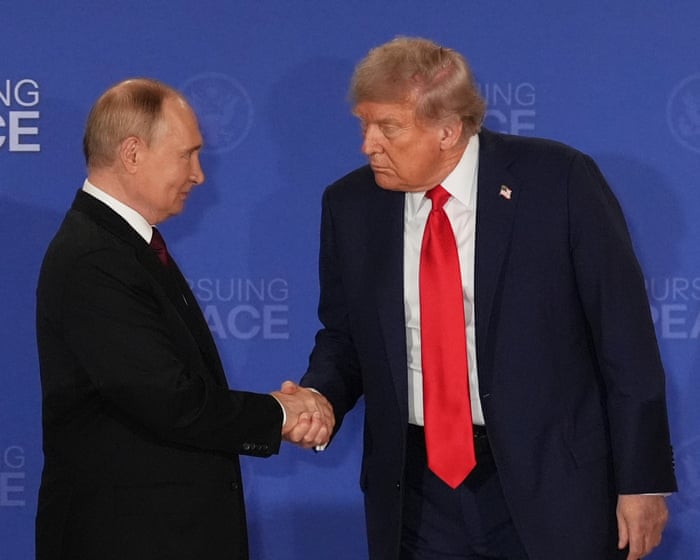
In U.S. Gas Talks With Kremlin, Hidden Financing for Alaska Project Emerges

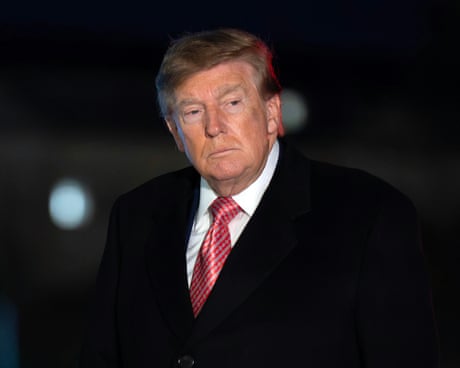
© Daniel Acker/Bloomberg


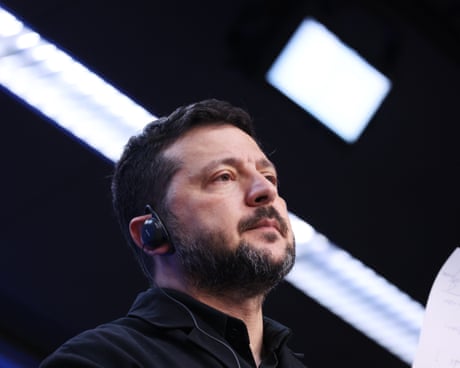
© Daniel Acker/Bloomberg


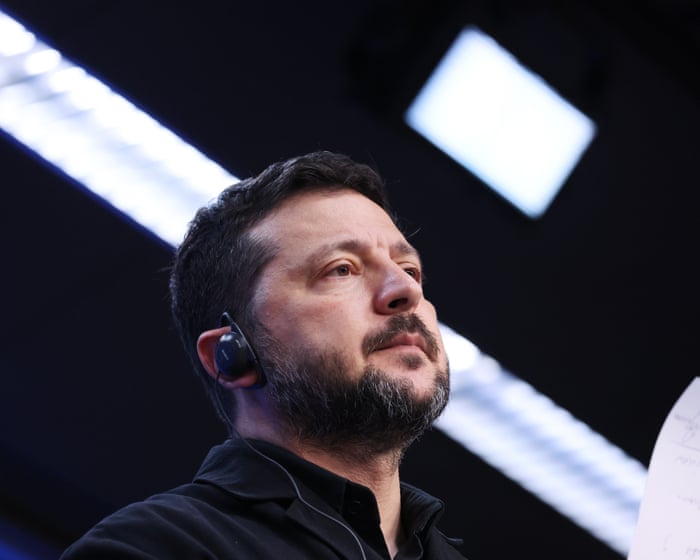
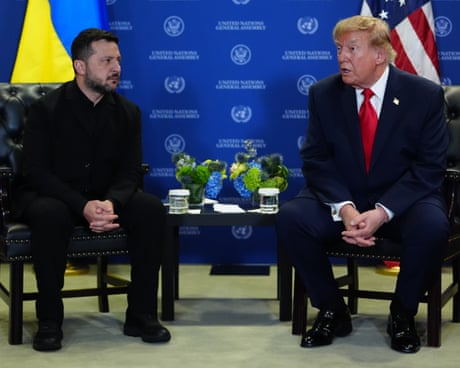
On 18 October, President Zelenskyy accused Donald Trump of trying to pressure Ukraine into capitulating to Russia.
Asked by NBC whether Ukraine could win the war without the US, he answered: "Without United States support it's very difficult. But if United States will support Putin, it's historic mistake and big tragedy.... If the United States officially will take the side of Russia, if these two countries will be together, of course we will not prevail and we will not be able to stand."
He said Ukraine hopes Trump will be on its side, or at least "in the middle," and that he will "change his decisions" on Russia, as "it's all mistakes, it will not help us, and it will not help United States." In an interview with NBC's Meet the Press, when asked whether Trump is still an ally of Ukraine, Zelenskyy said: "I hope so." Not a definitive yes, but a weak maybe.
As diplomacy goes, statements do not come much stronger than this. What triggered them?
Probably the sum of all things. We all remember Trump and Vance humiliating Zelenskyy in the White House on 28 February 2025. Trump told the Ukrainian President that he was "gambling with" a third world war. Zelenskyy was told to come back "when he is ready for peace". Most will also remember that the USA enacted the decision to halt its aid to Ukraine across two separate, sweeping actions taken during the first months of the second Trump administration in early 2025. Presently, it is only delivering military aid decided by former President Biden.
Some might have forgotten that Trump called Zelenskyy a "dictator without elections," suggested Ukraine started the war, and pushed a "peace plan" whose original 28-point draft gave Russia terms more favorable than what Moscow sought at the 2022 Istanbul talks.
After 640 days in office, Trump's disdain for Ukraine and admiration for Russia seem to grow by the day, and his kakistocracy—government by the least qualified—keeps undermining Ukraine's defense. In less than two weeks:
Less than two weeks, summarized.
This is how Trump's administration talks about, and acts towards, the victim of an unjustified, unprovoked and horrendous war. Trump's USA (TUSA) is siding with autocracy against democracy and the rules-based world order. It talks about America's former allies in a similar manner: derogatory and disrespectful. None of the above is the word or deed of an ally.
When one chooses to see the world as it is, Zelenskyy's statements become both necessary and important. This is not only about Ukraine's self-respect and survival. Once we acknowledge the realities—that Europe is in an undeclared war with Russia at a moment when the USA has chosen to become a strategic adversary—we stand better prepared to defend ourselves: to accept that our present security system does not work and new solutions are urgently needed, and that diplomacy alone does not work and military force is essential to protect freedom, democracy and international law.
More than a year ago, German Chancellor Friedrich Merz warned that Europe is "not at war, but no longer at peace either" with Russia. Other heads of state have echoed him. NATO has since shifted from a peacetime alliance to one focused on urgent wartime readiness. Unfortunately, the process started years too late.
By seeing the world as it is, European leaders might reach the long-overdue conclusion that Russia's wars in Ukraine and Europe can only be stopped by a demonstration of strength: an alliance willing and capable of using military force to stop Russia. The alliance Russia fears isn't NATO. It's a coalition that will actually fight.
European courage and action are urgently needed. Ukraine is exposed to a two-front war, defending itself against both Russia and TUSA, and their attacks are increasing in scale and scope. Both Moscow and Washington want to end the war this year and are ramping up their assaults on Ukraine accordingly.
Irrespective of one's view of Ukraine, it is commonly understood that it is stopping Russia from advancing and increasing its border with NATO and the EU. Ukraine is defending European values and principles, ensuring the rest of us can continue living in something resembling peace. The consequences of its defeat would be truly devastating.
There can be no European strategic autonomy without Ukraine. There can be no European security and stability without Ukraine. Europe can never become a Great Power without Ukraine. And neither Russia nor the USA want Europe to achieve any of the above.
It is time to act according to the present-day realities and face down Europe's two strategic adversaries. In the worst case, Ukraine's destiny might be decided in November already.
Editor's note. The opinions expressed in our Opinion section belong to their authors. Euromaidan Press' editorial team may or may not share them.
Submit an opinion to Euromaidan Press


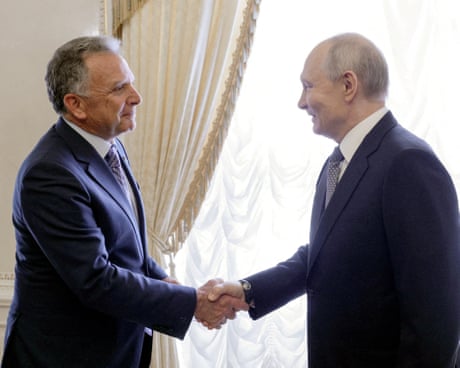
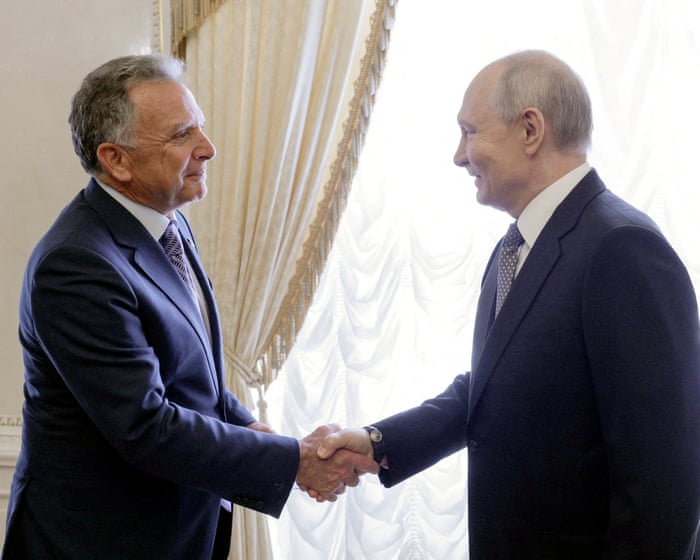
Russia is ready to resume three-way talks with Ukraine and the US, Russian President Vladimir Putin claimed in an interview with Pavel Zarubin of state broadcaster VGTRK, published on 22 October. He said they should settle security for both countries after a final peace deal, not a brief pause.
Putin spoke a day after he hosted US envoy Steve Witkoff in St. Petersburg and Ukrainian President Volodymyr Zelenskyy said he would accept freezing the war along the front line. In May, Kremlin spokesman Dmitry Peskov named Ukraine’s withdrawal from Donbas and Zaporizhzhia and Kherson oblasts as the only condition for peace. Any new round would start from that gap: Kyiv offers to stop where the armies stand, while Moscow’s last stated terms demanded more land.
Putin stated that Moscow and Washington had agreed Russia was ready to resume trilateral contacts. He added that he generally agreed with a US point that European security architecture should also be discussed.
On 21 October, Kremlin aide Yuri Ushakov stated that the sides had settled on mid-November, with Abu Dhabi as the likely venue.
In a 21 October Fox News interview, asked about a freeze leaving Ukraine 75% or more of its land, Zelenskyy answered: “Yes, right now, we have to freeze.”
Asked about the land Ukraine would give up, Putin replied that the occupied regions were not Ukraine’s but "historical Russia." He claimed their residents had voted for independence and then to join Russia, and called any talk of territorial losses inappropriate.
Putin linked Russia’s readiness to negotiate to Ukrainians being a people very close to Russians. He claimed the latest genetic studies show they are one people. Independent outlet Meduza noted it is unclear which studies he meant. Putin’s 12 July 2021 essay on the historical unity of Russians and Ukrainians made the same case, which Ukraine’s national memory institute rebutted.
He closed that answer by asserting Russia would achieve all the goals of what the Kremlin calls its special military operation. He made a similar vow on 17 December 2025.


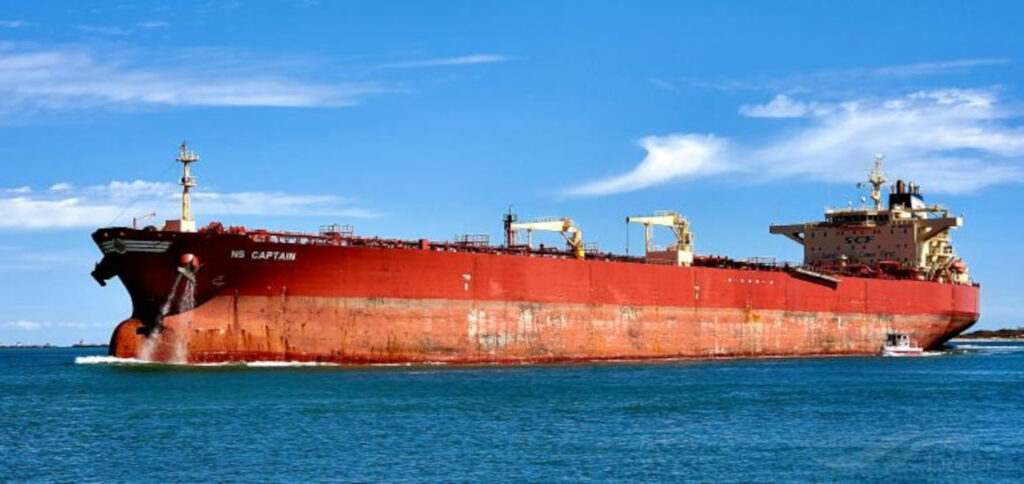
A Malta-flagged tanker carrying Russian diesel is heading for New York after the fuel deal between US President Donald Trump and Russian President Vladimir Putin, Reuters reported in an exclusive on 23 October, citing LSEG shipping data. Two weeks earlier, the US Treasury temporarily waived sanctions on Russian diesel.
The tanker is due in the US on 7 November, four days after Americans vote in the midterms. So the first US-bound cargo cannot reach American pumps before the election. Energy analysts also doubt the deal will lower diesel prices meaningfully. US fuel prices rose mainly because the war with Iran disrupted shipping through the Strait of Hormuz. Trump, however, has blamed Ukraine’s strikes on Russian refineries.
The medium-sized tanker Agioi Fanendes took on 40,000 metric tons of ultra-low sulfur diesel at the Baltic port of Primorsk on 22 October, shipping data showed. In March, Ukraine’s General Staff said its drones hit the Transneft oil terminal at that same port.
A day before the loading, Russian Deputy Prime Minister Alexander Novak announced that the first tanker would sail for the US on 22 October. He pledged more shipments and said Russia would meet US needs within its capabilities.
On 9 October, Trump wrote that Russia would immediately supply over 300,000 tons of diesel “to the American and Global Marketplace.” Another 500,000 tons would follow in November, then 1 million tons “immediately thereafter.”
Moscow had banned diesel exports on 8 July, after Ukrainian drone strikes shut down refineries and caused fuel shortages inside Russia. The Russian government stated on 10 October that it had partially lifted the ban, clearing 500,000 tons for the world market at this stage. Russian diesel shipments to Türkiye and Brazil have since resumed, boosting Moscow’s war revenue.
Trump has made other moves to cut diesel prices before the vote, Reuters reported. He waived parts of a new sanctions law against Russia. He also threatened Europe with a US diesel export ban unless countries released more fuel from their emergency reserves.


© Eric Lee for The New York Times

People in Russian-occupied city facing severe shortages of food, water and electricity, with some reportedly surviving on weeds
The White House has said that Russia and Ukraine have agreed to a ceasefire in the Russian-occupied city of Oleshky, where a deepening humanitarian crisis has left thousands of civilians struggling to survive.
In a statement on Friday, the White House said both sides had agreed to halt all military operations in the city from 27 October to allow humanitarian aid deliveries and preparations for the evacuation of civilians.
Continue reading...
© Photograph: 34th Separate Marine Brigade "Borysfen"/Reuters

© Photograph: 34th Separate Marine Brigade "Borysfen"/Reuters

© Photograph: 34th Separate Marine Brigade "Borysfen"/Reuters

The US president is portraying Zelenskyy as the villain as he strives for Russia’s approval
If Donald Trump could, he would fly to Munich to sign away Ukraine to Vladimir Putin, and return to wave the document as “peace in our time”, hoping to claim at least the second Fifa peace prize.
Whatever the complicated motives of Neville Chamberlain, his well-grounded fear after the carnage of a world war of another apocalypse and his wishful thinking that Hitler would be satiated after carving up Czechoslovakia, Chamberlain had not sent his son-in-law and former golf partner and real estate partner in advance to cut back-end deals with the Nazis to profit for his family and cronies.
Sidney Blumenthal, former senior adviser to Bill Clinton and Hillary Clinton, has published three books of a projected five-volume political life of Abraham Lincoln: A Self-Made Man, Wrestling With His Angel and All the Powers of Earth. He is a Guardian US columnist and co-host of the Court of History podcast
Continue reading...
© Photograph: Jae C Hong/AP

© Photograph: Jae C Hong/AP

© Photograph: Jae C Hong/AP


© Associated Press


© Brendan Hoffman for The New York Times


US President Donald Trump has failed to reach an agreement with Russian ruler Vladimir Putin on halting strikes against Ukraine's energy infrastructure. However, Trump is trying to shift the blame for this failure onto President Volodymyr Zelenskyy, he said on The Diary of a CEO podcast.
His words came amid Russia's four record waves of ballistic missile attacks, after US Special Envoy Steve Witkoff described Putin as a "humanitarian." Previously, US officials cut Kyiv off from US intelligence and lowered a speed cap on Starlink to pressure Ukraine into stopping strikes on Russia's oil refineries that bring Moscow revenue for its war.
Zelenskyy explained the behavioral pattern behind Trump's recent actions and statements. At first, Putin rejected his proposal for a ceasefire. Then, the US president blamed it all on him, explaining to his people that world fuel prices are rising because of him, which is not true at all, said the Ukrainian leader.
He pointed to the blocked Strait of Hormuz shipping chokepoint, not Ukraine’s refinery campaign, as the driver of higher prices.
He also noted that the volumes of diesel allowed by the US are insufficient to lower global oil prices.
Even so, Zelenskyy said he keeps a working relationship with Trump. What he will not accept is being cast as the villain in Russia’s war: by his account, the US president is rewriting the context, turning Ukraine’s leader into the target for a problem that starts in Moscow.
Earlier, experts said the diesel deal was unlikely to meaningfully lower diesel prices. For Putin, the agreement itself was a win.
A former senior State Department official says it hardly matters whether the fuel arrives, because Putin “has already achieved the result he wants,” with Trump believing he has a pre-election card that could move markets.


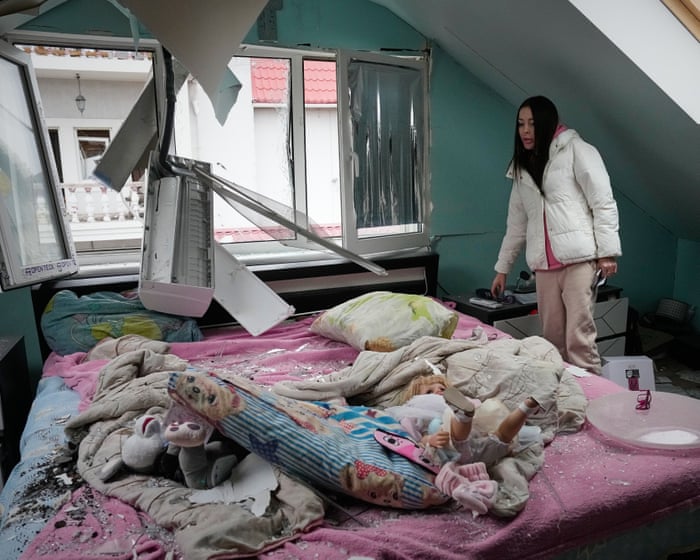
Russian missiles and drones killed one person and injured 24 in Kyiv overnight on 22 October, the Kyiv City Prosecutor’s Office said. Damage spread across six of the city’s districts, the city military administration reported.
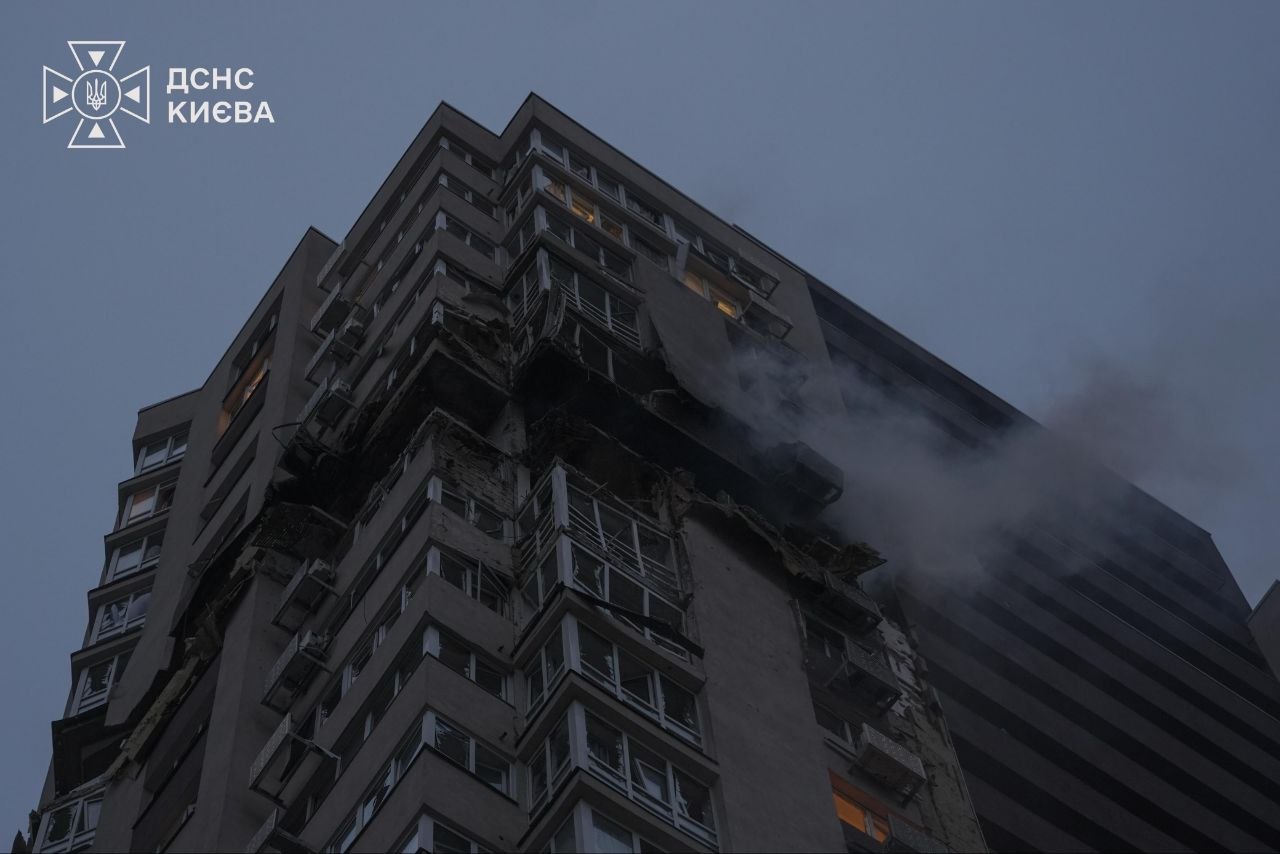
The strike came hours after Kremlin aide Yuri Ushakov said Putin had told Witkoff that Russia was “in principle” ready to resume three-way talks with the US and Ukraine in mid-November. President Volodymyr Zelenskyy read the overnight attack as a sign that Russia’s attitude has not changed. A day earlier, Russian drones killed two people in a 24-story Kyiv apartment block.
Russia fired 21 ballistic missiles at Kyiv overnight, Zelenskyy said. The barrage came in three waves, around 22:00, at about 02:00, and around 03:30.

Across Ukraine, air defenses downed or suppressed 181 of 210 Russian drones, the Air Force said. Its report did not mention any ballistic missiles shot down.
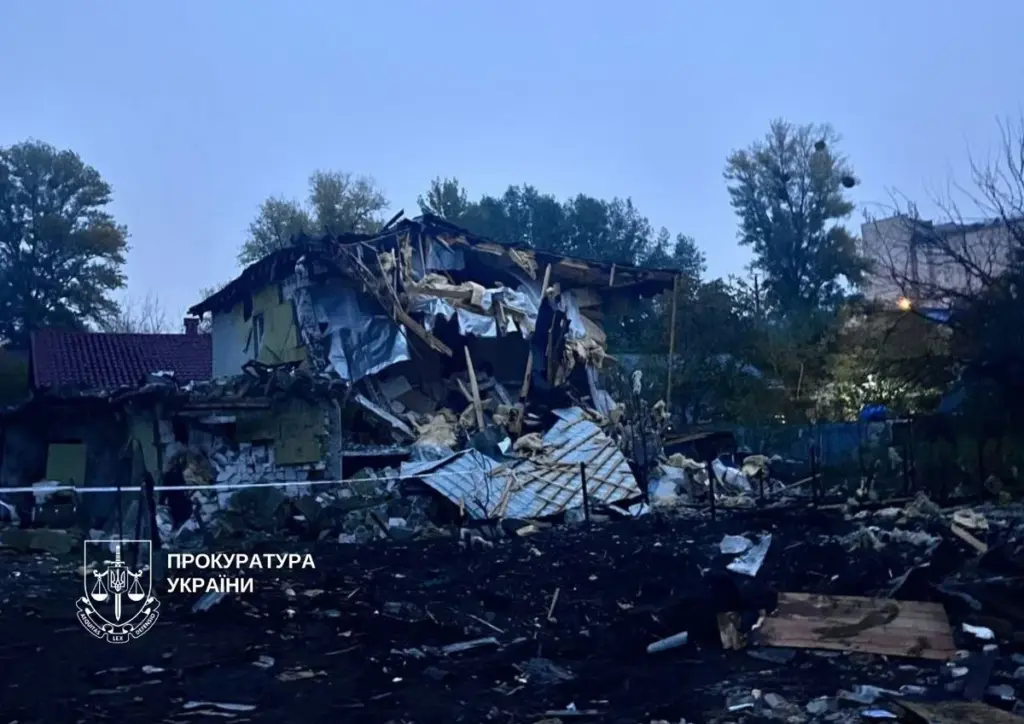
The only death in Kyiv came in the Dniprovskyi district, on the city’s left bank. There, Russian strikes destroyed 13 detached houses on several streets, prosecutors said. Police said the man killed was 48 and that six people were injured in the district, four of them children, the youngest aged five.
Of the injured, five are minors and two are young children, and prosecutors reported acute stress reactions among them. A 16-year-old boy is in hospital with a closed head injury, prosecutors said. Sixteen of the injured were hospitalized, the city military administration said. The final number of injured is still being established.
In the Holosiivskyi, Obolonskyi, Pecherskyi, and Sviatoshynskyi districts, the attack damaged eight apartment buildings, prosecutors said. It also damaged a building-supply hypermarket, a restaurant, a monastery building, a post office, and office premises.
In Pecherskyi, Russia damaged an ambulance station and six ambulances, Kyiv Mayor Vitali Klitschko wrote. The State Emergency Service said eight people were injured in that district, three of them children, and reported damaged transport infrastructure in the Darnytskyi district.

The strikes damaged metro infrastructure on the Pivdennyi (Southern) Bridge, Kyiv Metro said. As of the morning, green-line trains ran in two sections, Syrets–Vydubychi and Osokorky–Chervonyi Khutir. Inspections and repairs would continue after the all-clear, the metro said.
Oleksii Biloshytskyi, head of Ukraine’s Patrol Police Department, announced that traffic across the bridge toward the left bank was temporarily closed. The city is adding buses on routes 22 and 91, the city administration said. Russian drones had already hit the bridge repeatedly in early October.

Europe’s leaders can no longer trust a word that comes out of Washington. No more slaps on the wrist – we need concrete steps to punish Trump
Historical comparisons are always inexact. No one conflict precisely mirrors another. Yet Donald Trump’s shameless appeasement of Vladimir Putin carries more than a noxious whiff of Neville Chamberlain’s failed attempt in Munich in 1938 to head off war with Nazi Germany. To be fair to the former UK prime minister – and history largely hasn’t been – his peacemaking efforts had the enthusiastic backing of most people in Britain and France who, like him, were desperate to avoid a repeat of the horrors of the first world war. Trump enjoys no equivalent public support for his treachery. Nor does he face the prospect of a US war with Russia. His betrayal of Ukraine is cynically self-interested, globally dangerous and utterly contemptible.
US-Russian talks on agreeing the shoddy terms of a precedent-setting American sell-out of Ukraine are at an advanced stage, after meetings in St Petersburg this week. Trump has zigzagged over the war ever since returning to office. Now, panicked by record-low poll ratings, he seems determined to scapegoat Ukraine and force its de facto capitulation. Recent steps – his shocking decision to fund Putin’s war machine by buying Russian diesel, his waiving of tougher sanctions, his mysterious, lethal interruptions in US satellite and intelligence sharing with Kyiv, and his renewed attempt to oust Ukraine’s president, Volodymyr Zelenskyy – mark Trump out as the skulking Judas, the craven Brutus of the modern age. He makes Chamberlain look like a man of iron principle. All that’s lacking is an umbrella.
Simon Tisdall is a Guardian foreign affairs commentator
Continue reading...
© Photograph: Kevin Lamarque/Reuters

© Photograph: Kevin Lamarque/Reuters

© Photograph: Kevin Lamarque/Reuters

Experts say Russia is trying to destroy energy infrastructure before winter and US ‘appeasement and flattery’ will not achieve peace
Russia has carried out a massive “demonstrative” attack on Ukraine, bombarding Kyiv with ballistic missiles just hours after Vladimir Putin said he had agreed to resume trilateral negotiations after talks with the US envoy Steve Witkoff.
Overnight, Moscow pounded the Ukrainian capital, killing at least two people and wounding 22, including four children. Targets included the southern bridge over the Dnipro River, civilian houses, energy infrastructure, an ambulance station, office buildings and a clinic.
Continue reading...
© Photograph: Efrem Lukatsky/AP

© Photograph: Efrem Lukatsky/AP

© Photograph: Efrem Lukatsky/AP


© Doug Mills/The New York Times

Vladimir Putin ordered the release of former teacher Stephen Hubbard, who had spent more than four years in Russian jails on charges of fighting as a mercenary for Ukraine. This came as Donald Trump's envoy Steve Witkoff met with the Russian president in St Petersburg for fresh talks on ending the war in Ukraine, amid increasingly close relations between Moscow and Washington.
Continue reading...
© Photograph: Reuters

© Photograph: Reuters

© Photograph: Reuters

Russia frees Stephen Hubbard after US request while Steve Witkoff praises Putin, wanted by ICC as war criminal, as a ‘humanitarian’
Vladimir Putin ordered the release of an American man from a Russian jail as he met Donald Trump’s envoy Steve Witkoff in St Petersburg on Wednesday for fresh talks on ending the war in Ukraine, amid increasingly close relations between Moscow and Washington.
Trump had previously asked Putin to free Stephen Hubbard, a 74-year-old former teacher who had spent more than four years in Russian jails on charges of fighting as a mercenary for Ukraine.
Continue reading...
© Photograph: Gavriil Grigorov/Reuters

© Photograph: Gavriil Grigorov/Reuters

© Photograph: Gavriil Grigorov/Reuters


© Alex Kent/The New York Times


© Moscow City Court Press Service


© Moscow City Court, via Associated Press


© Moscow City Court, via Reuters


© Tierney L. Cross/The New York Times

GOP lawmakers threaten to pull support for president’s agenda after Russia diesel deal and sanctions pause
A handful of Republicans have spoken out against Donald Trump’s softening stance on Russia, threatening to pull financial support for his agenda over his “embarrassing” handling of the Ukraine war.
Don Bacon, an outgoing congressman in Nebraska, condemned Trump’s actions – which include a stunning agreement to buy Russian diesel and the pausing of sanctions on Moscow – as “absolutely disgraceful” and accused the US president of cozying up to a “war criminal” in Vladimir Putin, his Russian counterpart.
Continue reading...
© Photograph: Brendan Smialowski/AFP/Getty Images

© Photograph: Brendan Smialowski/AFP/Getty Images

© Photograph: Brendan Smialowski/AFP/Getty Images


© Ludovic Marin/Agence France-Presse — Getty Images


© Tierney L. Cross/The New York Times


© Tierney L. Cross/The New York Times

Russia wants America and China to decide Ukraine’s future without Kyiv. Europe must challenge this dangerous return to diplomacy of the strong for the strong
Does Vladimir Putin know exactly how to play Donald Trump? The history of chummy phone calls, high-profile meetings and attempts to bring Russia in from the cold certainly suggests that Moscow’s thuggish ruler has a hold on this American president. If Mr Trump agrees to negotiate Ukraine’s future with Mr Putin and China’s Xi Jinping without Ukraine at the table, he will have handed the Russian leader a victory before talks begin. The message will be that strongmen are ruling the world and determining the fate of weaker nations.
Ukraine has the right to determine its future. That right cannot be waved away by a self-serving Russian proposal, however much it indulges Mr Trump’s belief that world affairs should be settled by powerful men. The scales are falling from European eyes. Trumpian America is raising doubts about whether it will help deter aggression or even honour its Nato commitments. If Washington now rewards Moscow and pressures Ukraine to accept a raw deal, it would be a betrayal. European governments would wonder where America might be in the future when their own security is threatened.
Do you have an opinion on the issues raised in this article? If you would like to submit a response of up to 300 words by email to be considered for publication in our letters section, please click here.
Continue reading...
© Photograph: José Luis Magaña/AP

© Photograph: José Luis Magaña/AP

© Photograph: José Luis Magaña/AP


© Efrem Lukatsky/Associated Press


© Haiyun Jiang/The New York Times

Two people killed and at least 17 injured as Russia and Ukraine continue to trade strikes on power infrastructure
Volodymyr Zelenskyy on Sunday thanked the Trump administration for resuming intelligence sharing between the two countries, but maintained the US had intentionally throttled its Starlink satellite internet access so that Donald Trump could send a “message” in his ongoing feud with the Ukrainian president.
In an interview on NBC, Zelenskyy said the US had “unblocked” intelligence on impending Russian ballistic missile strikes, which have pounded the country’s energy infrastructure as winter draws in.
Continue reading...
© Photograph: Omar Havana/AP

© Photograph: Omar Havana/AP

© Photograph: Omar Havana/AP


© Alexander Manzyuk/Reuters


© Alexander Manzyuk/Reuters


© Doug Mills/The New York Times


© Doug Mills/The New York Times


© Alessandra Tarantino/Associated Press


© Anastasia Barashkova/Reuters


A bipartisan group of 22 House lawmakers is urging President Donald Trump to fully implement the new Russia sanctions law and revoke a license allowing certain Russian diesel transactions. In a letter sent on 15 October, they copied Secretary of State Marco Rubio and Treasury Secretary Scott Bessent and requested details on planned sanctions, tariffs and waivers.
Their request comes as the law’s first requirements fall due on 18 October, while lawmakers from both parties challengethe administration’s decision to allow certain Russian diesel transactions. Some restrictions take effect automatically, while others require presidential action. The law does not specify a penalty for the president missing the deadline.
Congress passed the Lindsey O. Graham Sanctioning Russia and Iran Act of 2026 by votes of 86–11 in the Senate and 262–159 in the House. Trump signed it on 18 September. Graham, a Republican senator from South Carolina, died in July.
Restrictions taking effect automatically on 18 October include a ban on US banks and broker-dealers processing transfers to or from the Russian government, a ban on new US investment in Russia, a ban on new US investment in Russia’s energy sector, and a ban on US energy exports to Russia.
Other measures require presidential action by the same date. The law directs Trump to review and sanction Russian officials, oligarchs and shadow-fleet vessels, sanction the Bank of Russia, specified Russian banks and state-owned companies, and impose tariffs of up to 500% on Russian goods. Tariffs of up to 100% can apply to goods from countries among the five largest importers of Russian oil or gas, or among the top five countries facilitating Russian oil sanctions evasion.
Trump may waive sanctions, restrictions and tariffs under the law if he first certifies in writing to Congress that a waiver is in the US national interest and submits a report explaining its basis.
House members also urged Trump to revoke General License 135, which the Treasury Department issued on 9 October and that is valid until 7 April 2027. It permits certain transactions involving Russian-origin diesel, including imports into the United States. Trump said Russia would immediately supply more than 300,000 tons of diesel to US and global markets and predicted prices would fall sharply, according to a 9 October Truth Social post.
On 13 October, a bipartisan group of 12 senators also urged Trump to rescind the deal and revoke the license. Seven senators said the deal conflicted with a 2022 law banning Russian energy imports.
The Graham Act says nothing in its provisions affects the Treasury secretary’s existing authority to issue general licenses. That provision does not resolve whether the diesel license complies with the separate 2022 law.
A White House official told Newsweek the administration would comply with the Graham Act. Bessent said the administration would use “all the legal authorities we have” and called the deal “good for the American people,” Fox News reported on 11 October.
Separately, the law sets a process for terminating sanctions, restrictions or duties against Russia. Trump must report to Congress that Russia has signed a peace agreement accepted by Ukraine’s government and ceased military hostilities against Ukraine, as well as activities to overthrow, dismantle or subvert its government. Congress has 30 days to block termination through a joint resolution of disapproval, or 60 days for reports submitted between 10 July and 7 September.

US president says Zelenskyy ‘more difficult to deal with than Putin’ after ‘energy ceasefire’ collapses
Donald Trump has called Ukraine’s renewed strikes on Russian oil refineries “a disgrace” and criticised Volodymyr Zelenskyy after an energy ceasefire between Russia and Ukraine failed to take hold.
Ukraine resumed strikes on Russian oil refineries after Zelenskyy said Kyiv was abandoning a ceasefire unilaterally declared by Trump on Sunday, having briefly halted its attacks to demonstrate its readiness for peace talks. Russia had continued its strikes on Ukrainian power plants.
Continue reading...
© Photograph: Reuters

© Photograph: Reuters

© Photograph: Reuters


© Doug Mills/The New York Times


© Doug Mills/The New York Times


© Tierney L. Cross/The New York Times

In today’s newsletter: As Russia resists a ceasefire and Trump’s shifting priorities unsettle allies, an end to the conflict isn’t getting any closer
Good morning. In his usual asinine unconventional approach to international relations, Donald Trump announced on Sunday (via Truth Social, how else) an “ENERGY CEASEFIRE in the War between Russia and Ukraine”, apparently without checking with either side. Volodymyr Zelenskyy, who said any such deal was “news to me,” nonetheless declared he was “ready and we will accept it”. Vladimir Putin responded by blowing up some Ukrainian power plants.
This has been the tenor of much diplomacy during Trump’s tenure: false starts, U-turns, incoherent positions (and some playful flirting with Vlad). Meanwhile fighting continues, and America’s allies attempt to manage the fallout. Andy Burnham hosted Zelenskyy at Downing Street yesterday, stating the UK is doubling down on its support for Ukraine, and pointedly calling on others to “follow suit”.
UK | Sally Rooney has said she is being forced to withdraw her books from sale in the UK because of her support for the banned organisation Palestine Action.
Gaza | Israel is refusing to allow a key military outpost project for Donald Trump’s Board of Peace to proceed in Gaza, the Guardian has learned.
EU | Britain will benefit from much closer trading relations with the EU even if that means giving up its ability to negotiate free trade agreements, the Scotland secretary has said.
Ukraine | Ukraine’s military has suddenly had its access to Starlink satellite internet terminals restricted as the Trump administration has increased pressure on Ukraine to immediately halt long-range strikes on Russia’s oil industry.
Vaccine | Guinea-Bissau has not approved the controversial hepatitis B study in newborns that would be funded by the US government and private partners, the African country’s minister of health said.
Continue reading...
© Photograph: Julia Demaree Nikhinson/AP

© Photograph: Julia Demaree Nikhinson/AP

© Photograph: Julia Demaree Nikhinson/AP


© Iori Sagisawa/Kyodo News, via Associated Press


Washington is pressing the victim, not the aggressor, a Ukrainian diplomat says. President Donald Trump is using the threat of cutting military aid and intelligence as a tool to pressure Ukraine, while failing to apply enough pressure on Russia to stop the war, says Oleksandr Khara, executive director of the Center for Defense Strategies, Espreso reports.
Ukraine’s drones and air defense still lean on US satellite intelligence and weapons, which gives Trump room to squeeze Kyiv rather than Moscow. Khara argues Trump wants to end the war on Ukraine’s and Europe’s account to restore normal relations with Russian ruler Vladimir Putin, treating Ukraine as the weak link to be pushed.
“Trump wants to use restrictions, levers of influence on Ukraine to achieve his goal. To end or stop this war at any cost, at the expense of Ukraine and Europe, to restore normal relations with Putin,” Khara said.
Using American aid as leverage over Kyiv is not new for Trump, the diplomat noted, recalling earlier instances in which support was blocked or suspended.
Trump wants a visible success in ending the war, Khara says, partly against the backdrop of US domestic politics. He has economic tools to press Moscow but is in no hurry to use them, and his administration is instead gradually loosening sanctions on Russia.
“He doesn’t want to pressure Russia. He thinks Ukraine is the weak link and that it needs to be pushed,” Khara stressed.
Ukraine’s dependence on US support has fallen thanks to European partners, he added, so Kyiv has more room to keep fighting even as European states keep buying American weapons for it.
An energy ceasefire is possible only on strict terms, Khara believes. Kyiv could agree to stop striking Russian refineries only if Moscow halts attacks on Ukraine’s power generation and transmission, heating, and the Black Sea ports and the ships heading to them.
Until such a deal exists, Ukraine must hit harder, he argued, because steadily draining Russia’s economic resources is what could force the Kremlin to reconsider.
“As long as there is no such agreement, and no desire from Russia, we must increase this pressure and destroy as much of their energy infrastructure as possible,” Khara said.


© Kyodo, via Reuters


© Kenny Holston/The New York Times


© Kenny Holston/The New York Times

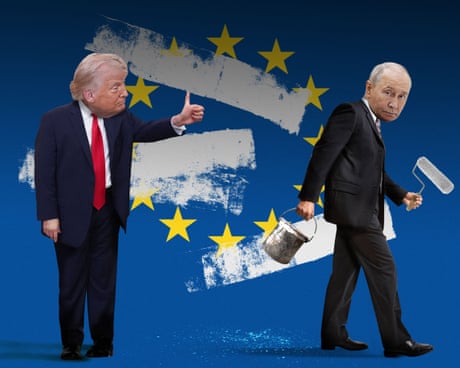
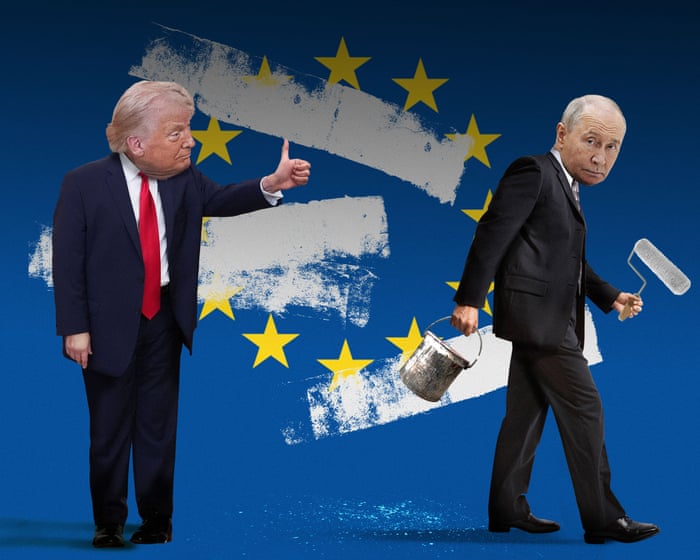
Russian meddling probably didn’t affect the referendum result – but the Kremlin’s motives for wanting to undermine the EU still matter
Russian territorial aggression against Ukraine didn’t feature much in the Brexit referendum campaign. It made headlines briefly when Boris Johnson blamed Moscow’s 2014 annexation of Crimea on the European Union.
According to the Vote Leave frontman, Vladimir Putin’s land grab was a consequence of Brussels making foreign policy “on the hoof” and having “pretensions to running a defence policy”.
Rafael Behr is a Guardian columnist
Continue reading...
© Composite: Guardian Design/Getty Images/Reuters/EPA

© Composite: Guardian Design/Getty Images/Reuters/EPA

© Composite: Guardian Design/Getty Images/Reuters/EPA


© Igor Ivanko/Agence France-Presse — Getty Images