Obama’s ‘Cheesecake Factory’ Jab Rankles Trump on Mississippi Campaign Stop

© Doug Mills/The New York Times


© Doug Mills/The New York Times


© Kenny Holston/The New York Times

Move is latest attempt to challenge states with competitive midterm races that could determine control of Congress
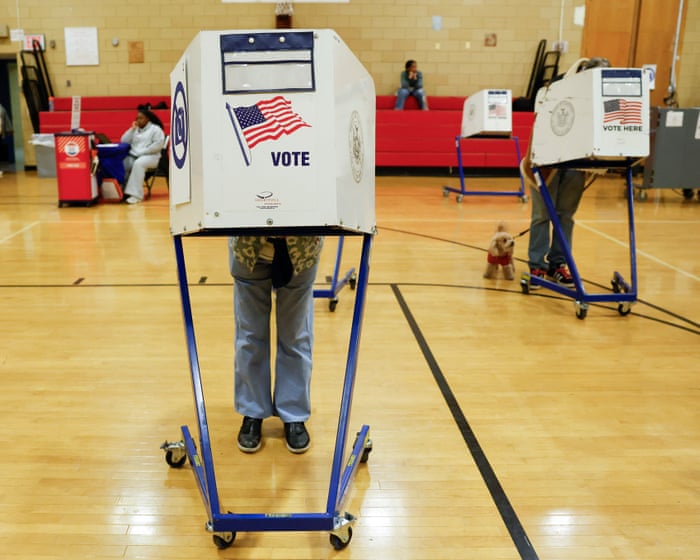
The Trump administration on Monday asked Washington state to set aside any ballots received from more than 400 people it alleges are registered to vote without US citizenship, less than two weeks after making a similar demand in California.
The announcement is the latest sign of the administration’s attempts to sow doubts about the election or its outcome in states with races that will help determine control of the US Senate and House.
Continue reading...
© Photograph: Paul Christian Gordon/ZUMA Press Wire/Shutterstock

© Photograph: Paul Christian Gordon/ZUMA Press Wire/Shutterstock

© Photograph: Paul Christian Gordon/ZUMA Press Wire/Shutterstock


© Philip Cheung for The New York Times


© Leonardo Fernandez Viloria/Reuters


© Caroline Gutman for The New York Times

President’s comments come ahead of November midterm elections and follow his claims of widespread voter fraud
Donald Trump has announced a $1m reward for reports of voter fraud in past elections and the upcoming midterm elections, with payment contingent on the arrest and conviction of those responsible.
In a Truth Social post on Monday, the president wrote: “Anybody reporting Voter Fraud in the past Elections, or the upcoming 2026 Midterm Election, will be paid $1,000,000 upon the arrest and conviction of those that created the Fraud! Thank you for your attention to this matter.”
Continue reading...
© Photograph: John Angelillo/UPI/Shutterstock

© Photograph: John Angelillo/UPI/Shutterstock

© Photograph: John Angelillo/UPI/Shutterstock

Comey, an outspoken critic of Donald Trump, accused of leaking information related to US national defense
The justice department charged former FBI director James Comey on Monday with two counts of leaking information related to national defense, the third time the Trump administration has filed criminal charges against one of Donald Trump’s most despised foes.
The charges, filed in federal court in Washington DC, provide few details about what Comey is alleged to have leaked. The government alleges that the former FBI director leaked the information in 2016 and conspired with an unnamed person to give the information to a national news outlet.
Continue reading...
© Photograph: Brendan Smialowski/AFP/Getty Images

© Photograph: Brendan Smialowski/AFP/Getty Images

© Photograph: Brendan Smialowski/AFP/Getty Images


© Doug Mills/The New York Times


© Doug Mills/The New York Times


© Sean Rayford for The New York Times


© Djordje Kojadinovic/Reuters


© Haiyun Jiang/The New York Times


© Emily Najera for The New York Times

Trump lashes out on Maher after the host interviewed former White House press secretary Karoline Leavitt
Donald Trump launched a 1,300-word social media rant against the late-night US TV host Bill Maher on Sunday evening, calling him a “TOTAL LOSER” in a fresh assault on the media.
“Let’s talk about this COMPLETE AND TOTAL LOSER, Bill Maher,” the US president wrote. “He’s got a Low Rated Show on equally Low Rated HBO, which was once, long ago, a Network of Quality and Excitement – But that’s all gone.”
Continue reading...
© Photograph: Taylor Hill/FilmMagic

© Photograph: Taylor Hill/FilmMagic

© Photograph: Taylor Hill/FilmMagic

After the rejoicing, it will be vital to learn the lessons. The rightward shift is neither inevitable nor irreversible, but progressives cannot rest for a moment
The impossible happened. President Luiz Inácio Lula da Silva won a fourth term in Sunday’s runoff election in Brazil, overturning Flávio Bolsonaro’s first-round lead in a historic comeback. No candidate has ever lost the first round and won the second, until now. Grassroots mobilisation, alongside social welfare policies, helped turn the contest into a referendum on Brazilian democracy, rallying voters against a candidate seeking to restore the legacy of his father, Jair Bolsonaro, imprisoned for plotting a coup after his 2022 defeat. Lula’s victory suggests that defending democracy can still be a powerful electoral argument against the ascendant right.
Having already consolidated most of the leftwing vote, Lula had limited room to attract supporters of other candidates after his first-round defeat. His best chance lay in mobilising abstainers and reconnecting with working-class voters. The Workers’ party intensified its grassroots and digital campaigns, using social media influencers and messaging networks to reach supporters. Nearly 3 million more Brazilians voted in the runoff, and Lula gained ground across the country, particularly in major cities and his north-eastern strongholds. He also appealed to voters’ immediate economic concerns, drawing on a record of reducing poverty and inequality, and increasing benefits under Bolsa Família, the landmark welfare programme he launched in 2003. Lula framed the election as a choice between protecting social gains and democratic institutions, or returning to the Bolsonaro family’s attacks on both, warning that his opponent would compromise Brazil’s sovereignty by aligning himself with Donald Trump.
Jordana Timerman is a journalist based in Buenos Aires. She is the managing editor of The Ideas Letter and compiles the Latin America Daily Briefing
The Guardian’s Latin America correspondent Tom Phillips will be answering your questions about the election and the future of Brazil from 1500 GMT on Tuesday 27 October as part of our Conversations series. Email questions to conversations@theguardian.com.
Continue reading...
© Photograph: Brian Snyder/Reuters

© Photograph: Brian Snyder/Reuters

© Photograph: Brian Snyder/Reuters

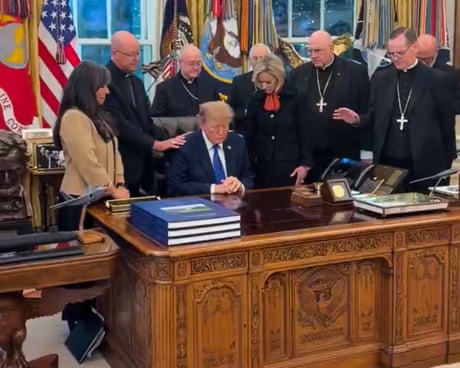
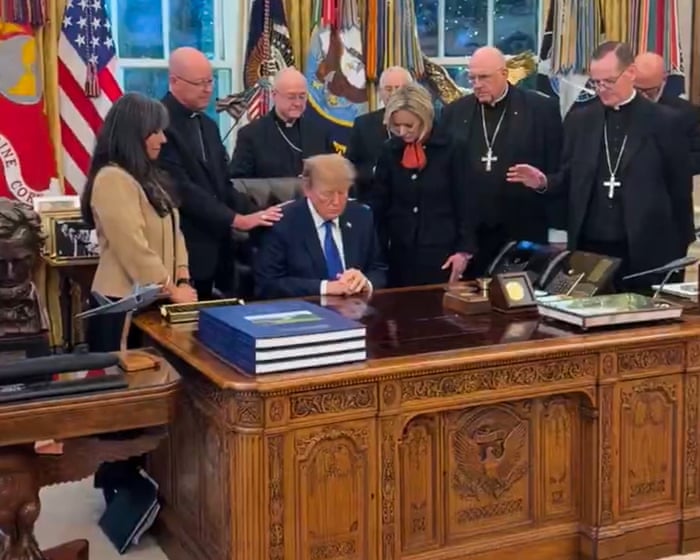
Two bishops express regret after the White House posts photos and video of a prayer with them in the Oval Office
Two Catholic bishops who bowed their heads with Donald Trump in the Oval Office now say they regret it, accusing the White House of turning a private prayer into a campaign photo opportunity before next week’s US elections.
Archbishop Jeffrey Grob of Milwaukee and Bishop William Joensen of Des Moines, who were among the 12 bishops who met administration officials last Thursday, issued separate statements of regret over the weekend.
Continue reading...
© Photograph: @MargoMartin47 via X

© Photograph: @MargoMartin47 via X

© Photograph: @MargoMartin47 via X


© Ryan David Brown for The New York Times


© The New York Times


© Haiyun Jiang/The New York Times


© Haiyun Jiang/The New York Times

The president’s policies have taken such a toll on farmers that Republicans face trouble in deep-red states
Donald Trump’s policies have been a disaster for the nation’s farmers, so much so that a near electoral miracle may soon happen: Kansas, one of the deepest red, most rural states, may elect its first Democratic senator in nearly a century.
Since Trump won farm country handily in 2024, many rural voters in Kansas, Iowa and elsewhere have soured on him because the price of diesel fuel, a key input for farming, has soared by nearly 70%, because farm bankruptcies have surged and because Trump’s trade wars have significantly reduced agricultural exports.
Steven Greenhouse is a journalist and author, focusing on labor and the workplace, as well as economic and legal issues
Continue reading...
© Photograph: Charlie Neibergall/AP

© Photograph: Charlie Neibergall/AP

© Photograph: Charlie Neibergall/AP

This live blog is now closed.
In a post to social media on Monday, Ukrainian president Volodymyr Zelenskyy said that Ukraine was facing dwindling stocks of Patriot interceptor missiles after Pete Hegseth, Trump’s defense secretary, had delayed authorizing new supplies.
“We have been waiting for nearly a month for Mr. Hegseth to sign off on missiles for Patriots and NASAMS,” Zelenskyy wrote. “I instructed our team to raise this with the American side once again. Conversations with other countries are also ongoing.”
Continue reading...
© Photograph: Jacquelyn Martin/AP

© Photograph: Jacquelyn Martin/AP

© Photograph: Jacquelyn Martin/AP

In a reliably red state, candidates say dissatisfied voters tell them they’re planning to vote Democrat for the first time
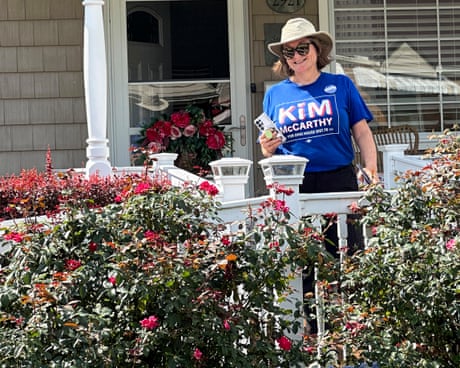
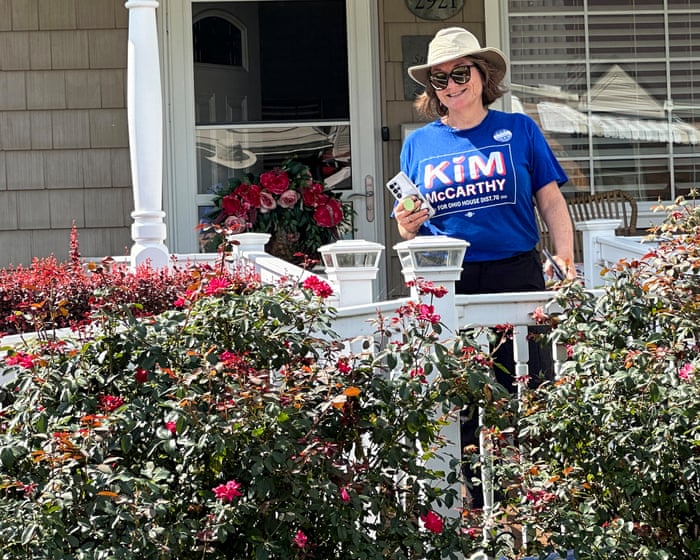
Democrat Kim McCarthy is canvassing in a middle-class Ohio neighborhood of four-bedroom, three-bathroom homes. There are $70,000 trucks in the driveways and robot lawnmowers at work.
“This is a neighborhood of two incomes and young families; people working hard,” says McCarthy, who is running against a three-time Republican incumbent for a seat in Ohio’s house of representatives.
Continue reading...
© Photograph: Kim McCarthy for Ohio House District 70

© Photograph: Kim McCarthy for Ohio House District 70

© Photograph: Kim McCarthy for Ohio House District 70

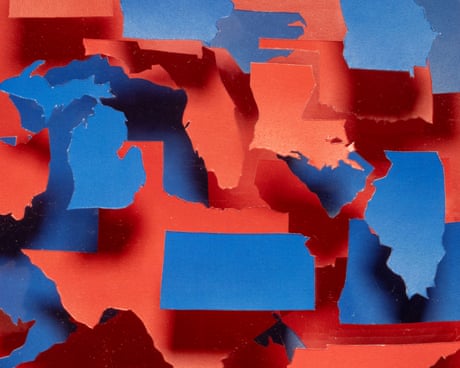
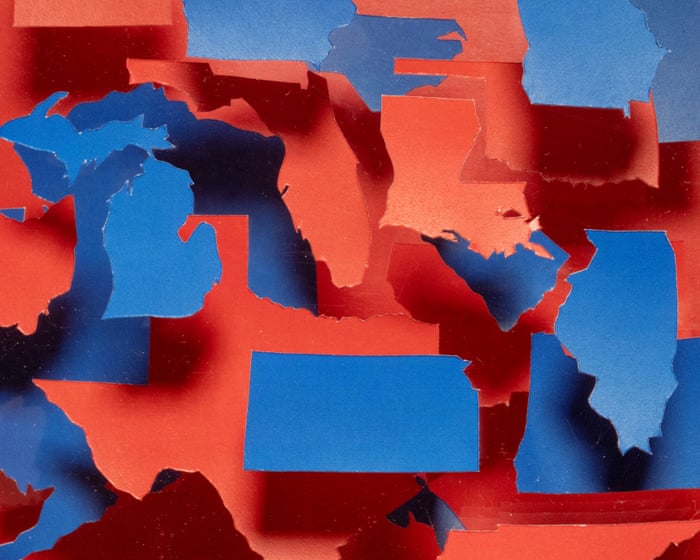
No election outcome ever interprets itself. So how will Democrats interpret these results once they are known?
Whichever metaphor one prefers – landslide, earthquake, wave – it seems increasingly like the Democrats can expect a significant victory in the midterms.
As the joke goes, every gas station display of prices has become an ad for Democrats; what’s more, some of them have managed to connect the relatively abstract issue of corruption to the daily misery of many Americans.
Continue reading...
© Photograph: Robin Buckson/Detroit News/AP

© Photograph: Robin Buckson/Detroit News/AP

© Photograph: Robin Buckson/Detroit News/AP


© Clayton Steward for The New York Times


© The New York Times

US voters will decide whether Republicans will retain control of Congress or whether Democrats will rise up to stymie Trump’s agenda
Donald Trump will still be US president on the morning of 4 November. But he could be facing a very different political landscape, depending on the results of the US midterm elections held the previous day.
As the name implies, midterm elections fall nearly halfway through a president’s term. They are often a telling referendum on the sitting president’s performance, something Trump is actively encouraging by telling voters “pretend I’m on the ballot”. In this case, voters will decide whether Trump’s Republican party can retain its grip on Congress.
All 435 seats in the House of Representatives. Republicans are defending a narrow majority, with Democrats needing a net gain of four seats to take control.
35 seats in the Senate. Thirty-three seats are up in regular elections, along with two special elections in Florida and Ohio to fill the remainder of terms that were vacated early. Republicans currently hold 53 seats, against 47 held by Democrats and independents who caucus with them. Democrats need to gain four seats to secure a majority.
39 governorships. Voters will choose governors in 36 states and three US territories.
Thousands of state legislative seats, as well as local offices, judicial contests and ballot measures on issues including taxes, abortion rights and voting rules.
Continue reading...
© Illustration: Ben Denzer/The Guardian

© Illustration: Ben Denzer/The Guardian

© Illustration: Ben Denzer/The Guardian


© Alexandre Schneider/Getty Images


© Haiyun Jiang/The New York Times

© Andre Penner/Associated Press


© Nick Hagen for The New York Times

Trump again congratulated Ohio senator’s rear end before his cheeky comment about rapper being ‘hard to miss’
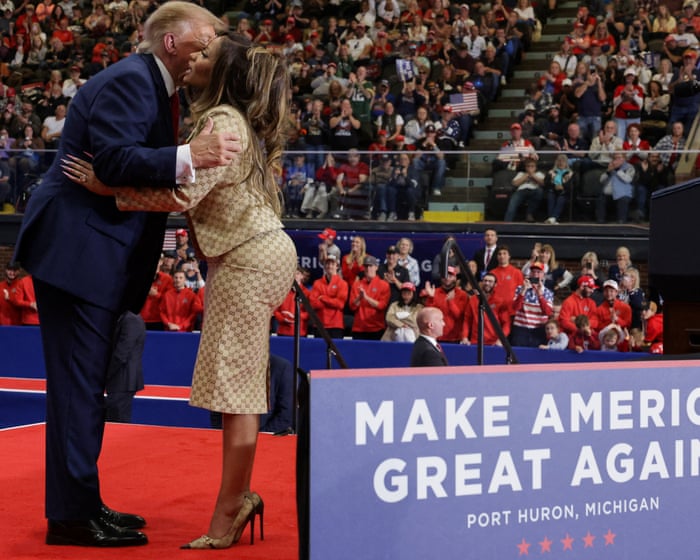
Donald Trump reiterated his apparent love for ample backsides during a rally in Michigan on Sunday where he encouraged the crowd to compliment rapper Nicki Minaj’s behind.
Trump’s cheeky comments about Minaj’s derriere came as he explained his recent observation on the Republican Ohio senator Jon Husted’s rear end. Earlier in October, Trump said of the former college football player: “I don’t do this with men very often. I started examining his body, because I didn’t know he was a great athlete. And I looked and I watched up and down. I looked at his ass and I looked at the whole – and then I looked at his hands. Look at his hands. He’s got these, like, claws.
Continue reading...
© Photograph: Jonathan Ernst/Reuters

© Photograph: Jonathan Ernst/Reuters

© Photograph: Jonathan Ernst/Reuters


© Nathalia Angarita for The New York Times


© Hyoung Chang/The Denver Post, via Associated Press


If Democrats win the House, and possibly the Senate, a result nonpartisan analysts call plausible, they would gain the power to bring new Ukraine aid to a vote and to push back on President Donald Trump’s deals easing pressure on Russia, Reuters reports in an analysis of how US foreign policy could shift.
The stakes are concrete. Trump has largely halted direct US aid to Ukraine, which lawmakers of both parties had backed, and its current supplies run from packages passed under his predecessor.
Weeks ago, he also waived the sanctions on Russian energy that Congress had written into law and struck a deal to bring Russian diesel back to the market, angering Republicans and Democrats alike.
With both chambers, Democrats could put new Ukraine aid on the floor, and given the bipartisan support such aid has drawn, it could pass with the two-thirds majorities needed to override a Trump veto.
Other steps could be taken, too. Representative Gregory Meeks of New York, in line to chair the House Foreign Affairs Committee if his party wins control, has already introduced bipartisan legislation to block Trump’s plan to return Russian diesel to the global market.
Democrats are also readier than Trump’s Republicans to rein in military spending. They blocked his request for an unprecedented 67% rise in the military budget, to $1.5 trillion, in the Senate, and many say they will try to restore the foreign aid he has withheld or canceled.
The leverage has limits. Even with both chambers, Democrats would still face a president who can veto, and overriding him would require two-thirds of each chamber. The pattern has already been visible in Iran: Trump launched that war on 28 February without congressional approval, and when a War Powers resolution passed with a handful of Republican votes, his administration ignored it.
The US midterms could restore Ukraine’s American aid and curb Trump’s Russia deals, if Democrats win Congress


© Dado Galdieri for The New York Times


© Haiyun Jiang/The New York Times

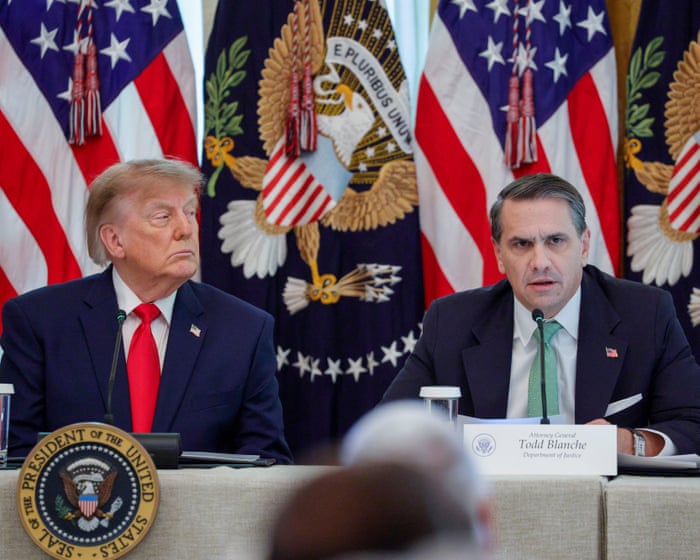
US attorney general calls CNN ‘crazy’ for suggesting Trump’s attempt to overturn election could lead to January 6 repeat
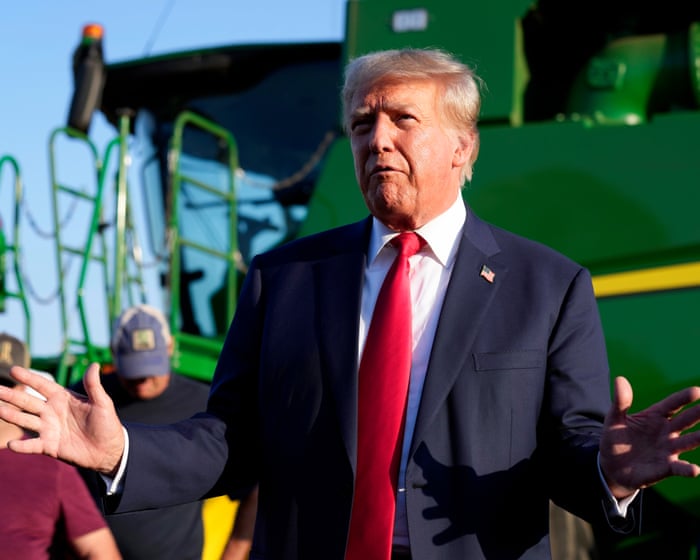
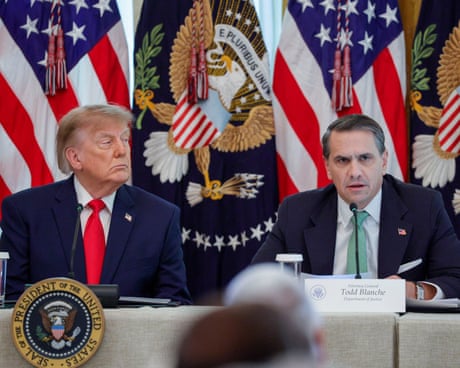
Todd Blanche, Donald Trump’s attorney general, lashed out during an interview on Sunday while defending the justice department’s pre-emptive lawsuit to block certification of Alaska’s US Senate results if the GOP incumbent loses, calling a TV host’s question “crazy”.

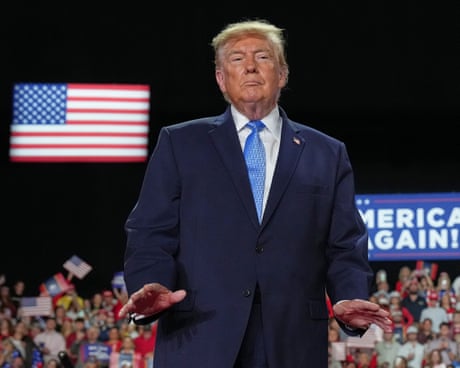
The testy repartee unfolded on CNN’s State of the Union over the DoJ’s unprecedented legal action, which alleges that there could be “voter confusion” due to two candidates named Dan Sullivan on Alaska’s ballot. Trump told reporters, “I’m the one that said do it” when asked about the suit.
Continue reading...
© Photograph: Shawn Thew/EPA

© Photograph: Shawn Thew/EPA

© Photograph: Shawn Thew/EPA


© Federico Parra/Agence France-Presse — Getty Images

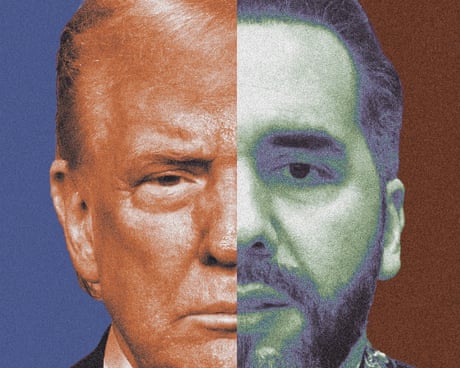
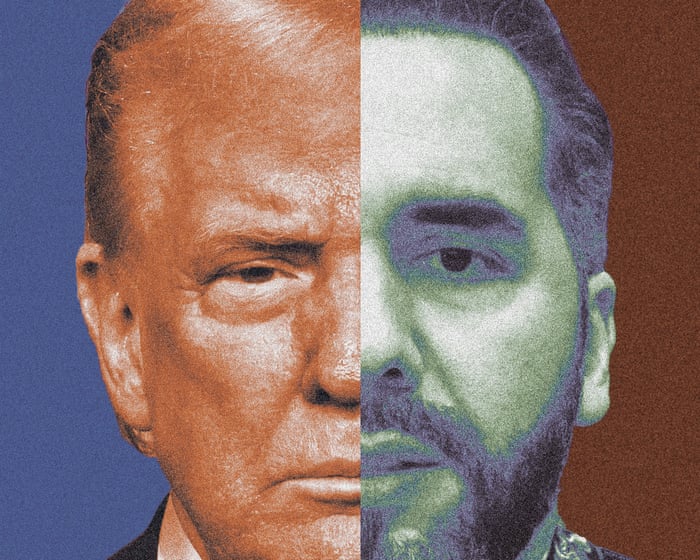
To understand where Trump is trying to take the US, we should look to the authoritarian playbook of his favorite ally: El Salvador’s Nayib Bukele
One afternoon last year, Donald Trump welcomed “a friend” to the White House – El Salvador’s Nayib Bukele, the world’s most popular authoritarian. “I knew him as a very young man,” the US president said before the cameras. “He’s done a fantastic job. Mr President, it’s an honor to have you.”
Since March 2022, when gangs in El Salvador murdered 87 people over a weekend, Bukele has maintained a state of emergency in which key civil liberties are suspended and 2% of the adult population has been jailed – about 100,000 people, at least half of whom are probably not gang members, say local rights groups. The narrative of “the Bukele miracle” – that he swiftly dismantled fearsome gangs and restored order – has made him an icon across Latin America, where a new host of rightwing leaders have sought to replicate his heavy-handed tactics. And in the US, Bukele’s overnight success as a strongman has made him a hero of the American right.
Continue reading...
© Illustration: Guardian Design / Getty Images

© Illustration: Guardian Design / Getty Images

© Illustration: Guardian Design / Getty Images

Shasta has embraced the Maga movement with gusto – can Democrats ever win back the rural, working-class voters they once relied upon?
A crucial election was approaching and the country was desperate. Despite promises that economic conditions were improving, nearly a quarter of the US was out of work as voters headed to the polls in 1932.
It was the darkest time since the civil war, a period so dire that in California’s capital people fought each other for work. In early 1931, a crowd of 200 men scuffled over a handful of temporary jobs moving back-breaking loads of granite, the Sacramento Bee reported.
Continue reading...
© Photograph: Mason Trinca/Mason Trinca for The Guardian

© Photograph: Mason Trinca/Mason Trinca for The Guardian

© Photograph: Mason Trinca/Mason Trinca for The Guardian


© Michael M. Santiago/Getty Images


© Clayton Steward for The New York Times


© Arash Khamooshi/Polaris for The New York Times


© Arash Khamooshi/Polaris for The New York Times


© Haiyun Jiang/The New York Times

But Elon Musk, whose company SpaceX owns Starlink, accuses Ukrainian military of violating the company’s terms
Ukraine’s military has a “stable connection to Starlink”, the Ukrainian government said, 10 days after its ability to use the satellite communications system was suddenly restricted.
But hours after the announcement, SpaceX CEO Elon Musk, whose company owns Starlink, accused the Ukrainian military of violating the company’s terms. Neither Musk nor the US government, which operates Starshield using Starlink technology, took responsibility for imposing the curbs.
Continue reading...
© Photograph: Sergey Dolzhenko/EPA

© Photograph: Sergey Dolzhenko/EPA

© Photograph: Sergey Dolzhenko/EPA