Vue normale

Local residents hang “thousand thanks” banner as Ukrainian firefighters help stop wildfire from reaching their French village
10 août 2026 à 18:39

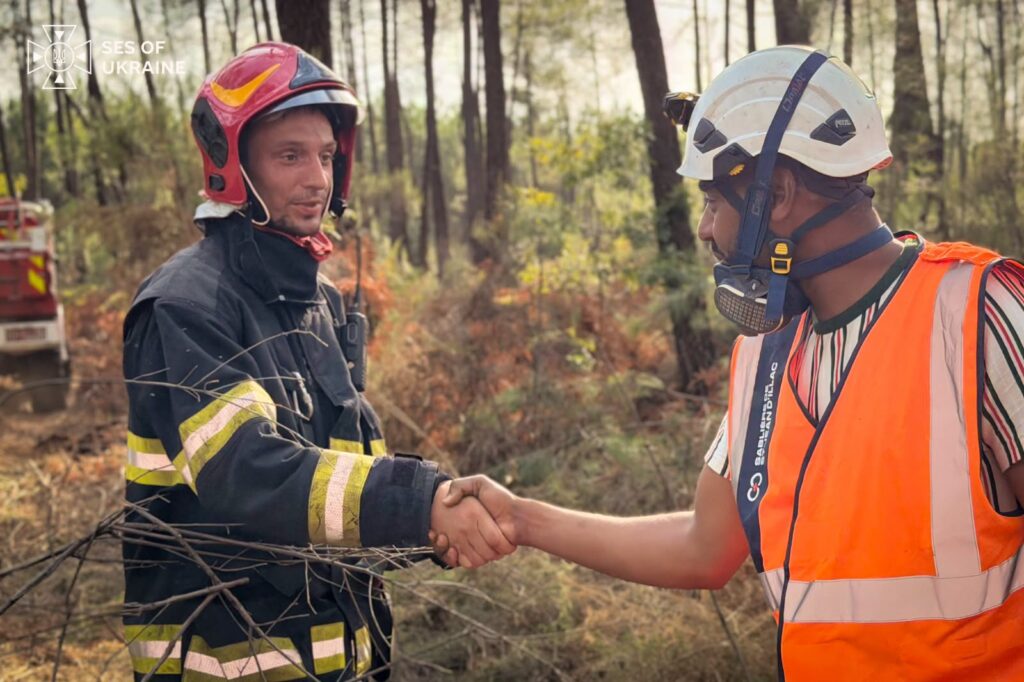
A Ukrainian and a French firefighter are shaking hands during the mission in France. Source: The Ukrainian State Emergency Service

Ukrainian rescuers helped extinguish a wildfire in an allied country. The firefighters stopped a large fire that engulfed about a hectare of forest and threatened a settlement in France, Ukraine's State Emergency Service (DSNS) reported on Facebook.

The deployment marks Ukraine's shift from aid recipient to contributor. A country that has received enormous humanitarian and civil-protection support through the EU since Russia's full-scale war is now sending its own rescuers abroad, as part of the deepening integration.

The fire threatened a village

The blaze risked spreading to where people live. A report of the fire came from the head of a coordination center: the flames had engulfed about a hectare of forest and, driven by wind gusts and heat, could have spread toward a settlement.

Ukrainian and French forces fought together. The Ukrainian State Emergency Service's combined detachment deployed six water tankers on the ground, supported from the air by three French aircraft, two planes, and a helicopter.

A banner reads "Thousand thanks" in French, apparently addressed to Ukrainian firefighters currently helping put out fires in France. Source: The Ukrainian State Emergency Service
The fire was contained

The joint effort stopped the blaze before it reached the village. The fire was extinguished due to the speed of the Ukrainian rescuers and the aviation support, and its spread deeper into the forest and toward the settlement was prevented.

The ground-and-air coordination is standard European wildfire practice: aircraft slow and box in a fire from above while ground crews with tankers put it out, and here Ukrainian tankers worked under French planes.

Ukraine as a contributor, not only a recipient

The deployment is a marker of a larger change in Ukraine's place within Europe. Long the destination for European fire trucks, generators, and rescue equipment sent to help it withstand Russia's war, Ukraine now has its emergency service working alongside allies on its soil.

For a country still under daily attack, sending rescuers to fight fires in France is a statement of belonging, that Ukraine is not only a place Europe helps but a partner that helps back.

Ukraine’s new AI platform trains weapons on five million frames of drone footage. Partner countries can use it too

10 août 2026 à 17:16

another russian shadow fleet tanker wrecked sea baby drones black · post drone video moment explosion strikes dashan untitlesd-1 ukraine news ukrainian reports

Ukraine is turning millions of hours of battlefield footage into fuel for its defense industry's AI. Ukraine's Defense Ministry has announced that it has opened Avengers Labs, a platform for training artificial intelligence models, to Ukrainian defense companies.

The platform is a new piece of the defense-tech ecosystem Ukraine has built around its war. Alongside the Brave1 cluster that funds and codifies weapons and the Test in Ukraine framework that trials them in combat, Avengers Labs supplies the raw material for AI, a vast, curated dataset of Russian military targets that a single private company could never assemble on its own.

The data comes from the battlefield

Avengers Labs was developed by the Center for Innovation and Development of Defense Technologies, the team behind the DELTA battle-management system, and most of its data comes from DELTA and is constantly expanded.

The dataset captures the enemy in detail. It contains images of tanks, artillery, air-defense systems, infantry, and aerial targets, including Shahed drones and reconnaissance UAVs, a labeled library of what Russian forces look like from a drone's camera. According to the ministry, the system can significantly speed up the development of AI solutions for unmanned systems.

The AI already works in combat

A system trained on Avengers data is already in the field, analyzing over 100,000 drone video streams a month and detecting about 70% of enemy targets in real time, day and night.

The models enable more autonomous drones. Trained on Avengers data, they support automatic trajectory correction after an operator marks a target, and independent target detection by a drone in a defined area according to set mission logic, steps toward drones that find and strike targets with less human input, according to the ministry.

Partner-country firms can join too

Access extends beyond Ukraine, under vetting. The first Ukrainian defense companies have signed licensing agreements to use Avengers Labs, and companies from Ukraine's partner countries can also join, per the ministry.

The screening guards against leakage to the enemy. To gain access, companies must pass checks confirming no ties to the aggressor state, no business in Russia, no sanctions, and no activity in occupied territories.

July was Ukraine’s deadliest month for civilians since 2022 — and Russia is scaling its ballistic missile salvos toward 200 at once

10 août 2026 à 09:05

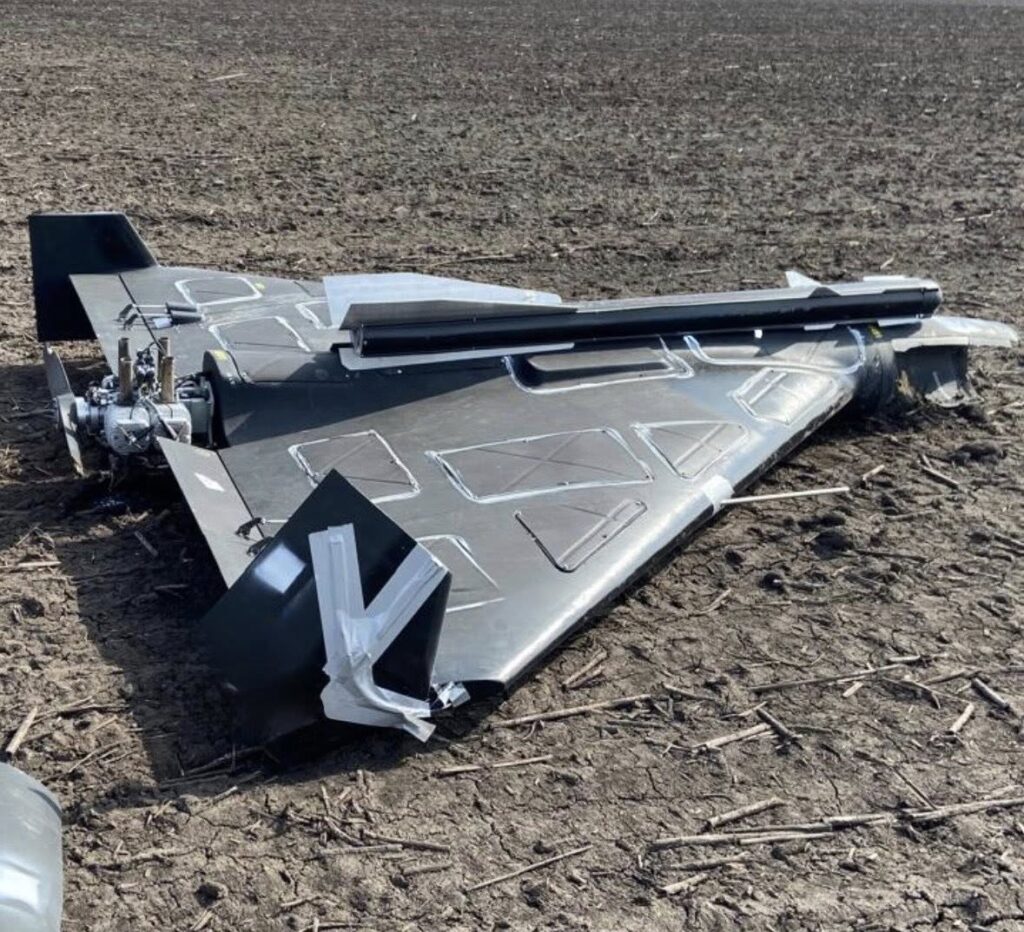
Shahed R-60 missile decoy Flash

Russia can currently fire a simultaneous salvo of 77 ballistic missiles, and it aims to lift that ceiling to 200. Robert "Magyar" Brovdi, who commands Ukraine's Unmanned Systems Forces, told the Associated Press. He called the plan one of Ukraine's gravest weak points.

Kyiv's only reliable shield against ballistic missiles is the US-made Patriot, and its interceptor stocks are critically low. During mass barrages, dozens of warheads therefore slip through and reach their targets. Only a handful of countries can build such interceptors, and all are short, defense analysts have warned. The AP, for its part, could not independently verify Brovdi's numbers.

Ballistic missiles remain the hardest to stop

That shortfall has already turned lethal. Intensified strikes made July the deadliest month for Ukrainian civilians since April 2022, the UN human-rights office in Ukraine documented. Air defenses downed just 29 of the 195 ballistic missiles Russia fired that month, roughly 15%. Another 40 fell short on their own. Yet the largest single-night launches recorded so far run to only a few dozen. That is well below the salvo of 77 that Brovdi describes, and a fraction of the 200 Moscow is reaching for.

"Even if they only manage half of that, it will all be flying at us."
- Robert "Magyar" Brovdi, commander, Ukraine's Unmanned Systems Forces

Production running ahead of plan

His warning tracks Ukrainian intelligence. Russia's defense industry is overfulfilling its monthly targets, hitting 110% to 120% on the main missile types. So said Deputy Military Intelligence Chief Vadym Skibitskyi in an interview with RBC-Ukraine. He put July output for the Kh-101 cruise missile at 140% of plan, the Kalibr at 111%, and the Kh-35 at 200%. A pause in strikes, he judged, is unlikely.

The pivot to jet-powered drones

Moscow's factories are also retooling around drones. Russia plans to assemble 11,000 strike drones of various types in August 2026, Skibitskyi said. That mix spans the Geran-1 through Geran-5, the Harpia, and several Gerbera variants. Output dipped in July as the industry shifted toward the turbojet Geran-4 and Geran-5.

Those jet models fly faster and demand different interceptors or short-range air defense. They already made up half of one recent attack. The concentration of jet-powered Shaheds, meanwhile, has climbed 2.5 times in recent weeks, Brovdi added. Taken together, the assessments point one way: more missiles and faster drones, launched in larger waves, against defenses Ukraine is scrambling to rebuild.

Russian electric locomotive was named target of Ukrainian partisan operation. It carried military supplies toward Kharkiv front

10 août 2026 à 01:09

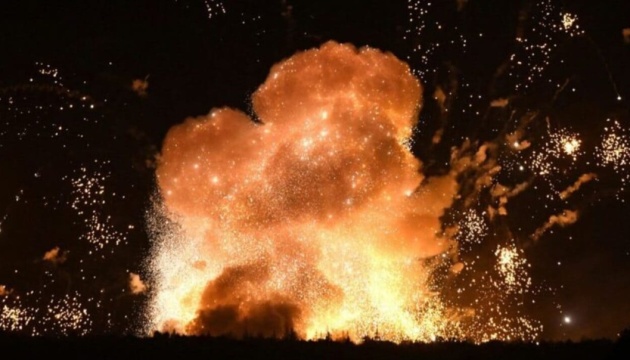
An explosion. Credit: UkrInform

Ukrainian partisans say they crippled a locomotive moving Russian military supplies to the front. Agents of the ATESH movement carried out a sabotage operation near Voronezh, destroying the cab of an electric locomotive used to support military transport, ATESH reported.

Disabling a single locomotive cripples the entire supply line. The locomotive was supposed to continue its journey toward the Kupiansk direction, and after the cab was damaged, operating the machine at its former pace became impossible, disrupting the schedule for forming and dispatching the next trains.

The target was a rail supply line to the front

ATESH said the sabotage hit a link in Russia's military logistics chain. The locomotive was part of the rail transport that moves Russian military cargo, and it was bound for the Kupiansk direction, one of the active sectors of the front in Kharkiv Oblast.

Russia depends heavily on railways to supply its forces. Its army moves ammunition, fuel, weapons, and heavy equipment to the front largely by rail, so the locomotives and the lines they run on are critical arteries of its war effort. A partisan network can reach them behind the front lines at a vulnerable point.

One damaged locomotive slows the whole chain

ATESH framed the value of the strike in terms of the cascade it sets off. The loss of even one link in the mainline causes delays in the delivery of ammunition, fuel, weapons, and heavy equipment.

Those delays compound at the front. When rear supply operations are interrupted, units lose combat effectiveness and suffer significant personnel losses, ATESH said, casting a single sabotaged locomotive as a blow that reaches the soldiers, depending on what it was carrying.

The strike fits ATESH's partisan campaign

Euromaidan Press cannot independently verify the Voronezh sabotage, which is ATESH's own account. But rail sabotage is a documented feature of the war behind Russian lines, and the movement's focus on the logistics that feed the front reflects a real vulnerability in an army that runs on rail.

❌