Vue normale

  • ✇Euromaidan Press
  • 1.2 million weapons in a year: Inside Ukraine’s Amazon-for-arms that ships to the frontline in 24 hours
    Ukraine's weapons marketplace DOT-Chain Defense has compressed delivery times from months to weeks after one year of operation, the country's Defense Ministry reported. For the fastest product categories—electronic warfare gear, ground robots, interceptor drones—orders now reach units within 24 hours. Ukraine's war against Russia's invasion has pushed Kyiv to rebuild military procurement from the ground up, trading slow bureaucratic pipelines for digital platforms where
     

1.2 million weapons in a year: Inside Ukraine’s Amazon-for-arms that ships to the frontline in 24 hours

18 août 2026 à 15:46

A Ukrainian drone operator.

Ukraine's weapons marketplace DOT-Chain Defense has compressed delivery times from months to weeks after one year of operation, the country's Defense Ministry reported. For the fastest product categories—electronic warfare gear, ground robots, interceptor drones—orders now reach units within 24 hours.

Ukraine's war against Russia's invasion has pushed Kyiv to rebuild military procurement from the ground up, trading slow bureaucratic pipelines for digital platforms where frontline units pick and receive their own weapons faster than Western militaries have managed. Domestic manufacturers now make 90% of newly authorized systems.

Fastest deliveries measured in hours

The Defense Ministry and the Defense Procurement Agency DOT have jointly driven the acceleration, according to the ministry's statement.

"Delivery times for drones and other systems have shrunk from months to a matter of weeks, and often to days," the ministry said.

Beyond that general compression, several categories saw delivery within a single day. Electronic warfare systems, ground robotic platforms, reconnaissance and bomber drones, interceptor drones, and FPV drones on both fiber-optic and radio control all reached units within 24 hours. Ammunition for unmanned systems arrived within six days.
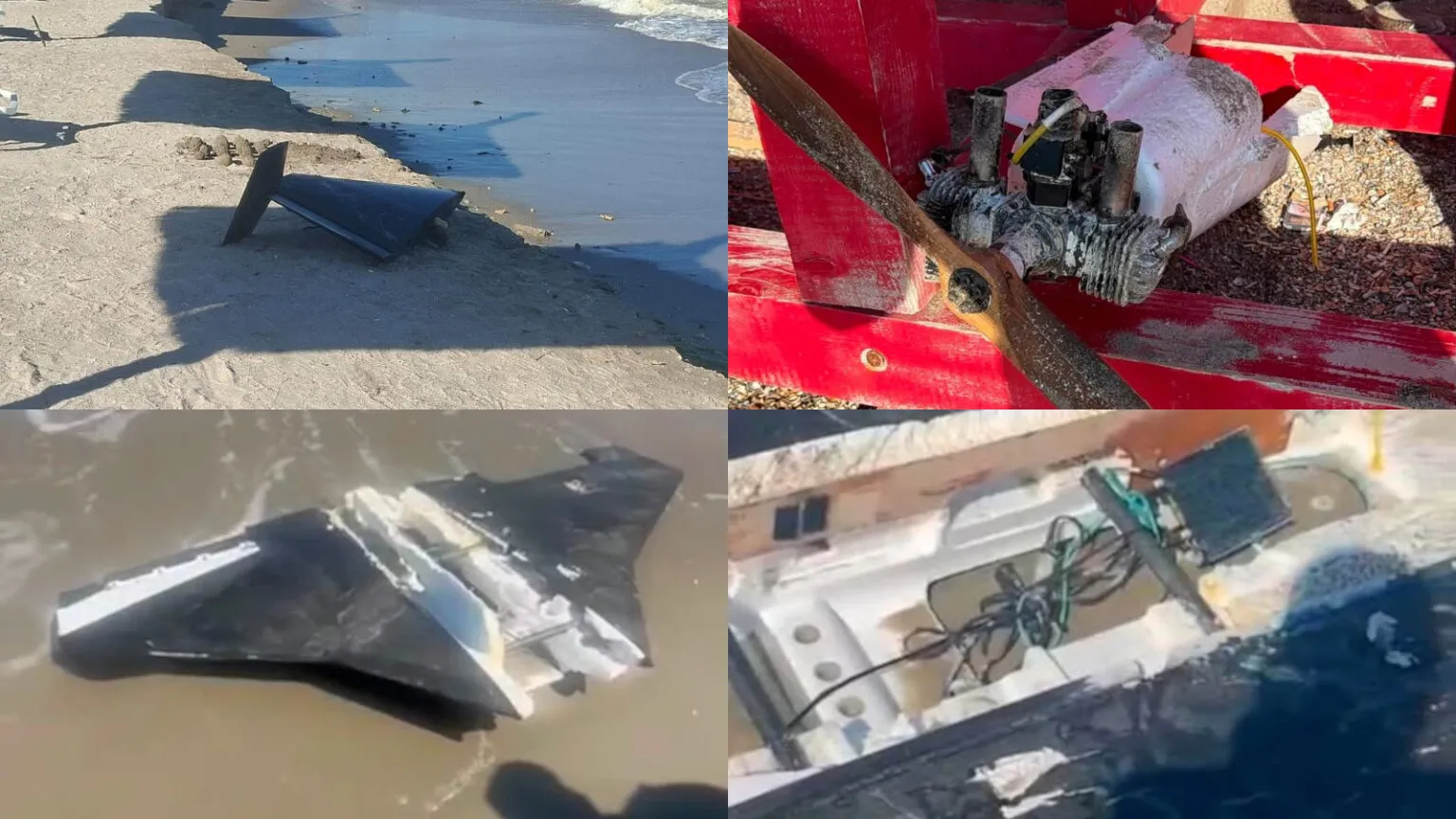
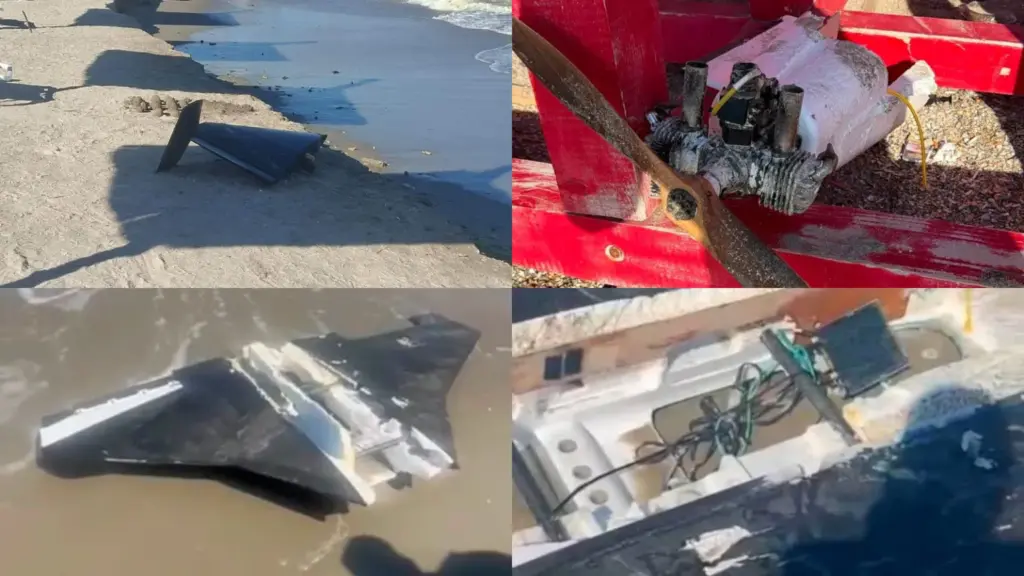
Four-image collage showing drone wreckage found on Romania’s coast and in nearby waters, including wing fragments, an engine and propeller, and exposed electronics.
Explore further

Russian drone attacks on Ukraine’s Danube ports hit recent high, Romania says

Over the first year, the platform shipped more than 1.2 million drones and other systems. Units now choose from 1,181 products made by 300 domestic manufacturers.

How the marketplace works

DOT-Chain Defense supplements centralized state supply rather than replacing it, the ministry noted. Combat units use allocated funds to browse and order the equipment they need for their section of the front. The marketplace handles contracts, payments, and delivery.

The platform's drone constructor tool lets units customize drone configurations before ordering. A dedicated training course on using the marketplace recently launched inside the Army+ mobile app.

ukraine timed its huliaipole operation around weather — worked here's why won't happen again soon · post ukrainian soldier 92nd assault battalion machine gun 2026 armed forces infantry frontline operations
Explore further

US copies Ukraine: Washington launches Amazon-backed UAVs marketplace, inspired by Kyiv’s Brave1 Market and DOT-Chain Defense

Broader procurement picture

The one-year milestone caps a period of rapid scaling across Ukraine's defense procurement. The country contracted about $8 billion worth of drones in the first half of 2026—double the same period last year, according to the Defense Ministry.

More than 400 combat units now shop for weapons through the marketplace's companion Brave1 Market program using points earned for confirmed battlefield activity. Washington modeled its own Unmanned Aircraft Systems Marketplace on the Ukrainian original earlier this year.
  • ✇Euromaidan Press
  • Operation Hell-2: Azov says it burned 4,221 tons of Russian fuel in occupied Donetsk Oblast
    The 1st Corps of Ukraine's National Guard, known as Azov, says it destroyed 67 Russian fuel tanks holding 4,221 tons of fuel in occupied Donetsk Oblast, in an operation it named Hell-2. The unit released video of the strikes on 17 August, saying it had spent a month tracking where Russian forces moved and stored the fuel before hitting it. Fuel is the blood of Russia's war, which is why its forces increasingly hide storage sites and route deliveries through improvised l
     

Operation Hell-2: Azov says it burned 4,221 tons of Russian fuel in occupied Donetsk Oblast

18 août 2026 à 11:27

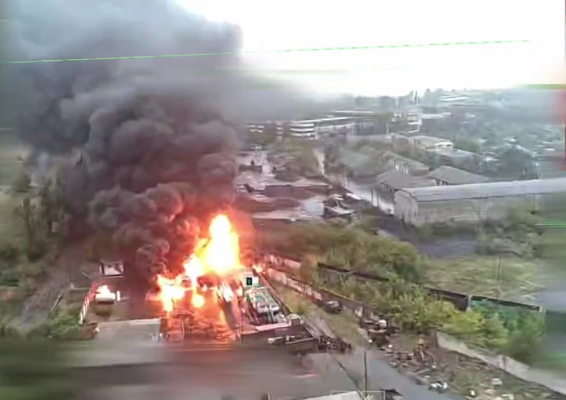
Aftermath of a strike on Russian fuel infrastructure during the Hell-2 operation in occupied Donetsk Oblast. 2026. Screenshot: National Guard of Ukraine

The 1st Corps of Ukraine's National Guard, known as Azov, says it destroyed 67 Russian fuel tanks holding 4,221 tons of fuel in occupied Donetsk Oblast, in an operation it named Hell-2. The unit released video of the strikes on 17 August, saying it had spent a month tracking where Russian forces moved and stored the fuel before hitting it.

Fuel is the blood of Russia's war, which is why its forces increasingly hide storage sites and route deliveries through improvised logistics hubs. Strikes on those hubs strip Russian units of what they need to move, supply, and fight. There have already been cases of Russian forces concealing fuel in grain trucks in occupied territories.

Azov warned the Russian forces before the strike

Azov says it flagged the fuel sites a month before hitting them, and struck when the Russians kept using them anyway.

“A month ago, we warned the occupier: ‘Azov sees your movements and will strike at the right moment.’ But some units of the Russian Armed Forces continued to store fuel in occupied Donetsk Oblast,” Azov said.

1 корпус НГУ «Азов» карає окупантів за спроби перевезення і зберігання військових вантажів. Задіяні у зберіганні та постачанні палива об’єкти росіян залишаються лише на картах, у реальності на їхньому місці – випалена земля. pic.twitter.com/FGgdn4J34k

— НГУ (@ng_ukraine) August 17, 2026

Azov emphasizes that it does not attack civilian gas stations or civilians. The operation targeted facilities used to supply Russian occupation forces. At the same time, according to Azov fighters, Russian military infrastructure remains a legitimate target.

The Russians didn’t get the message the first time

Hell-2 is likely a follow-up to the Hell operation, during which the first series of strikes, Azov also targeted the fuel logistics of Russian forces in occupied Donetsk Oblast.

On 12 July, Azov reported striking a secret Russian fuel base in Novoamvrosiivka. Drone operators from the 1st Azov Corps of the National Guard conducted reconnaissance and used Hornet drones to strike the facility. The strikes damaged fuel tanks and the base’s infrastructure and blocked the railway track.

According to the report, the Russians used the facility as a logistics hub to supply their occupation forces. After the strike, they were forced to abandon the base and move their logistics operations from the occupied territory into Russia.

  • ✇Euromaidan Press
  • “Chasing away vipers”: Ukrainian special forces retake Andriivka-Klevtsove, capture 30 Russian soldiers
    Ukrainian Special Operations Forces (SOF) have retaken Andriivka-Klevtsove, a settlement on the border between Donetsk and Dnipropetrovsk oblasts, and captured 30 Russian soldiers, the SOF said on 17 August. The operation is part of Ukraine’s broader eight-month counteroffensive on the Oleksandrivka axis, during which Kyiv says its forces have recaptured 745 square kilometers and 26 villages across Donetsk, Dnipropetrovsk, and Zaporizhzhia oblasts. The offensive has pus
     

“Chasing away vipers”: Ukrainian special forces retake Andriivka-Klevtsove, capture 30 Russian soldiers

18 août 2026 à 11:02

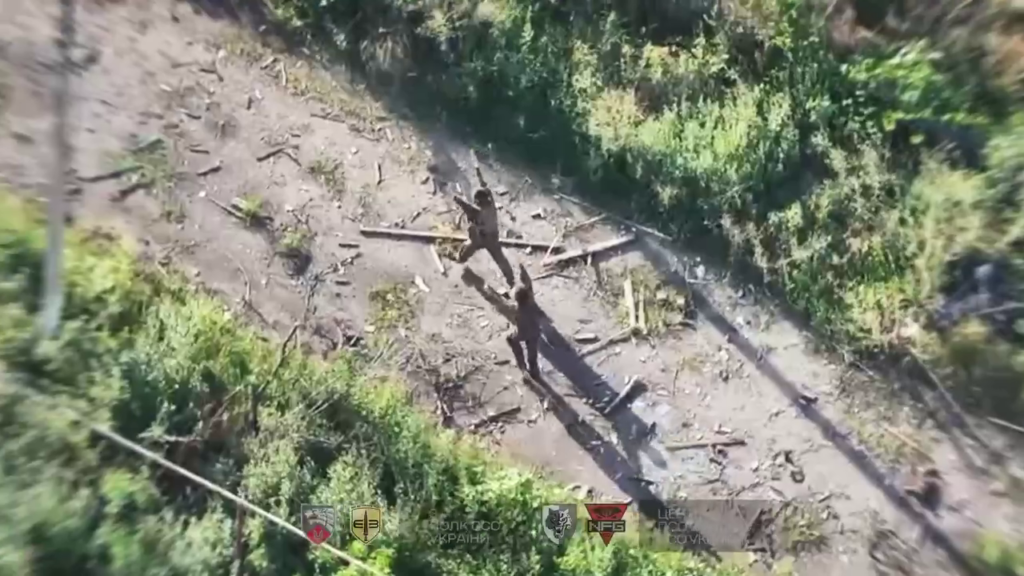
Russian soldiers surrendering in Andriivka-Klevtsove, Donetsk Oblast, Ukraine, as Ukrainian forces retook the settlement, August 2026. Screenshot from video: Ukrainian Special Operations Forces

Ukrainian Special Operations Forces (SOF) have retaken Andriivka-Klevtsove, a settlement on the border between Donetsk and Dnipropetrovsk oblasts, and captured 30 Russian soldiers, the SOF said on 17 August.

The operation is part of Ukraine’s broader eight-month counteroffensive on the Oleksandrivka axis, during which Kyiv says its forces have recaptured 745 square kilometers and 26 villages across Donetsk, Dnipropetrovsk, and Zaporizhzhia oblasts. The offensive has pushed Russian forces back from Dnipropetrovsk Oblast after months of Russian advances toward the region.

Russian forces infiltrated the settlement in small groups

Andriivka-Klevtsove, formerly known by its Soviet name Iskra, had been targeted by Russian forces attempting to gradually establish positions in the settlement.

According to the SOF, Russian troops had been infiltrating the area in small groups and occupying positions on the Oleksandrivka axis.

SOF forces cleared Russian positions and captured 30 troops

Operators from the SOF’s 3rd Regiment, working with an SOF psychological operations center, carried out a coordinated operation to clear Russian forces from the settlement.

Footage released by the SOF shows the ground phase of the operation, including Ukrainian special forces advancing through the settlement and forcing Russian troops from their positions.

Thirty Russian servicemen surrendered and were taken prisoner, according to the SOF. Russian troops who continued to resist were killed.

Ukrainian Special Operations Forces (SOF) have retaken Andriivka-Klevtsove on the border between Donetsk and Dnipropetrovsk oblasts, capturing 30 Russian soldiers in the operation.

Russian forces had been gradually infiltrating the settlement in small groups and establishing… pic.twitter.com/1vnnP37xXx

— Euromaidan Press (@EuromaidanPress) August 18, 2026

Ukrainian forces perform traditional “Chasing Away Vipers” ritual

After securing the settlement, Ukrainian special forces raised the Ukrainian flag and performed a traditional local ritual known as “Chasing Away Vipers.”

The ritual, included in Ukraine’s National Inventory of Elements of Intangible Cultural Heritage, is intended to symbolically drive evil and misfortune from a home.

The SOF said the ritual was used this time to “cleanse” the settlement of the Russian forces it described as “real vipers.”

Andriivka-Klevtsove adds to Ukraine’s gains on the Oleksandrivka axis

Kyiv announced on 12 August that Ukrainian forces had recaptured 745 square kilometers and 26 villages during the Oleksandrivka counteroffensive, which began on 29 January.

The operation was aimed at stopping Russia’s advance toward Dnipropetrovsk Oblast and pushing Russian forces back beyond its administrative border. Kyiv said Russian forces suffered at least 9,550 killed and more than 6,600 wounded during the operation.

The US-based Institute for the Study of War assessed that the Ukrainian advances showed Kyiv could still conduct significant tactical advances and restore limited mechanized maneuver on parts of the front.

  • ✇Euromaidan Press
  • Russian drone attacks on Ukraine’s Danube ports hit recent high, Romania says
    Romania detected more than 100 drones involved in seven attacks on Ukraine’s Danube ports in recent days, interim Romanian Defense Minister Radu Miruță told Romanian channel Digi24 on 17 August 2026. He said the attacks were the most intense recorded recently and that Ukrainian forces destroyed most of the drones “a few dozen meters from Romanian airspace.” Russia’s growing attacks on Ukraine’s Danube ports put a key export route at risk as Kyiv seeks other outlets whil
     

Russian drone attacks on Ukraine’s Danube ports hit recent high, Romania says

18 août 2026 à 05:49

Four-image collage showing drone wreckage found on Romania’s coast and in nearby waters, including wing fragments, an engine and propeller, and exposed electronics.

Romania detected more than 100 drones involved in seven attacks on Ukraine’s Danube ports in recent days, interim Romanian Defense Minister Radu Miruță told Romanian channel Digi24 on 17 August 2026. He said the attacks were the most intense recorded recently and that Ukrainian forces destroyed most of the drones “a few dozen meters from Romanian airspace.”

Russia’s growing attacks on Ukraine’s Danube ports put a key export route at risk as Kyiv seeks other outlets while its Black Sea ports are under attack. They also put Ukraine's southern border region under pressure as Kyiv develops trade links with Moldova and Romania, and NATO routes more military aid through Romania.

The latest drone swarms remained over Ukraine, and officials found no indication that Romania’s threat level had risen, Miruță stated. The Romanian military nevertheless remained on alert as attacks intensified across the Danube.

Ukraine looks south for trade and military aid

With Russia hitting its ports, Ukraine is turning to Romania and Moldova to keep trade moving. Kyiv and Chișinău are discussing a rail link through Moldova to Romania’s Constanța port, though Ukraine estimates it could carry only about 10% of its grain exports.

The rail proposal comes as Russian port strikes have cut monthly agricultural exports by 20–30% and left up to 10 million tons of grain in storage without buyers, Agriculture Minister Taras Vysotskyi has said.

Drone debris washed ashore in Romania after Russian attacks on Ukraine, 13-14 August 2026. Photos: Radu Miruță
Explore further

More than 100 drones detected near Romania in four days, NATO jets scrambled seven times

NATO said in December that a second aid hub in Romania would begin operating in January. It was designed to supplement the main center in Rzeszów, Poland, and route supplies toward Ukraine’s southern and eastern fronts.

Romania faces repeated drone incursions

Russian drones targeting Ukraine have repeatedly entered Romania as Moscow attacks Ukrainian ports across the Danube. More than 40 such incursions had been recorded by early June, Romanian Foreign Minister Oana Țoiu said.

The most serious occurred on 29 May, when a drone hit an apartment building in Galați. Two people were injured, and about 70 residents fled or were evacuated.

Vladimir Putin suggested that the aircraft might have been Ukrainian, but Romania’s forensic investigation later identified it as a Russian-built Geran-2.

Romanian forces later shot down three drones in 72 hours in July, while Miruță said Spanish pilots and Romanian troops destroyed a fourth on 16 August.

Debris from drones intercepted over Ukraine has also washed onto Romania’s coast, prompting temporary access restrictions while specialists checked for explosives.

Bucharest is buying low-altitude radars and ground interceptors through the EU’s SAFE program. Miruță said drones often fly at 70 to 150 meters, and ground systems would be cheaper to use than fighter-launched missiles.

A Mother’s Quest to Rescue Her Son From Russian-Occupied Ukraine

18 août 2026 à 16:55
They made a risky bid to reunite after three years of separation, illness and deprivation — the kind of ordeal suffered by many thousands of families torn apart by the war in eastern Ukraine.

© Oksana Parafeniuk for The New York Times

Liliia Prutian, 55, a military medic and a former POW, who spent more than 2 years in Russian captivity, at a rehabilition center Lisova Poliana in Kyiv region, Ukraine, in February.

Medical tourism and IT can draw visitors back to Ukraine after the war, UN Tourism’s chief told a Kyiv briefing

18 août 2026 à 04:37

Shaikha Al Nowais, secretary-general of UN Tourism, during her visit to Ukraine

The head of UN Tourism, Shaikha Al Nowais, named medical tourism and Ukraine's IT sector as the country's strongest cards for winning back foreign visitors after the war, at a Kyiv briefing. Ukraine already holds everything a tourism economy needs, she said, from culture and landscapes to cuisine. Al Nowais, the first woman to lead the organization in its history, was making the first visit by a UN Tourism chief to Ukraine in a decade.

A UN specialized agency publicly treated Ukraine as a future destination rather than a war zone, as Kyiv tries to anchor its reconstruction to sectors that can earn hard currency and bring people back to emptied regions. Both sectors she named were among Ukraine's stronger performers before 2022.

Before the invasion, Ukraine was receiving about 13 million visitors a year, with tourism worth roughly 3 to 4 percent of GDP, RBC-Ukraine reported citing the numbers mentioned at the briefing.

"Bringing all stakeholders in the tourism process together with the state under one umbrella could unlock great potential," Al Nowais said.

A medical tourism hub before the war

Before Russia's full-scale invasion, Ukraine had a reputation as an affordable place for fertility treatment and surrogacy, dentistry, laser eye surgery, and cosmetic procedures, the US-based Medical Tourism Association said. Prices often ran a fraction of Western European ones. In the late 2010s, the country's medical tourism association counted tens of thousands of foreign patients a year. Because that trade rests on clinics and specialists rather than rebuilt infrastructure, Al Nowais said it could bounce back fairly quickly once the war ends.

A tech sector that grew through the war

Ukraine's IT exports reached about $6.8 billion in 2021, close to a tenth of all the country's exports, and the industry has been one of the few to keep growing through the war. The same ecosystem produced the Diia app, a state-services platform installed by more than a third of Ukrainian adults before the invasion, along with globally used products such as Grammarly and GitLab. A sector that has shown it can ship and scale under bombardment is, on Al Nowais's logic, well placed to build the booking, logistics and guide services a returning tourism market will need.

Ukraine's Acting Foreign Minister Andrii Sybiha met her in Kyiv on 15 August 2026 to discuss tourism's place in reconstruction, and UN Tourism agreed to provide 500 scholarships for Ukrainians to study at its Online Academy, 200 of them reserved for veterans, with Kyiv setting the rest of the allocation.

  • ✇Euromaidan Press
  • Latvian public broadcaster opens new charity drive for Ukraine’s wounded
    Latvia's public broadcaster opened a new fundraising drive on 17 August to pay for the rehabilitation of wounded Ukrainian soldiers, LSM reported. The effort is timed to Ukraine's Independence Day on 24 August. Donations run through the charity Ziedot.lv. Russia's invasion has produced a generation of wounded and traumatized Ukrainians whose recovery will outlast the war. The state already counts more than a million registered veterans, a number that climbs every month.
     

Latvian public broadcaster opens new charity drive for Ukraine’s wounded

18 août 2026 à 01:54

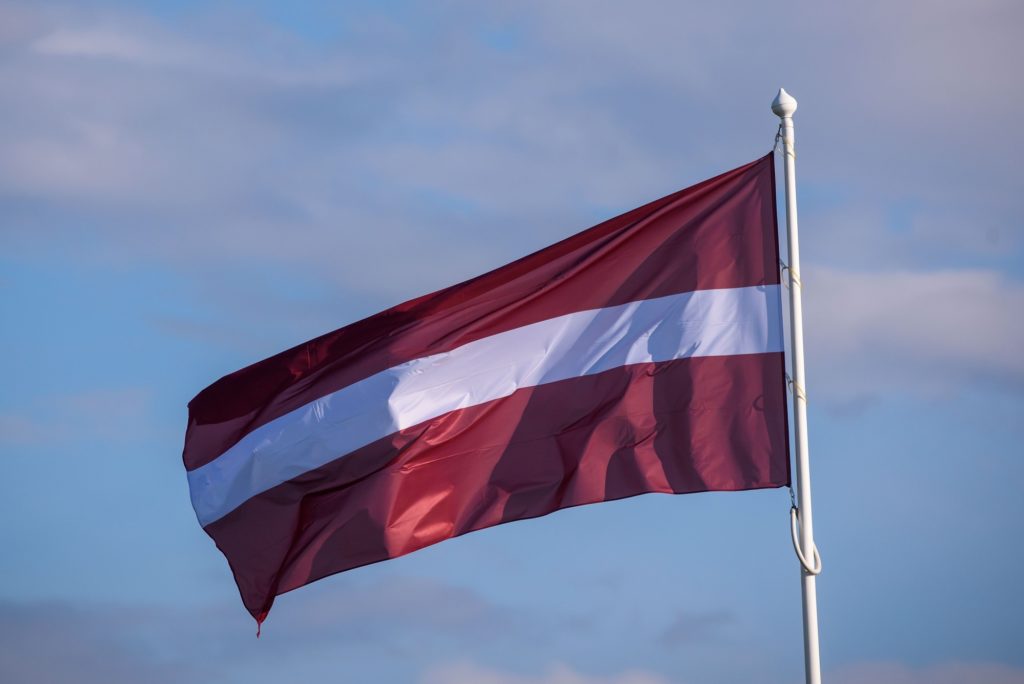
Latvian flag, illustrative image. Photo via Eastnews.ua.

Latvia's public broadcaster opened a new fundraising drive on 17 August to pay for the rehabilitation of wounded Ukrainian soldiers, LSM reported. The effort is timed to Ukraine's Independence Day on 24 August. Donations run through the charity Ziedot.lv.

Russia's invasion has produced a generation of wounded and traumatized Ukrainians whose recovery will outlast the war. The state already counts more than a million registered veterans, a number that climbs every month.

A new channel for Ukraine's wounded

The drive, called "Together with Ukraine in Thought and Deed!", runs from 17 August to 13 September 2026. Latvian Public Media (LSM) organized it with Ziedot.lv and the Ukrainian Embassy in Latvia. It is dedicated to rehabilitation. Organizers said every euro goes to that goal. Latvians can give online through Ziedot.lv, or by calling a national donation line charged at €5 including VAT.

"Fighting for the security of us all"

The campaign's ambassador is Odita Krenberga, an LSM journalist who has reported from the Ukrainian front line. She said only seconds separated her from death or serious injury, and that many others never got that chance. Russia has taken hundreds of thousands of lives and wounded even more, she said, calling it a painful injustice. Ukrainians, she added, are fighting "for the security of us all, for a safe Europe."

Wounds that take years to heal

Rūta Dimanta, who heads Ziedot.lv, said "the wounds of war take a long time to heal." They are not only physical, she said, but also the pain of loss, helplessness, and injustice. Soldiers must live with the deaths of comrades and the pain in their souls. The money cannot erase that, but it can fund recovery in Ukraine and Latvia, allowing them to carry on with their lives.

Latvia keeps giving

Since the war began, LSM and Ziedot.lv have raised more than €2 million across earlier appeals. The two partners have already sent Ukraine a locally built naval drone, and Latvia has funneled millions to front-line oblasts on the Russian border. Latvia has also pledged 0.25% of its GDP a year to Ukraine's defense—a bigger share than most larger allies give.

650 participants from 24 countries: Ukraine brings its battle-tested drone-defense experience to NATO’s Baltic Trust 2026 exercise

18 août 2026 à 01:30

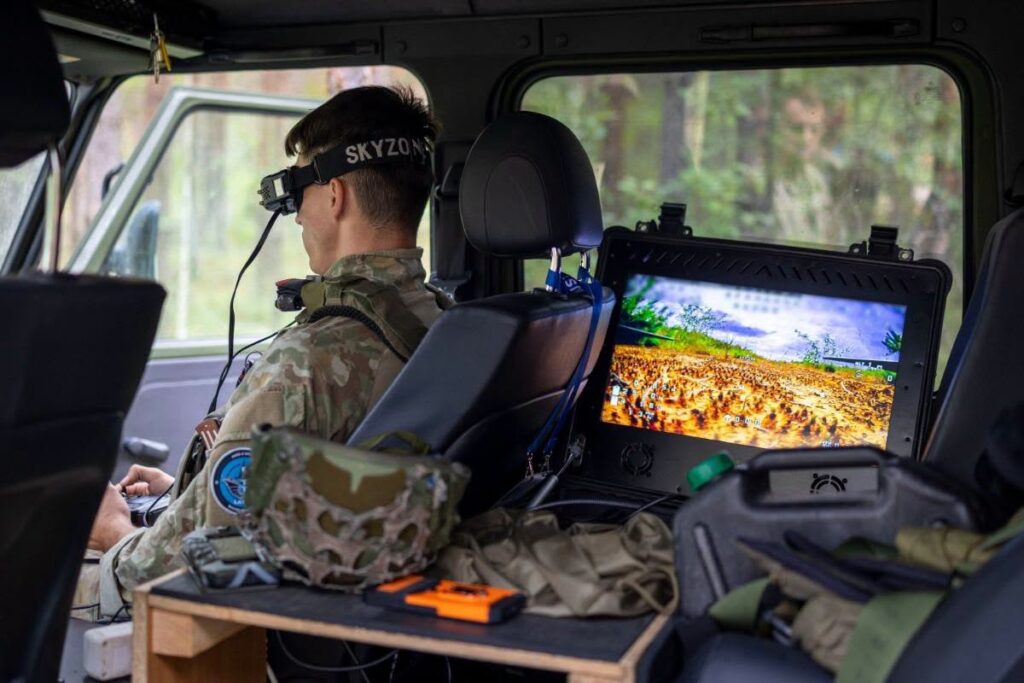
Ukrainian soldiers at NATO's Baltic Trust 2026 exercise in Latvia. Source: NATO

Ukraine brought the world's most battle-tested counter-drone experience to a NATO exercise. From 3 to 14 August, Ukraine took part in NATO's Baltic Trust 2026 exercise in Latvia, which focused on countering drones and other threats posed by uncrewed aerial systems, the General Staff reported.

The exercise responds to a mounting Russian threat against NATO's Baltic flank. Russia has probed the alliance's eastern edge so aggressively that NATO scrambled over the Baltic, jumping more than 250% in July.

Also, Moscow has increasingly launched drones on the Baltic States. Even on 14 August, the final day of the drill, a NATO fighter shot down a drone over Latvia after Russian electronic warfare pushed it off course, the second Baltic drone incursion that week. Baltic Trust 2026 was NATO's answer: about 650 participants from 24 countries building the counter-drone defenses that the threat demands.

The exercise tested systems working together

Baltic Trust focused on integration, not single technologies. Soldiers, specialists, and industry representatives jointly tested new technological solutions in conditions close to a modern operational environment, the General Staff said.

The core was whether the pieces work as one system. Participants checked how detection tools, command-and-control systems, and counter-drone measures can exchange data, form a common operational picture, and enable coordinated response.

Ukraine's experience is the draw

Ukraine's participation carries particular weight in this field. No NATO member has faced the scale of drone attack Ukraine confronts nightly, and its forces have built and continually adapt the detection, interception, and electronic-warfare methods that down Russian drones by the tens of thousands.

That makes Ukraine a source of hard-won practical knowledge for allies still preparing for threats Ukraine already lives with. Bringing Ukrainian experience into a NATO drill turns the country's battlefield lessons into shared allied capability, on exactly the drone warfare the alliance is scrambling to counter on its eastern flank.

The exercise builds collective defense

Baltic Trust served NATO's broader readiness. Jointly testing and integrating such solutions helps turn technological innovation into practical capabilities that strengthen readiness and collective defense.

Previously, Russia's Foreign Intelligence Service Head Sergey Naryshkin accused NATO of escalating military activity near Russia’s borders. He warned that Poland and the Baltic states would be the first to suffer in the event of a war between Moscow and the Alliance.

❌