Vue normale

  • ✇Euromaidan Press
  • Glide bomb then infiltrate. This is Russia’s new way of war.
    In 2022, Russians fired artillery then advanced in vehicles Four years later, they launch glide bombs then advance as small teams of infantry Ukrainian drones stand in their way, and that's why drone operators are the main targets of Russian firepower before and during the advance On Monday, a small team of Russian infiltrators reportedly slipped 10 km behind the line of contact between Russian and Ukrainian troops just north of Kostiantynivka in eastern Ukrai
     

Glide bomb then infiltrate. This is Russia’s new way of war.

Par : David Axe
26 août 2026 à 17:16

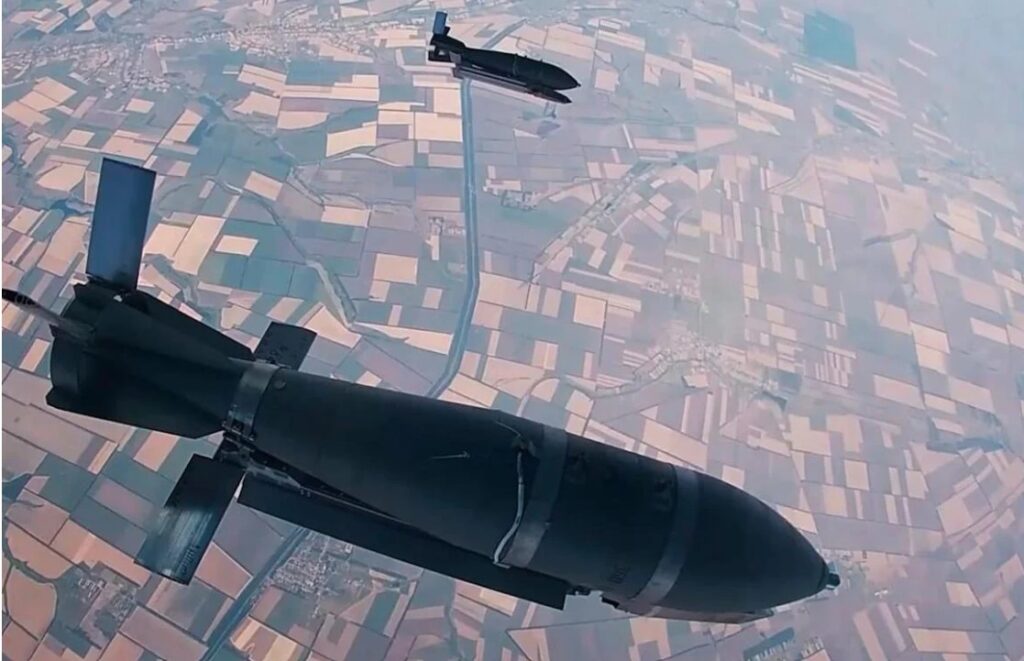
Glide bombs drop away from a Russian jet.

  • In 2022, Russians fired artillery then advanced in vehicles
  • Four years later, they launch glide bombs then advance as small teams of infantry
  • Ukrainian drones stand in their way, and that's why drone operators are the main targets of Russian firepower before and during the advance

On Monday, a small team of Russian infiltrators reportedly slipped 10 km behind the line of contact between Russian and Ukrainian troops just north of Kostiantynivka in eastern Ukraine's Donetsk Oblast.

Sneaking into the town of Druzhkivka, 10 km north of Kostiantynivka along the H20 highway, the Russians reportedly ambushed, captured and executed a group of three or four unarmed Ukrainian drone operators.

It's possible the drone operators had just arrived in Druzhkivka when the Russians appeared. According to analyst and mapper AMK Mapping, Ukrainian drone operators pulled out of the village of Oleksijevo-Druzhkivka—which lies between Kostiantynivka and Druzhkivka—owing to the increasing threat from Russian KAB glide bombs. "It's likely that Russian forces monitored the withdrawals of Ukrainian drone operators and sent in [an infiltration group] after the new position was identified," AMK Mapping concluded.

The atrocity underscores the Russian military's new approach to ground warfare as Russia's wider war on Ukraine grinds through its 54th month. An army that once counted on its own artillery to suppress enemy artillery in order to allow mechanized forces to advance now uses precision bombs, small cruise missiles, tiny drones, and, yes, some artillery to suppress the Ukrainian drone teams that represent the main obstacle to a swift Russian advance.

Yesterday, a group of Russian DRGs was able to infiltrate from Kostyantynivka for at least 10 km behind Ukrainian lines, and kill 3-4 Ukrainian drone operators in the city of Druzhkivka. The drone operators were unarmed in their positions at the time of the ambush, not expecting… pic.twitter.com/KNxN0JelwL

— AMK Mapping 🇳🇿 (@AMK_Mapping_) August 25, 2026

And when the Russian firepower manages to suppress Ukrainian drone operators, allowing small teams of infantry to advance, the infantry's objective is often to take out the same drone operators whose suppression was a necessary pre-condition of any successful assault.

In short, the Ukrainians largely defend with drones. That means the Russians are fixated on first striking the drone teams in order to prevent them from launching their tiny lethal robots—and then, when they can, assaulting the drone teams' positions in order to capture or kill them. Or capture then kill them, as reportedly happened in Druzhkivka.

The Russians have learned the hard way that they can't advance without first finding and attacking Ukrainian drone operators. That hard experience has driven a profound transformation of the Russian way of war in just the last few years.
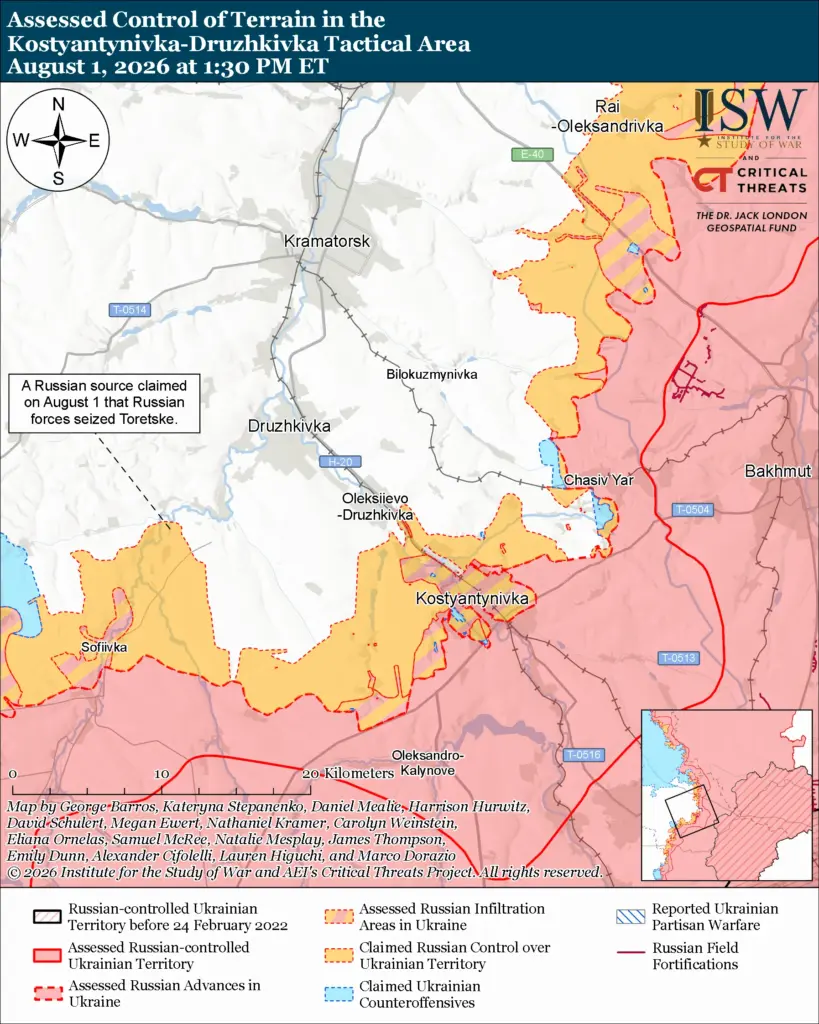
isw russia's long push toward sloviansk gains ground ukraine counterattacks · post kostyantynivka-druzhkivka-tactical-area-august-1-2026 news ukrainian reports
Map: ISW.

Precision suppression

As 2025 wore into 2026, Ukrainian forces finally deployed enough $500 drones to effectively halt any sustained Russian advance along the 1,200-km gray zone stretching across eastern and southern Ukraine. Between February and July, the Russians captured around 260 sq km of Ukrainian soil, according to a tally by the Black Bird Group. That's barely a fifth as much ground as they seized in the same six months in 2025.

Realizing they couldn't just fire an artillery barrage and then roll out the tanks the way they used to, the Russians have mostly parked their thousands of armored vehicles. Now they advance in small teams of lightly equipped infantry that, Russian commanders reason, stand a better chance of avoiding detecting and destruction by drones.

"Broadly speaking, current Russian military theory appears to emphasize restoring the ability to maneuver," Sidharth Kaushal and Sam Cranny-Evans wrote in a new study for the Royal United Services Institute in London. But the infantry infiltrators who do most of the maneuvering these days don't march out without support. A lot of it.

In the early months of the wider war in 2022 and 2023, the Russians counted on artillery—lots of artillery—to support the maneuver forces. But massed artillery is just as exposed to drone attack as massed tanks are, so Russian fire support has had to evolve, too.

Today, the Russians still fire artillery from fewer but more spread-out guns. But they also launch their own drones, small cruise missiles, and—perhaps most important—KAB glide bombs to force Ukrainian defenders, including drone teams, into their dugouts before the infantry dash across the gray zone. "Russian theorists appear to see the solution in highly mobile units designed to exploit lower-risk tunnels created by
precision strike," Kaushal and Cranny-Evans explained.

https://twitter.com/kriegsforscherD/status/2091923015604850800/

It's explosive choreography requiring careful communication between the infantry, the artillery, drone teams and the air force. "Sustaining momentum in the face of adversary precision strike is a considerable challenge," Kaushal and Cranny-Evans wrote. But a necessary one as the Russian military "contemplates how it can break the current positional deadlock" in Ukraine "and avoid future ones."

But when it works, it works to catastrophic effect for Ukrainian defenders. As those unfortunate, murdered drone operators found out.

The suppress-then-advance method, but with precision munitions and small teams of infiltrators, works for both sides, of course. The Ukrainians can do it, too—and they recently did in some unspecified sector of the gray zone.
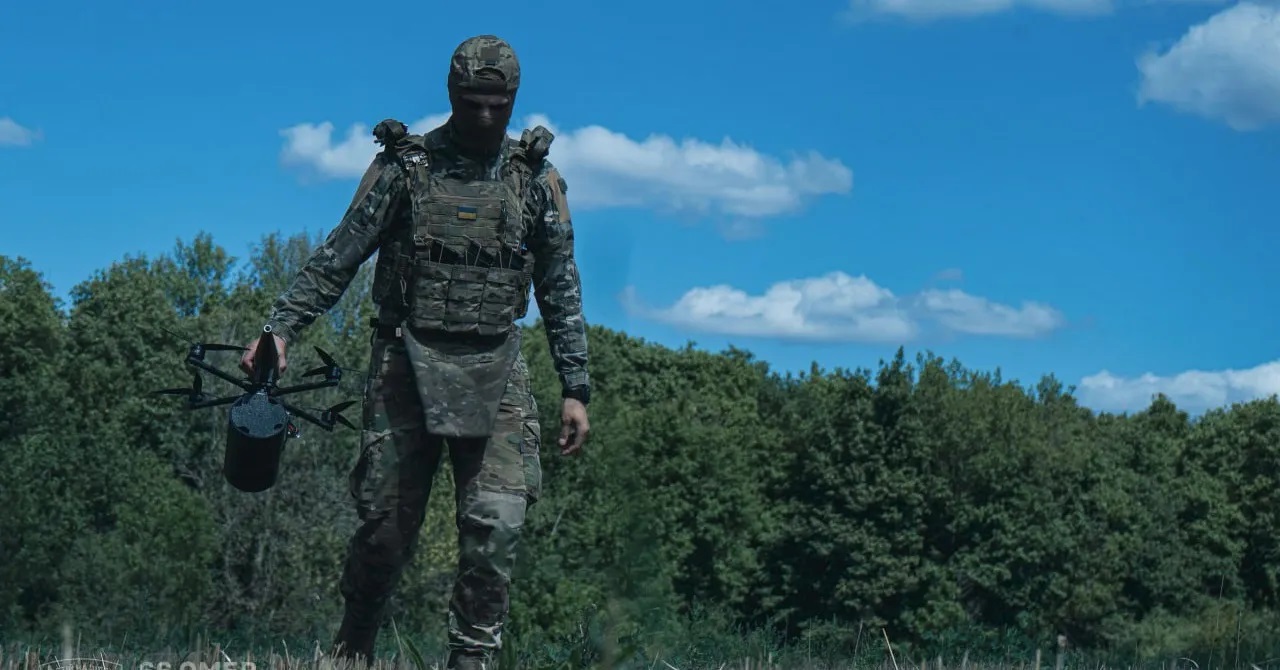
A Ukrainian soldier carries an FPV drone.
Explore further

Ukraine’s secret counteroffensive takes the pressure off Sloviansk

On the same day the Russians executed those drone operators, fellow Ukrainian drone pilot Dmytro Putiata reported a small Ukrainian mechanized advance. "At one of the direction at the front line, one of the Ukrainian brigades used four [infantry fighting vehicles] during the attack," Putiata wrote. "They have managed to break through up to three km; dismounted infantry and all of the vehicles managed to retreat."

They break through with the help of friendly drones units that suppressed Russian troops along the assault route, Putiata explained. "How did they manage not to be targeted by drones? The battlefield was prepared for that."
  • ✇Euromaidan Press
  • Biggest Magura sea drone doesn’t ram ships. It carries other drones and stays out seven days
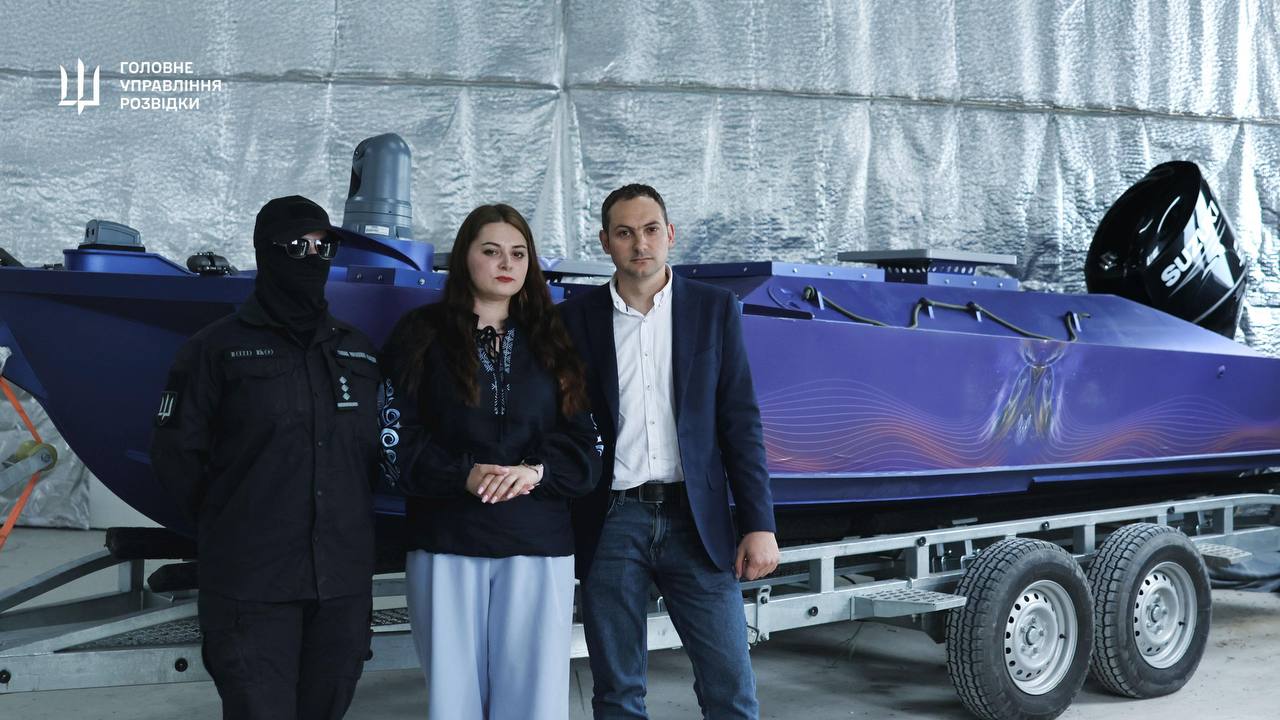
    Ukraine has unveiled the largest robot boat in its Magura sea-drone family, and this one is built to carry and launch other drones instead of ramming enemy ships, the company UFORCE told Militarnyi. UFORCE showed the new V11 during Ukraine's Independence Day drone parade, signaling a move from single-use attack craft toward a floating base at sea. Ukraine has fought its Black Sea war with throwaway robot boats—cheap, one-way, built to hit a ship and go down with it. Shi
     

Biggest Magura sea drone doesn’t ram ships. It carries other drones and stays out seven days

26 août 2026 à 07:21

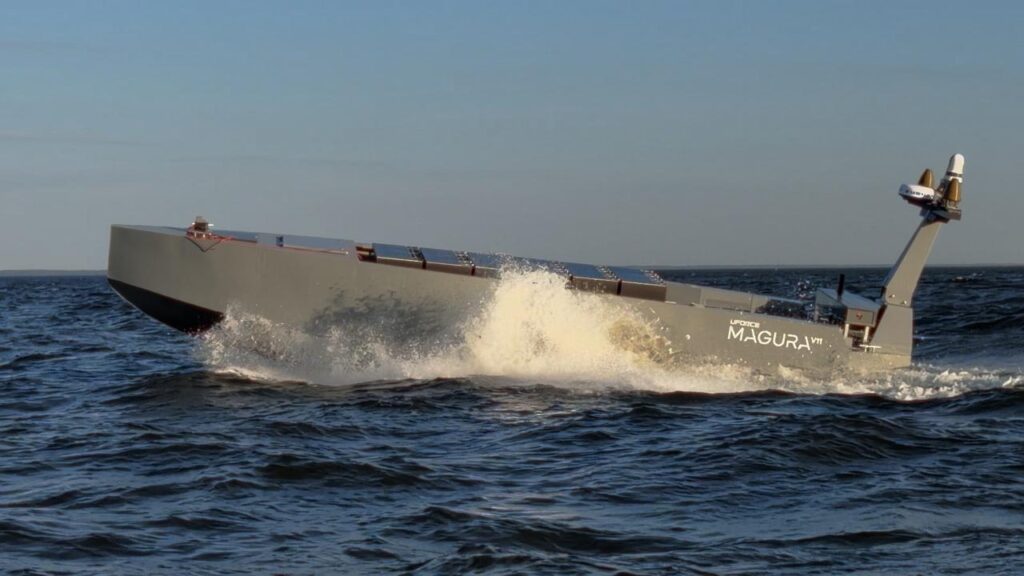
MV11 from the MAGURA family

Ukraine has unveiled the largest robot boat in its Magura sea-drone family, and this one is built to carry and launch other drones instead of ramming enemy ships, the company UFORCE told Militarnyi. UFORCE showed the new V11 during Ukraine's Independence Day drone parade, signaling a move from single-use attack craft toward a floating base at sea.

Ukraine has fought its Black Sea war with throwaway robot boats—cheap, one-way, built to hit a ship and go down with it. Shifting toward reusable platforms that keep other machines running far from any coast marks a different bet.

A floating base, not a battering ram

The V11 is the biggest drone in its class. Earlier, Magura boats were made to hit warships. This one is a transport platform that carries other unmanned systems and gear. Its main feature is the ability to launch a larger number of unmanned systems straight from its deck, turning one boat into a mobile base for them. The company refers to the drone as both the V11 and the MV11.

australia spending billions drones — ukraine says can make money count new ukrainian maritime magura v7 (left) older v5 2025 militarnyi has offered share its combat-tested drone technology battlefield expertise
Explore further

American defense company Red Cat announces serial production of copy of Ukraine’s Magura V7 and says it’s their own development

What the V11 can do

UFORCE says the drone carries up to 2,200 kg (about 4,850 pounds) and can stay at sea for up to seven days. The company built it for reconnaissance, surveillance, support of landing operations, and resupplying fuel and equipment to other naval drones.

"It is a platform that provides multi-domain capability: one carrier that carries and launches other unmanned systems far from shore for operations across all domains," said Oleh Rogynskyy, CEO of UFORCE.

He said the investment the company attracts works for Ukraine's Defense Forces.

From strikes to a US production line

UFORCE's design and engineering office in Portugal developed the V11, drawing on international investment and aiming at the needs of Ukraine's Defense Forces. Its work there was first reported in September 2025.

meet magura w6 ukraine's latest threat russian warships drone funded pumb bank being presented hur 2025 5398010383781982294 ukrainian military intelligence has received new-generation maritime part its continued efforts challenge naval
Explore further

Meet the Magura W6: Ukraine’s latest threat to Russian warships

In July, the company and the US firm ReconCraft signed a memorandum for the licensed production of Magura naval drones in the US. Ukraine's Magura boats have forced Russia's Black Sea Fleet back to safer ports, and some versions have even shot down Russian fighter jets.

  • ✇Euromaidan Press
  • A gasoline and polystyrene mix—police call it napalm—was meant for a Ukrainian drone plant in Slovakia
    Slovak police foiled a planned arson attack on a drone factory in the country's east, the force said on 25 August. Investigators charged three foreigners with preparing the attack on commission and seized incendiary material and equipment at the scene. The plant belongs to the Ukrainian drone maker Skyeton, Militarnyi reported. Russia's war has an arm inside Europe that usually works without missiles against Ukraine supporters — agents and recruited locals, carrying out
     

A gasoline and polystyrene mix—police call it napalm—was meant for a Ukrainian drone plant in Slovakia

26 août 2026 à 06:46

gasoline polystyrene—the mix police call napalm—was meant ukrainian drone plant slovakia · post man detained suspicion preparing arson attack items seized site eastern 2026 slovak ukraine news reports

Slovak police foiled a planned arson attack on a drone factory in the country's east, the force said on 25 August. Investigators charged three foreigners with preparing the attack on commission and seized incendiary material and equipment at the scene. The plant belongs to the Ukrainian drone maker Skyeton, Militarnyi reported.

Russia's war has an arm inside Europe that usually works without missiles against Ukraine supporters — agents and recruited locals, carrying out arsons, parcel fires, flying an explosive drone at a Ukrainian cargo plane in Germany, plotting against arms-industry figures — and the point of hiring strangers to light fires is that a burned production hall costs Moscow nothing it can be held to account for.

Had the attack in Slovakia gone ahead, it risked a large fire, danger to life and health, and damage on a large scale, police stated. About 70 employees could have been in the building at the time, by preliminary estimates. Property inside the production hall is worth tens of millions of euros, according to the findings so far.

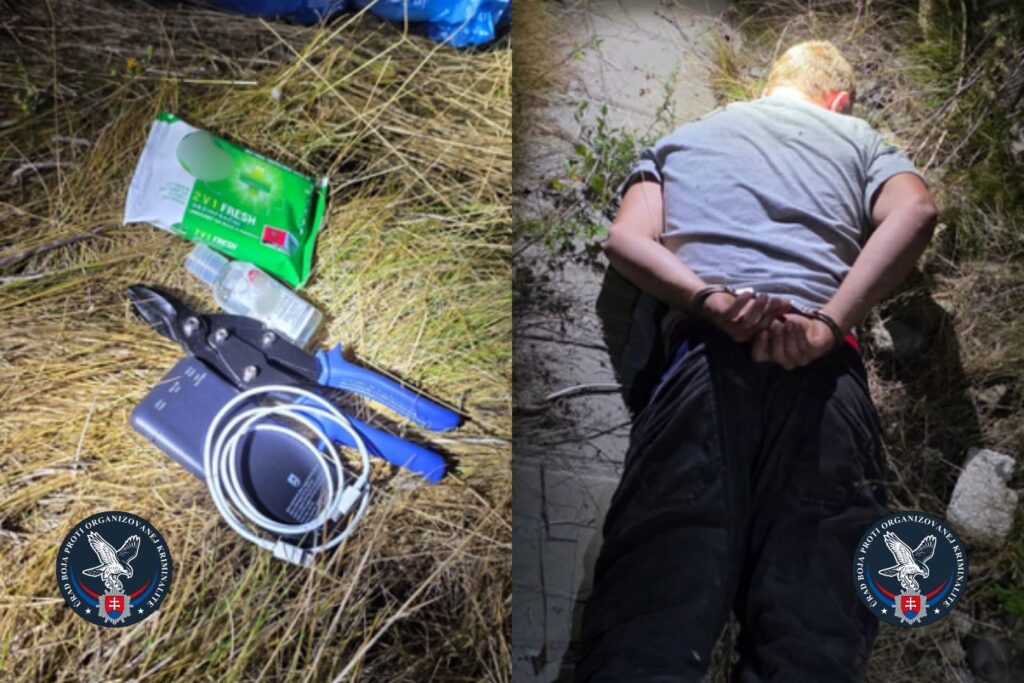
Officers seized a larger quantity of incendiary mixture, along with tools, mobile phones, an action camera, and a hand-made plan. The police Criminalistics and Expertise Institute gave a preliminary finding that the substance was a mixture of gasoline and polystyrene, commonly called napalm. Slovakia's anti-crime unit ÚBOK, part of the Police Presidium, identified the people preparing the attack and stopped it. Nobody was hurt and no property was damaged, police said.

gasoline polystyrene—the mix police call napalm—was meant ukrainian drone plant slovakia · post items seized during operation one detained men eastern 2026 ukraine news reports
Items seized during the operation, and one of the detained men, eastern Slovakia, August 2026. Photo: Police of the Slovak Republic

The charges, and where the three were detained

An ÚBOK investigator charged the three foreigners with preparing a particularly serious crime of general endangerment, committed as co-perpetrators on order. Officers detained two of them in Slovakia, and the investigator moved to have both taken into custody. German authorities detained the third on a European arrest warrant. The investigation continues, and the legal classification of the men's actions may still change.

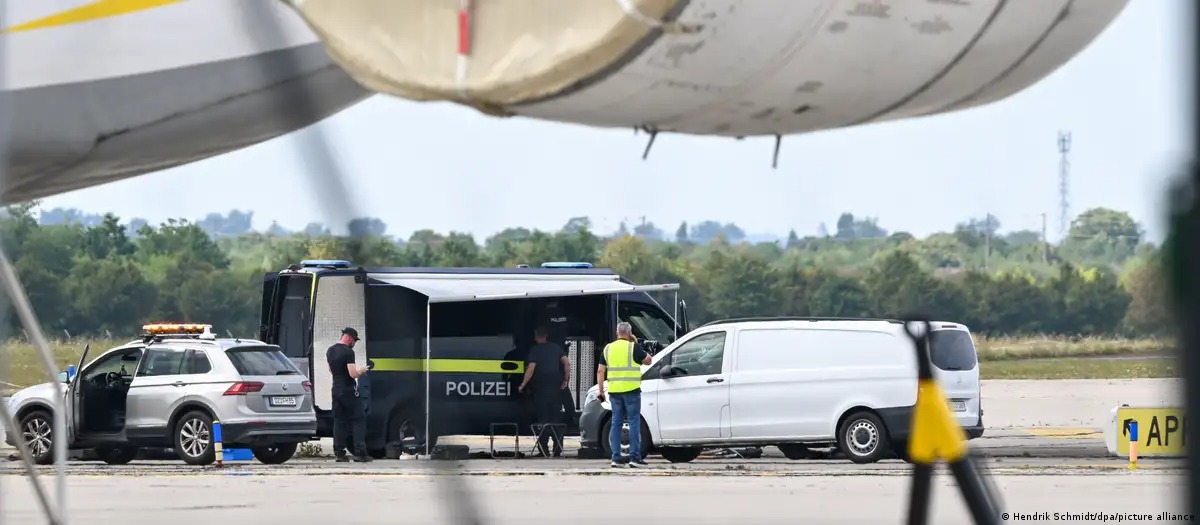
fifty grams hexogen ten days late what germany missed after attack ukraine's plane · post german police vehicles officers apron beneath wing ukrainian cargo aircraft leipzig/halle airport 2026 leipzig halle
Explore further

About 50 grams of suspected military explosive lay in a German field 10 days after the attempt on Ukraine’s plane

The plant, and a company Russia has already hit

Slovakia, a NATO and EU member, borders Ukraine on its eastern edge. Skyeton builds the Raybird, a fixed-wing reconnaissance drone that has served with Ukraine's Armed Forces since 2018 and stays airborne for up to 28 hoursThe company began production in Slovakia in 2024, and more than €10 million in foreign investment went into the plant, one of several sites Ukrainian firms opened abroad to cut the risk of Russian attacks.

That risk is not theoretical. Russia destroyed Skyeton's Kyiv office in May, and the company said it had already spread production capacity across Ukraine and abroad in anticipation.

A Skyeton representative told Militarnyi:

"The recent attempt on our production in Slovakia is another sign that Ukrainian arms makers are already a bone in their throat, which means we are on the right path." 

Russian sabotage defense factories
2024

WSJ: Russian sabotage groups suspected for arson attack on plant producing air defense systems for Ukraine

Arson against Ukraine's defense partners in Europe

Companies working for Ukraine have been hit across several countries this year and earlier. 

In March, suspects who claimed a pro-Palestinian motive set fire to the Pardubice production of Archer, a Ukrainian maker of thermal imaging sights, destroying nearly all of the company's capacity in Czechia.

Estonia opened a Russian-link investigation this month into a suspected arson at a military robot maker supplying Ukraine, and Lithuania charged six people in January over an attempt to burn a factory that supplied radio-wave scanners. 

A powerful explosion of undetermined cause hit EMCO, one of Bulgaria's largest private arms makers, which produces artillery ammunition for Ukraine, on 10 August.

  • ✇Euromaidan Press
  • One tracked tank repairs, one marked artillery, one aimed bombs at civilians—all three got 15 years
    A Ukrainian court sentenced three Russian agents to 15 years each for guiding Russian strikes on Donetsk Oblast, the Security Service of Ukraine (SBU) said on 26 August. Each had been recruited to mark Ukrainian military sites or civilian targets in the east, and counterintelligence exposed them between spring 2025 and March this year. The court found all three guilty of treason committed under martial law. The SBU did not name the court or say which specific strikes th
     

One tracked tank repairs, one marked artillery, one aimed bombs at civilians—all three got 15 years

26 août 2026 à 04:20

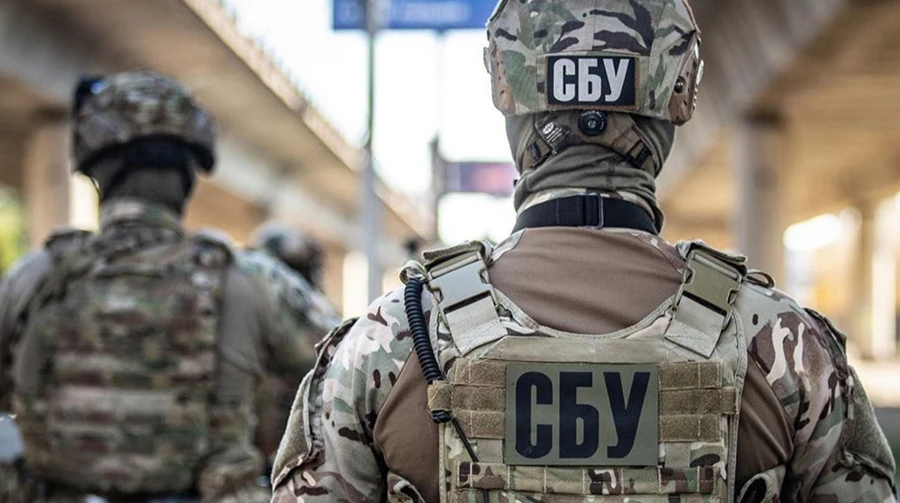
SBU officers in camouflage and tactical gear, seen from behind during an operation.

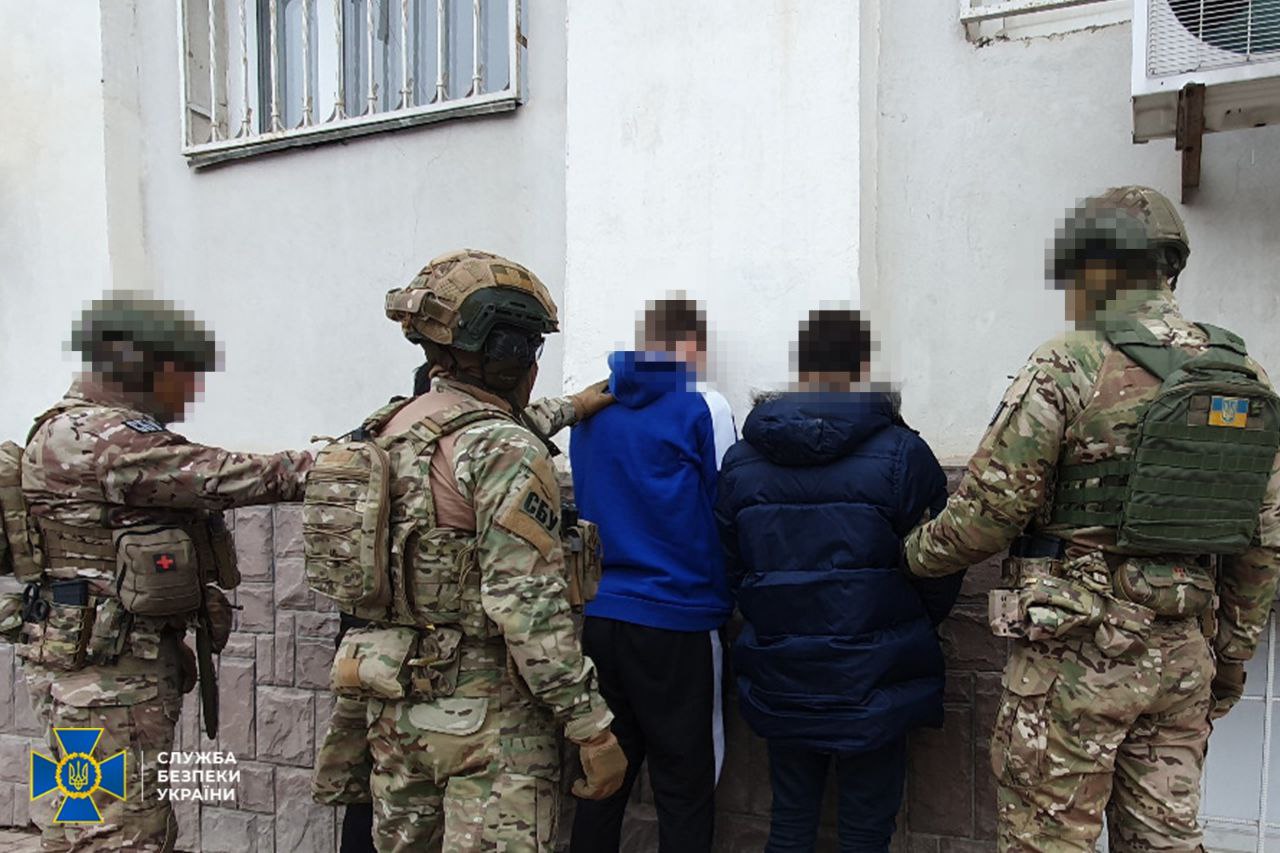
A Ukrainian court sentenced three Russian agents to 15 years each for guiding Russian strikes on Donetsk Oblast, the Security Service of Ukraine (SBU) said on 26 August. Each had been recruited to mark Ukrainian military sites or civilian targets in the east, and counterintelligence exposed them between spring 2025 and March this year. The court found all three guilty of treason committed under martial law. The SBU did not name the court or say which specific strikes the men enabled.

Russia has spent this war turning Ukrainian civilians into spotters for its bombs — reaching them through Telegram job and drug channels, forged official summonses, relatives in occupied areas, and promises of easy money — and the SBU has opened more than 3,800 treason investigations since 2022 as of February 2026, so any single verdict stands for a caseload far larger than what reaches the news.

The informer inside the armor repair base

One of the convicted men worked at a Defense Forces repair base, and the SBU detained him in the Kramatorsk sector in April 2025. Russian services noticed him through his brother, who lives in Russia and works for the Federal Security Service (FSB), the investigation established. Recruitment through relatives in Russia or the occupied territories is a method Ukrainian counterintelligence has documented before, including inside a marine brigade on the active front.

During his own shifts at the defense enterprise, he recorded the geolocations of repair shops used to restore heavy armored vehicles for Ukraine's Armed Forces. He tried to pass the photographs and building coordinates to his Russian handler through an anonymous chat in a messenger.

sbu arrests suspected russian spies foils sabotage plots lyman chernihiv kirovohrad vinnytsia detainment saboteurs security service says arrested agent aiding airstrikes 2 ukraine's reported multiple agents involved espionage across several
Explore further

SBU arrests suspected Russian spies, foils sabotage plots in Lyman, Chernihiv, Kirovohrad, Vinnytsia

The Dobropillia man who aimed 1.5-ton bombs near Pokrovsk

The second man was an unemployed resident of Dobropillia and an agent of Russian military intelligence, which noticed him through anti-Ukrainian comments in Telegram channel chats, the SBU said. The agency's counterintelligence detained him near Pokrovsk in March this year. Investigators established that he directed 1.5-ton guided aerial bombs at fortified areas and at artillery positions that keep Russian assault groups under fire control on the Pokrovsk axis. Russian forces have leaned more heavily on heavy glide bombs across this stretch of front this year, hitting fortifications and reducing towns to rubble their infantry then uses as cover.

The Kostiantynivka resident who marked his own city

The third man, recruited by the FSB, lived in Kostiantynivka, and SBU military counterintelligence exposed him in August 2025, according to the report. He approached Russian services through pro-Kremlin Telegram channels and offered them his help.

He directed Russian guided aerial bombs and small first-person-view drones at the civilian infrastructure of the front-line city, according to the case materials. He also tracked the positions of Ukrainian drone units carrying out combat tasks on the Kramatorsk axis. Russian strikes on that axis have repeatedly hit residential blocks, with prosecutors opening war-crimes investigations.

Ukrainian courts have handed down the same 15-year term in comparable cases, including for a locomotive depot engineer who mapped Ukrainian positions around Lyman.

Ukraine has wrecked more than 100,000 Russian vehicles by hitting the roads, and this new drone is built exactly for that job

26 août 2026 à 01:15

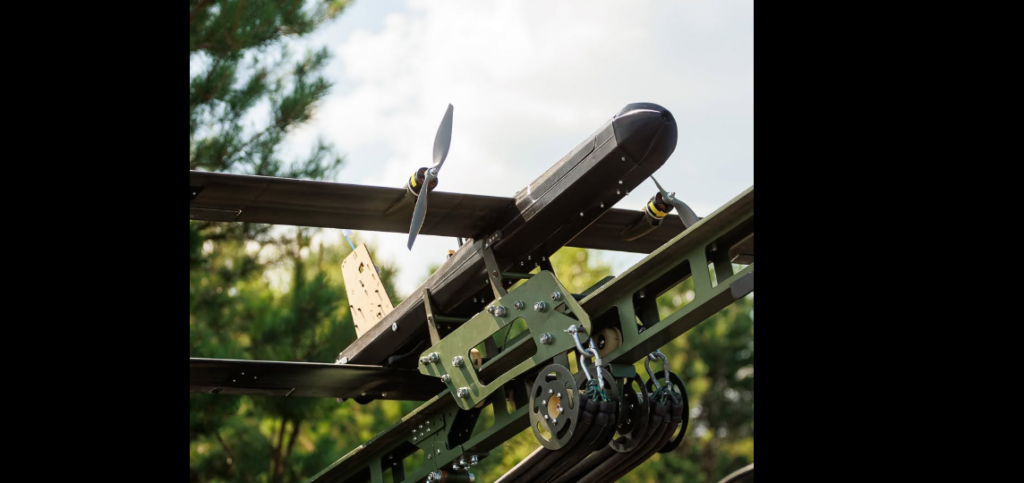
The new fixed-wing Baton. Source: The Technological Forces of Ukraine

The Technological Forces of Ukraine have presented a strike drone built to cut Russian logistics. The new fixed-wing Baton is designed to hit firing positions, supply routes, and other targets at tactical depth, out to 90 kilometers, according to the association's announcement.

Everything Russian troops eat, fire, and drive reaches them by road and train. Ukraine has pushed cumulative Russian motor-transport losses past 100,000 vehicles by working that ground, destroying 483 in a single day on 29 May, the highest daily figure since February 2022. Baton is built for that band.

The numbers come from the association

Baton carries three kilograms over a stated range of up to 90 kilometers, stays airborne for 50 minutes, and cruises at 105 kilometers per hour, with a maximum of 140 kilometers per hour, according to the announcement. Its working altitude ranges from 150 to 500 meters, with a ceiling of 1,500 meters.

Eight airframes fit in one pickup, launch comes from a catapult under ground-station control, and preparation takes about 15 minutes, the association said.

Autonomy takes over at two kilometers

The drone locks onto a target and flies to it automatically from up to 2 kilometers away and at altitudes up to 500 meters, the association said. That final stretch is where Russian jamming would otherwise break the link.

Depending on the version, it carries analog or digital video, communicates over LTE or Starlink, and navigates a route autonomously with real-time positioning, according to the announcement.

Two figures do not sit together

Fifty minutes at the stated cruising speed covers roughly 87 kilometers. The 90-kilometer range is therefore a one-way distance at near-full endurance rather than an operating radius.

Earlier, a Ukrainian drone maker pitched a weapon that functions like a mortar, rather than a drone. F-Drones unveiled the F5, a compact five-inch strike FPV built for assault units working treelines, built-up areas, and position support at short range.

❌