As political fights over artificial intelligence accelerate, there is now a super PAC aligned with the data center industry. Its first bet is on Ms. Graham, a Republican in an unexpectedly tight race.
Senator Darline Graham of South Carolina has been friendlier toward the data center industry than her Democratic opponent, trying to walk a line between backing the centers’ development as a national security necessity while stressing the need for community involvement.
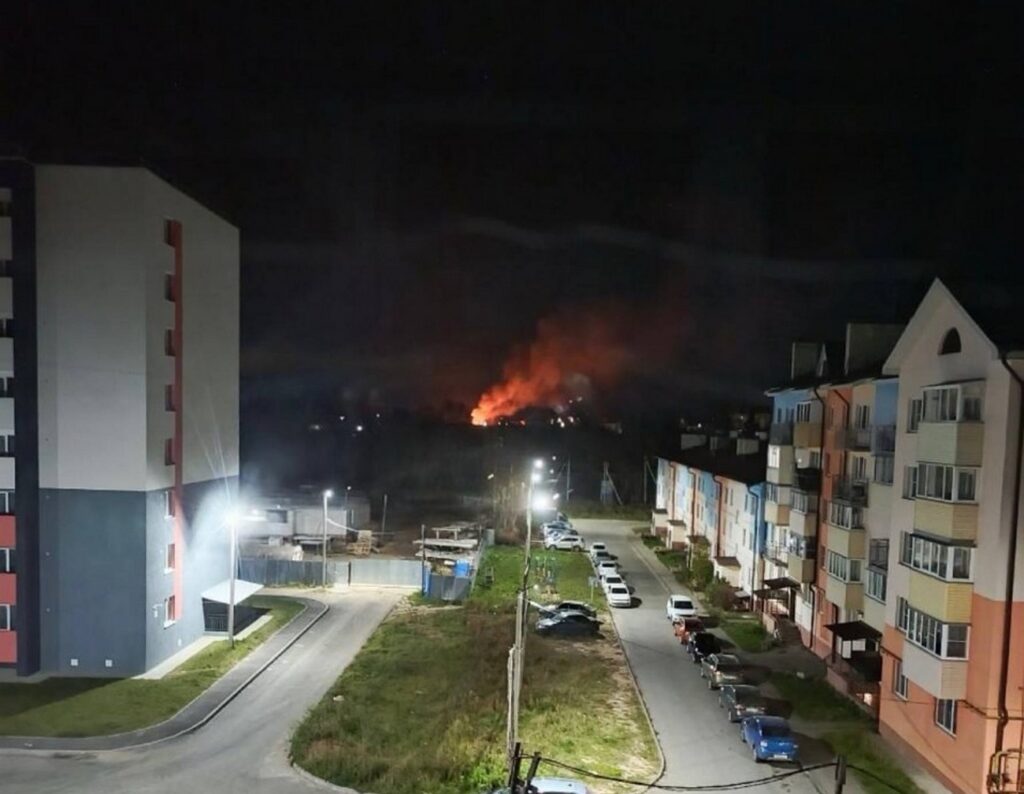
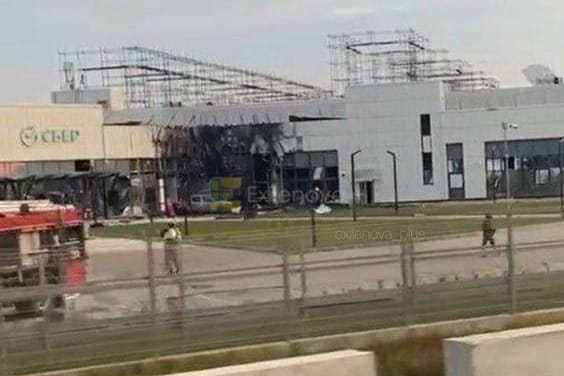
Drones attacked a Russian tax-service data center overnight on 23 October, Ukrainian monitoring channel Exilenova+ reported. A chemical plant in the Urals was also attacked, and a fire broke out near a Russian bomber base by late morning. Russian officials admitted injuries and damage but blamed falling debris. Ukraine has not commented.
Ukraine's long-range drones have widened their target list from Russian refineries to the servers and chemicals that keep Russia's state and war industry running.
The tax service's data center in Gorodets
The target in Gorodets, Nizhny Novgorod Oblast, is one of the Federal Tax Service's two key data centers, which work as a geographically distributed pair. It stores and processes state registers, including tax databases, Exilenova+ said. The extent of the damage is unconfirmed. The site lies about 785 km from Ukraine's northern border in a straight line.
The moment of impact at Russia’s Federal Tax Service data center in Gorodets last night. pic.twitter.com/PftC6keRpY
Eyewitness footage shows a blast and fire in the area of the data center, which serves both the tax service and the Finance Ministry, Russian Telegram channel Astra found. The center opened in 2015. Mikhail Mishustin, then head of the tax service and now Russia's prime minister, attended the launch.
Nizhny Novgorod Governor Gleb Nikitin claimed air defenses repelled 19 drones. Falling debris injured three people in the Gorodets district and damaged several homes, an educational facility, and an infrastructure facility, he said, and local schools switched to remote learning. A Pantsir air defense missile hit a house, Exilenova+ claimed, though officials recorded it as a drone hit.
Ukrainian strikes inside Russia on Gorodets, Berezniki, and Voronezh, with distances from Ukraine, 23 October 2026. Map: Euromaidan Press/Datawrapper
This month, drones already hit three Yandex data centers and a VK data center near St. Petersburg.
A chemical plant behind Russia's gunpowder
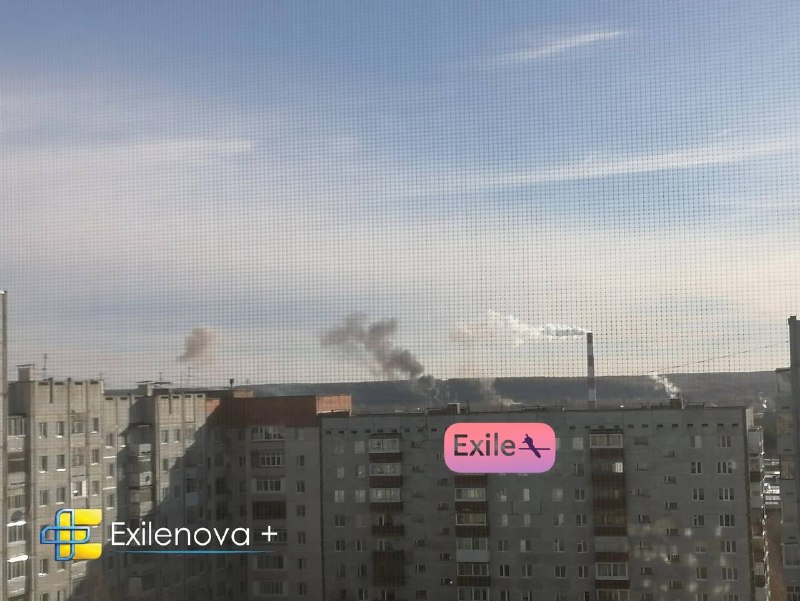
In Berezniki, Perm Krai, smoke rose over Uralchem's Azot plant as air defenses fired, Astra reported. The regional security ministry announced a drone attack at about 06:00, and authorities closed the airspace within 50 km of the city. Ukraine's long-range Liutyi drones visited Berezniki, Exilenova+ wrote.
Our old friends, the Liutyi drones, paid Berezniki a visit today. Haven’t seen them in a while. pic.twitter.com/NXuhIJ3xpm
The attack on Azot was continuing in the morning, the channel wrote, adding that the plant covers about 140 hectares with some 90 production buildings. It makes ammonia, nitric acid, ammonium and potassium nitrate, and urea. Russian defense plants use its nitric acid to make explosives and gunpowder, including the Perm gunpowder plant, Astra said. Berezniki lies 1,500–1,600 km from Ukraine's border and the war zone.
Smoke rises over Uralchem's Azot chemical plant in Berezniki, Perm Krai, after a drone attack, Russia, 23 October 2026. Photo: Exilenova+/Telegram
Drones attacked Azot before, on 11 September. Earlier this year, Ukraine's Security Service hit Lukoil's refinery in the same region.
Explore further
Phones down, water off, a factory roof broken open: Russian-occupied Luhansk counts the damage after another night of drones
Fire near a Su-34 base in Voronezh
Late in the morning, Voronezh Governor Aleksandr Gusev declared a missile alert, and explosions followed in the city. Gusev later claimed air defenses downed several "jet-powered aerial targets." Debris set dry grass on fire in a suburb and damaged outbuildings and several cars, he said, adding that no one was hurt.
Missile alert in several regions of the Russian Federation.
Eyewitness footage shows fire and smoke near Baltimor military airfield, Astra found. The strike preliminarily hit the grounds of a former military aviation engineering university and a nearby parking area for military aircraft, Exilenova+ said.
Fire and smoke near Baltimor military airfield in Voronezh after a Ukrainian attack, Russia, 23 October 2026. Photo: Astra/Telegram
Baltimor hosts the 47th Guards Bomber Aviation Regiment, whose Su-34s Russia uses to strike Ukraine, Militarnyi reported, saying Ukraine attacked the airfield with missiles. Voronezh lies about 185 km from Ukraine's border. Smoke rose over the base after an attack on 27 May, and a fire broke out near it on 2 September.
Moscow counts drones, Kyiv stays silent
Russia's Defense Ministry claimed it downed 443 drones overnight over 20 Russian regions, including Nizhny Novgorod Oblast and Perm Krai, as well as Russian-occupied Crimea and two seas. Ukraine's General Staff has not reported on the strikes. A night earlier, drones reportedly hit a sanctioned weapons plant near Moscow.
Russia's air defenses now have to cover state servers and Ural chemical plants as well as the airfields its bombers fly from.
Texas has shut down the web portal for its automated construction permit filing system and suspended construction permits of 17 data center projects. The change came after 404 Media reported that a group of Texans discovered the state had continued to issue construction permits related to data centers despite Governor Greg Abbott calling for a pause in September.
On Monday, the watchdog groups FracTracker Alliance and Public Citizen published reports detailing more than two dozen permits issued to Texas data center projects. On Tuesday, the website for STEERS – an application filing system for construction projects run by the Texas Commission on Environmental Quality (TCEQ) – returned a 404 error.
The TCEQ portal as it appeared on Wednesday afternoon.
By Wednesday, the site had this message on it: “TCEQ’s electronic filing application used for automatic authorizations has been temporarily shut down to ensure all applications are reviewed by agency staff to determine if they are related to data centers.”
Before TCEQ shut the portal down, 404 Media viewed 17 different permits related to data center projects and saw that they’d been moved from “active” to “suspended” in the TCEQ central registry.
“STEERS is a portal that TCEQ uses to rubber stamp construction approvals,” Sam Law, a researcher at FracTracker Alliance told 404 Media. “It seems like they forgot about it and the portal has been quietly issuing approvals since the governor’s order for a pause, including for OpenAI and Amazon this Monday and Tuesday.”
The 17 suspended permits are related to stormwater construction, an approval that allows construction companies to raise and level ground. It’s a key, and sometimes final, part of the approval process for any construction project in Texas.
“Now they’ve taken the unprecedented step of suspending 17 approvals and taking down the whole site as they switch to a more involved human review process,” Law said. “The irony is not lost on me. When fighting the AI data centers build out, it’s nice to have a clear example of how some work is better left to humans.”
Law said he reached out to TCEQ and didn’t hear anything from them. The commission also didn’t respond to 404 Media’s request for comment. “I am very concerned that since contractors are accustomed to this automated approval process, they might not be aware of the suspension and continuing construction at some of the largest hyperscale facilities in Texas,” Law said.
The Democrat, David Crowley, and the Republican, Tom Tiffany, sparred over taxes, abortion, data centers and legalizing marijuana in their only debate before the election.
David Crowley, the Democratic candidate for governor, and Tom Tiffany, the Republican candidate, debated at Marquette University Law School on Wednesday.
Russian tech giant Yandex's data center in Sasovo burned out from the inside, a Ukrainian OSINT analyst wrote on 22 October. On cloud-free satellite images, he saw almost no significant holes in its roof. Ukrainian drones hit the site overnight on 8 October.
Sasovo was the first strike on a data center in Russia. It came two weeks after Russia destroyed data centers in Kyiv. Drones then hit Yandex sites in Vladimir and Kaluga, a Sber data center, and a VK data center near St. Petersburg, which VK acknowledged. In occupied Donbas, monitoring channels reported hits on buildings housing telecom operators.
What the analyst sees
The analyst, who goes by Harbuz, runs the Ukrainian OSINT channel Dnipro Osint. His roof reading comes from the images. His interior claim comes from what he called available information: he wrote that a fire broke out inside and put part of the equipment out of action.
Cloud-free satellite image of the damaged Yandex data center in Sasovo, Ryazan Oblast, posted 22 October 2026. Image: Dnipro Osint
In an earlier post, Harbuz wrote that a third of the data center had burned out. In the new one, he writes that the building burned out from the inside. He does not say whether he revised the earlier figure.
Russian outlet Agentstvo studied Airbus images from 12 October. It found damage on about a third of the building. Unlike Harbuz, though, Agentstvo described a blackened western roof with damage resembling holes.
What Yandex says
On 8 October, Yandex stated that the attack caused a fire and forced it to suspend operations at the site, which hosts tens of thousands of servers, Reuters reported. Yandex Cloud and the Disk and Documents services that run on it ran with major disruptions that morning, Russian outlet The Bell reported.
Later that day, the company stated: "The scale of the damage to the infrastructure is still being assessed. For the moment, we cannot confirm whether it is possible to restore the data centre equipment in Sasovo." Two of Yandex's three supercomputers, used to develop its AI model, are housed there.
The same day, journalists asked Ukrainian President Volodymyr Zelenskyy whether Ukraine was targeting Russian data centers. He did not refer specifically to the Yandex strike, Reuters noted, but said: "We always respond in mirror-like fashion."
The Democrat, David Crowley, and the Republican, Tom Tiffany, sparred over taxes, abortion, data centers and legalizing marijuana in their only debate before the election.
David Crowley, the Democratic candidate for governor, and Tom Tiffany, the Republican candidate, debated at Marquette University Law School on Wednesday.
Near the bank of the Ohio River, a historic American chestnut grove in Mason County, West Virginia has become the epicenter of a fight against a planned 2,250 acre data center campus. Plans for the UK-based startup Nscale’s Monarch Compute Campus, with clients including Anthropic, Nvidia and Microsoft, encompass the former Clements State Nursery and the American chestnut trees still growing there.
For thousands of years, the American chestnut tree was a staple of life. Its natural range spanned hundreds of millions of acres from Maine to Mississippi, centuries before those names existed. As many as four billion trees provided a hearty nut crop for humans and provided miraculously rot-resistant lumber for railroad ties and housing. It sustained black bears as they prepared to hibernate, fed white-tailed deer and turkey, and shed nutrient-dense leaves. The largest American chestnut trees once grew 100 feet tall and 13 feet wide and represented one-fourth of all hardwoods; a squirrel could scamper along their branches from New England to Georgia without touching the ground, as an old saying goes.
In 1904, a forester at the Bronx zoo noticed something alarming among their American chestnuts: The trees were dying en masse, struck by a mysterious blight. Within 40 years, that blight — thought to be brought to America on Asian chestnut trees — wiped out the tree’s population to near-extinction. Since then, conservationists have worked to restore American Chestnut trees and breed blight-resistant specimens. Typically, threats to groves include pests, climate change, and the fungus that destroyed their ancestors. Today, however, a new threat has entered the picture: data centers.
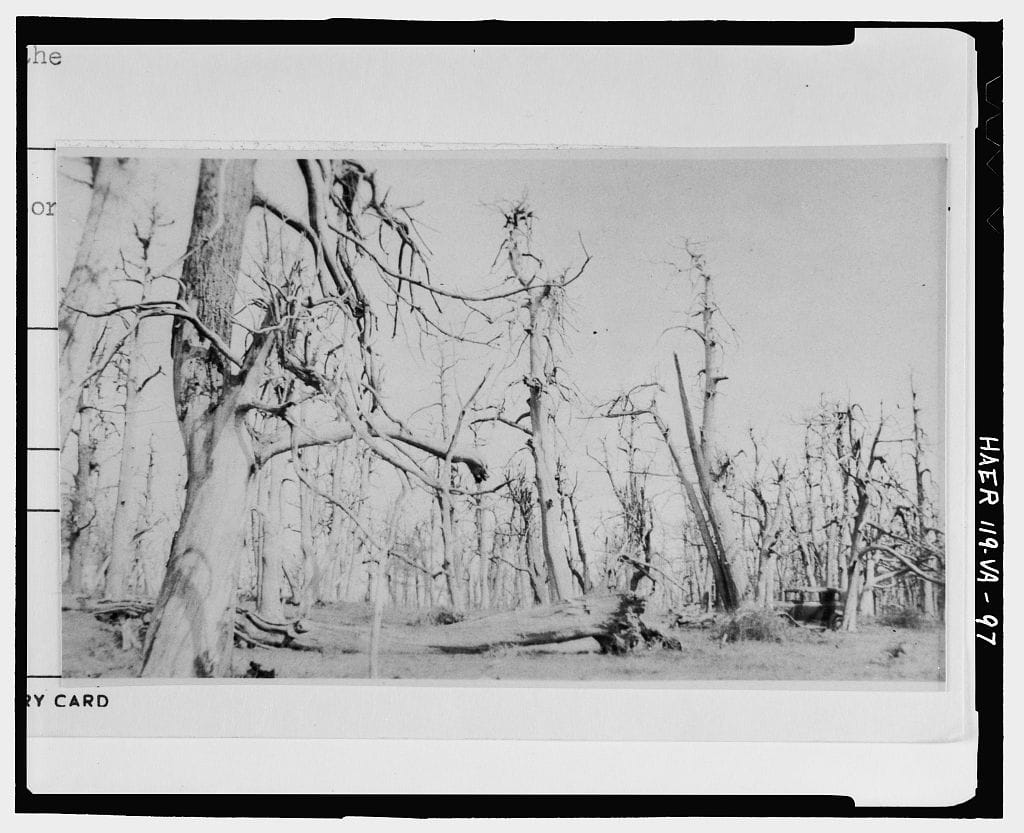
Library of Congress: American Chestnut Tree, Negative No. 6032 (Photographer and date unknown). "THIS GHOST FOREST OF BLIGHTED CHESTNUTS ONCE STOOD APPROXIMATELY AT THE LOCATION OF THE BYRD VISITOR CENTER." - Skyline Drive, From Front Royal, VA to Rockfish Gap, VA, Luray, Page County, VA
Across the country, communities are pushing back against massive hyperscale data center projects, protesting against the noise pollution, environmental impacts, and blow to property values near these computer warehouses. In many places, elected officials are forging ahead to allow these multi-billion dollar deals in direct defiance of their constituents' wishes. Earlier this year, an Oklahoma farmer was arrested at a town hall meeting for speaking over his time against a 255-acre data center. Data centers are easy to build but much harder and slower to power, and their workarounds are egregious; For example, Elon Musk’s xAI Colossus 2 data center in Tennessee skips the local grid and runs its own natural gas turbines, worsening pollution and disproportionately impacting Black neighborhoods. But this tiny plot of American chestnut trees, just a little over an acre of land, has become a site of resistance in West Virginia.
I first heard about the Clements chestnut grove after a 404 Media reader emailed me about it earlier this month, saying that the trees faced “potential destruction after November 1, 2026.” Social media posts called the threat “urgent,” and claimed bulldozers are lined up, with headlines declaring the grove is “about to be destroyed.” In the last few weeks, the plight of a grove of fragile chestnut trees trembling in the shadow of a data center has gone viral. Goldberry Grove, a local regenerative chestnut orchard, posted “They’re bulldozing the American chestnuts after November 1st,” sparking more outrage.
In 2023, Governor Jim Justice announced a multi-billion dollar deal with Fidelis New Energy for a lifecycle carbon neutral hydrogen production facility, including the “Mountaineer GigaSystem” and the Monarch Compute Campus. Nscale acquired the American Intelligence & Power Corporation, sponsored by Fidelis New Energy and including the Monarch campus, in March.
“The citizens of Mason County are elated with the announcement of Fidelis New Energy selecting Mason County, West Virginia, for its multibillion-dollar state of the art carbon neutral, clean hydrogen complex,” John Musgrave, the Executive Director of the Mason County Development Authority said in Justice’s 2023 press release about the new data center plans.
With construction of the campus underway today, citizens do not seem elated. In September, heavy storms reportedly caused neighborhoods nearby to flood, as runoff from the construction site sent water and debris into adjacent properties as a section of the site’s fencing gave out. The Department of Environmental Protections (DEP) ordered Nscale “to immediately repair and strengthen the stormwater controls that failed, install additional erosion and sediment controls where needed, and take whatever actions are necessary to prevent similar releases from occurring in the future.”
Nscale told local news outlet WOWK 13 that it would pay for the damage. Separately, the company is trying to buy out homeowners, but the people living there are resistant. “What they’re saying is one thing, but they’ve got to prove it,” one homeowner told WOWK 13. “I’m staying. Fight for every one of these people.”
The fate of the trees has been a conversation among conservationists in the area for years. The American Chestnut Foundation (TACF) raised the issue in its May 2024 monthly newsletter: “Several communications have been made with [West Virginia Secretary of Commerce James Bailey] and he is aware of the chestnut trees at Clements. He assured the WV chapter that the trees will remain and be taken care of by Fidelis.”
The newsletter bulletin continued: “Mr. Bailey stated, ‘We value the chestnuts and will ensure that they are cared for. The state maintains ownership and control of the property, but if that ever changes, then the trees will be taken care of.’” The TACF noted that the future of the grove was “unclear.” Three years later, the picture is sharpening, as chestnut experts and the data center developers clash.
Sixty-two years ago, the first seedlings shipped out from West Virginia’s newly-designated Clements State Tree Nursery. The nursery was once owned by Mark Twain’s grandparents. The West Virginia Division of Natural Resources bought it in 1961 and the Division of Forestry operated it for decades onward. The nursery sold seedlings of several varieties of trees and kept 15 to 20 chestnut trees that showed promising traits of blight resistance. In 2021, the Charleston Gazette-Mail reported that the DNR quietly ceased operating the nursery, citing funding issues. “It was never set up to make money, but it was also never set up to lose the kind of money it’s been losing in the past 10 years,” then-Division of Forestry Director Tom Cover told the Gazette-Mail at the time.
"The Dying Chestnut Tree, My Teacher" (1927) and "The Dying Chestnut" (1919), by Alfred Stieglitz.
Today, all of the American chestnut trees remaining at the former nursery site are infected with the blight fungus, Mark Double, a past president of the West Virginia Chapter of TACF told me. Many have died over the years, he said, but most of the trees still have sufficient resistance to have survived for 35 years, in spite of multiple infections. “The WV chapter of The American Chestnut Foundation has been harvesting nuts from this orchard for more than a decade,” Double told me over email.
Nscale’s Monarch campus is one of two data center projects planned for the area. Project Tamarack, which is owned by Starwood Digital Ventures, is planned for 10 miles south of the Monarch campus. West Virginia Governor Patrick Morrisey announced the project early last month. Morrisey promises 1,000 temporary jobs but just 300 permanent positions as a result of the project. Research shows that data centers rarely live up to promises about bolstering local economies. “Data centers do not bring high-paying tech jobs to local communities because they operate as infrastructure projects rather than traditional jobcreating businesses,” University of Michigan researchers wrote in a 2025 brief. “Although the construction of data centers can create many jobs, those are short lived.”
Residents were stunned to hear that another data center was coming to their community, telling local news outlet WSAZ that they felt blindsided. Despite not being located on the former nursery’s site, the fate of the American chestnuts have forced Starwood to address it, too.
I emailed Starwood on Oct. 8 asking if its campus threatened the trees. “I checked, and that grove isn’t on Starwood’s land,” a spokesperson told me. Sometime after Sept. 24, according to archives of the site, Project Tamarack added a line to its FAQ section about the grove: “The former Clements State Tree Nursery is a separate property and is not part of the Project Tamarack development site. Project Tamarack has no ownership, control, or management responsibility for the property. Questions regarding the chestnut grove, the former nursery, or the property’s management should be directed to the West Virginia Division of Forestry, which operated the facility prior to its closure in 2021.”
Nscale also claims that the trees aren’t on land it owns, either — yet. That section of land is technically still under a “plan to purchase agreement.”
“We understand the deep community connection to the former Clements State Tree Nursery site, and we look forward to working closely with the Morrisey Administration—including the Department of Agriculture and Division of Forestry—and The American Chestnut Foundation regarding the American Chestnut trees while responsibly developing the Monarch Compute Campus,” a spokesperson for Nscale told 404 Media. They continued:
“We want to be clear — there was never a plan to bulldoze the nursery or cut down the trees. Nscale does not currently own the former Clements State Tree Nursery but we are under a plan for purchase agreement. Once we own the land, we are focused on how to best care for the trees which, according to a recent assessment by an arborist, suffer from blight and adverse health conditions. We have always planned to incorporate the American Chestnut trees into the Monarch Compute Campus. As construction progresses, we will work closely with professional arborists and experts to determine how best to preserve and integrate them, covering all costs.”
Nscale Senior Vice President Pete Hollis told West Virginia Public Broadcasting: “There’s never been a plan to and there will never be a plan to bulldoze or cut down the trees.”
On October 10, Morrisey announced that the trees would eventually be moved, framing this as a way to appease everyone. “Under the preservation plan, the existing trees will be relocated to a more suitable environment within the property, potentially as part of an arboretum or integrated landscaping. That work is scheduled for late 2027, during the trees' dormant season, under professional arborist supervision,” the governor’s office wrote in a press release.
Amy Metheny, a forest pathologist for the West Virginia American Chestnut Foundation, told WCHS-TV that relocating the trees would inevitably kill them. “It’s my professional opinion that if the trees were moved they would die within two to five years,” she said.
I asked Morrisey’s office if they’re aware that experts say the trees will die if moved. A spokesperson for Morrisey’s office replied:
“We are aware of the concerns about transplanting and have discussed them directly with a member of the West Virginia chapter of The American Chestnut Foundation. The West Virginia Department of Agriculture’s assessment found that the trees are expected to continue dying under current site conditions. It also found that relocating chestnut clumps with proper care may improve their health, although some losses are expected.
“Mature chestnut trees from the same original source as the Clements planting are growing in and producing nuts in Tyler County. Approximately 500 nuts from those trees are expected to be used for additional planting to support continued restoration efforts.
“The company has said relocation remains its plan and that it will cover the cost. The property is subject to a legally binding purchase option signed in 2023 by the previous administration. We are working with the company and conservation experts to help secure the best possible preservation outcome. Specific questions about those relocation plans should be directed to the company.”
Much of the information floating around about the future of the grove — including the claims of looming bulldozers, the timeline for the actual threat to the trees, the “not it” statements between both data center projects, and the governor’s promises — has been a game of rumors and conflicting information. A representative for Goldberry Grove declined to provide an on-the-record source for their claims of a November 1 deadline, or the bulldozer claims.
Illustration: Isa Heller / Spumoni Cooperative for 404 Media
But the attention turned to an otherwise largely overlooked and tragically rare tree species has stirred up the kind of public action that data center developers around the country have had to contend with when they want to throw miles of humming warehouses up in communities. On October 20, the West Virginia DEP hosted an in-person public comment session about Monarch’s air quality analysis and permitting, with a virtual meeting to come on October 29.
The campus’s environmental impact could extend beyond the handful of trees at Clements, according to documents filed with the DEP. The Charleston Gazette-Mail reported, based on those documents: “Construction activities would result in permanent impacts to over 8,400 linear feet of streams and over 1.7 acres of wetlands on one permit and over 5,900 linear feet of streams and more than 26 acres of wetlands on the other, according to the applications.”
In addition to being overwhelmingly unpopular with the communities where they’re built, and despite the trillions of dollars dumped into their development, data center projects and the industry at large around the world are starting to flounder. Australia’s NextDC AI data center operator’s shares dropped 40 percent on Wednesday after the company cited power delays and local pushback. Last week, Microsoft pulled out of its deal with Nscale’s Essex-based campus, following reports that the project might not be able to receive a power supply until 2030. Local community opposition to data centers has spurred legislation that’s slowed or halted these projects around the country, with some, including Microsoft in Wisconsin, canceling projects outright following petitions and protests.
A group of Texans believe they’ve discovered evidence that the state’s environmental regulatory agency has continued to issue permits to data centers despite Governor Greg Abbott’s call for it to stop.
The nonprofits Public Citizen and FracTracker Alliance, working with local activists in Texas, looked through the public database of the Texas Commission on Environmental Quality (TCEQ) and discovered that the organization has worked on multiple permits for data center projects since Abbott called for a pause in the process on September 21. Abbott’s office denied approving any new permits in a statement to 404 Media.
According to Public Citizen and the FracTracker Alliance, which cite documents publicly available on the TCEQ’s website, the agency has reviewed documents and assigned engineers related to more than a dozen permits related to data center projects in the state. Public Citizen listed more than 15 and the Fractracker Alliance found 35. The same day the nonprofits announced their findings, The Texas Tribune published a report that Abbott had received $9 million in donations from developers and owners of data centers.
According to the documents reviewed by 404 Media, TCEQ issued air-emission limit certificates to a large data center in Houston; approved the construction of stormwater coverage for data centers in Abilene, Barstow, and Royse City; and fast tracked gas power plants for more than a dozen data center projects.
“The TCEQ’s own data indicates that it’s business as usual for data centers and affected communities were promised a freeze. And instead what they’re getting is another reason to distrust the TCEQ and ultimately ineffective attempts to govern by press release,” Kathryn Guerra of Public Citizen said during a press conference on Monday about the findings. “Absent any comprehensive guardrails imposed by the Texas legislature, the industry will continue to move forward as fast as it can, and the TCEQ may let it.”
"They're still putting in that power plant, and there ain't nothing me and my people can do about it. We're just going to have to keep that boot on our neck. It ain’t right.”
Texas is poised to be the data center capital of the world. Three hundred already operate in the state, 100 are under construction, and 200 more are being planned. The projects include Big Tech companies like Meta — which is constructing a $14 billion data center in El Paso — smaller scale local projects like one in Taylor that would be built on land meant for a public park, and massive startups like the nuclear-powered Fermi data center in Amarillo.
In general, people hate data centers and it’s become a major political issue for voters in Texas. On September 21, Abbott directed the TCEQ to “halt all permits sought by data centers.” Abbott said he’d told the state’s water and electric utility agencies to audit all the projects and directed “the TCEQ to pause the issuance of all permits related to data center projects until [the Electric Reliability Council of Texas] completes its review.”
Abbott’s order is broad and data centers are large and complicated construction projects with a lot of moving parts that require dozens of permits and plans. It’s possible that some of the permits uncovered by the nonprofits were filed before Abbott’s September 21 pause.
Many, however, were clearly issued afterward. Twelve of the 14 applications for gas plants and generators were filed in October. TCEQ used an expedited review process for eight of them. One was an air permit for engines and turbines that would power a data center in the Dallas suburb of Irving, Texas. The builder submitted the permit for expedited review on October 6 and a TCEQ engineer completed the initial review two days later, according to publicly available documents reviewed by 404 Media.
“No permits have been approved,” Governor Abbot’s press secretary Andrew Mahaleris told 404 Media. “In line with the Governor’s directive, TCEQ has not taken and will not take any proactive actions related to the approval of data center permits. Likewise, no other state agency will approve data center-related permits until the Public Utility Commission, ERCOT, and the Water Development Board have the information they need to make informed decisions. Texans must come first.”
404 Media asked Abbott’s office why there are multiple data center related stormwater construction projects listed as “approved” and was told to talk to TCEQ. "The Commission has not issued any permits related to data centers and is complying with Governor Abbott’s directive," TCEQ told 404 Media.
💡
Do you know anything else about this story? I would love to hear from you. Using a non-work device, you can message me securely on Signal at +1 347 762-9212 or send me an email at matthew@404media.co.
Sam Law, a researcher and manager of communications at FracTracker Alliance, told 404 Media that TCEQ gave him “a more exacting interpretation of their own situation,” he said. “Which is that they are accepting applications, but not moving forward with reviewing them. That was shown to not be true.”
Law also noted that the stormwater construction permits that read as “approved” in the TCEQ system are the result of a regulatory loophole. “The state has just approved a generic construction stormwater permit, and then to get onto that permit, people file a notice of intent and then they add them to a pre-existing permit,” Law said.
The stormwater construction permit is required to raise and level ground. “It’s often the final approval needed to move forward to prepare the site to actually build the physical structure," he added. In areas where there’s no zoning restrictions or the city is unincorporated, then that permit is all a company needs to start building.
“The Caldwell Technology Park [...] the Stargate facility, and a bunch of other very large hyperscale facilities have gotten regulatory approvals in the form of this notice of intent, so it's not like a real pause,” he said.
Law said he believes Abbott is trying to project opposition to data centers without doing the real regulatory work. “If the point of the pause is to stop the sort of approvals of data centers, that's not what's been happening,” he said.
Multiple data center projects are underway in Abilene, Texas — including OpenAI’s Stargate project. According to TCEQ’s records, it issued a water quality permit for the Abilene data center on September 23. “We are, in fact, going to get a massive gas turbine plant right to people’s houses,” Abilene resident and Democratic state senate candidate Riley Rodriquez said during Public Citizen’s press conference.
Rodriquez said that residents had gotten letters from TCEQ about the incoming gas plant and how it might affect air quality in the region. The people of Abilene have fought and won the right to testify at upcoming public hearings.
“At the end of the day they’re going to flip that switch. Doesn't matter what we have to say at that public hearing, and I know that is a doom and gloom way to look at this. But that's the fact,” Rodriquez said. “The fact of the matter is, we can go to that. We can have the best comments. We can have the best information [...] and I could have 500,000 people behind me, and it doesn't matter because they're going to flip that switch because they put the money on it anyways. And we got to live with that — with those consequences.”
Rodriquez said the people of the region found out about Stargate too late to do anything about it. “We're in a unique situation for us because we didn't have a chance to do any of the things that these great people are doing. We didn't have a chance to do any of that. ‘It was built, concrete's poured, generators are going in, boys. Sorry,’” he said.
“So Abbott made his announcement. That's really great, that's really awesome,” Rodriquez said. “Guess what? They're still putting in that power plant, and there ain't nothing me and my people can do about it. We're just going to have to keep that boot on our neck. It ain’t right.”
In his September 21 letter, Abbott said he’d ordered the pause because “the goal is to put Texans first.”
Update 10/19/26 at 8:20PM: This story has been updated to include a response from TCEQ.
Ukrainian drones hit Russia’s largest data center on Wednesday. This was Ukraine’s fourth strike on Russian data centers in the past week and confirmation of a new reality of war: data centers are valuable enemy assets and they will be targeted.
In 2006, British economist Clive Humby declared “data is the new oil,” and big tech adopted the metaphor. Twenty years later, a dark side of the truism has been revealed. If the places where oil is refined are valuable targets in a war then so, too, are the places where data is refined. We’ve seen this not just in the Russia-Ukraine war, but also with Iran hitting Amazon Web Services data centers in Dubai in retaliation for America’s strikes on the country.
Ukrainian President Volodymyr Zelenskyy confirmed strikes on Russian data centers and oil refineries in a post on X and called them a “symmetrical response" to Russian aggression. Here we have oil and data together again, not as a metaphor in an economics lecture, but in the pronouncement of a world leader defending his country. conducting a war.
Three of Ukraine’s strikes hit data centers that belonged to Yandex, Russia’s Google-equivalent, and damaged the company’s supercomputers that housed some of its AI models. The latest attack hit a data center operated by Sberbank, Russia’s largest bank. It’s too early to tell what the effects of the strike on the Sberbank data center will be, but the three strikes on Yandex have disrupted internet and communications across Russia.
An online rumor said that the strikes on Yandex had the effect of taking down Russian bot farms, but this wasn’t true. The effects of the strikes on the civilian population were much more severe. Yandex is ubiquitous in Russia — it has its own app store, payment services, dating services, taxi and bus apps, and email services. The company operates six data centers in Russia and the strikes knocked two of them offline completely. People in Russia have lost access to their email, some of their data is seemingly gone, and taxi and bus apps only work intermittently.
ChrisO_wiki, an anonymous researcher who translates Russian social media posts for the western web, chronicled how the Yandex outages are hitting everyday Russians. “A taxi driver from Yekaterinburg says that after the service disruptions, he can no longer view his order history, and the status of trips is updated with a delay,” ChrisO_wiki said in a post on X and Bluesky.
“The loss of Yandex's cloud services is also having severe impacts on Russian commercial logistics. Those who work with electronic document management are unable to register incoming goods, severely affecting manufacturers and distributors,” they said in another post.
These attacks are just the latest in a long line of strikes on data centers this year. Russia has been targeting Ukrainian data centers for months and Iran hit AWS data centers in Dubai in March, knocking out digital infrastructure in the Middle East.
Klaudia Klonowska, a researcher who studies the effects of emerging technologies on international law, told 404 Media that attacks on data centers are so new that international law around them is still developing. “You have very limited situations in which they would actually qualify as lawful targets when they're used by the military, and even then, it's very difficult for the attackers to know whether that's happening or not,” Klonowska said.
If the data centers are purely processing military data, then they could be legitimate targets, according to Klonowska. But many, if not most, data centers are dual-use, meaning they house both civilian and military data. In many cases, disrupting daily life seems to be part of the point.
When Russia struck data centers in Ukraine in September, state-backed news agencies claimed it hosted data for Palantir that supported Ukrainian intelligence efforts and was a lawful target. Ukraine denied the allegation. “So you see how difficult, because of the nature of these centers, it's really to pinpoint what is happening with them and who is using them and for what means,” Klonowska said. “Sometimes [Ukraine] mentions that these data centers contribute to Moscow's revenues that then fuel the war machine. But that's not enough to make them lawful targets. Retaliation is not enough under law.”
Klonowska noted that it is civilians who suffer most, not the military, when data centers go offline. “There are questions about proportionality given how widespread the attacks are,” she said. “A lack of internet access for very prolonged periods affects everything. It's all of the civilian services that are being disrupted, which you can imagine also includes things like hospitals, traffic, judicial services, etc. etc.” It’s worth noting that Russia has repeatedly attacked civilian targets in Ukraine, including apartment buildings, public transportation, and hospitals.
According to Klonowska, international and humanitarian law needs to catch up with the issue and that scholars like herself are only just starting to understand the ramifications. “I think there's also another bigger question behind all of this,” she said. “Why have we gotten to the point where we have permitted militaries of various states to use civilian commercial data centers for their military purposes? By potentially using them and relying on them, they have opened them up to the possibility of becoming military targets.”
Disentangling civilian and military data probably won’t take data centers off the target list, but it will make international law more clear on which buildings are legitimate targets. It may also change how data centers processing military data are built.
“France has recently announced that they have unveiled their underground data center on the outskirts of Paris that will be exclusively for military use,” Klonowska said. “Just as we expect them not to use schools or hospitals or other civilian residential areas to host weapons or other military equipment, we would, I think, increasingly need to mention this in the case of data centers.”
The idea that a data center might be a military target is not lost on the American communities facing construction of them in their backyards. America’s nuclear weapons scientists at Los Alamos National Laboratories (LANL) have partnered with the University of Michigan in an attempt to build a data center in Ypsilanti Township, Michigan. The people and government of the Township aren’t thrilled about it for a number of reasons and the city attorney has said that the data center would be a “high value target” in wars of the future. Los Alamos pushed back on this in a letter to the community in September, around the same time Russia was striking data centers in Ukraine. LANL accused the township attorney of creating “that terminology without basis. It should not be interpreted as evidence of a known, specific, or imminent threat to the facility or the surrounding community,” the letter said.
“Like other major research facilities, the center would employ appropriate security measures, including controlled access, cameras, and on-site security personnel,” it said. “Los Alamos and U-M would coordinate with local, state, and federal partners on matters related to safety and security.”
It’s easy to see where the people of Ypsilanti Township are coming from. When Ukraine struck three Yandex data centers in Russia over the weekend, its drones slipped past Russia’s air defenses. The idea that a town next to a data center, especially one with ties to America’s nuclear weapons programs, could sustain damage if the data center was ever attacked isn’t unfounded. The data centers smoldering in the world’s war zones proved that the township’s fears aren’t theoretical.
Inflation has hurt Americans at many levels: Farmers, truckers, consumers. It has also expanded the electoral map into what was safely Republican country just a few months ago.
Drones struck a plant making fuel components for Russia's Kh-101 cruise missiles and a second Yandex data center overnight on 9 October, Russian officials and monitoring channels reported. The same night, fires were reported at a refinery in Russia's far north and an oil depot near Belgorod. Russia claimed it downed more than 500 drones, and Ukraine has not claimed any of the strikes.
Ukraine has spent months hitting refineries and arms suppliers deep inside Russia. Russia, meanwhile, keeps firing Kh-101 cruise missiles at Ukrainian cities, including the one that killed 22 people in Pryluky on 7 October.
The plant behind the Kh-101's fuel
The Redkino Experimental Plant in Tver Oblast came under attack overnight, Ukrainian monitoring channel Exilenova+ reported. It said the plant makes components of Decilin-M, a fuel for Kh-55 and Kh-101 cruise missiles, as well as additives for diesel and aviation kerosene.
Tver Oblast Governor Vitaly Korolev claimed a plant in Redkino caught fire as a drone attack was being repelled. He did not name the plant. No workers were hurt, he said.
The plant also makes ferrocene derivatives, which serve as burn catalysts in solid-fuel rocket motors, Militarnyi reported. The UK sanctioned it in September 2025. Drones attacked it in September 2023 and twice in one night in June 2024, the outlet said.
In February, drones of the Security Service of Ukraine's (SBU) Alpha unit struck the plant, sparking a large fire, SBU sources told Kyiv Post. The Kh-101 is the missile Russia used against Pryluky on 7 October, Ukrainian President Volodymyr Zelenskyy said.
Yandex loses a second data center
Part of Yandex's data center in Kaluga was damaged in the drone attack, and several modules were completely knocked out, the company's press service told Interfax, Russian newspaper Kommersant reported. Some Yandex services may run with interruptions, no one was hurt, and the company is still assessing the damage, Yandex said.
Kaluga Oblast Governor Vladislav Shapsha claimed nine people were injured in the overnight attack on the region. A day earlier, a drone attack forced Yandex to fully shut its data center in Sasovo, Ryazan Oblast.
A refinery in the north, a depot near Belgorod
Locals reported an attack on the Ukhta refinery in the Komi Republic, followed by a fire, Exilenova+ said. The Lukoil-owned plant can process about 4.2 million metric tons of oil a year, making gasoline, diesel, fuel oil, and vacuum gasoil. The extent of the damage is unclear.
An oil depot north of Belgorod was also burning after the night's attack, the channel posted. Belgorod's regional headquarters claimed two people were killed and four injured, including a child, in the Belgorod district.
A large fire also broke out in Pushkino near Moscow, likely at a truck parking lot, Astra reported. The cause is unknown.
Repeated strikes on Redkino target a specialty fuel that Russia's cruise missiles depend on, while two Yandex data centers hit in two nights bring the war to services ordinary Russians use every day.
A drone attack overnight on 8 October caused a fire that hit part of Yandex's data center in Sasovo, Ryazan Oblast, about 580 km from Ukraine, and the site is fully stopped, the Russian tech company told Russian media. The data center sits on the grounds of Sasta, a sanctioned machine-tool plant, Russian outlet Astra said, citing Wikimapia data. Astra's OSINT analyst found from eyewitness footage that the fire hit the plant.
Since late September, Russia has been striking data centers in Kyiv that keep Ukraine's internet and online services running. Now a drone attack has stopped one of the data centers that Russia's largest tech company relies on.
Fires reported at a refinery in Salavat and a machine-tool plant in Sasovo after overnight attacks on 8 October 2026. Map: Euromaidan Press
Yandex counts the damage
Yandex warned that some services may be unavailable, while its core services kept running and no one was hurt. Ryazan Oblast Governor Pavel Malkov claimed two drones were downed, a roof caught fire at an enterprise in the Sasovo district, and windows were blown out in several homes.
The power failure took down a wide range of Yandex Cloud infrastructure, including computing capacity, networks, data storage, databases, Kubernetes, cloud services, AI, and security and monitoring systems, Ukrainian outlet ZN.ua reported, citing Exilenova+.
Ukrainian monitoring channel Exilenova+ reported that the plant was hit, without naming an attacker. The channel said Sasta, which claims a place on Russia's register of defense-industry companies, makes computer-controlled machine tools, including five-axis machining centers, and previously supplied the Tactical Missiles Corporation (KTRV) and Roscosmos. The plant's value to the arms industry lies in machines that cut precision parts, not in finished weapons, the channel said.
Citing Exilenova+, Militarnyi reported that Ukraine's Defense Forces hit the plant. It also linked Sasta to Iskander missile supply chains. No source has said whether the plant or the data center was the target, and no Ukrainian official has claimed the Sasovo strike. Sasta has been under US sanctions since November 2023, UK sanctions since February 2024, and Ukrainian sanctions since April 2025, a sanctions database shows.
Salavat: Kyiv reports a hit
Ukrainian forces hit the Gazprom Neftekhim Salavat complex in Bashkortostan, about 1,380 km from the front line, causing a fire, Ukraine's General Staff said. It said the complex processes up to 10 million metric tons of hydrocarbons a year and serves Russia's armed forces. Its key unit, the ELOU-AVT-6 primary oil refining unit launched in 2012, can process 6 million metric tons a year, Militarnyi reported. Astra's analyst placed the fire a few kilometers outside Salavat, possibly near the refinery.
Salavat Mayor Marat Zagidullin claimed that debris from several drones fell in the industrial zone that morning and started a fire.
"The enterprise continues to work," he said.
Astra noted earlier hits on the complex on 24 September 2025, on 14 July 2026, when refining fully stopped, and on 13 August 2026.
Russia's strikes on Ukraine's data centers
Russia has repeatedly hit data centers in Kyiv since 23 September. Strikes hit the COSMONOVA data center twice, the second time knocking it out, and the Parkovyi data center stopped working completely on 1 October after a series of strikes. In early October, Russia destroyed the dline.ua data center in Kyiv.
Russian drones and missiles struck Kyiv data centers over 23–24 September, knocking out internet and hosting providers. The Digital Transformation Ministry said about 100,000 subscribers lost service, NV Business reported.
Russia has widened its air campaign from power plants and warehouses to railways, fuel stations, and now digital infrastructure as it tries to grind down the country's ability to function before another war winter.
"You'd have to destroy 70-80% of Kyiv's buildings"
MiroHost founder and Internet Invest Group head Oleksandr Olshanskyi told NV Business the attack destroyed his own data center.
"Most critically important data and systems have been moved abroad or to the cloud," Olshanskyi said. "If an online store stops working, that's unpleasant but not a tragedy."
He called rumors about a full internet blackout or sharp service price hikes baseless.
"Destroying all internet in a simple way is impossible—you'd have to use nuclear or chemical weapons or destroy 70-80% of buildings in Kyiv," he said.
What Russia hit
The strikes damaged a Kyiv data center housing UTELS switching equipment on 23 September. Overnight into 24 September, Russia destroyed equipment of hosting provider CityHost.UA and the data center housing MiroHost. About 95% of MiroHost's clients operate outside Ukraine and were unaffected, he said. Russia also struck the Pavutyna network's data center. Crazy Network said a missile struck Kyiv's central traffic exchange hub, cutting service for its subscribers in Vinnytsia, Kyiv, and Khmelnytskyi Oblast.
Providers KIEVNET, Domonet, FAUST, and Etherlink also reported disruptions. Ukraine's telecom regulator NKEK said on 24 September that providers were completing emergency restoration, and Domonet estimated service would return by 21:00 that evening.
The 23 September strikes killed two people and injured more than 40, and hit a college building in Kyiv while students were on campus, Ukrainian Foreign Minister Andrii Sybiha wrote that evening. Russia targeted major Ukrainian data centers "seeking to disrupt the flow of information," he said. "This is critical civilian infrastructure that ensures people can access life-saving information. It is not a military target."
"More sanctions pressure, more missile interceptors are the only way to stop this terror," Sybiha wrote. "These attacks must not become the new normal."
Panic, not military gain
Olshanskyi said Russia uses these strikes to spread fear, not achieve lasting results.
"The enemy's goal is to cause damage, inflame panic, and heighten nervousness," he said.
His data center's destruction "will not affect the situation at the front in any way," he said.

 Connexion