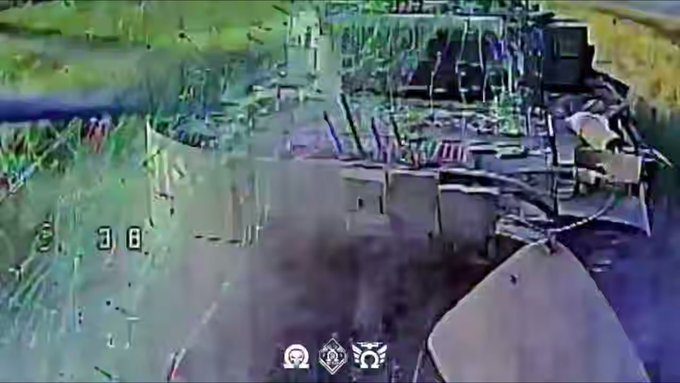
Ukraine is shooting down drones at a fast-rising rate. Ukraine's Defense Forces destroyed 40,438 Russian fixed-wing drones, or "wings", in July 2026, Ukraine's Defense Ministry reported on 11 August.
The July figures mark a defense scaling up as fast as the threat it counters. Since the start of the year, Ukraine's Defense Forces have destroyed 195,000 Russian "wings" and 66,000 copters. A counter-drone effort is growing month by month against a Russian drone campaign that has itself expanded relentlessly.
The numbers climbed across drone types
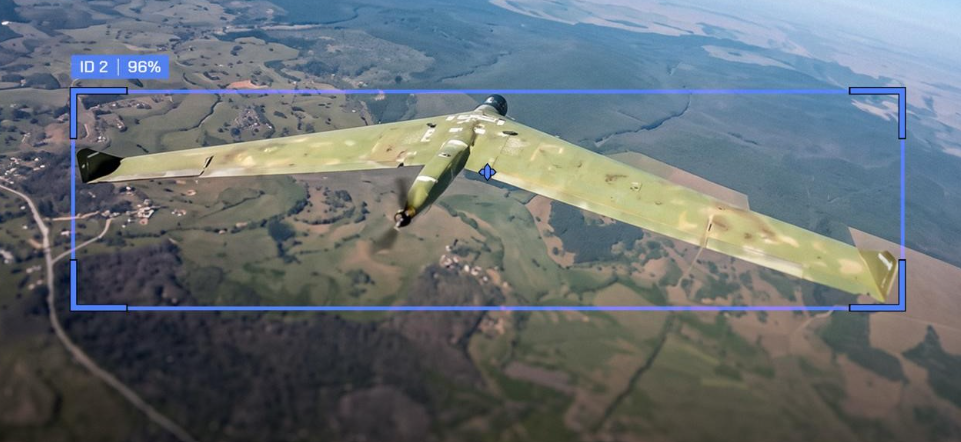
Both categories of drone kills rose sharply. Fixed-wing "wings," the category that includes long-range attack drones like Shaheds, climbed from 27,711 in May to 40,438 in July, according to the ministry.
Copter kills rose even faster in proportion. The number of destroyed copters grew 42% in a single month, from 14,071 in June to 19,945 in July. The parallel rise in both types reflects a Russian drone offensive attacking on multiple fronts at once, from deep-strike Shaheds to short-range quadcopters over the trenches, and a Ukrainian defense expanding to meet each.
DELTA confirms every kill
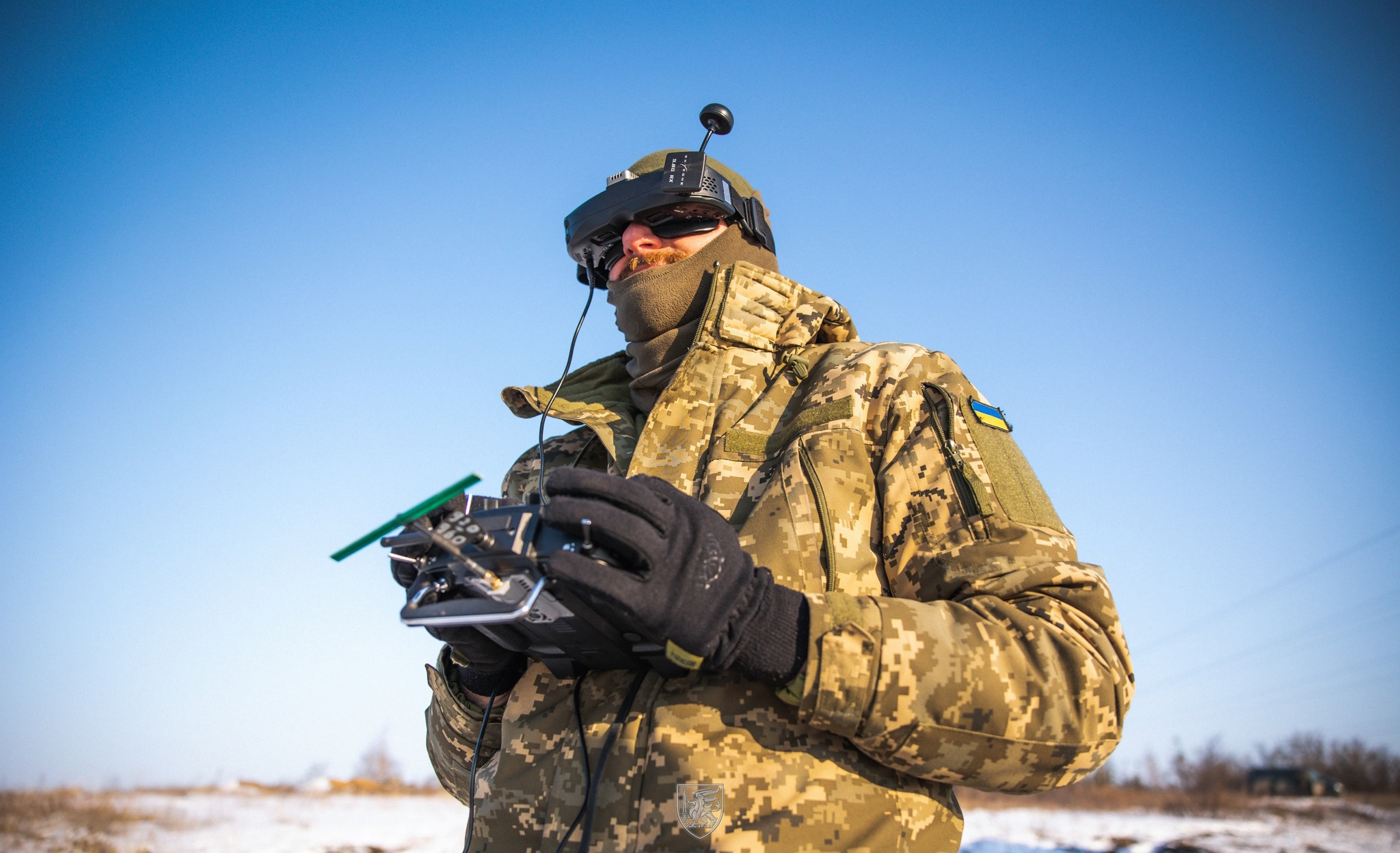
Every strike has been confirmed by the DELTA system, and video recording of the shootdowns helps identify the most effective counter-drone tools for development and scaling, the Ukrainian Defense Ministry said.
That verification matters for a claimed tally. Rather than a bare count, the numbers are tied to Ukraine's battle-management system, which logs and video-confirms each kill, the same DELTA platform whose combat data now trains Ukraine's target-detection AI.
The count is one side of the drone war
The figures capture only Ukraine's defensive half of a war fought increasingly by drones. Russia has expanded its drone production and nightly launches throughout 2026, aiming to overwhelm Ukrainian defenses with mass, and the rising Ukrainian kill counts are the answer to that escalation, not a sign it has eased.
Russian forces use the same strategy over and over to capture Ukrainian cities
Surround on the flanks, infiltrate in the middle
But that strategy requires doing both at once, and Russia lacks the infantry
Around Kramatorsk, every Ukrainian unit that holds forces a shuffle that stalls something else
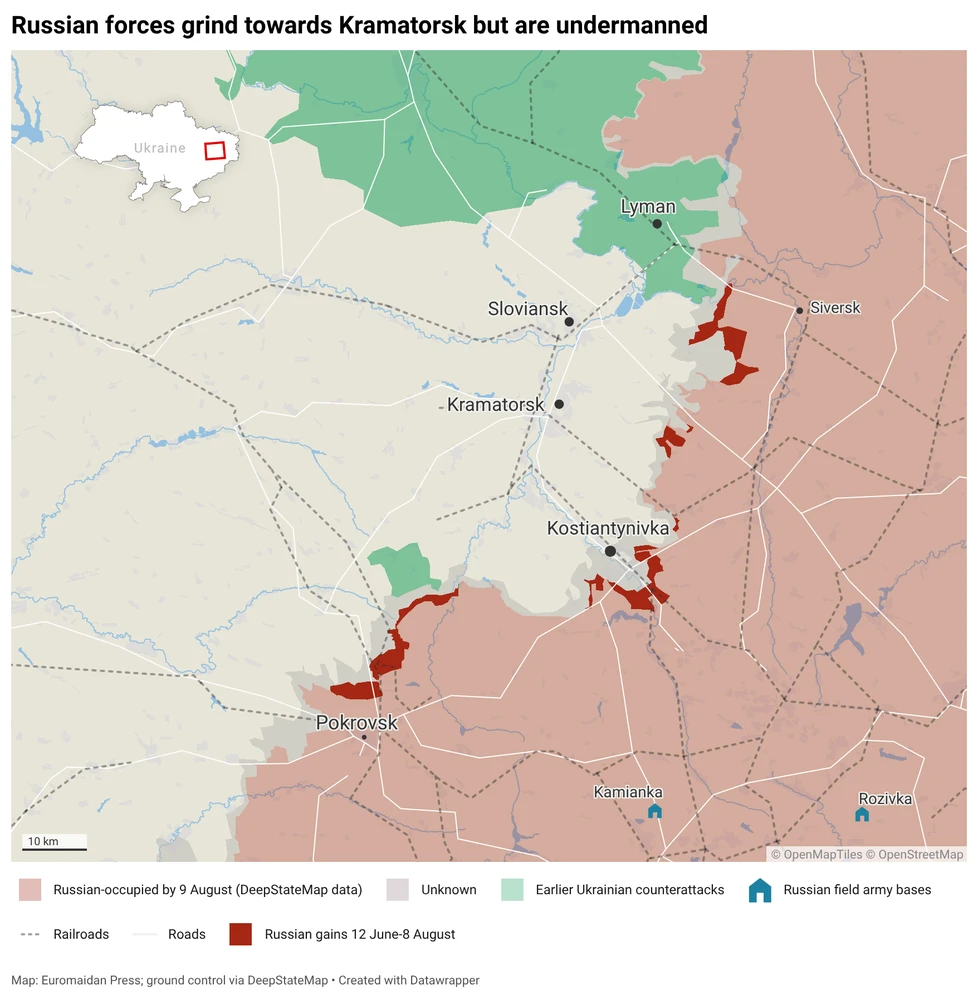
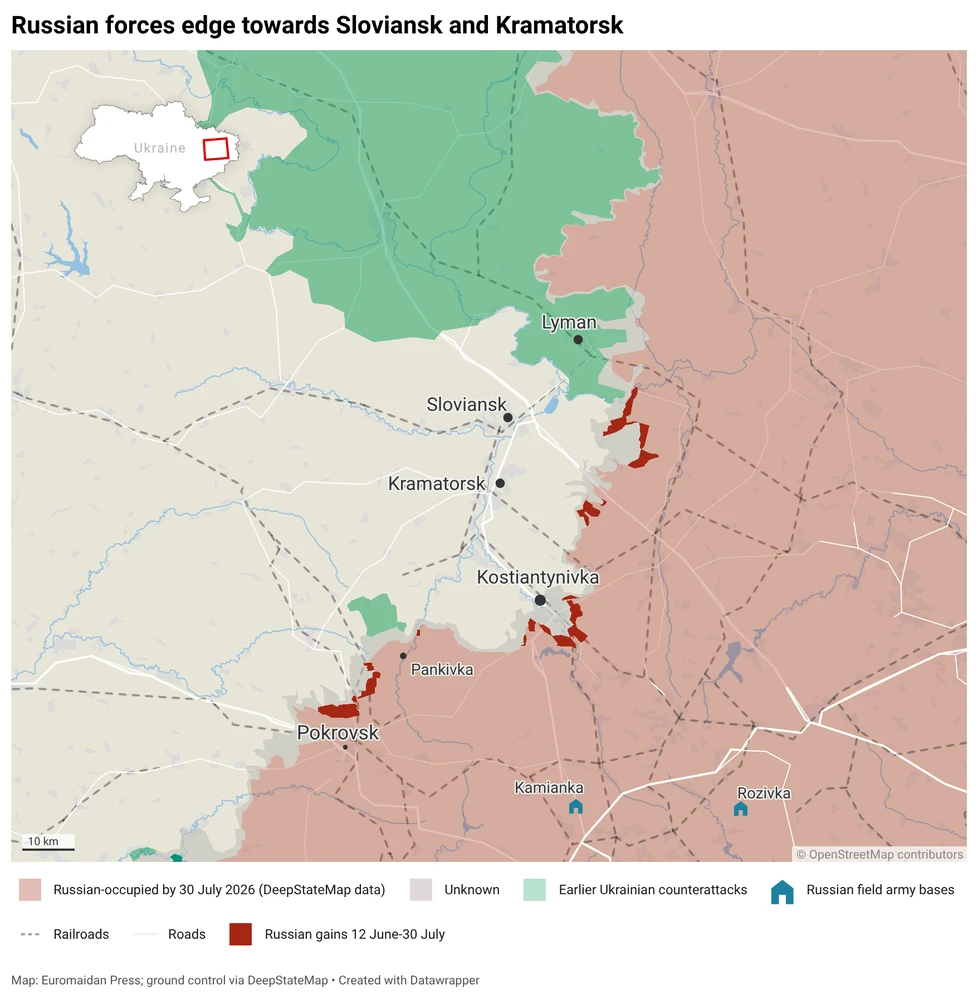
Russian troops are slowly marching toward and around Kramatorsk and Sloviansk, the last two big free cities in eastern Ukraine's Donetsk Oblast.
The Russians have a standard playbook for taking a Ukrainian city, and running it means doing two things at the same time. Along the nearly 100-km Kramatorsk front, they don't have the infantry to do both at once. Every time a Ukrainian brigade holds somewhere, the Russians have to move men to cover it—and something stalls somewhere else.
That strategy is simple in concept but difficult in practice. The idea is for Russian forces to advance along a city's under-protected flanks in order to put pressure on the main supply lines of the city's garrison. As the flank attacks squeeze the garrison's logistics, Russian infiltrators slip into the city, hoping to create a lodgement for follow-on forces.
The final assault through that lodgement comes late in the campaign, after the Ukrainians are already weakened by a lack of supplies.
Structural Deterrence
Russian offensive planning at the operational level remains disciplined on paper: groupings are sequenced, axes are assigned, objectives are staggered. What the discipline is not is well-manned. I read the shift to two- and three-man infiltration teams on… https://t.co/Py1GbXM9aR
The strategy only works when the troops on the flanks and those in the middle work together. The former squeezes. The latter infiltrates. The problem for the Russian Center Group of Forces on the Kramatorsk front is that it's not squeezing and infiltrating at the same time. That delays the overall Russian advance and buys time for Ukrainian forces to dig in, reinforce, and hope for a miracle.
"Russian offensive planning at the operational level remains disciplined," mapper and analyst Vitaly explained. But only "on paper," Vitaly added. "Groupings are sequenced, axes are assigned, objectives are staggered."
"What the discipline is not is well-manned," the mapper wrote.
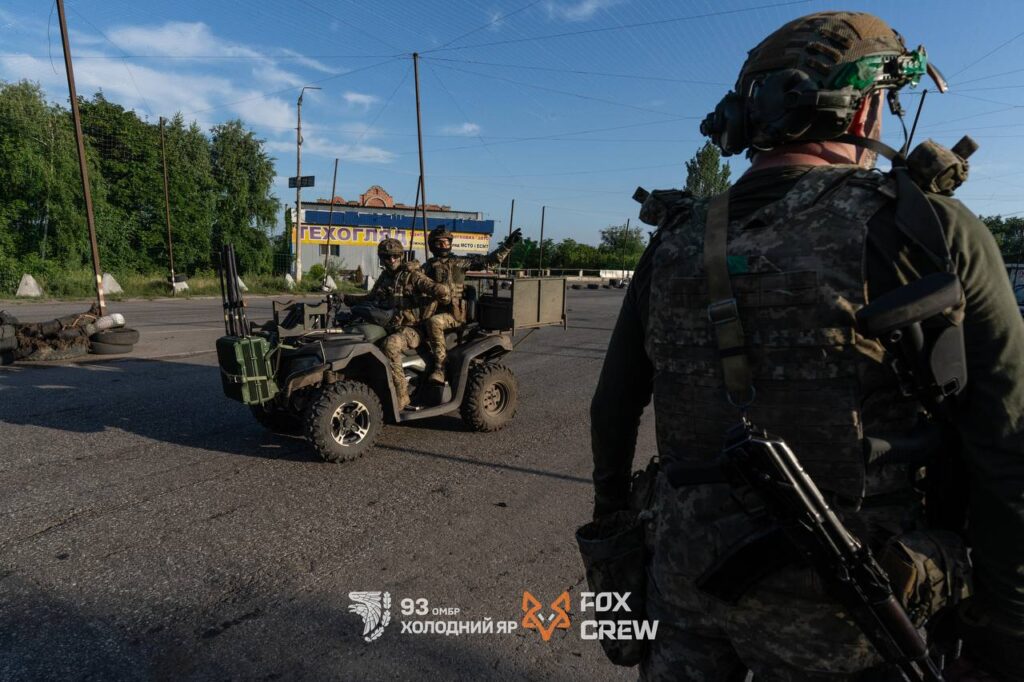
Vitaly reads one recent Russian adaptation as evidence of the shortfall rather than of cleverness. "I read the shift to two- and three-man infiltration teams on motorcycles and ATVs as less a sign of tactical innovation than of a manpower deficit that organization is straining to hide," he wrote.
Map: Euromaidan Press
Manpower shortages
Ukraine's manpower problems are well-known. Fewer observers appreciate that Russia struggles, too. Yes, the Russians still recruit around 30,000 fresh troops every month. In theory, that's enough new manpower to replace monthly losses.
But replacing casualties is not the same as resourcing a strategy. Ukraine's commander-in-chief Oleksandr Syrskyi put the Russian force in Ukraine at 721,300 at the end of June—a gain of only around 11,000 since late 2025, against Russian losses he estimated at 30,000 to 35,000 a month. Contract recruitment collapsed in the spring, falling by a third year on year, and Ukraine's foreign intelligence service counted 195,000 contract recruits by early July against an annual target of 409,000.
A Russian general, speaking anonymously to the investigative outlet IStories, put the requirement more starkly. To capture the rest of the Ukrainian-held Donbas, he said Russia would need to replace at least 55,000 to 60,000 casualties every month—roughly double what it recruits. That figure rests on a single unnamed source and should be weighed accordingly. But it describes the same gap Vitaly sees on the map.
When a Ukrainian brigade defeats one attack anywhere along the Kramatorsk front, it may compel Russian regiments to shuffle troops between units in order to quickly replace the losses. The shuffle may sap the combat power of a flanking or infiltration unit working along some other section of the front.
A weak flanking unit may not be able to keep up the pressure on enemy supply lines, perhaps imperiling the adjacent infiltration unit as it probes for the gaps in Ukrainian defenses that the flankers were supposed to help create. By the same token, weak infiltrators may find gaps in Ukrainian defenses, but fail to secure a lodgement—effectively wasting the efforts of the adjacent flankers.
Explore further
Russia is assaulting the gateway to Sloviansk. Ukraine’s 81st Brigade is holding it nearly alone
"That gap keeps producing the same effect," Vitaly explained. The Ukrainian armed forces' "ability to hold separate sections of the front independently forces Russian formations to compensate for each other's failures, and that compensation creates new stalls."
Vitaly gave a name to the effect, and was careful about what he was not claiming. "I call it structural deterrence—not deterrence in the conventional sense, and not a doctrine, but the byproduct of asking an undermanned army to keep a sequenced plan on schedule."
A byproduct is not a defense, and it holds only as long as the Ukrainians can keep producing it. That requires synchronization of their own. Supplies and reinforcements must arrive when and where they're most badly needed. Air and artillery support should shift from sector to sector depending on the urgency of the local garrisons' needs.
All that is to say, the lack of synchronization that has slowed the Russians' march on Kramatorsk could eventually speed up the Russians' march—if and when the Ukrainians are the ones struggling to synchronize.
It's worth noting that the Russians aren't advancing fast toward Kramatorsk and Sloviansk, but they are advancing—especially from the northeast.
The Russians may not be perfectly synchronized. But they're clearly synchronized enough to grind toward the last free cities in Donetsk. Just very, very slowly.
Explore further
Can Ukrainian forces save Sloviansk and Kramatorsk?
Russian forces are creeping into Mykolaivka, the gateway to Sloviansk
The Ukrainian 81st Airmobile Brigade is defending the town nearly alone
Reinforcements would have to cross a canal under Russian fire—but so would the Russians, later
For years, Russian troops probed the Ukrainian garrison at Mykolaivka in eastern Ukraine's Donetsk Oblast, sending in small teams of infiltrators for the defenders to hunt down. On 29 July, they stopped probing. "The Russians have begun an assault on Mykolaivka from the east," observer Thorkill reported, citing the local Ukrainian Telegram channel nikolaevka_online.
Russian assault groups are attacking the apartment blocks along the town's eastern edge. Mykolaivka sits 8 km east of Sloviansk, one of just two big free cities in Donetsk Oblast, and taking it is the precondition for any Russian siege of the city. "The situation is deteriorating," nikolaevka_online warned.
Mykolaivka is "the eastern gateway to Sloviansk," according to mapper Clément Molin. The Russian offensive in Donetsk aims to lay siege to and ultimately capture Sloviansk and neighboring Kramatorsk, which together are still home to nearly 100,000 people despite hundreds of thousands of others having fled.
For months, the situation on the Sloviansk front has been deteriorating
The new Chief of the General Staff of the Ukrainian Army, Mykhailo Drapaty, must respond as the first Russian units have reached approximately 10 km east of Sloviansk and Kramatorsk.
A Ukrainian garrison anchored by the 81st Airmobile Brigade has defended Mykolaivka for years. But the garrison has been struggling to interdict every team of Russian infiltrators—and now the infiltrators have company.
The sector is an exception to a mostly frozen front. Russian troops captured 106 square km of Ukrainian territory in July, according to the Blackbird Group—the fastest Russian advance since January, but a fifth of what the Russians seized in July 2025. Blackbird reads the figure as evidence Russia has largely exhausted its offensive options; in June, Russian forces lost 9 square km on net. The slow average along the 1,200 km gray zone belies much faster movement in a handful of sectors, and east of Sloviansk is one of them.
Expect a long, hard fight in and around the ruins of Mykolaivka. "It is highly unlikely that the battle for Sloviansk will begin this year, not least because the fighting in Mykolaivka is likely to be prolonged," Molin explained.
According to our data, in July the net gains of the Russian armed forces in Ukraine were approximately 106km².
This is the fastest Russian advance since January, but their gains remain extremely limited. In July of 2025 the Russians captured nearly 5 times as much territory.
The geography is difficult for both the defenders and the attackers. The Donets Canal, which abuts Mykolaivka on the west, "aids the Ukrainian defense just as much as it facilitates the Russian offensive," Molin noted. To reinforce the 81st Airmobile Brigade in and around Mykolaivka, Ukrainian troops must cross the canal while under Russian fire. "Massing troops there is a highly complex undertaking," Molin warned.
Map: Euromaidan Press
But the Russian army will face the same challenge if and when it marches through Mykolaivka. "Crossing the canal, particularly around the Sloviansk power plant and its network of waterways, will come at a very high cost, especially given the extensive fortifications the Ukrainians have built in the area over recent months," according to Molin.
In other words, the 81st Airmobile Brigade has fallback positions on the near side of the Donets Canal. If the brigade can't hold Mykolaivka, maybe it can hold the canal—and delay if not halt further Russian advances toward Sloviansk.
The Ukrainians would prefer to hold in Mykolaivka, of course. But it's looking increasingly dire. The Russians appear to be accumulating in the seasonal homes, or "dachas," on the northeastern outskirts of Mykolaivka. "It is difficult to say at this point how many Russian soldiers have infiltrated there," Thorkill wrote. "However, their very presence has forced the command of the 81st Air Assault Brigade—responsible for the city's defense—to secure with patrols."
Explore further
Can Ukrainian forces save Sloviansk and Kramatorsk?
The Ukrainian brigade is trying to build a wall of infantry and drones between the dachas and a key road intersection that can carry defenders and attackers across central Mykolaivka.
But the 81st Airmobile Brigade is outnumbered, probably badly so. For the first two years of the wider war, the brigade could count on help from the 54th Mechanized Brigade, which clung to the 81st Airmobile Brigade's right flank.
While the 54th Mechanized Brigade still registers on many maps of the gray zone, in fact it's barely there. "Various snippets of information indicate that the 54th Mechanized Brigade—longtime right-flank neighbor of the 81st Brigade—was completely withdrawn from the front between June and July 2024 and sent to the deep rear," Thorkill wrote. East of Sloviansk, "only its drone group remained."
"The unit had long been a brigade in name only," Thorkill noted. So the 81st Airmobile Brigade fights mostly alone, for now—defending the gateway to Sloviansk.
Russia's escalating strikes made July the deadliest month for Ukrainian civilians in more than three years. More civilians were killed in Ukraine in July than in any month since April 2022, driven by intensified Russian attacks using ballistic missiles and long-range drones, the UN human rights office in Ukraine reports.
The record is the human cost of a shortage of interceptors for ballistic missiles amid the US war with Iran. However, Ukrainian President Volodymyr Zelenskyy has said the cut in interceptor supplies from partners may be a political attempt to make Ukraine more compliant, a claim he made after the same overnight attack that killed at least 17 civilians, mainly in Kyiv and the surrounding region.
The month's toll came from strikes on cities
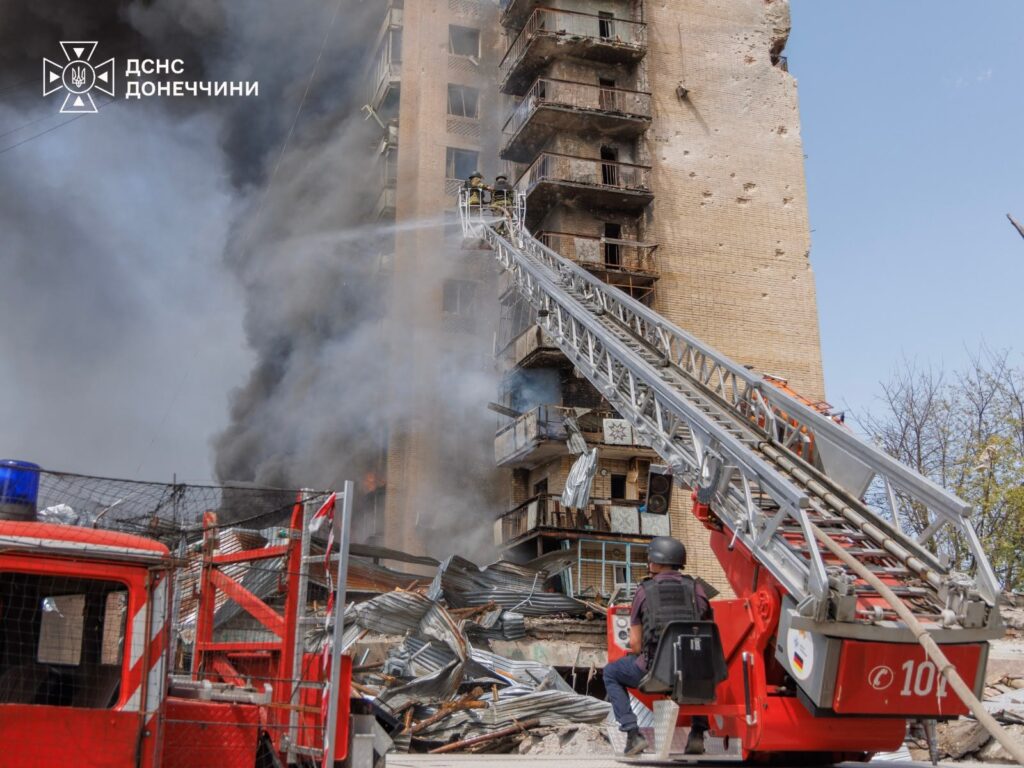
The July deaths clustered around attacks on populated areas. Beyond the Kyiv strike, air and drone attacks hit Kramatorsk, Kherson, and Zaporizhzhia, killing and wounding dozens and destroying homes, schools, public transport, water systems, and humanitarian warehouses, according to the UN.
The targets read as the fabric of civilian life. Water systems, schools, and aid depots are not military objects, and their destruction alongside the deaths is what the UN monitoring mission records when it documents the effect of Russia's long-range strikes on the civilian population.
The half-year figures show a steep climb
The July record sits atop a sharply rising trend. In the first half of 2026, the UN monitoring mission confirmed 1,396 Ukrainian civilians killed and 7,978 wounded.
Those numbers are climbing fast. The first-half toll is 37% higher than the same period in 2025 and 114% higher than the year before, as Russia intensifies its long-range strikes. Civilian deaths have more than doubled in two years, a direct measure of what the shift to massed ballistic and jet-powered drone attacks has done to the people beneath them.
Russia reported its own civilian deaths
The UN also noted casualties on the Russian side. According to Russian local authorities, Ukrainian long-range drone retaliation strikes on several Russian cities this week reportedly killed at least 12 people.
The scale is asymmetric and the cause singular: it is Russia's war on Ukraine, and its intensifying strikes on Ukrainian cities, that made July the deadliest month for civilians since the war's first spring.
Russian forces are creeping toward Sloviansk and Kramatorsk from the north
It could be months before the Russians can lay siege to Sloviansk, but it's unclear Ukrainian forces can stop them
Russian bombardment of the supply lines leading to and through the twin cities complicates the Ukrainian defense
A doomed Russian tank assault on 22 July along the southern approaches to the twin cities of Kramatorsk and Sloviansk, the last big free cities in eastern Ukraine’s Donetsk Oblast, was ultimately a sideshow. The Russians’ main effort, in their long and bloody campaign to capture all of Donetsk, is playing out in the north, not the south.
The front northeast of Sloviansk “has been the most successful for the Russian army throughout 2026,” mapper Clément Molin noted.
Russian encroachment on Sloviansk and Kramatorsk, the last free cities in Donbas. Map by Euromaidan Press
The bad news for Ukraine is that its forces in the area—parts of six brigades including the 53rd, 54th and 63rd Mechanized Brigades and the 81st Air Mobile Brigade and the 117th and 120th Territorial Defense Brigades—are “insufficient,” according to Molin.
Worse, relentless Russian bombardment of the roads and paths leading to and through Sloviansk means the Ukrainians may struggle to sustain any additional brigades in the area. Assuming there are any free brigades, of course.
For months, the situation on the Sloviansk front has been deteriorating
The new Chief of the General Staff of the Ukrainian Army, Mykhailo Drapaty, must respond as the first Russian units have reached approximately 10 km east of Sloviansk and Kramatorsk.
The bombardment is intensifying. On 31 July, a Russian warplane struck the Sloviansk Chemical Plant, deep inside the city, with a 1,500-kg KAB-1500 precision glide bomb. “The city has come under increasingly heavy attacks in recent days,” AMK Mapping noted.
But the same difficult terrain, crisscrossed by the Donets Canal and dense Ukrainian fortifications, complicates Russian attacks. There are few protected approaches toward Sloviansk from the Russians’ main bases in the ruins of Siversk, 31 km to the east. And one big town town stands between the Russians and the free city: Mykolaivka.
And the Ukrainians are bombarding Russian supply lines with the same intensity that the Russians are bombarding Ukrainian supply line. It’s for those reasons that Molin expects the Russians to eventually lay siege to Sloviansk and neighboring Kramatorsk from the northeast.
But not anytime soon. “It is highly unlikely that the battle for Sloviansk will begin this year, not least because the fighting in Mykolaivka is likely to be prolonged,” Molin predicted.
Russia attacked the Slovyansk Chemical Plant with a KAB-1500 glide-bomb a short time ago.
The slow pace of the Russian advance belies the worsening conditions in Sloviansk and Kramatorsk. Out of a combined pre-war population of around 440,000, just 90,000 people remain in the twin cities. The other 350,000 have fled.
As the cities slowly empty, all eyes turn to the tiny village of Rai-Oleksandrivka, 14 km east of Sloviansk. “This small village, seemingly insignificant at first glance, is actually of strategic importance, as the surrounding high ground overlooks the city of Sloviansk,” Molin explained.
“In recent weeks, Russian forces have been consolidating their hold on the village and the surrounding heights, even though Ukrainian troops still maintain positions in many areas,” Molin wrote.
Explore further
Russia took the cages off its newest tanks. The new Arena-M shield bought them a few minutes.
Russian forces are already relentlessly bombarding Ukrainian supply lines in the area with air-launched glide bombs. As Russian ground forces advance closer to Sloviansk and consolidate along key heights such as those around Rai-Oleksandrivka, they can begin aiming more tube artillery at the same supply lines, compounding the Ukrainians’ logistical problems.
The coming battle is neither won nor lost yet. But time is running out for Ukrainian forces to reset the battlefield in their favor.
If the Ukrainian command can prioritize the front, and push enough supplies to front-line positions, it might yet save Sloviansk and Kramatorsk. As Ukrainian Pres. Volodymyr Zelensky completes his reshuffle of key civilian and military leaders and a new command, that command’s attention “must shift to the Donbas,” Molin stressed.

 Connexion
 Army, Mykhailo Drapaty, must respond as the first Russian
  units have reached approximately 10 km east of Sloviansk and Kramatorsk.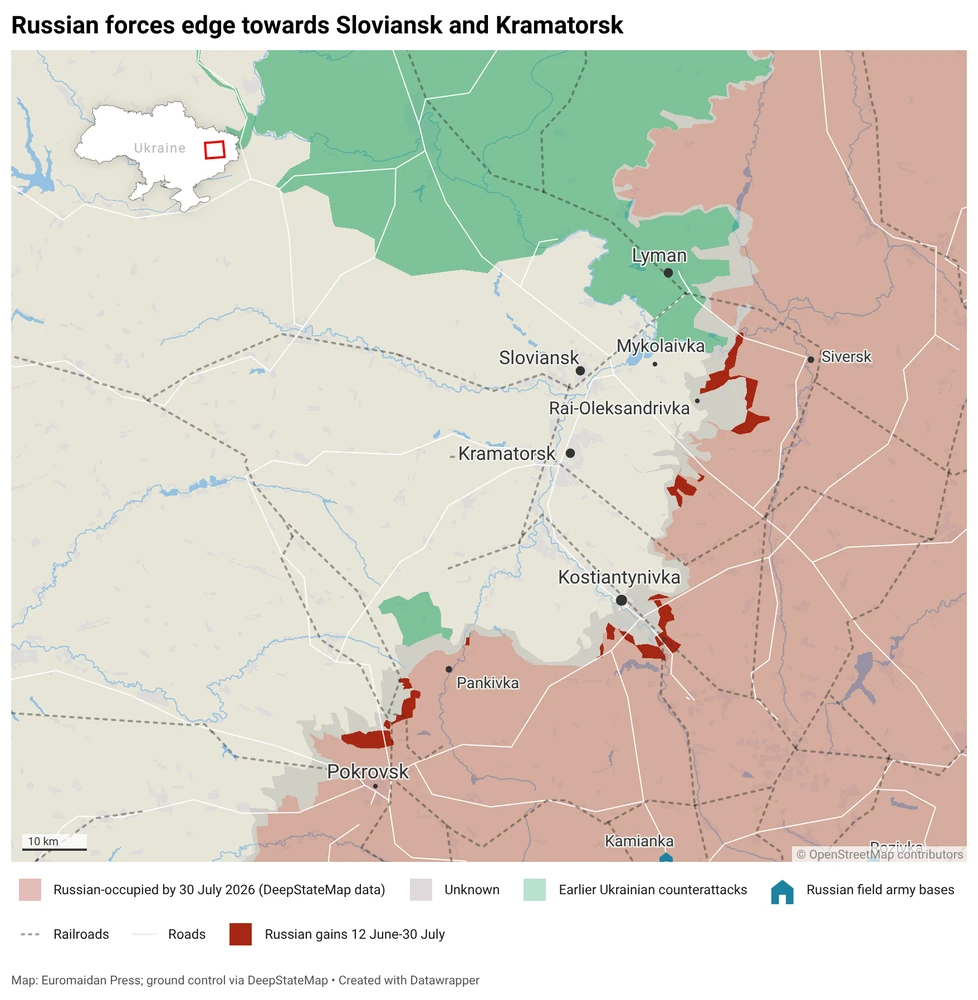
 (@AMK_Mapping_)