Admiral Brad Cooper, head of U.S. Central Command, acknowledged the difficulty of the carrier’s nearly nine-month deployment but said mental health issues were lower than on other vessels.
Admiral Brad Cooper, head of U.S. Central Command, acknowledged the difficulty of the carrier’s nearly nine-month deployment but said mental health issues were lower than on other vessels.
Senator Ruben Gallego calls carrier’s months-long deployment a ‘deep problem’ as wellbeing concerns mountDemocrats on Sunday intensified their demands for answers from the Trump administration over conditions onboard the USS Abraham Lincoln as the aircraft carrier’s nearly nine-month deployment continued fueling concern over crew morale, mental health and living conditions.Ruben Gallego, a Democratic senator from Arizona, said on Sunday that problems onboard the Lincoln had kept mounting – and h
Senator Ruben Gallego calls carrier’s months-long deployment a ‘deep problem’ as wellbeing concerns mount
Democrats on Sunday intensified their demands for answers from the Trump administration over conditions onboard the USS Abraham Lincoln as the aircraft carrier’s nearly nine-month deployment continued fueling concern over crew morale, mental health and living conditions.
Ruben Gallego, a Democratic senator from Arizona, said on Sunday that problems onboard the Lincoln had kept mounting – and he blamed the carrier’s prolonged deployment on the unresolved war that Donald Trump started in February with Iran as well as lackluster leadership in general from the Republican president’s administration.
One US sailor’s mother asks: ‘My son signed up to serve his country. But why isn’t his country serving him?’Naval families with loved ones deployed for months on US warships amid the Iran war have reacted with fury to Donald Trump and the defense secretary Pete Hegseth’s dismissal of their concerns about the extreme pressures and dire conditions they are enduring.The Guardian has talked to three naval families who have been following the physical and mental stresses bearing down on their relativ
One US sailor’s mother asks: ‘My son signed up to serve his country. But why isn’t his country serving him?’
Naval families with loved ones deployed for months on US warships amid the Iran war have reacted with fury to Donald Trump and the defense secretary Pete Hegseth’s dismissal of their concerns about the extreme pressures and dire conditions they are enduring.
The Guardian has talked to three naval families who have been following the physical and mental stresses bearing down on their relatives with mounting alarm. The families, with loved ones on board the USS Abraham Lincoln and USS Tripoli, all spoke anonymously for fear of retribution against their active duty relatives.
‘Complete unraveling’ of Trump and Republican project reflects attitude of not caring at all about governanceHe was always one step ahead. Donald Trump won the US presidency as a wildly unlikely outsider in 2016 and staged an astonishing comeback to win it again in 2024. Even his foes grudgingly called him a political savant with an intuition for exploiting grievances that left so-called experts floundering.But now they are asking if the dark genius has lost his touch. Trump is trapped in the qu
‘Complete unraveling’ of Trump and Republican project reflects attitude of not caring at all about governance
He was always one step ahead. Donald Trump won the US presidency as a wildly unlikely outsider in 2016 and staged an astonishing comeback to win it again in 2024. Even his foes grudgingly called him a political savant with an intuition for exploiting grievances that left so-called experts floundering.
But now they are asking if the dark genius has lost his touch. Trump is trapped in the quagmire of an unpopular war, obsessing over monuments in Washington and looking for a new spokesperson after his White House press secretary quit. If the 80-year-old was deliberately trying to sabotage his Republican party in November’s midterm elections, it is not clear what he would do differently.
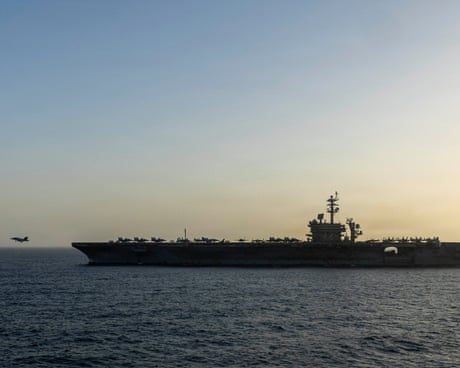
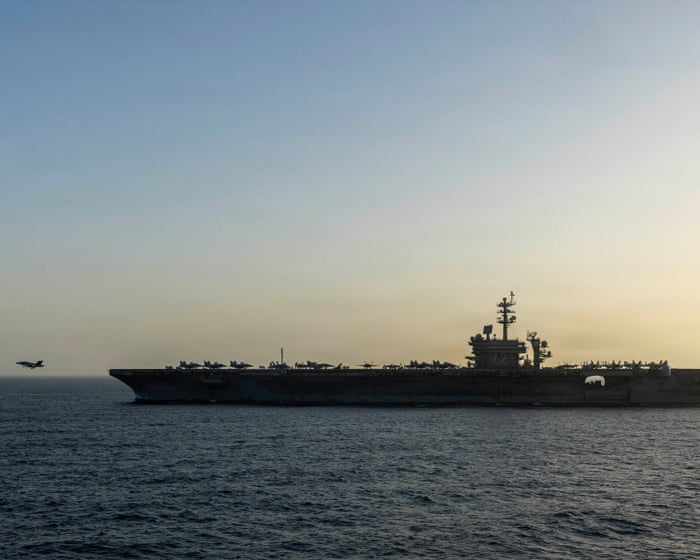
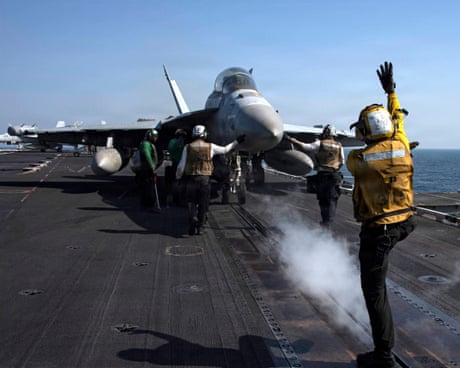
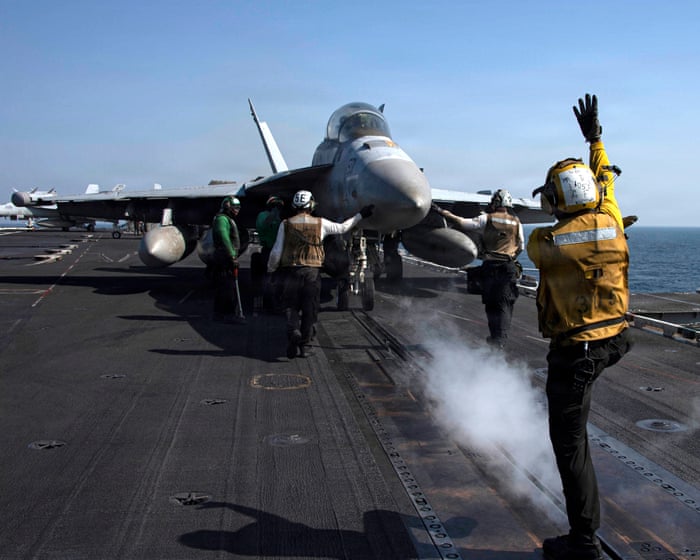
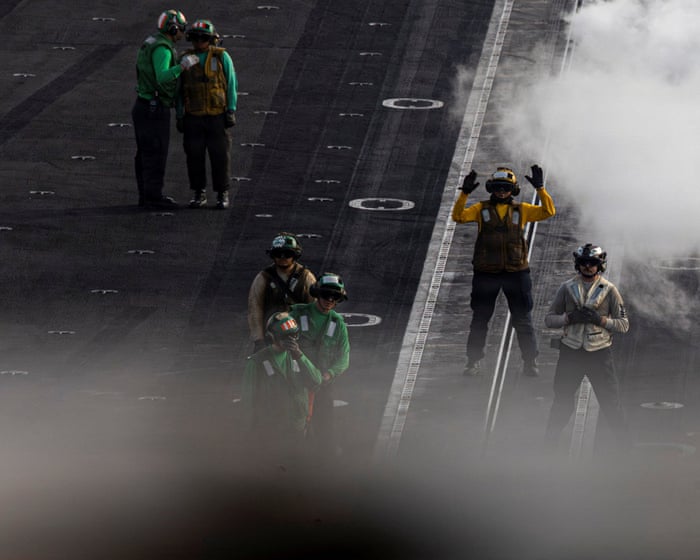
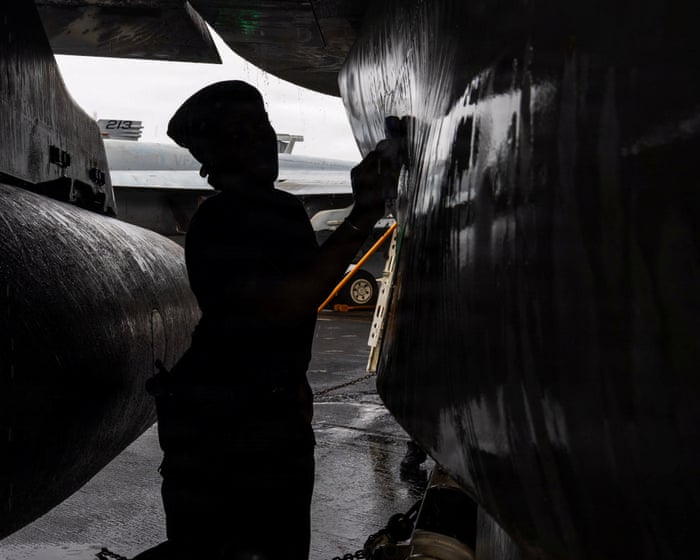
Prolonged deployment is coupled with reports of water shortages, plumbing issues and attempts to jump overboardTrump downplays concerns about sailors onboard USS Abraham Lincoln US navy veterans and military health experts are expressing concerns about the strain on sailors aboard the USS Abraham Lincoln, which has spent nearly nine months at sea supporting US operations in the Middle East, amid reports of poor living conditions and worsening mental health among its crew.The San Diego-based airc
US navy veterans and military health experts are expressing concerns about the strain on sailors aboard the USS Abraham Lincoln, which has spent nearly nine months at sea supporting US operations in the Middle East, amid reports of poor living conditions and worsening mental health among its crew.
The San Diego-based aircraft carrier left port on 21 November, originally bound for the Pacific, but was redirected to the Middle East as the US-Israel war with Iran began. It has now spent more than 250 consecutive days at sea without a significant port visit, with its deployment repeatedly extended.
The Lebanese health ministry said children were among those killed. The Israeli prime minister’s office said Hezbollah had struck first, injuring three Israeli soldiers.
The Lebanese health ministry said children were among those killed. The Israeli prime minister’s office said Hezbollah had struck first, injuring three Israeli soldiers.
The Sierra Madre, a Philippine naval ship, in the South China Sea in 2023. Last month, a Chinese Coast Guard vessel began circling the ship and confronted Philippine service members.
The Sierra Madre, a Philippine naval ship, in the South China Sea in 2023. Last month, a Chinese Coast Guard vessel began circling the ship and confronted Philippine service members.
Azad, a popular online debate program, has tackled topics that push the limits of Iran’s authoritarian system. Some question how it has remained on air.
Azad, a popular online debate program, has tackled topics that push the limits of Iran’s authoritarian system. Some question how it has remained on air.
Seriousness of remark made in New York on Friday, and whether it signaled new policy position, not clearDonald Trump has threatened to declare the strait of Hormuz as “a territory of the United States” as his administration struggles to conclude the war with Iran.During a speech at a police academy on Long Island, New York, on Friday, the US president said he would “pretty soon” designate the waterway – a crucial chokepoint for global trade, through which about a fifth of the world’s seaborne o
Seriousness of remark made in New York on Friday, and whether it signaled new policy position, not clear
Donald Trump has threatened to declare the strait of Hormuz as “a territory of the United States” as his administration struggles to conclude the war with Iran.
During a speech at a police academy on Long Island, New York, on Friday, the US president said he would “pretty soon” designate the waterway – a crucial chokepoint for global trade, through which about a fifth of the world’s seaborne oil supplies typically pass – a US territory.
The U.S.S. Abraham Lincoln in San Diego in 2021. The aircraft carrier, with a crew of about 5,000 sailors, has been at sea for more than eight and a half months.
Defense secretary said conditions on aircraft carrier deployed in support of Iran war have been ‘completely misrepresented’The US defense secretary, Pete Hegseth, insisted a wave of reports describing deteriorating conditions and mental health struggles onboard the aircraft carrier USS Abraham Lincoln “completely misrepresented” the situation, pushing back against growing congressional pressure over the ship’s record-breaking, nearly nine-month deployment.“We make sure every ship, every crew, ev
Defense secretary said conditions on aircraft carrier deployed in support of Iran war have been ‘completely misrepresented’
The US defense secretary, Pete Hegseth, insisted a wave of reports describing deteriorating conditions and mental health struggles onboard the aircraft carrier USS Abraham Lincoln “completely misrepresented” the situation, pushing back against growing congressional pressure over the ship’s record-breaking, nearly nine-month deployment.
“We make sure every ship, every crew, every captain has everything we can provide them at every single moment,” Hegseth told reporters during a visit to Panama, adding that “some deployments are longer than others” and praising sailors enduring “high seas” and “austere conditions with less port calls”.
Federal court rules administration failed to plausibly show ongoing violation of civil rights lawA US federal judge has dismissed the Trump administration’s lawsuit that claimed Harvard University failed to protect Jewish and Israeli students from harassment in the aftermath of the war in Gaza.In a ruling on Thursday morning, US district judge Richard Stearns in Boston said the administration’s lawsuit – filed in March – failed to plausibly show an ongoing violation of federal c
Federal court rules administration failed to plausibly show ongoing violation of civil rights law
A USfederal judge has dismissed the Trump administration’s lawsuit that claimed Harvard University failed to protect Jewish and Israeli students from harassment in the aftermath of the war in Gaza.
In a ruling on Thursday morning, US district judge Richard Stearns in Boston said the administration’s lawsuit – filed in March– failed to plausibly show an ongoing violation of federal civil rights law on Harvard’s campus.
Russia has ceased producing its Geran-3 jet-powered attack drone, Ukraine’s Military Intelligence (HUR) told the Ukrainian defense outlet Militarnyi. The agency estimates Russian industry now makes about 3,000 newer Geran-4 and Geran-5 drones per month.
Russia is shifting toward faster jet drones as Ukraine’s low-cost interceptors have become more effective against slower Shaheds. The Geran-4 and Geran-5 leave defenders less time to react, requiring faster interceptors
Russia has ceased producing its Geran-3 jet-powered attack drone, Ukraine’s Military Intelligence (HUR) told the Ukrainian defense outlet Militarnyi. The agency estimates Russian industry now makes about 3,000 newer Geran-4 and Geran-5 drones per month.
Russia is shifting toward faster jet drones as Ukraine’s low-cost interceptors have become more effective against slower Shaheds. The Geran-4 and Geran-5 leave defenders less time to react, requiring faster interceptors or short-range air defenses. At the reported production rate, these newer Geran models, previously used in limited numbers, could become a regular feature of Russian attacks.
HUR said Russia has established serial assembly of the two newer models at the Alabuga complex in Tatarstan, with other Russian companies supplying components. The agency also said Russia’s Defense Ministry wants to expand Alabuga’s capacity. Construction began in May. Satellite imagery showed large-scale work by early July 2026, although the purpose of the new buildings remains unknown.
From Geran-3 to newer jet drones
Russia first used Geran-3 drones in large numbers during a combined nighttime attack on Ukraine on 30 July 2025. At least eight flew alongside propeller-driven Shaheds and decoys. The model retained the Geran-2 airframe but replaced its piston engine with a Chinese Telefly JT80 turbojet. HUR gave it a speed of 300–370 kilometers per hour and a range of up to 1,000 kilometers.
In May, then-Defense Ministry adviser Serhii “Flash” Beskrestnov said Ukrainian defenses stopped 95% of incoming Shaheds during the most recent documented strike and predicted Moscow would produce more jet-powered Geran variants.
The newer Geran-4 has a more robust airframe than the Geran-3 and is designed for high-speed flight and maneuvers. It can reach 500 kilometers per hour.
The larger Geran-5 carries a roughly 90-kilogram warhead and has a stated range of up to 1,000 kilometers. HUR has said Russia may equip it with R-73 air-to-air missiles, potentially threatening aircraft sent to intercept it.
The Chinese engines that Russia itself can't build
The Geran line combines Iranian designs, Russian assembly, and imported technology. HUR described the Geran-3 as a localized version of Iran’s Shahed-238. It found 45 foreign components inside, including parts from the United States, China, Switzerland, Germany, Britain, and Japan.
Russia depends on China for the turbojet engines in newer Geran models. HUR deputy chief Vadym Skibitskyi told RBC-Ukraine that Russia remains fully dependent on Chinese turbojet engines for the Geran-4 and Geran-5. Each costs about $35,000–$40,000, he said.
A Chinese XK-F358 mesh radio recovered from a Geran-5 also helps Russian drones resist jamming. Its manufacturer remains outside the US, EU, UK, and Ukrainian sanctions, according to a review by Euromaidan Press.
Energy is cheaper than at its peak in late April, but gas is still nearly $1 a gallon more expensive than before the Iran warUS consumer prices cooled slightly in July as the annualized inflation rate dipped down to 3.4%, though prices still remain higher than levels seen before the war with Iran.Though inflation decreased 0.7 percentage points in June during a brief ceasefire between the US and Iran that brought energy prices down, consumer prices have remained elevated. Price increases hit a t
Energy is cheaper than at its peak in late April, but gas is still nearly $1 a gallon more expensive than before the Iran war
US consumer prices cooled slightly in July as the annualized inflation rate dipped down to 3.4%, though prices still remain higher than levels seen before the war with Iran.
Though inflation decreased 0.7 percentage points in June during a brief ceasefire between the US and Iran that brought energy prices down, consumer prices have remained elevated. Price increases hit a three-year high in May, with annual inflation reaching 4.2%.
It’s a great betrayal: poor communities neglected while multimillionaires peddle a global Maga agenda. How is that America first?“THE CORRUPTION IS AT LEVELS RARELY SEEN BEFORE,” Donald Trump posted on Truth Social in February 2025. He was not referring to his own administration, but to the US Agency for International Development (USAID). “CLOSE IT DOWN!” the president added.Just a few hours later USAID was in effect closed down, with most of the staff placed on indefinite administration leave.
It’s a great betrayal: poor communities neglected while multimillionaires peddle a global Maga agenda. How is that America first?
“THE CORRUPTION IS AT LEVELS RARELY SEEN BEFORE,” Donald Trump posted on Truth Social in February 2025. He was not referring to his own administration, but to the US Agency for International Development (USAID). “CLOSE IT DOWN!” the president added.
Just a few hours later USAID was in effect closed down, with most of the staff placed on indefinite administration leave. This was framed as part of Trump’s “America first” agenda. USAID, the Trump administration and his sycophants in the rightwing media had argued, was wasting taxpayers’ hard-earned money on ridiculous projects abroad instead of improving life at home. In the lead-up to the shuttering of USAID, for example, one of the most shameless lies about the agency, repeated without any evidence by the likes of Fox News, was that it was spending millions on condoms for Gaza.
In response to a threat against the jet last month, the president was clandestinely removed in a catering container. But the plane was sent into the skies anyway with government employees and reporters onboard.
In response to a threat against the jet last month, the president was clandestinely removed in a catering container. But the plane was sent into the skies anyway with government employees and reporters onboard.
The Iranian strikes that killed three U.S. soldiers in Jordan show how quickly Iran’s war-fighting skills have evolved, as the Pentagon runs low on interceptors.
The Iranian strikes that killed three U.S. soldiers in Jordan show how quickly Iran’s war-fighting skills have evolved, as the Pentagon runs low on interceptors.
Iran has become a more skilled adversary as its war against the United States has progressed, learning how to evade U.S. air defenses as it widened the battlefield to include most of the Middle East.
President Trump hid in an airport catering container and was taken to a military jet for a secret flight out of country after the NATO summit last month.
President Trump hid in an airport catering container and was taken to a military jet for a secret flight out of country after the NATO summit last month.
A spokesman for the Iranian Foreign Ministry said that talks with Oman on shipping routes in the Strait of Hormuz were “separate” from discussions to fully reopen the waterway.
A spokesman for the Iranian Foreign Ministry said that talks with Oman on shipping routes in the Strait of Hormuz were “separate” from discussions to fully reopen the waterway.
Iran is using the war in Ukraine to make its attack drones deadlier. Iran has been refining its Shahed-107 kamikaze drones based on the experience of the war in Ukraine, military analyst Oleksandr Kovalenko said.
Ukraine has become the testing ground where Iran improves the weapons, and Russia then fires at it. The Shahed-107's warheads have received additional shrapnel elements, and a detailed aerodynamic study shows a significant improvement in the drone's structure,
Iran is using the war in Ukraine to make its attack drones deadlier. Iran has been refining its Shahed-107 kamikaze drones based on the experience of the war in Ukraine, military analyst Oleksandr Kovalenko said.
Ukraine has become the testing ground where Iran improves the weapons, and Russia then fires at it. The Shahed-107's warheads have received additional shrapnel elements, and a detailed aerodynamic study shows a significant improvement in the drone's structure, Kovalenko explains.
The Shahed is being upgraded from combat experience
Kovalenko said the modifications come directly from how the drones perform in Ukraine. The warheads now carry extra fragmentation elements, increasing their lethality against people and soft targets, and the airframe's aerodynamics have been reworked.
A new loitering munition may be coming
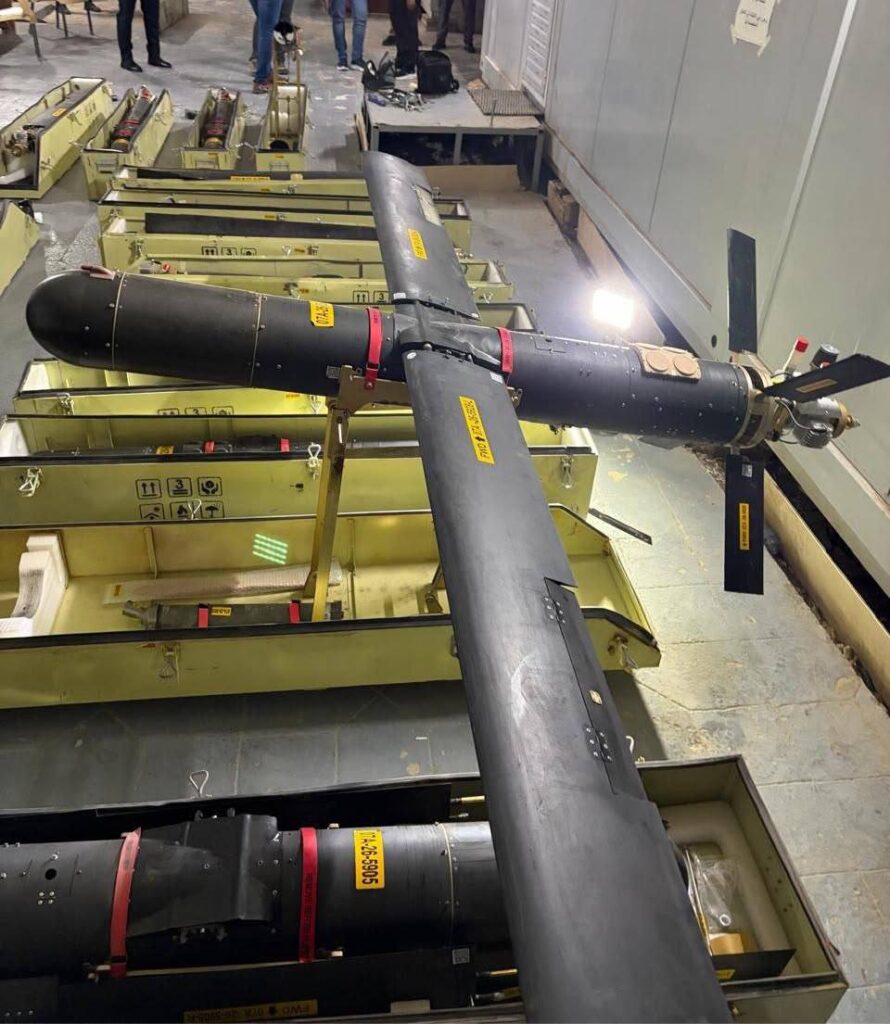
Kovalenko also warned about a weapon already appearing over Ukraine. Karar drones have recently begun reaching Ukraine, not yet on a large scale, but enough to cause some confusion in identifying the weapon. He said he would not be surprised if they appear more widely soon.
He described its specifications.
"The Karar is a loitering munition, more a flying bomb than a drone by classification, equipped with a DLE 111 gasoline engine, with a range of about 300 kilometers on a 28-liter tank and a 15-kilogram warhead," Kovalenko said.
He called it an extremely cheap means of terror for the middle rear zone.
The warning is about the rear
Kovalenko's concern is where such a weapon reaches. A cheap loitering munition with a 300-kilometer range could strike areas well behind the front that have been relatively safe, extending the threat deeper into Ukraine.
Kovalenko framed the weapon's arrival in stark terms, saying that when it appears, people should simply accept what will happen, and declining even to name the region where he expects it to appear. That is his characterization: a single analyst's warning about a weapon whose wider use he anticipates but that has not yet reached scale. EP cannot independently verify Karar's specifications or its deployment.
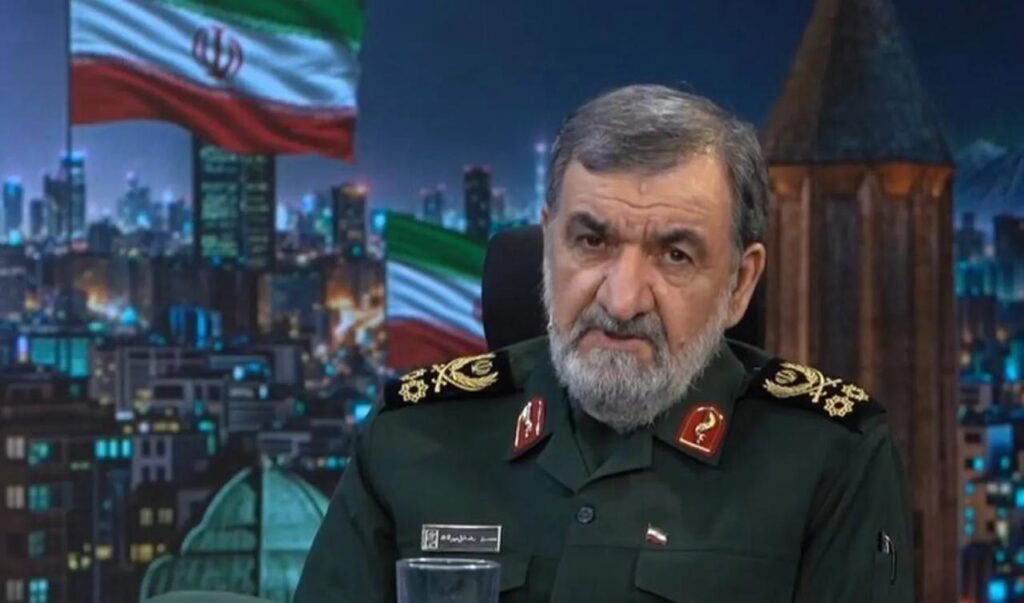
The appointment of Mohsen Rezaei, a longtime military commander, to a top security post suggests that the country’s establishment is consolidating power.
The appointment of Mohsen Rezaei, a longtime military commander, to a top security post suggests that the country’s establishment is consolidating power.
Mohsen Rezaei, an adviser to Iran’s supreme leader, Ayatollah Mojtaba Khamenei, attending a funeral ceremony for Mr. Khamenei’s father and predecessor, in Tehran last month.
The Iran war has depleted U.S. weapons stockpiles, resulting in a significant erosion of firepower. A more drawn-out Iran conflict benefits Moscow and Beijing, some analysts say.
The Iran war has depleted U.S. weapons stockpiles, resulting in a significant erosion of firepower. A more drawn-out Iran conflict benefits Moscow and Beijing, some analysts say.
Buildings targeted by airstrikes in Tehran in April. Bombing Iran burned through thousands of multimillion-dollar missiles that contain precision parts from a global web of suppliers and can take years to produce.
The head of Iran’s Supreme National Security Council said that the Strait of Hormuz would remain closed until the United States met certain conditions.
The head of Iran’s Supreme National Security Council said that the Strait of Hormuz would remain closed until the United States met certain conditions.
The inhabitants of the Chagos Islands were expelled by the British 60 years ago. Refugees were anxious to return this year, but their hopes have been caught in a morass of geopolitics.
The inhabitants of the Chagos Islands were expelled by the British 60 years ago. Refugees were anxious to return this year, but their hopes have been caught in a morass of geopolitics.
Roseline Rabouine, who was forced to leave Chagos Islands when she was 8, attending mass in Port Louis, Mauritius, last month.
Recent escalating tensions between the Iran-backed group and the Yemeni government have prompted fears that a truce in place since 2022 is nearing collapse.
Recent escalating tensions between the Iran-backed group and the Yemeni government have prompted fears that a truce in place since 2022 is nearing collapse.
As President Trump struggles to extricate the United States from the war in Iran, his promises to protesters in the country have fallen by the wayside.
As President Trump struggles to extricate the United States from the war in Iran, his promises to protesters in the country have fallen by the wayside.
Anti-government protesters in Tehran in January. Iran has executed at least 26 people in connection with the protests since President Trump made his promise.
The Iranian-backed militia said it had targeted the armed forces in two resource-rich provinces, as escalating violence in Yemen imperils a fragile truce.
The Iranian-backed militia said it had targeted the armed forces in two resource-rich provinces, as escalating violence in Yemen imperils a fragile truce.
Qatar said that draft language of a deal was being circulated, while Secretary of State Marco Rubio expressed optimism about the talks but added that nothing was final yet.
Qatar said that draft language of a deal was being circulated, while Secretary of State Marco Rubio expressed optimism about the talks but added that nothing was final yet.
Iran was prepared to carry out strikes on Ukraine after Kyiv attacked an Iranian cargo ship in the Caspian Sea last month but suspended the plan after Ukraine said the strike had been unintended, a senior adviser to Iran's supreme leader has claimed.
According to Radio Svoboda, Mohsen Rezaei, an adviser to Iran's Supreme Leader Ali Khamenei, made the remarks during an interview with Iranian state television on 3 August.
"We were ready to strike three locations in Ukr
Iran was prepared to carry out strikes on Ukraine after Kyiv attacked an Iranian cargo ship in the Caspian Sea last month but suspended the plan after Ukraine said the strike had been unintended, a senior adviser to Iran's supreme leader has claimed.
According to Radio Svoboda, Mohsen Rezaei, an adviser to Iran's Supreme Leader Ali Khamenei, made the remarks during an interview with Iranian state television on 3 August.
"We were ready to strike three locations in Ukraine, but after they said the attack was a mistake, we suspended our response to consider their claim," Rezaei said. "In any case, they will have to pay for their attack."
Ukraine had not publicly responded to Rezaei's latest comments.
Caspian Sea strike sparked diplomatic contacts
The remarks follow a Ukrainian strike on an Iranian cargo vessel in the Caspian Sea on 25 July.
Tehran said the ship was carrying civilian cargo and that an Iranian sailor was killed in the attack. Ukraine, however, said the vessel was transporting Iranian drone and missile components to Russia for use in its war against Ukraine.
Following the incident, Ukrainian Foreign Minister Andrii Sybiha said he had spoken with his Iranian counterpart, Abbas Araghchi, to prevent further escalation.
Sybiha said Ukraine's actions were directed solely at defending the country from Russian aggression and "never intended to target civilian vessels or people." He added that Russia was "the root cause of all incidents" and bore "full responsibility for all provocations and casualties."
He also urged Iran to avoid escalatory steps and end its military support for Russia's war.
I called Iran’s Foreign Minister @araghchi for a frank conversation. Diplomacy is about direct conversation, even when it’s difficult. I stressed that our goal is to avoid unnecessary escalation.
I reiterated that all of Ukraine’s actions are aimed solely at defending our…
Iran has repeatedly threatened retaliation over the Caspian Sea strike, while Kyiv has dismissed the warnings.
Military ties between Tehran and Moscow have deepened since Russia launched its full-scale invasion of Ukraine. Iran has supplied Russia with Shahed attack drones, which have become a mainstay of Moscow's long-range strikes against Ukrainian cities. Ukraine has previously argued that Iran's military assistance makes it complicit in Russia's war.
Rezaei's statement is the clearest public claim so far that Iran had considered direct military action against Ukraine before deciding against it.
President Trump cited progress in the negotiations when canceling a threatened attack on Iran over the weekend. Iran said there were no current talks with the United States.
President Trump cited progress in the negotiations when canceling a threatened attack on Iran over the weekend. Iran said there were no current talks with the United States.
Des avions de chasse américains et saoudiens ont bombardé, dans l’est de l’Irak, plusieurs bases appartenant à des groupes armés pro-iraniens.
L’Irak a de longues frontières communes avec l’Iran et avec l’Arabie saoudite.
Les frappes auraient fait au moins 20 morts et une trentaine de blessés.
L’armée américaine a présenté l’opération comme une réponse à de récentes attaques de drones iraniens.
L’Arabie saoudite accuse par ailleurs les groupes ciblés par les frappes d’avoir
La trêve qui a suivi la signature d’un protocole d’entente entre les deux pays n’a duré que 3 semaines.
Les hostilités ont repris le 7 juillet.
Les États-Unis frappent des cibles iraniennes depuis 12 jours consécutifs.
Quatre soldats américains ont été tués en Jordanie et en Irak.
Donald Trump a menacé de détruire un pont ou une centrale électrique en Iran chaque fois que l’Iran attaquera un navire dans le détroit d’Ormuz.
L’Iran a affirmé que ses forces répliqueraient en
An endless purgatory: How an exiled Iranian waits and watches
“They’re shooting smoke at protesters.”
“They broke doors.”
“They brought an armored vehicle.”
In Aarhus, Denmark, Hemad Nazari lay in bed, refreshing his phone.
It was early evening in Iran on January 8, when the messages began arriving from Rasht, the northern city where he grew up.
Nearly two hours later, another message appeared: “We are trapped in our home.”
Then the messages stopped.
For the next eight da
An endless purgatory: How an exiled Iranian waits and watches
“They’re shooting smoke at protesters.”
“They broke doors.”
“They brought an armored vehicle.”
In Aarhus, Denmark, Hemad Nazari lay in bed, refreshing his phone.
It was early evening in Iran on January 8, when the messages began arriving from Rasht, the northern city where he grew up.
Nearly two hours later, another message appeared: “We are trapped in our home.”
Then the messages stopped.
For the next eight days, Hemad heard nothing from his family.
He wasn’t the only one. Several million Iranians are part of an educated, relatively prosperous diaspora spread across the world, particularly North America and Europe, a diaspora that grew from the mass emigration of professionals and intellectuals after the 1979 Iranian revolution.
Nazari lives in Aarhus, Denmark’s second-largest city. He works for a real estate company. He’s a photographer, an active part of the local climbing community, and over the past year, he has been cycling across the world with his girlfriend.
It looks and feels like freedom. And in many ways, it is.
But Nazari hasn’t set foot in Iran for eight years. In that time, he has met his parents three times — twice in Turkey, once in Nepal.
As for now, with a nationwide internet blackout still in effect amid a flickering, faltering peace process, he can, like everyone else around the world, only watch — and wait.
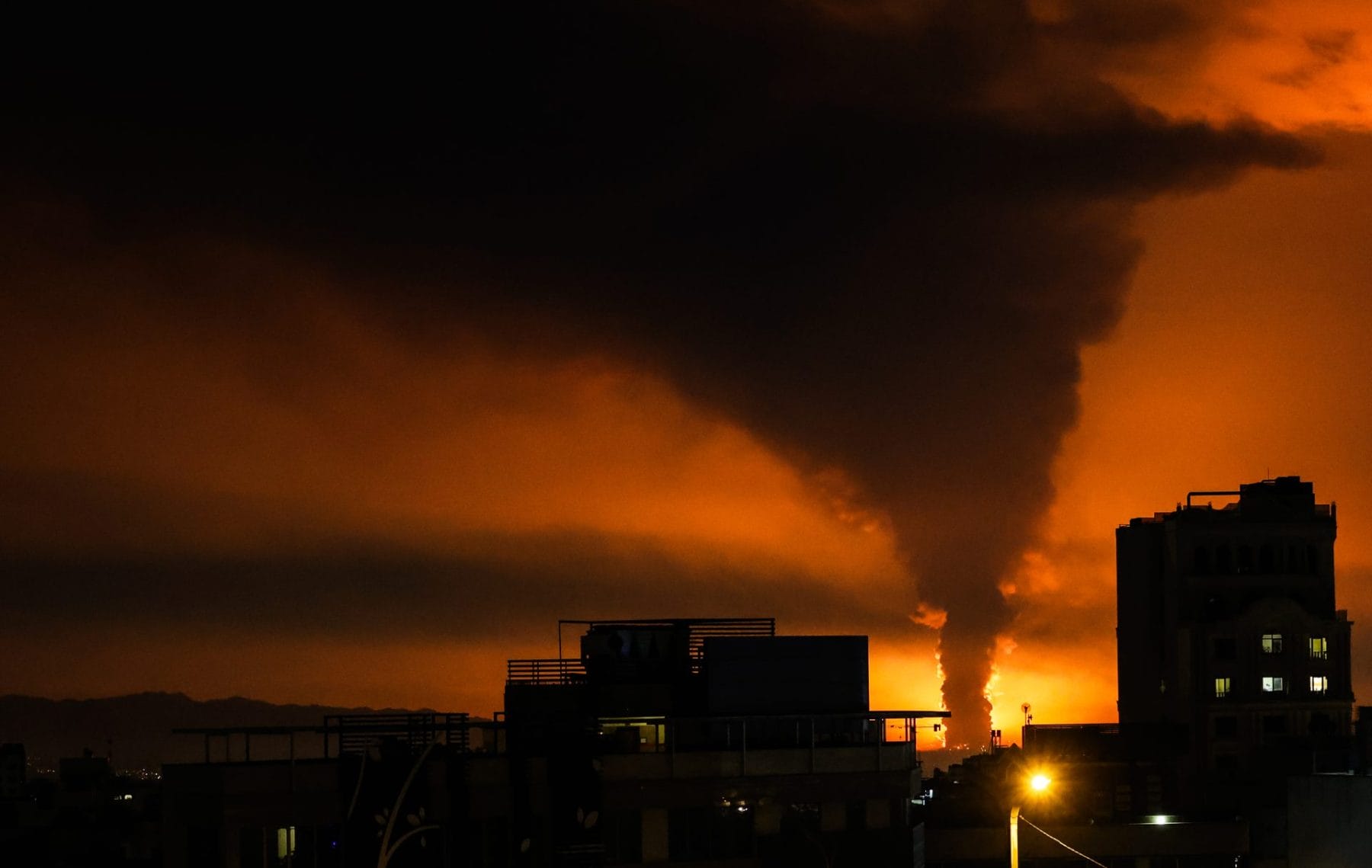
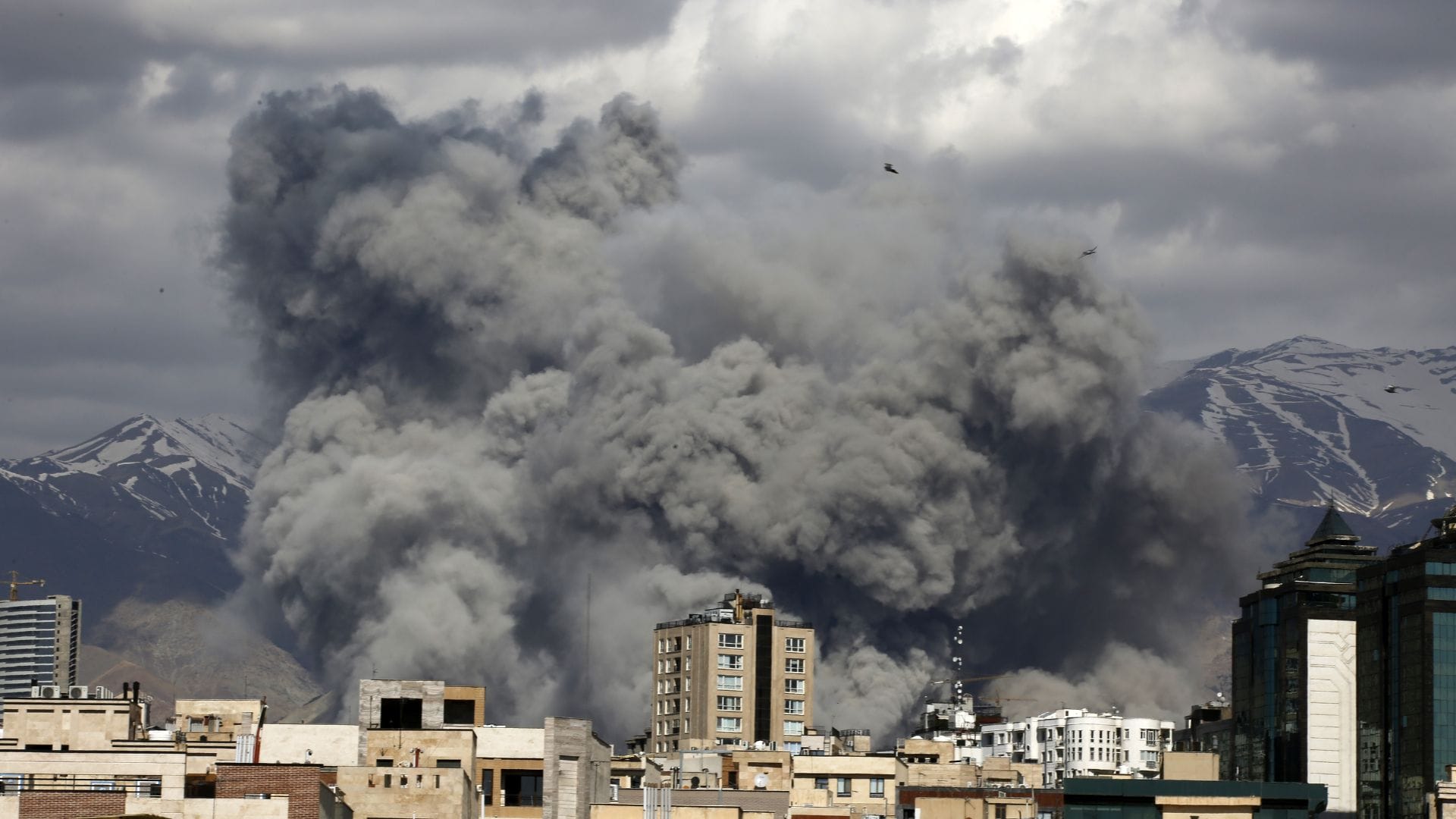
A large plume of smoke rises over Tehran after explosions were reported in the city during the night on March 07, 2026 in Tehran. Contributor/Getty Images.
Hemad Nazari left Iran in 2016, at 27. He was not at the time a political exile. He was a civil engineer with a steady job and a passport that made most borders difficult to cross. He wanted to travel. To see the world. To live somewhere else for a while.
The sanction-ridden Iranian economy was in a state of collapse. Nazari’s salary, once worth a few hundred dollars a month, shrank rapidly as the currency fell. Saving money became meaningless. Planning a future felt abstract — a concept more than a tangible goal.
So he left. He went to Vietnam first. Then Nepal, Georgia, Turkey. What began as travel, slowly turned into something more permanent.
“I didn’t leave because I thought Iran would change,” he told me. “I left because I could see that it wouldn’t.”
And it wasn’t because people were satisfied, or afraid of change. The January protests, in which many thousands of Iranians were killed, were no eruption, no sudden flaring of anger.
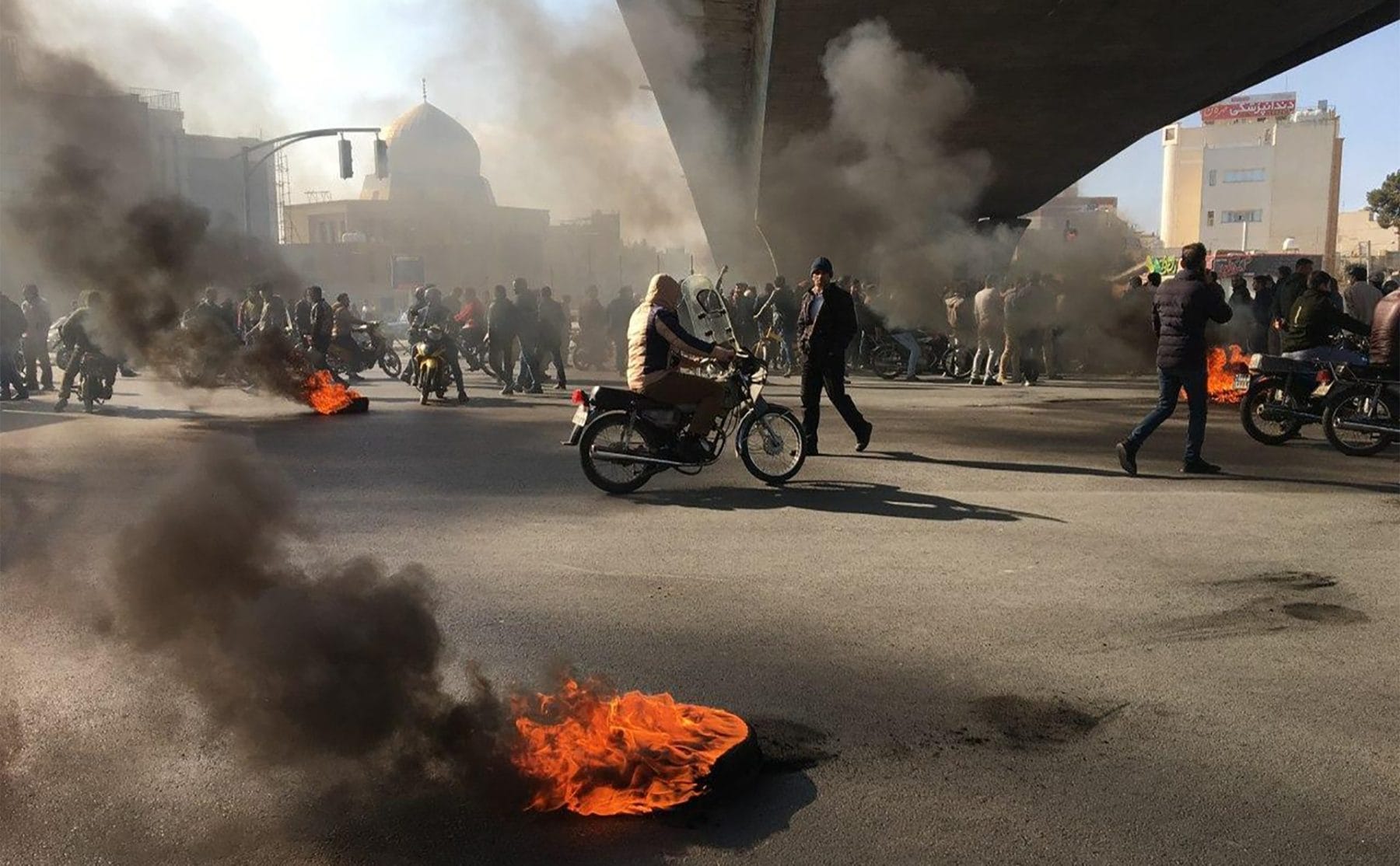
Since 2019, Iran has experienced three major waves of mass protest. That year, demonstrations sparked by a sudden rise in fuel prices spread rapidly across the country. The response was immediate. There was, typically, a near-total internet shutdown and, according to a Reuters investigation, as many as 1,500 people may have been killed during the crackdown. Human rights groups said more than 10,000 people were arrested during and after the protests, with many of them held incommunicado and at risk of being tortured or facing capital punishment.
The demonstrations ultimately collapsed under isolation and fear.
For Nazari, whose travels had enabled him to put distance between himself and his homeland, the 2019 protests made it apparent that Iran was no longer an option for him, no longer a place he wanted to call home. He was not a persona non grata. There was no letter. No summons. No official declaration. Nothing that could be quoted or appealed.
Instead, he had changed.
When the internet inside Iran is shut down, information can only escape through fragments: phone calls, short videos, people with rare access still intact. From abroad, Iranians like Nazari become intermediaries by default. He translated. Shared. Verified. Some of his posts were picked up by Persian-language television channels broadcasting from outside Iran, including BBC Persian and Iran International. Channels watched closely by the authorities.
Nazari did not think much of it at first. He was not an activist by profession. He did not belong to an organization. He was simply using his name, his language, his access. But others who had said less had been detained on arrival in Iran. Cartoonists. Writers. Ordinary social media users. Some disappeared into prison for years. Some emerged broken. Some did not emerge at all.
“You don’t need to be told,” Hemad says about knowing he couldn’t go back. “You understand.”
In early 2020, after Iranian forces shot down a Ukrainian passenger plane and initially denied responsibility, crowds returned to the streets. Once again, arrests followed. So did the silence.
Hemad Nazari’s activity increased again. His real name was public. His face was visible; he didn’t hide. It was a choice he made despite the risk not just to himself, but to his family. “If they can’t get to you,” he told me, “they get to the people around you.”
Since then, eight years have passed.
“It’s not that I chose not to go to Iran,” he says. “It’s that every time I tried, the door closed again.” He does not refer to it as exile. But, in a manner of speaking, he had been made stateless, effectively stopped from going home, from seeing his family, from resuming the life he knew.
Iranian protesters rally amid burning tires during a demonstration against an increase in gasoline prices, in the central city of Isfahan on November 16, 2019. AFP via Getty Images.
By late December 2025, daily life in Iran once again became untenable. Food prices surged, paychecks were worth less every day, and families thought only about short term survival, unable to think even a month ahead.
According to Nazari, official inflation figures — though already extremely high — failed to capture the reality on the ground. By February, he told me, the cost of basic goods rivaled those in Denmark. Wages, he said, stagnated “at around $110 or $120 a month, with many people earning much less than that.” The minimum wage, the official figures from Iran’s Supreme Labor Council show, increased by 45% and still only reached $110 per month.
“The protests were fuelled by the economy,” Hemad says. “When shopkeepers and traders joined, it was a sign that frustration had reached a boiling point. But people don’t just want better prices. They want freedom. They want new leadership.”
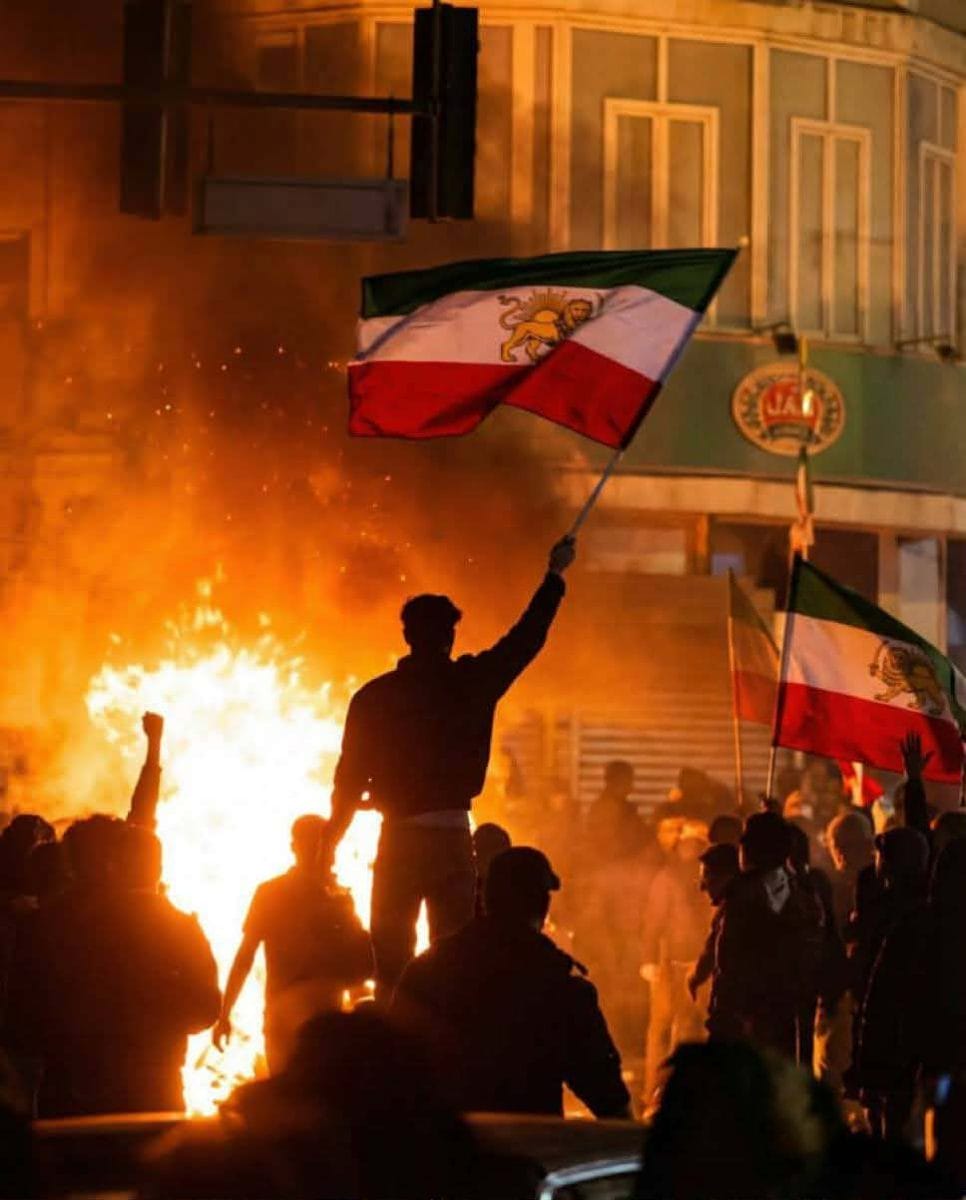
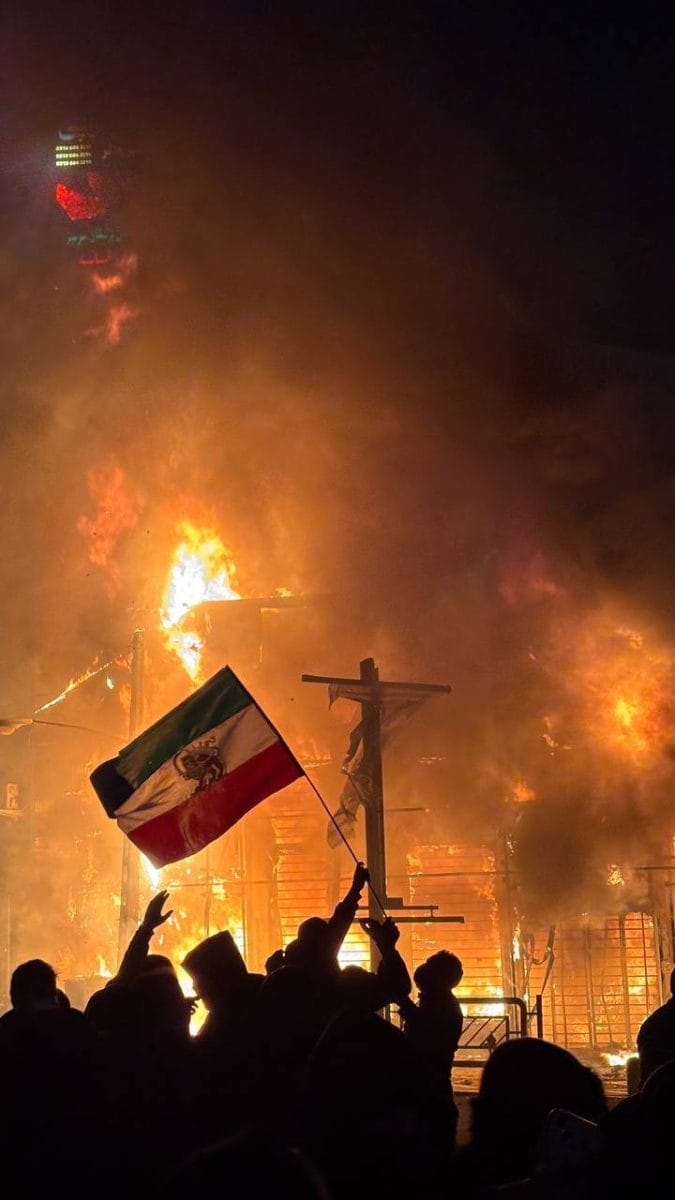
In Rasht, his hometown in northern Iran, even families with children took to the streets in protest. “In my city, a lot of mosques are gone,” he says. “They burned them down. That tells you something.” What struck Nazari most, though, was not only who was protesting, but what they were saying, what they appeared to want.
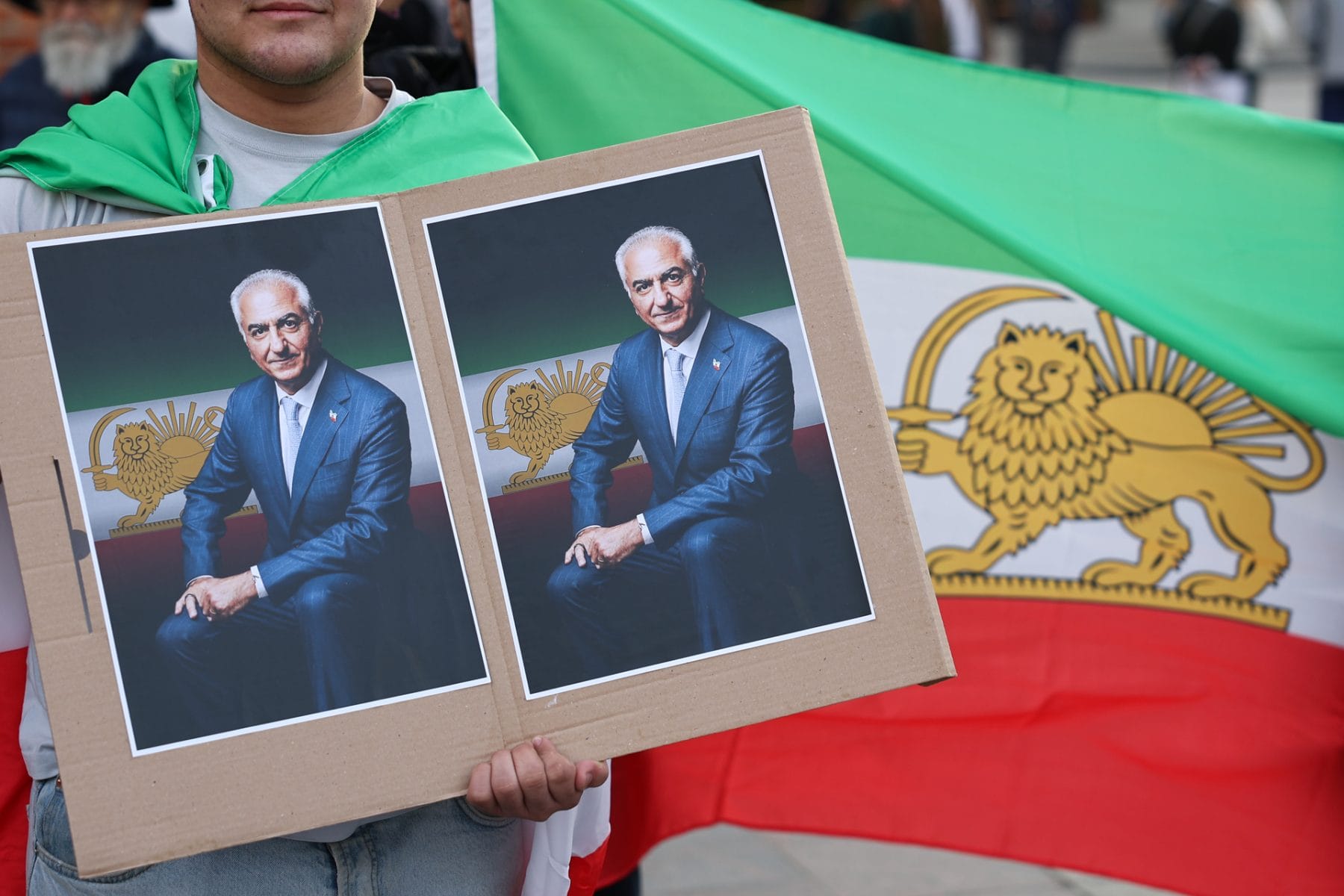
“For the first time, the main chant on the street was the name of the prince,” he told me. “The son of the former shah: Reza Pahlavi.” Nazari is quick to stress that he himself is “principally a believer in democracy.” But the chants were telling.
“For 40 years, only loyalists dared utter the name Pahlavi. Now it’s spoken openly across all layers of society,” It was not about restoring the past. Instead, suggests Nazari, “for the first time, we had a plan.” People, he says, “were asking, ‘what happens if the regime collapses?’ And for the first time, there was an answer.”
A person holds images of Reza Pahlavi during the demonstration supporting American-Israeli intervention in Iran, at Main Square in Krakow, Poland on March 8, 2026. Jakub Porzycki/NurPhoto via Getty Images.
In January, there was, as Nazari describes it, a rare sense of readiness among people he knew inside Iran. Friends who had never protested before were sending messages saying they would go. Family members spoke with a kind of cautious hope. This time, it felt different. It felt like change was possible.
Two days earlier, the son of the former shah had issued a public call for people to take to the streets on January 8 and 9 — not to follow a detailed program, but to say openly what they had long been afraid to say.
From Denmark, Nazari watched the buildup hour by hour. On January 8, as protests reached their peak, the internet went dark. The blackout was not unprecedented. Iran’s authorities had used these tactics before. Inevitably, as access disappeared, reports of mass arrests and the use of live ammunition to dispel crowds spread through the few remaining channels still connected to the outside world.
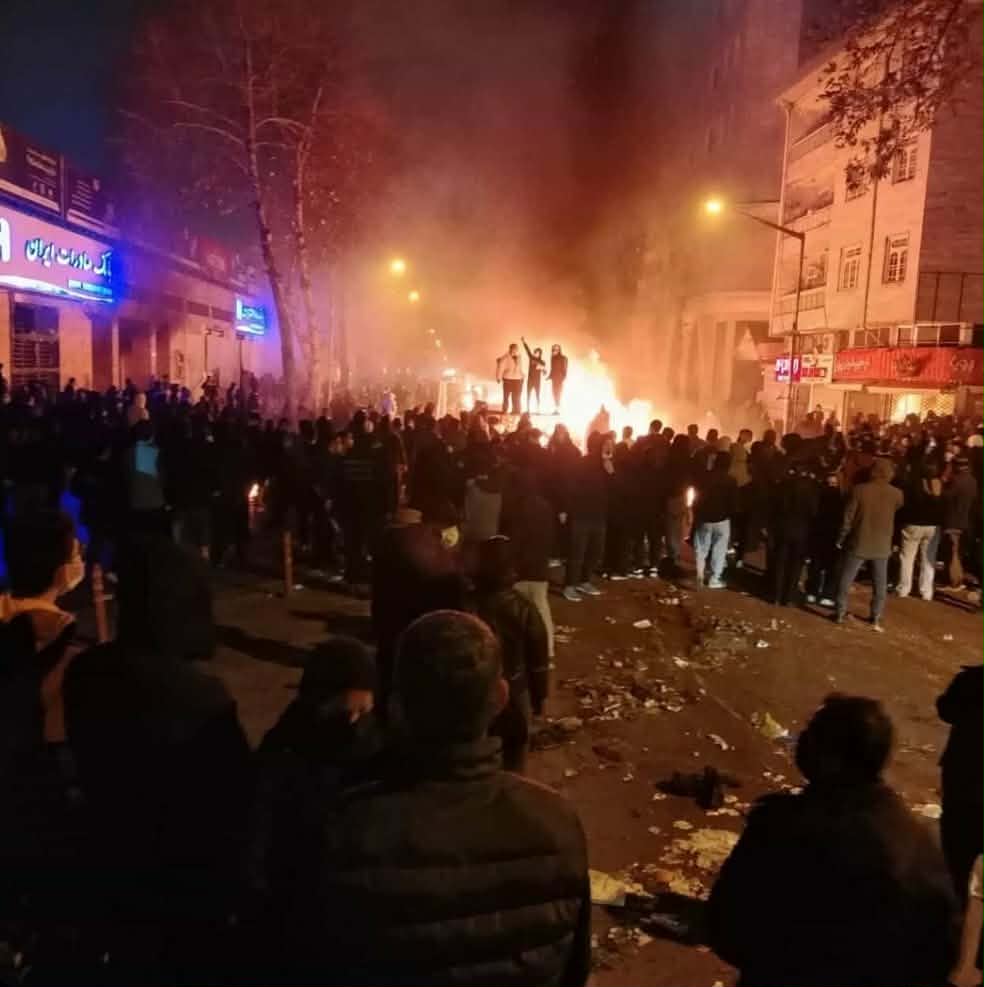
In Rasht, Nazari’s close friends sent him a video from their apartment window. Smoke drifted through the street. Shouting echoed between buildings. Gunfire cut through the noise.
Protest in Rasht. From the personal archive of Hemad Nazari.
During the blackout, Nazari continued to receive fragments of information — through people with Starlink terminals, through friends who still had limited access. By January 10, the informal network of activists and diaspora Iranians he was part of believed that at least 2,000 people had been killed.
Eventually, his mother managed to call him. “We’ve been trying to reach you,” she said. With international charges for calls piling up every second, they had been trying to call him for days. Since that brief call, contact has been sporadic. A snatched few minutes. And then silence again.
“People showed everything they had,” Nazari says of the protests. “They did what they could do.” He’s trying not to romanticize what happened in January, he tells me. He’s not saying, he insists, that the protests were heroic. “Iranians,” he says, “are just desperate.” As for Nazari, he tells me up until the U.S. and Israel attacked Iran, he was “constantly debating whether to go home.” Right now, he adds, “it could have severe consequences, potentially a death sentence.” But, he pauses, “if it comes to civil war, I will go. My life doesn’t matter.”
For years, Nazari believed — as many Iranians did — that pressure, negotiations, sanctions, or appeals to international institutions might eventually force the regime to change. Over time, that belief had eroded. By January, he says, “it was gone.” It’s why he supported the attacks on Iran by Israel and the U.S., the execution of Ayatollah Khamenei and key regime figures.
“I’ve been saying for years that they are not going to leave peacefully,” he says. “They will fight. If the choice is that many people die, including me and my family, but the country becomes free — and then in 10 years we are back as a people, it will be worth it.”
He stops himself.
“I don’t say this because I like death, I say it because I don’t see another way. There is no peaceful path left.”
Protest in Tehran. From the personal archive of Hemad Nazari
But the hope Nazari felt when Donald Trump said the United States would respond forcefully if Iranian authorities continued killing their own people, has also now died.
On February 28, when U.S. and Israeli strikes on Iranian leadership and critical infrastructure began, some diaspora Iranians gathered to celebrate what they saw as the fall of a regime figurehead they had opposed for decades. Others responded with shock, caution, or grief, warning of what might follow.
In Denmark, where roughly 25,000 people of Iranian origin live, that divide played out in public. In Aarhus, several hundred Iranian Danes gathered in the city center with flags, music and open calls for regime change. Some thanked the U.S. and Israel for the strikes. At the same time, a pro-regime memorial for Ayatollah Khamenei in Copenhagen drew around 200 participants.
Their response to U.S. actions were playing out in a country where the broad view of the U.S. as a friend and force for good in the world had shifted sharply. In Denmark, as war in Iran broke out, people were still thinking of Greenland and Trump’s threats to annex the territory. In a January 2026 poll, 60% of Danes said they now see the U.S. as an opponent rather than an ally, while just 17% still considered it an ally.
Among Iranians, inside Denmark as in the wider diaspora, this ambivalence towards the U.S. is all too familiar. In a recent article in the Dagbladet Information, Iranian-born activist Nahid Riazi warned against celebrating a war that seemed to have little to do with emancipation for Iranians.
“Who says that war brings freedom?” she wrote. “It is us who are being hit. It is our children who are being destroyed.”
Nezari says he has heard this argument. He does not dismiss it. But, he asks, “what is the alternative?” If the war stops, he says, “and the regime stays, how do you guarantee they won’t keep killing people like they have since 1979? How do you guarantee they won’t start the street executions again?”
Trump, despite the failure of the first 21 hours of peace talks in Pakistan, continues to say the war is “very close to over,” that the Iranian government wants to make a deal. A deal, presumably, that enables them to stay in power.
The Islamic Republic may have been dealt a devastating blow, but it remains intact. Its leadership structure has shifted but not collapsed. To Nazari, that does not show resilience so much as the nature of the system itself.
He rejects the idea that the Islamic Republic functions like a government in any conventional sense. It behaves, he says, more like a cartel or an armed network — something held together not by institutions, but by force and succession. Too many powerful men remain alive, still able to operate. And a system like this, he argues, does not surrender because its center has been hit. It keeps going until every center is removed.
“Not until all the heads are cut off,” he says.
But U.S. attempts to bully the world into joining a war where the goals remain so varied and nebulous have been unsuccessful. The popularity of the war inside the U.S., even among Trump supporters, is low. The uncomfortable question now is what comes next — and whether anything has truly changed.
Still, Nazari argues that the current state of purgatory, in which the war is neither ongoing nor over, is not evidence of failure, but of what was always going to happen.
“We were not living in Iran,” he says. “We were living in a military compound with cities in between.” Even if negotiations resume, he believes something irreversible has already happened. The fact that the regime’s leaders now have to hide underground means, to him, that there is no real return to the old order.
“There’s no going back to how it was,” he says. But for now, Nazari is still in Denmark. His family is still in Iran. He still holds his phone close, hoping for news. Any news. Like Iranian exiles everywhere, and like the war itself, he is trapped in stasis, caught between distance and a sense of responsibility to his homeland — deeply involved, fundamentally powerless, yet unable to look away.
The Age of Exile
This story is part of our Age of Exile series, which explores how displacement has evolved from historical punishment into a defining condition of our time—one that reveals profound transformations in how we construct identity, maintain community, and exercise power across borders. In an era where digital connection enables presence without physical proximity, exile has become more complex, more global, and more central to understanding our world. Explore The Age of Exile series
As the Iran war pushes oil prices over $100 a barrel, and ships are attacked and mines are being laid in the Strait of Hormuz, a taboo has been broken and nuclear energy is back in fashion. European Commission president Ursula von der Leyen acknowledged that “the current Middle East crisis is a stark reminder” that it was “a strategic mistake for Europe to turn its back on” nuclear energy.
She was speaking at an International Atomic Agency summit hosted by France. Just days before the summit
As the Iran war pushes oil prices over $100 a barrel, and ships are attacked and mines are being laid in the Strait of Hormuz, a taboo has been broken and nuclear energy is back in fashion. European Commission president Ursula von der Leyen acknowledged that “the current Middle East crisis is a stark reminder” that it was “a strategic mistake for Europe to turn its back on” nuclear energy.
She was speaking at an International Atomic Agency summit hosted by France. Just days before the summit, French president Emanuel Macron spoke — a nuclear submarine looming behind him — of the need to increase the country’s stockpile of nuclear warheads for the first time in several decades. “In this dangerous and uncertain world,” Macron said, “you have to be feared if you want to be free.”
In February, the ‘New START treaty’, a mutual agreement between Russia and the U.S. to reduce and limit their nuclear arsenal, officially expired. The U.S. said China had conducted secret tests and that Beijing had to be part of any future non-proliferation agreement. For its part, the Chinese accused the U.S. government of seeking to mask its own expansionist ambitions. In the wake of the Iran war, started apparently because the Iranian regime was just days away from securing a bomb, other countries have spoken openly of their nuclear ambitions. After the start of the Iran war, North Korean leader Kim Jong Un spoke pointedly about preparing a nuclear-ready navy while inspecting a new destroyer and observing the testing of nuclear-capable cruise missiles. Even Polish prime minister Donald Tusk said Poland “will not want to be passive when it comes to nuclear security in a military context.”
On X, Tusk posted that Poland is in talks with France about joining its nuclear deterrence program. “We are arming together with our friends,” he wrote, “so that our enemies will never dare to attack us.” France is the only nuclear-capable European country, its systems (unlike the UK’s) completely independent of the U.S. and its new deterrence framework will include collaborations with Germany, Poland, Greece, Sweden, Denmark, the Netherlands and Belgium. Macron is calling France’s new strategy “advance deterrence,” a willingness to spread French nuclear armaments across the continent. A senior Pentagon official said the U.S. would “obviously at a minimum strenuously oppose” European countries seeking to acquire nuclear weapons. The U.S., as part of a NATO agreement, already deploys over 100 nuclear weapons in Europe — in Germany, Belgium, Italy, the Netherlands, and Turkey.
Europe’s anti-nuclear tradition grew out of grassroots movements in the 1970s. In West Germany, protests against a planned nuclear plant in the small wine-growing town of Wyhl began when local farmers feared pollution would destroy their land and crops. By the 1980s, millions of Europeans were protesting nuclear weapons and the deployment of NATO missiles across the continent, bringing nuclear security debates into the public arena and pushing governments toward disarmament efforts. The political impact of those protests were long-lasting. Across Europe, nuclear energy programs were curtailed or abandoned entirely. Denmark banned nuclear power plants in 1985, Germany shut down its last nuclear reactors in 2023, and several countries imposed strict limits on nuclear development. Nuclear technology, whether for energy or weapons, remained politically toxic in much of Europe. But, as Denmark’s Mette Frederiksen said European deterrence “is necessary because the military threat from Russia is expected to increase,” and its reliance on U.S. military support can arguably no longer be taken for granted.
At the Paris summit, China, Brazil, Belgium and Italy all signed up to a pledge to triple global nuclear capacity by 2050. South Africa signed the pledge earlier this month. The war in Iran has once again made clear that the world must wean itself off fossil fuels. The U.S. — which imposed additional tariffs on India for buying Russian oil and thus helping to finance the continuation of the war in Ukraine — has, since the start of the attack on Iran, told India it can continue to buy Russian oil. Delhi promptly bought 30 million barrels of Russian crude oil. But this month India also signed a deal with Canada to receive uranium to expand its nuclear energy program. But in 1974, Canada provided India with nuclear technology for peaceful uses that were promptly put towards the building of nuclear weapons. Nuclear collaborations between the two countries were suspended for decades. It’s not a coincidence that those ties are once again being revived in the current geopolitical context. A growing clamor for nuclear energy has clear proliferation risks.
While France has been talking about greater nuclear deterrence, most European states are speaking about a revival of nuclear energy as an alternative to fossil fuels and as a means to achieve climate goals. The vast energy requirements of AI and data centres is also prompting nations to adopt an “atoms for algorithms” strategy, to be, as Macron said, “at the heart of the artificial intelligence challenge.” But to talk about energy alone is to ignore the appeal nuclear deterrence has for nation states trying to navigate dangerous geopolitical straits. Iran was attacked ostensibly because it was on the verge of having a bomb. Favored nations such as Saudi Arabia are able to sign nuclear pacts that remove non-proliferation guardrails, but the actions of the U.S. and Israel in Iran will make the bomb attractive to many more as a national security strategy.
A version of this story was published in this week’s Coda Currents newsletter. Sign up here.
Between them, the United States and Israel struck more than 2,000 targets within the first 24 hours of their war with Iran.
For even the largest militaries, it is an almost impossible task to identify, select and then precisely locate such a high volume of targets. But the U.S. military had some help. Claude, the “next generation AI assistant” built by Anthropic, was used in the planning of ‘Operation Epic Fury’. This, even though the Department of War recently labeled Anthropic a “supply cha
Between them, the United States and Israel struck more than 2,000 targets within the first 24 hours of their war with Iran.
For even the largest militaries, it is an almost impossible task to identify, select and then precisely locate such a high volume of targets. But the U.S. military had some help. Claude, the “next generation AI assistant” built by Anthropic, was used in the planning of ‘Operation Epic Fury’. This, even though the Department of War recently labeled Anthropic a “supply chain risk”.
Anthropic is one of the world’s leading AI companies. Together with Palantir, another Big Tech company, it has been working since 2024 with the Pentagon to embed its systems in military decision-making – creating what is arguably the operating platform of present-day U.S. warfare and intelligence. Even though secretary of defense Pete Hegseth said the company “delivered a master class in arrogance and betrayal” and that the government would “cease all use of Anthropic's technology,” the company is too integrated into modern U.S. warfare for it not to be essential to the U.S. attack on Iran. The question might be not whether companies like Anthropic can ringfence their tech but whether the Pentagon might just commandeer it.
Craig Jones, an academic who studies automated kill chains at the University of Newcastle, has told reporters that “the AI machine is making recommendations for what to target, which is actually much quicker in some ways than the speed of thought.” Similar AI systems have been used by Israel to coordinate its bombing campaign in Gaza, which is among the most destructive in human history.
Among the first hits in the United States and Israel’s aerial bombardment of Iran was the Shajarah Tayyebeh primary school for girls, in the southern town of Minab. It was a Saturday morning, and school was in session. According to Iranian state media, at least 165 people were killed, mostly young girls between the ages of seven and 12. Another 96 were severely injured. Eyewitness and open source intelligence reports corroborate the claims of mass civilian casualties. Both Iran and Israel have denied responsibility. The United States has said it is “looking into” allegations that the school was destroyed by one of its missiles. Maybe, given the volume of the bombardment, they’ve lost track.
It is too soon to know why the school was targeted – or whether it was an error. Either way, the U.S. military’s reliance on AI raises difficult questions.
AIs get things wrong all the time. Maybe it’s an extra finger in an AI-generated image, or a ‘hallucinated’ reference in a research report. Or, maybe, an algorithm sends a missile to the wrong address. That’s why Anthropic CEO Dario Amodei has said that weapons “that take humans out of the loop entirely and automate selecting and engaging targets” are simply not reliable enough. That position — along with Anthropic’s refusal to allow Claude to be used for mass domestic surveillance (although they are just fine with foreignsurveillance) — led to the Pentagon cancelling a $200-million contract with the company on Friday, the day before the attacks on Iran began. The Department of War immediately signed a new deal, minus any ethical guardrails, with OpenAI.
Anthropic’s confrontation with the Pentagon has burnished its reputation as an “ethical” AI company. But it may have found its ethical backbone too late. Critics argue that even within Anthropic’s “red lines”, there is enormous potential for abuse, while a “human in the loop” does not necessarily prevent mistakes — raising questions about who, exactly, is responsible when these mistakes result in fatalities. Francesca Albanese, the United Nations special rapporteur for Palestine, accused Amazon, Google and Microsoft in a 2025 of being “complicit in genocide” for providing cloud storage systems to the Israeli military. Anthropic’s integration into the U.S. military has been much deeper.
While Israel and the U.S. are waging an AI-powered war, Iran is responding with a technological revolution of its own. The Islamic Republic has pioneered the production of low-cost one-way attack drones, most notably the Shahed-136, which costs just $34,000 to produce and as much as $4 million to shoot down. These are battle-tested: Russia has launched an estimated 57,000 Shahed-type drones in its war against Ukraine. Despite U.S. reliance on its own high-tech AI-powered systems, an American version of the Shahed also made its debut, alongside Claude, in the attack on Iran.
In response, Iran has aimed more than 1000 drones at neighboring Gulf states since the war broke out on Saturday. Hundreds have been shot down, but even the most sophisticated air defences struggle with this sheer volume, and dozens have struck their targets, threatening to prolong this war and cause more damage to U.S. allies than anticipated. It is significant that these targets included at least three Amazon data centers in Dubai and Bahrain. Just last month, Amazon announced that it was making Anthropic’s Claude available to its Middle Eastern customers. Claude experienced two global outages this week — it is not clear if these were related to the data center attacks.
Tech evangelists promise that artificial intelligence will, one day, cure cancer, end poverty and greatly increase our quality of life. But the new technology’s most obvious impact has been on warfare. For those with access to them, AI systems like Claude make it dramatically easier to bomb hundreds of targets at the same time — and much harder to figure out who is accountable when something goes wrong. On Truth Social, Donald Trump — who has promised to stop wars, not start them — posted approvingly that technology and munitions now mean Wars “can be fought ‘forever,’ and very successfully.”
As the bombing of Iran continues, we are not far from a time when AI not only parses data to select targets, it actually chooses when to pull the trigger. And advanced AI models have far fewer qualms, for instance, about deploying nuclear weapons than humans faced with similar scenarios. One day, when — if — war crimes investigators are able to pin down exactly who is responsible for killing dozens of young girls in Minab, tech bosses may find themselves implicated alongside military and political leaders. “The AI did it” can’t be their defense.
A version of this story was published in this week’s Coda Currents newsletter. Sign up here.

 Connexion





























 (@andrii_sybiha)