Vue normale

  • ✇Euromaidan Press
  • Two Russian refineries burn – Orsk hit by drones 1,500 km out, Komsomolsk ablaze 6,500 km east
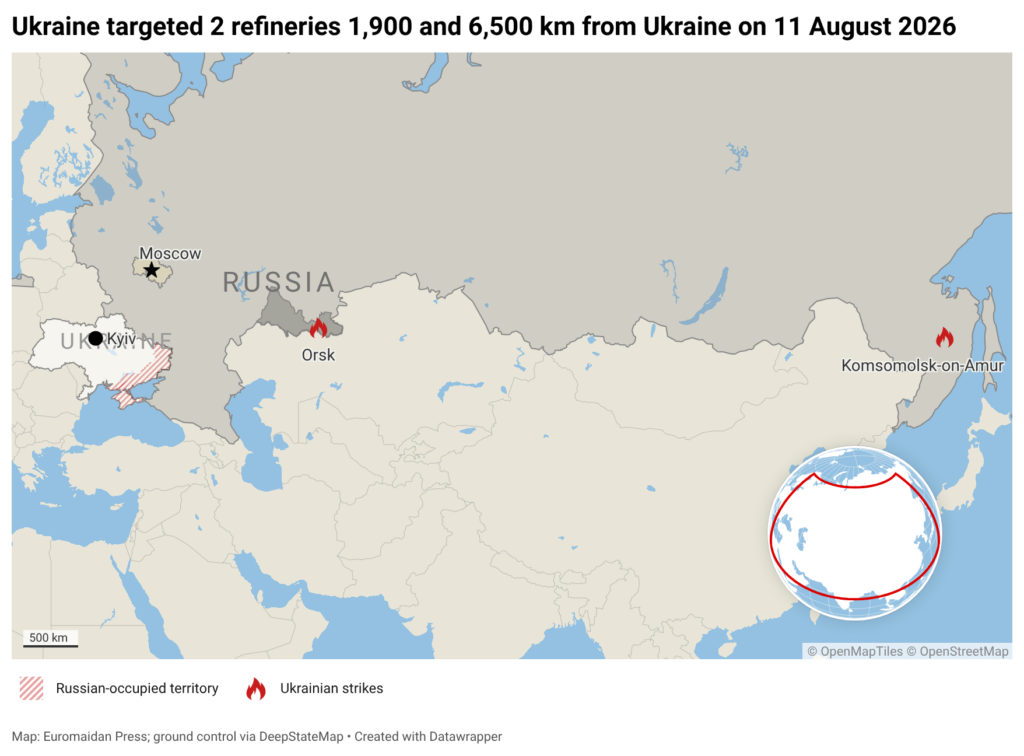
    Two Russian oil refineries caught fire on 11 August, but the two incidents tell very different stories. In Orsk, in Orenburg Oblast, drones sparked a blaze that Ukrainian monitoring channels quickly linked to Kyiv's long-range campaign. Meanwhile, thousands of kilometers farther east, a Rosneft plant in Komsomolsk-on-Amur burned for reasons that remain unexplained. A drone strike deep in Orenburg Oblast Early on 11 August, residents of Orsk reported explosion
     

Two Russian refineries burn – Orsk hit by drones 1,500 km out, Komsomolsk ablaze 6,500 km east

11 août 2026 à 05:55

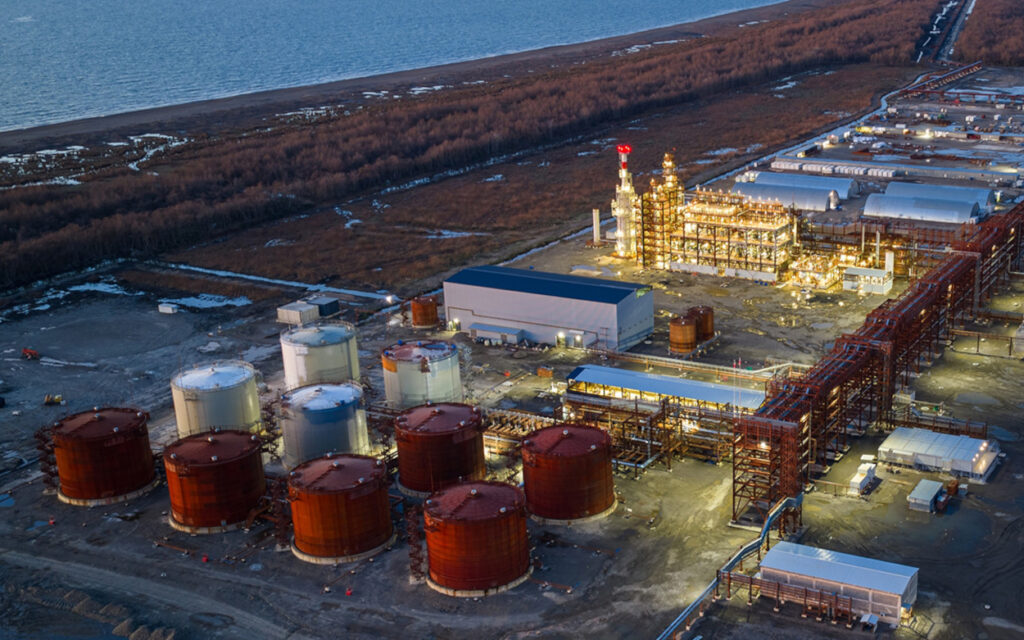
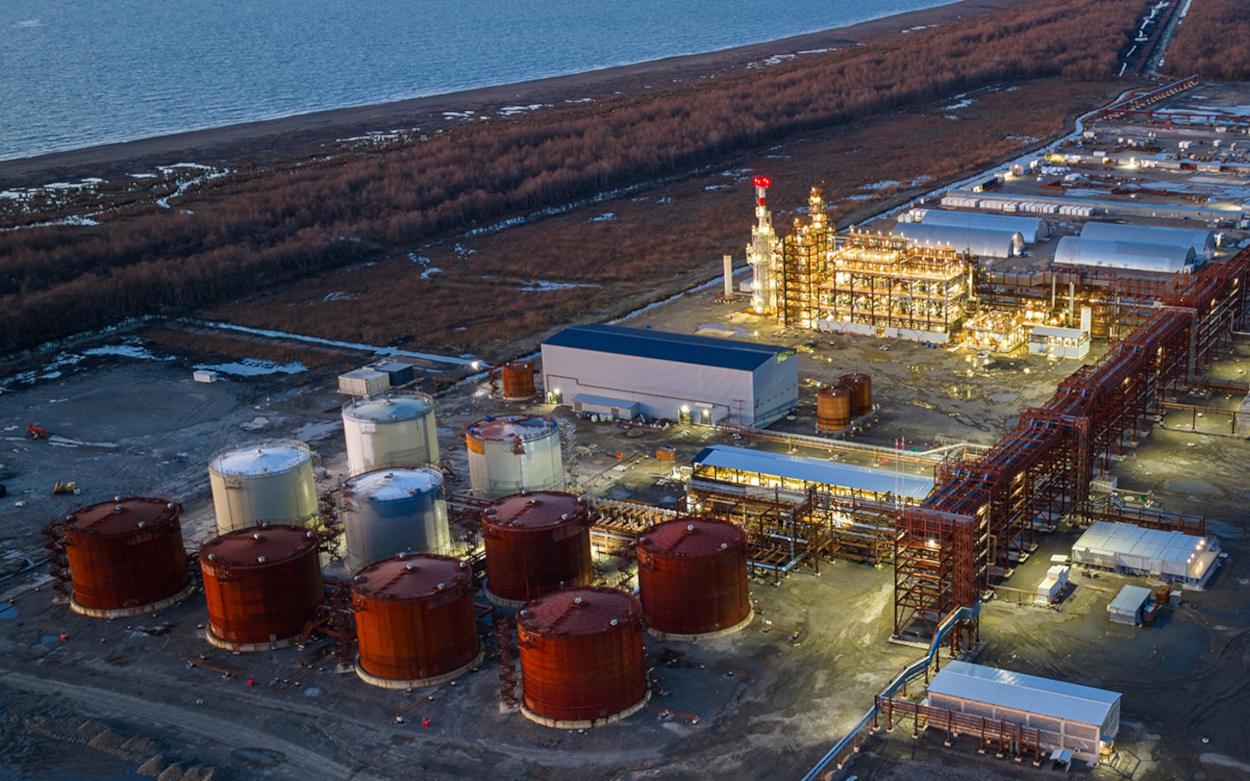
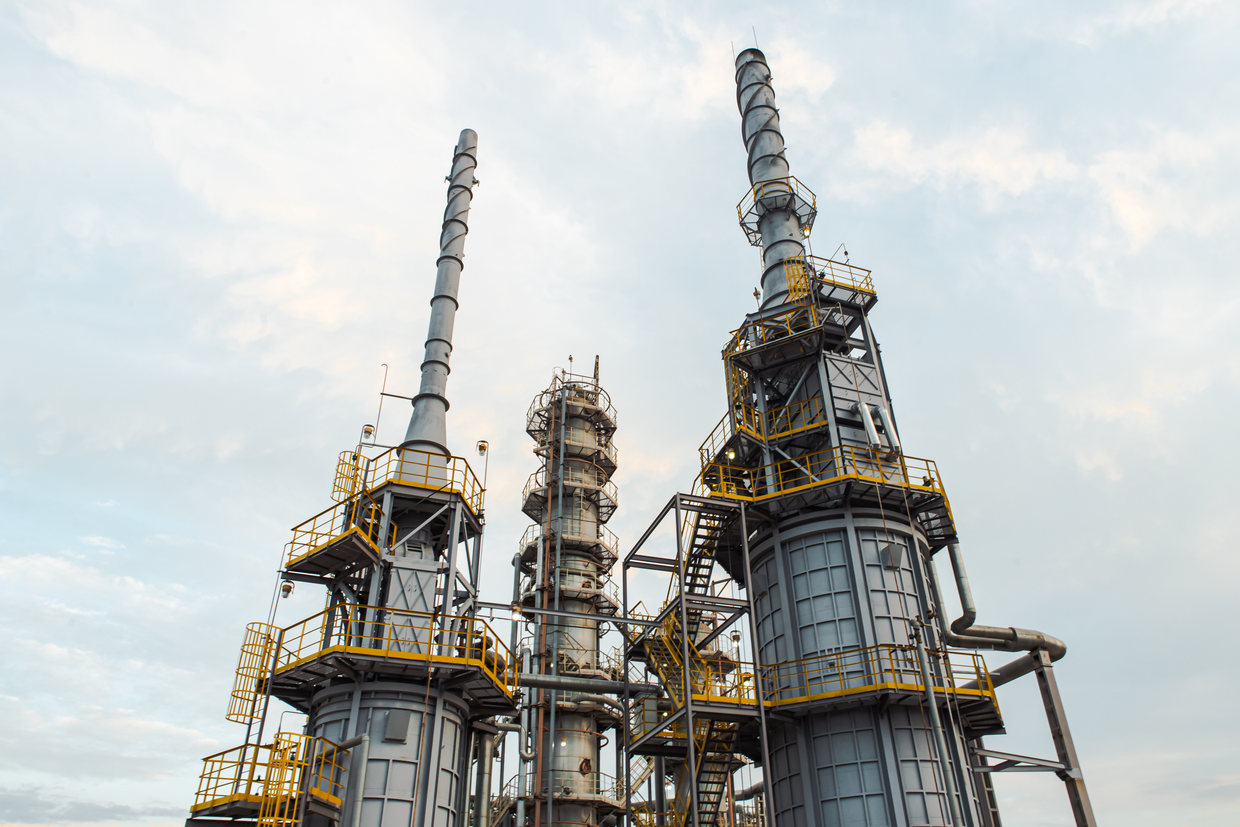
“Orsknefteorgsintez” Orsk Oil Refinery

Two Russian oil refineries caught fire on 11 August, but the two incidents tell very different stories. In Orsk, in Orenburg Oblast, drones sparked a blaze that Ukrainian monitoring channels quickly linked to Kyiv's long-range campaign. Meanwhile, thousands of kilometers farther east, a Rosneft plant in Komsomolsk-on-Amur burned for reasons that remain unexplained.
A drone strike deep in Orenburg Oblast

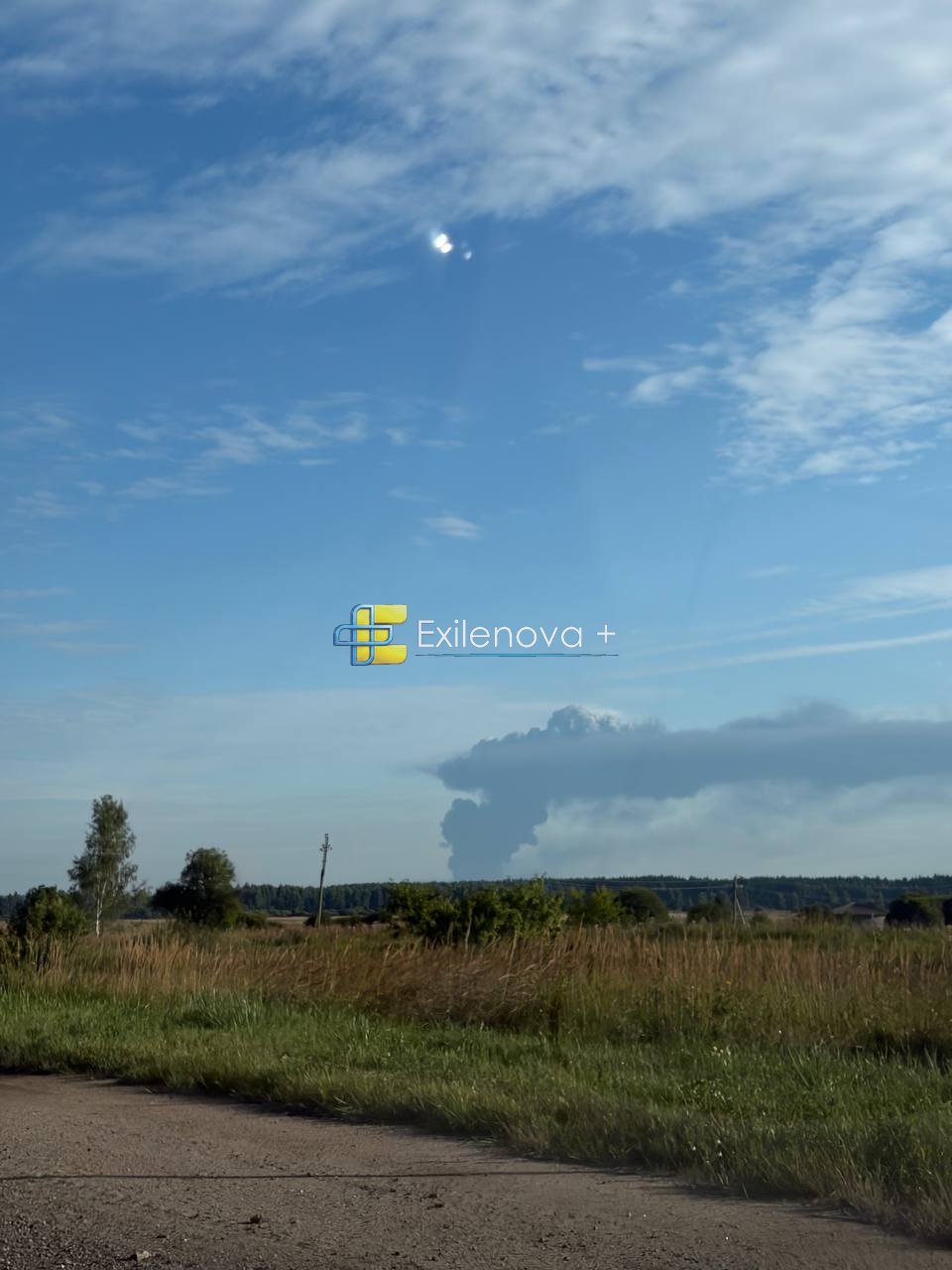
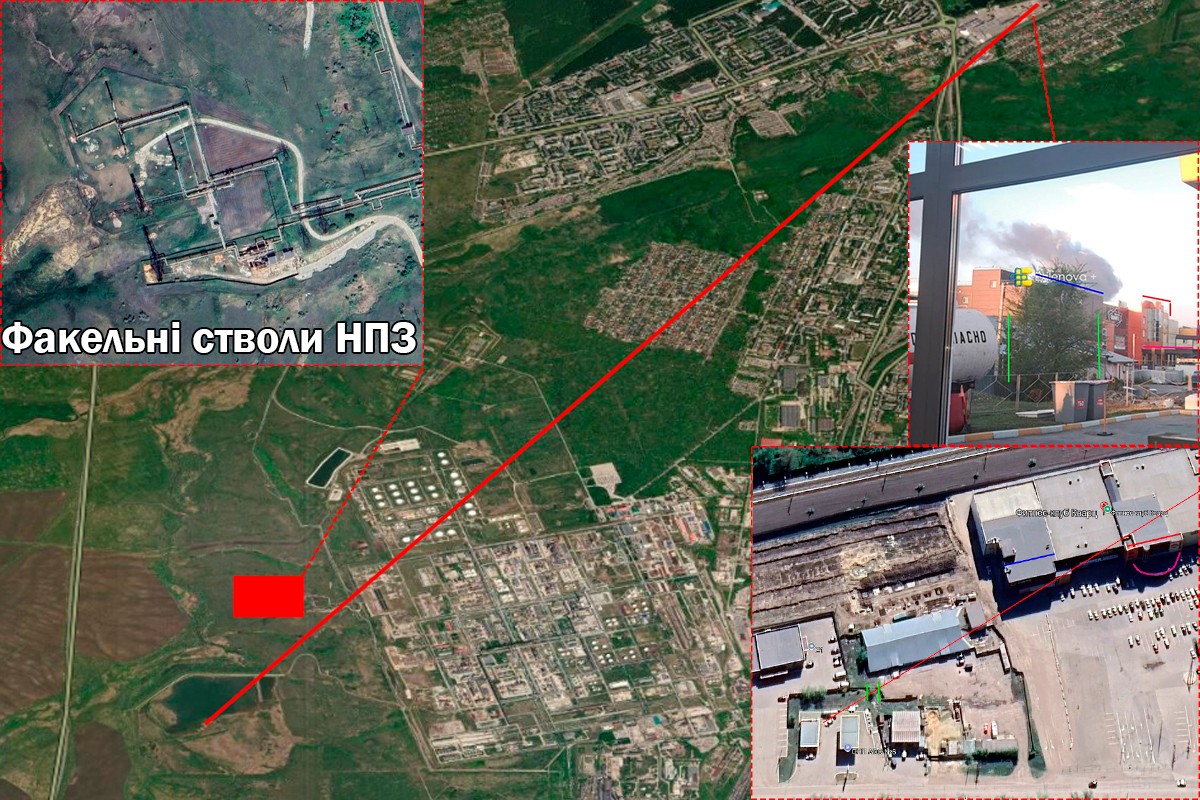
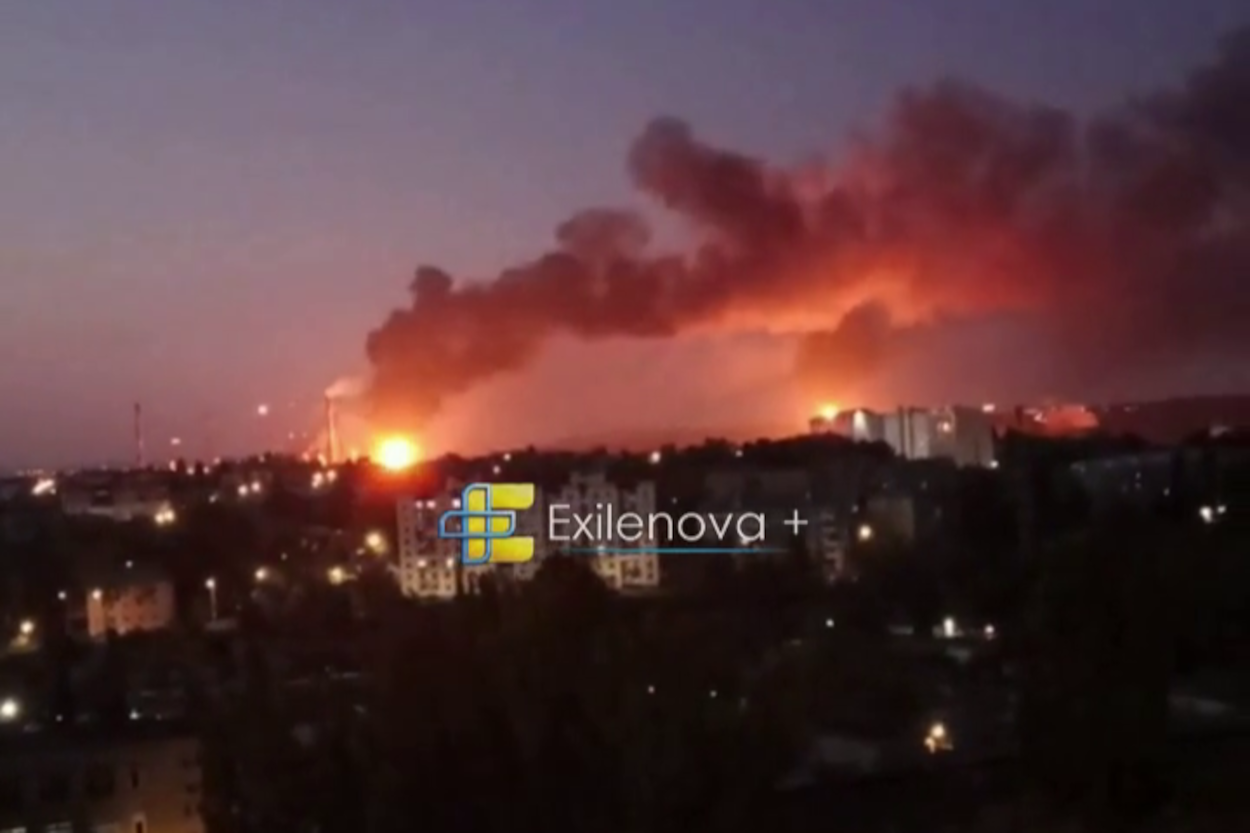
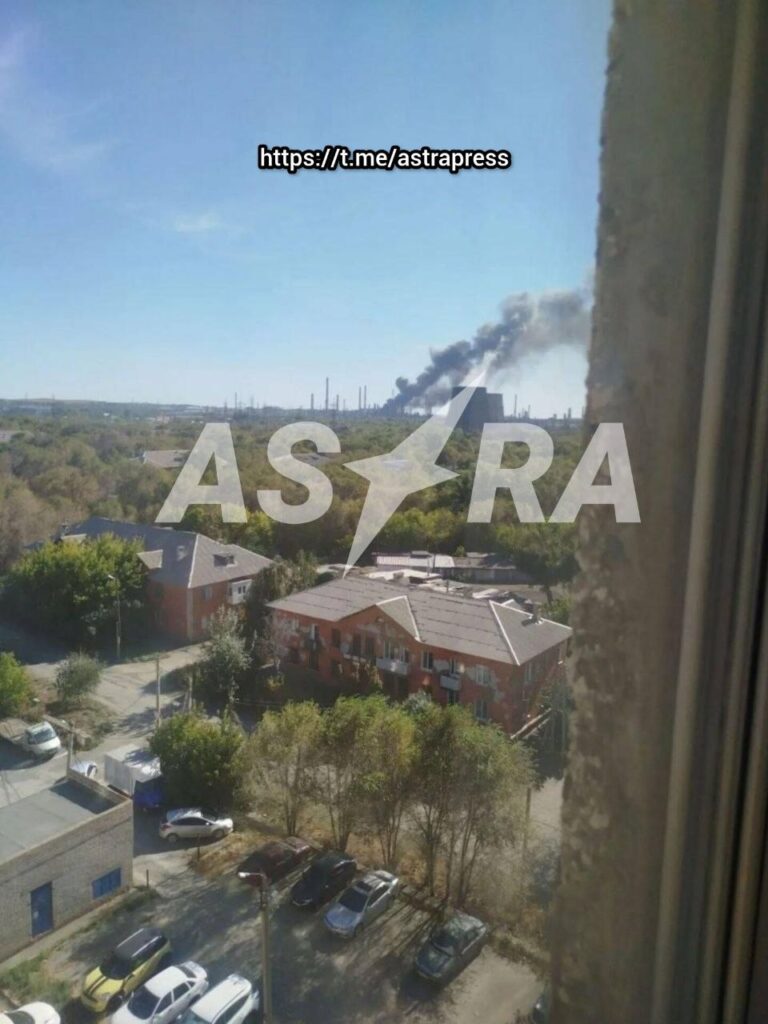
Early on 11 August, residents of Orsk reported explosions near the Orsknefteorgsintez refinery, and a large fire soon followed. OSINT analysts at the Telegram channel Exilenova+ reported the strike. By their assessment, the drones flew more than 1,500 kilometers from Ukraine's border to reach Orsk. Preliminary findings pointed to damage at the plant's hydrocracking complex. Modernized in recent years, the unit can process 1.6 million tonnes a year.

Russian officials confirmed the attack, though they did not name the target at first. Orsk Mayor Artem Vorobyov urged residents to stay indoors and away from windows. Orenburg Governor Yevgeny Solntsev, meanwhile, activated the "Kovyor" (Carpet) airspace-safety plan across a 100-kilometer radius. Authorities also imposed temporary flight restrictions at the Orsk airport.

"The strike drones covered more than 1,500 kilometers from Ukraine's border to reach Orsk—among the deepest targets yet in the refinery campaign," Exilenova+, via OSINT monitoring

An unexplained blaze in the Far East

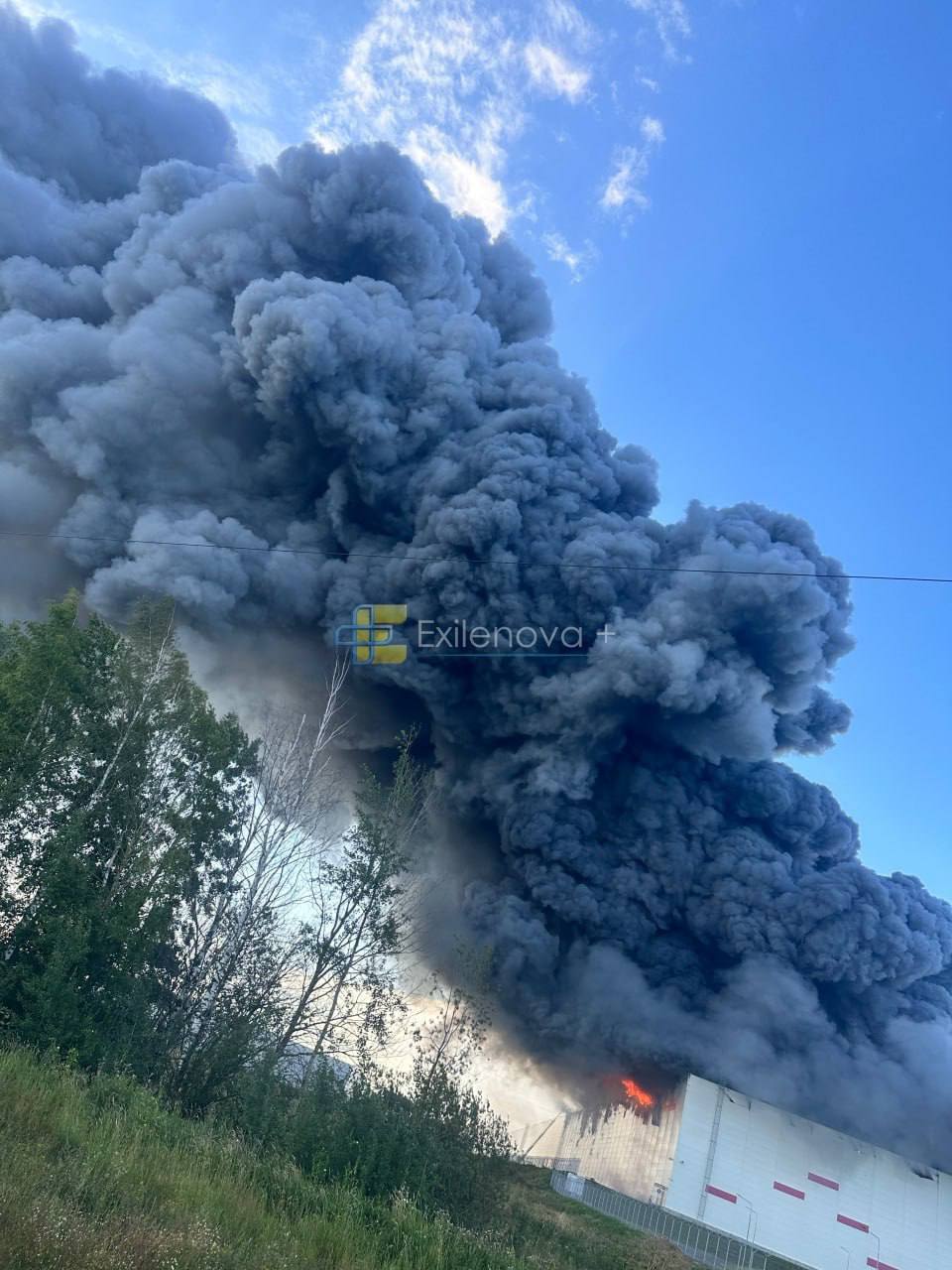
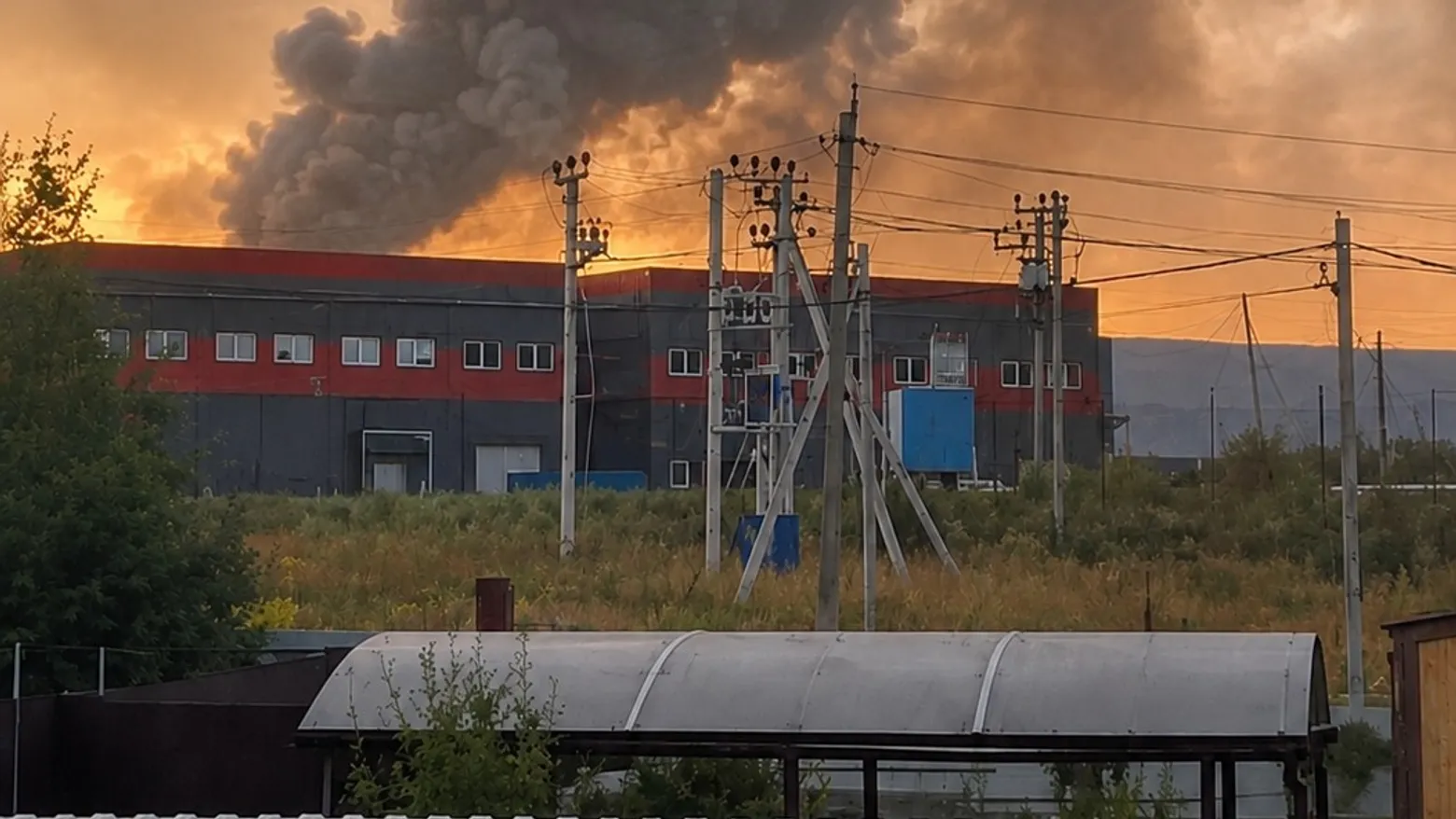
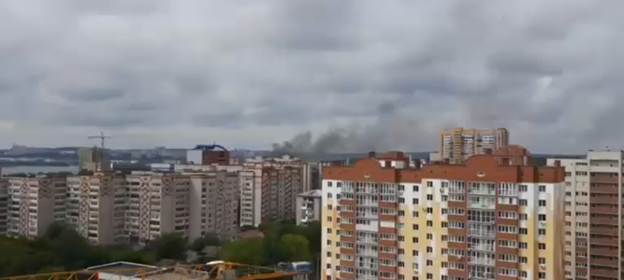
Far to the east, the picture is murkier. Around 11:00 local time, residents of Komsomolsk-on-Amur reported a fire near the city's refinery. ASTRA then geolocated the footage to Rosneft's RN-Komsomolsk plant. Notably, Ukrainian analysts cautioned that the fire does not appear to stem from a drone strike. After all, the site sits roughly 6,500 kilometers from Ukraine—far beyond the range of Kyiv's long-range drones. Coverage from the Kyiv Independent, meanwhile, flagged no clear cause.

The plant's press service reported no injuries, as relayed by Russian state agency TASS. Commissioned in 1942, the RN-Komsomolsk refinery has a design capacity of about 8 million tonnes of crude per year. In fact, it supplies more than 60% of the petroleum products across Russia's Far Eastern Federal District. Moreover, it produces gasoline, diesel, marine fuel, and other products for the region.

Ukraine's campaign against Russian oil refineries

The Orsk plant is no stranger to such strikes. Drones previously hit Orsknefteorgsintez on 3 October and 11 November 2025, and again on 29–30 April 2026. Since 2022, Ukraine has widened its deep-strike campaign against Russian oil refineries, fuel depots, and pipelines. Such targets power the Kremlin's army and bankroll the war through oil exports. Increasingly, Russian oil refineries have become the signature target of Ukraine's long-range war. Just the night before, on 10 August, Ukraine's General Staff confirmed a strike on the TANECO refinery in Tatarstan. A fire broke out there, too.

As of publication, Kyiv had not claimed the 11 August Orsk strike. Still, the timing fit a familiar pattern—a long-range campaign aimed at the fuel that keeps Russia's war machine moving.

  • ✇Euromaidan Press
  • US rebuilt full intelligence sharing with Ukraine—and Kyiv strikes deep inside Russia hit harder 
    The United States has rebuilt intelligence sharing with Ukraine—the flow of satellite data, targeting, and attack warnings—to its pre-freeze peak, according to Politico. That restored flow now sharpens Kyiv's long-range strikes inside Russia, and senators from both parties say it has strengthened Ukraine. The White House says President Donald Trump stays focused on ending the war. Russia funds its invasion largely with oil money, and Ukraine has spent the past year burn
     

US rebuilt full intelligence sharing with Ukraine—and Kyiv strikes deep inside Russia hit harder 

6 août 2026 à 08:36

Zelenskyy trump

The United States has rebuilt intelligence sharing with Ukraine—the flow of satellite data, targeting, and attack warnings—to its pre-freeze peak, according to Politico. That restored flow now sharpens Kyiv's long-range strikes inside Russia, and senators from both parties say it has strengthened Ukraine. The White House says President Donald Trump stays focused on ending the war.

Russia funds its invasion largely with oil money, and Ukraine has spent the past year burning that revenue at the source, sending drones against refineries far behind the front. Foreign backing has wavered across the war, and every US pledge now carries the question of whether it will hold.

The freeze that started with a White House blowup

The cutoff came after Trump and Ukrainian President Volodymyr Zelenskyy clashed in the Oval Office on 28 February 2025. Days later, the White House froze weapons and intelligence to push Kyiv toward talks. It did not last. Washington restored the flow within about a week, after US-Ukraine talks in Saudi Arabia.

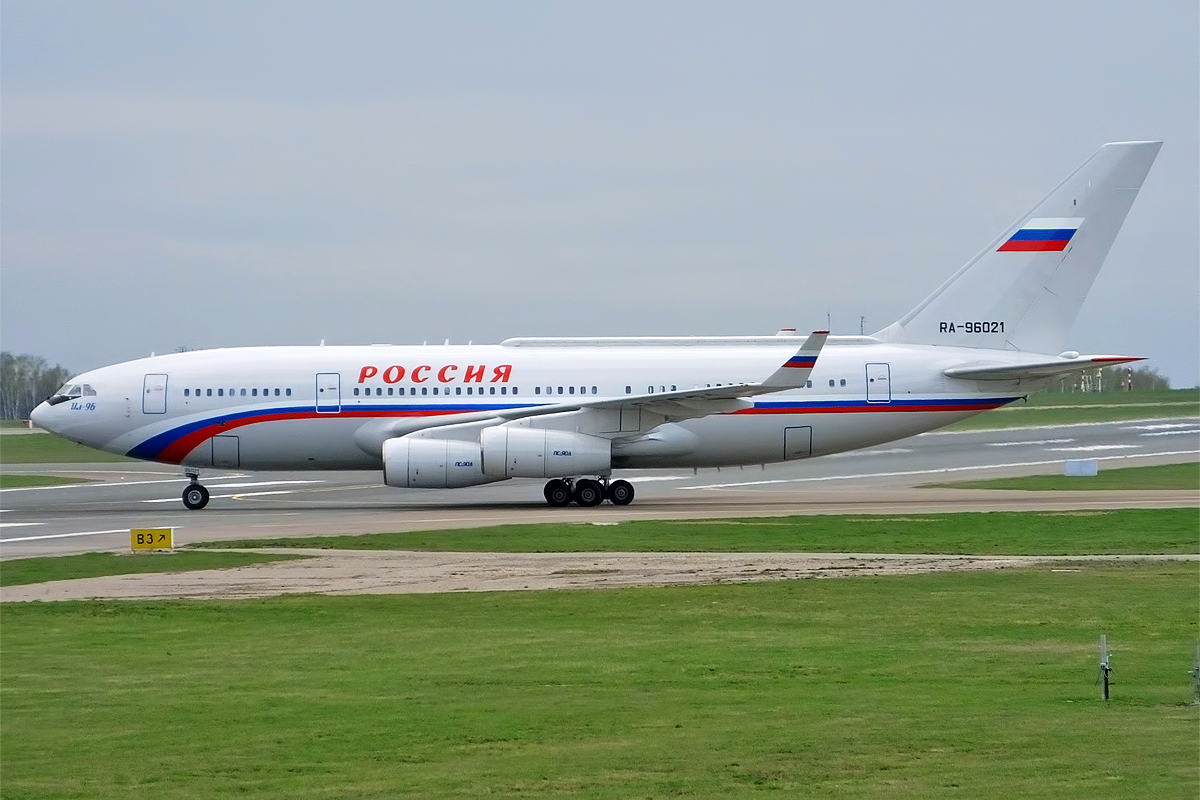
Russian plane IL-96-300
Explore further

Intelligence: Russia’s civil aviation deteriorates under sanctions, forcing it to dismantle even new aircraft to obtain spare parts

What changed on the battlefield

Senator Mark Warner, the top Democrat on the Senate Intelligence Committee, said the renewed sharing has improved Ukraine's position.

"Everybody loves a winner and looks like Ukraine has turned the tide," said Republican Senator John Cornyn.

Better data, deadlier strikes

"Those strikes were supercharged," and became "significantly more effective when imbued with intelligence from the Americans," said George Barros of the Institute for the Study of War.

He tied the drone strikes on Russian energy sites to a plan to raise the war's cost for Moscow.

Stephen Sestanovich of the Council on Foreign Relations said Ukrainian officials give Washington confident reads on what is happening in Moscow, not just inside the Kremlin. Warner said no one in the US defense establishment, himself included, expected Ukraine to reach this point a year ago.

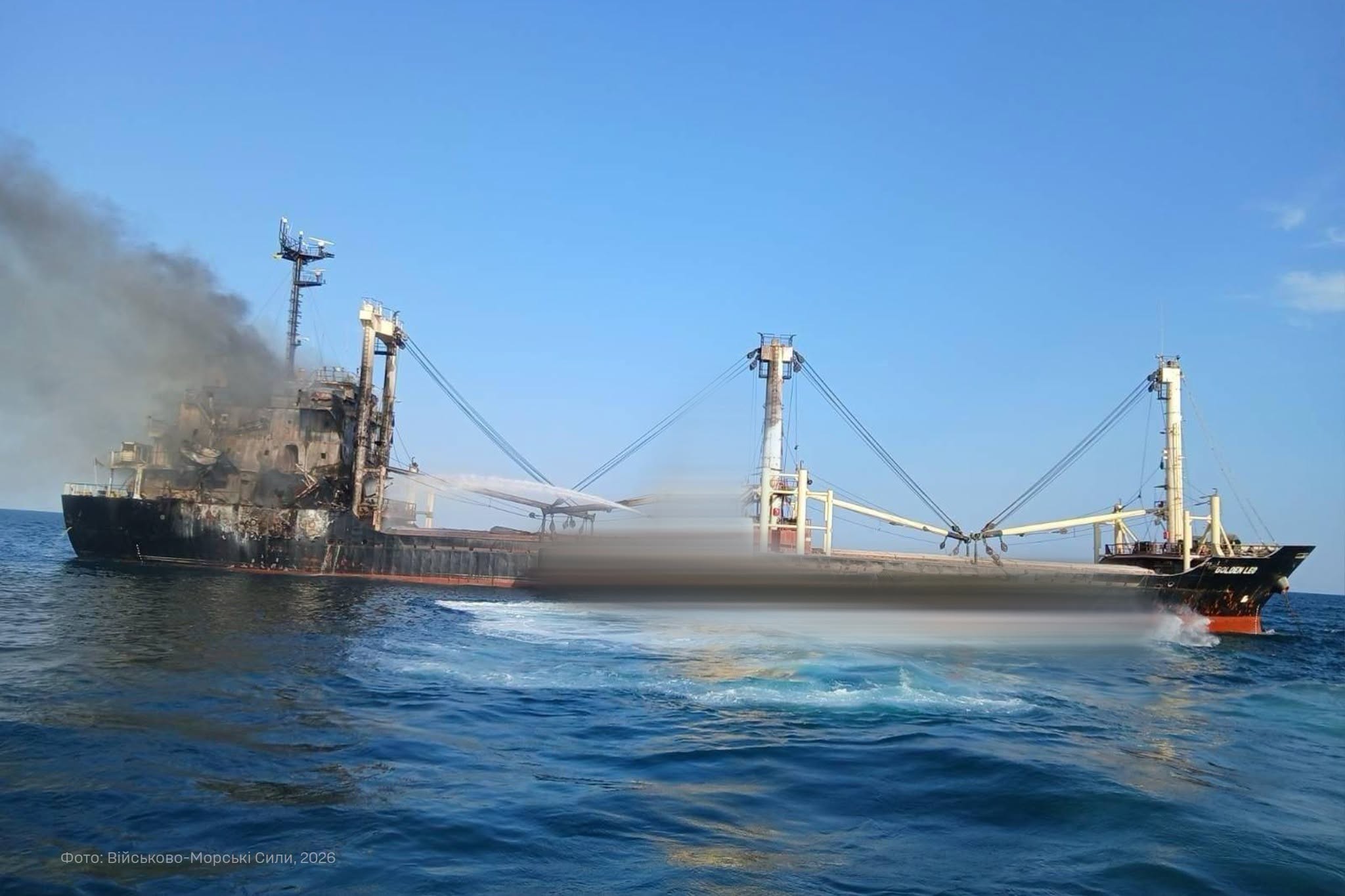
ten dead russia strikes turkish-owned bulk carrier off odesa · post civilian golden leo ablaze after russian missiles hit left cargo corn black sea 19 2026 ukraine's navy struck foreign-flagged
Explore further

Some Ukrainian farmers sell wheat below cost as Black Sea disruption stops ore operations

What the 2025 blackout cost

Euromaidan Press reported that losing the feed let Russian troops claw back territory in Russia's Kursk Oblast and left thousands of Ukrainians at risk of encirclement.

"As a result of this pause, there are hundreds of dead Ukrainians," one Ukrainian officer told.

Why the renewed backing is hard to unwind

The restored flow binds Washington to Ukraine's deep-strike campaign, making the tie harder for any ceasefire to sever. Agreement across party lines suggests the backing could outlast the next swing in American politics.

  • ✇Euromaidan Press
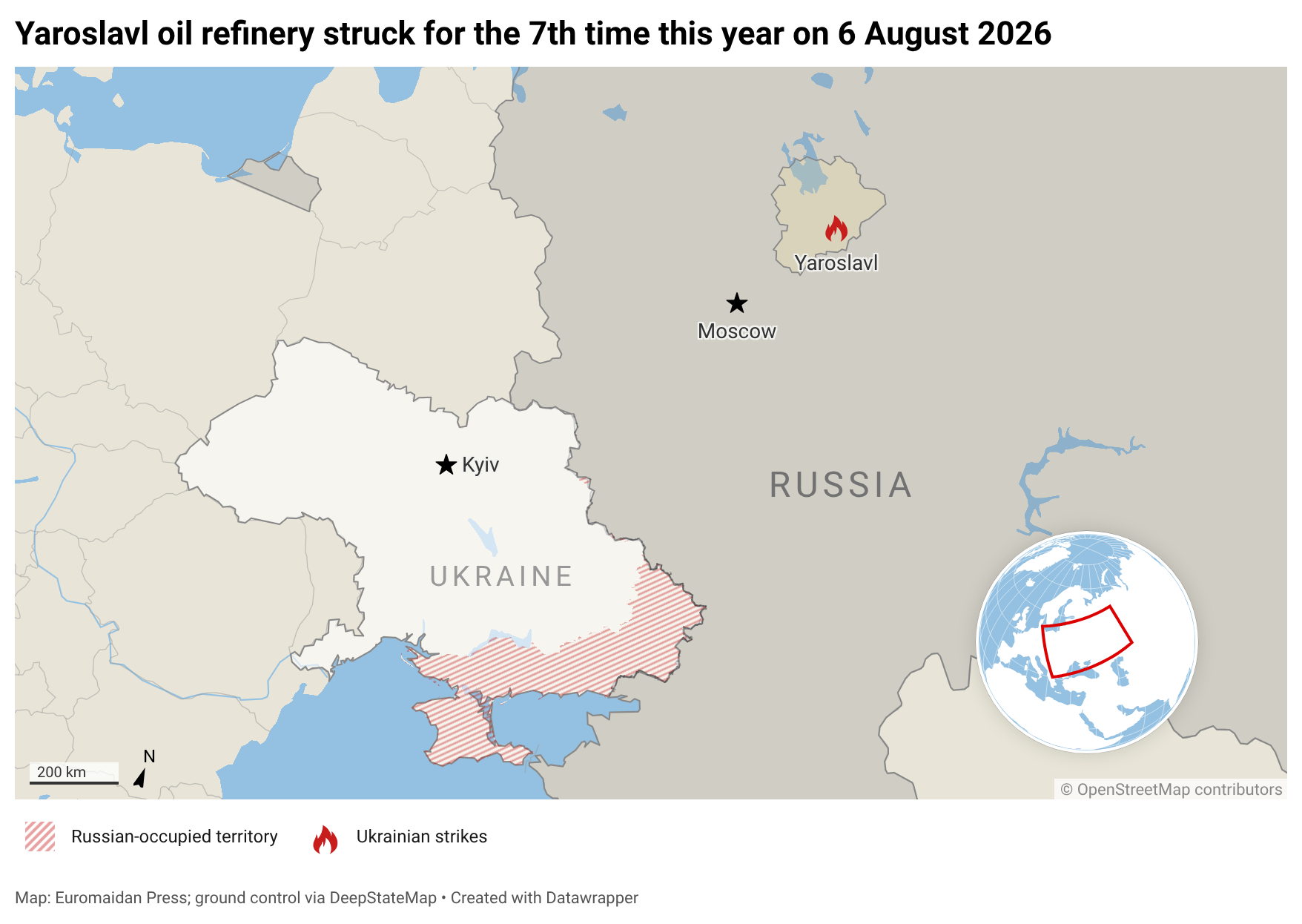
  • Seventh time this year: Ukrainian drones torch a top-five Russian refinery in Yaroslavl
    Ukrainian drones struck one of Russia's five largest oil refineries in Yaroslavl on the morning of 6 August, setting off several fires across the site, monitoring channels reported. Open-source analysts placed the blazes on the refinery grounds, while the region's governor claimed his air defenses downed the entire raid. The strike continued a months-long campaign that has pushed Russian oil refining to its lowest level in more than two decades. Ukraine has turned long-
     

Seventh time this year: Ukrainian drones torch a top-five Russian refinery in Yaroslavl

6 août 2026 à 03:43

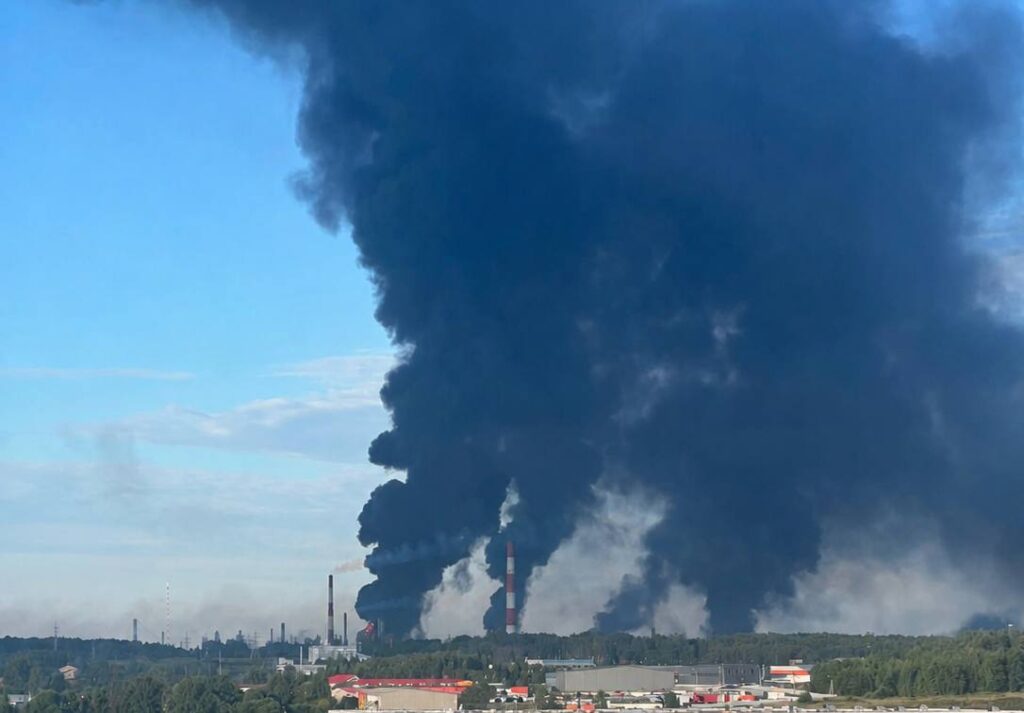
seventh time year ukrainian drones torch top-five russian refinery yaroslavl · post black smoke billows over slavneft-yanos oil after drone strike russia 6 2026 least 4 fires telegram ukraine context

Ukrainian drones struck one of Russia's five largest oil refineries in Yaroslavl on the morning of 6 August, setting off several fires across the site, monitoring channels reported. Open-source analysts placed the blazes on the refinery grounds, while the region's governor claimed his air defenses downed the entire raid. The strike continued a months-long campaign that has pushed Russian oil refining to its lowest level in more than two decades.

Ukraine has turned long-range drones into an economic weapon in 2026, hitting the refineries and export terminals that bankroll Russia's war. The damage has reached ordinary Russians, with fuel shortages spreading from city pumps to farms and buses. A parallel campaign that started last month targets warehouses of Russia's largest online retailer.

Fires break out across the refinery

Ukrainian monitoring Telegram channel Exilenova+ first reported the attack around 4:00, later sharing footage that showed thick black smoke rising from several points on the site. Fire Point, the Ukrainian company that builds the FP-1 long-range drone, said Ukraine's Defense Forces hit the plant with the domestically made FP-1s. Open-source analysts geolocated one blaze to the refinery grounds. Astra, a Russian news Telegram channel, reported one fire on the plant's territory and a second it had not yet located.

Ukraine struck another Wildberries warehouse this morning, the 15th such facility hit in just 18 days

Thirteen of those fifteen warehouses have burned so far, a pace that turns Russia's largest online retailer into a recurring target list
📷 Exilenova+ pic.twitter.com/cGOvsmkR6L

— Euromaidan Press (@EuromaidanPress) August 4, 2026

One of Russia's biggest refineries

Slavneft-YANOS, also called the Novo-Yaroslavl refinery, ranks among Russia's five largest and is the biggest in the country's central regions. It processes about 15 million tonnes of crude a year into gasoline, diesel, aviation kerosene, jet fuel, lubricants, and bitumen. Rosneft and Gazprom jointly control 99.7% of its parent company, Slavneft. The plant's fuel feeds central Russian industry, airports, the Northern Railway, and military sites. It sits more than 700 kilometers from Ukraine's border.

Russia claims it downed every drone in the region

Yaroslavl Governor Mikhail Yevraev first reported the region was under drone attack around 3:00 and closed the highway toward Moscow. He later claimed the region had repelled its most massive drone raid, downing all 88 drones with no casualties. Yevraev stated that a detached house burned, windows were shattered in several apartment blocks, and residents' cars were damaged. 

seventh time year ukrainian drones torch top-five russian refinery yaroslavl · post column smoke burning slavneft-yanos seen outside russia 6 2026 exilenova 5161475930520751580 ukraine news reports
A column of smoke from the burning Slavneft-YANOS refinery seen from outside Yaroslavl, Russia, 6 August 2026. Photo: Exilenova+

Russia's Defense Ministry claimed it destroyed 605 drones over several regions overnight.

The plant has burned repeatedly in 2026, catching fire on 28 March, 26 April, 8 and 22 May, and 6 and 16 July before the latest hit. That made 6 August the seventh strike on the refinery this year. In the 16 July attack, an FP-1 struck the plant's tank farm.

Russia's refining in retreat

Ukraine has sharply expanded its FP-1 deep strikes on refineries this year, knocking out around 26 plants. By late July, only eight had fully restarted and at least 11 partly. Seven refineries stayed idle. Russian refining fell to 3.6 million barrels a day, its lowest since May 2002. 

Earlier, Moscow banned fuel exports, boosted gasoline imports from Belarus 25-fold, and turned to India and Morocco. It also let refiners sell Euro-2 gasoline, a grade banned in Russia since 2013, through 1 July 2027.

  • ✇Euromaidan Press
  • Georgia’s sanctioned Kulevi refinery says switch to non-Russian crude is under way
    Georgia's only oil refinery says it has begun replacing Russian crude with supplies from Kazakhstan and Libya. The update comes after the European Union sanctioned the refinery for processing Russian crude as part of its effort to curb revenues funding Moscow's war against Ukraine. Brussels gave the company six months to end its reliance on Russian oil before the restrictions take effect. In a statement released on 31 July, Black Sea Petroleum (BSP), which operates t
     

Georgia’s sanctioned Kulevi refinery says switch to non-Russian crude is under way

4 août 2026 à 12:19

Kulevi Oil Refinery in Georgia. Photo: Black Sea Petroleum

Georgia's only oil refinery says it has begun replacing Russian crude with supplies from Kazakhstan and Libya.

The update comes after the European Union sanctioned the refinery for processing Russian crude as part of its effort to curb revenues funding Moscow's war against Ukraine. Brussels gave the company six months to end its reliance on Russian oil before the restrictions take effect.

In a statement released on 31 July, Black Sea Petroleum (BSP), which operates the Kulevi Oil Refinery on Georgia's Black Sea coast, said implementation of its crude supply diversification plan was already under way and remained on schedule.

Kazakh crude already being refined

The company said the refinery began processing crude oil of Kazakh origin at the beginning of July, with the remaining contracted volumes to be refined during August.

BSP also announced that, under an agreement signed with an international trading company on 3 July, a cargo of Libyan crude is expected to arrive at Kulevi between 20 and 30 August. The contract runs through the end of 2027 and includes an option to extend it.

According to the company, the transition will allow the refinery to operate entirely on non-Russian crude beginning in August and September, in line with plans announced on 1 July.

Kulevi Oil Refinery in Georgia. Photo: Black Sea Petroleum
Explore further

Georgia’s only oil refinery to stop processing Russian crude from August, company says

Company seeks to satisfy EU sanctions requirements

The statement follows the European Union's decision on 24 July to sanction the Kulevi refinery as part of its 21st sanctions package against Russia. The measures prohibit transactions with the refinery after a six-month transition period, giving the company time to end its reliance on Russian crude.

BSP said the European Commission had acknowledged during a 24 July press briefing that the transition period was intended to enable the refinery to diversify its crude supplies. The company said the steps it has already taken are consistent with that objective and the timeline set by Brussels.

The refinery said it would continue working with the European Commission and other relevant authorities while providing "clear, verifiable evidence" of its progress toward eliminating Russian feedstock.

Kulevi Oil Refinery in Georgia. Photo: Black Sea Petroleum
Explore further

EU sanctions Georgia’s only oil refinery over processing Russian crude. Company says it will switch suppliers

First major Georgian company sanctioned by the EU

The sanctions marked the first time the EU targeted a major Georgian company under its Russia sanctions regime.

The refinery came under scrutiny after Reuters reported in 2025 that it had begun processing crude supplied by Russian producer Russneft. According to research by the Centre for Research on Energy and Clean Air (CREA), the refinery received six shipments of Russian crude between October 2025 and May 2026, while refined products were exported to EU member states including Spain and Bulgaria.

EU officials have said the refinery could be removed from the sanctions list if it demonstrates that it has fully phased out Russian crude in line with its commitments.

  • ✇Euromaidan Press
  • This Russian refinery makes the jet fuel for Moscow’s warplanes—and Ukraine keeps setting it on fire
    Ukrainian drones struck across four Russian regions before dawn on 4 August, setting fires at a Rosneft oil refinery and targeting two logistics hubs of Russia's largest online retailer, Militarnyi reported. The raid reached Samara, Leningrad, Moscow, and Nizhny Novgorod oblasts, hitting both the fuel that powers Russia's military and the warehouses that Kyiv says supply its army. Russian regional officials confirmed damage while claiming air defenses repelled much of t
     

This Russian refinery makes the jet fuel for Moscow’s warplanes—and Ukraine keeps setting it on fire

4 août 2026 à 04:28

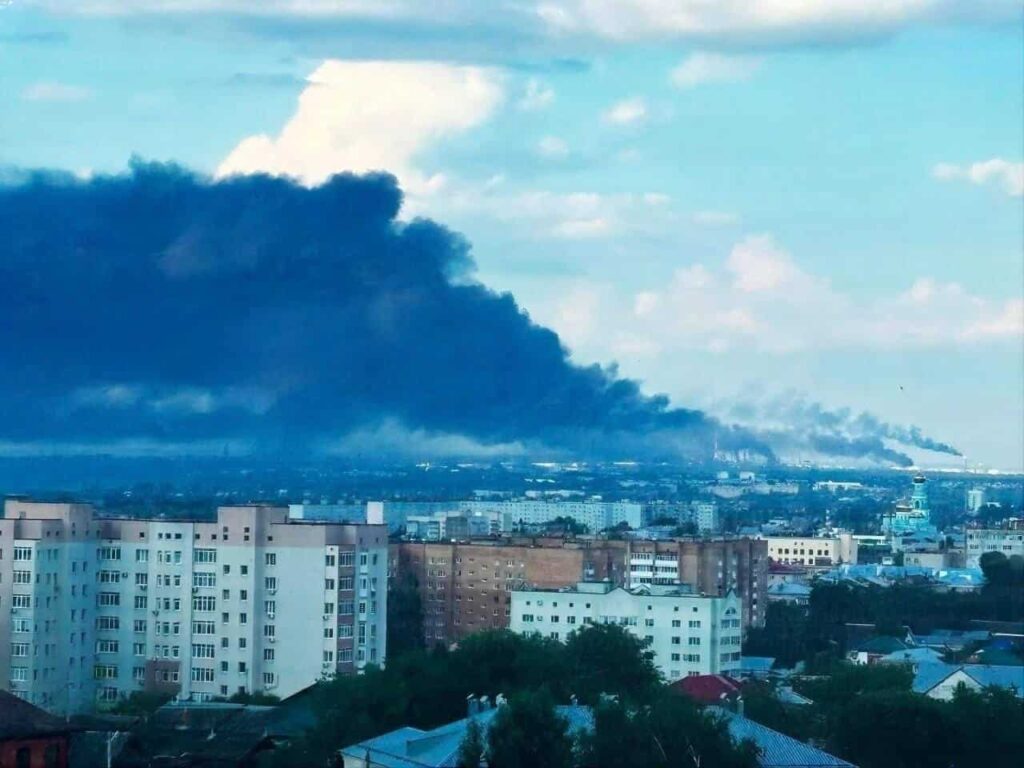
russian refinery makes jet fuel moscow's warplanes—and ukraine keeps setting fire · post column black smoke over syzran after drone strike city's oil samara oblast 12 2026 пожежа на території

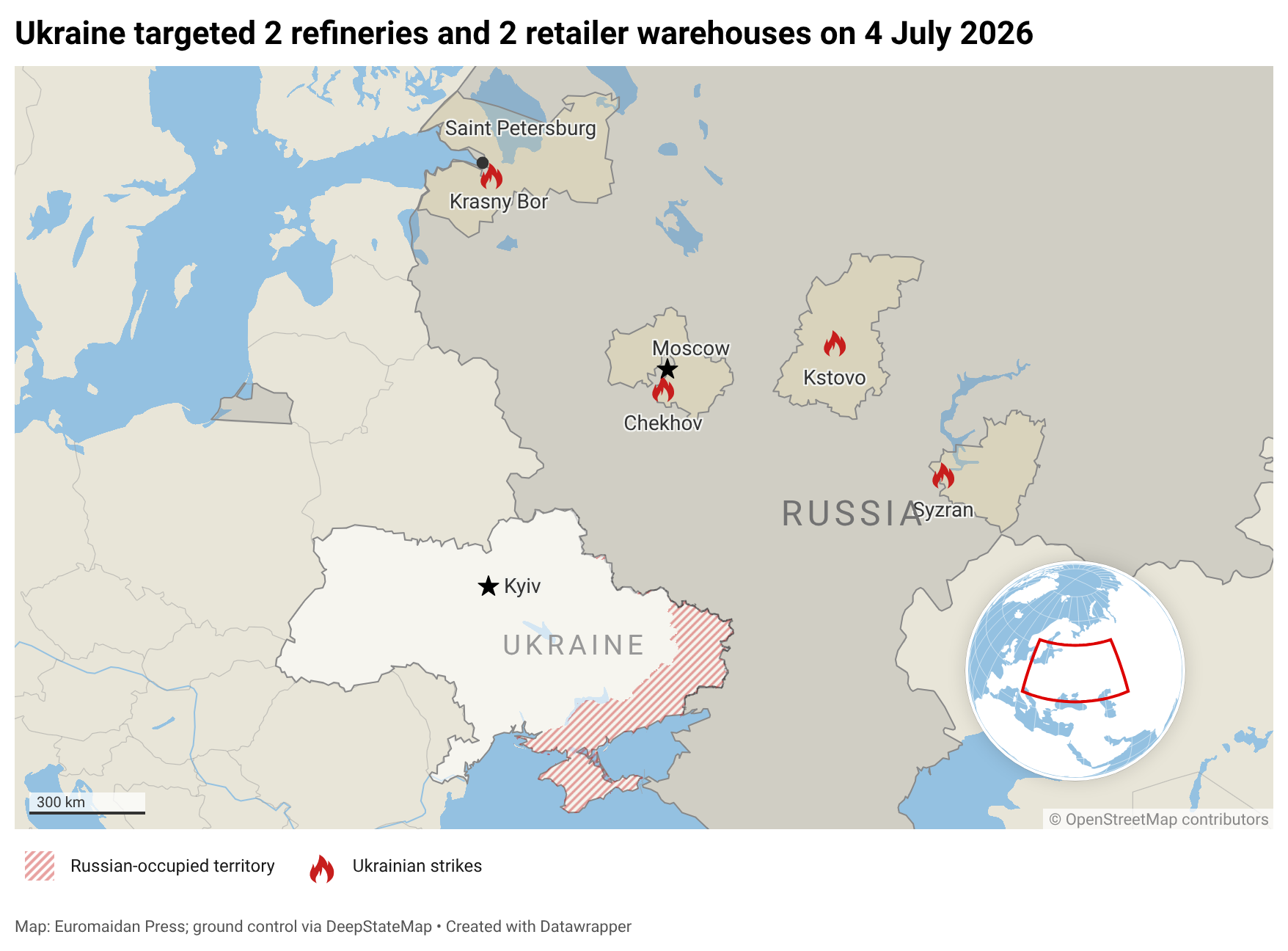
Ukrainian drones struck across four Russian regions before dawn on 4 August, setting fires at a Rosneft oil refinery and targeting two logistics hubs of Russia's largest online retailer, Militarnyi reported. The raid reached Samara, Leningrad, Moscow, and Nizhny Novgorod oblasts, hitting both the fuel that powers Russia's military and the warehouses that Kyiv says supply its army. Russian regional officials confirmed damage while claiming air defenses repelled much of the attack.

Oil sales and a functioning supply chain keep Russia's war effort moving, and Ukraine has spent 2026 pushing its drones far past the front to reach both — the plants that turn crude into military fuel and the logistics that carry equipment to the army. Each fuel plant forced offline narrows the repair window Russia has left, and every hub burned pushes the retailer to guard, disperse, or replace space it treated as safe rear. Widening the target set from refineries to warehouses stretches Russian air defense across more ground than it can fully cover.

Syzran refinery burns again

Ukrainian drones attacked the Syzran oil refinery in Samara Oblast overnight more than 800 km from the war zone in Ukraine, and Militarnyi geolocated the rising smoke to the plant. A drone-danger alert went up in the region after 1 a.m., and residents then reported explosions in the city before a column of smoke climbed over the refinery.

The plant belongs to Rosneft and processes more than 8.5 million tons of crude a year, more than 3% of Russia's national total. It turns out gasoline, diesel, aviation kerosene, and bitumen, and supplies fuel to Samara, Saratov, and Penza oblasts as well as parts of central Russia. It also feeds airfields and military units of Russia's Central and Southern military districts. The refinery sits more than 800 km from Ukraine's border.

russian refinery makes jet fuel moscow's warplanes—and ukraine keeps setting fire · post geolocation analysis marking drone's path toward syzran oil samara oblast 4 2026 задимлення на нпз в сизрані
A geolocation analysis marking the drone's path toward the Syzran oil refinery, Samara Oblast, 4 August 2026. Source: Militarnyi

Ukraine's Defense Forces have hit this refinery many times before. Drones struck it overnight on 11-12 July, starting a large fire that analysts assessed reached every primary crude-processing unit. Samara Oblast Governor Vyacheslav Fedorishchev said a fire from the attack in the region was being extinguished.

Astra says residents of Kstovo in Nizhny Novgorod Oblast reported a fire after the attack, though the struck object there stayed unclear. The city is home to a Lukoil oil refinery about 800 km from Ukraine.

Warehouses near St. Petersburg and Moscow

In the morning, Ukrainian drones hit a logistics compound near Krasny Bor in the Tosnensky district of Leningrad Oblast, roughly 820 km from Ukraine's northern border. Eyewitnesses filmed a heavy fire, and Wildberries confirmed a blaze at its facility there.

russian refinery makes jet fuel moscow's warplanes—and ukraine keeps setting fire · post black smoke rises over burning wildberries logistics complex leningrad oblast after ukrainian drone strike 4 2026 5445360929345313906
Black smoke rises over the burning Wildberries logistics complex in Leningrad Oblast after the Ukrainian drone strike, 4 August 2026. Photo: Exilenova+

Its Krasny Bor site covers 154,000 square meters, one of the retailer's largest surviving logistics hubs in the region. Ukrainian drones burned two others in Leningrad Oblast on 24 July.

Leningrad Oblast Governor Alexander Drozdenko claimed air defenses downed 17 drones overnight and confirmed damage to the warehouse zone near Krasny Bor. An OSINT analyst at the Russian Telegram channel Astra, reviewing eyewitness video, placed the smoke over a site holding two complexes: the Wildberries hub and a Lenta depot of 70,000 square meters. The analyst said the damaged complex could belong to either.

Flames at Russia's Saratov Oil Refinery after reported Ukrainian drone strike, 2 August 2026. Screenshot from video: Exilenova+
Explore further

Oil refinery, strategic airbase, and drone facilities: Overnight strikes hit key pillars of Russia’s war effort

Ukraine's drones hit a Wildberries warehouse near St. Petersburg

Ukrainian drones struck the logistics site at Krasny Bor, in Leningrad Oblast southeast of St. Petersburg, and a large fire broke out. Bystanders filmed thick black smoke rising over the area. The site holds a… pic.twitter.com/mCPjEk3Y1N

— Euromaidan Press (@EuromaidanPress) August 4, 2026

Drones also struck Chekhov near Moscow, about 400 km from Ukraine, where Astra identified the likely target as a Wildberries warehouse. Moscow Oblast Governor Andrei Vorobyov confirmed the strike and claimed five people were killed and six injured. 

russian refinery makes jet fuel moscow's warplanes—and ukraine keeps setting fire · post smoke rises over warehouse moscow oblast after ukrainian drone strike 4 2026 video supernova+ влучання у московській
Smoke rises over a warehouse in Moscow Oblast after a Ukrainian drone strike, 4 August 2026. Screenshot from video: Supernova+

Why the warehouses

President Volodymyr Zelenskyy has previously explained that Ukraine strikes what he calls "Russia's AliExpress" because the marketplace supplies occupying forces with sanctioned components for drones and navigation equipment. Ukraine's military command lists Wildberries among its long-range targets as a retailer that also moves non-lethal military gear.

Ukraine's Defense Forces began striking Wildberries logistics sites on 18 July. The company tightened rules on 3 August, allowing warehouse staff only button phones without cameras, after employees filmed the strikes and shared the footage.

  • ✇Euromaidan Press
  • Ukraine sinks Russian ship and hits three refineries processing millions of tons a year, same night
    Ukraine sank a Russian ship and set three refineries on fire deep inside Russia. Ukrainian midstrikes hit targets in the Black and Azov seas, sinking the sanctioned Russian container ship Yanina, and struck the refineries in Bashkortostan nearly 1,600 kilometers away, President of Ukraine Volodymyr Zelenskyy said on 1 August. Yanina is a Russian-flagged container ship with a capacity of more than 100,000 tons, which, "thanks to the accuracy of our Defense Forces, went t
     

Ukraine sinks Russian ship and hits three refineries processing millions of tons a year, same night

1 août 2026 à 11:29

Ukrainian weapon is approaching Russia's sanctioned Russian container ship Yanina. Source: Supernova+

Ukraine sank a Russian ship and set three refineries on fire deep inside Russia. Ukrainian midstrikes hit targets in the Black and Azov seas, sinking the sanctioned Russian container ship Yanina, and struck the refineries in Bashkortostan nearly 1,600 kilometers away, President of Ukraine Volodymyr Zelenskyy said on 1 August.

Yanina is a Russian-flagged container ship with a capacity of more than 100,000 tons, which, "thanks to the accuracy of our Defense Forces, went to the bottom," Zelenskyy stated. The three Russian oil refineries process millions of tons of oil per year.

"We continue our just pressure. The plan of long-range sanctions is being carried out step by step," he said, framing the strikes as the deliberate targeting of the objects that sustain Russia's war.

The strikes answer the Kyiv barrage in kind

Zelenskyy tied the counterstrikes directly to attacks on Ukraine, such as the Kyiv ballistic strike hours earlier, casting them as returning the war to Russia. Ukraine's soldiers "return the war to Russia and respond to its strikes against life," he said, thanking them for their accuracy, and describing Ukraine's targets as consistently defined objects that enable the war.

The same day, Russia's overnight barrage of 27 ballistic missiles and 185 drones killed at least nine people in Kyiv's residential districts, damaged an embassy, and burned ambulances.

Ukraine's strikes the same night sank a cargo ship and hit oil refineries, infrastructure that fuels the Russian military rather than apartment blocks. That distinction between striking civilians and striking war-enabling infrastructure is the line Ukraine draws through its whole deep-strike campaign, and Zelenskyy drew it again here, calling the refineries and the ship "objects that ensure the war."

The refinery campaign has idled nearly half of Russia's capacity

The Bashkortostan strikes extend a campaign that has become near-nightly and is measurably hurting Russia's oil industry. Ukraine's deep-strike units have spent 2026 hitting refineries, pipelines, and depots that turn Russian crude into fuel and cash. Bashkortostan, a refining hub roughly 1,300 to 1,600 kilometers from Ukraine, has been struck repeatedly, including Transneft-Ural pipeline nodes on 8 and 23 July.

The cumulative damage is substantial. The campaign has idled 42.74% of Russian refining capacity and cost the industry $13.5 billion since August 2025, by the General Staff's count, and Zelenskyy has said 40% of Russia's refining capability has been taken out of commission, with fuel rationing now spread across most Russian regions.

Reaching three refineries in Bashkortostan in a single night, nearly 1,600 kilometers from Ukraine, shows the range and tempo the campaign has built, striking the deep rear that Russia long treated as safe.

  • ✇The Kyiv Independent
  • Ukrainian drone strike hits major oil refinery in Russia's Krasnodar Krai, HUR source claims
    Long-range Ukrainian drones struck the Ilsky oil refinery in Russia's Krasnodar Krai on July 7, hitting one of the facility's technological workshops, a source in Ukraine's military intelligence (HUR) told the Kyiv Independent. Located roughly 500 kilometers (311 miles) from Ukrainian-controlled territory, the refinery is among the largest in southern Russia, producing over 6 million tons of fuel annually. It is involved in the reception, storage, and processing of hydrocarbons and distributes r
     

Ukrainian drone strike hits major oil refinery in Russia's Krasnodar Krai, HUR source claims

7 juillet 2025 à 08:01
Ukrainian drone strike hits major oil refinery in Russia's Krasnodar Krai, HUR source claims

Long-range Ukrainian drones struck the Ilsky oil refinery in Russia's Krasnodar Krai on July 7, hitting one of the facility's technological workshops, a source in Ukraine's military intelligence (HUR) told the Kyiv Independent.

Located roughly 500 kilometers (311 miles) from Ukrainian-controlled territory, the refinery is among the largest in southern Russia, producing over 6 million tons of fuel annually.

It is involved in the reception, storage, and processing of hydrocarbons and distributes refined products via road and rail. The refinery is part of Russia's military-industrial complex and plays a direct role in supporting Moscow's war effort, the source said.

The Russian regional operational headquarters claimed that "drone debris" fell on the oil refinery.

The strike marks a renewed wave of Ukrainian attacks on Russian oil infrastructure, following a months-long pause since March. On July 1, Ukrainian drones struck the Saratovorgsintez oil refinery in Russia's Saratov Oblast.

Kyiv has targeted dozens of refineries, oil depots, and military-industrial sites since the start of Russia's full-scale invasion in 2022. Winter drone attacks forced at least four Russian refineries to temporarily shut down.

This is the second known strike on the Ilsky refinery. Ukrainian drones, operated by the Security Service (SBU) and Special Operations Forces (SSO), previously targeted the facility on Feb. 17, causing a fire.

Krasnodar Krai, a strategic region along Russia's Black Sea coast, has increasingly come under Ukrainian drone attacks as Kyiv extends the range of its strikes deep into Russian territory.

HUR publishes Russian military order, claims proof of Moscow increasing military footprint in Armenia
HUR first made the claim on July 5, saying Russia was increasing its forces at the Gyumri base to exert greater influence in the South Caucasus and “destabilize the global security situation.”
Ukrainian drone strike hits major oil refinery in Russia's Krasnodar Krai, HUR source claimsThe Kyiv IndependentChris York
Ukrainian drone strike hits major oil refinery in Russia's Krasnodar Krai, HUR source claims
  • ✇The Kyiv Independent
  • 'Important facility hit' — Ukraine attacks Russian oil refinery in Saratov Oblast, military says
    Ukrainian drones struck the Saratovorgsintez oil refinery in Russia's Saratov Oblast, causing damage to the facility, Ukraine's General Staff reported on July 1. "An important facility has been hit," the General Staff said via its official Telegram channel. The Saratovorgsintez refinery and chemical plant, owned by Russian energy giant Lukoil, is located nearly 1,500 kilometers (930 miles) from Ukraine's border in the city of Saratov. The city hosts multiple strategic military and industrial sit
     

'Important facility hit' — Ukraine attacks Russian oil refinery in Saratov Oblast, military says

1 juillet 2025 à 18:15
'Important facility hit' — Ukraine attacks Russian oil refinery in Saratov Oblast, military says

Ukrainian drones struck the Saratovorgsintez oil refinery in Russia's Saratov Oblast, causing damage to the facility, Ukraine's General Staff reported on July 1.

"An important facility has been hit," the General Staff said via its official Telegram channel.

The Saratovorgsintez refinery and chemical plant, owned by Russian energy giant Lukoil, is located nearly 1,500 kilometers (930 miles) from Ukraine's border in the city of Saratov. The city hosts multiple strategic military and industrial sites.

The refinery was targeted to "reduce the enemy's offensive capabilities," the General Staff wrote.

"The occupiers use the capacity of this refinery to supply fuel and lubricants to Russian military units involved in the armed aggression against Ukraine."

The attack was a joint operation carried out by Ukraine's military intelligence agency (HUR) and other military units, the General Staff said. A fire broke out at the site of the attack and damage to the refinery's technological installations has been confirmed. The full consequences of the strike are still being investigated.

The Kyiv Independent could not verify these claims.

The report is the latest in a series of announcements on July 1 about successful Ukrainian strikes on Russian targets. Earlier in the day, HUR released footage of Ukraine's UJ-26 drones, commonly known as Bober (Beavers), targeting high-value Russian air defenses and a fighter jet in occupied Crimea.

A source in the Security Service of Ukraine (SBU) told the Kyiv Independent that Ukrainian drones struck a major Russian military plant in the city of Izhevsk, over 1,300 kilometers (800 miles) from the front lines.

Ukraine also hit a Russian command post in occupied Donetsk Oblast, according to the General Staff.

Ukraine war latest: Ukrainian drones strike Russian plant 1,300km from border, SBU source says
Key developments on July 1: * ‘With surgical precision’ — Ukrainian drones strike Russian plant 1,300km away, SBU source says * Russian missile strike on Dnipropetrovsk Oblast kills brigade commander, injures 30 people, Zelensky says * Ukrainian forces hit Russian command post in occupied Donetsk Oblast, General Staff says * Zelensky signs ratification of
'Important facility hit' — Ukraine attacks Russian oil refinery in Saratov Oblast, military saysThe Kyiv IndependentThe Kyiv Independent news desk
'Important facility hit' — Ukraine attacks Russian oil refinery in Saratov Oblast, military says

❌