Vue normale

  • ✇Euromaidan Press
  • Three Ukrainian units received kit that makes an uncrewed vehicle out of whatever they’re already driving
    Ukraine is turning ordinary cars into robots instead of building them from scratch. Three units of the Armed Forces received the Kaban remote-control system, which converts vehicles into uncrewed ones, developer Drone Fight Group told Defender Media. Ground robots have become a daily part of Ukraine's front. Ukrainian units ran 16,676 logistics and evacuation missions with them in June, up 122 percent since January, and the military has contracted more than 22,000 groun
     

Three Ukrainian units received kit that makes an uncrewed vehicle out of whatever they’re already driving

26 août 2026 à 17:48

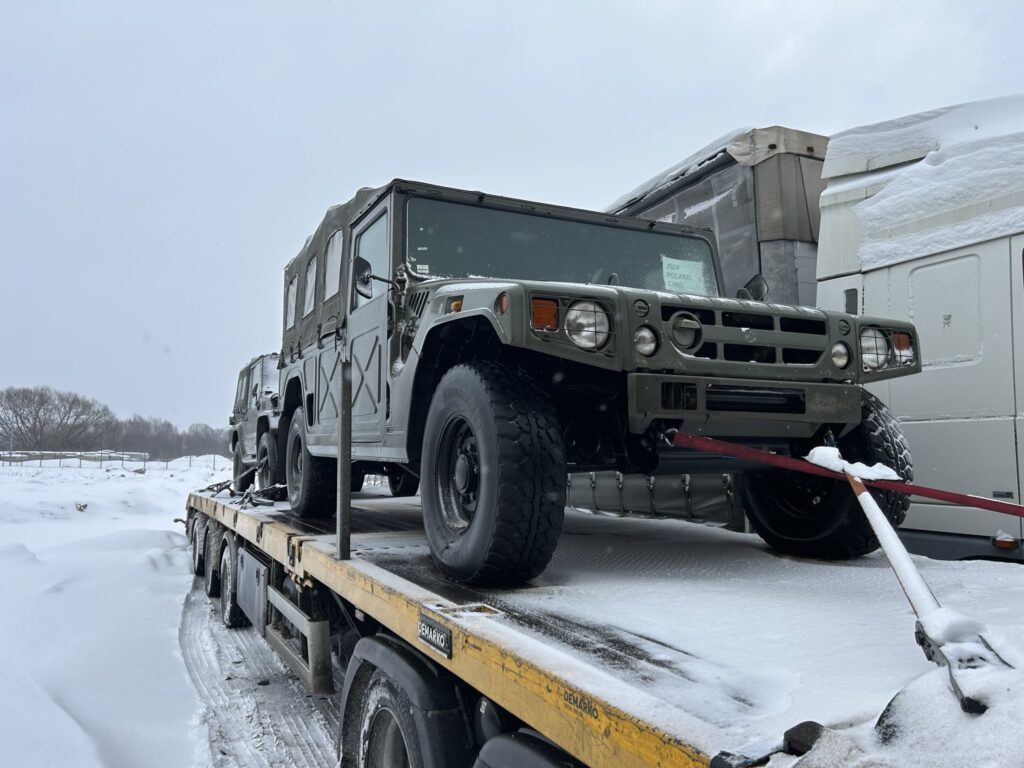
japan quietly ships military-grade off-roaders ukraine — here’s what can do · post toyota high mobility vehicle transferred loaded transport truck 14 2026 переданий японією позашляховик hmv січня року посольство

Ukraine is turning ordinary cars into robots instead of building them from scratch. Three units of the Armed Forces received the Kaban remote-control system, which converts vehicles into uncrewed ones, developer Drone Fight Group told Defender Media.

Ground robots have become a daily part of Ukraine's front. Ukrainian units ran 16,676 logistics and evacuation missions with them in June, up 122 percent since January, and the military has contracted more than 22,000 ground robots for 2026, nearly double the 2025 total. Most are purpose-built platforms. Kaban takes the opposite route, converting vehicles that a unit already has.

The developers say Kaban was passed to the 3rd Army Corps, the 429th Separate Unmanned Systems Regiment "Akhilles", and the 49th Brigade of the Armed Forces.

The system bolts on without modification

Kaban installs on a vehicle without altering its construction and works with different models, Drone Fight Group said. It lets the operator switch between remote and manual control.

The operator navigates on a digital map, plotting routes and setting markers. Manual correction is built in for GPS spoofing cases. The system predicts its trajectory and can automatically stop the vehicle if the connection is lost.

Starlink carries the control link

The main communication channel is Starlink, and the system also supports analog video transmission and radio control, according to the developers. A vehicle can be fitted with thermal cameras if needed.

Kaban provides two-way audio and remote control of lights, infrared illumination, and searchlights, and it can pull data from the vehicle's onboard computer. Among the optional add-ons, the developers list net launchers and platforms for launching drones.

Combat testing came before the handover

Kaban is developed with support from the Brave1 cluster, and the system has already passed combat trials, according to the developers. Work continues to refine it using feedback from military units.

For first time, Ukraine is tendering ground robots to ministry-set specifications and no maker can take more than half of any class

25 août 2026 à 15:41

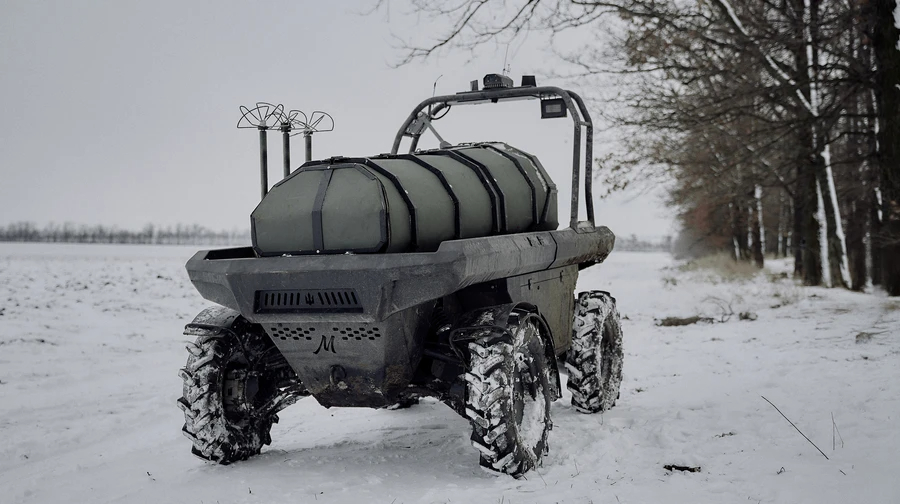
The MAUL unmanned ground vehicle. Source: AIDronesUA

Ukraine's ground robots ran more than 100,000 missions in the first eight months of 2026. The Defense Procurement Agency will now buy logistics and strike ground robotic complexes according to specifications set by the Defense Ministry, rather than approving models one at a time, the ministry announced.

The mechanism is three days old. The agency applied the same structure to fiber-optic FPV drones on 22 August—classes, multiple lots each, no supplier above half a class. Ukraine is standardizing how it buys entire weapons categories, one category at a time.

The rules sort makers by class

Complexes will be divided into classes by operating range and payload, with four to five lots per class. No single manufacturer may take more than half the order within one class.

Suppliers must meet the technical specifications and hold at least one codified ground robotic complex. The procurement runs in a closed environment under defense security requirements.

"A tender is one of the best instruments for this, because we can buy more equipment for the same money and minimize the risk of supply disruptions by splitting the order among different manufacturers," Deputy Defense Minister Mstyslav Banik said.

Mission volume keeps climbing

Monthly figures of ground robot missions logged in the DELTA combat system rose almost without interruption: 7,511 in January, 11,028 in April, 19,969 in July. Units recorded another 15,729 between 1 and 20 August, about 790 a day compared with roughly 640 a day in July, The Defense Post reported.

Ukraine has contracted more than 22,000 ground robots since January, nearly double the total for all of 2025. The number of units operating them grew from 117 at the end of 2025 to 230 by mid-2026.

A commander disputes the evacuation case

The ministry lists casualty evacuation as one of the tender's purposes. A frontline officer challenged that three days ago.

Tetiana Chornovol, who commands an anti-tank guided missile platoon, said ground robots are too slow for evacuation and often easy targets for Russian drones, arguing brigades need staffed evacuation teams and small light-armored vehicles instead.

  • ✇Euromaidan Press
  • One pilot, five bombers: Ukraine’s Lasar’s Group ties whole raid to single operator to save manpower
    Ukraine's army doesn't have as extensive human resources as Russia, so it is teaching its machines to do more of the work on their own. Ukrainian developers are building autonomy into aerial and ground drones so the systems take over tasks the operator once did, the defense outlet Oboronka reported. Across reconnaissance, bombing, interception, and ground robots, Ukrainian firms are automating the steps that once tied up a pilot, allowing a single operator to run multip
     

One pilot, five bombers: Ukraine’s Lasar’s Group ties whole raid to single operator to save manpower

22 août 2026 à 16:51

The Droid TW 12.7. Credti: Devdroid

Ukraine's army doesn't have as extensive human resources as Russia, so it is teaching its machines to do more of the work on their own. Ukrainian developers are building autonomy into aerial and ground drones so the systems take over tasks the operator once did, the defense outlet Oboronka reported.

Across reconnaissance, bombing, interception, and ground robots, Ukrainian firms are automating the steps that once tied up a pilot, allowing a single operator to run multiple drones at once.

Automating reconnaissance and mission planning

The heaviest early demand for autonomy is in reconnaissance. Farsight Vision's FSV Platform builds real-time 3D terrain maps from drone imagery for planning assaults and strikes, and models where enemy electronic warfare and radio dead zones lie, so FPV pilots can avoid losing their link.

Meanwhile, Sine Engineering offers "autonomy modules" that let a drone navigate on its own. A Mavic flies to an observation point, works for 30 to 40 minutes, and returns, with the pilot only turning the camera, so one operator can run several drones.

"70 to 80% of the need for autonomy right now is reconnaissance," Sine Engineering CEO Andrii Chulyk said.

Autonomy for bombers and FPVs

Heavy bomber drones waste most of a pilot's time in transit. A bomber's target can sit 35 to 60 kilometers from launch, over 25 minutes each way, and a mass raid needs a pilot per drone, so Lasar's Group uses route-planning software to tie up to five bombers to one pilot, who connects for a few minutes to line up each strike.

A single pilot can carry out bombing runs one after another with a group of bombers, preserving personnel for other missions.

Autonomous FPVs are pricier but far more capable: Chulyk estimated an AI drone that finds and destroys a target in a swarm would cost $2,000 to $3,000, against about $700 for a pilot-flown night FPV with auto-capture.

Sine Engineering argues one automated FPV can replace up to ten simpler drones in hard missions, while The Fourth Law's Maksym Savanevskyi favors adding auto-capture to cheap existing drones, which he says makes a radio-controlled drone two to four times more effective.

"Fire and forget" for interceptors and robots

The hardest problem for interceptor drones is the "last mile", spotting a small target against open sky. The Fourth Law's TFL Anti-Shahed module scans the sky and detects targets at twice the range of the human eye, marking a Shahed so the pilot knows where to fly.

Savanevskyi predicts Ukrainian makers will field automatic Shahed-killing solutions by year's end. That points toward "fire and forget" interception, said Yevhen Lesin of the 412th Nemesis unmanned-systems brigade, though he warned against autonomy for its own sake, noting automated launch from ground robots creates technical problems and needs more people, not fewer.

Ground-robot autopilots remain among the field's hardest tasks: DevDroid's Oleh Fedoryshyn noted it took Tesla ten years to make the car autopilot work. At the same time, frontline dirt roads, cratered and unmarked, are nothing like marked highways, so DevDroid's robots now cross only short link-dead stretches on their own before the operator resumes control.

Evacuation is “force majeure that no one is ready for” in most Ukrainian units, and robots are too slow to fix it, commander says

22 août 2026 à 13:02

A Ukrainian officer says the army still has no proper system for getting its wounded off the battlefield. Tetiana Chornovov, the commander of a platoon of anti-tank guided missile systems, has called for systemic reform of casualty evacuation in Ukraine's Armed Forces, saying that in the fifth year of the full-scale war, evacuating soldiers from the battlefield remains in most units "a force majeure that no one is ready for."

Most Ukrainian units lack dedicated evacuation groups and specialized armored transport, so evacuations happen in chaos with improvised means, with exceptions only in individual brigades, she says.

Amid public debate over whether ground robots can do the job, Chornovol argues the problem is larger than any single technology, and that the absence of a reliable way out shapes how soldiers fight.

The psychological stakes

Chornovol said the certainty of rescue matters as much as the rescue itself.

"You can't imagine how the existence of professional evac groups would improve the psychological atmosphere at the front. Everyone wants to hope that someone will come for them, will save them," she said.

Her own fear is concrete. Fighting in her fifth year, she said her greatest fear is "that something happens to my people and we'll be helpless, because the evacuation problems will be my problems, and in a small platoon I can't allocate resources to create my own evac group."

One evacuation, seven casualties

Chornovol has backed her argument with a case from a year ago, when her Stuhna anti-tank missile crew was subordinated to a neighboring brigade. At four in the morning, she was told of one killed and one wounded by an enemy chemical-weapons strike, with the evacuation placed entirely on her crew despite weak coordination and unfamiliar terrain.

The rescue attempts compounded the toll.

"My combat vehicle with excellent electronic warfare and an anti-mine grader, which set out for the evacuation, blew up on an anti-tank magnetic mine dropped from a drone," she recalled.

The grader saved lives, but four of her best soldiers were badly concussed. A second vehicle from the brigade, with one of her men as a guide, hit another anti-tank mine, but without a grader: "the mine exploded under the hood, the driver lost his legs, the others were concussed." A third vehicle made it through by luck and took out the wounded and the dead.

"So one evacuation, seven casualties. One severe, without legs," she said, noting the brigade simply had no normal evac group or evac protocol.

She organized the Stuhna evacuation herself, bringing in border guards to control the road, waiting for a window in drone flights, and repairing the electronic-warfare gear stripped from the first knocked-out vehicle.

What Chornovol wants built

Chornovol believes that creating separate staffed evacuation units within brigades is the most necessary reform now, each with an autonomous team and special transport.

"There should be the best drivers, with salaries like assault troops, but also medics, pilots, EW specialists, sappers to defuse mines dropped by drones, and pros: hunters with shotguns to down drones," she said.

On equipment, she argued against relying on ground robots, which she agrees are too slow for evacuation and often easy targets for enemy drones. The main transport, she said, should be a small, fast, lightly-armored vehicle with an anti-mine bottom, light enough to survive the anti-tank mines the enemy drops.

"For a platoon, such equipment is too much, but I don't understand why the whole brigade we were attached to didn't have such an evac vehicle," she said.

She nearly lost five of her men, she added, because of the absence of adequate evacuation approaches and proper light-armored vehicles in the army, asking why the National Guard has them for evacuation while the Armed Forces do not.

Ukraine takes Soviet BRDM-2s from its stockpile and rebuilds them into remote robots, with a Mercedes diesel under consideration

21 août 2026 à 08:04

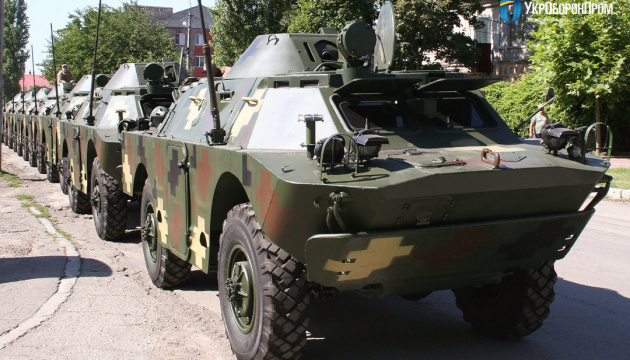
Soviet-made BRDM-2 armored reconnaissance vehicles. Source: Ukroboronprom

Ukraine is giving its stockpiled Soviet armored scouts a second life as robots that fight without a crew. Ukrainian producers are converting Soviet-made BRDM-2 armored reconnaissance vehicles into remote-controlled robotic platforms for use on the line of contact after testing, Colonel Vladyslav Voloshyn of the Armed Forces' Central Directorate for Innovation told Ukrinform.

The project turns obsolete Soviet stock into uncrewed platforms that keep soldiers out of danger. Ukraine holds a significant number of BRDM-2s in storage, and reworking them into remotely operated robots as part of a broader push to hand the most dangerous battlefield tasks to machines.

The converted vehicle fights without a crew aboard

The platform will have expanded capabilities to integrate a remote-controlled combat module with automatic weapons of at least 12.7mm caliber, which should increase units' effectiveness and help preserve soldiers' lives, Voloshyn said.

"The main thing is preserving the lives of personnel," he stressed.

It is equipped to operate remotely. The modernized vehicle will carry day-and-night cameras for situational awareness, remote-control systems for its main functions, and location, navigation, and orientation systems, with the combat module integrated over protected data channels.

The upgrades run deep

The conversion goes beyond adding a remote control. Ukraine is developing the ability to control the vehicle from up to 1,000 kilometers away. It also plans to replace the Soviet gasoline GAZ engine with a powerful foreign-made diesel engine, with General Motors or Mercedes engines under consideration, along with an automatic transmission, Voloshyn said.

It gets modern protection too. The vehicle will have added anti-mine protection for the hull bottom, tubeless high-mobility tires, a backup remote-control system inside the body, and anti-fragmentation protection, Voloshyn said.

The work is being accelerated

Preparation is underway for the vehicle's testing and use on the line of contact, according to the Ukrainian colonel, though he did not specify a completion date, explaining that some information on such projects is not for wide release.

One combat episode pushed the timeline up. After a particular battlefield case, the work is to be accelerated, Voloshyn said, adding that the modernized BRDM-2 "may well become a breakthrough on the line of contact."

  • ✇Euromaidan Press
  • 1.2 million weapons in a year: Inside Ukraine’s Amazon-for-arms that ships to the frontline in 24 hours
    Ukraine's weapons marketplace DOT-Chain Defense has compressed delivery times from months to weeks after one year of operation, the country's Defense Ministry reported. For the fastest product categories—electronic warfare gear, ground robots, interceptor drones—orders now reach units within 24 hours. Ukraine's war against Russia's invasion has pushed Kyiv to rebuild military procurement from the ground up, trading slow bureaucratic pipelines for digital platforms where
     

1.2 million weapons in a year: Inside Ukraine’s Amazon-for-arms that ships to the frontline in 24 hours

18 août 2026 à 15:46

A Ukrainian drone operator.

Ukraine's weapons marketplace DOT-Chain Defense has compressed delivery times from months to weeks after one year of operation, the country's Defense Ministry reported. For the fastest product categories—electronic warfare gear, ground robots, interceptor drones—orders now reach units within 24 hours.

Ukraine's war against Russia's invasion has pushed Kyiv to rebuild military procurement from the ground up, trading slow bureaucratic pipelines for digital platforms where frontline units pick and receive their own weapons faster than Western militaries have managed. Domestic manufacturers now make 90% of newly authorized systems.

Fastest deliveries measured in hours

The Defense Ministry and the Defense Procurement Agency DOT have jointly driven the acceleration, according to the ministry's statement.

"Delivery times for drones and other systems have shrunk from months to a matter of weeks, and often to days," the ministry said.

Beyond that general compression, several categories saw delivery within a single day. Electronic warfare systems, ground robotic platforms, reconnaissance and bomber drones, interceptor drones, and FPV drones on both fiber-optic and radio control all reached units within 24 hours. Ammunition for unmanned systems arrived within six days.

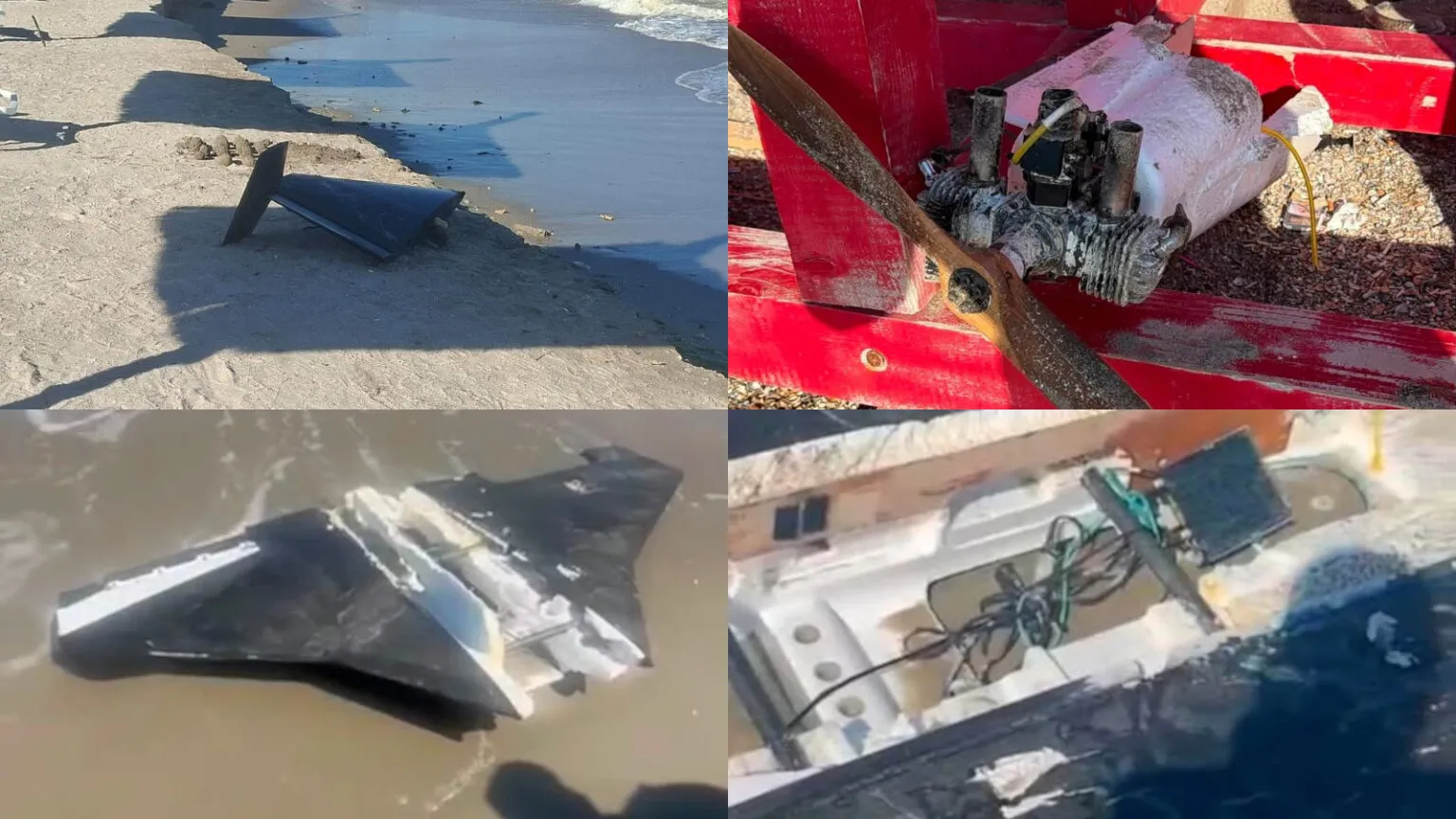
Four-image collage showing drone wreckage found on Romania’s coast and in nearby waters, including wing fragments, an engine and propeller, and exposed electronics.
Explore further

Russian drone attacks on Ukraine’s Danube ports hit recent high, Romania says

Over the first year, the platform shipped more than 1.2 million drones and other systems. Units now choose from 1,181 products made by 300 domestic manufacturers.

How the marketplace works

DOT-Chain Defense supplements centralized state supply rather than replacing it, the ministry noted. Combat units use allocated funds to browse and order the equipment they need for their section of the front. The marketplace handles contracts, payments, and delivery.

The platform's drone constructor tool lets units customize drone configurations before ordering. A dedicated training course on using the marketplace recently launched inside the Army+ mobile app.

ukraine timed its huliaipole operation around weather — worked here's why won't happen again soon · post ukrainian soldier 92nd assault battalion machine gun 2026 armed forces infantry frontline operations
Explore further

US copies Ukraine: Washington launches Amazon-backed UAVs marketplace, inspired by Kyiv’s Brave1 Market and DOT-Chain Defense

Broader procurement picture

The one-year milestone caps a period of rapid scaling across Ukraine's defense procurement. The country contracted about $8 billion worth of drones in the first half of 2026—double the same period last year, according to the Defense Ministry.

More than 400 combat units now shop for weapons through the marketplace's companion Brave1 Market program using points earned for confirmed battlefield activity. Washington modeled its own Unmanned Aircraft Systems Marketplace on the Ukrainian original earlier this year.

The Ukrainian company behind MAUL — a robot that hits 70 km/h and survives flipping over — moves toward investment from an $81M US firm

17 août 2026 à 15:45

The MAUL unmanned ground vehicle. Source: AIDronesUA

Ukrainian company AIDronesUA and US-based Empery Digital Inc. have signed a document creating the conditions for strategic investment, according to Defender Media. AIDronesUA develops the MAUL unmanned ground vehicle, a casualty evacuation, logistics, and ammunition-delivery platform that was previously presented at the Eurosatory 2026 defense exhibition in Paris.

MAUL is built on an all-terrain vehicle equipped with an internal combustion engine, which offers a significant advantage over electric motors by enabling higher speeds. The drone can travel at up to 70 km/h when a reliable communications link is available. Its engine also allows it to operate in cold weather without the limitations associated with batteries, ArmyInform reports.

MAUL is equipped with four different types of communication links, which can back each other up. The UGV can continue moving even after overturning. Ukrainian military personnel have reported instances in which a vehicle flipped over, returned to its wheels, and continued moving.

Final agreement has not yet been signed

The parties emphasize that, at this stage, this is not a finalized investment agreement. The companies will conduct a feasibility study, financial modeling, and due diligence to assess the potential for future cooperation.

Empery Digital Inc., with which negotiations are underway, has a market capitalization of more than $81 million. The company is involved in the production of electric vehicles and also operates in the digital assets sector, including cryptocurrency.

Access to the US investment market

As part of the due diligence process, Empery Digital plans to assess AIDronesUA's technologies, operations, production requirements, financial needs, regulatory considerations, supply chains, and opportunities for international expansion.

A final agreement can be concluded only after the necessary approvals are obtained, negotiations are finalized, and the relevant documents are signed.

Potential cooperation with the US company could give AIDronesUA access to US investment, international manufacturing expertise, and global markets. The company is also considering integrating Ukrainian-developed technologies into international manufacturing and supply chains.

Ukraine’s ground robots ran nearly 17,000 missions in June. Every one depended on holding signal, problem this new antenna targets

16 août 2026 à 12:14

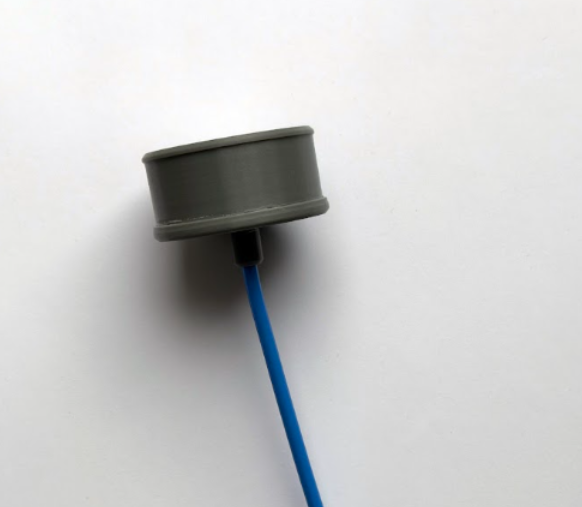
Ukraine's BlueBird Tech unveiled the CLOVER 5.8 GHz antenna. Source: RBC-Ukraine

A Ukrainian company has built a tiny antenna to solve one of the drone war's hardest problems: staying connected. Ukraine's BlueBird Tech has unveiled the CLOVER 5.8 GHz antenna, a 25-gram device for transmitting and receiving radio signals, according to RBC-Ukraine.

The antenna addresses the connectivity problem at the center of Ukraine's drone war. Keeping drones linked to their operators under heavy jamming is one of the war's persistent technical challenges, and the CLOVER is one Ukrainian company's answer.

Previously, Serhii “Flash” Beskrestnov, an adviser to the Ukrainian president, confirmed that the main problem for Ukrainian forces operating some 25,000 combat robots is not hardware limitations but connectivity restrictions.

The design is built to hold a link in motion

The antenna's shape is engineered for stability. Due to its clover design, circular polarization, and omnidirectional radiation pattern, the antenna works even in dynamic conditions.

Weight is decisive for a drone. At 25 grams, the CLOVER adds almost nothing to a small aircraft, leaving weight for payload, battery, or range, which matters for the small FPV drones that do much of the fighting, where a reliable signal and low weight are both at a premium.

It works on drones and ground robots

The antenna is not only for flying drones. It can be installed and used on ground robotic systems as well as FPV drones, and extended to the uncrewed ground vehicles that Ukraine increasingly uses for logistics and evacuation, which face the same connectivity challenge.

In June, Ukrainian ground robots ran nearly 17,000 supply and evacuation missions. Every one of those runs depends on the robot holding a signal, the problem the CLOVER is built to address.

It is built for quick integration. Despite its compact size, the CLOVER covers a wide 4.9-6.1 GHz range and comes with an SMA male connector and an RG402 cable, allowing it to integrate quickly into drone-detection tools, radio-monitoring complexes, and measurement equipment. It is compatible with the main systems on the market.

  • ✇The Kyiv Independent
  • Ukraine approves new 'Murakha' ground robot for combat use
    The Defense Ministry has approved the Ukrainian-made ground-based robotics complex "Murakha" ("Ant") for combat operations, the ministry announced on June 28. Since 2024, Ukraine has been scaling up robotics development in hopes that mass production of unmanned ground vehicles (UGVs) will "minimize human involvement on the battlefield." The Murakha is a tracked robotic platform designed to support front-line units working under challenging conditions, such as under enemy artillery and in heavily
     

Ukraine approves new 'Murakha' ground robot for combat use

29 juin 2025 à 00:58
Ukraine approves new 'Murakha' ground robot for combat use

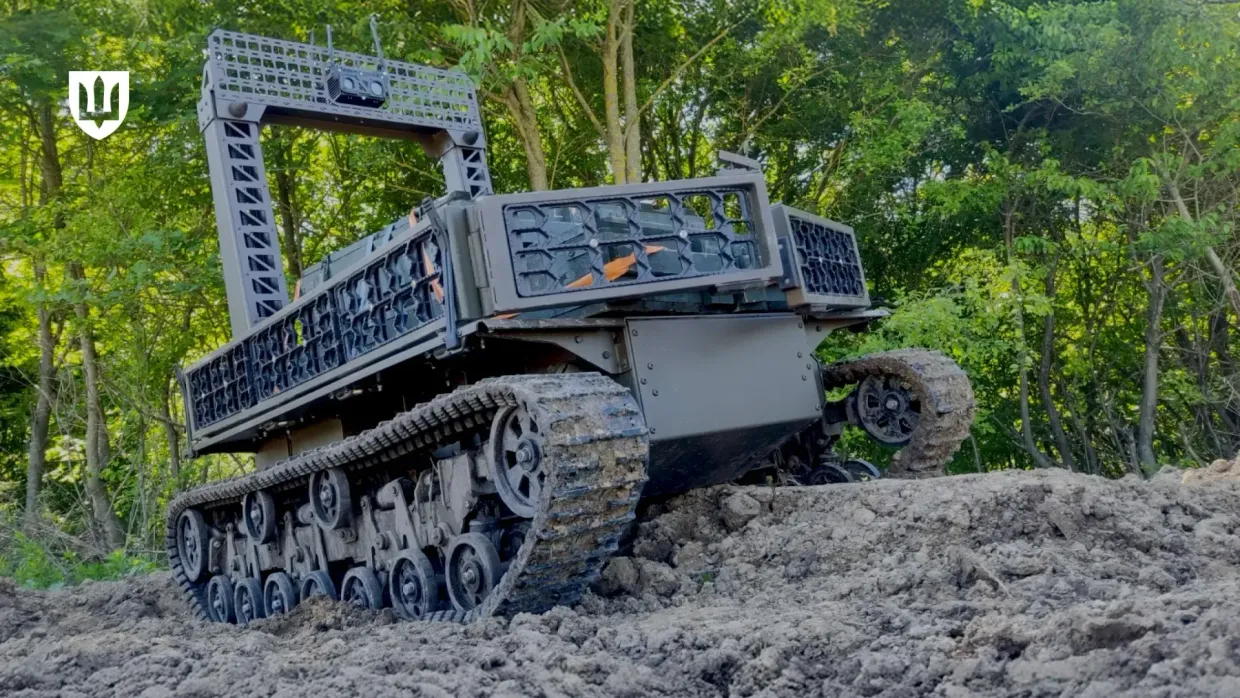
The Defense Ministry has approved the Ukrainian-made ground-based robotics complex "Murakha" ("Ant") for combat operations, the ministry announced on June 28.

Since 2024, Ukraine has been scaling up robotics development in hopes that mass production of unmanned ground vehicles (UGVs) will "minimize human involvement on the battlefield."

The Murakha is a tracked robotic platform designed to support front-line units working under challenging conditions, such as under enemy artillery and in heavily mined terrain, the Defense Ministry said.

Its larger size makes it one of Ukraine's leading UGVs in terms of load capacity. The Murakha can reportedly carry over half a ton of weight across dozens of kilometers. It can also cross difficult terrain and shallow water.

According to the Defense Ministry, the Murakha's multiple control channels allow it to function successfully even in areas of the battlefield where Russian electronic warfare (EW) systems are operating.

Mobile robots are capable of performing several tasks on the battlefield, including offensive and defensive activities, evacuation of the wounded, logistical support for units, and mining and demining.

In April, the Defense Ministry unveiled the D-21-12R UGV, a ground-based robot equipped with a machine gun.

Ukrainian drones strike missile, drone arsenal in Russia’s Bryansk Oblast
Ukraine’s military intelligence (HUR) struck on June 28 the 1060th Material-Technical Support Center in the city of Bryansk, Ukraine’s General Staff said. The facilities store a Russian missile and drone arsenal, Ukrainska Pravda reported, citing a source in HUR.
Ukraine approves new 'Murakha' ground robot for combat useThe Kyiv IndependentDmytro Basmat
Ukraine approves new 'Murakha' ground robot for combat use
❌