Vue normale

  • ✇Euromaidan Press
  • Russia’s Odesa strikes halve Ukraine’s grain export forecast

    Ukraine’s Agriculture Ministry has cut its forecast for agricultural exports in 2026–2027 by 54% as Russian attacks disrupt shipping through Odesa’s ports, Bloomberg reported. The ministry now expects 29.6 million tons of agricultural exports, down from 64.4 million. Its wheat export forecast fell by 53%, from 17.6 million tons to 8.3 million tons. Ukraine grows far more grain than it consumes, exporting 65%–70% of its agricultural output. Bloomberg said the sector
     

Russia’s Odesa strikes halve Ukraine’s grain export forecast

11 août 2026 à 13:47

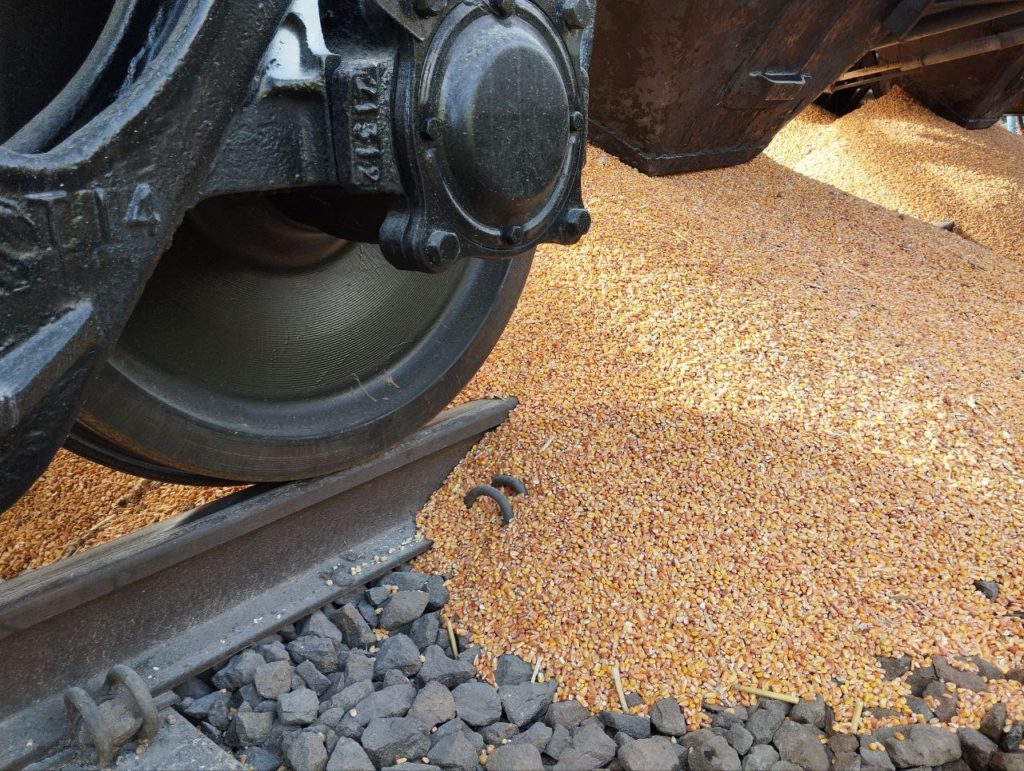
Grain pours from a combine harvester into a trailer during harvest in Ukraine.

Ukraine’s Agriculture Ministry has cut its forecast for agricultural exports in 2026–2027 by 54% as Russian attacks disrupt shipping through Odesa’s ports, Bloomberg reported.

The ministry now expects 29.6 million tons of agricultural exports, down from 64.4 million. Its wheat export forecast fell by 53%, from 17.6 million tons to 8.3 million tons.

Ukraine grows far more grain than it consumes, exporting 65%–70% of its agricultural output. Bloomberg said the sector generated more than half of Ukraine’s export revenue last year. But Russia’s summer attacks have stalled the sea corridor as the harvest arrives, driving some wheat prices below production costs. Land and river routes cannot match the Black Sea shipping capacity, while sales through neighboring EU states remain politically contested. That leaves farmers with less money for the next sowing and further reduces Ukraine’s export income.

Ukraine has about 59 million tons of grain storage. That storage could be full by early November, leaving the country 11 million tons short of space by the end of fall 2026. 

Wheat sells below cost as the silos fill up

Ukraine’s export bottleneck is already hitting its farmers. Port prices fell by another 12-15% in one week, while some farmers sold wheat below production cost. When ships stop, traders either stop buying or pass the higher cost of alternative routes on to producers. That leaves farmers with less cash for fall sowing.

To ease the pressure, the government has approved subsidized loans for agricultural producers. President Volodymyr Zelenskyy said Kyiv would expand storage. Ukraine's Agriculture Ministry has also asked the European Commission for €220 million to help cover interest for small and medium-sized farms.

Ukraine and Moldova are discussing a rail route to Romania’s Constanța port. According to the report, grain was already being redirected through Romania, Slovakia, and Hungary, but these routes cannot replace Odesa’s capacity.

Now the ports and the ships are Russia's targets

The export bottleneck is only part of the problem. Russia’s bombardment also threatens the ports, civilian ships, and crews needed to keep the corridor operating. 

The port of Odesa normally handles about 90% of Ukraine’s grain shipments. Russia intensified attacks on terminals and civilian ships in July 2026 as the harvest reached the coast.

On 19 July, three Russian missiles struck the foreign-flagged Golden Leo as it left Odesa carrying corn, killing 10 people, including a Ukrainian sea pilot. Three days later, no vessel passed through the corridor.

Alternative routes offer little relief, as record-low Danube levels were restricting river traffic. Poland continues to bar Ukrainian grain from its domestic market. Those constraints leave more of the harvest inside Ukraine and farmers with less money to plant the next crop.

  • ✇Euromaidan Press
  • Russia’s tank shield shot down seven drones—Ukraine destroyed the tank anyway
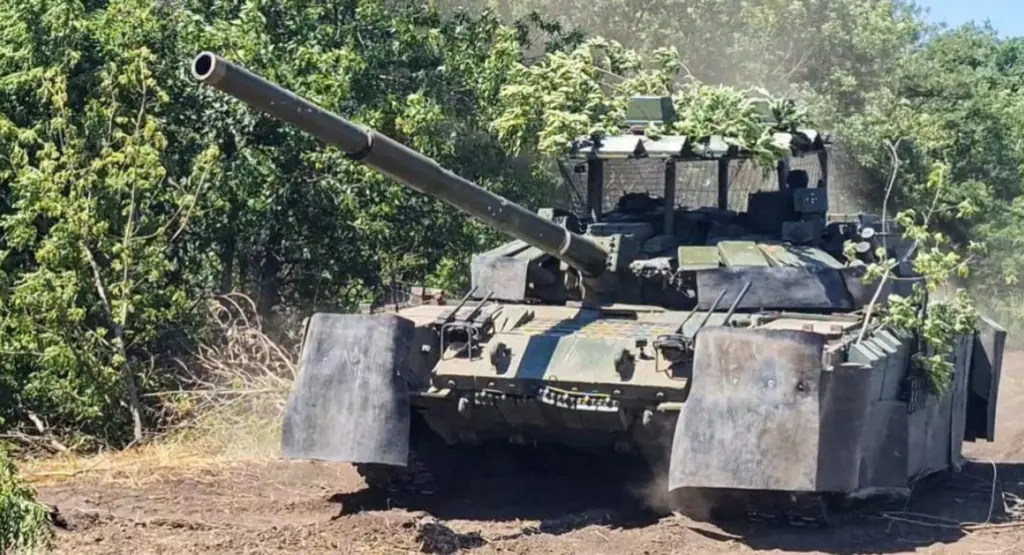
    Russia wants its tanks moving again after two years of Ukrainian drones freezing its armored assaults, the Institute for the Study of War (ISW) reported. Its main bet is a tank-mounted system that fires interceptors at incoming drones. The system worked on at least one tank, but Russia lost it anyway. Since 2022, cheap Ukrainian FPV drones have turned the open approach to any position into ground where armor rarely survives, forcing Russia into slow, infantry-led as
     

Russia’s tank shield shot down seven drones—Ukraine destroyed the tank anyway

11 août 2026 à 12:52

T-72B3A tank equipped with the Arena-M active protection system (APS). Photo: iz.ru/Dmitry Astrakhan

Russia wants its tanks moving again after two years of Ukrainian drones freezing its armored assaults, the Institute for the Study of War (ISW) reported. Its main bet is a tank-mounted system that fires interceptors at incoming drones. The system worked on at least one tank, but Russia lost it anyway.

Since 2022, cheap Ukrainian FPV drones have turned the open approach to any position into ground where armor rarely survives, forcing Russia into slow, infantry-led assaults and years of experiments to armor its tanks against drones.

The shield shot down some drones. Ukraine still killed the tank.

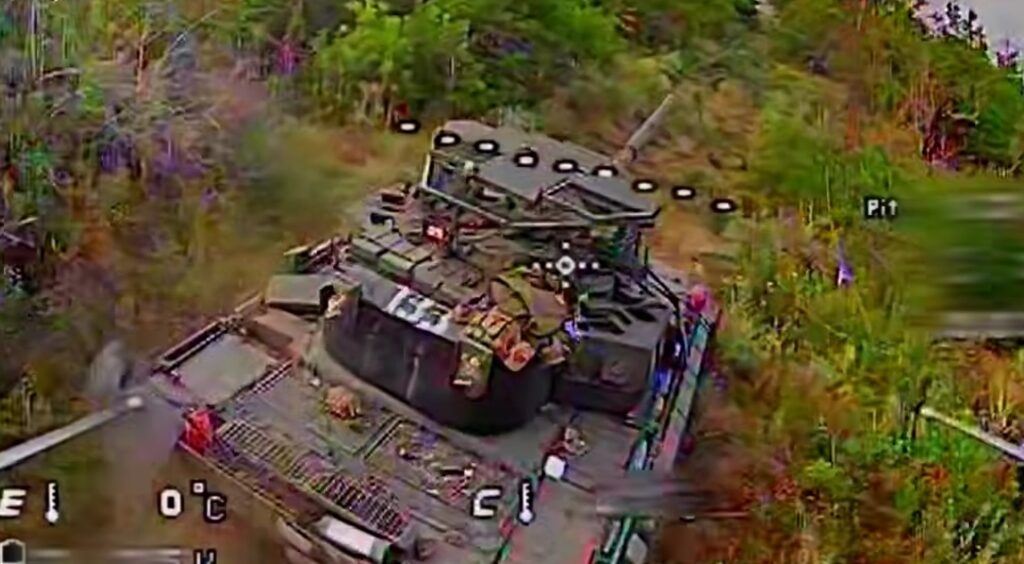
In early August, footage surfaced of Ukrainian drones destroying a Russian tank fitted with the Arena-M active protection system in the Dobropillia sector of Donetsk Oblast. Militarnyi identified the vehicle as a T-72B3A, side number 133, and Militarnyi reported that Ukraine's Security Service (SBU) released the clip. ISW geolocated the footage near occupied Volodymyrivka, east of Dobropillia.

A T-72B3A the moment before a Ukrainian drone strikes.
Explore further

Russia took the cages off its newest tanks. The new Arena-M shield bought them a few minutes.

Dmytro Putiata, a Ukrainian combat drone specialist who posts as kriegsforscherD, spoke with the unit involved. On that tank, Arena-M shot down seven drones before its magazine ran dry, he said.

"Unfortunately, it works," Putiata wrote.

It still wasn't enough. Ukrainian crews finished the tank off with more drones. It took 15 to 20 first-person-view (FPV) drones to kill each vehicle, Putiata said. Footage shows the tank moving with its interceptor cells empty. It was the first time the Arena-M was credited with shooting drones down in combat.

Russia keeps sending tanks into that ground for a reason

Russian forces are experimenting with new technology to restore mechanized maneuver and break out of positional warfare—the static, trench-like fighting that has defined the front, ISW reported. They are fitting tanks with active protection systems to help armor survive in the "kill zone," the open ground where drones and other weapons destroy almost anything that moves.

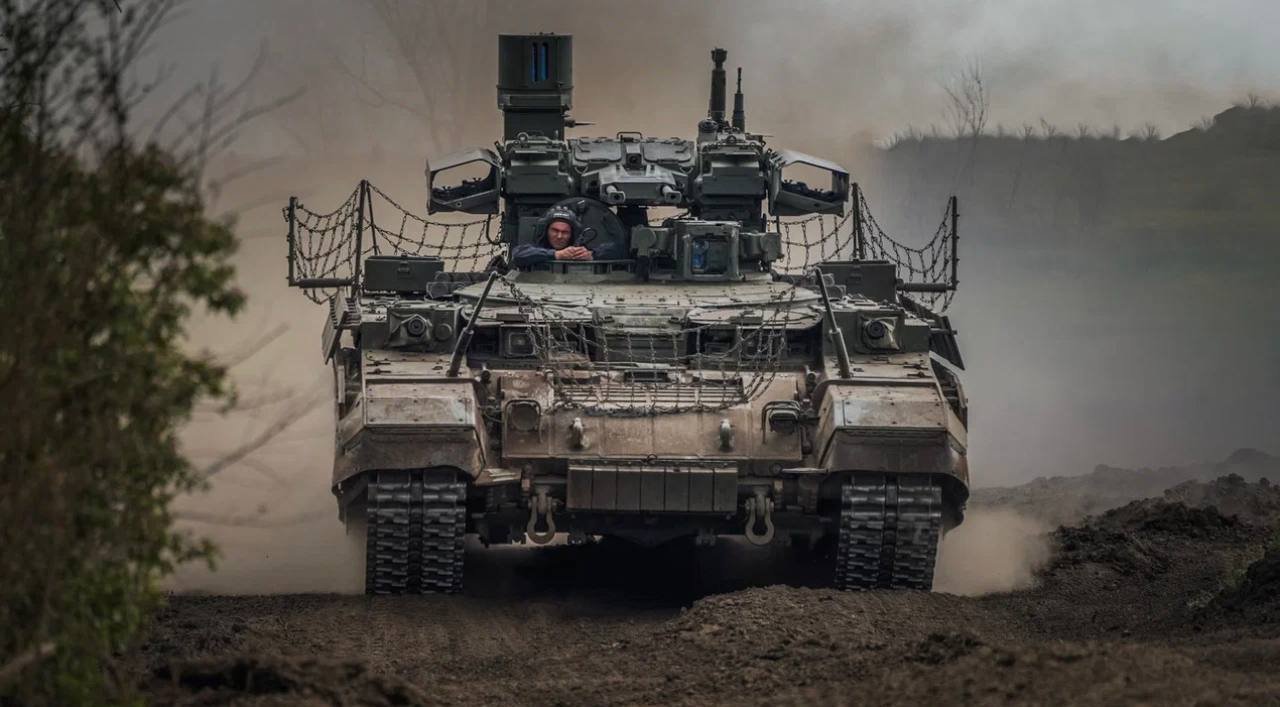
A BMP-T in 2026.
Explore further

Russia’s weirdest armored vehicle was built to fight infantry. The infantry stopped coming

ISW judged that Arena-M alone cannot shield Russian assaults from the drones, let alone the rest of Ukraine's weapons. Russian commanders have largely kept tanks off the roads because drones kill them faster than factories rebuild them. In these assaults, the tank's job is less to fight than to survive long enough to drop infantry closer to Ukrainian lines. Russia will likely keep trying to restore maneuver even after its late-July mechanized assault in the Dobropillia sector failed, ISW added.

Why Russia wants the shield: the cages don't let tanks fight

The bolt-on armor carries a cost. Cope cages and "turtle" shells weigh tanks down and often jam the turret so the main gun can't aim. That trade-off is part of why Russia wants Arena-M: protection without the bulk, so a tank can still move and shoot. Russia recently sent tanks stripped of the welded cages, carrying the shield instead.

Moment of impact of the T-72B3M tank “133,” equipped with the Arena active protection system and empty countermeasure launcher cells.
Moment of impact of the T-72B3M tank “133,” equipped with the Arena active protection system and empty countermeasure launcher cells. Screenshot from an SBU video.

Arena-M is not new. Active protection systems like it were first built to stop anti-tank missiles, and Russia adapted this one to catch drones. The system's lineage dates back to the late Soviet era, and Russian industry has for years claimed mass deployment that never came. Designers worked on fitting it to T-72B3 and T-90M tanks since at least 2019, yet only single vehicles turned up by 2024—some used to shoot a propaganda film rather than fight.

Russia’s education minister calls it “objective.” A new textbook teaches Ukrainian children that their occupied region is historically Russian

11 août 2026 à 10:00

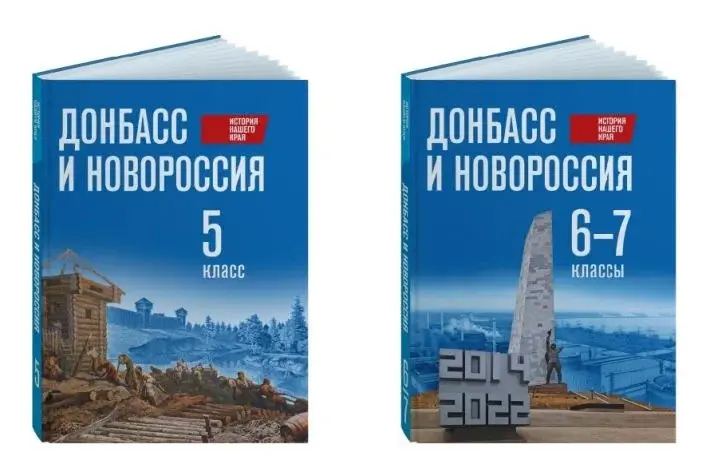
Covers of Russian “Donbas and Novorossiya” history textbooks for students in grades 5–7.

Russia will introduce two editions of a new regional history textbook series in occupied Ukrainian schools on 1 September 2026. The books present the occupied Ukrainian regions as historically Russian, MOST, a Kherson-based outlet, reported on 10 August.

The new textbooks bring Russia's campaign to erase Ukrainian identity into occupied classrooms, where authorities remove Ukrainian from curricula and replace lessons with Russian ideology, military drills, and firing-range visits. Moscow's Russification campaign extends beyond schools to efforts to change the demographics of occupied Ukrainian territory and re-educate forcibly transferred Ukrainian children.

The new textbook series, entitled "History of Our Region: Donbas and Novorossiya," comprises one edition for grade 5 and another for grades 6–7. The course attached to the books will be compulsory throughout Russia's so-called "new regions," according to the Ukrainian human rights center ZMINA.

"Novorossiya" is an imperial term Moscow uses to claim southern and eastern Ukraine. 

Russia's Education Ministry calls the course "objective" and part of a "unified history of Russia," Meduza reports. Minister Sergei Kravtsov claimed it contains "objective information, rather than the lies that appeared in Ukrainian textbooks."

Replacing the curriculum, then the population

The "Novorossiya" textbook forms part of a broader Kremlin campaign to Russify occupied Ukraine's education, culture, and demographics. 

Since occupying Melitopol, Russian authorities have systematically replaced Ukrainian curricula and textbooks. Older Russian textbooks, issued after Moscow's full-scale war, already depicted occupied Melitopol as part of Russia. 

A 2025 Kremlin strategy requires occupied regions to enter Russia's educational, cultural, and information space. The policy also sets a nationwide target for “All-Russian civic identity” to reach at least 95% by 2036.

35,000 Ukrainian children still missing

Meanwhile, experts estimate that about 35,000 Ukrainian children remain missing and are likely held in Russia or Russian-occupied territory. Yale's Humanitarian Research Lab identified at least 210 facilities used to hold children from Ukraine. The lab found that at least 130 facilities subjected Ukrainian children to pro-Russian cultural, patriotic, or military programs. 

One case shows where such indoctrination can lead. Once listed as missing under occupation, Ukrainian boy Oleksandr Mustiatse later appeared online in a Russian uniform bearing the “Z” invasion symbol, Save Ukraine reported.

  • ✇Euromaidan Press
  • A $300 FPV downs a $20,000 bomber drone. Ukraine tests an EW shield for it
    Ukraine is testing a new electronic-warfare solution to protect heavy bomber drones and unmanned ground vehicles (UGVs) from cheaper FPV drones. The project has reached field testing, with several prototypes sent to military units, RBC-Ukraine reports. Ukraine's war has become a laboratory for the economics of unmanned combat, where a mass-produced quadcopter can take down platforms that cost dozens of times more, forcing both volunteer foundations and defense firms
     

A $300 FPV downs a $20,000 bomber drone. Ukraine tests an EW shield for it

11 août 2026 à 09:27

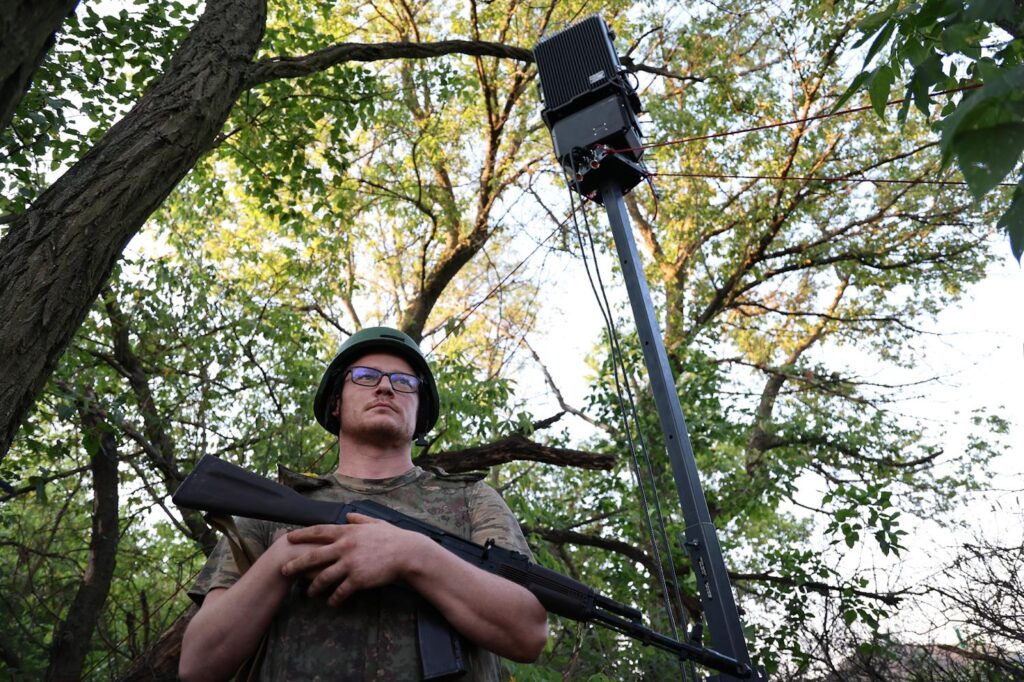
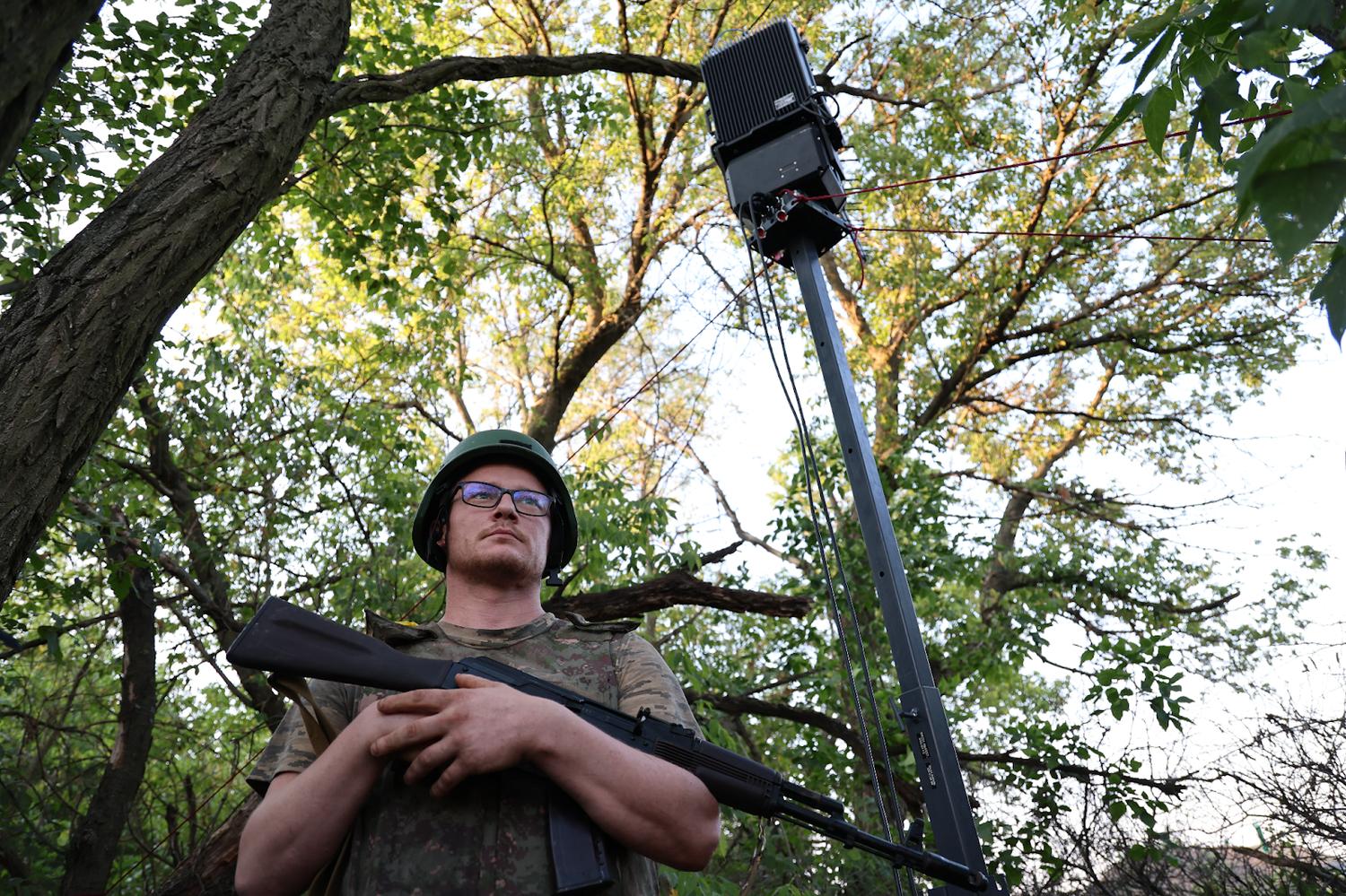
ukraine tests ew system protect $20000 bomber drones $300 fpvs · post vladyslav “vitamin” electronic warfare specialist serving 141st separate mechanized brigade kirichenko3 news ukrainian reports

Ukraine is testing a new electronic-warfare solution to protect heavy bomber drones and unmanned ground vehicles (UGVs) from cheaper FPV drones. The project has reached field testing, with several prototypes sent to military units, RBC-Ukraine reports.

Ukraine's war has become a laboratory for the economics of unmanned combat, where a mass-produced quadcopter can take down platforms that cost dozens of times more, forcing both volunteer foundations and defense firms to look for asymmetric answers on the electronic side of the front.

$20,000 bomber vs. $300 drone

The gap runs more than 60-to-1. Liuba Shypovych, head of the Dignitas foundation, told RBC-Ukraine that a heavy bomber can cost around $20,000, while an FPV drone capable of damaging or destroying it can cost about $300. Shypovych said the bombers are particularly vulnerable because they are relatively slow and less maneuverable than smaller FPVs, and that shootdowns are becoming increasingly frequent.

ukraine tests ew system protect $20000 bomber drones $300 fpvs · post vladyslav “vitamin” electronic warfare specialist serving 141st separate mechanized brigade kirichenko3 news ukrainian reports
Explore further

A $300 FPV downs a $20,000 bomber drone. Ukraine tests an EW shield for it

Yet Ukraine cannot simply stop using the larger drones. According to Shypovych, they are used to deliver water, food, and ammunition to positions that are difficult or impossible to reach by ground. The military therefore approached Dignitas with a request to protect the platforms, and the team is working on the task together with the company Aura.

The jammer has a problem of its own

Equipping a heavy bomber with electronic warfare creates an unusual technical problem. The bomber needs a communications link with its operator, but the same EW system designed to disrupt an incoming enemy FPV could also interfere with that control channel. The problem extends to UGVs, including platforms used to evacuate wounded soldiers. Shypovych said the goal is to develop EW that can counter hostile drones without cutting the Ukrainian platform's own communications.

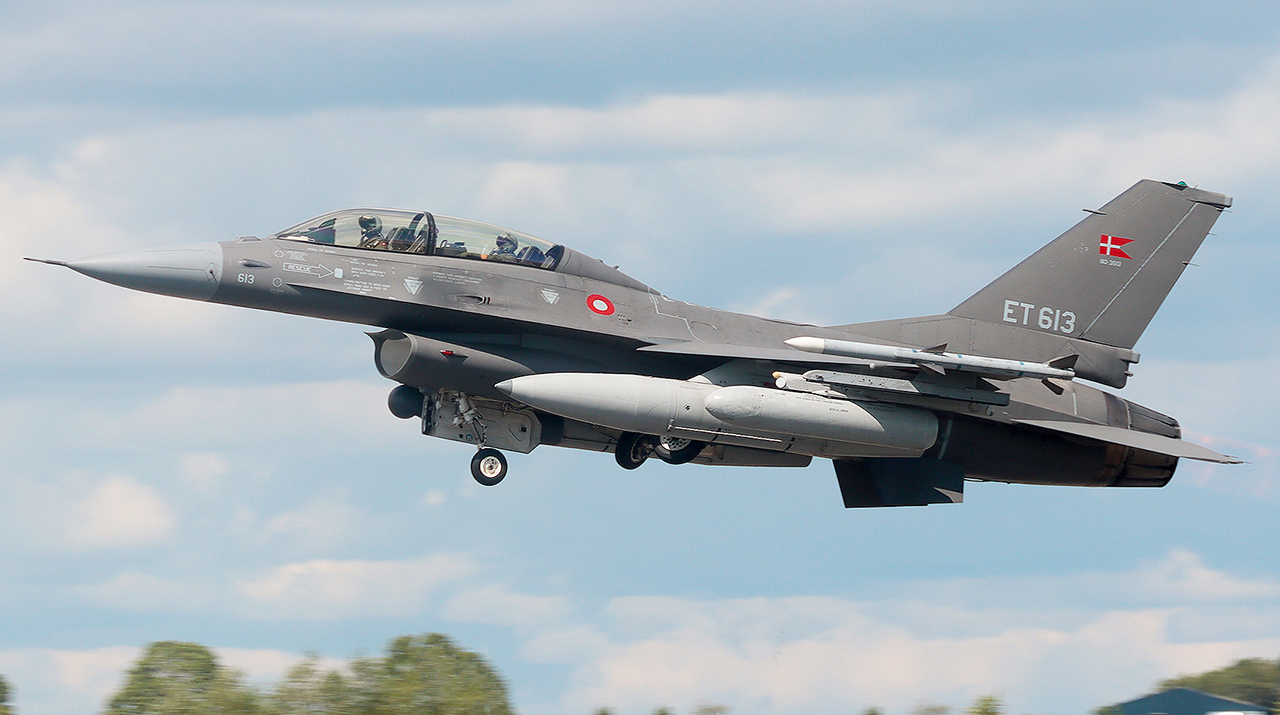
A Danish Air Force F-16BM combat trainer aircraft during a training flight. Photo via mil.in.ua
Explore further

NATO shot down drone over Latvia. Russia’s electronic warfare sent it there

From the test range to the first units

Dignitas and Aura are testing the systems at training grounds and have already sent several samples to military units. Shypovych expects the solution to be ready in roughly two months.

The effort comes as Ukraine rapidly expands its use of unmanned ground systems. Kyiv has set a target to contract at least 50,000 UGVs, with robots already taking on logistics and evacuation tasks in high-risk zones. Ukrainian forces have already received 1,028 UGVs through the DOT-Chain Defense marketplace, with the systems handling logistics, evacuation, mine-laying, and combat. Ukrainian Vampire bombers have also been upgraded to shrug off Russian jamming and even hunt the jammers themselves.

  • ✇Euromaidan Press
  • Seoul says no again to Ukraine’s weapons request as Pyongyang gets ready to send Russia more troops
    South Korea is keeping lethal aid to Ukraine off the table while continuing humanitarian and reconstruction support, Yonhap reported on 10 August. The outlet cited a senior South Korean Foreign Ministry official. South Korea’s response maintains its established policy of providing humanitarian and nonlethal support to Ukraine, but not direct weapons. Seoul previously helped move artillery shells to Ukraine through the United States. While South Korea arms NATO members
     

Seoul says no again to Ukraine’s weapons request as Pyongyang gets ready to send Russia more troops

11 août 2026 à 07:47

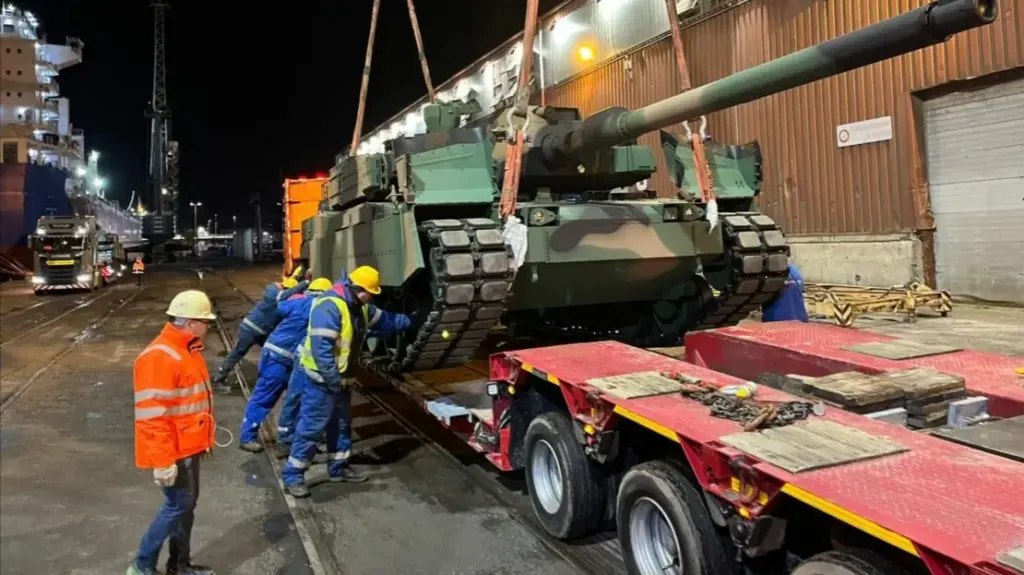
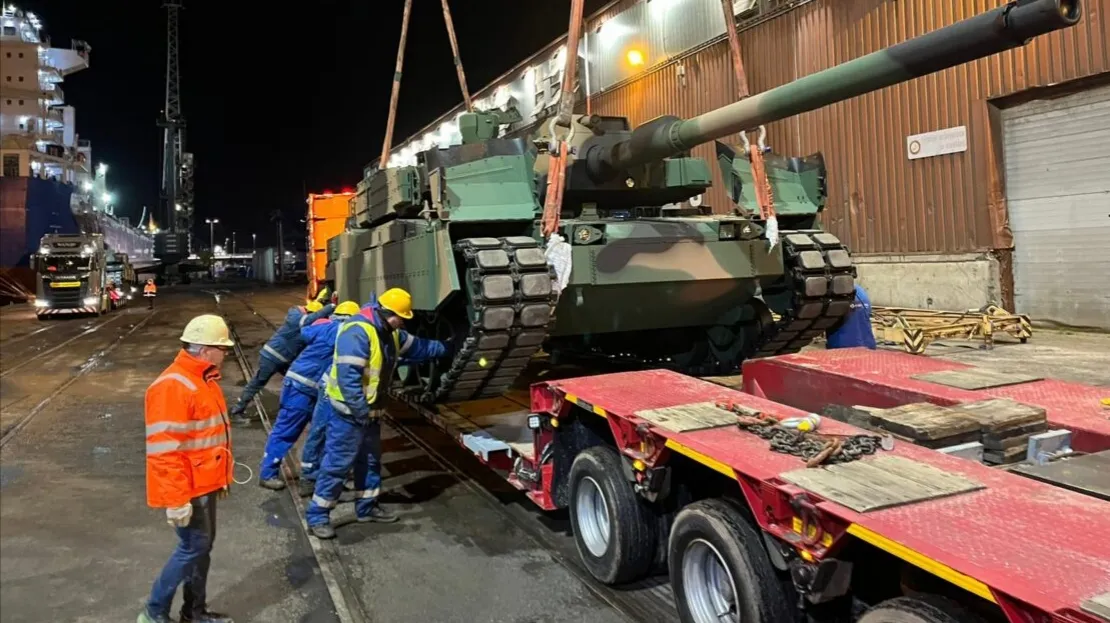
Workers unload a South Korean-made K2 Black Panther tank for the Polish army from a trailer at a Polish port at night.

South Korea is keeping lethal aid to Ukraine off the table while continuing humanitarian and reconstruction support, Yonhap reported on 10 August. The outlet cited a senior South Korean Foreign Ministry official.

South Korea’s response maintains its established policy of providing humanitarian and nonlethal support to Ukraine, but not direct weapons. Seoul previously helped move artillery shells to Ukraine through the United States. While South Korea arms NATO members with K2 tanks and K9 howitzers to free up older kit for the Ukrainian front, it still draws the line at any direct transfer to Kyiv. Seoul rejects Ukraine’s purchase requests as North Korea sends Russia ammunition and troops in exchange for money and military technology.

South Korean law bars direct exports of lethal weapons to countries in active conflict, a rule rooted in constitutional principles and Seoul's wariness of antagonizing Moscow and Beijing while managing the threat from the North.

Ukraine is seeking South Korean interceptor missiles for its air defenses. The official neither addressed the request specifically nor formally rejected it:

South Korea’s supply of defense materials to any country has always been carried out in accordance with domestic law,” the official said. Seoul will continue to support Ukraine’s recovery through assistance in energy, infrastructure, healthcare, and education. 

The official also declined to confirm whether Seoul and Kyiv were discussing military support. However, he said Moscow-Pyongyang military cooperation “is directly related to our security and violates the United Nations resolutions” and should stop immediately.

Seoul’s indirect aid stopped short of direct arms transfers

In 2023, Seoul transferred hundreds of thousands of 155 mm shells to the United States under a confidential arrangement. Washington then arranged for them to reach Ukraine, The Wall Street Journal reported.

South Korean exports have also helped NATO members replace weapons sent to Kyiv. Poland bought South Korean K2 tanks and K9 howitzers while transferring older tanks and Polish-built Krab artillery systems to Ukraine.

Yet Seoul rejected Ukraine’s request to buy air-defense systems, radars, and artillery propellant in November 2024. In February 2026, it still limited support to humanitarian and nonlethal aid while considering NATO’s request to help purchase US weapons for Ukraine.

North Korean deployments bring the war closer to Seoul

Ukrainian President Volodymyr Zelenskyy said a decision had been made to deploy 30,000–50,000 more North Koreans to Russia. He warned that they would gain modern combat experience and Russian technology that could later threaten Asian countries. Kyiv wants South Korean air defenses and has offered cooperation on drones.

The South Korean official cited by Yonhap declined to confirm either the reported deployment or Zelenskyy’s statement that Ukrainian and South Korean diplomats were discussing possible cooperation.

North Korea is already believed to have sent approximately 20,000 combat troops and military engineers to Russia’s Kursk region, according to Yonhap. Pyongyang has earned as much as $22 billion from arming Russia, helping it finance conventional and nuclear forces.

The Japanese outlet Kyodo News reported in November 2025 that North Korea had transferred about 6.5 million rocket and artillery munitions in exchange for Russian air-defense, space, and nuclear technologies.  Moscow and Pyongyang’s 2024 mutual defense pact formalized the expanding military relationship.

Workers unload a South Korean-made K2 Black Panther tank for the Polish army from a trailer at a Polish port at night.

Seoul says no again to Ukraine’s weapons request as Pyongyang gets ready to send Russia more troops

  • ✇Euromaidan Press
  • US forecasters see Ukraine’s corn exports falling 39% as Russia bombs ports
    The US Department of Agriculture's Foreign Agricultural Service (FAS) forecasts that Ukraine's grain exports will fall steeply in the 2026-27 season, with corn shipments dropping 39% to 14 million tonnes and wheat 26% to 10.8 million, World Grain reported. The agency tied the decline to Russia's summer campaign against the Odesa ports, which handle roughly 90% of the country's grain. The forecast puts Washington's own numbers behind what Kyiv has warned for weeks. Ukrai
     

US forecasters see Ukraine’s corn exports falling 39% as Russia bombs ports

11 août 2026 à 07:34

The US Department of Agriculture's Foreign Agricultural Service (FAS) forecasts that Ukraine's grain exports will fall steeply in the 2026-27 season, with corn shipments dropping 39% to 14 million tonnes and wheat 26% to 10.8 million, World Grain reported. The agency tied the decline to Russia's summer campaign against the Odesa ports, which handle roughly 90% of the country's grain.

The forecast puts Washington's own numbers behind what Kyiv has warned for weeks. Ukraine's agriculture ministry projects farm exports could fall by almost half this season, and the FAS estimate — from a body with no stake in Ukraine's budget — points the same way. The difference is where the FAS looks: not at the ships that cannot sail, but at the grain that cannot follow them out.

Grain with nowhere to go

The clearest sign of the blockage is in ending stocks — grain left sitting in the country when the season closes. The FAS expects Ukraine's corn stocks to jump more than tenfold, to 13.5 million tonnes from 1.3 million, and wheat stocks to more than double to 8.2 million. That is grain the harvest produced and the ports could not move.

Ukraine has more than 74 million tonnes of storage for grain and oilseeds, the FAS noted, including about 23 million tonnes of certified warehouse space. Even so, the agriculture ministry has said the country may need another 10 to 12 million tonnes of temporary storage to get through the corn harvest if the Black Sea disruptions continue — most acutely in regions near the front line.

Why Odesa decides the harvest

Almost everything moves through Odesa. Three deepwater ports in Odesa Oblast carry more than 90% of Ukraine's farm exports, and Russia spent the summer hitting them and the ships that call there. Missiles struck the Turkish-owned bulk carrier Golden Leo as it left Odesa loaded with grain on 19 July, killing 10. Days earlier, a Russian drone hit a Palau-flagged corn ship twice as it sailed for Greece.

The land routes that remain — rail, road, and the Danube — cannot take up the slack, and traders have pulled back from buying grain they have no way to ship.

Farming is Ukraine's biggest export earner, bringing in more than half of what the country made selling goods abroad last year. Ukraine is also among the world's largest corn suppliers, which is why a cut of this size registers well beyond its own budget. For the farmers holding this year's crop, the FAS forecast describes a harvest they may not be able to sell.

  • ✇Euromaidan Press
  • Ukraine and Moldova discuss rail corridor for grain amid Russian Black Sea attacks
    Ukraine and Moldova are discussing transporting Ukrainian grain by rail through Moldovan territory to the Romanian port of Constanta, an option driven by intensified Russian attacks on shipping in the Black Sea, according to unnamed sources in both countries cited by Reuters. The talks come as Russian strikes on vessels using the Black Sea corridor have disrupted traffic during the harvest season and forced Ukraine to cut its export forecast. On 22 July, no ship passed
     

Ukraine and Moldova discuss rail corridor for grain amid Russian Black Sea attacks

11 août 2026 à 07:18

Ukrainian grain

Ukraine and Moldova are discussing transporting Ukrainian grain by rail through Moldovan territory to the Romanian port of Constanta, an option driven by intensified Russian attacks on shipping in the Black Sea, according to unnamed sources in both countries cited by Reuters.

The talks come as Russian strikes on vessels using the Black Sea corridor have disrupted traffic during the harvest season and forced Ukraine to cut its export forecast. On 22 July, no ship passed through the corridor at all, and the country's agriculture ministry has already lowered its projection for the 2026–2027 season by up to five million tons.

Discount sought, volume guarantees demanded

Kyiv is asking for a discount of 50 percent off the nominal rate to transport its grain, according to the agency's sources. A source at Moldovan Railway said Moldova responded with a counterproposal: guarantees from Ukraine on the volumes of grain it would transport through the route.

"We are currently collecting information on potential volumes from interested shippers. The information-gathering process has not yet been completed," a senior Ukrainian industry official told Reuters.

Ukraine expects corridor to cover 10 percent of exports

Ukraine estimates the Moldovan corridor could handle 10 percent of its grain exports. Agriculture Minister Taras Vysotskyi said earlier that his ministry had lowered its grain export forecast for the 2026–2027 season from 43 million tons to 38–40 million tons because of Russian attacks on ports.

Ministers discuss rail links

A day before the Reuters report, Moldova's Minister of Infrastructure and Regional Development, Vladimir Bolea, visited Ukraine's Odesa region and met with his Ukrainian counterpart, Mykola Kalashnyk, to discuss improving rail connections and expanding the transit network between the two countries.

Moldova's premier defends transit revenue

Moldovan Prime Minister Vasile Tofan said his country should not pass up the opportunity to earn millions of euros from transiting Ukrainian grain cargo. He dismissed suggestions by Moldovan farming groups that Ukrainian grain prices would depress the value of their own produce.

"Let's not look for enemies where there are none," he said on Moldovan television.

Russian attacks on shipping

Russia intensified strikes on vessels using the Ukrainian Black Sea corridor in July. On 13 July, Russian forces struck a civilian ship flying the flag of Togo while it was unloading mineral fertilizer off the coast of Odesa region, killing five crew members and injuring five others.

The following day, 14 July, Russia attacked two civilian vessels in the Black Sea — cargo ships flying the flags of Tanzania and Liberia. The captain of one of the ships was killed. On the evening of 17 July, a vessel flying the flag of the Marshall Islands was struck. Attacks continued afterward.

On 22 July, no vessel passed through the sea corridor. The Ukrainian government called the disruption "deliberate economic and humanitarian terror," coming at the height of the harvest season.

Ukraine convened an urgent session of the UN Security Council over the attacks, calling on all states — particularly those "which this directly concerns" — to demand that Russia stop striking shipping. Separately, the Southern Mining and Processing Plant (Pivdennyi HZK) announced it was suspending extraction and temporarily scaling back operations.

  • ✇Euromaidan Press
  • US House takes up Graham sanctions bill targeting Russia’s oil money and shadow fleet
    A bipartisan group of US House members introduced the House version of the Lindsey O. Graham Sanctioning Russia and Iran Act of 2026 on 10 August, advancing the sweeping sanctions package during the chamber's summer recess just days after the Senate passed it. The move puts the bill one chamber from becoming law. If the House passes it, it would hand the president authority to impose tariffs of up to 100% on the biggest buyers of Russian crude and gas—China and India ch
     

US House takes up Graham sanctions bill targeting Russia’s oil money and shadow fleet

11 août 2026 à 06:54

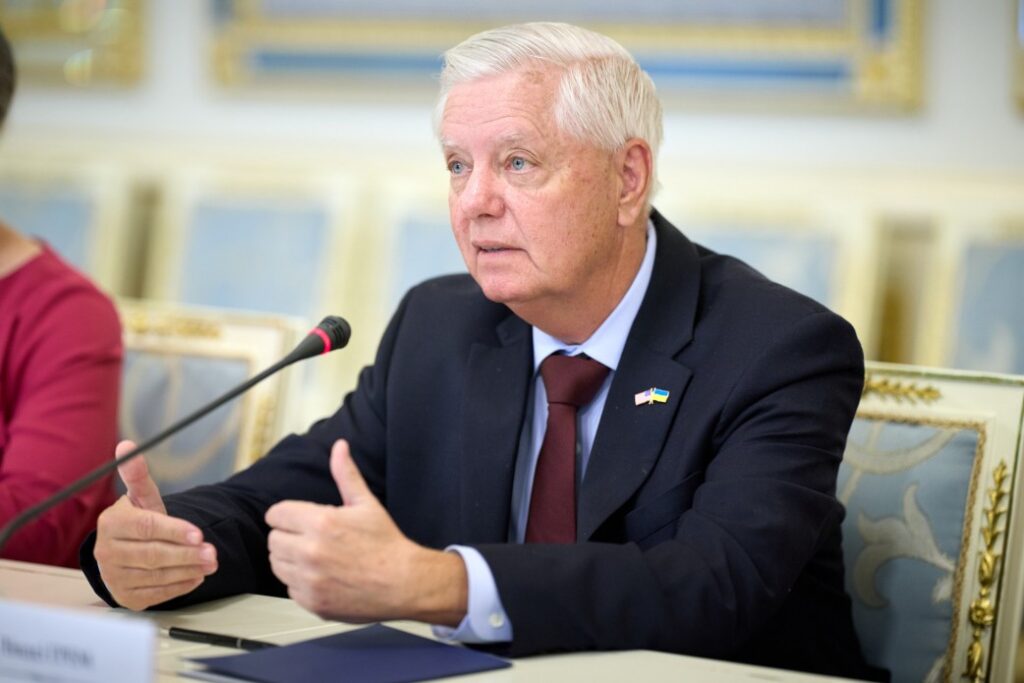
US Senator Lindsey Graham russia sanctions bill senate kyiv 10 2026 presidentgovua

A bipartisan group of US House members introduced the House version of the Lindsey O. Graham Sanctioning Russia and Iran Act of 2026 on 10 August, advancing the sweeping sanctions package during the chamber's summer recess just days after the Senate passed it.

The move puts the bill one chamber from becoming law. If the House passes it, it would hand the president authority to impose tariffs of up to 100% on the biggest buyers of Russian crude and gas—China and India chief among them—and to blacklist the aging tankers of Russia's shadow fleet, the vessels that move sanctioned oil around Western restrictions. The target is the oil revenue that pays for Russia's war on Ukraine, at a moment when Ukrainian deep strikes have already knocked a large share of Russian refining capacity offline.

What the bill would do

The package imposes primary and secondary sanctions on Russian officials, oligarchs, entities propping up Russia's defense-industrial base, and foreign actors that materially aid Moscow's military operations. It targets major Russian banks and the foreign financial institutions that do significant business with them, and it goes after the shadow fleet and sanctions-evasion networks—ships, owners, operators, insurers, and ports that knowingly move Russian oil. The tariff framework, up to 100% on the top five buyers of Russian oil and the top five buyers of its gas, replaces an earlier plan for a blanket 500% tariff, with the US trade representative setting the specific rate for each country. The bill also folds in Iran, extending the Iran Sanctions Act of 1996.

Sanctions could be lifted only if the president certifies to Congress that Russia has signed a peace deal accepted by a free and independent Ukrainian government and has halted hostilities and efforts to subvert Kyiv.

A bill born from a stall—and a death

Graham and Democratic Senator Richard Blumenthal introduced the measure in 2025 with 500% tariffs. It drew more than 80 Senate cosponsors and went nowhere for over a year, as the White House kept it off the floor while betting on negotiations that never delivered. Graham secured President Trump's sign-off, then died on 11 July of an aortic dissection, a day after his last visit to Kyiv. The Senate renamed the bill in his honor and passed it 86-11 on 7 August.

The House is not a rubber stamp

The House text is identical to the Senate-passed version, so the companion functions largely as a whip count—a way for members to signal support before a floor vote expected this fall, once the chamber returns from recess on 31 August. Passage is not guaranteed: some House members have voiced fundamental concerns about handing the president broad tariff powers that could raise costs for US importers and consumers.

Russian Civilian Deaths Are Growing Rapidly as Ukraine Expands Its Air War

11 août 2026 à 06:26
The higher tempo of Ukrainian strikes has fueled discontent among Russians, but it is far from clear that it will change the Kremlin’s calculus about the war.

© Nanna Heitmann for The New York Times

A residential building in Zelenograd, in the Moscow region, was damaged in a Ukrainian drone strike in May. Four people were killed in the attack.
  • ✇Euromaidan Press
  • With Ukraine short of Patriot interceptors, Russia sees no reason to enter real negotiations, ISW says
    Russia has rebuilt its missile industry around the weapons most likely to pierce Ukraine's thinning air defenses. The Institute for the Study of War (ISW) made that case on 10 August. Kyiv's Patriot interceptor shortage, it assessed, now hands Moscow no reason to negotiate. Because Kyiv can no longer reliably stop ballistic missiles, the Kremlin sees a clear military path to its maximalist aims. Factories retooled around the missiles that get through Since April 2026
     

With Ukraine short of Patriot interceptors, Russia sees no reason to enter real negotiations, ISW says

11 août 2026 à 03:42

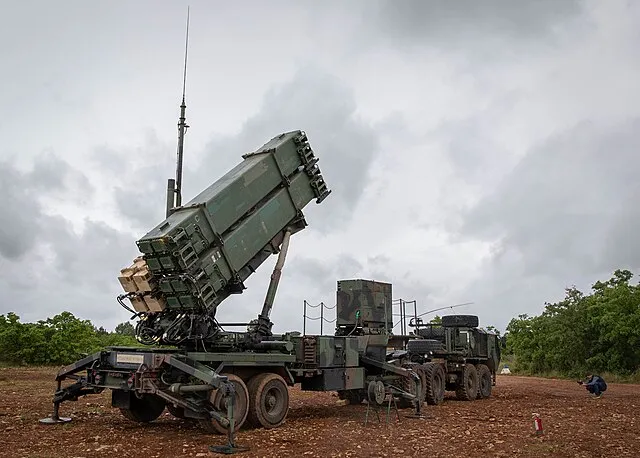
A Patriot air defense launcher raised into firing position on a military trailer.

Russia has rebuilt its missile industry around the weapons most likely to pierce Ukraine's thinning air defenses. The Institute for the Study of War (ISW) made that case on 10 August. Kyiv's Patriot interceptor shortage, it assessed, now hands Moscow no reason to negotiate. Because Kyiv can no longer reliably stop ballistic missiles, the Kremlin sees a clear military path to its maximalist aims.

Factories retooled around the missiles that get through

Since April 2026, Russian plants have prioritized ballistic and cruise missiles built to evade interception. HUR Deputy Head Major General Vadym Skibitskyi reported the shift. Monthly ballistic launches have more than tripled between April and July, he said. Meanwhile, output of key missile types runs 10 to 20% above plan. Moscow also met its full-year Zircon and Onyx targets by 3 August. To free capacity, it suspended the less accurate Kinzhal and Kh-32 lines. Skibitskyi flagged a newer twist, too: S-400 launchers now fire specially developed RM-48U rounds along a ballistic path. Russia is also striking Ukraine's defense plants, he warned, to choke off Kyiv's own ballistic-missile program.

Fired fresh, not from the stockpile

Crucially, these strikes draw on newly built missiles rather than war reserves. That approach lets Moscow sustain larger, more frequent salvos. Its stockpile stays intact for the occasional very large barrage. Unmanned Systems Forces commander Major Robert "Magyar" Brovdi put numbers on the trend. Russia can already loose a simultaneous salvo of 77 missiles, and it is pushing toward 200. He stressed that he meant weapons of all types, not ballistics alone. Kalibr cruise missiles, by contrast, are piling up unused. Moscow is shipping them to fleets beyond the Black Sea as Ukrainian crews down nearly all of them. Repeated strikes have meanwhile driven the Black Sea Fleet back to the port of Novorossiysk.

"The Patriot shortage hands Russia an opening to do serious damage over the winter — and a reason to keep meaningful talks at bay," - Institute for the Study of War assessed

Why the Patriot interceptor shortage stalls negotiations

This reprioritization feeds a winter strategy meant to break Ukraine's will to fight, ISW assessed. The Patriot is still the only system Kyiv fields that can down Russian ballistic missiles. And Kyiv has warned partners it cannot close the interceptor gap before the cold months. As a result, the Kremlin thinks it can hammer cities without paying a battlefield price. That calculation could drag the war into 2027, ISW noted. Putin's theory of victory still rests on outlasting Ukraine's defenses and Western resolve. On 9 August, Deputy Foreign Minister Mikhail Galuzin restated Moscow's line. Any "freeze" that ignores the war's "root causes" is unacceptable, he said — shorthand for the Kremlin's original demands.

Russian ballistic missiles struck the grounds of a Kyiv children’s hospital and set a warehouse ablaze — overnight strikes across Ukraine killed at least 9

11 août 2026 à 03:25

kyiv oblast

Russia struck the capital with ballistic missiles early on 11 August. One of them came down on the grounds of a Kyiv children's hospital in the Shevchenkivskyi district. Rescuers also fought a warehouse fire nearby that left one man injured.

The Kyiv children's hospital strike

Two craters opened on the hospital grounds, while the impact shattered windows and ruptured a gas line, rescuers reported. Utility crews sealed the leak within the hour. Staff at the Kyiv children's hospital had moved patients into the shelter before the strike, so it hurt no one there.

"Luckily, the children and medics were in the shelter — there were no casualties," - State Emergency Service reported

A warehouse ablaze and one man hurt

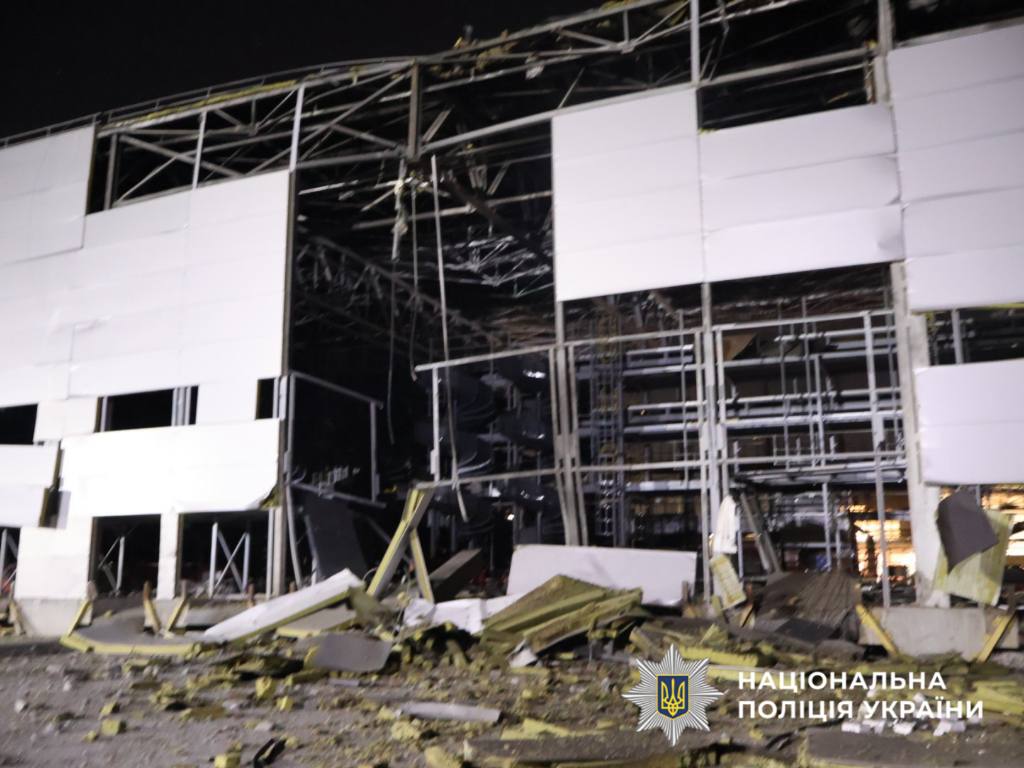
At a second address in the same district, a strike ignited a fire across 1,200 square meters of warehouse space. Crews first contained the flames, then put them out. Medics soon treated the lone casualty, a 28-year-old man. Earlier, the Air Force had warned of the ballistic threat before the missiles arrived.

Kyiv Oblast also under fire

The wider Kyiv Oblast took damage as well. In the Bucha district, the strike wrecked warehouse buildings and three trucks, although it caused no casualties. Officials said the enemy had again hit the region with ballistic missiles and attack drones.

A far deadlier night beyond Kyiv

Elsewhere, the toll climbed sharply. In Zaporizhzhia, a combined missile and guided-bomb strike killed six people and injured 19, regional authorities reported. Across the oblast, meanwhile, Russian forces launched 938 strikes on 58 settlements in a single day, injuring 52 residents in total. Officials also logged 341 reports of damage to homes, vehicles, and infrastructure.

In central Dnipropetrovsk Oblast, drones and artillery hit five districts more than 20 times. The strikes killed three people, among them a 15-year-old boy, and hurt five others, including a 7-year-old girl. To the northeast, an attack on Zlatopil in Kharkiv Oblast damaged civilian infrastructure and injured a resident.

Meanwhile, in Mykolaiv, drones hurt a 75-year-old woman and damaged homes and an industrial site, and officials described her condition as satisfactory. In nearby Snihurivka, six more drone strikes damaged houses, a shop, and a car, though they caused no injuries.

The strikes add to a wave of Russian attacks on Ukrainian cities this summer. The capital had already endured ballistic missiles days earlier, on the night of 8 August. That evening, explosions also echoed through Kyiv and Dnipro during a mass drone assault.

❌