The UN met this week to discuss, among other things, the threat of autonomous weapons.“The technology is developing at a pace that is very concerning,” Laurent Gisel, the head of the International Committee of the Red Cross’s (ICRC) legal warfare team, told 404 Media. Gisel was in NYC this week to address the UN about all the things that are driving conflict across the planet. His prepared remarks include a statement on the illegal arms trade, nuclear weapons, mines, and – of course – AI.Auto
The UN met this week to discuss, among other things, the threat of autonomous weapons.
“The technology is developing at a pace that is very concerning,” Laurent Gisel, the head of the International Committee of the Red Cross’s (ICRC) legal warfare team, told 404 Media. Gisel was in NYC this week to address the UN about all the things that are driving conflict across the planet. His prepared remarks include a statement on the illegal arms trade, nuclear weapons, mines, and – of course – AI.
Autonomous weapons have been a hot topic at the UN this year. In September, the UN attempted to pass a treaty that would govern the use of killer AI weapons. Diplomats from Russia and the US stripped it of its power.
But the UN has pressed forward. On Tuesday, the international governing body announced a new initiative that would grapple with the issue. But, as Gisel said: “multilateral processes take quite some time” and “we already see the effects on the battlefield.”
AI is already picking targets and killing people. Gisel said the technology is “amplifying the destruction, amplifying the violation of the law, amplifying the humanitarian harm caused by conflicts.”
Israel used an AI powered by Microsoft to pick targets in Gaza. In Ukraine, AI-powered Russian drones are deciding which humans to kill. The United States military is pitching itself as an “AI-first” fighting force. Secretary of Defense Pete Hegseth recently announced Project Meridian, an initiative to guide the AI-powered autonomous weapons of the future. Three of Meridian's leads are Elon Musk, defense contractor Palmer Luckey, and Newt Gingrich.
For Gisel, one of the biggest dangers of AI is how fast it is. A core selling point for the tech is that it can help commanders make decisions faster. But that also accelerates the pace of mistakes. “Targets are created at higher speed and higher frequency, and are actually then prosecuted quicker, and with that give us great concerns in terms of the level of human control that is retained,” he said. “The human is supposed to remain in the loop.”
The human does not always remain in the loop. The Israel Defense Forces told journalists it did not thoroughly vet the kill lists generated by Lavender, the AI system it used to pick targets in Gaza. “It's known in the [civilian world] [...] that humans tend to trust the systems,” Gisel said. “That it's more the case when the humans are tired, when the humans are under stress, when the humans have to deliver quickly, and that's of course exactly the situation in which soldiers are in. So all of that gives us a lot of concerns in terms of retaining control on the use of force in armed conflict.”
AI boosters often pitch AI as an “easy button,” a way for people to brute force a complicated task and get it over with. But the consequences are much different when someone in Silicon Valley is parsing spreadsheets or reverse engineering code than when they’re prosecuting a war in the Middle East.
“That's something that the developers of those systems don't necessarily realize either, because some of those systems are developed by technological companies very far away from the battlefield, and they are not naturally all developed for battlefield use,” Gisel said.
International humanitarian law is an ever-evolving legal negotiation between world powers meant to limit the devastating effects of war. It’s imperfect and countries with vast armies like the US and Russia often do not abide by it. The ICRC, which Gisel represents, exists explicitly to shape these rules and laws. Some of the laws are old, far older than AI, but according to Gisel humanitarian law applies to “all weapons, means, and methods of warfare. Those of yesterday, those of today, and those of tomorrow.”
Beyond the opportunity to code humanitarian law into AI, Gisel said there should be new rules and regulations for the new technology. “Not to prohibit them all, but to prohibit specific categories of autonomous weapon systems and put specific restrictions on others,” he said.
"...Once the genie is out of the bottle, it's very, very much difficult to put it back in the bottle"
But he does have redlines. The first is any AI support system that removes a human being from the kill chain. “That requires specific limits and guardrails and restrictions from our perspective,” he said.
“The other type of autonomous weapon system that we recommend prohibiting is those that would target human beings directly, where the target profile is the human being, as opposed to a tank, weapon systems, or another typical military objective, and the reason why is based on ethical concerns, humanitarian concerns, and a moral line,” he added.
Autonomous weapons have existed for a long time. Some US warships have gatling guns that track and destroy incoming targets automatically. The difference is that those weapons track ships and missiles, not human beings.
According to Gisel, one problem with autonomous weapons that target humans or AI support systems that pick targets is that they’re unpredictable. He said banning unpredictable weapons should be a non-brainer. “Military discipline is about your forces [...] delivering the commander's intent,” he said. “If you have a weapon that is unpredictable in its effect, how can you deliver the commander's intent?”
But it’s been a sticking point in negotiations. “We would have thought, military considerations, would align. But actually, that has also faced quite some pushback. Strangely enough,” he said. He spoke about the negotiations in August and September from earlier in the year. “There were references in the last proposal by the chair of the group on precisely all those questions: that the autonomous weapon systems need to be reliable, explainable, understandable, and predictable. And all of that was taken out by some states.”
Gisel also opposes AI in nuclear command and control. In 1983, the Soviet Union’s early warning systems reported that the US had launched a nuclear weapon at the country. Soviet lieutenant colonel Stanislav Petrov decided the computer had made a mistake and decided not to report the attacks up the chain. He was right.
“States will continue to use satellite systems and therefore algorithms that go with those satellites,” he said. “But it's so important to ensure that it remains entirely under human control and a really meaningful human control.”
While the UN deliberates and the ICRC wrangles with how to regulate all this, the wars continue and military forces continue to embrace AI. “That's why it's urgent to have decisions being made by the international community on what to prohibit and what to restrict [...] once the genie is out of the bottle, it's very, very much difficult to put it back in the bottle,” he said.
Gisel said the world needs to act now. “Otherwise, it's the technology that will decide what is acceptable, and that's not the world we want to live in, right?”
Prime Minister Rob Jetten of the Netherlands in Brussels last week. He said that his cabinet was closely monitoring the online vulnerability caused by a security flaw in PHP.
As of October, Russia has up to 700 ballistic and several thousand cruise missiles in reserve, and its 2026 state order for Geran-type drones and decoys such as the Gerbera exceeded 100,000 units, Ukraine’s military intelligence (HUR) told NV in figures the outlet published on 20 October. The missile stocks are roughly the same as HUR reported to NV in July, the outlet found.
Ukraine enters the heating season facing what it says is a Russian plan to hit 60 infrastructure sites this wint
As of October, Russia has up to 700 ballistic and several thousand cruise missiles in reserve, and its 2026 state order for Geran-type drones and decoys such as the Gerbera exceeded 100,000 units, Ukraine’s military intelligence (HUR) told NV in figures the outlet published on 20 October. The missile stocks are roughly the same as HUR reported to NV in July, the outlet found.
Ukraine enters the heating season facing what it says is a Russian plan to hit 60 infrastructure sites this winter. HUR’s figures suggest Russia has the weapons for it, even after its fall mass strikes. In June, HUR said Russia could fire up to 100 ballistic missiles a month while keeping its stocks steady. Its drone output, meanwhile, is shifting to jets that are harder to shoot down.
Russia produces 110 ballistic missiles a month
Russia can make more than 200 missiles a month, 110 of them ballistic, HUR said. About 115 of its ballistic missiles are Iskander-Ms, with production of up to 65 a month. A modernized Iskander with a projected range of 550 to 700 km is in development.
At the same time, Russia holds up to 400 S-300PM and S-400 air defense missiles adapted to strike ground targets, and makes about 40 a month. Meanwhile, Kinzhal production has been temporarily paused over poor accuracy, and the capacity has gone to conventional ballistic missiles.
Most new Kalibrs go into reserve
Russia plans to make more than 80 Kh-101 cruise missiles a month and is exceeding that, though defects in releasing them from aircraft have sent some batches back to the factories.
Russia has more than 450 Kalibrs and makes about 29 a month. Because Ukrainian air defense downs them effectively, Russia sends most new ones to its strategic reserve and to equip its fleets, HUR said. It also holds more than 600 Oniks anti-ship missiles, upgraded for ground strikes, and more than 120 Zircons.
Explore further
Ukraine recovers Russia’s undamaged Geran-3 jet kamikaze drone carrying camera and live-link equipment (VIDEO)
Russia now assembles 4,000 jet drones a month
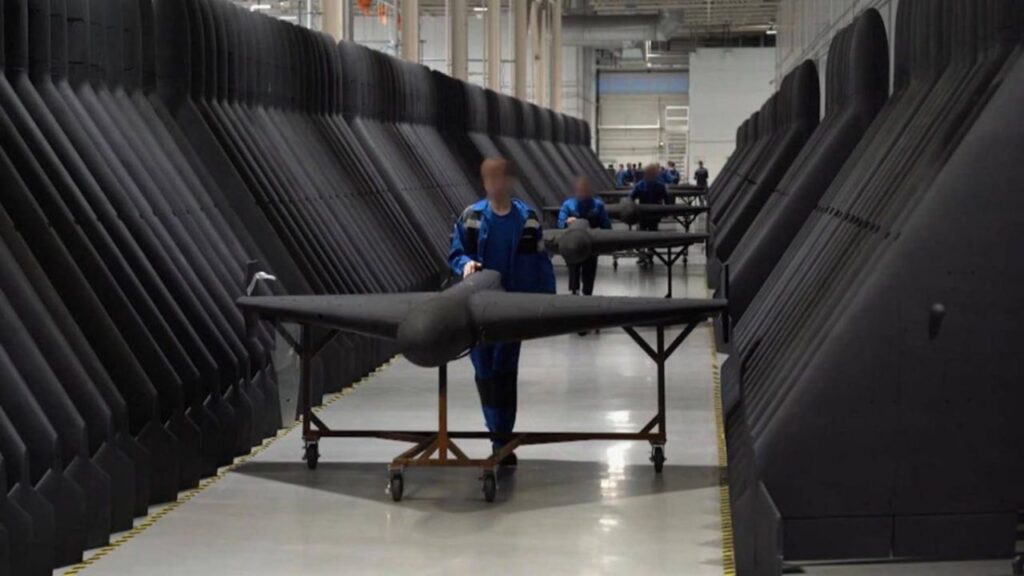
Russia holds a reserve of about 6,200 Gerans and makes about 10,000 drones a month. Its main production hub is the Alabuga special economic zone in Tatarstan.
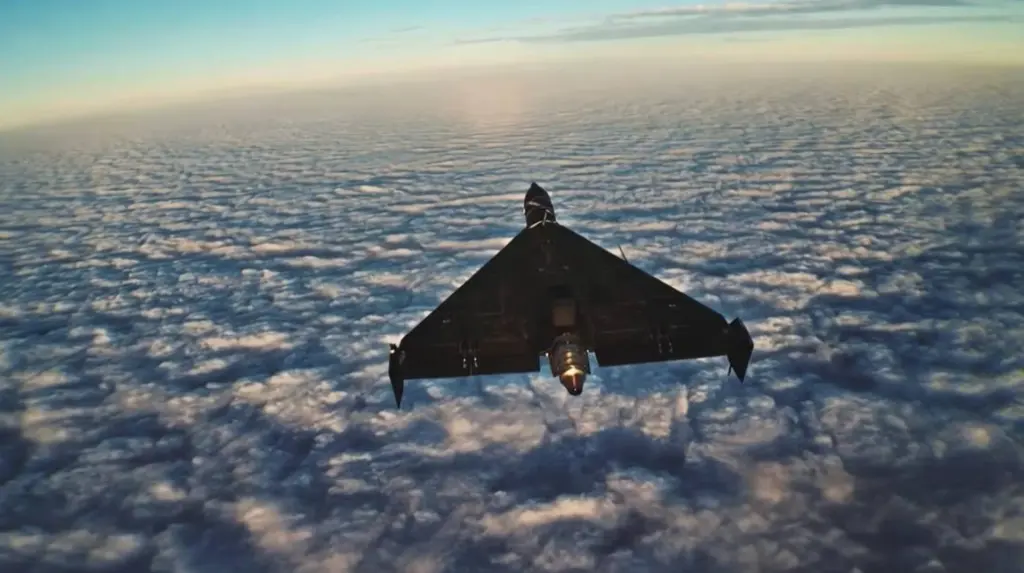
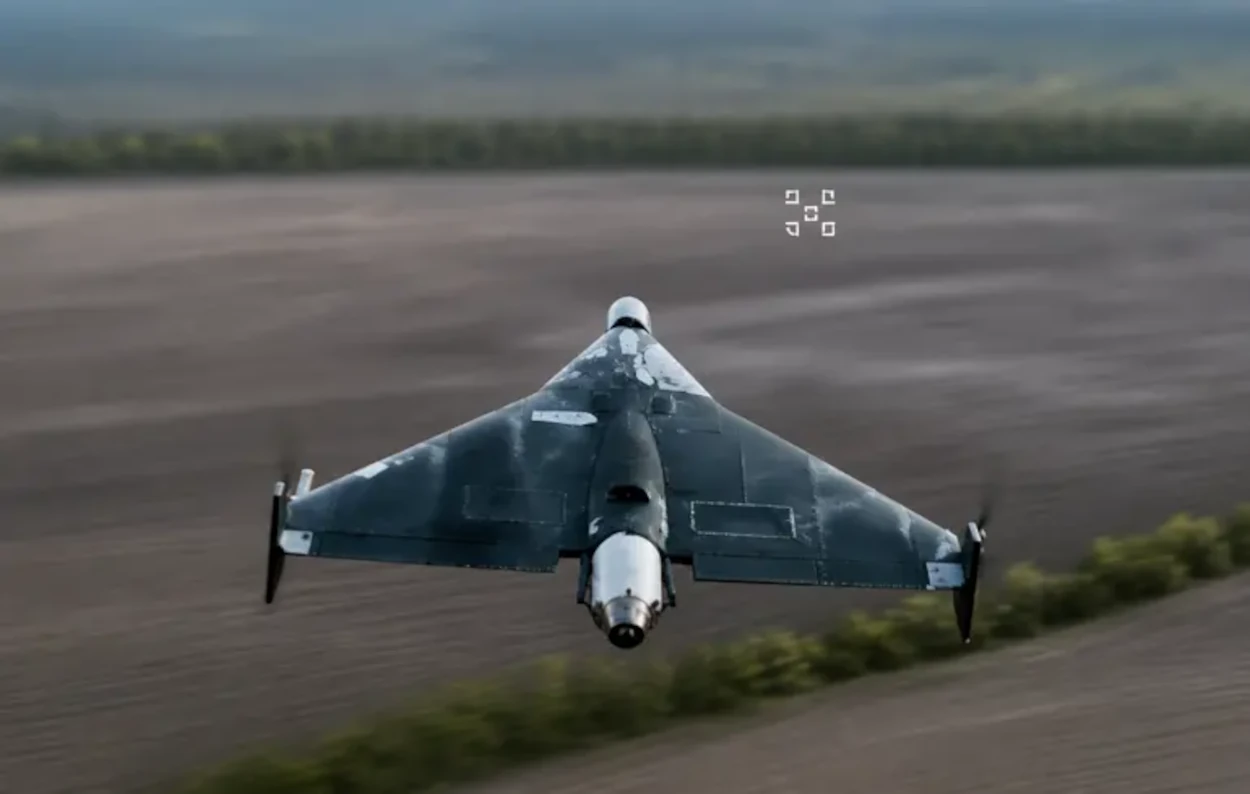
Since summer, Russia has shifted toward turbojet drones. “The reason is the saturation of Ukraine’s Air Force with mobile fire groups that shoot down low-speed targets en masse,” HUR said. Russia now assembles about 4,000 jet drones a month, mostly Geran-4s and Geran-5s, which fly at 400 to 500 km/h. It also makes about 2,000 cheaper propeller-driven Geran-2s, which HUR said are used to wear down air defense and locate air defense positions.
In a direct confrontation with Russia, European NATO states would likely be even more vulnerable than Ukraine to swarms of Russia’s new jet-powered strike weapons, Fabian Hoffmann of the Norwegian Institute for Defence Studies (NIDS) argued in a 20 October op-ed for the Center for European Policy Analysis (CEPA). He calls them low-cost cruise missiles. Just three days earlier, Romania met what it believes were two of them over the Black Sea.
Romanian F-16 fighter jets shot down two jet-
In a direct confrontation with Russia, European NATO states would likely be even more vulnerable than Ukraine to swarms of Russia’s new jet-powered strike weapons, Fabian Hoffmann of the Norwegian Institute for Defence Studies (NIDS) argued in a 20 October op-ed for the Center for European Policy Analysis (CEPA). He calls them low-cost cruise missiles. Just three days earlier, Romania met what it believes were two of them over the Black Sea.
Romanian F-16 fighter jets shot down two jet-powered Geran-family drones over Romania’s territorial waters on 17 October, the Defense Ministry said. Interim Defense Minister Radu Miruță said they flew at about 450 km/h and were likely Geran-4s, the first of that type Romania had downed.
Faster drones for a faster war
Russia began using the Geran-4 in May in response to effective Ukrainian interceptor drones, Ukraine’s military intelligence (HUR) said, adding that it reaches up to 500 km/h. By June, those interceptors were downing about half of slower Shahed-type drones, defense adviser Serhii Beskrestnov estimated.
Hoffmann traces the shift to the Geran-3, a model Ukraine recovered intact in 2025. In his account, a Chinese JT80 turbojet roughly doubled its speed, from 185 to 350 km/h. However, he puts newer models, including the Geran-4, at 600 km/h or more, above HUR’s figure for that model.
By his estimate, each costs $150,000–$250,000, against about $50,000 for a long-range drone. Still, from Russia’s perspective, he wrote, that buys a significantly higher chance of getting through.
Explore further
Ukraine is testing four new drone interceptors as Russia floods its skies with faster Gerans
Engines are the bottleneck
Hoffmann argues defenses must match the threat’s speed, for example with jet-powered interceptor drones. Ukraine already fields some. On 4 October, President Zelenskyy said its Bars interceptors had shown the highest percentage among Ukrainian interceptors, about 30% of targets, according to Militarnyi. One unit destroyed five aerial targets with five Bars interceptors, Defense Minister Yevhenii Khmara later told journalists. He also called aviation one of the most effective tools against jet drones.
Hoffmann’s concern is scale. Jet engines are in short supply, he wrote, because too few European and US suppliers can meet demand. Ukraine’s Defense Industry Council flagged a shortage of such engines for its drones in April. In his view, gun systems and higher-end missile defenses are too scarce or too costly to fill the gap.
In the Kherson region, as part of a pilot initiative, 227 mobile shelters will be installed along school routes; the first ten mobile shelters have been set up in the Kherson district.
In the Kherson region, as part of a pilot initiative, 227 mobile shelters will be installed along school routes; the first ten mobile shelters have been set up in the Kherson district.

 Connexion