The hardest part of ending Russia's war is making sure it cannot start it again. As the peace talks have escalated ahead of the US elections, Ukraine is weighing three options for its postwar security.
Among them are NATO membership, direct US guarantees modeled on NATO’s Article 5, and a European “Coalition of the Willing” backed by Washington, President Volodymyr Zelenskyy says, according to UNIAN. But none of them have been agreed to yet.
Zelenskyy describes the guarantees as a s
The hardest part of ending Russia's war is making sure it cannot start it again. As the peace talks have escalated ahead of the US elections, Ukraine is weighing three options for its postwar security.
Among them are NATO membership, direct US guarantees modeled on NATO’s Article 5, and a European “Coalition of the Willing” backed by Washington, President Volodymyr Zelenskyy says, according to UNIAN. But none of them have been agreed to yet.
Zelenskyy describes the guarantees as a single package, with each layer still under discussion with partners. All of it, he says, rests on a strong Ukrainian army, in both numbers and quality.
Three guarantees, none of them signed
Everyone counts on NATO, Zelenskyy says, but Kyiv is also negotiating direct guarantees from the US, including an Article 5-style collective-defense clause, alongside the European Coalition of the Willing that would act together with Washington. The arithmetic, he said, is already done.
“Our colleagues in Europe and America know this. We have already calculated everything: both the financing and the corresponding number of our soldiers, so that our state can be at peace,” he states.
Why Zelenskyy says even Russia should want Ukraine in NATO
He went further, arguing that NATO membership would serve not only Ukraine and the Alliance but also Russia.
“I think, honestly, the Russians need our accession to NATO too, because for them that is more security than Ukraine outside NATO,” he claims.
The talks come as Washington pushes toward negotiations. Zelenskyy says he expects signals from US Secretary of State Marco Rubio within a day or two, as well as a call with envoy Steve Witkoff. He adds that Jared Kushner, on his way to Kyiv in November, told him Russia supports a trilateral meeting of the US, Ukraine, and Russia, at the level of technical teams.
US President Donald Trump has failed to reach an agreement with Russian ruler Vladimir Putin on halting strikes against Ukraine's energy infrastructure. However, Trump is trying to shift the blame for this failure onto President Volodymyr Zelenskyy, he said on The Diary of a CEO podcast.
His words came amid Russia's four record waves of ballistic missile attacks, after US Special Envoy Steve Witkoff described Putin as a "humanitarian." Previously, US officials cut Kyiv off from US intel
US President Donald Trump has failed to reach an agreement with Russian ruler Vladimir Putin on halting strikes against Ukraine's energy infrastructure. However, Trump is trying to shift the blame for this failure onto President Volodymyr Zelenskyy, he said on The Diary of a CEO podcast.
His words came amid Russia's four record waves of ballistic missile attacks, after US Special Envoy Steve Witkoff described Putin as a "humanitarian." Previously, US officials cut Kyiv off from US intelligence and lowered a speed cap on Starlink to pressure Ukraine into stopping strikes on Russia's oil refineries that bring Moscow revenue for its war.
Trump pins the problem on Kyiv, not Putin
Zelenskyy explained the behavioral pattern behind Trump's recent actions and statements. At first, Putin rejected his proposal for a ceasefire. Then, the US president blamed it all on him, explaining to his people that world fuel prices are rising because of him, which is not true at all, said the Ukrainian leader.
He pointed to the blocked Strait of Hormuz shipping chokepoint, not Ukraine’s refinery campaign, as the driver of higher prices.
He also noted that the volumes of diesel allowed by the US are insufficient to lower global oil prices.
Even so, Zelenskyy said he keeps a working relationship with Trump. What he will not accept is being cast as the villain in Russia’s war: by his account, the US president is rewriting the context, turning Ukraine’s leader into the target for a problem that starts in Moscow.
Earlier, experts said the diesel deal was unlikely to meaningfully lower diesel prices. For Putin, the agreement itself was a win.
A former senior State Department official says it hardly matters whether the fuel arrives, because Putin “has already achieved the result he wants,” with Trump believing he has a pre-election card that could move markets.
The reigning champions must deal with the absence of Khvicha Kvaratskhelia for some time, while fans at Anfield were thrilled by Rio NgumohaParis Saint-Germain beat Barcelona 4-2 on Tuesday, but the reigning champions lost the best player in last season’s tournament, Khvicha Kvaratskhelia. This autumn has seen much lobbying for the Ballon d’Or, with the Georgian a popular choice, despite his absence from the World Cup. He is expected to be out for six months, although Rodri’s comeback from serio
The reigning champions must deal with the absence of Khvicha Kvaratskhelia for some time, while fans at Anfield were thrilled by Rio Ngumoha
Paris Saint-Germain beat Barcelona 4-2 on Tuesday, but the reigning champions lost the best player in last season’s tournament, Khvicha Kvaratskhelia. This autumn has seen much lobbying for the Ballon d’Or, with the Georgian a popular choice, despite his absence from the World Cup. He is expected to be out for six months, although Rodri’s comeback from serious injury – he was rested by Barcelona on Tuesday until coming off the bench in the 60th minute – shows it can take far longer than that for players to rediscover their highest level.
Ukraine's Defense Forces advanced more than 15 km through underground utility tunnels into Russia's rear on the Kupiansk axis in Kharkiv Oblast, the Khartiia Corps of Ukraine's National Guard reported on 22 October. The corps called it Operation Veles. The underground advance was paired with attacks on the surface and drone strikes, hitting Russian forces from two directions, the corps told Militarnyi.
Russian troops have repeatedly crawled through gas pipelines around Kupiansk to get b
Ukraine's Defense Forces advanced more than 15 km through underground utility tunnels into Russia's rear on the Kupiansk axis in Kharkiv Oblast, the Khartiia Corps of Ukraine's National Guard reported on 22 October. The corps called it Operation Veles. The underground advance was paired with attacks on the surface and drone strikes, hitting Russian forces from two directions, the corps told Militarnyi.
Russian troops have repeatedly crawled through gas pipelines around Kupiansk to get behind Ukrainian lines, even after Ukraine reported confident control of the city in February. This time, Ukraine went underground itself. The operation took away Russia's chance to get into Kupiansk's rear, the corps said.
The corps reported more than 30 Russian soldiers captured and Russian losses of more than 100. Militarnyi, citing the unit, put the number of Russian troops killed at over 100.
Khartiia studied how Russian troops moved through pipes before going underground itself, the corps commander, Brigadier General Ihor Obolenskyi, said.
"We watched how the enemy works underground and studied how they do it. The Russians intended to use gas pipelines to get into the rear of our troops. So we went underground ourselves. We anticipated the enemy's actions and mastered the tactics of underground combat," he said.
Boots under ground!
Asymmetric breakthrough in the Kharkiv Region: Khartiia Corps conducts the subterranean counteroffensive Operation VELES, advancing 15 km underground.
For the operation, troops trained physically and psychologically to fight in confined spaces, sappers and engineers prepared the underground route, and special communications, navigation, silent logistics, and life-support systems were put in place, Khartiia told Militarnyi. The operation was named after Veles, the Slavic pagan god of the underworld.
Khartiia's brigade, the R.U.H. assault regiment, the Lava drone regiment, the Achilles drone brigade, and units of Ukraine's military intelligence, including the Freedom of Russia Legion and the Russian Volunteer Corps, took part, the corps said.
Russia has used pipelines to infiltrate before
By September 2025, Russian forces had used pipelines to move troops behind Ukrainian lines three times, Ukrainian monitoring project DeepState reported on 12 September 2025. The first was in Avdiivka, the second near Sudzha, and the third near Kupiansk, where groups crossed the Oskil River through a gas pipe.
Near Sudzha in March 2025, Russian special forces walked through a pipeline that until recently had carried Russian gas to Europe, the Associated Press reported. A pro-Kremlin blogger claimed they covered about 15 km and that some spent several days inside.
Russian troops kept using the pipeline near Kupiansk this year. On 27 September, Khartiia's reconnaissance drones recorded Russian forces leading nine civilians, including children, elderly people, and a person on crutches, through the gas pipeline out of the Kupiansk community. Men of military age in civilian clothes walked alongside them, and the corps believes they were Russian soldiers using the group as cover to withdraw. Ukrainian troops held fire because of the civilians, the corps said, adding that the case has been documented for a war crimes investigation.
Civilians led through a gas pipeline out of the Kupiansk community, Kharkiv Oblast, by people the Khartiia Corps identifies as Russian forces, 27 September 2026. Screenshot: Khartiia Corps
Why the war is moving underground
Drones, constant surveillance, and AI-assisted targeting have made the battlefield surface transparent and deadly, argue John Spencer, chair of urban warfare studies at West Point's Modern War Institute, and Col. Drew Craig, principal military engineering staff officer at NATO's Allied Rapid Reaction Corps. In an August analysis, they write that soldiers in Ukraine describe a "death zone" of some 30 km, where moving above ground can draw an attack within minutes. When firepower makes the surface too dangerous, armies have historically gone underground, as they did in World War I and Vietnam, and more recently in Gaza and Lebanon.
"Armies that cannot survive above ground must adapt below it," the authors write.
Fighting in tunnels brings its own requirements, the authors write: detecting the enemy by sound and vibration, and specialized unmanned systems that cannot rely on GPS or stable radio links. Long stretches underground also take a severe psychological and physical toll on soldiers.
Western militaries are not ready for this, Spencer and Craig write. No NATO partner maintains even general capabilities for large-scale underground warfare, and US and British efforts focused mainly on detecting and clearing tunnels rather than occupying and operating in them.
Russian tech giant Yandex's data center in Sasovo burned out from the inside, a Ukrainian OSINT analyst wrote on 22 October. On cloud-free satellite images, he saw almost no significant holes in its roof. Ukrainian drones hit the site overnight on 8 October.
Sasovo was the first strike on a data center in Russia. It came two weeks after Russia destroyed data centers in Kyiv. Drones then hit Yandex sites in Vladimir and Kaluga, a Sber data center, and a VK data center near St. Petersburg
Russian tech giant Yandex's data center in Sasovo burned out from the inside, a Ukrainian OSINT analyst wrote on 22 October. On cloud-free satellite images, he saw almost no significant holes in its roof. Ukrainian drones hit the site overnight on 8 October.
Sasovo was the first strike on a data center in Russia. It came two weeks after Russia destroyed data centers in Kyiv. Drones then hit Yandex sites in Vladimir and Kaluga, a Sber data center, and a VK data center near St. Petersburg, which VK acknowledged. In occupied Donbas, monitoring channels reported hits on buildings housing telecom operators.
What the analyst sees
The analyst, who goes by Harbuz, runs the Ukrainian OSINT channel Dnipro Osint. His roof reading comes from the images. His interior claim comes from what he called available information: he wrote that a fire broke out inside and put part of the equipment out of action.
Cloud-free satellite image of the damaged Yandex data center in Sasovo, Ryazan Oblast, posted 22 October 2026. Image: Dnipro Osint
In an earlier post, Harbuz wrote that a third of the data center had burned out. In the new one, he writes that the building burned out from the inside. He does not say whether he revised the earlier figure.
Russian outlet Agentstvo studied Airbus images from 12 October. It found damage on about a third of the building. Unlike Harbuz, though, Agentstvo described a blackened western roof with damage resembling holes.
What Yandex says
On 8 October, Yandex stated that the attack caused a fire and forced it to suspend operations at the site, which hosts tens of thousands of servers, Reuters reported. Yandex Cloud and the Disk and Documents services that run on it ran with major disruptions that morning, Russian outlet The Bell reported.
Later that day, the company stated: "The scale of the damage to the infrastructure is still being assessed. For the moment, we cannot confirm whether it is possible to restore the data centre equipment in Sasovo." Two of Yandex's three supercomputers, used to develop its AI model, are housed there.
The same day, journalists asked Ukrainian President Volodymyr Zelenskyy whether Ukraine was targeting Russian data centers. He did not refer specifically to the Yandex strike, Reuters noted, but said: "We always respond in mirror-like fashion."
An explosion hit the 75th Arsenal, a Russian army plant in Serpukhov south of Moscow, overnight on 22 October, Russian Telegram channel Astra reported. Russian officials also claimed drone attacks on the Moscow region, Tula, and Lipetsk that night.
As Russia presses its full-scale invasion, Ukraine’s long-range drones and missiles keep hitting military plants and refineries deep inside Russia. Ukrainian outlet Militarnyi says this plant specializes in repairing Buk and S-300 air defense
An explosion hit the 75th Arsenal, a Russian army plant in Serpukhov south of Moscow, overnight on 22 October, Russian Telegram channel Astra reported. Russian officials also claimed drone attacks on the Moscow region, Tula, and Lipetsk that night.
As Russia presses its full-scale invasion, Ukraine’s long-range drones and missiles keep hitting military plants and refineries deep inside Russia. Ukrainian outlet Militarnyi says this plant specializes in repairing Buk and S-300 air defense systems. Astra describes it more broadly, as making weapons and ammunition and repairing military equipment. If Militarnyi is right, the blast hit a site that fixes Russian air defenses. It came the night Moscow’s mayor credited air defenses with stopping hundreds of drones.
Blast at the arsenal
An Astra OSINT analyst placed the explosion inside the site from a video, the channel said. Residents claimed in local chats that blasts followed passing drones, then at least three missiles. Astra did not confirm the missile count. Serpukhov lies about 99 km south of Moscow. Ukraine has sanctioned the plant, and the US Treasury has listed it too. As of the morning of 22 October, no Russian official had confirmed the blast.
More footage of the attack on the arsenal in Serpukhov. We are awaiting satellite images. pic.twitter.com/tTsgc18W3L
Moscow Mayor Sergei Sobyanin claimed that 630 drones flew toward the Moscow region from 20:30 on 21 October to 04:00 on 22 October. He claimed most were destroyed far out and 163 were neutralized on approach to Moscow. Two people were injured in Voronovo, in New Moscow, he stated.
Tula Oblast Governor Dmitry Milyaev claimed air defenses downed 70 Ukrainian drones over his region. Private homes were damaged in Tula and the Zaoksky district, he stated.
Lipetsk governor claims homes and a clinic damaged
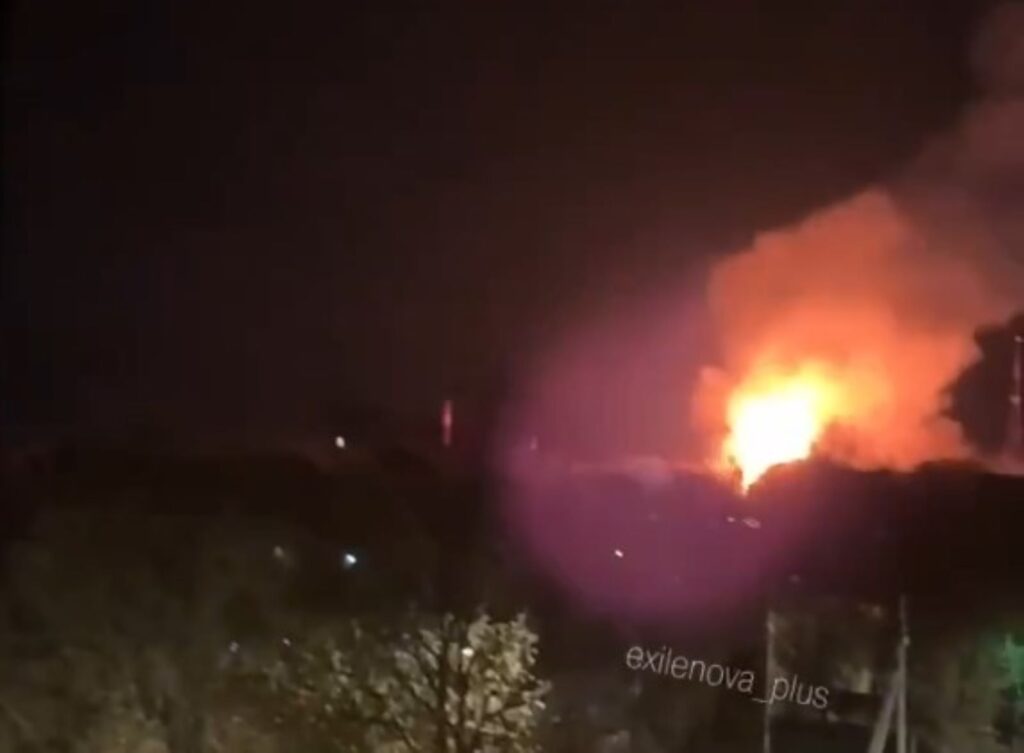
Earlier in the night, Ukrainian monitoring channel Exilenova+ posted footage of commotion in Lipetsk after explosions. Lipetsk Oblast Governor Igor Artamonov claimed a drone strike damaged homes, apartment blocks, and a closed polyclinic. A man born in 2001 was injured and hospitalized, Artamonov claimed.
In May, Ukrainian intelligence said Russia was deploying more regiments against strike drones. In September, Ukrainian units hit more Russian air defense systems and radars than in any month since 2024, Ukraine’s Defense Ministry said. Analyst Oleksandr Kovalenko counted 76 destroyed in September with days of the month still to go and argued Russia cannot replace such losses. If Militarnyi’s description holds, losing repair capacity would deepen that gap.
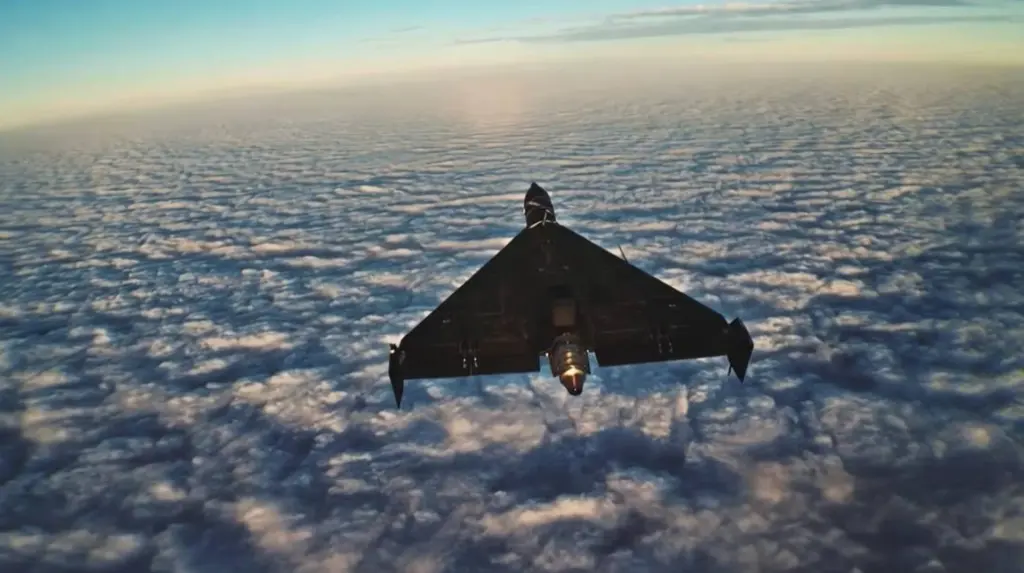
In a direct confrontation with Russia, European NATO states would likely be even more vulnerable than Ukraine to swarms of Russia’s new jet-powered strike weapons, Fabian Hoffmann of the Norwegian Institute for Defence Studies (NIDS) argued in a 20 October op-ed for the Center for European Policy Analysis (CEPA). He calls them low-cost cruise missiles. Just three days earlier, Romania met what it believes were two of them over the Black Sea.
Romanian F-16 fighter jets shot down two jet-
In a direct confrontation with Russia, European NATO states would likely be even more vulnerable than Ukraine to swarms of Russia’s new jet-powered strike weapons, Fabian Hoffmann of the Norwegian Institute for Defence Studies (NIDS) argued in a 20 October op-ed for the Center for European Policy Analysis (CEPA). He calls them low-cost cruise missiles. Just three days earlier, Romania met what it believes were two of them over the Black Sea.
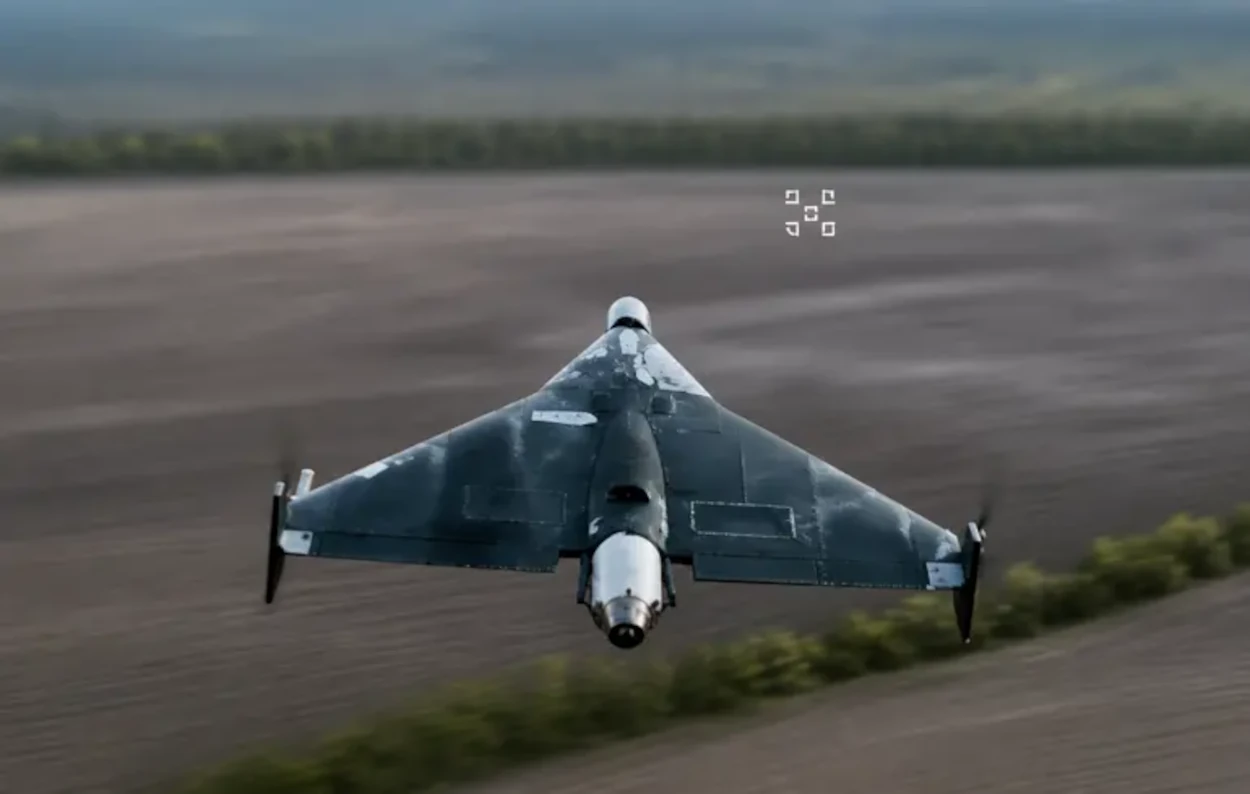
Romanian F-16 fighter jets shot down two jet-powered Geran-family drones over Romania’s territorial waters on 17 October, the Defense Ministry said. Interim Defense Minister Radu Miruță said they flew at about 450 km/h and were likely Geran-4s, the first of that type Romania had downed.
Faster drones for a faster war
Russia began using the Geran-4 in May in response to effective Ukrainian interceptor drones, Ukraine’s military intelligence (HUR) said, adding that it reaches up to 500 km/h. By June, those interceptors were downing about half of slower Shahed-type drones, defense adviser Serhii Beskrestnov estimated.
Hoffmann traces the shift to the Geran-3, a model Ukraine recovered intact in 2025. In his account, a Chinese JT80 turbojet roughly doubled its speed, from 185 to 350 km/h. However, he puts newer models, including the Geran-4, at 600 km/h or more, above HUR’s figure for that model.
By his estimate, each costs $150,000–$250,000, against about $50,000 for a long-range drone. Still, from Russia’s perspective, he wrote, that buys a significantly higher chance of getting through.
Explore further
Ukraine is testing four new drone interceptors as Russia floods its skies with faster Gerans
Engines are the bottleneck
Hoffmann argues defenses must match the threat’s speed, for example with jet-powered interceptor drones. Ukraine already fields some. On 4 October, President Zelenskyy said its Bars interceptors had shown the highest percentage among Ukrainian interceptors, about 30% of targets, according to Militarnyi. One unit destroyed five aerial targets with five Bars interceptors, Defense Minister Yevhenii Khmara later told journalists. He also called aviation one of the most effective tools against jet drones.
Hoffmann’s concern is scale. Jet engines are in short supply, he wrote, because too few European and US suppliers can meet demand. Ukraine’s Defense Industry Council flagged a shortage of such engines for its drones in April. In his view, gun systems and higher-end missile defenses are too scarce or too costly to fill the gap.

 Connexion