Vue normale

  • ✇Euromaidan Press
  • Russia drove most ships from Ukraine’s ports. Now its drones are hunting the trains
    In July, most of Ukraine’s grain left through its Black Sea ports. From 1 to 26 August, after Russian attacks sharply reduced ship traffic, Ukraine exported just 1.42 million tons of agricultural products—about a third of its potential volume. Rail and the Danube carried about 600,000 tons each, Agriculture Minister Taras Vysotskyi said.The locomotives carrying that cargo are now among Russia’s main targets.Ukraine now expects to export 38–40 million tons of grain in the 2
     

Russia drove most ships from Ukraine’s ports. Now its drones are hunting the trains

28 août 2026 à 11:18

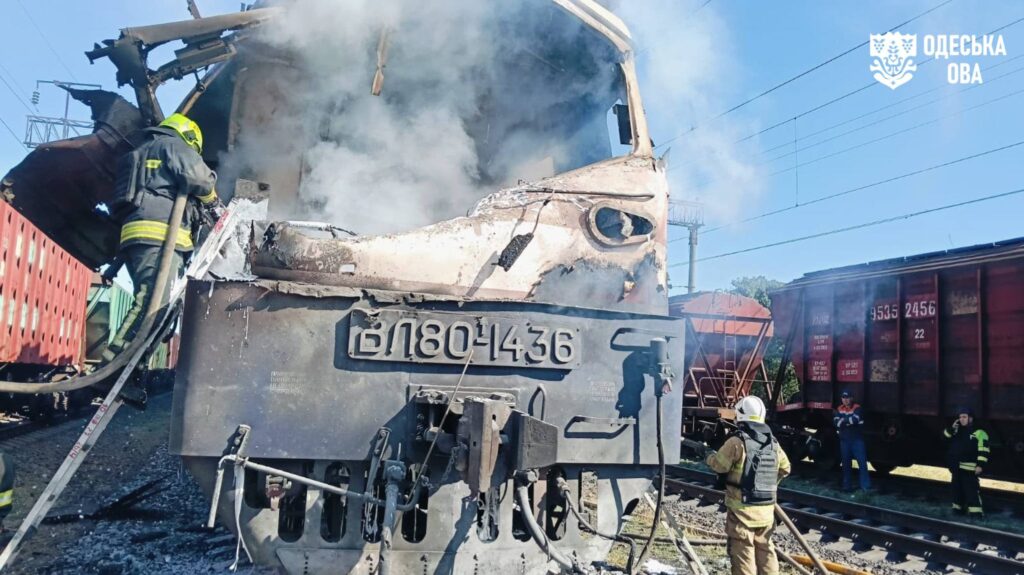
locomotive, Odesa Oblast

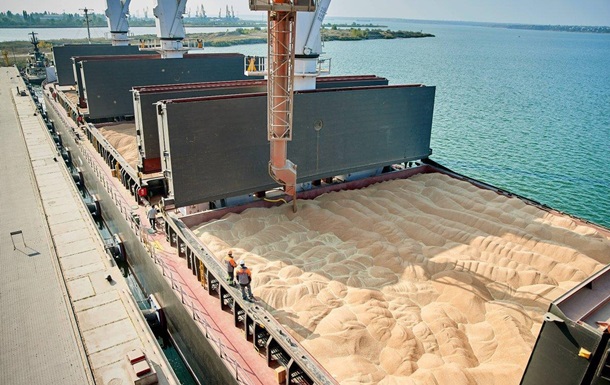
In July, most of Ukraine’s grain left through its Black Sea ports. From 1 to 26 August, after Russian attacks sharply reduced ship traffic, Ukraine exported just 1.42 million tons of agricultural products—about a third of its potential volume. Rail and the Danube carried about 600,000 tons each, Agriculture Minister Taras Vysotskyi said.

The locomotives carrying that cargo are now among Russia’s main targets.

Ukraine now expects to export 38–40 million tons of grain in the 2026/27 season, down from 43 million before the attacks intensified, Agriculture Minister Taras Vysotskyi told Reuters. Agricultural products generated more than half of the country’s export revenue last year. 

By 24 August, the total number of damaged locomotives had risen to 492.

Russia now sends camera-equipped drones to search for trains and redirects others toward rolling stock that their operators spot in flight. The campaign is no longer confined to fixed targets such as stations, bridges, and substations.

Ukraine’s railways keep running. Damaged lines often reopen within hours, while buses carry passengers around closed sections. With far fewer ships calling at the ports, each damaged locomotive leaves the railway less room to absorb the next disruption.
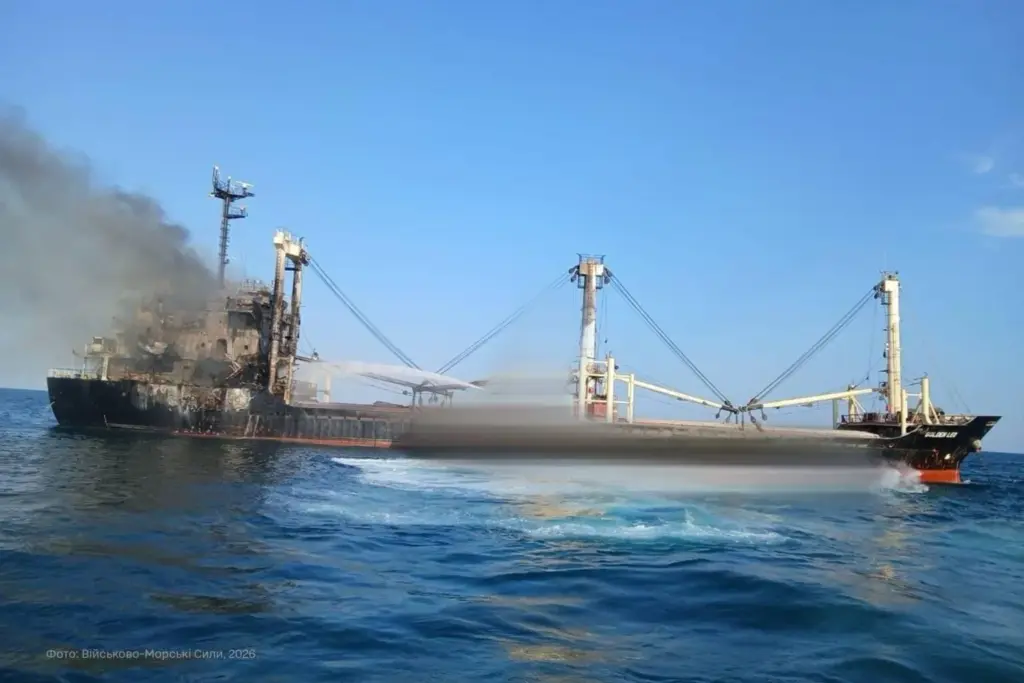
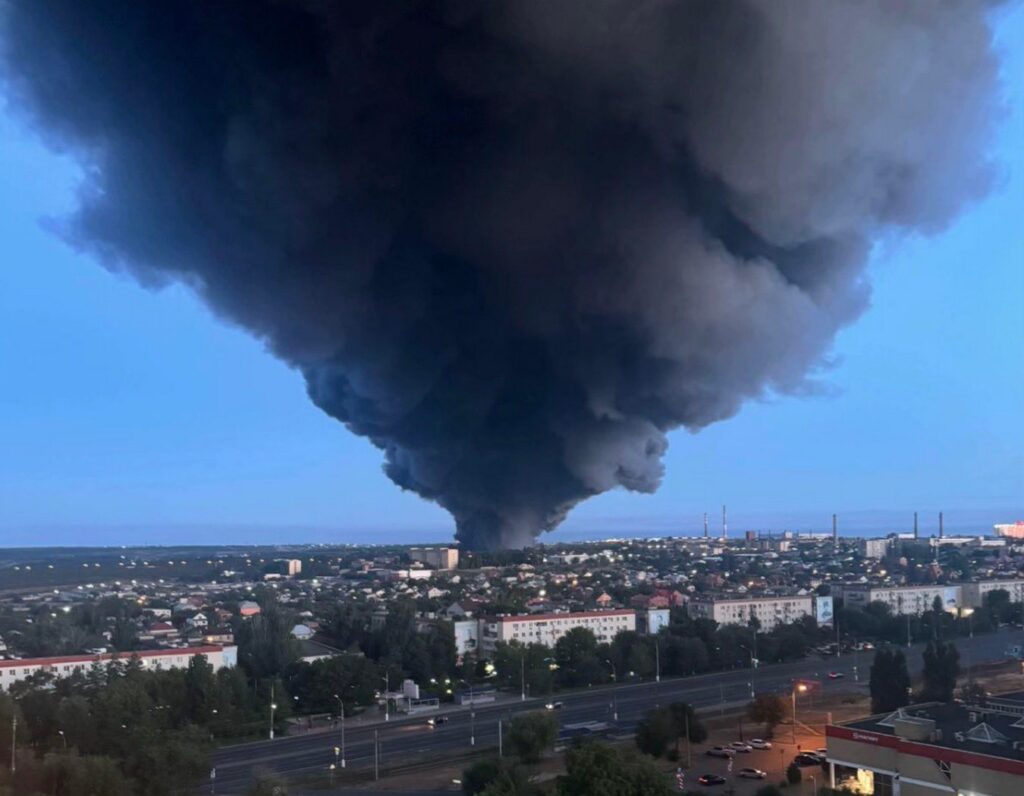
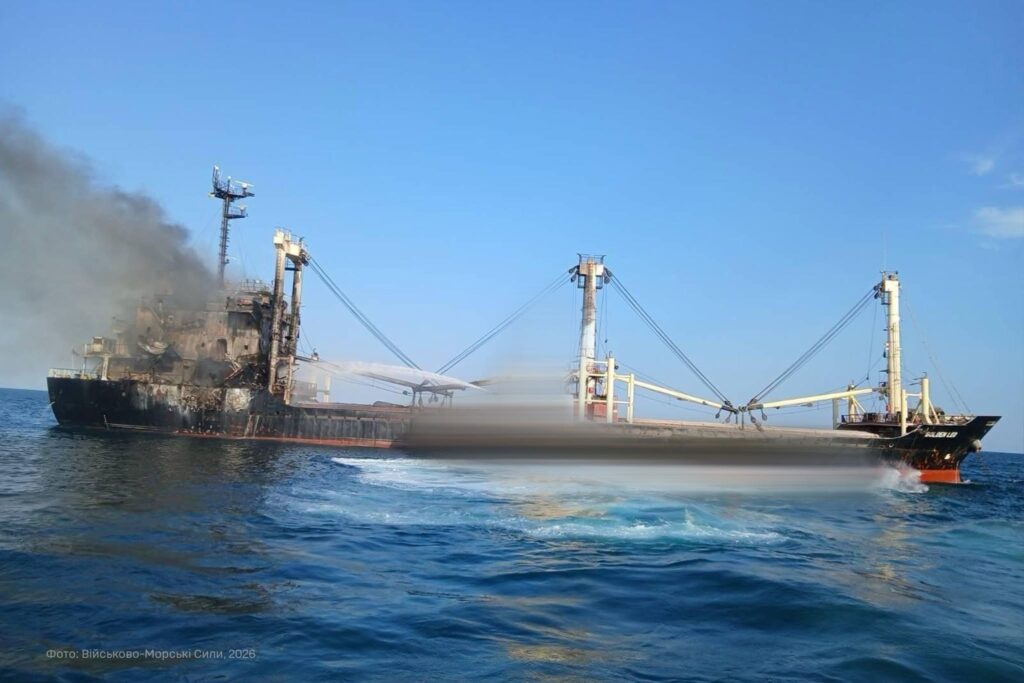
A damaged cargo ship burns at sea as thick black smoke rises from its stern and water sprays across the vessel.
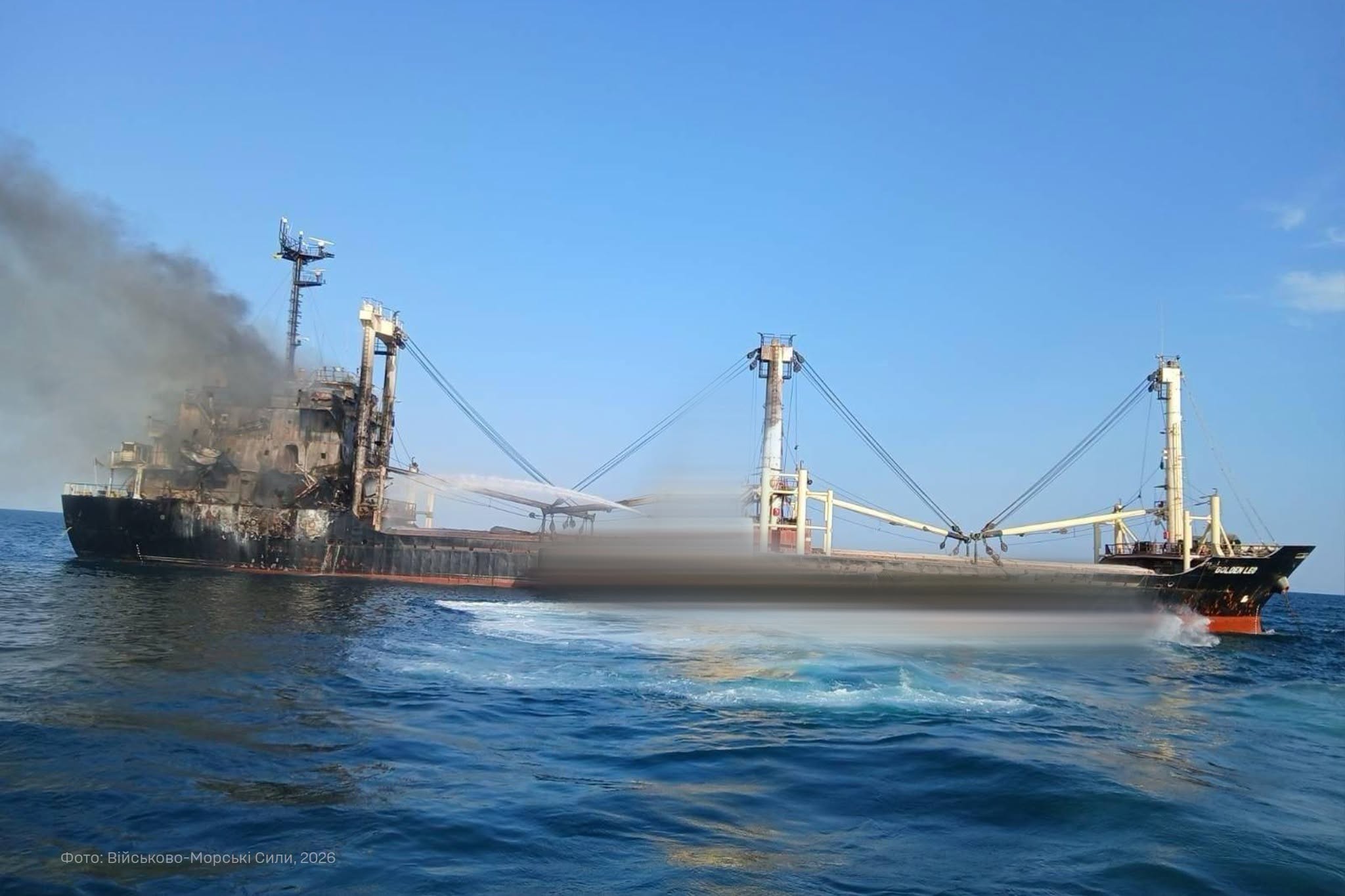
The civilian bulk carrier GOLDEN LEO ablaze after Russian missiles hit it as it left Odesa with a cargo of corn, in the Black Sea, 19 July 2026. Photo: Ukraine’s Navy

Export traffic moves inland

Before the current wave of strikes, the ports of Greater Odesa handled about 80% of Ukraine’s agricultural exports. Rail’s share then rose sharply, but the railway did not carry more grain: Ukrzaliznytsia said 461,000 tons went by rail during the first 25 days of August—67% less than in July and 77% below the corresponding period last year, according to figures reported by Rail.insider. Rail had taken a larger share of a collapsing export flow.

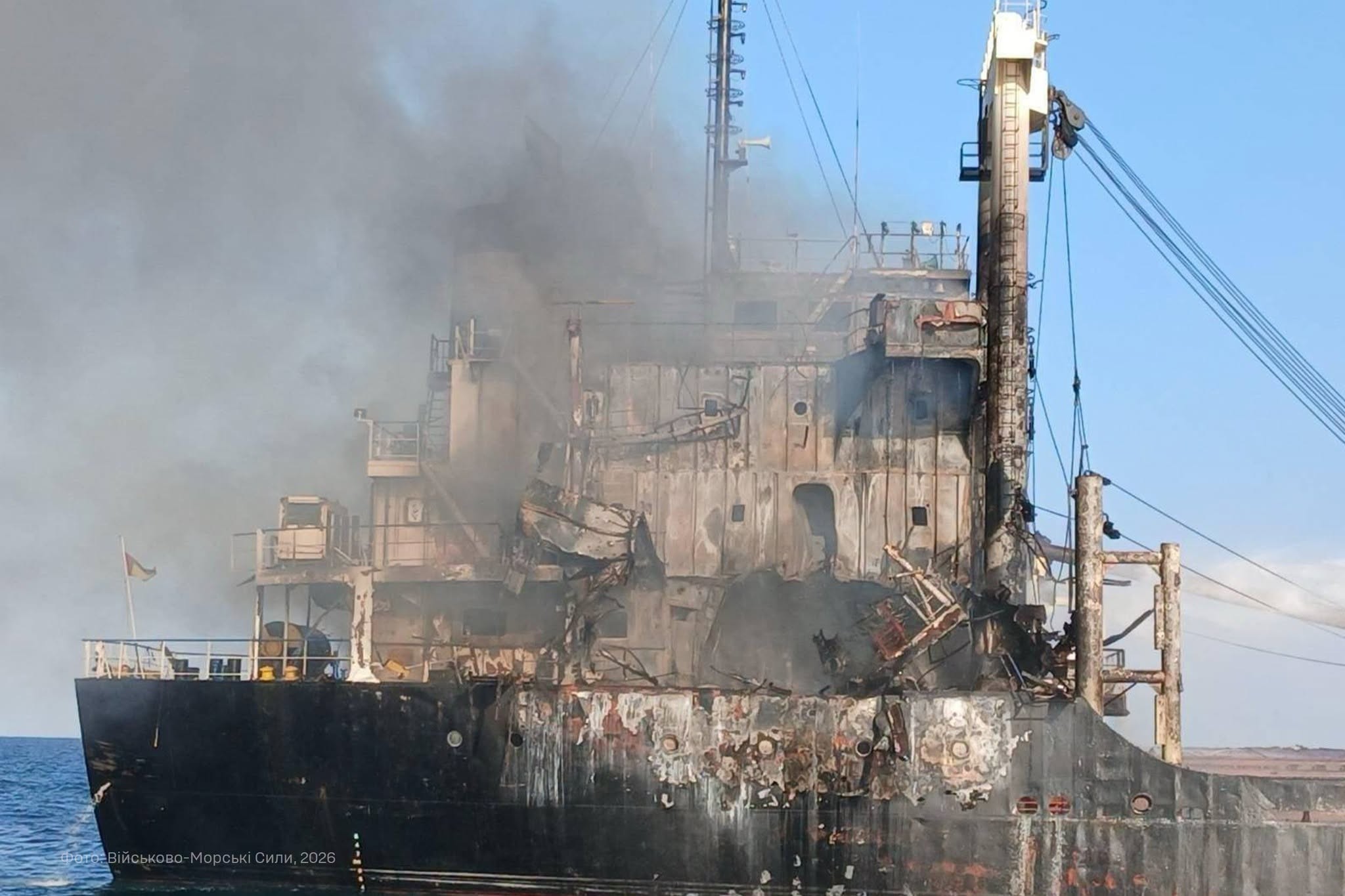
Traffic through the Black Sea corridor collapsed after a series of attacks on civilian vessels in July. One of the deadliest strikes was on the bulk carrier Golden Leo on 19 July, killing 10 people, including a Ukrainian maritime pilot. The ship later sank. On 22 July, for the first time since the sea corridor opened, not a single vessel entered the Odesa ports.
ten dead russia strikes turkish-owned bulk carrier off odesa · post civilian golden leo ablaze after russian missiles hit left cargo corn black sea 19 2026 ukraine's navy struck foreign-flagged
Explore further

Ten dead as Russia strikes a Turkish-owned bulk carrier off Odesa

In July, 169 ships entered, but only 7 did so during the first 11 days of August, the Ukrainian Sea Ports Authority told Kyiv Post. By 24 August, traffic had partly recovered. Three or four ships were entering and leaving the ports of Odesa each day. However, cargo volumes remained three to four times lower than before the intensified attacks, President Volodymyr Zelenskyy pointed out.

Maersk and Hapag-Lloyd suspended feeder services to Greater Odesa in late July and early August, with Maersk rerouting imports to Constanța.

The attacks changed the calculations of shipowners and insurers, even though the ports remained formally open. The late-August recovery shows that Russia did not impose a total blockade, but commercial traffic remained far below its previous capacity.

Ukraine normally moves 4 to 4.5 million tons of farm goods a month; the National Bank of Ukraine estimated in July that alternative routes could initially carry about 2.5 million tons a month. That leaves part of the usual flow with nowhere to go this year—about $2.5 billion in export revenue delayed from the second half of 2026 to the first half of 2027.

The Agriculture Ministry estimates that elevators and grain warehouses with nearly 59 million tons of capacity could be full by early November, leaving an 11-million-ton storage shortfall by the end of autumn.
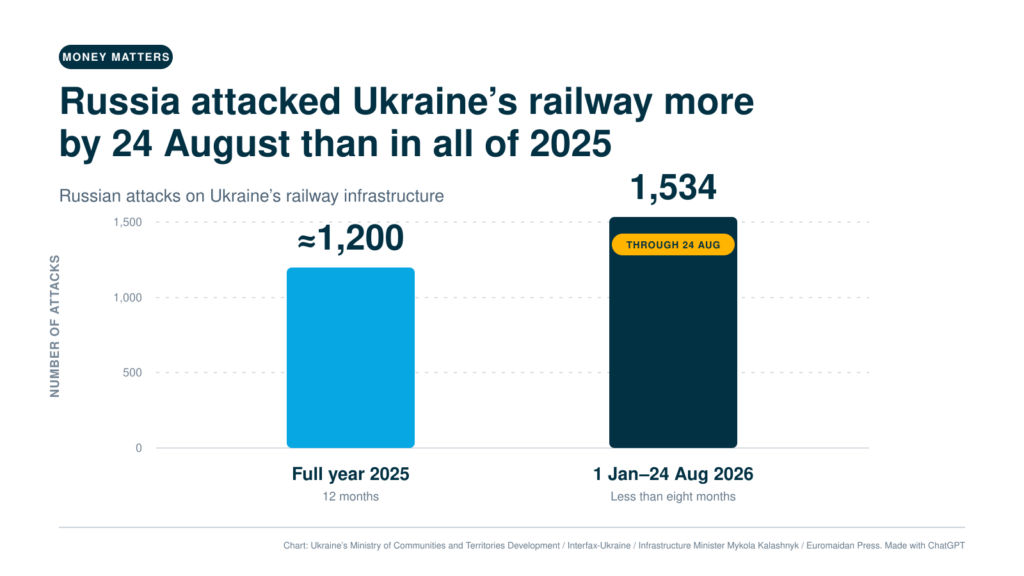
russian attacks on the ukrainian railway infrastructure
Russian attacks on Ukraine’s railway infrastructure reached 1,534 by 24 August 2026—already exceeding the 1,200 recorded in all of 2025. Chart: Ukraine’s Ministry of Communities and Territories Development / Interfax-Ukraine / Infrastructure Minister Mykola Kalashnyk / Euromaidan Press. Made with ChatGPT.

Russia turned the drones on the trains

Russia is going after locomotives to cut the export corridors that tie the industrial regions around Kryvyi Rih, Zaporizhzhia, and the east to Odesa’s ports and the western border, Ukrzaliznytsia CEO Oleksandr Pertsovskyi told Reuters in June. He also described the method: Russia is using drones with video cameras and remote control, which allow operators to hit rolling stock in real time.

The climb is in the quarterly data: nine locomotives hit in the first half of 2025, 119 in the second, and 81 in the first quarter of 2026.By 15 August, Pertsovskyi put the figure at more than 250 damaged in the previous six months.

In the first quarter alone, Russia struck the railway 541 times, about half its total for all of 2025, damaging 1,718 objects across the network. By 24 August, the number of attacks on railway infrastructure in 2026 had reached 1,534, Infrastructure Minister Mykola Kalashnyk said.

On 19 July, Russia’s Defense Ministry acknowledged a Geran-4 Seeker drone had struck a locomotive hauling Ukrainian military equipment near Volniansk in Zaporizhzhia Oblast the previous day, and released strike footage.

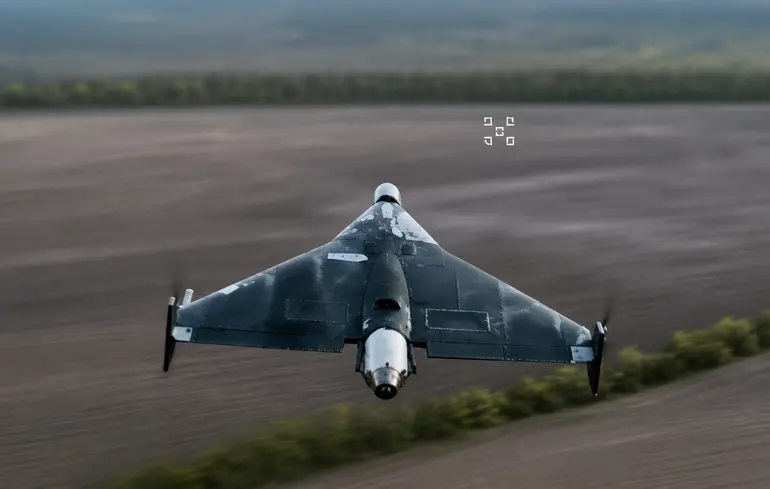
The Geran-4 Seeker sends video to an operator searching for targets. Once the operator selects one, onboard software guides the final approach. Russia says it has used the system against ships near Chornomorsk, but public evidence does not show how many locomotive strikes involved Seeker; moving trains can also be hit by hand-flown drones redirected in flight.
russia steers its long-range drones ground towers—kyiv says hit one occupied crimea · post russia’s new “geran-4 seeker” shahed variant uses machine-vision ai targeting geran 4 ukraine news ukrainian reports
Explore further

A $50 computer just flew Russia’s newest jet drone into a Ukrainian grain ship—and jamming couldn’t stop it
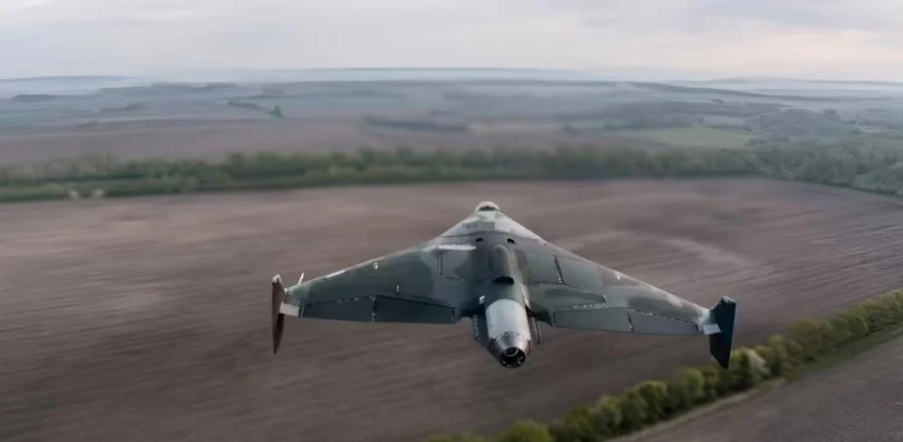
Russia's new "Geran-4 Siker" Shahed variant uses machine-vision AI for targeting. Source: Warhronika

Jammers cannot protect every train

Ukraine has fitted trains with jammers, which Ukrainian drone and electronic-warfare specialist Serhii “Flash” Beskrestnov says have protected a significant number of trains. But Russian drones use different frequency bands, so each train needs several systems, and even those cannot provide complete protection.

“Whatever we do, drones will periodically hit trains in the frontline zone,” Beskrestnov wrote in March. “As, unfortunately, they will hit buses and civilian cars.”

Seeker is not the only way to hit a moving train. Russian operators have repeatedly redirected hand-flown drones after spotting trains below, Beskrestnov wrote in April. He said military airspace data allows railway dispatchers to change schedules or evacuate passengers when necessary, and that several hundred trains had been moved out of danger.

The cost is not only rolling stock. On 13 August, a jet-powered Shahed struck the locomotive of the Odesa–Dnipro passenger train at Buialyk station in Odesa Oblast, killing the driver, Ivan Shevchyk, and his assistant, Vasyl Morozov, both of the Znamianka locomotive depot.

The monitoring team had flagged the drone and ordered a stop; the train was entering the station so its 340 passengers, 67 of them children, could get off. All of them were evacuated unhurt. “A sharp maneuver by a jet Shahed is a matter of minutes, and the locomotive crew did not have enough time to come to a full stop and evacuate themselves,” Pertsovskyi wrote.

Prosecutors opened proceedings under Article 438 of the criminal code, violation of the laws and customs of war, causing death.

Two days later, Ukrzaliznytsia changed its rules, increasing the distance at which a train is halted and evacuated when a threat appears—a decision Pertsovskyi tied to the growing number of jet drones. Eight railway workers had been killed in the preceding weeks, at Lozova and Erastivka stations and on the train at Buialyk.

Ukraine is going after the equipment that makes the operator’s link work. On 13 and 14 August, Ukrainian forces struck two ground-based relay stations near Zaliznyi Port in Kherson Oblast that transmit control signals between Russian operators and Geran and Gerbera drones, extending their range and steadying the connection, along with five UAV command posts.

Such relays extend the operator-controlled phase of Geran and Gerbera attacks, including variants that may switch to onboard guidance for the final approach.
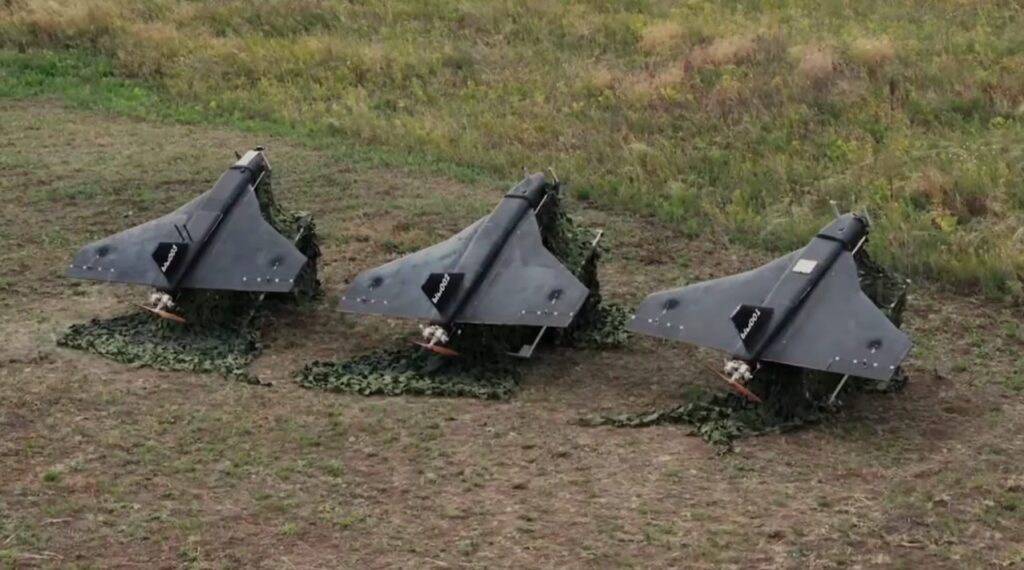
russian gerbera drones
Russia's Gerbera drones. Photo: Gastello Design Bureau

Delays reveal resilience—and attrition

Russia has not carved the railway into islands. When seven drone strikes hit a junction between Dnipro and Zaporizhzhia in a single day on 30 January, wrecking locomotives, wagons, and track, trains were rerouted through Dnipro, and evening passengers were put on buses.

Freight was moving again within a day; passenger service stayed cut longer, judged too dangerous for civilians, Le Monde reported. Track and power lines are repaired quickly, and a diesel engine can stand in where electric traction is out of service.

The cost lands on the rolling stock. A locomotive is harder to replace than track, and some of that loss is already permanent. By April, around 50 of more than 300 locomotives hit since the full-scale invasion had been destroyed beyond repair, Deputy Communities Minister Oleksii Balesta said. By 24 August, the total number of damaged locomotives had risen to 492, Infrastructure Minister Mykola Kalashnyk said.

New locomotives will arrive slowly. The first machines from a 55-locomotive order placed with French producer Alstom through a World Bank tender are due in early 2027 for certification, with the full batch expected by May 2029.

ukraine documents 190000 war crimes — believes prove russia’s plan erase nation · post burned grain truck open parking lot odesa oblast following russian drone strike overnight 2 2025 oblst
Burned grain truck at an open parking lot in Odesa Oblast following a Russian drone strike overnight on 2 November 2025. Photo: Suspilne Odesa

Rail cannot replace the sea

Even undamaged, the railway could not move as much export cargo across the EU border as the ports did by sea. The EU lines are slower, more expensive, and interrupted by a change in track gauge at the border. The Danube is running too low this summer to float full barges, and road haulage was never more than a sliver of Ukraine’s bulk grain.

The strain reaches past agriculture. Ferrexpo stopped seaborne iron ore pellet exports, the Southern Mining and Processing Plant in Kryvyi Rih cut back, and Ukrzaliznytsia throttled some cargo runs to the Odesa port stations, according to Ukrainian industry reports.

The shortfall does not stay inside Ukraine. Egypt, Algeria, and Indonesia together bought about 8.7 million tons of Ukraine’s wheat last season—roughly 62% of the total, with Egypt alone taking more than a quarter.

A long closure of the deep-water ports would send those import-dependent buyers hunting elsewhere: the trade analytics firm ASAP Agri puts Ukraine’s 2026/27 wheat exports at 5 to 10 million tons if the blockade holds, with buyers like Bangladesh turning to Indian wheat instead.

Ukraine is responding with air defenses around key rail nodes, dispersed locomotives, and repair kits pre-positioned for fast fixes, and its transport ministry has taken a railway-resilience plan to NATO, built on early warning and centralized recovery management.

Russia drove most ships from the sea route, leaving Ukraine more dependent on constrained alternatives, and has been hitting the locomotives serving its rail corridors—more than 250 damaged in six months, some beyond repair. But the railway still functions.
  • ✇Euromaidan Press
  • Shares in Russia’s second-largest bank hit record low as Wildberries-linked offering price holds steady
    Shares in Russia’s second-largest bank VTB fell to an all-time intraday low of just under 50 rubles ($0.60) on 26 August, RBC’s exchange data showed. That was more than 40% below the 87-ruble (about $1) price set for a share sale partly intended to finance its Wildberries partnership. At that price, offering participants would pay about 75% more than investors buying the same shares on the stock market. In the second quarter, the bank set aside 28% more for troubled loa
     

Shares in Russia’s second-largest bank hit record low as Wildberries-linked offering price holds steady

27 août 2026 à 10:59

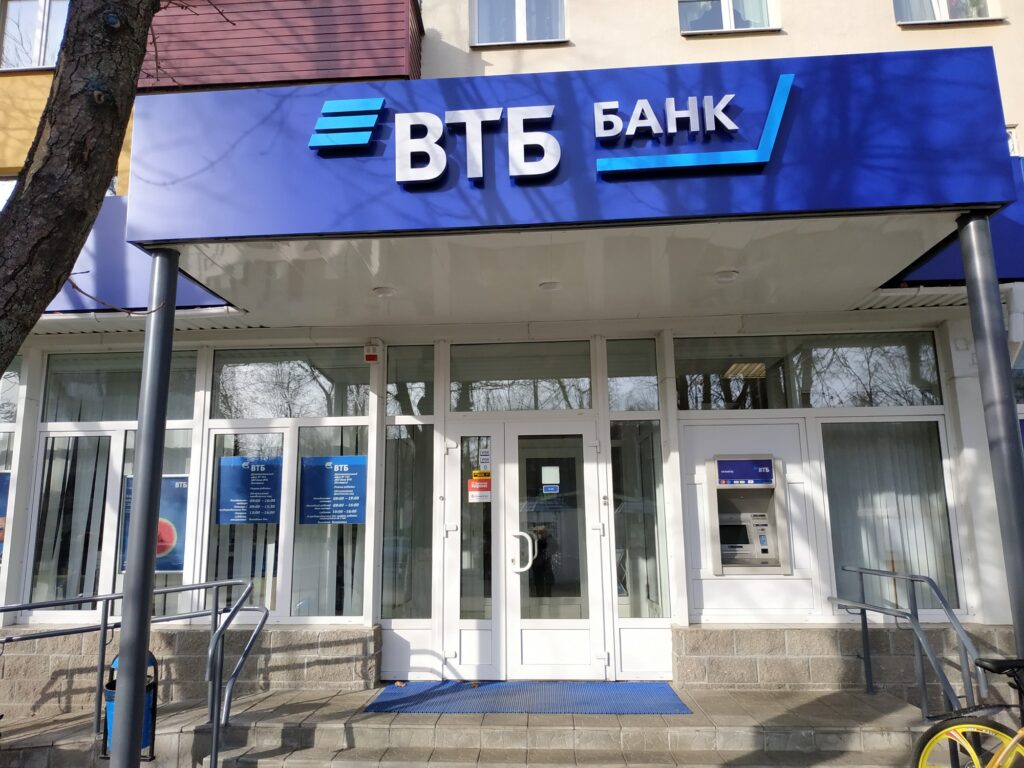
vtb bank branch in svietlahorsk, belarus

Shares in Russia’s second-largest bank VTB fell to an all-time intraday low of just under 50 rubles ($0.60) on 26 August, RBC’s exchange data showed. That was more than 40% below the 87-ruble (about $1) price set for a share sale partly intended to finance its Wildberries partnership. At that price, offering participants would pay about 75% more than investors buying the same shares on the stock market.

In the second quarter, the bank set aside 28% more for troubled loans while its profit fell by one-third.

VTB’s drop came amid a wider decline in Russian stocks. Kommersant’s market report said analysts also linked the fall to VTB’s own large new share issue.

Share issue could cut existing stakes by one-third

Under the bank’s offering plan, VTB could issue almost one new share for every two already in circulation. If VTB sold the full amount, an existing shareholder who bought no new shares would see their ownership stake fall by about one-third. VTB planned to finish the sale and close its Wildberries deal by 1 September.

The bank expected to raise 300–400 billion rubles ($3.6–$4.7 billion). VTB said it had assembled a group of large investors willing to participate but would not disclose who they were. Those investors would receive the same class of shares traded on the Moscow Exchange, but at the price fixed by VTB.

VTB described the partnership primarily as a route into Wildberries’ 80 million users—more than twice the bank’s own customer base. VTB would initially acquire a 5% stake in Wildberries’ banking arm, with the option to increase its holding later.

Reuters described both companies—Wildberries and rival Ozon—as central to Moscow’s plans to use online commerce as an engine of economic growth.

VTB held its price as shares fell

On 9 July, VTB kept its price even after the stock had fallen well below the offering price. The bank said its large, long-term investors were willing to look past short-term price swings.

On 16 July, VTB hit another low as investors prepared for its dividend cutoff and the new share issue. The first drone strikes on Wildberries warehouses followed two days later.

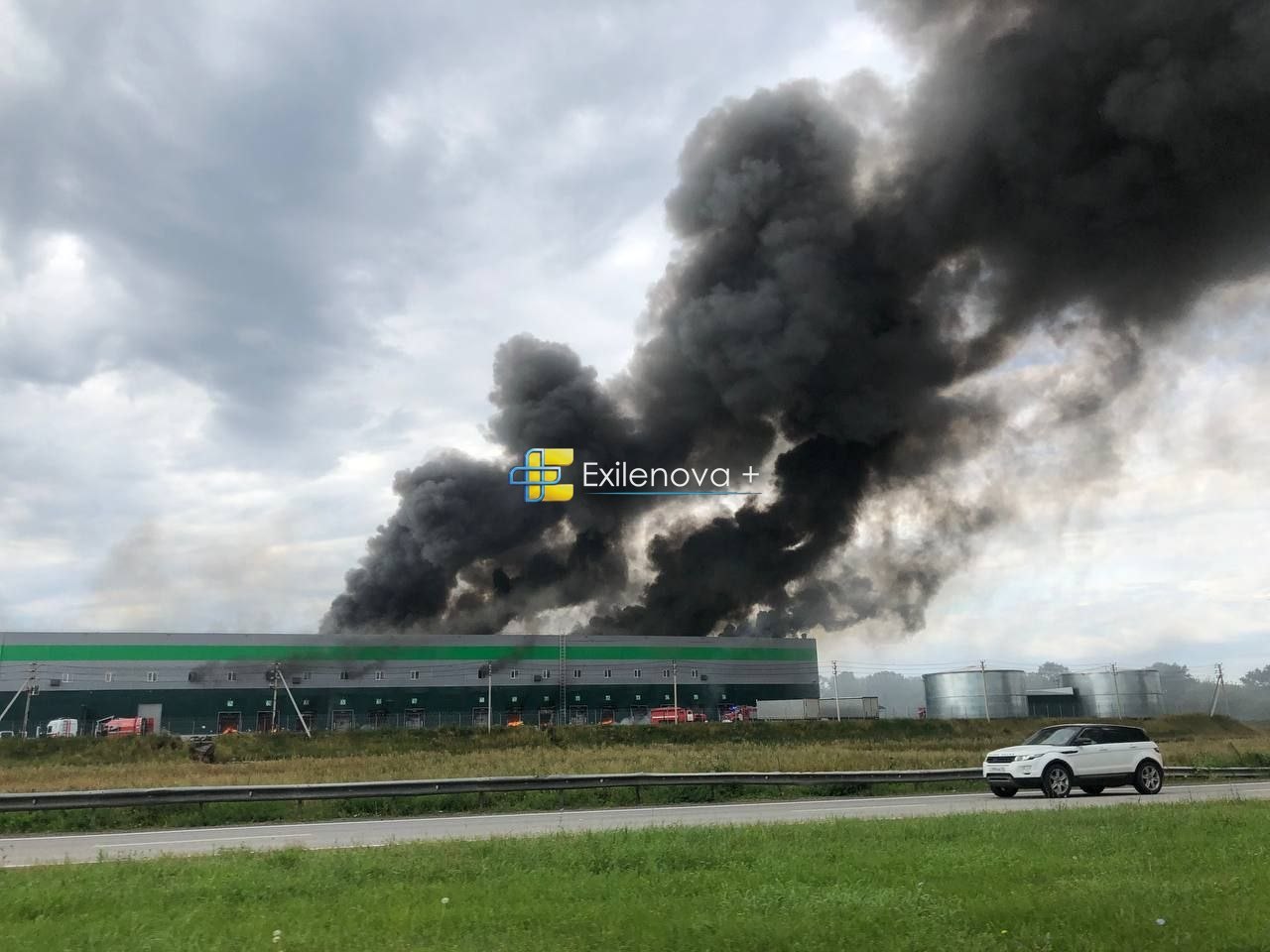
logistics centre in Bashkortostan, Russia,
Explore further

Is a fifth or well over half of Wildberries gone—or can both counts be right?

VTB’s first-half results showed that its profit fell by one-fifth from a year earlier. In the second quarter, the bank set aside 28% more for troubled loans while its profit fell by one-third.

After the attacks, Moscow considered supporting Wildberries and its sellers, with VTB expected to play a central role. VTB shares fell 2.5% on 28 July amid uncertainty over the partnership. “If we receive such a request, we will, of course, be open to various forms of lending support,” VTB’s first deputy CEO Dmitry Pyanov told Reuters.

  • ✇Euromaidan Press
  • Fifth drone-related NORSI shutdown in under five months leaves all major Lukoil refineries offline
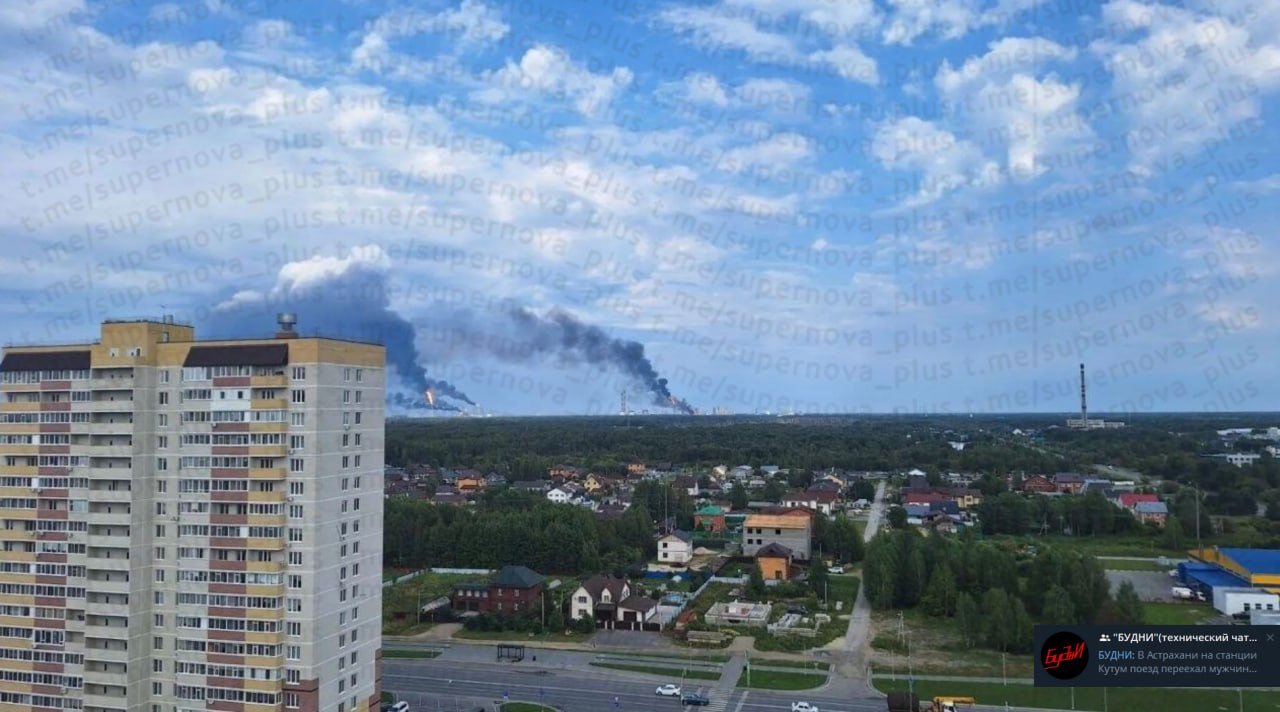
    All of Lukoil’s major refineries in Russia are now offline after a Ukrainian drone strike halted crude processing at its NORSI plant on 26 August, Reuters reported the shutdown. NORSI is Russia’s fourth-largest refinery and second-largest gasoline producer. The latest attack produced the plant’s fifth drone-related shutdown in less than five months. Ukraine’s General Staff said it had struck the refinery in Kstovo, Nizhny Novgorod Oblast, where a fire subsequently br
     

Fifth drone-related NORSI shutdown in under five months leaves all major Lukoil refineries offline

27 août 2026 à 08:15

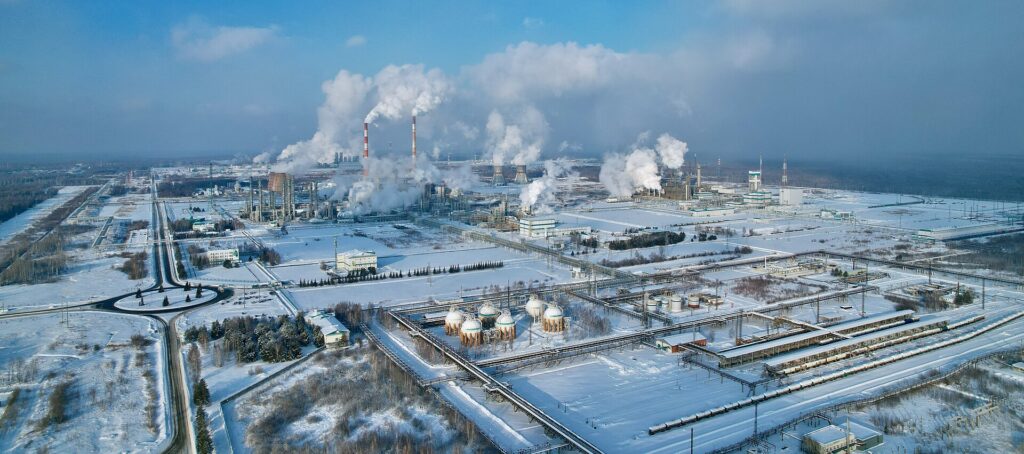
lukoil’s norsi refinery in kstovo, nizhny novgorod oblast

All of Lukoil’s major refineries in Russia are now offline after a Ukrainian drone strike halted crude processing at its NORSI plant on 26 August, Reuters reported the shutdown. NORSI is Russia’s fourth-largest refinery and second-largest gasoline producer.

The latest attack produced the plant’s fifth drone-related shutdown in less than five months.

Ukraine’s General Staff said it had struck the refinery in Kstovo, Nizhny Novgorod Oblast, where a fire subsequently broke out. It said the refinery helps supply Russia’s armed forces.

Industry sources told Reuters that several processing units and other plant infrastructure had been damaged. No repair timetable is available, and Lukoil did not respond to the agency’s request for comment.

NORSI can process about 15 million tons of crude annually and produce about 5 million tons of gasoline and more than 5 million tons of diesel, according to Reuters.

A Reuters dispatch in The Moscow Times said Lukoil listed no NORSI-made gasoline, diesel, or other petroleum products for sale on the St. Petersburg International Mercantile Exchange after the shutdown.

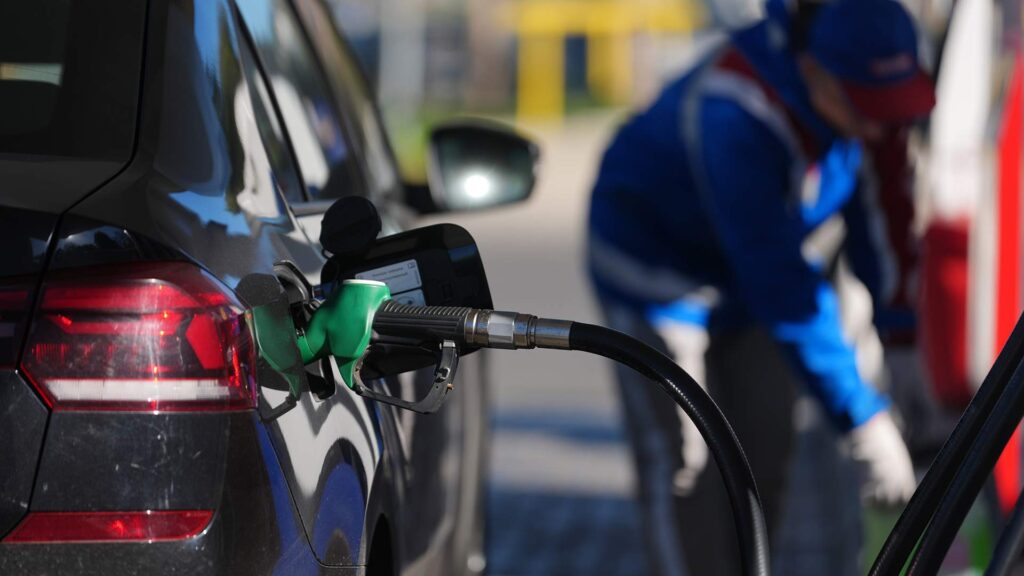
a car refuels at a gas station russia as gasoline shortage deepens
Explore further

Russia diverts defense-industry chemicals to gasoline—but stations still run dry

NORSI’s closure followed the complete shutdown of Lukoil’s Perm refinery after a 21 August drone strike. The company’s Volgograd plant had already stopped processing on 31 July.

The Moscow Times listed four previous occasions this year when drone strikes stopped NORSI from processing crude: 5 April, 20 May, 24 June, and 2 July. The latest attack, therefore, produced the plant’s fifth drone-related shutdown in less than five months.

Lukoil also operates a smaller refinery in Ukhta, which remains active.

Kremlin threatens retaliation

Nizhny Novgorod Oblast Governor Gleb Nikitin wrote that Russian forces had “repelled” more than 40 drones. He also reported damage to an unnamed industrial enterprise, several homes, and cars.

A day later, Kremlin spokesperson Dmitry Peskov promised a “harsh response” to Ukrainian strikes on Russia’s economic and trade infrastructure.

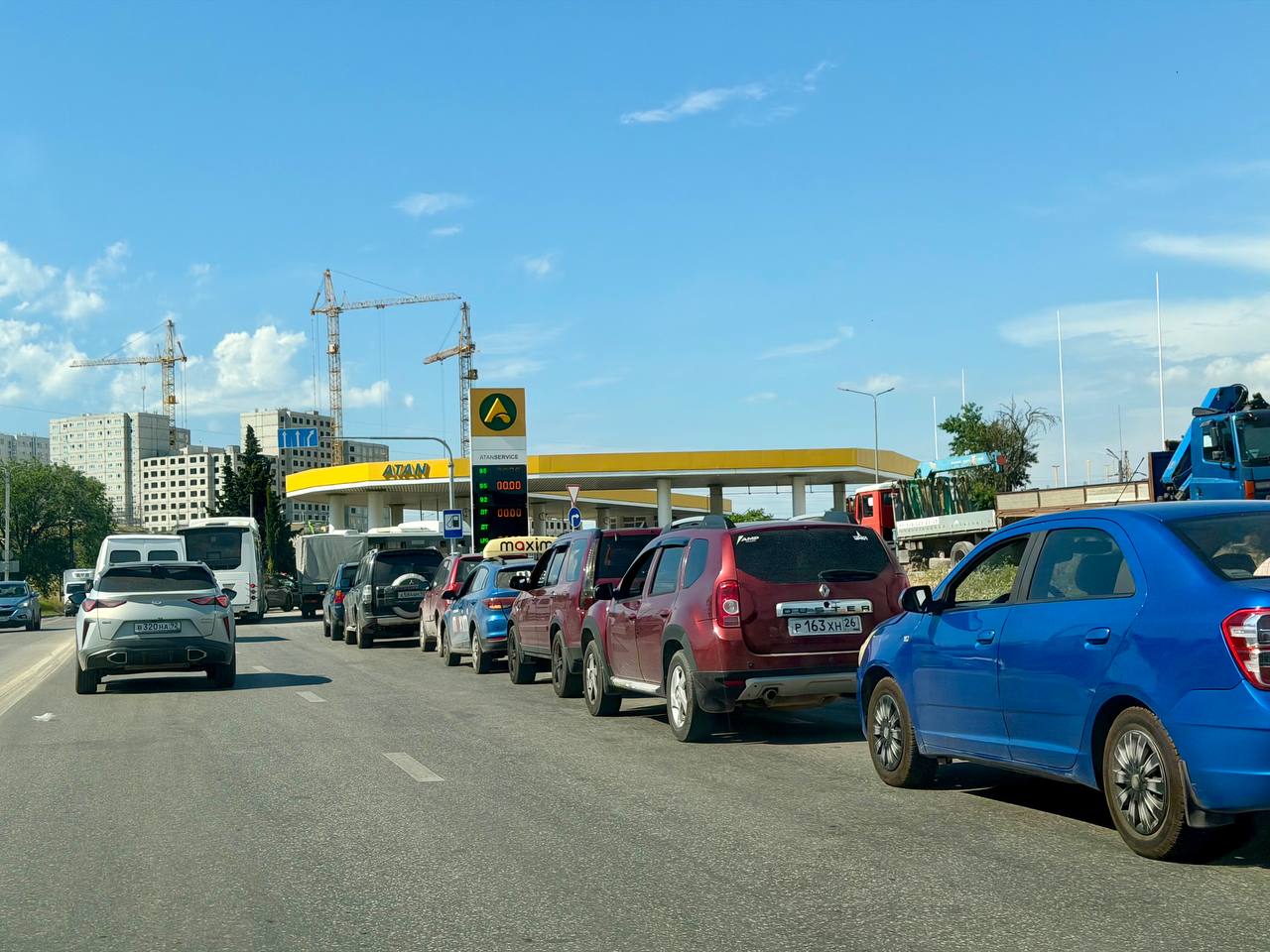
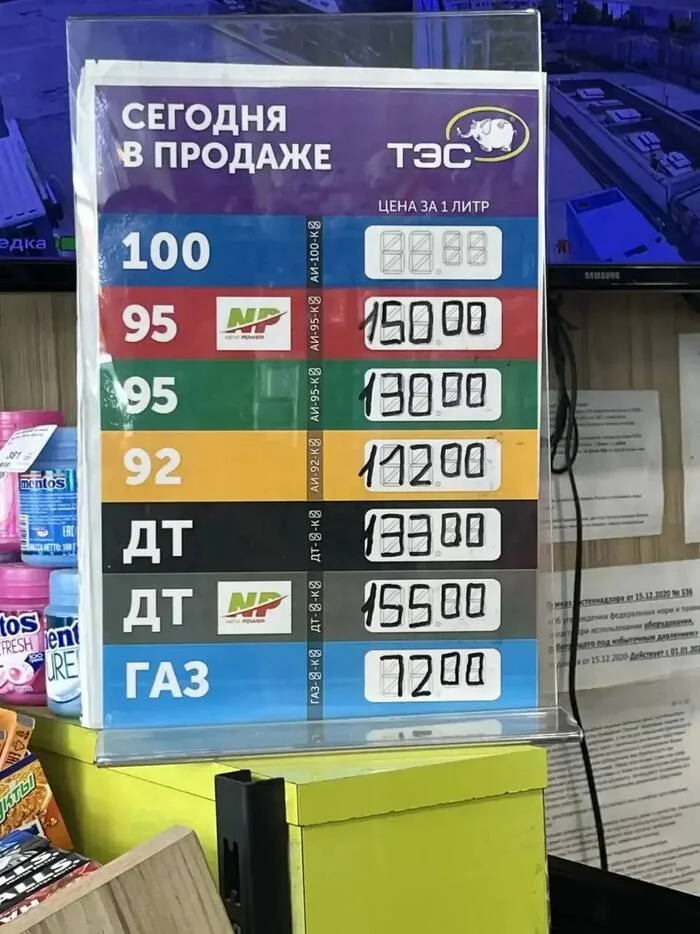
Russia is facing its second bout of fuel shortages this summer. Gasoline sales limits have returned to Moscow and St. Petersburg, while Rosneft has capped purchases at 30 liters per vehicle across its filling-station network, The Moscow Times reported.

Kommersant reported that Astrakhan Oblast had capped gasoline purchases at 30 liters and was serving drivers according to odd- and even-numbered license plates. Orenburg Oblast introduced a similar system and capped purchases at 30 liters to preserve supplies for emergency services and public transport, Governor Yevgeny Solntsev announced.

Five days before NORSI stopped, the Russian government ordered officials to distribute available fuel more evenly between and within regions. Russia also plans to extend its diesel export ban through September as refinery outages constrain domestic supplies.

  • ✇Euromaidan Press
  • Ukraine fires state bank chair after alleged $3.3 million bail-laundering scheme
    Ukraine has dismissed Mykola Hladyshenko as chair of the supervisory board of state-owned Sense Bank after NABU released recordings that it says show the bank was used to launder 150 million hryvnias ($3.3 million) to post bail for a former minister.The Cabinet’s 21 August decision ended Hladyshenko’s powers and appointed a state representative to the board to help restore a quorum. The Finance Ministry and National Bank of Ukraine (NBU) must now ensure the bank is properl
     

Ukraine fires state bank chair after alleged $3.3 million bail-laundering scheme

25 août 2026 à 08:59

sense bank branch in kyiv

Ukraine has dismissed Mykola Hladyshenko as chair of the supervisory board of state-owned Sense Bank after NABU released recordings that it says show the bank was used to launder 150 million hryvnias ($3.3 million) to post bail for a former minister.

The Cabinet’s 21 August decision ended Hladyshenko’s powers and appointed a state representative to the board to help restore a quorum. The Finance Ministry and National Bank of Ukraine (NBU) must now ensure the bank is properly governed and prepare it for sale.

The material suggested that Hladyshenko’s withdrawal had been merely formal and that he continued influencing the bank.

New recordings changed the NBU’s assessment

The NBU’s 20 August decision followed a review opened in May, when recordings linked to the wider Mindich case raised questions about Hladyshenko’s independence. The regulator twice asked Ukraine’s anti-corruption agencies for evidence, but they could not release pretrial investigation materials. Hladyshenko stepped aside while the review continued.

NBU Governor Andrii Pyshnyi told Parliament that new public evidence changed the regulator’s assessment. The material suggested that Hladyshenko’s withdrawal had been merely formal and that he continued to influence the bank.

It also raised questions about the remaining board members’ oversight. That evidence emerged on 19 August as part of Operation “Forest Gump”.

The Mindich tapes are recordings from NABU’s investigation into an alleged $100 million kickback network at state nuclear operator Energoatom. They are named after businessman Tymur Mindich, a former business partner of President Volodymyr Zelenskyy.

Composite image showing NABU anti-corruption operation: investigators reviewing documents at table, tactical officer conducting search, and stacks of seized currency bills from November 2025 raids into alleged $100 million kickback scheme at Energoatom nuclear operator
Explore further

The Mindich tapes: anti-graft recordings expose Zelenskyy associate’s $100M nuclear operator protection racket

The NBU also demanded that Sense Bank suspend Liudmyla Snihur, head of the bank’s financial and currency monitoring department, while it investigates possible interference with the bank’s operating systems. The government initiated suspension proceedings against the chair of the management board, Oleksii Stupak.

According to Ekonomichna Pravda’s account of the NABU materials, investigators allege that the group moved illicit cash through Sense Bank, companies under its control, and private individuals before using the money to post bail for former Energy and Justice Minister Herman Halushchenko, a suspect in the Mindich case.

Snihur allegedly helped create a temporary “window” during which transactions passed without the bank’s usual checks.

Sense Bank was already for sale

Ukraine nationalized Sense Bank, formerly Alfa-Bank Ukraine, in 2023 after sanctions barred its Russian-linked owners from controlling it.

Kyiv was preparing to privatize Sense Bank before the current investigation. The government accelerated sale preparations on 20 August and said the proceeds would fund Ukraine’s defense forces.

  • ✇Euromaidan Press
  • Russia turns failed drone defenses into grounds for state control of company assets
    Russian President Vladimir Putin has made inadequate drone defenses and slow repairs grounds for putting private assets under state management. His 24 August security decree opens a new way to government control over Russia’s economy.It expands a mechanism Russia has used against foreign-owned businesses since 2023, according to research by Nektorov, Saveliev and Partners (NSP), a Russian law firm that tracks state takeovers. The text does not specify what counts as “in
     

Russia turns failed drone defenses into grounds for state control of company assets

25 août 2026 à 04:06

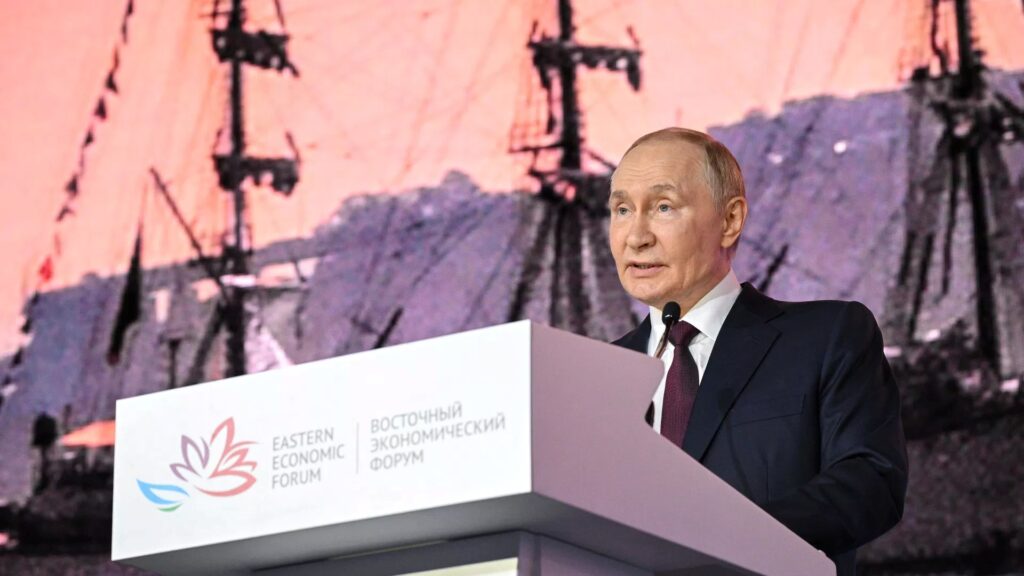
putin at the eastern economic forum in vladivostok on 5 september 2025

Russian President Vladimir Putin has made inadequate drone defenses and slow repairs grounds for putting private assets under state management. His 24 August security decree opens a new way to government control over Russia’s economy.

It expands a mechanism Russia has used against foreign-owned businesses since 2023, according to research by Nektorov, Saveliev and Partners (NSP), a Russian law firm that tracks state takeovers.

The text does not specify what counts as “ineffective” drone protection or how quickly a facility must be restored.

A business need not lose a facility before the measure can apply. Decree No. 604 allows action over late security measures, safety violations, conduct that endangers normal operations, ineffective counter-drone steps, or delayed restoration.

The text does not specify what counts as “ineffective” drone protection or how quickly a facility must be restored. Covered sectors include energy, industry, communications, utilities, transport, logistics, and life-support infrastructure, plus any sites deemed important to Russia’s security or economic stability.

Foreign controllers are also covered, including foreign organizations and citizens controlling Russian companies. Temporary management can reach all or part of an entity’s Russian property, securities, stakes in Russian companies, and other property rights—the rule is not limited to the damaged or vulnerable facility alone.

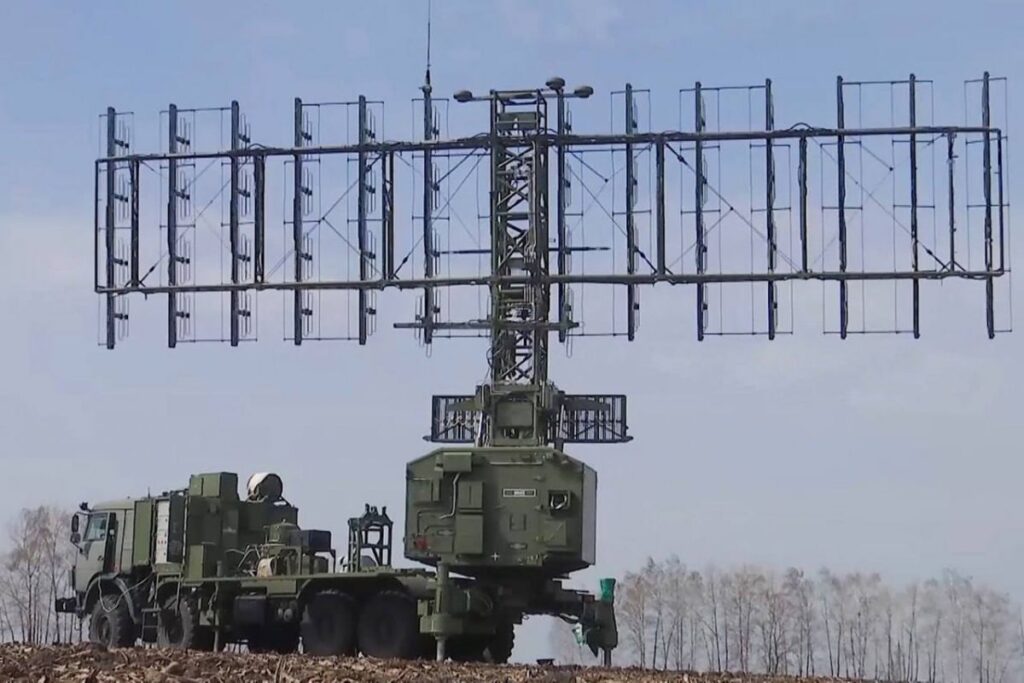
russian mobile air-fefense radar
A mobile Russian air-defense radar pictured in April 2024. Russia’s new decree lets the state take control of wider company assets when drone defenses are deemed inadequate. Photo: United Russia.

“Temporary” control has no deadline

At the same time, the text mentions no automatic return deadline. Putin must instruct the government to begin temporary management and then end it. By default, the Federal Property Management Agency assumes the owner’s powers, except for the right to dispose of the assets. The assets’ costs will be covered from its income.

Interfax published Denis Manturov’s remarks. The first deputy prime minister said the measure would be used selectively for specific security tasks and would leave formal ownership unchanged.

Komsomolskaya Pravda’s Alexander Kots raised a practical problem: Russian law, he wrote, gives businesses no instructions for defending sites against drones or cruise missiles, while barriers require extensive approvals, and private guards cannot easily be given weapons more powerful than shotguns.

The decree followed weeks of Ukrainian attacks on Russian refineries, ports, and warehouses. Ozon reported six disruptions at its facilities after 22 August. The listed retailer’s shares fell as much as 29.09% from Friday’s close on Monday, after five weeks of strikes on privately held Wildberries.

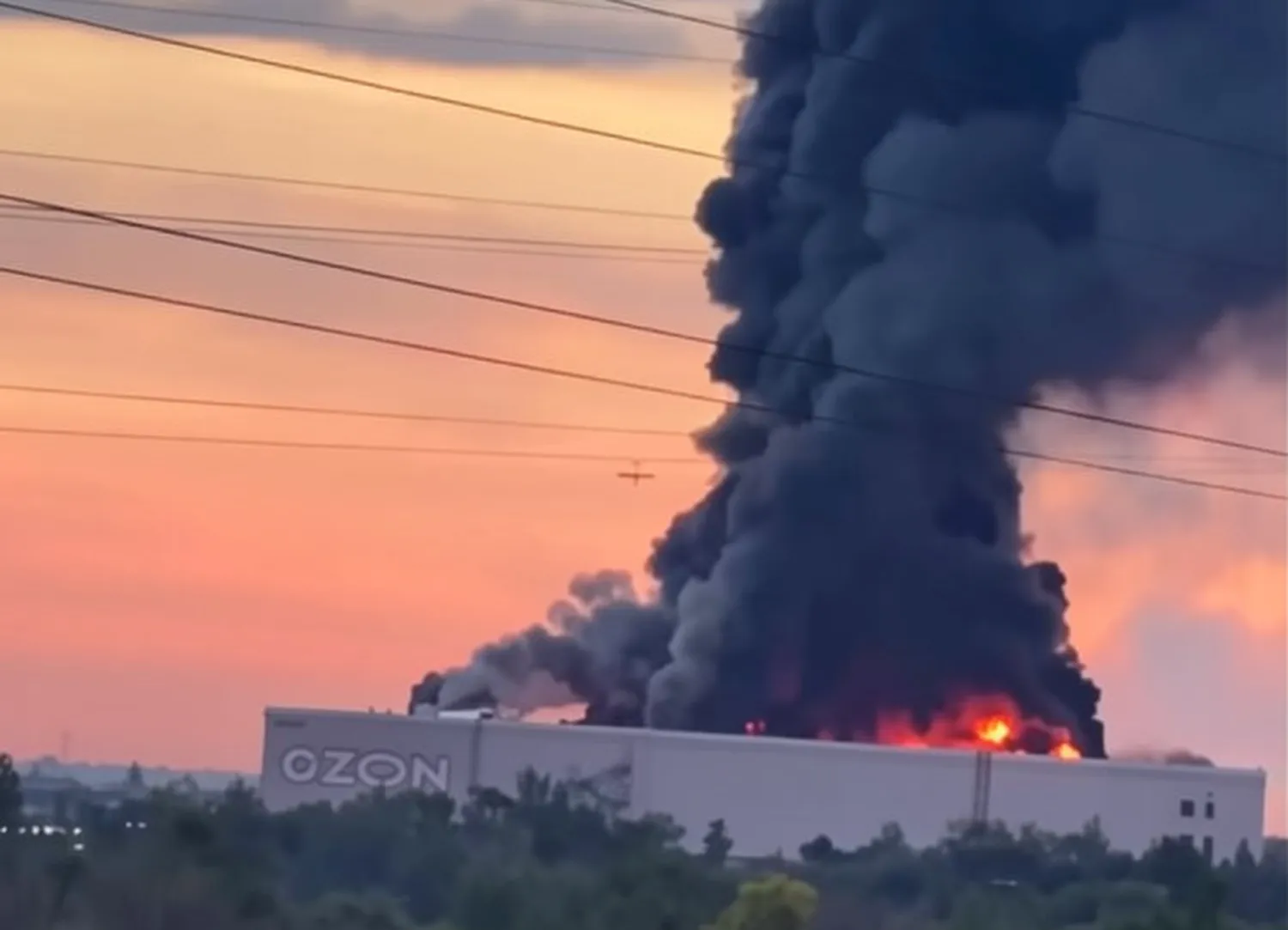
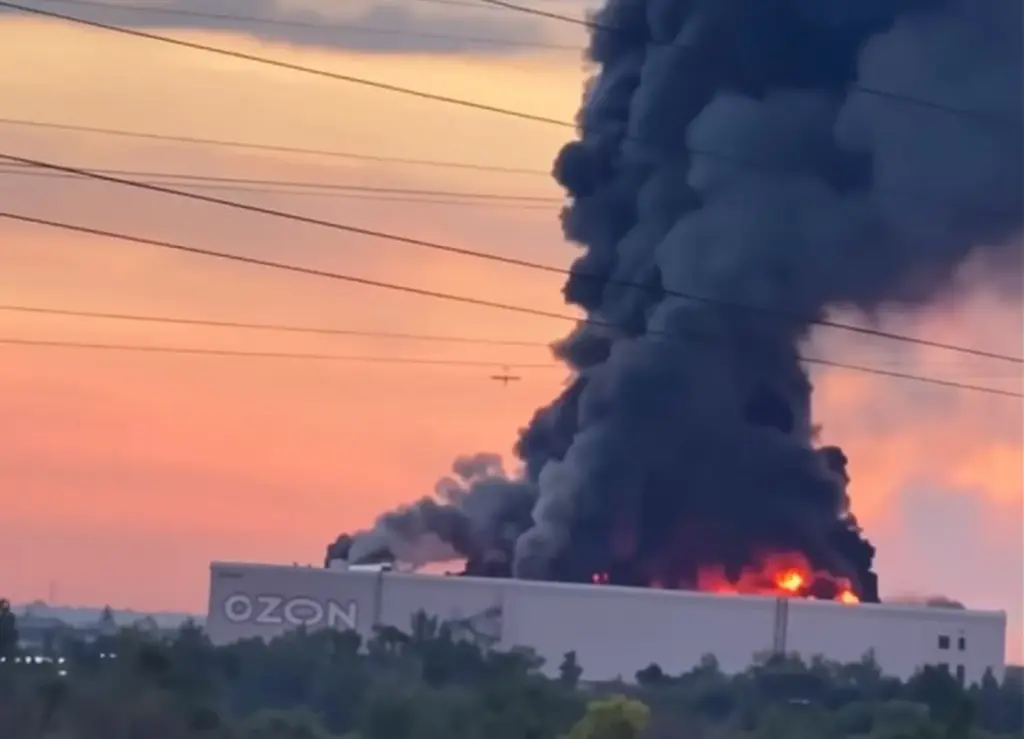
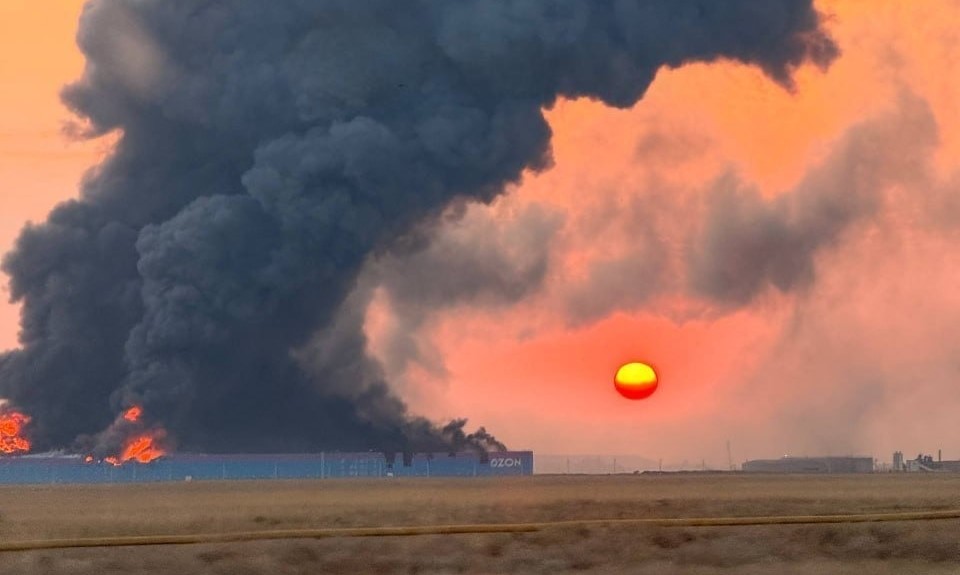
Thick black smoke and flames rise from an Ozon warehouse in Chapayevsk, Russia, at sunset.
Explore further

Why did Ozon fall as much as 29% while Russia’s market lost 2.9%?

Refining hit two-decade lows as strikes forced Russia to import gasoline, while a sixth Ust-Luga attack since March struck the country’s largest Baltic port.

NSP’s nationalization study records more than 100 cases since 2022 and about 6.5 trillion rubles (about $78 billion) in seized assets. It says cases averaged one court hearing and roughly two months.

The NSP temporary-management table lists several foreign-owned businesses placed under “temporary” management from 2023 whose owners still lack access because the arrangements remain indefinite.

  • ✇Euromaidan Press
  • Why did Ozon fall as much as 29% while Russia’s market lost 2.9%?
    Ukrainian strikes on Ozon’s warehouses sent the listed retailer’s shares down 29.09% from Friday’s close at Monday’s low, RBC’s market report said. The Moscow Exchange shifted Ozon’s main trading session to a 30-minute auction, while other trading modes remained open, exchange rules show. Unlike privately held Wildberries, Ozon’s listing made investors’ response to the disruption immediately visible. Unlike privately held Wildberries, Ozon’s listing made investors’ r
     

Why did Ozon fall as much as 29% while Russia’s market lost 2.9%?

24 août 2026 à 08:42

Thick black smoke and flames rise from an Ozon warehouse in Chapayevsk, Russia, at sunset.

Ukrainian strikes on Ozon’s warehouses sent the listed retailer’s shares down 29.09% from Friday’s close at Monday’s low, RBC’s market report said. The Moscow Exchange shifted Ozon’s main trading session to a 30-minute auction, while other trading modes remained open, exchange rules show.

Unlike privately held Wildberries, Ozon’s listing made investors’ response to the disruption immediately visible.

Unlike privately held Wildberries, Ozon’s listing made investors’ response to the disruption immediately visible. The sell-off came before Ozon had calculated the physical damage, which the company said it would assess later in its statement on Chapayevsk.

Since 22 August, Ozon has reported disruption at six facilities: warehouses in Chapayevsk and Orenburg, three facilities in southern Russia, and another warehouse in Krasnodar.

Thick black smoke and flames rise from an Ozon warehouse in Chapayevsk, Russia, at sunset.
Explore further

Ukrainian drones hit warehouse belonging to Russian online retailer Ozon for the first time

Russia was simultaneously attacking Ukraine’s retail and logistics infrastructure. Russian strikes burned two Epicentr hypermarkets in Odesa on Monday morning and caused fires at food warehouses in the city, regional authorities said.

Two days earlier, President Vladimir Putin had said Kyiv should “expect a response targeting your most sensitive economic sectors” in comments published by state journalist Pavel Zarubin.

Ozon falls farther than the market

The MOEX index fell about 2.9% on 24 August. Ozon’s 29.09% decline went far beyond the broader sell-off, indicating that investors were reacting to company-specific risk rather than merely following the Russian market.

That risk had appeared before Ozon’s warehouses were struck. Its shares fell 2.3% on 22 July over concerns that the retailer might become a target. Six days later, VTB Bank fell 2.5%, with analysts attributing part of the decline to uncertainty surrounding its Wildberries partnership.

Wildberries, Ozon, and their smaller rivals sell goods and services worth the equivalent of 8.5% of Russia’s GDP and employ 4 million people—more than 5% of the country’s workforce.

The August attacks turned that risk into operational disruption. Ozon reported fires at its Makhachkala facility and Krasnodar warehouse. In Chapayevsk, the company evacuated more than 500 workers, suspended operations, and redirected shipments. The following day, it evacuated more than 300 workers and closed its Orenburg warehouse.

dagestan stavropol krai adygea ukraine's drones worked straight down delivery russia's 2 online store · post fire ozon logistics complex tyube settlement 24 2026 пожежа на території логістичного комплексу у
Explore further

Dagestan, Stavropol Krai, Adygea: Ukraine’s drones worked straight down the delivery map of Russia’s No. 2 online store

Rerouting allowed Ozon to keep orders moving by transferring the workload to facilities that remained open. That is the business risk investors were pricing: a distributed warehouse network can absorb an isolated closure, while repeated attacks progressively reduce the capacity available to absorb the next one.

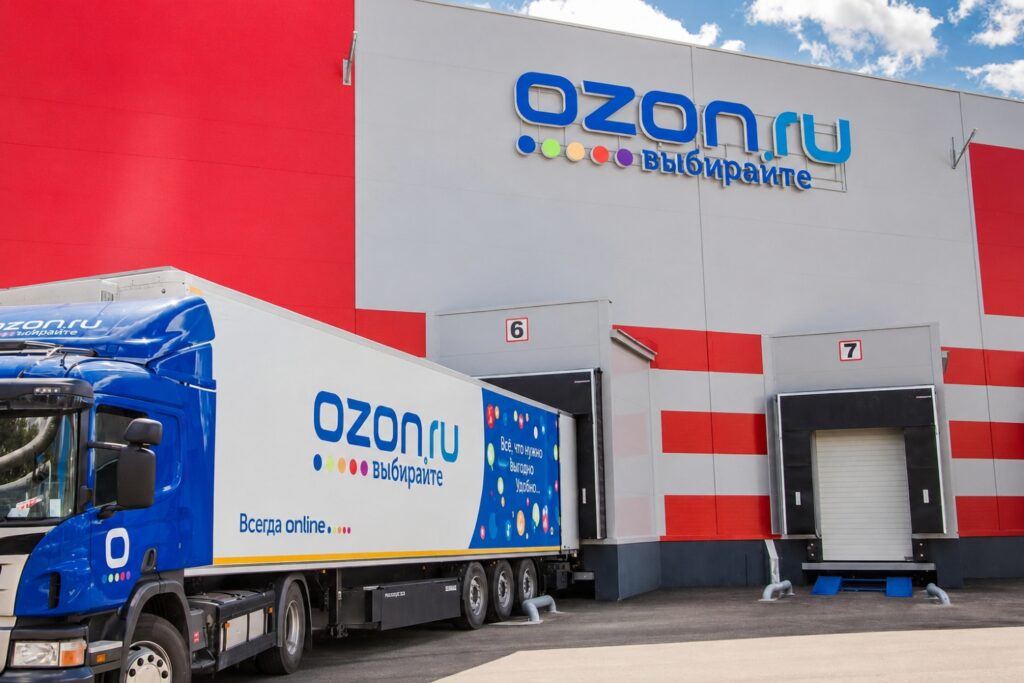
ozon delivery truck outside of a warehouse
An Ozon delivery truck outside one of the Russian retailer’s logistics centers. Photo: Retail.ru

Each strike leaves fewer warehouses

Ukraine’s campaign against Wildberries shows how warehouse losses accumulate across a retail network. By the end of July, Verstka counted eight affected warehouses covering 860,000 square meters, or 15.4% of the company’s total warehouse space.

By mid-August, ISW counted seven of its ten largest hubs knocked out. The two estimates measure different things, but both show disruption spreading through the network.

A distributed warehouse system can absorb an isolated closure by moving shipments through other hubs. As more sites are lost, fewer alternatives are available to carry out that work. The economic effect, therefore, depends not only on the value of the buildings or goods destroyed, but on how much spare capacity remains after each strike.

Russia’s attacks on Ukraine illustrate the same logistical resilience. Two strikes destroyed warehouse buildings at Aurora’s distribution center, CEO Taras Panasenko said, but the retailer kept its stores open. Ozon similarly redirected shipments after closing warehouses in Russia.

Continued sales do not mean that the strikes had no economic effect. They show that retailers can absorb individual losses by relying on the rest of their networks. Repeated attacks gradually consume that protection, and Ozon’s public listing allowed investors to price the risk before the company could calculate the damage.

  • ✇Euromaidan Press
  • Ukraine offers cash rewards for capturing Russian soldiers and close-combat kills
    Ukraine’s military-pay system, in force since 1 June, includes bonuses for taking enemy servicemembers prisoner and for confirmed kills in small-arms or hand-to-hand combat, the Defense Ministry explained on 20 August. The capture reward is divided among the troops involved, while the kill bonus requires video confirmation. Under the Defense Ministry’s payment rules, the capture reward is divided among the troops involved, while the kill bonus requires video confirma
     

Ukraine offers cash rewards for capturing Russian soldiers and close-combat kills

20 août 2026 à 13:16

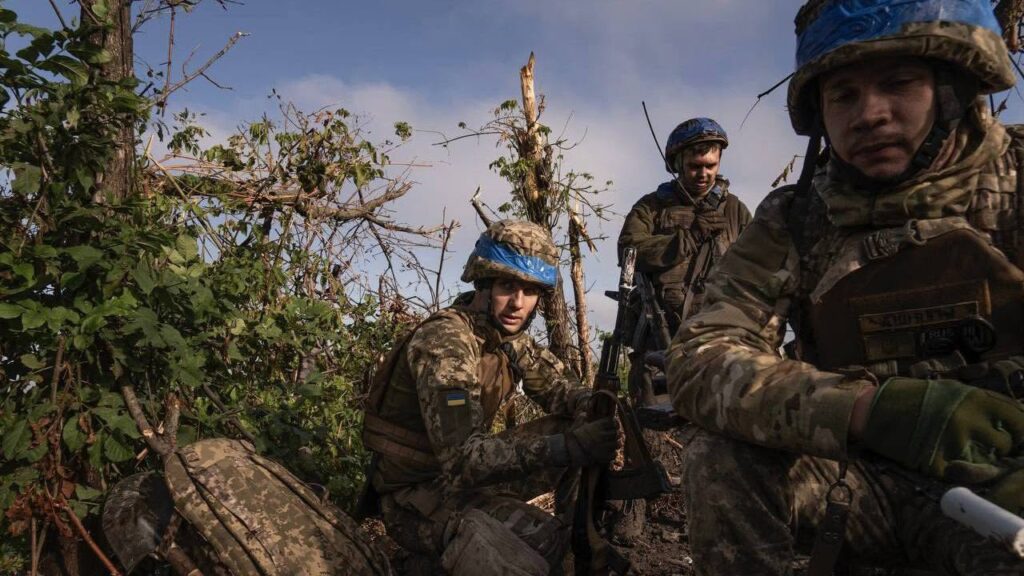
3rd Army Corps troops.

Ukraine’s military-pay system, in force since 1 June, includes bonuses for taking enemy servicemembers prisoner and for confirmed kills in small-arms or hand-to-hand combat, the Defense Ministry explained on 20 August.

The capture reward is divided among the troops involved, while the kill bonus requires video confirmation.

Under the Defense Ministry’s payment rules, the capture reward is divided among the troops involved, while the kill bonus requires video confirmation. Both are paid by order of a unit commander and fall outside the monthly limit on other combat bonuses.

How the new payments work

Oksana Liekontseva, a senior Defense Ministry official, said the highest additional payments go to troops carrying out assault operations on the line of contact or inside Russian defenses. Lower rates apply to restoring Ukrainian positions or operating farther from the front.

The zonal and assault payments depend on the time spent on each mission and require documentary confirmation. Base salaries and existing combat payments remain unchanged, while eligible personnel who do not receive combat payments can receive a smaller supplement.

The overhaul is part of a broader military reform President Volodymyr Zelenskyy announced in May, combining higher frontline pay with new fixed-term contracts.

Combat medic and writer Yaryna Chornohuz has argued that bonuses cannot substitute for adequate base pay and predictable service terms, particularly for troops who have already served for years.

  • ✇Euromaidan Press
  • Black Sea attacks delayed up to 2.5 million tons of wheat bound for Asia
    Wheat buyers from Egypt to Indonesia are paying more after an unspoken wartime arrangement that kept Black Sea grain ships safe collapsed in July. Jordan canceled two wheat tenders and two for barley this month after attracting few offers.Asian mills face delays on 2 to 2.5 million tons booked for summer delivery—30% to 50% of their import needs—and Indonesia is looking to Australia, Argentina, and Romania to replace about 600,000 tons contracted from the region.Ukraine’s
     

Black Sea attacks delayed up to 2.5 million tons of wheat bound for Asia

20 août 2026 à 08:36

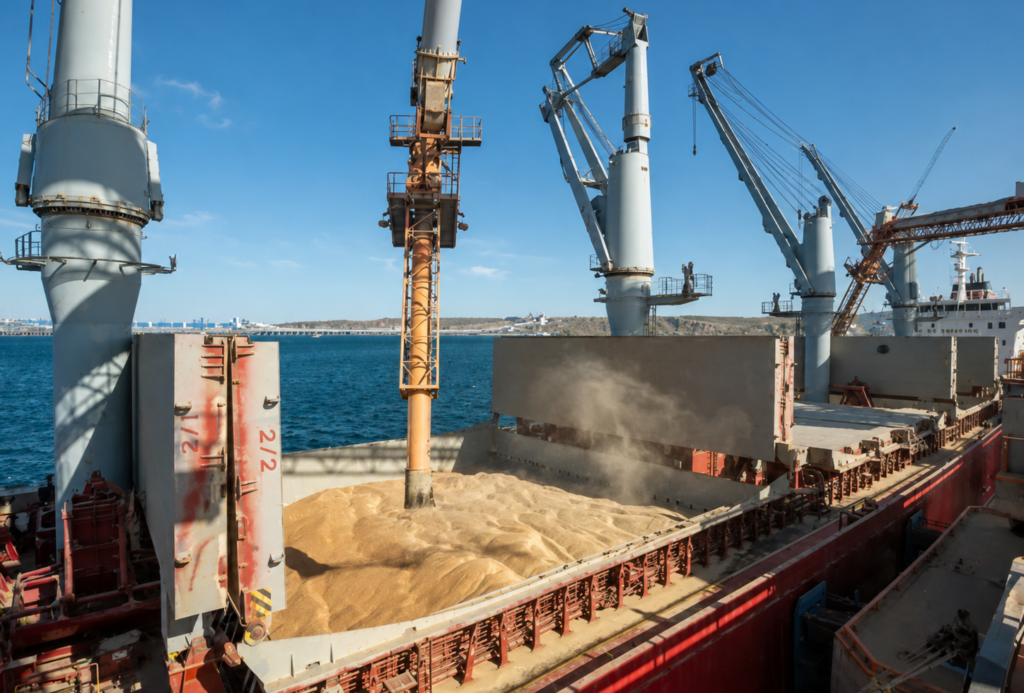
grain loaded onto a ship

Wheat buyers from Egypt to Indonesia are paying more after an unspoken wartime arrangement that kept Black Sea grain ships safe collapsed in July. Jordan canceled two wheat tenders and two for barley this month after attracting few offers.

Asian mills face delays on 2 to 2.5 million tons booked for summer delivery—30% to 50% of their import needs—and Indonesia is looking to Australia, Argentina, and Romania to replace about 600,000 tons contracted from the region.

Ukraine’s infrastructure ministry counted 67 attacks on port facilities in July, 35 on civilian vessels in port, and 22 on ships in the maritime corridor. The corresponding figure for all of 2025 was just 14, according to Reuters.

Ukraine’s agriculture ministry has warned that exports may fall nearly by half this season.

Egypt bought 82% from two countries at war

Egypt sourced over four-fifths of its wheat imports from Russia and Ukraine in the first half of 2026. Its private sector, which imports more than half the country’s wheat, has less grain stored than the government, and “the situation is getting worse by the day,” Alexandria-based trader Hesham Soliman told Reuters.

A vessel heading to load grain for Egypt was attacked approaching Novorossiysk last week. Ukrainian President Volodymyr Zelenskyy said he discussed the threat with Egyptian President Abdel Fattah al-Sisi.

Black Sea wheat trades at about $260 to $280 a ton. Australian wheat is quoted at $315 to $320, including cost and freight to Asia, while the cheapest American wheat is at $305, Reuters data showed.

Chicago wheat futures have climbed more than 17% since early July. For now, stronger local harvests in parts of North Africa have cushioned the impact—Egypt procured record volumes of domestic wheat.

Sunflower first, now wheat

India’s refiners shifted to soybean as 150,000 tons of Ukrainian sunflower cargo sat delayed at Black Sea ports. Now the same is happening in wheat.

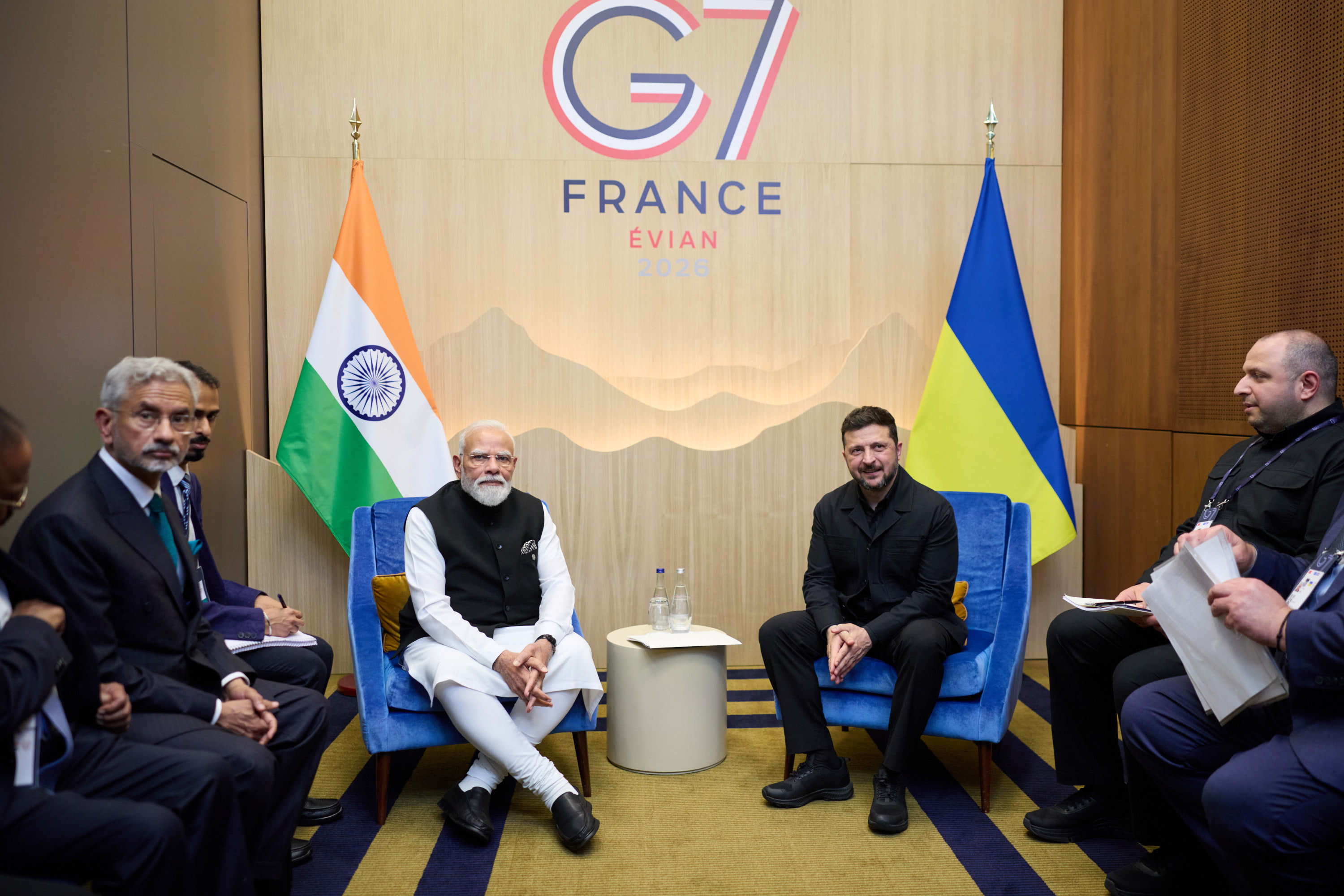
modi and zelenskyy during the g7 meeting in france, 17 june 2026
Explore further

India’s cooking-oil imports jump for festival season—but not war-hit sunflower

Ukraine’s agriculture ministry has warned that exports may fall nearly by half this season. On the Russian side, Novorossiysk’s largest grain terminals halted after drone strikes in August; few shipowners will now enter either country’s ports, traders told Reuters.

  • ✇Euromaidan Press
  • Russia diverts defense-industry chemicals to gasoline—but stations still run dry
    Gasoline was available at 28% of Russian gas stations last week, down from 41% the week before—despite a July government decree that authorized refineries to divert chemicals from industry, including defense production, into fuel, Izvestia reported on 18 August.The diversion has since triggered motor oil shortages, and, as Kommersant reported, a government commission that met in mid-August to reverse course could not agree on how. The ISW assessed on 19 August that the
     

Russia diverts defense-industry chemicals to gasoline—but stations still run dry

20 août 2026 à 07:45

a car refuels at a gas station russia as gasoline shortage deepens

Gasoline was available at 28% of Russian gas stations last week, down from 41% the week before—despite a July government decree that authorized refineries to divert chemicals from industry, including defense production, into fuel, Izvestia reported on 18 August.

The diversion has since triggered motor oil shortages, and, as Kommersant reported, a government commission that met in mid-August to reverse course could not agree on how.

The ISW assessed on 19 August that the diversion is now draining raw materials from industrial supply chains.

Moscow runs dry

Izvestia correspondents checked 21 stations in Moscow and Moscow Oblast on 17 August: only seven sold AI-92, and five sold AI-98. Gazprom Neft has reimposed purchase limits—40 liters at automated pumps, 60 at staffed ones, RBC reported on 19 August.

Russia has meanwhile received a tanker of Indian gasoline in Murmansk, initially priced at 130,000 rubles ($1,550) per ton—nearly double the 73,000-ruble ($870) domestic exchange price, Izvestia reported.

The chemicals in question—benzene, toluene, xylenes, and phenol—are intermediate refinery products used to make rubbers, plastics, and synthetic materials for industry, including defense. A 2 July decree authorized refineries to blend more of them into gasoline as an octane booster. The ISW assessed on 19 August that the diversion is now draining raw materials from industrial supply chains.

Motor oil shows the damage. Prices have risen 15–20% since January, with some products up 40% and imported brands roughly doubling, Kommersant reported on 19 August.

Dmitry Prokofiev, director of external communications at NEFT Research, told the paper that the lower-grade Euro-2 and Euro-3 fuel now at Russian stations wears engines faster and requires oil changes 1.5 to 2 times more frequently.

Drivers forced onto worse gasoline burn through motor oil faster, but the raw materials that would go into producing it are being diverted to make more gasoline.

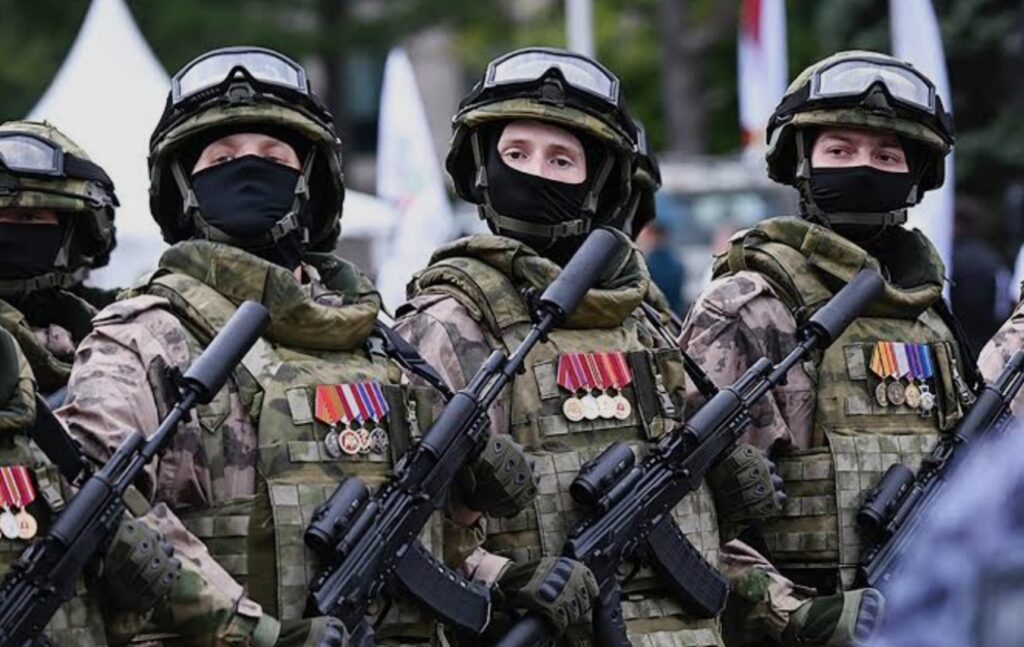
rosgvardia
Rosgvardia personnel in combat uniforms march during an event marking the Russian force’s 10th anniversary. Photo: Rosgvardia / rg.ru.

From rationing to Rosgvardia

A Russian insider source cited by ISW claimed on 18 August that Rosgvardia—Russia’s heavily militarized internal security force—has deployed to gas stations in Moscow Oblast.

Rosgvardia personnel have reportedly appeared at no fewer than 13 stations across Russia and occupied Crimea over the summer.

A month ago, the governor of Rostov Oblast did something similar, sending Cossacks and volunteers to gas stations to keep order.

rostov oblast sent cossacks to keeporder at the fuel queues
Explore further

Russia’s fuel crisis has moved from the pump to the harvest

Separately, Russia’s legislative commission approved a bill on 18 August authorizing rescue forces under the Ministry of Emergency Situations to use physical force and firearms when nonviolent means prove insufficient, Vedomosti reported.

United Russia deputy Anatoly Vyborny, one of the bill’s co-authors, framed the measure as a counter-drone tool for evacuations. ISW assessed that it also provides legal cover for suppressing domestic unrest—an assessment the institute linked to involuntary mobilization reportedly under consideration after September’s State Duma elections.

Moldova halves grain-transit fees for Ukraine as its own farmers threaten protests

18 août 2026 à 04:52

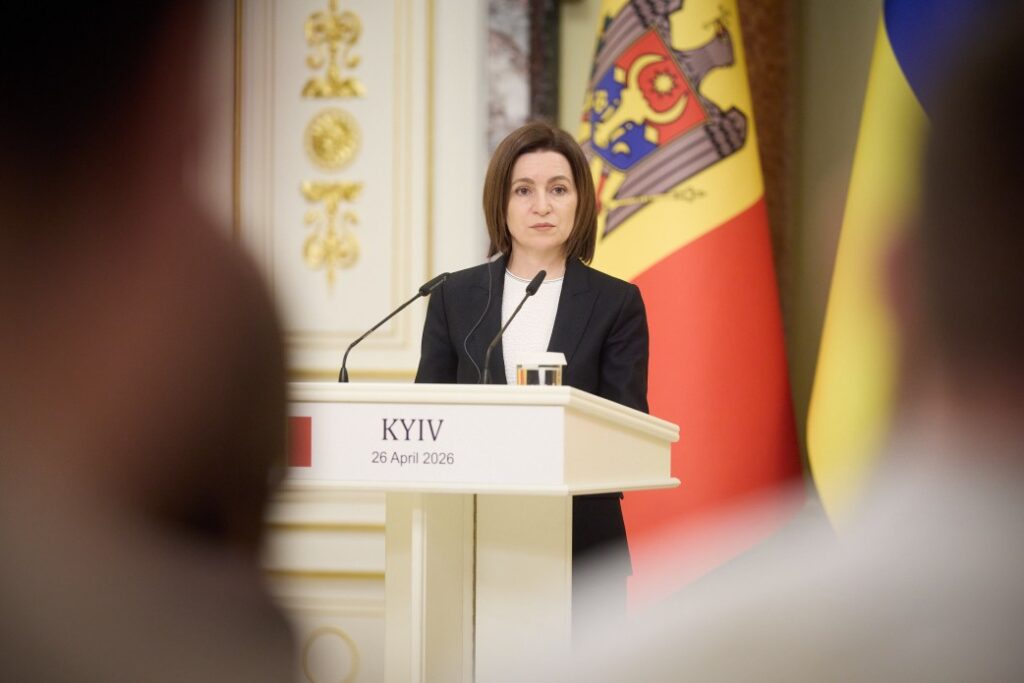
Moldovan President Maia Sandu in Kyiv on the anniversary of the Chernobyl nuclear disaster, 26 April 2026. Photo: Ukrainian President's Office

Moldova will now carry Ukraine’s grain to Romania at half price, and President Maia Sandu is defending that choice against Moldovan farmers who stand to lose from it. What Kyiv was still negotiating a week earlier is now a signed tariff cut, and the growers left to absorb it have threatened mass protests.

Ukrainian grain
Explore further

Ukraine and Moldova discuss rail corridor for grain amid Russian Black Sea attacks

Sandu ties Ukraine’s harvest to Moldova’s security

Speaking on Radio Moldova, Sandu argued that helping a wartime neighbor keep its export income is worth the strain at home, NewsMaker reported.

“If Ukraine cannot sell its products and has no money to defend itself, then we will have bigger problems than we do today,” she said. “We cannot turn our backs on Ukrainians who are bombed every night and every day wake up, grow grain, and resist. Through their resistance, they protect our peace too.”

She set Moldova’s role against that of larger backers: “Other states help them much more—with financial aid, with military aid. Here we can help them, with these transit routes.”

Through their resistance, they protect our peace too.

Maia Sandu

Farmers set a 21 August deadline

Moldova has halved rail transit tariffs on Ukrainian goods from 10 August to 31 December 2026, a move that could earn Moldovan Railways several million euros and route around 10% of Ukraine’s expected six million tons of 2026 cargo through its territory, Curs de Guvernare reported.

The cut has unsettled local growers. The association Forța Fermierilor (Farmers’ Force) says they face real risks and wants a seat in overseeing the transit. After meeting Prime Minister Vasile Tofan on 17 August, it warned of “massive” protests unless the government shows progress by 21 August.

Russian strikes push grain onto the rails

Ukraine wants the overland route because Russia’s strikes have made the sea route unreliable. Odesa’s ports handle about 90% of Ukraine’s grain, and an overnight strike on Odesa on 17 August damaged another foreign civilian ship.

In July alone, Russian attacks damaged 28 vessels at Greater Odesa’s ports and killed 21 sailors, monitor Andrii Klymenko reported. The rail line to Romania’s Constanța port is the safer alternative. Even in 2023, when Moldova moved to shield its market from Ukrainian grain, it kept transit open.

  • ✇Euromaidan Press
  • India’s cooking-oil imports jump for festival season—but not war-hit sunflower
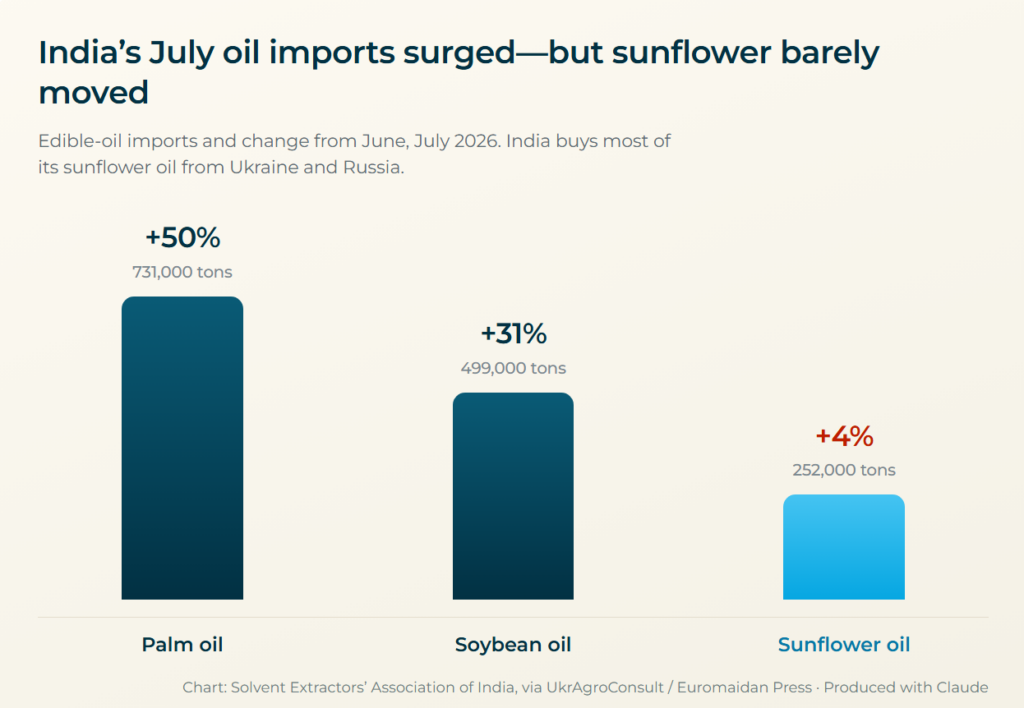
    India, the world’s biggest edible-oil importer, bought a 10-month high of about 1.5 million tons of vegetable oil in July, up roughly a third from June, as refiners restocked for the August-to-November festival season.The jump was led by palm oil, up by half, and soybean oil, up about a third, data compiled by UkrAgroConsult. Sunflower oil rose just 4%, the weakest of the three, and India buys most of it from Ukraine and Russia, the world’s leading exporters. Vegetable
     

India’s cooking-oil imports jump for festival season—but not war-hit sunflower

18 août 2026 à 03:44

modi and zelenskyy during the g7 meeting in france, 17 june 2026

India, the world’s biggest edible-oil importer, bought a 10-month high of about 1.5 million tons of vegetable oil in July, up roughly a third from June, as refiners restocked for the August-to-November festival season.

The jump was led by palm oil, up by half, and soybean oil, up about a third, data compiled by UkrAgroConsult. Sunflower oil rose just 4%, the weakest of the three, and India buys most of it from Ukraine and Russia, the world’s leading exporters.

Vegetable oil and meal earn more than 15% of Ukraine’s foreign currency.

Now the sunflower supply is the one going into reverse. India’s sunflower-oil imports are set to fall in August to their lowest since February, with about 150,000 tons of cargo delayed at Black Sea ports and buyers in the south switching to soybean, four traders told Reuters.

The switch is only partly about the war. Soybean and palm oil are cheap, and India’s own mills are pressing less oil from a smaller domestic harvest, leaving refiners leaning on imports, Rajesh Patel told OFI. The GGN Research partner expects soybean oil imports to top 500,000 tons a month into the autumn.

edible oil imports of india, july 2026
India’s edible-oil imports hit a 10-month high in July 2026 as refiners stocked up for the festival season, but the surge went to palm and soybean oil while sunflower barely moved. Chart: Solvent Extractors’ Association of India, via UkrAgroConsult / Euromaidan Press · Made with Claude

Russia’s strikes close Ukraine’s window

Ukraine is in no position to capture that demand. Russian strikes on Chornomorsk in mid-July forced Kernel, its largest exporter, to halt its terminals there, and the country’s farmers’ union reckons the summer attacks have cost a third of its capacity to ship grain by sea.

ukraine grain
Explore further

Russia’s port strikes leave Ukraine’s grain with almost nowhere else to go

Vegetable oil and meal earn more than 15% of Ukraine’s foreign currency, among its largest sources of the hard cash that funds the war, the industry association Ukroliyaprom has said.

The squeeze runs through geography Ukraine cannot change: almost all its farm exports leave by sea, through a handful of Odesa ports now under regular fire, with no land route at anything near the scale.

Kyiv now expects to export barely half the harvest it had planned to sell abroad this season, and is arranging emergency loans so farmers can plant the next crop. Since the start of August, grain leaving by rail has dropped by more than three-quarters year-on-year, according to Ukrzaliznytsia data.

  • ✇Euromaidan Press
  • Ukraine let young men leave to keep teenage boys home. Restaurants now struggle to hire
    Entry-level employers are finding it harder—and more expensive—to recruit young men. On Work.ua, one of Ukraine’s largest job platforms, the number of male candidates aged 18 to 22 who responded to vacancies fell 19% between July 2025 and July 2026, Lesia Prymakova told Ukrainska Pravda. The decline reached 29% in hospitality and retail. At the same time, advertised entry-level pay moved close to Work.ua’s overall median. The median salary for vacancies open to students
     

Ukraine let young men leave to keep teenage boys home. Restaurants now struggle to hire

17 août 2026 à 10:08

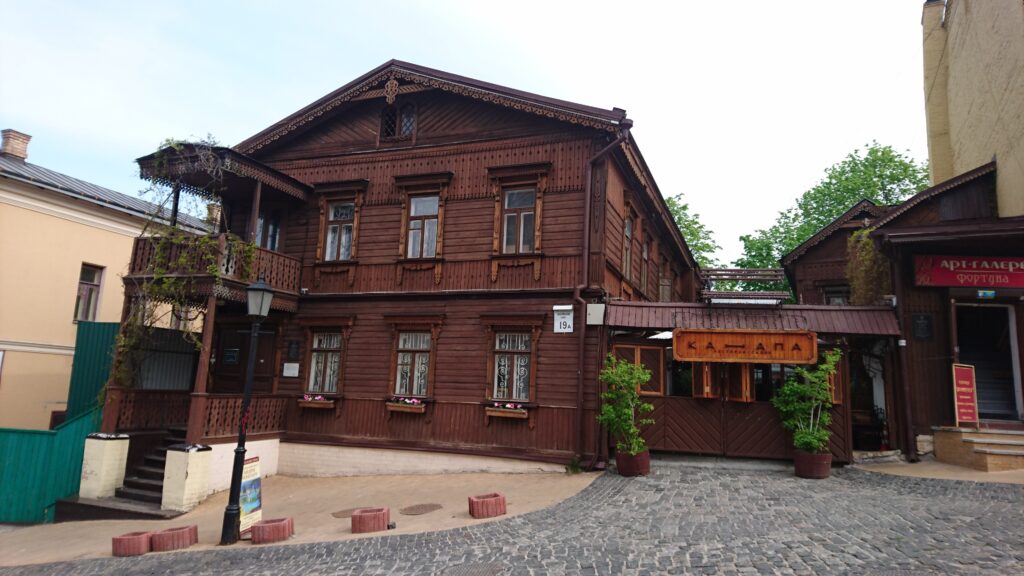
restaurant kanapa in kyiv

Entry-level employers are finding it harder—and more expensive—to recruit young men. On Work.ua, one of Ukraine’s largest job platforms, the number of male candidates aged 18 to 22 who responded to vacancies fell 19% between July 2025 and July 2026, Lesia Prymakova told Ukrainska Pravda. The decline reached 29% in hospitality and retail.

At the same time, advertised entry-level pay moved close to Work.ua’s overall median. The median salary for vacancies open to students rose 24%, while pay for jobs requiring no experience increased 23%.

No reliable count shows how many young men remained abroad.

The candidate pool shrank after the government eased wartime travel restrictions for men aged 18 to 22 last summer, following an initiative by President Volodymyr Zelenskyy. The government said the change was intended to discourage families from taking boys abroad before their 18th birthdays, when the previous rules would have prevented them from leaving.

ukraine’s workforce
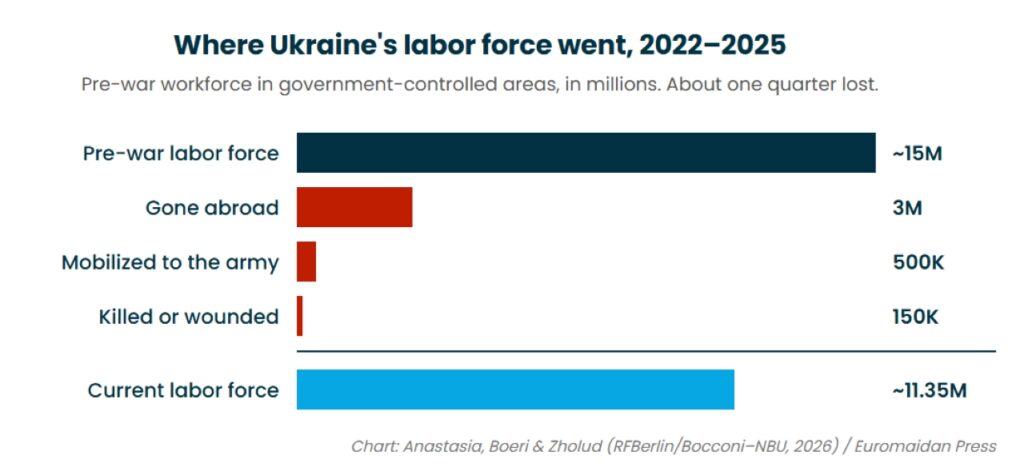
Ukraine’s pre-war labor force has shrunk by about a quarter. Three million went abroad, hundreds of thousands more to the front. What remains is older. Chart: Anastasia, Boeri & Zholud (RFBerlin/Bocconi–NBU, 2026) / Euromaidan Press

Hospitality and retail feel the squeeze

Restaurant owners tied the decline in young applicants directly to the eased travel rules. Sommelier Oleh Kravchenko, who owns Kyiv wine bar Win Bar, said two of his staff, a bartender and a cook, were preparing to leave the country, and that the bar had begun hiring more women, whereas server positions had earlier been held only by men.

He said his payroll had risen 5 to 10% and that he now raised wages at least every six months, even as rent, utilities, and food costs also climbed. Olena Borysova, who owns the GastroFamily group behind the Bilyi Naliv chain, said young applicants had become rare over the past year.

Ukraine’s labor shortage extends far beyond this age group. Ukraine’s full-time workforce fell from 7 million in 2021 to 5.3 million by late 2025, while the National Bank expects the net outflow of workers to continue into 2027.

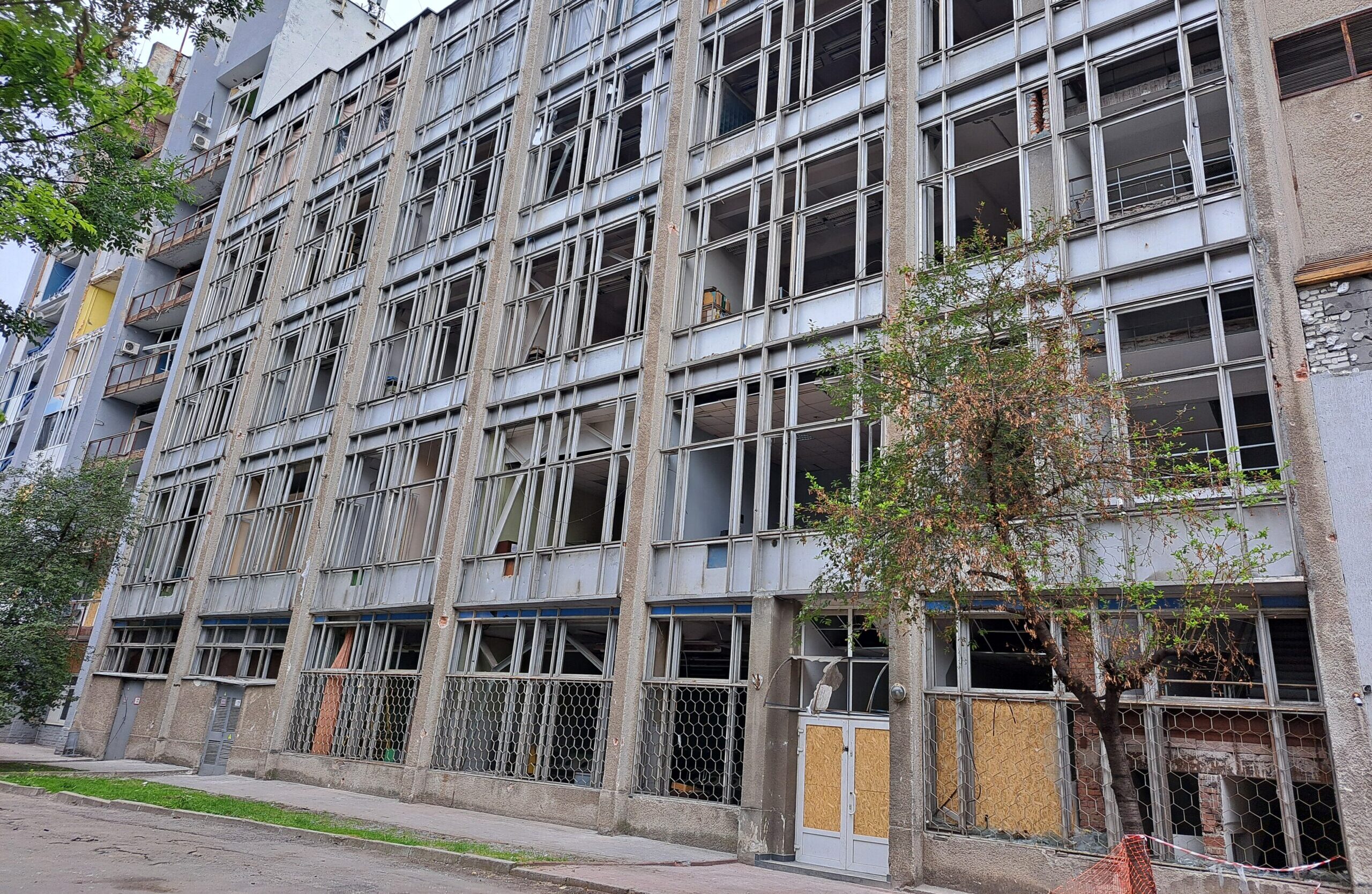
damaged building of elektron in lviv
Explore further

Ukraine’s economy posted its sharpest contraction since the wartime recovery began

Against that backdrop, 48% of companies reported labor shortages in a survey cited by Ukrainska Pravda, without attributing them specifically to the travel change, and Work.ua put the overall median advertised wage up 20% year on year. These are nominal advertised salaries; annual inflation stood at 7.7% in July, so the real increase is smaller.

No one knows how many stayed abroad

No reliable count shows how many young men remained abroad. Social Policy Minister Denys Uliutin cited an estimate from European partners that some 400,000 men aged 18 to 22 left Ukraine between August 2025 and April 2026. However, the estimate does not identify unique individuals or subtract those who later returned, Vasyl Voskoboinyk, head of the NGO Office of Migration Policy, told Ukrainska Pravda.

Voskoboinyk estimated that around 300,000 men in this age group had been working, equivalent to about 2% of Ukraine’s labor force, and said their departures had not caused a broader labor-market collapse.

Available education data show no comparable decline. The Education Ministry recorded a 28% year-on-year rise in university applications, while Kyiv-Mohyla rector Serhiy Kvit said the academy had not seen mass withdrawals. Applications count submissions rather than enrolled or retained students, so the increase indicates continued demand for places rather than a settled outcome.

Voskoboinyk said it was still too early to determine whether the policy had reduced departures among 16- and 17-year-old boys, its stated long-term aim.

Employers widen who they recruit

Employers are recruiting more broadly to fill the gap. Olena Kolesnikova of the Federation of Employers said firms were increasingly willing to hire from groups they had previously overlooked, with 94.4% open to internally displaced people, 91% to veterans, and 88% to people with disabilities.

Keeping young people in Ukraine, she argued, would take more than pay. "The right question is not how to keep young people from leaving, but how to make it worthwhile for a young person to start a career and build a life in Ukraine after they finish studying," she said.

  • ✇Euromaidan Press
  • How did Sberbank’s record dividend end up frozen for Western shareholders?
    Sberbank has reported another jump in profit, on course to pay a dividend even bigger than the record one it handed shareholders earlier this summer. Shareholders in the European Union, the United States, and every other country Moscow calls “unfriendly” will not see a ruble of it.The bank earned more than 1 trillion rubles ($12 billion) in the first half of 2026 alone, up nearly a fifth on the year, a gain in an economy the Central Bank of Russia itself describes as only
     

How did Sberbank’s record dividend end up frozen for Western shareholders?

17 août 2026 à 05:44

german gref, ceo of sberbank

Sberbank has reported another jump in profit, on course to pay a dividend even bigger than the record one it handed shareholders earlier this summer. Shareholders in the European Union, the United States, and every other country Moscow calls “unfriendly” will not see a ruble of it.

The bank earned more than 1 trillion rubles ($12 billion) in the first half of 2026 alone, up nearly a fifth on the year, a gain in an economy the Central Bank of Russia itself describes as only moderate after a downturn at the start of the year.

For a shareholder in New York or Frankfurt, none of it is money he can spend.

Full-year profit hit a third straight record in 2025. Sberbank pays out half its profit, and the dividend it set for 2025 was already the biggest it had ever paid.

For a shareholder in New York or Frankfurt, none of it is money he can spend. About a quarter of the 2024 payout was set aside in restricted “type-C” accounts for holders from “unfriendly” countries, and nothing has changed since: the dividend is credited to him and then locked.

The Russian state, which owns just over half of Sberbank, faces no such block. It collects roughly half of every payout, while its budget deficit runs past 6 trillion rubles ($71 billion) in five months.

grocery prices in russia, may 2026
Explore further

Russia’s oil money is drying up—so its own people are paying for the war

The market moves the other way

The records are landing on a market that has barely moved in four years. The MOEX index, the main gauge of the Moscow Exchange, had fallen 17 straight weeks by mid-July, its longest losing streak since 1997, back near where it stood the week Russia launched its full-scale invasion in February 2022; anyone who bought Russian shares at the start of the war has made almost nothing since.

Sberbank yields more than 10% on paper, but the stock has fallen about 14% over the past year, so the record dividend does not even cover the price drop, and the foreign holder takes that loss without the payout that might soften it.

Moscow keeps tightening the lock

Russia built the type-C system in 2022 as a countermeasure to Western sanctions that froze its reserves abroad, and officials say the money stays until those reserves are freed.

Within that system, dividends owed to “unfriendly” foreigners are deposited into blocked ruble accounts that they can spend only on Russian taxes, government bonds, and fees.

In June 2026, the block reached ordinary bank deposits after a few words were added to the founding decree: “bank deposits (deposits).” Repayments and interest above 10 million rubles (about $120,000) a month now go the same way.

One court opens a crack

In a ruling dated 14 April 2025, the Supreme Court held that a bank cannot refuse to swap an investor’s frozen depositary receipts—certificates that stand in for shares held abroad—for the actual Russian shares, merely because those securities sit in a blocked type-C account.

A Moscow court then sided with the investor, Vladimir Pelevin, and fined Raiffeisenbank for the delay. The ruling allows a holder to swap receipts for shares, but it does not affect the dividends those shares pay, which still land in type-C.

A compensation scheme, based on a March 2024 decree, pays out only when no “unfriendly” foreigner is anywhere in the ownership chain.

A draft law before Russian lawmakers would allow the state to seize the balances in type-C accounts outright. The decree that created them, in 2022, is titled “On the temporary procedure.”

  • ✇Euromaidan Press
  • Ukraine’s Zaporizhstal may idle half its capacity to fit new EU steel quotas
    Ukraine’s Zaporizhstal plant plans to shift much of its output to lower-value pig iron to keep exporting under the European Union’s new steel quotas. The move would idle up to half the plant’s capacity, its parent company, Metinvest, says. Ukraine’s new allowance runs to roughly 1 million metric tons, about 60% below its 2025 shipments to the bloc. The EU says the quotas shield its own producers from a global steel surplus. For Ukraine, whose steel entered duty-free
     

Ukraine’s Zaporizhstal may idle half its capacity to fit new EU steel quotas

14 août 2026 à 10:00

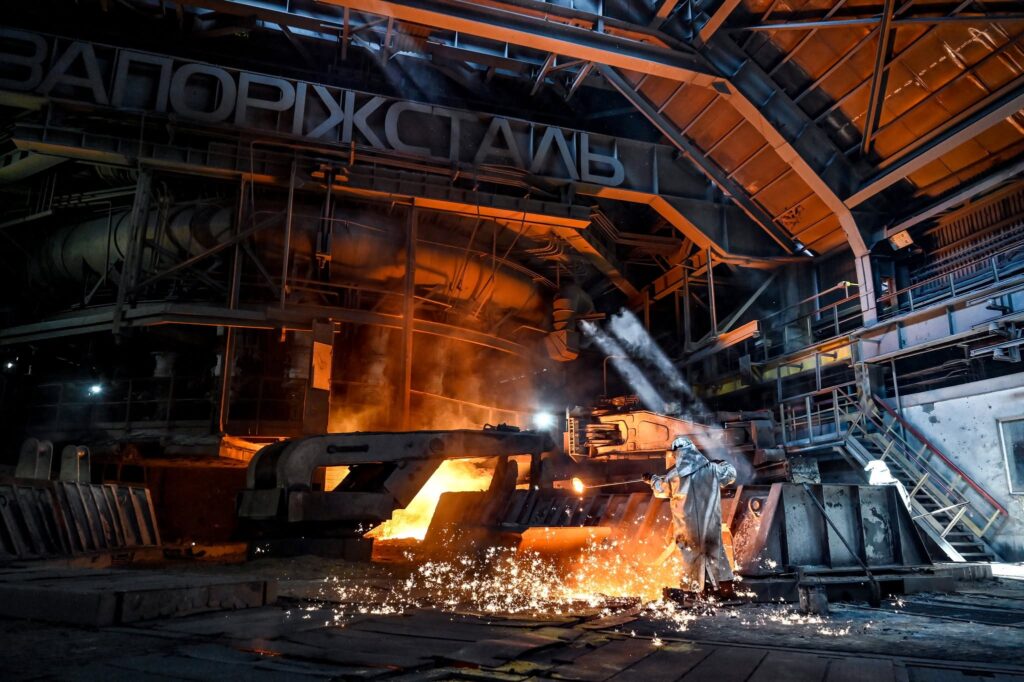
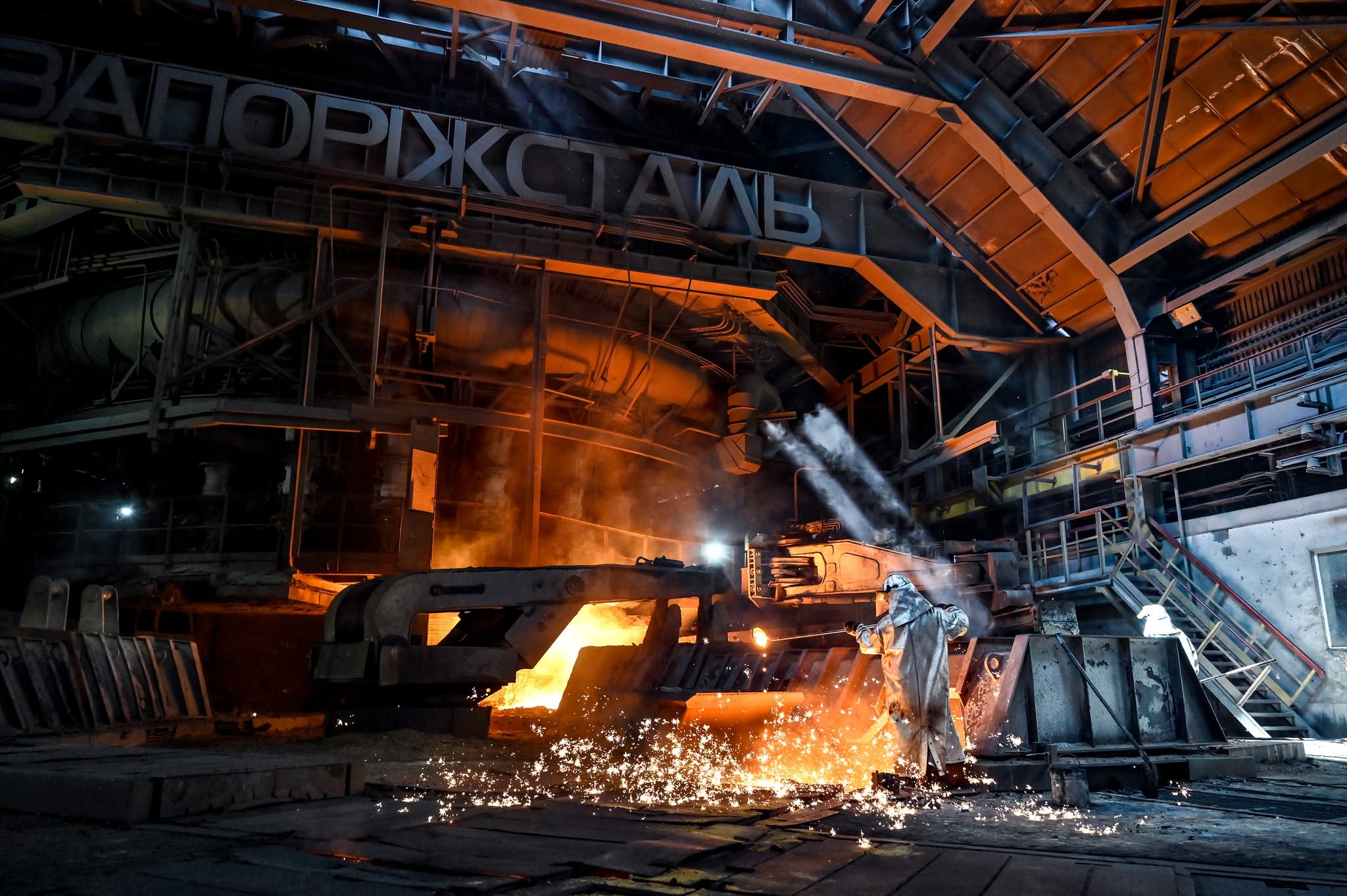
Inside the Zaporizhstal steel plant. Photo: Zaporizhstal on Facebook

Ukraine’s Zaporizhstal plant plans to shift much of its output to lower-value pig iron to keep exporting under the European Union’s new steel quotas. The move would idle up to half the plant’s capacity, its parent company, Metinvest, says.

Ukraine’s new allowance runs to roughly 1 million metric tons, about 60% below its 2025 shipments to the bloc.

The EU says the quotas shield its own producers from a global steel surplus. For Ukraine, whose steel entered duty-free after Brussels lifted tariffs after the 2022 invasion, they land on an industry already hit repeatedly by Russian strikes and cut off from the sea. The tariff-free quota fell by half on 1 July, with a 50% duty on anything above it.

Ukraine’s new allowance runs to roughly 1 million metric tons, about 60% below its 2025 shipments to the bloc, the Kyiv consultancy GMK Center calculates.

Steel makes up about 15% of Ukraine’s exports, and the EU buys close to four-fifths of it. The country’s Federation of Employers estimates the curbs could cost $1.2 billion in foreign earnings and cut GDP by 0.6%.

Falling back on pig iron

Pig iron, a semi-finished product, falls outside the quota, so lifting its share keeps the furnaces earning. But the switch would force the plant to reassign the workers behind those idled lines, Oleksandr Myronenko told Reuters. “Instead of support from the European Union, we face restrictions,” said the Metinvest chief operating officer.

Ukrainian mills cannot easily sell elsewhere: they are less efficient than cheaper Turkish and Chinese suppliers and are undercut in Europe’s own market, Myronenko said.

With the Black Sea route closed, importing coking coal through other European ports now runs $30 to $40 more a metric ton. Rail freight rose 30% this month, and an EU carbon charge has been applied to steel imports since 1 January.

rinat akhmetov
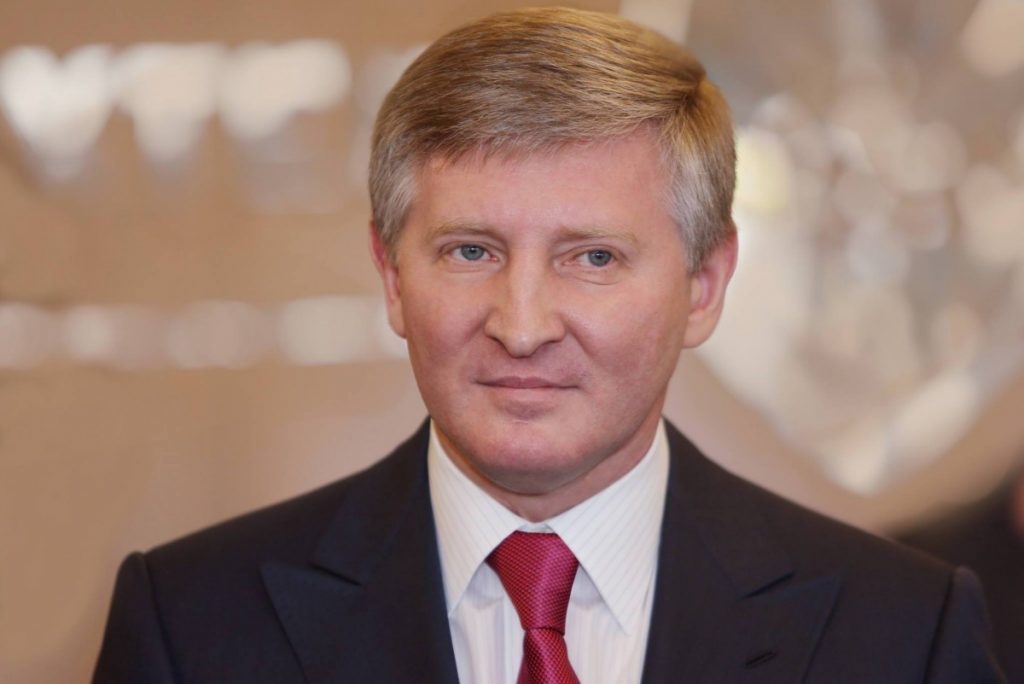
Ukrainian businessman Rinat Akhmetov is the majority owner of Metinvest. Photo: open source

A strike, and a plan in doubt

A Russian ballistic missile killed seven Zaporizhstal workers and shut the plant on 11 August.

Inside the Zaporizhstal steel plant. Photo: Zaporizhstal on Facebook
Explore further

North Korean ballistic missile kills 7 steelworkers on their way to shelter, shuts down Zaporizhstal plant

The fate of Metinvest’s $8 billion, 15-year plan to convert to cleaner “green steel” is unclear; Myronenko called the modernization unrealistic in wartime. Zaporizhstal is the largest employer in the Zaporizhzhia region and, with the rest of Metinvest, is majority-owned by Rinat Akhmetov, Ukraine’s richest man.

On the plant floor, senior foreman Artem Kalinevych said: “As of today it’s not clear what comes next.”

  • ✇Euromaidan Press
  • Moldova overtakes every EU country as Ukraine’s top dairy buyer
    Moldova has overtaken Poland and Germany to become the largest foreign buyer of Ukrainian dairy products in the first seven months of 2026. It is not the win it sounds like.A country of some 2.5 million people now buys more Ukrainian dairy than any EU member, as falling European prices make EU sales less attractive and cheap imports capture a growing share of Ukraine’s home market. Ukraine now buys about as much dairy from abroad as it sells—unusual for a country used t
     

Moldova overtakes every EU country as Ukraine’s top dairy buyer

13 août 2026 à 08:54

sandu and zelenskyy

Moldova has overtaken Poland and Germany to become the largest foreign buyer of Ukrainian dairy products in the first seven months of 2026. It is not the win it sounds like.

A country of some 2.5 million people now buys more Ukrainian dairy than any EU member, as falling European prices make EU sales less attractive and cheap imports capture a growing share of Ukraine’s home market.

Ukraine now buys about as much dairy from abroad as it sells—unusual for a country used to exporting it.

Why the EU sales stopped paying

Over that period, the Association of Milk Producers reports, dairy exports shrank by almost a fifth in value against last year, while imports rose by more than a third. Ukraine now buys about as much dairy from abroad as it sells—unusual for a country used to exporting it.

What pushed producers toward a small neighbor rather than the EU was price: European wholesale prices for butter and milk powder fell throughout the summer, until selling into the EU stopped paying. The association expects that to reverse only if prices climb again in the autumn.

The pull shows up most in butter, where Moldova is now the largest butter buyer, taking more than four of every ten kilograms Ukraine exports, even as the total shrinks.

Ukrainian grain
Explore further

Ukraine and Moldova discuss rail corridor for grain amid Russian Black Sea attacks

Cheaper cheese from Poland and other EU states now feeds more than half of Ukraine’s cheese market, up from under 40 percent at the start of 2025, and Ukrainian cheesemakers have cut production rather than compete.

According to the association, a large share is declared as humanitarian aid, allowing it to enter without being tested, without Ukrainian labels, and free of duties and VAT. The association estimates that this costs the budget at least 730 million hryvnias ($16 million) a year.

Moldova subsidizes its own dairy farmers for every liter of milk they sell, yet it now buys more Ukrainian dairy products than any other country.

  • ✇Euromaidan Press
  • Russia’s oil money is drying up—so its own people are paying for the war
    Russia’s war budget got a brief respite this spring, when the Iran war pushed oil prices up. By July, it was gone. A single month swung from a rare surplus to an $8.8 billion deficit, leaving the seven-month shortfall already bigger than the entire deficit Russia ran last year, with five months still to run.As oil money drains away, the Kremlin is covering the gap by taxing ordinary Russians harder and eyeing their savings. Moscow will not run out of cash soon, but it i
     

Russia’s oil money is drying up—so its own people are paying for the war

12 août 2026 à 10:57

grocery prices in russia, may 2026

Russia’s war budget got a brief respite this spring, when the Iran war pushed oil prices up. By July, it was gone. A single month swung from a rare surplus to an $8.8 billion deficit, leaving the seven-month shortfall already bigger than the entire deficit Russia ran last year, with five months still to run.

As oil money drains away, the Kremlin is covering the gap by taxing ordinary Russians harder and eyeing their savings.

Moscow will not run out of cash soon, but it is running out of politically affordable ways to raise it.

Oil-and-gas income, long the war’s financial engine, fell by about a sixth from a year earlier to 4.6 trillion rubles ($56 billion), Finance Ministry figures show. Spending outpaced revenue, with state procurement up by nearly two-fifths.

The hole was plugged by value-added tax, whose receipts jumped by a quarter after Moscow raised the rate to 22% at the start of the year—a tax levied on ordinary Russians’ spending, not on oil prices or economic growth.

russian finance minister anton siluanov
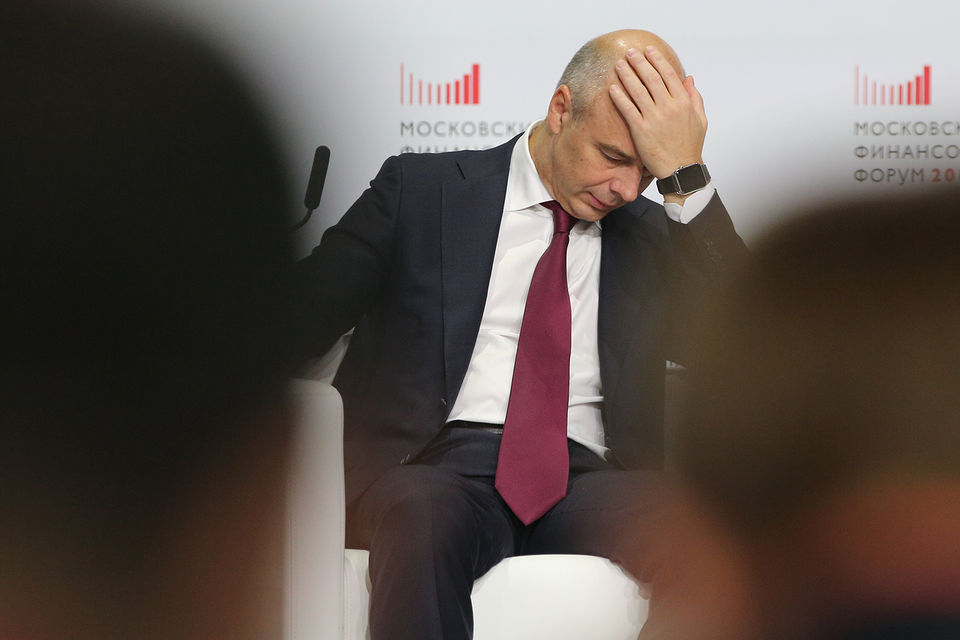
Anton Siluanov, Russian Finance Minister. Photo: vedomosti.ru

One month of relief, then the gap reopened

The reprieve proved brief. July’s deficit followed June’s surplus even though spring’s higher oil prices should have cushioned the books, Bloomberg calculations showed.

Much of the windfall never reached the budget: it went to subsidizing oil firms whose refineries Ukrainian drones keep hitting, Gaidar Institute economist Ilya Sokolov wrote in a July monitoring paper.

yamburg gas field in the yamalo-nenets ao in russia
Explore further

Russia’s oil revenues collapse 24% as global prices slide further (INFOGRAPHICS)

With the economy barely growing in the first half, a second-half recession could knock out another chunk of tax revenue just as the shortfall widens. Yaroslav Kabakov of the Finam brokerage expects the full-year deficit to approach double last year’s by year-end. Even as revenue shrinks, the military reportedly wants roughly 40% more than planned.

Borrowing, the other fallback, is jamming too. Russia suspended government bond auctions in July after investors balked and it could no longer raise money cheaply at home, even as Finance Minister Anton Siluanov vowed to shield defense and social spending.

Moscow shifts the burden to households

The burden is shifting onto households. The VAT rise alone will raise about $13 billion a year—barely a month of military spending—yet, unlike seizures aimed at billionaires, it reaches nearly every Russian, columnist Agathe Demarais wrote in Foreign Policy.

A draft law would allow the state to move around $40 billion from private pension accounts, and Communist leader Gennady Zyuganov has urged Vladimir Putin to tap the savings Russians hold in banks. Moscow will not run out of cash soon, Demarais argued, but it is “running out of politically affordable ways to raise it.”

Ordinary Russians are already moving their money. Through the first half of 2026, they withdrew cash from the banking system at the fastest pace since the pandemic, and the Central Bank has begun allowing banks to flag and freeze “suspicious” withdrawals, Euromaidan Press reported.

  • ✇Euromaidan Press
  • Crude goes south, gasoline north—Ukraine’s strikes split Russia’s oil trade
    Ukraine’s sustained drone strikes on Russian refineries have reversed the country’s position as a net fuel exporter. Moscow now imports gasoline from as far as India and Morocco while rushing crude oil through the Arctic to reach Asian buyers it can no longer supply with finished fuel. The flows are scaling up—and running on the same sanctioned, EU-listed tankers.The reversal is tightening global fuel markets. Russia runs the world’s third-largest refining industry, and th
     

Crude goes south, gasoline north—Ukraine’s strikes split Russia’s oil trade

12 août 2026 à 07:25

nuclear-powered icebreaker ural at the baltic shipyard in st petersburg

Ukraine’s sustained drone strikes on Russian refineries have reversed the country’s position as a net fuel exporter. Moscow now imports gasoline from as far as India and Morocco while rushing crude oil through the Arctic to reach Asian buyers it can no longer supply with finished fuel. The flows are scaling up—and running on the same sanctioned, EU-listed tankers.

The reversal is tightening global fuel markets. Russia runs the world’s third-largest refining industry, and the combined disruptions have acted to squeeze supply worldwide, with Moscow banning exports of both gasoline and diesel to keep its own pumps supplied.

With refining at a 24-year low, Russia is exporting crude through the Arctic while importing refined fuel from India.

Russian refining falls to its lowest since 2002

Ukrainian drone strikes have driven Russian crude processing to 3.6 million barrels a day in July—its lowest level since 2002 and roughly a third below the seasonal norm, according to EA Analytics data cited by Bloomberg.

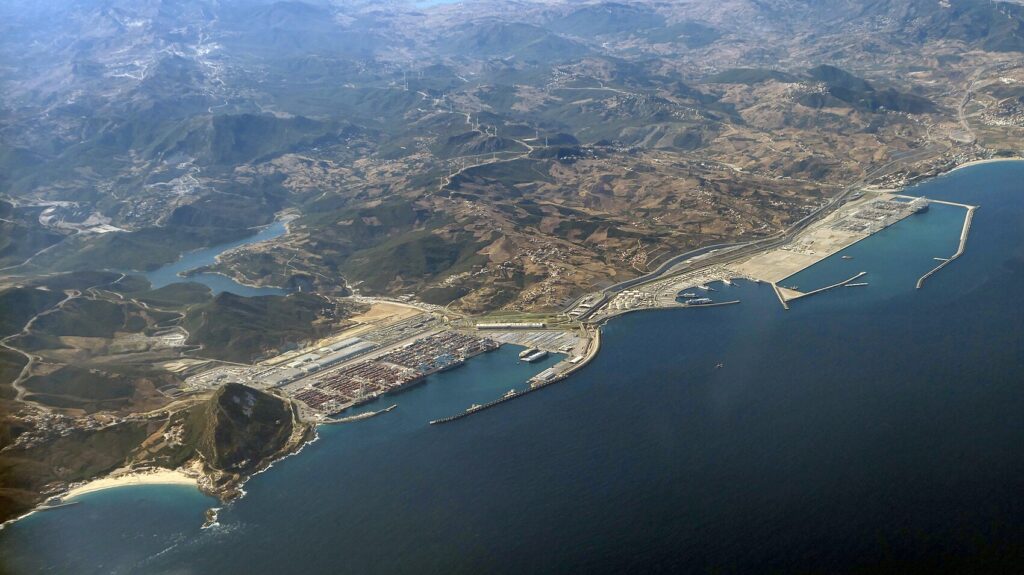
tanger med, the cargo port of tangier in morocco
Explore further

Ukraine’s drones force oil-giant Russia to import gasoline—now from Morocco


Ukraine hit at least 24 of Russia’s 34 largest refineries in some 50 strikes, with five more struck last week and at least two this week. With refining at a 24-year low, Russia is exporting crude through the Arctic while importing refined fuel from India.

Fuel shortages and rationing now affect about 50 million people—a third of Russia’s population. Moscow is subsidizing both the damaged refineries and the imported fuel replacing their output.

utrenneye or salmanovskoye port on the northern sea route in the far north of russia
A jetty serving the Utrenneye (Salmanovskoye) field extends into Ob Bay in Russia’s Far North. The port is along the Northern Sea Route, which Russia is increasingly using to ship crude to Asia. Photo: SlavaGol/Wikimedia Commons, CC BY-SA 4.0

Sanctioned tankers take crude toward the North Pole

Seven tankers carrying about six million barrels of crude were heading to Asia through the Northern Sea Route as of 11 August. That volume already amounts to nearly half the approximately 13 million barrels the route carried during the entire 2025 season.

The route cuts two weeks off the voyage to China compared with the Suez Canal, and ice conditions are relatively mild this year, one trader told Reuters.

But speed is only part of the surge. Tankers on the Arctic route bypass European waters, where enforcement has led to inspections and detentions of sanctioned vessels, and Ukraine’s strikes on Black Sea shipping and the Iran–US standoff at Hormuz have narrowed the alternatives.

Vessel-tracking data show the convoy following a route north of the Severnaya Zemlya archipelago rather than through the traditional and more southern Vilkitsky Strait—putting sanctioned oil tankers within 500 nautical miles of the North Pole. Maritime experts said commercial traffic at this scale has never operated that far north.

rosneft controlled nayara energy refinery at vadinar, gujarat, india
The Rosneft-controlled Nayara Energy refinery at Vadinar, Gujarat, India. Photo: AgarwalSimran / Wikimedia Commons, CC BY-SA 4.0

Russian crude returns home as Indian gasoline

In the opposite direction, gasoline refined from Russian crude at Nayara Energy’s Vadinar refinery in western India is flowing back to Russia through a chain of ship-to-ship handoffs at Egypt’s Damietta Port. At least three cargoes have cycled through the hub since June. The first reached Russia on 5 August.

Bloomberg’s tracking data show the tanker Cyclone loaded 42,000 tons of gasoline at Vadinar on 18 June, transferred the cargo to the Oman-flagged Garnet off Damietta on 6 July, and the Garnet reached Russia in early August. Two more tankers, Varg and Photon, followed the same route in July, with Photon’s cargo handed to the Russian-flagged Talisman on 28–29 July.

All these vessels are under EU sanctions. Garnet and Talisman are also under US sanctions.

Nayara’s refinery, which processes 400,000 barrels a day, is 49% owned by Rosneft. EU sanctions in July 2025 drove away its non-Russian crude suppliers, so the plant switched to processing only Russian oil and now buys and sells through traders—which is how its gasoline reaches Russia without a direct India-to-Russia sale, as Euromaidan Press reported.

The expected September launch of Rosneft’s Vostok Oil project could push more crude through the Northern Sea Route, traders told Reuters. NSR crude shipments fell 4% in 2025. This year’s opening weeks have already matched half the full-season total.

Ukraine’s drone strike shut Russia’s biggest LPG plant as fuel rationing returned in 16 regions

12 août 2026 à 05:12

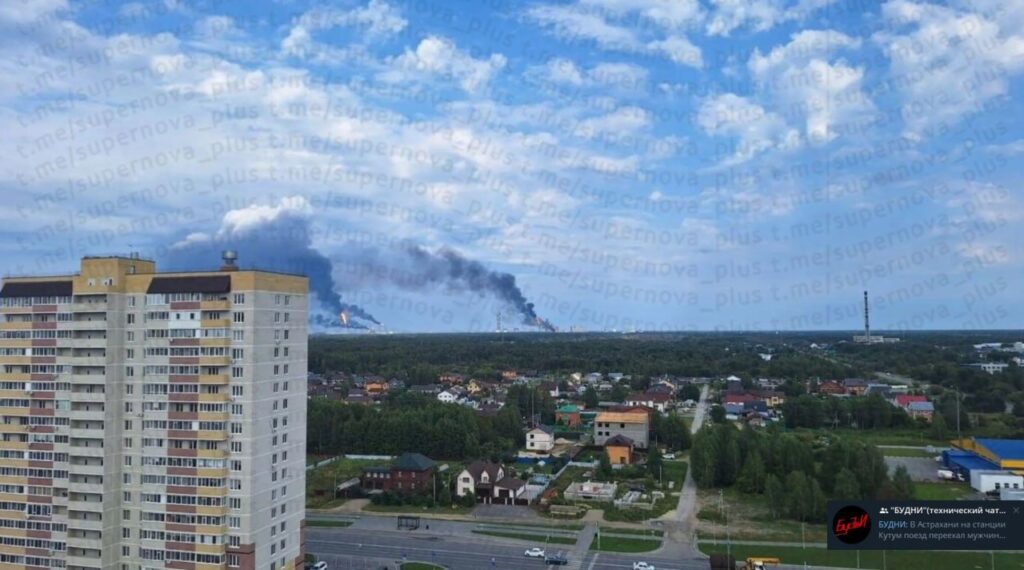
The ZapSibNeftekhim complex in Tobolsk, Tyumen Oblast, is burning. Source: Supernova

A Ukrainian drone strike shut the plant that produces 40% of Russia’s liquefied petroleum gas on 10 August, and the country’s fuel crisis snapped back across at least 16 regions within days.

The shutdown of the Sibur ZapSibNefteKhim complex in Tobolsk, western Siberia, removes about six million metric tons of annual LPG capacity from a fuel system that was already under strain.

The ZapSibNeftekhim complex in Tobolsk, Tyumen Oblast, is burning. Source: Supernova
Explore further

“This is money of his accomplices burning”: Russian partisans and Ukraine hit Siberian plant tied to Putin’s inner circle


Gasoline restrictions had begun easing across Russia at the end of July, when Ukrainian drones temporarily shifted to other targets. When the strikes resumed in early August, fuel rationing returned immediately, the independent Russian outlet 7×7 reported.

Three industry sources told Reuters on Tuesday that the complex stopped operations indefinitely “while the extent of the damage and its consequences are being assessed.”

No LPG volumes were offered from the Tobolsk delivery point on Russia’s commodity exchange—a point that earlier this year handled about 4,000 metric tons of propane-butane mix per day. Sibur declined to comment.

The shutdown of the Sibur ZapSibNefteKhim complex in western Siberia, removes six million metric tons of annual LPG capacity from a fuel system already under strain.

zapsibneftekhim and tobolsk-polymer in tobolsk
The ZapSibNefteKhim and Tobolsk-Polymer industrial sites in Tobolsk, western Siberia, seen in February 2023. A Ukrainian drone strike shut ZapSibNefteKhim indefinitely on 10 August 2026, taking 40% of Russia’s LPG production offline. Photo: Vyacheslav Bukharov/Wikimedia Commons, CC BY-SA 4.0.

A strike on one unit stopped the entire plant

Tyumen Oblast Governor Aleksandr Moor confirmed a fire at an industrial site following a drone attack but did not identify the facility.

Ukraine’s Special Operations Forces Deep Strike units, working with the Russian insurgent movement Chornaya Iskra (Black Spark), claimed the strike. The plant sits more than 2,200 kilometers from the front line.

Militarnyi’s OSINT analysis identified the specific target as the complex’s central gas fractionation unit—the plant’s entry point, where raw hydrocarbons are separated into usable products before anything else in the production chain can run. About half of ZapSibNefteKhim’s output feeds Sibur’s own petrochemical complex in Tobolsk; the rest goes to market.

Sibur held contracts to supply feedstock to defense-industry enterprises, including the Kamenskiy Kombinat, which produces solid rocket fuel and motors for the Grad, Smerch, and Uragan rocket systems.

Sibur also supplied the Perm Gunpowder Plant, which makes charges for multiple-launch rocket systems, air-defense complexes, and cruise missile boosters, Militarnyi also reported. The Sverdlov Plant and Biysk Oleum Plant, both explosives manufacturers, were also Sibur clients.

sochi mayor andrei proshuning with city officials
Sochi Mayor Andrei Proshunin meets with city officials as fuel remains available at only 38 of the resort’s 58 gas stations. Photo: Andrei Proshunin/Telegram
Fuel rationing returned within days

Across at least 16 regions, the fuel restrictions that had briefly eased in July are back, 7×7 reported.

In Sochi—Russia’s most famous beach resort—Mayor Andrei Proshunin said on Telegram that fuel was available at only 38 of the city’s 58 gas stations. Deputy Mayor Vyacheslav Bauer told residents and tourists to use public transport or stop driving, the Moscow Times reported.
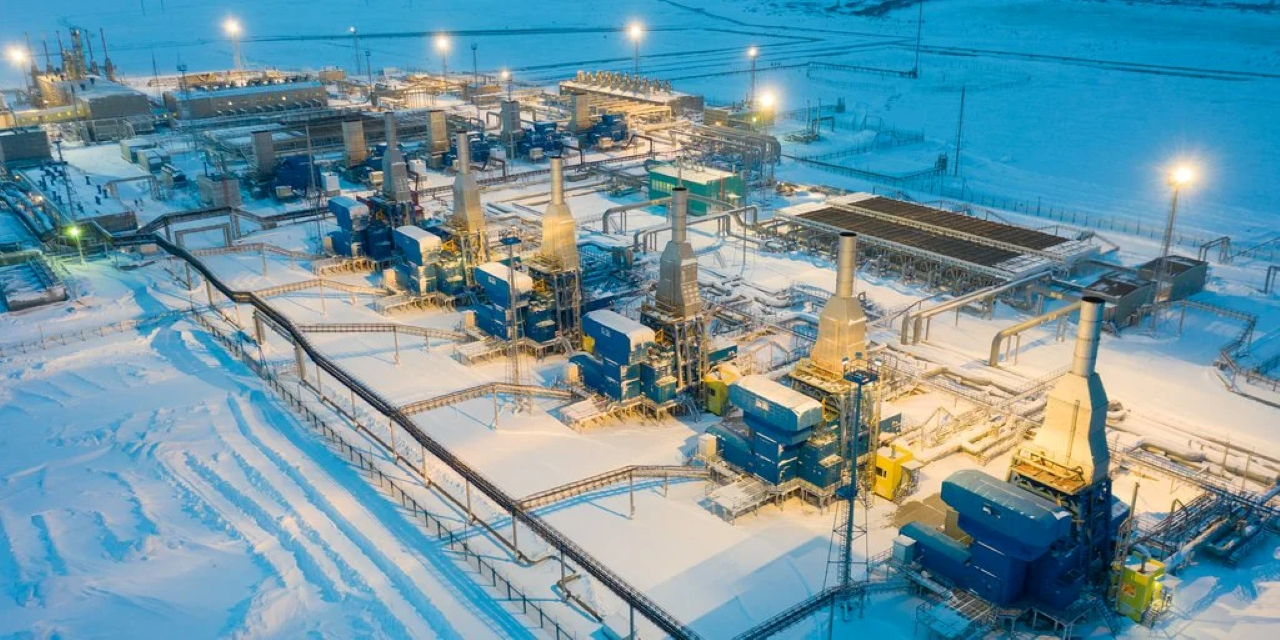
In Bashkortostan, authorities banned gasoline sales in canisters, leaving at least one resident unable to fuel his lawnmower—as he complained to regional head Radiy Khabirov during a televised address, a Bashkortostan outlet reported. Production at the Ufa petrochemical complex is unaffected by the drone strikes, Khabirov said.

Still, the shortage persists for a different reason: every time a drone-alert protocol is activated, fuel tankers halt en route to gas stations, regional official Elena Prochakovsky explained at a briefing reported by Prufy. Three districts remain in a fuel “red zone,” and 19 of 26 gas stations in Sterlitamak are operating.

Lipetsk Oblast Governor Igor Artamonov told residents not to expect improvement for one to two weeks, Lipetsk outlet Ploshchad reported. “If you can leave 10 liters unfilled, the person arriving on empty will thank you,” he said.

Russia’s fuel system was already breaking

The Tobolsk shutdown lands on an already fractured system. By mid-July, fuel rationing had spread to more than half of Russia’s regions. Ukraine’s drone campaign had struck Russian refineries 194 times in the first half of 2026 alone—eleven times the previous year’s pace—knocking nearly half the country’s refining capacity offline, Ukraine’s General Staff reported on 4 July.
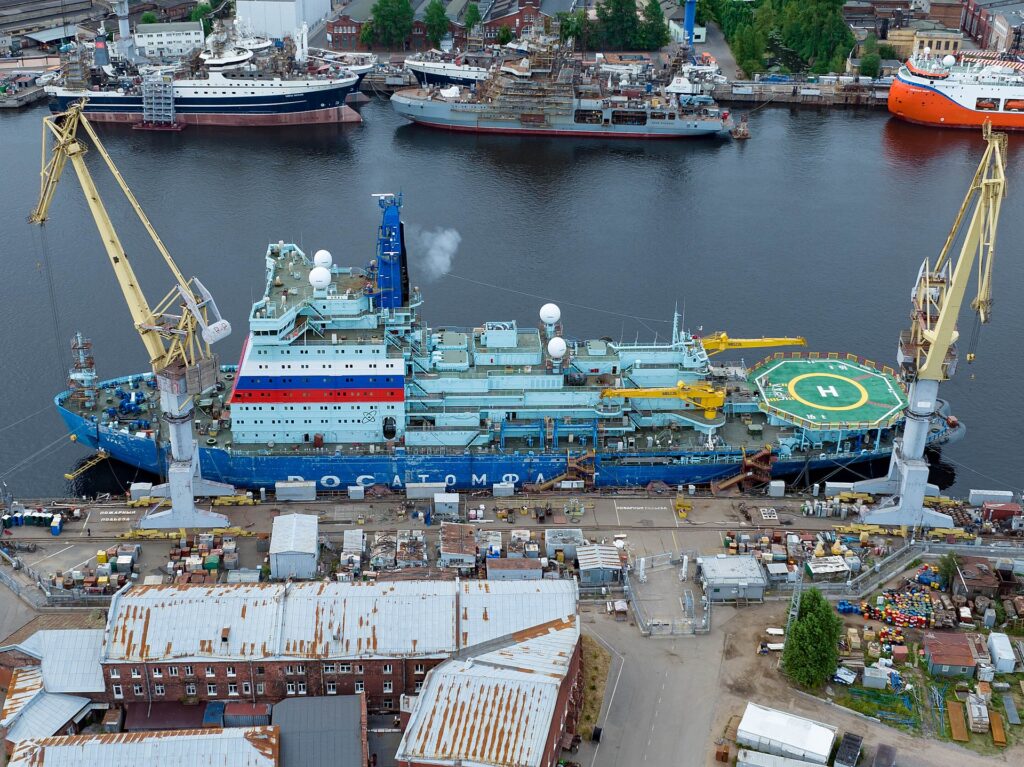
Repair timelines keep slipping because sanctions block the spare parts Russian plants need. To plug the gap, Russia has banned gasoline exports, permitted lower-grade fuel, and begun importing gasoline from India and Morocco, refined from its own crude—shipping it 14,000 kilometers home because its refineries cannot meet domestic demand.

The Tobolsk shutdown removes more LPG output than any single strike of the war. Russia was already rationing fuel in more than half its regions before this strike.

  • ✇Euromaidan Press
  • Russia is squeezing independent gas stations out of its fuel market
    Russia can’t refine its way out of its fuel crisis, so it is changing who controls the already existing fuel. Months of Ukrainian drone strikes on refineries have driven shortages and rationing across much of the country. The government’s answer isn’t more fuel—it is a different market.Faced with the shortage, the Kremlin had options. In June, analysts urged it to raise the exchange quota to push more fuel onto the open market and toward the regions running dry. The gov
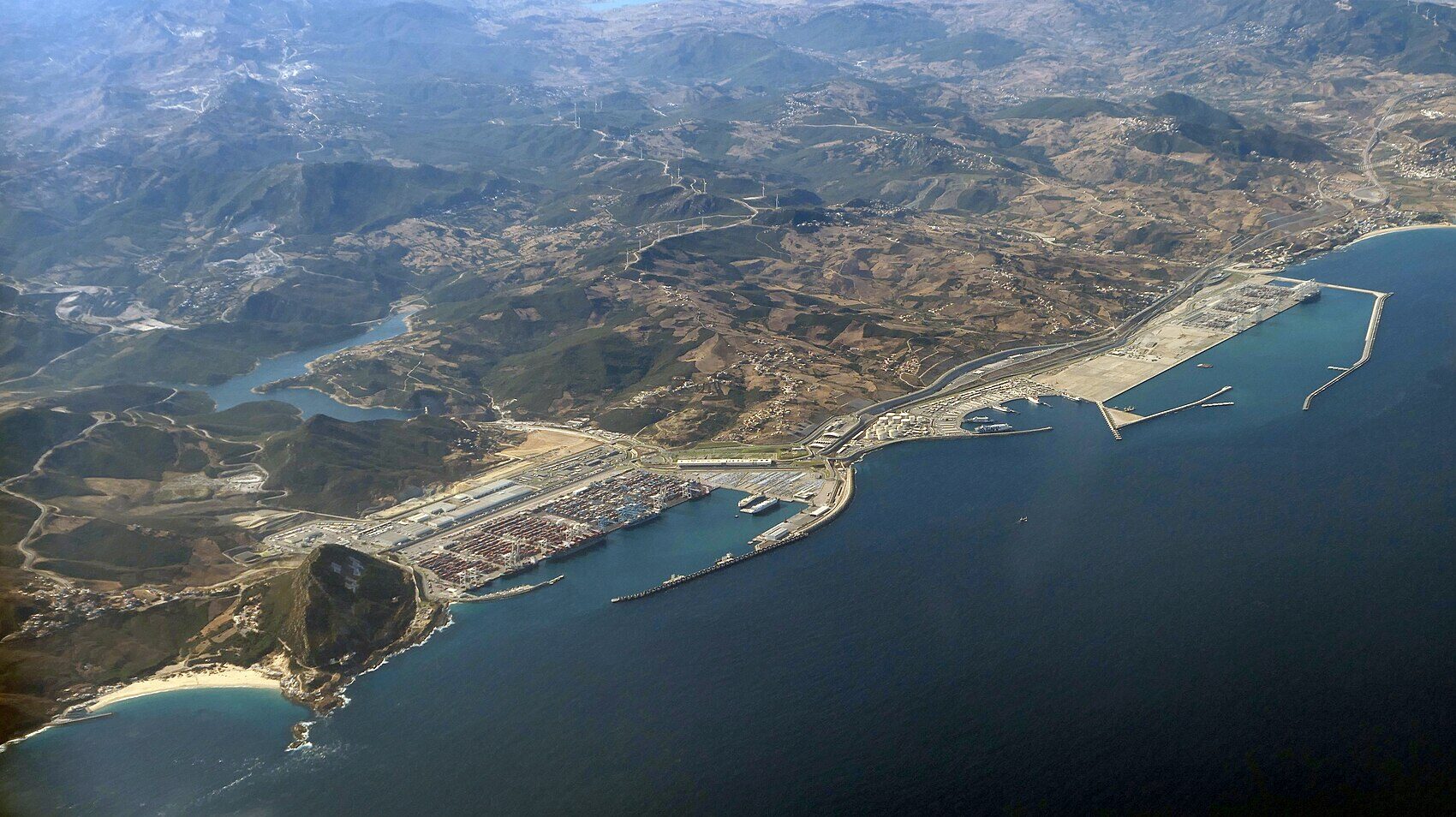
     

Russia is squeezing independent gas stations out of its fuel market

7 août 2026 à 10:01

a dry pump at a russian gas station, july 2026

Russia can’t refine its way out of its fuel crisis, so it is changing who controls the already existing fuel. Months of Ukrainian drone strikes on refineries have driven shortages and rationing across much of the country. The government’s answer isn’t more fuel—it is a different market.

Faced with the shortage, the Kremlin had options. In June, analysts urged it to raise the exchange quota to push more fuel onto the open market and toward the regions running dry.
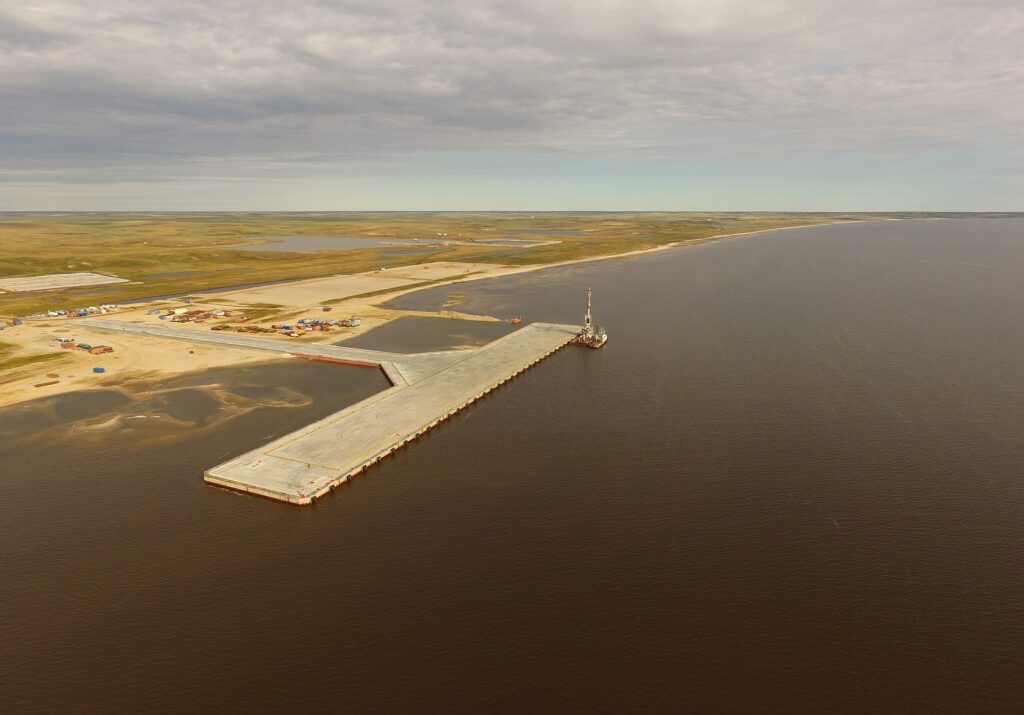
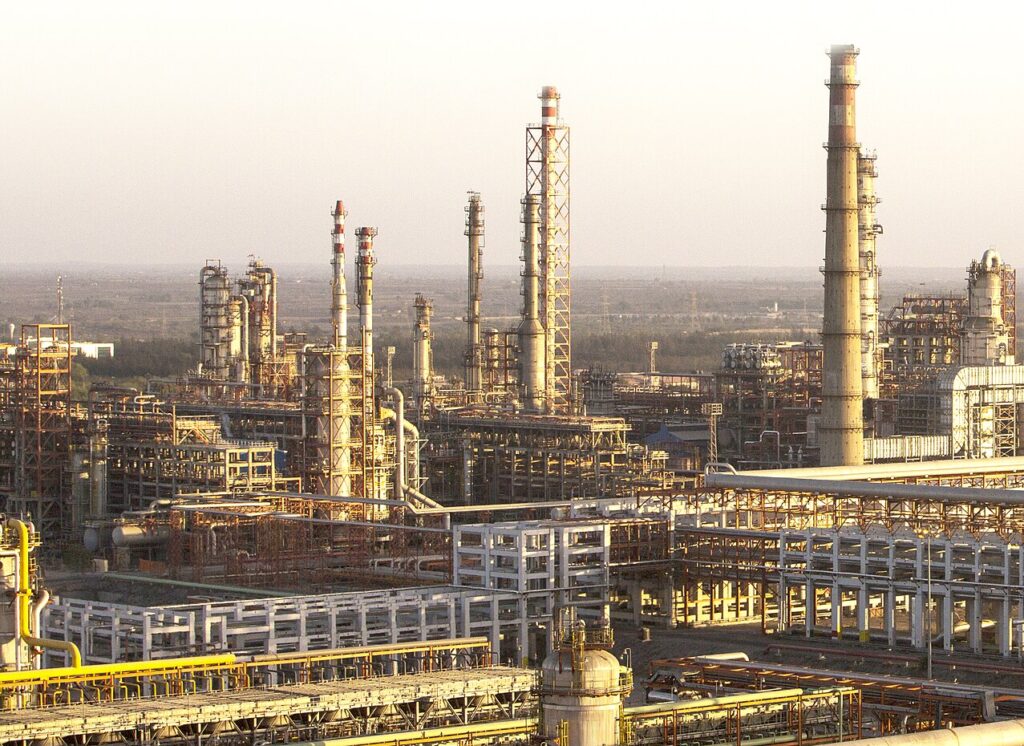
The government’s answer isn’t more fuel—it is a different market.

It did the opposite. The mandatory share of gasoline that producers must sell on the open exchange was cut from 15% to 10%, with the majors pushing for 2%, and the exchange was closed to anyone but buyers who will use the fuel themselves, shutting out traders who bought to resell.

That choice adds no fuel. It moves distribution off the exchange that set prices for a decade and into direct contracts between the big producers and the buyers they pick—handing the majors the chain from refinery to pump. Part of the package came straight from proposals Rosneft head Igor Sechin sent to President Vladimir Putin.

Winners and losers

The winners are the big, vertically integrated oil companies, which refine up to three-quarters of Russia’s oil. Direct deals let them keep the margin that once went to middlemen and choose who gets supplied; drop the quota to 2%, and about 5 million tonnes of gasoline a year move into their private channels.

The losers are the independent stations—60% to 72% of Russia’s roughly 25,000 gas stations, depending on who’s counting, and now unable to buy at the exchange price.

Alexander Moiseev, who owns the Kostroma Fuel Company, has been hauling gasoline from Surgut, 2,000 kilometers away, at 118 rubles a liter ($1.45) with freight, because the majors won’t sell to him wholesale. He works on a minimal markup. Rosneft, meanwhile, has multiplied sales at its own pumps.

What stabilization there is has been narrow. Prices eased mainly where supply was steered—Moscow, St. Petersburg, the big cities—while regions thick with independent gas stations stayed short, independent analyst Kirill Rodionov told Kommersant.

None of this is hidden. Facing the crunch, the government also let refiners sell banned Euro-2 gasoline again; online marketplaces pulled fuel listings; and Deputy Prime Minister Alexander Novak called the market “challenging but under control.”

In occupied Crimea it goes furthest: this week, the occupation authorities announced fuel sales were stabilizing, even as they capped each car at 20 liters and fixed the price of AI-92, the Crimean Tatar Resource Center reported.

cars queue at an atan fuel station in occupied sevastopol in july 2026
Explore further

Occupied Sevastopol puts fuel back on open sale—then caps every car at 20 liters

handwritten fuel prices in sevastopol, 27 june 2026
Fuel prices written by hand at a Sevastopol filling station, 27 June 2026—changed manually as often as prices shift. Sales were restricted to holders of QR codes issued the previous day; resellers charged 350 rubles ($4.53) per liter for AI-95 outside. Photo: Nishebrodushka / Pikabu

The market goes dark

As the exchange shrinks, its prices no longer reflect the market, and the state publishes less information on output, stocks, and regional supply. The people who most need to see where Russia’s fuel balance is breaking—regulators at home, and the sanctions monitors and energy analysts abroad who read that data—are left with less to look at, market participants told Kommersant. The market is going dark.

Whether the change sticks is contested. Some read the cuts as a passing emergency. Others expect the market to keep sliding toward closed, bilateral deals—less transparent, harder for newcomers, the independent stations ever more tied to the majors, Viktoria Trifonova, Senior Analyst at Yakov & Partners, told Kommersant. The state has reached for limits, subsidies, and hands-on redistribution ever since the 2018 price crisis.

Keeping the independent gas station chains alive was never the goal, NEFT Research’s Dmitry Prokofiev wrote in Kommersant—it was to keep fuel flowing to the big cities of European Russia and, above all, to the priority government sector.

  • ✇Euromaidan Press
  • Ukraine’s strikes gave Kazakhstan leverage over Russian retail giant Wildberries
    On 4 August, Kazakhstan’s Trade and Integration Minister, Arman Shakkaliyev, confirmed that Russia’s largest online retailer is building 260,000 square meters of warehousing space in Almaty and Astana.In the same appearance, he told Kazakh shoppers to favor domestic marketplaces instead. Take the construction money, steer the customers away: that is Astana’s answer to a war that has driven Wildberries to look abroad for shelter. Take the construction money, steer the cu
     

Ukraine’s strikes gave Kazakhstan leverage over Russian retail giant Wildberries

6 août 2026 à 10:58

drones hit volgograd kept flying 1100 km tatarstan · post large fire sends up black smoke over russia after ukrainian drone strike wildberries logistics center 31 2026 x/@bayraktar_1love bayraktar_1love hoivgso

On 4 August, Kazakhstan’s Trade and Integration Minister, Arman Shakkaliyev, confirmed that Russia’s largest online retailer is building 260,000 square meters of warehousing space in Almaty and Astana.

In the same appearance, he told Kazakh shoppers to favor domestic marketplaces instead. Take the construction money, steer the customers away: that is Astana’s answer to a war that has driven Wildberries to look abroad for shelter.

Take the construction money, steer the customers away: that contradiction is Astana’s answer.


The warehouses aren’t new—they’ve been under construction for years. And officially, the ministry says, Wildberries hasn’t asked to move its Russian operations to Kazakhstan at all. Astana is drawing a careful line: a Russian company can build here, but it cannot relocate its business here to escape the drones.

The wariness predates the strikes. Kazakhstan already taxes foreign marketplaces at 12% and can block those that fail to register. Of marketplace complaints logged in 2024, 73.7% concerned Wildberries, even as home-grown Kaspi held more than 70% of the market to Wildberries’ 17.2%. Astana was fencing the platform in before the first drone struck.

The bill reaches the neighbors

Kazakh sellers put their losses at roughly 2 billion tenge ($4.2 million) by one count, and the Ecommerce-KZ association estimates more than $2.1 million—neither figure has been confirmed, and the minister has told people not to trust the numbers circulating online.

More than 120,000 Kazakh entrepreneurs were on the platform at the end of 2025, and Wildberries says it is repaying them in stages, working with the ministry and the business chamber Atameken.

Kyrgyzstan is hit harder. Its garment industry leans heavily on Wildberries, and individual producers have lost between 1 million and 100 million soms ($11,400 to $1.14 million) each—enough that Bishkek offered a tax holiday to garment firms through year-end.

What Wildberries wants sheltered is not neutral cargo. Ukraine says it strikes the retailer because the platform is used to trade body armor, drones, and their components that reach Russian forces.

smoke rises from a fire at a wildberries storage in penza, russia, on 30 july 2026
Explore further

Russia can rebuild Wildberries warehouses more easily than it can replace warehouse workers

That leaves Kazakhstan exposed: it has spent the past year tightening dual-use export controls to avoid Western secondary sanctions, and now a company that sells to the Russian military wants to move its logistics onto Kazakh ground.

For now, the shelter barely exists. Wildberries wants to rent about 100,000 square meters—close to every empty warehouse Kazakhstan has—and the complexes it is building will not open until 2027. By then, Astana may have made up its mind about how much of Russia’s retreat it actually wants on its soil.

  • ✇Euromaidan Press
  • Ukraine’s drones force oil-giant Russia to import gasoline—now from Morocco
    Ukrainian drone strikes have forced Russia to import gasoline—shipping cargoes from as far as Morocco to an Arctic port—and to pay for the damage twice over. Moscow now subsidizes both the refineries the drones keep setting on fire and the foreign fuel replacing what those refineries can no longer produce. Ukraine’s drones have forced Moscow to subsidize both the refineries they keep setting on fire and the foreign gasoline. Russia caps fuel prices at home below what
     

Ukraine’s drones force oil-giant Russia to import gasoline—now from Morocco

6 août 2026 à 06:33

tanger med, the cargo port of tangier in morocco

Ukrainian drone strikes have forced Russia to import gasoline—shipping cargoes from as far as Morocco to an Arctic port—and to pay for the damage twice over. Moscow now subsidizes both the refineries the drones keep setting on fire and the foreign fuel replacing what those refineries can no longer produce.

Ukraine’s drones have forced Moscow to subsidize both the refineries they keep setting on fire and the foreign gasoline.

Russia caps fuel prices at home below what refiners could earn abroad, and the budget pays them the difference—so they keep supplying the domestic market rather than exporting everything. The payments, together with related reimbursements, reached 1.221 trillion rubles ($15 billion) from April through July, Finance Ministry data show—close to the full annual budget of Moscow Oblast, the region ringing the capital.

Those monthly payments have roughly halved since spring, to about 190 billion rubles ($2.4 billion) in July, as lower oil prices narrowed the gap the subsidy fills.

gas price comparison in russia summer 2026
In June 2026, oil-company stations sold a liter of AI-92 gasoline for about 65 rubles ($0.85); independent stations charged upward of 115 rubles ($1.50). The gap is what the subsidy hides. Chart: Reuters, Rosstat / Euromaidan Press

Russia cannot keep its refineries running

Russian crude processing fell to 3.6 million barrels a day in July, its lowest since 2002 and roughly a third below the seasonal norm. Ukraine has hit at least 24 of Russia’s 34 largest refineries in some 50 strikes.

Fuel shortages and rationing now affect 50 million people—about a third of Russia’s population—according to a Financial Times analysis. Russia runs the world’s third-largest oil-refining industry, so the lost output has tightened diesel and gasoline supply beyond its borders. With less capacity to refine at home, Russia has had to export more raw crude and less high-value fuel.

With its refineries down, Moscow is now paying a second subsidy—this time to the importers bringing gasoline in. Gasoline is arriving by rail from Belarus and Kazakhstan and by sea from India and, in mid-July, Morocco: a cargo loaded at the port of Tangier and discharged at Murmansk, on the Arctic coast.

a cow grazes by an idle sayanneft gas station in russia amid nationwide fuel crisis
Explore further

Why Russia is importing gasoline made from its own oil

Ukraine has already named the import route as a target. In early July, presidential sanctions commissioner Vladyslav Vlasiuk called Russia’s new reliance on imported fuel a fresh vulnerability and said Kyiv had raised a response with the European Commission—though the EU’s next sanctions package, now in preparation, is so far built mainly around other measures.

A country that ships crude out of the Arctic is now shipping gasoline in through it.

  • ✇Euromaidan Press
  • Russia wrecked Ukraine’s grid. Dutch turbines with 20 years left are keeping its factories lit
    A Russian drone clipped one of Serhii’s wind turbines; his crew repaired the blade and carried on. He runs an oil-pressing plant in southern Ukraine, where the grid gives him about two hours of power and then 10 without. The turbine is one of six he has bought—Dutch machines, pulled from wind farms in the Netherlands for being too small, and shipped east.In the Netherlands, a turbine like that is barely worth the paperwork. Over a blacked-out Ukrainian factory, it is worth
     

Russia wrecked Ukraine’s grid. Dutch turbines with 20 years left are keeping its factories lit

5 août 2026 à 10:54

netherlands sending its worn-out wind turbines ukraine instead scrapheap · post near weteringbrug rudolphous / nederlands windmolens maken overuren aan de lisserweg bij news ukrainian reports

A Russian drone clipped one of Serhii’s wind turbines; his crew repaired the blade and carried on. He runs an oil-pressing plant in southern Ukraine, where the grid gives him about two hours of power and then 10 without. The turbine is one of six he has bought—Dutch machines, pulled from wind farms in the Netherlands for being too small, and shipped east.

In the Netherlands, a turbine like that is barely worth the paperwork. Over a blacked-out Ukrainian factory, it is worth shipping across a continent. That gap is turning into a market.

There is an active world market for refurbished wind turbines.

Bert van der Lingen

The market has formed largely on its own. Buyers like Serhii got their turbines through what Bert van der Lingen, vice-chairman of the Dutch wind association NedZero, calls “free market conditions”—private deals, one at a time—ahead of the Dutch government program meant to organize the trade, “Renewed Energy for Ukraine,” which began only in December 2025 and is still in start-up.

NedZero wrote to Euromaidan Press to correct an earlier report, drawn from the Dutch daily De Telegraaf, that called the turbines worn out. They are not.

A machine comes down in the Netherlands only because a newer model on the same spot would earn five or six times as much. The old one still works. Stripped, inspected, and fitted with new bearings and a rebuilt gearbox, it has “fifteen to twenty years of technical life remaining.”

“This is a story we want to see grow,” van der Lingen added, “and getting the baseline right helps that.”

russian occupation trapped 1.3gw of ukrainian pre-war wind energy in the occupied territories
Russian occupation trapped 1.3 GW of Ukraine’s pre-war wind capacity in occupied territory. Just 1.0 GW remains operational. But seven wind farms with a combined capacity of 4 GW have all permits and grid connections in place. The bottleneck is in the market access. Chart: Ukrainian Wind Energy Association / Euromaidan Press

Why blacked-out Ukraine wants Europe’s spares

Ukraine is one buyer in a market that predates the war. “There is an active world market for refurbished wind turbines,” van der Lingen notes: Dutch machines freed up by repowering already spin from Poland and the Baltics to Jordan, Kenya, and Chile, sold with maintenance records and spare parts to match.

The supply is thin, and slow to move. By NedZero’s own survey, 486 Dutch turbines are due to come down over the decade to 2035—a floor, it says, since not every producer answered—and only a portion will be shipped anywhere, fewer still to Ukraine. A market like this gets built one deal at a time.

crane lifting a wind turbine into place
A crane lifts a wind turbine into place. Photo: De Telegraaf

What makes Ukraine the eager buyer is what Russia has done to its lights. Four winters of strikes have destroyed or damaged more than 80% of the country’s power-generating capacity, by the energy ministry’s own count—its big Soviet-built plants are so few and so concentrated that one missile can darken a whole region.

Kyiv’s answer is to scatter generation so widely that no single strike can repeat the trick, an approach the ministry describes as “energy cells.” One refurbished turbine beside one factory is that doctrine at its smallest scale.

staryi sambir-1 wind farm in lviv oblast
Explore further

Wind farms are harder to destroy—so why won’t Ukraine let them scale? (INFOGRAPHICS)

Small, slow, and off the books

Money is the bottleneck. Development banks lend in amounts far too large for a handful of turbines—support from the big institutions starts at around €10 million ($11 million)—so small orders have to be bundled into projects large enough to finance. How many turbines reach Ukraine, the association says, depends on whether that bundling comes together.

Then there is the wiring. A turbine only makes power when the wind blows, not when the factory needs it. And most are built to shut down automatically when the grid fails, so a blackout silences them too—exactly when the factory needs them most—unless they are rewired, with batteries, to run on their own. That is what the microgrids are for.

NedZero cannot say how many Dutch turbines are already working in Ukraine. It has no consolidated count of what its country’s firms have delivered, nor of the megawatts they have added to the grid, and offers only to go and count them. What is coming free is on the books; what is already turning above a Ukrainian factory, holding its lights while the grid is dark, is not.

Some Ukrainian farmers sell wheat below cost as Black Sea disruption stops ore operations

5 août 2026 à 10:05

ten dead russia strikes turkish-owned bulk carrier off odesa · post civilian golden leo ablaze after russian missiles hit left cargo corn black sea 19 2026 ukraine's navy struck foreign-flagged

Two weeks ago, Russian strikes drove the ships out of Ukraine’s Black Sea ports, and Euromaidan Press reported that grain was piling up with nowhere to go. Now the bill is coming in.

ten dead russia strikes turkish-owned bulk carrier off odesa · post burned smoking superstructure golden leo after russian missile strike black sea 19 2026 ukraine's navy struck foreign-flagged civilian cruise
Explore further

Russia’s strikes stopped Ukraine’s grain ships. Its farmers are the ones paying

First to the farms. With no ships to load, traders have stopped buying, and the price they offer has dropped so far that Ukrainian farmers are, in places, selling wheat for less than it costs to grow. Port prices fell another 12–15% this week.

Grain buyers pay the world price, and when it suddenly costs far more to move Ukrainian grain out by rail than by sea, they hand that extra cost back to the farmer as a lower offer. That is how the head of Ukraine’s main association of agricultural producers, Oleh Khomenko, explained it.

Ukraine’s central bank has now measured the loss: $2.5 billion in export income gone in the second half of this year.

When the ships stop, the mines stop too

Ukraine mines iron ore and exports it by ship, just as it exports grain. The blockade has now spread into heavy industry. Ferrexpo, one of the country’s large ore producers, has suspended operations at its plant in central Ukraine—no point in digging ore that cannot leave the country.

After a Russian drone hit a vessel carrying its cargo, the company warned it will run out of cash by mid-September without fresh money. Metinvest, the steel group owned by Ukraine’s richest man, Rinat Akhmetov, has idled one of its own mines.

The image shows Pivdennyi Mining and Processing Plant (Pivdennyi GZK), one of Ukraine's largest iron ore producers. Source: UGOK
Explore further

Plant can’t mine because it can’t ship: Russia’s attacks on merchant vessels idle 4,480 workers at Ukrainian iron ore giant

Together, that is a country losing its two biggest foreign-currency earners. Ukraine’s central bank has now measured the loss: $2.5 billion in export income gone in the second half of this year, and almost a full percentage point—0.9%—knocked off the whole economy for 2026.

It could have been worse. An economist at the Kyiv School of Economics who tracked the 2022 blockade found that one cost Ukraine six times as much of its output. The sea lanes are not completely shut this time.

Ukrainian grain being loaded on a ship
Ukrainian grain on the move: Despite a 33% drop in 2025 shipments, Ukraine remains a vital global food supplier as EU integration advances. Photo: Ukrainian Grain Association

Abroad, the price moves the other way

For the rest of the world, the strikes cut the other way. As grain gets cheaper inside Ukraine, it gets dearer everywhere else, because buyers can no longer be sure the wheat will arrive. The UN’s political affairs office told the Security Council that world wheat prices have climbed 20% since the start of July.

Ukraine ships about 7% of the wheat sold across the world’s borders, USDA figures show, most of it bound for the Middle East and North Africa, where buyers have few other places to turn.

The real danger is that everything converges on one month. The corn harvest arrives in mid-September, with nowhere to store it. Ferrexpo’s cash runs out in mid-September. And the Danube—the shallow river route carrying what little the ports cannot—drops too low to help the month after. None of those alternatives replaces a deepwater port.

  • ✇Euromaidan Press
  • Reconstruction holds Ukraine’s economy above water as service sector cracks
    Ukraine’s wartime business optimism has split in two. In July, the construction sector, funded by state money for roads and damaged infrastructure, remained the country’s most confident, even as service firms slid into outright pessimism, and overall confidence in the economy stopped improving.The divide is about money. Rebuilding, paid for by the government and its foreign backers, is thriving. The businesses that earn their own keep—transport, hospitality, professional a
     

Reconstruction holds Ukraine’s economy above water as service sector cracks

4 août 2026 à 10:52

kharkiv digs over 40 underground schools being built russia keeps bombing · post workers reinforce concrete structure construction site school oksen lisovyi video surrounding oblast crews working shifts often without

Ukraine’s wartime business optimism has split in two. In July, the construction sector, funded by state money for roads and damaged infrastructure, remained the country’s most confident, even as service firms slid into outright pessimism, and overall confidence in the economy stopped improving.

The divide is about money. Rebuilding, paid for by the government and its foreign backers, is thriving. The businesses that earn their own keep—transport, hospitality, professional and financial firms—are squeezed by rising costs and a shortage of skilled workers.

Only builders expect to hire; industry and services plan to cut.

Each month, the National Bank of Ukraine asks companies whether they expect business to improve or worsen. In July, there was only barely more expected improvement than decline: a reading of 50.1, where 50 is the dividing line, down from 50.4 in June.

A year earlier, more firms were gloomy than hopeful. As 2025 closed, the divide ran along a different line: retail firms stayed confident while industry shrank under Russian strikes, and the overall mood was still a shade negative.

kyiv skyline
Explore further

Ukraine’s economy adapts to war, but hits a ceiling money can’t break (INFOGRAPHICS)

business expecation index july 2026
Ukraine’s war economy split cleanly along its funding line in July: construction, paid for by state and foreign rebuilding funds, remained the most confident sector, while services—left to earn their own way—fell into pessimism, the only sector below the neutral 50 mark. Chart: NBU business survey / Euromaidan Press

Where the rebuilding money goes, confidence follows

Construction was far above the line, at 54.2, lifted by financing for road repair and rebuilding—even as the same survey listed intensifying strikes on critical infrastructure among the factors holding activity back.

Industry and trade stayed barely positive. Services alone fell below the line, into pessimism, squeezed by higher costs and too few skilled workers. Only builders expect to hire; industry and services plan to cut.

For Ukraine’s partners, the survey shows where rebuilding money actually reaches. That spending—part-funded by Western aid, which the bank lists as one reason confidence holds up at all—is a preview of the demand that a full postwar rebuild would bring.

In June 2026, Russian strikes on that same industrial base pushed Ukraine into its sharpest wartime contraction since 2023.

The next survey, covering August, is due on the first working day of September.

❌