Vue normale

Ukraine’s former commander-in-chief just said what officials won’t: NATO membership will never happen for Kyiv

3 août 2026 à 19:01

Zaluzhnyi ambassador Ukraine

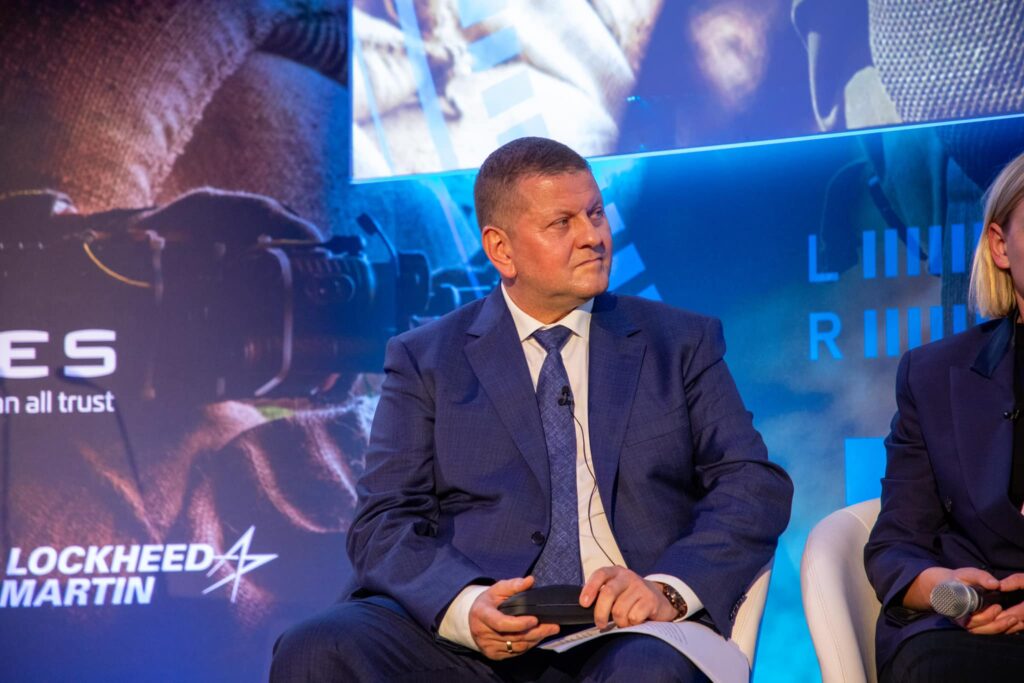
One of Ukraine's most respected generals has said out loud that the country's constitutional goal of NATO membership will never happen. Valerii Zaluzhnyi, Ukraine's ambassador to Britain, does not see Kyiv's path to NATO membership, he said in a discussion on Euro-Atlantic integration at a meeting of ambassadors in Kyiv, European Pravda reports.

The statement is striking because of who made it and from where. Zaluzhnyi, the former commander-in-chief, is, as ambassador to a leading NATO member, formally part of the machinery pursuing the alliance path.

"I know NATO very well. For about 12 years, I personally worked on us mastering NATO standards and listened every year to fairy tales that said that any moment now we'd join NATO. Unfortunately, we will never join it," he said.

His case against joining

Zaluzhnyi argued the obstacle runs both ways. Ukraine cannot join at the level of development its Armed Forces have reached, "an organization that holds the doctrines of the Second World War," he said, dismissing NATO's capabilities despite the membership of Britain, the US, and others.

He was blunt about the alliance's trajectory. NATO will most likely stay in the same form it is now, he said, and would need 12 years, as Ukraine has, to reach the standards required to match even half the Russian level.

Despite this assessment, Zaluzhnyi acknowledged that "Ukraine needs technologies that are currently still held by NATO countries, including in areas such as anti-ballistic missile defense and space capabilities."

What he proposes instead

That view aligns Ukraine's security future with the European defense architecture now under discussion, the coalition of the willing, and the anti-ballistic coalitions Ukraine has helped assemble, rather than with the transatlantic alliance.

Zaluzhnyi's remarks are his own assessment, delivered in a diplomatic discussion, and Ukraine's official policy remains the constitutional Euro-Atlantic course.

Zelenskyy names one of the worst consequenceses of Russia’s war. This threat is about to grow everywhere in the world

3 août 2026 à 18:38

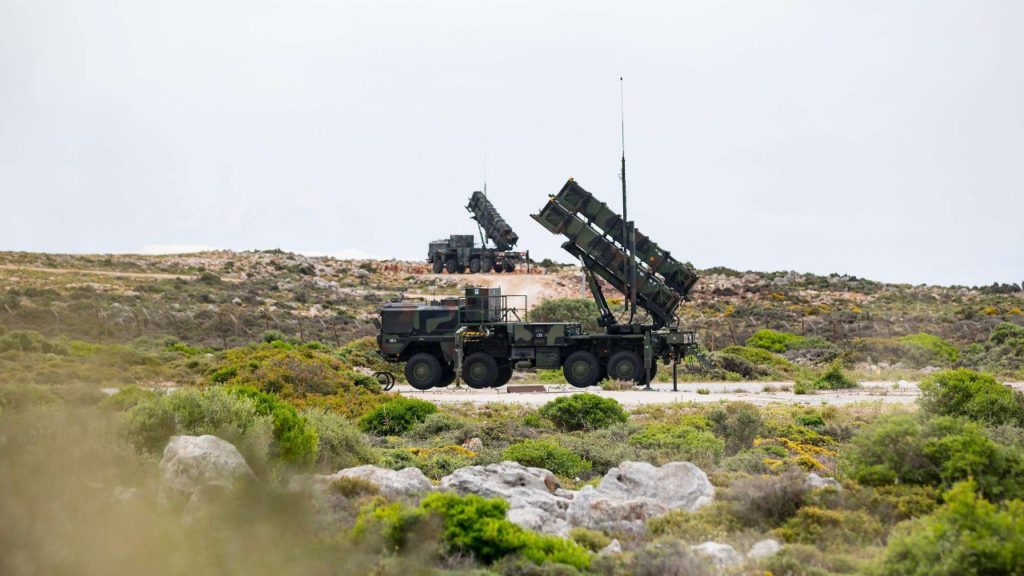
Patriot anti-aircraft missile system launchers

One of the worst consequences of Russia's war, and of Iran's tactics, is that potential aggressors worldwide now see how much damage ballistic missiles can do to human life. So the global ballistic threat will grow, and anti-ballistic defenses must grow with it, Ukrainian President Volodymyr Zelenskyy says, according to UNIAN.

Ukraine has put a number on the shield it wants to build itself against ballistic missiles: 100 systems. These systems are planned to be built as part of its FREYJA anti-ballistic project.

Zelenskyy frames the project as an answer to a threat spreading beyond Ukraine.

FREYJA is Ukraine's own interceptor, recycling a Soviet S-300 missile with a German seeker at roughly $700,000 per shot, a fraction of a $3.8 million Patriot, though its maker, Fire Point, does not target a first ballistic intercept until late 2027.

FREYJA as a shared European system

Zelenskyy pitches the Ukrainian project as Europe's future shield.

"Our FREYJA can become a common system for Europe that provides integrated protection. FREYJA will be fast to produce and tested by war," he said, offering to share all the know-how with partners if the system proves itself.

The project already has a coalition. Ten nations joined the European Anti-Ballistic Coalition in July, per Euromaidan Press, with Ukraine contributing the missile and partners supplying radars, command systems, and components Ukraine does not make.

The shield is a bet against a shortage

The 100-systems goal collides with the interceptor shortage that FREYJA is meant to solve. FREYJA has three tracks, including a transatlantic dimension and Ukraine's relationship with the US, Zelenskyy said, without disclosing details, and Ukraine needs both funding and certain components to build it.

In the meantime, Ukraine leans on the countries that already have Patriots. While Ukraine builds FREYJA and runs short on its current anti-ballistic systems, those partners that lack the production Ukraine needs but hold Patriot missiles today can invest those interceptors into Ukraine's defense, Zelenskyy said, welcoming them into the anti-ballistic coalition. The 100-system shield is the long game, while the borrowed Patriots are what keep Ukrainian skies covered until it exists.

French firm that beat NATO’s tender on glide bombs is now teaching Ukraine’s interceptor to see its target without GPS

3 août 2026 à 10:16

interceptor drones General Cherry (Chereshnia)

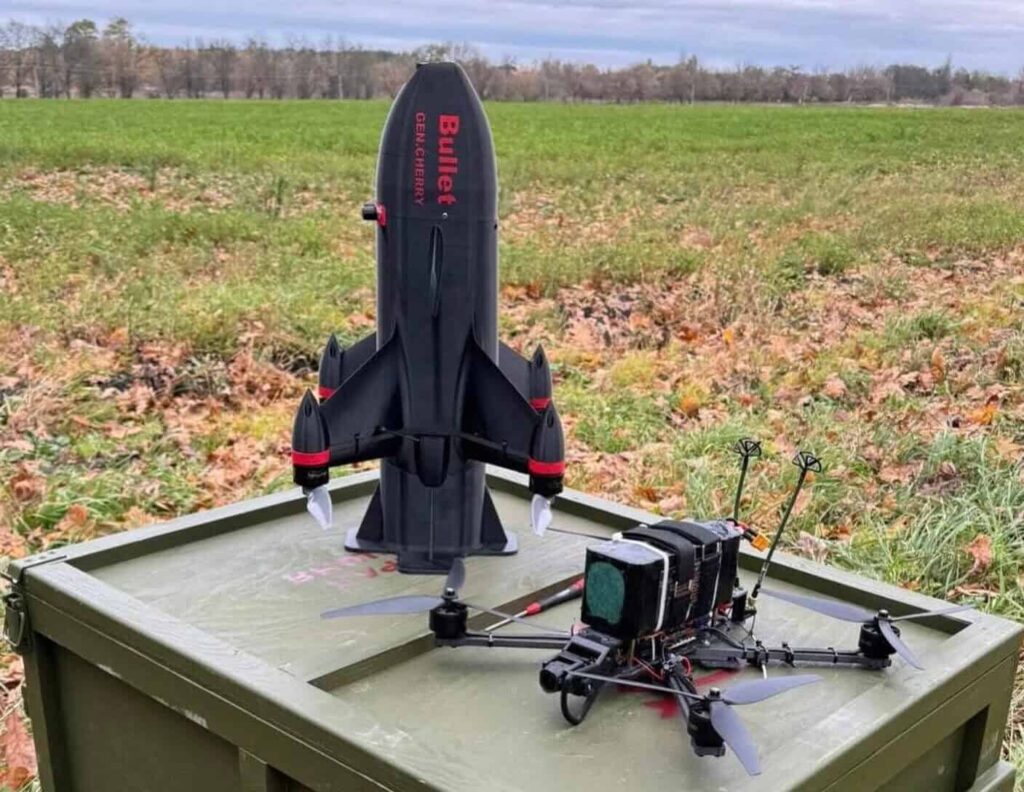
Ukraine is teaching its Shahed-hunting drone to see its target with French artificial intelligence. The Ukrainian interceptor group "General Cherry" and French firm Alta Ares have signed a memorandum to integrate AI guidance into the BULLET anti-Shahed interceptor, General Cherry announced.

The partnership pairs a combat-proven Ukrainian interceptor with Western AI. General Cherry recently received a US invitation to the Drone Dominance Program, a $1.1 billion effort to select unmanned-systems suppliers for testing and contracts to meet US defense needs, per the War Department.

The AI keeps the target locked without GPS

The collaboration integrates two Alta Ares systems into the front-line interceptor. Pixel Lock guides the drone onto the target in the terminal phase, and Cyclop C2 guides it along the flight route, and both hold the target using computer vision and fused data from several sensors, even without a GPS signal.

That matters against Russia's jamming. An interceptor that tracks its target by vision rather than radio or satellite signal cannot be defeated by the electronic warfare Russia uses to break the control links of guided drones, which is the core problem in shooting down fast, evasive Shaheds.

Alta Ares brings NATO backing and fresh funding

The French firm arrives with a track record against exactly these threats. Alta Ares develops AI systems for the defense sector and autonomous air-intercept tools. It also won a NATO tender in spring 2025 for solutions to counter glide and guided aerial bombs, and opened an office in Ukraine that summer to work with Ukrainian developers, according to Militarnyi.

The deal runs Ukrainian combat experience into global defense

General Cherry has framed the partnership as a step toward joint work on a global security architecture informed by Ukrainian combat experience.

It is the same logic drawing US and NATO programs to Ukrainian drone-makers, the combat record that no peacetime range can produce.

  • ✇Euromaidan Press
  • To catch Ukraine’s cruise missiles, Russia is risking the scarce A-50 radar planes it has no way to rebuild
    Russia has shifted its scarce fleet of A-50U airborne radar aircraft to near-daily operations, according to an analysis by Ukrainian OSINT channel Cyberboroshno. After barely flying against Ukraine for most of June, the aircraft are now patrolling almost nightly to detect Ukrainian drones, operating from airfields deep inside Russia and, on 7 July, four were airborne at once—almost the country's entire combat-ready fleet. The shift reflects how Ukraine's expanding deep-stri
     

To catch Ukraine’s cruise missiles, Russia is risking the scarce A-50 radar planes it has no way to rebuild

3 août 2026 à 09:20

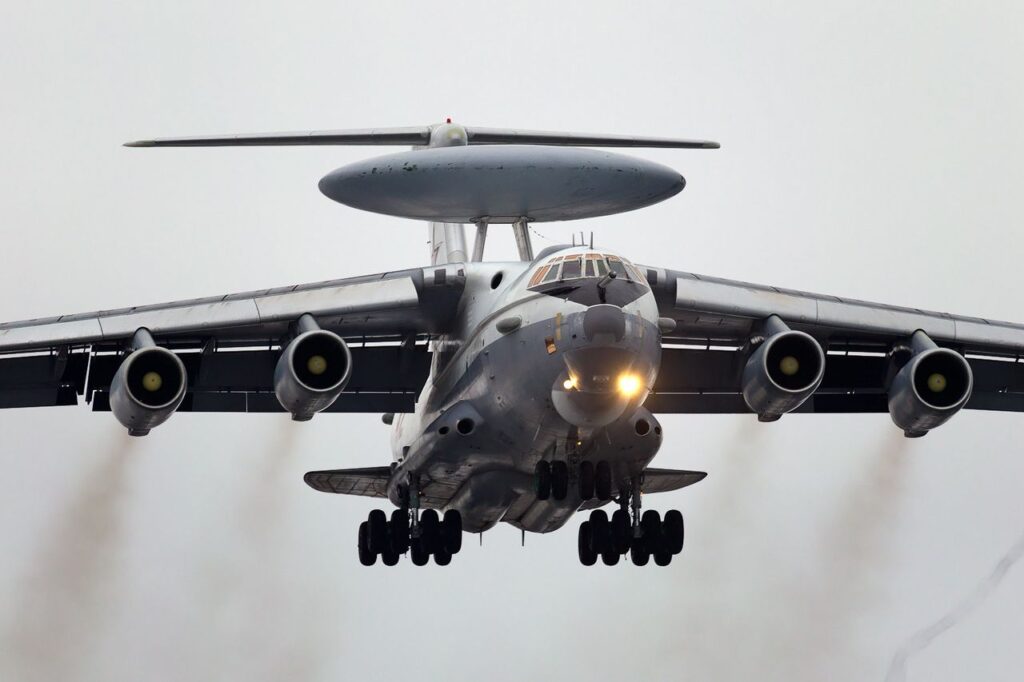
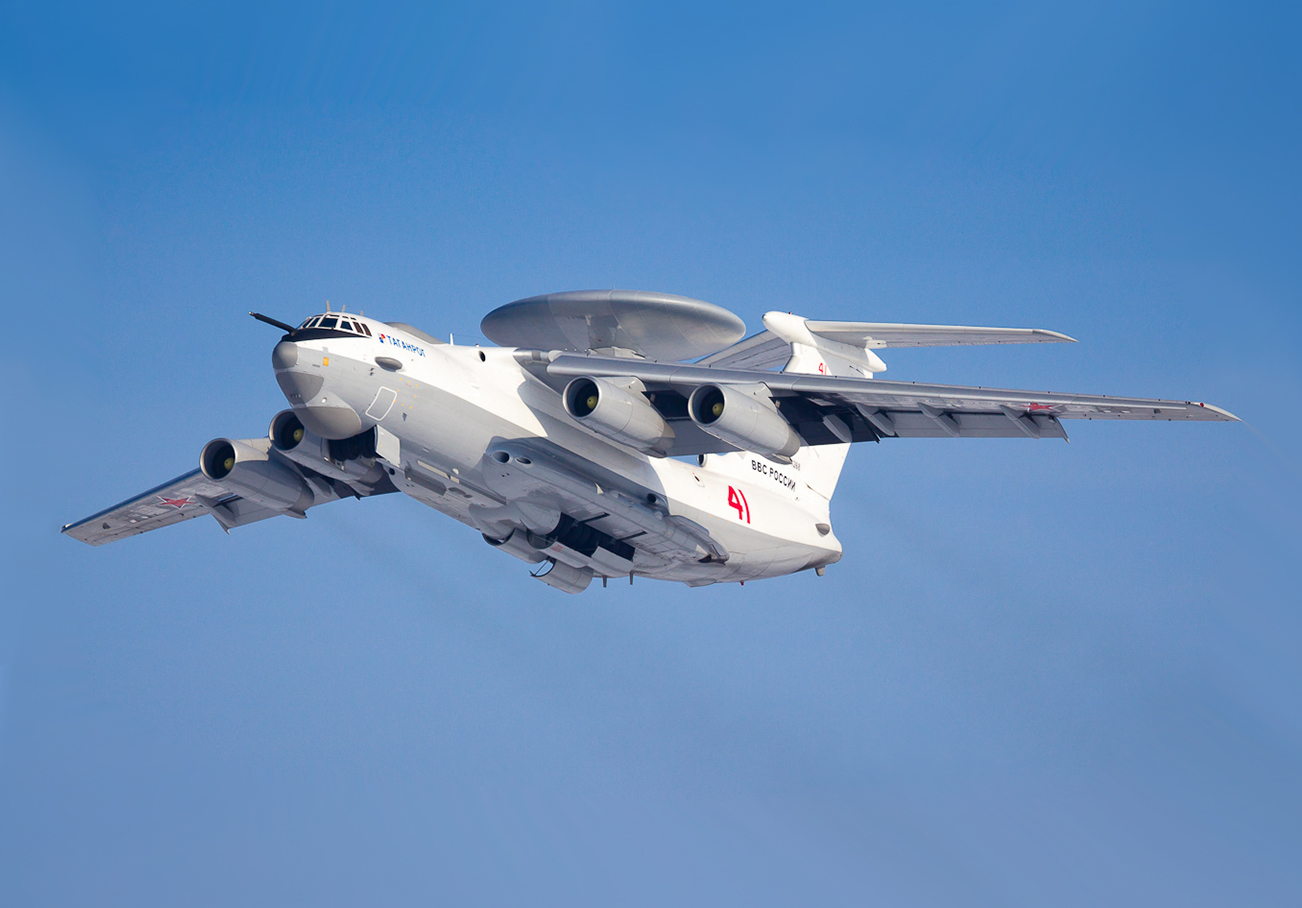
A Russian A-50U.

Russia has shifted its scarce fleet of A-50U airborne radar aircraft to near-daily operations, according to an analysis by Ukrainian OSINT channel Cyberboroshno. After barely flying against Ukraine for most of June, the aircraft are now patrolling almost nightly to detect Ukrainian drones, operating from airfields deep inside Russia and, on 7 July, four were airborne at once—almost the country's entire combat-ready fleet.

The shift reflects how Ukraine's expanding deep-strike campaign is forcing Russia to rely more heavily on one of its scarcest military assets. Wartime losses and sanctions have left Moscow with only a handful of combat-ready A-50Us and no quick way to replace them, making each aircraft increasingly valuable even as Russia depends on them to detect incoming cruise missiles beyond the reach of its ground-based air defenses.

From barely flying to daily duty

For most of June, Russia hardly sent its A-50U airborne radar planes up against Ukraine, according to Cyberboroshno. Its analysts studied more than 1,600 reports between 4 June and 2 August. Early in that window, the only real activity involved a repaired aircraft, tail number Red 47, returning to service.

A Russian A-50U.
A Russian A-50U. Photo via Wikimedia Commons(Maxim Maksimov)

That changed on 23 June, when one plane began patrolling over Russia's interior above Ulyanovsk and Samara oblasts, mostly at night. Those flights continued for the rest of the period, roughly 60 sorties in all. Basing later shifted deeper into the rear, from Ivanovo and Ulyanovsk to airfields near Perm, Orenburg, and Chelyabinsk. On 7 July, Russia put four A-50U planes in the air at once—close to its entire combat-ready fleet.

Ukraine's missiles are what's driving the surge

Russia's ground defenses struggle to catch Ukraine's long-range cruise missiles, so airborne radar helps spot them early. On 4 July, Cyberboroshno said an A-50U played a decisive role in helping repel one such Ukrainian missile strike.

A Russian A-50U.
Explore further

Drones destroy what Russia can’t rebuild: Sole plant repairing A-50 early-warning planes

Why every one of these planes matters

The A-50U is Russia's flying radar—an airborne command post that scans the sky for hundreds of kilometers and guides fighters and missiles. Ukraine shot one down over the Sea of Azov on 14 January 2024, and says it downed the second over Russia's Krasnodar Krai on 23 February 2024. 

Russia entered its all-out war with fewer than ten of these aircraft in service, and the only plant that builds and maintains them has since slid into deep losses, with a strike destroying the prototype of the successor meant to replace them. A single A-50U can track aircraft and cruise missiles out to 700 km. Every sortie forced by Ukraine’s attacks eats into the aircraft’s limited flight life and risks a plane Russia cannot replace.

  • ✇Euromaidan Press
  • Ukraine’s sea drone that never touched the shore struck two Russian radars in occupied Crimea
    Ukraine's military intelligence turned its newest sea drones into carriers for FPV strike drones and knocked out two Russian radar targets in occupied Crimea, according to Ukraine's Main Directorate of Intelligence (HUR). The strike let its uncrewed boats reach Russian targets on land, a move the unit called a shift of the war to a new plane. HUR released footage of the operation on 3 August. Ukraine has no significant navy now, so it built a fleet of uncrewed boats to cont
     

Ukraine’s sea drone that never touched the shore struck two Russian radars in occupied Crimea

3 août 2026 à 07:57

two russian radars destroyed crimea one ukrainian sea drone never touched shore · post parol-4 radar interrogator part friend-or-foe identification system seen fpv moments before strike occupied late 2026 video

Ukraine's military intelligence turned its newest sea drones into carriers for FPV strike drones and knocked out two Russian radar targets in occupied Crimea, according to Ukraine's Main Directorate of Intelligence (HUR). The strike let its uncrewed boats reach Russian targets on land, a move the unit called a shift of the war to a new plane. HUR released footage of the operation on 3 August.

Ukraine has no significant navy now, so it built a fleet of uncrewed boats to contest a sea Russia once dominated. That improvised force keeps taking on new roles, growing from a way to sink ships into a tool that reaches the occupied peninsula itself. The radar strikes fit a wider push to raise the cost of Russia's hold on Crimea. Ukraine's forces kept hitting Russian depots and other military sites across the peninsula in early August. Every radar Ukraine burns thins the sensors Russia relies on to see and defend Crimea. 

Sea drones that launched FPV drones onto land

HUR's special unit Group 13 ran the operation in occupied Crimea in late July 2026, the agency reported. The operators used the newest versions of Magura naval platforms, this time set up as FPV-drone carriers, to hit Russian ground targets on the peninsula. It was the first operation to show the newest Magura's effectiveness.

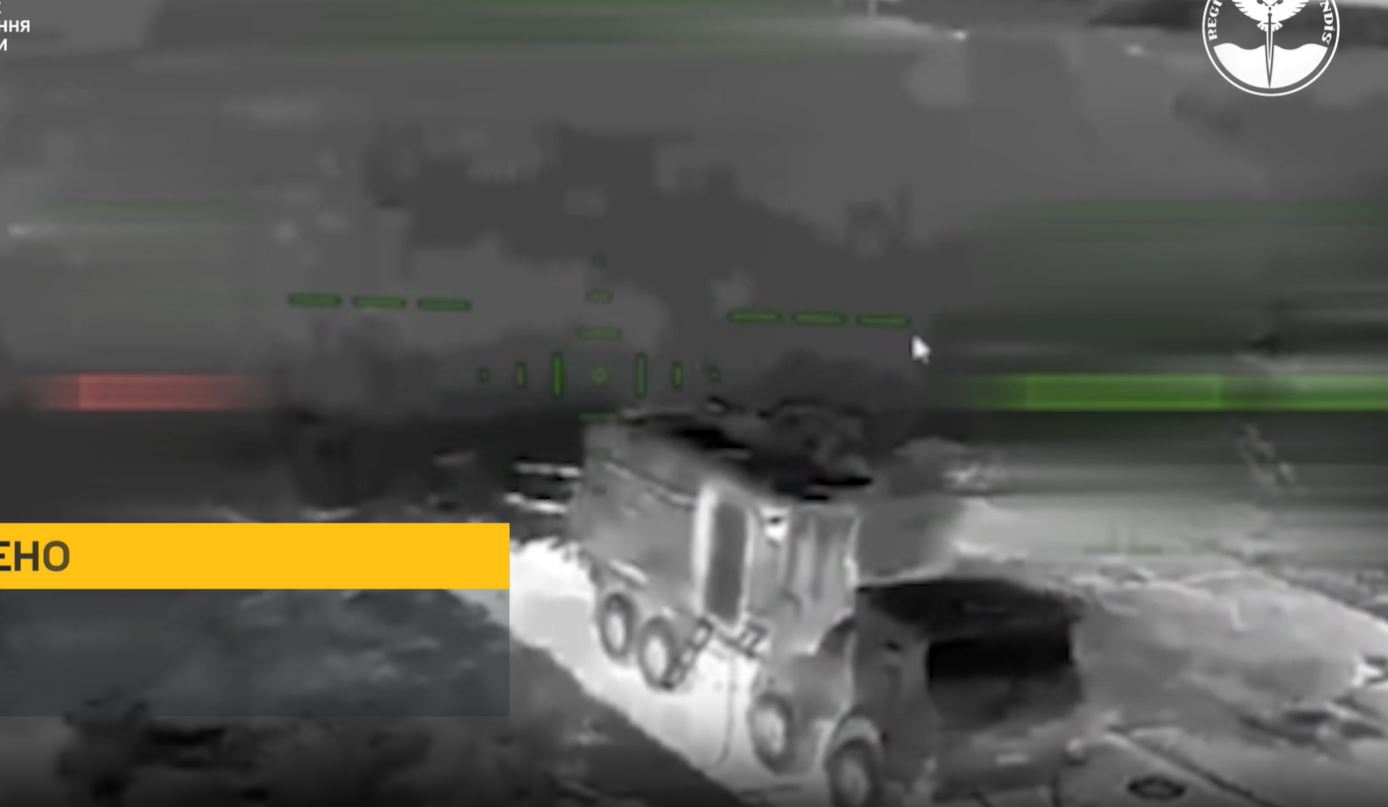
two russian radars destroyed crimea one ukrainian sea drone never touched shore · post control vehicle podlyot radar complex seen fpv moments before strike occupied late 2026 video ukraine's defense
A control vehicle from a Russian Podlyot radar complex, seen from a Ukrainian FPV drone moments before the strike in occupied Crimea, late July 2026. Screenshot from video: Ukraine's Defense Intelligence (HUR)

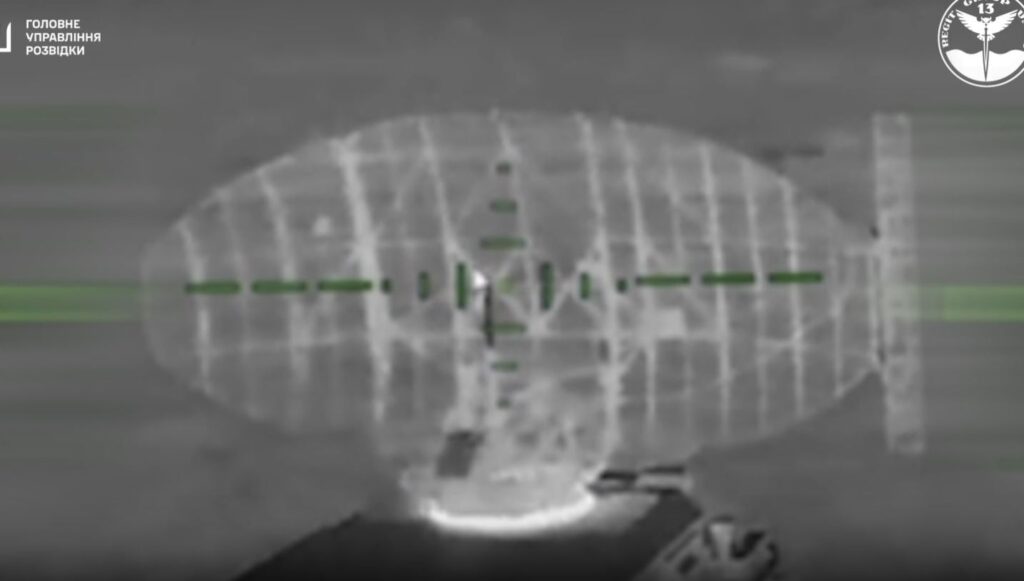
The aerial FPV drones struck a control vehicle from a Russian Podlyot radar system. They also hit a Parol-4 radar interrogator, part of the system Russian forces use to tell friendly aircraft from hostile ones.

The footage opens with a Russian projectile fired from the Crimean coast. It streaks past a Ukrainian naval drone and misses. After a cut, a naval drone fires anti-air missiles. The video then shows an FPV aerial drone launching from a naval drone. Two FPV drones then dive into the two radar targets.

The Maguras that hunted ships now threaten land

The Group 13 commander, callsign Thirteenth, framed the strikes as a turn in the war. 

"From now on our Maguras threaten the Russian occupiers on land too, a fundamental shift of the fight to another plane," he said. 

At sea, Group 13 has destroyed nine Russian ships and damaged five, HUR says. It has also destroyed three enemy helicopters and damaged one, and destroyed two Russian fighter jets.

The Maguras began as kamikaze boats that were among the Ukrainian weapons that pushed Russia's Black Sea Fleet out of the northwestern sea, then grew into multi-role platforms that even downed Russian jets.
  • ✇Climb to the Stars
  • Des mots sur un carnet à Paris [en]
    [en] C’est moche pour l’accessibilité, je sais. Transcription IA non vérifiée (22.07.2026): 1er juillet 2026, 21h15 Ça fait longtemps que je n’écris plus à la main. Encore plus longtemps que je n’écris plus à la main avec soin. Depuis mes TMS en 2002 ou 2003, ce n’est pas confortable. Ça crampe, ça tétanise. Je regarde un peu de haut ces exercices qui disent de faire à la main. Je tape à l’aveugle plus vite que mon ombre. Bref : se passe-t-il vraiment autre chose d
     

Des mots sur un carnet à Paris [en]

1 juillet 2026 à 16:10
[en]

C’est moche pour l’accessibilité, je sais.

Transcription IA non vérifiée (22.07.2026):

1er juillet 2026, 21h15

Ça fait longtemps que je n’écris plus à la main. Encore plus longtemps que je n’écris plus à la main avec soin. Depuis mes TMS en 2002 ou 2003, ce n’est pas confortable. Ça crampe, ça tétanise. Je regarde un peu de haut ces exercices qui disent de faire à la main. Je tape à l’aveugle plus vite que mon ombre. Bref : se passe-t-il vraiment autre chose dans mon cerveau quand j’écris à la main ? Avec mes “petits problèmes linguistiques” depuis mon accident, je me pose la question, à nouveau, de l’utilité de ce genre d’exercice. Pourquoi pas. Écrire à la main, c’est me reconnecter à un rapport plus primitif de mon rapport à l’expression écrite : le seul que j’avais jusqu’au milieu de mon adolescence, quand j’ai appris à taper ; et le principal, jusqu’à la fin de mes études, justement autour de 2002-2003. C’est moins rapide et moins confortable, mais en ces temps post-commotion, je me réconcilie — tant bien que mal — avec le temps lent.

Je suis à Paris. Une semaine pour deux journées de formation à l’IGB. La dernière était aujourd’hui. Mon cerveau est cuit [?], et c’était fascinant et ultra riche, comme toujours à l’IGB. C’est le genre de formation où je prends des notes à la main, relativement illisibles, parce que les schémas de boucles interactionnelles entre les différents protagonistes des situations abordées, c’est quand même assez galère à faire à l’ordi. Avec ma logo la semaine dernière, j’ai évoqué ce que je ressens un peu comme une récalcitrance à l’effort cognitif, parfois. Il y a des articles un peu pointus que je veux lire, mais je rechigne à la perspective de cet effort. Un peu peur d’en faire trop, aussi, bien sûr. On s’est dit que ce serait peut-être un exercice utile de m’y mettre, de façon contrôlée : limité dans le temps, lentement, et — sa suggestion — en surlignant les points clés ou prenant des notes. Ça m’a parlé — et travaillé.

J’ai passé une décennie de ma vie à lire en prenant des notes — quand j’étais aux études. Je prenais aussi des notes de livres que je lisais “en plus”, par intérêt. Prendre des notes m’aide à comprendre. Quand j’écoute aussi, d’ailleurs. C’est ce qui m’a amenée à live-bloguer, en fait. Je peinais à rester concentrée sur des conférences (le TDAH était très loin d’être sur mon radar !) et j’ai fait l’expérience, un peu par hasard, qu’en prenant des notes ça allait beaucoup mieux. Pas très étonnant en fait, après avoir fait ça quasi quotidiennement sur les bancs de l’uni.

Alors oui, si on se dit que je dois peut-être “ré-entraîner” mon cerveau à certaines choses, lire en prenant des notes pourrait être une pratique intéressante à revisiter.

Ce qui est marrant, c’est que je n’ai pas arrêté de lire des choses “difficiles”, après mes études. Mais j’ai lâché la discipline de la prise de notes, en partie je pense car elle n’était plus forcément nécessaire en vue des raisons par lesquelles je lisais, aussi un peu en partie parce que c’est un effort en plus, et parce qu’avec les supports numériques dans lesquels on peut “rechercher”, les notes semblent un peu moins utiles — en tant que résumé permettant d’accéder au contenu.

Mais le travail cognitif de tri de l’information, de synthèse, d’organisation des idées, il se produit. Et au fil de toutes ces dernières années, j’ai parfois senti, en toile de fond, que je pourrais perdre un peu en rigueur, que les choses que j’avais lues et comprises finissaient par manquer de précision, qu’avec le temps il me manquait quelques bouts — rien de très grave — et qu’évidemment je n’allais que rarement replonger dans la source (si tant est que j’étais capable de la retrouver, malgré les miracles de la loupe et des images…)

Alors oui, écrire comme exercice, prendre des notes, pourquoi pas. Je me dis que je pourrais mettre au propre mes notes IGB par exemple. Il y a quelques articles écrits par un psychologue français sur la question de “l’énergie” dans le TDAH qui m’intéressent et qui méritent une lecture attentive, d’autant plus que je suis aux prises avec ces questions de “gestion de l’énergie” de façon criante depuis mon accident — je suis d’ailleurs au milieu d’un programme en ergothérapie sur la gestion.

“Journaler”, c’est aussi une pratique que je souhaite reprendre. Ma mémoire épisodique est souvent un peu confuse, et c’est pire depuis mon accident. Prendre quelques notes en fin de journée m’aide à ne pas me sentir en dérive temporelle. Il y a dix-huit mois, quand j’ai pris deux semaines de vacances pour réaménager mon chez-moi, j’ai eu envie de me mettre au scrapbooking. Peut-être qu’il y a une idée à creuser là. Écrire à la main, c’est peut-être aussi quelque chose qui pourrait être pour moi une forme de “repos”. Le rythme plus lent, la linéarité, je sens en effet que c’est différent de taper ou dicter sur l’ordi ou le tél. Chaque mot écrit est écrit.

On verra.

J’étais partie pour faire une page. J’en ai fait cinq. J’arrête là pour aujourd’hui.

❌