SAP, one of the world’s biggest software companies, suspended most travel and hiring last month because of AI’s soaring cost, with exceptions only being made for AI-related travel or hires, according to an internal SAP email obtained by 404 Media. Bloomberg reported on the email and the freezes in July, but a current SAP employee said the bans are still in effect. The employee said the company had a global employee meeting recently where this was brought up again. They added SAP is currently
SAP, one of the world’s biggest software companies, suspended most travel and hiring last month because of AI’s soaring cost, with exceptions only being made for AI-related travel or hires, according to an internal SAP email obtained by 404 Media.
Bloomberg reported on the email and the freezes in July, but a current SAP employee said the bans are still in effect. The employee said the company had a global employee meeting recently where this was brought up again. They added SAP is currently rolling out a newly created AI tool to the entire company “which I can only imagine massively increases the costs.” 404 Media granted the source anonymity to protect them from retaliation.
The email highlights how companies both big and small are coming to grips with the reality of AI’s cost. Rather than being a massive cost saver, in some cases companies are throttling employees’ AI use as it spirals out of control, and scrambling to find other ways to keep costs down.
💡
Do you work at a company dealing with AI's costs? I would love to hear from you. Using a non-work device, you can message me securely on Signal at joseph.404 or send me an email at joseph@404media.co.
Microsoft has introduced new limits to how much its engineers can spend on AI tools at work and told employees that maximizing AI use internally is not the company’s goal. This makes Microsoft one of the last major companies to rein in its employees’ expensive AI use. Scaling back maximalist AI use, or what some companies have called “tokenmaxxing,” is a trend we’ve covered in recent months as the price for using AI has increased while not always delivering commensurate productivity gains.
Microsoft has introduced new limits to how much its engineers can spend on AI tools at work and told employees that maximizing AI use internally is not the company’s goal.
Ukrainian aerial- and sea-drone attacks have turned Russia's busiest seaport into a place cargo ships increasingly refuse to sail, choking both imports from China and exports of grain and oil, according to The Moscow Times. Logistics and trade executives describe a route to Novorossiysk grown too risky to use, and a Russian grain-industry group warns the Black Sea export corridors could shut down entirely. The strikes that once spared container ships have now reached th
Ukrainian aerial- and sea-drone attacks have turned Russia's busiest seaport into a place cargo ships increasingly refuse to sail, choking both imports from China and exports of grain and oil, according to The Moscow Times. Logistics and trade executives describe a route to Novorossiysk grown too risky to use, and a Russian grain-industry group warns the Black Sea export corridors could shut down entirely. The strikes that once spared container ships have now reached them too.
Ukraine has spent 2026 forcing Russia to defend a maritime supply chain it once treated as low-risk, turning the sea into one of the war's contested fronts. The longer the southern sea approaches stay dangerous, the more of Russia's oil and grain earnings, the money that pays for the war, end up stuck at sea instead of being sold.
The China route importers are told to skip
"On the China–Novorossiysk route everything is now difficult, the delays are huge," one importer told The Moscow Times.
Freight forwarders now tell clients to avoid the route outright, three colleagues said. Aerial drones and unmanned boats make the approaches too unpredictable. Earlier strikes fell mostly on grain carriers and oil tankers. Ukrainian drones hit a container ship carrying imports in late July. Then, overnight on 1 August, a sea drone sank the FESCO vessel Yanina about 130 miles offshore. The crew got out. The cargo did not.
Explore further
Ukraine hits 201 Russian shadow fleet ships in three weeks. Commander says Crimea’s supply route is now blocked indefinitely
Sailings drop as the campaign widens
Large-ship sailings from Novorossiysk fell 38% in July, the Moscow Times says, citing ship-tracking data, with tanker runs down by half.
"But now the situation will get worse, because container ships have also become a target," a logistics manager told the publication.
Several Russian vessels at once in the thermal sight of a Ukrainian drone over the Sea of Azov, 13–14 July 2026. Screenshot from video: Unmanned Systems Forces
This is one edge of a wider Ukrainian drone campaign against Russian shipping, codenamed MoLoChKa. The name is an acronym for "Moscow will fall through Crimea." Its own public scoreboard counts 206 vessels hit in July by the Unmanned Systems Forces (SBS) alone, with another logged in August. The SBS have mostly burned the small tankers and support ships that keep Russia's sanctioned shadow fleet moving.
Explore further
Ukrainian drones slash Kerch ferry crossing capacity by 75%, as daily strikes continue on Russian vessels and occupation energy infrastructure
What Russia stands to lose
Novorossiysk carries every fifth ton of Russia's seaborne exports: Urals oil, Kazakh crude, wheat for Egypt, and fertilizer for Asia and Africa.
Attacks across the Azov–Black Sea region could cost Russia up to 30–35 million tons of wheat exports this season, a grain-exporters' union estimated. That would gut a harvest analysts expected to top 44-45 million tons.
"Systematic attacks that began in July could soon lead to the complete blocking of the export corridors of the Black Sea basin," the union said.
Ukraine's drones had already cut into Russia's seaborne grain trade this summer, and repeated hits on the port's main oil terminal have dented crude loadings. Russia keeps pouring money into the port, building a new terminal worth 120.7 billion rubles (about $1.5 billion), even as ships stay away, The Moscow Times said.
A drone came down on a beach full of Russian holidaymakers, and the evidence points to Russia's own air defense bringing it there. On 3 August, drones attacked Krasnodar Krai, and one crashed onto a beach in Arkhipo-Osipovka near Gelendzhik, killing at least six people, three of them children, and injuring around 40, Krasnodar Governor Veniamin Kondratyev said.
Russian outlet Agentstvo and OSINT analysts assessed that the drone likely fell because of Russian air-defense
A drone came down on a beach full of Russian holidaymakers, and the evidence points to Russia's own air defense bringing it there. On 3 August, drones attacked Krasnodar Krai, and one crashed onto a beach in Arkhipo-Osipovka near Gelendzhik, killing at least six people, three of them children, and injuring around 40, Krasnodar Governor Veniamin Kondratyev said.
Russian outlet Agentstvo and OSINT analysts assessed that the drone likely fell because of Russian air-defense fire rather than a direct hit, citing gunfire audible in footage before the drone dived and an abrupt change in its flight path.
The beach sits directly in front of the Rassvet resort, a facility of NPO Mashinostroyeniya, one of Russia's key missile-manufacturing enterprises.
The warning system did not sound
Survivors say they had no notice. Local residents and holidaymakers complained that no air-raid alert sounded at all, though warning systems are installed in the village, and the Russian channel Astra also noted that no alert was heard in the region during the attack, per the reports.
People on the beach were in the open, with little chance to take cover, even if they had been warned. The absence of a siren in a resort packed at the height of the summer season left sunbathers and swimmers with no warning that a drone was overhead and being fired at.
The target was a missile maker's resort
NPO Mashinostroyeniya develops cruise missiles for the Russian army, and its Rassvet recreation base was the apparent target roughly 300 meters from where the drone came down, the Supernova Telegram channel reported.
Ukraine strikes Russian military-industrial sites across the country, and a missile-development enterprise is a legitimate military target. What turned a strike near a defense plant into a mass-casualty event on a beach was, by the analysts' account, Russian air defense knocking the drone down over the crowd rather than away from it. Ukraine had not commented on the strike.
The dynamic is one Ukraine knows intimately in reverse
Russian air-defense missiles and the debris of intercepted drones regularly fall on Ukrainian cities, killing civilians, and Ukraine has long documented how interception over populated areas kills the people it is meant to protect.
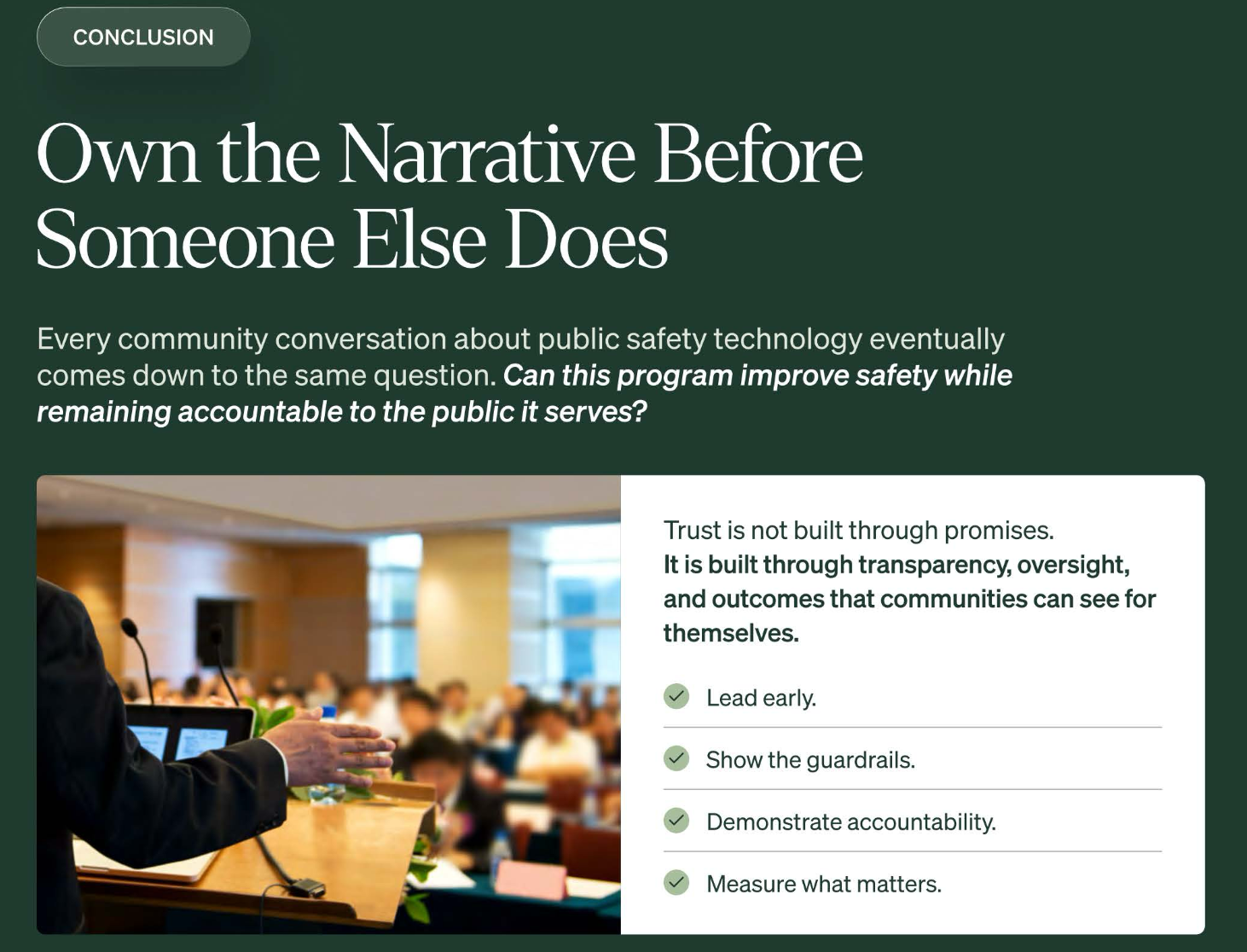
404 Media has obtained a coaching guide that Flock surveillance gives to police about “how to speak to city councils about public safety technology.” The handbook highlights how Flock and police team up to convince cities to buy and keep its automated license plate reader technology, even when there is widespread public opposition to it, and encourages police to “own the narrative before someone else does” by championing the technology before citizens can oppose it during public comment periods.
404 Media has obtained a coaching guide that Flock surveillance gives to police about “how to speak to city councils about public safety technology.” The handbook highlights how Flock and police team up to convince cities to buy and keep its automated license plate reader technology, even when there is widespread public opposition to it, and encourages police to “own the narrative before someone else does” by championing the technology before citizens can oppose it during public comment periods.
The PDF guide notes that the general public and cities now “increasingly expect transparency, oversight, and accountability alongside public safety outcomes,” and tells police to not argue with people who believe that Flock’s license plate readers are “mass surveillance.”
“One of the most common questions agencies hear today is whether license plate recognition (LPR) technology constitutes mass surveillance. Many leaders instinctively respond by attempting to refute the claim. Flock's Jamie Hudson recommends a different approach,” the guide reads.
“Don’t avoid the concept of mass surveillance because you’re not going to convince opponents that it’s not,” the company recommends. Flock tells law enforcement agencies they need to try to convince city council and city managers that the technology is worthwhile before meetings with the public occur; that they need to have a “carefully scripted presentation” ready to go; and that police need to say they want Flock because they want to keep the community safe: “You care about your community. That’s why you’re bringing this in.”
Flock began offering this guide as part of a broader attempt to coach police on how to push back against criticism of its policies and security practices, many of which 404 Media has investigated and shed light on. These include the fact that Flock data was regularly making its way to Immigrations and Customs Enforcement (ICE), often in violation of sanctuary city and state laws; that Flock was used to search 83,000 cameras nationwide for a woman who had an abortion in Texas; and that Flock has been used by police to stalk people and surveil protesters. These investigations and broader concern over the surveillance state have led many cities to hold city council meetings to reconsider their Flock contracts, and this Flock-produced guide is an attempt to help police shape the narrative in a way that will either convince cities to buy Flock or to keep their contracts.
“The recent headlines about our company are largely a result of this environment,” the company told cities.
“Opponents have a very carefully scripted narrative. They come prepared. You should also have a carefully scripted presentation that addresses those concerns ahead of time,” the guide says. “The agencies that navigate these conversations successfully rarely wait until a council meeting to educate stakeholders. They brief city managers early. They meet with council members before votes occur. They share policies proactively and answer questions before public comment periods become the first introduction to the program.”
The guide also tells police that they can convince city councils that Flock is worth the monetary cost by conveniently not focusing on how much the cameras cost, but by “reframing the financial discussion itself” to focus on “the cost of unresolved crime.” Flock also writes that much of the opposition to its technology is happening because people “do not understand how it works or how it is governed.” This idea is one that has been regularly repeated by Langley over the last several months.
Surveillance companies regularly try to get police to act as quasi salespeople and spokespeople for their companies, pitting a private company and taxpayer-funded law enforcement on one side and citizens on the other. “For years, surveillance vendors like Flock Safety have shaped policy debates cities are supposed to run independently — staging council ‘prep calls’ and exploiting a basic asymmetry: the vendor controls the facts, and city staff are rarely positioned to challenge them,” Sarah T. Hamid, director of strategic campaigns at the Electronic Frontier Foundation told 404 Media after reviewing the guide. “The financial interest is obvious. Flock isn’t just selling surveillance, it’s scripting the public case for buying it. Because Flock treats public trust as a messaging problem rather than a governance outcome, that script keeps officials focused on ‘accountability’ in the abstract instead of the concrete harms and documented abuses its network has already enabled.”
404 Media has watched numerous city council meetings around the country where police talk about how Flock is a critical law enforcement system for them; in many cases, a police chief will speak about Flock and then introduce a Flock employee to give a presentation about the surveillance system. On Monday, 404 Media published an interview with a former Flock government affairs manager who regularly pitched the technology to cities at public meetings. An activist who has been pushing back against Flock in their community and who shared the guide document with 404 Media said that they have regularly seen the strategies suggested by Flock deployed in city council meetings they have attended and watched. 404 Media agreed to keep the activist anonymous to protect them from retaliation.
“I think this document shows a coordinated effort from Flock Safety to compel law enforcement agencies to convince our elected leaders to represent their interests as a company rather than the interests of concerned citizens,” they said. “I have watched many meetings locally in my city and my state and across the country, and you can see the techniques used in this ebook in the presentations given by law enforcement. Pivoting conversations away from concerns about mass surveillance and directing them towards procedure and governance is a vehicle that's used to downplay the concerns of privacy-minded citizens. We have every right to expect our elected leaders to listen to us, and it's very common to see city councils vote with a supermajority in favor of approving Flock contracts despite standing-room only attendance at city council meetings with little to no public support for this product.”
The guide specifically highlights several supposed success stories in which communities had very real concerns about Flock but ultimately decided not to get rid of the technology. For example, it highlights how Flock was able to get a vote in favor of its technology in Oakland, California, despite it being “one of the most scrutinized public safety technology debates in the state,” with “more than 140 public comments” and opposition from the city’s Privacy Advisory Commission: “The conversation shifted when officials stopped asking the public to trust the technology and started showing how the technology could be audited, reviewed, and held accountable.”
It also tells the story of Richmond, California, which allowed its Flock contract to temporarily lapse after the city’s cameras were included in the company’s national lookup tool. City officials there worried that their cameras’ data would be accessed by ICE, in violation of California and local law. “After concerns emerged around data sharing and sanctuary city policies, the city's program was paused and subjected to intense public scrutiny,” the Flock guide says. “Rather than relying on generalized claims about effectiveness, department leadership presented two and a half years of local results, including 274 arrests and 259 vehicle recoveries connected to the program. The council ultimately voted 4-3 to reinstate the system.”
Flock did not immediately respond to a request for comment.
Ukraine set a major Russian oil terminal ablaze on the Black Sea coast. Operators of the SBS 413th "Raid" Regiment, in a joint operation with comrades from the 1st Separate SBS Center and the Security Service of Ukraine (SBU), struck the Taman maritime terminal near the village of Volna in Krasnodar Krai on 30 July, the regiment reported.
The strike destroyed a volume of fuel equal to 1,000 rail tank cars. According to updated data, 12 reservoirs, each holding 5,000 ton
Ukraine set a major Russian oil terminal ablaze on the Black Sea coast. Operators of the SBS 413th "Raid" Regiment, in a joint operation with comrades from the 1st Separate SBS Center and the Security Service of Ukraine (SBU), struck the Taman maritime terminal near the village of Volna in Krasnodar Krai on 30 July, the regiment reported.
The strike destroyed a volume of fuel equal to 1,000 rail tank cars. According to updated data, 12 reservoirs, each holding 5,000 tons, were destroyed at the Taman terminal, and the fire covered more than 17,000 square meters.
The terminal is a key southern export node
Taman is one of the most important fuel facilities in southern Russia. The terminal specializes in the transshipment and export of oil, fuel oil, diesel, and liquefied petroleum gases, operates a large tank farm, and supplies fuel to Russian forces, according to the regiment.
Destroying 12 of its tanks strikes both Russia's fuel exports and its military supply at once, the dual purpose of Ukraine's campaign against Russian oil infrastructure, which targets the refineries, depots, and terminals that turn crude into export revenue and military fuel.
Satellites confirmed the fire
The strike's effect was visible from orbit. The Ukrainian drone strikes caused a large-scale fire on the terminal's territory, recorded by the NASA FIRMS satellite fire-monitoring service.
The reported date corroborates that something large burned there, moving the claim beyond a single belligerent's word.
The unit pioneered Ukraine's long-range drone strikes
The 413th "Raid" Regiment is one of the units that started Ukraine's deep-strike campaign. In 2022, at the start of the full-scale war, a group of special operations fighters first used drone technology to reconnoiter and strike enemy forces at distances up to 500 kilometers, the origin of the regiment.
The Taman strike extends the near-nightly Ukrainian campaign that has idled a large share of Russian refining capacity and now reaches the export terminals on the coast, raising the cost of the oil trade that funds Russia's war.
On Thursday, Google introduced a new AI feature into Google Earth which lets anyone fabricate all sorts of misleading or straight up inaccurate satellite imagery, from making it look like a specific place has suffered a drone strike to manifesting a nuclear plant in Iran.Usually, Google Earth is an exceptionally useful tool for open source intelligence (OSINT) analysts to digitally monitor areas of interest and see how they change over time, say, during a conflict or disaster. Now, Google Ear
On Thursday, Google introduced a new AI feature into Google Earth which lets anyone fabricate all sorts of misleading or straight up inaccurate satellite imagery, from making it look like a specific place has suffered a drone strike to manifesting a nuclear plant in Iran.
Usually, Google Earth is an exceptionally useful tool for open source intelligence (OSINT) analysts to digitally monitor areas of interest and see how they change over time, say, during a conflict or disaster. Now, Google Earth can easily be used as a tool for disinformation.
💡
Do you work at Google? I would love to hear from you. Using a non-work device, you can message me securely on Signal at joseph.404 or send me an email at joseph@404media.co.
Following 404 Media’s reporting that book database company ISBNdb claimed to source printed books to then sell to AI companies for AI training, the company deleted the part of its website offering the service and walked back claims that it would train AI models, and instead called it “a test of market interest.” On July 30, nine days after 404 Media’s reporting, ISBNdb added a note to its homepage and an update on its news page about the change. “We've seen the recent coverage about a marketi
Following 404 Media’s reporting that book database company ISBNdb claimed to source printed books to then sell to AI companies for AI training, the company deleted the part of its website offering the service and walked back claims that it would train AI models, and instead called it “a test of market interest.”
On July 30, nine days after 404 Media’s reporting, ISBNdb added a note to its homepage and an update on its news page about the change. “We've seen the recent coverage about a marketing landing page on our site, and we understand the concern it raised. The facts: ISBNdb has never purchased, scanned, or sold a book — for AI training or anything else,” ISBNdb wrote. “We don't train AI models, and we never have. The page was a test of market interest; no such service was ever brought to life. We've taken the page down. Our job is helping people find books. For more than two decades, ISBNdb has been the card catalog of the book world — the data behind how bookstores, libraries, and reading apps connect readers with titles. Data about books, not the books themselves. That hasn't changed.”
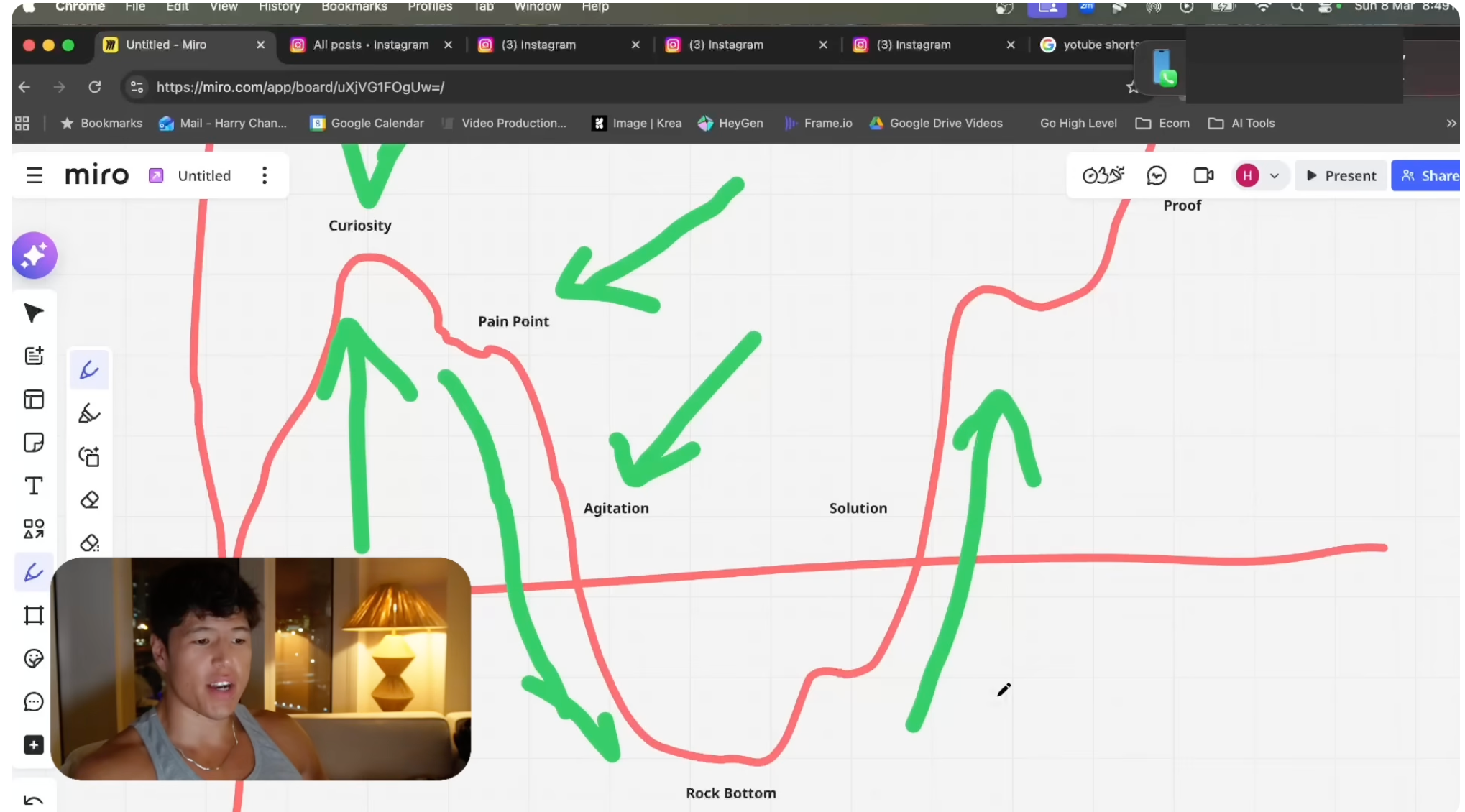
In February, a content creator from New Zealand named Harry Chang posted a YouTube video called “This AI TikTok Shop Video Made Me $67,420 (Here’s How).” In the video, Chang and another YouTuber, Jimmy Farley, describe how Chang created a viral marketing video for a supplement company called Rosabella called the “Nigerian SECRET to CLEAN LIVER!!”Chang explains that he copy-pasted the script from a video posted by an account called “liverboosthub11” and tweaked it to suggest the supplement he was
In February, a content creator from New Zealand named Harry Chang posted a YouTube video called “This AI TikTok Shop Video Made Me $67,420 (Here’s How).” In the video, Chang and another YouTuber, Jimmy Farley, describe how Chang created a viral marketing video for a supplement company called Rosabella called the “Nigerian SECRET to CLEAN LIVER!!”
Chang explains that he copy-pasted the script from a video posted by an account called “liverboosthub11” and tweaked it to suggest the supplement he was marketing is “something that’s been used in Asia or Africa for a long time that a lot of people don’t know about in America.”. In Google’s VEO 3, he created an AI-generated Black woman wearing a surgical mask in the foreground of the video, pointing up at another AI-generated Black woman (created in a tool called HeyGen) wearing a pink dress and standing on a stage. He directed the woman in the foreground to have a “strong African American accent,” and to say, “Why is nobody talking about what this hoe said?! If you’ve got issues with that belly, must watch!”
“Builds curiosity, builds intrigue,” Chang says about his creation. “People want to know, ‘damn, what did she say? What did that ho say?’” To make the AI-generated woman on stage read the script he took from liverboosthub11, he pulls up the popular AI voice generator ElevenLabs. He scrolls through a list of voices that he had created, including “African American Woman Organic,” “Black Man 1,” “ORGANIC White Southern Woman,” and “Sad Black Woman in Car.” He settles on a voice called “Latisha 1.” He syncs the voice with the AI-generated videos he created in the video editing software CapCut. This AI video goes on to get 1.3 million views on TikTok and apparently earned him tens of thousands of dollars in affiliate sales.
In another video, Chang explains how he has made tens of thousands of dollars using AI influencers. “I’ve even had my clients buy me Rolexes for selling so much of their products,” he says.
A new lawsuit argues that the strategy is, indeed, illegal. (After 404 Media asked for comment for this story, several of the YouTube videos mentioned in this article were deleted).
In February, a supplement company called Humann sued a competitor called Ambrosia Brands because Ambrosia, through the supplement company called Rosabella, allegedly directed and influenced the creation of hundreds of TikTok Shop videos and ads featuring AI-generated “doctors” that oversold the supposed benefits of Rosabella’s products. Rosabella’s AI marketing practices have previously been written about by 404 Media and The New York Times, but were most thoroughly explored in an excellent episode of the podcast Conspirituality.
The lawsuit reveals new details about how this group of 20-something YouTubers built their army of AI-generated influencers. In practice, Rosabella is more of a social media AI content hustle and AI marketing exercise than a supplement company. What happened in this case is the same type of spam and buy-my-course to get-rich-quick strategy that we have repeatedly written about, only this time the slop is being used to shill supplements largely to the elderly. Rather than payouts coming from the number of views a video gets on social media, the payouts are commissions on products sold. The lawsuit was spotted by the lawyer Rob Freund on X.
“All these guys are ex-dropshipping guys,” Mallory DeMille, who studies the wellness and supplements industry and who reported the episode of Conspirituality, told 404 Media. “They could have chosen anything to sell to make AI content out of, but they chose supplements, and it’s interesting they chose supplements because it’s such an unregulated market where [they] can basically pump out whatever product they wanted to with very little oversight. On the marketing side, it’s also pretty unregulated and there’s a lot of real [human] influencers making unfounded health claims without there being many consequences. In terms of ease of making money — wellness, they chose this industry for a reason. I think it’s pretty seamless, has proven to be seamless and now they’ve sold a fuckton because of how easy it is.”
The lawsuit highlights a series of TikTok videos—like the ones I described above, and most of which are still online—featuring AI-generated doctors, TED Talk-style speakers, and videos that are essentially identical to the ones Chang has repeatedly taught people on YouTube how to make. And hundreds of additional videos promoting Rosabella that are not highlighted in the lawsuit are trivial to find on TikTok. Many of them have hundreds of thousands or millions of views and seem to make wild promises about what Rosabella supplements can do.
In another video, Chang explains why his favorite products to sell fall into the “elderly health” category: “It’s an extremely profitable niche, especially in the U.S., guys.”
“In the U.S., they have very high demand for health products,” he says. “They don’t have any free healthcare, right? People over 35 literally are very concerned about their health […] You have moms who buy 100 supplements and put them all in their cupboard. It is crazy. It’s crazy.”
“When you have such a high, problem-solving niche, it’s very easy to write scripts for, very easy to innovate, and just continuously make money,” he says, adding that he usually generates AI influencers who themselves look old.
“They’re relatable and credible,” he says of three older-looking AI people he shows on screen, one of which is shilling beetroot powder from Rosabella. “Why? Because they are old. People are more willing to listen to old people only because they see them as more wise and intelligent […] and look how credible they look. They’re speaking on stage like TED Talk-type style and they’re more relatable because they’re more similar to the age we want to target. If you’re trying to sell health products to a 50-year-old, well, make your avatar 50 years old.”
On TikTok, Rosabella used a mix of paid influencers and AI-generated characters to make unfounded medical claims about its products and about beetroot more generally, the lawsuit alleges. “In several TikTok Posts, the post purports to show a doctor, medical professional, or other medical authority espousing the health benefits of Defendant’s products. All or nearly all of the ‘doctors’ featured in the TikTok Posts are AI-generated and fictitious, making the claims in the advertisement false and/or misleading,” the lawsuit notes. “For example, in a June 14, 2025 TikTok post, influencer ‘poormaninla’ purports to depict a doctor in a whitecoat that promotes the alleged health benefits of Defendant’s products. Before the ‘doctor’ begins speaking, a separate speaker is imposed on the screen in a surgeon’s or nurse’s scrubs.”
The “poormaninla” account is still up on TikTok and its videos are almost entirely AI-generated. Several of the videos have hundreds of thousands of views. “The best food for Black women to eat if they want a slim stomach is not turmeric, it’s not ginger, and it’s definitely not blueberries. Just one teaspoon of this food reduces gut inflammation,” an AI-generated man in a lab coat says in one.
You can see some of the videos promoting Rosabella here:
The lawsuit argues that Rosabella is “orchestrating a misinformation campaign on TikTok through its network of influencers,” who “make various misrepresentations about the health and wellness benefits of Defendant’s beetroot products, which are entirely unfounded.” The lawsuit alleges that Rosabella, through a private Discord channel, offered extensive coaching to content creators on how to make AI-generated TikTok ads; that many of these ads featured fake doctors and other AI-generated people who were made to look authoritative; that some of these videos were racist; and that when people bought Rosabella products through TikTok Shop links on those videos, the creator of those videos would earn a commission. Humann’s argument is that Rosabella’s “false and misleading representations undermine public confidence in other beet products, like Humann’s SUPERBEETS products.”
Ambrosia says, essentially, there is no evidence it told people what to do in the Discord channel. In court filings, Ambrosia claims that Humann “fails to allege any facts that plausibly show Ambrosia induced or materially contributed to the third-party conduct it complains of.” It remains unclear whether what Rosabella was doing is illegal in the unregulated world of supplements in the U.S., or whether a competitor could win a false advertising lawsuit like this. But there is no doubt about Rosabella’s strategy, what their motivations are, and the incredibly close connection between Rosabella and the network of content creators who made, conservatively, hundreds of AI-generated videos.
The lawsuit highlights how common fully AI-generated marketing has become on platforms like Instagram and TikTok, and nods at, but does not dive into, the complicated web of YouTube hustlebros that have largely given rise to this practice, and the social media platforms that have incentivized and promoted AI-generated spam and fly-by-night supplement companies. Rosabella is a company that has already been subject to an “extensively drug-resistant salmonella” recall by the Food and Drug Administration. But it is maybe better understood not so much as a supplement company but more as a branding exercise and vertical video content hustle by the same types of AI spammers and buy-my-course bros we’ve written about numerous times over the last few years.
In a video about “why you need to be working with Rosabella” qposted by an account called “Luca Washenko” on the online course sales platform Whop, a man brags “we paid out over $400,000 last month to creators.” He says that individual people have made more than $300,000, and shows “proof and dates of our creators getting tons of views consistently. Got 55 million right there […] I am one of the lead coaches in the Rosabella server.”
But Washenko isn’t just a creator helping to advertise Rosabella. He is the company’s founder. A YouTube video repeatedly alludes to this, and mentions how much money he and his army of affiliate creators have made selling Rosabella products on TikTok Shop. Washenko is also listed as the cofounder of Rosabella on several trademark filings I found, and his LinkedIn lists him as the founder of “MNY Ventures,” a company that has the Rosabella logo on LinkedIn. Clicking through “MNY Ventures” goes to a LinkedIn page for “Rosabella,” which has several job listings for AI video editors: “MNY Ventures is home to one of the fastest-growing supplement brands in the world, built on the back of a high-performance, results-obsessed culture. We don't just create ads; we create market-leading campaigns that generate massive revenue,” one of the LinkedIn job listings reads. “Your mission is to lead the production of our high-converting AI videos quickly and at high quality. You will be responsible for consistently creating on-brand and compliant video content based on proven formulas designed to maximize reach, ensuring MNY Ventures maintains its position as the #1 leader in AI video marketing for e-commerce.” The listing adds the person will need to produce “10 high-quality AI videos per day, following our preset scripts and styles.”
In a video called “Inside a TikTok Shop Meetup with Million Dollar Creators,” there is no doubt about Rosabella’s strategy, Washenko’s motivations, or Rosabella’s close relationships with the people spamming AI-generated content shilling its products. Rosabella is just the latest of Washenko’s creations. His previous claim-to-fame was selling caffeine vapes on TikTok.
“There have been creators that are now millionaires from working with Rosabella,” Washenko says in the meetup video. “It’s one thing if you make money, it’s another thing if you can help everybody around you make money. An event like this where you can go face-to-face and shake hands with people and they say, ‘You’ve changed my life.’ And I’m like ‘You’ve changed mine.’ Those are the moments that are so special, especially when everything is remote. It’s online. It’s Discord, that’s one thing. You look them in the eye and they say, ‘I was able to pay my mortgage when I lost my job because I was making videos for you.’ That’s a different feeling.”
Washenko explains there are two reasons why people should make content promoting Rosabella: “If you want to be the Tiger Woods of creator, if you want to be the Caitlin Clark, you want to be the Michael Phelps, you want the golden rings you want to be the greatest, to be the number one, that’s what we’re all about. That’s the Rosabella family,” he says. “Along the way, you’ll make a ton of money.”
Later in the video, Washenko stands on stage addressing a crowd, shouting out “all the people I’ve been talking to on Discord from day one, from 18 months, I started Rosabella in my mom’s basement.” He shouts out all the creators who he’s helped make rich and who helped make him rich. He then says there’s one other “person I want to shout out today.” He calls up Harry Chang, the YouTuber who made the video “How I print $51,000/month profit with AI influencers (feels illegal).” Washenko presents him with a Rolex. “I cannot be any more proud to be working on a brand with you,” and for that, I want to give you this watch today. It’s a Rolex, by the way.”
After 404 Media asked for comment on the video, it was deleted from YouTube.
DeMille, who reported the episode of Conspirituality diving into Rosabella, Washenko, and Chang, told me the men are “just actively bragging about it online. I can’t believe they’re openly talking about it like this.”
“A lot of the videos of these AI slopfluencers, they’re using narratives that real-life wellness influencers have seen success using, but they’re taking these narratives and inputting them into whatever AI systems they’re using and making people look whatever age they want,” DeMille said. “There’s no thought behind it. There’s no anything behind the content that they’re turning out. These videos they’re replicating in their AI machines are also being used to sell something, but it’s being generated into something else to sell something else. It’s this inception of bad information by people who don’t actually care.”
“These guys behind these AI slopfluencers have proven that they don’t care, and they obviously care more about money and wealth than they do about health,” she added.
Washenko did not respond to a request for comment. Ambrosia Brands did not respond to a request for comment.
A request sent to Rosabella was returned by someone named Emmanuel Obonga. The response said, “We don’t currently have an active affiliate program. However, we’d be glad to keep your information on file and reach out if we revisit or launch one in the future.” In the course of reporting an earlier story about the AI influencer company Doublespeed, Rosabella previously told 404 Media that it “does not use Doublespeed or any AI-generated accounts to promote our products on TikTok or any other platform. We are committed to authentic engagement and building genuine connections with our community. Regarding the claim about being viral on TikTok, this is based on organic content created by real customers and creators who love our product. We’ve seen a lot of positive buzz and user-generated videos that have helped spread the word naturally.”
Daniel Martens, a lawyer representing Humann, told 404 Media Rosabella’s strategy “makes [the] whole supplement industry look bad. If you’re masquerading as a doctor telling consumers how promising all these benefits that don’t exist [are], that’s harmful.
LinkedIn, a social network awash with long AI-generated posts from executives and other corporate workers, has introduced a new button that users can click to flag if a post “seems like AI slop,” according to 404 Media’s own tests.If you have been anywhere near LinkedIn in the past couple of years, you have undoubtedly seen users posting blatantly AI-generated missives. Often these posts take some sort of news event, and opine on how this relates to thought leadership, or some other LinkedIn
LinkedIn, a social network awash with long AI-generated posts from executives and other corporate workers, has introduced a new button that users can click to flag if a post “seems like AI slop,” according to 404 Media’s own tests.
If you have been anywhere near LinkedIn in the past couple of years, you have undoubtedly seen users posting blatantly AI-generated missives. Often these posts take some sort of news event, and opine on how this relates to thought leadership, or some other LinkedIn brainrot term. It’s also pretty wild the button specifically uses the term “AI slop” and not, say, “It seems this was generated with AI.”
On Wednesday the power flickered in homes from Washington DC to Chicago. The cause was a data center disconnecting from PJM — a massive power grid that connects 13 states including North Carolina, Virginia, New Jersey, and Michigan, a span that covers 67 million customers. The incident points to a larger problem with the compute warehouses fueling the AI boom: It’s physically and economically impossible to build power infrastructure fast enough to meet the demands of AI data centers and when
On Wednesday the power flickered in homes from Washington DC to Chicago. The cause was a data center disconnecting from PJM — a massive power grid that connects 13 states including North Carolina, Virginia, New Jersey, and Michigan, a span that covers 67 million customers. The incident points to a larger problem with the compute warehouses fueling the AI boom: It’s physically and economically impossible to build power infrastructure fast enough to meet the demands of AI data centers and when problems occur, everyone will pay the price.
AI requires massive amounts of computer hardware to scale. That hardware is housed in data centers, and data centers demand shocking amounts of electricity. More data centers mean more demand on the grid which raises the costs of energy for everyone. This is one of the reasons people hate data centers and have begun to fight their construction.
To bypass the issue of grid demand, many data center builders have promised to power the buildings themselves. The problem with that plan is that it’s easy to build a warehouse full of GPUs. Building power plants and transmission lines to power those warehouses will take years and cost billions more than the data centers. A skilled and efficient builder can complete a data center construction in under a year. Building new energy generation to meet that data center's power needs could take a decade.
Substack contributors are rejecting the company’s decision to flag AI generated writing on the newsletter publishing platform, with several creators saying the new AI detection features are a “witch hunt.” Some Substack users who use AI to help them write or edit articles say the new policy unfairly discriminates against them, while other users who don’t use AI in their writing at all are worried that Substack will mistakenly flag their writing as being AI generated and tarnish their reputation.
Substack contributors are rejecting the company’s decision to flag AI generated writing on the newsletter publishing platform, with several creators saying the new AI detection features are a “witch hunt.” Some Substack users who use AI to help them write or edit articles say the new policy unfairly discriminates against them, while other users who don’t use AI in their writing at all are worried that Substack will mistakenly flag their writing as being AI generated and tarnish their reputation.
“I’m not going to apologize for using AI in the creation process. I wrote for 20 years without AI, I could do it again if I wanted to,” Mack Collier, who has a small Substack called Backstage Pass, wrote. “My output would fall, my posts would be less structured, and it would be more obvious that they needed a good editor. Using AI improves the overall quality of my writing. That’s why I use it.”
“These detectors are notoriously, wildly inaccurate,” Alice Lemee, a ghostwriter and digital writing coach, said in a video she made about Substack’s new AI detection features. “All it takes is one false accusation for a writer to have their reputation almost irreversibly tarnished.”
Substack announced the AI detection features on Tuesday in a post from CEO Christ Best, who said that “It’s getting harder to tell what’s real on the internet” and that “when content made by no one takes over parts of the internet that are supposed to be human, it pollutes the commons and makes it hard to discover and hear human voices.”
Best explained that Substack has partnered with the AI detection tool Pangram, which is now built in to Substack and allows any user to scan a piece of writing. Pangram then produces a percentage-based score determining how much of the writing was AI or human generated. (Disclosure: Pangram previously bought an ad on 404 Media). We’ve covered research from Pangram, or research that relies on its AI detector before, showing how AI generated writing is flooding every corner of the internet.
As we’ve previously reported, AI detectors are not perfect, and Pangram itself is not immune to labeling human content as being AI, and labeling AI as human. Max Spero, the CEO of Pangram, recently told us that the company is constantly working on minimizing errors, and that it estimates its false positive rate at roughly one in 10,000.
“We have now built the mirror image. Pangram is a real machine, trained on vast amounts of text to make a probabilistic guess, and we have pointed it at your writing to work out whether a person is hidden inside,” Sam Illingworth, a professor and the author of Slow AI, said on his Substack in a post titled “Substack’s AI Detector and the Return of the Witch Hunt.” “To decide if there is a human on the other end, Substack asks a machine.”
Substack also added a way for users to add a “How I make this” statement, where they can explain their writing process and disclose if they use AI.
“We’re not against people using AI to assist their work, and we think people should be free to choose which tools they use to express themselves,” Best said. “Some on the platform are human-writing maximalists, others are publicly exploring the frontier of using AI tools while sweating the details to make work they stand behind. We use AI all the time at Substack to write software, do research, and build product features like clipping, translations, and more. But people should know what they’re getting.”
“I think the best way for Substack to address this is to invite further dialogue,” Illingworth told me. “I actually really like the new feature that lets authors tell their readers how they construct their newsletters using AI, and this is the kind of dialogue they should encourage rather than ascribing a score that we know to be incorrect. My worry is that not only do these AI detectors generate false flags for non-native English speakers and neurodiverse writers, but they also remove any opportunity for dialogue because they start from a position of suspicion. Whereas what we need to be doing is developing opportunities for trust between readers and authors.”
"The tools we've introduced today are intended to increase transparency and give readers more context, not to prohibit or penalize AI-assisted writing. They do not impact discovery on the platform,” a Substack spokesperson told me. “We're also encouraging Substack publishers to add a ‘How I make this’ statement, where they can explain their process directly, including how they use (or don't use) AI, and set expectations for readers. Creators can disable detection on their posts pre- and post-publication, as well as report and remove scans on their own work that they believe are mistaken. Find more information on how the features work here.”
Substack’s attempt to detect and label AI generated content was also celebrated by many readers who are exhausted by AI slop and other internet platforms that can’t or don’t want to label it. I just published story about how there is so much unlabeled AI slop on Spotify that people are now creating their own sites to detect and label it without the company’s help.
But the backlash from some Substack users shows that companies can’t just flip a switch if they want to ban or give users the ability to filter out AI content from their feeds. As the flood of AI writing and images we see online and the real world every day makes clear, generating slop is easy. What we’re going to do about it is still an unsolved problem.
Slime Dot, a young R&B artist from Las Vegas, currently has over 100,000 monthly listeners on Spotify. In an interview with GQ in May, after sharing an image of herself posing with Drake on Instagram, Slime Dot directly denied accusations that she was an “AI artist,” saying “The truth doesn’t matter these days. People are always gonna try to explain something they don’t fully understand and believe what they want.” GQ originally credulously published the interview and said it was “debunki
Slime Dot, a young R&B artist from Las Vegas, currently has over 100,000 monthly listeners on Spotify. In an interview with GQ in May, after sharing an image of herself posing with Drake on Instagram, Slime Dot directly denied accusations that she was an “AI artist,” saying “The truth doesn’t matter these days. People are always gonna try to explain something they don’t fully understand and believe what they want.” GQ originally credulously published the interview and said it was “debunking the AI rumors.” Eventually, GQ added a note to the end of the article conceding Slime Dot was an AI avatar, but said the “talent behind the music remains undeniable.”
This confusion could have been avoided if Spotify had done what many of its users and critics have been begging it to do since AI music generators like Suno and Udio made it trivial to flood the internet with AI music. Spotify could flag Slime Dot and other AI-generated music on its platform as such. Other platforms, like YouTube, already do this.
Since Spotify doesn’t do that, users can visit SoullessMusic.com, a database for “AI artists hiding on Spotify. No bands, no studios, no soul, just machines and melody.” There, Slime Dot is listed as “almost certainly AI” based on an analysis of three of the tracks and the fact that Slime Dot released such a large number of tracks in a short period of time. Alternatively, users could go to SlopTracker, where they can upload files or copy/paste links to Spotify tracks to run them through a tool which will tell them, with varying degrees of confidence, whether a song was AI-generated or not. SlopTracker found that Slime Dot’s track “Fully” was 95 percent likely to be AI generated by Suno.
“I didn't know what's AI and what's not,” Graeme Fulton, who created SoullessMusic, told me. “And then I'm on Instagram Reels and I see loads of artists unhappy saying some artist has popped up with their song and just copied it. And there's loads of different cases where they [AI artists] would copy an artist's look and appearance […] sort of just stealing from artists.”
Last year, I wrote a story about an exceptionally bad example of what Fulton is talking about. A scammer used Spotify to publish AI-generated music under the name of a real, dead musician, seemingly in an attempt to syphon money from his popularity via streams. After I published that story I heard from several (living) artists who said the same thing happened to them. A similar case involving a Danish jazz musician was covered by Danish publications in April.
Another reader recently told me about a popular Spotify artist that was publishing hours of Iranian jazz every week. The channel, Qajar Jazz, which popped up in December of last year, has 29,579 monthly listeners, gained more popularity after the start of the U.S. war with Iran and the channel making vague allusions to resilience and preserving culture in video descriptions and comments on YouTube. Unlike Spotify, Qajar Jazz videos on YouTube are labeled as being AI-generated in the fine print, though it’s unclear if the channel tagged itself as such or if YouTube did. Both SoullessMusic and SlopTracker detect it as being AI generated.
Qajar Jazz did not respond to a request for comment.
Fulton said he started looking around on GitHub for open source AI music detection tools, and ended up building a new, open source detector that relies on open source models called SONICS, the lofcz vocoder fakeprint detector, and other open data sets. SoullessMusic also scans a track’s metadata for any tags that might tie it back to a specific AI music generator, and Fulton says he also has a script that scans Wikipedia for existing entries on an artist. Users can submit tracks from Spotify to the site they suspect are AI generated, and Fulton reviews them manually before adding them to the database. Despite all of this, he admits the system is not perfect.
Both Soulless Music and SlopTracker use AI and other automated tools to detect AI music. As we’ve written previously, using AI detectors to detect AI content is an inherently flawed process that can lead to false positives. When I asked him how he handles cases of false positives, Fulton said “it's not ideal when that happens, but it's going to happen because it's still quite tricky to check what's AI and what’s not.”
Spotify’s lack of transparency and unwillingness to label AI-generated music makes it impossible to track how much money its making on the platform. Last year, the company announced that it would it would AI disclosures on AI generated music, but I haven’t seen it on any of the dozens of tracks I reviewed for this story. Udio and Sudo both include inaudible digital watermarking in their generation, which in theory could make it easy for Spotify to tag these tracks.
"We're employing a layered approach that combines enforcement, artist controls and greater transparency," a Spotify spokesperson told me after this article was first published. "Over the past year, we've introduced policies targeting harmful AI-related behaviors like spam, impersonation and deceptive content, alongside new tools that give artists more control and listeners more context. These include Verified by Spotify, which helps listeners identify authentic artist profiles; AI Credits, where artists disclose when and how AI was used in creating their music, with tens of thousands of AI credit disclosures now being submitted each day; and Artist Profile Protection, which gives artists more control over what appears on their profiles. We are continuing to build on these efforts.”
Spotify also pointed me to several tracks it had flagged as AI on the mobile app, like Better Times by Mike Mana.
Soulless music attempts to quantify that number based on publicly available streaming data. The small number of AI artists tracked on SoullessMusic generate an estimated $5.7 million a year, with the most popular AI artist, mikeeysmind, generating $1.5 million annually alone. In April, Deezer, a Spotify competitor that attempts to tag all AI-generated music on its platform, said 44 percent of all new music uploaded to its platform is now AI generated. SlopTracker, which attempts to track AI generated music on Spotify that is featured on official Spotify-curated playlists, that those artists are “draining” $0.1188 per second from real artists who could be making the music instead.
A judge caught a court reporter making AI-generated errors in a court transcript, and put court reporters everywhere on notice for their use of AI. In a memorandum decision concerning a case about a man who sold drugs to another man who overdosed and died, filed on July 23, Judge Paul Felix wrote in a footnote of the decision that a transcript contained errors that looked a lot like generative AI. The footnote was spotted by attorney Rob Freund on X.
A judge caught a court reporter making AI-generated errors in a court transcript, and put court reporters everywhere on notice for their use of AI.
In a memorandum decision concerning a case about a man who sold drugs to another man who overdosed and died, filed on July 23, Judge Paul Felix wrote in a footnote of the decision that a transcript contained errors that looked a lot like generative AI. The footnote was spotted by attorney Rob Freund on X.
Patreon laid off 93 employees, totaling 20 percent of its workforce on Thursday morning, according to an email to creators and staff from CEO Jack Conte.In a message sent to everyone on the platform signed up as a creator, and posted to the site, with the subject line “A Painful Update about our Team,” Conte wrote that the business is “healthy and strong” and that the core business of Patreon is not changing. Conte included the email sent to Patreon employees in the message. In the email, he
Patreon laid off 93 employees, totaling 20 percent of its workforce on Thursday morning, according to an email to creators and staff from CEO Jack Conte.
In a message sent to everyone on the platform signed up as a creator, and posted to the site, with the subject line “A Painful Update about our Team,” Conte wrote that the business is “healthy and strong” and that the core business of Patreon is not changing.
Conte included the email sent to Patreon employees in the message. In the email, he wrote that the company is undergoing both a “workforce reduction” and is “changing our organizational structure and how we work.” Specifically, he wrote, this means “we’re flattening the organization, refocusing teams on our top priorities, and evolving key aspects of our operations to make us faster at adapting to change.”
Conte is careful in this email to both express that he doesn’t view AI as a replacement for the human creativity the platform is built on and profits from — devoting a section of the email to saying as much — and also that AI is fundamentally “transforming” the tech industry, noting that it has an impact on how the company operates.
“To be clear about the impact of AI on today’s decision: we are not making the above changes because we believe AI replaces humans,” Conte wrote. “The more we have learned to use these new tools, the clearer it has become that they are not substitutes for the creativity, judgment, detail orientation, or craftsmanship that our teammates have in spades, nor do they replace the desire for human connection that all of us cherish so deeply. That’s my personal opinion, but more importantly, it’s the foundation of Patreon’s strategy: our product vision and business are both predicated on the value of human creativity and human connection. AI has fundamentally transformed the tech industry, though, including how we work, how we build products, how we communicate, and more. That does have an impact on how we operate and organize.”
Earlier this month, Patreon announced that it’s partnering with Cloudflare to block crawlers from stealing creators’ work to train AI models. “I HAVE A KICKASS PRODUCT UPDATE FOR YOU ALL!” Conte wrote in a post on Instagram. “This is live and happening at the network level on all posts published on Patreon.” The company later elaborated on the partnership in a blog post.
Included in the internal email shared publicly are severance details for laid-off workers, including 16 weeks of pay, remaining on payroll through the company’s August 20 vesting date, one additional week of pay for every full year worked at the company, additional cash payments for recent hires who haven’t reached their one-year cliff, healthcare coverage through the end of the year for eligible employees and families, and a $1,500 stipend to replace their company laptops.
[en]
I was planning to write another blog post. I may still write it – or not. But as I opened my computer, I had a pile of open tabs. I’d clicked on a bunch of articles of Daniel Miessler’s blog for possible further reading. Daniel is the guy behind LifeOS (previously PAI), a personal AI framework (infrastructure) I have written about and spent many (many!) hours battling with since April. It had been a pleasant surprise to discover Daniel’s blog was active, and even more that it was readable,
I was planning to write another blog post. I may still write it – or not. But as I opened my computer, I had a pile of open tabs. I’d clicked on a bunch of articles of Daniel Miessler’s blog for possible further reading. Daniel is the guy behind LifeOS (previously PAI), a personal AI framework (infrastructure) I have written about and spent many (many!) hours battling with since April.
It had been a pleasant surprise to discover Daniel’s blog was active, and even more that it was readable, as most of what I’ve seen “from him” these last months is in the GitHub repo or PAI/LifeOS documentation and rather AI-sloppy, sometimes even to the extent that it sounds like his DA (Digital Assistant) posting on his behalf. (I say this with all due respect, the thinking behind PAI/LifeOS is genius.)
Not so with the blog, clearly well-written by a human (see, by the way, his AI Influence Level system, something in the same vein as AI Labels).
So I fell in the trap of looking at the topmost open tab before closing it, and I started reading, and I was even more pleasantly (ephorically?) surprised to read this:
I value text because I see it as one step away from thought.
I believe thinking is the one thing we should be careful not to outsource, and I worry what this idea smuggles in is a major step toward making our creations opaque to humans. Not just AI’s creations, but ours as well.
The reason I value Paul Graham so much is because of the idea compression work that goes into writing super clean prose. It’s difficult to write clearly because it requires thinking clearly.
I worry that if we vibe-think to AI and have it spit out amazing HTML, we’re instantly disconnected from the idea. Like where did the idea go? It started as vibes and got put through a woodchipper and turned into someone else’s HTML.
I see this happen so much. A lot of writing is a way of thinking, it’s not “path to an output”. And I think that when thinking is missing in the process, we feel it, which is why AI Slop and even many “decently AI-generated texts” are so distasteful to read.
We could maybe apply this analysis to badly constructed, hastily-written reports whose sections have been copy-pasted to death and which lack overall integrity and structure.
I just feel like if you didn’t put the hard thinking and writing work into the original idea, and then maintain it in a format that’s easy for humans to read and edit, then you have somehow surrendered something Holy to the machines. I say this as a total AI maximalist.
This reminds me of two things that came upon my radar recently.
The first is this post by Alex Hillman about how generative AI has broken the social contract by upending the balance of effort from producing to consuming content. What used to be expensive (writing, creating a song, shooting a video, etc.) is now super cheap, in terms of effort (if not tokens). Sure, we used to have content farms and the like, but it was still a lot of manual labour. Now I can feed a one-line prompt to an AI model, leave the computer running and come back to a whole book of content. Sloppy, but a lot of words.
Over time, the world we live in has shifted more and more in the direction of “too much content, not enough brain time to absorb it”. It’s something humans have been complaining of since before the internet. But like everything, it’s speeding up like a hockey stick. The democratisation of online publishing, and social media on its heels, has brought in another height of cognitive overload and collective anguish about there being “too much stuff out there”. And now that more and more of this stuff is produced by machines that never need to sleep or eat (except a prompt or two), the overall quality of what is out there is going down as fast as its quantity is going up.
This reminds me somewhat of my thoughts about audio and video versus text, back in the day. If you record a 30-minute video and post it online, it took you 30 minutes, but it will also take each person who watches it 30 minutes. If you spend 30 minutes writing up your message, it will take the people reading it much less time.
Because what has not changed is the finitude of human existence. Not only is our time limited, but also our energy and ability to read, watch, learn, concentrate. This is, now more than ever, our bottleneck. Producing something today is pretty much worthless. Producing more is senseless. What has value is: does it enter somebody’s mind in a meaningful way?
There is a link between this and the AI brain fry explanation that I referenced some time back. AI has no limits on the concurrent projects it can work on, and no limits on how much content it can produce. But we have limits on how much delegation we can supervise, how many open loops we can stand, and how much content we can absorb.
And this brings me to the second thing: understanding cannot be outsourced. Andrej Karpathy now famously said you can outsource thinking, but not understanding. A lot of what AI produces does not help us understand anything. It gives the illusion of opening the door to that, but it’s more often than not just word froth. Reading is about understanding. It’s about meaning. There is no shortcut to that. Only you can learn and understand so that you later know.
When Karpathy says you can outsource thinking: well, some of it. But what we writers-as-thinkers know very well is that the thinking that we do when we write is the kind of thinking that leads to understanding. Saying that thinking can be outsourced is a slippery slope because it drags down a chunk of understanding with it.
[en]
In the spirit of shortening things, I’m taking a few moments during my lunch break to share some thoughts I’ve been having recently. Various things have contributed to these thoughts:
my permanent struggle with “too many ideas” and “too many things I want to do” (which predates my accident, but is now exacerbated given my reduced energy)
pondering on how to manage my energy (already underway since my accident, but now fed by the occupational therapy programme for energy management t
In the spirit of shortening things, I’m taking a few moments during my lunch break to share some thoughts I’ve been having recently. Various things have contributed to these thoughts:
my permanent struggle with “too many ideas” and “too many things I want to do” (which predates my accident, but is now exacerbated given my reduced energy)
pondering on how to manage my energy (already underway since my accident, but now fed by the occupational therapy programme for energy management that I’m in the middle of)
my training at IGB, and the two-day course I just did in Paris (the recurring focus is “how something that works for the person at some point becomes the thing that feeds the problem”)
my exploration of AI and in particular the framework/project/took that was previously called PAI (now LifeOS) (output is cheap now: feed a genAI model a few lines and it can spit out thousands of words for you).
I’m not going to be able to reconstruct how my ideas around this have shifted in a chronological or well-organised way, but here’s more or less where I’m at: I’m somebody who believes that “knowledge is power”, that “more information is better”, that by learning and analysing and understanding, I can find answers.
That works a lot of the time, for me. It has worked very well for me. But I’m starting to see how this is part of what is trapping me, right now.
At some point in my struggles with my AI infrastructure (trying to get the PAI Digital Assistant up and running correctly, fixing bugs, making sure it learns correctly, setting up workflows for the things I want it to do for me) I realised that it had a built-in bias (the model, most probably) towards “producing more is better”. LLMs are verbose, we all know that by now. The more you feed them, the more words they spit out – but not necessarily the more useful information.
I kept giving instructions for concision. I would provide examples of how to write things up. I would set up guardrails, have it self-correct, hunt for fluff and filler content. At some point I realised that “the system” was just growing and growing in terms of content (the number of words and files that contained the instructions), and the output was not improving – more like the contrary. This is nothing new, right. We know that complex systems balloon up and lose efficiency. And I’ve seen more than once in my dealings with AI that I pretty much always end up spending more time “fixing the system” than actually using it. This, actually, is something I’d noticed about myself in general; but it’s easier for me to rein in when I don’t have an LLM at the other end of the keyboard. So here, it became even more visible.
So here it is. The mantra I keep repeating to people in all sorts of context: “less is more”; “better is the enemy of good” (that’s what we say in French). If I feed my AI system less input, I get less bloated output in the system. I read somewhere (can’t remember the source, probably have it stashed away somewhere) that in the age of generative AI, the bottleneck was shifting from content production to content consumption. What we can “ingest” is the limiting factor, now that we have machines that can spew out words and sentences and paragraphs and essays and reports like there’s no tomorrow. But it’s worthless unless we can read it and understand it and do something with it. Just feeding that AI output to another AI is just going to magnify errors and biases and produce more slop, unless there is a humain mind in charge that understands what it’s doing and what it’s asking.
Early on, in 2024, I remember reflecting at some point that the AI I was using seemed “more ADHD than me”. And what my more recent experiences have helped me understand about myself is this:
My problem, my “slop/bloat” is ideas and things I want to do. I am somebody for whom ideas are cheap. I have ideas all the time. I can come up with stuff I’d like to do all day. My problem (bottleneck) lies in selecting what I run with, and that is a difficult exercise – even more difficult since my accident.
The more “input” I get, the more – just like the LLM – I produce ideas and desires. I read an article, there are 5 more I want to read. I have a discussion on a topic, I want to read more stuff or write articles or create a community around it. I learn about something new, oooh it’s nice and shiny and I want to do it.
Having a large capacity for input and lots of ideas, followed by enough energy to take a handful of them and run with them (OK, frustrating to have to leave so many aside, but at least I’m busy doing something useful/interesting with some of them) has, as I said above, served me very well in life. But trees don’t grow to the sky. At some point, what has worked well becomes the source of the problem.
And I’m realising that the way out of this, at least now, is not better prioritising. First of all, it’s reducing input.
Less input, less ideas, less “oh I want to do this thing”, less slop to sort through, less frustration with everything I’m not doing.
Exactly how to achieve that is still a thought in progress. But that’s what I’ve been thinking of this last week or so.
[en]
Même si je ne suis pas en train de vibe-coder à tour de bras, j’ai bien sauté dans le train côté IA. Depuis deux ans environ, je dis que ce que je ressens concernant l’importance et le potentiel de l’IA générative est quelque chose que je n’ai pas senti depuis ma découverte d’internet il y a 20-25 ans.
Et là mes amis, j’ai l’impression de m’être pris un train en pleine figure. Enfin, je le vois arriver depuis un moment, le train, mais là il est sur moi. Mon vieux pote Jens-Christian vie
Même si je ne suis pas en train de vibe-coder à tour de bras, j’ai bien sauté dans le train côté IA. Depuis deux ans environ, je dis que ce que je ressens concernant l’importance et le potentiel de l’IA générative est quelque chose que je n’ai pas senti depuis ma découverte d’internet il y a 20-25 ans.
Et là mes amis, j’ai l’impression de m’être pris un train en pleine figure. Enfin, je le vois arriver depuis un moment, le train, mais là il est sur moi. Mon vieux pote Jens-Christian vient de me montrer, en live (bon, par visio) à quoi ressemblait son assistant IA et l’infrastructure (PAI) qui le rendait possible. Je vais vous expliquer tout ça en français, ne vous en faites pas, mais sachez déjà qu’en gros, le fameux “assistant IA” qui est véritablement capable de nous aider à organiser nos vacances, choisir un menu pour ce soir, nous briefer pour préparer notre journée, garder le fil de nos multiples projets et évidemment, automatiser notre administratif récurrent, sans juste faire semblant qu’il en est capable – eh bien on y est.
OK. Maintenant j’explique pourquoi je suis en train de vous dire que l’ordinateur de Star Trek, c’est déjà aujourd’hui. Enfin avant, un petite digression préalable.
On le sait bien: ce qu’on appelle aujourd’hui “une IA”, c’est en fait un “LLM” (Large Language Model). C’est une intelligence artificielle (un type de programme) qui produit des mots. En très simplifié, c’est du texte prédictif dopé. Le LLM, il ne fait qu’une chose, à la base: il regarde le “contexte” (le texte déjà écrit) et fait une prédiction statistique sur le prochain mot. Et le prochain. Et le prochain. L’IA (le LLM) ne “sait” rien. C’est juste une machine à aligner des mots. Mais ce qui est dingue, c’est que cette machine est capable de produire du texte que l’on reconnaît comme “discours”, et qui nous donne le sentiment d’être en train de parler à une vraie personne. C’est le côté “chatbot” ou “interface conversationnelle”. Ça veut dire que pour faire faire des choses à une machine, aujourd’hui, on peut simplement lui expliquer avec nos mots – pas besoin de cliquer sur tel bouton, donner telle commande, utiliser un langage de programmation. On dit quelque chose, et quelque chose se passe.
Si vous avez déjà l’habitude de fréquenter Claude ou ChatGPT, vous savez comme ça va. On chatte avec, et on est tour à tour bluffé (quand ça marche) et désespéré (quand ça marche pas). On se casse vite le nez sur les limites du truc, il nous dit un truc qui est faux, et on se dit qu’il est bien con et que l’IA, ça ne marche pas si bien que ça. On pense aux rêves qu’on avait de pouvoir dire à notre IA “fais ma déclaration d’impôts” ou “planifie mon projet” (pourquoi pas “fais mon job”, pendant qu’on y est), ou plus modestement, “envoie les factures vétérinaires à l’assurance pour qu’ils remboursent”. L’IA nous promet monts et merveilles mais ne livre pas toujours – d’autant plus si on se contente de lui parler dans une conversation qui s’allonge à l’infini, qu’on ne comprend comment travailler avec la fenêtre de contexte, que les skills ça nous dépasse, qu’on ne maîtrise pas les subtilités du prompting et qu’on n’a pas encore fait le pas d’organiser nos interactions en projets ou d’essayer Cowork. On entend bien ceux qui développent des trucs incroyables à l’aide de l’IA, mais bon, on n’est pas tous développeurs, et franchement les résultats médiocres qu’on obtient nous laissent penser que c’est beaucoup de hype, toute cette histoire. On est d’accord?
Et là au milieu, je suis en train de vous dire (je vous promets j’ai pas fumé) qu’en fait oui, l’IA est bien capable de nous offrir cet “assistant digital” dont on rêve. Je crois franchement qu’on y est. Mais c’est pas “en chattant avec Claude”. Et il n’y a pas besoin non plus d’apprendre à programmer pour y arriver.
La clé, c’est cette infrastructure mentionnée en début d’article: PAI. C’est pas une “alternative” à Claude ou ChatGPT ou Gemini. C’est un système qui se construit dessus. Une collection d’instructions pour IA et de scripts (comme des mini-programmes) qui vont tourner sur l’ordinateur.
Comme dit plus haut, une IA ne “sait” rien. On peut lui donner une liste de tâches en début de conversation, en rajouter 3 nouvelles, parler de la pluie et du beau temps, et lui redemander les tâches 10 minutes plus tard, et il y a fort à parier qu’il y aura une erreur dans la liste. Qu’elle reconnaîtra de bonne grâce quand on la lui fera remarquer. Par contre, si au début de la conversation on lui demande de créer un fichier contenant cette liste, et que deux jours plus tard on lui demande nous lire la liste qui est sur le fichier, là, ça marche. Suivant quelle est votre expérience dans l’utilisation de l’IA, vous avez peut-être fait ce constat de vous-même: c’est vachement plus fiable de faire mettre des infos dans des fichiers, de faire écrire des scripts pour extraire de l’information d’un document ou d’un tableau de données. Et d’ailleurs, aujourd’hui, votre “Claude chatbot” le fera spontanément ou vous le proposera, suivant ce que vous lui demandez.
Donc: l’assistant IA de nos rêves, c’est pas “juste” une IA, c’est surtout des tas de scripts et des fichiers contenant des informations. Et bien sûr quand même une IA, pour interagir avec nous (la fameuse “interface conversationnelle”) et faire évoluer le système en fonction de nos besoins.
Vous êtes encore là? Soyons un peu concrets. PAI c’est donc un truc qu’on télécharge sur son ordi et qui une fois lancé, va premièrement installer ce dont il a besoin (y compris Claude Code si on ne l’a pas déjà). Ensuite, quand on le lance, il va nous prendre par la main (via l’interface conversationnelle, donc en discutant déjà avec l’IA) pour le configurer et démarrer avec. Oui, il faut taper un truc dans la ligne de commande, il y a un premier pas ou deux un peu geek, mais après, c’est “juste du blabla” comme on a l’habitude de faire normalement avec une IA.
Ce qui fait que PAI c’est pas “juste une IA”, c’est que c’est un système prévu pour créer ce dont vous avez besoin de votre assistant. On ne vous livre pas une voiture: on met à votre disposition tout ce qu’il faut pour concevoir et produire la voiture qui correspond exactement à vos besoins – les ingénieurs, les designers, les mécanos, l’usine de production, et aussi le chef de projet qui va vous prendre par la main pour vous aider à décrire la voiture dont vous avez besoin. PAI c’est ça.
L’infrastructure comprend un système et une structure pour stocker des infos de contexte vous concernant – pas juste la façon dont vous aimez que l’IA vous parle, mais aussi vos valeurs, vos domaines d’expertise, vos préoccupations et buts dans la vie. Et pas sous forme de laborieux champs texte à remplir. L’IA va vous interviewer, ou dans mon cas, avaler mon blog, et en tirer les informations pertinentes. Ou pas, si on veut pas. L’infrastructure comprend aussi des processus: en particulier, comment développer un système dont vous avez besoin.
Un exemple en guise de démo (on a fait ça en direct avec Jens-Christian et son assistant pendant notre visio): un truc dont je rêve, perso, ce serait un système qui est au courant de ce que j’ai dans mon frigo et mes armoires, de ce que j’aime manger et cuisiner, et qui puisse me dire “ah ben ce soir, tu pourrais te faire ceci ou cela”. Pour de vrai, c’est une grosse charge mentale chez moi ce genre de truc. Donc hop, on soumet cette idée à l’assistant. J’ai deux ou trois idées en plus: si je donne à l’assistant mes tickets de caisse de courses, il pourrait savoir ce que j’ai acheté comme nourriture. Et si je lui montre ce que je mange ou me cuisine, il pourrait en déduire ce que j’ai utilisé. Peut-être de temps en temps il faut lui faire une photo du frigo ou de l’armoire pour vérifier si son inventaire est à jour. Et il pourrait aussi avoir à dispo une collection de recettes que j’ai faites, et d’idées-repas (j’ai commencé à compiler ça, manuellement). On donne donc ces infos à l’assistant, et on observe. Honnêtement, c’est là que je me suis retrouvée sur le cul.
PAI comprend donc un processus, ou une méthode, pour approcher ce genre de demande: clarifier à quoi ressemblerait le système fini, puis, selon une logique similaire au “rétro-planning” (du reverse-engineering, en fait) il produit un concept, les différentes parties du système à créer, évalue de quelle façon les créer (scripts, IA, quels outils sont à disposition, parce que bien sûr il sait quels outils on a sur l’ordi et ce qu’on a l’habitude d’utiliser), à quoi ressemblerait une version minimale fonctionnelle du système (le “MVP”=minimum viable product du jargon dev/business), et (après feu vert bien entendu) produit un prototype. En dix minutes, on avait un prototype interactif à qui je pouvais demander quoi manger ce soir, après avoir rempli une liste bidon de ce qui était dans mon frigo – et surtout, un plan pour développer le reste du système.
Avant aujourd’hui, j’avais prévu d’écrire un article sur ce que j’étais en train de faire avec l’IA en ce moment. Je me suis mise à Cowork, et je suis en train de créer un système qui m’aide à garder le fil de mes multiples projets en cours. Pas juste à savoir où j’en étais et quelle était la prochaine chose à faire quand je reprends un dossier trois semaines après l’avoir laissé en plan, mais aussi à avoir une vue d’ensemble du “portfolio de projets”. Dans mon système, il y a un fichier dans lequel je note les unes derrières les autres toutes les idées qui me passent par la tête, et ensuite il y a un script (et un peu d’IA) qui avale ce fichier et qui dispatche chaque idée ou info dans une sorte de boîte de réception pour le projet en question.
Exemple (parce que c’est mieux les exemples). J’ai trois tonnes de fichiers d’archives pas mal en bordel sur deux disques durs externes. Ça prend beaucoup de place, et je sais qu’il y a du contenu dupliqué, mais pas où et lequel. Je suis donc en train d’utiliser Claude pour m’aider à faire ça de façon méthodique. Donc ça c’est un de mes projets avec Claude. Mettons que pendant qu’on est en train d’avancer dans ce projet, je me retrouve dans le dossier qui contient les sauvegardes des vidéos live que j’ai faites sur Facebook. Il y a celles des chats diabétiques, mais aussi des vidéos sur d’autres sujets et dont je voudrais faire un article dans le blog. Comme je suis en grande conversation avec Claude, je mentionne ça, et peut-être que j’évoque les 3-4 articles que j’ai en tête, pour qu’il en prenne note. Il va noter ça (parce que je lui ai donné des instructions dans ce sens à l’aide d’un skill) dans le fichier “de sortie” du projet, prêt à être importé dans le fichier d’entrée du projet “idées pour le blog”. Ou alors, je suis en train de faire à manger et une idée de génie pour l’aménagement de mon balcon me traverse le cerveau: je la note rapidement dans mon fichier central, sachant que Claude rangera cette info au bon endroit.
Donc créer ce genre de système, avec Cowork, c’est possible, mais je fais beaucoup manuellement. Je micro-manage beaucoup. Je dois être directive, parce que sinon Claude me dit “ouais ouais c’est bon je m’en charge, c’est super simple” et en fait… non.
Avec PAI, il y a déjà des instructions et des “compétences” (skills) dans l’infrastructure exprès pour que créer ce genre de système se fasse bien et simplement. C’est donc une boîte à outils, accessible via le chat, qui nous permet de “forger” le système dont nous avons besoin – créer l’assistant qui va simplifier les tâches à peu de valeur ajoutée de notre quotidien, ou celles qui sont difficiles pour nous, qui va nous permettre d’avoir plus d’énergie à disposition pour les choses qui comptent pour nous.
Je vais gentiment prendre congé de vous pour aujourd’hui, parce que ça devient un article-fleuve (qui plus est pas super bien structuré et clair peut-être) et que mon cerveau n’a plus beaucoup de batterie. On va en reparler quand je sauterai le pas (dès que j’ai un peu de temps à dispo) pour installer PAI chez moi.
Juste deux mots de prudence avant de clore:
Claude Code, Cowork, PAI: des outils puissants mais qui présentent également des risques côté sécurité. Ce n’est pas une bonne idée, aujourd’hui, de laisser votre IA contrôler votre navigateur web, de lui donner libre accès à vos fichiers ou à votre e-mail, surtout si vous ne comprenez pas bien les enjeux sécuritaires
faire tourner quelque chose comme PAI “coûte” en termes d’utilisation d’IA – tout comme ça coûte de faire produire des images par l’IA, des pages de code, de manipuler des fichiers sur un disque dur, de lire des PDFs de 500 pages… sur un plan gratuit, oubliez; même un plan à 20.-, c’est probablement bien chaud
Quelques liens (en vrac parce que je suis trop raide):
[en]
End 2024 is when I really started to get going with “AI” (or LLMs – I know saying “AI” is kinda wrong, but there seems to be no good way to escape it right now). I’d been dabbling a bit before that: as a search engine, to help me with my excel formulas at work, or translating an e-mail here or there. But over that Christmas break, I realised it went further than that: helping me manage my tasks; keep lists updated; make sense of my investment portfolio; troubleshooting technical stuff that
End 2024 is when I really started to get going with “AI” (or LLMs – I know saying “AI” is kinda wrong, but there seems to be no good way to escape it right now). I’d been dabbling a bit before that: as a search engine, to help me with my excel formulas at work, or translating an e-mail here or there. But over that Christmas break, I realised it went further than that: helping me manage my tasks; keep lists updated; make sense of my investment portfolio; troubleshooting technical stuff that’s above my pay-grade; and build actual systems to do stuff. I didn’t really know what I was doing, but I saw enough to find it really exciting. I was quite busy with work and life during that period, and not finding time to blog much.
And then I had a skiing accident. Everything stopped, but in time, as I started becoming more functional, I turned back to playing with AI some more, doing a little more vibe-coding too. Excitement grew. But I was also hitting limitations, fed up with the sycophancy, context bloat, hallucinations and endless rabbit-holes. Oh, and really sick of AI slop. (Really: nobody wants to read your AI slop, people.) But the exciting was still there, I was just biding my time. Integrations, agents and AI-powered browsers showed up, with the security risks that are bundled in. I was tempted but stopped myself. And a few loved ones.
Three articles amongst many that tell cautionary tales. I have more to say, particularly about the brain fry one, but not today.
In it, the author describes one key aspect of working with AI that I had understood to be important, but that I didn’t know how to put into practice: using different conversations for different “roles” or aspects of the project. And here I had a real example.
I put that in practice (a bit as an exercise) in applying these instructions to migrate my personal context from ChatGPT to Claude. It was extremely satisfying and a great learning experience. I was itching to get going with Claude Cowork and Claude Code, but still a bit anxious. As I see it, Cowork is like being handed a powerboat when all you’re used to are the free permitless motorboats you can rent by the hour on a sunny Sunday afternoon like this one. You can really get in trouble if you’re not careful. And probably, even if you are.
I asked around a bit and Claire pointed me to this wonderful guide to Cowork. What she also explained to me is that Cowork is sandboxed, so it only has access to the folders you give it access to. That’s reassuring. And just a few days ago, Matt shipped Taxonomist, an AI-app (? what do we call these things?) that he used to cleanly recategorise all his blog posts. Unsurprisingly, categories here on CTTS have been a mess since time immemorial, and one of the things that has been clear for some time for me is that AI can help me clean things up a bit around here – in general, not just the categories. But that felt like a great way to get started seeing what the powerboat can do, with a trusted friend on board to keep me from crashing on the rocks.
So earlier today I installed Claude Desktop, downloaded the guide, and started it in Cowork. And wow. Honestly. It’s wild. My 3TB of archived files going back nearly three decades are now hopeful they will one day be deduplicated and cleaned up. Of course, I hit my usage limit (which is why I’m writing this instead of playing with my new AI friend), so I went to have a look at what something like Taxonomist really looks like under the hood. You know, open the files and read them. And it’s starting to come together in my mind. The powerboat is starting to feel like something I will be able to manage in time.
Of course, I’m not going to point Cowork at my external hard drive right now. There are still a lot of steps until I feel comfortable enough with the powerboat to attempt that. But doors are opening. My diabetic cat community migration feels more manageable. I’m hopeful I can tidy my files and clean up my blog. Come up with a system to make sharing links to the open web as easy as on Facebook. Reboot the blogosphere. And I’m sure other ideas will come along the way. I am also trying to be very, very careful about AI brain fry, as I already have my own concussion brain fry to deal with.
If you haven’t yet started learning how to use AI beyond as a proxy for Google or Wikipedia, really, it’s time to get cracking. I’m going back to Lesson 5 (honestly, just read through that page for starters if you don’t know what to do first), making a note to check out Cursor (I’m using Visual Studio Code for now) and read this article on Teaching AI to Design.
Long-range Ukrainian drones struck the Ilsky oil refinery in Russia's Krasnodar Krai on July 7, hitting one of the facility's technological workshops, a source in Ukraine's military intelligence (HUR) told the Kyiv Independent. Located roughly 500 kilometers (311 miles) from Ukrainian-controlled territory, the refinery is among the largest in southern Russia, producing over 6 million tons of fuel annually. It is involved in the reception, storage, and processing of hydrocarbons and distributes r
Long-range Ukrainian drones struck the Ilsky oil refinery in Russia's Krasnodar Krai on July 7, hitting one of the facility's technological workshops, a source in Ukraine's military intelligence (HUR) told the Kyiv Independent.
Located roughly 500 kilometers (311 miles) from Ukrainian-controlled territory, the refinery is among the largest in southern Russia, producing over 6 million tons of fuel annually.
It is involved in the reception, storage, and processing of hydrocarbons and distributes refined products via road and rail. The refinery is part of Russia's military-industrial complex and plays a direct role in supporting Moscow's war effort, the source said.
The Russian regional operational headquarters claimed that "drone debris" fell on the oil refinery.
The strike marks a renewed wave of Ukrainian attacks on Russian oil infrastructure, following a months-long pause since March. On July 1, Ukrainian drones struck the Saratovorgsintez oil refinery in Russia's Saratov Oblast.
Kyiv has targeted dozens of refineries, oil depots, and military-industrial sites since the start of Russia's full-scale invasion in 2022. Winter drone attacks forced at least four Russian refineries to temporarily shut down.
This is the second known strike on the Ilsky refinery. Ukrainian drones, operated by the Security Service (SBU) and Special Operations Forces (SSO), previously targeted the facility on Feb. 17, causing a fire.
Krasnodar Krai, a strategic region along Russia's Black Sea coast, has increasingly come under Ukrainian drone attacks as Kyiv extends the range of its strikes deep into Russian territory.
Drones attacked Russia's Black Sea Fleet at the port of Novorossiysk in Krasnodar Krai overnight on July 6, the Russian media outlet Astra reported.Ukraine has not officially commented on the reported strikes, and the Kyiv Independent could not independently verify the claims.An air alert was sounded in the city for several hours, and air defense was active. The consequences of the attack are still being determined, according to Astra.The media outlet also published footage purportedly showing a
Drones attacked Russia's Black Sea Fleet at the port of Novorossiysk in Krasnodar Krai overnight on July 6, the Russian media outlet Astra reported.
Ukraine has not officially commented on the reported strikes, and the Kyiv Independent could not independently verify the claims.
An air alert was sounded in the city for several hours, and air defense was active. The consequences of the attack are still being determined, according to Astra.
The media outlet also published footage purportedly showing a burning maritime drone that was allegedly shot down during the attack.
Krasnodar Krai is located east of Crimea, with the Kerch Strait separating them at their closest point.
Ukraine regularly strikes military targets within Russia as Moscow continues to wage its war against Ukraine.
The Russian Defense Ministry claimed that Russian forces downed 120 drones overnight on July 6.
Thirty drones were shot down over Bryansk Oblast, 29 over Kursk Oblast, and 18 over Oryol Oblast, according to the ministry. An additional 17 and 13 drones were reportedly intercepted over Belgorod and Tula oblasts, respectively, the ministry said.
Due to drone attacks in Russia, numerous flights were canceled or delayed at several airports, including Moscow's Sheremetyevo Airport, overnight between July 5 and July 6.
Grammarly, a company with Ukrainian roots, announced its intent to acquire AI email writing app Superhuman as part of its expansion into an AI productivity platform, the company said in a press release on July 1. Grammarly is the most valuable company with Ukrainian roots, reaching $13 billion valuation as of 2021. Grammarly was founded in 2009 in Kyiv by Oleksii Shevchenko, Maksym Lytvyn, and Dmytro Lider.According to Grammarly's press release, email is Grammarly's top use case, with the platfo
Grammarly, a company with Ukrainian roots, announced its intent to acquire AI email writing app Superhuman as part of its expansion into an AI productivity platform, the company said in a press release on July 1.
Grammarly is the most valuable company with Ukrainian roots, reaching $13 billion valuation as of 2021. Grammarly was founded in 2009 in Kyiv by Oleksii Shevchenko, Maksym Lytvyn, and Dmytro Lider.
According to Grammarly's press release, email is Grammarly's top use case, with the platform editing over 50 million emails weekly.
Superhuman is an AI email application that the company says helps users respond to emails faster and reduces time spent on email communications.
Users are already sending and responding to 72% more emails per hour after using Superhuman compared to the previous period, according to Grammarly.
"This is the future we've been building toward since day one: AI that works where people work, not where companies want them to work," said Shishir Mehrotra, Grammarly's CEO.
The acquisition follows Grammarly's recent purchase of Coda, a productivity tool company. The combined platforms will allow users to work with multiple AI agents for different tasks within email communications.
Grammarly says that its service is used daily by over 40 million users, generating annual revenue of more than $700 million for the company.

 Connexion