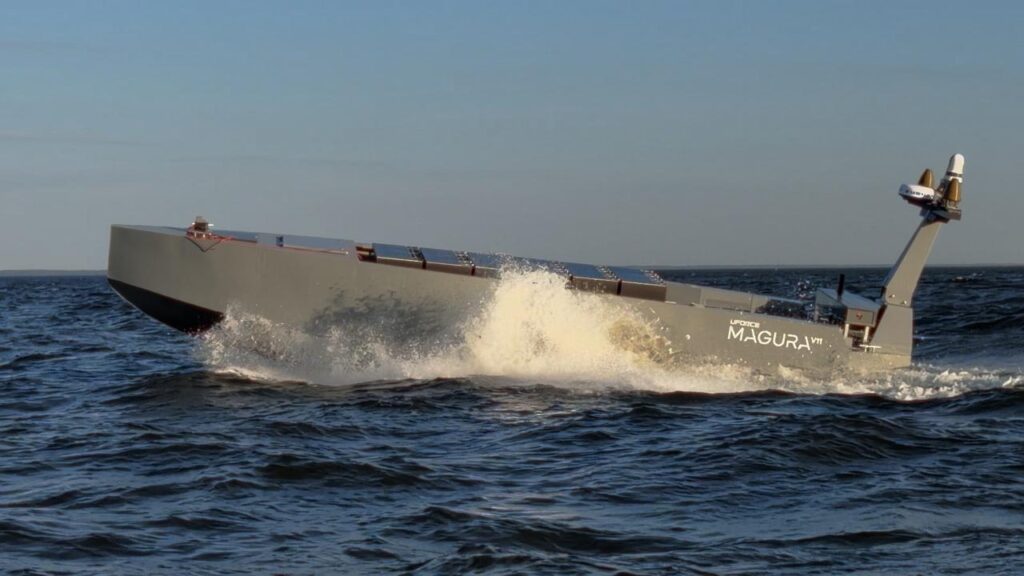
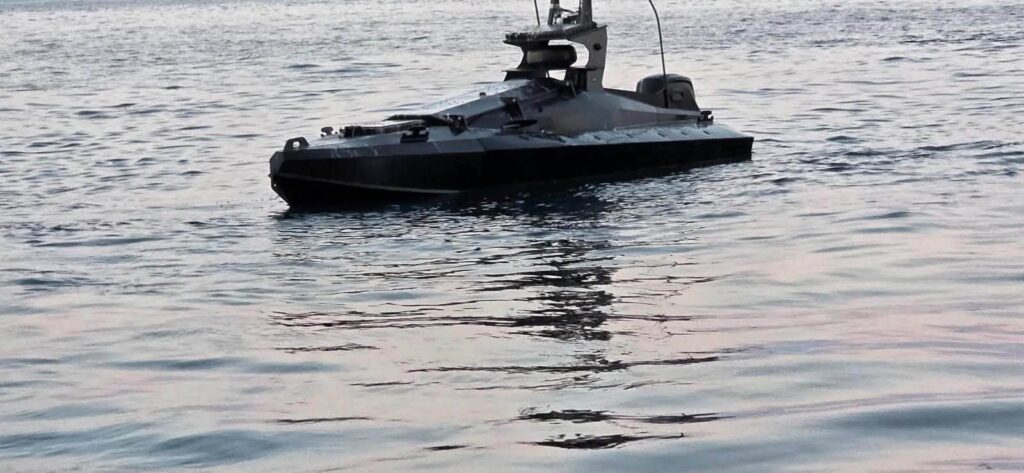
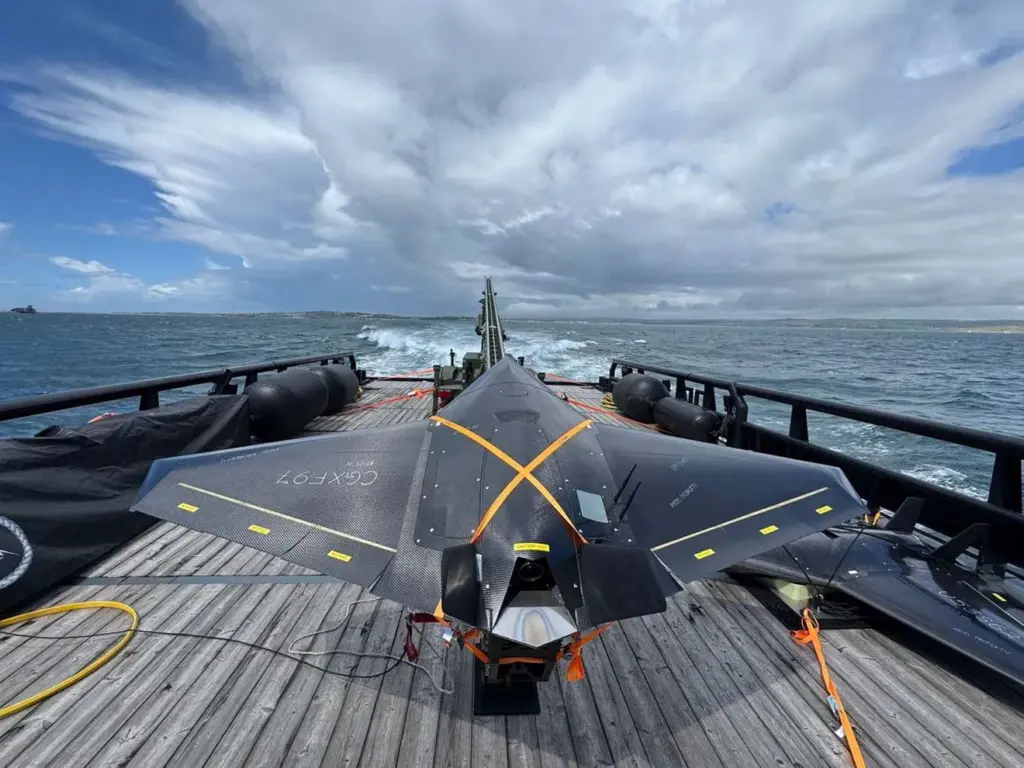
Ukraine has unveiled the largest robot boat in its Magura sea-drone family, and this one is built to carry and launch other drones instead of ramming enemy ships, the company UFORCE told Militarnyi. UFORCE showed the new V11 during Ukraine's Independence Day drone parade, signaling a move from single-use attack craft toward a floating base at sea.
Ukraine has fought its Black Sea war with throwaway robot boats—cheap, one-way, built to hit a ship and go down with it. Shi
Ukraine has unveiled the largest robot boat in its Magura sea-drone family, and this one is built to carry and launch other drones instead of ramming enemy ships, the company UFORCE told Militarnyi. UFORCE showed the new V11 during Ukraine's Independence Day drone parade, signaling a move from single-use attack craft toward a floating base at sea.
Ukraine has fought its Black Sea war with throwaway robot boats—cheap, one-way, built to hit a ship and go down with it. Shifting toward reusable platforms that keep other machines running far from any coast marks a different bet.
A floating base, not a battering ram
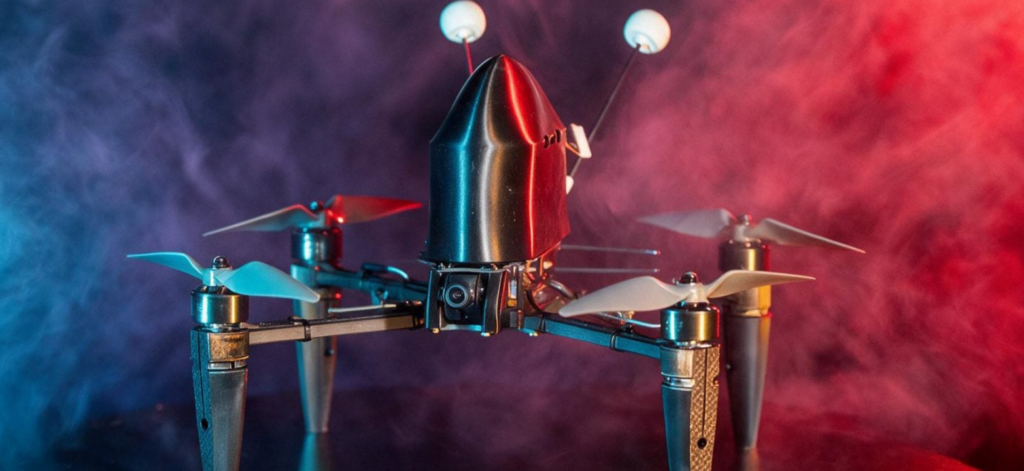
The V11 is the biggest drone in its class. Earlier, Magura boats were made to hit warships. This one is a transport platform that carries other unmanned systems and gear. Its main feature is the ability to launch a larger number of unmanned systems straight from its deck, turning one boat into a mobile base for them. The company refers to the drone as both the V11 and the MV11.
Explore further
American defense company Red Cat announces serial production of copy of Ukraine’s Magura V7 and says it’s their own development
What the V11 can do
UFORCE says the drone carries up to 2,200 kg (about 4,850 pounds) and can stay at sea for up to seven days. The company built it for reconnaissance, surveillance, support of landing operations, and resupplying fuel and equipment to other naval drones.
"It is a platform that provides multi-domain capability: one carrier that carries and launches other unmanned systems far from shore for operations across all domains," said Oleh Rogynskyy, CEO of UFORCE.
He said the investment the company attracts works for Ukraine's Defense Forces.
From strikes to a US production line
UFORCE's design and engineering office in Portugal developed the V11, drawing on international investment and aiming at the needs of Ukraine's Defense Forces. Its work there was first reported in September 2025.
Explore further
Meet the Magura W6: Ukraine’s latest threat to Russian warships
In July, the company and the US firm ReconCraft signed a memorandum for the licensed production of Magura naval drones in the US. Ukraine's Magura boats have forced Russia's Black Sea Fleet back to safer ports, and some versions have even shot down Russian fighter jets.
Ukraine's drones hit three Russian aircraft and eleven air-defense targets in one day, its Unmanned Systems Forces reported on 23 August. The strikes reached from occupied Crimea to airbases hundreds of kilometers inside Russia. They pushed the force's August count of struck Russian air-defense assets to 20, the latest run in a Ukrainian campaign against Russia's radars and launchers that has not paused for months.
Russia leans on a layered net of radars and mobile laun
Ukraine's drones hit three Russian aircraft and eleven air-defense targets in one day, its Unmanned Systems Forces reported on 23 August. The strikes reached from occupied Crimea to airbases hundreds of kilometers inside Russia. They pushed the force's August count of struck Russian air-defense assets to 20, the latest run in a Ukrainian campaign against Russia's radars and launchers that has not paused for months.
Russia leans on a layered net of radars and mobile launchers to keep Ukrainian drones and missiles away from its airfields, fuel plants, and occupied land, so every set burned off that net widens the corridors its long-range weapons fly through. With its S-400 battery caught in the open again and jets chased off Crimea still within reach, Russia has shrinking safe ground for the aircraft and air defenses covering its south — a squeeze already visible when Ukraine caught a fighter and its protecting launcher on the same airfield weeks earlier.
A one-day sweep of 14 targets
The Unmanned Systems Forces (SBS) commander, Robert Brovdi, callsign Madyar, put the 23 August haul at 14 targets. They included two fighter jets, a strike-reconnaissance drone, eight radar systems, a Tor and a Pantsir short-range launcher, and a position of an S-400 — a Russian long-range air-defense system.
Eleven of the 14 fell in Rostov Oblast and Krasnodar Krai in southern Russia. The other three were in occupied Crimea.
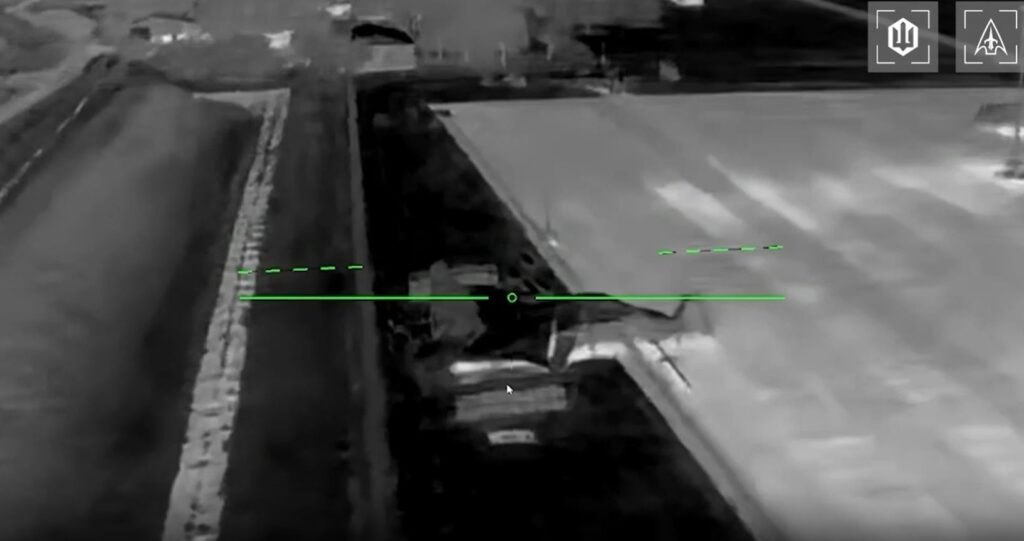
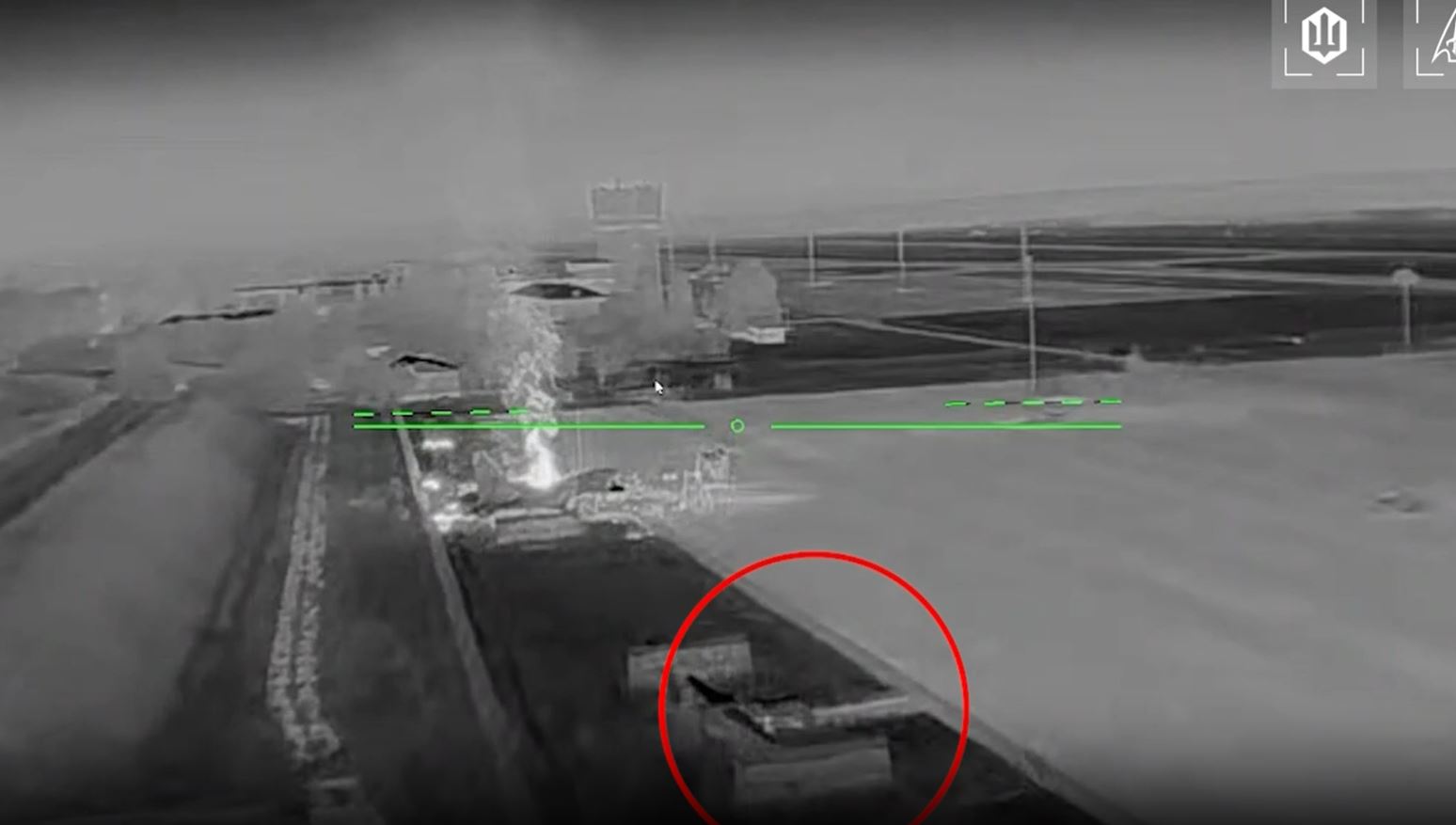
Aftermath of the strike on a Russian combat aircraft as seen from another Ukrainian drone at Vityazevo airfield in Krasnodar Krai, Russia, 23 August 2026. Screenshot: SBS
Jets that fled Crimea, caught on the mainland
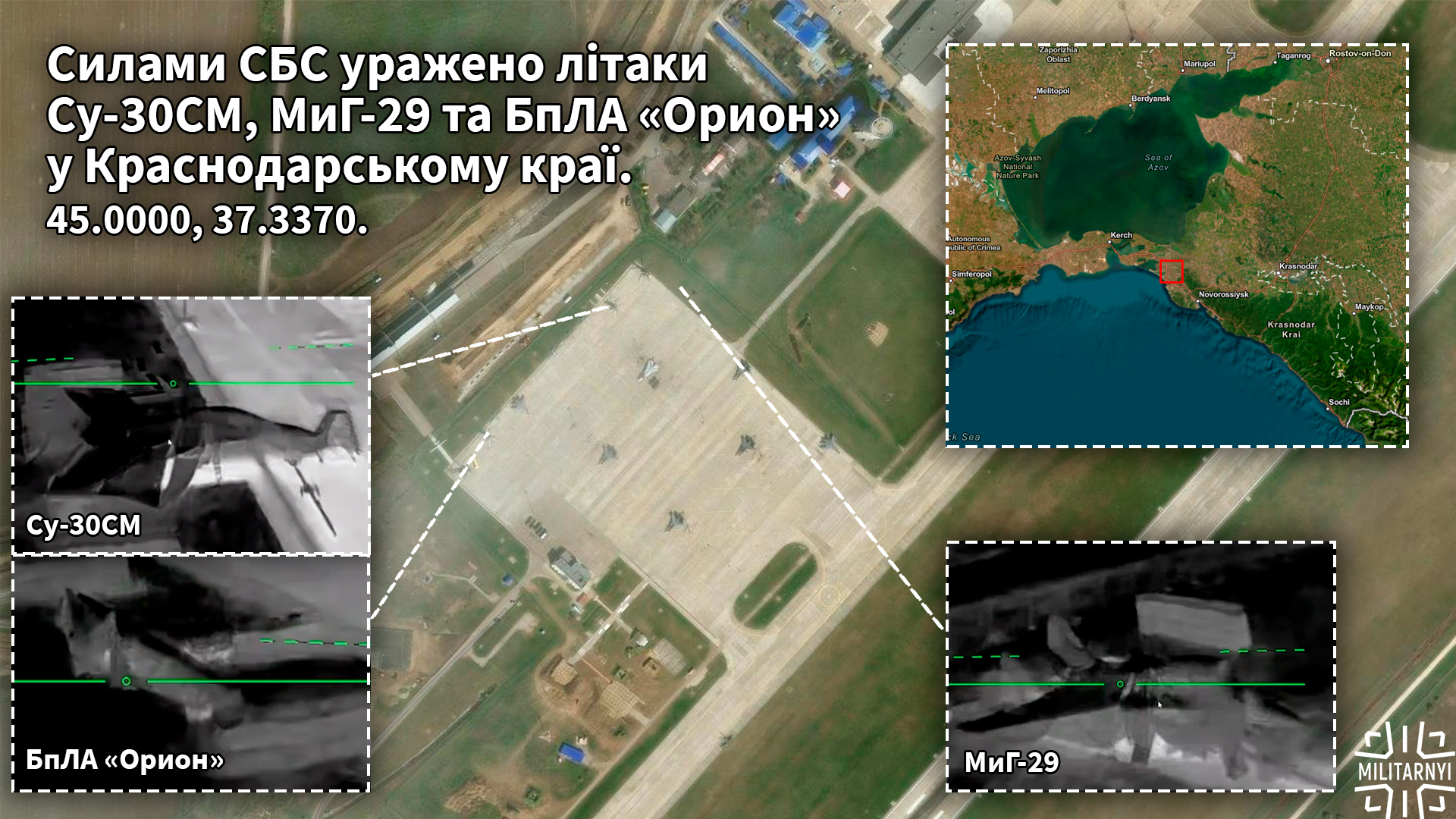
The three aircraft were struck at Vityazevo, a Krasnodar Krai airfield about 300 km from the front line, the 1st Separate Center of the Unmanned Systems Forces said. Militarnyi assessed that the jet SBS called a Su-33 was likely a two-seat Su-30SM, judging by its cockpit hump.
Ukrainian drone strikes on a Su-30SM fighter, a MiG-29 fighter, and an Orion strike-reconnaissance drone at the Vityazevo airfield in Krasnodar Krai, Russia, 23 August 2026, with the airfield's location marked on the map. Collage: Militarnyi
Russia flies the Su-30 from its southern bases to attack Odesa and Mykolaiv oblasts, to hunt Ukrainian sea drones, and to patrol occupied territory. The struck jet likely belonged to a naval aviation regiment pushed off Crimea by repeated Ukrainian strikes on the peninsula.
A strike on a Russian Podlyot radar at Holovativka in Rostov Oblast, Russia, 23 August 2026. Screenshot: SBS
Based on the SBS footage, Militarnyi says one drone could not hit the fighter cleanly. It exploded beside the aircraft and set off a fire that Russian crews tried to put out — a near miss, but enough to sideline the jet for a long stretch. A second drone then found the MiG-29 fighter jet and scored a direct hit, starting a large fire. A third caught the Orion, a strike-reconnaissance drone Russia uses to launch small cruise missiles and to track Ukrainian naval drones in the Black Sea.
Radars, launchers, and an S-400 on the coast
The air-defense targets ran across three regions. In occupied Crimea, crews hit a Nebo-U long-range radar at Sevastopol, the ST-68 at Yevpatoria some 30 km from the front, and a 36D6M at Uiutne. In Rostov Oblast and Krasnodar Krai they knocked out more radars, including two Kasta-2E2 sets and two Podlyot radars, plus the Tor at Pudovy and the Pantsir at Yeysk.
The 413th Reid regiment of the SBS reported hitting the S-400 position near Gelendzhik on the Krasnodar coast — the same stretch where drone crews have caught the system out in the open before.
Enhanced and colorized frame from the drone thermal footage showing the view from a Ukrainian drone closing on a Russian ST-68 radar moments before impact at Yevpatoria in occupied Crimea, 23 August 2026. Screenshot: Ukraine's Unmanned Systems Forces (SBS)
An August of hunting Russia's air shield
A battlefield video counter run by the force reached 20 Russian air-defense assets struck through August. The month's work extended a campaign that has steadily burned through the sensors and launchers guarding Russian airfields and occupied territory.
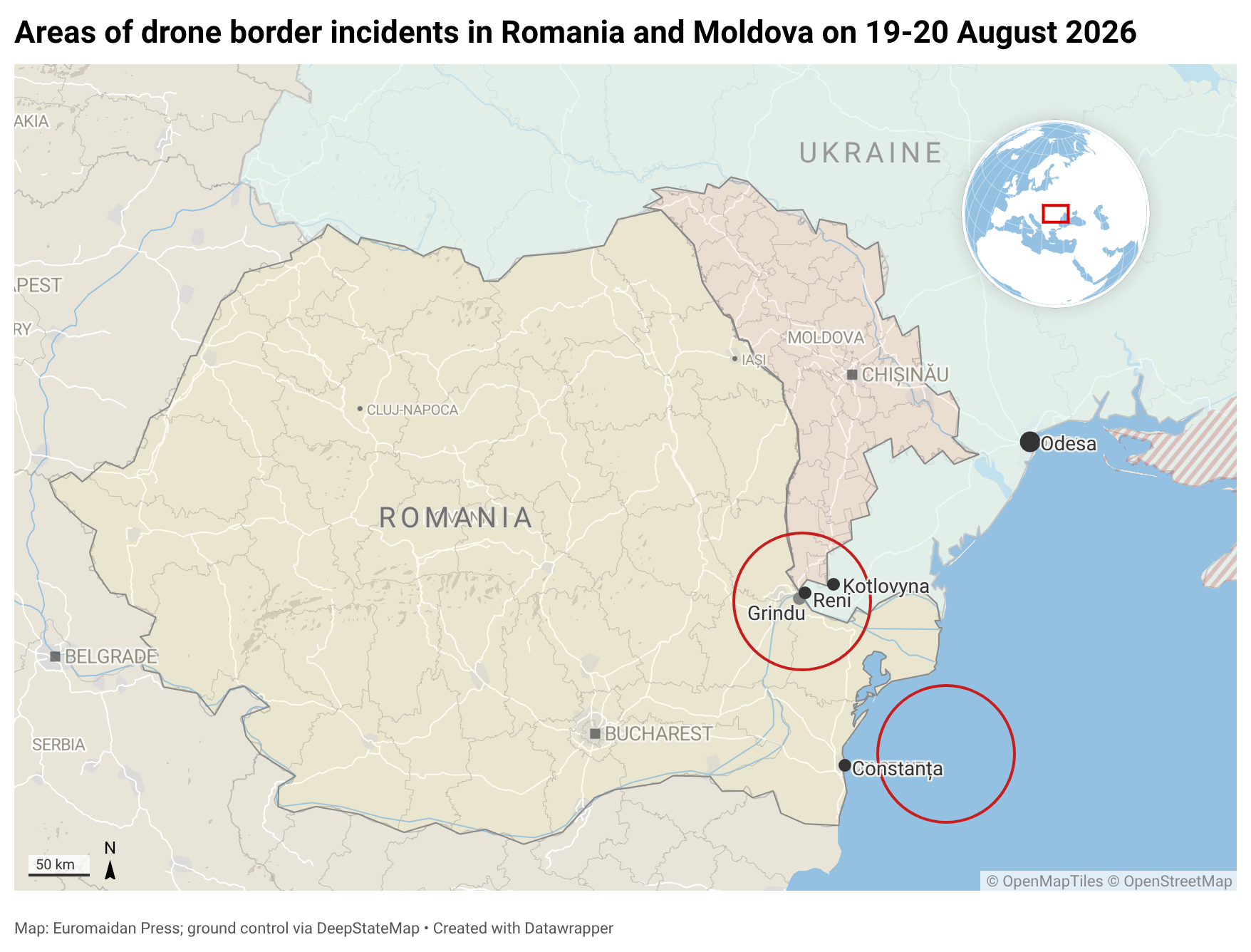
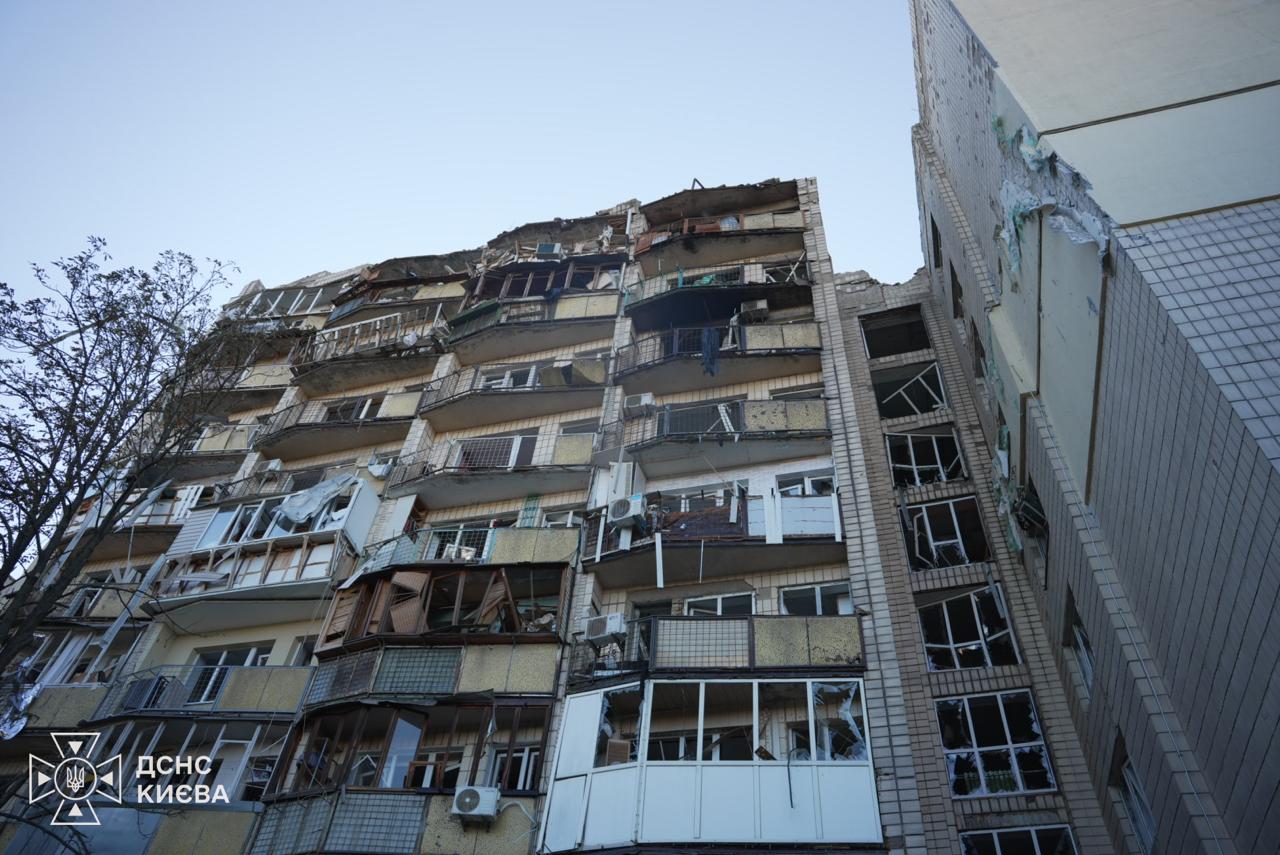
Romania destroyed an explosives-laden maritime drone near its critical Neptun Deep gas platform and recovered debris from a separate aerial drone that crashed on its soil, the Romanian Defense Ministry reported. The incidents came during a major Russian attack on Ukraine on 20 August that killed 14 people in Kyiv city and oblast, caused incidents in Moldova, and triggered air defense activation in Poland.
Russia's war against Ukraine has turned the Black Sea and the air
Romania destroyed an explosives-laden maritime drone near its critical Neptun Deep gas platform and recovered debris from a separate aerial drone that crashed on its soil, the Romanian Defense Ministry reported. The incidents came during a major Russian attack on Ukraine on 20 August that killed 14 people in Kyiv city and oblast, caused incidents in Moldova, and triggered air defense activation in Poland.
Russia's war against Ukraine has turned the Black Sea and the airspace above NATO's eastern flank into a recurring security problem. Romanian forces have now destroyedfive drones over or near its territory this year, while more than 150 mines have drifted across Black Sea trade lanes since the full-scale invasion began.
F-16 fires cannon at sea drone near gas platform
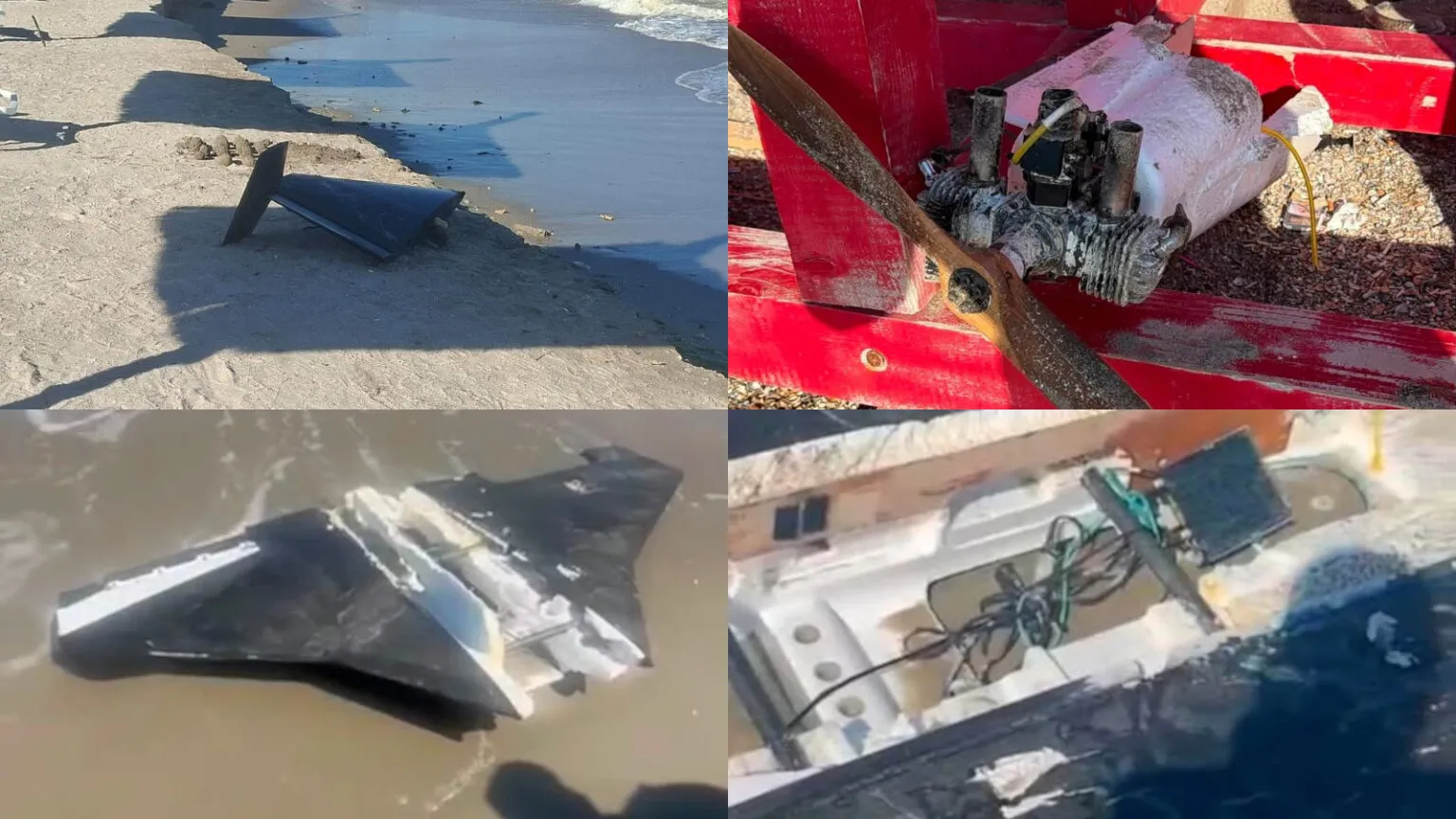
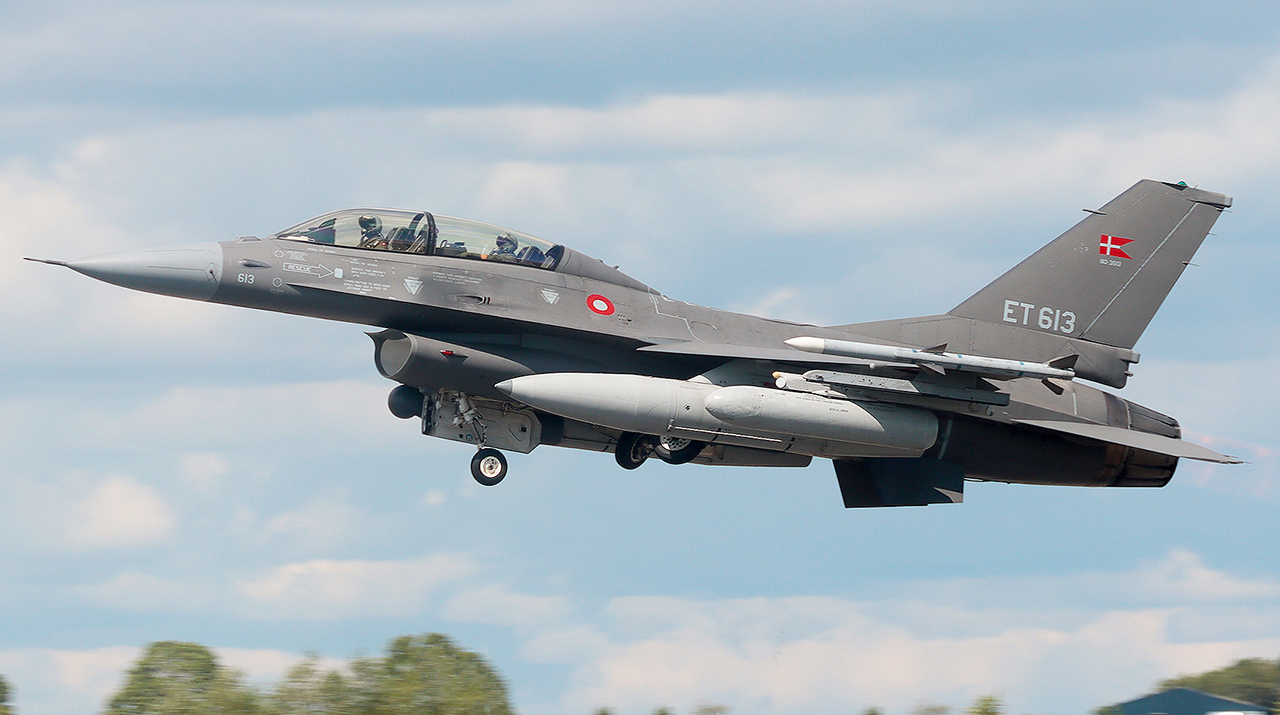
A commercial vessel spotted a drifting maritime drone near the Neptun Alpha production platform, approximately 80 nautical miles east of Constanța, at around 06:28, the Defense Ministry said. Two Romanian F-16s scrambled with orders to fire. One engaged the target with its onboard cannon—the first time Romania used a cannon against a drone and the first engagement against a maritime drone. All previous shootdowns used air-to-air missiles against aerial drones.
The country's Defense Minister Radu Miruță said the drone was carrying explosives and was spotted just hundreds of meters from the platform where several hundred people work. Through a recently established direct communication channel, Ukraine confirmed the drone was not of Ukrainian origin. President Nicușor Dan directly blamed Russia, condemning "the intensification of these types of irresponsible incidents on the part of the Russian Federation."
The engagement came nine days after Romanian navy divers destroyed two Gerbera-type drones drifting near the same platform by controlled detonation.
Explore further
14 killed as Russia unleashes massive overnight barrage on unprotected Kyiv, striking homes, hospital, school and railway infrastructure
Aerial drone crashes in Romania's Tulcea County
Earlier overnight, Romanian radar detected aerial targets near the Ukrainian border at 02:23, the Defense Ministry said. Two Spanish F-18s from NATO's air policing mission and a Romanian IAR-330 SOCAT helicopter scrambled. At 03:21, a drone crossed into Romanian airspace 13 km east of Galați and crashed three minutes later near the village of Grindu in Tulcea County. No casualties or damage were reported. The fragments posed no explosive hazard.
The crash came four days after a Spanish F-18 shot down another drone over Romanian airspace, Euronews reported. Romanian F-16s intercepted three Russian drones in July.
Explore further
Russian Shaheds hit near Moldova-border crossing, burn food cargo, and black out 13,000 in Odesa Oblast
Poland activates defenses, Moldova hit by drone spillover
Poland's Operational Command activated military aircraft and ground-based air defense systems during the Russian attack as a preventive measure. The Netherlands provided air defense support. No breach of Polish airspace was recorded.
Moldova faced multiple incidents. At 03:16, the country's National Army detected what was preliminarily identified as a Shahed-136/Geran-2 drone crossing from Ukraine near Kotlovyna in Odesa Oblast into Moldova's Gagauzia region. It returned to Ukrainian airspace six minutes later, public broadcaster Moldova1 said.
Explore further
Russian drone attacks on Ukraine’s Danube ports hit recent high, Romania says
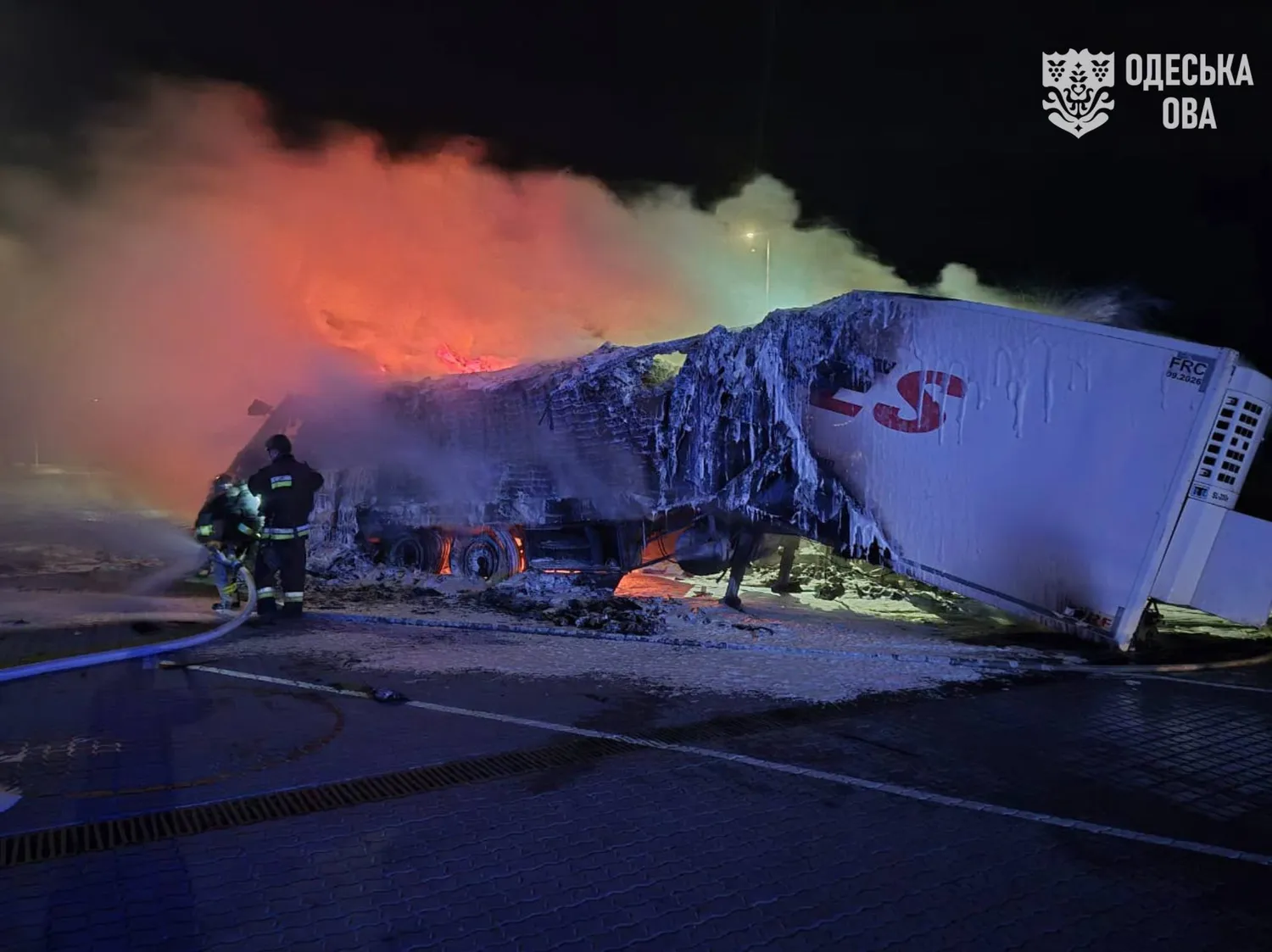
Separately, an explosion at a truck parking lot on Ukrainian territory about 150 meters from the Giurgiulești-Reni border crossing at around 03:45 sparked a fire that spread onto Moldovan soil, Newsmaker reported. Border police found drone fragments in a crater approximately 1 km inside Moldovan territory.
Ukraine brought the world's most battle-tested counter-drone experience to a NATO exercise. From 3 to 14 August, Ukraine took part in NATO's Baltic Trust 2026 exercise in Latvia, which focused on countering drones and other threats posed by uncrewed aerial systems, the General Staff reported.
The exercise responds to a mounting Russian threat against NATO's Baltic flank. Russia has probed the alliance's eastern edge so aggressively that NATO scrambled over the Baltic, j
Ukraine brought the world's most battle-tested counter-drone experience to a NATO exercise. From 3 to 14 August, Ukraine took part in NATO's Baltic Trust 2026 exercise in Latvia, which focused on countering drones and other threats posed by uncrewed aerial systems, the General Staff reported.
The exercise responds to a mounting Russian threat against NATO's Baltic flank. Russia has probed the alliance's eastern edge so aggressively that NATO scrambled over the Baltic, jumping more than 250% in July.
Also, Moscow has increasingly launched drones on the Baltic States. Even on 14 August, the final day of the drill, a NATO fighter shot down a drone over Latvia after Russian electronic warfare pushed it off course, the second Baltic drone incursion that week. Baltic Trust 2026 was NATO's answer: about 650 participants from 24 countries building the counter-drone defenses that the threat demands.
The exercise tested systems working together
Baltic Trust focused on integration, not single technologies. Soldiers, specialists, and industry representatives jointly tested new technological solutions in conditions close to a modern operational environment, the General Staff said.
The core was whether the pieces work as one system. Participants checked how detection tools, command-and-control systems, and counter-drone measures can exchange data, form a common operational picture, and enable coordinated response.
Ukraine's experience is the draw
Ukraine's participation carries particular weight in this field. No NATO member has faced the scale of drone attack Ukraine confronts nightly, and its forces have built and continually adapt the detection, interception, and electronic-warfare methods that down Russian drones by the tens of thousands.
That makes Ukraine a source of hard-won practical knowledge for allies still preparing for threats Ukraine already lives with. Bringing Ukrainian experience into a NATO drill turns the country's battlefield lessons into shared allied capability, on exactly the drone warfare the alliance is scrambling to counter on its eastern flank.
The exercise builds collective defense
Baltic Trust served NATO's broader readiness. Jointly testing and integrating such solutions helps turn technological innovation into practical capabilities that strengthen readiness and collective defense.
Previously, Russia's Foreign Intelligence Service Head Sergey Naryshkin accused NATO of escalating military activity near Russia’s borders. He warned that Poland and the Baltic states would be the first to suffer in the event of a war between Moscow and the Alliance.
Ukraine has approved a drone built to reach the deepest parts of Russia. Ukraine's Defense Ministry has codified the domestic Dovbush T40 uncrewed aviation complex, a strategic-level drone for deep reconnaissance and precision strikes on distant Russian targets, the ministry announced.
The drone extends the reach of Ukraine's homegrown deep-strike arsenal to Siberia. With a wingspan of nearly 5 meters, the Dovbush T40 has enough range to hit targets beyond the Urals and
Ukraine has approved a drone built to reach the deepest parts of Russia. Ukraine's Defense Ministry has codified the domestic Dovbush T40 uncrewed aviation complex, a strategic-level drone for deep reconnaissance and precision strikes on distant Russian targets, the ministry announced.
The drone extends the reach of Ukraine's homegrown deep-strike arsenal to Siberia. With a wingspan of nearly 5 meters, the Dovbush T40 has enough range to hit targets beyond the Urals and in Russian Siberia.
What the drone does
The Dovbush T40 is a multi-role strategic aircraft. It is designed for deep reconnaissance, fire correction, and precision strikes on structures, equipment, and enemy personnel far from the line of contact.
Its endurance is the enabler. More than a day aloft gives it the range to reach targets, letting Ukraine threaten the deep-rear sites, from factories to airfields, that Russia has kept far from the front for safety.
Its advantages over similar drones
The drone offers several edges, the ministry said. It has ultra-low radar visibility, a high-performance engine with electronic fuel injection, and a choice of strike methods, either as a kamikaze drone or by dropping a munition.
It is built to work under jamming. The Dovbush T40 stands out for high resistance to electronic warfare, according to the Defense Ministry, the recurring requirement for any Ukrainian drone meant to fly deep into a contested electromagnetic environment.
It builds on combat-proven predecessors
The drone comes from a maker with a track record. It was built by a Ukrainian enterprise whose Dovbush T20 and Kotyhoroshko drones have operated on the battlefield since 2022 with some of the highest effectiveness ratings.
The T40 is an evolution of a proven system. The medium-range Dovbush T20, used for reconnaissance, real-time artillery correction, and pinpoint strikes, evolved through battlefield feedback into the longer-range, more powerful T40. It joins a fast-growing domestic fleet: since the start of 2026, Ukraine's Defense Ministry has codified 413 uncrewed systems, almost all of which are Ukrainian-made.
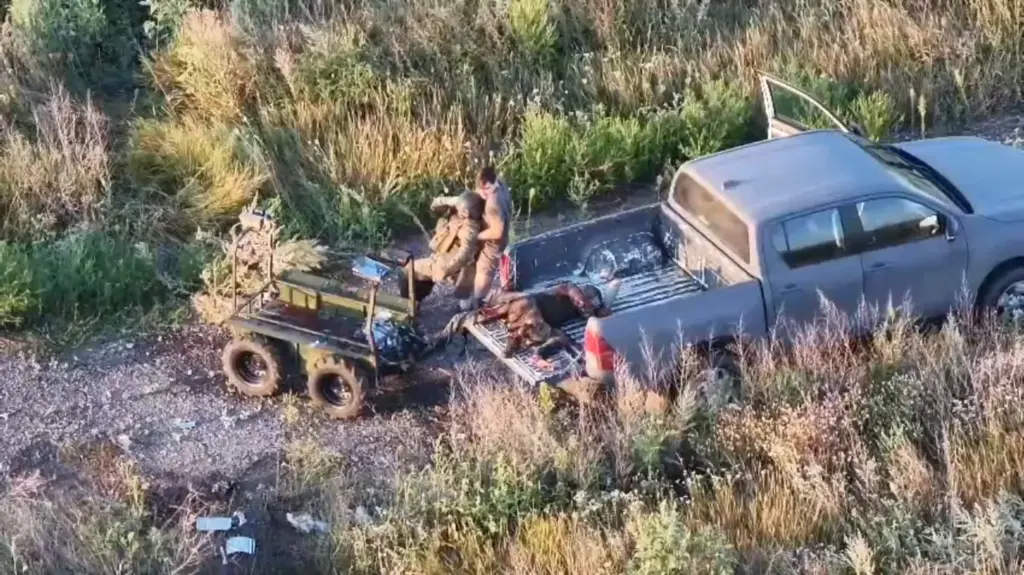
A Russian drone knocked out the robot sent to evacuate two wounded Ukrainian assault troops. Their company commander went in himself. He drove into the kill zone in an unarmored pickup truck, without body armor, and carried them out.
The Joint Forces Group released the footage on 16 August 2026. It identified the commander as Vladyslav Polskyi of the 475th Separate Assault Regiment (Code 9.2).
The two soldiers had captured Russian positions and were pulling back whe
A Russian drone knocked out the robot sent to evacuate two wounded Ukrainian assault troops. Their company commander went in himself. He drove into the kill zone in an unarmored pickup truck, without body armor, and carried them out.
The Joint Forces Group released the footage on 16 August 2026. It identified the commander as Vladyslav Polskyi of the 475th Separate Assault Regiment (Code 9.2).
The two soldiers had captured Russian positions and were pulling back when Russian Molniya drones hit them, the group said. Both were seriously wounded and could not move on their own. A ground robot was sent to pull them out. A second drone hit it, and it stopped in the open, leaving the men exposed.
A company commander just drove straight into drone fire to save his men with no body and no hesitation
Vladyslav Polskyi from an assault company of the 475th "Code 9.2" regiment saw that his soldiers were hit by Russia's "Molniya" drones, and a robotic evacuation platform sent… pic.twitter.com/ib6B6TbgQD
The group framed the rescue as the reason the regiment's soldiers take on the hardest assaults when others hold back: they know their commanders do not hide behind them, and will give everything to save every one of their men.
In June, Ukrainian ground robots ran nearly 17,000 supply and evacuation runs, taking on the exposed trips that used to get crews killed. Ukraine now fields some 25,000 combat robots. Their main limit, a presidential adviser says, is not hardware but staying connected under jamming, and a new Ukrainian antenna is meant to help. But no antenna stops what happened here. A drone hit the evacuation robot and knocked it out.
When the robot failed, the risk it was built to absorb fell back on the commander.
Ukrainian forces have used British drones to attack targets inside Russia for the first time, adding two UK-built systems to Kyiv’s arsenal, The Sunday Times reported on 15 August, citing Ukrainian military sources. The newspaper explicitly identified oil refineries in Volgograd and Yaroslavl among the targets struck during the previous six months.
Ukraine still relies mainly on domestically produced drones. But the British systems give Kyiv cheaper weapons that can be
Ukrainian forces have used British drones to attack targets inside Russia for the first time, adding two UK-built systems to Kyiv’s arsenal, The Sunday Timesreported on 15 August, citing Ukrainian military sources. The newspaper explicitly identified oil refineries in Volgograd and Yaroslavl among the targets struck during the previous six months.
Ukraine still relies mainly on domestically produced drones. But the British systems give Kyiv cheaper weapons that can be replenished and launched in volume. They help sustain Kyiv's attacks on Russian oil, logistics, and military targets without running down limited stocks of Western long-range missiles.
The Sunday Times called this a new phase in UK–Ukraine military cooperation. A senior British defense source said the deployments showed London was “not nervous anymore” about Russian pressure.
What British support adds to Ukraine’s homegrown drone force
Britain has supplied Ukraine with two systems with very different ranges. The Nyan, a jet-powered one-way attack drone made by BAE Systems subsidiary Callen-Lenz, can travel more than 150 miles. The second is catapult-launched and has a range above 600 miles; The Sunday Times withheld its manufacturer’s name on security grounds.
Long-range drones typically cost £50,000 to £100,000, compared with more than £750,000 to replace a Storm Shadow missile, the newspaper said. They can also be stockpiled and launched in swarms, helping Ukraine strain Russian air defenses without exhausting finite missile stocks.
The drones extend wider British support. In June, the UK announced funding for 150,000 Ukrainian-produced drones by the end of 2026. Ukrainian forces have also deployed British Rapid Ranger systems against Russian Shaheds and used UK-supplied Storm Shadows inside Russia, protecting Ukraine at home while widening its options across the border.
Ukraine’s deep-strike campaign reaches 52 Russian regions
Across Ukraine’s overall campaign, The Sunday Times reported almost 700 successful deep strikes between January and June. They reached 52 Russian regions and caused more than £35 billion (about $47.3 billion) in economic damage.
A senior Ukrainian military source said the British systems were proving successful. “When we launch them, we always say Slava Ukraini and God save the King,” the source told The Sunday Times.
Former UK Air Marshal Greg Bagwell predicted Moscow would “sabre rattle” and potentially declare British factories legitimate targets. Other defense sources warned of intensified cyberattacks or espionage against the UK.
Ukraine has approved a new domestic interceptor and put it on the shelf for units to buy. Ukraine's Defense Ministry has codified the high-speed TAF Kolibri-i10 interceptor from TAF Industries, the company announced.
The approval adds one more weapon to Ukraine's fast-scaling interceptor arsenal and its state procurement pipeline. Ukraine now fields drone-hunters from dozens of makers to counter Russia's massed drone attacks. Units can order it directly through the stat
Ukraine has approved a new domestic interceptor and put it on the shelf for units to buy. Ukraine's Defense Ministry has codified the high-speed TAF Kolibri-i10 interceptor from TAF Industries, the company announced.
The approval adds one more weapon to Ukraine's fast-scaling interceptor arsenal and its state procurement pipeline. Ukraine now fields drone-hunters from dozens of makers to counter Russia's massed drone attacks. Units can order it directly through the state marketplace, the same DOT-Chain and Brave1 Market system that has turned battlefield-proven drones into off-the-shelf purchases.
The interceptor grew out of combat use
The Kolibri-i10 came from an improvised solution that worked. The idea grew from using the FPV drone Kolibri 10 to intercept Russian fixed-wing drones, and combat experience showed the approach was so effective that TAF built a new, specialized interceptor rather than modifying the existing model.
Its job is hunting Russian reconnaissance and strike drones. The Kolibri-i10 is designed to destroy Molniya, Orlan, and Zala drones, preventing attacks on Ukrainian positions and covering operations and rear-area sites.
"Field tests have already confirmed the effectiveness of this interceptor, so we have already begun scaling it," CEO Volodymyr Zinovskyi said.
The specs and the jam-resistance
The interceptor was rebuilt for speed and durability. It has a stronger frame, more powerful motors, faster propellers, and improved aerodynamics, reaching over 200 kilometers per hour, a range of up to 25 kilometers, more than 20 minutes aloft, and an altitude of up to 3,000 meters.
It is built to work under jamming. Manual control gives the operator full command at critical moments; digital day-and-night cameras enable operation in varied conditions. MilELRS firmware ensures stable operation in the presence of active electronic warfare. That jam-resistance is a recurring requirement for Ukrainian interceptors, since signal-dependent ones fail against the electronic warfare saturating the front.
The drone is available to order on Brave1 Market, priced at about $760 with a day camera and $1,550 with a night camera.
Ukraine's first-person-view (FPV) drones are not being displaced by newer unmanned systems, a Ukrainian officer told Ukrinform. They remain a central tool for precision strikes, while Ukrainian forces claim a separate advantage in larger bomber drones.
Unmanned systems have become a defining weapon of Russia's war against Ukraine, and both sides race to out-innovate each other, a contest in which a cheap UAV can down a platform costing dozens of times more.
FPVs re
Ukraine's first-person-view (FPV) drones are not being displaced by newer unmanned systems, a Ukrainian officer told Ukrinform. They remain a central tool for precision strikes, while Ukrainian forces claim a separate advantage in larger bomber drones.
Unmanned systems have become a defining weapon of Russia's war against Ukraine, and both sides race to out-innovate each other, a contest in which a cheap UAV can down a platform costing dozens of times more.
FPVs remain central
"Since FPVs appeared in service, they have become a leading means of precision engagement. This trend will continue," said Captain Anton Bobrovskyi, who commands a company training unmanned-systems specialists at the 199th Training Center of the Air Assault Forces.
Bobrovskyi conceded that Russia also uses drones effectively and that Ukraine learns from it, but said Ukraine keeps a lead in one category: bomber drones.
Explore further
Ukrainian drone that downed Russia’s rarest spy UAV just bagged its anti-drone interceptor too
Ukraine's bomber-drone advantage
Russian forces fear Ukrainian bomber drones, according to Bobrovskyi. He said Ukraine outmatches Russia many times over in such systems, and that Russian troops who encounter one often do not know what to do with it.
The distinction matters because bomber drones work differently from single-use FPVs. Rather than flying into a target and exploding, larger bomber drones carry and release munitions, then fly on. Euromaidan Press has documented the growing role of these systems, including reusable platforms capable of returning to base after dropping their payloads. Developers have also adapted them to fly through Russian electronic warfare, with upgraded Vampire drones built to resist jamming.
Explore further
Sea drones, jet drones, and Neptune missiles hit one Russian port in a single night
Bobrovskyi said Ukraine's advantage does not mean Russia lacks comparable technology. Instead, he argued that Ukrainian forces and society initiated many of the current battlefield drone trends and have kept the initiative in using them.
Each new drone class draws a countermeasure, so the side that keeps iterating fastest holds the battlefield initiative. How long Ukraine's bomber-drone edge lasts will depend on its ability to keep protecting and upgrading those platforms.
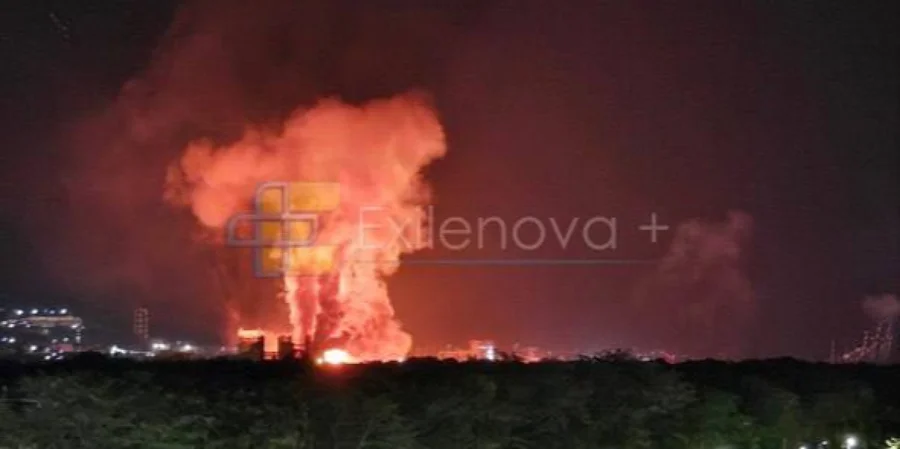
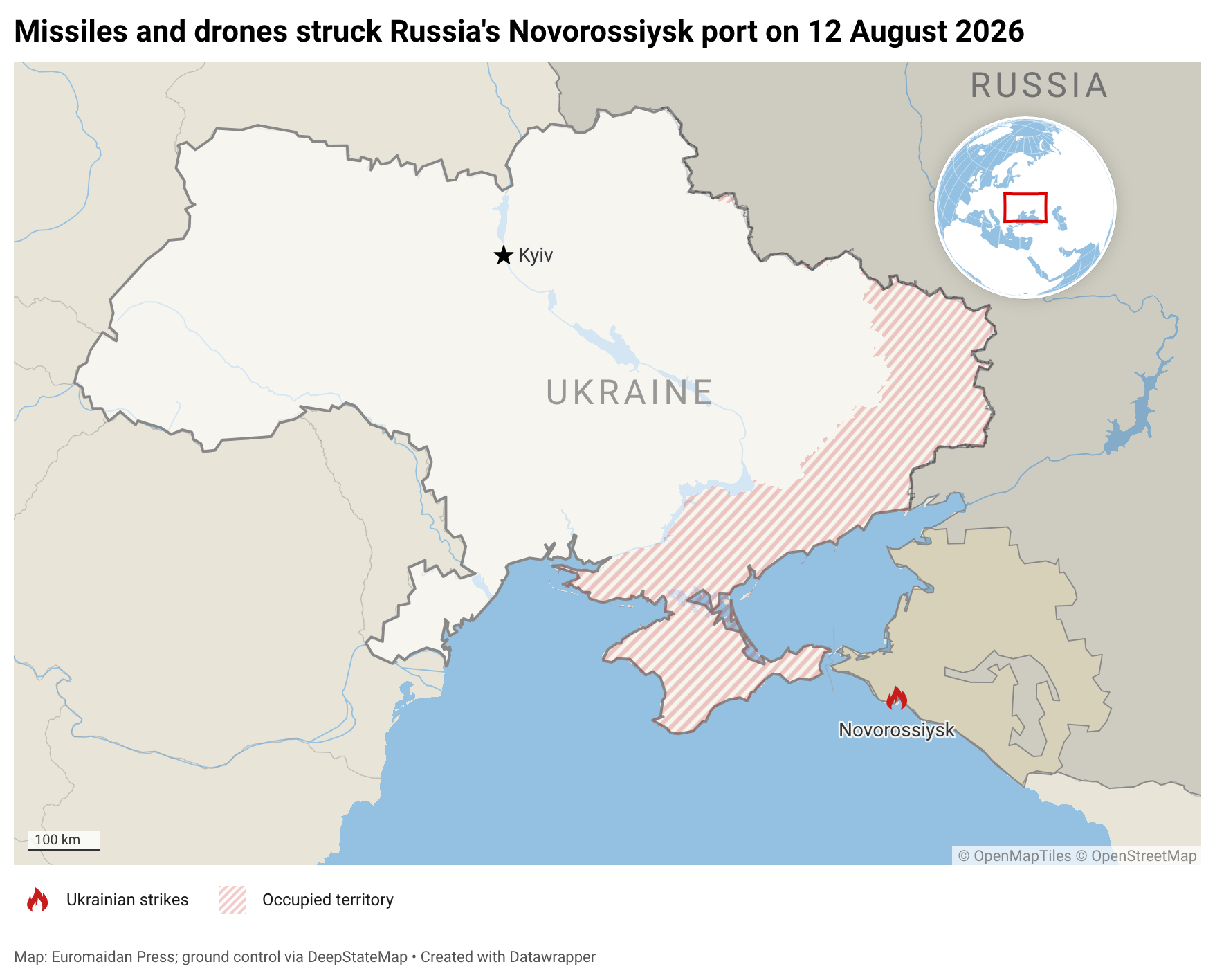
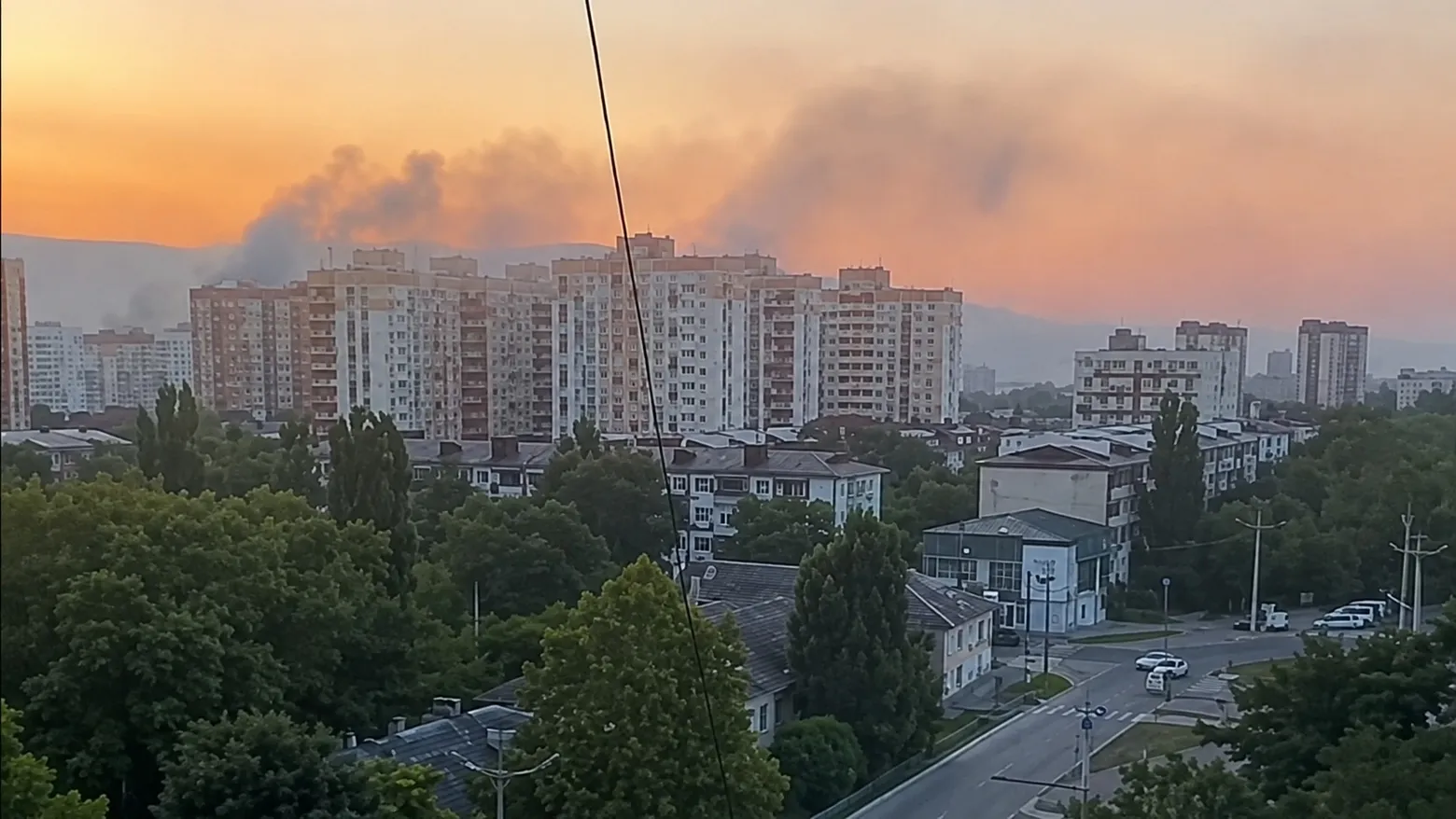
On 12 August 2026, Ukraine targeted Russia's main Black Sea naval base and oil terminal at Novorossiysk overnight. Fires broke out at the port's oil and fleet facilities, two of Russia's largest grain terminals stopped work, and debris damaged homes across the city, according to Ukrainian monitoring channels and local Russian authorities. Ukrainian President Volodymyr Zelenskyy confirmed the operation hours later.
Russia's southern coast is where much of the war is paid
On 12 August 2026, Ukraine targeted Russia's main Black Sea naval base and oil terminal at Novorossiysk overnight. Fires broke out at the port's oil and fleet facilities, two of Russia's largest grain terminals stopped work, and debris damaged homes across the city, according to Ukrainian monitoring channels and local Russian authorities. Ukrainian President Volodymyr Zelenskyy confirmed the operation hours later.
Russia's southern coast is where much of the war is paid for, the loading point for the oil revenue and grain exports that keep the invasion running, and it now sits within reach of Kyiv's long-range weapons.
Kyiv calls it a "unique operation" on the fleet's last big base
Zelenskyy said Ukraine's Defense Forces hit the Novorossiysk naval base overnight on 12 August. The port city is situated more than 350 kilometers from the front line on Russia's eastern Black Sea coast. The Ukrainian president described the assault as a unique operation against the last main outpost of Russia's Black Sea Fleet.
"Our Palianytsia jet drones, Neptune missiles, and naval uncrewed systems precisely struck the designated targets," he said, adding that hits were confirmed on air-defense positions, piers, and seaport infrastructure.
Fires at the Sheskharis oil terminal and the naval harbor
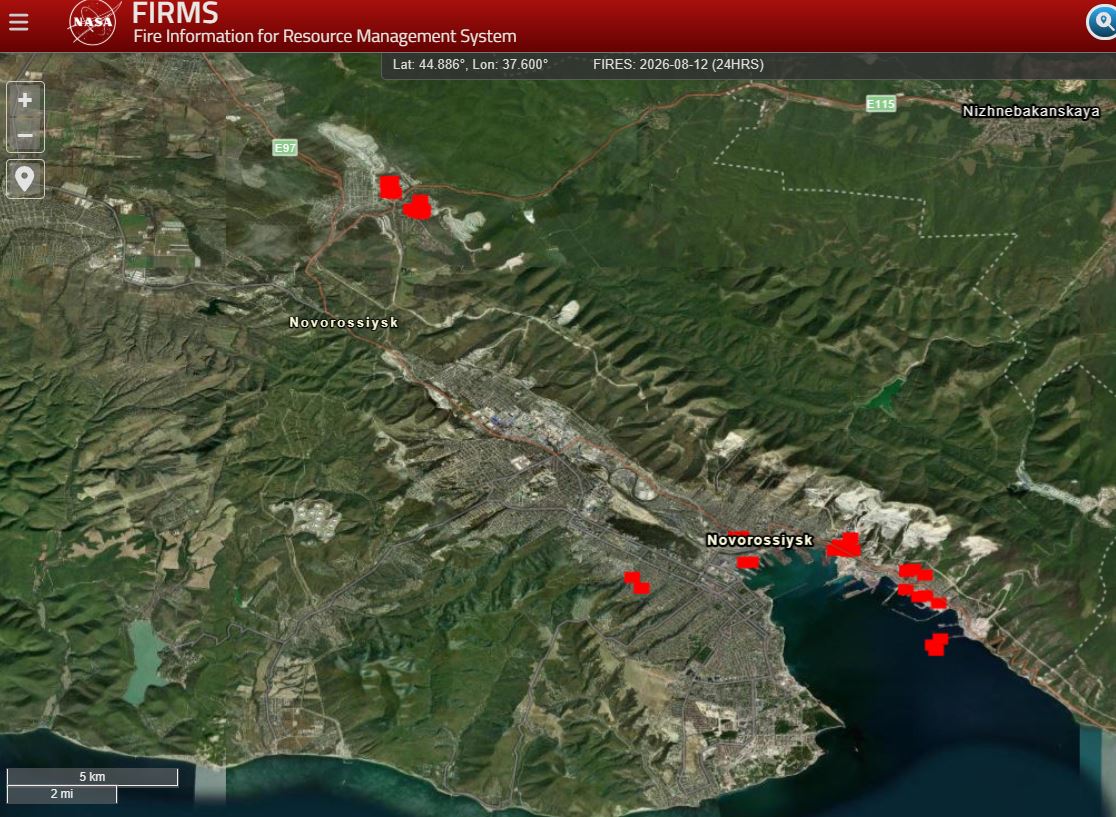
Ukrainian drones hit the oil terminal and the naval base, the Ukrainian defense outlet Militarnyi reported. Its analysis of NASA satellite fire data placed blazes at the Sheskharis complex, where crude loads onto tankers, and near the naval base and fuel-storage tanks.
A NASA FIRMS map shows fires detected in and around Novorossiysk on 12 August 2026. Map: NASA FIRMS
Sheskharis is the endpoint of Transneft's main pipelines and a key export point for Russian crude on the Black Sea. Novorossiysk ships 600,000 to 700,000 barrels of oil a day.
The Ukrainian monitoring channel Krymsky Veter said fires broke out near the Sheskharis pier and the military harbor where Black Sea Fleet ships and submarines dock. Russia moved vessels to Novorossiysk after Ukrainian strikes pushed the fleet out of occupied Crimea.
Two grain terminals stop at the world's top wheat exporter
Novorossiysk's two largest grain-handling terminals halted work after the strikes, Reuters reported, citing four industry sources. The world's top wheat seller, Russia sends most of its exports out through Black Sea ports.
The Novorossiysk grain terminal, which can move 8.5 million tons a year, halted work as owner Demetra Holding assessed the damage. NKHP, a terminal handling 7.1 million tons a year, also stopped, its main owner OZK said, adding that no one was hurt. The Ukrainian monitoring Telegram channel Exilenova+ described NKHP, Russia's largest deepwater grain terminal, as one of the sites hit.
The strikes extend Ukraine's effort to deny Russia the grain and oil revenue that funds the war, a mirror of Russia's own summer campaign against Ukraine's ports: as Moscow strikes Odesa's terminals to choke Ukrainian exports, Kyiv works to shut Russia's own.
Russia says its own drone debris damaged homes and killed two
Krasnodar Krai Governor Veniamin Kondratyev claimed several hundred drones attacked the region overnight and that falling debris struck 21 residential buildings and four enterprises in Novorossiysk. He claimed two people were killed, including an eight-year-old child, and 13 wounded across the krai, with about 90 residents moved to temporary shelters.
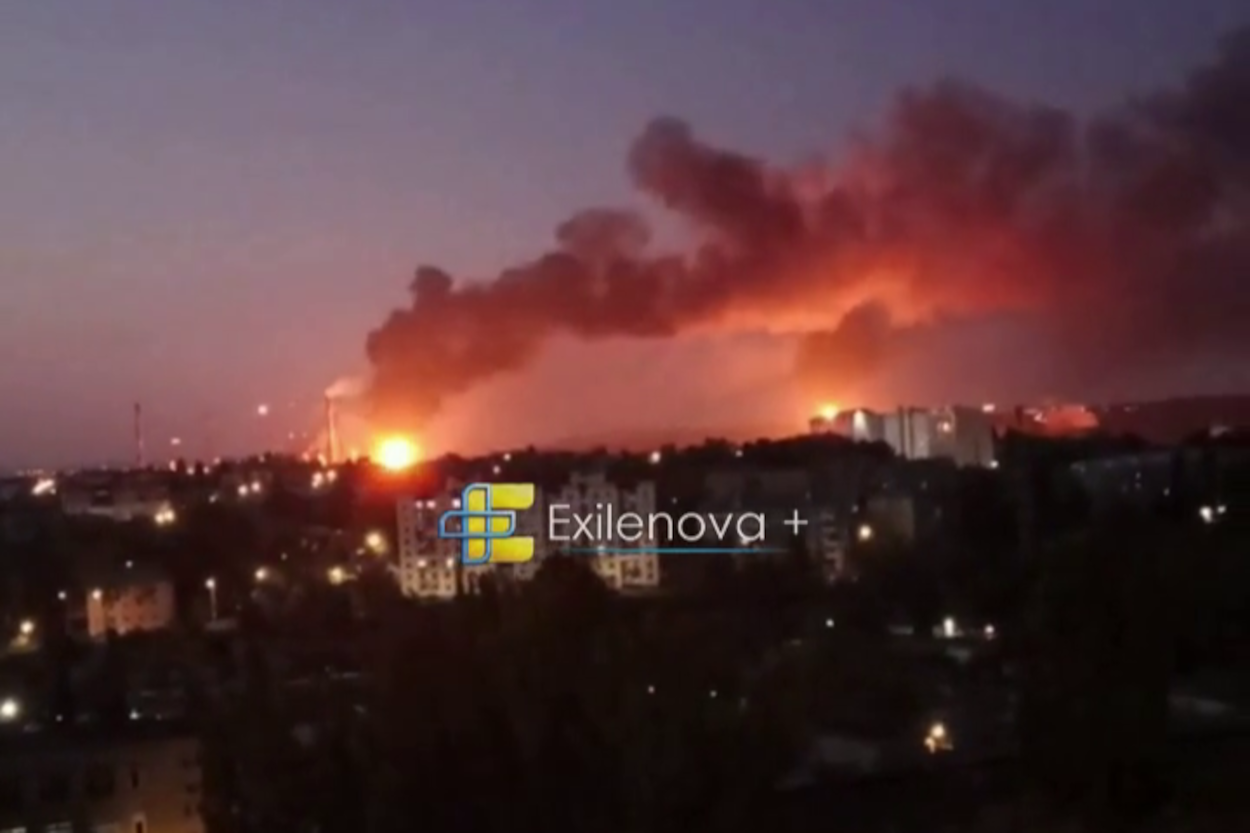
Smoke rises over Novorossiysk after a Ukrainian strike on the Russian Black Sea port, 12 August 2026. Screenshot from a video: Exilenova+
Novorossiysk Mayor Andrei Kravchenko claimed debris hit six residential buildings, a commercial building, and a construction site, and that there were casualties.
The Russian news Telegram channel Astra reported that a café burned on Sukhumskoye Shosse, across the road from the entrance to the Novorossiysk naval base. Astra also found that a strike damaged School No. 15 near the fleet's ship berths.
Part of a widening summer campaign
The strike fits a broader Ukrainian effort this summer to carry the war onto Russian soil and drain the Kremlin's ability to fight. A day earlier, Ukrainian drones set a Wildberries logistics complex ablaze near Voronezh and hit an oil refinery in Orsk. Overnight on 10 August, drones struck a petrochemical plant in Tobolsk and a refinery in Tatarstan.
Newly analyzed airport camera footage shows a quadcopter drone loaded with Semtex explosive flew straight at a parked Ukrainian An-124 Ruslan cargo aircraft and struck its wing at Leipzig/Halle airport in Germany on the evening of 4 August, the media outlet Die Zeit reported on 10 August. The device bounced off the wing, fell to the ground, and failed to detonate. The drone attacked the aircraft at around 19:30 local time, the media outlet reports.
Russia's hybrid a
Newly analyzed airport camera footage shows a quadcopter drone loaded with Semtex explosive flew straight at a parked Ukrainian An-124 Ruslan cargo aircraft and struck its wing at Leipzig/Halle airport in Germany on the evening of 4 August, the media outlet Die Zeit reported on 10 August. The device bounced off the wing, fell to the ground, and failed to detonate. The drone attacked the aircraft at around 19:30 local time, the media outlet reports.
Russia's hybrid attacks are increasingly moving from the information domain into the physical one, including on the territory of other countries. This incident makes sabotage on NATO member states' territory potentially more dangerous if suspicion of Russian involvement is confirmed.
Footage contradicts the warning-shot theory
The drone struck the wing near the fuel tanks, then bounced off the aircraft's surface and fell to the ground. The explosive device also ended up on the ground and did not detonate. The device contained Semtex plastic explosive. Approximately four hours later, a tourist bus driver accidentally noticed it lying on the ground, put his foot on it, and reported the find to airport security.
Video analysis contradicts the earlier theory that the incident may have been intended only as a warning. The nature of the attack indicates an attempt to cause actual damage.
Drone found near a Ukrainian An-124 aircraft in Leipzig, Germany, on 5 August, 2026. Photo: screenshot from Bild video
Investigators examining foreign state involvement
German Interior Minister Alexander Dobrindt suggested that a state actor may have been behind the explosive-laden drone found at the airport. On 7 August, Germany's National Security Council convened under Chancellor Friedrich Merz.Earlier,the United States assessed that the drone discovered at Leipzig/Halle Airport in Germany overnight into 5 August belonged to Russian intelligence, a US Department of Defense official in Europe told CNN.
The cargo aboard the Ukrainian aircraft targeted in the sabotage attempt consisted of military equipment and ammunition that had arrived in Germany from France and was being prepared for further transportation, Süddeutsche Zeitung stated, citing a confidential German police report. However, Germany's Federal Ministry of the Interior denied this claim, according to dpa.
The An-124 Ruslan, struck by the drone, is operated by the Ukrainian company Antonov Airlines. After Russian forces destroyed its main base in Hostomel in 2022, the company has been using Leipzig/Halle airport as a temporary base for its aircraft.
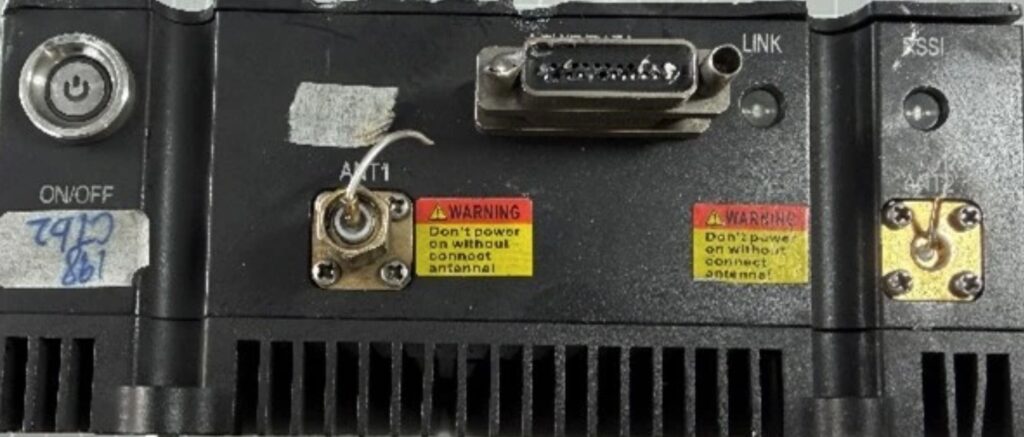
The radio that makes Russia's strike drones resistant to Ukrainian jamming is a Chinese-made part sold openly, and the company that makes it has escaped the sanctions hitting the rest of the drone supply chain, the OSINT group Frontelligence Insight found. The part, a mesh radio modem, has been pulled from downed Russian drones even as Western and Ukrainian sanctions expanded to cover the engines, navigation, motors, cameras, and chips around it.
Russia's war on Ukr
The radio that makes Russia's strike drones resistant to Ukrainian jamming is a Chinese-made part sold openly, and the company that makes it has escaped the sanctions hitting the rest of the drone supply chain, the OSINT group Frontelligence Insight found. The part, a mesh radio modem, has been pulled from downed Russian drones even as Western and Ukrainian sanctions expanded to cover the engines, navigation, motors, cameras, and chips around it.
Russia's war on Ukraine now runs on drones built largely from Chinese parts—a flow China keeps open to Moscow while restricting the same goods to Kyiv.
The part that isn't on any list
The modem is the XK-F358 mesh radio made by Shenzhen Xingkai Technology Co., Ltd. of Guangdong. It sells openly online. The company's Made-in-China storefront lists it at $8,100 to $9,000 apiece, and Serhii "Flash" Beskrestnov previously put the price near $7,000.
Ukraine and its partners have sanctioned Chinese suppliers of drone engines, navigation receivers, motors, cameras, and chips—one Ukrainian round aimed explicitly at parts for drones built to bypass electronic warfare—but not the radios.
Explore further
Ukraine finds uranium in six more Russian drones. Their radiation readings ran up to 80 times background
Recovered from downed drones, and hard to jam
Ukraine's Defense Intelligence photographed an XK-F358 recovered from a downed Geran-5, and Beskrestnov photographed another taken from a Gerbera, Militarnyi reported on 19 January 2026.
Russia's response to electronic warfare wasn't a single solution. It evolved along two major paths: fiber-optic drones and mesh networks. This thread summarizes Frontelligence Insight analysis based on OSINT data and a report by the Center for Defense Reforms. Threadpic.twitter.com/k0v0ZeWKYB
The modem uses COFDM modulation and a mesh design in which each unit relays traffic for the rest, so packets reroute automatically when a node drops.
The same modem also turns up under a second name—HX-50, in a more industrial variant—and its use is no experiment: it spread onto Russia's Shahed-136/Geran-2 strike drones from July 2025 and reached serial integration by early September.
Mesh Network XK-F358 modem from the Geran-5 drone. Photo: Defense Intelligence of Ukraine
The network keeps working after losing roughly 80% of its nodes and can link drones across more than 100 kilometers, or up to 600 in relay chains, according to Beskrestnov, a Ukrainian defense adviser who has examined the recovered units. That is why conventional jamming struggles against it: an attacker has to suppress every node at once rather than break a single link.
What sanctions cover, and what they skip
Ukraine's National Security and Defense Council (NSDC) has sanctioned Chinese makers of navigation receivers, motors, cameras, and chips. The US Treasury designated Xiamen Limbach and Redlepus in October 2024, the EU added Shenzhen Minghuaxin in June 2026. No maker of radio or data-link modems appears among them.
None of the four sanctions regimes that have pursued Russia's Chinese drone suppliers—the US, EU, UK, and Ukraine—lists Shenzhen Xingkai, a direct check of each register by Euromaidan Press confirms.
Explore further
US sanctions 13 Iran-Belarus-China entities supplying Iran’s IRGC. That’s three of four “Axis of Upheaval” states
The gap cuts both ways. Ukrainian battalion commanders and industry sources put the share of parts in a standard Ukrainian FPV drone—batteries, motor magnets, fiber-optic cable—at up to 65% Chinese-made, and Ukraine buys from Shenzhen too.
Cutting one supplier, then the next
Tatarigami, who founded Frontelligence Insight, argues the fix is to extend controls beyond individual firms to the entire chain—down to the optical fiber, the reels it ships on, and the machines that make it. Fiber-optic drones already make up about 60% of Russian FPVs in key sectors, Euromaidan Press reports. The record on firm-by-firm designation is discouraging: after Washington hit Xiamen Limbach, Beijing Xichao took over the engine shipments, Reuters found, and Kupol's Garpiya order climbed from 2,000 drones in 2024 to more than 6,000 this year. But among all component categories in a Geran drone, the one that enables jam-resistant control is the only one absent from the registers.
Explore further
“They hit what was in parking lot”: Russian drone operator adapted strike on Ukraine’s largest online retailer’s warehouse in real time
What controls can reach, and what they can't
Xingkai also markets the modem for civilian work—mining, firefighting, maritime. And as the Xichao case shows, cutting off one company rarely halts the flow.
China's foreign ministry claims it knew nothing of the parts exports, says it controls dual-use goods under its own law, and rejects sanctions it calls baseless.
The harder problem is that the same civilian electronics feeding Russia also stock Ukraine's drone lines, so any workable control has to reach named military buyers without severing the dual-use trade Kyiv still needs. And sanctions may not decide this contest at all: Ukraine is already testing electronic-warfare methods built to break the very mesh networks these radios create.
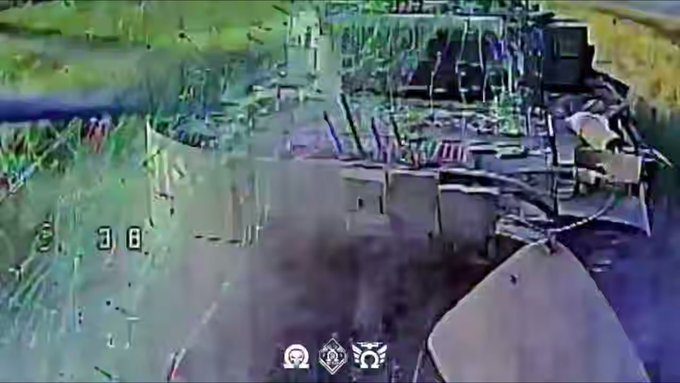
Russia wants its tanks moving again after two years of Ukrainian drones freezing its armored assaults, the Institute for the Study of War (ISW) reported. Its main bet is a tank-mounted system that fires interceptors at incoming drones. The system worked on at least one tank, but Russia lost it anyway.
Since 2022, cheap Ukrainian FPV drones have turned the open approach to any position into ground where armor rarely survives, forcing Russia into slow, infantry-led as
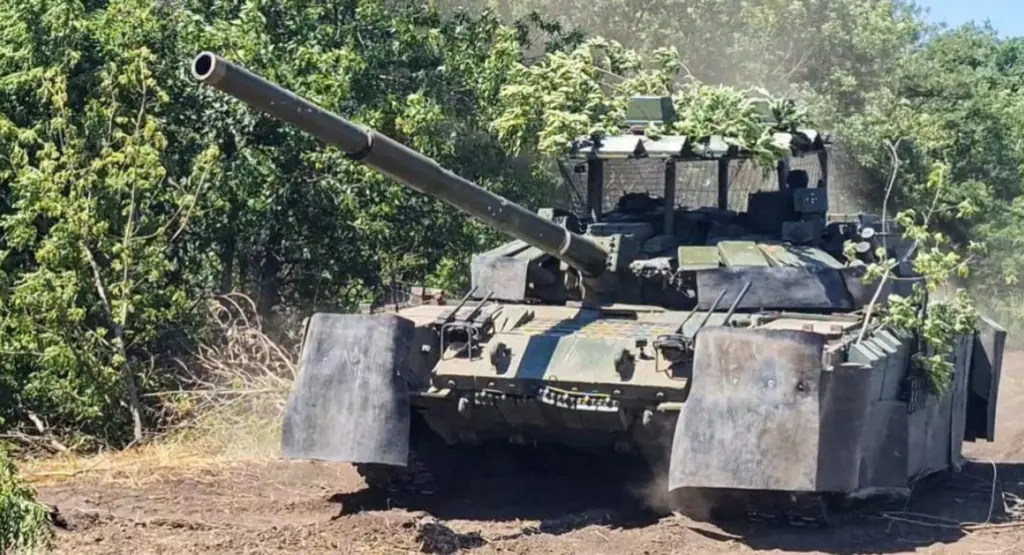
Russia wants its tanks moving again after two years of Ukrainian drones freezing its armored assaults, the Institute for the Study of War (ISW) reported. Its main bet is a tank-mounted system that fires interceptors at incoming drones. The system worked on at least one tank, but Russia lost it anyway.
Since 2022, cheap Ukrainian FPV drones have turned the open approach to any position into ground where armor rarely survives, forcing Russia into slow, infantry-led assaults and years of experiments to armor its tanks against drones.
The shield shot down some drones. Ukraine still killed the tank.
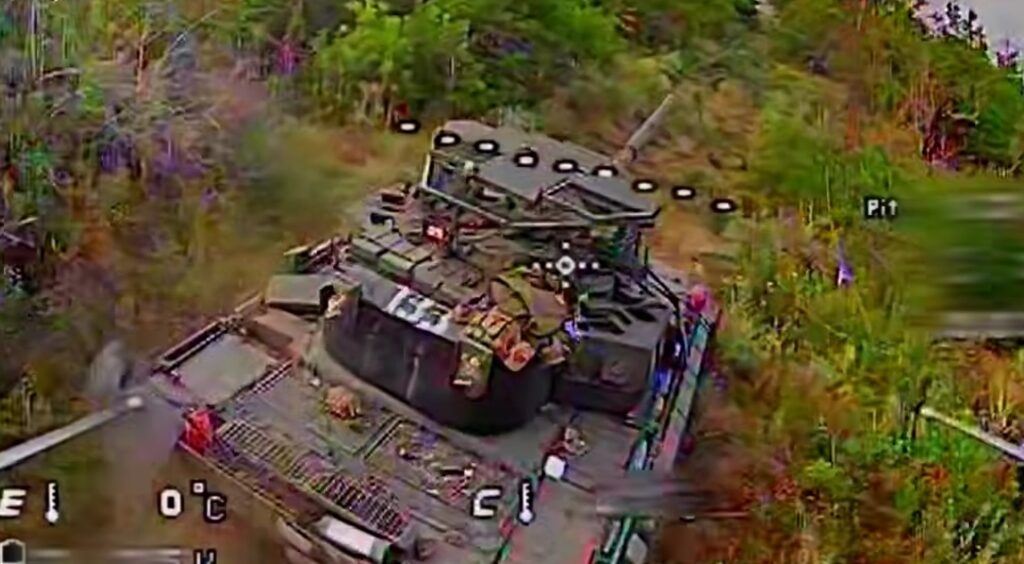
In early August, footage surfaced of Ukrainian drones destroying a Russian tank fitted with the Arena-M active protection system in the Dobropillia sector of Donetsk Oblast. Militarnyi identified the vehicle as a T-72B3A, side number 133, and Militarnyi reported that Ukraine's Security Service (SBU) released the clip. ISW geolocated the footage near occupied Volodymyrivka, east of Dobropillia.
Explore further
Russia took the cages off its newest tanks. The new Arena-M shield bought them a few minutes.
Dmytro Putiata, a Ukrainian combat drone specialist who posts as kriegsforscherD, spoke with the unit involved. On that tank, Arena-M shot down seven drones before its magazine ran dry, he said.
"Unfortunately, it works," Putiata wrote.
It still wasn't enough. Ukrainian crews finished the tank off with more drones. It took 15 to 20 first-person-view (FPV) drones to kill each vehicle, Putiata said. Footage shows the tank moving with its interceptor cells empty. It was the first time the Arena-M was credited with shooting drones down in combat.
Russia keeps sending tanks into that ground for a reason
Russian forces are experimenting with new technology to restore mechanized maneuver and break out of positional warfare—the static, trench-like fighting that has defined the front, ISW reported. They are fitting tanks with active protection systems to help armor survive in the "kill zone," the open ground where drones and other weapons destroy almost anything that moves.
Explore further
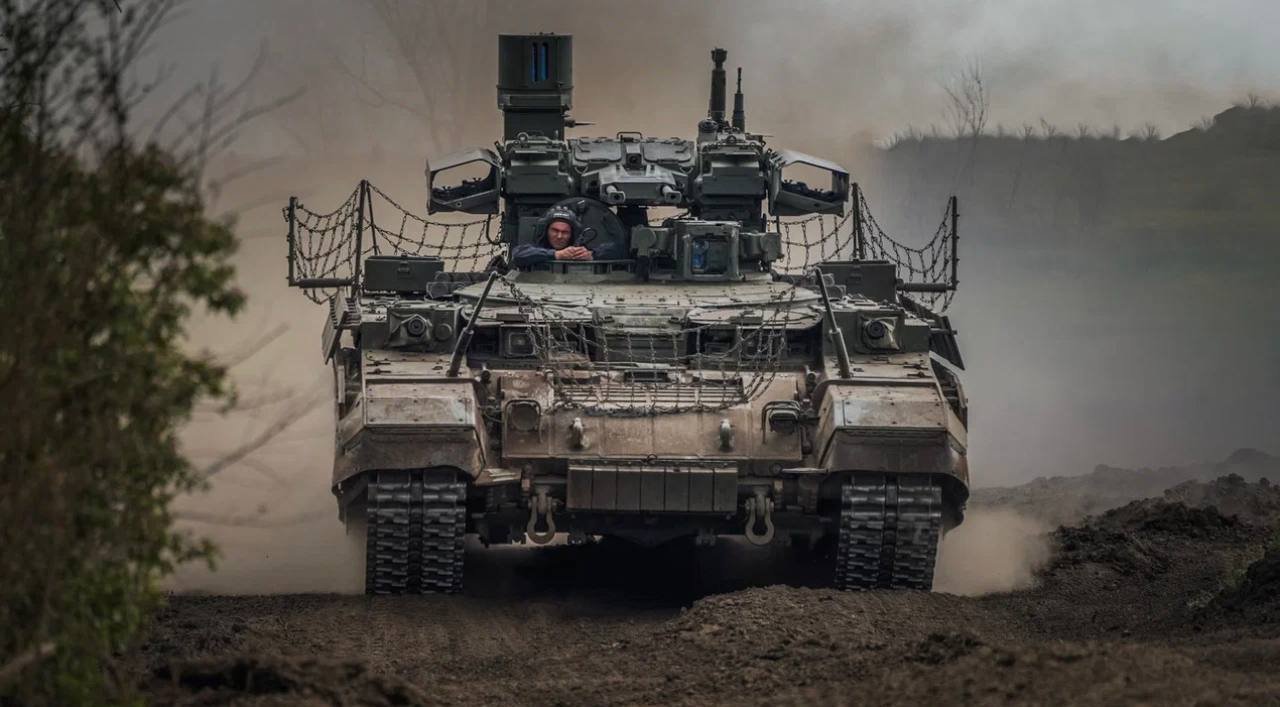
Russia’s weirdest armored vehicle was built to fight infantry. The infantry stopped coming
ISW judged that Arena-M alone cannot shield Russian assaults from the drones, let alone the rest of Ukraine's weapons. Russian commanders have largely kept tanks off the roads because drones kill them faster than factories rebuild them. In these assaults, the tank's job is less to fight than to survive long enough to drop infantry closer to Ukrainian lines. Russia will likely keep trying to restore maneuver even after its late-July mechanized assault in the Dobropillia sector failed, ISW added.
Why Russia wants the shield: the cages don't let tanks fight
The bolt-on armor carries a cost. Cope cages and "turtle" shells weigh tanks down and often jam the turret so the main gun can't aim. That trade-off is part of why Russia wants Arena-M: protection without the bulk, so a tank can still move and shoot. Russia recently sent tanks stripped of the welded cages, carrying the shield instead.
Moment of impact of the T-72B3M tank “133,” equipped with the Arena active protection system and empty countermeasure launcher cells. Screenshot from an SBU video.
Arena-M is not new. Active protection systems like it were first built to stop anti-tank missiles, and Russia adapted this one to catch drones. The system's lineage dates back to the late Soviet era, and Russian industry has for years claimed mass deployment that never came. Designers worked on fitting it to T-72B3 and T-90M tanks since at least 2019, yet only single vehicles turned up by 2024—some used to shoot a propaganda film rather than fight.
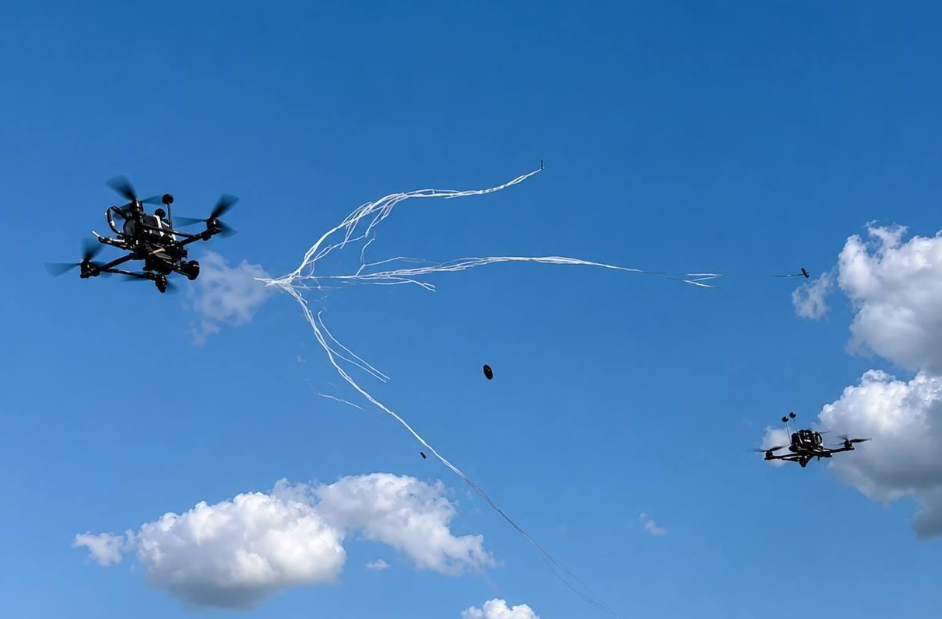
Ukraine has built an interceptor that catches Russian drones instead of ramming them. The company WINFLY has unveiled the WINFLY Spider, an interceptor equipped with a net-launcher to neutralize targets with a net and return to its launch point, the defense outlet Militarnyi reported.
The Spider is the newest entry in Ukraine's fast-growing interceptor-drone industry. Ukraine has fielded a widening range of cheap interceptors to counter Russia's massed drone attacks, an
Ukraine has built an interceptor that catches Russian drones instead of ramming them. The company WINFLY has unveiled the WINFLY Spider, an interceptor equipped with a net-launcher to neutralize targets with a net and return to its launch point, the defense outlet Militarnyi reported.
The Spider is the newest entry in Ukraine's fast-growing interceptor-drone industry. Ukraine has fielded a widening range of cheap interceptors to counter Russia's massed drone attacks, and the Spider's distinction is reusability.
The netgun makes it reusable
Most interceptors are one-shot weapons that ram or explode against their target. The Spider instead carries the Karakurt net-launcher, made of high-strength aluminum and rated to work from −20°C to +50°C, which snares an enemy drone in a net while the interceptor itself stays intact and ready for repeat flights.
The economics are the point. The developers say each net shot about $27, while the drone remains undamaged. That turns the cost equation of drone defense, where an interceptor is often spent to down a single target, into one where the same aircraft can make many intercepts, paying only for a cheap net each time.
The platform and what it hunts
The Spider is built on an existing WINFLY interceptor. It uses the WINFLY 10 Hunter as its base platform, which operates at up to 5,000 meters, reaches 160 kilometers per hour, and has a range of over 18 kilometers.
It is designed for a range of Russian drones. The system targets fixed-wing UAVs, Mavic quadcopters, FPV drones, and fiber-optic drones, with flight times up to 25 minutes, deployment times of up to 3 minutes, and target detection ranges of up to 500 meters. The maker offers day and night versions.
One tool in a scaling defense
Ukraine is downing tens of thousands of Russian drones a month, per the Defense Ministry, and fielding interceptors from at least 29 licensed makers, with new designs like the high-altitude Tsyklop climbing above enemy drones and others ramming them.
Ukraine is shooting down drones at a fast-rising rate. Ukraine's Defense Forces destroyed 40,438 Russian fixed-wing drones, or "wings", in July 2026, Ukraine's Defense Ministry reported on 11 August.
The July figures mark a defense scaling up as fast as the threat it counters. Since the start of the year, Ukraine's Defense Forces have destroyed 195,000 Russian "wings" and 66,000 copters. A counter-drone effort is growing month by month against a Russian drone campaign t
Ukraine is shooting down drones at a fast-rising rate. Ukraine's Defense Forces destroyed 40,438 Russian fixed-wing drones, or "wings", in July 2026, Ukraine's Defense Ministry reported on 11 August.
The July figures mark a defense scaling up as fast as the threat it counters. Since the start of the year, Ukraine's Defense Forces have destroyed 195,000 Russian "wings" and 66,000 copters. A counter-drone effort is growing month by month against a Russian drone campaign that has itself expanded relentlessly.
The numbers climbed across drone types
Both categories of drone kills rose sharply. Fixed-wing "wings," the category that includes long-range attack drones like Shaheds, climbed from 27,711 in May to 40,438 in July, according to the ministry.
Copter kills rose even faster in proportion. The number of destroyed copters grew 42% in a single month, from 14,071 in June to 19,945 in July. The parallel rise in both types reflects a Russian drone offensive attacking on multiple fronts at once, from deep-strike Shaheds to short-range quadcopters over the trenches, and a Ukrainian defense expanding to meet each.
DELTA confirms every kill
Every strike has been confirmed by the DELTA system, and video recording of the shootdowns helps identify the most effective counter-drone tools for development and scaling, the Ukrainian Defense Ministry said.
That verification matters for a claimed tally. Rather than a bare count, the numbers are tied to Ukraine's battle-management system, which logs and video-confirms each kill, the same DELTA platform whose combat data now trains Ukraine's target-detection AI.
The count is one side of the drone war
The figures capture only Ukraine's defensive half of a war fought increasingly by drones. Russia has expanded its drone production and nightly launches throughout 2026, aiming to overwhelm Ukrainian defenses with mass, and the rising Ukrainian kill counts are the answer to that escalation, not a sign it has eased.
Ukraine is testing a new electronic-warfare solution to protect heavy bomber drones and unmanned ground vehicles (UGVs) from cheaper FPV drones. The project has reached field testing, with several prototypes sent to military units, RBC-Ukraine reports.
Ukraine's war has become a laboratory for the economics of unmanned combat, where a mass-produced quadcopter can take down platforms that cost dozens of times more, forcing both volunteer foundations and defense firms
Ukraine is testing a new electronic-warfare solution to protect heavy bomber drones and unmanned ground vehicles (UGVs) from cheaper FPV drones. The project has reached field testing, with several prototypes sent to military units, RBC-Ukraine reports.
Ukraine's war has become a laboratory for the economics of unmanned combat, where a mass-produced quadcopter can take down platforms that cost dozens of times more, forcing both volunteer foundations and defense firms to look for asymmetric answers on the electronic side of the front.
$20,000 bomber vs. $300 drone
The gap runs more than 60-to-1. Liuba Shypovych, head of the Dignitas foundation, told RBC-Ukraine that a heavy bomber can cost around $20,000, while an FPV drone capable of damaging or destroying it can cost about $300. Shypovych said the bombers are particularly vulnerable because they are relatively slow and less maneuverable than smaller FPVs, and that shootdowns are becoming increasingly frequent.
Explore further
A $300 FPV downs a $20,000 bomber drone. Ukraine tests an EW shield for it
Yet Ukraine cannot simply stop using the larger drones. According to Shypovych, they are used to deliver water, food, and ammunition to positions that are difficult or impossible to reach by ground. The military therefore approached Dignitas with a request to protect the platforms, and the team is working on the task together with the company Aura.
The jammer has a problem of its own
Equipping a heavy bomber with electronic warfare creates an unusual technical problem. The bomber needs a communications link with its operator, but the same EW system designed to disrupt an incoming enemy FPV could also interfere with that control channel. The problem extends to UGVs, including platforms used to evacuate wounded soldiers. Shypovych said the goal is to develop EW that can counter hostile drones without cutting the Ukrainian platform's own communications.
Explore further
NATO shot down drone over Latvia. Russia’s electronic warfare sent it there
From the test range to the first units
Dignitas and Aura are testing the systems at training grounds and have already sent several samples to military units. Shypovych expects the solution to be ready in roughly two months.
The effort comes as Ukraine rapidly expands its use of unmanned ground systems. Kyiv has set a target to contract at least 50,000 UGVs, with robots already taking on logistics and evacuation tasks in high-risk zones. Ukrainian forces have already received 1,028 UGVs through the DOT-Chain Defense marketplace, with the systems handling logistics, evacuation, mine-laying, and combat. Ukrainian Vampire bombers have also been upgraded to shrug off Russian jamming and even hunt the jammers themselves.
Mon Carnet, le podcast · Des drones pour nettoyer les bâtiments À Québec, National Entretien, une entreprise familiale fondée en 1930, mise sur les drones pour moderniser le lavage de vitres en hauteur. Son copropriétaire Hubert Rouleau explique comment cette technologie permet d’intervenir plus rapidement tout en gardant les travailleurs au sol et en réduisant […]
Mon Carnet, le podcast · Des drones pour nettoyer les bâtiments À Québec, National Entretien, une entreprise familiale fondée en 1930, mise sur les drones pour moderniser le lavage de vitres en hauteur. Son copropriétaire Hubert Rouleau explique comment cette technologie permet d’intervenir plus rapidement tout en gardant les travailleurs au sol et en réduisant […]
Russia can currently fire a simultaneous salvo of 77 ballistic missiles, and it aims to lift that ceiling to 200. Robert "Magyar" Brovdi, who commands Ukraine's Unmanned Systems Forces, told the Associated Press. He called the plan one of Ukraine's gravest weak points.
Kyiv's only reliable shield against ballistic missiles is the US-made Patriot, and its interceptor stocks are critically low. During mass barrages, dozens of warheads therefore slip through and reach their ta
Russia can currently fire a simultaneous salvo of 77 ballistic missiles, and it aims to lift that ceiling to 200. Robert "Magyar" Brovdi, who commands Ukraine's Unmanned Systems Forces, told the Associated Press. He called the plan one of Ukraine's gravest weak points.
Kyiv's only reliable shield against ballistic missiles is the US-made Patriot, and its interceptor stocks are critically low. During mass barrages, dozens of warheads therefore slip through and reach their targets. Only a handful of countries can build such interceptors, and all are short, defense analysts have warned. The AP, for its part, could not independently verify Brovdi's numbers.
Ballistic missiles remain the hardest to stop
That shortfall has already turned lethal. Intensified strikes made July the deadliest month for Ukrainian civilians since April 2022, the UN human-rights office in Ukraine documented. Air defenses downed just 29 of the 195 ballistic missiles Russia fired that month, roughly 15%. Another 40 fell short on their own. Yet the largest single-night launches recorded so far run to only a few dozen. That is well below the salvo of 77 that Brovdi describes, and a fraction of the 200 Moscow is reaching for.
"Even if they only manage half of that, it will all be flying at us." - Robert "Magyar" Brovdi, commander, Ukraine's Unmanned Systems Forces
Production running ahead of plan
His warning tracks Ukrainian intelligence. Russia's defense industry is overfulfilling its monthly targets, hitting 110% to 120% on the main missile types. So said Deputy Military Intelligence Chief Vadym Skibitskyi in an interview with RBC-Ukraine. He put July output for the Kh-101 cruise missile at 140% of plan, the Kalibr at 111%, and the Kh-35 at 200%. A pause in strikes, he judged, is unlikely.
The pivot to jet-powered drones
Moscow's factories are also retooling around drones. Russia plans to assemble 11,000 strike drones of various types in August 2026, Skibitskyi said. That mix spans the Geran-1 through Geran-5, the Harpia, and several Gerbera variants. Output dipped in July as the industry shifted toward the turbojet Geran-4 and Geran-5.
Those jet models fly faster and demand different interceptors or short-range air defense. They already made up half of one recent attack. The concentration of jet-powered Shaheds, meanwhile, has climbed 2.5 times in recent weeks, Brovdi added. Taken together, the assessments point one way: more missiles and faster drones, launched in larger waves, against defenses Ukraine is scrambling to rebuild.
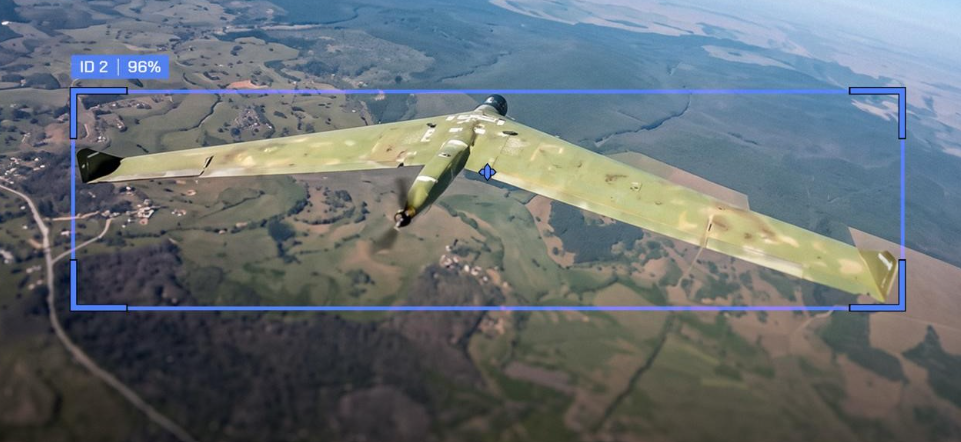
Footage from a recent Ukrainian strike on a Russian oil refinery captured an unidentified drone resembling the US F-117 Nighthawk stealth jet, though on a far smaller, drone-sized scale, according to RBC-Ukraine. Online observers suspect a new Ukrainian jet-powered strike drone, or a test of an allied foreign one, but no official body has confirmed what the aircraft is. If the guesses hold, Ukraine may be fielding a faster, longer-reaching class of weapon for hitting t
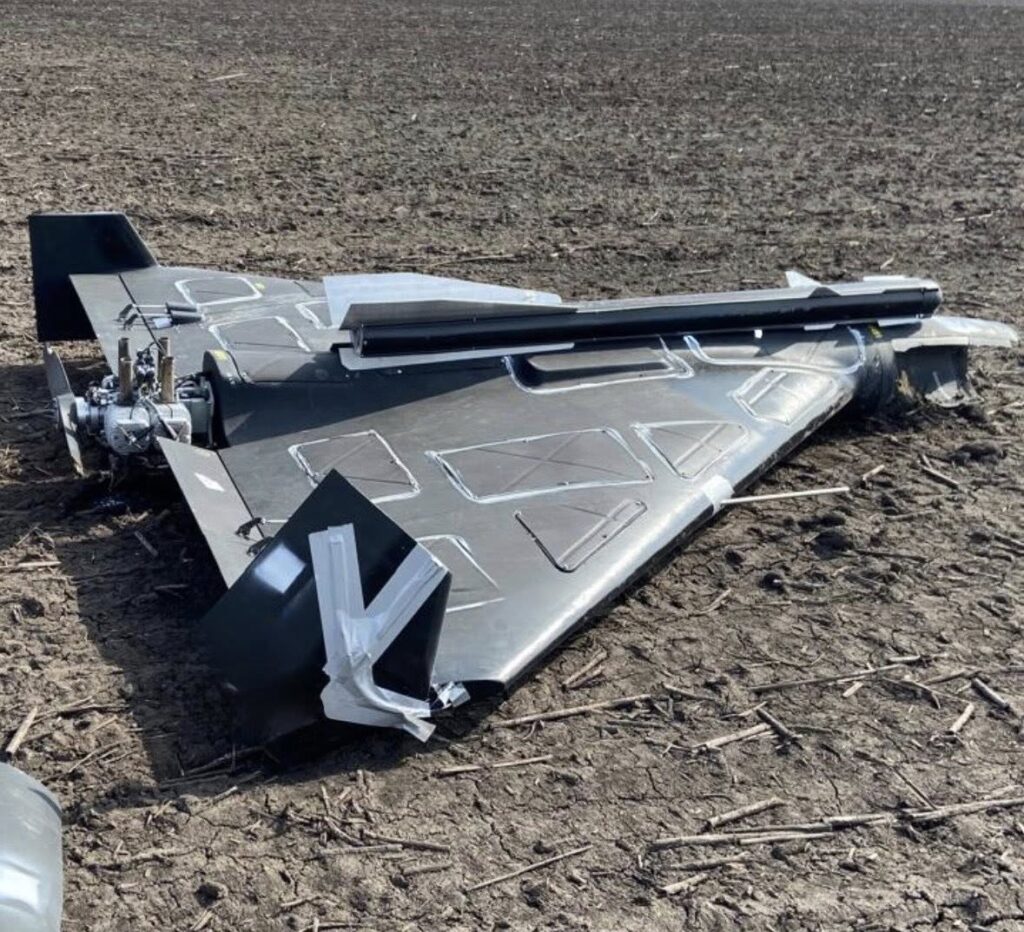
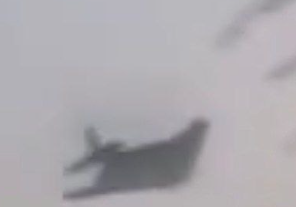
Footage from a recent Ukrainian strike on a Russian oil refinery captured an unidentified drone resembling the US F-117 Nighthawk stealth jet, though on a far smaller, drone-sized scale, according to RBC-Ukraine. Online observers suspect a new Ukrainian jet-powered strike drone, or a test of an allied foreign one, but no official body has confirmed what the aircraft is. If the guesses hold, Ukraine may be fielding a faster, longer-reaching class of weapon for hitting targets deep inside Russia.
Ukraine has spent the past year turning Russia's interior into contested space, sending long-range drones ever deeper toward the oil, defense, and logistics sites the Kremlin once treated as untouchable. Each new type that surfaces marks another step from short-range drones toward missile-like machines.
An unfamiliar silhouette over the refinery
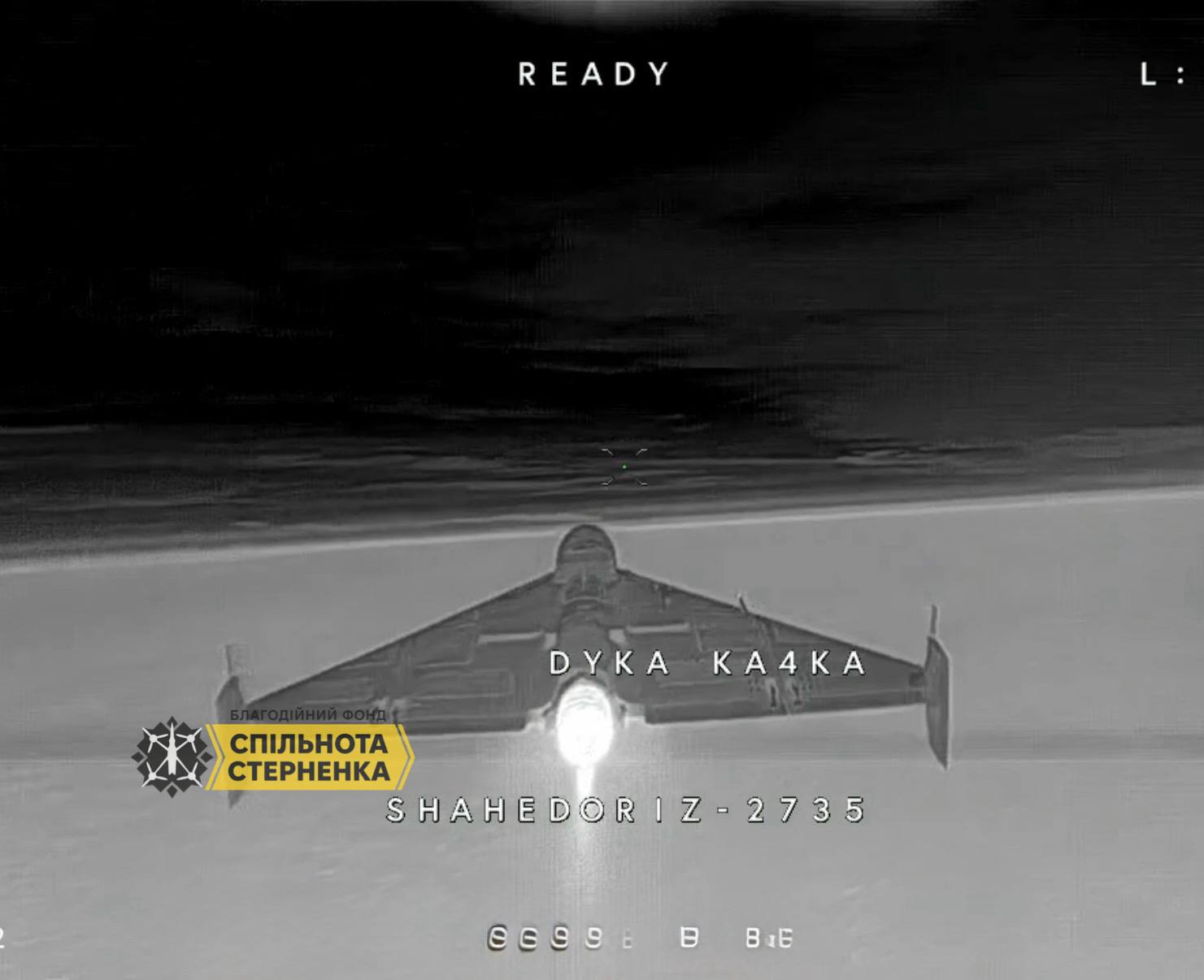
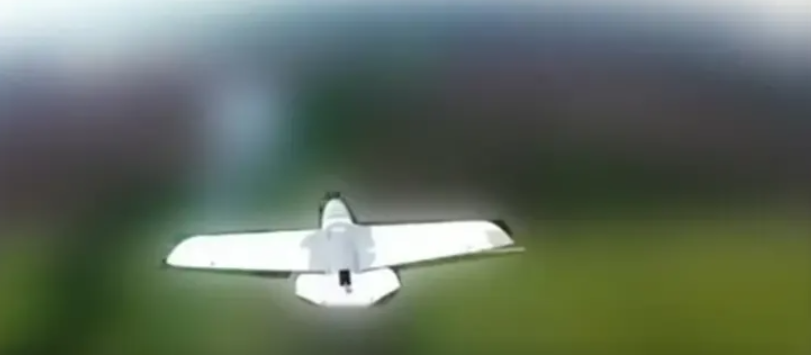
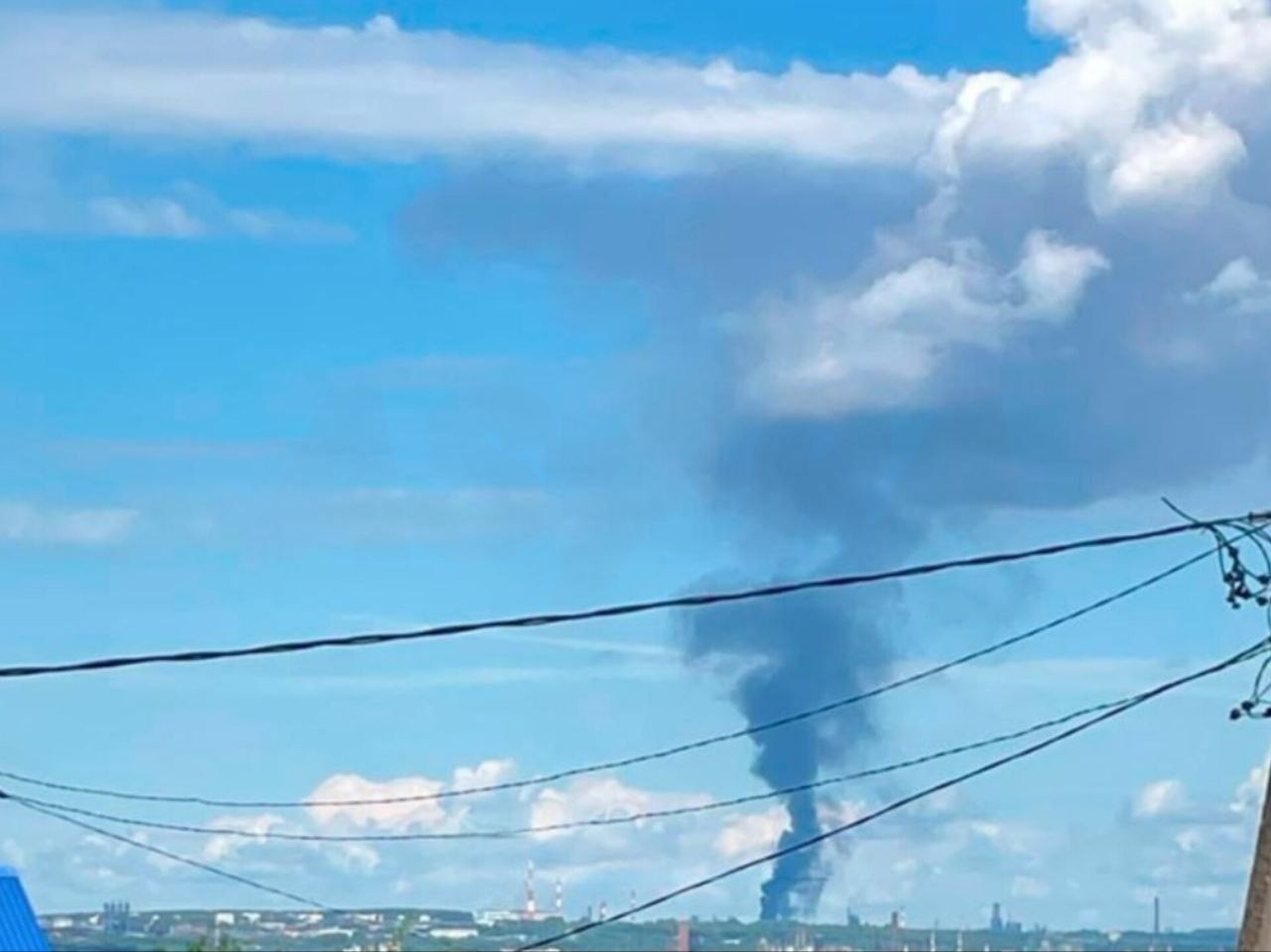
The drone appeared during a 2 August Ukrainian drone strike on a refinery near Ufa,more than 1,300 kilometers from the Ukrainian border. The clip shows an aircraft shaped unlike most Ukrainian long-range drones, likely powered by a jet engine. The open-source monitoring channel Clash Report, which first shared the footage, believes it may be the Bravo drone or a modified version.
Explore further
Drones flew 1,300 km to Russia’s Ufa—then struck Bashneft refineries
What the Bravo could do, and why it would matter
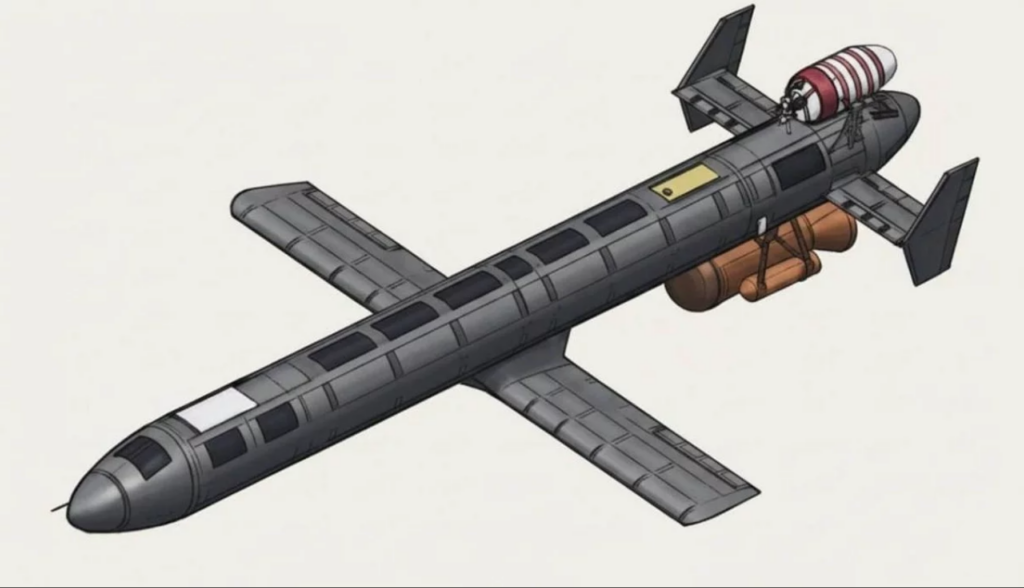
If the aircraft is indeed a Triada Robotics product, the company describes Bravo as a single-use, jet-powered drone intended for long-range strike missions. According to the developer, its range exceeds 2,000 km (about 1,240 miles)—enough to reach much of the refinery and defense-industrial infrastructure Russia keeps far from the front lines.
Mysterious Jet Drone Attacks Ufa
During the attack on the oil refinery in the Ufa area on July 2nd, an unidentified drone was spotted, resembling the American F-117 in shape. Theoretically, it could be the Bravo Deep-Strike UAV Platform from Triada Robotics, but there is no… pic.twitter.com/LnplWeRAul
Triada Robotics says the drone cruises at about 600 km/h and can accelerate to roughly 800 km/h (around 500 mph) during the final phase of flight. The company also lists a warhead weighing more than 100 kg (220 lb), a payload that could threaten facilities such as fuel depots or refineries.
The developer pitches it as a cheaper stand-in for a cruise missile—long-range reach at a fraction of the cost—so Ukraine could fly more strikes at distant targets.
Explore further
Oil refinery, strategic airbase, and drone facilities: Overnight strikes hit key pillars of Russia’s war effort
Why observers compare it to the F-117
The comparison rests on the drone's silhouette. Watchers noted its outline echoes the F-117 Nighthawk, the US jet built with radar-evading shaping. A similar shape, though, does not prove full stealth. Such geometry can also sharpen aerodynamics or dodge only certain radar types. Even so, the aircraft's identity stays unconfirmed, and its edge rests on the maker's claims rather than proven use.
A drone came down on a beach full of Russian holidaymakers, and the evidence points to Russia's own air defense bringing it there. On 3 August, drones attacked Krasnodar Krai, and one crashed onto a beach in Arkhipo-Osipovka near Gelendzhik, killing at least six people, three of them children, and injuring around 40, Krasnodar Governor Veniamin Kondratyev said.
Russian outlet Agentstvo and OSINT analysts assessed that the drone likely fell because of Russian air-defense
A drone came down on a beach full of Russian holidaymakers, and the evidence points to Russia's own air defense bringing it there. On 3 August, drones attacked Krasnodar Krai, and one crashed onto a beach in Arkhipo-Osipovka near Gelendzhik, killing at least six people, three of them children, and injuring around 40, Krasnodar Governor Veniamin Kondratyev said.
Russian outlet Agentstvo and OSINT analysts assessed that the drone likely fell because of Russian air-defense fire rather than a direct hit, citing gunfire audible in footage before the drone dived and an abrupt change in its flight path.
The beach sits directly in front of the Rassvet resort, a facility of NPO Mashinostroyeniya, one of Russia's key missile-manufacturing enterprises.
The warning system did not sound
Survivors say they had no notice. Local residents and holidaymakers complained that no air-raid alert sounded at all, though warning systems are installed in the village, and the Russian channel Astra also noted that no alert was heard in the region during the attack, per the reports.
People on the beach were in the open, with little chance to take cover, even if they had been warned. The absence of a siren in a resort packed at the height of the summer season left sunbathers and swimmers with no warning that a drone was overhead and being fired at.
The target was a missile maker's resort
NPO Mashinostroyeniya develops cruise missiles for the Russian army, and its Rassvet recreation base was the apparent target roughly 300 meters from where the drone came down, the Supernova Telegram channel reported.
Ukraine strikes Russian military-industrial sites across the country, and a missile-development enterprise is a legitimate military target. What turned a strike near a defense plant into a mass-casualty event on a beach was, by the analysts' account, Russian air defense knocking the drone down over the crowd rather than away from it. Ukraine had not commented on the strike.
The dynamic is one Ukraine knows intimately in reverse
Russian air-defense missiles and the debris of intercepted drones regularly fall on Ukrainian cities, killing civilians, and Ukraine has long documented how interception over populated areas kills the people it is meant to protect.
July marked a break with the pattern of Russia’s long-range strike campaign. Russia launched fewer of the massive, complex salvos that defined 2024 and 2025—yet fired more missiles than in any month in years.The shift is not only in volume but in method—from occasional shock-and-awe raids to a sustained, high-tempo campaign built to grind down Ukraine's air defense before winter.
In the last two large attacks, Ukraine downed two of 36 ballistic missiles—roughly one in
July marked a break with the pattern of Russia’s long-range strike campaign. Russia launched fewer of the massive, complex salvos that defined 2024 and 2025—yet fired more missiles than in any month in years.
The shift is not only in volume but in method—from occasional shock-and-awe raids to a sustained, high-tempo campaign built to grind down Ukraine's air defense before winter.
In the last two large attacks, Ukraine downed two of 36 ballistic missiles—roughly one in twenty—for lack of Patriot interceptors.
A shift from shock-and-awe
There were fewer massive, complex strikes than usual. Ukraine faced only three large strike packages of 250 or more missiles and drones—below the usual monthly average of nearly five. More striking was the gap between the last two: 24 days, against a typical week.
Yet despite the smaller number of massive strike packages, July was Russia's heaviest missile month in years. Monthly totals vary widely, but Russia averages about 168 ballistic and cruise missiles against Ukraine per month. In July, it launched 376. So far in 2026, monthly launches are running 58% above the January-to-July total for last year, putting 2026 on course to exceed 2025’s full-year total.
And winter is approaching.
With attacks spread across many nights, Ukraine never gets the pause it needs to repair damaged infrastructure or rest its air-defense crews, and every night burns interceptors it cannot easily replace. The campaign wears down the whole system rather than any single target.
Kyiv has increasingly become the main target, but Russian strikes hit a wide swathe of Ukraine’s deep rear, driving up civilian casualties. In its largest attacks, Russia now fires from several directions at once, with a rising share of ballistic missiles.
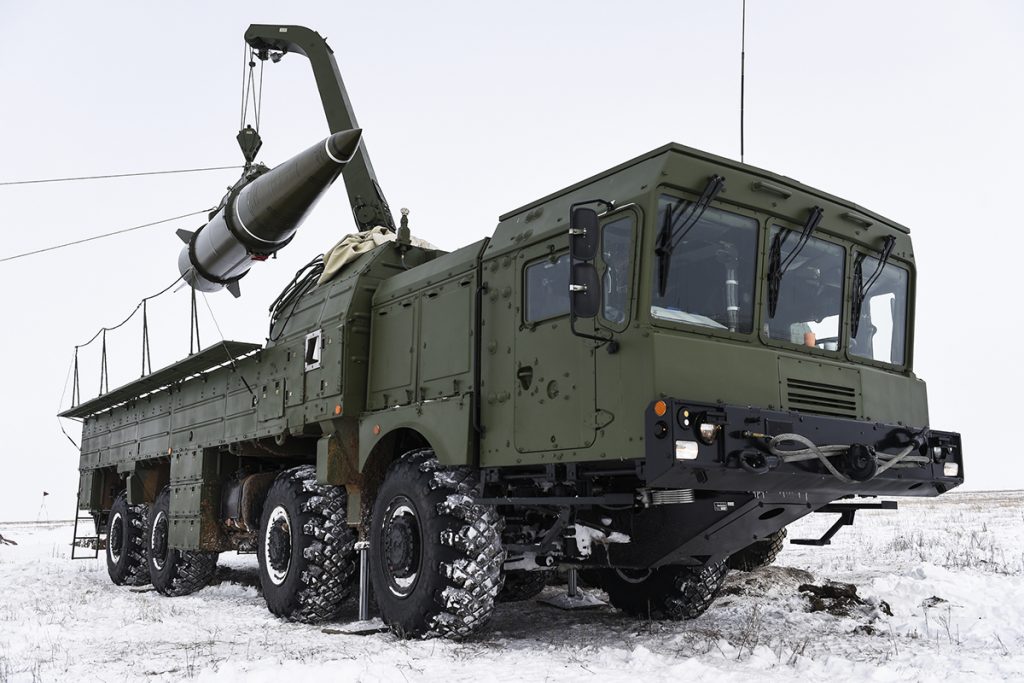
Transporter-loader vehicle 9T250 of Russia's Iskander missile system. Photo via Militarnyi.
Ballistic missiles
The surge in ballistic missile launches was one of July’s defining features. Russia is producing far more ballistic missiles than at the start of the full-scale invasion, and output has continued to rise through 2025 and into 2026. In July, a third of all missiles—126—were ballistic.
The Patriot remains Ukraine’s principal defense against ballistic missiles, and interceptor stocks are extremely limited. Ballistic missiles give far shorter warning times than cruise missiles, and their success rate is far higher. In the last two large attacks, Russia launched 36 Iskander-M/KN-23 and S-300/400 ballistic missiles. Ukraine downed two of the 36—roughly one in twenty—for lack of Patriot interceptors.
/
Since last night, response efforts have been underway in Kyiv and the surrounding region following Russia’s strike. There were numerous fires across the city. Seven districts were affected, and, as usual, the Russians struck ordinary residential buildings. Eighteen residential… pic.twitter.com/Fr8Jb4AEys
— Volodymyr Zelenskyy / Володимир Зеленський (@ZelenskyyUa) August 1, 2026
Ukraine is proposing an alternative to Patriot resupply, which the US war with Iran has sharply depleted. President Zelenskyy has asked Trump to secure Elon Musk’s permission for Ukraine to use Starlink to guide drone strikes against ballistic launchers on Russian territory—destroying them before they can fire.
The Atlantic quoted Denys Shtilerman, co-founder of the Ukrainian defense company Fire Point, arguing that Starlink-guided drones could neutralize Russia’s missile threat more effectively than interceptors: “Instead of shooting down the arrows, we would strike the archers.”
A policy shift is unlikely. Starlink is currently geofenced to Ukraine, including occupied Crimea and other oblasts. Musk has defended that restriction and said he will not let the network guide deep strikes into Russia, citing the risk of direct escalation.
Air-launched cruise missiles
July brought another anomaly: Kh-59/Kh-69 use jumped several-fold. In 2025, Russia fired 113 of these air-launched cruise missiles. In July alone, it launched 62—more than half of last year’s total in a single month.
The jump likely reflects several converging developments rather than a single cause. Serial production, particularly of the Kh-69, is maturing, while Russia is making wider use of tactical aircraft, including Su-34s, Su-35s, and possibly Su-57s.
The Kh-69 also offers better survivability than older tactical missiles and a more cost-effective precision weapon than strategic cruise missiles. Russia is increasingly integrating it into complex strike packages designed to saturate Ukrainian air defenses.
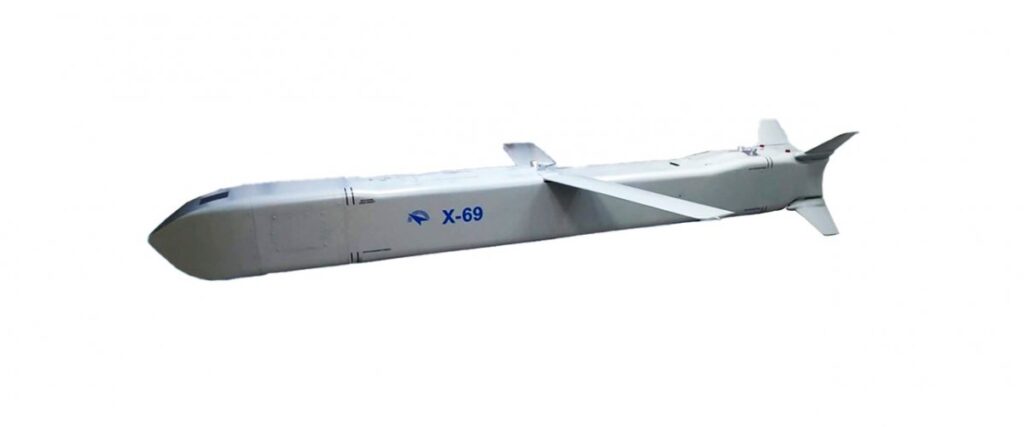
A Russian Kh-69 air-launched cruise missile. Russia fired 62 Kh-59 and Kh-69 missiles at Ukraine in July—more than half the combined 2025 total in one month.
The Kh-69 has become Russia’s preferred tactical air-launched precision weapon—filling, in the tactical domain, the role the Kh-101 plays in the strategic one. If the trend holds, it will account for a growing share of Russia’s non-ballistic strikes through the rest of 2026.
Several recent barrages combined Iskander-M ballistic missiles, Kh-101 and Kh-59/69 cruise missiles, and Shahed drones—maximizing the complexity of the air defense problem.
Long-range drones
Long-range strike drone numbers fell. By the Ukrainian Air Force’s daily reports, Ukraine faced 4,951 strike drones—Shahed-type, Gerbera, Italmas, and “Banderol” loitering munitions. Apart from January, that is the lowest monthly figure since August 2025. Yet the interception rate was the third-lowest this year, at 86.6%.
The falling kill rate owes partly to the spread of jet-propelled drones. Russia first fielded jet-powered Shahed-type drones in early June 2025; by mid-2026, they had gone from an occasional tactic to a persistent threat, flying at 370 to more than 500 km/h—beyond the reach of many Ukrainian interceptors. Jet engines now power an estimated 15% to 20% of Russia’s active Shahed arsenal.
Explore further
Russia is now losing 95% of its Shaheds to Ukrainian interception. Moscow’s response will be jet-powered variants and border-area targeting
A schematic of Russia’s jet-powered Geran-5 long-range attack drone. Russia is producing up to 500 Geran-4 and Geran-5 drones a month, according to Ukrainian military intelligence. Credit: Main Directorate of Intelligence of Ukraine’s Defense Ministry.
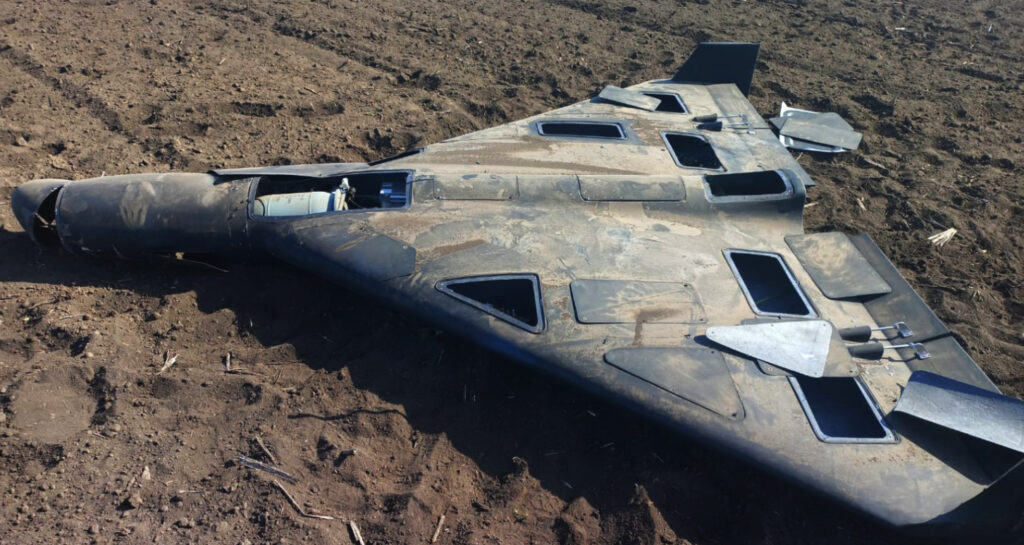
Russia is already making up to 500 jet-powered Geran-4 and Geran-5 drones a month, with mass production of the Geran-3 expected in the second half of the year. The stated goal, according to Ukrainian intelligence, is to raise jet-powered drones to half of the total Shahed fleet—a shift that could blunt Ukraine’s interceptor-drone defense and tip the balance back toward Russia.
Cheap propeller-driven Shaheds and Gerbera decoys still pound frontline positions and border-area fuel depots, while Russia conserves its jet-propelled drones for high-value targets deep in the Ukrainian rear. Russia plans to build 60,000 long-range strike drones and another 50,000 decoys this year.
Although July’s drone numbers were the lowest since August 2025, the low interception rate meant that only January and April saw more drones reach their targets.
Implications
Air-defense depletion is becoming a primary objective. Russia is exploiting both the global shortage of Patriot interceptors and the gaps in Ukraine’s drone defenses to escalate its war of attrition.
The campaign aims less at destroying individual targets than at degrading Ukraine’s integrated air defense. Every attack forces a choice: defend Kyiv, the western logistics hubs, the frontline cities, or the energy grid—or hold interceptors in reserve. That dilemma sharpens when attacks come almost nightly rather than once a week.
Taken together, July 2026 suggests Russia is shifting from episodic mass strikes to a persistent, high-tempo campaign. Its key features:
More long-range drones and more capable missiles in production.
Greater reliance on ballistic missiles, which are hardest to intercept.
Expanded use of Kh-59/69 tactical cruise missiles, enabled by tactical aviation.
More diverse strike packages, complicating Ukrainian air-defense planning.
A sustained effort to wear down Ukrainian interceptor inventories and command systems, rather than relying on spectacular one-night attacks.
If the trend continues, Russia may sustain frequent small-to-medium mixed packages through the rest of 2026, rather than returning to the fewer but exceptionally large “record” attacks of 2024 and 2025.
Russia is capitalizing on the US and Europe’s inability to produce enough interceptors for the Patriot and SAMP/T systems—a shortfall July has thrown into sharp relief.
Ukrainian destruction and suffering will mount as the war of attrition grinds on. And Europe stands badly unprepared for a military confrontation with Russia. In principle, a Patriot battery with no interceptors left to fire is scarcely better than no battery at all.
Hans Petter Midttun, independent analyst on hybrid warfare, Non-Resident Fellow at the Centre for Defense Strategies, board member of the Ukrainian Institute for Security and Law of the Sea, former Defense Attaché of Norway to Ukraine, and officer (R) of the Norwegian Armed Forces.
Editor's note. The opinions expressed in our Opinion section belong to their authors. Euromaidan Press' editorial team may or may not share them.

 Connexion








 Mysterious Jet Drone Attacks Ufa