Vue normale

  • ✇Euromaidan Press
  • Russia’s jam-resistant drones run on a Chinese modem no one has sanctioned
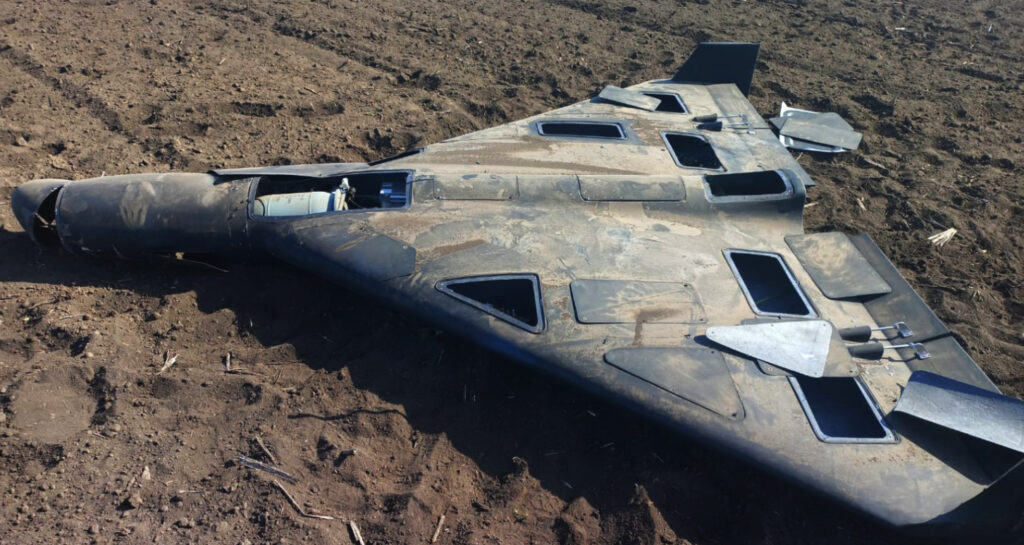
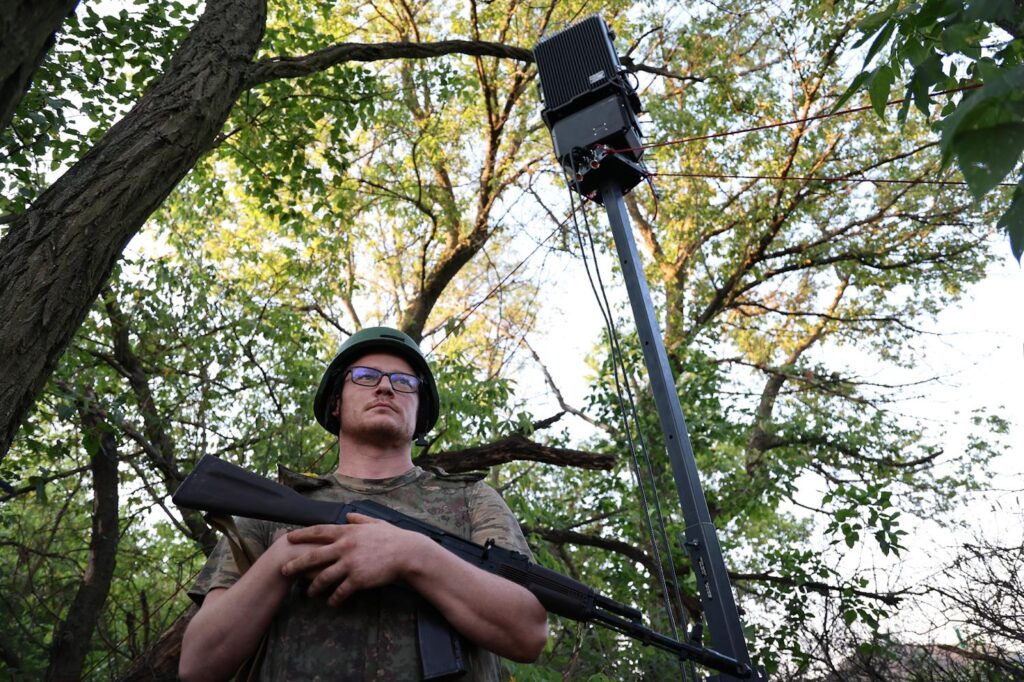
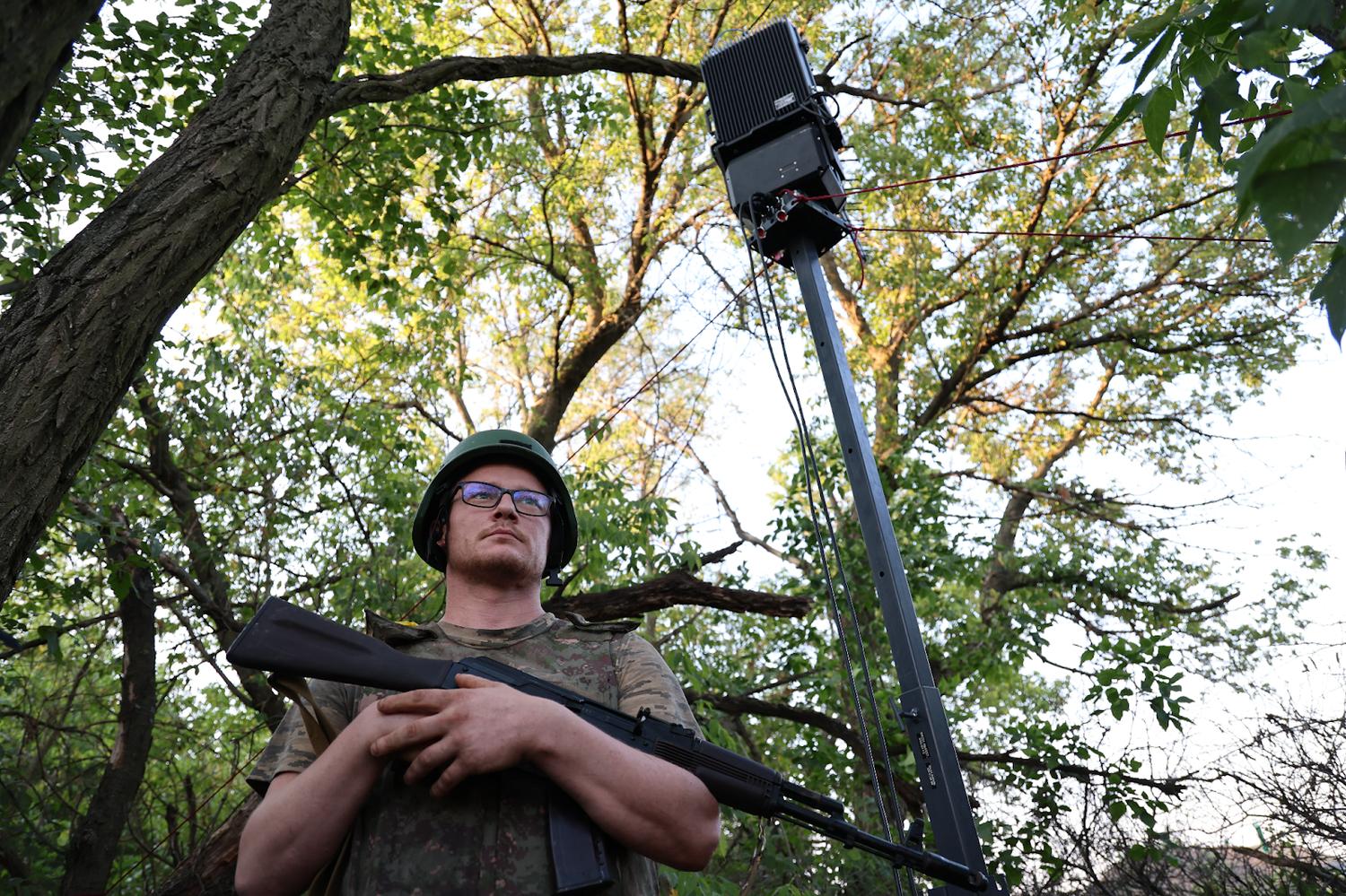
    The radio that makes Russia's strike drones resistant to Ukrainian jamming is a Chinese-made part sold openly, and the company that makes it has escaped the sanctions hitting the rest of the drone supply chain, the OSINT group Frontelligence Insight found. The part, a mesh radio modem, has been pulled from downed Russian drones even as Western and Ukrainian sanctions expanded to cover the engines, navigation, motors, cameras, and chips around it. Russia's war on Ukr
     

Russia’s jam-resistant drones run on a Chinese modem no one has sanctioned

11 août 2026 à 13:30

The radio that makes Russia's strike drones resistant to Ukrainian jamming is a Chinese-made part sold openly, and the company that makes it has escaped the sanctions hitting the rest of the drone supply chain, the OSINT group Frontelligence Insight found. The part, a mesh radio modem, has been pulled from downed Russian drones even as Western and Ukrainian sanctions expanded to cover the engines, navigation, motors, cameras, and chips around it.

Russia's war on Ukraine now runs on drones built largely from Chinese parts—a flow China keeps open to Moscow while restricting the same goods to Kyiv.

The part that isn't on any list

The modem is the XK-F358 mesh radio made by Shenzhen Xingkai Technology Co., Ltd. of Guangdong. It sells openly online. The company's Made-in-China storefront lists it at $8,100 to $9,000 apiece, and Serhii "Flash" Beskrestnov previously put the price near $7,000.

Ukraine and its partners have sanctioned Chinese suppliers of drone engines, navigation receivers, motors, cameras, and chips—one Ukrainian round aimed explicitly at parts for drones built to bypass electronic warfare—but not the radios.
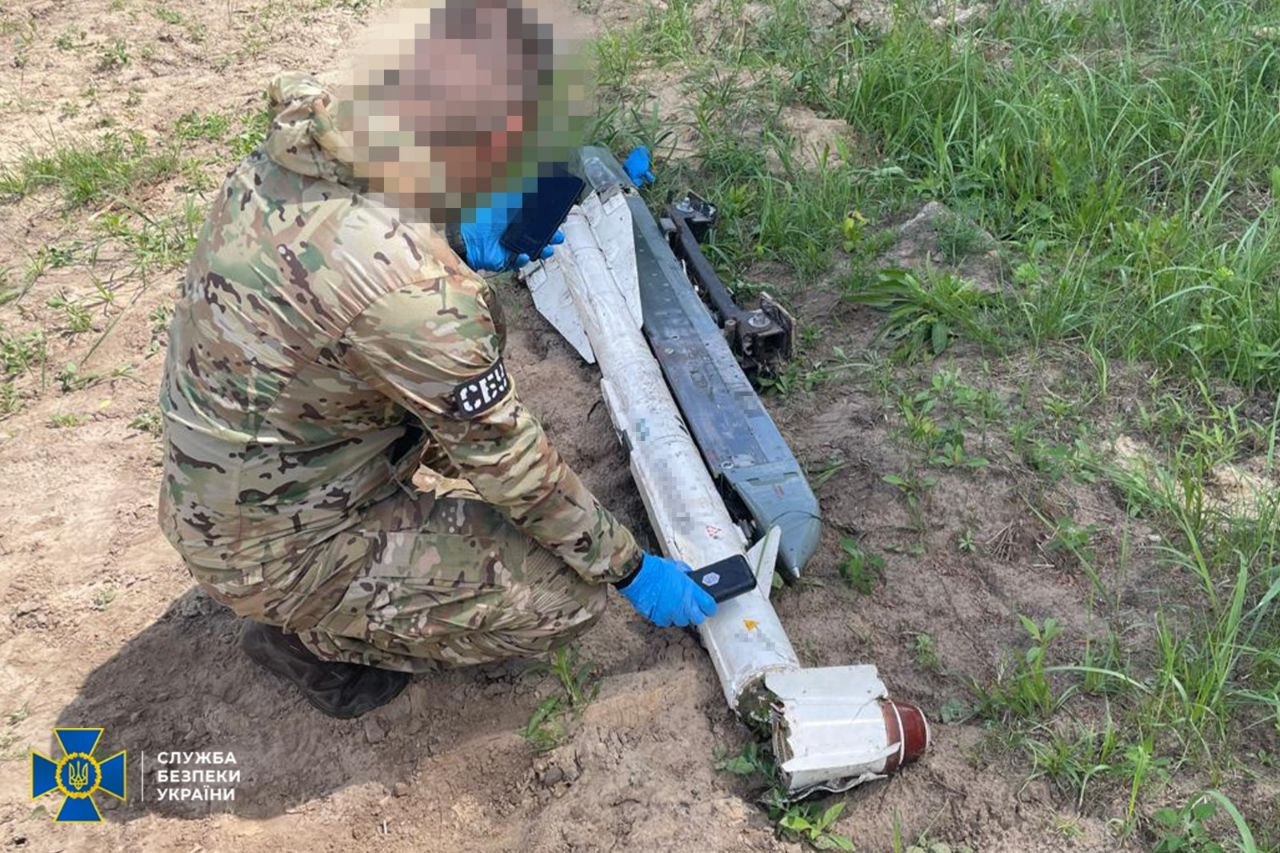
A Ukrainian Security Service officer at the crash site of a Russian drone containing uranium. Source: The SBU
Explore further

Ukraine finds uranium in six more Russian drones. Their radiation readings ran up to 80 times background

Recovered from downed drones, and hard to jam

Ukraine's Defense Intelligence photographed an XK-F358 recovered from a downed Geran-5, and Beskrestnov photographed another taken from a Gerbera, Militarnyi reported on 19 January 2026.

Russia's response to electronic warfare wasn't a single solution. It evolved along two major paths: fiber-optic drones and mesh networks. This thread summarizes Frontelligence Insight analysis based on OSINT data and a report by the Center for Defense Reforms. Thread🧵 pic.twitter.com/k0v0ZeWKYB

— Tatarigami_UA (@Tatarigami_UA) July 30, 2026

The modem uses COFDM modulation and a mesh design in which each unit relays traffic for the rest, so packets reroute automatically when a node drops.

The same modem also turns up under a second name—HX-50, in a more industrial variant—and its use is no experiment: it spread onto Russia's Shahed-136/Geran-2 strike drones from July 2025 and reached serial integration by early September.
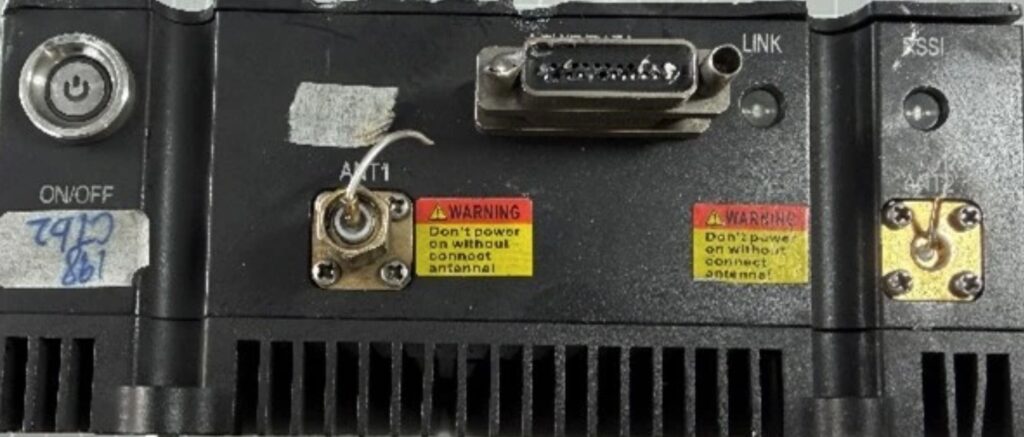
Mesh Network XK-F358 modem from the Geran-5 drone
Mesh Network XK-F358 modem from the Geran-5 drone. Photo: Defense Intelligence of Ukraine

The network keeps working after losing roughly 80% of its nodes and can link drones across more than 100 kilometers, or up to 600 in relay chains, according to Beskrestnov, a Ukrainian defense adviser who has examined the recovered units. That is why conventional jamming struggles against it: an attacker has to suppress every node at once rather than break a single link.

What sanctions cover, and what they skip

Ukraine's National Security and Defense Council (NSDC) has sanctioned Chinese makers of navigation receivers, motors, cameras, and chips. The US Treasury designated Xiamen Limbach and Redlepus in October 2024, the EU added Shenzhen Minghuaxin in June 2026. No maker of radio or data-link modems appears among them.

None of the four sanctions regimes that have pursued Russia's Chinese drone suppliers—the US, EU, UK, and Ukraine—lists Shenzhen Xingkai, a direct check of each register by Euromaidan Press confirms.
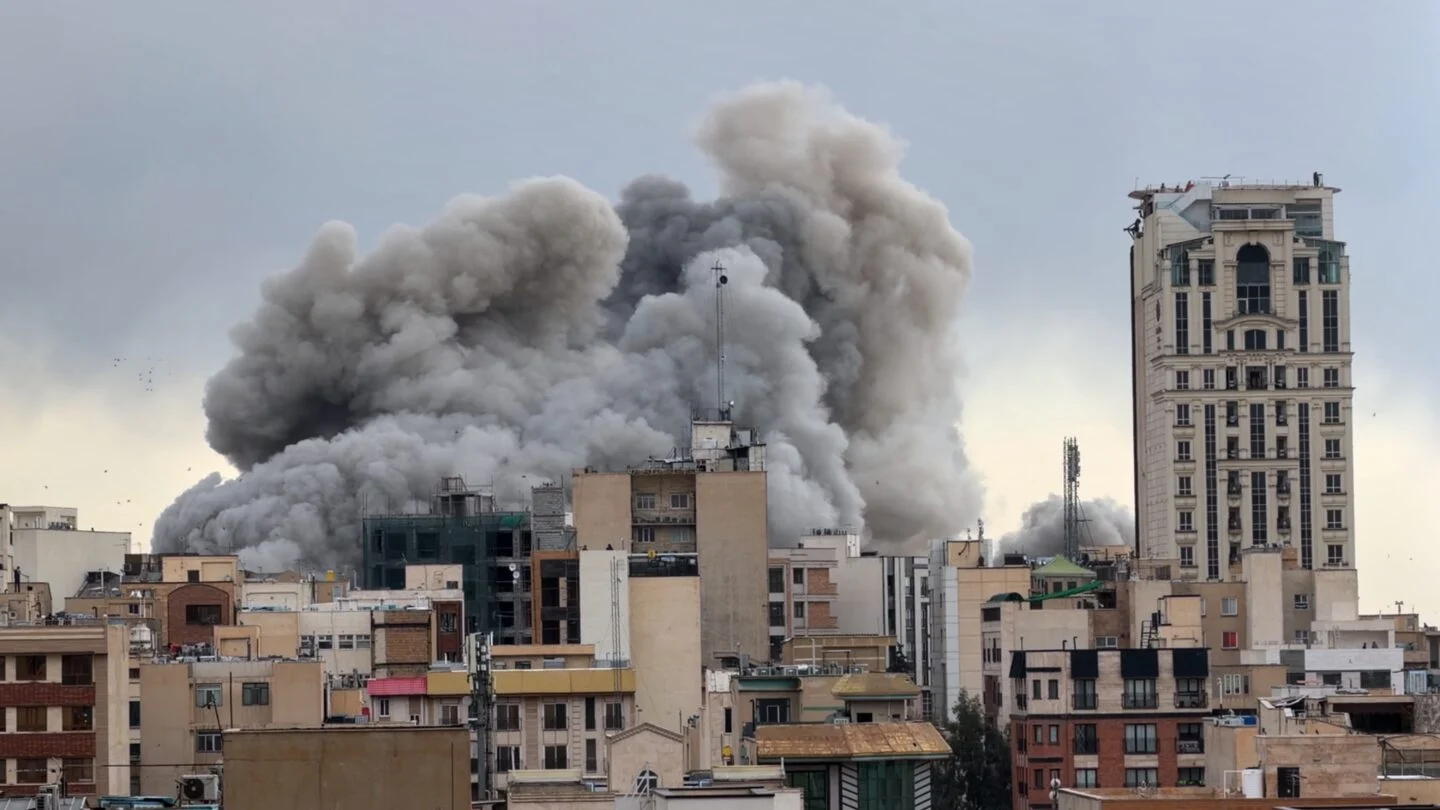
tehran
Explore further

US sanctions 13 Iran-Belarus-China entities supplying Iran’s IRGC. That’s three of four “Axis of Upheaval” states

The gap cuts both ways. Ukrainian battalion commanders and industry sources put the share of parts in a standard Ukrainian FPV drone—batteries, motor magnets, fiber-optic cable—at up to 65% Chinese-made, and Ukraine buys from Shenzhen too.

Cutting one supplier, then the next

Tatarigami, who founded Frontelligence Insight, argues the fix is to extend controls beyond individual firms to the entire chain—down to the optical fiber, the reels it ships on, and the machines that make it. Fiber-optic drones already make up about 60% of Russian FPVs in key sectors, Euromaidan Press reports. The record on firm-by-firm designation is discouraging: after Washington hit Xiamen Limbach, Beijing Xichao took over the engine shipments, Reuters found, and Kupol's Garpiya order climbed from 2,000 drones in 2024 to more than 6,000 this year. But among all component categories in a Geran drone, the one that enables jam-resistant control is the only one absent from the registers.
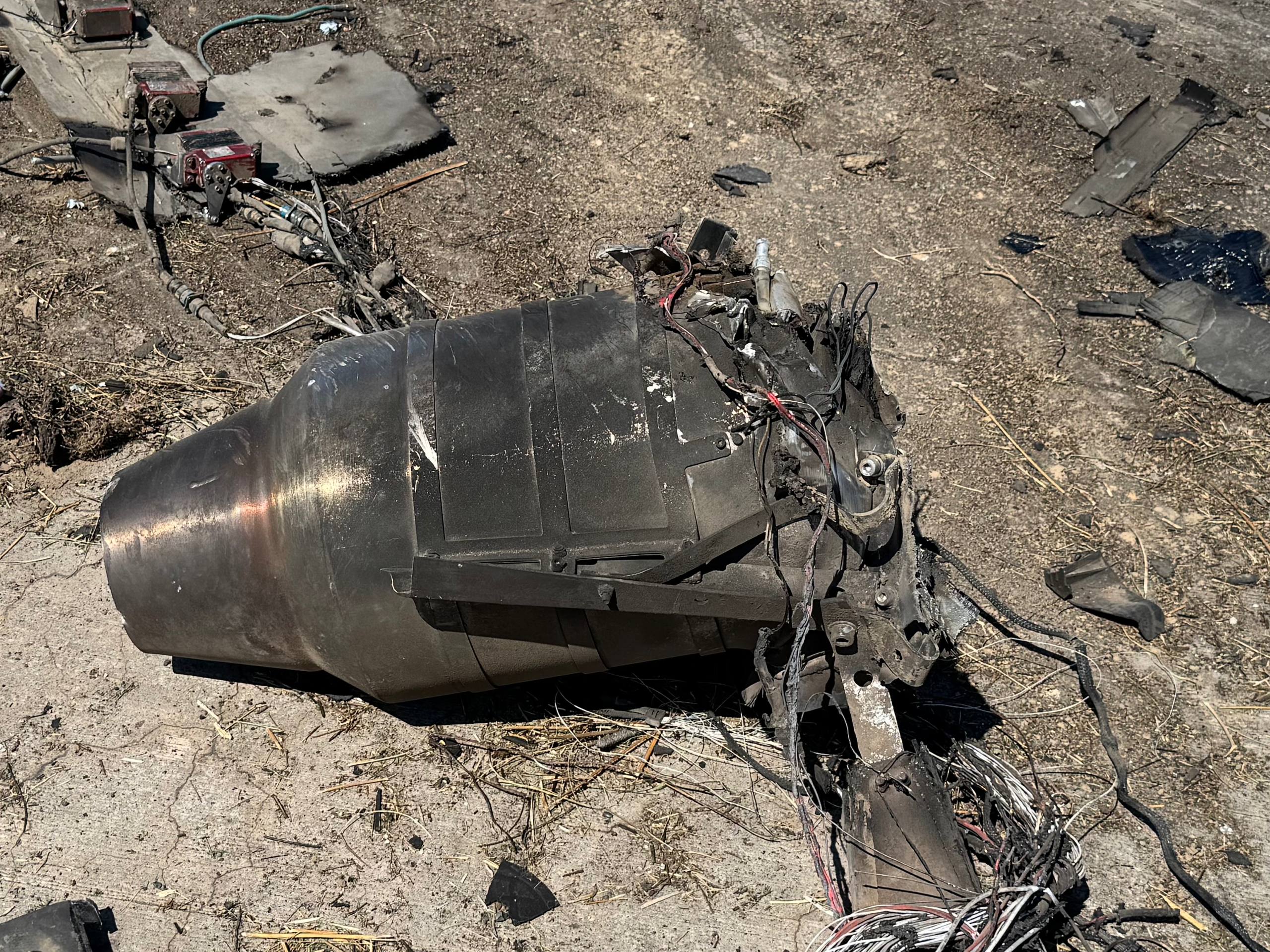
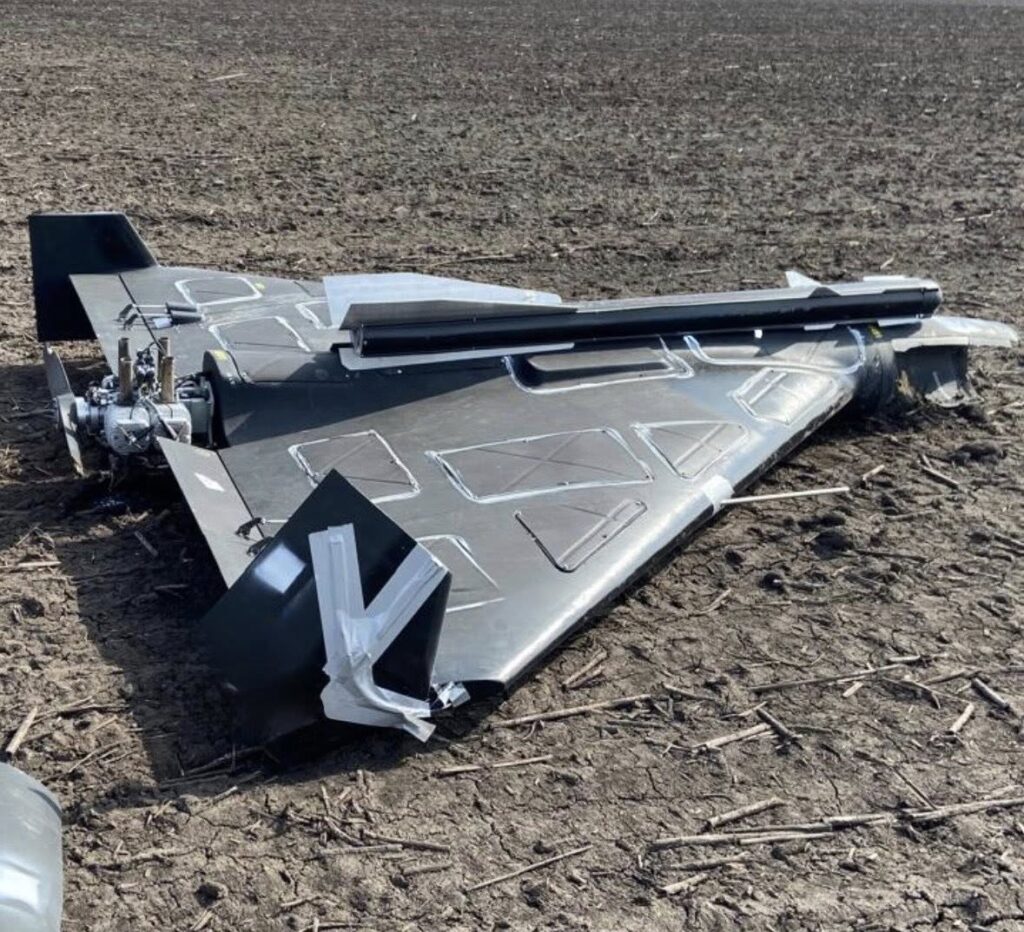
The image shows a fragment of a Russian drone Geran-4 in Kyiv Oblast. Source: Serhii "Flash" Beskrestnov
Explore further

“They hit what was in parking lot”: Russian drone operator adapted strike on Ukraine’s largest online retailer’s warehouse in real time

What controls can reach, and what they can't

Xingkai also markets the modem for civilian work—mining, firefighting, maritime. And as the Xichao case shows, cutting off one company rarely halts the flow.

China's foreign ministry claims it knew nothing of the parts exports, says it controls dual-use goods under its own law, and rejects sanctions it calls baseless.

The harder problem is that the same civilian electronics feeding Russia also stock Ukraine's drone lines, so any workable control has to reach named military buyers without severing the dual-use trade Kyiv still needs. And sanctions may not decide this contest at all: Ukraine is already testing electronic-warfare methods built to break the very mesh networks these radios create.
  • ✇Euromaidan Press
  • Russia’s tank shield shot down seven drones—Ukraine destroyed the tank anyway
    Russia wants its tanks moving again after two years of Ukrainian drones freezing its armored assaults, the Institute for the Study of War (ISW) reported. Its main bet is a tank-mounted system that fires interceptors at incoming drones. The system worked on at least one tank, but Russia lost it anyway. Since 2022, cheap Ukrainian FPV drones have turned the open approach to any position into ground where armor rarely survives, forcing Russia into slow, infantry-led as
     

Russia’s tank shield shot down seven drones—Ukraine destroyed the tank anyway

11 août 2026 à 12:52

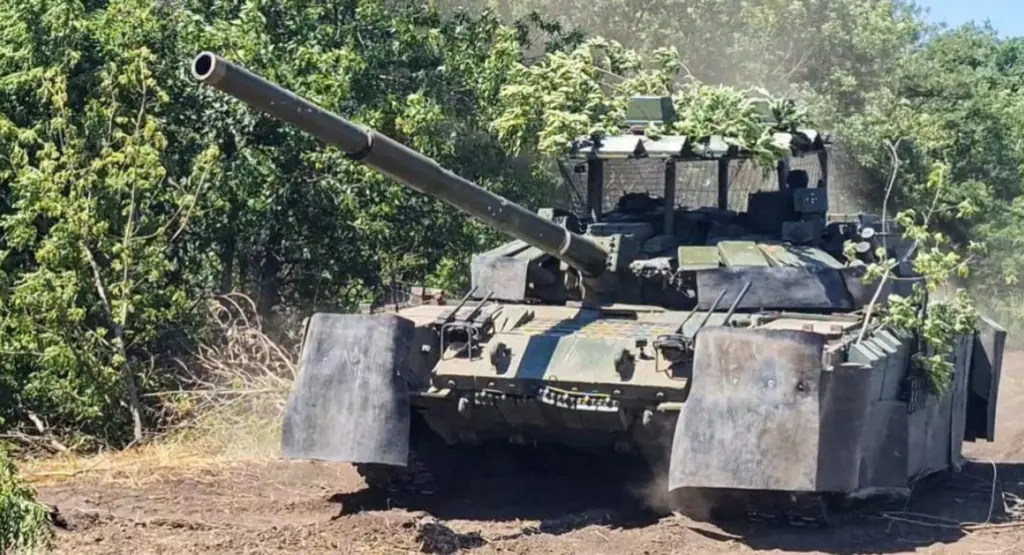
T-72B3A tank equipped with the Arena-M active protection system (APS). Photo: iz.ru/Dmitry Astrakhan

Russia wants its tanks moving again after two years of Ukrainian drones freezing its armored assaults, the Institute for the Study of War (ISW) reported. Its main bet is a tank-mounted system that fires interceptors at incoming drones. The system worked on at least one tank, but Russia lost it anyway.

Since 2022, cheap Ukrainian FPV drones have turned the open approach to any position into ground where armor rarely survives, forcing Russia into slow, infantry-led assaults and years of experiments to armor its tanks against drones.

The shield shot down some drones. Ukraine still killed the tank.

In early August, footage surfaced of Ukrainian drones destroying a Russian tank fitted with the Arena-M active protection system in the Dobropillia sector of Donetsk Oblast. Militarnyi identified the vehicle as a T-72B3A, side number 133, and Militarnyi reported that Ukraine's Security Service (SBU) released the clip. ISW geolocated the footage near occupied Volodymyrivka, east of Dobropillia.

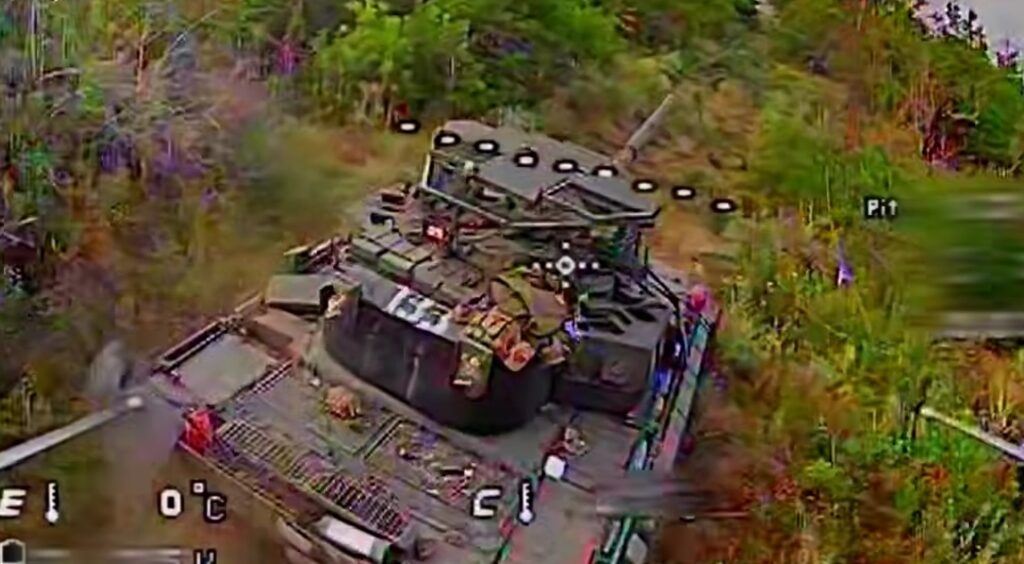
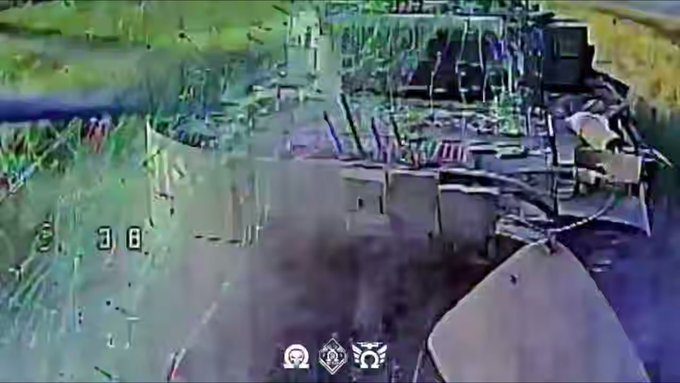
A T-72B3A the moment before a Ukrainian drone strikes.
Explore further

Russia took the cages off its newest tanks. The new Arena-M shield bought them a few minutes.

Dmytro Putiata, a Ukrainian combat drone specialist who posts as kriegsforscherD, spoke with the unit involved. On that tank, Arena-M shot down seven drones before its magazine ran dry, he said.

"Unfortunately, it works," Putiata wrote.

It still wasn't enough. Ukrainian crews finished the tank off with more drones. It took 15 to 20 first-person-view (FPV) drones to kill each vehicle, Putiata said. Footage shows the tank moving with its interceptor cells empty. It was the first time the Arena-M was credited with shooting drones down in combat.

Russia keeps sending tanks into that ground for a reason

Russian forces are experimenting with new technology to restore mechanized maneuver and break out of positional warfare—the static, trench-like fighting that has defined the front, ISW reported. They are fitting tanks with active protection systems to help armor survive in the "kill zone," the open ground where drones and other weapons destroy almost anything that moves.

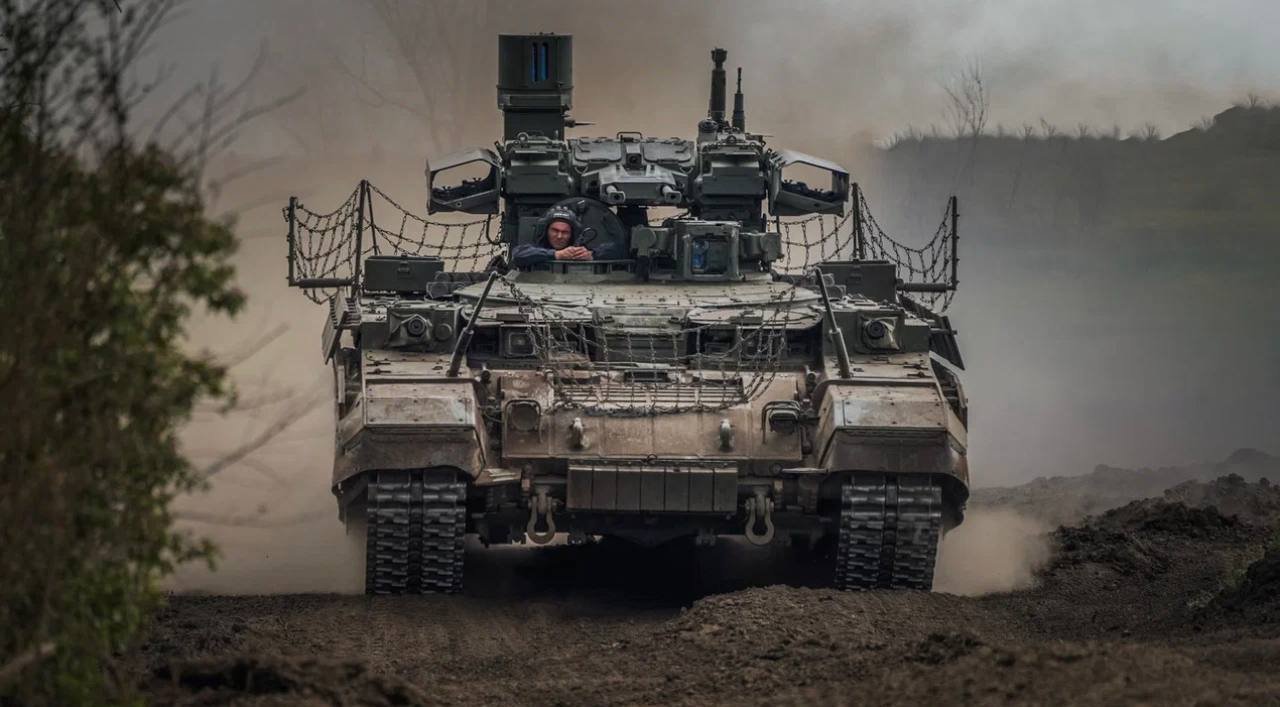
A BMP-T in 2026.
Explore further

Russia’s weirdest armored vehicle was built to fight infantry. The infantry stopped coming

ISW judged that Arena-M alone cannot shield Russian assaults from the drones, let alone the rest of Ukraine's weapons. Russian commanders have largely kept tanks off the roads because drones kill them faster than factories rebuild them. In these assaults, the tank's job is less to fight than to survive long enough to drop infantry closer to Ukrainian lines. Russia will likely keep trying to restore maneuver even after its late-July mechanized assault in the Dobropillia sector failed, ISW added.

Why Russia wants the shield: the cages don't let tanks fight

The bolt-on armor carries a cost. Cope cages and "turtle" shells weigh tanks down and often jam the turret so the main gun can't aim. That trade-off is part of why Russia wants Arena-M: protection without the bulk, so a tank can still move and shoot. Russia recently sent tanks stripped of the welded cages, carrying the shield instead.

Moment of impact of the T-72B3M tank “133,” equipped with the Arena active protection system and empty countermeasure launcher cells.
Moment of impact of the T-72B3M tank “133,” equipped with the Arena active protection system and empty countermeasure launcher cells. Screenshot from an SBU video.

Arena-M is not new. Active protection systems like it were first built to stop anti-tank missiles, and Russia adapted this one to catch drones. The system's lineage dates back to the late Soviet era, and Russian industry has for years claimed mass deployment that never came. Designers worked on fitting it to T-72B3 and T-90M tanks since at least 2019, yet only single vehicles turned up by 2024—some used to shoot a propaganda film rather than fight.

Ukraine’s newest interceptor doesn’t ram its target. It nets it for $27, then flies home to catch another

11 août 2026 à 11:19

he Ukrainian company WINFLY unveiled the WINFLY Spider, an interceptor equipped with a net-launcher. Source: Militarnyi

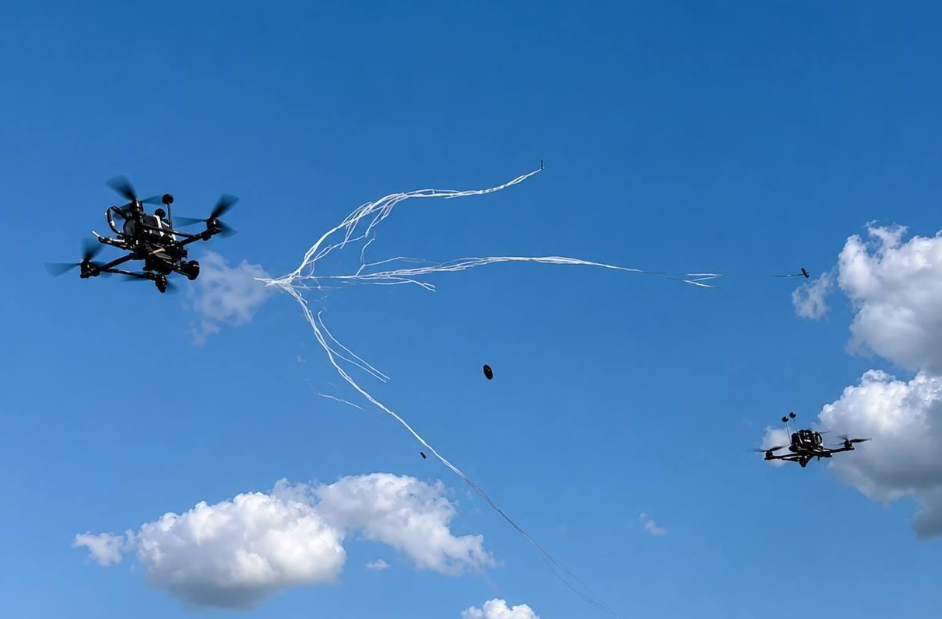
Ukraine has built an interceptor that catches Russian drones instead of ramming them. The company WINFLY has unveiled the WINFLY Spider, an interceptor equipped with a net-launcher to neutralize targets with a net and return to its launch point, the defense outlet Militarnyi reported.

The Spider is the newest entry in Ukraine's fast-growing interceptor-drone industry. Ukraine has fielded a widening range of cheap interceptors to counter Russia's massed drone attacks, and the Spider's distinction is reusability.

The netgun makes it reusable

Most interceptors are one-shot weapons that ram or explode against their target. The Spider instead carries the Karakurt net-launcher, made of high-strength aluminum and rated to work from −20°C to +50°C, which snares an enemy drone in a net while the interceptor itself stays intact and ready for repeat flights.

The economics are the point. The developers say each net shot about $27, while the drone remains undamaged. That turns the cost equation of drone defense, where an interceptor is often spent to down a single target, into one where the same aircraft can make many intercepts, paying only for a cheap net each time.

The platform and what it hunts

The Spider is built on an existing WINFLY interceptor. It uses the WINFLY 10 Hunter as its base platform, which operates at up to 5,000 meters, reaches 160 kilometers per hour, and has a range of over 18 kilometers.

It is designed for a range of Russian drones. The system targets fixed-wing UAVs, Mavic quadcopters, FPV drones, and fiber-optic drones, with flight times up to 25 minutes, deployment times of up to 3 minutes, and target detection ranges of up to 500 meters. The maker offers day and night versions.

One tool in a scaling defense

Ukraine is downing tens of thousands of Russian drones a month, per the Defense Ministry, and fielding interceptors from at least 29 licensed makers, with new designs like the high-altitude Tsyklop climbing above enemy drones and others ramming them.

  • ✇Euromaidan Press
  • From 27,711 to 40,438 in two months: Ukraine’s drone kill rate is climbing fast
    Ukraine is shooting down drones at a fast-rising rate. Ukraine's Defense Forces destroyed 40,438 Russian fixed-wing drones, or "wings", in July 2026, Ukraine's Defense Ministry reported on 11 August. The July figures mark a defense scaling up as fast as the threat it counters. Since the start of the year, Ukraine's Defense Forces have destroyed 195,000 Russian "wings" and 66,000 copters. A counter-drone effort is growing month by month against a Russian drone campaign t
     

From 27,711 to 40,438 in two months: Ukraine’s drone kill rate is climbing fast

11 août 2026 à 11:04

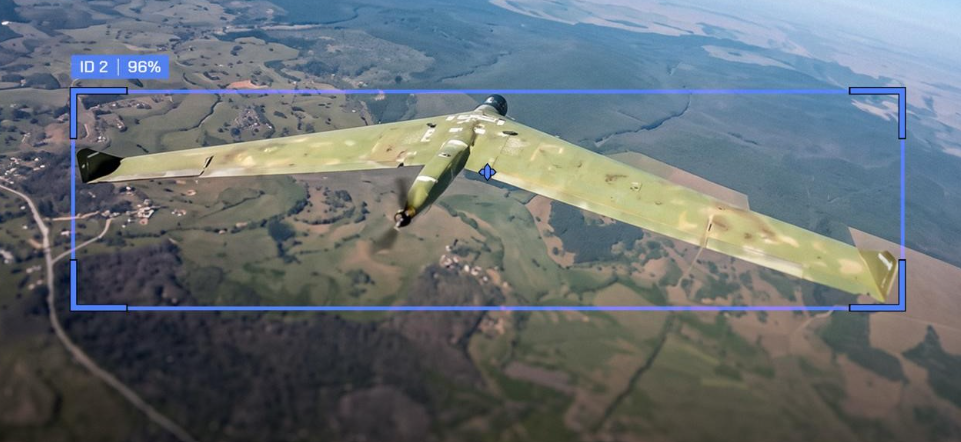
A Ukrainian drone is approaching a Russian target. Source: The Ukrainian Defense Ministry

Ukraine is shooting down drones at a fast-rising rate. Ukraine's Defense Forces destroyed 40,438 Russian fixed-wing drones, or "wings", in July 2026, Ukraine's Defense Ministry reported on 11 August.

The July figures mark a defense scaling up as fast as the threat it counters. Since the start of the year, Ukraine's Defense Forces have destroyed 195,000 Russian "wings" and 66,000 copters. A counter-drone effort is growing month by month against a Russian drone campaign that has itself expanded relentlessly.

The numbers climbed across drone types

Both categories of drone kills rose sharply. Fixed-wing "wings," the category that includes long-range attack drones like Shaheds, climbed from 27,711 in May to 40,438 in July, according to the ministry.

Copter kills rose even faster in proportion. The number of destroyed copters grew 42% in a single month, from 14,071 in June to 19,945 in July. The parallel rise in both types reflects a Russian drone offensive attacking on multiple fronts at once, from deep-strike Shaheds to short-range quadcopters over the trenches, and a Ukrainian defense expanding to meet each.

DELTA confirms every kill

Every strike has been confirmed by the DELTA system, and video recording of the shootdowns helps identify the most effective counter-drone tools for development and scaling, the Ukrainian Defense Ministry said.

That verification matters for a claimed tally. Rather than a bare count, the numbers are tied to Ukraine's battle-management system, which logs and video-confirms each kill, the same DELTA platform whose combat data now trains Ukraine's target-detection AI.

The count is one side of the drone war

The figures capture only Ukraine's defensive half of a war fought increasingly by drones. Russia has expanded its drone production and nightly launches throughout 2026, aiming to overwhelm Ukrainian defenses with mass, and the rising Ukrainian kill counts are the answer to that escalation, not a sign it has eased.

  • ✇Euromaidan Press
  • A $300 FPV downs a $20,000 bomber drone. Ukraine tests an EW shield for it
    Ukraine is testing a new electronic-warfare solution to protect heavy bomber drones and unmanned ground vehicles (UGVs) from cheaper FPV drones. The project has reached field testing, with several prototypes sent to military units, RBC-Ukraine reports. Ukraine's war has become a laboratory for the economics of unmanned combat, where a mass-produced quadcopter can take down platforms that cost dozens of times more, forcing both volunteer foundations and defense firms
     

A $300 FPV downs a $20,000 bomber drone. Ukraine tests an EW shield for it

11 août 2026 à 09:27

ukraine tests ew system protect $20000 bomber drones $300 fpvs · post vladyslav “vitamin” electronic warfare specialist serving 141st separate mechanized brigade kirichenko3 news ukrainian reports

Ukraine is testing a new electronic-warfare solution to protect heavy bomber drones and unmanned ground vehicles (UGVs) from cheaper FPV drones. The project has reached field testing, with several prototypes sent to military units, RBC-Ukraine reports.

Ukraine's war has become a laboratory for the economics of unmanned combat, where a mass-produced quadcopter can take down platforms that cost dozens of times more, forcing both volunteer foundations and defense firms to look for asymmetric answers on the electronic side of the front.

$20,000 bomber vs. $300 drone

The gap runs more than 60-to-1. Liuba Shypovych, head of the Dignitas foundation, told RBC-Ukraine that a heavy bomber can cost around $20,000, while an FPV drone capable of damaging or destroying it can cost about $300. Shypovych said the bombers are particularly vulnerable because they are relatively slow and less maneuverable than smaller FPVs, and that shootdowns are becoming increasingly frequent.

ukraine tests ew system protect $20000 bomber drones $300 fpvs · post vladyslav “vitamin” electronic warfare specialist serving 141st separate mechanized brigade kirichenko3 news ukrainian reports
Explore further

A $300 FPV downs a $20,000 bomber drone. Ukraine tests an EW shield for it

Yet Ukraine cannot simply stop using the larger drones. According to Shypovych, they are used to deliver water, food, and ammunition to positions that are difficult or impossible to reach by ground. The military therefore approached Dignitas with a request to protect the platforms, and the team is working on the task together with the company Aura.

The jammer has a problem of its own

Equipping a heavy bomber with electronic warfare creates an unusual technical problem. The bomber needs a communications link with its operator, but the same EW system designed to disrupt an incoming enemy FPV could also interfere with that control channel. The problem extends to UGVs, including platforms used to evacuate wounded soldiers. Shypovych said the goal is to develop EW that can counter hostile drones without cutting the Ukrainian platform's own communications.

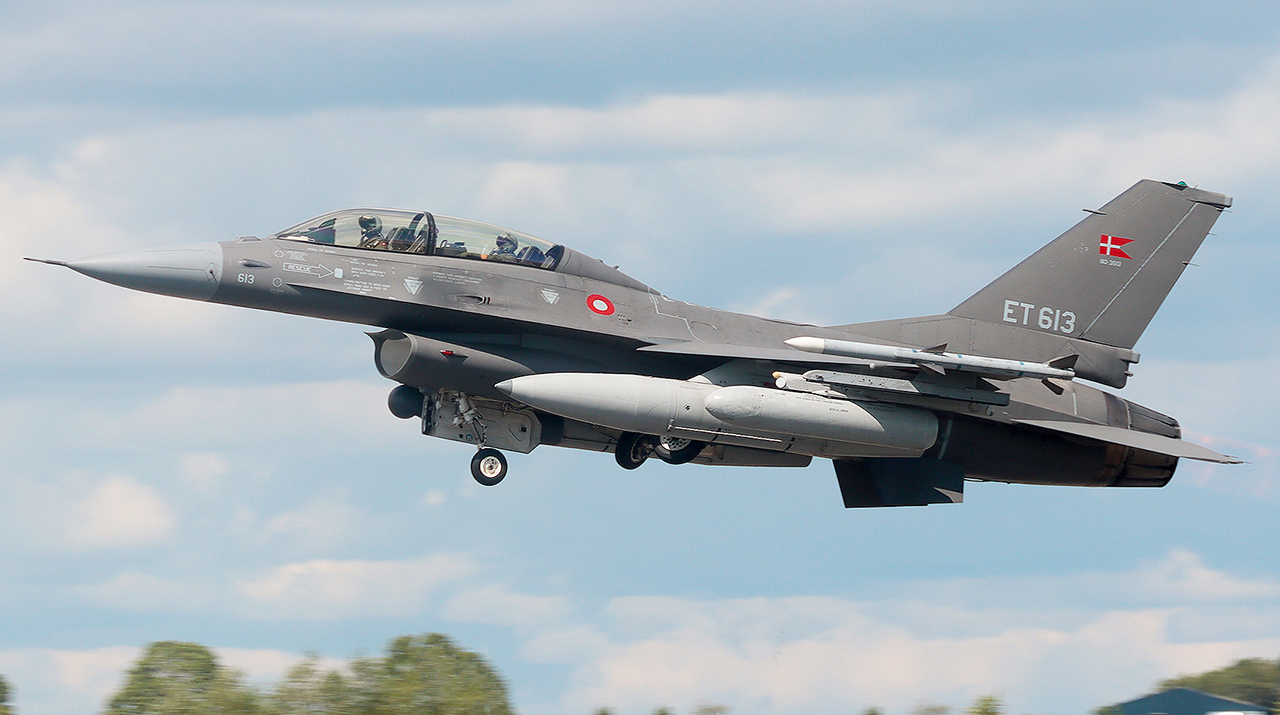
A Danish Air Force F-16BM combat trainer aircraft during a training flight. Photo via mil.in.ua
Explore further

NATO shot down drone over Latvia. Russia’s electronic warfare sent it there

From the test range to the first units

Dignitas and Aura are testing the systems at training grounds and have already sent several samples to military units. Shypovych expects the solution to be ready in roughly two months.

The effort comes as Ukraine rapidly expands its use of unmanned ground systems. Kyiv has set a target to contract at least 50,000 UGVs, with robots already taking on logistics and evacuation tasks in high-risk zones. Ukrainian forces have already received 1,028 UGVs through the DOT-Chain Defense marketplace, with the systems handling logistics, evacuation, mine-laying, and combat. Ukrainian Vampire bombers have also been upgraded to shrug off Russian jamming and even hunt the jammers themselves.

  • ✇#MonCarnet
  • Des drones pour nettoyer les bâtiments
    Mon Carnet, le podcast · Des drones pour nettoyer les bâtiments À Québec, National Entretien, une entreprise familiale fondée en 1930, mise sur les drones pour moderniser le lavage de vitres en hauteur. Son copropriétaire Hubert Rouleau explique comment cette technologie permet d’intervenir plus rapidement tout en gardant les travailleurs au sol et en réduisant […]
     

Des drones pour nettoyer les bâtiments

10 août 2026 à 14:29
Mon Carnet, le podcast · Des drones pour nettoyer les bâtiments À Québec, National Entretien, une entreprise familiale fondée en 1930, mise sur les drones pour moderniser le lavage de vitres en hauteur. Son copropriétaire Hubert Rouleau explique comment cette technologie permet d’intervenir plus rapidement tout en gardant les travailleurs au sol et en réduisant […]

July was Ukraine’s deadliest month for civilians since 2022 — and Russia is scaling its ballistic missile salvos toward 200 at once

10 août 2026 à 09:05

Shahed R-60 missile decoy Flash

Russia can currently fire a simultaneous salvo of 77 ballistic missiles, and it aims to lift that ceiling to 200. Robert "Magyar" Brovdi, who commands Ukraine's Unmanned Systems Forces, told the Associated Press. He called the plan one of Ukraine's gravest weak points.

Kyiv's only reliable shield against ballistic missiles is the US-made Patriot, and its interceptor stocks are critically low. During mass barrages, dozens of warheads therefore slip through and reach their targets. Only a handful of countries can build such interceptors, and all are short, defense analysts have warned. The AP, for its part, could not independently verify Brovdi's numbers.

Ballistic missiles remain the hardest to stop

That shortfall has already turned lethal. Intensified strikes made July the deadliest month for Ukrainian civilians since April 2022, the UN human-rights office in Ukraine documented. Air defenses downed just 29 of the 195 ballistic missiles Russia fired that month, roughly 15%. Another 40 fell short on their own. Yet the largest single-night launches recorded so far run to only a few dozen. That is well below the salvo of 77 that Brovdi describes, and a fraction of the 200 Moscow is reaching for.

"Even if they only manage half of that, it will all be flying at us."
- Robert "Magyar" Brovdi, commander, Ukraine's Unmanned Systems Forces

Production running ahead of plan

His warning tracks Ukrainian intelligence. Russia's defense industry is overfulfilling its monthly targets, hitting 110% to 120% on the main missile types. So said Deputy Military Intelligence Chief Vadym Skibitskyi in an interview with RBC-Ukraine. He put July output for the Kh-101 cruise missile at 140% of plan, the Kalibr at 111%, and the Kh-35 at 200%. A pause in strikes, he judged, is unlikely.

The pivot to jet-powered drones

Moscow's factories are also retooling around drones. Russia plans to assemble 11,000 strike drones of various types in August 2026, Skibitskyi said. That mix spans the Geran-1 through Geran-5, the Harpia, and several Gerbera variants. Output dipped in July as the industry shifted toward the turbojet Geran-4 and Geran-5.

Those jet models fly faster and demand different interceptors or short-range air defense. They already made up half of one recent attack. The concentration of jet-powered Shaheds, meanwhile, has climbed 2.5 times in recent weeks, Brovdi added. Taken together, the assessments point one way: more missiles and faster drones, launched in larger waves, against defenses Ukraine is scrambling to rebuild.

  • ✇Euromaidan Press
  • Mystery drone resembling America’s F-117 stealth jet filmed over a Russian refinery
    Footage from a recent Ukrainian strike on a Russian oil refinery captured an unidentified drone resembling the US F-117 Nighthawk stealth jet, though on a far smaller, drone-sized scale, according to RBC-Ukraine. Online observers suspect a new Ukrainian jet-powered strike drone, or a test of an allied foreign one, but no official body has confirmed what the aircraft is. If the guesses hold, Ukraine may be fielding a faster, longer-reaching class of weapon for hitting t
     

Mystery drone resembling America’s F-117 stealth jet filmed over a Russian refinery

4 août 2026 à 06:21

mystery drone resembling america's f-117 stealth jet filmed over russian refinery · post struck oil ufa area russia 2 2026 exilenova+ video ukraine news ukrainian reports

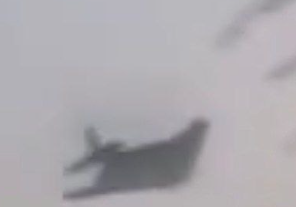
Footage from a recent Ukrainian strike on a Russian oil refinery captured an unidentified drone resembling the US F-117 Nighthawk stealth jet, though on a far smaller, drone-sized scale, according to RBC-Ukraine. Online observers suspect a new Ukrainian jet-powered strike drone, or a test of an allied foreign one, but no official body has confirmed what the aircraft is. If the guesses hold, Ukraine may be fielding a faster, longer-reaching class of weapon for hitting targets deep inside Russia.

Ukraine has spent the past year turning Russia's interior into contested space, sending long-range drones ever deeper toward the oil, defense, and logistics sites the Kremlin once treated as untouchable. Each new type that surfaces marks another step from short-range drones toward missile-like machines.

An unfamiliar silhouette over the refinery


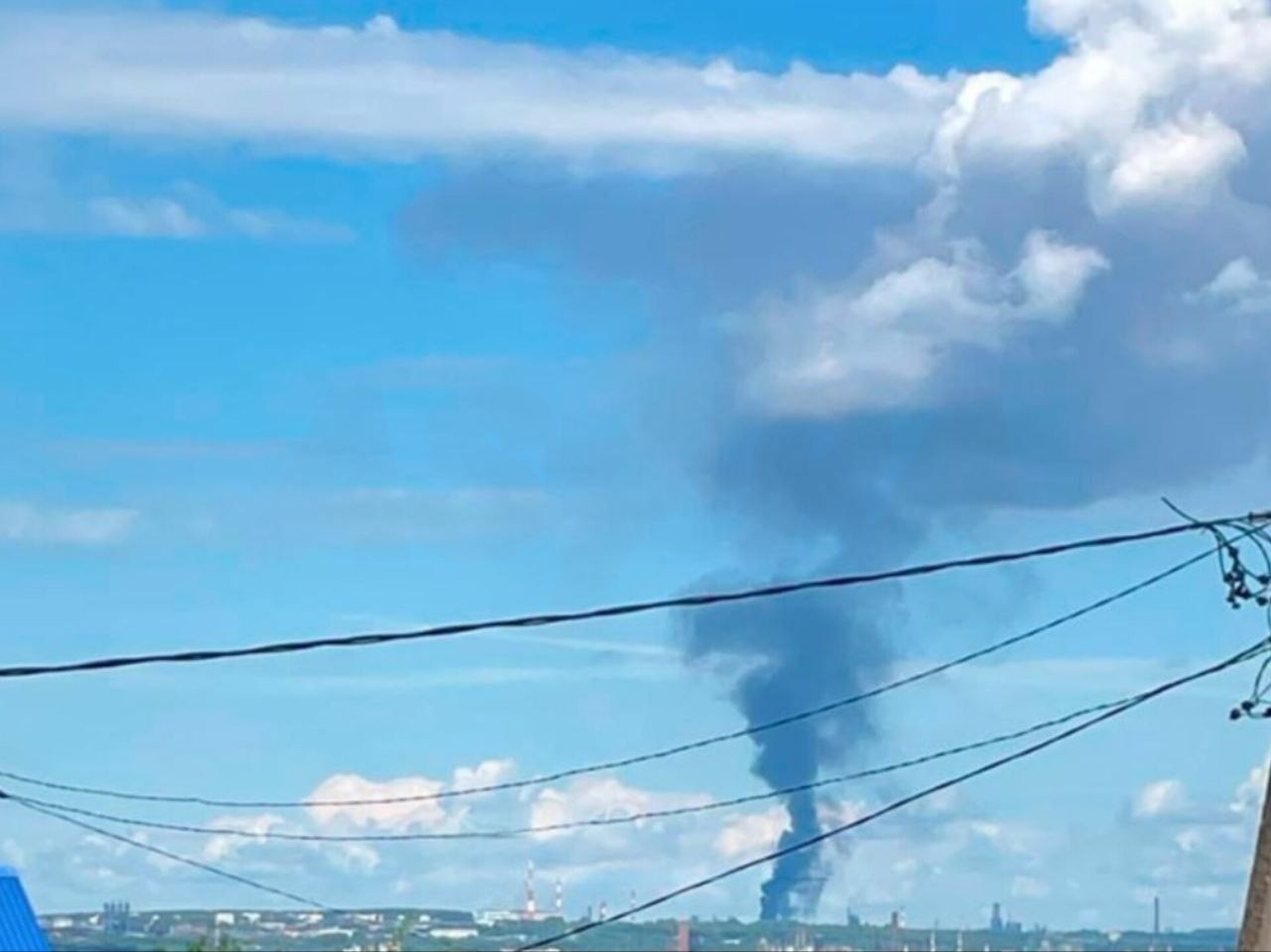
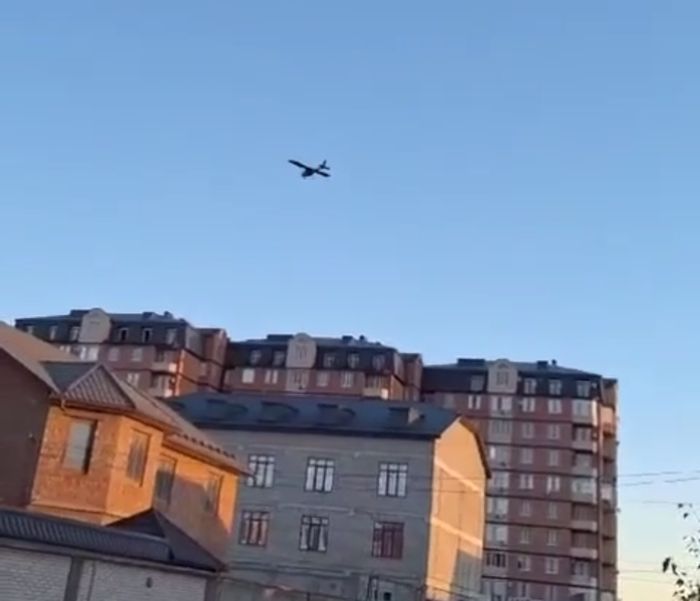
The drone appeared during a 2 August Ukrainian drone strike on a refinery near Ufa, more than 1,300 kilometers from the Ukrainian border. The clip shows an aircraft shaped unlike most Ukrainian long-range drones, likely powered by a jet engine. The open-source monitoring channel Clash Report, which first shared the footage, believes it may be the Bravo drone or a modified version.

drones flew 1300 km russia’s ufa—then struck bashneft refineries · post black smoke rises over oil refinery ufa bashkortostan after ukrainian drone strike 25 2026 5325714827084766386 ukraine news reports
Explore further

Drones flew 1,300 km to Russia’s Ufa—then struck Bashneft refineries

What the Bravo could do, and why it would matter


If the aircraft is indeed a Triada Robotics product, the company describes Bravo as a single-use, jet-powered drone intended for long-range strike missions. According to the developer, its range exceeds 2,000 km (about 1,240 miles)—enough to reach much of the refinery and defense-industrial infrastructure Russia keeps far from the front lines.

👍⚡ Mysterious Jet Drone Attacks Ufa

During the attack on the oil refinery in the Ufa area on July 2nd, an unidentified drone was spotted, resembling the American F-117 in shape. Theoretically, it could be the Bravo Deep-Strike UAV Platform from Triada Robotics, but there is no… pic.twitter.com/LnplWeRAul

— Gianl1974 (@Gianl1974) August 4, 2026

Triada Robotics says the drone cruises at about 600 km/h and can accelerate to roughly 800 km/h (around 500 mph) during the final phase of flight. The company also lists a warhead weighing more than 100 kg (220 lb), a payload that could threaten facilities such as fuel depots or refineries.


The developer pitches it as a cheaper stand-in for a cruise missile—long-range reach at a fraction of the cost—so Ukraine could fly more strikes at distant targets.

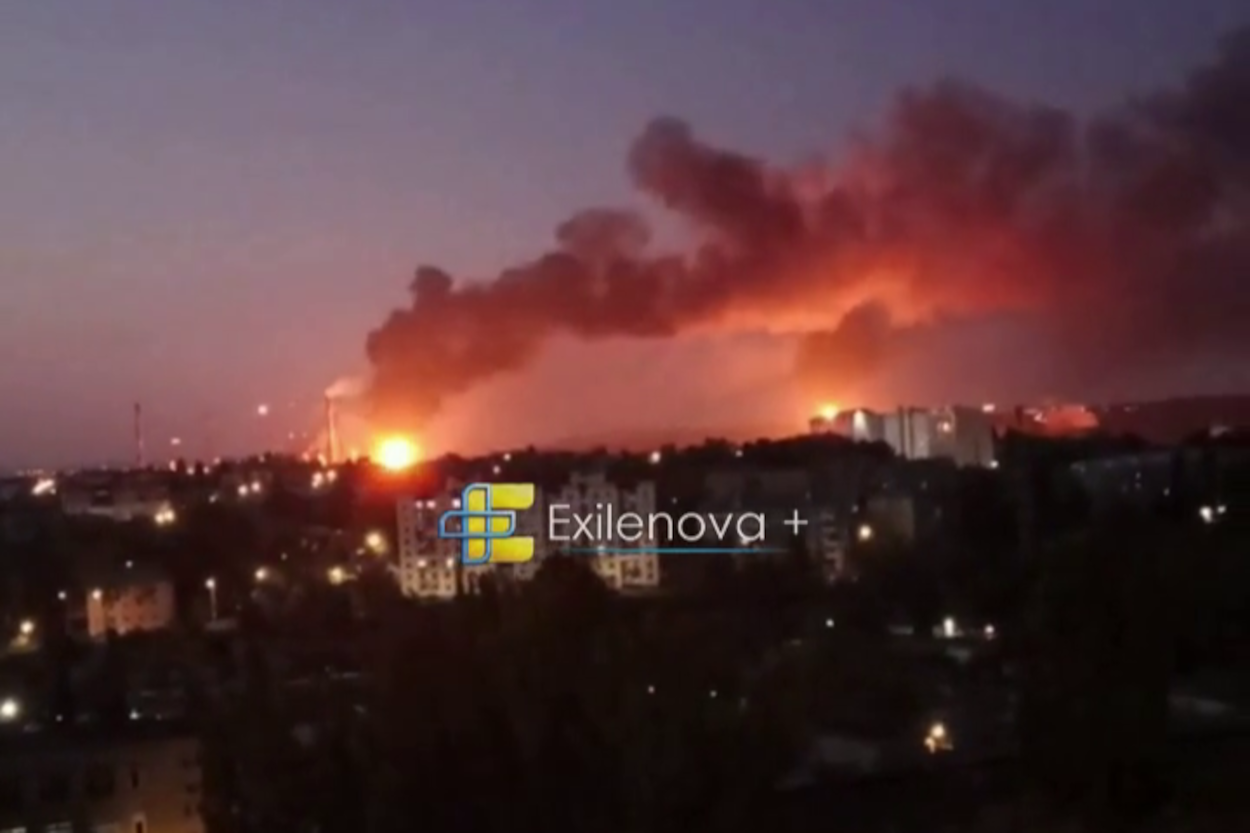
Flames at Russia's Saratov Oil Refinery after reported Ukrainian drone strike, 2 August 2026. Screenshot from video: Exilenova+
Explore further

Oil refinery, strategic airbase, and drone facilities: Overnight strikes hit key pillars of Russia’s war effort

Why observers compare it to the F-117

The comparison rests on the drone's silhouette. Watchers noted its outline echoes the F-117 Nighthawk, the US jet built with radar-evading shaping. A similar shape, though, does not prove full stealth. Such geometry can also sharpen aerodynamics or dodge only certain radar types. Even so, the aircraft's identity stays unconfirmed, and its edge rests on the maker's claims rather than proven use.

  • ✇Euromaidan Press
  • No siren sounded before drone hit crowded Russian beach near missile maker’s resort, killing six
    A drone came down on a beach full of Russian holidaymakers, and the evidence points to Russia's own air defense bringing it there. On 3 August, drones attacked Krasnodar Krai, and one crashed onto a beach in Arkhipo-Osipovka near Gelendzhik, killing at least six people, three of them children, and injuring around 40, Krasnodar Governor Veniamin Kondratyev said. Russian outlet Agentstvo and OSINT analysts assessed that the drone likely fell because of Russian air-defense
     

No siren sounded before drone hit crowded Russian beach near missile maker’s resort, killing six

3 août 2026 à 18:24

A Ukrainian A-22 long-range strike drone flying on Kaspiysk. Geolocated by Dominik on X.

A drone came down on a beach full of Russian holidaymakers, and the evidence points to Russia's own air defense bringing it there. On 3 August, drones attacked Krasnodar Krai, and one crashed onto a beach in Arkhipo-Osipovka near Gelendzhik, killing at least six people, three of them children, and injuring around 40, Krasnodar Governor Veniamin Kondratyev said.

Russian outlet Agentstvo and OSINT analysts assessed that the drone likely fell because of Russian air-defense fire rather than a direct hit, citing gunfire audible in footage before the drone dived and an abrupt change in its flight path.

The beach sits directly in front of the Rassvet resort, a facility of NPO Mashinostroyeniya, one of Russia's key missile-manufacturing enterprises.

The warning system did not sound

Survivors say they had no notice. Local residents and holidaymakers complained that no air-raid alert sounded at all, though warning systems are installed in the village, and the Russian channel Astra also noted that no alert was heard in the region during the attack, per the reports.

People on the beach were in the open, with little chance to take cover, even if they had been warned. The absence of a siren in a resort packed at the height of the summer season left sunbathers and swimmers with no warning that a drone was overhead and being fired at.

The target was a missile maker's resort

NPO Mashinostroyeniya develops cruise missiles for the Russian army, and its Rassvet recreation base was the apparent target roughly 300 meters from where the drone came down, the Supernova Telegram channel reported.

Ukraine strikes Russian military-industrial sites across the country, and a missile-development enterprise is a legitimate military target. What turned a strike near a defense plant into a mass-casualty event on a beach was, by the analysts' account, Russian air defense knocking the drone down over the crowd rather than away from it. Ukraine had not commented on the strike.

The dynamic is one Ukraine knows intimately in reverse

Russian air-defense missiles and the debris of intercepted drones regularly fall on Ukrainian cities, killing civilians, and Ukraine has long documented how interception over populated areas kills the people it is meant to protect.

❌