DHS sent undercover agents to meetings and infiltrated chats of groups opposing Trump’s immigration crackdownNewly disclosed records reveal the US government extensively spied on prominent leftwing organizations and on protesters as part of a vast operation into groups opposing the immigration crackdown in Minnesota earlier this year.Internal investigative reports show the Department of Homeland Security (DHS) sent undercover agents to community meetings in the Twin Cities and New York City, inf
DHS sent undercover agents to meetings and infiltrated chats of groups opposing Trump’s immigration crackdown
Newly disclosed records reveal the US government extensively spied on prominent leftwing organizations and on protesters as part of a vast operation into groups opposing the immigration crackdown in Minnesota earlier this year.
Internal investigative reports show the Department of Homeland Security (DHS) sent undercover agents to community meetings in the Twin Cities and New York City, infiltrated Signal chats and obtained financial records of mainstream unions and left-leaning non-profit groups.
The court dismissed a case over the Alien Enemies Act in a messy conclusion to a long-running legal battle that had seemed destined to end up before the Supreme Court.
The court dismissed a case over the Alien Enemies Act in a messy conclusion to a long-running legal battle that had seemed destined to end up before the Supreme Court.
President Trump issued a proclamation in March 2025 drawing on the sweeping powers of the Alien Enemies Act to deport people accused of being members of a Venezuelan gang.
U.S. leaders limited immigration amid economic and social turmoil. Historians see similarities to Trump’s crackdown, with a catch: He’s doing it without Congress.
U.S. leaders limited immigration amid economic and social turmoil. Historians see similarities to Trump’s crackdown, with a catch: He’s doing it without Congress.
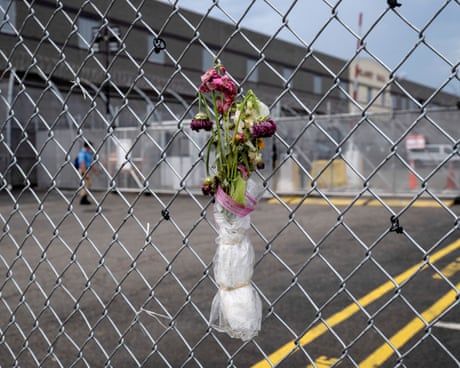
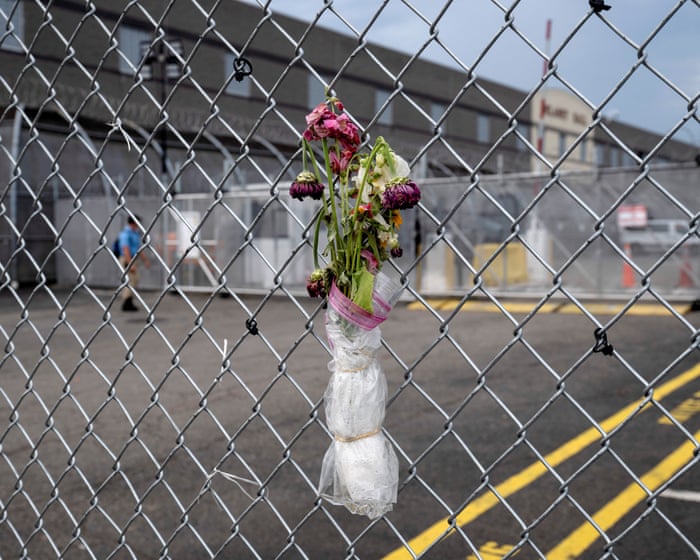
José Chajón-Raxón experienced ‘seizure-like activity’ at Delaney Hall and later died after being hospitalizedA Guatemalan immigrant detained by US Immigration and Customs Enforcement (ICE) at a Newark, New Jersey, facility suffered a medical emergency and later died after being hospitalized, according to the Trump administration.José Chajón-Raxón is the third immigrant to die after being held at Delaney Hall, an ICE detention center that reopened in May 2025 amid the Trump administration’s immig
José Chajón-Raxón experienced ‘seizure-like activity’ at Delaney Hall and later died after being hospitalized
A Guatemalan immigrant detained by US Immigration and Customs Enforcement (ICE) at a Newark, New Jersey, facility suffered a medical emergency and later died after being hospitalized, according to the Trump administration.
José Chajón-Raxón is the third immigrant to die after being held at Delaney Hall, an ICE detention center that reopened in May 2025 amid the Trump administration’s immigration crackdown.
The agent, Adam Saracco, was charged with misdemeanor after the altercation at a gas station near Chicago last year during the Trump administration’s crackdown there.
The agent, Adam Saracco, was charged with misdemeanor after the altercation at a gas station near Chicago last year during the Trump administration’s crackdown there.
Federal agents outside the immigrant detention center in Broadview, Ill., last year amid protests over President Trump’s enforcement actions near Chicago.
The agent accused the woman of trying to run him over with her vehicle, a claim she denied. It was the latest tense encounter between a federal agent and a driver.
The agent accused the woman of trying to run him over with her vehicle, a claim she denied. It was the latest tense encounter between a federal agent and a driver.
Latvia has discovered its first known border tunnel used to enter the country illegally from Belarus, the country’s State Border Guard said on 11 August. Officers intercepted 15 people who had crossed through the underground passage and returned them to Belarus.
Latvia, Lithuania, and Poland accuse Belarus and Russia of directing migrants toward their borders to retaliate for EU sanctions and strain countries supporting Ukraine. Minsk and Moscow deny orchestrating the c
Latvia has discovered its first known border tunnel used to enter the country illegally from Belarus, the country’s State Border Guard said on 11 August. Officers intercepted 15 people who had crossed through the underground passage and returned them to Belarus.
Latvia, Lithuania, and Poland accuse Belarus and Russia of directing migrants toward their borders to retaliate for EU sanctions and strain countries supporting Ukraine. Minsk and Moscow deny orchestrating the crossings. Tunnels found in Lithuania and Latvia show organizers adapting to fortified borders, requiring Baltic governments to deploy more personnel and surveillance technology.
The tunnel was about 10 meters from Latvia's fence
Border guards found the group on 10 August in Skrudaliena parish, in Latvia’s southeastern Augšdaugava municipality, and briefed the public on the discovery the following day. The operation involved the State Police, a Lithuanian border-service dog handler, and a rapid-response unit, the Latvian Border Guard said.
While reconstructing the group’s route, officers found the passage near the Silene border post, about 10 meters from Latvia’s fence. The agency said it had received intelligence that a tunnel might be under construction, but had previously found no sign of a breach there.
Riga answered on 11 August 2026 by launching Operation Vilkatis, or “Werewolf,” scheduled to run through the end of August. The government says the operation will improve intelligence-sharing among border guards, police, the military, and security services. It will also expand aerial surveillance and target networks that transport and shelter migrants after they cross.
Explore further
The Belarusian tunnel to the EU was almost done. Then Lithuania drilled a hole in exactly the wrong place—for the diggers
Latvia faced 87% of all crossing attempts along the EU-Belarus border by mid-July 2026
Belarus has weaponized migration since 2021, when EU governments accused Alyaksandr Lukashenka’s regime of bringing people from the Middle East and Africa to the bloc’s frontier in retaliation for sanctions. Belarus denied orchestrating the crisis.
Latvia reported more direct evidence in January 2026. Documents and phones taken from detained migrants linked Belarusian military and border personnel to organized crossings, according to Latvia’s armed forces and Border Guard.
By 13 July, Latvia had recorded 7,791 attempts over 111 consecutive days, 87% of all attempts along the EU-Belarus border by then. Lithuania later found an unfinished tunnel dug from Belarus. Latvia’s tunnel, unlike the unfinished Lithuanian passage, had already been used.
As the Trump administration sends a growing number of immigrants to countries they have no connection to, some find themselves imprisoned with no way out.
As the Trump administration sends a growing number of immigrants to countries they have no connection to, some find themselves imprisoned with no way out.
Roberto Mosquera, a Cuban immigrant who has lived in the United States since 1980 and completed a prison sentence in 1996, was arrested by ICE last year and sent to a prison in Eswatini, a country in Africa he’d never heard of. After a hunger strike, Mosquera obtained a phone and talked with Nicholas Casey of The New York Times Magazine to share what is happening there.
Roberto Mosquera, a Cuban immigrant who has lived in the United States since 1980 and completed a prison sentence in 1996, was arrested by ICE last year and sent to a prison in Eswatini, a country in Africa he’d never heard of. After a hunger strike, Mosquera obtained a phone and talked with Nicholas Casey of The New York Times Magazine to share what is happening there.
Most visas were rescinded over criminal accusations, the State Department said, while some were revoked from people who had celebrated the assassination of Charlie Kirk.
Most visas were rescinded over criminal accusations, the State Department said, while some were revoked from people who had celebrated the assassination of Charlie Kirk.
Jazmine Ulloa, our national reporter covering immigration, describes body-camera footage and other court evidence that federal agents used slurs and racially profiled people during immigration sweeps.
Jazmine Ulloa, our national reporter covering immigration, describes body-camera footage and other court evidence that federal agents used slurs and racially profiled people during immigration sweeps.
Claims swirled that Morocco, perhaps spurred by Israel and the United States, organized a recent border disaster. That unproven speculation, experts said, was exacerbated by the region’s complicated history.
Claims swirled that Morocco, perhaps spurred by Israel and the United States, organized a recent border disaster. That unproven speculation, experts said, was exacerbated by the region’s complicated history.
Migrants from sub-Saharan Africa waiting on a beach for humanitarian assistance after about tens of thousands of people, mostly from Morocco, surged across the border into Ceuta, Spain, this month.
A wave of disinformation online contributed to a surge of migrants in the Spanish enclave of Ceuta who were trying to reach Europe, resulting in about 90 deaths.
A wave of disinformation online contributed to a surge of migrants in the Spanish enclave of Ceuta who were trying to reach Europe, resulting in about 90 deaths.
Body-camera video and other court evidence capture federal agents using slurs and targeting Latinos while bypassing white bystanders during immigration sweeps in Chicago and Los Angeles
Body-camera video and other court evidence capture federal agents using slurs and targeting Latinos while bypassing white bystanders during immigration sweeps in Chicago and Los Angeles
Immigrants who said they inadvertently registered to vote while obtaining or renewing driver’s licenses are increasingly facing deportation under the Trump administration.
Immigrants who said they inadvertently registered to vote while obtaining or renewing driver’s licenses are increasingly facing deportation under the Trump administration.
In the past, the Homeland Security Department has not aggressively tried to deport the relatively small number of noncitizens who unlawfully registered to vote.
A ride from Tangier, the largest city in northern Morocco to the Spanish enclave of Ceuta takes less than two hours. The border crossing has its own, sleepier rhythm, quite different from the tourist-driven bustle of Tangier. In Ceuta, traders run their errands, Morocco-based expats make visa runs and Spanish people catch ferries to the mainland. On most days, the border crossing seems almost ordinary. The fences, though menacing and topped with razor wire, are less imposing up close and officer
A ride from Tangier, the largest city in northern Morocco to the Spanish enclave of Ceuta takes less than two hours. The border crossing has its own, sleepier rhythm, quite different from the tourist-driven bustle of Tangier. In Ceuta, traders run their errands, Morocco-based expats make visa runs and Spanish people catch ferries to the mainland. On most days, the border crossing seems almost ordinary. The fences, though menacing and topped with razor wire, are less imposing up close and officers make small talk with the expats waiting to get their visas stamped.
Then there are those days when the routine collapses and Ceuta becomes the center of Europe’s migration debate.
The territory is a geographic and political paradox. Despite falling under Spain’s — and the European Union’s — jurisdiction, it sits on the northern edge of Africa, surrounded by Morocco and separated from the Spanish mainland by the Strait of Gibraltar. It is an entry point to Europe, yet not fully part of the Schengen zone, requiring additional immigration checks for travelers crossing to the mainland.
When more than 60,000 people — mostly Moroccan men and teenagers — rushed into Ceuta (almost doubling the coastal city’s population), the images reverberated across Europe. There seemed to be no dramatic buildup to the incident, nor any obvious explanation why thousands of people chose that day to make their way to Spain.
Europe’s far-right politicians seized the narrative, portraying the influx as an imminent invasion, warning that the men were on their way to “Calais” and “Germany.” Italy temporarily suspended the Schengen free movement regime with Spain, meaning travellers arriving by sea and air would now be subject to border checks. Spain threatened to take “proportional measures” in response and did so at midnight on August 8, when it imposed similar checks for visitors from Italy.
The standoff between European governments — led by socialist Pedro Sánchez in Spain and conservative Giorgia Meloni in Italy — is not simply a test for European border security. Instead, what transpired in Ceuta poses bigger questions about the shifting nature of state sovereignty itself: How are we to understand borders, if they’re shaped by forces beyond the state’s reach?
Borders are not just lines separating geographic entities. They are systems built on surveillance, diplomatic bargains and digital networks. Ceuta is the place where all three converge. Its borders, already protected by the sea, have been fortified with steel, outsourced through diplomacy and tested by coordinated rumors.
Steel
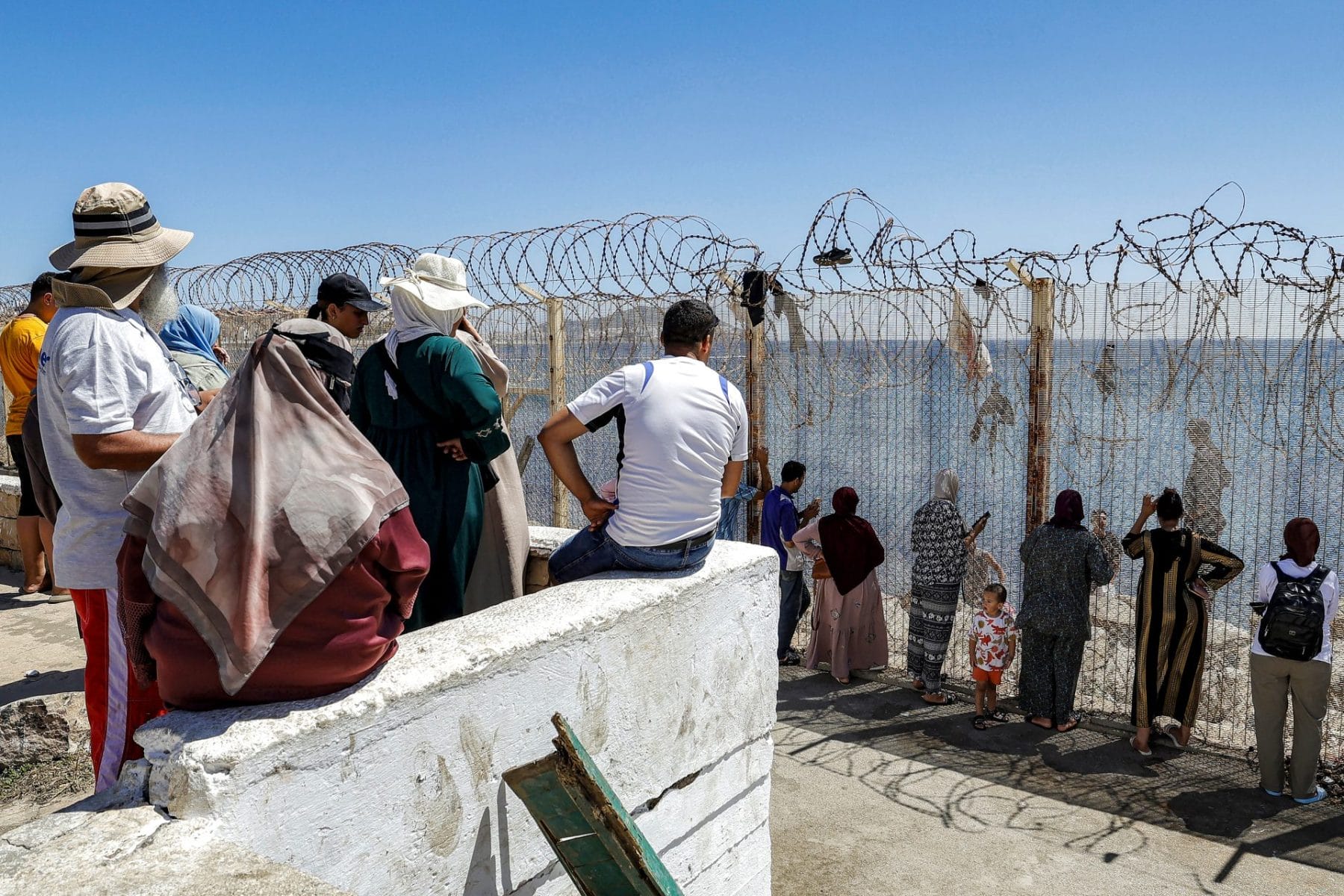
The crossings into the enclave are blocked by a multi-layered barrier of fences and wire. Morocco administers a fence separating it from the neutral area between the two countries. Two fences on the Spanish-controlled territory follow, creating an enclosure monitored by the Spanish Civil Guard. The physical infrastructure is reinforced with motion sensors, thermal and CCTV cameras, maritime communication systems and facial recognition technology.
Even the sea has now been incorporated into the border system. Just three days after the Ceuta border chaos, Spanish authorities installed a 500-metre floating barrier and anchored naval buoys to create another monitored enclosure.
The EU has funded most of the fortifications. The Border Violence Monitoring Network’s report says that since the construction of Ceuta’s border barrier in the 1990s, the EU has spent tens of millions of dollars to make the Spanish-Moroccan frontier more secure, technologically up-to-date and heavily surveilled. With the recent mass crossing, Spain will now receive additional emergency financial aid.
Yet, the architecture of physical surveillance, built and re-built with European money for decades, cannot prevent the human cost of attempting to cross a border. In Ceuta alone, at least 100 people died according to local authorities. “The rationale behind increasing surveillance is that you'll be able to save lives and smash the [people trafficking] gangs, right?” asked Nathan Akehurst, who has written about Ceuta’s border for Jacobin. “Where was that in this case?”
Diplomacy
Akehurst’s question touches upon the human-centered rationale for heavy border surveillance. But there is also a political one. It is not only Spain, as a EU member, that receives funds to manage migration. Morocco has received €427 million since 2015, for migration-related expenses, including technology and training. That’s part of Europe’s wider strategy of border externalization, a practice where Europe moves border control beyond its own territory.
The practice has been around for decades, but went into overdrive after 2015, when approximately 1.3 million people, mostly from Syria, came to the continent seeking asylum. Many of them reached Europe through Turkey, prompting the EU to strike a deal with Ankara: €6 billion in funds, visa liberalization and EU-ascension negotiations in exchange for stricter border controls and curbing irregular arrivals to Greece. The EU also agreed to resettle within Europe one Syrian from Turkey for every Syrian returned to Turkey from Greece. But by 2020, when the EU failed to resettle Syrians, Turkey’s president Recep Tayyip Erdoğan declared he would no longer prevent migrants from crossing Turkey en route to the EU.
“Border externalization is basically paying other countries, but also subjecting them, through a carrot and stick approach, to performing functions that are usually performed by a state itself at their borders,” explained Josephine Solanki from the Transnational Institute, an Amsterdam-based think tank. It leaves space for leaders like Erdoğan, Solanki added, to bargain for influence by turning migrants “into political leverage.”
The cost of outsourcing borders is not just material. It is measured in control that Europe cedes to the foreign governments it relies on for migration policy enforcement.
Relatives and friends waited by a fence topped with barbed-wire for the return of people who had previously crossed into Ceuta. Spanish authorities claim to have sent almost everyone back to Morocco. Abdel Majid BZIOUAT / AFP
In Ceuta, migrants claimed local authorities did not stop them from crossing the border. A young Moroccan man told the New York Times a day after the event: “They opened the border and let everyone go by.”
Border outsourcing agreements were made, among others, with authoritarian regimes in Tunisia, Egypt and Libya, where EU funds were used to detain migrants and quell domestic protests, rights organizations say. Alliances with “deeply unreliable and authoritarian actors” in the name of stability, said Nathan Akehurst, “is short-termist, insane and loses Europe any credibility it has left.” These alliances also allow Europe to “shift the blame to the Moroccans, the Eastern Libyans, the Turkish or whoever decides to take advantage of that moment.”
Rumors
It is yet to be revealed who, if anyone, has taken advantage of the mass crossing into Ceuta. Local and international media have uncovered now-deleted posts that shared tips on routes and equipment for the journey. One of the main networks was called Hrig Sebta network — “Sebta” being the Arabic name of Ceuta and “hrig” being the Maghrebi term for undocumented migrants, literally referencing the burning of identity papers.
In the wake of Ceuta, European ministers pledged to tackle online misinformation to avoid migration crises, but remained cautious when asked about thousands of posts reportedly linked to Russia. Other theories attributed the crossing to Morocco’s tensions with Spain over its closer ties with Algeria, or to Spain’s position on Palestine.
But those rumors, and what appears to be a weeks-long coordinated online campaign behind them, reveal something deeply human that fences can’t deter: movement that is spurred by hopes for a better life.
“[The crossing] would have happened anyway at some point,“ Akehurst argues. “There would have been a crossing because all of the circumstances that generate that are already there before someone with a twitter account throws a match on the fire.”
Yet, let’s pause at the match. It’s not about someone with a social media profile creating chain messages. It is about the ecosystem that can jeopardize borders by creating information flows, turning rumors into perceived opportunities.
Moroccan newspaper TeleQuel already published a report about social media posts amplifying the next hrig — another attempted crossing into Ceuta — on August 15.
When packaged to a hungry audience, rumors carry the currency of truth. They’ve driven migration long before social media was even conceptualized. Now those rumors speed through digital space owned and operated by private companies not prone to accountability and sitting well outside the reach of any single state.
And the EU has understood that for years. “It is necessary to structure the information space, as we have organized in the past the territorial space, the maritime space and the air space,” Thierry Breton, the European Commissioner for Internal Market of the EU said back in 2018. He warned about Big Tech companies treating digital space as a no-man’s-land that they would write rules for.
The no man’s land between Morocco and Spain appears calmer now. But the turmoil of the crossing revealed a new, digital dimension to border governance. Information has always found a way to spread; digital platforms have given it new channels: ones which allow those behind the information to remain faceless, while the information itself passes from screen to screen. It reaches a boiling point, spills over from the digital space and then can be disappeared, even before anyone has had a moment to scroll back.
Flock Safety’s automated license plate-reading cameras, used by thousands of law enforcement agencies in the U.S., have drawn intense criticism from civil liberties groups.
Flock Safety’s automated license plate-reading cameras, used by thousands of law enforcement agencies in the U.S., have drawn intense criticism from civil liberties groups.
A brutal summer has exposed how much pressure European countries are under from forces largely out of their grip: war in Iran and Ukraine, record heat and more.
A brutal summer has exposed how much pressure European countries are under from forces largely out of their grip: war in Iran and Ukraine, record heat and more.
Ceuta, Spain, and Fnideq, Morocco, are physically separated by only a mile, but they are intertwined by family and trade. A recent border crisis is the latest chapter in their story.
Ceuta, Spain, and Fnideq, Morocco, are physically separated by only a mile, but they are intertwined by family and trade. A recent border crisis is the latest chapter in their story.
A plane with 147 Venezuelans landed on Monday in the South American country amid criticism over the deaths of deportees housed in a collapsed building during June’s quakes.
A plane with 147 Venezuelans landed on Monday in the South American country amid criticism over the deaths of deportees housed in a collapsed building during June’s quakes.
After thousands poured into the Spanish territory in North Africa, the pro-immigration policies of Prime Minister Pedro Sánchez were blamed. The reality is more complex.
After thousands poured into the Spanish territory in North Africa, the pro-immigration policies of Prime Minister Pedro Sánchez were blamed. The reality is more complex.
Spain’s prime minister, Pedro Sánchez, center, visiting Ceuta on Friday. “In less than 48 hours, my government has succeeded in fully restoring control over the border,” he said on Saturday.
Migrants returning back to Morocco. Last week, between 50,000 and 60,000 people entered Ceuta, a small Spanish exclave in North Africa that shares a border with Morocco.
Far-right politicians and activists are flocking to the Spanish territory on the northern coast of Africa, fueling tensions there days after thousands of migrants entered the exclave.
Far-right politicians and activists are flocking to the Spanish territory on the northern coast of Africa, fueling tensions there days after thousands of migrants entered the exclave.
The far-right politician Alvise Pérez, center, faced off against residents after in Ceuta, Spain, after speaking out against the influx of migrants there.
Most of the people who surged into Spain on Thursday have since returned to Morocco. A small minority are holed up on a seafront, tired, hungry and vowing to stay.
Most of the people who surged into Spain on Thursday have since returned to Morocco. A small minority are holed up on a seafront, tired, hungry and vowing to stay.
Some migrants were waiting it out on a beach in Ceuta, a Spanish territory, on Saturday after crossing from Morocco days earlier.
Europe sheltered many refugees in 2015. Its hard-line reaction to a new crisis in Ceuta shows how, 11 years on, the far right has reshaped European attitudes.
Europe sheltered many refugees in 2015. Its hard-line reaction to a new crisis in Ceuta shows how, 11 years on, the far right has reshaped European attitudes.
En quelques jours, plus de 1 500 personnes – dont plusieurs centaines hier – sont arrivées par la mer en provenance du Maroc dans l’enclave espagnole de Ceuta.
Les corps de neuf personnes qui avaient tenté de rejoindre la rive à la nage ont été repêchés.
Le gouvernement espagnol a déployé des militaires.
Il a indiqué que les personnes entrées illégalement seront rapatriées vers le Maroc.
Ceuta, située à la pointe nord du Maroc, est l’une des deux enclaves espagnoles en Afr
En quelques jours, plus de 1 500 personnes – dont plusieurs centaines hier – sont arrivées par la mer en provenance du Maroc dans l’enclave espagnole de Ceuta.
Les corps de neuf personnes qui avaient tenté de rejoindre la rive à la nage ont été repêchés.
Le gouvernement espagnol a déployé des militaires.
Il a indiqué que les personnes entrées illégalement seront rapatriées vers le Maroc.
Ceuta, située à la pointe nord du Maroc, est l’une des deux enclaves espagnoles en Afrique du Nord.
C’est une frontière terrestre de l’Union européenne sur le continent africain.
My name is Darina,” says an elfin teen, ponytail pulled through the back of her cap, and “next year I’ll be earning 150,000 rubles (nearly $2,000) a month.” Darina works at what she calls “the world’s largest drone factory,” helping to assemble versions of the Iranian Shahed drone. “My parents are proud of me. Wanna do the same?” She asks as she advertises a polytechnic in Tatarstan. The Russian government, in the face of war and looming demographic disaster, has been relaxing child labor laws s
My name is Darina,” says an elfin teen, ponytail pulled through the back of her cap, and “next year I’ll be earning 150,000 rubles (nearly $2,000) a month.” Darina works at what she calls “the world’s largest drone factory,” helping to assemble versions of the Iranian Shahed drone. “My parents are proud of me. Wanna do the same?” She asks as she advertises a polytechnic in Tatarstan. The Russian government, in the face of war and looming demographic disaster, has been relaxing child labor laws since 2022, making it easier to put 14-year-olds to work. Now, legislators are open about the need to reform “outdated” restrictions on employing minors in industries that were “considered dangerous 20 years ago.” Drone production is not the only part of the war effort to which teenagers are being recruited. This month in a “content camp” in Moscow, soldiers and state media propagandists trained 120-plus teens on how to make videos, use AI, and grow their audiences as aspiring influencers. Vladislav Golovin, a former soldier and a leader of Russia’s Young Army Cadets National Movement, said the program had “created a huge team of kids who understand how to broadcast government values.”
But many young people, subject to year-round conscription, subject to internet shut downs and subject to surveillance, have little desire to spread propaganda. Instead, according to Google Trends data, growing numbers of Russians are seeking information on how to emigrate. A new exodus would accelerate Russia’s deep demographic crisis. Already, up to a million people are thought to have left Russia since the full scale invasion of Ukraine in 2022. According to one recent count, nearly 210,000 Russian soldiers have been killed in the war with Ukraine, with other estimates suggesting over 1.2 million casualties, including 325,000 deaths. And Russian fertility rates are the lowest they have been for 200 years. Anton Kotyakov, the labor minister, has told Vladimir Putin that the country faces a labor shortage of 11 million people by 2030.
So concerning is this crisis that Rosstat, the national statistics agency, has stopped publishing monthly demographic data. State officials and local governors have been told to compete to come up with the most innovative solutions to a seemingly intractable problem. The pressure on Russian officials and the Kremlin is leading to desperate measures, including guidance from the Russian health ministry that women who say they do not want to have children should be referred to a psychologist. Nothing the Russian state has tried has worked, from financial incentives (extended even to schoolgirls under 18) to banning advertising that supposedly promotes “child-free” lifestyles and so-called “LGBTQ propaganda.”
Darina, 16, assembles Shahed-style drones at a factory in Alabuga, Tatarstan, Russia. Screenshots from YouTube video by T-invariant.
Alongside “anti-woke” policies disguised as family values, is rising xenophobia and anti-immigrant rhetoric that has led to a marked decline in the number of foreigners living in Russia. The Kremlin’s anti-migrant policies include a new system to monitor migrant workers through biometric registration, location tracking, and intensified police oversight. The Russian parliament is currently debating enhancing the number of offences that can be punished by deportation or substantially increased fines. Much of it is targeted at Russia’s Central Asian migrants who make up an overwhelming majority of immigrant labor. Some Central Asian governments, notably Kyrgyzstan and Tajikistan, have now urged their citizens to think twice about going to Russia for work.
Russia has been publicizing political stunts such as its “shared values visa” in which applicants from 46, largely developed, nations are given temporary residence permits if they profess to support “traditional Russian values.” The visa, the Kremlin has said, is “Russia’s response to what it perceives as the harmful effects of Western neoliberal policies.” But only a tiny fraction of the immigrants Russia needs will be Westerners who apply for such a visa; instead, Russia has been diversifying its pool of migrant workers by looking further east. Around 72,000 work permits were issued to Indian nationals in 2025, up from just 5,000 in 2021. Russian officials have signaled they are ready to accept “unlimited” numbers of workers from South Asian countries like India, Sri Lanka, and Myanmar.
While the Kremlin is looking to South Asia and Africa to address its immediate need for workers (and soldiers), the ambition in the longer term is to boost Russian birthr rates, despite the signal failure of ongoing attempts.
In the U.S., there have been several moves borrowed from the Kremlin’s playbook, including the restriction of abortion, the attempt to deny women birth control, and even alarm at the fall in teen pregnancies. But data released this month showed that women in the U.S. gave birth to 710,000 fewer babies in 2025 than they did in 2007, a reflection of two decades of steadily dropping birth rates. Russian demographer Salavat Abylkalikov, at the Leibniz Institute for East and Southeast European Studies in Germany, says “if the birth rate has fallen below the level of simple reproduction, it is almost impossible to raise it back.” Especially when financial incentives cover just a fraction of childcare costs.
In any case, Abylkalikov says, “in Russia, death is much more profitable than birth: in Nizhny Novgorod Oblast, the government provides around 1,000,000 rubles (about $12,000) for each child, but if one person goes to war and dies, the family receives up to 12 million rubles in total. That's more than $120,000. This is the economy of death.” The evidence, from countries like Russia, Hungary and the U.S., is that appeals to tradition, to religion and to female “responsibility” do not work, when support for families is limited. And while migration is an obvious fix to demographic questions everywhere, it’s politically toxic.
Russia knows it is hurtling towards demographic doom but can do little to halt the momentum. Its policies are riddled with inconsistencies — a strong line in anti-migration rhetoric and bullying, while being forced to import workers and soldiers from Asia and Africa; a patriarchal view of women’s roles, mostly confined to the domestic, while increasingly reliant on women to take the jobs of the men who are fighting and dying in Putin's war; and encouraging more women to give birth, while employing children to build drones. With family values like these, no wonder young Russians are hesitant to procreate.
When the United States and Israel started blitzing Iran last weekend, eyes turned to the Chagos Islands in the Indian Ocean. The British-administered archipelago is home to a strategically vital US air base on the island of Diego Garcia. Would US President Donald Trump be using it in his “Operation Epic Fury”?
It's fair to say Trump probably didn't give a damn about Misley Mandarin’s opinion. But the self-styled “interim first minister” of Chagos, who recently upped sticks from Britain in a “
When the United States and Israel started blitzing Iran last weekend, eyes turned to the Chagos Islands in the Indian Ocean. The British-administered archipelago is home to a strategically vital US air base on the island of Diego Garcia. Would US President Donald Trump be using it in his “Operation Epic Fury”?
It's fair to say Trump probably didn't give a damn about Misley Mandarin’s opinion. But the self-styled “interim first minister” of Chagos, who recently upped sticks from Britain in a “super, super secret” mission to take up residence on the long-deserted Peros Banhos atoll, gave Washington his official “blessing” anyway.
I spoke via WhatsApp to the 47-year-old Chagossian in his base camp: basically a few tents, with a solar generator and a Starlink satellite connection enabling him to beam reels to his 10,000 Facebook followers. He quit his job as a bus driver in London to come here, determined to halt Britain’s plan to hand over what he considers to be his land to Mauritius after a long-running decolonization battle.
“We’re British citizens here. We’re not moving,” he said.
Mandarin wants the land of his forebears to remain under the rule of Britain, the former colonial ruler that booted out about 1,500 native Chagossians, including his own father, to make room for the U.S. military base in the late 1960s. The removal consigned Chagossians to a miserable fate in newly independent Mauritius.
Now on home turf, Mandarin, his 72-year-old dad, and two other Chagossians have dodged immediate deportation: they’ve obtained an injunction from a British court allowing them to stay until a hearing on March 13. Since their arrival, two more Chagossians have joined them. “We can do self-determination right now. We don't want to cut any links with Britain. We're not looking for independence,” Mandarin says.
“The next generation will decide on independence.”
Marriage of convenience
Life on Île du Coin, the largest island on Peros Banhos, is simple. The daily routine revolves around catching fish and finding a supply of fresh water. The new residents collect overnight rainfall in tarpaulin sheets to drink. Bathing involves a dip in the sea to wash off dirt, followed by a splash of precious rainwater to rinse.
Mandarin appears to be relishing the experience. Soon after his arrival, the former army cook, who has bags of swagger, posted a video of himself cooking up “naan fromaaz”, or cheese naan, in a skillet on a makeshift stove. “Pa bizin madam isi mwa!” he jokes. I don't need a wife here!
The Chagossians arrived on the island on 16 February, accompanied by former army officer Adam Holloway, a former Conservative MP who recently defected to the radical right Reform UK party.
Reform, which is surging in the polls, is leading opposition to a bilateral treaty that would see Britain cede sovereignty of Chagos to Mauritius, while paying an average of £101-million ($135-million) per year to maintain a lease on Diego Garcia over the coming century. Negotiations began after the International Court of Justice ruled in 2019 that Britain should transfer sovereignty of Chagos to Mauritius “as rapidly as possible.”
The sleek yacht that brought the group on the five-day journey from Sri Lanka and travels back and forth with supplies was paid for by British-Thai businessman Christopher Harborne, a mega-donor to Reform. Its name is No Excuse – as in, “no excuse for us not to stay on Chagos,” says Mandarin.
Reform UK and the Chagossians make for curious bedfellows. On the one hand, there's a political party that has floated plans to create a Trump-inspired, ICE-style agency to carry out mass deportations in Britain.
On the other, there’s Mandarin’s dad, finally back home after being brutally evicted from his atoll at the age of 14. “I will not go back to England. I want to die here,” said Michel Mandarin, as he set foot on his cherished Chagossian soil.
The unlikely pairing has had cause for joint celebration. Two days after they arrived, Trump withdrew his approval for the UK-Mauritius transfer treaty, which was supposed to provide legal certainty for the base in a hypothetical world governed by the rules-based international order.
It turned out the president was annoyed at British Prime Minister Keir Starmer’s refusal to sanction the use of Diego Garcia for the Iran offensive. “DO NOT GIVE AWAY DIEGO GARCIA!” he told the British prime minister. The treaty was paused. Then war broke out and a beleaguered Starmer agreed to “defensive” strikes from Diego Garcia.
On Île du Coin, war seems like a distant prospect, even if it is potentially less than 200km (about 125 miles) away in Diego Garcia. As Tuesday drew to a close, there had so far been neither sight nor sound of the US’s deadly B-52, B-1, and B-2 bombers in the slightly overcast skies.
Wynona Mutisi/The Continent
Kicking the can
Mandarin left Mauritius at age 22. He joined the British army in a bid to improve his lot and later became a bus driver in south London. He says he always felt like a second-class citizen in Mauritius, with “no opportunity to progress”.
Rights groups have charted how evictees from Chagos struggled to cope in Mauritius, many of them ending up trapped in an urban nightmare of poverty, mental illness, and addiction — with little sympathy from their hosts. Many Chagossians left for Britain after securing citizenship rights.
Now the fate of their homeland is being decided by a treaty negotiated over their heads. Last year, a UN committee on racial discrimination warned that the treaty could perpetuate “long-standing violations” of Chagossian rights.
The treaty says Mauritius is “free” to resettle islanders on any of the Chagos islands — except Diego Garcia. But there is no binding obligation for it to do so and the exclusion of Diego Garcia rankles. The deal also includes a £40-million trust fund to be managed by Mauritius, which has been criticised as a ruse by Britain to avoid paying proper compensation.
“People talk about decolonisation, but if Britain did the wrongs, Britain should have to repair the wrongs — not kick the can to Mauritius,” says Mandarin. “Or they will get away with it.”
One of the reels he has filmed on Île du Coin features an industrial oven that was used by colonial officials to burn the islanders’ dogs before they were evicted. Officials threatened the islanders with the same fate if they refused to leave. Britain must pay compensation, he says.
'Belongers'
Mandarin’s joint odyssey with Reform UK has provoked mixed feelings among the Chagossian diaspora in Britain, Seychelles, and Mauritius.
“He’s put us back in the centre of the story, but will we be overshadowed by Reform’s agenda?” asked one Chagossian in the English town of Crawley – home to a 3,500-strong Chagossian community — who is also opposed to the deal.
As the treaty was being negotiated, Chagossians’ concerns were largely swept under the carpet as a complicating factor in a pragmatic decolonization drive.
The hard right has capitalized on the deal’s major flaw, positioning itself as the main champion of Chagossians, just as their ancestral land finds itself embroiled in a conflict that could upend the global order.
One video recently posted by Reform leader Nigel Farage saw him express outrage after being “denied access” to Île du Coin for the delivery of “humanitarian” supplies to Mandarin and his men, racking up a cool 4.7 million views on X.
Asked whether he is being used by Reform and its supporters, Mandarin is sanguine. He says he also contacted the left-wing Green Party for support, but it never replied. “Only Reform responded. At the end of the day, it’s politics. You have to make your own judgements for the sake of your people,” he says.
He views the upcoming hearing as a potential “turning point in our fight”. The injunction barring their removal was granted on the basis that their location was too far from the base to pose a security threat. “If the court says they can’t remove us, then maybe more people will come,” he says. “This is our people. This is our time. We’re not visitors — we’re belongers.”
The Age of Exile
This story is part of our Age of Exile series, which explores how displacement has evolved from historical punishment into a defining condition of our time—one that reveals profound transformations in how we construct identity, maintain community, and exercise power across borders. In an era where digital connection enables presence without physical proximity, exile has become more complex, more global, and more central to understanding our world. Explore The Age of Exile series
Il paraît que l’Allemagne et le Danemark devraient servir d’exemple au Québec en matière de politique migratoire. C’est ce que laisse entendre le député Alex Boissonneault dans une vidéo voulant défaire le « mythe » que « plus d’immigration veut dire moins de pénurie de main d’œuvre ». Selon lui, les gouvernements allemand et danois ont changé leur politique d’immigration après avoir réalisé que l’immigration ne règle pas la pénurie de main-d’œuvre. M. Boissonneault connaît-il réellement la poli
Il paraît que l’Allemagne et le Danemark devraient servir d’exemple au Québec en matière de politique migratoire. C’est ce que laisse entendre le député Alex Boissonneault dans une vidéo voulant défaire le « mythe » que « plus d’immigration veut dire moins de pénurie de main d’œuvre ». Selon lui, les gouvernements allemand et danois ont changé leur politique d’immigration après avoir réalisé que l’immigration ne règle pas la pénurie de main-d’œuvre. M. Boissonneault connaît-il réellement la politique migratoire de ces deux pays et leurs fondements?
À gauche: Alex Boissonneault, député d’Arthabaska-l’Érable depuis 2025 À droite: Mette Frederiksen, première ministre du Danemark depuis 2019
« Il y a plusieurs exemples de pays qui ont changé de politique en matière d’immigration parce qu’ils ont constaté cette situation. C’est le cas de l’Allemagne. L’Allemagne qui comptait beaucoup sur l’immigration pour combler ses postes vacants mais qui a constaté en 2023 que l’augmentation de l’immigration avait créé une pénurie de main d’œuvre dans les secteurs névralgiques. Donc il y a eu changement de politique. »
C’est complètement faux. La modification de la politique migratoire allemande en 2023 n’a rien à voir avec des considérations économiques ou sociales. Au même moment où le gouvernement d’Olaf Scholz renforçait le contrôle des frontières, l’Allemagne cherchait à attirer des travailleurs étrangers, en particulier les travailleurs qualifiés, notamment en réduisant les barrières administratives. Voici ce qu’affirmait Scholz en novembre 2024: « Aucun pays du monde ne peut connaître de croissance économique avec une main-d’oeuvre qui diminue. C’est la vérité à laquelle nous sommes confrontés. » Dans le même discours, le chancelier allemand défend le droit de l’Allemagne de choisir qui est admis en son sein, donc de repousser les réfugiés. Le problème de l’Allemagne n’est pas que l’immigration ne suffit pas à combler la pénurie de main-d’oeuvre, mais qu’elle ne parvient pas à attirer une main d’oeuvre de souche européenne en assez grande quantité.
« Même chose pour le Danemark avec un gouvernement social-démocrate, normalement considéré de gauche. Le gouvernement danois a constaté que l’augmentation de l’immigration a eu des conséquences négatives sur les services à la population. Il y a donc eu un changement de politique. »
Encore une fois, ce « changement de politique » du gouvernement danois n’a rien à voir avec l’économie ou avec les services à la population. C’est une question purement idéologique et, ce gouvernement ne s’en cache pas, raciste.
Commençons par dire que le racisme n’est pas une question de droite ou de gauche. On peut très bien être à gauche économiquement et à droite sur le plan de l’identité nationale. C’est le cas de la première ministre danoise, Mette Frederiksen, très attachée à l’État-providence danois, mais ouvertement raciste. En 2018, elle proposait de renvoyer les migrants « non occidentaux », non seulement du Danemark, mais de l’Europe, et de les placer dans des camps de concentration en Afrique sous supervision des Nations unies. À son arrivée au pouvoir en 2019, Frederiksen a promis de faire du Danemark un pays « sans demandeur d’asile ». En 2021, le gouvernement danois a voté une loi pour expulser les demandeurs d’asile hors d’Europe en attendant le traitement de leur demande, en contradiction totale avec les traités internationaux et les directives européennes. En 2022, une entente est signée avec le Rwanda. En gros, le Danemark paie le Rwanda pour détenir les demandeurs d’asile. Un bien triste revirement pour le premier pays à avoir signé la Convention de 1951 sur les réfugiés. Ce n’est pas sans raison que ce gouvernement « social-démocrate » est appuyé par l’extrême droite danoise.
En soi, la politique de Frederiksen et des sociaux-démocrates ne jure pas avec celle des administrations précédentes. Depuis le début des années 2000, le gouvernement danois est hostile à l’immigration. Le délai nécessaire pour obtenir la résidence permanente est passé de trois à huit ans. La « loi sur les étrangers » est modifiée régulièrement pour devenir toujours plus restrictive et viser des groupes en particulier. Elle a été modifiée 42 fois entre 2017 et 2019. Et la loi danoise est ouvertement raciste en ciblant des groupes spécifiques. En 2016, les Syriens ont été directement ciblés par une loi restreignant l’accés au regroupement familial pour les réfugiés et confisquant leurs objets de valeur pour financer leur séjour. En 2018, des mesures sont prises pour que des peines plus sévères soient infligées aux « résidents non occidentaux ». Des amendes importantes sont infligées aux personnes venant en aide aux « immigrants irréguliers ». Et pour bien montrer que la politique danoise est motivée par le racisme et non pas par des préoccupations économiques ou sociales, le Danemark a ouvert grand ses portes aux réfugiés ukrainiens fuyant l’invasion russe.
Ironiquement, ces dernières années, c’est la droite (modérée) qui a commencé à demander un assouplissement des politiques migratoires au Danemark. Pas pour des raisons humanitaire, mais pour des raisons économiques. Il y a une pénurie de main-d’œuvre, voyez-vous. Et les employeurs aimeraient bien qu’on leur permette de recruter à l’étranger les travailleurs qu’ils ne trouvent pas localement.
Christèle Meilland, chercheuse à l’Institut de recherches économiques et sociales (IRES), explique que la politique migratoire danoise s’appuie sur un discours « assimilant les étrangers, et particulièrement les réfugiés, à un fardeau pour l’État-providence ». Ça vous rappelle quelque chose?
Il paraît que l’Allemagne et le Danemark devraient servir d’exemple au Québec en matière de politique migratoire. C’est ce que laisse entendre le député Alex Boissonneault dans une vidéo voulant défaire le « mythe » que « plus d’immigration veut dire moins de pénurie de main d’œuvre ». Selon lui, les gouvernements allemand et danois ont changé leur politique d’immigration après avoir réalisé que l’immigration ne règle pas la pénurie de main-d’œuvre. M. Boissonneault connaît-il réellement la poli
Il paraît que l’Allemagne et le Danemark devraient servir d’exemple au Québec en matière de politique migratoire. C’est ce que laisse entendre le député Alex Boissonneault dans une vidéo voulant défaire le « mythe » que « plus d’immigration veut dire moins de pénurie de main d’œuvre ». Selon lui, les gouvernements allemand et danois ont changé leur politique d’immigration après avoir réalisé que l’immigration ne règle pas la pénurie de main-d’œuvre. M. Boissonneault connaît-il réellement la politique migratoire de ces deux pays et leurs fondements?
À gauche: Alex Boissonneault, député d’Arthabaska-l’Érable depuis 2025 À droite: Mette Frederiksen, première ministre du Danemark depuis 2019
« Il y a plusieurs exemples de pays qui ont changé de politique en matière d’immigration parce qu’ils ont constaté cette situation. C’est le cas de l’Allemagne. L’Allemagne qui comptait beaucoup sur l’immigration pour combler ses postes vacants mais qui a constaté en 2023 que l’augmentation de l’immigration avait créé une pénurie de main d’œuvre dans les secteurs névralgiques. Donc il y a eu changement de politique. »
C’est complètement faux. La modification de la politique migratoire allemande en 2023 n’a rien à voir avec des considérations économiques ou sociales. Au même moment où le gouvernement d’Olaf Scholz renforçait le contrôle des frontières, l’Allemagne cherchait à attirer des travailleurs étrangers, en particulier les travailleurs qualifiés, notamment en réduisant les barrières administratives. Voici ce qu’affirmait Scholz en novembre 2024: « Aucun pays du monde ne peut connaître de croissance économique avec une main-d’oeuvre qui diminue. C’est la vérité à laquelle nous sommes confrontés. » Dans le même discours, le chancelier allemand défend le droit de l’Allemagne de choisir qui est admis en son sein, donc de repousser les réfugiés. Le problème de l’Allemagne n’est pas que l’immigration ne suffit pas à combler la pénurie de main-d’oeuvre, mais qu’elle ne parvient pas à attirer une main d’oeuvre de souche européenne en assez grande quantité.
« Même chose pour le Danemark avec un gouvernement social-démocrate, normalement considéré de gauche. Le gouvernement danois a constaté que l’augmentation de l’immigration a eu des conséquences négatives sur les services à la population. Il y a donc eu un changement de politique. »
Encore une fois, ce « changement de politique » du gouvernement danois n’a rien à voir avec l’économie ou avec les services à la population. C’est une question purement idéologique et, ce gouvernement ne s’en cache pas, raciste.
Commençons par dire que le racisme n’est pas une question de droite ou de gauche. On peut très bien être à gauche économiquement et à droite sur le plan de l’identité nationale. C’est le cas de la première ministre danoise, Mette Frederiksen, très attachée à l’État-providence danois, mais ouvertement raciste. En 2018, elle proposait de renvoyer les migrants « non occidentaux », non seulement du Danemark, mais de l’Europe, et de les placer dans des camps de concentration en Afrique sous supervision des Nations unies. À son arrivée au pouvoir en 2019, Frederiksen a promis de faire du Danemark un pays « sans demandeur d’asile ». En 2021, le gouvernement danois a voté une loi pour expulser les demandeurs d’asile hors d’Europe en attendant le traitement de leur demande, en contradiction totale avec les traités internationaux et les directives européennes. En 2022, une entente est signée avec le Rwanda. En gros, le Danemark paie le Rwanda pour détenir les demandeurs d’asile. Un bien triste revirement pour le premier pays à avoir signé la Convention de 1951 sur les réfugiés. Ce n’est pas sans raison que ce gouvernement « social-démocrate » est appuyé par l’extrême droite danoise.
En soi, la politique de Frederiksen et des sociaux-démocrates ne jure pas avec celle des administrations précédentes. Depuis le début des années 2000, le gouvernement danois est hostile à l’immigration. Le délai nécessaire pour obtenir la résidence permanente est passé de trois à huit ans. La « loi sur les étrangers » est modifiée régulièrement pour devenir toujours plus restrictive et viser des groupes en particulier. Elle a été modifiée 42 fois entre 2017 et 2019. Et la loi danoise est ouvertement raciste en ciblant des groupes spécifiques. En 2016, les Syriens ont été directement ciblés par une loi restreignant l’accés au regroupement familial pour les réfugiés et confisquant leurs objets de valeur pour financer leur séjour. En 2018, des mesures sont prises pour que des peines plus sévères soient infligées aux « résidents non occidentaux ». Des amendes importantes sont infligées aux personnes venant en aide aux « immigrants irréguliers ». Et pour bien montrer que la politique danoise est motivée par le racisme et non pas par des préoccupations économiques ou sociales, le Danemark a ouvert grand ses portes aux réfugiés ukrainiens fuyant l’invasion russe.
Ironiquement, ces dernières années, c’est la droite (modérée) qui a commencé à demander un assouplissement des politiques migratoires au Danemark. Pas pour des raisons humanitaire, mais pour des raisons économiques. Il y a une pénurie de main-d’œuvre, voyez-vous. Et les employeurs aimeraient bien qu’on leur permette de recruter à l’étranger les travailleurs qu’ils ne trouvent pas localement.
Christèle Meilland, chercheuse à l’Institut de recherches économiques et sociales (IRES), explique que la politique migratoire danoise s’appuie sur un discours « assimilant les étrangers, et particulièrement les réfugiés, à un fardeau pour l’État-providence ». Ça vous rappelle quelque chose?

 Connexion