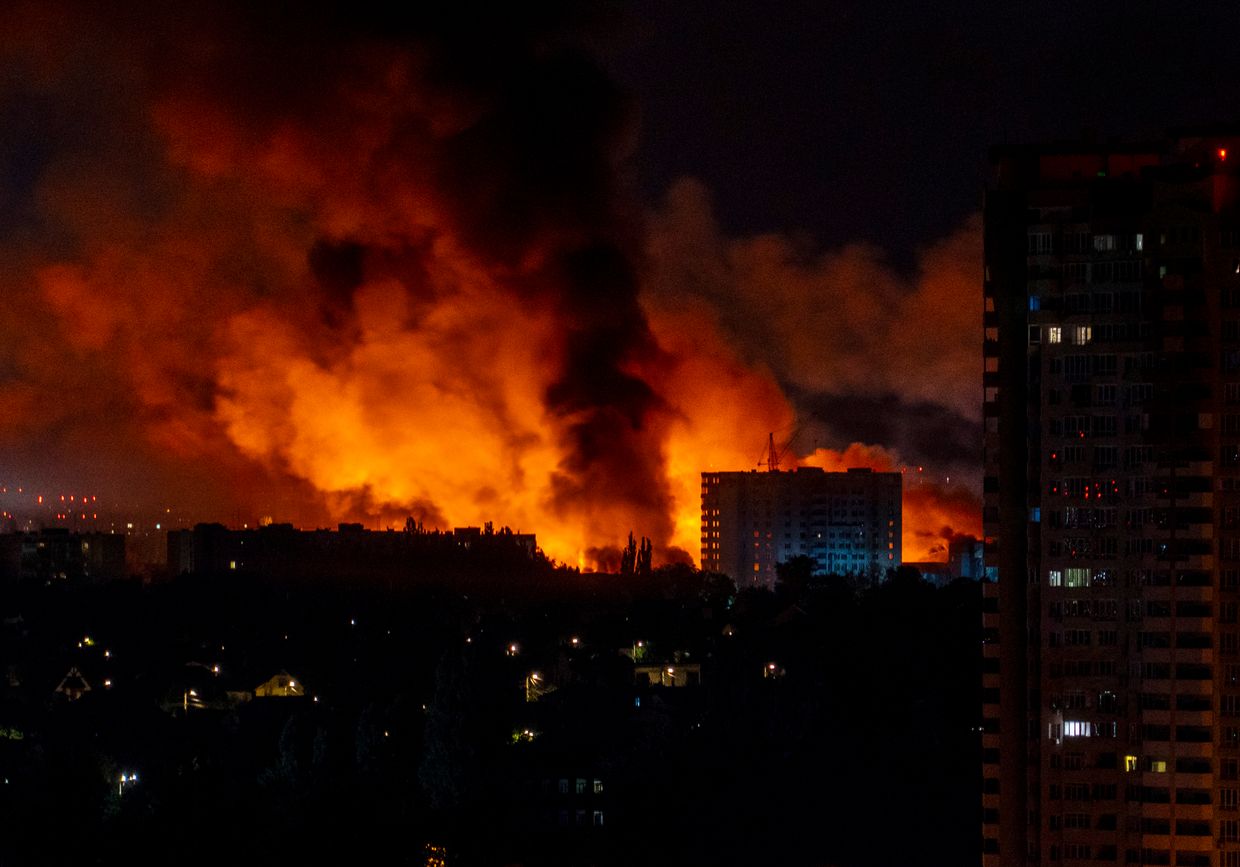
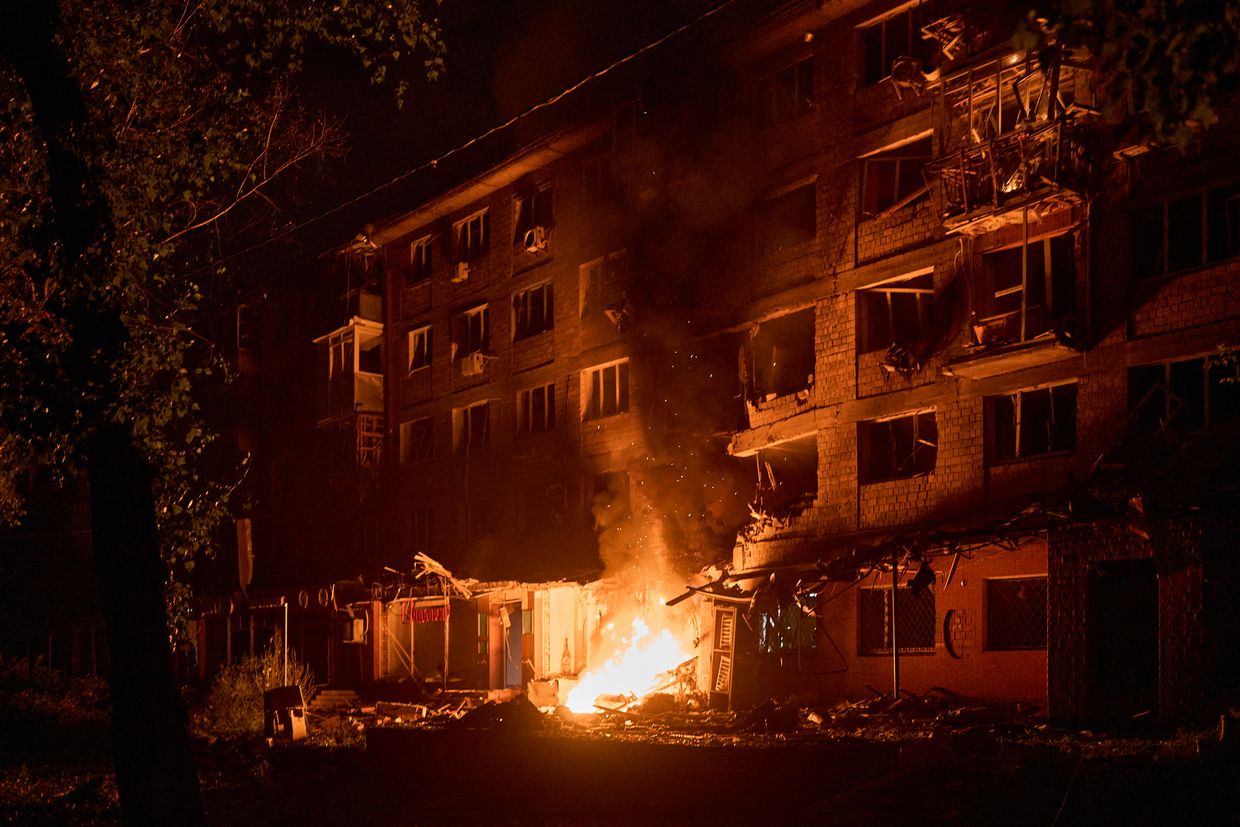
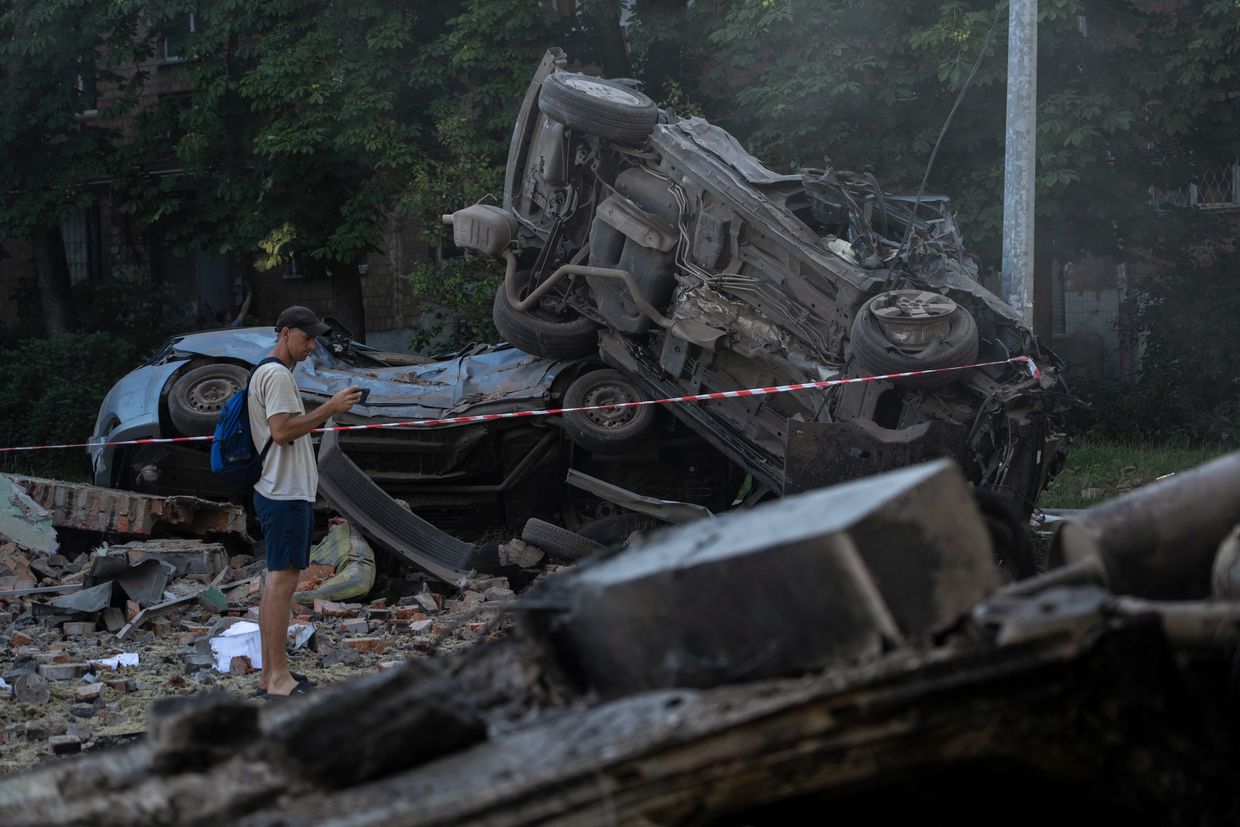
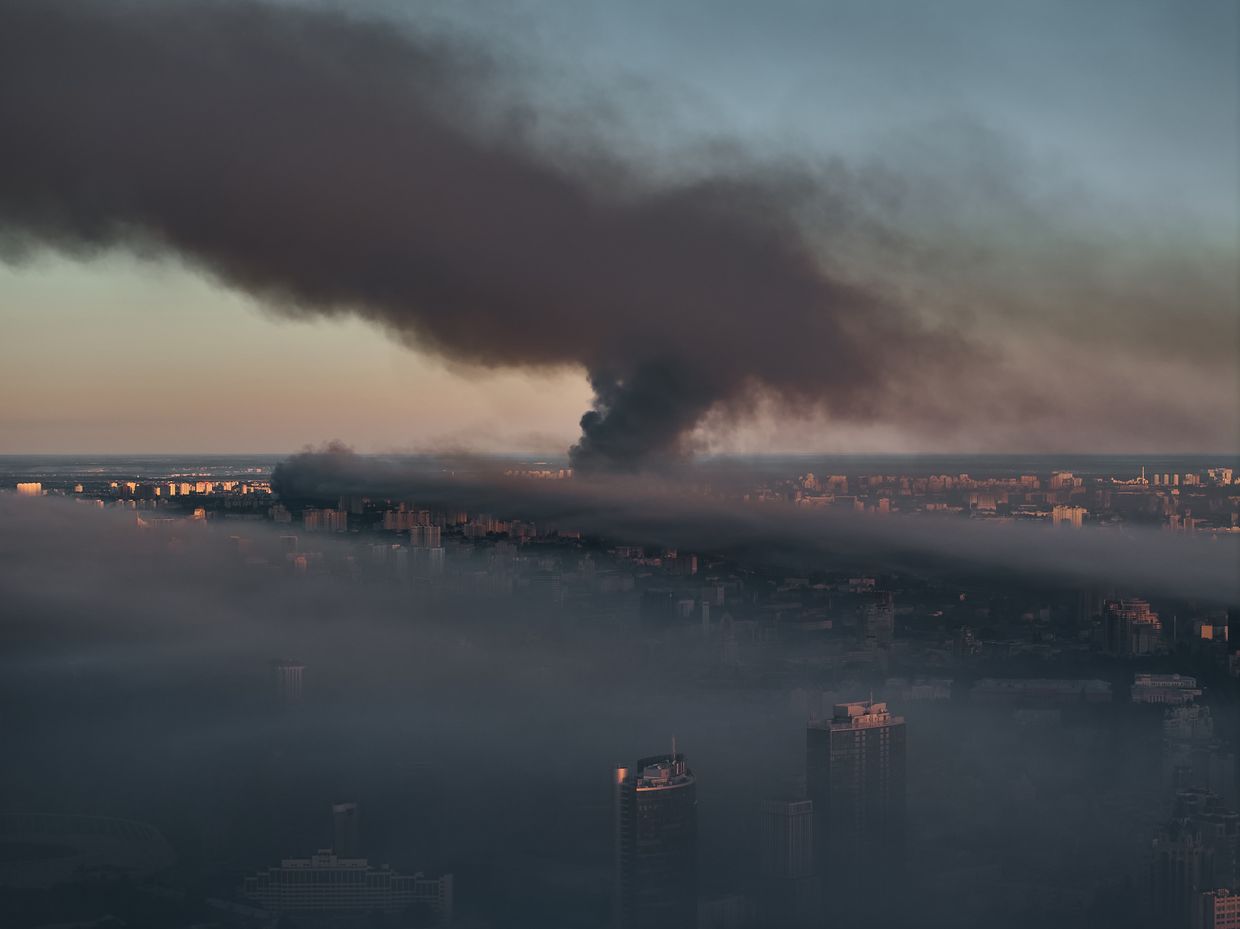
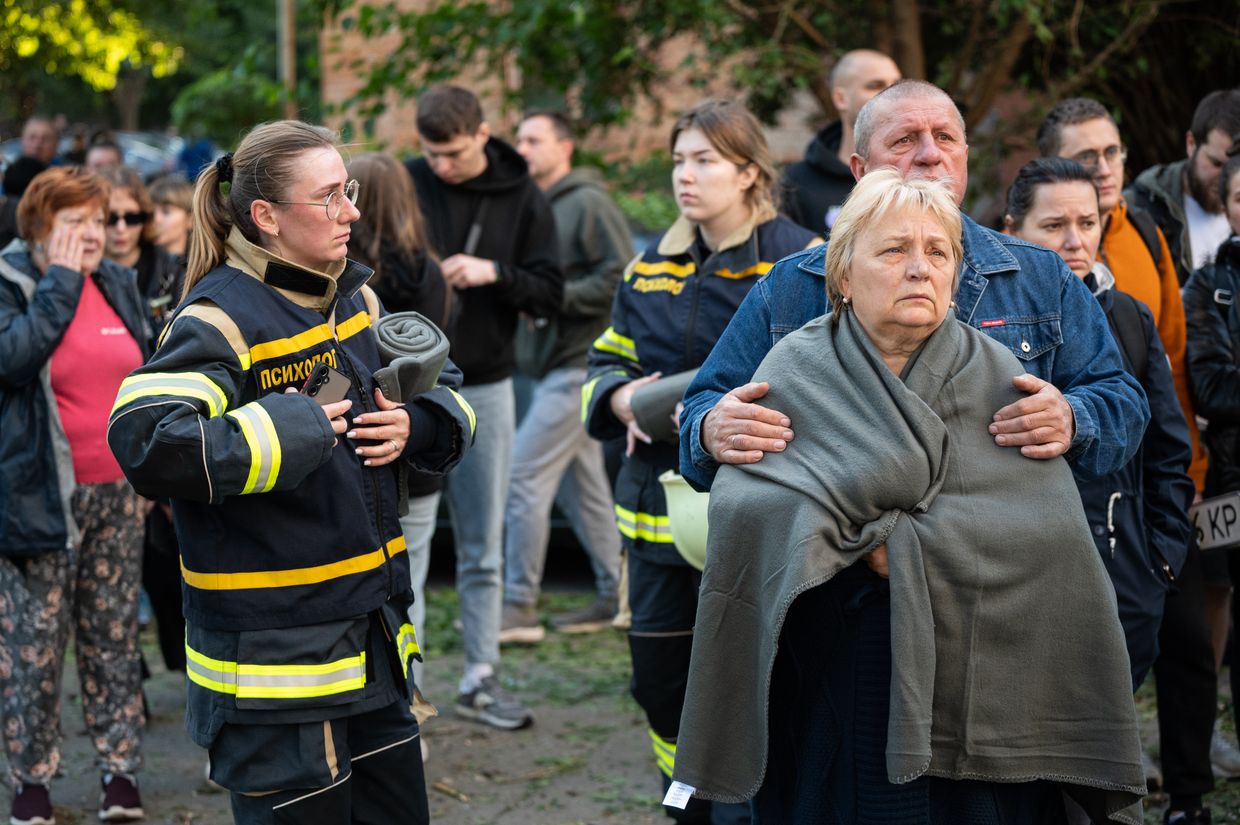
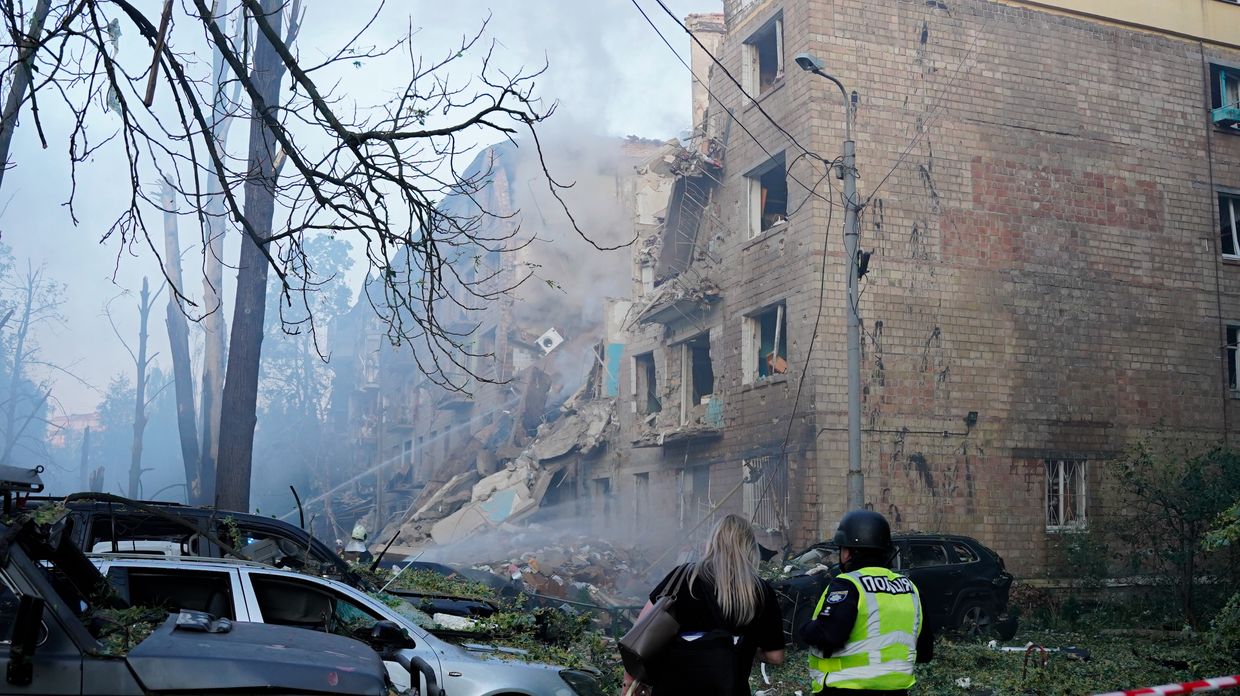
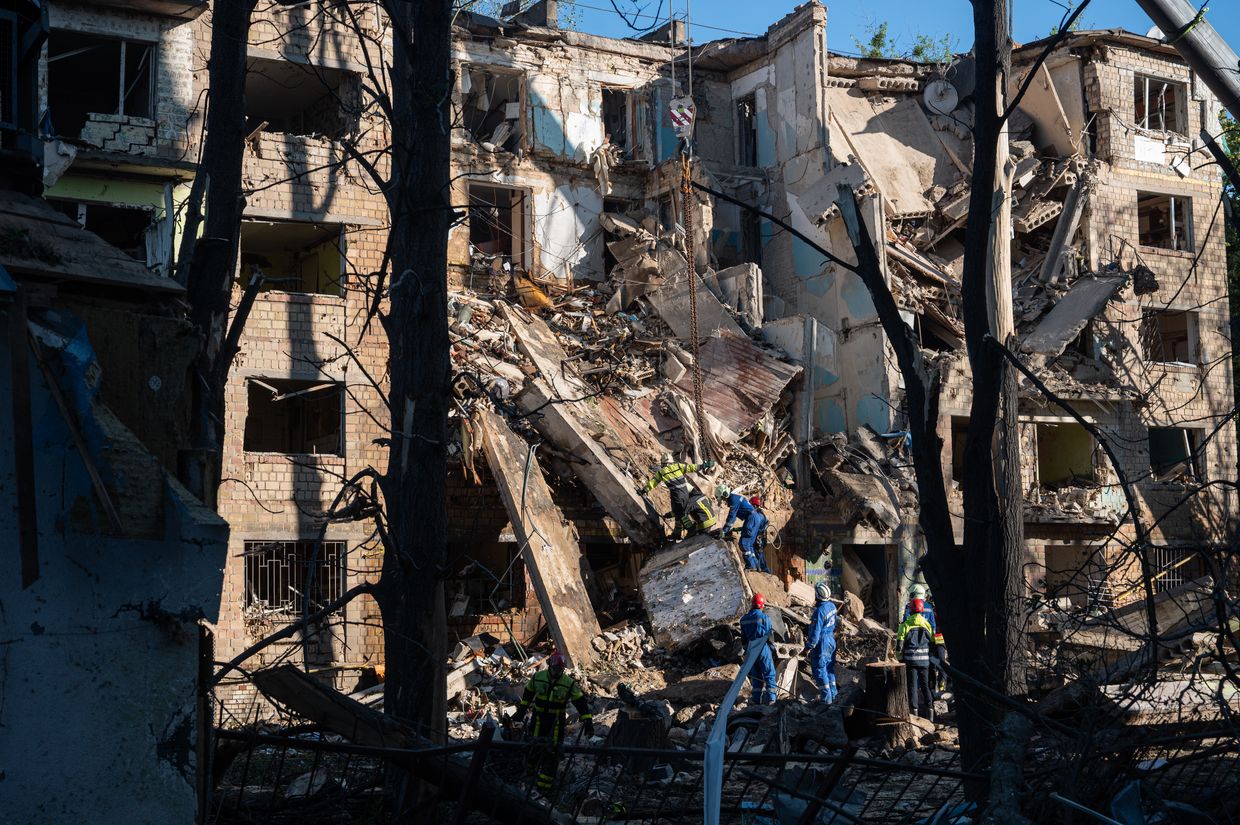
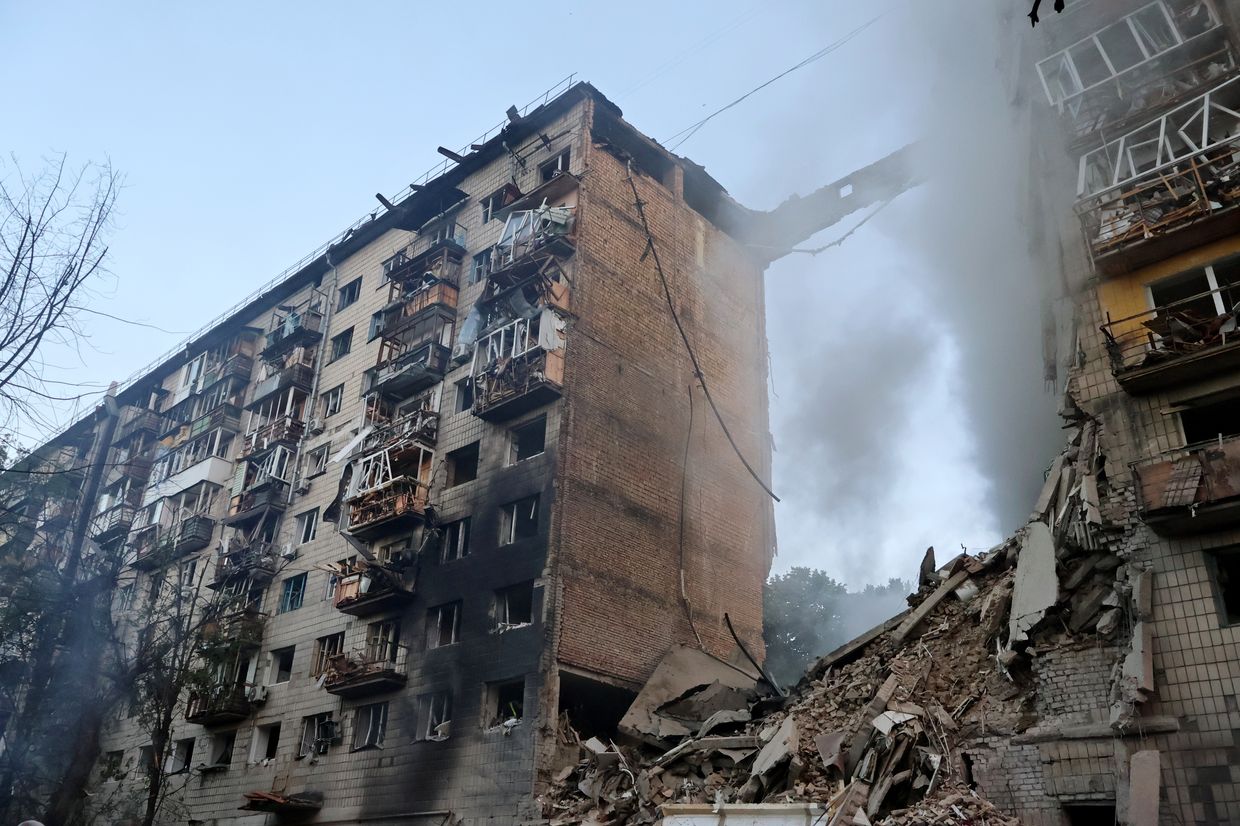
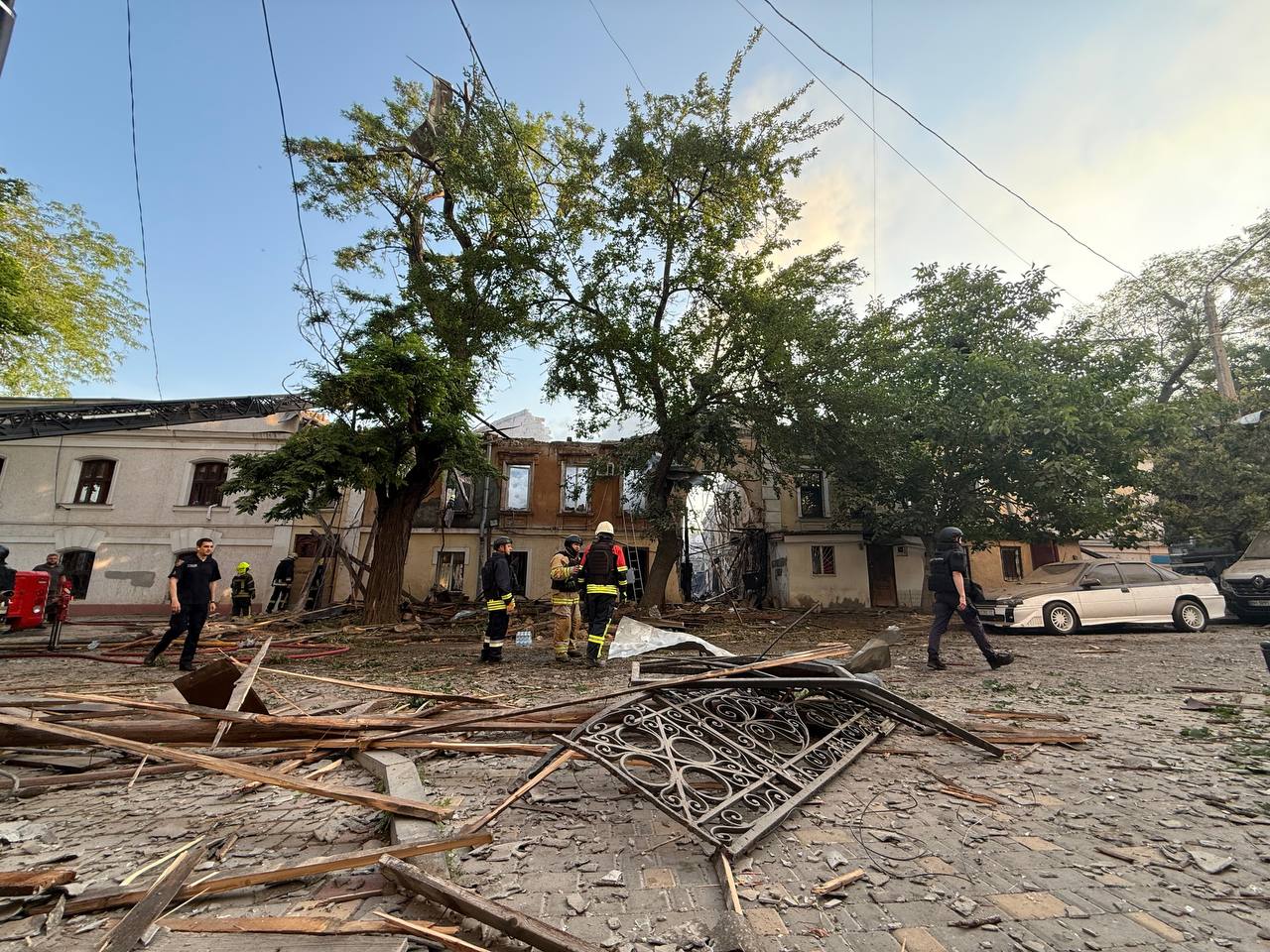
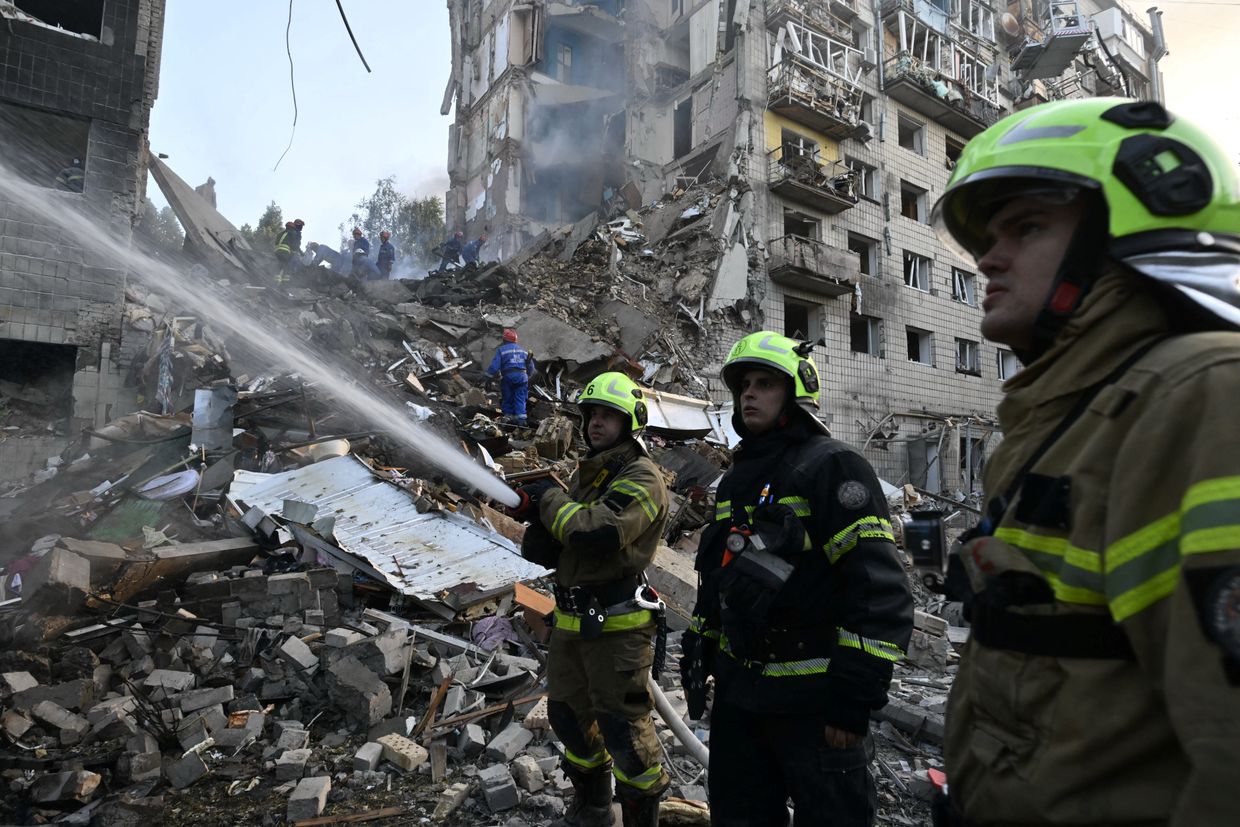
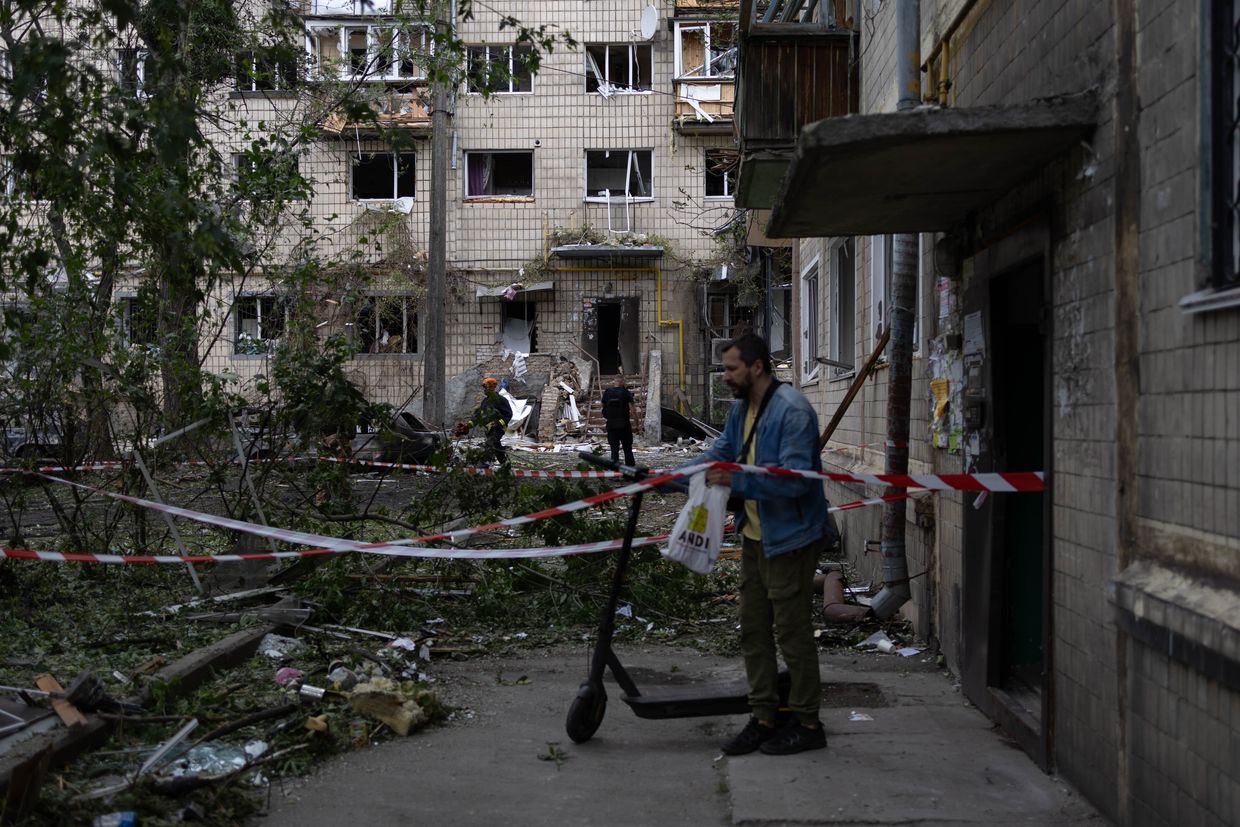
Russia hit Kyiv with another round of drone strikes from the evening of 30 September into the morning of 1 October, striking a school, a café, and warehouse buildings across the capital, the city's mayor and emergency services said. The children inside the school were in its shelter and came through unharmed. Fires broke out across two districts, and one person in the city was wounded.
Children across Ukraine now start the school year in bomb shelters, as Russian drones, missiles, and g
Russia hit Kyiv with another round of drone strikes from the evening of 30 September into the morning of 1 October, striking a school, a café, and warehouse buildings across the capital, the city's mayor and emergency services said. The children inside the school were in its shelter and came through unharmed. Fires broke out across two districts, and one person in the city was wounded.
Children across Ukraine now start the school year in bomb shelters, as Russian drones, missiles, and glide bombs keep hitting schools, homes, and hospitals far from the front—part of a civilian toll the UN says has already outrun all of last year's.
A school full of children, all in the shelter
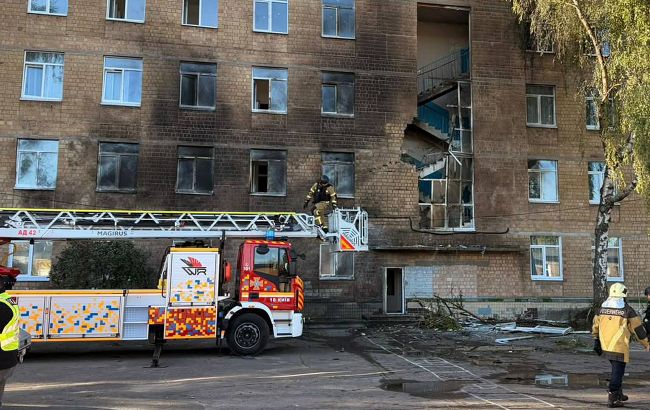
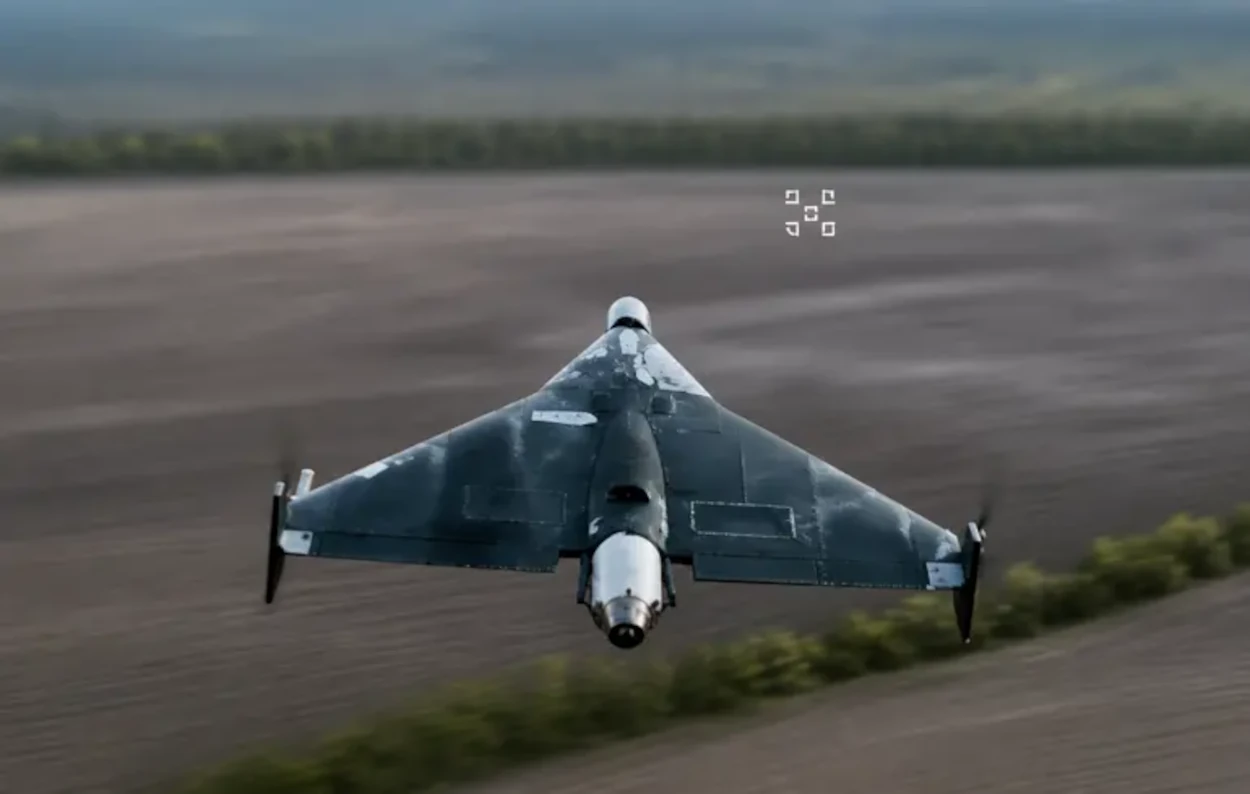
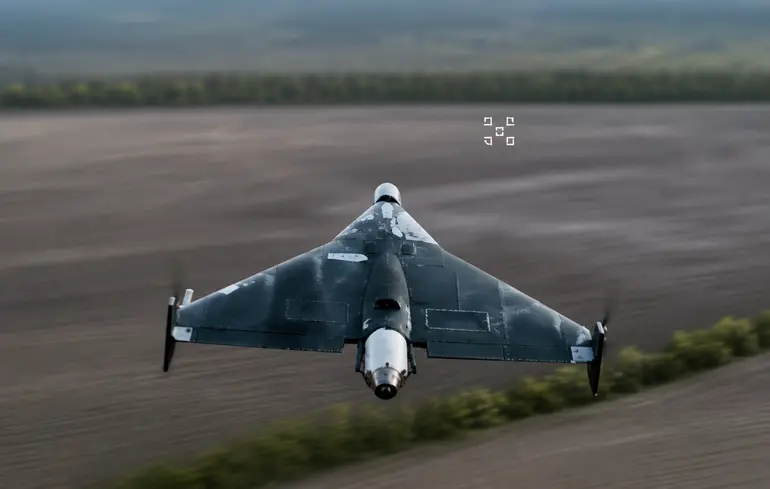
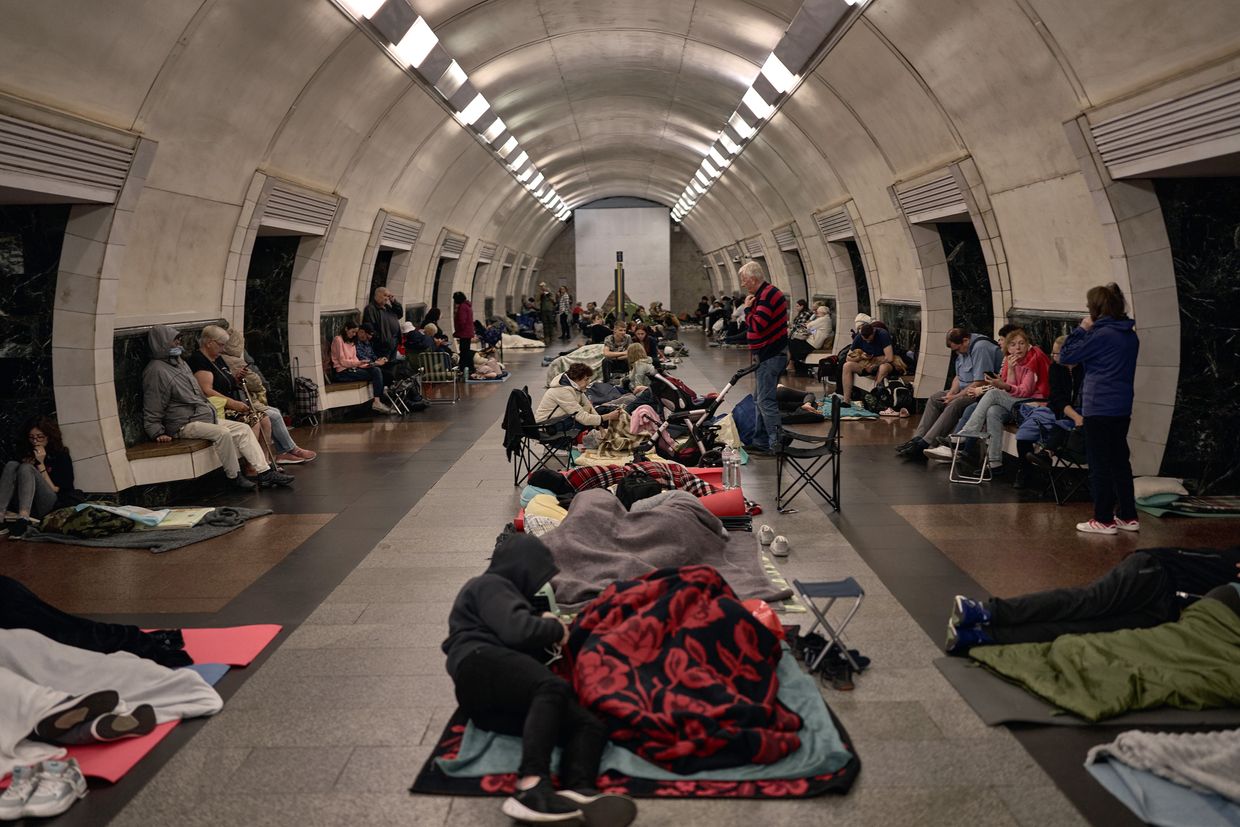
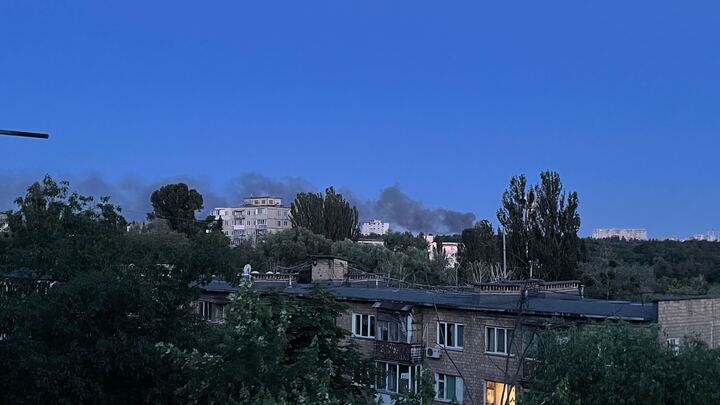
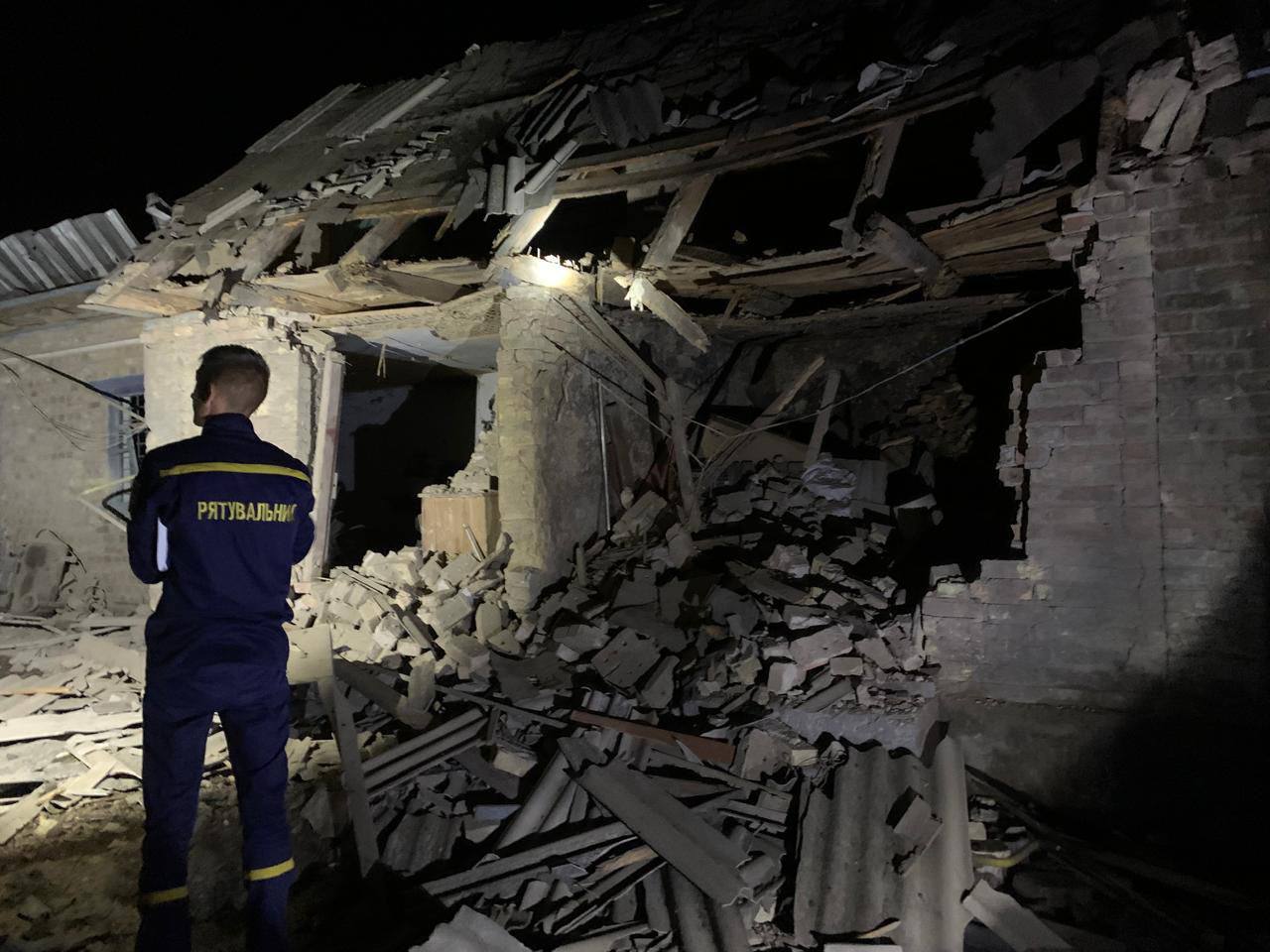
A Russian drone hit a school in Kyiv's Solomianskyi district on the morning of 1 October and started a fire, Kyiv Mayor Vitali Klitschko said, adding that the children were in the shelter. More than 100 students and about 60 staff were sheltering inside, and none were hurt, police said. The jet-powered drone damaged the building's facade at third-floor level, RBC-Ukraine reported.
A school in Kyiv damaged in a Russian drone attack, 1 October 2026. Photo: State Emergency Service of Ukraine
A café and warehouses among the sites hit
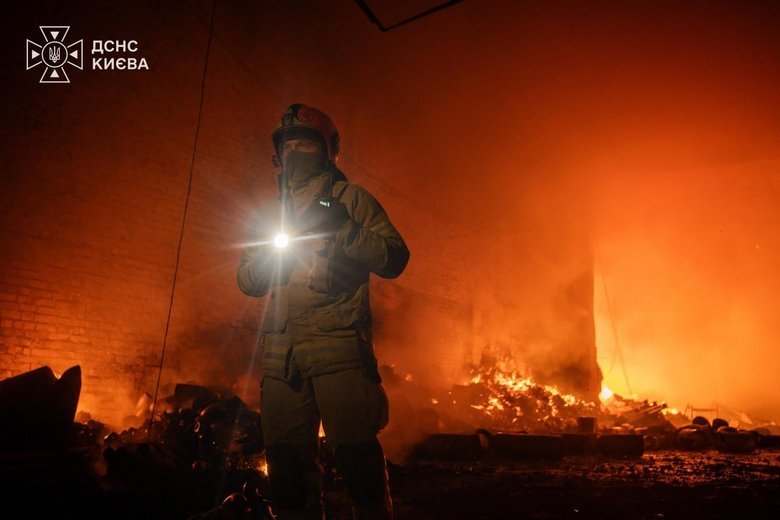
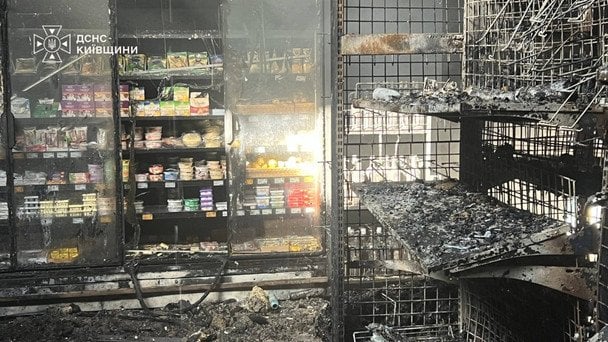
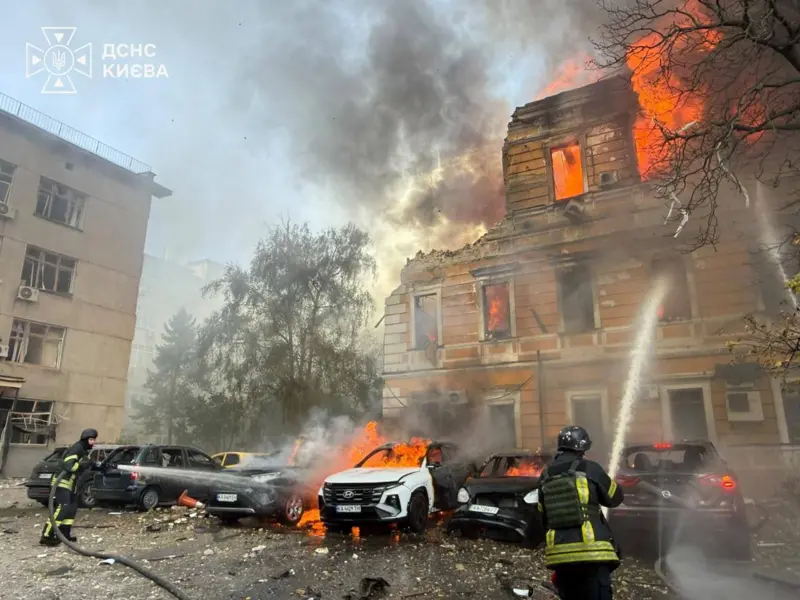
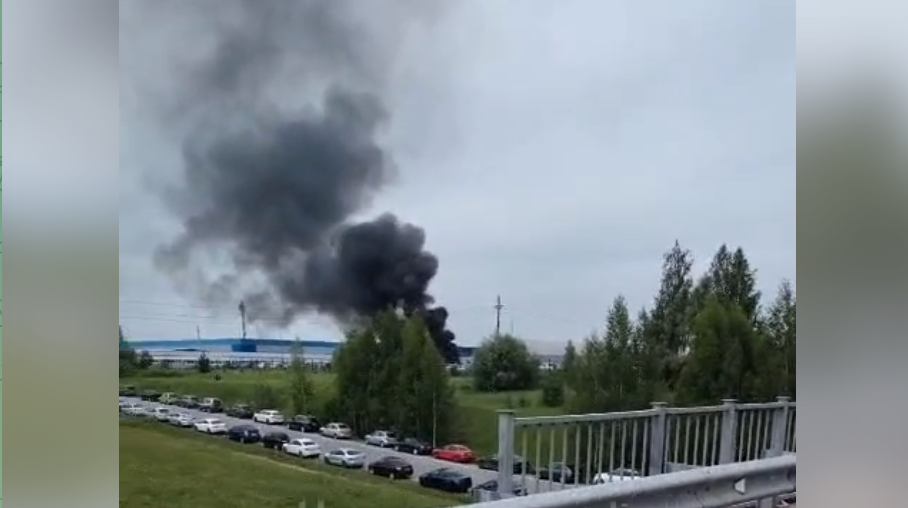
On the evening of 30 September, a Russian strike started a fire at a café on the ground floor of a residential building in Solomianskyi, while warehouse buildings burned in the northern Obolonskyi district. One person was injured in the warehouse fire and handed to medics, RBC-Ukraine reported.
42 sites damaged across Kyiv Oblast
Across Kyiv Oblast, Russian attacks over the previous 24 hours damaged 42 sites and injured six people, regional authorities reported.
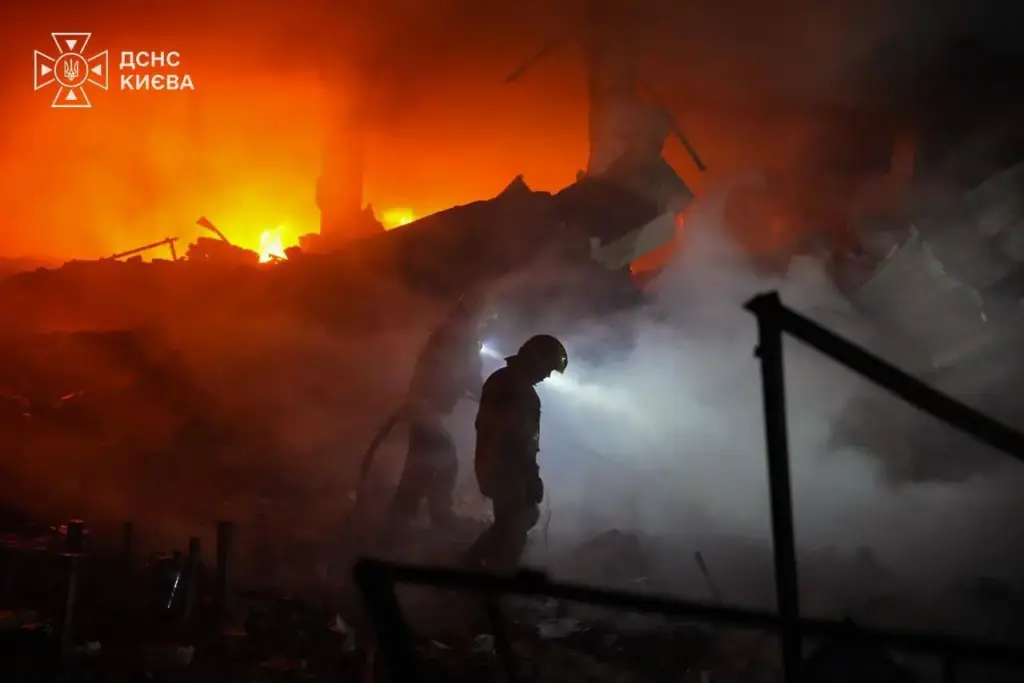
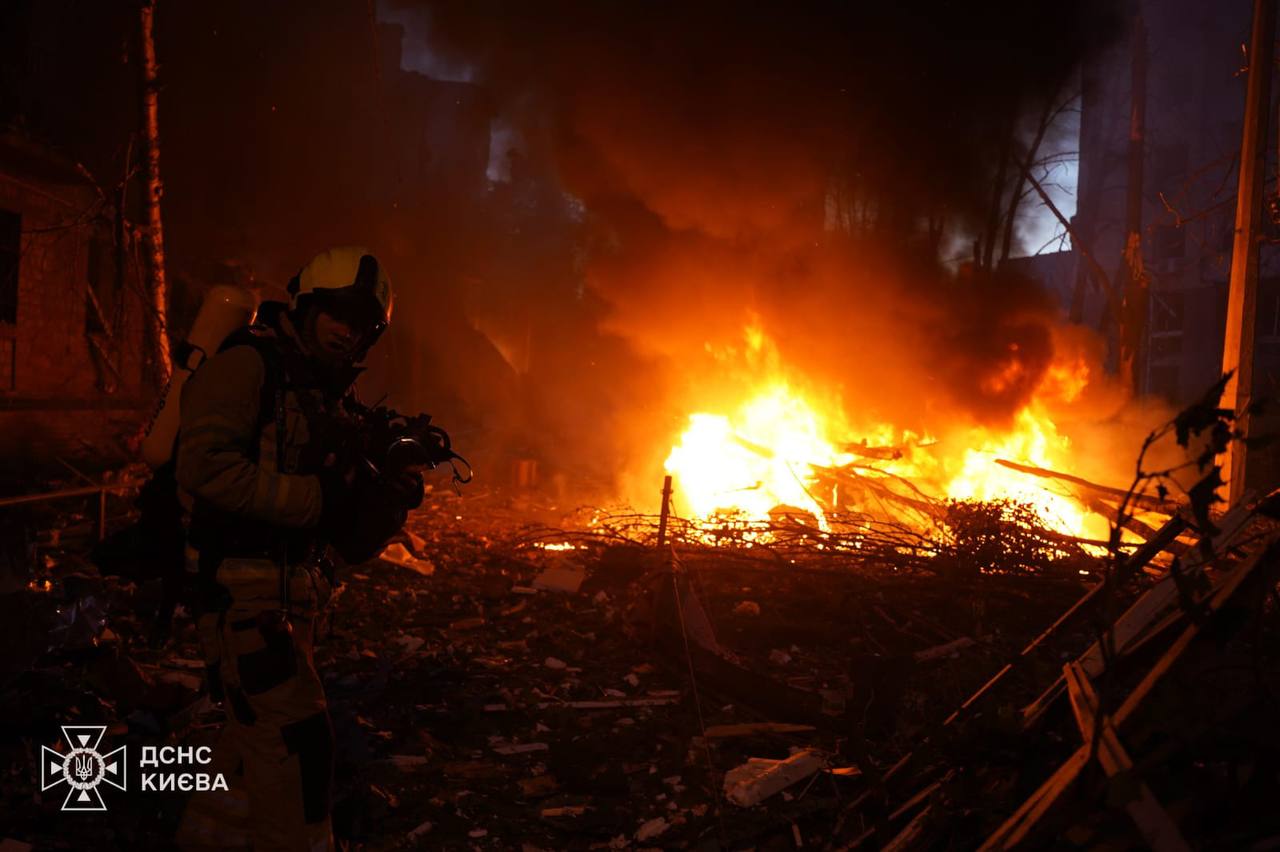
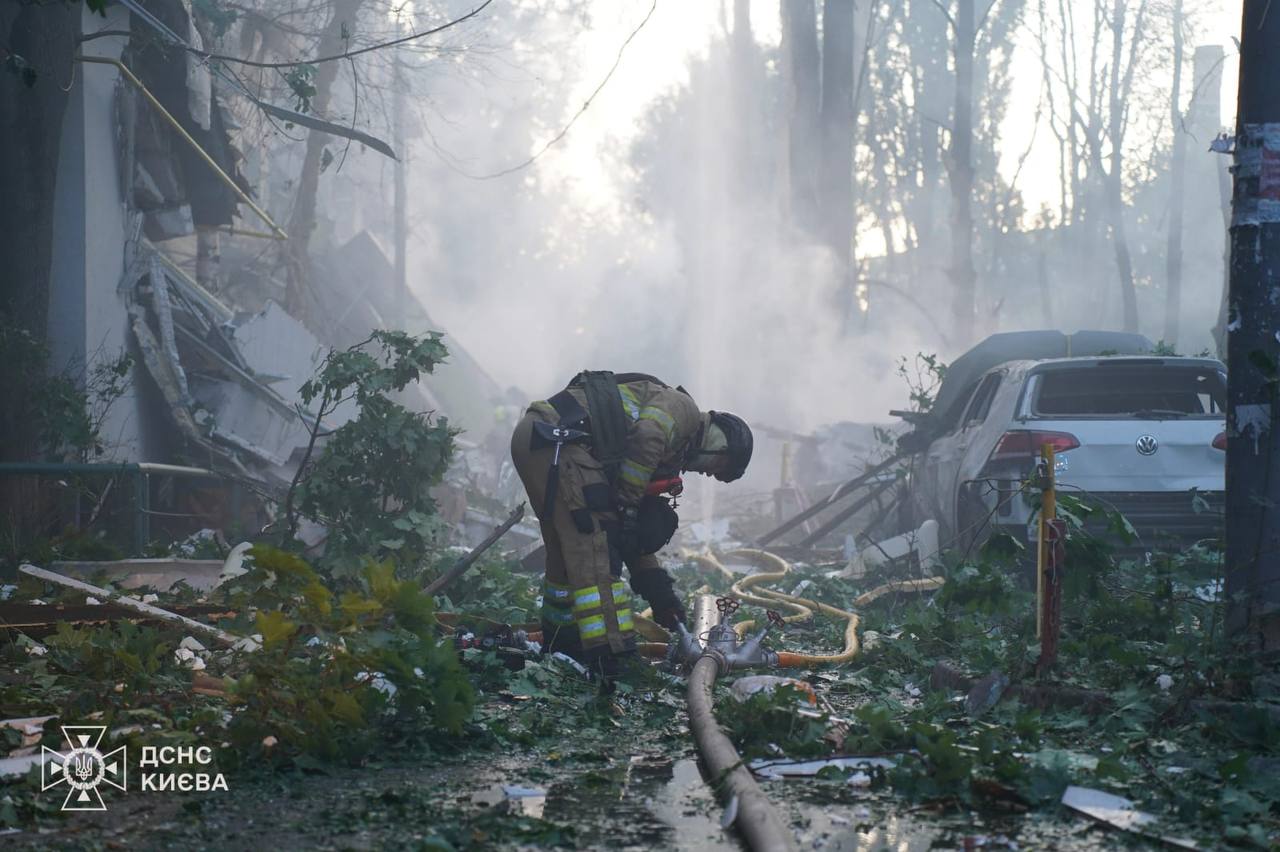
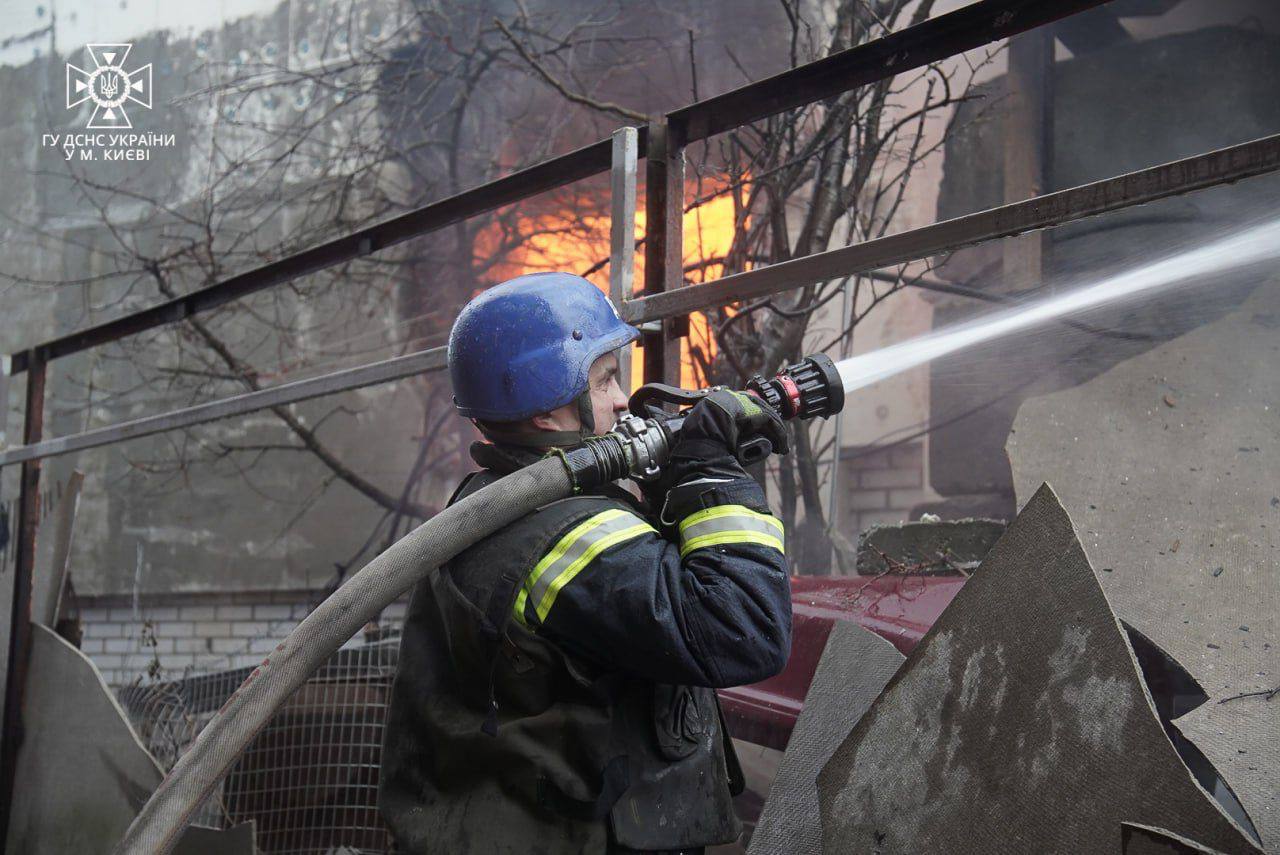
A rescuer at the scene of a fire in Kyiv. Photo: State Emergency Service of Ukraine
Kyiv is now under Russian air attack daily. On 28 September, Russian drones hit the city center in daylight, including the National Academy of Sciences, and earlier waves struck filling stations and other everyday sites across the capital.
Russian glide bombs that struck central Sumy on 29 September damaged a 19th-century church, the city cemetery around it, and a bronze statue of Christ, NV reported, citing the diocesan outlet Pravoslavna Sumshchyna. The same strike hit a school and nearby homes. Russia kept up its attacks across Ukraine over the following night and day.
Russia continues its terror campaign against Ukrainian civilians, and churches are among its routine targets, from a church its incendiary drone burned
Russian glide bombs that struck central Sumy on 29 September damaged a 19th-century church, the city cemetery around it, and a bronze statue of Christ, NV reported, citing the diocesan outlet Pravoslavna Sumshchyna. The same strike hit a school and nearby homes. Russia kept up its attacks across Ukraine over the following night and day.
Russia continues its terror campaign against Ukrainian civilians, and churches are among its routine targets, from a church its incendiary drone burned to the ground in Donetsk Oblast to one its drone damaged in western Ukraine's Lviv. Its strikes keep landing in city centers where people live, study, and pray, as when a drone hit Kyiv's Academy of Sciences in broad daylight.
The church near the epicenter
Russia struck Sumy with four guided aerial bombs. The blast damaged the Church of Saints Peter and Paul, a national-level architectural monument that stood near the epicenter. The church belongs to the Sumy Diocese of the Ukrainian Orthodox Church (Moscow Patriarchate).
Windows of the Church of Saints Peter and Paul in Sumy, Ukraine, torn from their frames by the blast in the Russian strike on 29 September 2026. Photo: Transfiguration Cathedral of Sumy/Facebook
Almost the entire building was damaged, said the rector, Archpriest Mykola Holyk. The blast wave knocked out windows and broke nearly every pane.
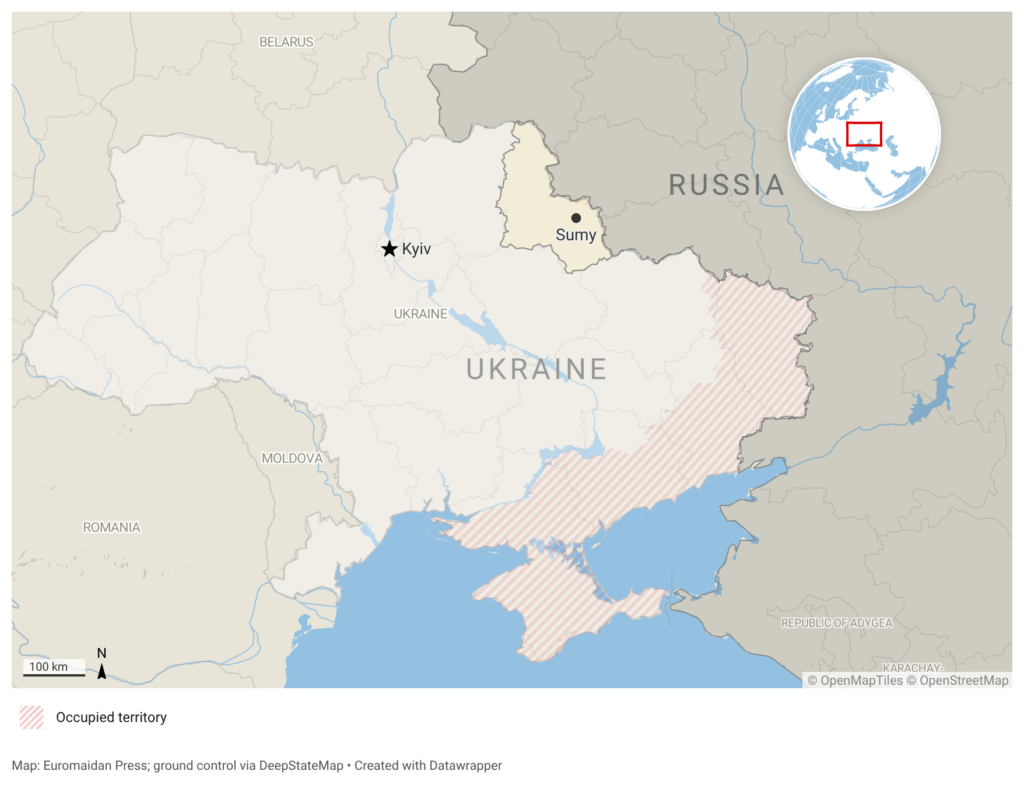
Sumy is located only 35-40 km away from Russia's border, placing the city within the range of Russian glide bombs. Map: Euromaidan Press.
Plaster fell and the ceiling collapsed in several places. It tore out doors and wooden fittings, knocked some icons from their places, and holed the roof in many spots. Large and small fragments of the bomb pitted the walls.
The statue of Christ on the grave of Dmytro Sukhanov in front of the Church of Saints Peter and Paul in Sumy, Ukraine, with shrapnel marks on the church wall behind it, after the Russian strike on 29 September 2026. Photo: Transfiguration Cathedral of Sumy/Facebook
Local patrons paid to build the church between 1843 and 1851, in the late classicist style.
A cut across Christ's chest
In front of the church stands a bronze statue of Christ, placed in the late 19th century on the grave of Dmytro Sukhanov, a merchant and former mayor of Sumy. Bomb fragments left a cut across the statue's chest. The statue is a local landmark of monumental art, the outlet Tsukr noted. The strike also damaged about 50 graves in the Central City Cemetery beside the church.
"The godless enemy continues to kill civilians, endanger children, and destroy schools, homes, hospitals, churches, and cemeteries," the diocese said.
A window of the Church of Saints Peter and Paul in Sumy, Ukraine, damaged in the Russian strike on 29 September 2026. Photo: Transfiguration Cathedral of Sumy/Facebook
The same attack hit a school where students were sheltering, and a residential area where two people were killed and six injured, three of them children. In September, Russian strikes on Kyiv also damaged two churches belonging to the same Moscow-linked church, the Exaltation of the Cross on Podil and the Pokrova Church on Priorka.
A house destroyed by a Russian guided aerial bomb in the Kovpakivskyi district of Sumy, Ukraine, overnight on 1 October 2026. Photo: Sumy City Military Administration
Another day of Russian strikes
Overnight on 1 October, Russia launched 107 Shahed-type drones at Ukraine, 63 of them jet-powered, the Air Force said. Air defenses downed or suppressed 87, and drones hit 11 locations. In Sumy, a guided bomb hit private homes, injuring two women and damaging about six houses, city military administration head Serhii Kryvosheienko reported. On the morning of 30 September, a Russian strike set a shopping center in Sumy Oblast's Romny district on fire, and crews fought the blaze until late that night, the State Emergency Service said. In Kyiv on the morning of 1 October, a drone hit a school in the Solomianskyi district while children sheltered inside, Mayor Vitali Klitschko said. More than 100 students and about 60 staff were in the shelter, and no one was hurt, police said. A warehouse fire in Kyiv's Obolon district injured one person.
Explore further
Kyiv’s supermarkets are the new front line as Russia hunts civilian life before winter
Over the past 24 hours, Russian mortar fire killed two men in Sumy Oblast's Seredyna-Buda hromada, and 15 people were injured across the oblast, the regional administration reported. A morning drone attack killed a 50-year-old man in Mykolaiv Oblast, and drones killed a 44-year-old man in Nikopol district, Dnipropetrovsk Oblast. In Kherson Oblast, Russian attacks killed one person and injured four. Eight people were hurt in Kharkiv Oblast, six in Kyiv Oblast, five in Donetsk Oblast, and three in Zaporizhzhia Oblast, according to regional authorities.
Russia is preparing to make daily life in Kyiv harder before winter, aiming at the ordinary places civilians use rather than at military sites, The Economist reported. Ukrainian officials say the push blends bombing, sabotage, and disinformation, and expect it to peak in November.
Every winter of its full-scale invasion, Russia has tried to freeze Ukrainians into surrender, and each year the strikes reach deeper into ordinary life. The civilian casualties recorded in 2026 have already p
Russia is preparing to make daily life in Kyiv harder before winter, aiming at the ordinary places civilians use rather than at military sites, The Economist reported. Ukrainian officials say the push blends bombing, sabotage, and disinformation, and expect it to peak in November.
Every winter of its full-scale invasion, Russia has tried to freeze Ukrainians into surrender, and each year the strikes reach deeper into ordinary life. The civilian casualties recorded in 2026 have already passed the whole of last year, the UN says.
From the power grid to the grocery store
Russia has already turned its drones on Kyiv's supermarkets, food warehouses, and data centers this year. On 28 September, a Russian jet drone struck the National Academy of Sciences in central Kyiv. The strike killed two people, the Academy said. Survivors climbed from the windows of the burning building. A senior Ukrainian official told The Economist the Kremlin now wants shoppers too afraid to enter a store. Russia is also keeping its winter routine, hitting electricity, water, and sewage systems.
Cheaper jet drones that stream live to their pilots
Most of the damage now comes from Russia's cheap jet drones, The Economist said. Pilots guide them onto targets and watch a live video feed. They are hard to stop, and Russia's ballistic missiles are deadlier still as Ukraine's supply of Patriot interceptors dwindles. Ukrainian President Volodymyr Zelenskyy said Kyiv had agreed a new Patriot interceptor package, but it remains short of interceptors of its own. A security official told The Economist that Russia has thousands of drones stockpiled and plans to use its entire ballistic missile stock within two months.
Explore further
War is costing Ukraine $155 billion per year. With Western aid running late, Kyiv is freezing everything but army, pensions, and public wages
Sabotage, chaos, and a city that won't switch off
Ukraine's counter-intelligence services say they foil seven or eight Russian plots a week, and officials believe some sleeper cells remain. The campaign's third element, disinformation, targets war fatigue and corruption scandals. Russia runs the same plan every year, hoping its bot farms will push Ukrainians onto the streets to demand surrender, said Andrii Kovalenko, who heads the Center for Countering Disinformation at the National Security and Defense Council.
"It's nonsense," he told The Economist, adding that someone is feeding the idea to Putin so they can steal more money.
Kyiv is also far harder to shut down than Moscow assumes, Kovalenko said. The city's internet is too decentralized for a handful of strikes to knock out, The Economist noted. Energy expert Olha Babii said the test is how fast crews restore power, not whether it can be destroyed. The capital is emptying, its population down from about 3.7 million to 3.3 million by The Economist's count.
A Russian strike on an apartment building in Kharkiv injured dozens of people, many of them children, early on 28 September, regional prosecutors reported. Through the rest of the day, Russian drones hit Kyiv, Dnipro, and other cities, killing civilians in several of them.
Russia has moved much of its aerial campaign to jet-powered drones that fly too fast for the cheap interceptors Ukraine built against older models. Every switch to a faster weapon reopens gaps in city defenses that Uk
A Russian strike on an apartment building in Kharkiv injured dozens of people, many of them children, early on 28 September, regional prosecutors reported. Through the rest of the day, Russian drones hit Kyiv, Dnipro, and other cities, killing civilians in several of them.
Russia has moved much of its aerial campaign to jet-powered drones that fly too fast for the cheap interceptors Ukraine built against older models. Every switch to a faster weapon reopens gaps in city defenses that Ukraine had only just begun to close.
Two floors partly destroyed in a Kharkiv apartment block
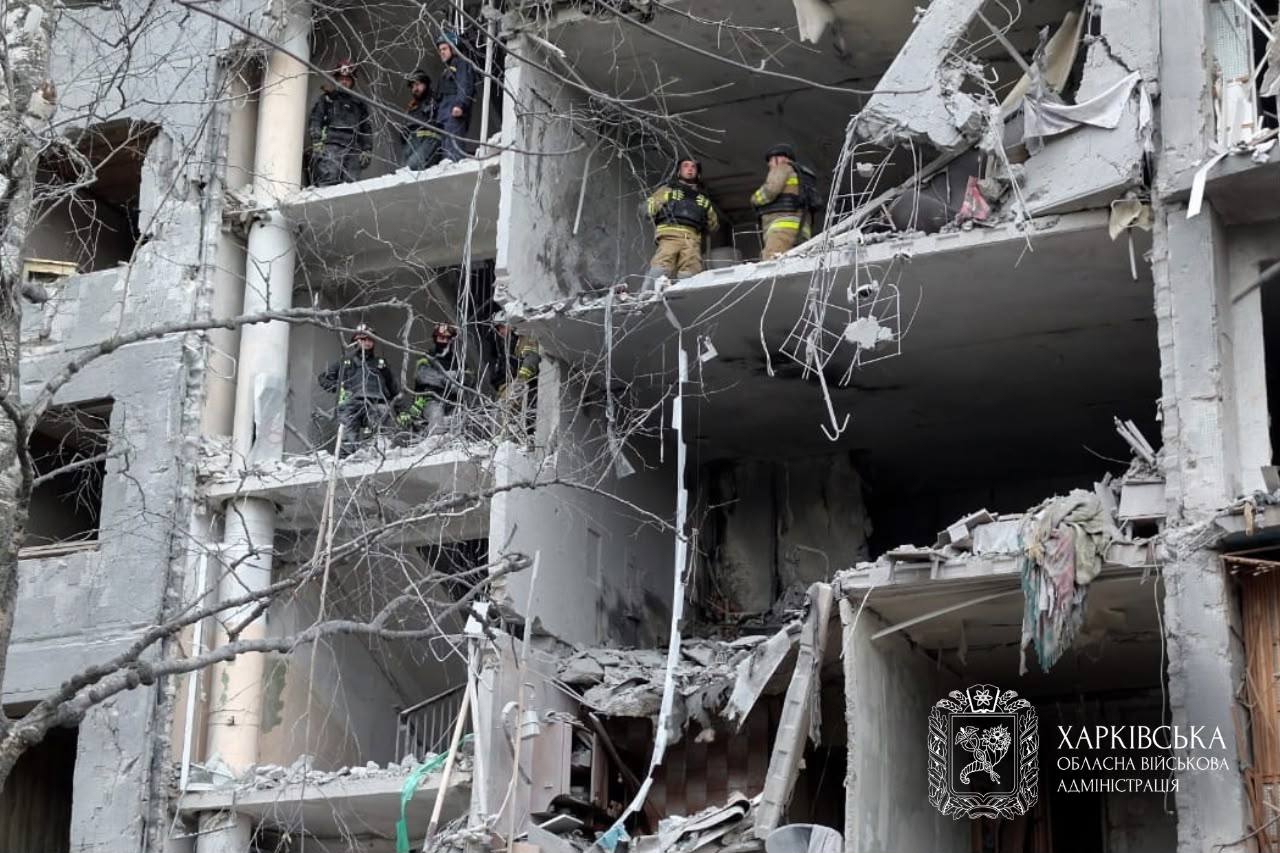
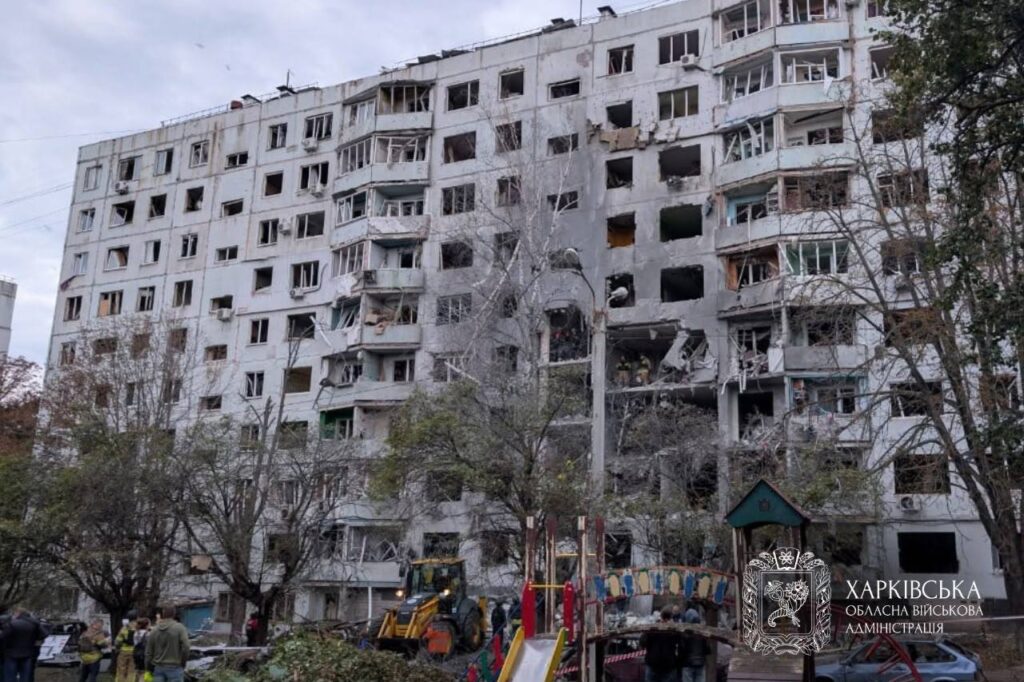
Russia hit a nine-story building in Kharkiv's Saltivskyi district around 04:00. By early afternoon, the count had risen to 43 injured, including 11 children, prosecutors said.
A man of 43 and a girl of 14 remain in hospital with blast wounds, and the others have moderate or light injuries, Kharkiv Oblast head Oleh Syniehubov said. Three children lived in the apartment that took the hit. Their father carried them out himself, and none of them was seriously hurt.
Rescuers on the destroyed floors of an apartment building hit by Russia in Kharkiv, Ukraine, 28 September 2026. Photo: Kharkiv Oblast Military Administration
The strike hit the second floor and destroyed the ceiling between the third and fourth floors. Rescuers brought 32 people out of the building. Across the district, the attack damaged 18 apartment buildings and blew out more than 1,500 windows. More than 100 volunteers are helping city services seal them, Syniehubov added.
A resident who fled Kramatorsk a year and a half ago said her family never heard the blast itself.
"We didn't hear any explosion. Glass came pouring down, and a column of smoke stood there," Yuliia Baldzhy told Suspilne Kharkiv. "The children were sleeping in another room, and my husband and I barely squeezed through, grabbed them, and got out."
Yuliia Baldzhy, a resident of the damaged apartment building in the Saltivskyi district of Kharkiv, Ukraine, 28 September 2026. Photo: Suspilne Kharkiv
Kharkiv Mayor Ihor Terekhov said the city had not taken a hit "of this level" in some time. Officials are still establishing the weapon. Syniehubov named guided aerial bombs (KABs) and counted six of them over the oblast in the past day. Prosecutors named a UMPB-5, a Russian munition, as the preliminary version. Terekhov said the city was checking whether it was a KAB or a Banderol, a small cruise missile.
Fire among wrecked structures after overnight Russian strikes in Kharkiv Oblast, Ukraine, 28 September 2026. Photo: Kharkiv Oblast Military Administration
Russia has hit Kharkiv high-rises with guided bombs before. In November 2024, one such strike injured 25 people, including an infant.
Explore further
Combat shows speed alone can’t catch Russia’s jet-powered drones, despite eight Ukrainian makers’ assurances. So why can’t they stop them?
Kyiv hit through the night and into the day
In the middle of the working day, a Russian jet drone struck the main building of the National Academy of Sciences in Kyiv's historic center. The attack killed a woman and injured five people, the Kyiv City Military Administration said. Three of them were hospitalized, Klitschko said. People climbed out of windows to escape the fire.
Firefighters put out fires at the main building of the National Academy of Sciences of Ukraine and at burning cars after a Russian drone strike in Kyiv, Ukraine, 28 September 2026. Photo: State Emergency Service of Kyiv
"Russia will definitely get a response to this," Ukrainian President Volodymyr Zelenskyy said.
Overnight and into the morning, Russian drones hit a gas station in Obolon, a café by a gas station, office buildings, and a 16-story residential building in Podil. The attacks injured three teenagers in Podil, Kyiv Mayor Vitali Klitschko said. A 17-year-old boy was hospitalized.
A firefighter tackles a blaze in a two-story house after a Russian drone attack in Kyiv, Ukraine, 28 September 2026. Photo: State Emergency Service of Kyiv
Nationwide, Russia launched 165 drones overnight, 79 of them jet-powered, the Air Force reported. Air defenses downed or suppressed 112, and hits were recorded at 14 locations.
The capital is now under attack daily. On 27 September, Russian strikes injured nine people in Kyiv, and Russia hit a Kyiv data center twice. That evening, a Russian drone struck the Stolychnyi market in Sofiivska Borshchahivka, just outside the city, and killed two people. Zelenskyy wrote that one of the two killed in Kyiv Oblast was a citizen of Azerbaijan.
Deaths in Dnipro and Synelnykove
Around 11:15, a Russian drone hit a business center in central Dnipro, killing three people. The number of injured rose to 15, Dnipropetrovsk Oblast head Oleksandr Hanzha said. Rescuers led 47 people out of the burning building, regional council head Mykola Lukashuk said.
"Nearby are residential buildings, a park, a library, offices, shops. The center of Dnipro. In the middle of the working day, hundreds of people are here," Hanzha wrote.
In Synelnykove, a Russian strike on a logistics company's branch killed one person. It injured three others, including a 15-year-old boy now in hospital in serious condition.
Overnight, Russian drones also hit infrastructure in the Vasylkivka community and a market in Nikopol.
Strikes across other regions
In Kharkiv Oblast on 27 September, a Russian FPV drone killed a 67-year-old driver in Shestakove, prosecutors said. A drone on fiber-optic control also killed a 41-year-old woman in a car in Velykyi Burluk and injured a 46-year-old man.
Debris at a warehouse after an overnight Russian strike in Odesa Oblast, Ukraine, 28 September 2026. Photo: Odesa Oblast Military Administration
Explosions sounded in Poltava overnight. In Rivne Oblast, a Russian attack damaged a detached house without injuring anyone. In Odesa Oblast, Russia struck a warehouse, and an evening attack injured a man of 62 and a woman of 63. Zelenskyy also listed a Palau-flagged ship hit in Odesa Oblast and an ice cream plant damaged in Zhytomyr Oblast, in the same post.
Russia has struck the National Academy of Sciences of Ukraine (NAS) in Kyiv on the afternoon of Monday, 28 September. People inside the building are climbing out onto the windows to avoid being burned alive.
Since the start of the full-scale invasion, Russia has damaged more than 4,650 educational institutions in Ukraine. Another 423 educational institutions have been completely destroyed, Ukrainian Ombudsperson Dmytro Lubinets reports.
The Academy was founded in Kyiv on 27 November
Russia has struck the National Academy of Sciences of Ukraine (NAS) in Kyiv on the afternoon of Monday, 28 September. People inside the building are climbing out onto the windows to avoid being burned alive.
Since the start of the full-scale invasion, Russia has damaged more than 4,650 educational institutions in Ukraine. Another 423 educational institutions have been completely destroyed, Ukrainian Ombudsperson Dmytro Lubinets reports.
The Academy was founded in Kyiv on 27 November 1918. Its first president was the eminent, world-renowned scientist Volodymyr Vernadsky.
As of 1 January 2026, the total number of people working at the NAS of Ukraine was 23,982, including 13,003 researchers. Among them are 2,332 doctors of science and 6,435 candidates of science.
Volunteers say the world looks away
According to Telegram channel "Lachen Writes": "There are injured and dead as a result of Russia's strike on the National Academy of Sciences."
Meanwhile, military volunteer Serhii Sternenko, whose fund has purchased 291,502 FPV drones and helped the Ukrainian military shoot down 12,954+ aerial targets, commented on it this way: "Just hell."
"The world just watches this. Europe is lifting sanctions on Russian oligarchs. Trump asks Ukraine not to hit Russia's oil refineries. Unpunished evil will come for them too," he wrote.
The toll remains unclear
Another journalist, Andrii Tsaplienko, who posted a video showing people trying to save themselves, added his own comparison for the drone strike.
"Footage reminiscent of 11 September at the World Trade Center," he wrote.
Ukrainian President Volodymyr Zelenskyy says a rescue operation is underway: the fire is being extinguished, and people who may have been inside the building are being searched for. He adds that "there will definitely be a response to this from Russia."
"And every one of Ukraine's partners must see, from this terror and these strikes, that support for Ukraine is truly support for people's lives, support for the principle that terror must never and nowhere be normalized," he stresses.
Russia must answer for all of this and feel real consequences. Thank you to everyone who is helping Ukraine!
Ukraine's defense forces intercepted 55% of Russia's jet-propelled drones in September—more than 1,500 out of over 2,730 launched—Ukrainian President Volodymyr Zelenskyy said in his 26 September evening address.
Russia's full-scale aerial campaign has shifted from propeller-driven Shaheds Ukraine learned to shoot down at over 90% to jet-propelled models that fly faster, resist jamming, and often slip past existing defenses.
55% and climbing
Zelenskyy said military intelligence had
Ukraine's defense forces intercepted 55% of Russia's jet-propelled drones in September—more than 1,500 out of over 2,730 launched—Ukrainian President Volodymyr Zelenskyy said in his 26 September evening address.
Russia's full-scale aerial campaign has shifted from propeller-driven Shaheds Ukraine learned to shoot down at over 90% to jet-propelled models that fly faster, resist jamming, and often slip past existing defenses.
55% and climbing
Zelenskyy said military intelligence had briefed him on Russian weapons production—not just jet Shaheds but other technological systems. The documents detail what Moscow is preparing for next year: the volumes and the financing. "We are preparing our countermeasures, and for every line item there must be a Ukrainian answer," he said.
Several effective interceptor prototypes are already in combat.
"Interceptors have been identified that can become the main tool of our defense. Production, components—all of this we are scaling up. There will be an answer," Zelenskyy said.
The goal is to match the interception rate for regular propeller-driven Shaheds, which exceeds 90%. At 55%, the jet-drone rate is climbing but still leaves nearly half reaching their targets.
$12 billion for one category
Russia plans to spend $12 billion in 2027 on jet drones and loitering munitions alone, Zelenskyy said. "This concerns not only Ukraine and not only us," he added, warning that multiple intelligence agencies have information Russia wants to expand its war to other countries and regions.
He said this is why Ukraine is pushing for stronger sanctions and the Drone Deal format. Ukraine has signed 11 such agreements, the latest with Finland at the UN General Assembly this week, and is preparing a 12th with what Zelenskyy called "a strong country."
The warning came as Russia struck a Kyiv data center twice on the morning of 27 September, injuring three people including two children, Zelenskyy wrote. Overnight strikes killed three people in Zaporizhzhia Oblast and one man in Kyiv.
In total this week, Russia launched more than 2,200 strike drones, roughly 1,650 aerial bombs, and 38 missiles—a significant share of them ballistic—at Ukraine, he said.
Explore further
A $50 computer just flew Russia’s newest jet drone into a Ukrainian grain ship—and jamming couldn’t stop it
Jet drones are now Russia's main aerial weapon
Russia's jet-propelled Geran-4 and Geran-5 drones have become the dominant threat in Russia's aerial campaign against Ukrainian cities. By August, production of jet Geran-4/5 models exceeded that of propeller-driven Geran-2s, according to Ukraine's military intelligence (HUR). Russian factories produce roughly 3,000 jet models per month alongside about 2,800 of the older type. The Geran-5 is technically a drone but functions as a small cruise missile—faster, harder to jam, and increasingly guided by AI and mesh networking that complicate interception.
Ukraine's answer has been interceptor drones—cheap, fast enough to chase a Geran, and guided by machine vision. A Ukrainian interceptor recently scored its first kills against jet Gerans and is heading into mass production, though a presidential adviser warned that speed alone cannot catch them—machine vision and automatic guidance decide the chase.
Russian drones and missiles struck Kyiv data centers over 23–24 September, knocking out internet and hosting providers. The Digital Transformation Ministry said about 100,000 subscribers lost service, NV Business reported.
Russia has widened its air campaign from power plants and warehouses to railways, fuel stations, and now digital infrastructure as it tries to grind down the country's ability to function before another war winter.
"You'd have to destroy 70-80% of Kyiv's buildings"
MiroHost founder and Internet Invest Group head Oleksandr Olshanskyi told NV Business the attack destroyed his own data center.
"Most critically important data and systems have been moved abroad or to the cloud," Olshanskyi said. "If an online store stops working, that's unpleasant but not a tragedy."
He called rumors about a full internet blackout or sharp service price hikes baseless.
"Destroying all internet in a simple way is impossible—you'd have to use nuclear or chemical weapons or destroy 70-80% of buildings in Kyiv," he said.
What Russia hit
The strikes damaged a Kyiv data center housing UTELS switching equipment on 23 September. Overnight into 24 September, Russia destroyed equipment of hosting provider CityHost.UA and the data center housing MiroHost. About 95% of MiroHost's clients operate outside Ukraine and were unaffected, he said. Russia also struck the Pavutyna network's data center. Crazy Network said a missile struck Kyiv's central traffic exchange hub, cutting service for its subscribers in Vinnytsia, Kyiv, and Khmelnytskyi Oblast.
Providers KIEVNET, Domonet, FAUST, and Etherlink also reported disruptions. Ukraine's telecom regulator NKEK said on 24 September that providers were completing emergency restoration, and Domonet estimated service would return by 21:00 that evening.
The 23 September strikes killed two people and injured more than 40, and hit a college building in Kyiv while students were on campus, Ukrainian Foreign Minister Andrii Sybiha wrote that evening. Russia targeted major Ukrainian data centers "seeking to disrupt the flow of information," he said. "This is critical civilian infrastructure that ensures people can access life-saving information. It is not a military target."
"More sanctions pressure, more missile interceptors are the only way to stop this terror," Sybiha wrote. "These attacks must not become the new normal."
Panic, not military gain
Olshanskyi said Russia uses these strikes to spread fear, not achieve lasting results.
"The enemy's goal is to cause damage, inflame panic, and heighten nervousness," he said.
His data center's destruction "will not affect the situation at the front in any way," he said.
Russian strikes have killed or wounded more Ukrainian civilians in the first eight months of 2026 than in all of last year, a senior United Nations official told the Security Council, Censor.net reported. The official warned that the toll keeps climbing as missiles and drones increasingly reach cities far from the front line. She also cautioned that mounting attacks on Ukraine's battered energy grid could push millions into a dark, cold winter.
In the war's fifth year, Russia's long-ran
Russian strikes have killed or wounded more Ukrainian civilians in the first eight months of 2026 than in all of last year, a senior United Nations official told the Security Council, Censor.net reported. The official warned that the toll keeps climbing as missiles and drones increasingly reach cities far from the front line. She also cautioned that mounting attacks on Ukraine's battered energy grid could push millions into a dark, cold winter.
In the war's fifth year, Russia's long-range strikes on Ukrainian cities have shifted the danger from the front to the streets where people live, and the rising civilian toll now tracks how far those weapons reach.
Casualties outpace all of 2025
Rosemary DiCarlo, the UN Under-Secretary-General for Political and Peacebuilding Affairs, gave the toll as the Council met on Ukraine, Ukrinform reported.
"In just the first eight months, more civilians were killed or injured in Ukraine than in all of 2025," she said.
The heavy toll already recorded in September shows the trend continuing, she added, as strikes hit populated areas away from the front.
The UN human rights office has confirmed at least 17,257 civilians killed since February 2022, including 835 children. Another 53,693 people have been wounded, among them 3,247 children, and DiCarlo said the real numbers are likely far higher. Kyiv and other cities have faced near-daily attacks in recent weeks, she said, with strikes hitting railways, shopping centers, gas stations, warehouses, and food and logistics firms.
A warning over the coming winter
DiCarlo said the mounting strikes on Ukraine's already-damaged energy infrastructure are especially worrying with another war winter near.
"The cumulative impact of these strikes could plunge millions of people into darkness and cold in the coming months," she said.
She urged an immediate moratorium on strikes on populated areas and urgent action to protect the power grid. Targeting civilians and civilian sites is prohibited under international law, she noted.
The warning follows the deadliest stretch of the war for civilians, when UN monitors counted 437 people killed in July, the worst monthly toll since May 2022. Russia has also renewed strikes on gas production and power plants ahead of the heating season.
Ukraine's military intelligence (HUR) identified Russian Armed Forces Major Denis Sheynov as allegedly involved in the July 2024 missile strike on Kyiv's Okhmatdyt children's hospital, HUR reported on July 8.The strike, which killed two adults and injured at least 34 people, directly hit the country's largest pediatric medical center, where 627 children were receiving treatment at the time. According to HUR, Sheynov is the head of the special engineering service of the 121st Heavy Bomber Aviatio
Ukraine's military intelligence (HUR) identified Russian Armed Forces Major Denis Sheynov as allegedly involved in the July 2024 missile strike on Kyiv's Okhmatdyt children's hospital, HUR reported on July 8.
The strike, which killed two adults and injured at least 34 people, directly hit the country's largest pediatric medical center, where 627 children were receiving treatment at the time.
According to HUR, Sheynov is the head of the special engineering service of the 121st Heavy Bomber Aviation Regiment, part of Russia's 22nd Heavy Bomber Aviation Division, tasked with executing the strike.
Sheynov, born in Saratov on Jan. 30, 1978, was reportedly responsible for the technical preparation of the X-101 air-launched cruise missiles used in the attack.
He graduated from the Saratov Higher Military Command Engineering School Missile Forces, and previously served in Syria in 2018. Sheynov has been awarded several medals by the Russian government, including for participation in the Syrian war.
Ukrainian authorities previously charged Russian Lieutenant General Sergey Kobylash in absentia for ordering the strike, which was widely condemned internationally.
Kobylash gave the order at around 9:15 a.m., while the hospital was struck at 10:45 a.m.
Editor's note: This is a developing story and is being updated.Explosions rocked the city of Kyiv for more than seven hours overnight on July 4, as Russia launched a record missile and drone attack targeting the capital and other cities across Ukraine. At least one person was killed, and 23 others injured in Kyiv. Mayor Vitali Klitschko said 14 people had been hospitalized, while Tymur Tkachenko, head of the Kyiv City Military Administration, in the afternoon confirmed a body had been found duri
Editor's note: This is a developing story and is being updated.
Explosions rocked the city of Kyiv for more than seven hours overnight on July 4, as Russia launched a record missile and drone attack targeting the capital and other cities across Ukraine.
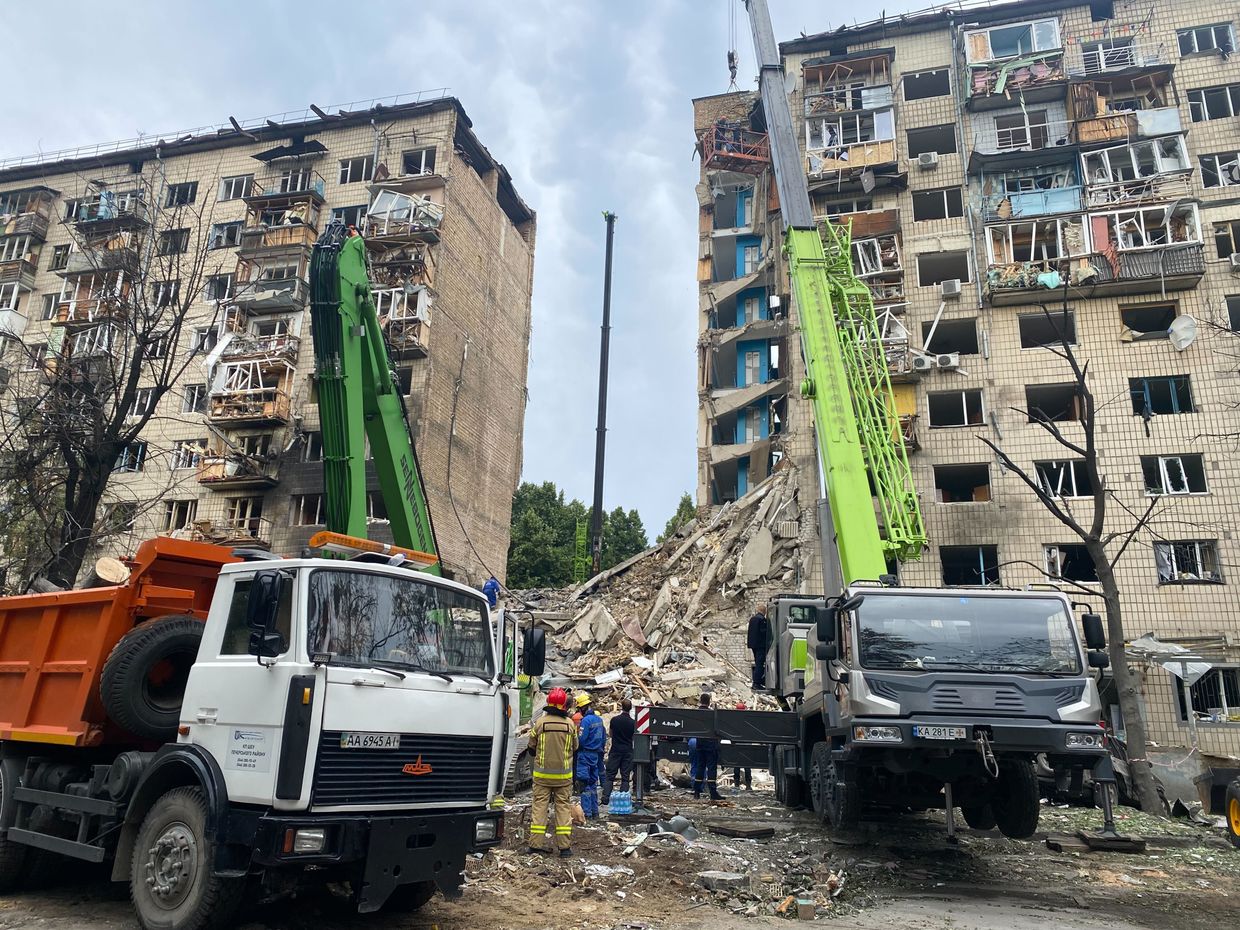
At least one person was killed, and 23 others injured in Kyiv. Mayor Vitali Klitschko said 14 people had been hospitalized, while Tymur Tkachenko, head of the Kyiv City Military Administration, in the afternoon confirmed a body had been found during rescue operations.
"Today’s attack was like the worst nightmare come to life," Kyiv resident Olha Vershynina told the Kyiv Independent at the site of damaged residential buildings in the capital's Solomianskyi district. "Because when the strike happened, the lights went out and glass came crashing down on my head.
"It was terrifying. Our entire building was shaking."
President Volodymyr Zelensky said Russia launched a record 550 drones and missiles during the seven-hour barrage. Kyiv Independent journalists on the ground heard multiple rounds of explosions in the city beginning around 8 p.m. local time on July 3 and continuing into the early hours of July 4
The attack damaged apartment buildings, businesses, a school, a medical facility, railway lines, and other civilian infrastructure in multiple districts. Fires blazed across the city, making the air dangerous to breathe.
Tymur Tkachenko, head of the Kyiv City Military Administration, warned residents to close their windows due to dangerous levels of "combustion products" in the air.
"Russia, a terrorist country, has wreaked havoc," Tkachenko wrote on Telegram. "The Russians bring nothing but terror and murder. That is a fact."
Liliia Kuzmenko, 23-years-old and eight months pregnant, moved to Kyiv a month ago with her husband from the embattled city of Pokrovsk, Donetsk Oblast.
"The kind of explosions I heard here were unlike anything I heard in Pokrovsk. It’s just beyond words," she told the Kyiv Independent. "Fortunately, everything in our apartment is intact. But in others, the windows were blown out, and everything fell apart."
"Russia is once again demonstrating that it is not going to end the war and terror."
Ukraine's Air Force reported that Russia had launched a ballistic missile towards Kyiv at around 12:30 a.m, and then additional missiles around 2:30 a.m.
"This time was truly terrifying.," Maria Maznichenko, a pensioner who lives in Kyiv's Solomianskyi district. "The explosions kept coming. Shaheds drones were flying in every minute, like a swarm of bees — one after another. It was very frightening."
Flames and smoke billow from buildings in Kyiv, Ukraine, on July 4, 2025, during mass Russian drone and missile strikes. (Oleksii Filippov/AFP via Getty Images)
As officials reported real-time updates on damage and casualties amid the ongoing assault, Kyiv Independent reporters in the city said that smoke from explosions clogged the air even in neighborhoods far from the attack sites.
The massive assault came hours after a phone call between Russian President Vladimir Putin and U.S. President Donald Trump, during which Putin reaffirmed that "Russia will continue to pursue its goals" in Ukraine despite calls for a ceasefire from the West.
"The first air raids in our cities and regions began yesterday almost simultaneously with the start of media discussions of President Trump's phone call with Putin," Zelensky said in a post on social media on July 4.
"This was one of the most large-scale air attacks – deliberately massive and cynical... Russia is once again demonstrating that it is not going to end the war and terror."
Tkachenko reported that an earlier drone strike damaged a residential building in the city's Obolon district, causing a fire to break out on the roof.
In the Sviatoshynskyi district, drone wreckage caused fires at storage facilities and hit the courtyard of a 16-story apartment building, Klitschko said. Vehicles in the area caught fire after the attack. Another fire broke out at a business in the district due to falling drone debris.
In the Dniprovskyi district, drone debris fell near a school and several residential buildings, Tkachenko reported.
Fires also broke out in the Solomianskyi district, Klitschko said. An administrative building was in flames after the attack, as were storage facilities and a garage. Debris damaged "non-residential buildings" in the area.
A damaged civilian home burns in Kyiv, Ukraine, on July 4, 2025, after being hit by a kamikaze drone during a mass drone and missile attack by Russia. (Kostiantyn Liberov/Libkos/Getty Images)Local residents take cover in a metro station used as a shelter in Kyiv, Ukraine, on July 4, 2025, during a mass drone and missile attack by Russia. (Kostiantyn Liberov/Libkos/Getty Images)
Klitschko reported another fire on the first floor of an 8-story residential building in the Shevchenkivskyi district, but said the building was not inhabited. Another fire broke out at a business in the same district.
A medical facility in the Holosiivskyi district was damaged in the attack, Klitschko said.
Ukrainian Railways (Ukrzaliznytsia) said that the attack damaged rail infrastructure in Kyiv and cautioned residents to expect delays due to diverted routes.
Polish Foreign Minister Radoslaw Sikorski said that the consular section of Poland's embassy in Kyiv was damaged during Russia's attack on Kyiv. "I just spoke with Ambassador (Piotr) Lukasiewicz; everyone is safe and unharmed," Sikorski said.
He added that Ukraine urgently needs air defense systems.
Russia also targeted other regions of Ukraine with overnight attacks. Downed drones struck property and a vehicle in the city of Poltava, regional Governor Volodymyr Kohut reported. The strike injured two people.
A man looks at the wreckage of cars in Kyiv, Ukraine, on July 4, 2025, after mass Russian drone and missile strikes. (Oleksii Filippov/AFP via Getty Images)A large plume of smoke covers Kyiv, Ukraine, on July 4, 2025, after a mass drone and missile attack by Russia. (Kostiantyn Liberov/Libkos/Getty Images)
Kyiv and other major Ukrainian cities have faced intensified drone and missile strikes in recent weeks, with Russia deploying Iranian-designed Shahed drones in record numbers.
Russia on June 17 launched one of its largest attacks against Kyiv since the start of the full-scale war, killing 28 people and injuring 134 others. Less than a week later, ballistic missiles and kamikaze drones assailed the city in another mass strike.
Ukrainian officials have warned that continued attacks are aimed at wearing down air defense systems and terrorizing civilians.
Despite Russia's escalating attacks and Ukraine's desperate need for air defense munitions, the U.S. has decided to halt shipments of Patriot missiles and other promised weapons to Kyiv, claiming it needs to bolster its own stockpiles.
Editor's note: This is a developing story and is being updated as new details emerge.Russia launched a mass missile and drone attack on Kyiv overnight on June 23, killing at least nine people and injuring 33 others, including four children, local officials reported.Kyiv Independent journalists heard explosions and kamikaze drones flying overhead from around 1 a.m. Louder explosions from ballistic missiles were heard an hour later, with the attack lasting around 3.5 hours in total.The heaviest da
Editor's note: This is a developing story and is being updated as new details emerge.
Russia launched a mass missile and drone attack on Kyiv overnight on June 23, killing at least nine people and injuring 33 others, including four children, local officials reported.
Kyiv Independent journalists heard explosions and kamikaze drones flying overhead from around 1 a.m. Louder explosions from ballistic missiles were heard an hour later, with the attack lasting around 3.5 hours in total.
The heaviest damage occurred in the Shevchenkivskyi district of the city, when a five-story building partially collapsed after being hit by a ballistic missile, Ukraine's military reported. At least nine people died as a result, and more may be trapped under the rubble.
An 11-year-old girl was confirmed as the ninth victim of the strike, Tymur Tkachenko, head of the Kyiv City Military Administration, said. Her mother's body was recovered earlier from the rubble.
0:00
/
The scene of the damaged building in Shevchenkivskyi district (Vitalii Klitschko/Telegram)
Student Veronika Sherinova, who lives in a nearby building, said she didn't sleep all night — first because she was hiding from the attack, then because the missile strike shattered the windows in her home and neighboring apartments.
"Most of my former classmates lived in this building (that was hit), most of my friends and acquaintances, too," she told the Kyiv Independent at the site of the strike. "We got dressed right away and went over."
"When my mom and I arrived, I saw them coming out in just their underwear, covered in blood, wounded. It was impossible to look at. It was pure shock. We were all in a state of shock."
At first, she just wanted to help clear the shattered glass and debris. But after seeing the extent of the destruction, Sherinova realized that some of the people she knew might not have survived the attack.
"The strike hit exactly the floors where our friends lived," she said. "Unfortunately, they didn’t survive. My other friends did — they were on the first floor," she added, her eyes filling with tears.
"It was a miracle they came out without a single scratch. But the upper floors were just blown away, there wasn’t even a chance for anyone up there to survive."
A woman and policeman stand in front of the partially collapsed residential building after a Russian attack on June 23, 2025 in Kyiv, Ukraine (Ihor Kuznietsov/Novyny LIVE/Global Images Ukraine via Getty Images)
According to Sherinova, the Russian strike killed a family living on the upper floor — a father, mother, and grandfather — but their teenage son survived.
"We suspected it right away, but we didn’t want to believe it until the very end. But then we found out that they were the first ones they carried out," she said. "The boy is in shock right now; he doesn’t realize what’s happened. He’s just not reacting at all."
She said her two other friends who lived in the building left for abroad immediately after the strike.
"They went abroad — they took a bus and left right away."
State Emergency Service spokesperson Svitlana Vodolaha told journalists at the site that when rescuers arrived, they had been told only a few people would be affected there.
"As it turned out, the information we had was not reliable — there were more people here than we had been told. At this moment, we still don’t have complete information on how many people might be trapped under the rubble," Vodolaha said.
"That’s why we’ll keep working until the very end, until we’re completely sure no one is left under the debris."
Shortly after their arrival, rescuers pulled 10 people from under the rubble, including two children and a pregnant woman, Vodolaha said.
A wounded woman with smartphone stands near the partially destroyed building on June 23, 2025 in Kyiv, Ukraine (Ihor Kuznietsov/Novyny LIVE/Global Images Ukraine via Getty Images)
Vodolaha did not rule out the use of cluster munitions in this attack. After arriving at the site, Kyiv Independent journalists observed holes in the building across from the one that was hit, resembling those from the previous strike on the capital on June 17.
Cluster munitions are banned under international law by more than 100 countries due to their indiscriminate nature and the long-term threat they pose to civilians, especially when unexploded submunitions remain hidden in residential areas.
"It’s possible as such incidents have happened not only during today’s attack but at other times as well," Vodolaha said.
"I think everyone has noticed how our attacks have become longer and more intense, even across the capital," she added. "That’s why this morning we were working simultaneously at 15 locations."
Fifteen-year-old Roman Turko arrived at the site in the morning after the attack with his friend. His uncle lived in the destroyed building but, luckily, wasn’t home when the strike happened.
"He’s currently serving (in the military), he’s a border guard. He was on duty, so luckily he wasn’t home," Turko told the Kyiv Independent. "His apartment doesn’t really exist anymore: The balcony is gone, the walls are gone."
"If he had been there, it probably would have been the end for him."
After surviving such a heavy attack, Sherinova is now considering leaving Kyiv, at least for a while. But she says it feels like there’s nowhere left to hide from the Russian war.
"There’s a kindergarten nearby where my mom works. It has a shelter, and that’s where we usually go when we see reports of (Russian) jets taking off or a possible strike."
"But today it happened so suddenly, we wouldn’t have had time to run anywhere. We just stepped into the hallway, crouched down, and covered our eyes and ears," she said.
"It’s hitting everywhere, strikes are happening everywhere. I still can’t believe it happened to me, to my neighborhood, where I was born and have lived my whole life."
"I just can’t believe it. I’m still in such a state of shock, looking at all of this and not believing it really happened."
In the wider Kyiv Oblast, a woman was killed and eight others injured in Bila Tserkva, the Kyiv Oblast Military Administration reported.
Casualties were also reported in other areas around the capital in Kyiv Oblast, including Bucha, a town just northwest of Kyiv.
According to the Ukrainian Air Force, Russia deployed 368 aerial weapons, including 352 attack drones, 11 Iskander-M/KN-23 ballistic missiles, and 5 Iskander-K cruise missiles, striking primarily Kyiv. Ukraine's air defenses destroyed 354 of them.
The residential building damaged by a Russian attack as teams continue search and rescue effort in Kyiv, Ukraine on June 23, 2025 (Danylo Antoniuk/Anadolu via Getty Images)
Russian forces reportedly struck six locations directly, with debris falling in 25 sites across Kyiv and its surrounding region.
Earlier, it was reported that a high-rise apartment building was damaged as a result of the attack in the area, as well as an exit at the Sviatoshyn metro station and a nearby bus shelter.
Reports indicate that the Darnytskyi, Podilskyi, Solomianskyi, Shevchenkivskyi, and Sviatoshynskyi districts had been affected by the attack.
Fires also broke out in the Podilskyi district, where debris struck a residential building and a vehicle.
A large fire was also reported at a four-story office building in the Solomianskyi district. The fire reportedly covered an area of 800 square meters, the State Emergency Service said, with firefighting efforts ongoing.
Drone strike debris also landed in an open area of a stadium in Sviatoshynskyi without causing injuries or fire.
President Volodymyr Zelensky condemned the attack, noting that while Moscow had previously criticized strikes on Iran's nuclear program, it remained silent following its own "cynical" bombardment of Kyiv with Shahed drones and missiles.
"Only in Kyiv, five apartment buildings were damaged. These are ordinary residential buildings," he said, adding that one person was also killed in Bila Tserkva after a Shahed drone hit a hospital.
Zelensky said the attack damaged sites in four Ukrainian regions and involved 352 drones—including 159 Shaheds—and 16 missiles, possibly including North Korean ballistic missiles.
"Every country near Russia, Iran, and North Korea should be thinking about whether they can protect life if this coalition of killers continues spreading terror," Zelensky said.
The view in Kyiv seen outside of a window as Russia launches another large-scale attack on Kyiv on June 23, 2025. At least five people have been injured in the attack, local officials reported. (Olena Zashko/The Kyiv Independent)
A fire burns in the aftermath of a Russian attack on Kyiv on June 23, 2025. (Ukraine's State Emergency Service/Telegram)
A firefighter extinguishes burning debris in the aftermath of a Russian attack on Kyiv on June 23, 2025. (Ukraine's State Emergency Service/Telegram)
The attack on the capital comes just days after Russia launched one of its largest attacks on Kyiv, killing 28 people and injuring 134 others.
Russia's latest round of large-scale attacks comes as Commander-in-Chief Oleksandr Syrskyi warned on June 21 that Russian forces are attempting to advance along almost the entire front in eastern Ukraine while trying to establish a buffer zone in northeastern Sumy Oblast.
Fred Grandy, a 62-year-old American artist and volunteer who was killed in Russia's mass missile attack against Kyiv on June 17, appears to be the first U.S. civilian killed by a Russian strike on Ukraine, the New York Times (NYT) reported on June 19. Russia launched a massive assault on Kyiv overnight on June 17, pounding the capital with hundreds of kamikaze drones and multiple missiles in a nine-hour attack that left 30 dead and around 172 injured. Among the vicitms was Grandy, a U.S. citizen
Fred Grandy, a 62-year-old American artist and volunteer who was killed in Russia's mass missile attack against Kyiv on June 17, appears to be the first U.S. civilian killed by a Russian strike on Ukraine, the New York Times (NYT) reported on June 19.
Russia launched a massive assault on Kyiv overnight on June 17, pounding the capital with hundreds of kamikaze drones and multiple missiles in a nine-hour attack that left 30 dead and around 172 injured.
Among the vicitms was Grandy, a U.S. citizen who arrived in Kyiv in May to volunteer to clear away rubble after Russian attacks. He had hoped to volunteer in Ukraine for five or six months, his sister told the NYT.
"He was a person who wanted to make a difference so badly," Grandy's sister Siestka Reed said. "I talked to him about five days ago, and he told me that he felt he was right where he should be."
During the attack, Kyiv Mayor Vitali Klitschko reported that a 62-year-old U.S. citizen had died near one of the attack sites, but the details of their death remained unclear. The U.S. State Department and Ukrainian authorities later confirmed that a U.S. citizien had been killed, the NYT reported.
According to Ukrainian authorities, Grandy died after sustaining shrapnel wounds.
Before arriving in Kyiv, Grandy had worked as a bartender, bouncer, and builder. He was also an artist, fashioning bird houses and planters out of reclaimed wood and flowers out metal. According to his family, his desire to volunteer in Ukraine stemmed from his dismay at U.S. Presidend Donald Trump's lack of support for Kyiv.
Grandy was upset by Trump's treatment of President Volodymyr Zelensky and withdrawal of military support, Reed told the NYT.
"He thought, you just don't let a bully do that stuff, and you don't just abandon people," Reed said.
"Then he saw how hard they fought to save their country, or are fighting still. It was just hard to understand walking away, you know? And he just believed that people need a hand up."
Russian drone and missile attacks are not new, but in May and June, mass strikes on civilian targets surged. Russia has launched a number of record-breaking attacks on Ukrainian cities in recent weeks, resulting in hundreds of casualties.
Moscow's escalating aerial assaults have even directly harmed U.S. enterprises and individuals. An office used by the U.S. aerospace and defense giant Boeing was hit in a mass strike on Kyiv launched overnight June 9-10. The Financial Times (FT) reported that Russia deliberately targeted the site.
Grandy's death marks the first time a U.S. civilian has been killed in a Russian aerial attack against Ukraine.
Meanwhile, Trump's interest in securing a ceasefire in Ukraine appears to have fizzled out. He left the G7 Leaders Summit in Canada early, jettisoning a much-anticipated meeting with Zelensky, and barely responded to the mass attack on Kyiv.
The U.S. Embassy in Kyiv on June 18 condemned Russia's massive missile and drone attack on Kyiv that killed at least 23 people and injured more than 130 a day earlier, saying it "runs counter" to U.S. President Donald Trump's peace efforts."Today, with all of Ukraine, we join a day of mourning in Kyiv for the victims of Russia's June 17 attack," the U.S. Embassy in Ukraine said in a statement. "We extend deepest condolences to the victims' families. This senseless attack runs counter to Presiden
The U.S. Embassy in Kyiv on June 18 condemned Russia's massive missile and drone attack on Kyiv that killed at least 23 people and injured more than 130 a day earlier, saying it "runs counter" to U.S. President Donald Trump's peace efforts.
"Today, with all of Ukraine, we join a day of mourning in Kyiv for the victims of Russia's June 17 attack," the U.S. Embassy in Ukraine said in a statement. "We extend deepest condolences to the victims' families. This senseless attack runs counter to President Trump's call to stop the killing and end the war."
The nine-hour overnight attack, which began late June 16, has become one of the largest aerial assaults on the Ukrainian capital since the start of Russia's full-scale invasion in 2022.
Ukrainian officials said Russia launched 472 aerial weapons, including nearly 280 Shahed-type attack drones and cruise and ballistic missiles. Ukraine's air defense downed 428 targets, but several struck residential areas, including a nine-story apartment building in Kyiv's Solomianskyi district.
Among the dead was a U.S. citizen, State Department Press Secretary Tammy Bruce confirmed at a briefing on June 17.
"We are aware of last night's attack on Kyiv, which resulted in numerous casualties, including the tragic death of a U.S. citizen," Bruce said. "We condemn those strikes and extend our deepest condolences to the victims and to the families of all those affected."
President Volodymyr Zelensky called it "one of the most horrifying attacks on Kyiv" and urged stronger international support to help Ukraine defend itself.
Despite the scale of the attack, Trump appeared to be unaware of the strike when questioned by reporters aboard Air Force One early on June 17.
"When was that? When?" Trump responded when a reporter asked for his reaction. Told that the drone and missile attack had occurred "very recently," Trump said: "Just now? You mean as I’m walking back to see you, that’s when it took place? Sounds like it. I’ll have to look at it."
As of a day later, the White House had still not issued an official response to the strike.
The June 17 attack caused extensive damage across the capital. Civilian infrastructure hit included kindergartens, a university dormitory, residential neighborhoods, and industrial sites.
Fahrenheit, a Ukrainian manufacturer of military and civilian clothing, reported that its Kyiv factory was damaged and operations were suspended. Ukrposhta, the national postal service, lost two branches. Ukrainian Railways said a grain-carrying train was struck, disrupting transit.
Kyiv Mayor Vitali Klitschko said unexploded cluster munitions were found in the city — a type of weapon banned by some countries due to the danger they pose to civilians. June 18 was declared a day of mourning in Kyiv.
Foreign Minister Andrii Sybiha called the timing of the attack, as G7 leaders gathered in Canada, a deliberate message from the Kremlin. Moscow has escalated strikes on Ukrainian cities in recent weeks, targeting residential areas and critical infrastructure.
Ukraine has urged Western allies to respond by reinforcing air defense capabilities and tightening economic pressure on Russia.
U.S. President Donald Trump was unaware of a deadly Russian drone and missile strike on Kyiv that killed at least 15 people and injured over 120, when asked about the attack by reporters on June 17.On board Air Force One as he flew back from Canada, Trump was questioned about the attack by a reporter. A clock in the plane shows it was shortly after 1:30 a.m. Washington time, 8:30 a.m. Kyiv time, two-and-a-half hours after the nine-hour-long attack ended, and after reports of casualties had been
U.S. President Donald Trump was unaware of a deadly Russian drone and missile strike on Kyiv that killed at least 15 people and injured over 120, when asked about the attack by reporters on June 17.
On board Air Force One as he flew back from Canada, Trump was questioned about the attack by a reporter. A clock in the plane shows it was shortly after 1:30 a.m. Washington time, 8:30 a.m. Kyiv time, two-and-a-half hours after the nine-hour-long attack ended, and after reports of casualties had been made public.
When asked for his reaction, he responded: "When was that? When?"
The reporter then says the "Russian drone attack on Kyiv" occurred "very recently."
"Just now? You mean as I’m walking back to see you, that’s when it took place? Sounds like it. I’ll have to look at it," Trump replies.
At the time of writing some seven hours later, the White House has still yet to comment on the attack.
The comments came a few hours after Ukraine endured the largest aerial attack on Kyiv in 2025. According to Ukraine's Air Force, Russia launched 472 aerial weapons overnight, including nearly 280 Shahed-type attack drones, 16 Kh-101 cruise missiles, two Kinzhal ballistic missiles, and other guided munitions, primarily targeting the capital.
Air defenses downed 428 of them, including 239 Shaheds and 15 cruise missiles, while at least one Kinzhal was intercepted.
The almost nine-hour assault killed 15 people and injured 124, according to local authorities. A nine-story residential building in the Solomianskyi district was struck and partially collapsed, killing residents.
Kyiv Mayor Vitali Klitschko said cluster munitions were discovered in the city, a type of weapon banned under international conventions due to their indiscriminate nature and long-term threat to civilians. June 18 has been declared an official day of mourning in Kyiv.
President Volodymyr Zelensky called the strike "one of the most horrifying attacks on Kyiv" and urged international partners to respond decisively. Foreign Minister Andrii Sybiha said the timing of the strike, as G7 leaders meet, was a deliberate message from the Kremlin.
Civilian sites hit in the capital include kindergartens, residential areas, a university dormitory, and production facilities. Ukrainian manufacturer Fahrenheit, which produces military and civilian clothing, announced its factory was damaged and all orders suspended indefinitely. Ukrposhta, the national postal service, lost two branches. A Ukrainian Railways train carrying grain was also struck, temporarily halting traffic.
Russia has escalated attacks on Ukrainian cities in recent weeks, including mass strikes on energy infrastructure and residential areas.
Emergency services in Kyiv have recovered fragments of cluster munitions following the overnight Russian missile and drone attack on June 17, Mayor Vitali Klitschko reported, calling it further evidence of Russia's "genocide" against Ukrainians."In the capital's Nyvky neighborhood, emergency workers are now finding these kinds of cluster munition parts," Klitschko said in a statement shared on social media. "Another clear sign of the genocide Russia is committing against Ukrainians."Cluster muni
Emergency services in Kyiv have recovered fragments of cluster munitions following the overnight Russian missile and drone attack on June 17, Mayor Vitali Klitschko reported, calling it further evidence of Russia's "genocide" against Ukrainians.
"In the capital's Nyvky neighborhood, emergency workers are now finding these kinds of cluster munition parts," Klitschko said in a statement shared on social media. "Another clear sign of the genocide Russia is committing against Ukrainians."
Cluster munitions are banned under international law by more than 100 countries due to their indiscriminate nature and the long-term threat they pose to civilians, especially when unexploded submunitions remain hidden in residential areas.
While Russia and Ukraine are not signatories to the Convention on Cluster Munitions, international humanitarian organizations have repeatedly condemned the use of such weapons in populated areas. Ukraine uses cluster munitions on the battlefield against Russian forces.
The mayor's comments came hours after one of the largest and deadliest attacks on the Ukrainian capital in months, in which at least 15 people were killed and nearly 100 injured. The Russian strike, which lasted nearly nine hours, included waves of kamikaze drones, ballistic missiles, and what authorities now confirm were banned explosive parts.
President Volodymyr Zelensky called the assault "one of the most horrifying attacks on Kyiv," saying more than 440 drones and 32 missiles were launched across Ukraine overnight.
"Such attacks are pure terrorism," he said in a statement on social media. "And the whole world, the U.S., and Europe must finally respond as civilized societies respond to terrorists."
Zelensky confirmed that damage had been reported in eight districts of Kyiv, with emergency workers still searching for survivors beneath the rubble of a destroyed apartment block.
He added that strikes also hit Odesa, Zaporizhzhia, Chernihiv, Zhytomyr, Kirovohrad, Mykolaiv, and Kyiv regions. "Fifteen people are confirmed dead. My condolences to their families and loved ones," Zelensky said.
Foreign Minister Andrii Sybiha also condemned the attack, calling it a "massive and brutal strike" timed deliberately to coincide with the G7 summit, which is taking place in Canada on June 16-17.
Editor's note: This is a developing story and is being updated as new details emerge.At least 14 people have been killed and 117 others injured after a mass Russian missile and drone attack on Kyiv overnight on June 17.Ukraine's National Police initially reported 15 dead and 124 injured in the attack, but Interior Minister Ihor Klymenko later revised the death toll to 10. The State Emergency Service subsequently updated the figure to 14. Klymenko said operational data may change, as body parts f
Editor's note: This is a developing story and is being updated as new details emerge.
At least 14 people have been killed and 117 others injured after a mass Russian missile and drone attack on Kyiv overnight on June 17.
Ukraine's National Police initially reported 15 dead and 124 injured in the attack, but Interior Minister Ihor Klymenko later revised the death toll to 10. The State Emergency Service subsequently updated the figure to 14.
Klymenko said operational data may change, as body parts found during rescue efforts can sometimes be mistakenly counted as multiple victims.
According to the State Emergency Service, one body has been recovered from the rubble of the nine-story building, and rescue operations are still ongoing.
The almost nine-hour-long attack saw Moscow's forces launch large numbers of kamikaze attack drones, as well as cruise and ballistic missiles at Ukraine's capital.
Kyiv Independent journalists on the ground reported the sounds of drones, missiles, and multiple rounds of explosions throughout the night.
The Ukrainian Air Force confirmed that Russia launched 472 aerial weapons overnight, including nearly 280 Shahed-type attack drones and two Kinzhal ballistic missiles. The strike primarily targeted Kyiv.
Ukraine's air defense forces reportedly destroyed 428 air targets, including 239 Shahed drones and 15 Kh-101 cruise missiles. Air defenses also intercepted one Kinzhal missile, while another was reportedly lost from radar tracking.
President Volodymyr Zelensky called the assault "one of the most horrifying attacks on Kyiv," saying more than 440 drones and 32 missiles were launched across Ukraine overnight.
"Such attacks are pure terrorism," he said in a statement on social media. "And the whole world, the U.S., and Europe must finally respond as civilized societies respond to terrorists."
The aftermath of the Russian missile attack on a residential building in Kyiv, Ukraine on June 17, 2025. (Anna Donets / The Kyiv Independent)
Zelensky confirmed that damage had been reported in eight districts of Kyiv, with emergency workers still searching for survivors beneath the rubble of a destroyed apartment block.
In a video posted on Telegram, Kyiv Mayor Vitali Klitschko said cluster munitions had been found in one area of the city. He later added that June 18 would be an official day of mourning in Kyiv.
Many of the deaths and injuries occurred when a Russian missile hit a nine-storey residential building in the Solomianskyi district, "completely destroying" one section, Ukraine's State Emergency Service said.
"I saw the missile because it was low," Olena Kushnirova, a 46-year-old nurse who lives in a neighboring building to the one that was hit, told the Kyiv Independent.
Olena Kushnirova, 46, a nurse who lives in a neighbouring house in Kyiv, Ukraine, on June 17, 2025. (Anna Donets / The Kyiv Independent)
"I grabbed my daughter by the hand and shouted 'run!' It was literally 15 seconds. We ran to the toilet, and then there was a very powerful explosion."
During the attack on the capital, a 62-year-old U.S. citizen died in the Solomianskyi district in a building across from where medics were assisting the injured, Klitschko reported. Medical personnel confirmed biological death.
Foreign Minister Andrii Sybiha also condemned the attack, calling it a "massive and brutal strike" timed deliberately to coincide with the G7 summit.
"Putin does this on purpose... He sends a signal of total disrespect to the United States and other partners who have called for an end to the killing," Sybiha said. "Only strong steps and real pressure on Moscow can prove him wrong."
A partially destroyed residential building after a mass Russian missile and drone attack overnight in Kyiv, Ukraine on June 17, 2025. (Katya Denisova/The Kyiv Independent)Victoria Smirnova, 37, waits for her father to be pulled up from under the rubble of the house that was struck by a Russian missile in Kyiv, Ukraine on June 17, 2025. (Anna Donets / The Kyiv Independent)
A Russian drone also hit a multi-storey building Darnytskyi District.
"At first there was shock," Tatiana Bratus, a 50-year-old resident of the building told the Kyiv Independent.
"People started running outside, shouting, some in panic, because the attack wasn't over yet. They said there were still rockets flying. People ran to the bomb shelter.
A kindergarten in the Darnytskyi district was also damaged, Tymur Tkachenko, the head of the Kyiv City Military Administration said. No casualties were reported at the site.
The upper floors of residential buildings in the Solomianskyi and Shevchenkivskyi districts were also damaged.
A dormitory at the Kyiv Aviation Institute was hit by drones during the attack, the news outlet Suspilne reported. Drones struck the institute's 10th floor and broke windows on three other floors.
Outside the capital, the attacks also caused damage and injured civilians in Kyiv Oblast towns. At least one woman was injured and multiple homes were damaged, according to the regional administration.
The Russian strike damaged the production facility of Fahrenheit, a Ukrainian clothing manufacturer that supplies apparel and undergarments for both civilians and the military. The company announced it was forced to cancel all current orders and suspend new ones indefinitely following the destruction of its Kyiv site.
Russian forces also hit a Ukrainian Railways (Ukrzaliznytsia) freight train carrying grain. Several railcars overturned, temporarily halting operations and spilling grain from the damaged wagons. Ukrzaliznytsia said the damage would be "promptly repaired" and train traffic would not be affected.
Ukrposhta, Ukraine's national postal service, reported the destruction of two of its branches in Kyiv during the attack, according to CEO Ihor Smiliansky. The company's team is working to "quickly restore services," he said.
The attack followed a series of drone strikes overnight on June 16 targeting Kyiv Oblast, including both the capital and surrounding settlements. In the Obukhiv district, a 60-year-old man was injured, according to regional authorities.
Russian attacks against Ukraine have intensified in May and June, with Moscow launching several record-breaking mass strikes against Kyiv and other cities.
Ukraine has accused Russia of "lying about everything" after yet another drone attack on Kyiv injured two people overnight on June 16, saying the strike once again rubbished Kremlin claims that only military objects are being targeted.The strike hit Rusanivka Gardens, a private neighborhood in the capital’s Dniprovskyi District, creating a crater near civilian homes, and injuring a 20-year-old man and a woman, Tymur Tkachenko, head of the Kyiv City Military Administration, said."The Russians lie
Ukraine has accused Russia of "lying about everything" after yet another drone attack on Kyiv injured two people overnight on June 16, saying the strike once again rubbished Kremlin claims that only military objects are being targeted.
The strike hit Rusanivka Gardens, a private neighborhood in the capital’s Dniprovskyi District, creating a crater near civilian homes, and injuring a 20-year-old man and a woman, Tymur Tkachenko, head of the Kyiv City Military Administration, said.
"The Russians lie about everything. When they claim to have hit military targets, they are actually targeting our homes and our people," he wrote on Telegram.
"This is a deliberate tactic of terror."
The injured man was hospitalized in serious condition, while the woman is being treated on an outpatient basis, Mayor Vitali Klitschko said.
"Miraculously, significant damage and casualties were avoided," Tkachenko said.
Despite Moscow's denials, Russia has repeatedly hit civilian areas throughout its full-scale war. On July 8, 2024, one of the deadliest strikes on Kyiv killed 33 people and wounded 121 others, including patients at Ohmatdyt, Ukraine's largest children's hospital.
The Russian Defense Ministry continues to insist it targets only military infrastructure, dismissing reports of civilian casualties as "absolutely untrue." The pattern of destruction across cities like Kharkiv and Kherson shows civilians are often the primary targets.
Moscow launched 138 drones at Ukraine overnight, including Iranian-designed Shahed-type drones. Ukraine's Air Force reported that air defenses intercepted 125 of them, while another 41 went off radars — likely used as decoys to overwhelm air defense systems.
The strike comes as Russia intensifies its air campaign against Ukraine and continues to reject Western-backed proposals for a ceasefire. Kyiv, located along the Dnipro River in the country's north-center, remains one of the most heavily targeted cities in the war.
Editor's note: This is a developing story and is being updated as new details emerge.Russia launched a series of drone attacks on Kyiv Oblast overnight on June 15-16, targeting both the capital city and regional settlements, according to government officials.In the Obukhiv district of Kyiv Oblast, a 60-year-old man was injured as a result of Russia's drone strike, reported regional governer Mykola Kalashnyk at 1:37 a.m. local time.The injured man received medical assistance, Kalashnyk confirmed.
Editor's note: This is a developing story and is being updated as new details emerge.
Russia launched a series of drone attacks on Kyiv Oblast overnight on June 15-16, targeting both the capital city and regional settlements, according to government officials.
In the Obukhiv district of Kyiv Oblast, a 60-year-old man was injured as a result of Russia's drone strike, reported regional governer Mykola Kalashnyk at 1:37 a.m. local time.
The injured man received medical assistance, Kalashnyk confirmed.
Civilian targets, including a private home, were also damaged in the attack. Emergency services are currently working at the scene.
Earlier in the night, explosions were also heard in Kyiv.
Kyiv Mayor Vitali Klitschko confirmed that the city's air defenses were operating and that drones were entering the city late on Sunday night, at about 11:29 p.m. local time.
Kyiv Pride held a parade with over 1,500 participants in the Ukrainian capital on June 14, which was met with counterprotests."Other Ukrainian Prides also participated — including Kharkiv Pride and Ukraine Pride. Kyiv’s student community was represented, among others, by the Student Parliament of Taras Shevchenko National University of Kyiv and Ukraine Global Scholars," Kyiv Pride said in a post to Facebook.On June 7, a drone charity event for Kyiv Pride took place outside the Foreign Ministry b
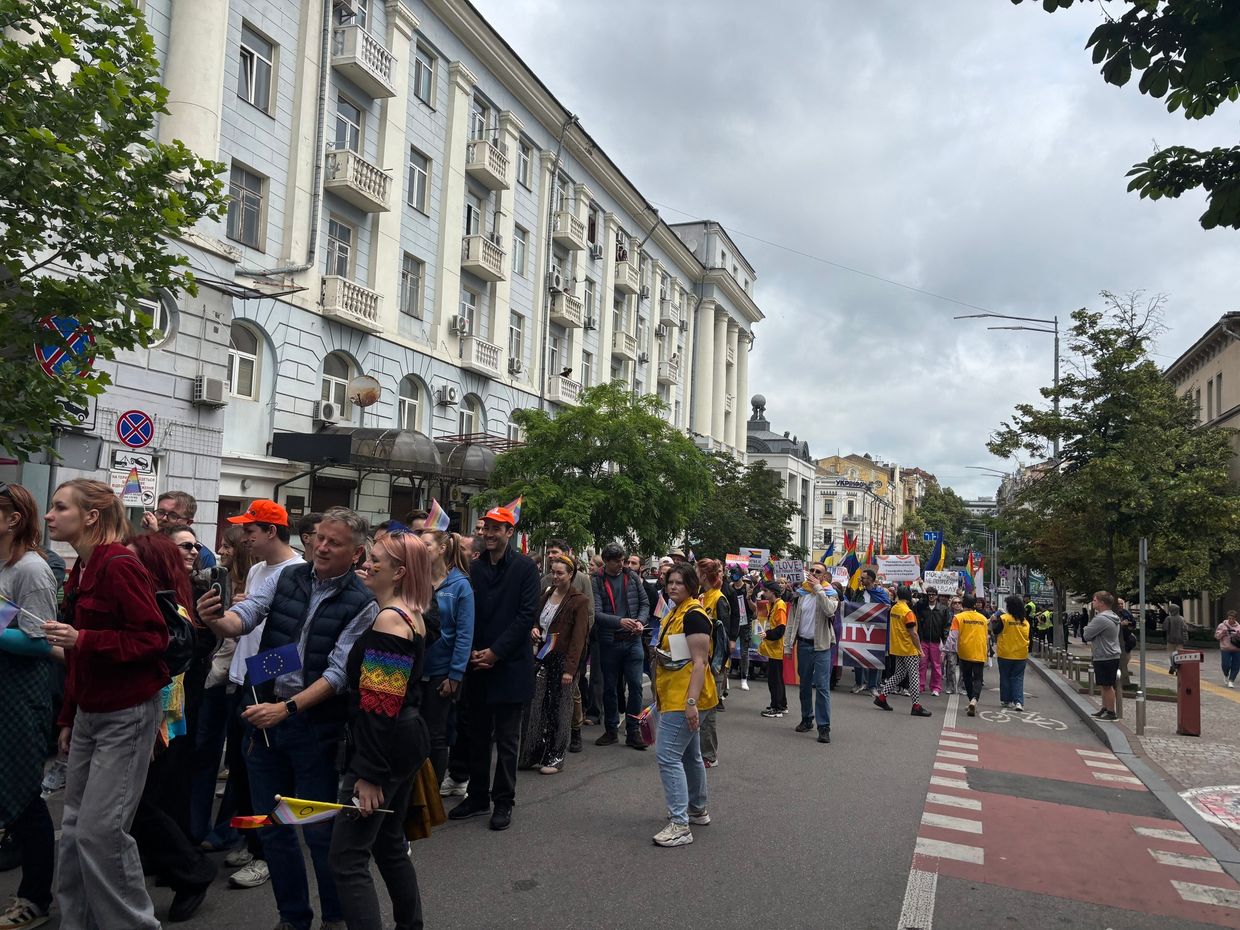
Kyiv Pride held a parade with over 1,500 participants in the Ukrainian capital on June 14, which was met with counterprotests.
"Other Ukrainian Prides also participated — including Kharkiv Pride and Ukraine Pride. Kyiv’s student community was represented, among others, by the Student Parliament of Taras Shevchenko National University of Kyiv and Ukraine Global Scholars," Kyiv Pride said in a post to Facebook.
On June 7, a drone charity event for Kyiv Pride took place outside the Foreign Ministry building and was met with a nearby counterprotest.
The march was joined by representatives from the EU, Canada, the U.K., and various other countries, including France, Germany, and Spain.
The march was joined by the LGBT+ Military non-governmental organization (NGO) as Russia's war against Ukraine continues.
"Among the marchers was veteran Viktor Pylypenko, head of the NGO LGBT+ Military for Equal Rights. He drew public attention to the growing loss of military personnel and veterans who are dying at war — while their families remain unrecognized by law," Kyiv Pride said in its statement.
The march raised 20,000 hryvnia for the Serhiy Sternenko Foundation to purchase drones for the military.
Representatives, including Canada's ambassador to Ukraine, Natalka Cmoc, joined the event.
"Ambassadors, the Canadian embassy team, along with many diplomats, joined (the) Kyiv Pride march this morning," Cmoc said.
The Kyiv Pride event was met with a nearby counterprotest.
"With regret, we must note that those who incite violence still have broader access to public space and freely walk through the central streets, while participants of Kyiv Pride March are surrounded by police and restricted in their route. We continue to witness the spread of hate speech," Kyiv Pride said.
Kyiv Pride held a march in June 2024 for the first time since Russia began its full-scale war against Ukraine in February 2022.

 Connexion