❌

Vue normale

  • ✇Euromaidan Press
  • As Russia expands attacks on Kyiv, Ukraine prepares to hit Moscow’s oil industry harder in response
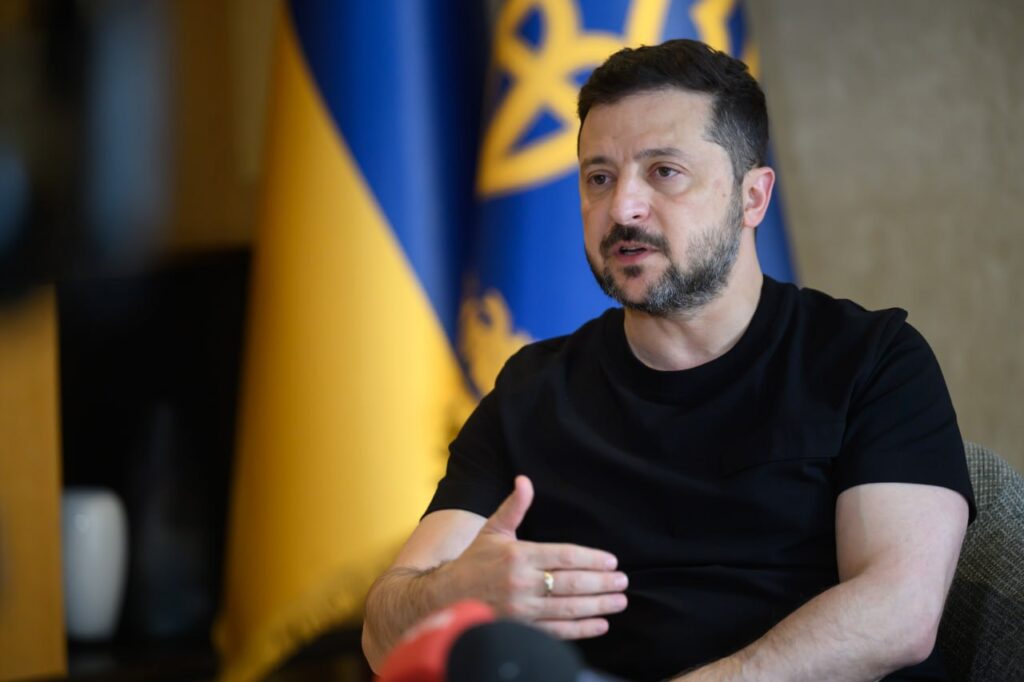
    Ukraine will intensify strikes on Russian oil refineries in response to Moscow’s expanded campaign against Ukrainian infrastructure, Ukrainian President Volodymyr Zelenskyy said in an interview with Reuters on 3 October. Russia has increased attacks on Kyiv in recent weeks, hitting energy and telecommunications infrastructure, roads, railways, and bridges across the Dnipro. Zelenskyy said Ukraine would respond by targeting the Russian energy infrastructure that helps finance the war.
     

As Russia expands attacks on Kyiv, Ukraine prepares to hit Moscow’s oil industry harder in response

3 octobre 2026 à 14:30

Ukrainian President Volodymyr Zelenskyy, 8 August 2026. Photo: Zelenskyy on Telegram

Ukraine will intensify strikes on Russian oil refineries in response to Moscow’s expanded campaign against Ukrainian infrastructure, Ukrainian President Volodymyr Zelenskyy said in an interview with Reuters on 3 October.

Russia has increased attacks on Kyiv in recent weeks, hitting energy and telecommunications infrastructure, roads, railways, and bridges across the Dnipro. Zelenskyy said Ukraine would respond by targeting the Russian energy infrastructure that helps finance the war.

Russia expands attacks on Kyiv

Russian forces have broadened their strikes on infrastructure in and around Kyiv in recent weeks, with attacks increasingly affecting systems that support civilian life.

Zelenskyy said Ukrainian intelligence obtained documents indicating that Russian authorities had approved a broader policy for targeting infrastructure, including logistics, roads, schools, and hospitals. He said the goal is to put pressure on residents to leave Kyiv and other major cities.

Russia has also begun targeting bridges across the Dnipro, which connect the eastern and western parts of the capital.

Ukraine targets Russia’s war economy

Ukraine plans to keep striking Russian oil refineries because they generate revenue that supports Moscow’s war effort, Zelenskyy said.

The policy puts Kyiv at odds with US President Donald Trump, who has urged Ukraine not to attack Russian oil facilities, arguing that such strikes contribute to higher global diesel prices.

Zelenskyy said he sees no indication that Moscow is prepared for either peace talks or an agreement to halt attacks on energy infrastructure.

Ukraine’s “long-range sanctions” hit targets supporting Russia’s war machine in Samara and Bryansk oblasts, including positions of Iskander missile crews, President Volodymyr Zelenskyy said. He also reported new “results” in the Black Sea.

Zelenskyy said the strikes came in… pic.twitter.com/4OFHaJ2bH7

— Euromaidan Press (@EuromaidanPress) October 3, 2026

Ukraine prepares for a new wave of air attacks

Ukraine is also preparing for intensified Russian attacks on its energy system over the winter. Ukrainian officials say Russia has stockpiled hundreds of ballistic missiles for a new campaign against electricity and other critical infrastructure.

Russia has also expanded its use of fast jet-powered Geran drones, launching dozens each day since the summer.

Ukrainian F-16s and MiG aircraft are intercepting around 60% of these drones, according to Zelenskyy, but ammunition for their 20 mm cannons is running low. Ukraine is increasing the use of electronic warfare and expects a first shipment of small, inexpensive air defense missiles designed to counter the jet-powered drones later in October.

Ukraine is developing five interceptor drone models to counter Russian Shaheds. Two have already undergone testing, with Zelenskyy putting their current interception rate at around 30%.

Ukraine expands its strike capabilities

Ukraine is also expanding its long-range strike capabilities. It has used its domestically produced FP-7 ballistic missile in combat for the first time, with a range of about 250 kilometers, while work continues on the longer-range FP-9.

At the same time, Kyiv is working with European partners to secure additional funding for its defense needs. Ukraine has found financing to order drones for early 2027 and is working to close a $27 billion gap in this year’s defense budget through its own resources, bilateral assistance, and financing linked to the EU’s €90 billion loan package.

Zelenskyy said Ukraine’s ability to sustain its defense and expand its strike capabilities will remain central as Russia prepares for another winter campaign.

  • ✇Euromaidan Press
  • Russia strikes second major Kyiv bridge in two days as attacks disrupt movement across the capital
    Russia struck Kyiv’s Northern Bridge with a drone on 3 October, damaging the roadway and overhead trolleybus lines, Kyiv Mayor Vitali Klitschko said. Two people were injured, one of whom was hospitalized. The strike came one day after repeated Russian drone attacks on the Southern Bridge, which damaged its support structures, road surface and subway infrastructure and forced its closure. The attacks caused severe traffic disruption across Kyiv, with major roads gridlocked and some peopl
     

Russia strikes second major Kyiv bridge in two days as attacks disrupt movement across the capital

3 octobre 2026 à 09:15

Kyiv's Northern Bridge connecting the city's two sides across the Dnipro River. Photo via Wikimedia Commons

Russia struck Kyiv’s Northern Bridge with a drone on 3 October, damaging the roadway and overhead trolleybus lines, Kyiv Mayor Vitali Klitschko said. Two people were injured, one of whom was hospitalized.

The strike came one day after repeated Russian drone attacks on the Southern Bridge, which damaged its support structures, road surface and subway infrastructure and forced its closure. The attacks caused severe traffic disruption across Kyiv, with major roads gridlocked and some people reportedly walking across bridges.

Another key bridge targeted

The Northern Bridge connects Kyiv’s Obolon and Troieshchyna districts and is one of the capital’s major routes across the Dnipro.

Damage to its roadway and trolleybus network adds another disruption to Kyiv’s transport system after the attacks on the Southern Bridge. The Northern and Southern bridges are among the capital’s key crossings between its eastern and western banks.

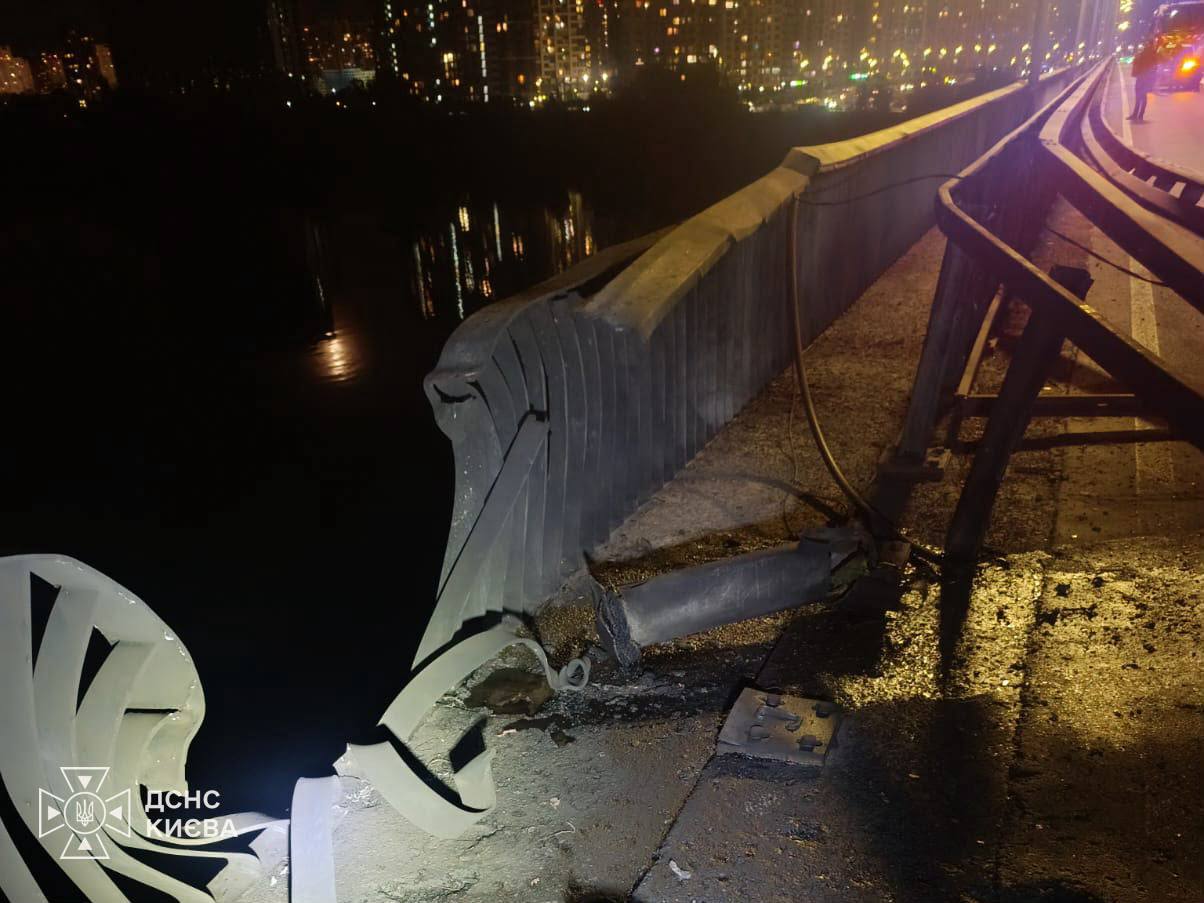
Damage to Kyiv's Southern Bridge connecting the left and right banks of the city following several Russian drone strikes on 1-2 October, 2026. Photo: Ukraine's State Emergency Service
Explore further

Russia repeatedly attacks bridge connecting Kyiv’s two sides across the Dnipro river, disrupting transport across the capital

Kyiv changes bridge restrictions

Kyiv authorities announced temporary changes to bridge traffic rules following the attacks.

During air raids, traffic on the Southern Bridge will be restricted for 15 minutes in the direction from the right bank to the left bank, while traffic in the opposite direction will remain open. On the Podilskyi-Voskresenskyi Bridge, traffic in both directions will stop for 15 minutes when an air-raid alert is announced or lifted.

The Northern, Darnytskyi, Paton and Metro bridges will operate without restrictions during air raids, according to the Kyiv City Military Administration.

Russia’s repeated strikes on Kyiv’s Southern Bridge are now severely disrupting traffic across the capital.

Major roads are gridlocked, with some people reportedly walking across bridges as traffic comes to a standstill. Photos from Suspilne show the resulting congestion on… pic.twitter.com/7SyYG0WOCO

— Euromaidan Press (@EuromaidanPress) October 2, 2026

Russia intensifies attacks on Kyiv

The bridge strikes come amid an intensifying Russian aerial campaign against Kyiv. Russian drones and missiles have increasingly targeted the capital in recent weeks, damaging residential buildings, schools and infrastructure and disrupting daily life.

The attacks on the bridges add a different dimension to that campaign, directly disrupting movement between Kyiv’s two banks. With multiple crossings affected within days, the strikes have already translated into major traffic disruptions for the city’s residents.

Three Russian missiles and two drones strike Moldovan territory in morning attacks on neighboring Ukraine. Moldova is increasingly exposed to the risks of Russia’s war next door

3 octobre 2026 à 08:14

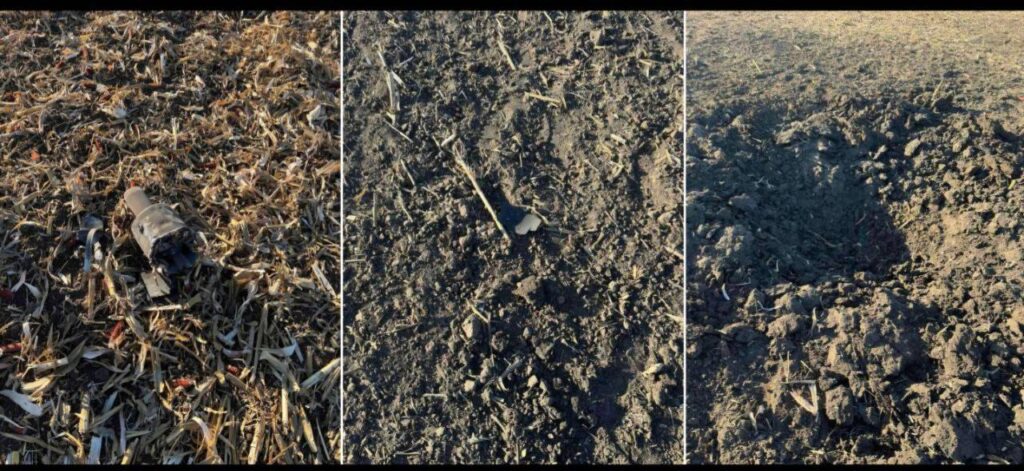
Fragments of Russian drones or missiles that struck Moldovan territory on 3 October 2026. Photo: Moldovan Police via Newsmaker

Three Russian missiles and two drones crossed Moldova’s airspace and exploded on Saturday morning, Moldovan Defense Minister Anatolie Nosatîi told TVR Moldova.

Moldova has seen a dramatic increase in Russian drone incursions in recent weeks as Russia ramps up near-constant drone attacks across Ukraine.

The five incidents occurred between 7:45 and 8:00 a.m., with explosions and debris reported across several districts. Moldova’s Foreign Ministry condemned the airspace violation.

Explosions and debris reported across Moldova

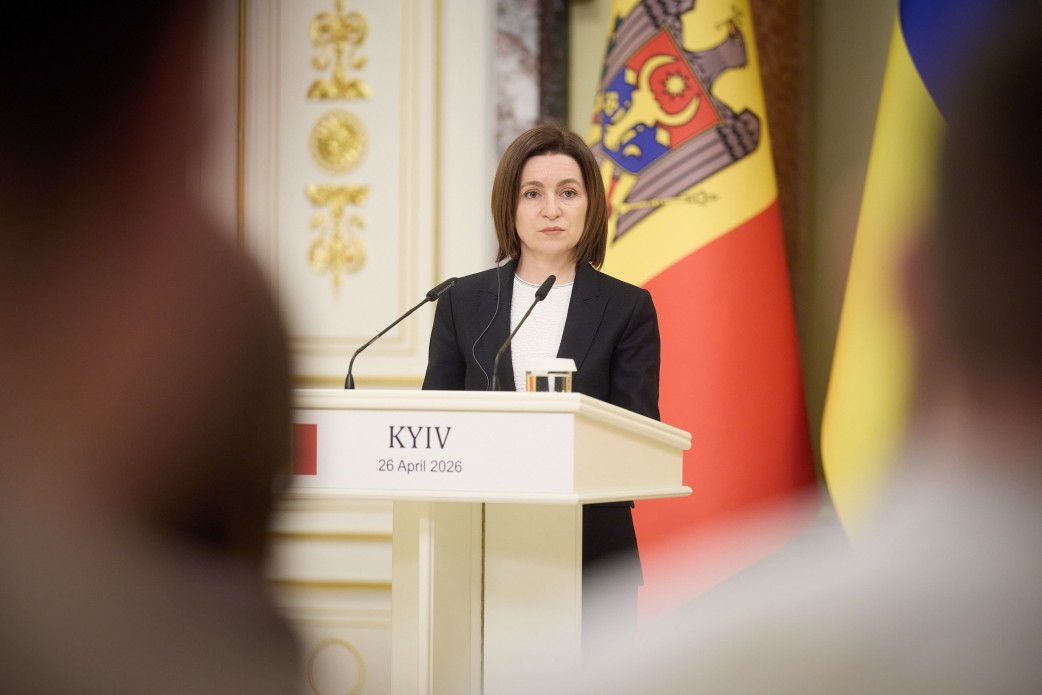
The Moldovan authorities initially said that five drones had crossed the country’s airspace before Nosatîi clarified that the five incidents involved three missiles and two drones. President Maia Sandu said the missiles were Banderol-type missiles, according to NewsMaker.

Nosatîi said the incidents had been documented and that evidence recovered at the sites could be presented to Russia’s ambassador.

Moldova’s Foreign Ministry said Russia’s war against Ukraine continues to create concrete threats for the country and condemned the violation of its airspace.

moldova counted 39 russian drone incursions eight months against 17 all 2025 · post maia sandu chairs meeting moldova's national security council 21 2026 sandu/facebook ukraine news ukrainian reports
Explore further

Moldova counted 39 Russian drone incursions in eight months, against 17 in all of 2025

According to NewsMaker, fragments were found outside Căușeni, near Dubovca in Hîncești District, between Delacău and Puhăceni in Anenii Noi District, and near Crocmaz in Ștefan Vodă District.

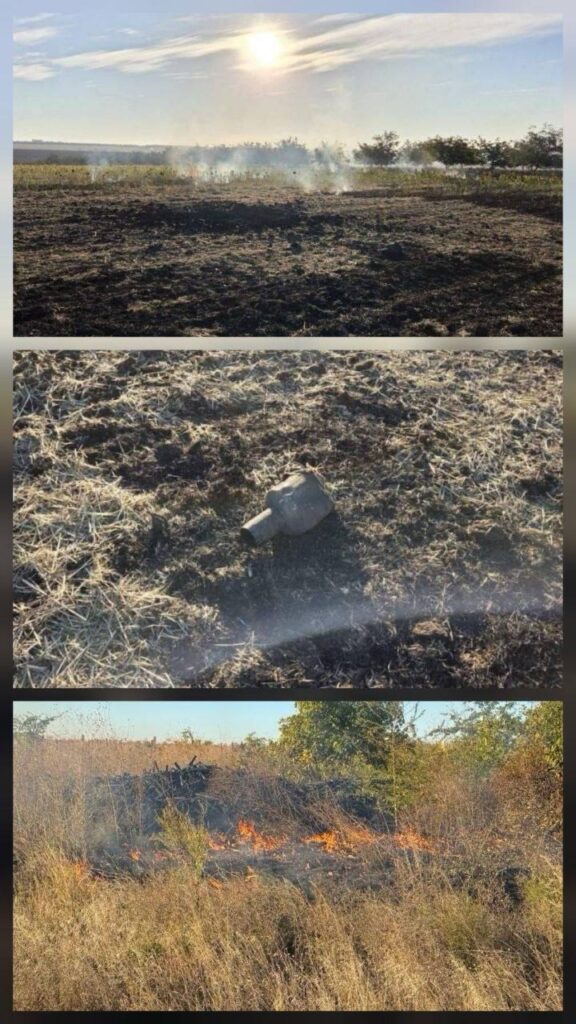
Near Crocmaz, an explosion in a vineyard field caused a vegetation fire and damaged windows at a nearby agricultural facility. Fragments were also found near Constantinovca in Căușeni District, where an explosion caused another vegetation fire.

Map of Russian attacks on Moldova, 3 October 2026. Map from social media

Moldova’s Defense Ministry later reported a sixth unauthorized flight over the country that did not result in an explosion. The object entered Moldovan airspace at 8:04 a.m. from the direction of Udobne, Ukraine, and exited a minute later toward Biliaivka, Ukraine. 

Fragments of Russian drones or missiles that struck Moldovan territory on 3 October 2026. Photo: Moldovan Police via Newsmaker

Moldova seeks stronger air defenses

Asked why the weapons were not intercepted, Nosatîi said Moldova was taking measures to strengthen its air-defense capabilities and acquire interception systems.

He said the drones are sophisticated and fast, adding that Moldova, like Ukraine, is learning how to defend against them. He also said Moldova needs additional resources to protect its 1,212-kilometer border with Ukraine and monitor its airspace.

romania's jets shoot down bulgaria's navy blows up moldova only now funding air defense russia hits ukraine · post moldovan president maia sandu kyiv anniversary chernobyl nuclear disaster 26 2026
Explore further

Moldova is investing in air defense against the Russian drones crossing from Ukraine—Romania shoots down the ones that reach it

Moldovan authorities urged residents not to approach or touch any fragments they find, but to mark the location and notify police or the military so the area can be secured and the debris neutralized.

41 Ukrainians made the long journey from occupation to Ukrainian-controlled territory after enduring Russian pressure, detention and control

2 octobre 2026 à 14:31

Ukrainians who were brought from Russian-occupied territories to Ukrainian-controlled territory, August-September 2026. Photo: Dmytro Lubinets

Ukraine helped 41 citizens escape from Russian-occupied territories into Ukrainian-controlled territory in August and September, including four children and five teenagers, Ukrainian Ombudsman Dmytro Lubinets said.

For many, the crossing marked the end of months or years under Russian occupation and the beginning of their return to life in government-controlled Ukraine.

They returned to Ukraine via Belarus through the Mokrany-Domanove crossing in Ukraine's Volyn Oblast.

From occupation to safety

Lubinets described several cases among those who returned.

One family was able to leave after the father was released from Russian captivity. Their older son remains in captivity, while the woman and her younger son had been under the control of occupation authorities and, according to their account, were previously taken to a detention facility under the pretext of providing medical care and subjected to forced treatment.

A young medical worker was evacuated shortly before she could have been mobilized into Russia’s armed formations, according to Lubinets.

Another returned man had been detained several times in occupied territory and held in basements. His Ukrainian passport had also been confiscated.

Help continues after the crossing

For those returning, reaching Ukrainian-controlled territory is only the first step. The Ombudsman’s Office and partner organizations provide assistance with restoring documents, financial support, temporary accommodation, psychological and social services, and onward travel.

The office said that, in August and September, its joint project with Caritas Ukraine provided assistance to 1,140 people, including people evacuated from occupied territory.

Ukraine’s efforts to facilitate returns are taking place against a broader problem of displacement from occupied territory. A 2026 UN report documented forcible transfers and deportations from areas occupied by Russia, as well as barriers that make it difficult for displaced Ukrainians to return.

The Mokrany-Domanove crossing is one of the routes through which Ukrainians can return to government-controlled territory, making it a key part of Ukraine’s effort to bring civilians home from occupation.

Others are still waiting to leave

Lubinets said his office continues receiving requests from people seeking to leave occupied territory and works with Ukrainian, international and third-country partners to find routes out.

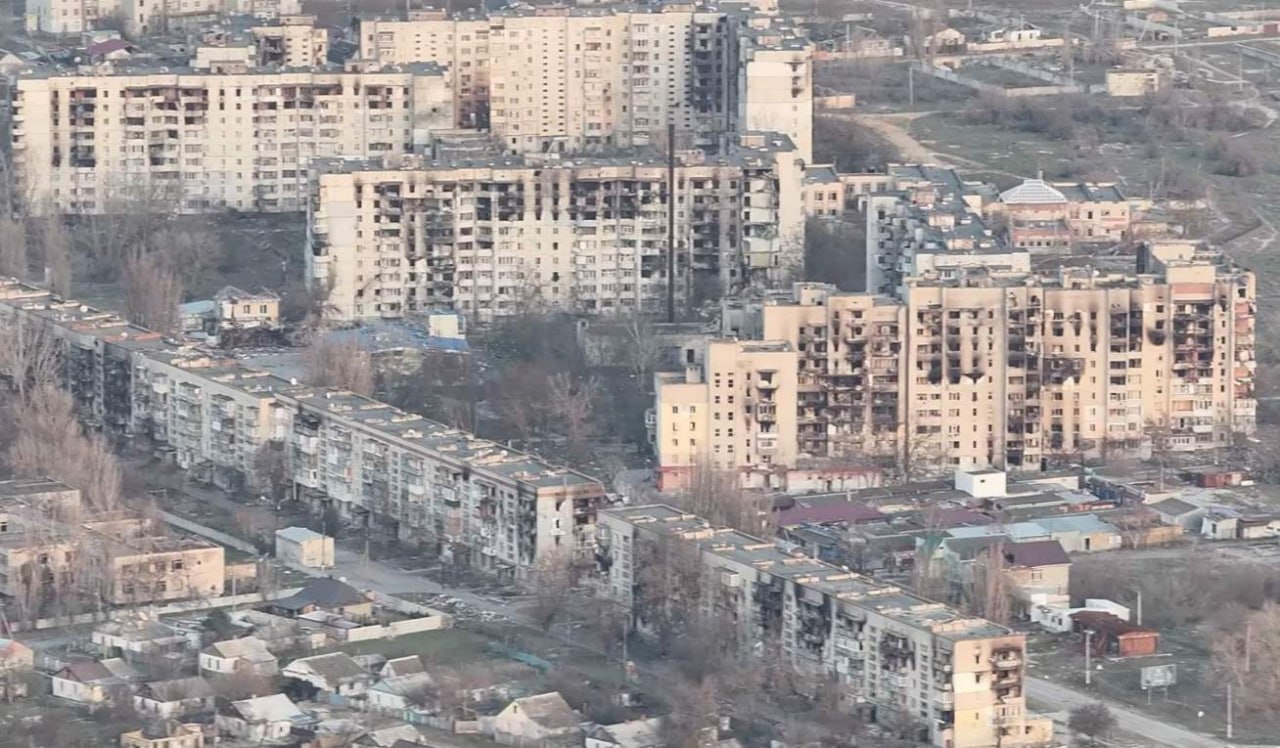
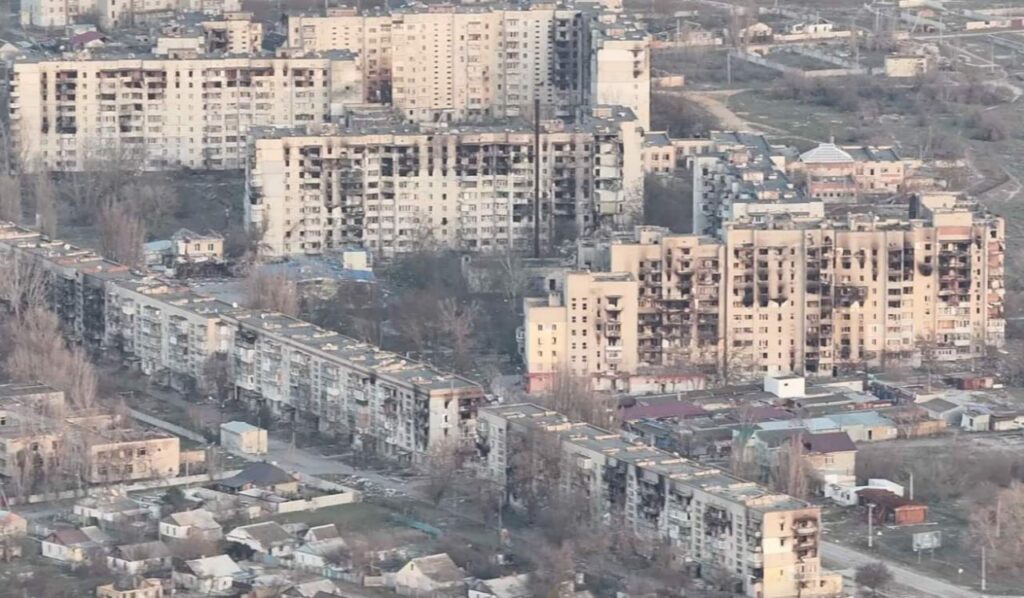
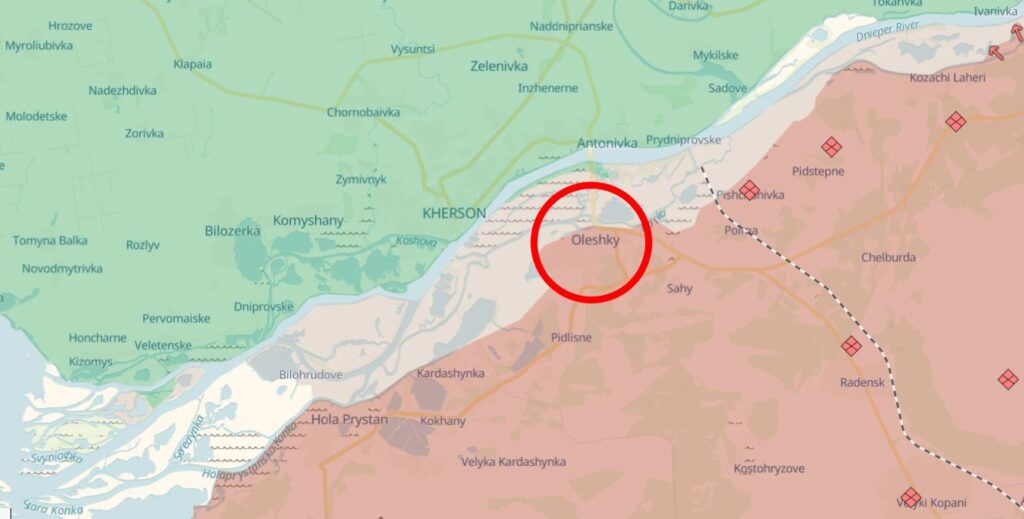
Lubinets noted that the situation remains particularly difficult in Oleshky and surrounding settlements in Kherson Oblast, where Ukrainian authorities say elderly people, people with disabilities, sick residents and families remain without reliable access to food, water, medicine, healthcare and communications. Recent reporting has put the number of civilians still in Oleshky at around 2,000, including about 50 children.

Oleshky, Kherson Oblast, has been under Russian occupation since 2022, following Russia’s capture of the city during the initial phase of its full-scale invasion of Ukraine. Photo: Dmyto Lubinets
Explore further

Thousands are starving in occupied Oleshky. People have no food, no way out, and Russian forces bomb incoming aid

  • ✇Euromaidan Press
  • Russia retaliates after Hungary expels 10 diplomats, deepening Budapest-Moscow rift since Orbán’s ouster
    Russia has ordered Hungarian diplomatic staff to leave the country weeks after Hungary expelled 10 Russian diplomats over activities Budapest said were incompatible with their diplomatic status, Euronews reported.  The tit-for-tat expulsions mark a significant change in relations between Budapest and Moscow following Viktor Orbán’s 16-year rule as Hungarian Prime Minister. Russia’s Foreign Ministry summoned Hungary’s chargé d’affaires Gábor Gergics on 1 October and informed him that
     

Russia retaliates after Hungary expels 10 diplomats, deepening Budapest-Moscow rift since Orbán’s ouster

2 octobre 2026 à 13:44

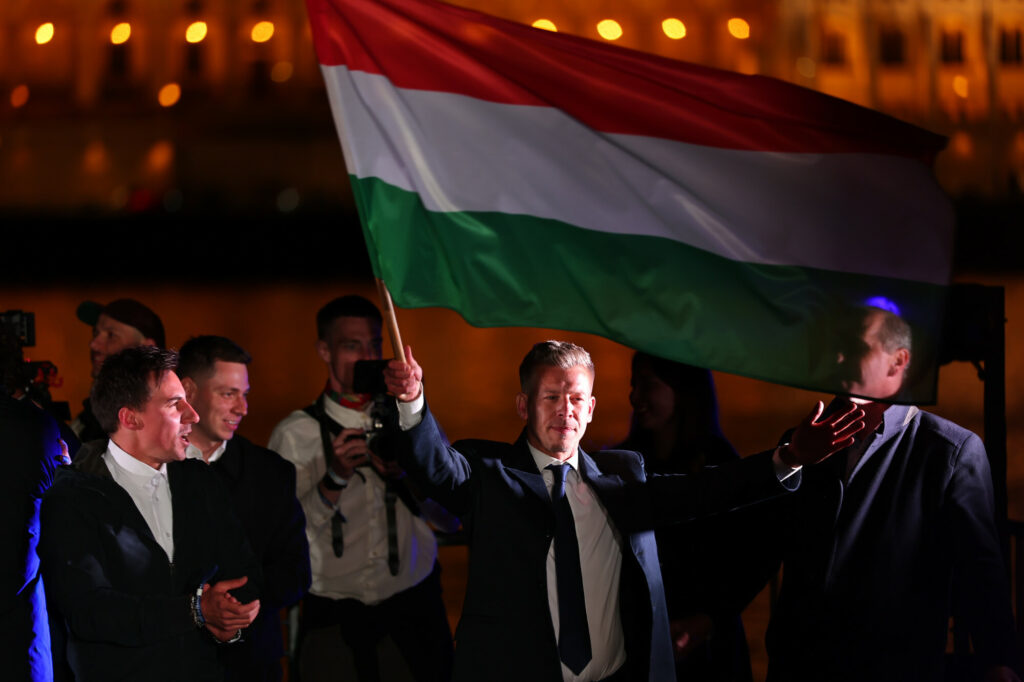
Péter Magyar waves the Hungarian flag at Tisza party's supermajority victory rally in Budapest, 12 April 2026

Russia has ordered Hungarian diplomatic staff to leave the country weeks after Hungary expelled 10 Russian diplomats over activities Budapest said were incompatible with their diplomatic status, Euronews reported. 

The tit-for-tat expulsions mark a significant change in relations between Budapest and Moscow following Viktor Orbán’s 16-year rule as Hungarian Prime Minister.

Russia’s Foreign Ministry summoned Hungary’s chargé d’affaires Gábor Gergics on 1 October and informed him that staff at the Hungarian embassy in Moscow and consulates in St Petersburg and Kazan would have two weeks to leave. Moscow described Hungary’s September expulsion as “baseless and openly unfriendly,” according to Euronews.

Hungary stands by expulsions

Hungary expelled 10 Russian diplomats on 8 September, citing activities it said were unacceptable for diplomats under the Vienna Convention. The government did not publicly provide details of the alleged activities.

Budapest said it was not seeking an escalation but would maintain its decision, while also saying its diplomatic missions in Russia would continue operating.

The expulsions come as Hungary’s foreign policy shifts under Prime Minister Péter Magyar, who took office after Viktor Orbán’s Fidesz lost the April election. Magyar’s government has moved to strengthen Hungary’s alignment with the EU and NATO while maintaining what it describes as pragmatic relations with Moscow.

A break with the Orbán era

Under Orbán, Hungary maintained unusually close relations with Russia compared with other EU members. Budapest continued cooperation with Moscow after Russia’s full-scale invasion of Ukraine, and Orbán repeatedly opposed or delayed EU measures related to Ukraine.

The new government has taken a different position. In September, Hungary expelled the 10 Russian diplomats, and its new foreign policy doctrine identified Russia as a threat to Hungary’s security. Earlier, the government’s guidance for its UN delegation condemned Russia’s war against Ukraine and affirmed Ukraine’s sovereignty and right to self-defense, according to Euronews.

The shift has not amounted to a complete break with Moscow. Magyar has said Hungary will pursue pragmatic relations with Russia, while Budapest continues to seek concessions from Kyiv over the rights of Hungary’s minority in Ukraine.

Ukrainian grandmother detained in Kazakhstan at Russia’s request while trying to bring grandson back to Ukraine

2 octobre 2026 à 12:03

Russian and Kazakh flags fly as plane contrails form the Russian tricolour above Astana, Kazakhstan, 27 November 2024. Photo via Wikimedia Commons

Kazakhstan detained Ukrainian citizen Liubov Rozhanska in Astana on 1 October at Russia’s request, after she traveled there to receive her grandson, a Ukrainian boy whose father has sought his return to Ukraine, Deutsche Welle (DW) reported.

Russia accuses Rozhanska of attempting to abduct the child and is seeking her detention through the Collective Security Treaty Organization (CSTO), a Russia-led security alliance that includes Kazakhstan. 

She could now face deportation to Russia, despite never having entered the country, according to her lawyers cited by DW. 

A Ukrainian child Russia wants to keep

The case involves a boy born in Odesa in 2018. His mother took him from Ukraine to Russia’s Kaliningrad Oblast in 2021, before Russia’s full-scale invasion. In 2022, she and the child obtained Russian citizenship.

The boy’s Ukrainian father challenged the child’s residence in court. In March 2025, Ukraine’s Supreme Court ruled that the boy should live in Odesa with his father.

According to Rozhanska’s lawyer, Oleksii Pryanishnikov, the boy’s stepfather and step-grandfather contacted her in July 2026 about arranging the child’s transfer to his Ukrainian father and grandmother.

By August, a Kaliningrad court had issued a warrant to detain Rozhanska in connection with an alleged attempt to abduct the child. Russian investigators were also preparing documents to seek her extradition through the CSTO, according to documents cited by DW.

Rozhanska then traveled to Astana and was detained at the airport after arriving from Istanbul.

Kazakh lawyer Riza Nurbaeva told DW that Rozhanska did not know about the Russian criminal case and had never entered Russia. She said the Ukrainian was detained under the Kaliningrad court’s warrant.

Lawyer alleges political motive

Pryanishnikov described the detention as a “planned operation” by Russia’s Federal Security Service and alleged that it has a political dimension connected to Russia’s war against Ukraine.

His allegation comes in the context of Russia’s documented transfer and deportation of Ukrainian children to Russia and efforts to assimilate them into Russian society, grant them Russian citizenship and sever their ties to Ukraine.

In this case, Russia is using international legal mechanisms to potentially prevent a Ukrainian child from returning to his father in Ukraine.

Rozhanska is currently being held in a Kazakh pretrial detention center. A court hearing is expected within three days, according to DW.

Russia repeatedly attacks bridge connecting Kyiv’s two sides across the Dnipro river, disrupting transport across the capital

2 octobre 2026 à 10:34

Damage to Kyiv's Southern Bridge connecting the left and right banks of the city following several Russian drone strikes on 1-2 October, 2026. Photo: Ukraine's State Emergency Service

Russian forces have repeatedly struck Kyiv’s Southern Bridge with drones since 1 October, disrupting one of the capital’s main routes between the left and right banks of the Dnipro.

The strikes are part of a broader intensification of Russian drone attacks on the capital. In recent weeks, Russia has begun launching daily attacks involving jet-powered Geran drones, increasingly disrupting everyday life in Kyiv.

The Southern Bridge is an important road and rail crossing over the Dnipro. It carries road traffic between Kyiv's left and right banks and also forms part of the city's metro network.

The bridge was fully closed to traffic following the latest attacks, while restrictions were also introduced on the Metro and Paton bridges, according to Suspilne. Public transport has been diverted to alternative routes, while the disruptions have caused major traffic congestion across Kyiv.

Update 17:50: Kyiv Mayor Vitali Klitschko said Russian forces have struck the Southern Bridge again on the evening of 2 October. The bridge remains closed to road traffic and metro services following several previous attacks. Emergency services are heading to the site.

Bridge targeted repeatedly

The Southern Bridge came under attack multiple times on 1 October and was targeted again during the overnight attack into 2 October.

Ukrainian President Volodymyr Zelenskyy said Russian forces struck the bridge several times with drones during the night. He said the attacks were part of a larger Russian barrage involving more than 100 attack drones, nearly 50 of them jet-powered Gerans.

The bridge has not been destroyed, but the repeated strikes have forced authorities to limit its use and reorganize traffic across the Dnipro.

Ukrainian analyst Andrii Kovalenko said the Southern Bridge is difficult to destroy with the weapons Russia is using. However, he said such strikes can damage the bridge enough to disrupt its normal operation, while the resulting disruption can also be used to spread panic.

Russia’s repeated strikes on Kyiv’s Southern Bridge are now severely disrupting traffic across the capital.

Major roads are gridlocked, with some people reportedly walking across bridges as traffic comes to a standstill. Photos from Suspilne show the resulting congestion on… pic.twitter.com/7SyYG0WOCO

— Euromaidan Press (@EuromaidanPress) October 2, 2026

Zelenskyy: Russia is targeting bridges and critical infrastructure

Zelenskyy said Russia's intensified attacks are part of a broader effort to disrupt life in Ukrainian cities and damage infrastructure beyond individual military targets.

Citing Ukrainian intelligence and people he said are close to Russian President Vladimir Putin, Zelenskyy claimed Putin said in early September: “Now, there are no rules.” Zelenskyy said Russia had failed to occupy Ukraine and was therefore turning to mass attacks and killings.

“They want to destroy our bridges and, as we understand it, our data centers, internet, mobile networks, hospitals, kindergartens, schools, universities – everything,” Zelenskyy said.

He added that Russia wants to force Ukrainians to leave their cities. “They want people to flee their cities, and we need to do everything to save our people and our cities,” he said.

A key crossing for Kyiv disrupted

The bridge’s closure puts additional pressure on the capital's other bridges. On 2 October, traffic on the Metro Bridge was restricted to one lane toward the right bank, while traffic from the right bank toward the left was restricted on the Paton Bridge.

Several bus routes were diverted to other bridges. Kyiv authorities reported major traffic jams on the city's main roads as the restrictions disrupted normal movement between the two sides of the capital.

Metro service across the Southern Bridge also remains tied to an assessment of the structure. Kyiv Mayor Vitali Klitschko said on Friday the metro can resume crossing the bridge during yellow-level air alerts after experts provide an assessment confirming its condition.

Part of a wider campaign against Kyiv

The bridge strikes came alongside attacks on civilian areas of Kyiv. A Russian drone hit the upper floors of a 25-story residential building in the Darnytskyi district on 2 October, causing a fire on the 24th and 25th floors.

One person was killed and two were injured. The attack also damaged buildings and vehicles in the Holosiivskyi district.

A Russian drone struck a 25-story residential building in Kyiv’s Darnytskyi district this morning.

According to President Volodymyr Zelenskyy, Russia launched more than 100 attack drones at Ukraine overnight, including nearly 50 jet-powered drones.

In Kyiv, the strike caused a… pic.twitter.com/jiGjJeUgVf

— Euromaidan Press (@EuromaidanPress) October 2, 2026

The growing frequency of jet-powered Geran attacks is making the impact of Russian strikes increasingly visible beyond individual damage sites. Repeated attacks on infrastructure such as the Southern Bridge can disrupt transportation and daily routines across the capital even when the targeted structures are not destroyed.

  • ✇Euromaidan Press
  • Russian troops enter homes and threaten starving Oleshky residents for food and alcohol, officials say
    Residents who have recently escaped Russian-occupied Oleshky describe being subjected to threats, intimidation, and exploitation by Russian soldiers, according to the head of the Oleshky City Military Administration. Oleshky is facing severe shortages of food, water, and medicine, with around 1,500 civilians, including up to 50 children, still trapped in the Russian-occupied city with no safe way out. Tetiana Hasanenko told Ukrinform on September 29 that people escaping the city on f
     

Russian troops enter homes and threaten starving Oleshky residents for food and alcohol, officials say

29 septembre 2026 à 16:59

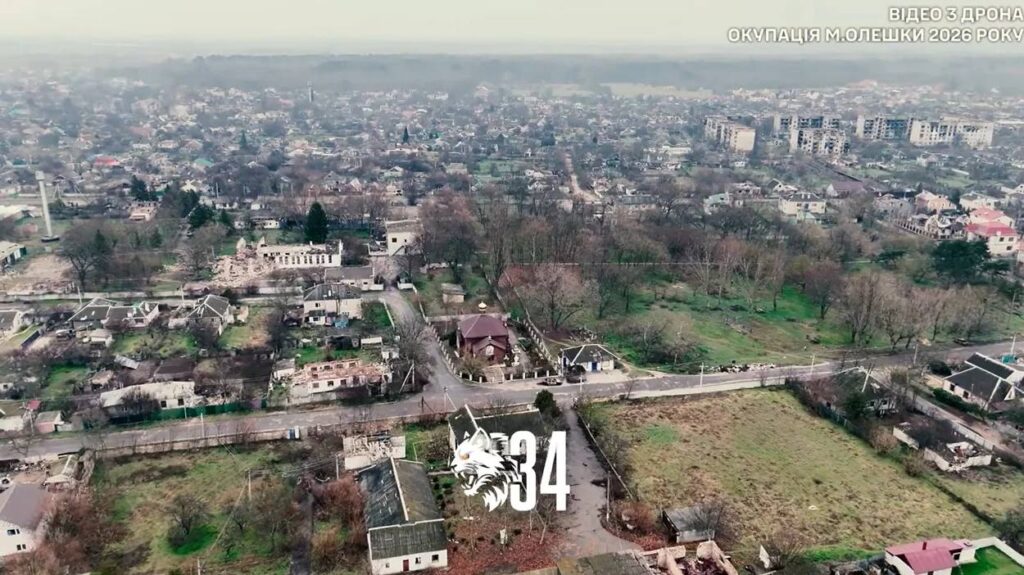
Aerial view of Russian-occupied Oleshky, in Ukraine's Kherson Oblast. Photo via ArmyInform

Residents who have recently escaped Russian-occupied Oleshky describe being subjected to threats, intimidation, and exploitation by Russian soldiers, according to the head of the Oleshky City Military Administration.

Oleshky is facing severe shortages of food, water, and medicine, with around 1,500 civilians, including up to 50 children, still trapped in the Russian-occupied city with no safe way out.

Tetiana Hasanenko told Ukrinform on September 29 that people escaping the city on foot were severely weakened and had lost up to 15 kilograms. She said those who managed to leave described not only hunger, but also abuse by Russian troops.

“They were really fleeing from hunger and from abuse,” Hasanenko told Ukrinform.

Russian troops threaten residents for food and alcohol

According to Hasanenko, Russian soldiers are entering residents’ homes, taking them over, and forcing the civilians living there to feed them despite having little food themselves.

“They move in and demand that people feed them and give them alcohol,” she said, adding that some of the soldiers appeared to be drug or alcohol users.

She described one family’s account in which a Russian soldier allegedly locked them in a shower while in an apparently intoxicated state and threatened to throw a grenade at them.

Another woman reportedly told Ukrainian officials that a Russian soldier threatened to kill her because the homemade wine she gave him was sour.

“They move in and demand to eat and drink,” Hasanenko said.

Oleshky, Kherson Oblast, has been under Russian occupation since 2022, following Russia’s capture of the city during the initial phase of its full-scale invasion of Ukraine. Photo: Dmyto Lubinets

Residents face hunger and mines

The accounts come as Oleshky in Ukraine’s Kherson Oblast faces a severe humanitarian crisis. Ukrainian authorities say around 1,500 people remain in the occupied city, including up to 50 children, with residents lacking reliable access to food and water.

Those trying to escape face minefields around the city. Hasanenko said some residents have attempted to leave on foot and that there are people who have failed to return after entering mined areas.

She said one family tried to return because children had been left behind at home but never made it back.

Recent escapees have reportedly lost 10–15 kilograms, with some leaving only after becoming severely weakened by hunger.

Russian troops accused of using civilians as cover

Hasanenko also said Russian soldiers are deliberately living in civilian homes to protect themselves.

By occupying homes and remaining among local residents, she said, Russian troops are effectively using civilians as a “human shield” because they fear for their own safety.

Ukraine has been seeking an organized evacuation of civilians from Oleshky and has said the International Committee of the Red Cross is prepared to participate if Russia agrees to the necessary arrangements. Russia has not confirmed its readiness to allow such an evacuation.

Russian-occupied Oleshky, in Ukraine's Kherson Oblast.
  • ✇Euromaidan Press
  • Russian mercenaries blew off African prisoners’ legs to practice battlefield medicine, Wagner fighter says
    A former Wagner fighter captured by Ukraine has described alleged training sessions in Mali where Russian mercenaries used African prisoners as live subjects, deliberately inflicting severe injuries so recruits could practice battlefield medicine and killing. Training built around real victims The fighter told Ukrainian journalist Dmytro Karpenko that Wagner instructors brought captured Africans to training sessions and turned them into human practice targets. “We gathered for med
     

Russian mercenaries blew off African prisoners’ legs to practice battlefield medicine, Wagner fighter says

29 septembre 2026 à 15:40

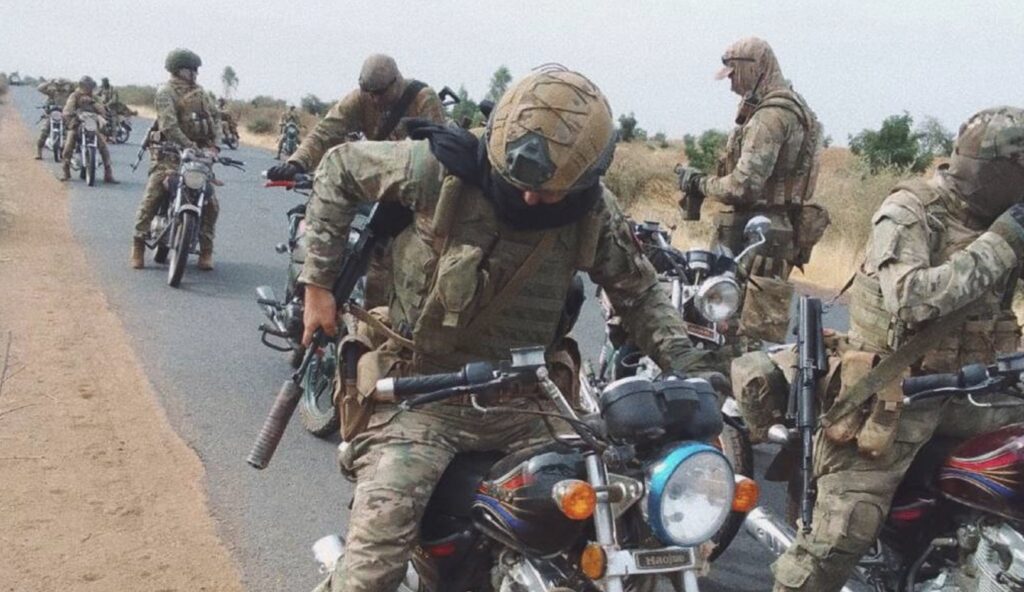
Russian "Wagner" mercenaries in Mali, 2023-2024.

A former Wagner fighter captured by Ukraine has described alleged training sessions in Mali where Russian mercenaries used African prisoners as live subjects, deliberately inflicting severe injuries so recruits could practice battlefield medicine and killing.

Training built around real victims

The fighter told Ukrainian journalist Dmytro Karpenko that Wagner instructors brought captured Africans to training sessions and turned them into human practice targets.

“We gathered for medical training, and they brought in a captured terrorist. They tied a block of TNT to his leg. They set it off, everyone moved away, and of course his leg was blown off,” he said.

The recruits then practiced stopping the resulting bleeding. According to the fighter, the prisoner was later shot in the artery near his armpit so they could practice the same procedure on his arm.

The prisoner died after the training.

In another session, he said, instructors had a prisoner's leg chopped off with an ax so recruits could practice applying a tourniquet under realistic conditions.

“They cut off his leg. Then they put on the tourniquet – everything as if it were an extreme situation, so everything would be realistic,” he said.

‘Here, strike the heart’

The alleged exercises also included training in how to kill.

The fighter said another prisoner was drugged before recruits were taught how to kill someone with a knife.

“They showed us how to kill with a knife to the heart. They chose two people who were willing and said: ‘Here, strike the heart,’” he said.

The fighter said all three prisoners died during the exercises.

A former Wagner fighter captured by Ukraine, who described alleged abuses committed by Russian mercenaries in Mali in interview with Ukrainian journalist Dmytro Karpenko. Screenshot from video: Dmytro Karpenko

From Mali to Ukraine

The testimony comes from a Russian mercenary who joined Wagner in 2023 and was sent to Mali that September via Syria. He said around 120–130 recruits traveled with him and that Wagner paid them $3,000 a month.

Wagner was a Russian paramilitary formation that operated as a deniable arm of the Kremlin in Ukraine, Syria, and Africa. After Wagner chief Yevgeny Prigozhin's death in 2023, the group's independent role was largely dismantled, with many of its fighters and operations brought under Russian state control. Its African operations were increasingly taken over by Russia's state-run Africa Corps.

The mercenary remained in Mali until April 2024. After returning to Russia, he signed a contract with the Russian Defense Ministry in August 2025 and was assigned to the 14th Separate Special Forces Brigade, which is subordinate to Russia's military intelligence agency, the GRU.

He was subsequently captured by Ukrainian forces.

A record of alleged abuses

The account has not been independently verified, but it adds to years of allegations of serious abuses by Wagner and other Russian personnel in Africa.

Wagner fighters have long faced allegations of abuses in Africa, including killings and violence against civilians. In Mali, the group became a key part of Russia’s military presence after the country’s military junta turned to Moscow for support, with Wagner fighters operating alongside Malian forces. Ukrainian intelligence has also documented and targeted Wagner’s activities in Africa.

The pattern of alleged abuses has continued under Russia’s Africa Corps, the Kremlin-controlled force that replaced Wagner in Mali. Human Rights Watch reported in August 2026 that Africa Corps fighters summarily killed nine civilians, including four children, beat dozens of others, and burned and looted homes in central Mali. In June, the group also carried out airstrikes that killed eight civilians, including three children.

  • ✇Euromaidan Press
  • Russia ordered arson attack on Estonian military robot-maker supplying Ukraine, Estonia confirms
    Estonia says Russia ordered the August arson attack on Milrem Robotics’ Tallinn premises, an Estonian defense company supplying Ukraine with military ground robots. Russian sabotage operations have been expanding across Europe in recent months, targeting companies, infrastructure and supply chains connected to Ukraine’s defense effort. European authorities have linked or investigated suspected Russian involvement in arson and other sabotage attempts in several countries, as Moscow seeks
     

Russia ordered arson attack on Estonian military robot-maker supplying Ukraine, Estonia confirms

29 septembre 2026 à 14:04

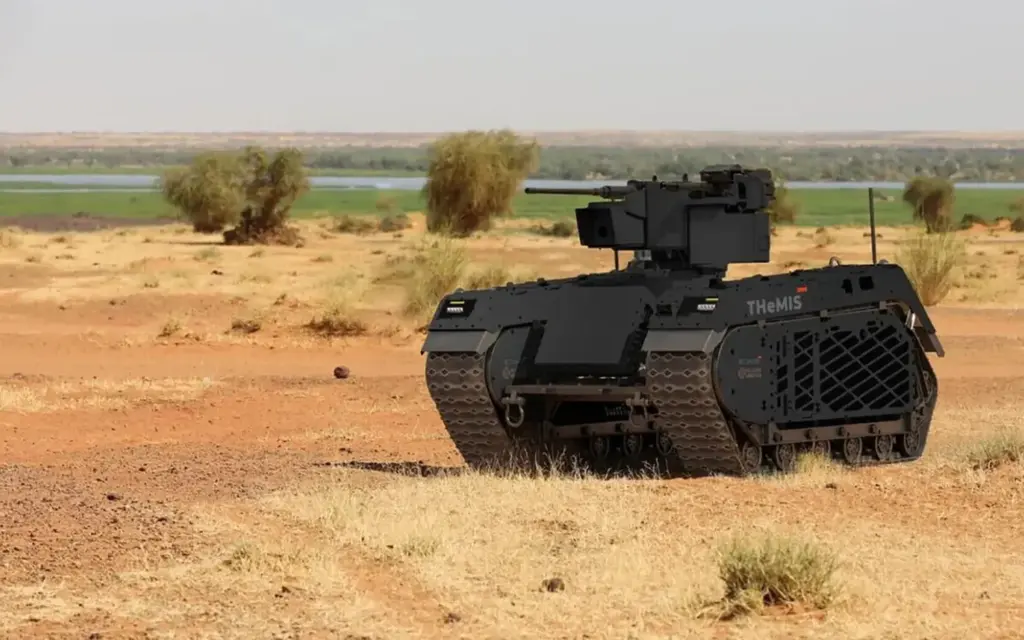
TheMIS on a dry plain

Estonia says Russia ordered the August arson attack on Milrem Robotics’ Tallinn premises, an Estonian defense company supplying Ukraine with military ground robots.

Russian sabotage operations have been expanding across Europe in recent months, targeting companies, infrastructure and supply chains connected to Ukraine’s defense effort. European authorities have linked or investigated suspected Russian involvement in arson and other sabotage attempts in several countries, as Moscow seeks to disrupt support for Ukraine and intimidate its European backers.

Foreign Minister Margus Tsahkna said on 29 September that information gathered by Estonia’s Internal Security Service showed the fire at Milrem’s Tallinn premises on the night of 14–15 August was a Russian intelligence-directed sabotage operation. Estonia summoned Russia’s chargé d’affaires over the attack.

Three suspects detained

Estonian authorities had already detained three suspects in connection with the arson, with the suspects apprehended in Latvia. Tsahkna said the perpetrators had been taken into custody and no longer posed a threat to Estonia.

Russia’s attempts to divide, intimidate and sow confusion will fail.

Every act of sabotage only strengthens Allied resolve, increases pressure on Russia and reinforces support for Ukraine.

We will continue to expose, deter and respond. No stone will be left unturned. https://t.co/JfdSbAUGi1

— Margus Tsahkna (@Tsahkna) September 29, 2026

When the investigation was first announced in August, Estonian authorities had not publicly established a Russian connection or disclosed evidence linking Moscow to the fire.

Milrem supplies robots to Ukraine

Milrem Robotics makes THeMIS unmanned ground vehicles, which have been used by Ukrainian forces since 2022 for tasks including transporting ammunition, food and other supplies, evacuating wounded troops, and mine clearance.

The company said in August that the fire had not disrupted its production or deliveries to Ukraine. More than 200 of its robotic systems are expected to be operating in Ukraine by the end of 2026, including more than 150 vehicles funded by the Netherlands.

The attack is part of a growing series of suspected sabotage operations targeting companies and facilities connected to Ukraine’s defense effort. In August, Slovak authorities foiled an attempted arson attack on a Ukrainian drone factory, while European investigations have also examined suspected Russian involvement in attacks on defense-related facilities in Czechia, Lithuania and Bulgaria.

Estonia says sabotage will not weaken Ukraine support

Tsahkna said Russia’s campaign is intended to intimidate European countries, divide allies and weaken their support for Ukraine.

“Russia’s sabotage campaign will not achieve its objectives,” the Estonian Foreign Ministry said, adding that Estonia and its allies would continue increasing pressure on Russia and supporting Ukraine.

Tsahkna said Estonia would respond to the attack by increasing both its support for Ukraine and pressure on Russia.

  • ✇Euromaidan Press
  • Belgium rushes three F-16s to Ukraine as Russia expands its drone and missile assault
    Ukraine is set to receive three more F-16 fighter jets from Belgium by the end of 2026, Ukrainian President Volodymyr Zelenskyy said, as Russia intensifies its missile and drone attacks on Ukrainian cities. The aircraft are particularly valuable as Russia increases its use of Shahed/Geran drones, including faster jet-powered variants that are harder for Ukraine’s cheaper interceptor drones to stop. Russia’s growing aerial campaign is already placing additional pressure on Ukraine’s limi
     

Belgium rushes three F-16s to Ukraine as Russia expands its drone and missile assault

29 septembre 2026 à 12:34

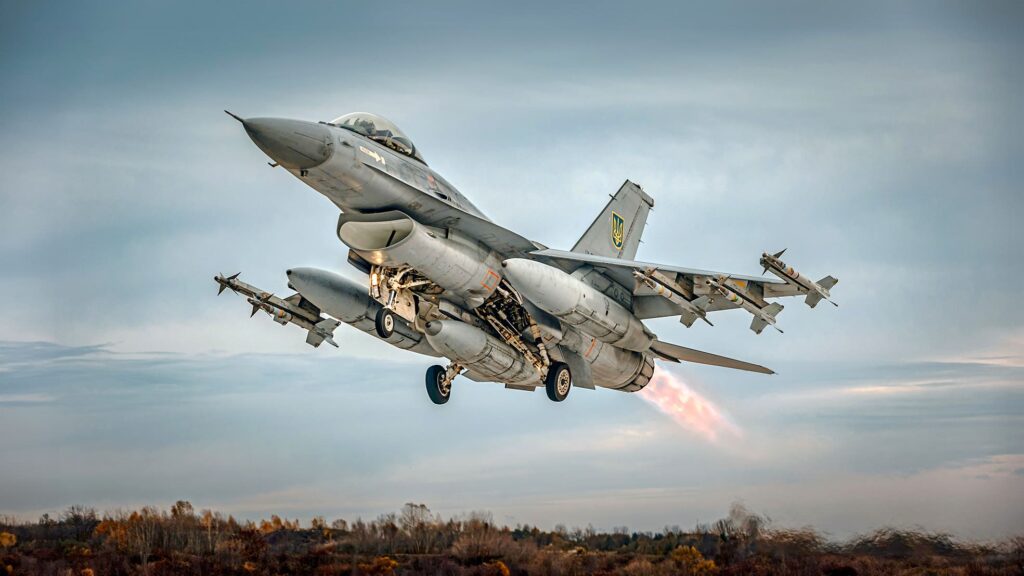
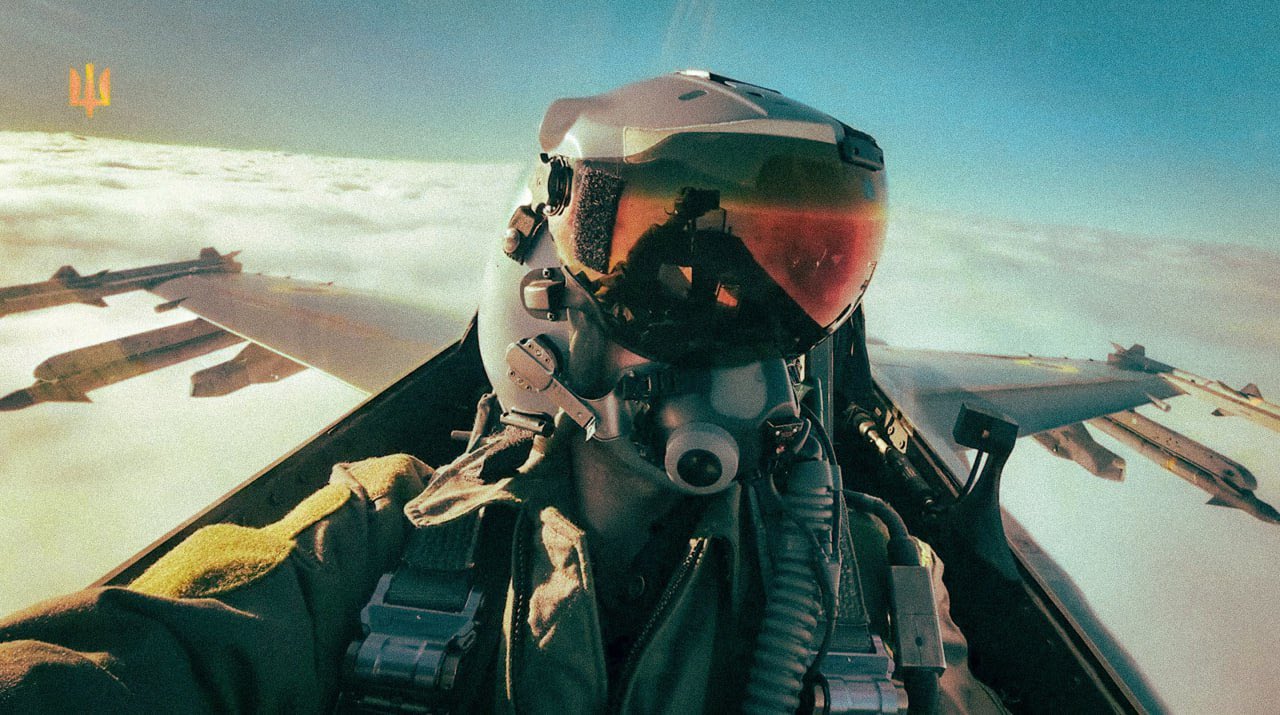
A Ukrainian Air Force F-16AM Fighting Falcon fighter jet takes off armed with AIM-9 Sidewinder air-to-air missiles. Photo: Ukrainian Air Force\X

Ukraine is set to receive three more F-16 fighter jets from Belgium by the end of 2026, Ukrainian President Volodymyr Zelenskyy said, as Russia intensifies its missile and drone attacks on Ukrainian cities.

The aircraft are particularly valuable as Russia increases its use of Shahed/Geran drones, including faster jet-powered variants that are harder for Ukraine’s cheaper interceptor drones to stop. Russia’s growing aerial campaign is already placing additional pressure on Ukraine’s limited air-defense resources.

Zelenskyy said the aircraft will be delivered through an accelerated process. Ukraine has already received urgent F-16 ammunition from Belgium and other partners, including Spain.

“As Russia escalates its attacks every day, we need to increase our capabilities to shoot down aerial targets and protect people,” Zelenskyy said.

F-16s help counter Russia’s air campaign

Ukraine received its first F-16s in 2024 after an 18-month international effort to secure the aircraft and train Ukrainian pilots. The jets have since become an important part of Ukraine’s air defense.

Ukrainian F-16s are used primarily to intercept Russian cruise missiles and attack drones, while also carrying out electronic warfare and other missions. In one January 2025 mission, a Ukrainian F-16 pilot shot down six Russian cruise missiles.

Ukrainian F-16 pilot
Explore further

Allies supplied the F-16s — Ukrainian pilots figured out the tactics

F-16s can also carry precision-guided bombs and air-to-air missiles, allowing them to support strikes against Russian forces and other targets near the frontline. Ukrainian pilots have developed tactics for using the aircraft despite Russia’s dense air-defense network.

For Ukraine, the additional jets therefore provide both another layer against Russia’s expanding aerial attacks and additional capacity for combat operations on the frontline.

Russia raises its war budget by 27% and expands the army again – both to new records – even as its budget deficit widens and oil revenues fall

29 septembre 2026 à 11:14

russia pulling strategic reserves prop up failing offensive hur says — 20000 troops less than one month its own losses · post russian soldiers fighting ukraine sputnik 29015058_0_1 60_3072_1888_1920x0_80_0_0_39d39d77ce429d32e9ff0408ae7775aejpg news

Russia plans to sharply increase military spending in 2027 while expanding the authorized size of its armed forces, according to budget documents seen by Reuters and a report by Novaya Gazeta Europe.

The developments point to Moscow preparing to expand its war effort into next year, even as its battlefield gains remain limited and its campaign increasingly relies on missile and drone attacks against Ukrainian cities and civilian infrastructure. It is also doing so as the Russian government faces a widening budget deficit and falling projected oil and gas revenues.

Russia plans 27% increase in 2027 defense spending despite widening budget deficit

Russia plans to spend 17.1 trillion rubles ($202.6 billion) on defense in 2027, according to government documents reviewed by Reuters. That is about 27% more than the 13.5 trillion rubles originally budgeted for defense in 2027 and would be the highest level of military spending since Russia launched its full-scale invasion of Ukraine in February 2022.

The documents project total defense spending of 50 trillion rubles over the next three years. The actual amount Russia will spend on defense in 2026 is classified, Reuters reported, while some military-related spending can be recorded under other parts of the state budget.

The planned increase comes alongside worsening fiscal pressures. Russia has raised its forecast for the 2026 budget deficit to 3.2% of GDP, from an earlier estimate of 1.6%, according to Reuters. Overall government spending is expected to rise 13.2% this year to 48.6 trillion rubles, or 20.9% of GDP.

The government also expects to increase net borrowing by 26% in 2026 to 5 trillion rubles and withdraw 459 billion rubles from its National Wealth Fund, Reuters reported. Its forecast for 2026 oil and gas revenues has been cut to 7.6 trillion rubles from 8.9 trillion.

Russia is reportedly planning new tax increases for 2027 to help cover the growing deficit. A new windfall tax on metals and mining companies is expected to bring in about 200 billion rubles a year, according to the documents. State debt is projected to rise to 21.7% of GDP in 2027, above the 20% level Russian authorities have previously considered safe.

The draft budget is expected to be submitted to Russia's parliament by October 1.

Army staffing also reaches new high

At the same time, Russian President Vladimir Putin has again increased the authorized size of the country's armed forces.

Putin signed a decree raising the official staffing level of the Russian Armed Forces to 2.44 million people, including 1.55 million military personnel, Novaya Gazeta Europe reported on September 28. The increase is 15,500 personnel compared with the previous decree issued in August.

It is the fourth increase in the authorized size of the Russian military in 2026 and the seventh since the beginning of the full-scale invasion of Ukraine, according to Novaya Gazeta Europe. Before the invasion, the authorized force stood at 1.90 million people, including 1.01 million military personnel.

Russia shifts more of the war into the air

The increases in military staffing and spending come as Russia continues to pursue its maximalist war aims despite limited battlefield progress. The Institute for the Study of War assessed on September 27 that Russia's frontline has remained largely static in recent months and that the Kremlin is increasingly relying on long-range missile and drone strikes as part of its effort to force Ukraine to capitulate during the winter of 2026–27.

ISW assessed that Putin may be trying to make Ukraine's infrastructure and air defense capacity buckle under sustained Russian strikes rather than relying solely on further territorial gains. The institute also said the Kremlin may delay a large-scale mobilization while it assesses whether its expanded long-range strike campaign can achieve its objectives.

The planned increase in military spending and the repeated expansion of the armed forces show that Moscow is preparing to sustain and expand its war effort into 2027, even as its forces make limited territorial gains in Ukraine.

  • ✇Euromaidan Press
  • For the 17th or 18th time, Putin promised to take Donetsk “in a few months” – Zelenskyy
    Russian President Vladimir Putin has again told US officials that Russia can capture Ukraine’s Donetsk Oblast within several months, according to Ukrainian President Volodymyr Zelenskyy. Speaking to the UN General Assembly on 24 September, Zelenskyy said this was the latest in a long series of similar promises as Russia has spent nearly five years trying to seize the region. He said Putin has made such promises 17 or 18 times, repeatedly pushing the deadline further back. He contrast
     

For the 17th or 18th time, Putin promised to take Donetsk “in a few months” – Zelenskyy

24 septembre 2026 à 15:36

Ukrainian President Volodymyr Zelenskyy speaks during the UN General Assembly in New York on 24 September 2026. Photo: Ukrainian President's Office

Russian President Vladimir Putin has again told US officials that Russia can capture Ukraine’s Donetsk Oblast within several months, according to Ukrainian President Volodymyr Zelenskyy.

Speaking to the UN General Assembly on 24 September, Zelenskyy said this was the latest in a long series of similar promises as Russia has spent nearly five years trying to seize the region. He said Putin has made such promises 17 or 18 times, repeatedly pushing the deadline further back.

He contrasted those promises with Russia’s heavy battlefield losses and relatively limited territorial gains.

Russia has paid a huge price for its Donetsk offensive

Zelenskyy said Russian forces suffered 248,964 troops killed or severely wounded between January and August 2026.

He said Russia had captured only slightly more than 1,000 square kilometers of Ukrainian territory this year, while Ukraine had already liberated a significant portion of those gains.

Zelenskyy presented the figures as the human cost of Putin’s continued attempt to seize Donetsk, arguing that Russia is paying an enormous price for relatively limited territorial gains.

“Always the same: ‘Just a few more months,’” Zelenskyy said, adding that Putin would again fail to meet his latest deadline.

The Russian offensive is also facing a recent setback in northern Donetsk. Ukraine launched Operation Vivaldi in September to clear Russian infiltrators and retake ground near Lyman, disrupting Russia’s plan to encircle the fortified cities of the Donetsk “Fortress Belt.”

Ukrainian forces have reported retaking several settlements and clearing up to 125 square kilometers in the operation, although the full scope of the offensive remains undisclosed.

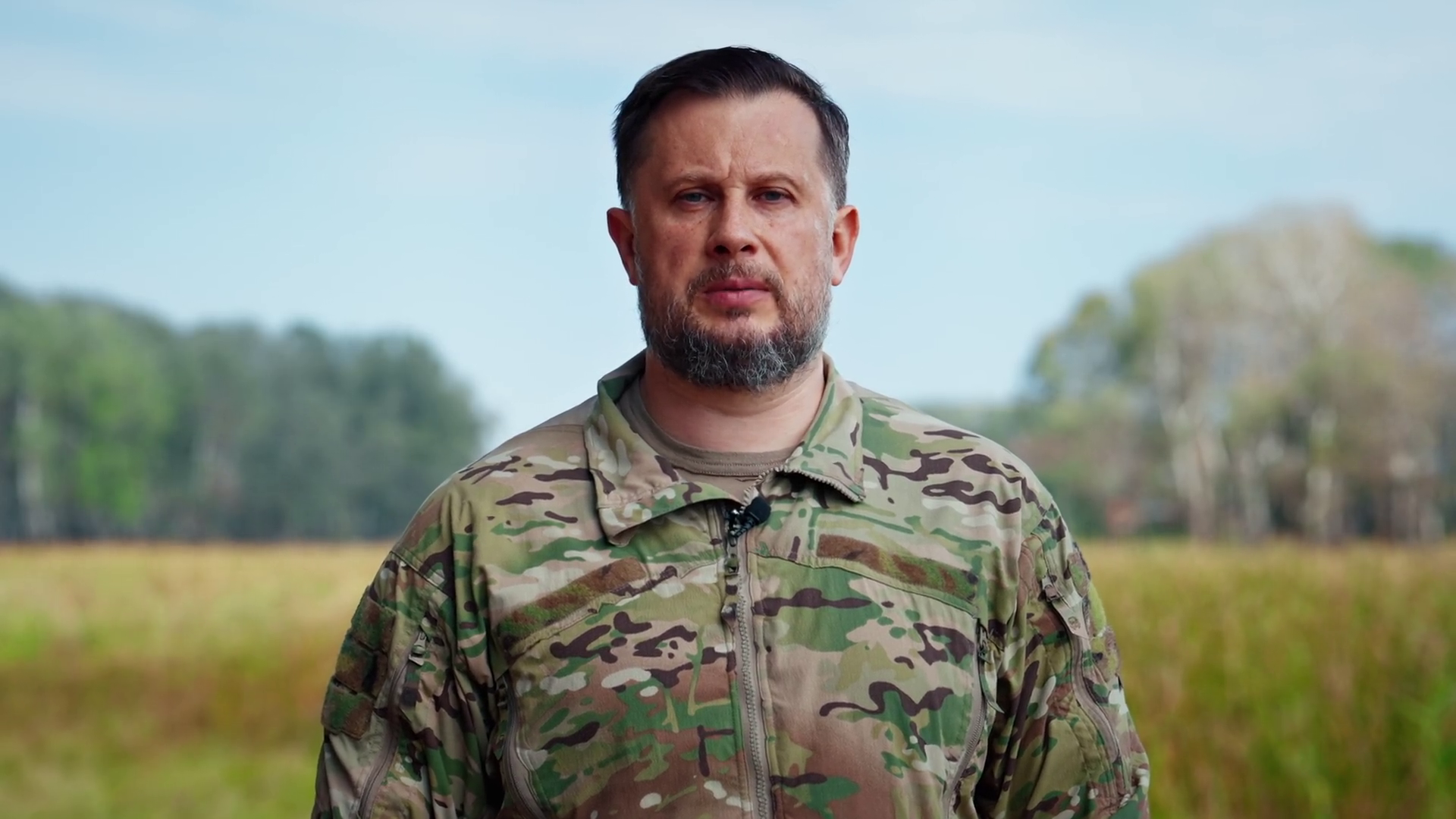
Ukraine's Third Army Corps commander Brigadier General Andrii Biletskyi announcing new developments in "Operation Vivaldi," 20 September 2026. Screenshot from video: Ukraine's Third Army Corps
Explore further

Ukraine retakes ground in a region Russia has fought for years to capture. “Vivaldi” is only getting started but is already “one of the most important victories for Ukraine in 2026”

Zelenskyy also warned that Russia’s ambitions extend beyond Donetsk. After saying Putin would again fail to capture the region, he said Russia would continue seeking other Ukrainian cities, naming Odesa, Kharkiv and Dnipro, while also pointing to Russian pressure on Moldova and threats toward Poland and the Baltic states.

Russia continues to pour missiles and drones into Ukraine

The battlefield campaign has been accompanied by a sustained Russian long-range attack campaign against Ukrainian cities and infrastructure.

Since the beginning of 2026, Russia has launched more than 2,100 missiles against Ukraine, including more than 950 ballistic missiles, according to Zelenskyy.

Ballistic missiles are particularly difficult for Ukraine to counter because it has a limited supply of interceptors capable of engaging them. Russia’s heavy use of ballistic weapons is therefore contributing directly to civilian deaths and infrastructure destruction.

Over the first eight months of the year, Russia also used 63,000 attack drones of various types, Zelenskyy said. More than 7,700 were jet-powered Geran drones, which he described as particularly destructive and dangerous.

The newer jet-powered drones are faster and more advanced than earlier Shahed-type models, making them harder to intercept and adding to the pressure on Ukraine’s air defenses as Russia attacks cities and infrastructure.

Zelenskyy said Russia was using the drones continuously to disrupt economic activity and normal life in Ukrainian cities, including by making it harder for children to attend school.

The figures show the scale of the Russian campaign beyond the front line. Alongside its ground offensive, Russia is using sustained missile and drone strikes to kill civilians, destroy infrastructure, and exhaust Ukraine’s air-defense resources.

North Korean troops add to Russia’s war effort

Zelenskyy also highlighted North Korea’s direct involvement in Russia’s war, saying its troops have suffered heavy losses while gaining battlefield experience alongside Russian forces.

He said North Korea’s military capabilities were also benefiting from its cooperation with Russia, pointing to improvements in its ballistic missiles and drone capabilities.

Ukraine recently transferred two North Korean prisoners of war to South Korea. Zelenskyy said capturing the soldiers alive had been difficult and described one prisoner’s attempt to take his own life after realizing he was about to be captured.

He said the soldiers had been conditioned to believe they had to die rather than surrender.

“Do you really want to give such a force more time to learn how to fight?” Zelenskyy asked.

Zelenskyy calls for de-escalation before winter

Zelenskyy separately warned that Russia could again target Ukraine’s energy and heating infrastructure this winter.

Russia has already intensified attacks on Ukraine’s energy system ahead of the cold season.

Russia has also explicitly threatened to “freeze” Ukraine this winter, with its Defense Ministry linking the threat to attacks on Ukrainian infrastructure. The country spent much of the previous winter dealing with the consequences of Russian strikes on power and heating infrastructure, including blackouts and disruptions to heat supplies.

Zelenskyy said Ukraine expects the coming winter to be difficult but warned that if Russia continues attacking Ukraine’s energy and heating systems, Ukraine will make the winter painful for Russia as well.

He called for steps toward de-escalation before winter, saying that diplomacy and military strength were both needed to end the war.

  • ✇Euromaidan Press
  • Russian-linked software sold to US government as CEO allegedly hid Russian control – two now arrested
    The US has arrested the CEO of Virginia-based digital forensics company Oxygen Forensics and a Russian national over allegations that they concealed the company’s Russian ownership and the fact that its software was developed in Russia while selling it to US government agencies, according to the US Justice Department. The case highlights a potential route through which Russian-linked networks could seek access to sensitive US institutions: concealing Russian ownership and influence behi
     

Russian-linked software sold to US government as CEO allegedly hid Russian control – two now arrested

24 septembre 2026 à 14:20

A tablet with cybersecurity forensics software from Oxygen Forensics. Photo via Militarnyi

The US has arrested the CEO of Virginia-based digital forensics company Oxygen Forensics and a Russian national over allegations that they concealed the company’s Russian ownership and the fact that its software was developed in Russia while selling it to US government agencies, according to the US Justice Department.

The case highlights a potential route through which Russian-linked networks could seek access to sensitive US institutions: concealing Russian ownership and influence behind seemingly legitimate American companies.

Lee Reiber, 55, and Oleg Sergeyevich Davydov, 52, are charged with conspiracy to commit wire fraud. The US Justice Department alleges that five Russian nationals, including Davydov, owned and controlled Oxygen Forensics through a Cyprus-based holding company, while its software was developed by a team in Russia.

Software sold to US government agencies

According to the criminal complaint, Oxygen Forensics presented itself to US agencies as an independent American company with no foreign ownership or control.

The company sold digital forensic software used to recover and analyze data from electronic devices to the US Department of War and three Department of Homeland Security components: the Secret Service’s National Computer Forensics Institute, Homeland Security Investigations, and the DHS Office of Inspector General.

The National Computer Forensics Institute awarded Oxygen Forensics a five-year contract in September 2024. The award file included a certification from Reiber stating that the company had no immediate or highest-level owner, according to the affidavit.

The Justice Department alleges that this was false. The Russian owners allegedly continued to make significant company decisions, set Reiber’s compensation, control payments and retain signatory authority over bank accounts after their names were removed from public corporate filings.

Russian software development allegedly concealed

The complaint says the same five Russian nationals also owned a Russian company founded by Davydov in 2000, previously known as Oxygen Software and now called MKO Systems.

According to the affidavit, the Russian company developed the software used by Oxygen Forensics, with developers working in Russia under Davydov’s direction. MKO Systems also sold its software in Russia under different product names to customers that reportedly included the Federal Security Service (FSB), the Russian Investigative Committee and the Russian Ministry of Internal Affairs.

After the US expanded sanctions against Russia in 2022 following Russia’s full-scale invasion of Ukraine, the Russian owners allegedly agreed with Reiber to conceal both the company’s ownership and its Russian development operations.

Reiber was installed as CEO, president and chairman in March 2022, while the Russian owners were removed from the company’s public filings, according to the Justice Department.

The complaint alleges that the arrangement did not end the Russian owners’ control. One of them was later appointed to the company’s board using a Turkish identity, according to the affidavit.

OSINT investigators had traced Russian software links

Militarnyi separately reported that OSINT investigators from InformNapalm had previously traced corporate and technological links between Oxygen Forensics and Russia’s Oxygen Software, now known as MKO Systems.

According to Militarnyi, the Russian company’s products were supplied to Russian security and law-enforcement agencies, including the FSB and Ministry of Internal Affairs. The investigation traced a common corporate and technological origin between the Russian and US software ecosystems.

CEO allegedly denied Russian involvement

The Justice Department says Reiber repeatedly certified to US authorities that the company had no foreign ownership or control.

In March 2026, he allegedly told DHS personnel that no Russian was involved in developing Oxygen Forensics’ software and that no one in Russia had access to its development environment. Days later, he published a statement saying the company had no development presence in any restricted jurisdiction.

The complaint alleges that the software was in fact written and managed by a team in Russia, using a cloud environment administered by one of the Russian owners.

The affidavit also describes a November 2023 exchange in which Reiber allegedly told the Russian owners that public reporting about the company’s Russian connections could jeopardize a pending US government contract.

Arrests and seizures

Reiber was arrested in Idaho on 20 September and released on bond after appearing in federal court. Davydov was arrested the same day at London Heathrow Airport before boarding a flight to Istanbul. The US says it will seek his extradition.

Separately, a federal judge authorized the seizure of Oxygen Forensics’ corporate bank accounts, around 57 domains and other cyber infrastructure allegedly used in the scheme. The domains and related infrastructure were seized on 20 September.

The case is being investigated by the US Department of Commerce’s Bureau of Industry and Security, with assistance from the Department of War Office of Inspector General’s Defense Criminal Investigative Service.

Each could face up to 20 years in federal prison if convicted.

  • ✇Euromaidan Press
  • EU approves nearly €3 billion for Ukraine as Kyiv meets more reform targets
    The European Union has approved nearly €3 billion in new funding for Ukraine, including nearly €800 million provided for the first time through the Ukraine Support Loan. The payment is the eighth regular disbursement under the EU’s Ukraine Facility. The funding will support Ukraine’s budget, recovery, modernization, and reform efforts as the country continues to fight Russia’s full-scale war and pursue EU membership. Ukraine meets 88% of targets due so far The latest payment follo
     

EU approves nearly €3 billion for Ukraine as Kyiv meets more reform targets

24 septembre 2026 à 13:44

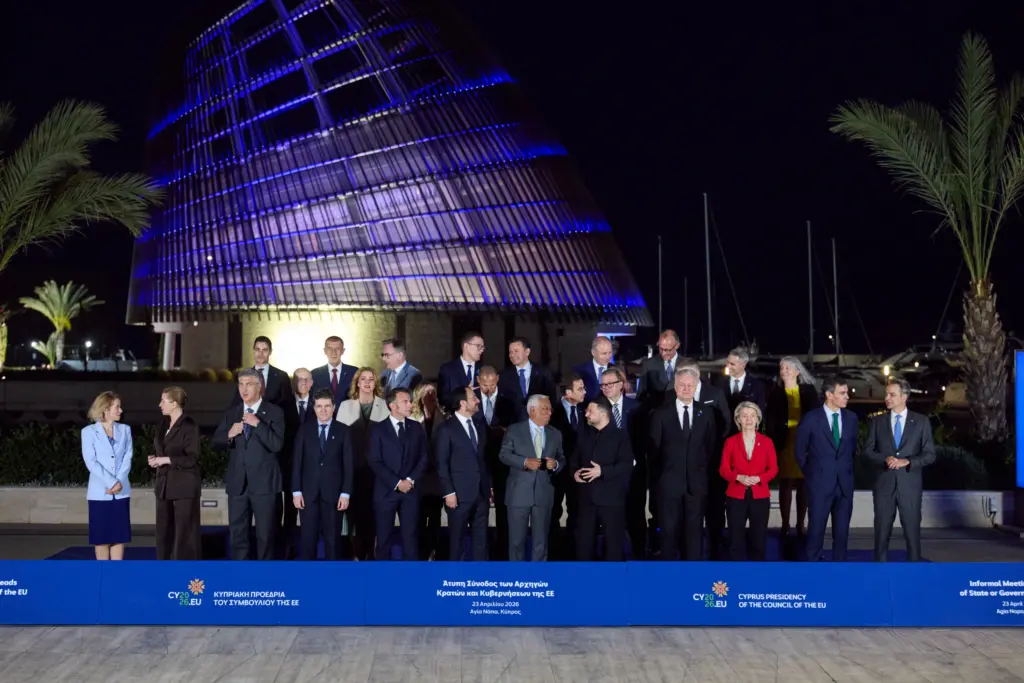
EU summit Ukraine cyprus zelenskyy

The European Union has approved nearly €3 billion in new funding for Ukraine, including nearly €800 million provided for the first time through the Ukraine Support Loan. The payment is the eighth regular disbursement under the EU’s Ukraine Facility.

The funding will support Ukraine’s budget, recovery, modernization, and reform efforts as the country continues to fight Russia’s full-scale war and pursue EU membership.

Ukraine meets 88% of targets due so far

The latest payment follows Ukraine’s completion of 10 targets under its Ukraine Plan, the roadmap for reforms and investments linked to the Ukraine Facility. Ukraine has now completed 84 of the 95 targets required under the plan so far, according to the Council of the EU.

Funding under the Ukraine Facility is tied to Ukraine meeting these targets. It is intended to strengthen Ukraine’s macro-financial stability, keep public administration running, and support recovery and modernization.

The Ukraine Facility entered into force in March 2024 and provides more than €50 billion in grants and loans for Ukraine through 2027.

Norway adds €92 million

The EU also amended Ukraine’s plan to include approximately €92 million in non-repayable support from Norway.

Norway is the first non-EU country to contribute to Pillar I of the Ukraine Facility, which provides support through Ukraine’s reform and investment plan.

Sweden has provided more than €253 million in additional voluntary contributions over the past year, while the UK recently contributed more than €17 million to Pillar II, the Ukraine Investment Framework.

Ukraine has received more than €32 billion

Following the latest disbursement, Ukraine will have received more than €32 billion through the Ukraine Facility since mid-2024.

More than €40 billion of the facility’s total funding is earmarked for reforms and investments under the Ukraine Plan, with payments tied to Ukraine’s progress toward the agreed targets.

❌