With the Russians intensifying sabotage, arson and cyberattacks against European nations supporting Ukraine, NATO divulged a blueprint, in case of war, to deter the Kremlin.
With the Russians intensifying sabotage, arson and cyberattacks against European nations supporting Ukraine, NATO divulged a blueprint, in case of war, to deter the Kremlin.
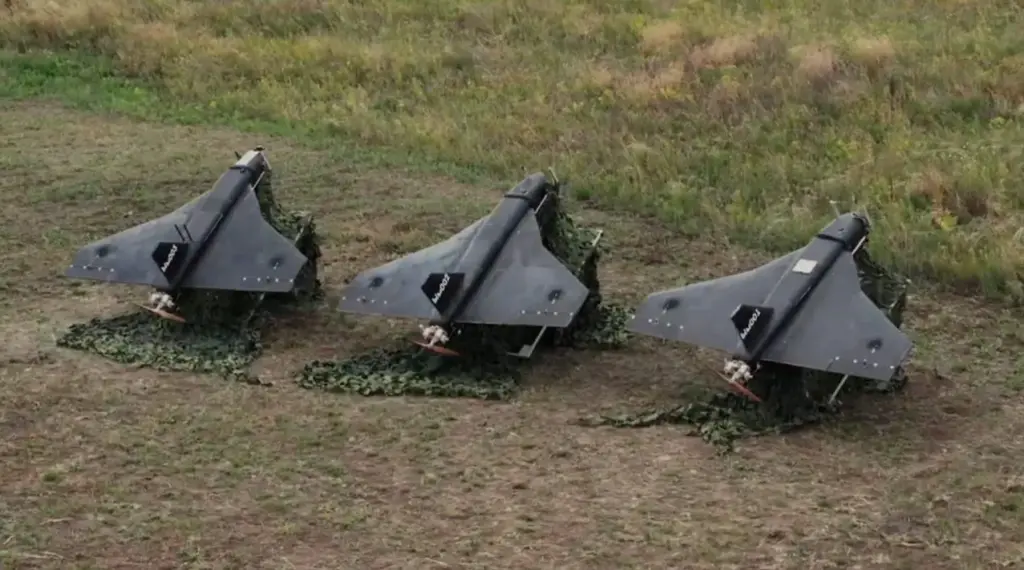
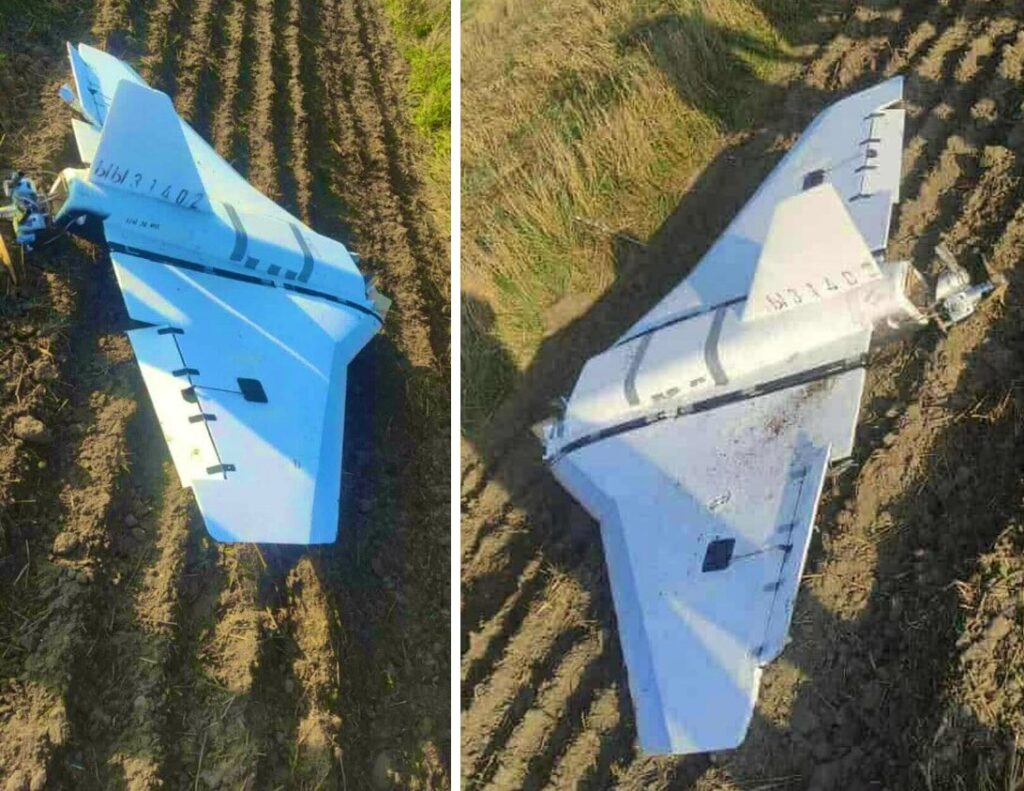
Polish SIM cards were found inside some of the Russian drones that entered Polish airspace during a mass incursion in September 2025, Polish outlet RMF24 reported, citing findings from a Polish prosecution investigation.
SIM cards can allow drones to connect to local cellular networks for functions such as communications, data transmission, telemetry, or navigation-related services. However, investigators have not said what the Polish SIM cards found in the Russian drones were used for.
Polish SIM cards were found inside some of the Russian drones that entered Polish airspace during a mass incursion in September 2025, Polish outlet RMF24 reported, citing findings from a Polish prosecution investigation.
SIM cards can allow drones to connect to local cellular networks for functions such as communications, data transmission, telemetry, or navigation-related services. However, investigators have not said what the Polish SIM cards found in the Russian drones were used for. The details remain classified.
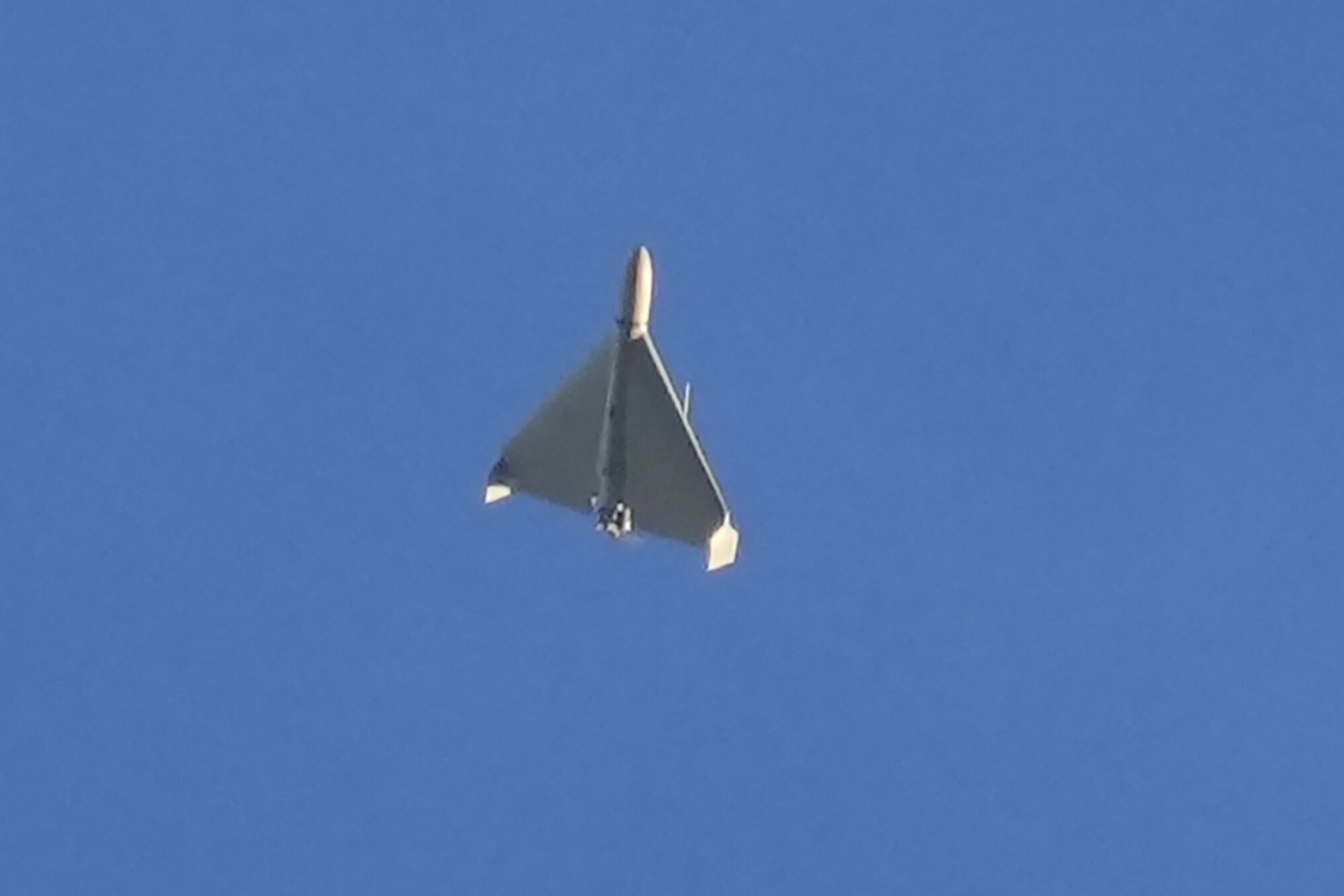
The SIM cards were discovered in some of the Russian Gerbera drones recovered after the incursion, RMF24 reported.
Investigators have not disclosed whether the SIM cards were stolen or obtained illegally.
The investigation into the September 9–10, 2025 incursion was ultimately closed after prosecutors failed to identify those responsible for violating Polish airspace.
More than 30 drones entered Poland
The incursion took place overnight on September 9–10, 2025, during a large Russian missile and drone attack on Ukraine. More than 30 Russian Gerbera drones entered Polish airspace from the east and came down at 27 locations across the country, according to RMF24.
Polish forces intercepted and shot down multiple drones, with the Territorial Defense Forces deployed to search for wreckage and other objects that came down on Polish territory. Poland also maintained contact with NATO command throughout the operation.
The incident prompted Poland to close four airports – Warsaw Chopin, Warsaw-Modlin, Rzeszów-Jasionka and Lublin – because of the military activity.
Polish officials described the airspace violations as unprecedented and a serious threat to national security. The incident marked the first time since Russia's full-scale invasion of Ukraine that Polish forces had used weapons against Russian aerial objects that entered the country's airspace.
The mass incursion subsequently became the subject of a criminal investigation into the violation of Polish airspace and the threat to public safety.
Investigation closed without identifying perpetrators
After months of investigation, Polish prosecutors closed the case because they were unable to identify the perpetrators, according to Lublin District Prosecutor’s Office spokesman Marcin Kozak, as cited by RMF24.
Most of the case files, including the justification for the decision, are classified.
Explore further
Last September, Poland downed four of 19 Russian drones. This September, drone reached NATO’s missile shield in Redzikowo, and troops guarding it called 112
Prosecutors cleared Poland's military response
Investigators also examined whether the Polish military had responded properly to the drone incursion.
According to RMF24, prosecutors concluded that the military acted in accordance with procedures. Polish troops had the right to use force and shoot down hostile objects, and prosecutors found no irregularities in their response.
The investigation was therefore closed both over the failure to identify the perpetrators and over the assessment of the Polish military's actions.
Ukraine plans 135 basic mobile shelters for civilians at 28 of its border crossings, the State Agency for Restoration and Infrastructure Development said on 7 October.
Since the start of September, Russian drones have repeatedly struck crossings on Ukraine's borders with Moldova and Romania. Since mid-September, strikes have also reached the Polish border near the Yahodyn crossing in Volyn Oblast. On 13 September, a Russian drone strike set a gas station near the crossing on fire. On 28
Ukraine plans 135 basic mobile shelters for civilians at 28 of its border crossings, the State Agency for Restoration and Infrastructure Development said on 7 October.
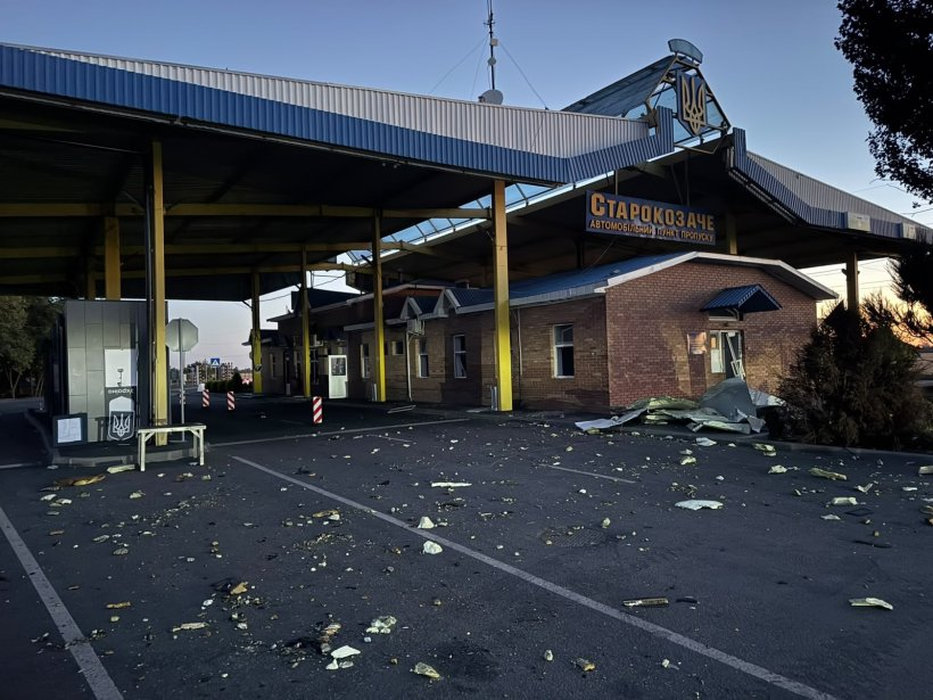
Since the start of September, Russian drones have repeatedly struck crossings on Ukraine's borders with Moldova and Romania. Since mid-September, strikes have also reached the Polish border near the Yahodyn crossing in Volyn Oblast. On 13 September, a Russian drone strike set a gas station near the crossing on fire. On 28 September, the blast wave from another strike damaged the checkpoint building. On 25 September, First Deputy Minister for Restoration, Infrastructure and Transport Serhii Derkach said Ukraine is exploring with its neighbors whether some checkpoints could move onto their territory. No agreement has been reported. On 2 October, Moldovan Interior Minister Daniella Misail-Nichitin said Moldova had set up shelters next to its crossings with Ukraine and started relocating staff from joint checkpoints.
135 shelters for travelers and border staff
The shelters will stand at the crossings and on the roads leading to them. Regional recovery services in Vinnytsia, Odesa, Chernivtsi, Zakarpattia, and Volyn oblasts are running the purchases. The agency said the shelters will make the border safer for people crossing it and for checkpoint staff.
Border regions where Ukraine plans to install shelters. Map: Euromaidan Press
In Chernivtsi Oblast, one of the 10 tenders the agency lists on Prozorro, Ukraine's public procurement system, covers eight shelters for 50 people each and three for 20 each, Ukrinform reported. They will stand on the approach road to the Porubne–Siret international crossing on the Romanian border. The work is expected to cost UAH 38.5 million (about $855,000), excluding VAT.
Russian strikes on crossings
On 5 October, at about 09:38, a projectile fell near the Palanca–Maiaky–Udobne crossing on the Moldovan border. It ricocheted off the ground into a shuttle bus parked by the barrier and also damaged a control booth. One Moldovan border officer suffered light injuries, and the crossing was suspended, Moldova's Border Police said, linking the incident to Russia's attacks on Ukrainian infrastructure. Moldovan authorities did not specify the projectile's type or origin.
Overnight on 9 September, Russian drones struck the Starokozache crossing with Moldova, killing two people and injuring three. On 1 September, Russian Shahed drones hit the Orlivka ferry crossing on the Danube, opposite Romania's Isaccea, and temporarily shut it down. Another Russian strike on 6 September halted the crossing again.
Russia attacked Kyiv and 12 oblasts overnight on 7 October with about 70 missiles, many of them ballistic, as well as Shahed drones, President Volodymyr Zelenskyy said. The strikes killed at least 20 people, with the deadliest hit on an apartment block in Pryluky in Chernihiv Oblast. Russia also hit Kremenchuk, Oleksandriia, Dnipro, and Zaporizhzhia, while Poland scrambled its jets.
Moscow has likely begun its winter strike campaign earlier than usual, aiming to make civilian life in Uk
Russia attacked Kyiv and 12 oblasts overnight on 7 October with about 70 missiles, many of them ballistic, as well as Shahed drones, President Volodymyr Zelenskyy said. The strikes killed at least 20 people, with the deadliest hit on an apartment block in Pryluky in Chernihiv Oblast. Russia also hit Kremenchuk, Oleksandriia, Dnipro, and Zaporizhzhia, while Poland scrambled its jets.
Moscow has likely begun its winter strike campaign earlier than usual, aiming to make civilian life in Ukraine unbearable, and UN figures already show civilian casualties running 55% above last year's.
Update: Pryluky death toll rises to 14, including four children
The death toll from the Russian strike on Pryluky has risen to 14, including four children, Ukraine's State Emergency Service said on the afternoon of 7 October. Fifty people were injured, seven of them children, and rescuers pulled 15 people from the rubble, including a child.
Russia attacked Pryluky with cruise missiles, and one scored a direct hit on the five-story apartment building, Chernihiv Oblast head Viacheslav Chaus said. Earlier in the day, he reported that 27 of the injured had been hospitalized, three in serious condition. The search-and-rescue operation was still under way.
Morning repoting: five dead in Pryluky
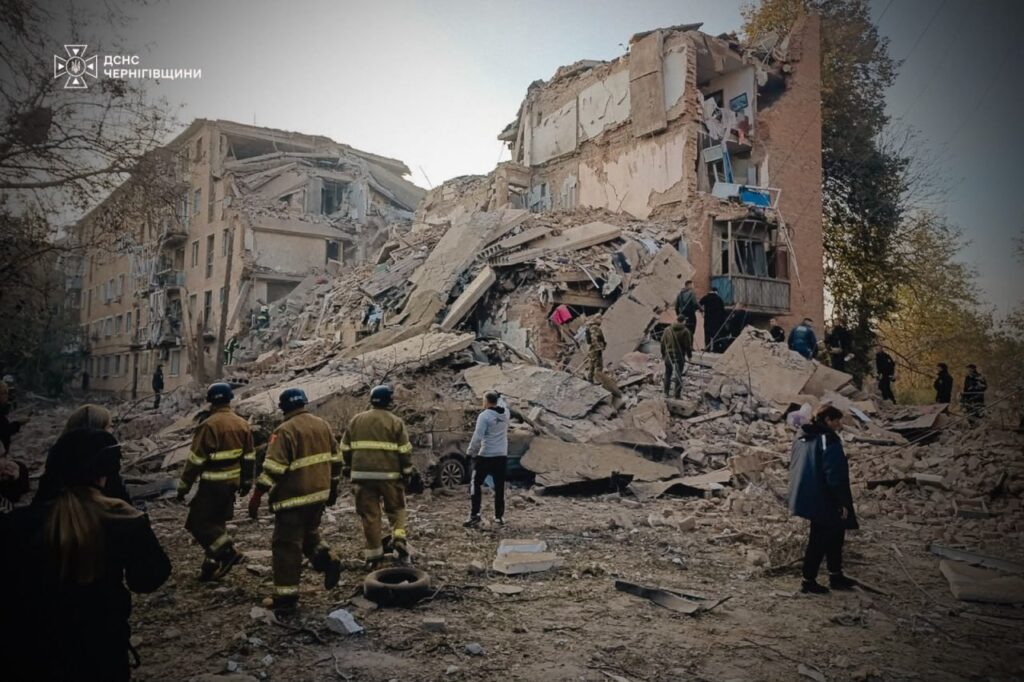
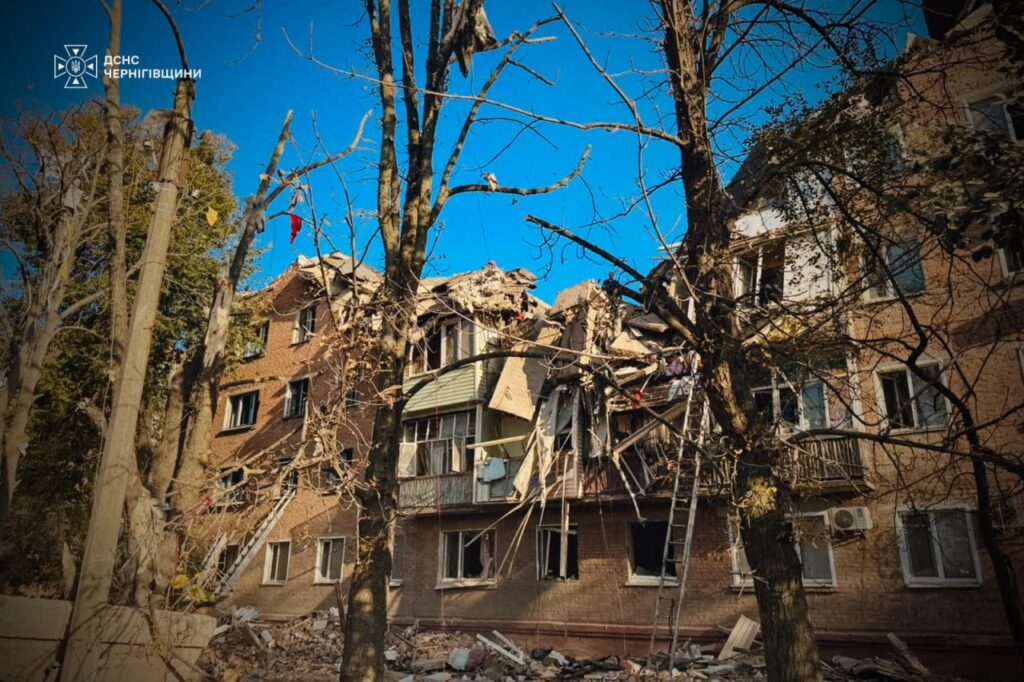
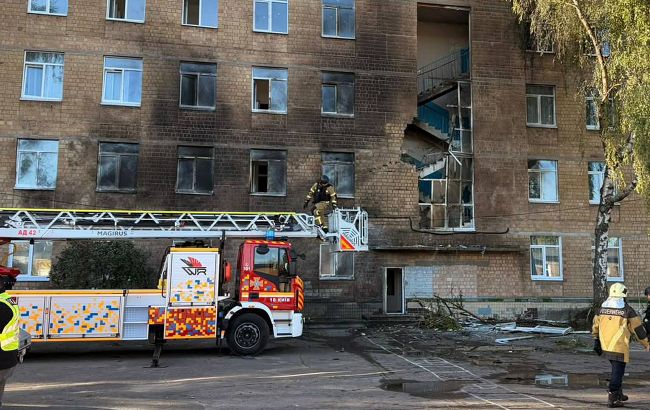
A Russian missile struck a five-story apartment building in Pryluky early in the morning, while residents were still asleep, Chernihiv Oblast head Viacheslav Chaus said. The strike completely destroyed one sectkion of the building, killing five people and injuring 26, including five children, Ukraine's National Police reported. Rescuers pulled three people from the rubble, including a child, and more people may still be trapped, Chaus said.
"Today, for Putin's birthday, the Russian army 'gave' him the destruction of an apartment building in Pryluky in Chernihiv Oblast. It was an ordinary five-story building," Zelenskyy said.
A five-story apartment building in Pryluky, Chernihiv Oblast, damaged by a Russian missile strike, 7 October 2026. Photo: State Emergency Service of Ukraine in Chernihiv Oblast
Kyiv, Kremenchuk, and Oleksandriia
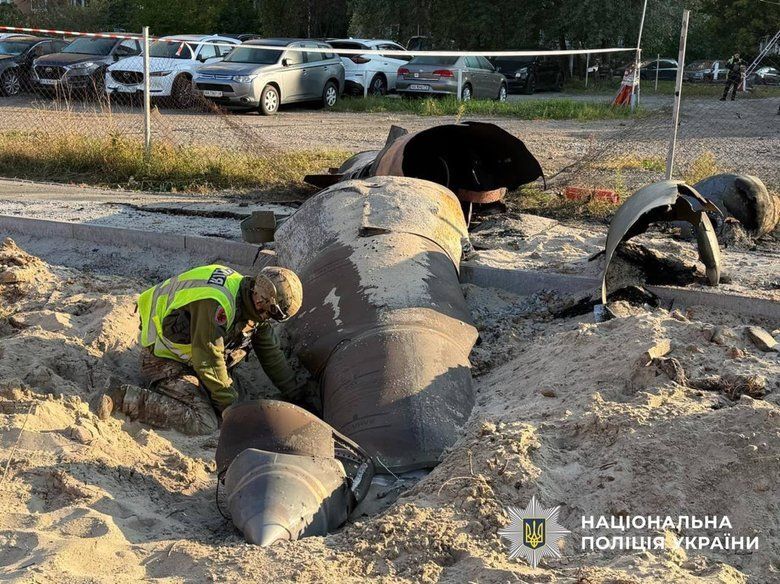
In Kyiv, Russian missiles hit non-residential buildings and warehouses in the Obolonskyi and Podilskyi districts, Mayor Vitali Klitschko said. Strikes also hit the Shevchenkivskyi district, and debris burned in the Darnytskyi district, he added. In the Darnytskyi district, a missile set fire to a garage cooperative, where firefighters rescued two people and found two men dead, Klitschko wrote. Police and rescuers worked to defuse an unexploded ballistic missile that fell among apartment blocks in the same district, the National Police said.
Damaged high-rises and wrecked cars in a residential area of Kremenchuk after a Russian missile strike, 7 October 2026. Photo: Vitalii Diakivnych/Telegram
In Kremenchuk, Russian missiles hit a densely populated residential area, killing two people and injuring seven, Poltava Oblast head Vitalii Diakivnych said. Zelenskyy later put the number of injured at eight and said four high-rises were damaged.
Explore further
A school with children, a café, warehouses: Russia’s drones hit civilian Kyiv again
In Oleksandriia in Kirovohrad Oblast, Russia hit an enterprise. One person was killed, three injured, and two were out of contact, Kirovohrad Oblast head Andrii Raikovych said. Zelenskyy later put the death toll there at two.
A firefighter among burned cars at the site of a fire after a Russian missile attack on Kyiv, 7 October 2026. Photo: State Emergency Service of Ukraine in Kyiv
Drones and other targets
In Dnipro, Russian strikes damaged an industrial enterprise, apartment buildings, and a sports club, Dnipropetrovsk Oblast head Oleksandr Hanzha said. In Nikopol district, the attacks injured a 65-year-old woman and a 64-year-old man. Russia also struck Lozova in Kharkiv Oblast with a missile, and a drone hit an apartment building in Zaporizhzhia, police said.
In Zaporizhzhia, Russia attacked a transport infrastructure facility, acting oblast head Mykhailo Semikin said, a day after a strike on one of the city's bridges over the Dnipro halted traffic. In Kyiv Oblast, three production and warehouse buildings were damaged in Obukhiv district, with no casualties, the Kyiv Oblast Military Administration said.
A bomb technician works beside an unexploded Russian ballistic missile among residential buildings in Kyiv's Darnytskyi district, 7 October 2026. Photo: National Police of Ukraine
Air defense downed five ballistic missiles, 39 cruise missiles, and 117 drones, while missiles and drones hit 18 locations, the Air Force said. Polish military aircraft took off and Poland put its ground-based air defense on alert during the attack, Poland's Operational Command said.
Russian ballistic missiles remain the biggest challenge, Zelenskyy said, adding that Ukraine is searching daily for Patriot missiles.
Strikes across the front over the past day
Russian attacks killed one person and injured 11 in Kherson Oblast over the past day, the Kherson Oblast Military Administration reported. Russia injured 12 people in Donetsk Oblast on 6 October, Donetsk Oblast head Vadym Filashkin said. Two people were injured in Kharkiv Oblast, Kharkiv Oblast head Oleh Syniehubov said.
Bridges and a maternity hospital in Russia's sights
Russia has stepped up strikes on Kyiv's bridges and has now extended them to Zaporizhzhia. In September, a Russian ballistic and hypersonic missile attack on Kyiv damaged a maternity hospital.
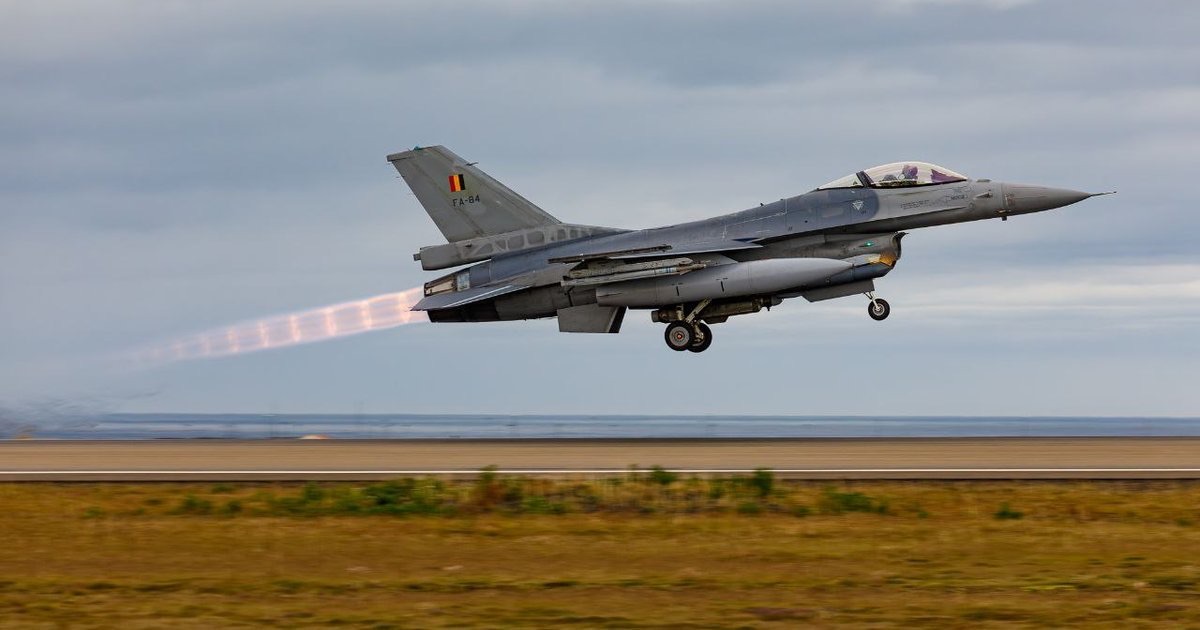
The Netherlands will help Ukraine with maintenance, spare parts, and ammunition for F-16 fighter jets, Dutch Prime Minister Rob Jetten promised in a statement on 5 October. He made this and other statements following a phone call with Ukrainian President Volodymyr Zelenskyy.
Russia attacks Ukrainian cities with drones every day, increasingly with jet-powered ones. F-16 fighter jets are one of the effective options for shooting down these UAVs, but Ukraine has far too few of them. The F-
The Netherlands will help Ukraine with maintenance, spare parts, and ammunition for F-16 fighter jets, Dutch Prime Minister Rob Jetten promised in a statement on 5 October. He made this and other statements following a phone call with Ukrainian President Volodymyr Zelenskyy.
Russia attacks Ukrainian cities with drones every day, increasingly with jet-powered ones. F-16 fighter jets are one of the effective options for shooting down these UAVs, but Ukraine has far too few of them. The F-16s are used very frequently and therefore require maintenance. About half of the aircraft spend extended periods abroad undergoing repairs and maintenance, Ukrainian President Volodymyr Zelenskyy told the Financial Times this month. The process of returning the aircraft has taken too long, and Ukraine has lost time when the jets were most needed to protect Ukrainian airspace, he said.
“A further strengthening of Ukraine’s air defense is literally vital,” the prime minister said.
Russia’s aggression continues to escalate, and F-16 fighter jets can help stop it
Russia is deliberately attacking civilian facilities and energy infrastructure and wants to make Ukrainian cities uninhabitable, Jetten said, adding that “we must not allow this to happen.”
One effective solution is the use of F-16 fighter jets, while Ukraine faces shortages of both these aircraft and the missiles for them.
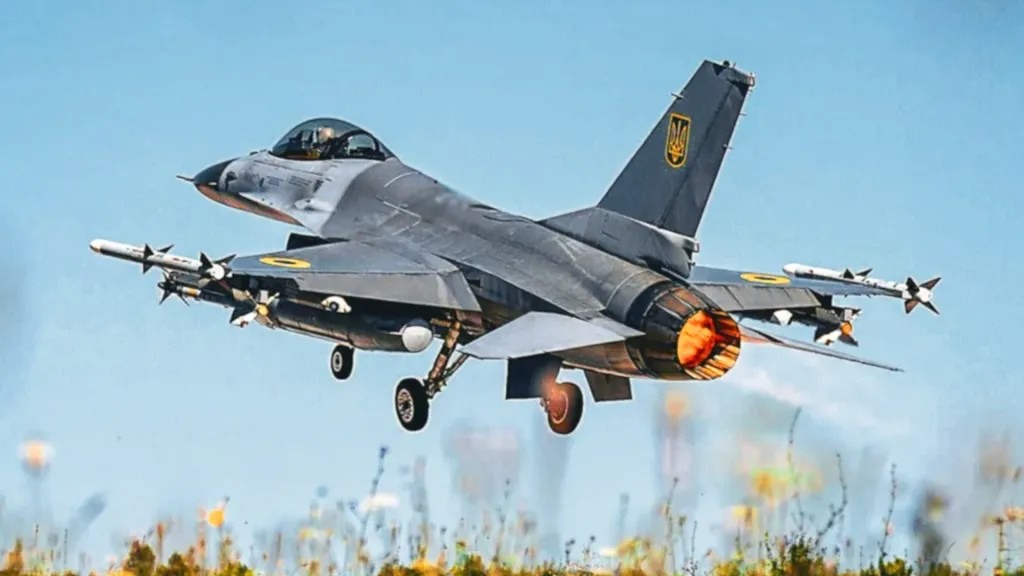
Ukrainian F-16 pilots lack air-to-air missiles and take off with only the aircraft’s cannon during some daytime missions, the War Zone reported on 2 September. The M61A1 Vulcan 20mm rotary cannon can pose a danger to civilians on the ground, the outlet noted.
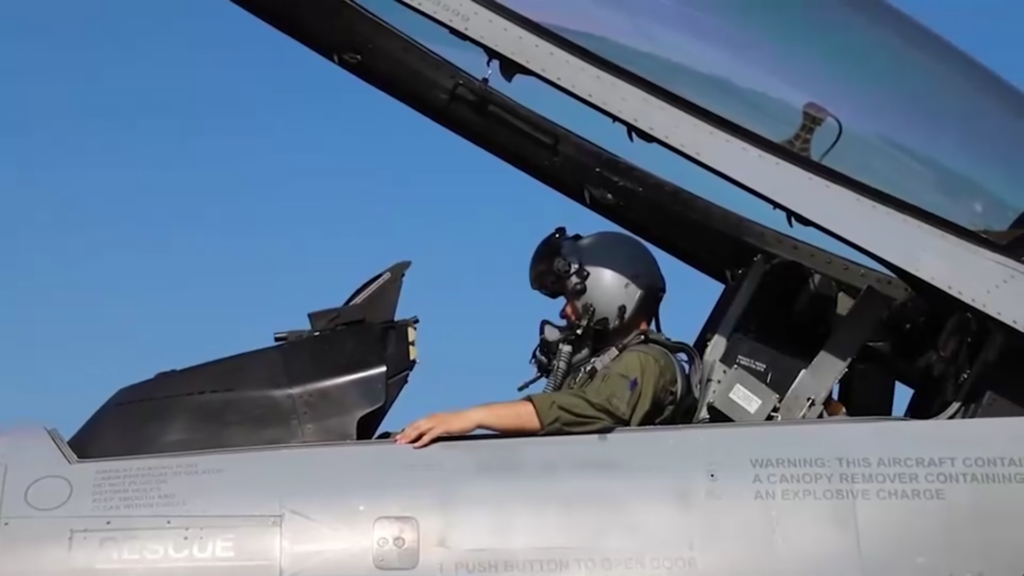
A pilot in an F-16 fighter in Ukraine. Screenshot from the video of President Volodymyr Zelenskyy's speech on Ukraine's Air Force Day
Poland promised to provide Ukraine with F-16 missiles back in September, and several partners, including Poland, have already begun the process of transferring ammunition this month. Other partners include Spain and Belgium, which Foreign Minister Andrii Sybiha mentioned during a meeting with journalists, Hromadske reported on 1 October.
Ukraine critically needs this ammunition, especially as Russia prepares new strikes, Sybiha said.
“Against the backdrop of the fact that we have not yet built up the capability to repel jet-powered drones, against the backdrop of preparations for new strikes, it was critically important to help our military shoot down these drones. The most effective right now—apart from air defense systems, which are very expensive to use constantly against drones—are F-16 fighter jets,” the minister said.
Zelenskyy held talks with the president of France and the prime ministers of Poland and the Netherlands about means of protecting against Russian strikes, he said in his address on 5 October. In particular, he thanked the Dutch prime minister for his prompt response.
Whether Belgian maintenance delays are the reason for the low number of operational F-16s in Ukraine remains disputed
Fewer than 50% of the F-16s delivered to Ukraine may be operational, Defense Express reports, citing a Wall Street Journal (WSJ) editorial published on 29 September.
The Belgian company that services F-16s for Ukraine takes as long as 40 weeks to complete the work, retired US Navy Rear Admiral Mark Montgomery told the WSJ.
Belgian Defense Minister Ludivine Dedonder, Ukrainian President Volodymyr Zelenskyy, and Belgian Prime Minister Alexander De Croo visiting the Melsbroek Air Base, where Ukrainian personnel have been undergoing F-16 training, 28 May 2024. Photo: president.gov.ua
That day, Zelenskyy had already announced that Belgium would send three of its fighter jets to Ukraine this year. Ukraine will receive them under an accelerated procedure, he said.
Meanwhile, Ukraine’s Ministry of Foreign Affairs refutes claims that Ukrainian fighter jets have a catastrophically low operational availability rate and excessively long maintenance times.
“Contrary to these claims, our industrial sustainment partners are not only continuing to deliver overhauled aircraft, but are doing so at an increasing pace. Turnaround times are decreasing, not increasing,” Ukrainian Foreign Ministry spokesperson Heorhii Tykhyi said on 2 October.
Reports about the condition of Ukraine’s F-16s should not undermine confidence in international funding supporting F-16 maintenance or cast doubt on the need for additional F-16s from the stockpiles of partner countries, Tykhyi warned.
The EU Delegation and all EU embassies will keep working in Kyiv despite Russia's warning that foreign diplomats should leave or risk their lives, EU Ambassador to Ukraine Katarína Mathernová said on 4 October. Poland and Estonia also said their embassies would stay, calling the threats an attempt to intimidate Europe.
Russia attacks Kyiv daily as Moscow tries to make the city unlivable. Alongside the strikes, it now threatens the foreign missions that anchor Ukraine's support in the ca
The EU Delegation and all EU embassies will keep working in Kyiv despite Russia's warning that foreign diplomats should leave or risk their lives, EU Ambassador to Ukraine Katarína Mathernová said on 4 October. Poland and Estonia also said their embassies would stay, calling the threats an attempt to intimidate Europe.
Russia attacks Kyiv daily as Moscow tries to make the city unlivable. Alongside the strikes, it now threatens the foreign missions that anchor Ukraine's support in the capital.
"We are staying"
Russia's Foreign Ministry singled out the embassies still working in Kyiv and the foreign officials who keep visiting Ukraine, Mathernová wrote. Moscow claimed that if something happened to them, the responsibility would be theirs.
"The responsibility for russian attacks belongs to russia! Not to anybody else," Mathernová wrote, adding: "Moscow wants to scare Europe into reducing its support for Ukraine. That will not happen."
The EU Delegation continues its work while taking the security of its team seriously, she added.
Explore further
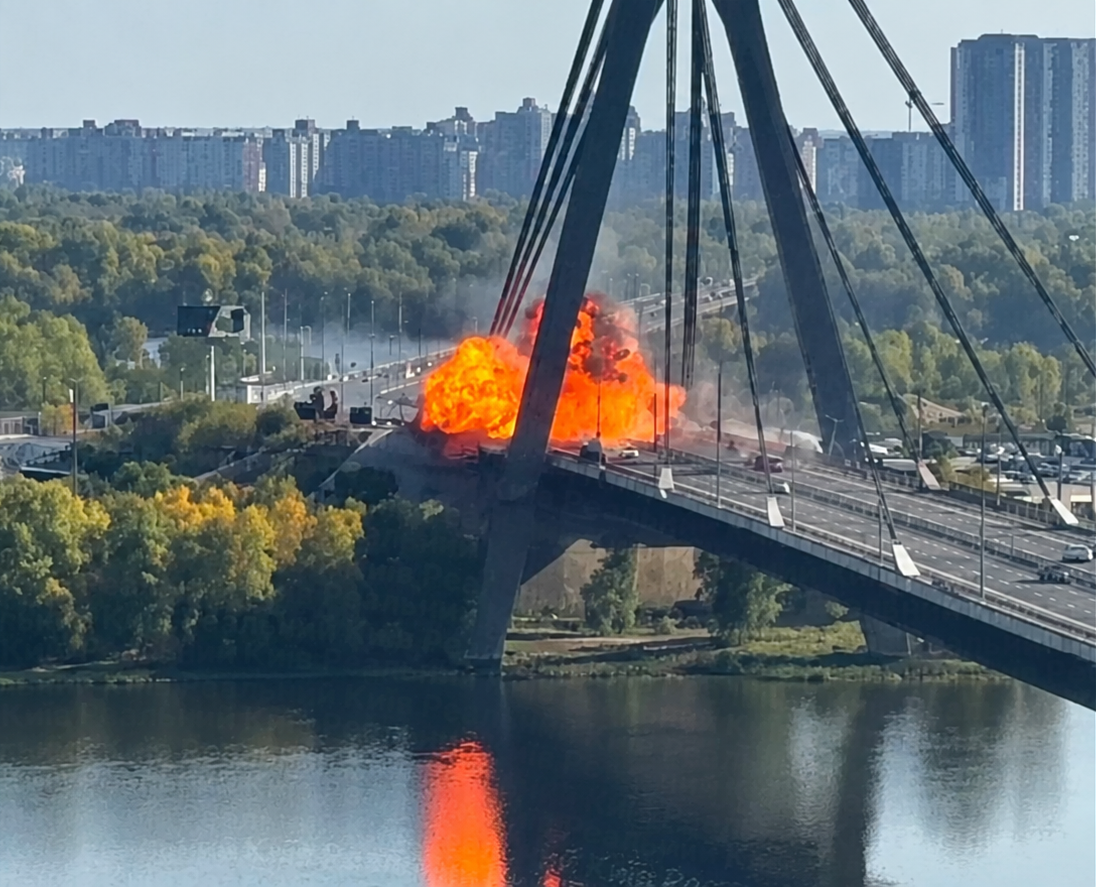
Russia’s drones keep targeting the bridges Kyiv can’t easily replace—now the Northern crossing is cratered
She pointed to the morning's strike on the Northern Bridge, saying the repeated attacks disrupt the connections between the two banks of the Dnipro. People worry about getting to work, reaching their families, and getting home safely, she wrote.
Poland and Estonia keep their embassies open
Poland's Foreign Ministry said it had no intention of changing how its Kyiv embassy works. The Kremlin's threats and calls for diplomats to leave show it is trying to intimidate Europe and undermine support for Ukraine, the ministry said. Such threats contradict international law and will not work, it added.
Estonia's Foreign Ministry said its embassy stays in Kyiv and its support for Ukraine remains firm. Russia's threats only strengthen Estonia's resolve to stand with Ukraine, the ministry said.
Explore further
“Mr Putin, put an end to this senseless war”: Merz in Kyiv, with €1 billion in military aid
The European Commission also responded. Russia's threats show the Kremlin is losing the war and losing its self-control, Commission spokesperson Christian Wigand said, Suspilne reported.
More aid, more sanctions
This year alone, the EU has approved €28.3 billion ($32.3 billion) in defense procurement plans for Ukraine and is releasing another €6.6 billion ($7.5 billion) linked to military aid, Mathernová wrote. It is also moving forward with its biggest-ever sanctions listings against Russia, and this week imposed new sanctions over the deportation of Ukrainian children.
German Chancellor Friedrich Merz came to Kyiv on the same day, as Russian attacks on the city continued. He and Zelenskyy visited the National Academy of Sciences building, hit by a Russian drone in September, and Zelenskyy thanked him for coming despite the air raid alert, calling it "a needed and brave signal," in a post on Telegram. Germany remains a reliable partner at Ukraine's side even in difficult times, Merz wrote.
Ukraine may soon receive a multimillion package of 20-mm rounds for its F-16 fighter jets, Foreign Minister Andrii Sybiha told journalists, Hromadske reported. He called the ammunition critical for shooting down Russia's jet-powered drones and said several partners have already begun transferring it. He expects the larger package after an upcoming high-level visit.
Russia now strikes Kyiv and other Ukrainian cities daily, increasingly with jet-powered drones that outrun the cheap intercepto
Ukraine may soon receive a multimillion package of 20-mm rounds for its F-16 fighter jets, Foreign Minister Andrii Sybiha told journalists, Hromadske reported. He called the ammunition critical for shooting down Russia's jet-powered drones and said several partners have already begun transferring it. He expects the larger package after an upcoming high-level visit.
Russia now strikes Kyiv and other Ukrainian cities daily, increasingly with jet-powered drones that outrun the cheap interceptors built for slower Shaheds. Fighter jets are among the tools Ukraine uses against them, while its overall interception rate for jet drones still trails its rate against propeller drones.
"Critically important" ammunition
Sybiha said Ukraine has yet to build up its capability to repel jet drones.
"Given that we have not yet built up the capability to repel jet drones, and given the preparations for new strikes, it was critically important to help our military shoot down these drones. Apart from air defense systems, which are too expensive to use constantly against drones, the most effective tools right now are F-16 fighter jets," Sybiha said.
He thanked Spain, Belgium, and Poland, which have begun the process of transferring the ammunition, and said that thanks to them Ukraine will "very soon" have the rounds it needs.
Explore further
Belgium will send three F-16 fighter jets, but maintenance delays may keep Ukraine from using them
A "very serious visit" ahead
Sybiha linked the larger package to a visit he did not name.
"We will soon have one very serious visit. We think that one of the decisions following this visit will be a multimillion package of this ammunition for Ukraine," he said.
Talks on buying the rounds from private manufacturers are also underway, he added.
Ukraine has already received urgent batches of F-16 ammunition from Belgium, Spain, and other partners, and Belgium plans to send three more F-16s by the end of 2026 under an accelerated procedure. The jets' air-to-air missiles and cannon rounds are imported and not always in stock.
Explore further
Combat shows speed alone can’t catch Russia’s jet-powered drones, despite eight Ukrainian makers’ assurances. So why can’t they stop them?
Another night of Russian strikes
Overnight on 2 October, Russia launched 108 drones at Ukraine, 47 of them jet-powered, and air defenses downed 88 of them. In Kyiv, a Russian strike on a 25-story residential building in the Darnytskyi district killed one person and injured two. Russia also targeted the Southern Bridge again, after striking it three times the previous day, and the city restricted public transport across several bridges.
In Kharkiv Oblast, a Russian FPV drone hit a car in the Solonytsivka hromada on the afternoon of 1 October, injuring a man and a boy. A Russian strike damaged a civilian enterprise in Rivne Oblast and started a fire that forced an evacuation of nearby homes, regional head Oleksandr Koval said, and drones attacked Cherkasy Oblast.
In neighboring Romania, an object believed to be a drone crashed near the village of Plauru in Tulcea County during the attack, starting a fire that caused no casualties, Romania's Defense Ministry said.
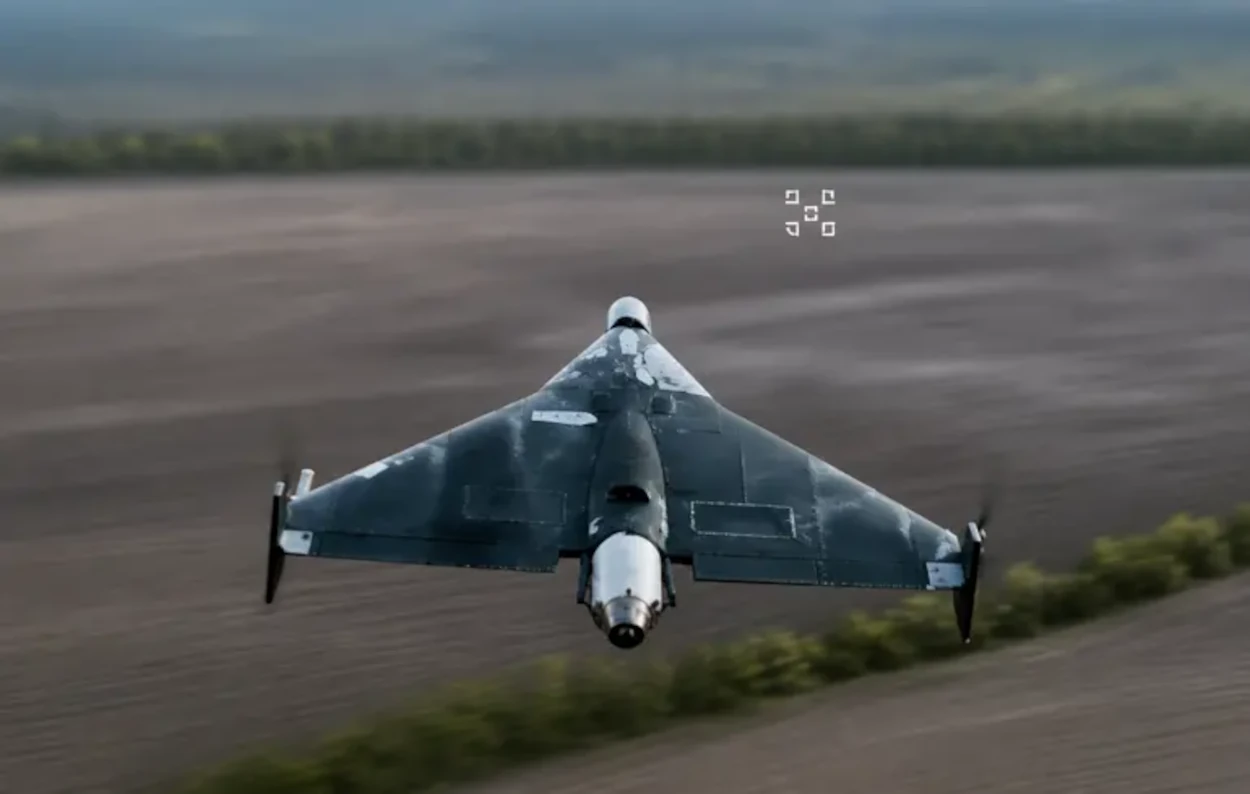
A Russian drone struck near the Yahodyn border crossing on the Ukrainian-Polish border, the Ukrainian Border Service and the Polish Armed Forces Operational Command reported on 28 September. Geolocated footage of the attack shows the jet-powered Geran-5 striking near the facility. Following the incident, Poland is reviewing its air security measures.
Russia systematically strikes Ukraine’s border crossings to complicate logistics. Russian strikes near the Ukrainian-Polish border have i
A Russian drone struck near the Yahodyn border crossing on the Ukrainian-Polish border, the Ukrainian Border Service and the Polish Armed Forces Operational Command reported on 28 September. Geolocated footage of the attack shows the jet-powered Geran-5 striking near the facility. Following the incident, Poland is reviewing its air security measures.
Russia systematically strikes Ukraine’s border crossings to complicate logistics. Russian strikes near the Ukrainian-Polish border have increased over the past month. Yahodyn is one of the largest border crossings with Poland, on a route leading, among other destinations, to Warsaw, and has repeatedly been used by senior foreign officials visiting Ukraine.
The blast wave damaged the checkpoint building at the terminal entrance, Ivan Romaniuk, head of the Volyn Regional Military Administration, reported on 28 September. It was a jet-powered drone, but there was “preliminarily no direct hit” on the border crossing, BBC Ukraine reported, citing its own sources in the State Border Guard Service of Ukraine.
Russian drone strikes near Yahodyn
On the afternoon of 28 September, Poland reported the involvement of Polish military aviation because of Russian drone attacks against Ukraine. That day, it was also reported that the airports in Rzeszów and Lublin suspended operations.
Jacek Horyszewski, a spokesperson for the Polish Armed Forces Operational Command, said on TVN24 that a Russian drone had struck near the Yahodyn border crossing in Volyn Oblast on the border with Poland.
Romaniuk confirmed the attack in the village of Starovoitove, Kovel district, Volyn Oblast, where the Yahodyn international border crossing is located.
“There have been no reports of injuries or fatalities,” he said.
Videos that appeared online show the drone falling in a forest near people and border infrastructure.
Момент удару «Герані-5» поблизу КПП «Ягодин», – місцеві канали.
BBC з посиланням на ДПСУ пише, що реактивний дрон вдарив неподалік кордону з Польщею: «Влучання у пункт пропуску «Ягодин» попередньо, не було». pic.twitter.com/VNq7QMy2Ly
The Russians carry out such attacks on Ukraine’s western regions using repeaters on Belarusian territory that amplify signals for Shahed- and Gerbera-type drones, BBC Ukraine reported, citing State Border Guard Service data.
Detonation of a Russian Geran-5 drone at the YAGODIN BORDER CORSSING, Ukraine. The explosion occurred ~1km from Polish territory.
Poland is already considering changes to its air security rules after the incident
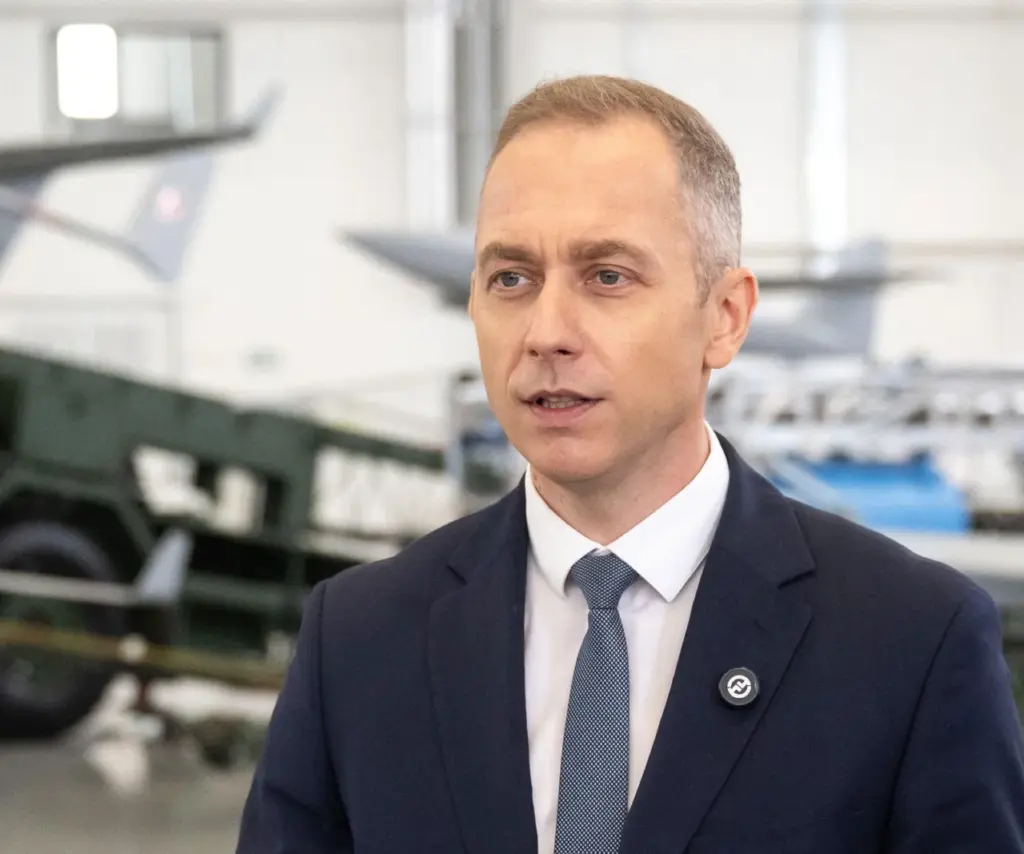
The same day, Polish Deputy Defense Minister Cezary Tomczyk said Poland will change its engagement rules "in the coming days." Currently, helicopter and fighter jet pilots can use weapons only after visually identifying a target: the aircraft must approach the object and determine what it is. After the rules are changed, however, a pilot or operational commander will be able to make a decision to engage based solely on radar data.
Cezary Tomczyk. Photo: Paweł Skraba / Super Express
“It is notable that Polish authorities have taken this step as NATO states attempt to find an adequate response to Russian drones nearing or entering their airspace from Ukraine, often leaving NATO air defense insufficient time to identify and target such threats before they have entered allied airspace,” the Institute for the Study of War noted in its 28 September report.
Recent strikes near the Polish border
On 10 September, Polish Prime Minister Donald Tusk said that Poland had prevented a threat to one of its border crossings with Ukraine overnight and expected its border crossings to be attacked as Moscow targets trade routes in an attempt to economically weaken Kyiv. He made the statement after drones struck a border crossing between Ukraine and Moldova on the previous day, killing two people.
On 13 September, Russian forces struck the locomotive of a passenger train two kilometers from the Polish border and hit a gas station near the Yahodyn international border crossing on the Ukrainian-Polish border.
На Волині внаслідок атаки РФ пошкоджено АЗС біля ПП «Ягодин» на кордоні з Польщею - речниця Волинської митниці Валентина Черниш.
Також на кордоні із Польщею рашисти атакували залізничну інфраструктуру - відео. pic.twitter.com/3XLc3B4FFw
The drone attack forced passengers on a train from Ukraine to leave the carriages for safety. Those evacuated included Boris Johnson, security advisers to European governments, German Bundestag lawmakers, diplomats, and academics.
After the Russian attacks, Poland deployed military units on the border with Ukraine and strengthened infrastructure near the border crossings, Polish Defense Minister Władysław Kosiniak-Kamysz said on 15 September.
On 17 September, Russian forces struck near the Yahodyn border crossing with a jet-powered drone.
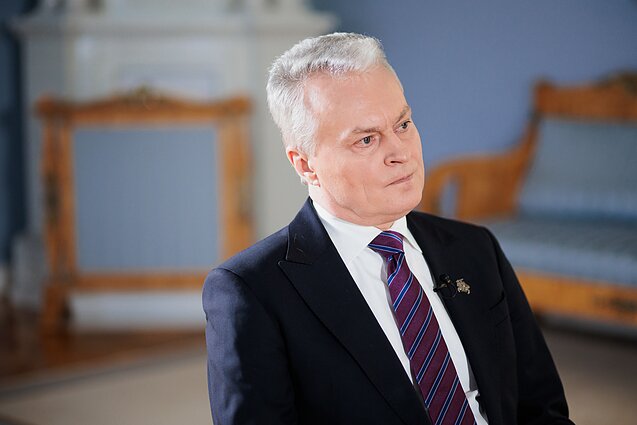
Lithuania is getting its US troops back although the overall American presence in Europe will shrink, Lithuanian President Gitanas Nausėda said. He tied the wider drawdown to Washington's demand that Europe take more responsibility for its own defense. Lithuania's case, he suggested, is the exception.
While waging all-out war on Ukraine, Russia keeps probing Europe with drones and sabotage that stop just short of open attack. Its small Baltic neighbors are already preparing their people
Lithuania is getting its US troops back although the overall American presence in Europe will shrink, Lithuanian President Gitanas Nausėda said. He tied the wider drawdown to Washington's demand that Europe take more responsibility for its own defense. Lithuania's case, he suggested, is the exception.
While waging all-out war on Ukraine, Russia keeps probing Europe with drones and sabotage that stop just short of open attack. Its small Baltic neighbors are already preparing their people for a possible invasion, and American soldiers on their soil have long been the clearest sign that attacking them means fighting the US. With Washington weighing a pullback and telling Europe to fend for itself, each US unit that stays on Russia's doorstep carries more weight than its size.
"There will be fewer US troops in Europe"
Nausėda spoke in an interview with LNK television on 28 September.
"There will be fewer US troops in Europe. This is partly related to what US President Donald Trump says, to the signals the US administration is sending us that Europe must take on more responsibility itself," he said.
Europe must do more for itself, and it is already doing so, Nausėda added. The US presence in Lithuania matters not only for its military power but also for deterrence, he argued.
"The presence of these troops is precisely what reduces the likelihood of military conflict or military aggression," he told LNK, ELTA reported.
"The heavy battalion will be here"
Nausėda called the decision a kind of encouragement for Lithuania. "As the overall number of US troops in Europe decreases, in Lithuania that number will at least remain, will not decrease, and perhaps will even be slightly larger," he said. "In any case, the heavy battalion will be here."
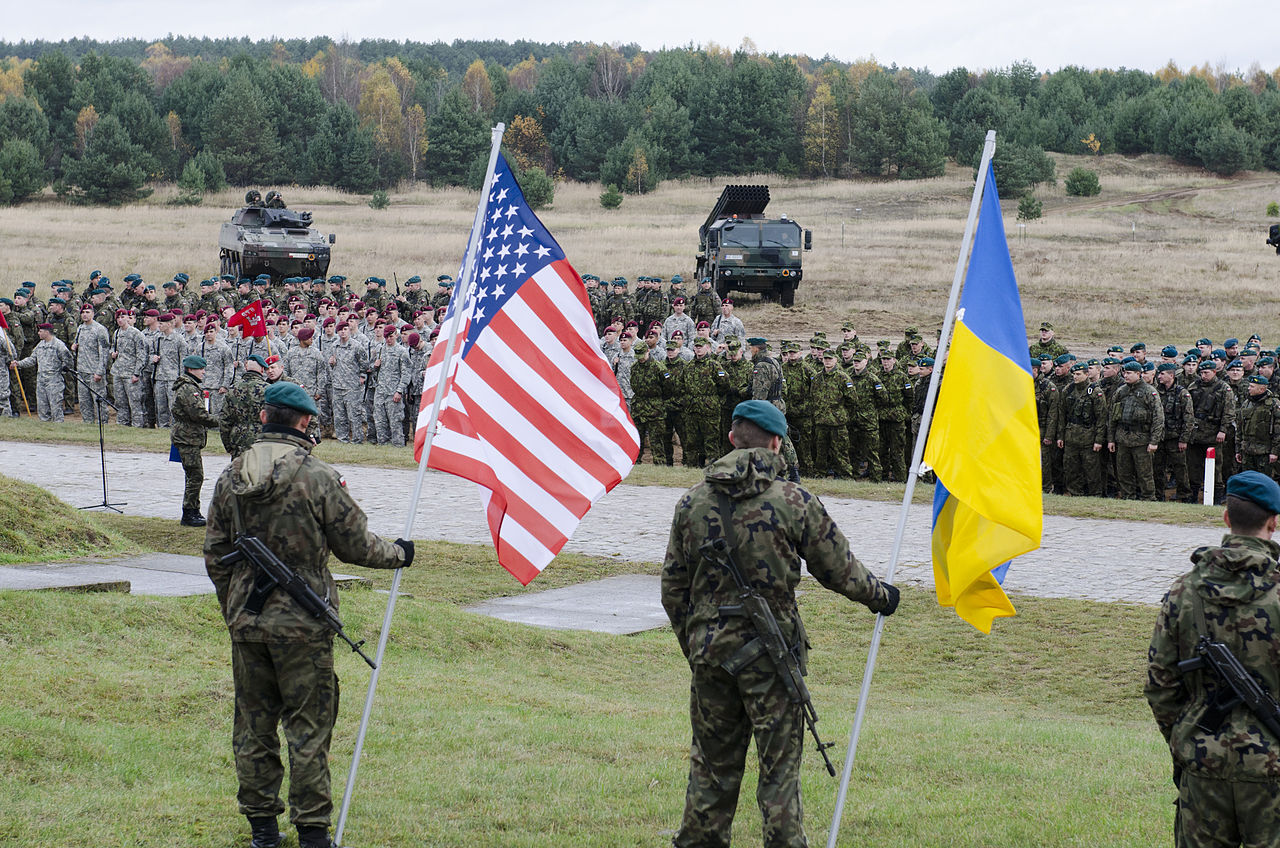
The battalion will keep its Abrams tanks, but an engineer battalion will replace the artillery battalion, Nausėda said on LRT's Savaitė program. The rotation will again last nine months. The Americans will number roughly as before, over 1,000, Defense Minister Robertas Kaunas said.
Estonia has also secured the return of US troops, at least temporarily, LRT noted.
Explore further
Trump announces 5,000 US troops to Poland — one week after US froze scheduled combat-team rotation and amid Russia’s threat
More than 1,000 US troops began leaving Lithuania when their rotation ended in early June, and no replacement arrived, LRT said. It was the country's first gap in the US presence since 2020. American heavy battalions have rotated through Lithuania since 2019.
The Pentagon is weighing a withdrawal of about 25,000 US troops from Europe, and possibly as many as 40,000, NBC News reported, adding that no final decision had been made. About 80,000 US troops are now stationed on the continent. Germany, Italy, and Spain would likely be among the countries most affected.
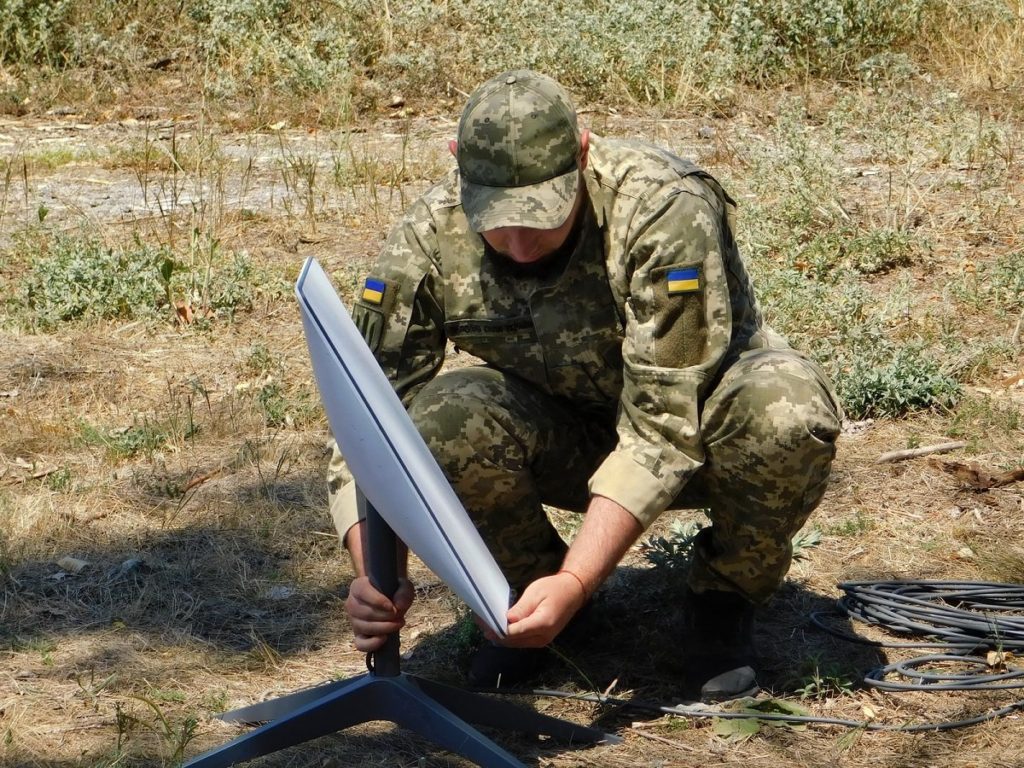
A Russian academic and an ultranationalist media owner have drawn up a menu of ways to knock out Starlink, the satellite network keeping Ukraine's drones and troops online, the Ukrainian defense outlet Militarnyi reported. The ideas run from jamming to a nuclear blast in space, and come as Poland investigates a suspicious fire at a Starlink ground station serving Ukraine.
Satellite internet is the nervous system of the drone war. Since a terminal cutoff early this year gutted Russian fr
A Russian academic and an ultranationalist media owner have drawn up a menu of ways to knock out Starlink, the satellite network keeping Ukraine's drones and troops online, the Ukrainian defense outlet Militarnyi reported. The ideas run from jamming to a nuclear blast in space, and come as Poland investigates a suspicious fire at a Starlink ground station serving Ukraine.
Satellite internet is the nervous system of the drone war. Since a terminal cutoff early this year gutted Russian frontline coordination, Moscow's search for a workaround has widened from the spectrum to orbit—and from the battlefield toward the infrastructure that keeps the network alive.
The scenarios
Sergei Glazyev of the Russian Academy of Sciences and Konstantin Malofeyev, founder of the Russian outlet Tsargrad, laid out the proposals. Glazyev's list runs from cutting communication cables on land and undersea to crippling data centers and downing reconnaissance and command aircraft, whatever their nationality. Without American and British spotters, planners, and analysts, he claims, Ukraine's army would go blind. Glazyev's core argument is that Starlink satellites are not geostationary—nothing hangs over Ukraine, so the entire constellation must be struck at once.
For electronic warfare, they push wider use of the Volna Kupol Garant, a roughly $1.5 million system that beams a signal to briefly deafen a passing Starlink satellite over what its developers claim is up to 20 km². Kinetic options follow—the A-235 Nudol and S-500 Prometheus interceptors—though they call spending one costly missile on one cheap satellite "insane extravagance." A third idea scatters metal pellets to spark what the authors call the Kessler effect—a debris cascade that would destroy everything at that altitude.
The bluntest proposal detonates a nuclear device in space, its pulse frying electronics on low-orbit satellites. The authors admit this would also wreck Russia's own Rassvet network, which orbits at a similar altitude. "We can no longer hit Musk's creation for free," they write, "but it's still the optimal option. The legal consequences are unimportant."
Explore further
Russia’s answer to Starlink was written off as a failure—its satellites are still climbing
A station burns in Poland
On 23 September, fire destroyed the distribution panel of a ground Starlink station in Wola Krobowska that feeds Poland and Ukraine. Poland's Deputy Prime Minister Krzysztof Gawkowski said sabotage could not be ruled out and that the pattern matched Russian services' modus operandi. A bottle of flammable liquid was found beside the burned distribution panel, according to sources cited by RMF24. Exatel, which the minister named as the station's operator, said it only subleases the land and transmits data there, and neither operates nor owns the infrastructure.
Several recent incidents across Europe were conducted by Russia or are likely attributable to Russia, ISW assessed in its 24 September report, though authorities have not officially linked the Polish and German incidents to Moscow.
Russia's full-scale war against Ukraine has expanded into a parallel campaign of provocations against European defense and logistical infrastructure. The Kremlin is using drones, arson, and undersea cable sabotage to degrade Europe's will and ability to suppo
Several recent incidents across Europe were conducted by Russia or are likely attributable to Russia, ISW assessed in its 24 September report, though authorities have not officially linked the Polish and German incidents to Moscow.
Russia's full-scale war against Ukraine has expanded into a parallel campaign of provocations against European defense and logistical infrastructure. The Kremlin is using drones, arson, and undersea cable sabotage to degrade Europe's will and ability to support Ukraine, while deliberately intensifying the frequency of airspace violations to erode the boundary between hybrid and kinetic war.
Drones over Moldova and Romania
Four Russian drones flew over Bukovyna and targeted an energy facility and border crossings with Moldova and Romania, Chernivtsi Oblast Military Administration head Ruslan Osypenko reported. Ukrainian forces shot down three. The fourth flew toward Suceava County in northeastern Romania.
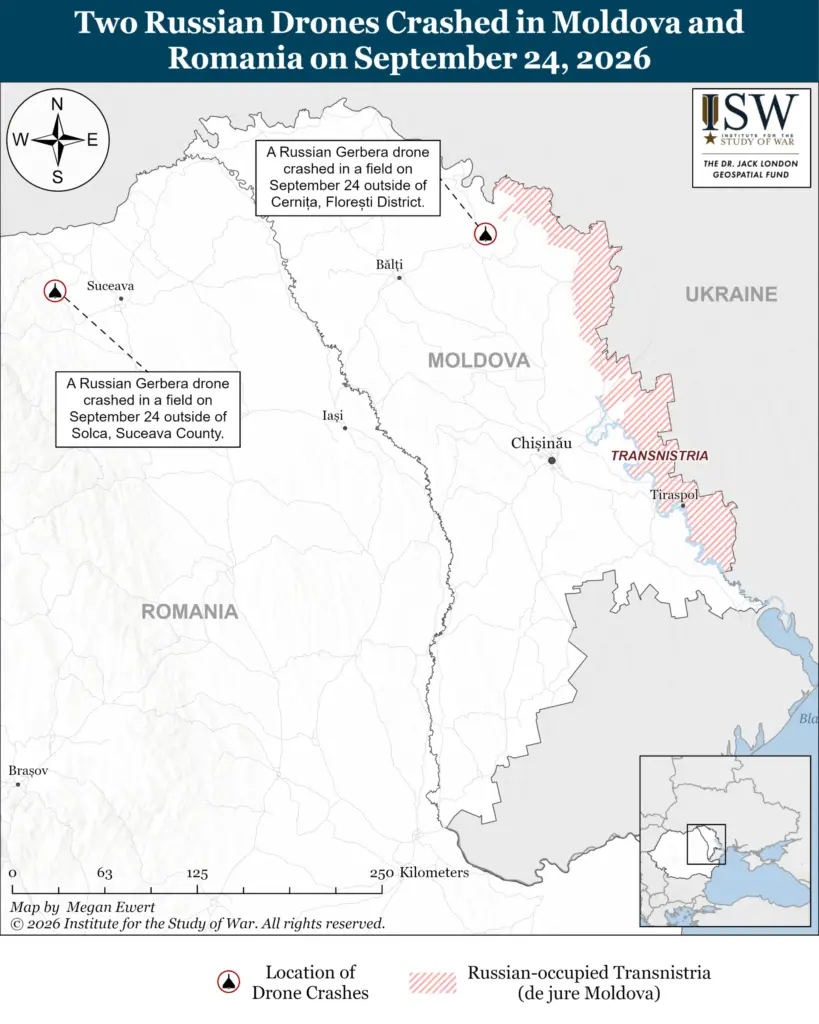
ISW map showing two Russian Gerbera drone crash sites in Moldova and Romania on 24 September 2026. Map: ISW
A drone crashed in Cernița, Florești district, Moldova—preliminarily identified as a Russian Gerbera type, the first such device found in the country. It carried an onboard camera, hit a tree, and exploded, Moldovan police said. Romania's Defense Ministry reported a second aerial vehicle entered Romanian airspace for four minutes and crashed near Solca in the same border region; geolocated footage confirmed it was also a Gerbera, ISW noted. Poland evacuated the Hrubieszów and Dorohusk border crossings for 30 minutes, Prime Minister Donald Tusk said. Three countries were put on alert by a single night of Russian strikes.
"Intentional and accidental Russian drone incursions into NATO and Moldovan airspaces are likely part of the Kremlin's efforts to normalize airspace violations by intensifying their frequency," ISW assessed.
Sabotage in Poland and Germany
A fire engulfed the power system and backup generator at a Starlink ground station in Wola Krobowska, central Poland, on the evening of 23 September. Deputy Prime Minister Krzysztof Gawkowski confirmed it was sabotage aimed at cutting internet access, including for Ukraine's military. Authorities have not identified who was responsible, but the act aligns with Russia's "new" doctrine of attacks, Gawkowski said. The station is now operating normally.
German authorities suspended operations at Berlin-Brandenburg airport for 45 minutes the same evening after staff reported a drone sighting, Die Zeit reported. Federal police could not confirm it. ISW assessed both incidents fit Russia's wider pattern of sabotage against European defense assets, though neither has been officially attributed to Russia.
Explore further
Russian attack puts three countries on alert as drones enter Moldova and Romania
Western intelligence warnings
A Lithuanian Defense Ministry source reported on 23 September that Russia could launch Gerbera drones from a shipping container in the Mediterranean against Spain, France, and Italy. Danish Defense Intelligence assessed on 24 September that Russia will intensify its hybrid war in coming months, including destructive cyber attacks and sabotage carrying a high risk of casualties, and that there is a low but growing risk of a limited Russian military attack on a NATO border state. It sees no indications of an outright invasion. The CIA reportedly warned Poland that Russia may sabotage underwater cables to disrupt its banking system, according to Newsweek Polska journalists.
NATO tracked and confronted Russian submersibles rehearsing deployment of a new cable-disabling weapon near Svalbard in spring 2026—no cables were damaged, but the operation demonstrated Moscow's intent, Reuters reported. Shadow fleet vessels likely served as drone-launch platforms for incursions into NATO airspace, ISW noted.
"The increasing frequency of such warnings suggests that Western intelligence agencies are picking up indicators that the Kremlin is looking to diversify its platforms and means for conducting attacks against NATO and European states and is considering conducting such attacks," ISW assessed.
ISW said it has not yet seen evidence that Russia has conducted the attacks the warnings describe.
Denmark's assessment—that a limited Russian military strike on a NATO border state could come in the coming months—suggests the boundary between hybrid provocations and military action is narrower than European policy has assumed. ISW's synthesis reframes what governments have treated as separate incidents into one campaign.
"Intentional and accidental Russian drone incursions into NATO and Moldovan airspaces are likely part of the Kremlin's efforts to normalize airspace violations by intensifying their frequency," ISW assessed.
"The increasing frequency of such warnings suggests that Western intelligence agencies are picking up indicators that the Kremlin is looking to diversify its platforms and means for conducting attacks against NATO and European states and is considering conducting such attacks," ISW assessed.
Polish President Andrzej Duda has signed legislation designating July 11 as the National Day of Remembrance for Poles who were victims of Volyn massacres, the Polish outlet RMF24 reported on July 2.The law passed both houses of Poland's parliament with reportedly near-unanimous support. Lawmakers said victims of the massacres deserve a permanent place in the nation's collective memory.The law states that from 1939 to 1946, members of the Organization of Ukrainian Nationalists (OUN), the Ukrainia
Polish President Andrzej Duda has signed legislation designating July 11 as the National Day of Remembrance for Poles who were victims of Volyn massacres, the Polish outlet RMF24 reported on July 2.
The law passed both houses of Poland's parliament with reportedly near-unanimous support. Lawmakers said victims of the massacres deserve a permanent place in the nation's collective memory.
The law states that from 1939 to 1946, members of the Organization of Ukrainian Nationalists (OUN), the Ukrainian Insurgent Army (UPA), and other nationalist groups carried out mass killings of Polish civilians in the Volyn region, now part of modern-day Ukraine.
The Volyn massacres remain a deeply sensitive and divisive issue in Polish-Ukrainian relations. In April, a team of Polish and Ukrainian researchers resumed the first exhumation in western Ukraine since 2017 — a symbolic breakthrough following years of tension. The moratorium had been imposed by Ukraine after a wave of vandalism targeting Ukrainian memorials in Poland.
The excavation began at the destroyed village of Puzhnyky in Ternopil Oblast, where UPA fighters are believed to have killed between 50 and 120 Poles in February 1945.
In recent months, the Polish and Ukrainian governments have made efforts to resolve the issue of the Volyn exhumations, with Poland's Prime Minister Donald Tusk announcing a "breakthrough" in January.
Last year Polish officials, including Deputy Prime Minister Wladyslaw Kosiniak-Kamysz and former Deputy Foreign Minister Pawel Jablonski, warned that Ukraine's progress toward EU accession could be blocked unless Kyiv fully addresses the legacy of the Volyn massacre and allows further exhumations of Polish victims.
Poland's Institute of National Remembrance estimates that approximately 100,000 Poles were killed during the Volyn massacres. Ukrainian historians argue that thousands of Ukrainians were also killed in retaliatory actions and insist that the conflict be viewed as mutual ethnic violence rather than genocide.
In 2016, the Polish Parliament officially recognized the events as genocide. Ukrainian and many Western scholars, however, classify them as ethnic cleansing, and debate continues over both the terminology and historical responsibility.
Despite close cooperation in defense and diplomacy since Russia's full-scale invasion of Ukraine, the legacy of Volyn remains a potential stumbling block in Ukraine's integration with Europe.
July 11 will now be commemorated annually in Poland.
Norway will send F-35 fighter jets to Poland in the fall to protect the Rzeszow-Yasenka airport, one of the key transportation hubs for NATO military aid to Ukraine, Norwegian Defense Ministry announced on June 30.The news came as Russia has escalated attacks against Ukrainian cities over the past weeks, launching record 400-500 unmanned aerial vehicles (UAVs) per night.Norway is thus strengthening its contribution to NATO's air and missile defense, while the main goal of the mission is to suppo
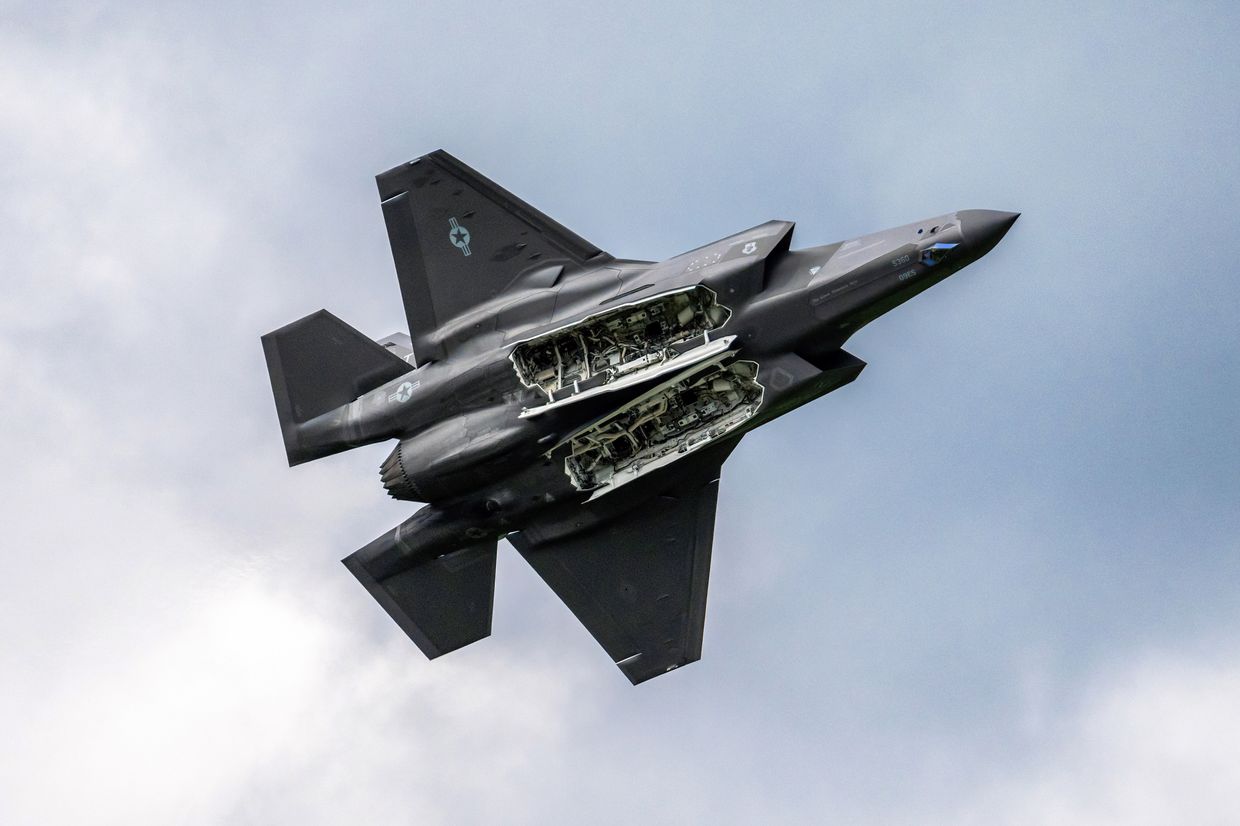
Norway will send F-35 fighter jets to Poland in the fall to protect the Rzeszow-Yasenka airport, one of the key transportation hubs for NATO military aid to Ukraine, Norwegian Defense Ministry announced on June 30.
The news came as Russia has escalated attacks against Ukrainian cities over the past weeks, launching record 400-500 unmanned aerial vehicles (UAVs) per night.
Norway is thus strengthening its contribution to NATO's air and missile defense, while the main goal of the mission is to support the protection of Polish airspace and a key logistics center for assistance to Ukraine, the statement read.
"This is a vital contribution. We are helping ensure that support to Ukraine reaches its destination, and that Ukraine can continue its fight for freedom," Norwegian Defense Minister Tore Sandvik said.
The Rzeszow-Jasionka airport is located less than 100 kilometers (62 miles) from the Ukrainian border and transports a significant percentage of Western materiel bound for the front lines in Ukraine. Polish Prime Minister Donald Tusk said that 90% of aid for Ukraine was going through the airport in Rzeszow as of Novermber 2024.
It is also a main stopover point for foreign leadership traveling to Kyiv on official visits.
In January, German Defense Minister Boris Pistorius announced that Berlin will deploy the promised Patriot air defenses around the Polish airport to protect it.
Outgoing Polish President Andrzej Duda arrived in Kyiv to meet with President Volodymyr Zelensky as part of a farewell gesture ahead of his departure from office in August, Duda announced on social media."President Duda has stood by Ukraine's side during the most difficult times of Russia's full-scale aggression," Foreign Minister Andrii Sybiha said on X on June 28, which is also Ukraine's Constitution Day. "We are grateful to him and all Poles who have shown true solidarity with Ukraine."Upon
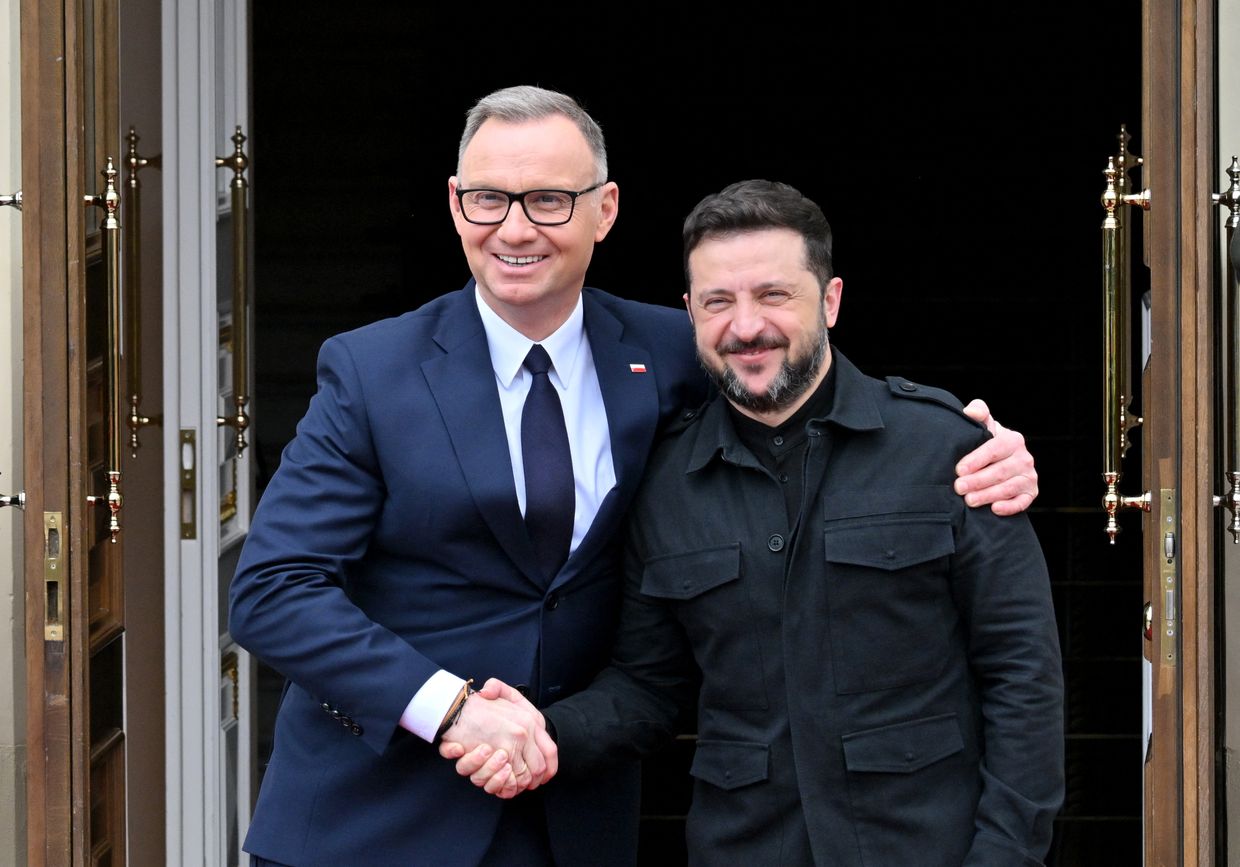
Outgoing Polish President Andrzej Duda arrived in Kyiv to meet with President Volodymyr Zelensky as part of a farewell gesture ahead of his departure from office in August, Duda announced on social media.
"President Duda has stood by Ukraine's side during the most difficult times of Russia's full-scale aggression," Foreign Minister Andrii Sybiha said on X on June 28, which is also Ukraine's Constitution Day.
"We are grateful to him and all Poles who have shown true solidarity with Ukraine."
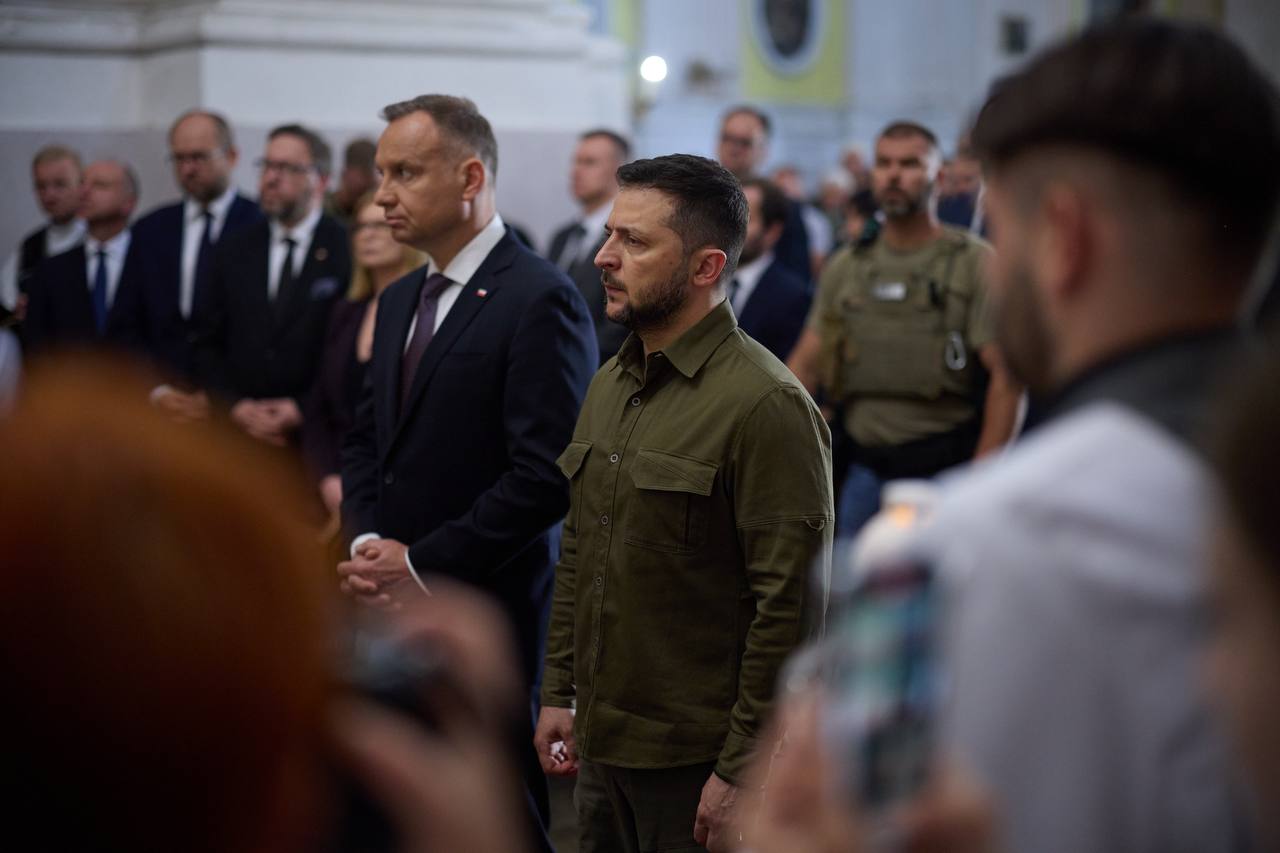
Upon his arrival, Duda joined Zelensky in a wreath-laying ceremony honoring fallen soldiers at an event marking Ukraine’s Constitution Day.
The two leaders discussed the further development of relations between Kyiv and Warsaw at the EU level and in coordination with NATO partners.
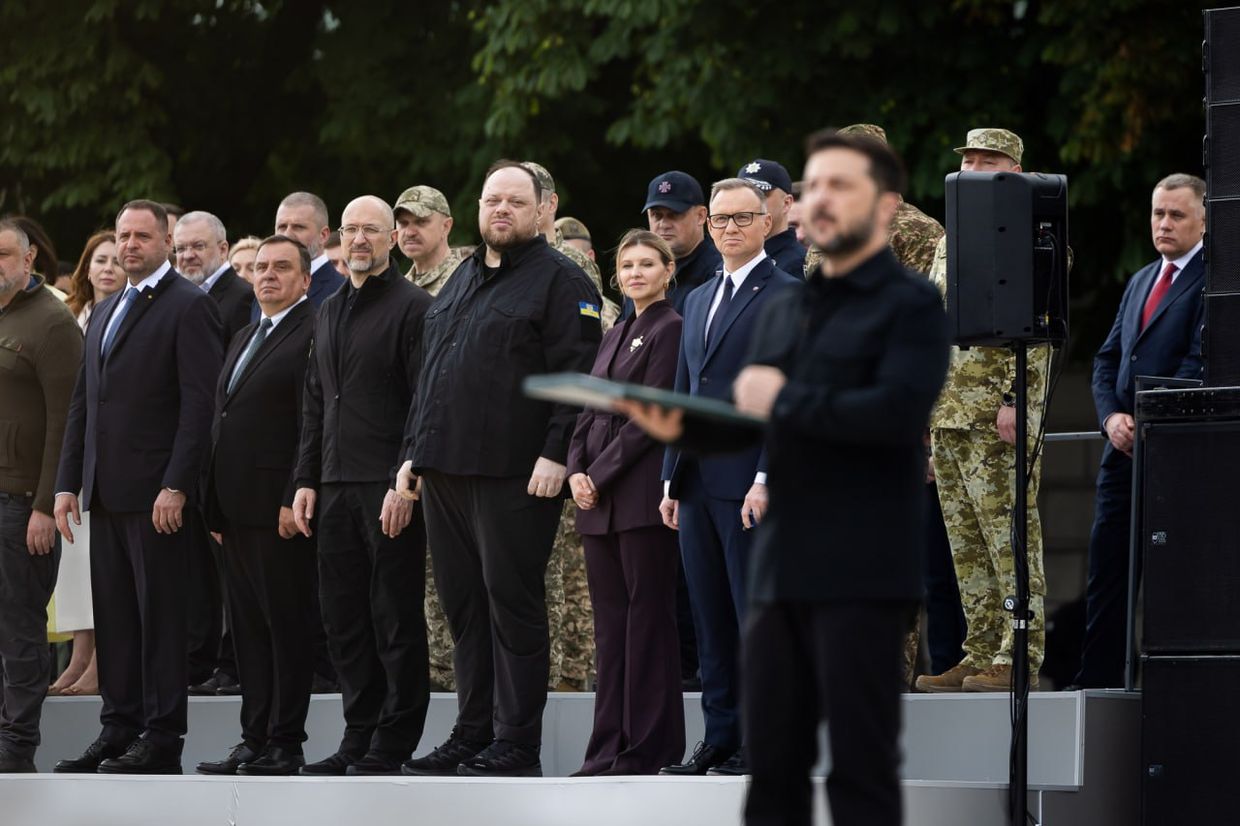
President Volodymyr Zelensky, Polish President Andrzej Duda, First Lady Olena Zelenska, and Ukrainian officials are seen during an official event marking Ukraine’s Constitution Day at Sofiyska Square in Kyiv on June 28, 2025. (Volodymyr Zelensky/Telegram)
"In recent months, we have been implementing some fairly substantial Ukrainian-Polish agreements on defense cooperation," the Ukrainian president said.
Zelensky also awarded Duda the Order of Freedom, one of Ukraine’s highest honors.
"Andrzej has been with Ukraine since the first days of the war, always side by side, a reliable ally and a true friend. This is undoubtedly the level of relations we want to preserve and strengthen with Poland," Zelensky said.
Since Russia launched its full-scale invasion in 2022, Poland has emerged as one of Ukraine’s most committed allies, providing weapons, sheltering millions of refugees, and rallying international support.
Editor's note: This story has been updated to include the joint statement issued by the ministers of the Baltic states, Nordic countries, and Poland.A coalition of European Union countries is pushing to bar Russian citizens who participated in the war against Ukraine from entering the Schengen Area, citing serious security concerns, Estonian broadcaster ERR reported on June 19.The call comes as Russia increased its hybrid operations targeting the European Union. EU security agencies have repeat
Editor's note: This story has been updated to include the joint statement issued by the ministers of the Baltic states, Nordic countries, and Poland.
A coalition of European Union countries is pushing to bar Russian citizens who participated in the war against Ukraine from entering the Schengen Area, citing serious security concerns, Estonian broadcaster ERR reported on June 19.
The call comes as Russia increased its hybrid operations targeting the European Union. EU security agencies have repeatedly warned of Russian-linked sabotage operations, including arson attacks, orchestrated by Moscow as part of hybrid warfare strategies.
Interior ministers from the Baltic states, Nordic countries, and Poland met in Tallinn on June 19, where they issued a joint statement confirming their intent to prevent entry into the visa-free Schengen zone for Russians who took part in the war against Ukraine, ERR reported.
"There are hundreds of thousands of Russian citizens who have fought against Ukraine," Estonian Interior Minister Igor Taro said following the meeting. "We must take a clear stance; these individuals cannot freely travel across Schengen."
"We will not issue them residence permits or visas," he added. "This group, which has been killing and destroying, poses a very significant security threat to all of us."
The ministers emphasized that this restriction should remain in place even after active hostilities cease in Ukraine.
"Member States should take all necessary measures to ensure that individuals who are or have been contracted by the Russian armed forces or other armed groups acting on behalf of the regime are not allowed to undermine our security or move freely within the Schengen Area," the joint statement read.
The high-level meeting also included European Commissioner for Home Affairs and Migration Magnus Brunner, as well as representatives from the EU border agency Frontex.
The Schengen Area allows for visa-free travel across 29 European countries for up to 90 days in any 180-day period. While several EU member states have imposed national restrictions on Russian travelers, others continue processing applications, keeping access routes open.
Latvia has been among the most vocal proponents of stricter visa policies for Russian nationals. Latvian Foreign Minister Baiba Braze urged on May 25 all EU countries to suspend visa issuance to Russians, citing escalating security threats from Moscow.
"Latvia calls on the EU countries to halt visa issuance for Russian citizens, citing security concerns," Braze wrote on X. She noted that Schengen visa approvals for Russian nationals had surged by 25% in 2024 compared to 2023.
Latvia imposed entry restrictions in September 2022 as part of a coordinated effort with Lithuania, Estonia, and Poland. Czechia followed suit in October 2022.
Concerns over the abuse of Schengen visas and diplomatic privileges have intensified amid a wave of suspected Russian sabotage and espionage on EU soil. Polish and Czech authorities have recently led an effort to limit the movement of Russian diplomats within the bloc, targeting individuals allegedly working under diplomatic cover for Russian intelligence services.
British fighter jets intercepted a Russian Il-20 reconnaissance aircraft that violated airspace over the Baltic Sea on the morning of June 13, Poland's military command reported. "This is another case of provocative testing of the readiness of NATO countries' systems," the statement said, adding that NATO command structures are now analyzing the incident.The Russian Il-20, based on the Il-18 transport aircraft, is used for electronic surveillance and reconnaissance missions. It is equipped with
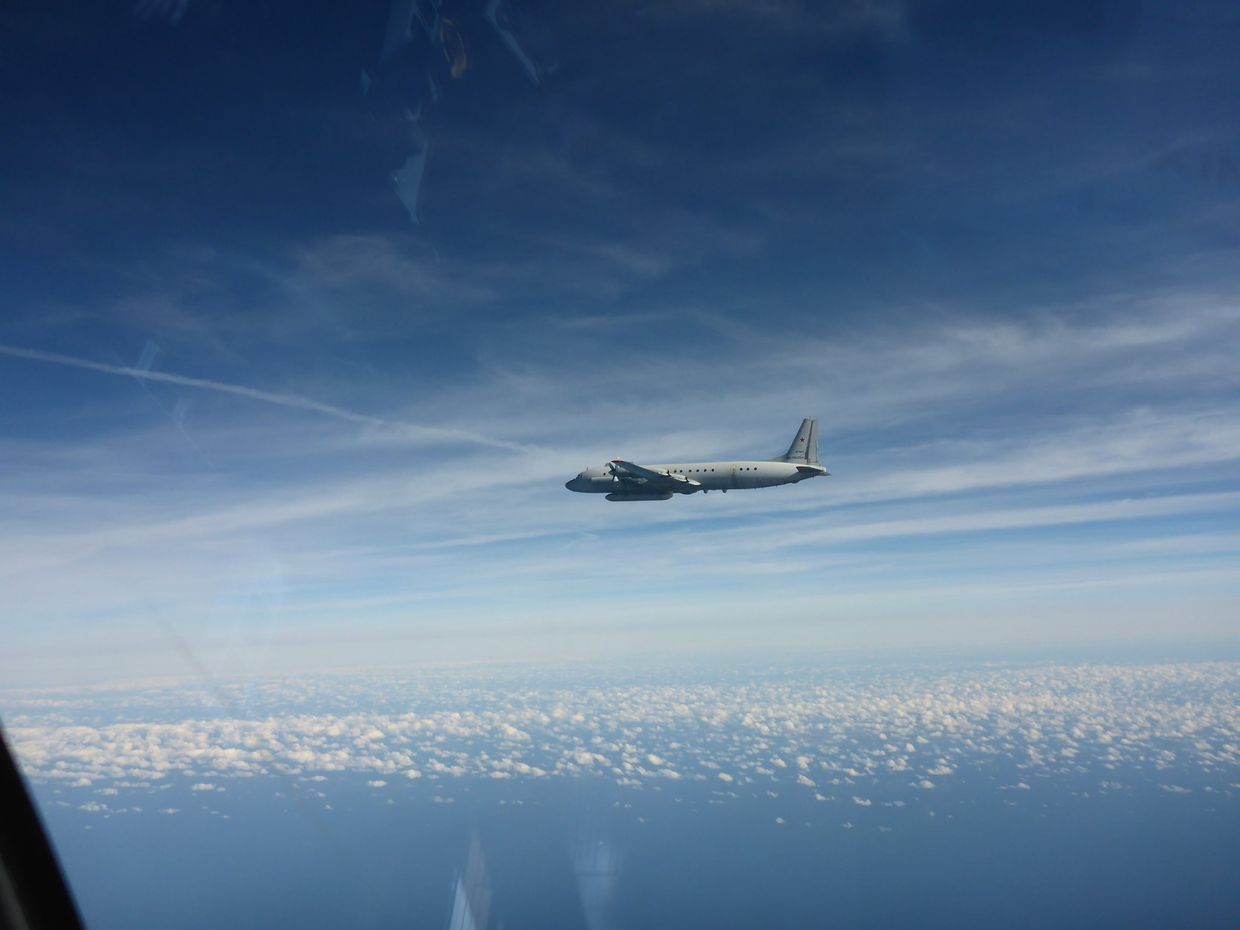
British fighter jets intercepted a Russian Il-20 reconnaissance aircraft that violated airspace over the Baltic Sea on the morning of June 13, Poland's military command reported.
"This is another case of provocative testing of the readiness of NATO countries' systems," the statement said, adding that NATO command structures are now analyzing the incident.
The Russian Il-20, based on the Il-18 transport aircraft, is used for electronic surveillance and reconnaissance missions. It is equipped with radar and signal intelligence gear designed to collect information on military infrastructure and communication networks.
According to the military command, the aircraft entered Baltic Sea airspace at approximately 10:50 a.m. and was promptly intercepted by two British fighter jets operating out of Poland.
No further details were disclosed about the exact location of the encounter or how long the Russian aircraft remained in restricted airspace.
The incident adds to a series of aerial provocations reported by NATO allies since the start of Russia's full-scale invasion of Ukraine in 2022. Poland has repeatedly scrambled jets in response to Russian missile and drone attacks near its border.
On Feb. 11, a Russian Su-24MR reconnaissance aircraft flew into Polish airspace over the Bay of Gdansk for more than a minute. Moscow attributed the incursion to a navigational error, but Polish officials dismissed the claim as implausible.
Poland shares a long border with Ukraine and a northern coastline along the Baltic Sea, where Russia's militarized Kaliningrad exclave is located.
Warsaw has repeatedly warned that Russia's ongoing aerial provocations could lead to a dangerous escalation if not firmly countered.

 Connexion










 Момент удару «Герані-5» поблизу КПП «Ягодин», – місцеві канали.