Vue normale

  • ✇Euromaidan Press
  • Russia builds 3,000 jet drones monthly to counter Ukrainian interceptors, HUR says
    Russia has ceased producing its Geran-3 jet-powered attack drone, Ukraine’s Military Intelligence (HUR) told the Ukrainian defense outlet Militarnyi. The agency estimates Russian industry now makes about 3,000 newer Geran-4 and Geran-5 drones per month. Russia is shifting toward faster jet drones as Ukraine’s low-cost interceptors have become more effective against slower Shaheds. The Geran-4 and Geran-5 leave defenders less time to react, requiring faster interceptors
     

Russia builds 3,000 jet drones monthly to counter Ukrainian interceptors, HUR says

12 août 2026 à 14:02

3D model of a Russian Geran-4 jet-powered attack drone, shown from above with its tracker and navigation unit listed beside it.

Russia has ceased producing its Geran-3 jet-powered attack drone, Ukraine’s Military Intelligence (HUR) told the Ukrainian defense outlet Militarnyi. The agency estimates Russian industry now makes about 3,000 newer Geran-4 and Geran-5 drones per month.

Russia is shifting toward faster jet drones as Ukraine’s low-cost interceptors have become more effective against slower Shaheds. The Geran-4 and Geran-5 leave defenders less time to react, requiring faster interceptors or short-range air defenses. At the reported production rate, these newer Geran models, previously used in limited numbers, could become a regular feature of Russian attacks.

HUR said Russia has established serial assembly of the two newer models at the Alabuga complex in Tatarstan, with other Russian companies supplying components. The agency also said Russia’s Defense Ministry wants to expand Alabuga’s capacity. Construction began in May. Satellite imagery showed large-scale work by early July 2026, although the purpose of the new buildings remains unknown.

From Geran-3 to newer jet drones

Russia first used Geran-3 drones in large numbers during a combined nighttime attack on Ukraine on 30 July 2025. At least eight flew alongside propeller-driven Shaheds and decoys. The model retained the Geran-2 airframe but replaced its piston engine with a Chinese Telefly JT80 turbojet. HUR gave it a speed of 300–370 kilometers per hour and a range of up to 1,000 kilometers.

In May, then-Defense Ministry adviser Serhii “Flash” Beskrestnov said Ukrainian defenses stopped 95% of incoming Shaheds during the most recent documented strike and predicted Moscow would produce more jet-powered Geran variants.

The newer Geran-4 has a more robust airframe than the Geran-3 and is designed for high-speed flight and maneuvers. It can reach 500 kilometers per hour.

The larger Geran-5 carries a roughly 90-kilogram warhead and has a stated range of up to 1,000 kilometers. HUR has said Russia may equip it with R-73 air-to-air missiles, potentially threatening aircraft sent to intercept it.

The Chinese engines that Russia itself can't build

The Geran line combines Iranian designs, Russian assembly, and imported technology. HUR described the Geran-3 as a localized version of Iran’s Shahed-238. It found 45 foreign components inside, including parts from the United States, China, Switzerland, Germany, Britain, and Japan.

Russia depends on China for the turbojet engines in newer Geran models. HUR deputy chief Vadym Skibitskyi told RBC-Ukraine that Russia remains fully dependent on Chinese turbojet engines for the Geran-4 and Geran-5. Each costs about $35,000–$40,000, he said.

A Chinese XK-F358 mesh radio recovered from a Geran-5 also helps Russian drones resist jamming. Its manufacturer remains outside the US, EU, UK, and Ukrainian sanctions, according to a review by Euromaidan Press.
FPV drone repurposed to hunt Russian recon drones worked so well that Ukraine turned it into new purpose-built interceptor

12 août 2026 à 12:16

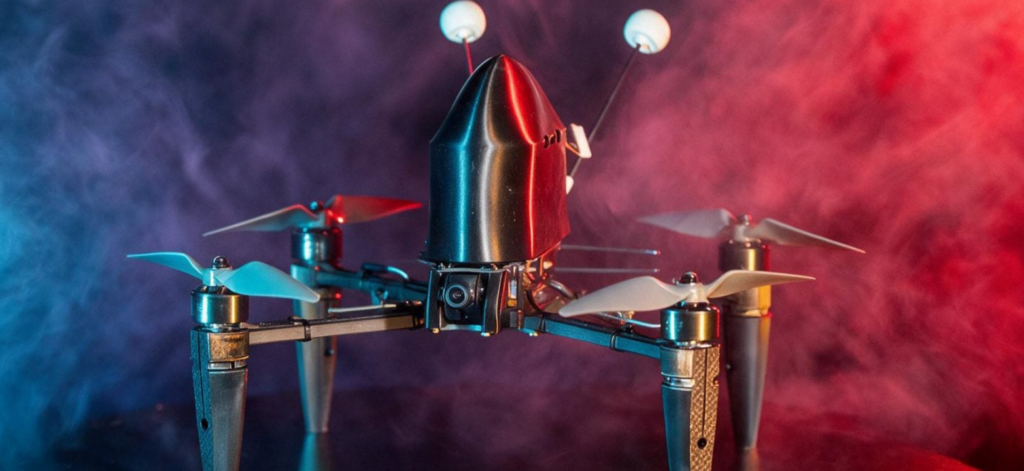
A TAF Kolibri-i10 interceptor. Source: TAF Industries

Ukraine has approved a new domestic interceptor and put it on the shelf for units to buy. Ukraine's Defense Ministry has codified the high-speed TAF Kolibri-i10 interceptor from TAF Industries, the company announced.

The approval adds one more weapon to Ukraine's fast-scaling interceptor arsenal and its state procurement pipeline. Ukraine now fields drone-hunters from dozens of makers to counter Russia's massed drone attacks. Units can order it directly through the state marketplace, the same DOT-Chain and Brave1 Market system that has turned battlefield-proven drones into off-the-shelf purchases.

The interceptor grew out of combat use

The Kolibri-i10 came from an improvised solution that worked. The idea grew from using the FPV drone Kolibri 10 to intercept Russian fixed-wing drones, and combat experience showed the approach was so effective that TAF built a new, specialized interceptor rather than modifying the existing model.

Its job is hunting Russian reconnaissance and strike drones. The Kolibri-i10 is designed to destroy Molniya, Orlan, and Zala drones, preventing attacks on Ukrainian positions and covering operations and rear-area sites.

"Field tests have already confirmed the effectiveness of this interceptor, so we have already begun scaling it," CEO Volodymyr Zinovskyi said.

The specs and the jam-resistance

The interceptor was rebuilt for speed and durability. It has a stronger frame, more powerful motors, faster propellers, and improved aerodynamics, reaching over 200 kilometers per hour, a range of up to 25 kilometers, more than 20 minutes aloft, and an altitude of up to 3,000 meters.

It is built to work under jamming. Manual control gives the operator full command at critical moments; digital day-and-night cameras enable operation in varied conditions. MilELRS firmware ensures stable operation in the presence of active electronic warfare. That jam-resistance is a recurring requirement for Ukrainian interceptors, since signal-dependent ones fail against the electronic warfare saturating the front.

The drone is available to order on Brave1 Market, priced at about $760 with a day camera and $1,550 with a night camera.

  • ✇Euromaidan Press
  • Russia steers its long-range drones from ground towers—Kyiv says it hit one in occupied Crimea
    Ukraine struck a Russian drone-control relay station and two other military targets in occupied Crimea and the occupied south overnight on 12 August, its General Staff said. Explosions rolled across the peninsula through the night, Sevastopol declared repeated air-raid alerts, and towns across occupied Crimea lost power, according to Ukrainian monitoring channels and Russian occupation authorities.  Russia launches its attack drones at Ukraine from sites inside Russia a
     

Russia steers its long-range drones from ground towers—Kyiv says it hit one in occupied Crimea

12 août 2026 à 12:14

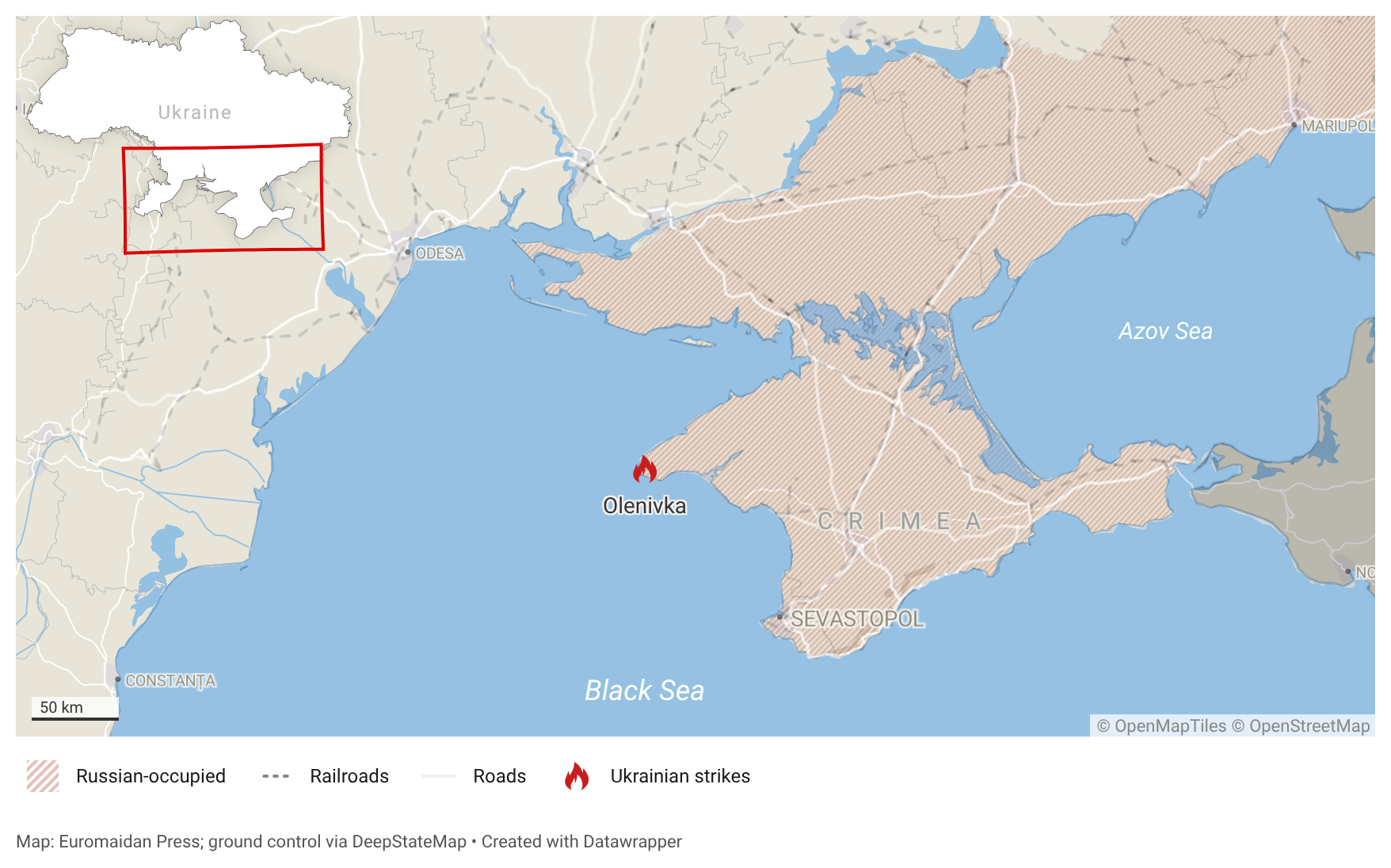
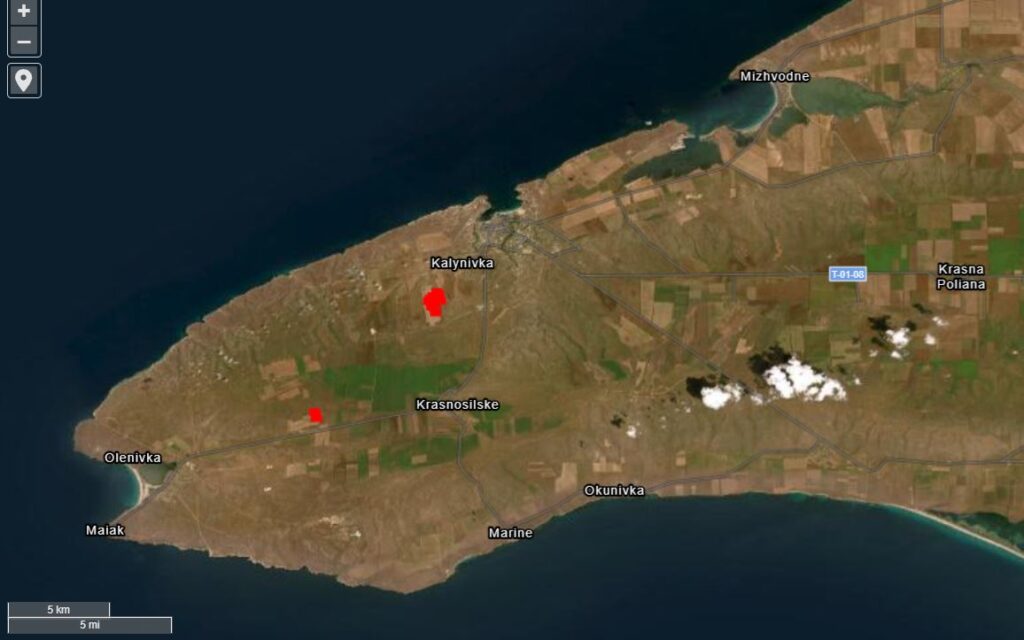
russia steers its long-range drones ground towers—kyiv says hit one occupied crimea · post nasa firms satellite data shows fire about 6 km east olenivka chornomorske raion 12 2026 ukraine

Ukraine struck a Russian drone-control relay station and two other military targets in occupied Crimea and the occupied south overnight on 12 August, its General Staff said. Explosions rolled across the peninsula through the night, Sevastopol declared repeated air-raid alerts, and towns across occupied Crimea lost power, according to Ukrainian monitoring channels and Russian occupation authorities. 

Russia launches its attack drones at Ukraine from sites inside Russia and across occupied territory every day, and relay stations let it steer those drones over long distances. Occupied Crimea is the logistical spine of Russia's hold on southern Ukraine, the funnel through which fuel, ammunition, and reinforcements reach the front, and its fixed airfields, power plants, and control stations sit within reach of Ukraine's growing long-range arsenal.

What the General Staff says was hit

Ukraine's Defense Forces struck three targets overnight, the General Staff reported. The first was a ground relay station used to control Geran and Gerbera attack drones near Olenivka in occupied Crimea. The others were a Russian repair unit near Mariupol in Donetsk Oblast and a staging point for an enemy drone unit near Marivka in Luhansk Oblast.

Hitting these sites weakens Russia's ability to command its attack drones, keep its military vehicles running, and sustain its units, the General Staff said. 

Occupied Crimea has three villages named Olenivka, and the General Staff did not say which one it meant. The likeliest is in the Yevpatoria district, at the tip of the Tarkhankut peninsula—Crimea's westernmost cape and its closest point across the Black Sea to mainland Ukraine's Odesa Oblast, a frequent target of Russian drones launched from the peninsula.

Euromaidan Press could not independently verify the strikes and damage.

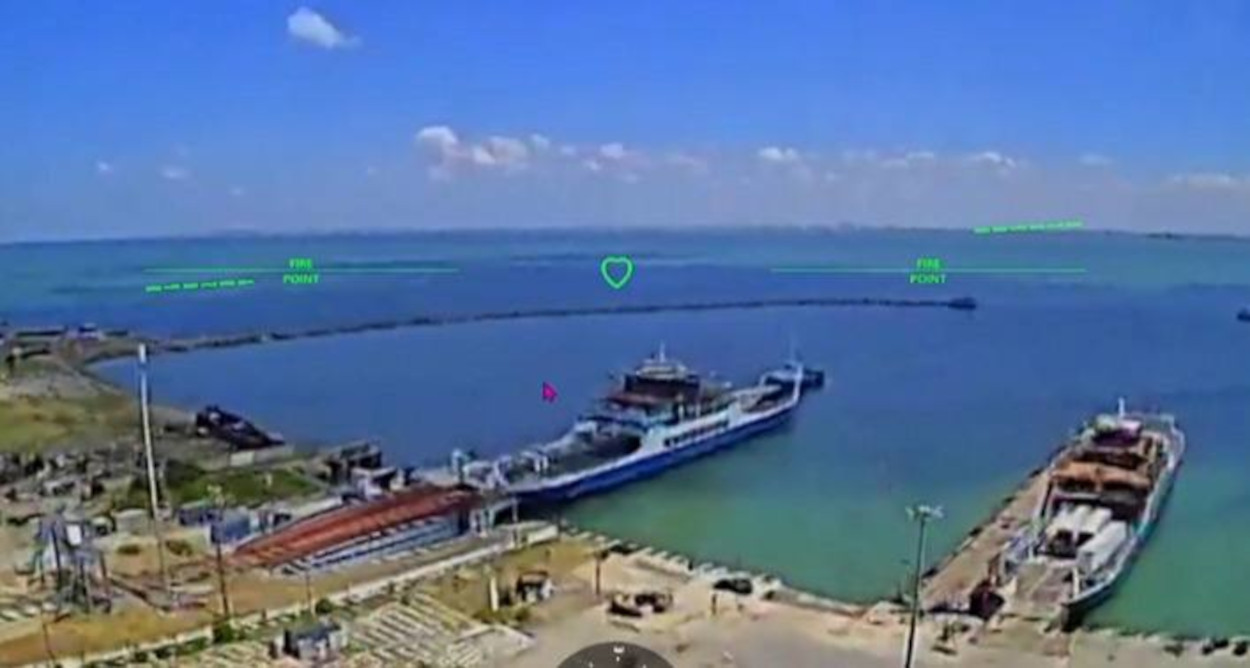
A photo shared by Robert “Madyar” Brovdi shows the Russian ferry “Maria” before it was struck in Ukrainian drone operations, with the damaged “Panagia” ferry visible to the right. Photo: Robert "Madyar" Brovdi
Explore further

Ukraine’s Crimea campaign could strike seven times more targets with faster funding, Brovdi says

Russia flies these drones through a chain of ground repeaters, often mounted on mobile-operator towers or similar tall structures, boost the control signal so operators inside Russia can steer Geran and Gerbera drones over Ukraine from hundreds of kilometers away. Kyiv has dismantled similar relay networks before, including one Russia had built on towers and rooftops in Belarus.

Explosions and blackouts across occupied Crimea

Sevastopol declared three air-raid alerts, and the Russian-installed governor Mikhail Razvozhaev claimed Russian forces downed more than 30 drones, with the heaviest activity over the Balaklava district and no one hurt.

The Ukrainian monitoring channel Krymsky Veter reported explosions in Feodosia and Kerch, and drones close to the Kacha and Belbek airfields. Residents reported air-defense activity near major cities.

The channel said explosions sounded near the Balaklava thermal power plant, a mobile gas-turbine station, and a substation in Sevastopol. Power cut out across parts of occupied Crimea, leaving Sevastopol, Simferopol, and several more cities and districts without electricity.

sea drones jet neptune missiles hit one russian port single night · post fire burns novorossiysk early hours 12 2026 пожежа у новоросійську ніч проти серпня фото exilenova+ ukraine news
Explore further

Sea drones, jet drones, and Neptune missiles hit one Russian port in a single night

After the attack, Krymsky Veter's monitoring group reported two large fires near Sevastopol, citing satellite data. One sat by a road junction near the village of Pervomaiske under Balaklava, where a bridge crosses the railway. The other burned near one of the local beaches. The group also logged an already-extinguished fire in the Inzhyr tract that had been reported the day before.

The same night, Ukraine also struck Russia's naval base at Novorossiysk, the fleet's main Black Sea base since late 2023.

Part of the campaign to isolate Crimea

The overnight strikes fit Ukraine's months-long effort to cut occupied Crimea off from the forces and supplies that sustain it. Ukrainian drones have severed road and rail links to the peninsula, left it rationing fuel under rolling blackouts, and pushed the campaign onto the sea by hunting the tankers that supply it. 

A 141-meter ship mysteriously “disappeared” in the Black Sea near Novorossiysk, while Russian authorities are keeping the incident under wraps

12 août 2026 à 10:34

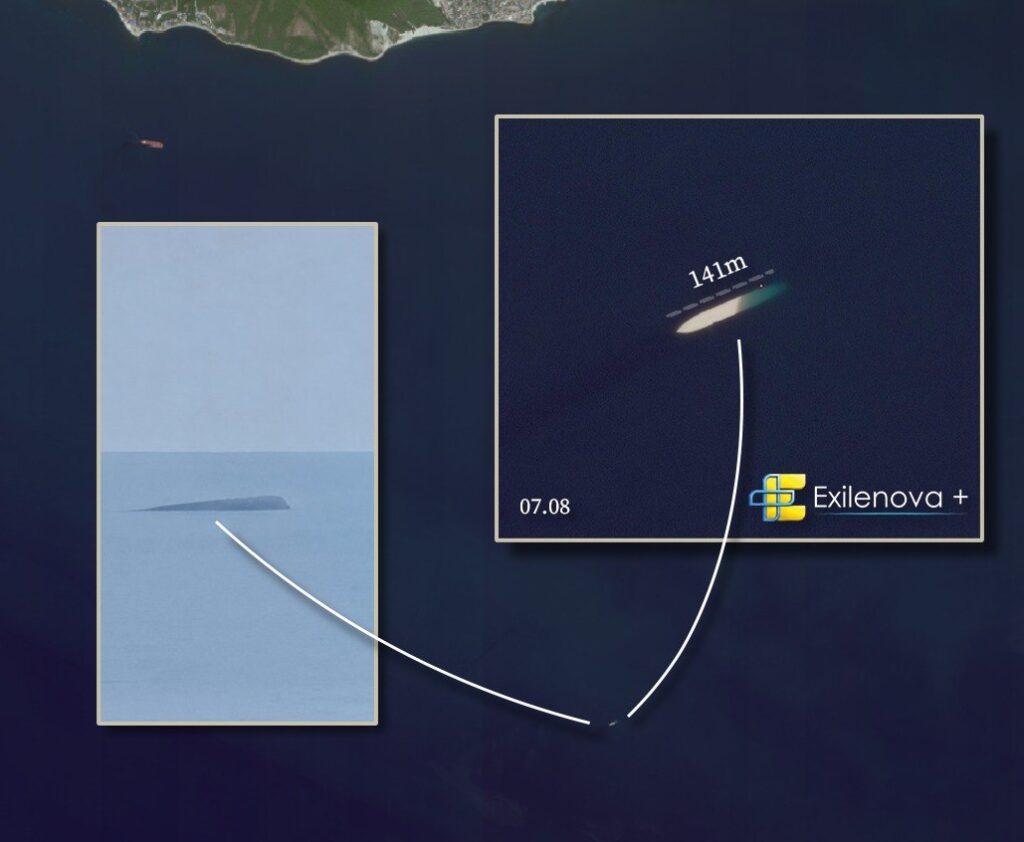
Sunken vessel near Novorossiysk. August 2026. Source: Exilenova+

Overnight on 7 August, a vessel was possibly sunk in the Black Sea near Novorossiysk, the Ukrainian monitoring channel Exilenova+ reports. The project, which spotted the ship in satellite imagery, suggests it may have been carrying military cargo.

Russia has a practice of concealing its fleet losses. Moscow tries to mask the scale of the problem in various ways: it classifies sinkings as accidents, downplays the number of casualties, or stays completely silent about vessel losses. Russia acknowledges fleet losses only when it happens accidentally or when concealing the sinking or damage is no longer possible. The 141-meter vessel, which had no foreign owner to demand explanations, has received none.

Russian officials have not commented on the sinking, Exilenova+ says.

"The news passed quite modestly, but there is a nuance. Russia's 'official' authorities have not reported about any sunken vessel. It just sank. It is not ruled out that the ship was carrying military cargo for Russia's armed forces. Otherwise, why pretend nothing happened?" Exilenova+ wrote.

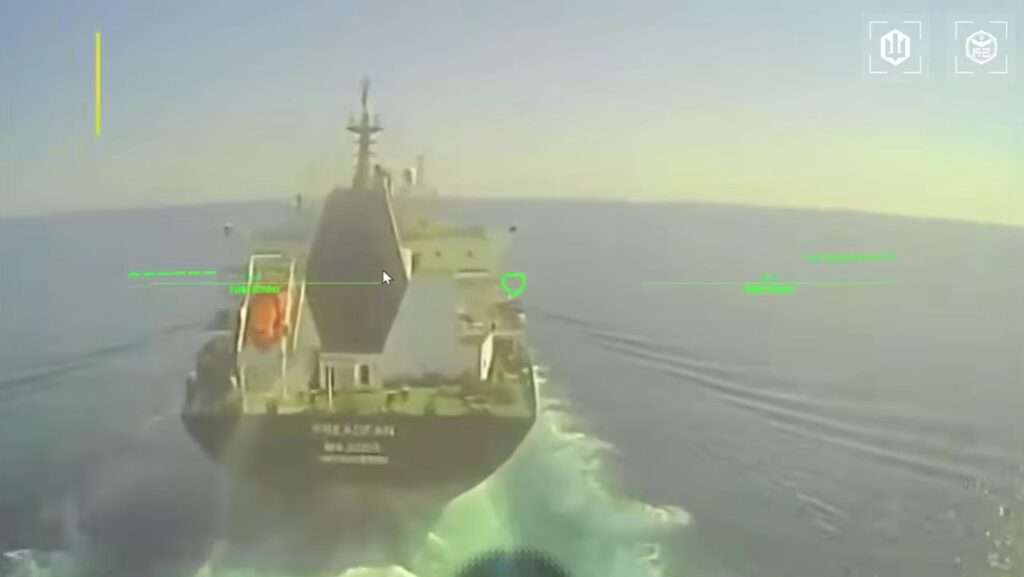
Russian shadow fleet vessel struck by a drone operated by the Unmanned Systems Forces of the Armed Forces of Ukraine. Photo: Screenshot from a video by Robert “Madyar” Brovdi

The vessel was approximately 141 meters long, suggesting a displacement of roughly 10,000 tonnes, according to the Ukrainian outlet Militarnyi.

The strikes that may have caused the sinking

Over 48 hours on 6-7 August, the Unmanned Systems Forces (SBS) struck 102 enemy targets, SBS Commander Robert “Madyar” Brovdi reported. In the same post, he noted that the targets included six shadow fleet vessels in the Black and Azov Seas: two tankers and four dry cargo ships. The SBS also reported striking three units of Russia's fleet on 7 August alone.

"It is entirely possible that the vessel that sank near Novorossiysk is among those struck in those days”, Militarnyi suggests.

Novorossiysk under fire again on 12 August

Just hours after the news of the earlier reported sinking surfaced publicly, Novorossiysk came under attack. Overnight on 12 August, Ukraine's defense forces conducted what President Zelenskyy called a "unique operation" against the naval base, using Palianytsia jet drones, Neptune missiles, and unmanned naval systems.

Novorossiysk became Russia's primary Black Sea naval hub after Ukrainian strikes forced the fleet out of Sevastopol.

  • ✇Euromaidan Press
  • Sea drones, jet drones, and Neptune missiles hit one Russian port in a single night
    On 12 August 2026, Ukraine targeted Russia's main Black Sea naval base and oil terminal at Novorossiysk overnight. Fires broke out at the port's oil and fleet facilities, two of Russia's largest grain terminals stopped work, and debris damaged homes across the city, according to Ukrainian monitoring channels and local Russian authorities. Ukrainian President Volodymyr Zelenskyy confirmed the operation hours later. Russia's southern coast is where much of the war is paid
     

Sea drones, jet drones, and Neptune missiles hit one Russian port in a single night

12 août 2026 à 06:57

sea drones jet neptune missiles hit one russian port single night · post fire burns novorossiysk early hours 12 2026 пожежа у новоросійську ніч проти серпня фото exilenova+ ukraine news

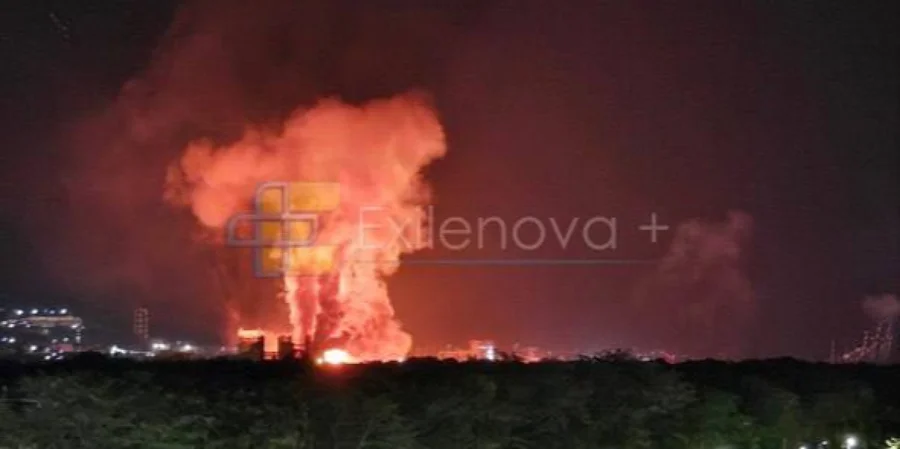
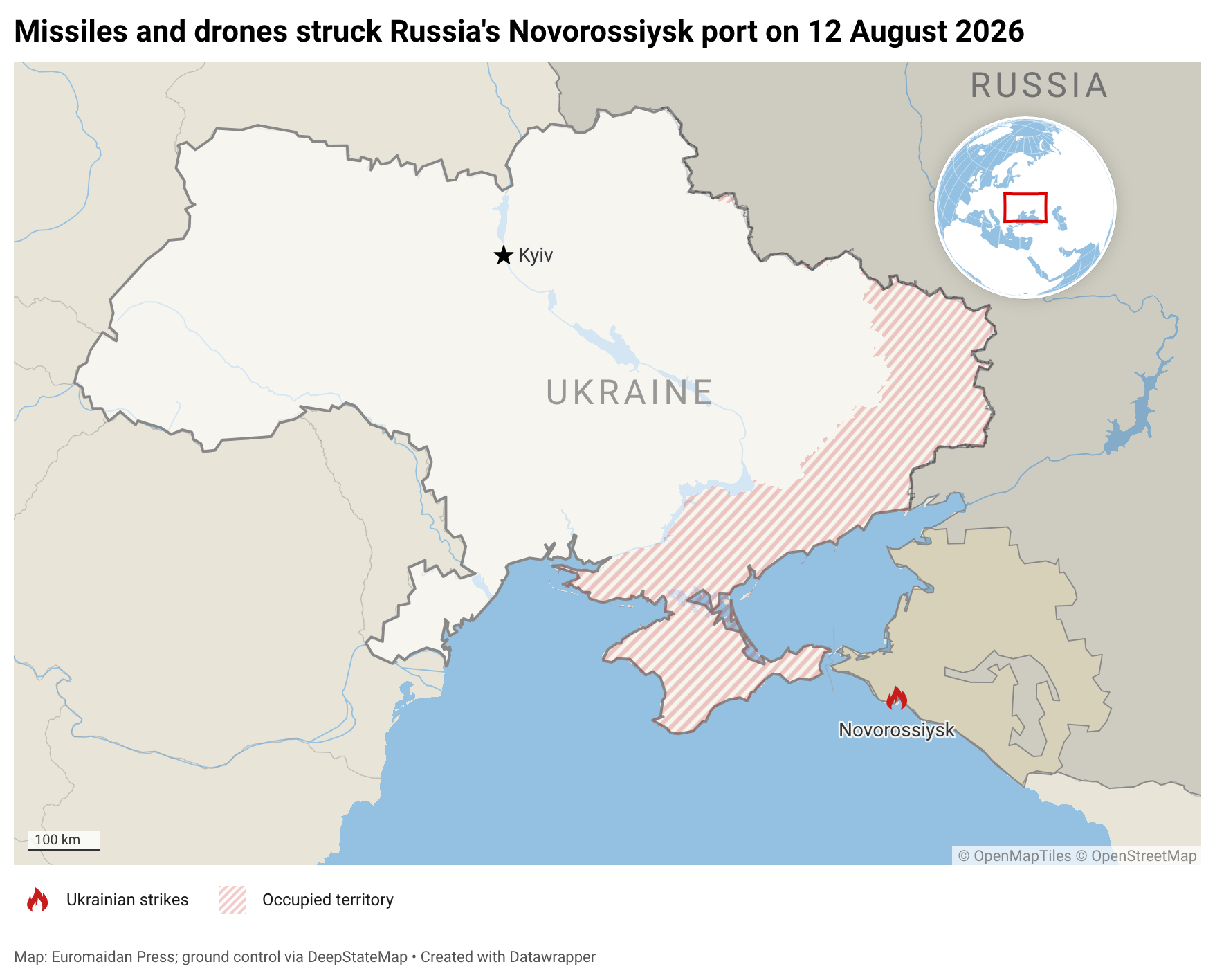
On 12 August 2026, Ukraine targeted Russia's main Black Sea naval base and oil terminal at Novorossiysk overnight. Fires broke out at the port's oil and fleet facilities, two of Russia's largest grain terminals stopped work, and debris damaged homes across the city, according to Ukrainian monitoring channels and local Russian authorities. Ukrainian President Volodymyr Zelenskyy confirmed the operation hours later.

Russia's southern coast is where much of the war is paid for, the loading point for the oil revenue and grain exports that keep the invasion running, and it now sits within reach of Kyiv's long-range weapons.

Kyiv calls it a "unique operation" on the fleet's last big base

Zelenskyy said Ukraine's Defense Forces hit the Novorossiysk naval base overnight on 12 August. The port city is situated more than 350 kilometers from the front line on Russia's eastern Black Sea coast. The Ukrainian president described the assault as a unique operation against the last main outpost of Russia's Black Sea Fleet.

"Our Palianytsia jet drones, Neptune missiles, and naval uncrewed systems precisely struck the designated targets," he said, adding that hits were confirmed on air-defense positions, piers, and seaport infrastructure.

Fires at the Sheskharis oil terminal and the naval harbor

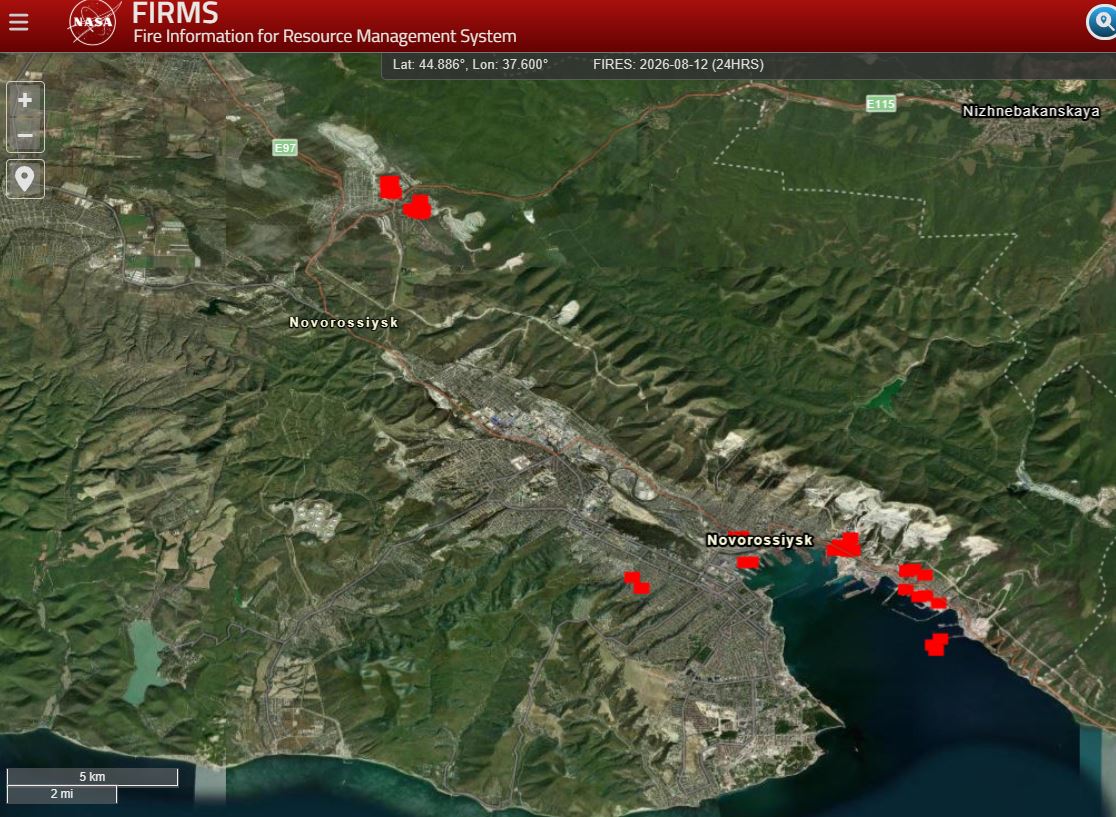
Ukrainian drones hit the oil terminal and the naval base, the Ukrainian defense outlet Militarnyi reported. Its analysis of NASA satellite fire data placed blazes at the Sheskharis complex, where crude loads onto tankers, and near the naval base and fuel-storage tanks.

sea drones jet neptune missiles hit one russian port single night · post nasa firms shows fires detected around novorossiysk 12 2026 ukraine news ukrainian reports
A NASA FIRMS map shows fires detected in and around Novorossiysk on 12 August 2026. Map: NASA FIRMS

Sheskharis is the endpoint of Transneft's main pipelines and a key export point for Russian crude on the Black Sea. Novorossiysk ships 600,000 to 700,000 barrels of oil a day.

The Ukrainian monitoring channel Krymsky Veter said fires broke out near the Sheskharis pier and the military harbor where Black Sea Fleet ships and submarines dock. Russia moved vessels to Novorossiysk after Ukrainian strikes pushed the fleet out of occupied Crimea.

Two grain terminals stop at the world's top wheat exporter

Novorossiysk's two largest grain-handling terminals halted work after the strikes, Reuters reported, citing four industry sources. The world's top wheat seller, Russia sends most of its exports out through Black Sea ports.

The Novorossiysk grain terminal, which can move 8.5 million tons a year, halted work as owner Demetra Holding assessed the damage. NKHP, a terminal handling 7.1 million tons a year, also stopped, its main owner OZK said, adding that no one was hurt. The Ukrainian monitoring Telegram channel Exilenova+ described NKHP, Russia's largest deepwater grain terminal, as one of the sites hit.

novorossiysk

The strikes extend Ukraine's effort to deny Russia the grain and oil revenue that funds the war, a mirror of Russia's own summer campaign against Ukraine's ports: as Moscow strikes Odesa's terminals to choke Ukrainian exports, Kyiv works to shut Russia's own.

A few more videos from Novorossiysk this morning pic.twitter.com/r4zASGtZNc

— Exilenova+ (@Exilenova_plus) August 12, 2026

Russia says its own drone debris damaged homes and killed two

Krasnodar Krai Governor Veniamin Kondratyev claimed several hundred drones attacked the region overnight and that falling debris struck 21 residential buildings and four enterprises in Novorossiysk. He claimed two people were killed, including an eight-year-old child, and 13 wounded across the krai, with about 90 residents moved to temporary shelters.

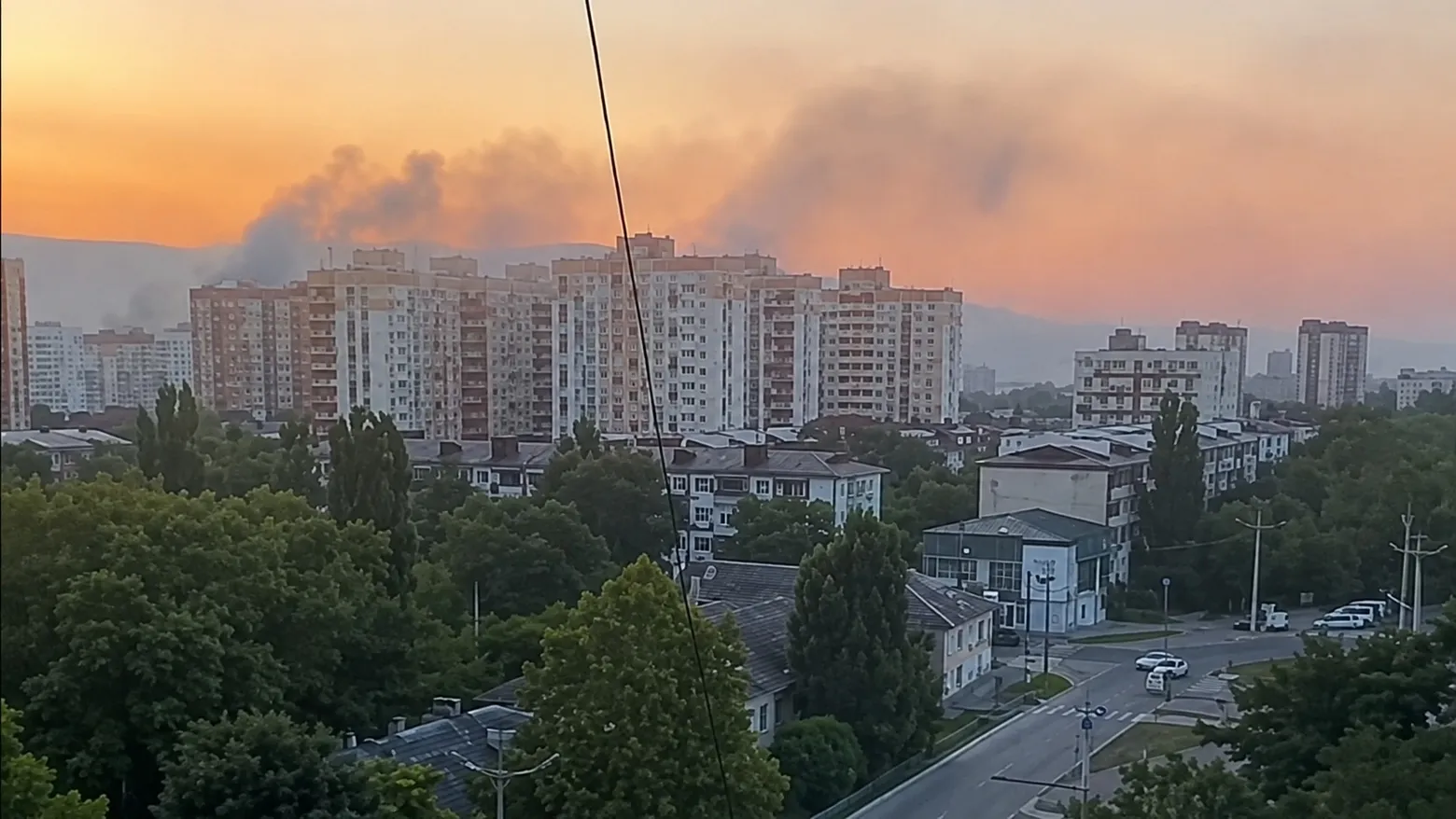
sea drones jet neptune missiles hit one russian port single night · post smoke rises over novorossiysk after ukrainian strike black 12 2026 video exilenova+ удар по новоросійську серпня року
Smoke rises over Novorossiysk after a Ukrainian strike on the Russian Black Sea port, 12 August 2026. Screenshot from a video: Exilenova+

Novorossiysk Mayor Andrei Kravchenko claimed debris hit six residential buildings, a commercial building, and a construction site, and that there were casualties.

The Russian news Telegram channel Astra reported that a café burned on Sukhumskoye Shosse, across the road from the entrance to the Novorossiysk naval base. Astra also found that a strike damaged School No. 15 near the fleet's ship berths.

Part of a widening summer campaign

The strike fits a broader Ukrainian effort this summer to carry the war onto Russian soil and drain the Kremlin's ability to fight. A day earlier, Ukrainian drones set a Wildberries logistics complex ablaze near Voronezh and hit an oil refinery in Orsk. Overnight on 10 August, drones struck a petrochemical plant in Tobolsk and a refinery in Tatarstan.

  • ✇Euromaidan Press
  • Romania found two Russian drones bobbing in its sea—and didn’t wait to ask questions
    Russia's war drifted into Romania's Black Sea waters again, and this time the country's military blew the intruders up, acting Defense Minister Radu Miruță said. A vessel near an offshore gas field spotted two floating Russian drones, and army bomb-disposal divers destroyed them. Ukraine confirmed the aircraft were not its own. Wreckage from the air war over Ukraine now keeps turning up on the land and in the waters of nearby NATO states, dragging their forces into a fi
     

Romania found two Russian drones bobbing in its sea—and didn’t wait to ask questions

12 août 2026 à 03:39

romania found two russian drones bobbing its sea—and didn't wait ask questions · post floating aircraft joined run uncrewed systems drifting neighboring countries' land waters знищення дрейфуючого дрона в чорному

Russia's war drifted into Romania's Black Sea waters again, and this time the country's military blew the intruders up, acting Defense Minister Radu Miruță saidA vessel near an offshore gas field spotted two floating Russian drones, and army bomb-disposal divers destroyed them. Ukraine confirmed the aircraft were not its own.

Wreckage from the air war over Ukraine now keeps turning up on the land and in the waters of nearby NATO states, dragging their forces into a fight they never joined.

A ship raised the alarm

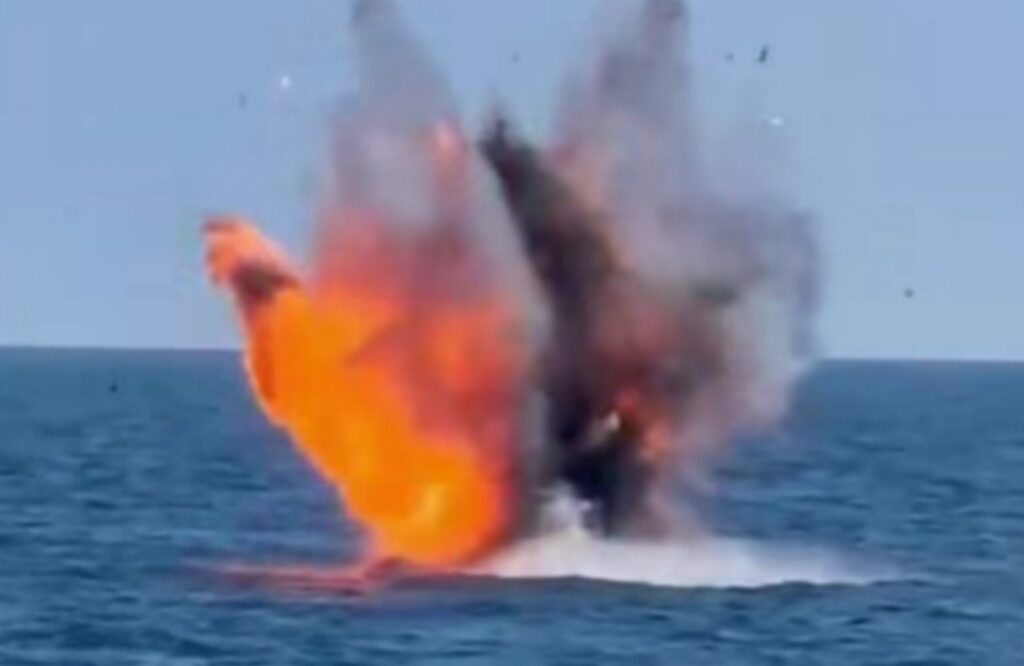
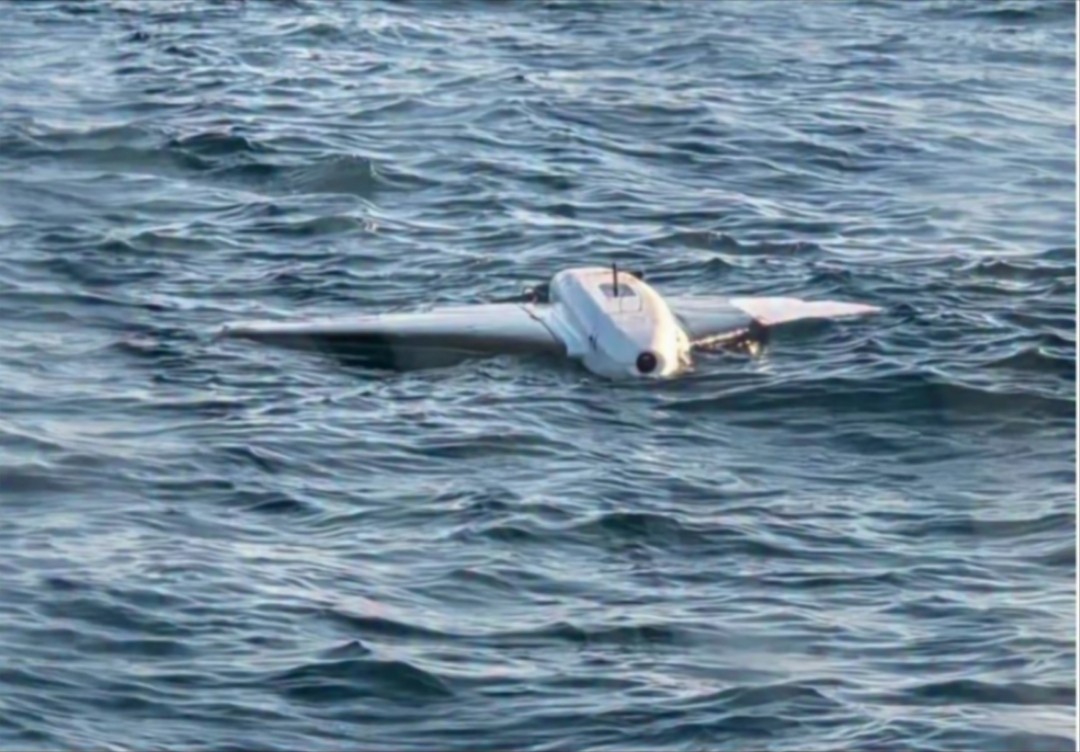
Miruță announced the operation on Facebook, sharing a video. Crews working near the gas platform first noticed the drones in the water. Miruță identified both as Gerberas. A coast guard vessel carrying Romanian army sappers then sailed to the scene. The divers found two uncrewed aircraft adrift, along with several other fragments.

The drones lay in Romania's exclusive economic zone, roughly 90 nautical miles (about 167 km) east of Constanța, Militarnyi reported. Miruță said Romania's Defense Ministry then contacted Kyiv: 

"The Ministry of National Defense contacted the Ukrainian partners, who confirmed the systems do not belong to them."

romania found two russian drones bobbing its sea—and didn't wait ask questions · post one drifting spotted black sea before destruction 11 2026 один з виявлених дронів у чорному морі
One of the drifting Russian drones spotted in the Black Sea before its destruction, 11 August 2026. Photo: Romanian Defense Ministry

To protect the shipping route and the work around the platform, the military destroyed the drones in a controlled blast, Suspilne relayed.

Russia designed the Gerbera as a decoy. The cheap foam aircraft forces Ukrainian air defenses to waste time and interceptors, and helps Russian crews locate those defenses. Later, Russia fitted some Gerberas with warheads, turning the decoy into a strike drone. The same model can also carry smaller attack drones or gather intelligence.

Custom Code

The attack on Ukraine

Ukraine's Air Force reported that last night Russia hit Ukraine with an Iskander-M ballistic missile, a Kh-31P anti-radar missile, and Kh-35 guided missiles, plus 138 Shahed-type strike drones — among them jet-powered ones, Gerberas, and Parodiya decoys — fired from several sites inside Russia and from occupied territory. 

The main targets were Sumy Oblast in the northeast and Odesa Oblast, Ukraine's Black Sea coastal region that lies northeast of Romania's shore. By morning, air defenses had downed or suppressed 112 of the drones, though strikes hit 16 locations.

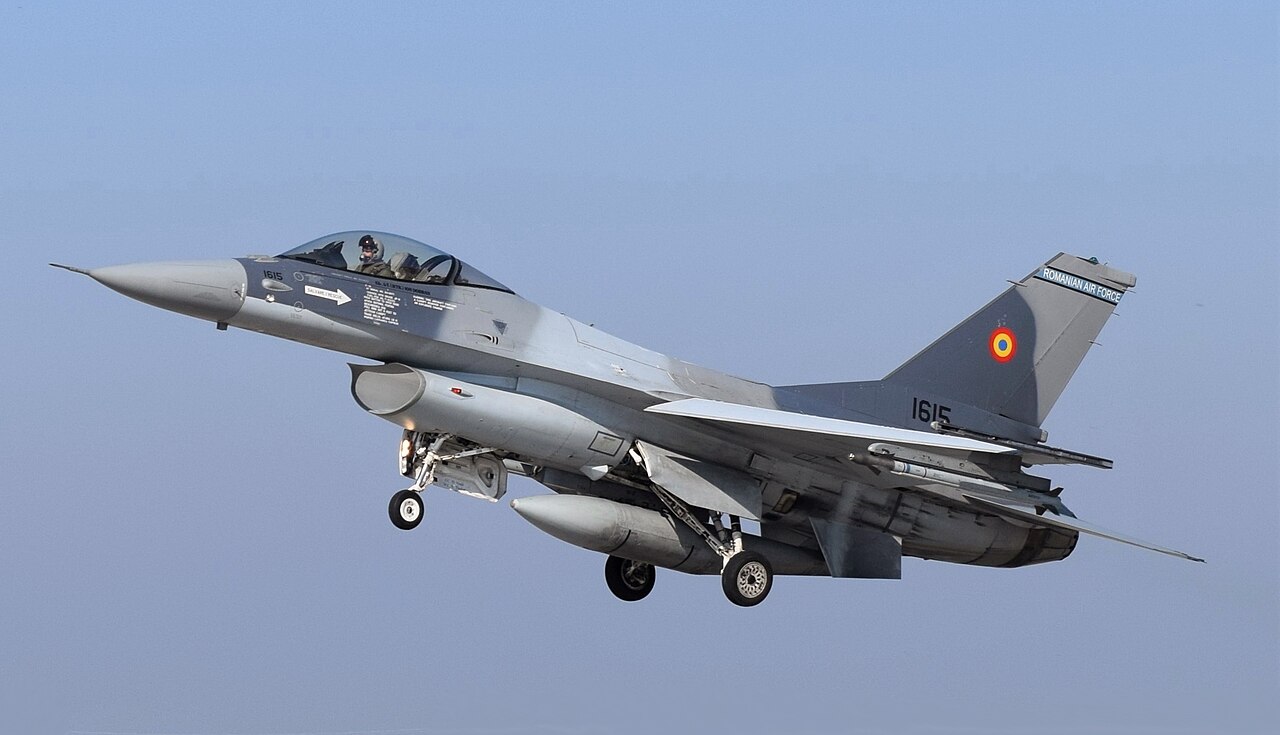
romania knocks third drone its sky 72 hours · post romanian air force f-16 fighting falcon fighter jet lands borcea base 2023 dvidshubnet romanian_f-16_fighting_falcon_lands_at_borcea_air_base_romania ukraine news ukrainian reports
Explore further

Romania knocks a third Russian drone from its sky in 72 hours

Adrift far from any front

The drones surfaced far from any battlefield. Russian uncrewed aircraft have repeatedly drifted into neighboring states during Moscow's attacks on Ukraine. Romania itself has shifted from escorting stray drones to shooting them down.

Neptun Deep is Romania's largest offshore gas project, due to start production in 2027. Bucharest is counting on the field to cut its reliance on outside supply and to feed neighbors that still lean on Russia. The two drones drifted into the waters around it.

❌