Russia’s Federal Security Service (FSB) plans to abolish special border zones along several boundaries with Ukrainian territories occupied by Russia, according to draft orders reviewed by the Russian outlet Agentstvo.
The proposed changes would remove restrictions that currently treat movement between Russia and occupied parts of Ukraine much like crossing an international border. The FSB says the move follows Russia’s claimed incorporation of the occupied Ukrainian ter
Russia’s Federal Security Service (FSB) plans to abolish special border zones along several boundaries with Ukrainian territories occupied by Russia, according to draft orders reviewed by the Russian outlet Agentstvo.
The proposed changes would remove restrictions that currently treat movement between Russia and occupied parts of Ukraine much like crossing an international border. The FSB says the move follows Russia’s claimed incorporation of the occupied Ukrainian territories into Russia.
FSB seeks to remove border zones
The draft orders, as reported by Ukrainska Pravda, would invalidate previous FSB orders establishing border zones along the boundaries between Russia’s Rostov and Voronezh oblasts and the occupied territories of Ukraine.
A similar change is planned for occupied Crimea, where the current border zone along the boundary with occupied Kherson Oblast would be abolished.
The existing rules effectively impose additional controls on people entering and leaving the occupied territories, making movement subject to procedures similar to those used at Russia’s state border.
In the draft orders, the FSB justifies the changes by referring to the alleged “admission into the Russian Federation” of the occupied parts of Donetsk, Luhansk, and Kherson oblasts.
Russia illegally claimed to annex those territories, along with Zaporizhzhia Oblast, in September 2022. The move has been rejected by Ukraine and the international community, and Russia does not control all of the territory it claims to have annexed.
Border zone would remain around Crimea's islands
The FSB proposal would not completely eliminate the border zone in occupied Crimea.
A restricted zone would remain “within the boundaries of the Black Sea islands belonging to the Russian Federation,” according to the draft. The FSB’s regional directorate would determine where and when people could enter the zone and would install warning signs.
The proposed changes would remove the existing border zones along Russia’s boundaries with occupied Ukrainian territories, while retaining a border zone around certain Black Sea islands in occupied Crimea.
Russia treats occupied territory as part of its territory
The planned changes reflect Moscow’s effort to incorporate occupied Ukrainian territories into Russia’s administrative and legal system.
In September 2022, Russian President Vladimir Putin signed so-called “accession treaties” claiming to incorporate Donetsk, Luhansk, Kherson, and Zaporizhzhia oblasts into Russia. Russia’s parliament subsequently approved the claims.
The treaties purported to define the boundaries of the annexed territories according to the borders they had on the day Russia claimed to admit them into the Russian Federation, despite Russia not controlling the entirety of those regions.
Russia previously used similar measures to formalize its control over occupied Crimea after illegally annexing the peninsula in 2014.
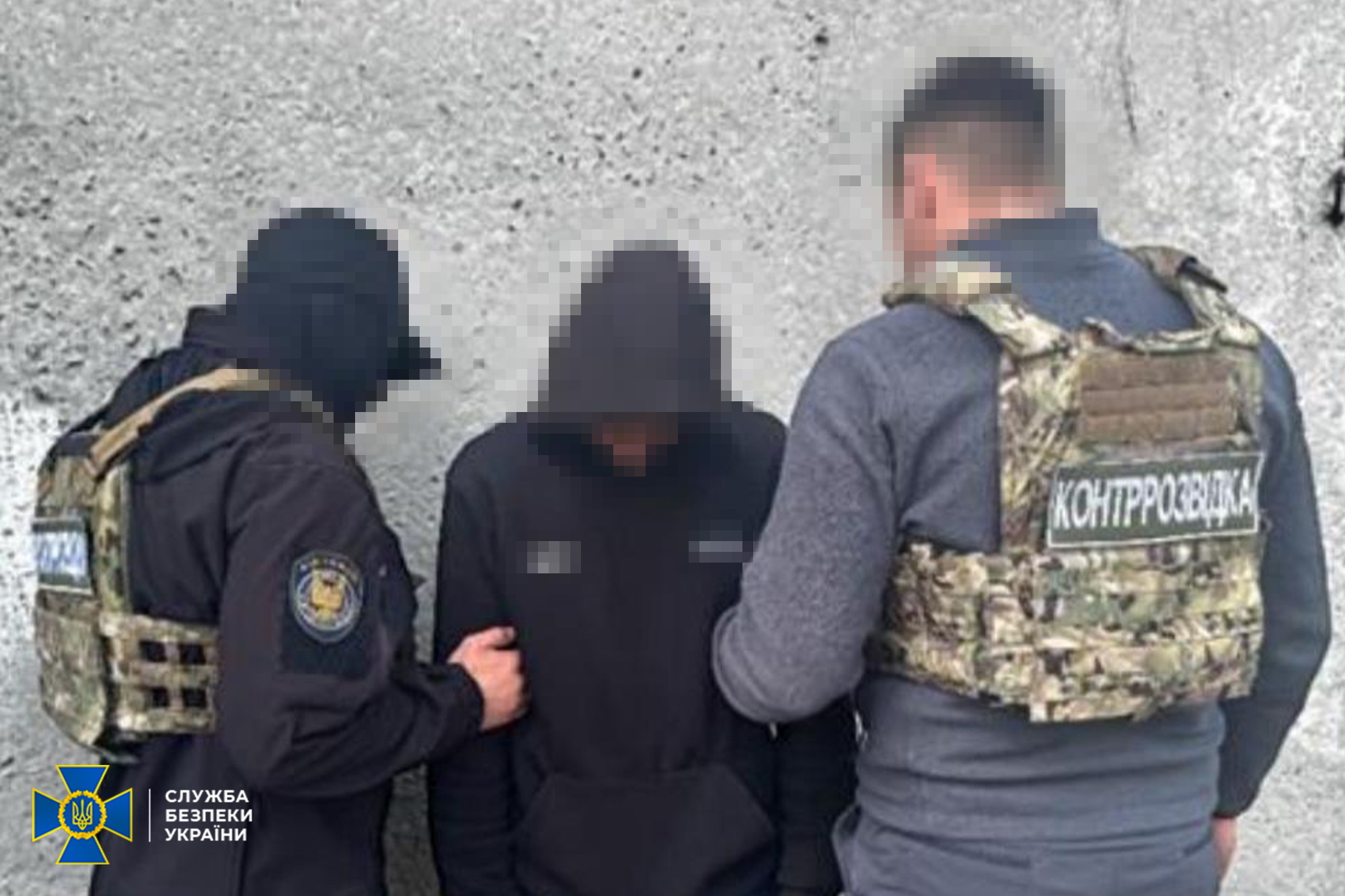
A Kyiv court has sentenced an unemployed man to 15 years in prison with confiscation of his property for carrying out arson attacks on behalf of Russian intelligence, Ukraine's Security Service (SBU) said on 13 August. The man was recruited while looking for "easy money" on Telegram channels and carried out two arson attacks in Kyiv before fleeing to Odesa, the SBU reported.
Russian intelligence increasingly recruits Ukrainians through Telegram for arson and sabotag
A Kyiv court has sentenced an unemployed man to 15 years in prison with confiscation of his property for carrying out arson attacks on behalf of Russian intelligence, Ukraine's Security Service (SBU) said on 13 August. The man was recruited while looking for "easy money" on Telegram channels and carried out two arson attacks in Kyiv before fleeing to Odesa, the SBU reported.
Russian intelligence increasingly recruits Ukrainians through Telegram for arson and sabotage. It targets people seeking quick money and treats them as disposable operatives, paying small sums for a single task and discarding them once they are caught.
The Russian agent carried out two arson attacks
According to the SBU, the man first set fire to a relay cabinet belonging to a railway signaling system. Russia intended the attack to disrupt freight logistics, including supplies to areas near the front.
The agent later burned a volunteer’s SUV used to deliver humanitarian aid and evacuate civilians from areas affected by Russia’s war. He carried out the attacks at night, using a flammable mixture and filming each incident on his smartphone before sending the footage to his Russian handler.
The SBU arrested him in Odesa in July 2025, where he had attempted to hide after carrying out the attacks. Investigators seized his phone, which contained evidence of his cooperation with Russia.
A court found him guilty on two counts — sabotage committed under martial law, and intentional destruction of property by arson — both carried out as part of a group acting on prior conspiracy. He was sentenced to 15 years in prison with confiscation of his property.
Explore further
From “easy money” to murder: Russia escalates recruitment of Ukrainians for terrorist attacks inside Ukraine, police warn
Easy money, hard time: other Telegram recruits jailed too
The case follows several similar convictions. In a May case, an agent received 15 years for burning a railway relay cabinet near a Dnipro station in an attempt to disrupt frontline logistics. The SBU said the unemployed local, recruited through Telegram, filmed the arson and reported it to his handler, then was caught before he could carry out a planned series of attacks on the city's critical infrastructure.
In June 2026, another agent was sentenced to 15 years for preparing to burn an electrical substation in Kropyvnytskyi.
In July, SBU investigators reported that a GRU agent in Zaporizhzhia received 15 years for preparing explosives for Russian-organized attacks.
Drones have pushed armored vehicles off the roads to Ukraine's front line, a Ukrainian brigade commander told RBC-Ukraine. Denys Perch, who commands the 107th Territorial Defense Brigade, says the drone-saturated belt has grown so deep that pickups no longer reach forward positions. The one enemy weapon his jammers can't touch is the fiber-optic drone.
The war has become a contest over who can pull people off the battlefield fastest, as cheap drones make any human movem
Drones have pushed armored vehicles off the roads to Ukraine's front line, a Ukrainian brigade commander told RBC-Ukraine. Denys Perch, who commands the 107th Territorial Defense Brigade, says the drone-saturated belt has grown so deep that pickups no longer reach forward positions. The one enemy weapon his jammers can't touch is the fiber-optic drone.
The war has become a contest over who can pull people off the battlefield fastest, as cheap drones make any human movement near the front a target. Ukraine keeps out-inventing Russia at the front, but Russia copies each advance and floods the line with it at state scale.
When armor becomes the target
Until recently, armored vehicles still drove supplies to logistics hubs near the front. That is now almost impossible. Perch says that when a large, armored machine appears, Russian forces treat it as a prize target and swarm it with dozens of drones and munitions. Perch would sooner park his armor than seat soldiers inside it.
Explore further
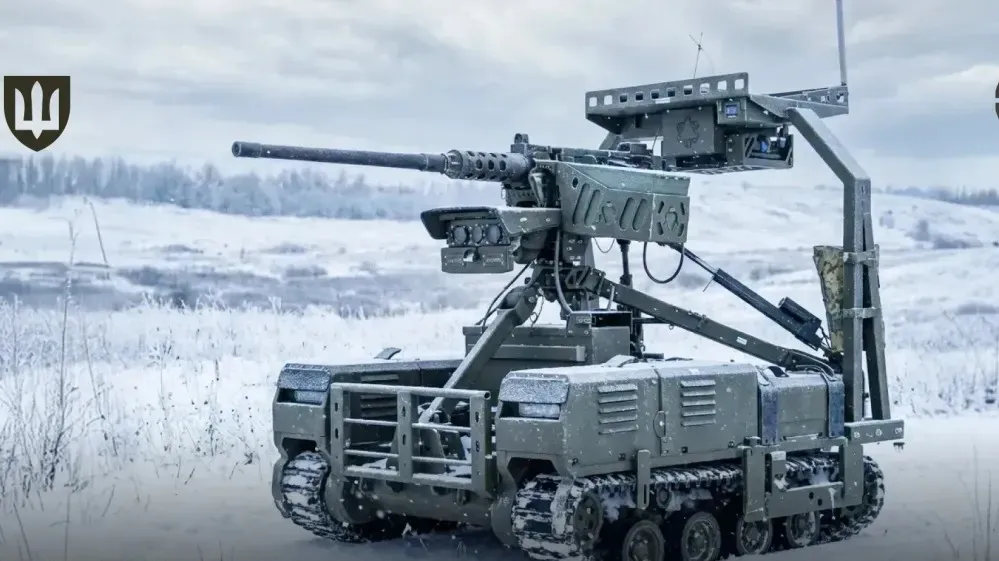
This Ukrainian UGV, beloved by Ukrainian intel, is now winning over NATO countries and global defense giants
A kill zone that keeps widening
On the busiest sectors, Perch says, the kill zone—the drone-ruled strip around the contact line—now runs 15 to 20 kilometers deep. Some positions take three days to reach on foot. Where troops once drove most of the way and walked the last stretch, they now walk it all.
Robots take the drive
Under Perch, the brigade climbed, by his account, from around 22nd to third among Ukraine's Territorial Defense forces on the military's strike-results leaderboard, the home-guard units now fighting on the front. Ground robots—unmanned ground vehicles (UGVs)—do the work that armor cannot. They haul supplies and evacuate the wounded, though the robot often can't be brought back. His brigade runs over 1,500 logistics missions a month by heavy bomber drones alone, and still more by first-person-view (FPV) drones and robots. Russia hunts those bombers, he says, with interceptors that scramble the moment they hear one take off, so his crews mix high and low flight to slip past. Perch expects robots to move from supply runs into combat, hitting Russian troops in their rear.
Explore further
Ukraine wants robots doing 100% of frontline logistics. In June, they ran nearly 17,000 supply and evacuation runs
The drone his jammers can't touch
Both armies now field fiber-optic drones—machines guided by a hair-thin glass thread instead of radio. No signal means nothing to jam. Ukraine learned to block radio and digital drones, cutting their controls and video, Perch said. The glass-fiber ones his electronic warfare cannot reach, because there is no radio link to attack. His brigade still has no counter to them, Perch said, and he wants a technical fix that stops them.
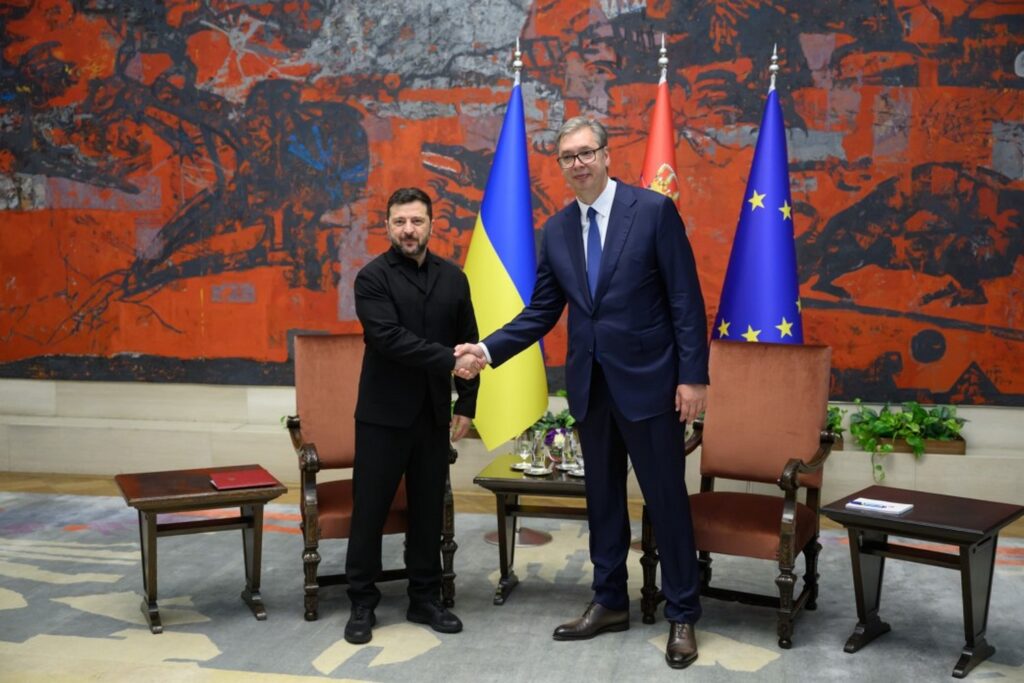
During President Volodymyr Zelenskyy’s recent visit to Serbia, he was asked whether Belgrade could continue to count on Ukraine’s position on Kosova. Zelenskyy reaffirmed that position, saying that Ukraine respects Serbia’s territorial integrity and international law and that its stance on Kosova’s “unilateral declaration of independence” remains unchanged.
Explore further
During President Volodymyr Zelenskyy’s recent visit to Serbia, he was asked whether Belgrade could continue to count on Ukraine’s position on Kosova. Zelenskyy reaffirmed that position, saying that Ukraine respects Serbia’s territorial integrity and international law and that its stance on Kosova’s “unilateral declaration of independence” remains unchanged.
Explore further
Zelenskyy’s Kosovo comments in Belgrade prompt flag removal in Prishtina
For many Kosovars, who have stood firmly with Ukraine since Russia’s full-scale invasion, this is difficult to understand. There is particular pain in hearing President Zelenskyy appear to dismiss what Kosovars endured—when it is precisely that memory of war, displacement, and atrocities that made Kosova one of Ukraine’s most instinctive supporters.
Kosova emerged from an international process designed to resolve a conflict; Russia manufactured “independence” as an instrument of conquest.
The danger of “unilateral”
There is a big problem with the way Kosova is being discussed by President Zelenskyy. Describing its independence simply as a “unilateral declaration” removes everything that matters about how Kosova actually became independent.
It also plays directly into an argument Vladimir Putin has been making for years: if the West accepted Kosova, why should it reject what Russia has done in Crimea, Donetsk, or Luhansk?
Ukraine should be dismantling that argument, not inadvertently reinforcing it. Kosova’s declaration was unilateral in one narrow sense: Serbia did not consent. But Ukrainians should understand the problem with treating the aggressor’s consent as the decisive test.
Imagine telling a community in Ukraine devastated by Russian forces that Moscow must retain a permanent veto over the political settlement that determines its future.
Kosova’s path to independence
Kosova did not simply decide one day in 2008 to break away from Serbia. The declaration came at the end of a process that had lasted years. Kosova’s path to statehood came through the violent dissolution of Yugoslavia, a federation that ultimately fragmented into seven independent states, and after years of systematic repression of Kosova’s overwhelmingly Albanian population. The culmination was the 1998–99 Kosova war.
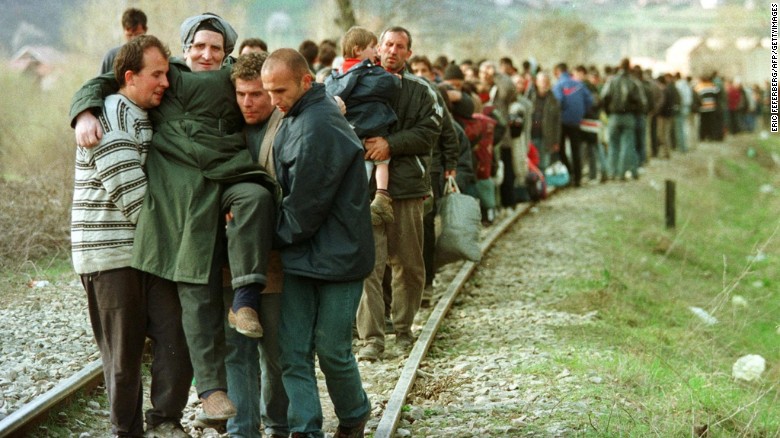
Serbian and Yugoslav forces conducted a campaign of violence and forced displacement against Kosovar Albanians. Nearly 800,000 people were expelled from Kosova in a matter of months because of a violent ethnic cleansing campaign of the Serbian army against Kosovars.
Hundreds of thousands more were internally displaced. Thousands of civilians were killed, cities and villages burned, homes destroyed, and women subjected to sexual violence.
Kosovar refugees fleeing their homeland. 01 March 1999, Blace area, the former Yugoslav Republic of Macedonia. Photograph: UN Photo
When the war ended in 1999, Kosova did not declare independence. Nor did Albania invade Kosova and annex it. Instead, Kosova was placed under UN Security Council Resolution 1244. For almost nine years, its institutions developed under international administration while its final status remained unresolved.
And then there were negotiations. UN Secretary-General Kofi Annan appointed former Finnish President Martti Ahtisaari to lead talks between Belgrade and Pristina over Kosova’s final status. After those negotiations failed to produce an agreement, Ahtisaari concluded that returning Kosova to Serbian rule was no longer a viable option and recommended internationally supervised independence.
This matters because Kosova’s declaration in February 2008 did not reject that international process. It embraced it. The declaration committed Kosova to implementing the Ahtisaari settlement and invited continued international involvement, including an EU rule-of-law mission and NATO’s security presence.
Call the final declaration unilateral if you wish. The process that produced it was anything but.
What the ICJ found
Even after independence, the issue was subjected to further international scrutiny. At Serbia’s initiative, the UN General Assembly asked the International Court of Justice to examine the declaration. In 2010, the court concluded that Kosova’s declaration “did not violate international law.” It also found that it did not violate UN Security Council Resolution 1244.
None of this means Kosova’s path to independence was simple or uncontested. Clearly, it was not. But reducing this history to the word “unilateral” creates precisely the opening Russia needs to manufacture a parallel with Ukraine.
Crimea breaks the comparison
Putin has used Kosova for years to claim that the West created a precedent Russia merely followed: Kosova separated from Serbia without Belgrade’s consent, so why should Crimea be different? Because that is clearly where the similarity ends.
Crimea, Donetsk, and Luhansk were annexed following a Russian invasion. Moscow occupied Ukrainian territory, installed or backed proxy authorities, staged referendums under military occupation, and ultimately claimed Ukrainian land as its own.
Kosova emerged from an international process designed to resolve a conflict; Russia manufactured “independence” as an instrument of conquest. Ukraine should insist on that distinction every time Moscow invokes Kosova.
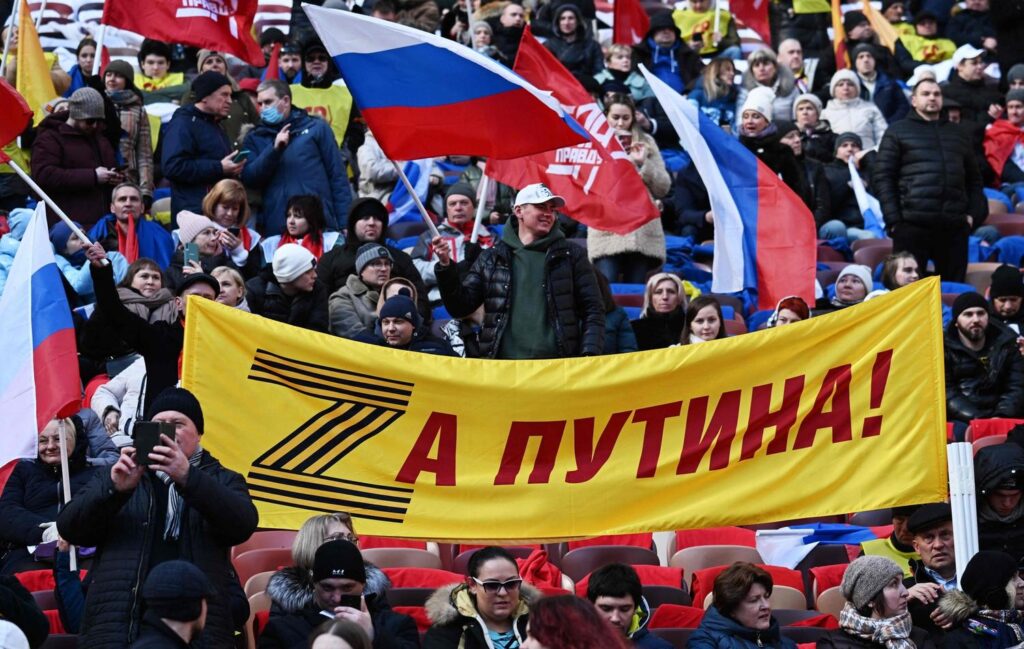
People gather for a concert marking the eight anniversary of Russia's annexation of Crimea at the Luzhniki stadium in Moscow on 18 March 2022. - The banner bearing the letter "Z" in the colours of the ribbon of Saint George, which has become a symbol of support for Russian military action in Ukraine, reads "For Putin!" (Photo by Pavel BEDNYAKOV / various sources / AFP)
Ukraine understandably approaches Kosova cautiously. A country fighting for its territorial integrity is wary of anything that might appear to weaken that principle. But acknowledging the exceptional circumstances of Kosova does not weaken Ukraine’s argument. Treating Kosova and Crimea as comparable cases does.
Russia wants Kosova to be its precedent. Ukraine does not have to accept the premise. Ukraine, in fact, has a particular interest in explaining the difference, because Ukrainians know better than almost anyone what Russian-manufactured "self-determination” actually looks like. That is not Kosova’s story.
Kosova chose Ukraine first
There is also an irony here that is difficult for Kosovars to ignore. Kosova has stood with Ukraine since the beginning of Russia’s full-scale invasion. It imposed sanctions against Russia and Belarus, provided assistance to Ukraine, and offered refuge to Ukrainian journalists.
It did all of this without being recognized by Kyiv—Kosovars did not need recognition to know which side they were on.
Ukraine’s experience resonates deeply in Kosova. We know what it means to live through war and displacement. We also know what it means when a larger neighbor invokes history to argue that it has the right to determine your future.
That does not make the two cases identical—but it should make Ukrainians skeptical when Russia tries to turn Kosova into a justification for its own imperial project.
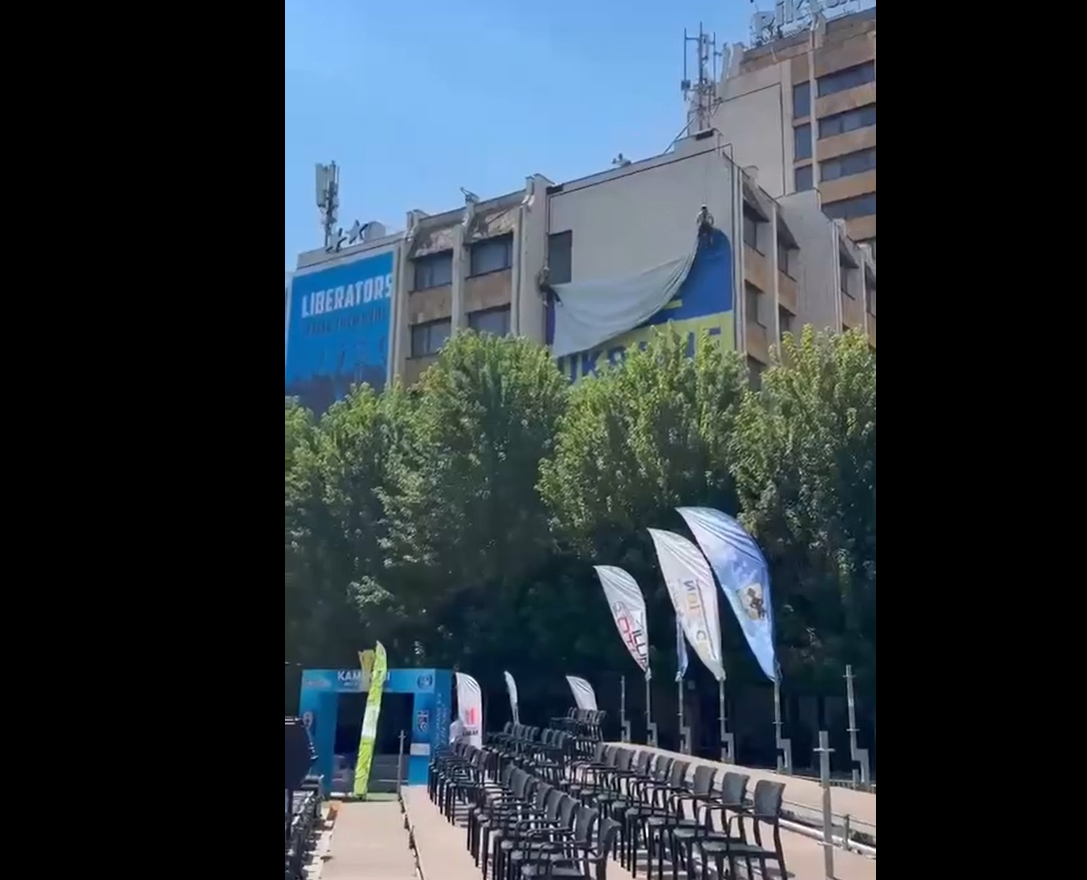
The Ukrainian flag is removed from a public display in Pristina after President Volodymyr Zelenskyy reaffirmed Ukraine’s support for Serbia’s territorial integrity. Video still: Përparim Rama/Facebook.
Kosovars did not expect President Zelenskyy to arrive in Belgrade and announce that Ukraine had suddenly changed its position on Kosova. But it is reasonable to expect Kyiv to revisit its approach to Kosova and to recognize the process by which Kosova came to be, a process that Ukraine’s closest allies today understood, supported, and ultimately recognized.
That requires abandoning a framing that reduces Kosova’s history to a “unilateral declaration” and inadvertently gives credibility to the parallel Russia has spent years trying to construct. For Kosovars, the hope is that a more honest understanding of that history will eventually lead Ukraine to reconsider recognition, too.
Not as a reward for Kosova’s support for Ukraine, but as the natural outcome of seeing Kosova on its own terms rather than through the precedent Moscow wants it to be.
Putin has spent years trying to make Kosova his precedent. Ukraine should take that argument away from him. Doing so would bring Kyiv closer to the position of the allies standing beside it today—and perhaps, in time, recognition would follow.
Nezir Sinani is executive director of the B4Ukraine Coalition, an alliance of more than 100 civil society organizations pressing companies and financial institutions to stop enabling Russia’s war against Ukraine. A longtime Kosovar activist, his work is rooted in Kosova’s own experience of war and displacement.
Editor's note. The opinions expressed in our Opinion section belong to their authors. Euromaidan Press' editorial team may or may not share them.
Russia's defense ministry posted photographs of attack drones in flight on its Telegram channel, captioned "like snow on your head," and told Ukrainians that "in winter, you'll get a freeze." The ministry attached the threat to its own earlier claim of strikes on Ukrainian port infrastructure and vessels.
The post puts in writing what Russia has done to Ukrainian civilians through every winter of the full-scale war: strike the power and heating grid to leave homes cold
Russia's defense ministry posted photographs of attack drones in flight on its Telegram channel, captioned "like snow on your head," and told Ukrainians that "in winter, you'll get a freeze." The ministry attached the threat to its own earlier claim of strikes on Ukrainian port infrastructure and vessels.
The post puts in writing what Russia has done to Ukrainian civilians through every winter of the full-scale war: strike the power and heating grid to leave homes cold and dark. What is new is not the tactic but the candor — a ministry that usually insists it hits only military targets openly advertising the coming assault on the systems that keep civilians warm. And the taunt lands as Ukraine heads into the season more exposed than at any point in the war: President Volodymyr Zelenskyy told CNN this week that the country holds about 1% of the Patriot interceptors it needs to get through winter.
The winter campaign Russia is advertising
Since late 2022, Russia has systematically struck Ukraine's electricity, gas, and heating infrastructure, causing rolling blackouts and cutting heat and water during freezing weather. Ukrainian officials have repeatedly called the campaign "energy terrorism," and grid operators say the strikes have shifted toward knocking out entire energy districts rather than staging single mass barrages. This summer Russia widened the target set again: on 13 August a Russian drone set port infrastructure alight in Odesa Oblast and damaged a civilian vessel at a Mykolaiv port, the national rail operator and regional officials reported — the same kind of strike the ministry's post was boasting about.
Ukraine enters winter short of the weapon that stops ballistic missiles
The threat is heavier because Ukraine cannot reliably stop the missiles that would carry it out. Zelenskyy told CNN that selling Kyiv 5% of current US Patriot stocks would carry it through winter and 10% would let it "destroy all the Russians' ballistic missiles" — but that he holds 1%. On 5 August, Russia fired 28 ballistic and anti-ship missiles at Kyiv and Ukraine intercepted none, killing 17 people. July was the deadliest month for Ukrainian civilians since April 2022, according to the UN.
Europe is scrambling to add generation before the cold sets in. Finland said on 13 August it would fund a €28.5 million ($33.2 million) power plant project for Ukraine, one of several efforts to keep the lights on when the strikes resume. Ukrainian officials have warned that the coming winter could be more difficult than any before it.
Bulgaria's interest in buying Poland's retiring MiG-29s has pushed Warsaw and Kyiv closer to finalizing their long-stalled swap, Polish officials say.
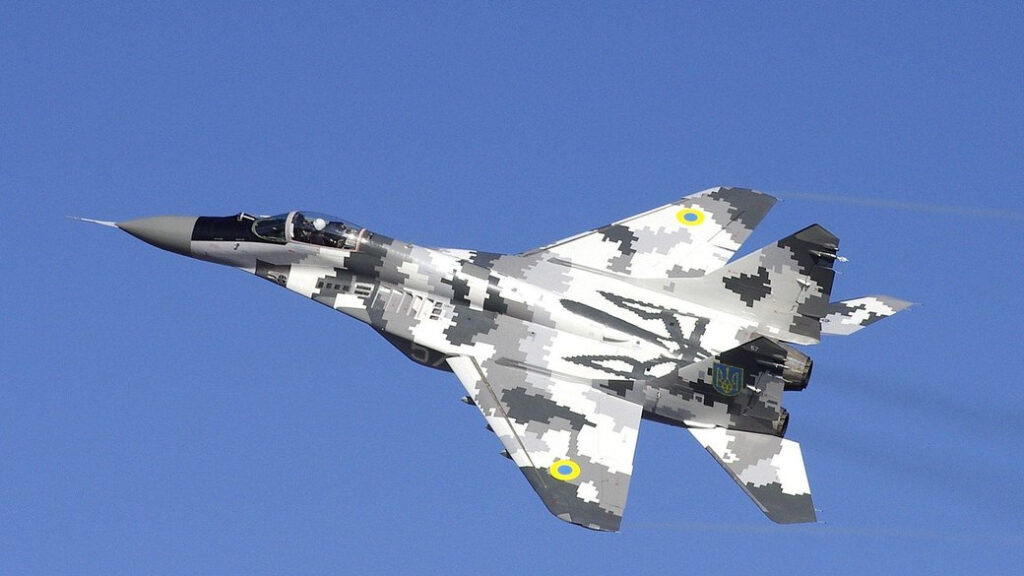
Poland and Ukraine are in the final stage of negotiating a deal to transfer Poland's aging MiG-29 fighter jets to Ukraine in exchange for drones and Ukrainian drone-warfare know-how, with the jets potentially shipping within weeks, Polish outlet Wirtualna Polska reported, citing sources in the Polish Armed Forces and Defe
Bulgaria's interest in buying Poland's retiring MiG-29s has pushed Warsaw and Kyiv closer to finalizing their long-stalled swap, Polish officials say.
Poland and Ukraine are in the final stage of negotiating a deal to transfer Poland's aging MiG-29 fighter jets to Ukraine in exchange for drones and Ukrainian drone-warfare know-how, with the jets potentially shipping within weeks, Polish outlet Wirtualna Polska reported, citing sources in the Polish Armed Forces and Defense Ministry. The report follows months of on-and-off talks that Poland's own officials have repeatedly declared both close to done and dead.
Polish Deputy Defense Minister Cezary Tomczyk said on Polsat News that Bulgaria's competing interest in the jets has "livened up" Warsaw's discussions with Kyiv. Bulgaria has told Poland that if Ukraine will not commit, Sofia would buy the jets itself, Tomczyk said.
"I hope it will be soon," Tomczyk said when asked when Poland intends to sign the agreement with Ukraine. He said Poland has laid out the technologies and know-how it wants from Ukraine in return, calling the exchange in both countries' interest. "Today I cannot say with 100% certainty that this matter will be finalized, but we hope so."
According to Wirtualna Polska, the deal covers Soviet-era jets Poland's air force is retiring as it phases in Western aircraft, in exchange for a large batch of Ukrainian drones of various types and the transfer of Ukrainian combat know-how. The outlet reports Poland wants data on strike-drone communications links, control principles, footage of strikes on targets, and physical samples of the hardware itself.
Poland's Defense Ministry has said the process picked up pace after Rustem Umerov took over as head of Ukraine's Foreign Intelligence Service, with President Volodymyr Zelenskyy tasking him with negotiating drone agreements. A source involved in the talks told Wirtualna Polska that Ukrainian drone maker Fire Point has offered to supply Poland with 1,500 long-range drones, plus a matching batch if war breaks out — an offer the source said Poland regards cautiously, since a company citing force majeure in wartime could leave Warsaw without the hardware it was promised.
A deal that has collapsed and revived for a year
Poland and Ukraine signed a bilateral security agreement in July 2024 that raised the prospect of transferring a squadron of at least 14 Polish MiG-29s. By early 2026, Warsaw had narrowed the offer to six to eight jets. In June, Poland froze the transfer, with Deputy Defense Minister Tomczyk citing Ukraine's refusal to share its drone and counter-drone technology. Talks restarted in July after Kyiv sent Warsaw a letter with concrete proposals, and by 31 July, Poland said Ukraine had returned with a specific list of drones it would hand over — a proposal Poland's ministry was still reviewing.
Poland's ambassador to Ukraine, Vasyl Bodnar, told Ukrainska Pravda's Yevropeiska Pravda that dialogue continues but that several obstacles still stand in the way of the transfer.
Why this matters
The MiG-29 remains a core part of Ukraine's air force even as it shifts to F-16s, Mirages, and incoming Gripens — Ukrainian pilots already fly the Soviet-era jets and have adapted them to carry Western precision weapons, so a new batch could enter service without the delays a Western aircraft transition requires. Poland's own hesitation reflects the same trade-off every one of its allies faces: what it gives up in hardware, it wants back in the operational knowledge Ukraine has built fighting Russia's drone war for four years — knowledge with no equivalent on any NATO training ground.
At least 437 civilians were killed and 2,610 injured across Ukraine in July, the highest monthly death toll since May 2022, according to the UN Human Rights Monitoring Mission in Ukraine (HRMMU), which published the figures on 12 August. The toll was 30% higher than June and 70% higher than July 2025.
The deadliest single attack came on 2 July, when Russia launched 74 missiles and nearly 500 long-range drones at Ukraine, mainly targeting Kyiv. Ukrainian air defenses dow
At least 437 civilians were killed and 2,610 injured across Ukraine in July, the highest monthly death toll since May 2022, according to the UN Human Rights Monitoring Mission in Ukraine (HRMMU), which published the figures on 12 August. The toll was 30% higher than June and 70% higher than July 2025.
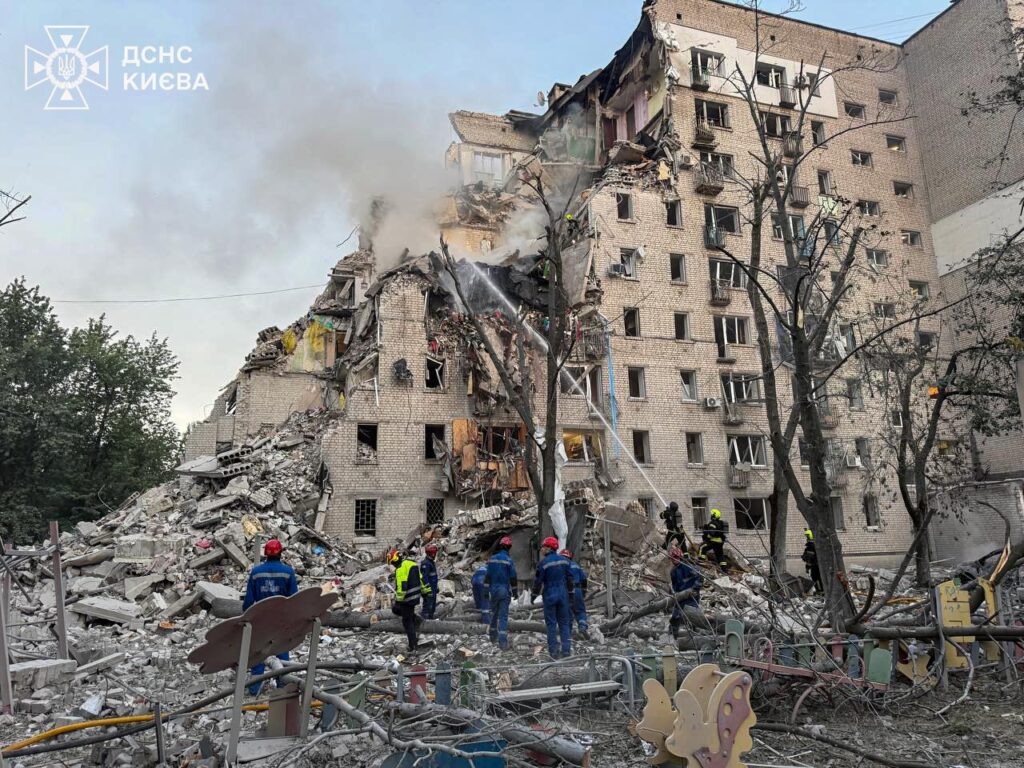
The deadliest single attack came on 2 July, when Russia launched 74 missiles and nearly 500 long-range drones at Ukraine, mainly targeting Kyiv. Ukrainian air defenses downed 524 of 570 aerial targets, but the 46 that got through — including 25 ballistic missiles — killed 30 people and destroyed a nine-story apartment block in the capital's Darnytskyi district. Russia fired at least 429 missiles at Ukraine over the course of the month, more than double June's total.
A trend that keeps getting worse
"Every month this year the number of killed and injured civilians has increased," HRMMU head Danielle Bell said. "That trend accelerated sharply in July. The number of civilian casualties in July was the highest we documented in a single month since March 2022."
Child casualties also hit a new high: 17 killed and 166 injured, the worst toll since April 2022. Over the first seven months of 2026, HRMMU verified 12,477 civilian casualties — 1,839 killed and 10,638 injured — a 44% increase over the same period in 2025 and more than double the 2024 figure.
Long-range weapons still the top killer, but glide bombs surged
Long-range missiles and drones caused 38% of all July casualties (183 killed, 967 injured), most of them far from the front line in cities. Casualties from aerial glide-bomb strikes jumped 143% compared with June — from 45 killed and 308 injured to 105 killed and 753 injured — making glide bombs the second-leading cause of civilian harm. Short-range drones near the front line killed 111 people and injured 710, the highest monthly toll from that weapon since 24 February 2022.
Kyiv, Kherson, Zaporizhzhia, and Sumy took the heaviest losses among the 14 regions where casualties were recorded. HRMMU also verified 25 killed and 50 injured in Russian-occupied territory, cautioning that shrinking access to information there means the real toll is likely far higher.
Attacks on Black Sea shipping and port infrastructure in Odesa and Mykolaiv oblasts also intensified, with at least 39 strikes — 20 of them on vessels — killing 19 port and crew personnel and wounding 25.
Since the full-scale invasion began on 24 February 2022, the UN has verified at least 16,874 civilians killed and 51,173 injured.
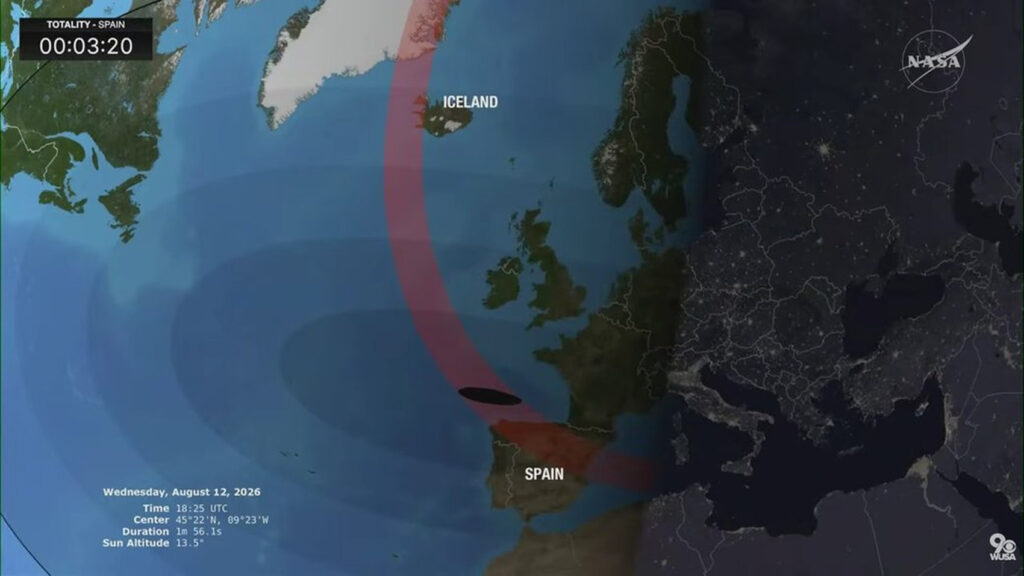
On the evening of 12 August 2026, NASA displayed a map on which Crimea was marked as Russian. It happened during the live broadcast of a total solar eclipse: on the graphic, the peninsula was separated from mainland Ukraine by a border line and presented as part of Russia.
Crimea is a Ukrainian region that Russia occupied after its illegal annexation in 2014. Ukraine and the overwhelming majority of the world's states do not recognize that annexation, and no cartog
On the evening of 12 August 2026, NASA displayed a map on which Crimea was marked as Russian. It happened during the live broadcast of a total solar eclipse: on the graphic, the peninsula was separated from mainland Ukraine by a border line and presented as part of Russia.
Crimea is a Ukrainian region that Russia occupied after its illegal annexation in 2014. Ukraine and the overwhelming majority of the world's states do not recognize that annexation, and no cartographic error changes the peninsula's status under international law. Each uncorrected map treats as ordinary what international law still calls an illegal occupation.
What happened during the broadcast
The US agency streamed the total eclipse, whose path crossed Greenland, Iceland, and Spain, live to a global audience. The error appeared on one of the visibility maps NASA showed during the broadcast: on it, Russia's border was drawn along the land boundary between mainland Ukraine and the peninsula, creating the impression that Crimea belongs to Russia.
In December 2024, FIFA eventually apologized for a map it displayed during the qualifying draw for the 2026 World Cup that left occupied Crimea outside Ukraine's borders. The graphic was meant to show pairs of teams that cannot be drawn against each other for geopolitical reasons, among them Spain and Gibraltar, Kosovo and Serbia, and Ukraine and Belarus. It marked out Ukraine but drew the country without the peninsula. Ukraine's Foreign Ministry spokesman Heorhii Tykhyi objected, Kyiv called the omission an unacceptable error, and football's world governing body pulled the image.
On 24 September 2024, the British broadcaster Sky News published an investigation into a scheme for supplying sanctioned goods to Russia through third countries, Georgia among them. The report was accompanied by three maps of vehicle-transport routes into Russia, on each of which Crimea was marked as Russian territory, Detector Media reports. The maps have since been edited, and Crimea is now marked as part of Ukraine.
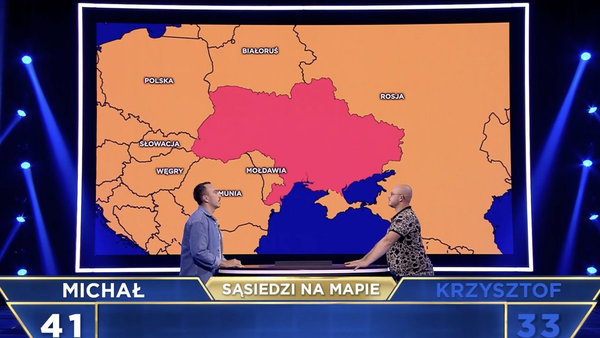
The Polish broadcaster TVN showed a map of Ukraine on which occupied Crimea was marked in a separate color during the entertainment show The Floor. The episode aired on Polish television, and the broadcaster published its video on its website in 2025.
Map of Ukraine without Crimea aired on Polish TV channel TVN during The Floor. Photo: Screenshot from the TVN website
Explaining the annexation, Putin spoke not of the military but of sacred things. In his December 2014 address to the Federal Assembly, he called Crimea a place of "enormous civilizational and sacral significance," comparing the peninsula to the Temple Mount in Jerusalem. Europe rejected that mythology: just ten days after the sham referendum, the UN General Assembly passed Resolution 68/262 by a vote of 100 to 11 and declared the annexation illegal.
Putin arrived in annexed Sevastopol, where he took part in a ceremony marking the launch of the Balaklava Thermal Power Plant. 18 March 2019. Photo: TASS
But behind Moscow's "spiritual" rhetoric lay a different purpose for Crimea. Sevastopol, its airfields, and its logistics turned the peninsula into a springboard for the 2022 invasion, and it is largely for this reason that Ukraine's forces are now focused on striking Crimea. Robert "Madyar" Brovdi, commander of the Unmanned Systems Forces on 10 August said that the strikes are the first phase of a campaign meant to render the peninsula unusable for Russian troops.
"Crimea is one of the key conceptual pillars on the path to ending the war," Madyar told the Associated Press.
Ukrainian drone operators overwhelmed US Army troops at a training exercise in Germany this year, the Wall Street Journal reported. The drill showed how far American forces still trail on the cheap front-line drones that dominate Russia's war on Ukraine, despite billions in Pentagon spending.
Drones now decide who moves and who dies along Ukraine's front, and Western armies are scrambling to master a way of fighting Kyiv rewrote under fire—some even copying its tool
Ukrainian drone operators overwhelmed US Army troops at a training exercise in Germany this year, the Wall Street Journal reported. The drill showed how far American forces still trail on the cheap front-line drones that dominate Russia's war on Ukraine, despite billions in Pentagon spending.
Drones now decide who moves and who dies along Ukraine's front, and Western armies are scrambling to master a way of fighting Kyiv rewrote under fire—some even copying its tools and procurement wholesale.
The dust gave them away
The exercise, Combined Resolve, ran in April and May. Around 3,500 US personnel, mostly from the 3rd Armored Brigade Combat Team, tried to seize a position defended by an opposing force reinforced with Ukrainian drone troops of the 412th Regiment of Unmanned Systems Forces, or Nemesis. The Ukrainian operators "eliminated" the attacking armored brigade, US officials briefed on the drill told the Journal.
Heavy vehicles kicked up dust that reconnaissance drones caught at once. Explosive-dropping and first-person-view drones, flown straight into their targets, did the rest. Kills came so fast that US vehicles had to be "re-spawned" as fresh units to keep the drill running, a US official told the Journal.
Explore further
For first time, NATO ally built its entire military exercises around Ukrainian Azov Brigade lessons
Years of fighting Russia made the difference
Ukrainian crews have fought Russia for nearly four and a half years, repairing and adapting drones on the move, while US operators have never had to fix and arm them under fire, one person present told the Journal. Midway through, the Ukrainians switched sides and coached the Americans on attacking with drones. Eliot Cohen of the Center for Strategic and International Studies said mastering drones is now vital for the US military, and that so far it has not.
Not everyone agrees on why. Some US officers say drones dominate only because the front barely moves, and that maneuver warfare would revive the tank, the Journal noted. Ukraine's former commander-in-chief, Valerii Zaluzhnyi, argues drones have frozen maneuver for now, the reason the eastern front barely shifts.
Not the first Western army to lose
It keeps happening. Ukrainian drone teams beat British, Estonian, and other NATO troops, including Americans, at a Baltic exercise in May 2025, and outdid Swedish-led NATO forces this spring, the Journal reported. Back in 2023, a US officer training Ukrainians realized the lesson ran the other way.
What Washington is doing about it
The Trump administration, despite friction with Kyiv, has been reaching out to Ukraine, the Journal reported. It is testing Ukrainian drones it may buy, and used counter-drone tools proven in this war to defend its troops against Iran's drones. Defense Secretary Pete Hegseth said in May that he was sending more Americans to study drone warfare in Ukraine. By Washington's own reckoning, no US maker can match Ukraine's combat-forged drones.

 Connexion