❌

Vue normale

Ukraine blocks Russia from outflanking its fortress cities in Donbas, retaking 277 square kilometers and hitting 8,000 Russian troops
14 octobre 2026 à 16:47

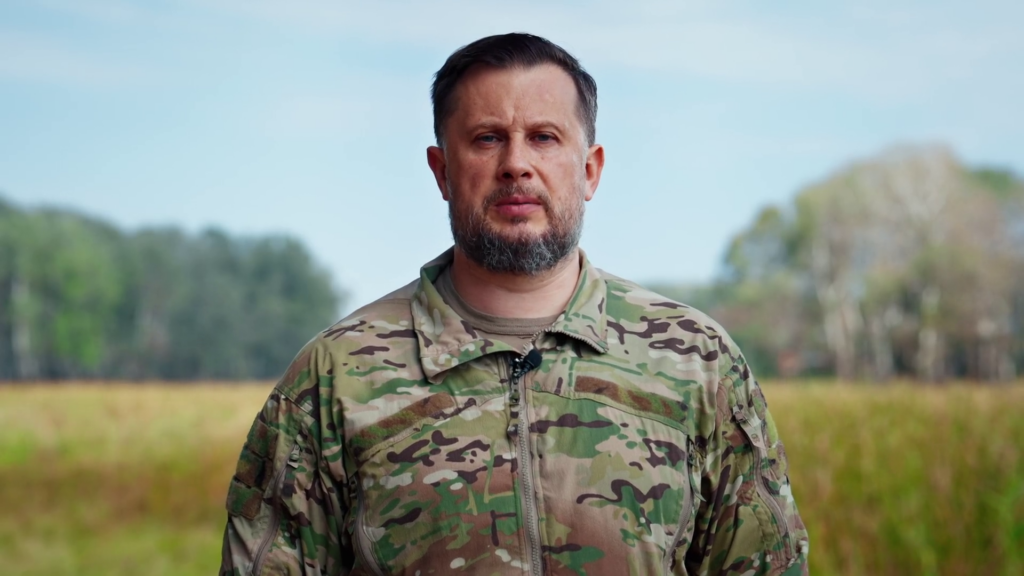
Ukraine's Third Army Corps commander Brigadier General Andrii Biletskyi announcing new developments in "Operation Vivaldi," 20 September 2026. Screenshot from video: Ukraine's Third Army Corps

Ukraine has completed its Operation Vivaldi, aimed at protecting its fortress belt cities of Donetsk Oblast, which helped Kyiv preserve the region from Russian occupation for 12 years. Brigadier General Andrii Biletskyi, the commander of the Third Army Corps behind the operation, has reported that the fourth phase secured 101 km² of territory. Among the latest achievements is the liberation of three settlements—Zelena Dolyna, Lypove, and Kolodiazi.

The operation's main objective was to move Ukrainian troops into more advantageous defensive positions, Biletskyi said in the first days after the operation was made public. Vivaldi has now summed up the results of all four phases: Ukraine has established full control over 16 settlements, liberated 277 km² of territory, and inflicted 8,000 casualties on Russian forces.

Ukraine worked against Russia's deadline

During Operation Vivaldi, Ukrainian forces have prevented Russian troops from outflanking the Sloviansk-Kramatorsk agglomeration and cutting the Kharkiv–Sloviansk highway, a key supply route for Ukraine’s forces in Donbas, Biletskyi says.

“We thwarted the offensive of the Zapad grouping and forced it to redeploy some units of the 1st Tank Army, which eased pressure on Kupiansk-Vuzlovyi,” Biletskyi announces.

Previously, the Institute for the Study of War noted that Russian President Vladimir Putin was confident that Russian forces would be able to seize the entire Donetsk Oblast by the end of 2026 — the Kremlin’s latest deadline for achieving this goal.

Ukraine’s military was on a mission to prevent this.

Season one: clearing russian infiltration groups

On 15 September 2026, Ukraine’s Third Army Corps announced Operation Vivaldi in northern Donetsk Oblast. During the first phase, Ukrainian troops cleared Russian groups from 75 km² of territory and liberated another 10 km².

The Third Army Corps said it had struck Russian supply routes and fuel infrastructure, prompting Russia to relocate its fuel and lubricant reserves to Voronezh Oblast. According to the corps, Russian forces lost around 1,500 troops, more than 12,000 drones, and hundreds of pieces of equipment.

Season two: liberation of Shandryholove and Derylove

On 20 September, the Third Army Corps reported the liberation of Shandryholove and Derylove and the establishment of full control over Drobysheve.

During the second season, Russian forces lost another 800 troops, bringing their total losses across the first two seasons to more than 3,000, according to the corps.

During the first two seasons of the operation, Ukrainian troops and attached units regained control of 125 km² of territory, including 50 km² that had been fully liberated.

Two soldiers of Ukraine’s Third Army Corps silhouetted among bare trees at twilight; one holds a radio to his mouth.
Soldiers of Ukraine’s Third Army Corps. Source: Ukraine’s Third Army Corps

The first phase of Vivaldi involved eliminating Russian groups that had infiltrated Ukrainian positions, explained the commander of a battalion in the 125th Brigade, callsign Darwin, per ArmyInform. After clearing those groups, the Defense Forces moved on to the operation’s second phase, using reconnaissance drones to detect Russian forces, he added.

For this, Ukraine used UAVs and ground robotic systems.

“The Third Army Corps was the first in the world to begin deploying ground robotic systems by air. Our heavy bombers deliver kamikaze ground robotic systems more than 10 kilometers behind enemy lines,” Biletskyi noted.

Season three: advances near Novе and Ridkodub

On 28 September, the Third Army Corps reported the liberation of Nove, Ridkodub, and Katerynivka and the restoration of control over Karpivka and Novomykhailivka. Ukrainian forces regained another 51 km² of territory, bringing the total area liberated since the start of the offensive to 176 km². Russian forces lost around 2,000 troops, and more than 250 were taken prisoner, the corps said in its summary of the operation’s third phase.

Map of settlements Ukraine's 3rd Army Corps says it liberated north of Lyman, as of 28 September 2026.
Settlements Ukraine's 3rd Army Corps says it liberated during Operation Vivaldi north of Lyman, Donetsk Oblast, Ukraine, as of 28 September 2026. Map: ISW

“The Russians were convinced that the main axis of attack was Shandryholove–Zelena Dolyna. This led it to squander its reserves in counterattacks along that very axis. The Russians slept through the actual strike, which was focused on capturing Nove,” Biletskyi said.

Operation Vivaldi aimed to disrupt Russia’s plans in Donetsk Oblast

The need for Operation Vivaldi arose amid Russian attempts to encircle Ukraine’s fortified belt in Donetsk Oblast. Ukrainian forces conducted preparatory efforts aimed at degrading Russia’s offensive capabilities, including strikes on Russian drone operators, the Institute for the Study of War reported on 9 October.

Ukrainian counterattacks in the Lyman direction and east of Sloviansk and Kramatorsk were intended to complicate Russian efforts to seize the fortified belt in Donetsk Oblast, the report noted.

The corps advanced gradually, reclaiming small areas instead of attempting a large-scale breakthrough.

Russia attacked Ukrainian retailer Epicentr’s warehouse 10 times in one day, destroying about 85% of goods, company says

14 octobre 2026 à 09:53

Epicentr’s attack 13 october

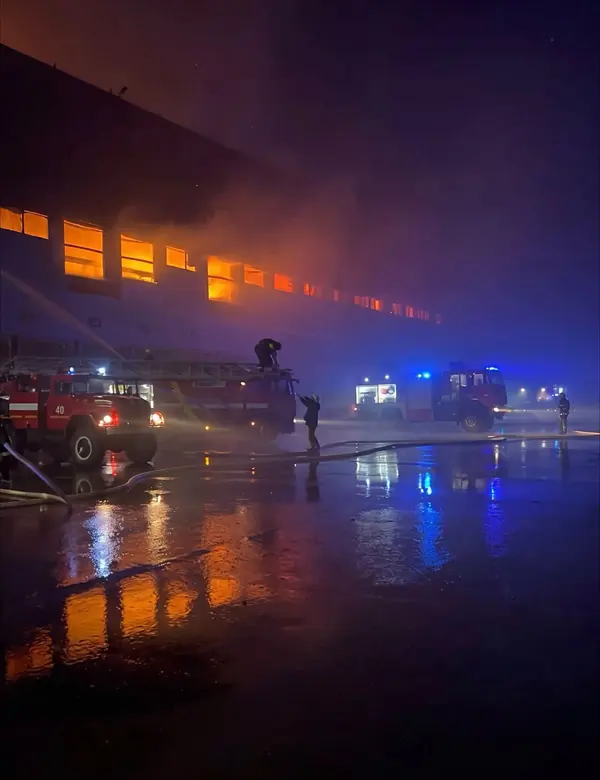
Russian forces attacked Epicentr’s hub in Khmelnytskyi, a city in western Ukraine, 10 times on 13 October, starting five large fires that destroyed about 85% of the goods stored inside, the company said.

Epicentr is a Ukrainian chain of home-improvement and household-goods stores. The attack adds pressure to Ukraine’s logistics network, already damaged by Russian strikes. On 10 September, Ukrainian entrepreneur Ruslan Shostak, co-owner of the popular retail chains Eva and Varus, said that 2.1 million square meters of Ukraine’s modern warehouse space had been destroyed since Russia’s full-scale invasion began. He put the country’s total modern warehouse space at approximately 5 million square meters. The strike on the hub came the same day Russia opened a barrage of 39 ballistic missiles on Ukraine’s power grid.

About 30 drones in the sky kept the fire from being put out, and the hub burned down completely overnight, Epicentr said. None of its people were hurt, the company said.

“The most important thing is that all our people are alive,” Epicentr wrote.

Russia had earlier completely destroyed Epicentr’s two largest logistics complexes, in Kyiv and Kyiv Oblast, the company said. The Khmelnytskyi hub had remained effectively its only surviving large warehouse complex. Goods were sent from there to the company’s shopping centers, and people worked there every day “so that millions of Ukrainians could buy what they need,” it wrote. Epicentr described every such attack as a blow to Ukrainian businesses’ ability to operate, pay wages, preserve jobs, and support the country’s economy.

Epicentr’s earlier losses

Epicentr said in August that 10 of its shopping centers had been completely destroyed since February 2022. Another 13 retail sites had been damaged, and one in Melitopol remained under Russian occupation, it said. At the time, the company operated 70 shopping centers, down from 80 at the end of 2021.

Earlier, during a Russian missile attack overnight on 5 August, Epicentr’s logistics center in Kyiv burned down completely, Epicentr’s Yulia Chudnovets said. The company’s ceramic tile plant in Kalynivka, one of the largest in Ukraine, was effectively lost, she said. One employee was killed and three were injured, she added.

fourth ukrainian pharmaceutical warehouse has burned russian strike since start month · post fire damage medicine distributor badm after odesa ukraine 14 2026 росіяни зруйнували вже четвертий склад ліків за
Explore further

A fourth Ukrainian pharmaceutical warehouse has burned in a Russian strike since the start of the month

On 25 May 2024, Russian airstrikes on an Epicentr hypermarket in Kharkiv killed 19 people, Interior Minister Ihor Klymenko said.

Attacks across Khmelnytskyi Oblast

Fires broke out at enterprises in Khmelnytskyi and Shepetivka districts on 13 October, Serhii Tiurin, head of the Khmelnytskyi Oblast Military Administration, reported. He did not name the enterprises. On 14 October, Tiurin said one of the fires had been put out, and crews were still fighting the other. Khmelnytskyi Mayor Oleksandr Symchyshyn said six people were injured in Khmelnytskyi district that day, where Russian strikes damaged private enterprises, a gas station, and a medical facility.

1,125 Kyiv residents injured in Russian attacks since the start of 2026, more than a third of them in five weeks from late August, Kyiv health chief says

14 octobre 2026 à 09:03

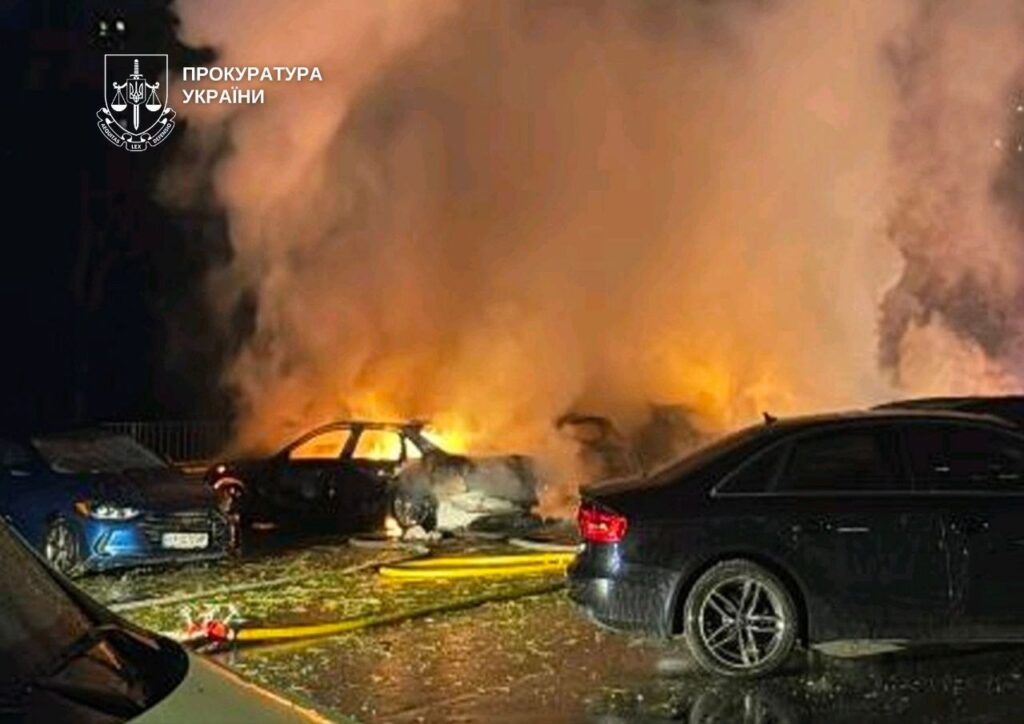
Cars burning outside a 25-story apartment building in Kyiv after a Russian drone strike

Russian attacks have injured 1,125 Kyiv residents since the start of 2026. Of these, 379 people, or nearly 34%, were injured in just five weeks, from 27 August to 7 October, Tetiana Mostepan, director of the Kyiv City State Administration’s Department of Health, said in an interview published on 13 October.

Russian air attacks on Kyiv have intensified since late August. Air attacks occur both day and night, and Russian drones target not only military facilities but also civilian buildings, including apartments. As a result, the number of casualties is also increasing. More than 40% of emergency medical responses to attacks this year occurred between late August and early October, Mostepan noted.

During this period, the capital’s emergency medical teams responded to 782 calls related to the attacks, the department director said. She also released data showing that 138 medical facilities in Kyiv have been damaged since the start of Russia’s full-scale invasion, including 47 this year.

“And when we talk about statistics, I always emphasize that behind every number is a human life. These are people who have been injured, as well as medical workers who respond to attack sites to save them,” Mostepan said.

People giving first aid to two women injured in a Russian drone strike in Kyiv
People giving first aid to two women injured in the Russian drone strike, Kyiv, 8 September 2026. Photo: Zelenskyy's Telegram

Russian attacks on Kyiv have become more frequent

Russia attacked Kyiv with drones throughout the day, Suspilne Kyiv reported on 27 August. Air raid alerts were issued 12 times in the capital, drone debris was found in five districts, and at least four people were injured, the report said. Russian forces used about 140 attack drones against Ukraine throughout the day, more than 100 of them jet-powered, the Ukrainian Air Force reported at the time.

At least 38 people were killed and dozens injured in a Russian drone strike on an ammunition depot in the Bucha district near Kyiv, triggering a massive fire and hours of explosions in a residential area, CNN reported. The attack in the Bucha district came amid near-constant Russian airstrikes, which continued into Sunday, the outlet reported.

Russian forces were likely seeking to exhaust Ukraine’s air defenses, disrupt civilians’ daily lives, and increase the scale of destruction, analysts at the Institute for the Study of War (ISW) said, citing CNN’s reporting.

On 8 September, NATO Secretary General Mark Rutte stressed the urgent need to strengthen support for Ukraine, particularly by providing air defense systems. Delays in delivering assistance cost human lives, he said.

On 1 October, a Russian drone struck a school in Kyiv’s Solomianskyi district while 104 children were inside, Suspilne reported. Students and school staff took shelter, so no one was injured, the report said.

Aftermath of the Russian attack on a school in Kyiv’s Solomianskyi district, 1 October 2026. Suspilne News/Oleksandr Mahula
Aftermath of the Russian attack on a school in Kyiv’s Solomianskyi district, 1 October 2026. Photo: Suspilne News/Oleksandr Mahula

Russian attacks continue after Trump’s announcement of an energy ceasefire

Following US President Donald Trump’s announcement of an energy ceasefire, Russia continued striking Ukraine’s energy infrastructure, including in Kyiv. On 13 October, Russian ballistic missiles struck Kyiv, hitting a thermal power plant in the second attack in 24 hours without advance warning from Ukraine’s allies, Zelenskyy said. The evening and morning strikes killed four people in Kyiv, three of them women in a high-rise in Desnianskyi district, Kyiv prosecutors said.

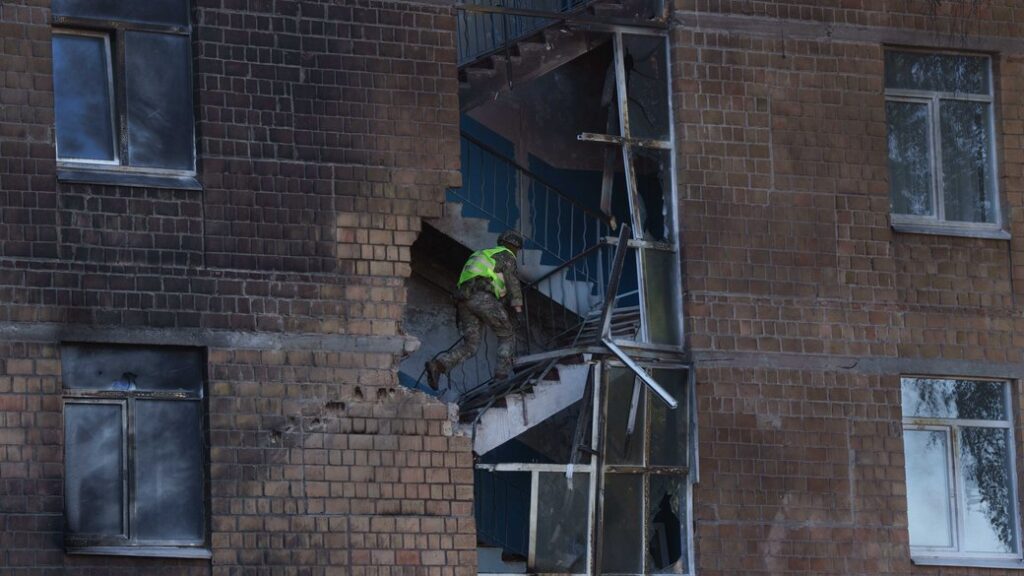
Aftermath of the Russian attack on Kyiv overnight into 14 October 2026
Aftermath of the attack on Kyiv on the night of 14 October 2026. Photo: Kyiv State Emergency Service

Russia attacked energy and critical infrastructure in Kyiv, Kyiv Oblast, and Kharkiv with 39 ballistic missiles and more than 120 attack drones, Ukrainian President Volodymyr Zelenskyy said on 14 October. At least 600,000 people were left without electricity, he said. Later that day, an accident on the grid cut power to part of Kyiv’s right bank, energy company DTEK said.

Ukraine-NATO AI built to forecast Russia’s front-line drone attacks from past data and weather is ready to plug into the army

14 octobre 2026 à 08:07

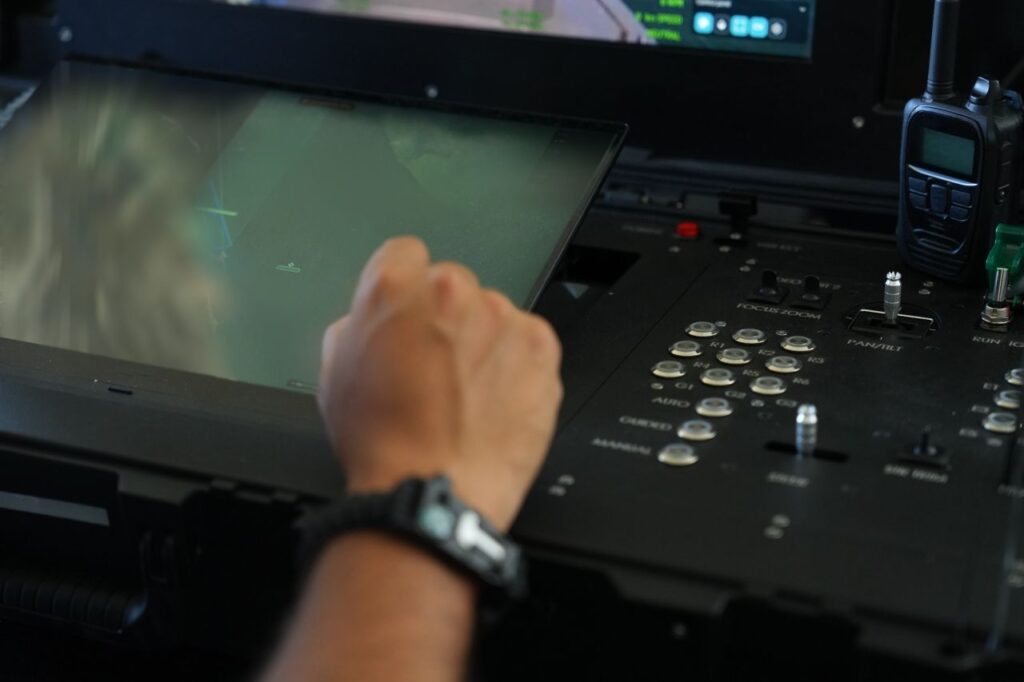
UFORCE drone control station. September 2026.

Ukraine and NATO have unveiled two artificial intelligence (AI) tools in Vilnius, Lithuania, Ukraine’s Defense Ministry reported on 13 October. One forecasts Russian drone attacks near the front and is ready to join the Armed Forces’ situational awareness systems. The other helps plan artillery fire and is still in testing.

A forecast of where, when, and which drones will fly targets the main source of losses near the front. In March, Ukraine’s military put the share of front-line casualties caused by FPV drones at up to 80%. In May, Ukraine’s drone forces commander Robert Brovdi said Russia was copying Ukraine’s model to grow its drone forces. A month earlier, Presidential Office head Kyrylo Budanov wrote that adding more drones no longer fundamentally changes the battlefield. The next stage, he said, is full integration of AI.

Forecasting Russian drone attacks

The NATO-Ukraine Joint Analysis, Training and Education Center (JATEC) presented both at a three-day seminar in the Lithuanian capital. NATO’s Allied Command Transformation and Ukraine’s Armed Forces built the tools with JATEC’s support.

“The solution has already been validated using real-world datasets. It has been refined and is ready for integration into the Armed Forces of Ukraine's situational awareness systems,” the ministry said.

Model No. 13 works from past data, weather, and the current battlefield situation. The ministry said it can identify the intensity of attacks, the areas, the time windows, and the types of drones with a high probability.

Ranking artillery options

Model No. 32 is a decision-support module. It tests whether artillery plans can be generated automatically. It weighs the mission’s requirements and current operational data, including available weapons, ammunition, firing positions, and constraints.

SPECTR.
Explore further

Ukraine’s new military AI does more than watch the battlefield—it helps commanders plan what comes next

First, it applies logistics, ballistics, and impact-zone parameters to throw out unworkable options. Then it scores and ranks the rest. That means less hand-based comparison, faster decisions, and a more efficient fire loop, the ministry said. The prototype is now with the Ukrainian military for trials. If the trials succeed and it is validated, it could be expanded to other units that strike Russian forces.

❌