Vue normale

German brand sold in 150 countries just lost its Ukraine warehouse to a Russian strike. It says it won’t stop operating
5 août 2026 à 15:42

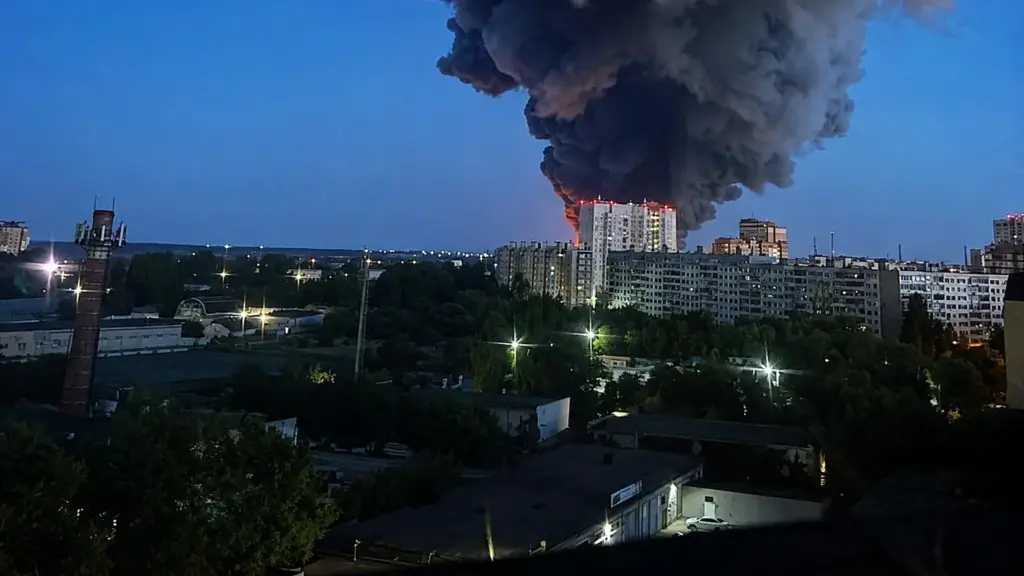
Russia's overnight barrage burned down the Ukrainian warehouse of a German household brand, Liqui Moly. Source: Liqui Moly

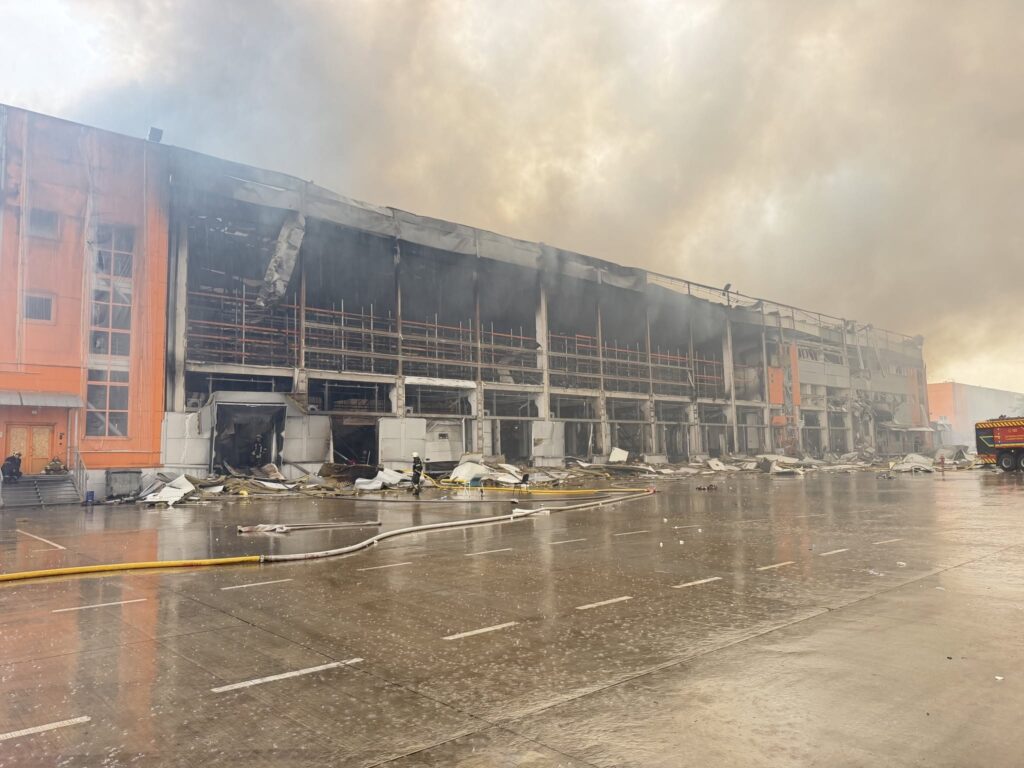
Russia's overnight barrage burned down the Ukrainian warehouse of a German household brand. The strike on the night of 5 August destroyed the central warehouse of Liqui Moly Ukraine, which supplies motor oils, lubricants, and automotive chemicals, the company reported on Facebook.

The strike hit a foreign company's civilian supply hub, part of a widening campaign against Ukraine's warehouses.

"This night, as a result of an enemy strike, our central product warehouse in Ukraine was completely destroyed by fire," Liqui Moly said, adding that all employees were safe and no one was hurt.

Founded in 1957, Liqui Moly develops and produces its motor oils and additives in Germany, where it has been named the best brand in the lubricants category for years, and sells its products in about 150 countries. Its Ukraine warehouse is the local distribution center for a global consumer brand, the kind of ordinary commercial infrastructure now being hit.

The company plans to keep operating

Liqui Moly said the loss will not stop its business. Despite significant material damage, the distributor does not plan to halt operations and is already working to restore supplies, rebuild its logistics processes, and launch new delivery routes.

That response mirrors what Russia's warehouse campaign is forcing on businesses across Ukraine: decentralizing storage and rerouting deliveries to survive.

The strike fits a documented campaign

Hitting a motor oil warehouse continues Russia's pattern of striking civilian storage and logistics. Presidential adviser Serhii Beskrestnov has said Russia has intensified attacks on warehouses and production sites, including food, retail, and construction materials, and that this trend will hold.

Russia finds such targets cheaply, Beskrestnov has said, through local informants paid to watch trucks and stock rather than through satellites. A distribution warehouse for a consumer brand is exactly the sort of soft, easily-located civilian target that a campaign hits, damaging the supply of ordinary goods while endangering the workers inside.

  • ✇Euromaidan Press
  • For under $120, Russia can get Ukrainian warehouse bombed. Here’s how it finds its targets
    Russia has the ballistic missiles to keep hitting Ukraine every month at the current pace. Russia can launch about 100 ballistic missiles at Ukraine each month, technology specialist and presidential adviser Serhii "Flash" Beskrestnov said on 5 August. The estimate sets the scale of a threat that Ukraine's air defenses cannot fully answer. The current density is higher because Russia wants a demonstrative reaction and is attacking partly from reserves, but going for
     

For under $120, Russia can get Ukrainian warehouse bombed. Here’s how it finds its targets

5 août 2026 à 12:10

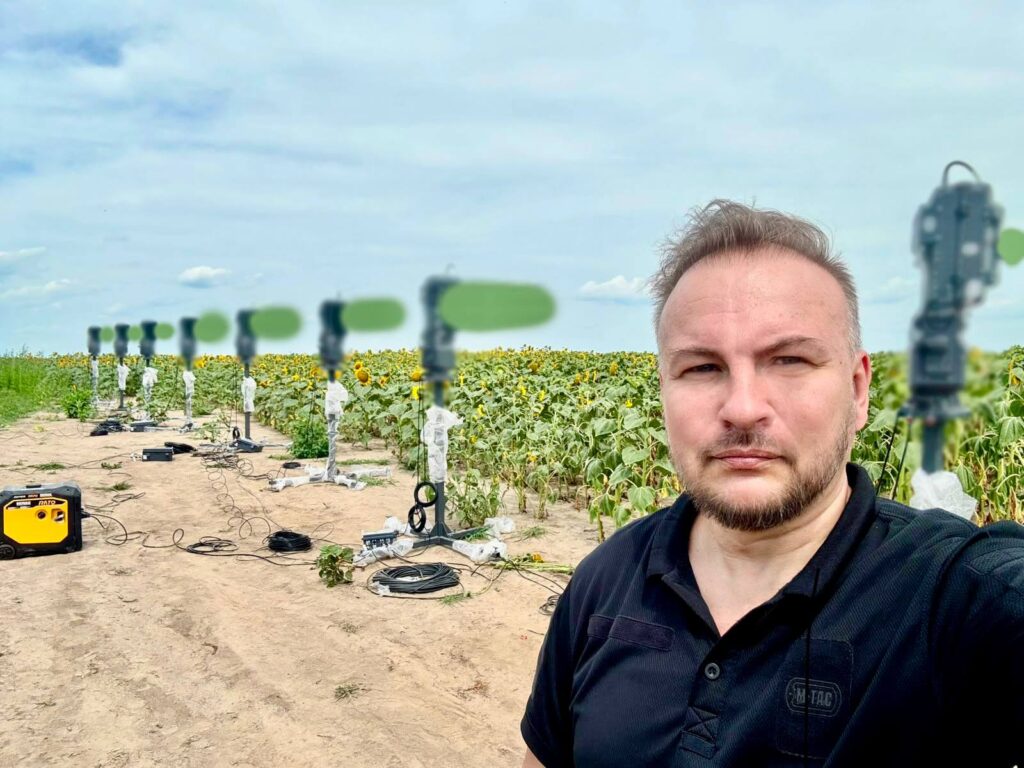
Presidential adviser on defense technology development Serhii "Flash" Beskrestnov at the test range of new electronic warfare means against jet-powered Shaheds. Source: Serhii "Flash" Beskrestnov

Russia has the ballistic missiles to keep hitting Ukraine every month at the current pace. Russia can launch about 100 ballistic missiles at Ukraine each month, technology specialist and presidential adviser Serhii "Flash" Beskrestnov said on 5 August.

The estimate sets the scale of a threat that Ukraine's air defenses cannot fully answer.

The current density is higher because Russia wants a demonstrative reaction and is attacking partly from reserves, but going forward, the attacks will run at around 100 ballistic missiles a month, Beskrestnov said.

Against a weapon that only the Patriot reliably stops, and with Ukraine short of Patriot interceptors, roughly 100 ballistic missiles a month is a sustained lethal pressure the country will have to endure.

The target is Ukraine's warehouses

Beskrestnov said Russia has intensified strikes on a specific set of civilian targets. Moscow has stepped up attacks on various warehouses and production sites, including those for food products, construction materials, and retail, and this trend will continue for now.

The pattern matches recent strikes. Russia has hit the warehouses of the retailer Rozetka, killing a worker, and food storage across the country, part of a campaign against the civilian logistics that keep daily life supplied, which has forced businesses to decentralize storage and reroute deliveries.

Russia finds the targets with cheap informants

The chilling part is how easily Russia locates these warehouses. It takes little effort because warehouse data is completely open and requires no satellites or intelligence channels, Beskrestnov said.

"A person is hired, a traitor for a few thousand hryvnia, who watches what happens at the warehouse, the movement of trucks, the volume. Then this information reaches Russia, and a decision is made about a strike," he explained.

He said his own house was targeted the same way in April, when he had just returned from a work trip and was wounded in the strike.

His advice to businesses

Beskrestnov urged businesses to adapt. He advised entrepreneurs to diversify storage, avoid concentrating large quantities of goods and vehicles in one place, and, where possible, seek subleased small warehouse spaces.

Spreading stock across many small sites makes each one a poorer target, not worth a ballistic missile, and denies the local informants an easy, high-value warehouse to point Russia toward. It is a war-economy adaptation forced on Ukrainian business by a bombing campaign that now reaches the supply chain itself, as Beskrestnov suggested.

  • ✇Euromaidan Press
  • Over 100 strategic targets struck in Ukraine’s 40-day campaign against Russia’s war machine
    Ukraine's Security Service (SBU) says it has struck more than 100 strategic military and industrial targets inside Russia and occupied Ukrainian territories during a 40-day campaign approved by President Volodymyr Zelenskyy. The coordinated 40-day campaign combined long-range strikes deep inside Russia with frontline operations, aiming to simultaneously erode Moscow's military production, logistics, fuel supplies, air defenses, and combat capabilities rather than focusi
     

Over 100 strategic targets struck in Ukraine’s 40-day campaign against Russia’s war machine

4 août 2026 à 12:51

drones found fsb where felt safest—a seaside resort deep occupied kherson · post explosion coordination center oblast security service ukraine strike site 20 2026 earlier sbu news ukrainian reports

Ukraine's Security Service (SBU) says it has struck more than 100 strategic military and industrial targets inside Russia and occupied Ukrainian territories during a 40-day campaign approved by President Volodymyr Zelenskyy.

The coordinated 40-day campaign combined long-range strikes deep inside Russia with frontline operations, aiming to simultaneously erode Moscow's military production, logistics, fuel supplies, air defenses, and combat capabilities rather than focusing on a single target set. 

In a statement on 4 August, the SBU said the operation targeted Russia's military-industrial complex, air bases, air defense systems, command posts, oil refineries, transport and military logistics infrastructure, as well as vessels from Russia's sanctions-evading "shadow fleet."

The agency said Zelenskyy has also approved a new series of operations proposed by SBU chief Maj. Gen. Oleksandr Poklad.

Campaign targeted air bases, oil facilities, and shadow fleet

According to the SBU, one of the campaign's main objectives was degrading Russia's military aviation and air defense capabilities.

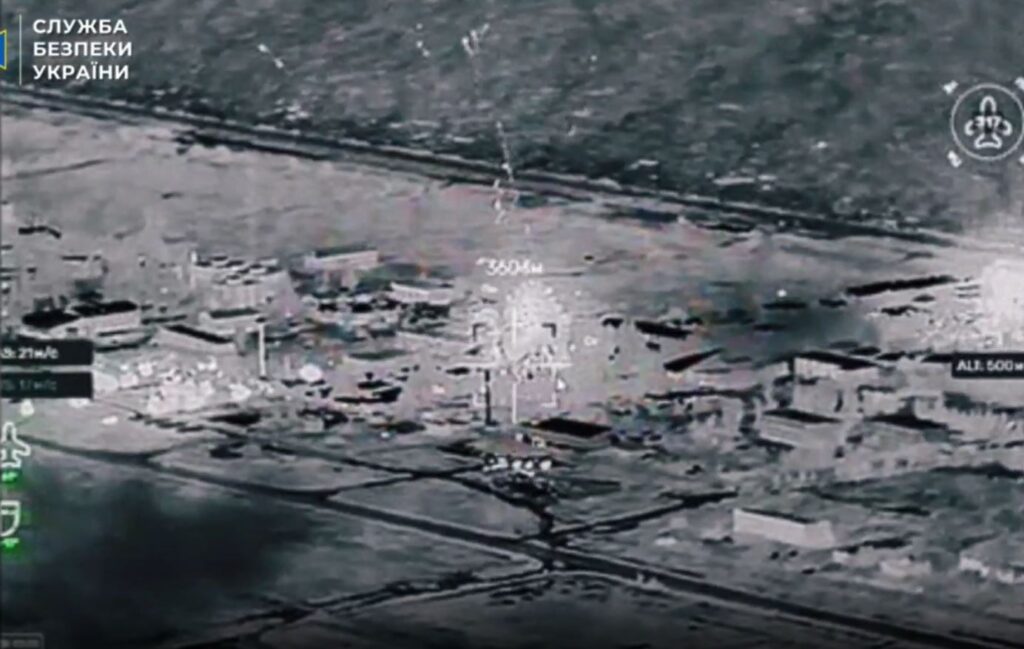
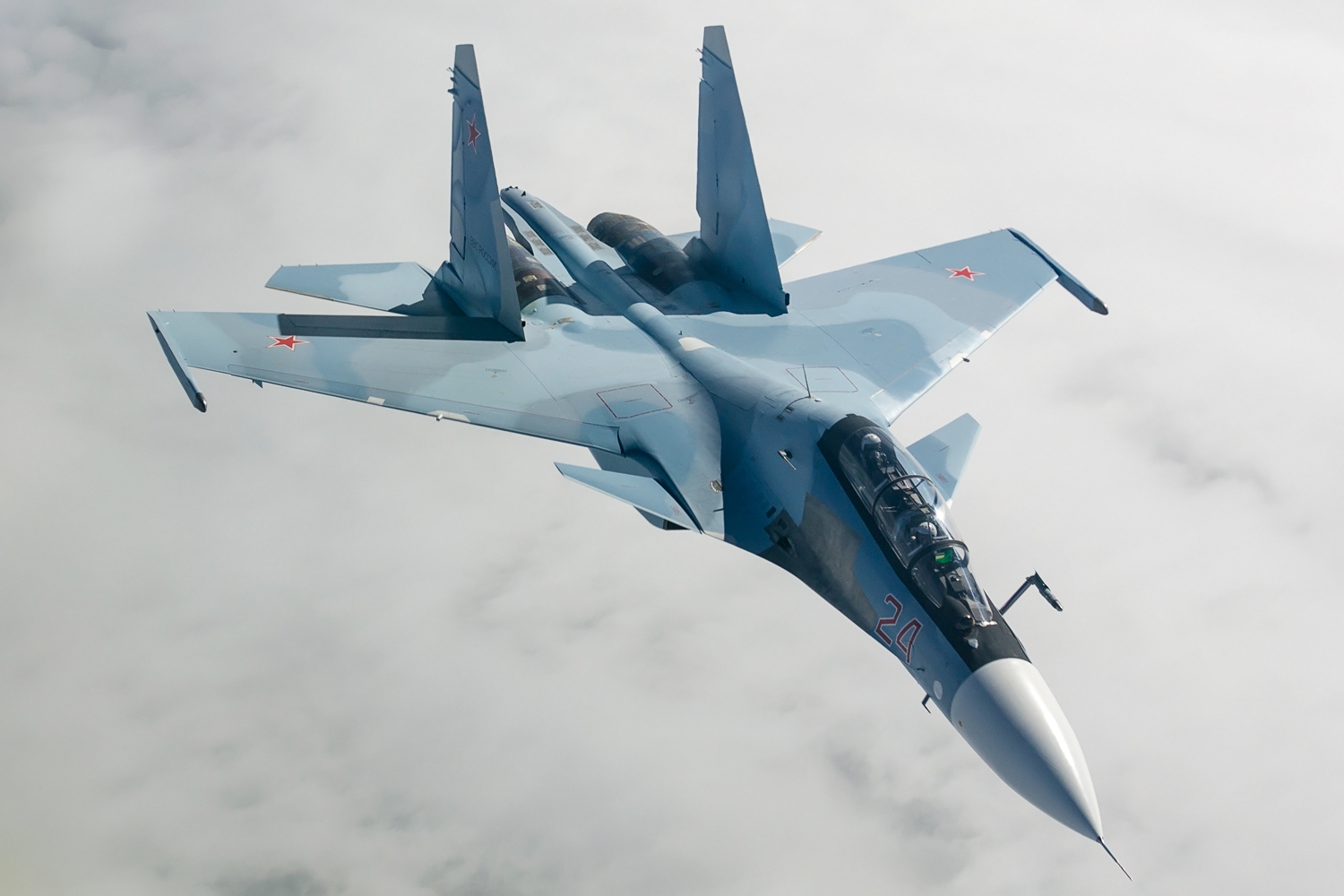
The agency said it struck the Saky, Hvardiiske, Belbek, Bagerovo, Engels, and Khanskaya air bases, as well as the Yevpatoria aviation plant. It claimed the attacks destroyed one Tu-95MS strategic bomber, damaged two Su-35 fighter jets and two L-39 trainer aircraft, and hit hangars housing Su-24, Su-30, and Su-30SM aircraft, Shahed drone storage facilities, and airfield fuel infrastructure.

The SBU also reported strikes on Russian air defense assets, including a Nebo-U radar, the 92N6E engagement radar of an S-400 system, Tor-M2 and Pantsir-S2 air defense systems, a Pole-21 electronic warfare system, and several Podlyot-K1 and Kasta-2E2 radar stations.

The agency said it also struck 14 oil refineries, dozens of oil depots, pumping stations, terminals, and storage facilities, naming refineries in St. Petersburg, Yaroslavl, Nizhny Novgorod, Perm, Volgograd, and Ufa among the targets.

It further claimed attacks on the tankers Blue, Louise 1, Banda, and Avero, along with two cargo vessels already under international sanctions, as part of efforts to disrupt Russia's "shadow fleet."

ukrainian manpads takes down russian su-30sm jet over black sea air force's sukhoi sukhoi_su-30sm_in_flight_2014
Explore further

Ukraine hits at least seven Russian warplanes in second strike on Crimea’s Saky airbase this week, SBU says

SBU reports thousands of battlefield targets hit

Alongside its long-range operations, the SBU said its frontline units struck more than 21,000 items of Russian military equipment, weapons, and infrastructure during the same 40-day period, while killing nearly 5,000 Russian troops.

According to the statement, those strikes included 24 tanks, 63 armored vehicles, 124 artillery systems, 22 multiple-launch rocket systems, 40 air defense systems, and 14 aircraft and helicopters.

The agency also said it destroyed more than 11,000 enemy drones and ground robotic systems, including 176 Shahed attack drones, and struck 712 drone crews together with their launch sites and equipment.

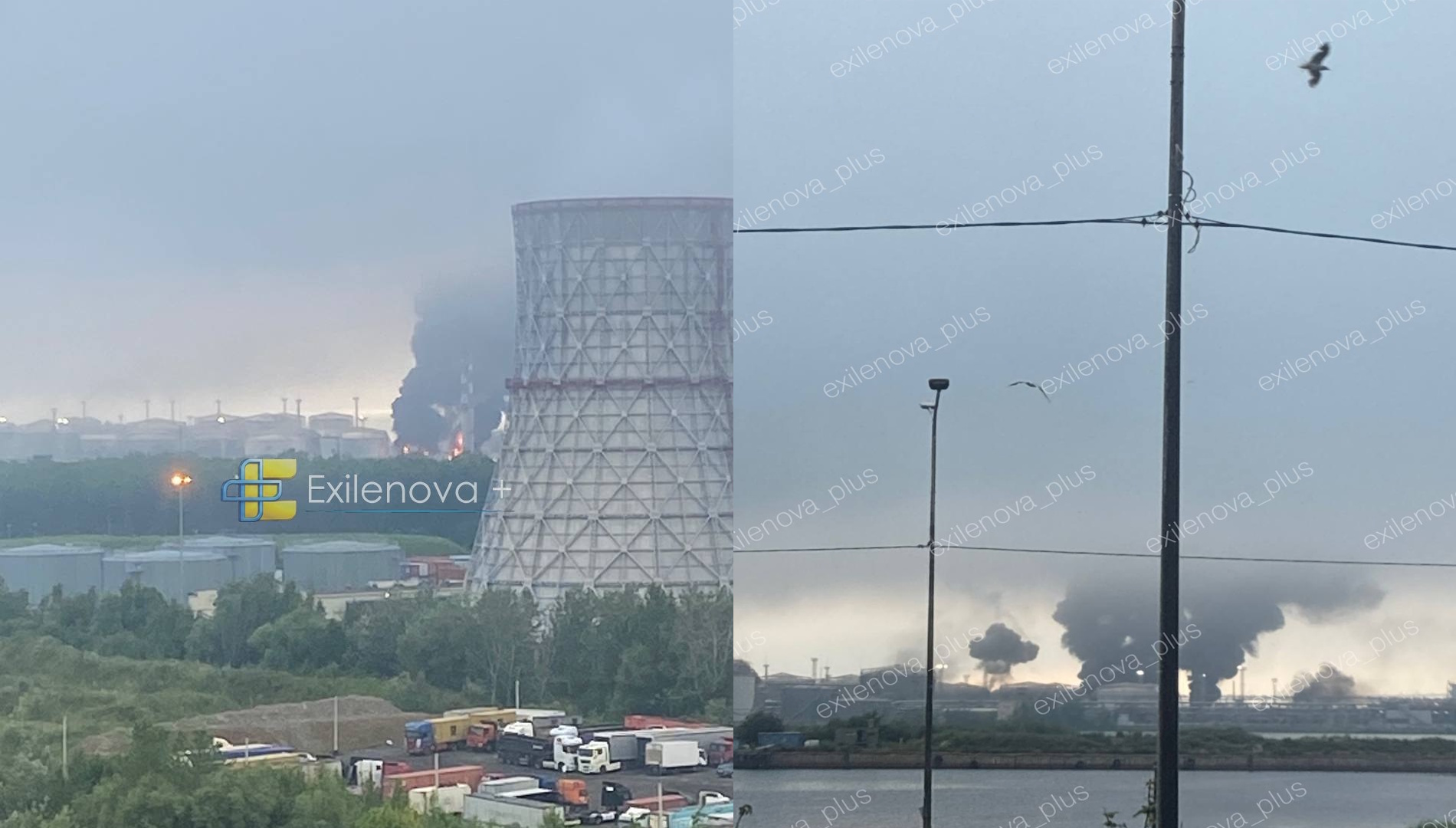
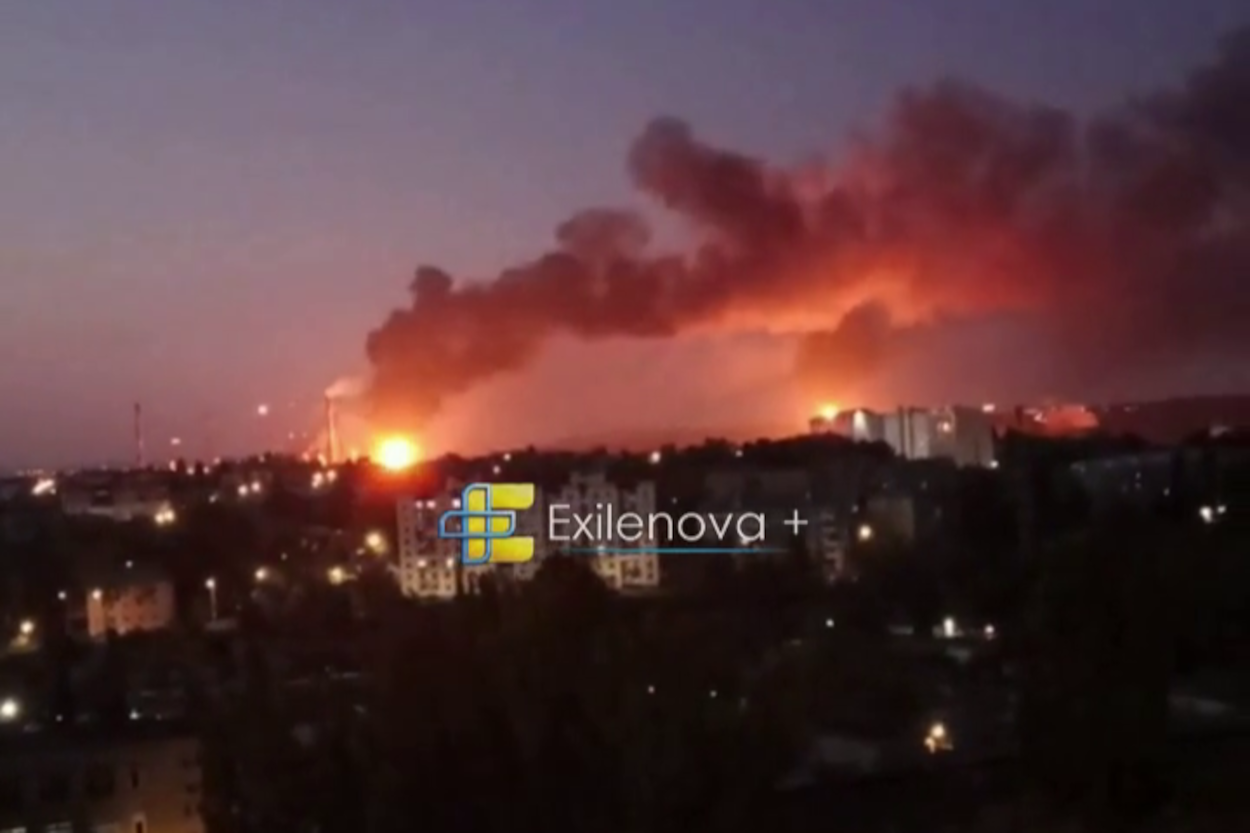
The image shows fire and smoke emanating from a St. Petersburg-area maritime petroleum products transshipment terminal. Source: OSINT Telegram channel Exilenova+
Explore further

Ukraine is ten days into campaign to pressure Moscow toward peace: Russia’s Baltic oil gateway took hit overnight

Part of Ukraine's broader deep-strike campaign

The figures add to a series of increasingly ambitious Ukrainian long-range strikes targeting Russia's military infrastructure, oil industry, and logistics network.

Over recent months, Ukraine has claimed attacks on strategic bomber bases, air defense systems, oil refineries, and vessels involved in transporting Russian oil despite Western sanctions. 

Kyiv says the campaign aims to reduce Russia's ability to sustain its war against Ukraine by degrading both its military capabilities and the economic infrastructure supporting them.

Russia has destroyed 80% of Ukraine’s power capacity. Its next target makes blackout survivable for only three days

4 août 2026 à 12:12

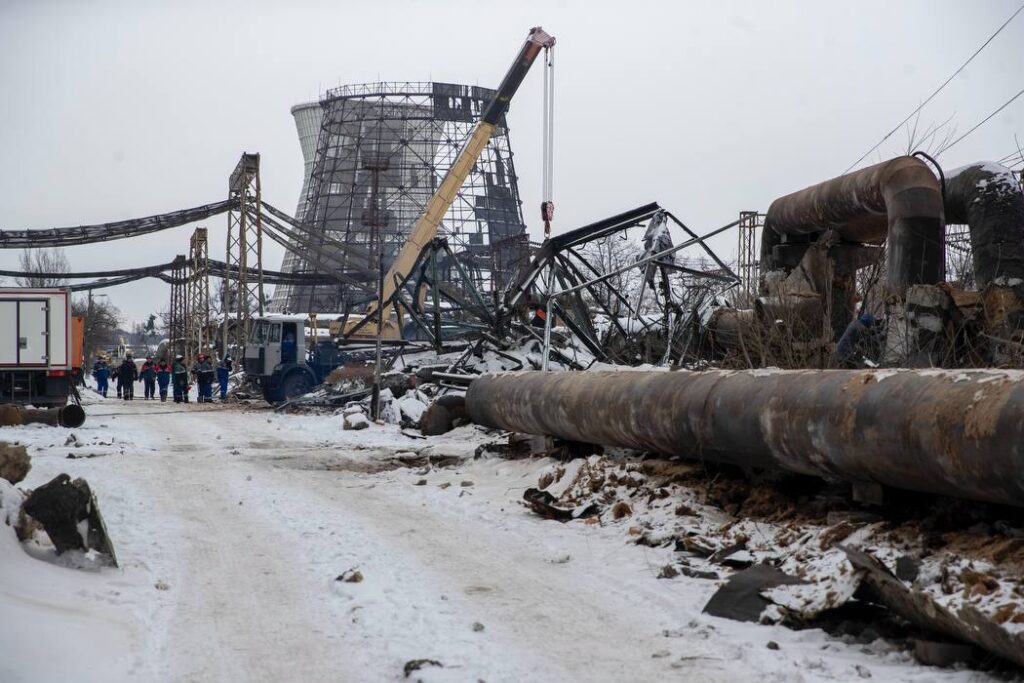
The Darnytska Combined Heat and Power Plant in Kyiv sustained critical damage from a Russian strike on 3 February 2026. Photo: Vitali Klitschko

Russia has found a way to make a Ukrainian winter deadlier than power cuts alone. Russia's new goal is the targeted destruction of Ukraine's water systems, First Deputy Prime Minister and Energy Minister Denys Shmyhal said in an interview with Politico published on 4 August.

Water is the one utility people cannot outlast. Last winter, Russia targeted electricity and heating, which people could survive with gas and water, but without water and sewage, it is hard to survive more than three days.

Destroying water systems could turn a winter blackout from an ordeal into a threat to life itself.

The energy grid is already devastated

The water warning comes on top of damage that has gutted Ukraine's power generation. Before 2014, Ukraine produced 54.5 gigawatts of electricity. The full-scale war cut that number to 32 GW, and after last winter's strikes, Ukraine was generating only about 12 GW, a shortfall of 6 GW that forces rolling blackouts nationwide.

The cumulative toll is staggering. Russia has destroyed or damaged more than 80% of Ukraine's power-generating capacity, the minister said. Ukraine now produces less than a quarter of the electricity it produced before Russia's war began.

Ukraine is racing to fund resilience before the cold

Shmyhal put numbers on what Ukraine needs to get through the winter. Ukraine requires $585 million from Western partners to boost its energy resilience before winter, and an additional $468 million to help the state gas company, Naftogaz, recover from Russian attacks, with Kyiv hoping for Canadian support.

Meanwhile, Ukraine is answering Russia's energy war with its own. Its long-range strikes have knocked out about 40% of the Kremlin's main refining capacity, causing fuel shortages across Russia, and Kyiv hopes those strikes and allied sanctions push Russian leader Vladimir Putin to end the war this fall, Shmyhal said. If that fails, Ukraine faces a repeat of last winter, with water systems now in the crosshairs.

  • ✇Euromaidan Press
  • Mystery drone resembling America’s F-117 stealth jet filmed over a Russian refinery
    Footage from a recent Ukrainian strike on a Russian oil refinery captured an unidentified drone resembling the US F-117 Nighthawk stealth jet, though on a far smaller, drone-sized scale, according to RBC-Ukraine. Online observers suspect a new Ukrainian jet-powered strike drone, or a test of an allied foreign one, but no official body has confirmed what the aircraft is. If the guesses hold, Ukraine may be fielding a faster, longer-reaching class of weapon for hitting t
     

Mystery drone resembling America’s F-117 stealth jet filmed over a Russian refinery

4 août 2026 à 06:21

mystery drone resembling america's f-117 stealth jet filmed over russian refinery · post struck oil ufa area russia 2 2026 exilenova+ video ukraine news ukrainian reports

Footage from a recent Ukrainian strike on a Russian oil refinery captured an unidentified drone resembling the US F-117 Nighthawk stealth jet, though on a far smaller, drone-sized scale, according to RBC-Ukraine. Online observers suspect a new Ukrainian jet-powered strike drone, or a test of an allied foreign one, but no official body has confirmed what the aircraft is. If the guesses hold, Ukraine may be fielding a faster, longer-reaching class of weapon for hitting targets deep inside Russia.

Ukraine has spent the past year turning Russia's interior into contested space, sending long-range drones ever deeper toward the oil, defense, and logistics sites the Kremlin once treated as untouchable. Each new type that surfaces marks another step from short-range drones toward missile-like machines.

An unfamiliar silhouette over the refinery


The drone appeared during a 2 August Ukrainian drone strike on a refinery near Ufa, more than 1,300 kilometers from the Ukrainian border. The clip shows an aircraft shaped unlike most Ukrainian long-range drones, likely powered by a jet engine. The open-source monitoring channel Clash Report, which first shared the footage, believes it may be the Bravo drone or a modified version.

drones flew 1300 km russia’s ufa—then struck bashneft refineries · post black smoke rises over oil refinery ufa bashkortostan after ukrainian drone strike 25 2026 5325714827084766386 ukraine news reports
Explore further

Drones flew 1,300 km to Russia’s Ufa—then struck Bashneft refineries

What the Bravo could do, and why it would matter


If the aircraft is indeed a Triada Robotics product, the company describes Bravo as a single-use, jet-powered drone intended for long-range strike missions. According to the developer, its range exceeds 2,000 km (about 1,240 miles)—enough to reach much of the refinery and defense-industrial infrastructure Russia keeps far from the front lines.

👍⚡ Mysterious Jet Drone Attacks Ufa

During the attack on the oil refinery in the Ufa area on July 2nd, an unidentified drone was spotted, resembling the American F-117 in shape. Theoretically, it could be the Bravo Deep-Strike UAV Platform from Triada Robotics, but there is no… pic.twitter.com/LnplWeRAul

— Gianl1974 (@Gianl1974) August 4, 2026

Triada Robotics says the drone cruises at about 600 km/h and can accelerate to roughly 800 km/h (around 500 mph) during the final phase of flight. The company also lists a warhead weighing more than 100 kg (220 lb), a payload that could threaten facilities such as fuel depots or refineries.


The developer pitches it as a cheaper stand-in for a cruise missile—long-range reach at a fraction of the cost—so Ukraine could fly more strikes at distant targets.

Flames at Russia's Saratov Oil Refinery after reported Ukrainian drone strike, 2 August 2026. Screenshot from video: Exilenova+
Explore further

Oil refinery, strategic airbase, and drone facilities: Overnight strikes hit key pillars of Russia’s war effort

Why observers compare it to the F-117

The comparison rests on the drone's silhouette. Watchers noted its outline echoes the F-117 Nighthawk, the US jet built with radar-evading shaping. A similar shape, though, does not prove full stealth. Such geometry can also sharpen aerodynamics or dodge only certain radar types. Even so, the aircraft's identity stays unconfirmed, and its edge rests on the maker's claims rather than proven use.

  • ✇Euromaidan Press
  • This Russian refinery makes the jet fuel for Moscow’s warplanes—and Ukraine keeps setting it on fire
    Ukrainian drones struck across four Russian regions before dawn on 4 August, setting fires at a Rosneft oil refinery and targeting two logistics hubs of Russia's largest online retailer, Militarnyi reported. The raid reached Samara, Leningrad, Moscow, and Nizhny Novgorod oblasts, hitting both the fuel that powers Russia's military and the warehouses that Kyiv says supply its army. Russian regional officials confirmed damage while claiming air defenses repelled much of t
     

This Russian refinery makes the jet fuel for Moscow’s warplanes—and Ukraine keeps setting it on fire

4 août 2026 à 04:28

russian refinery makes jet fuel moscow's warplanes—and ukraine keeps setting fire · post column black smoke over syzran after drone strike city's oil samara oblast 12 2026 пожежа на території

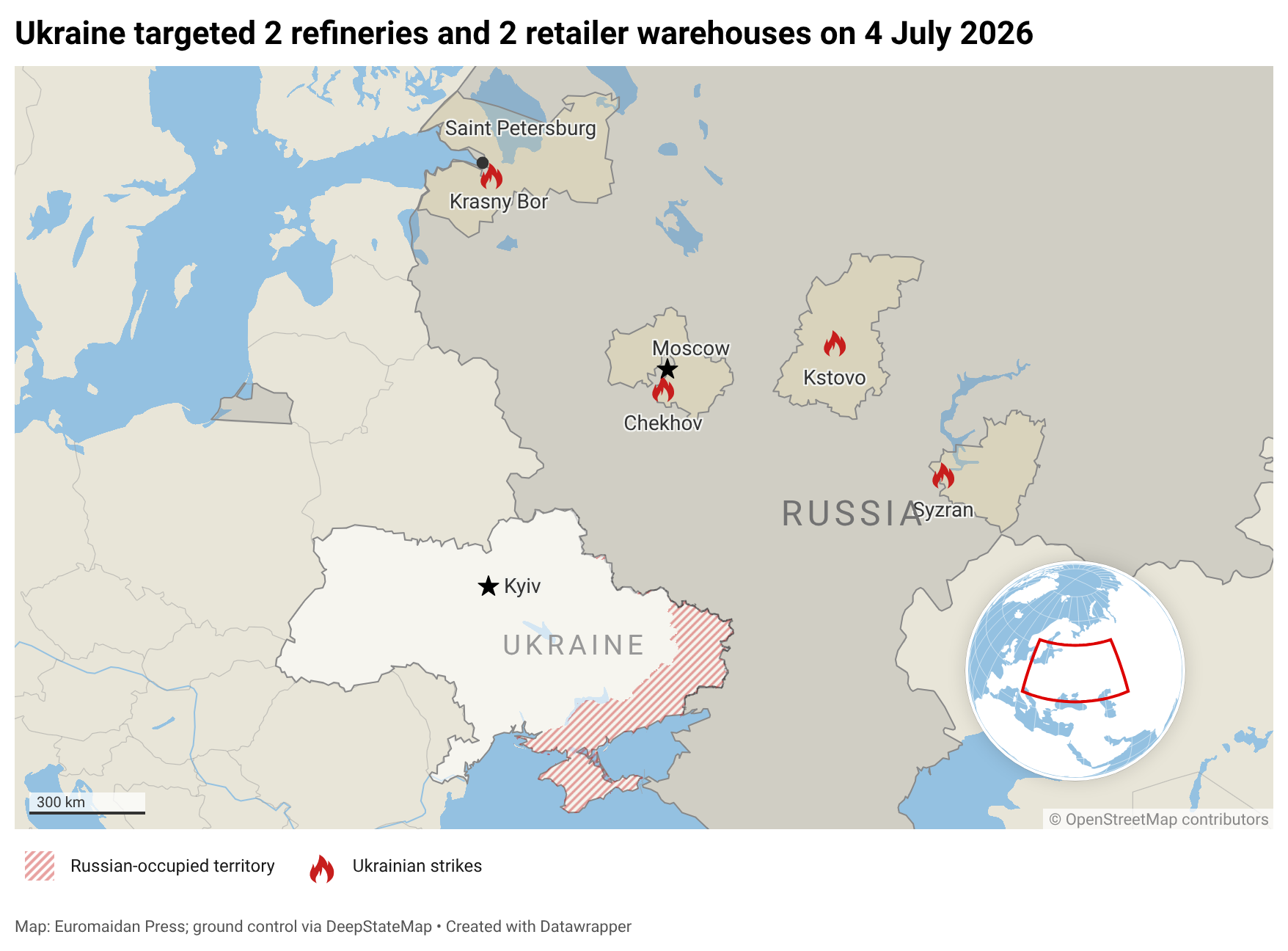
Ukrainian drones struck across four Russian regions before dawn on 4 August, setting fires at a Rosneft oil refinery and targeting two logistics hubs of Russia's largest online retailer, Militarnyi reported. The raid reached Samara, Leningrad, Moscow, and Nizhny Novgorod oblasts, hitting both the fuel that powers Russia's military and the warehouses that Kyiv says supply its army. Russian regional officials confirmed damage while claiming air defenses repelled much of the attack.

Oil sales and a functioning supply chain keep Russia's war effort moving, and Ukraine has spent 2026 pushing its drones far past the front to reach both — the plants that turn crude into military fuel and the logistics that carry equipment to the army. Each fuel plant forced offline narrows the repair window Russia has left, and every hub burned pushes the retailer to guard, disperse, or replace space it treated as safe rear. Widening the target set from refineries to warehouses stretches Russian air defense across more ground than it can fully cover.

Syzran refinery burns again

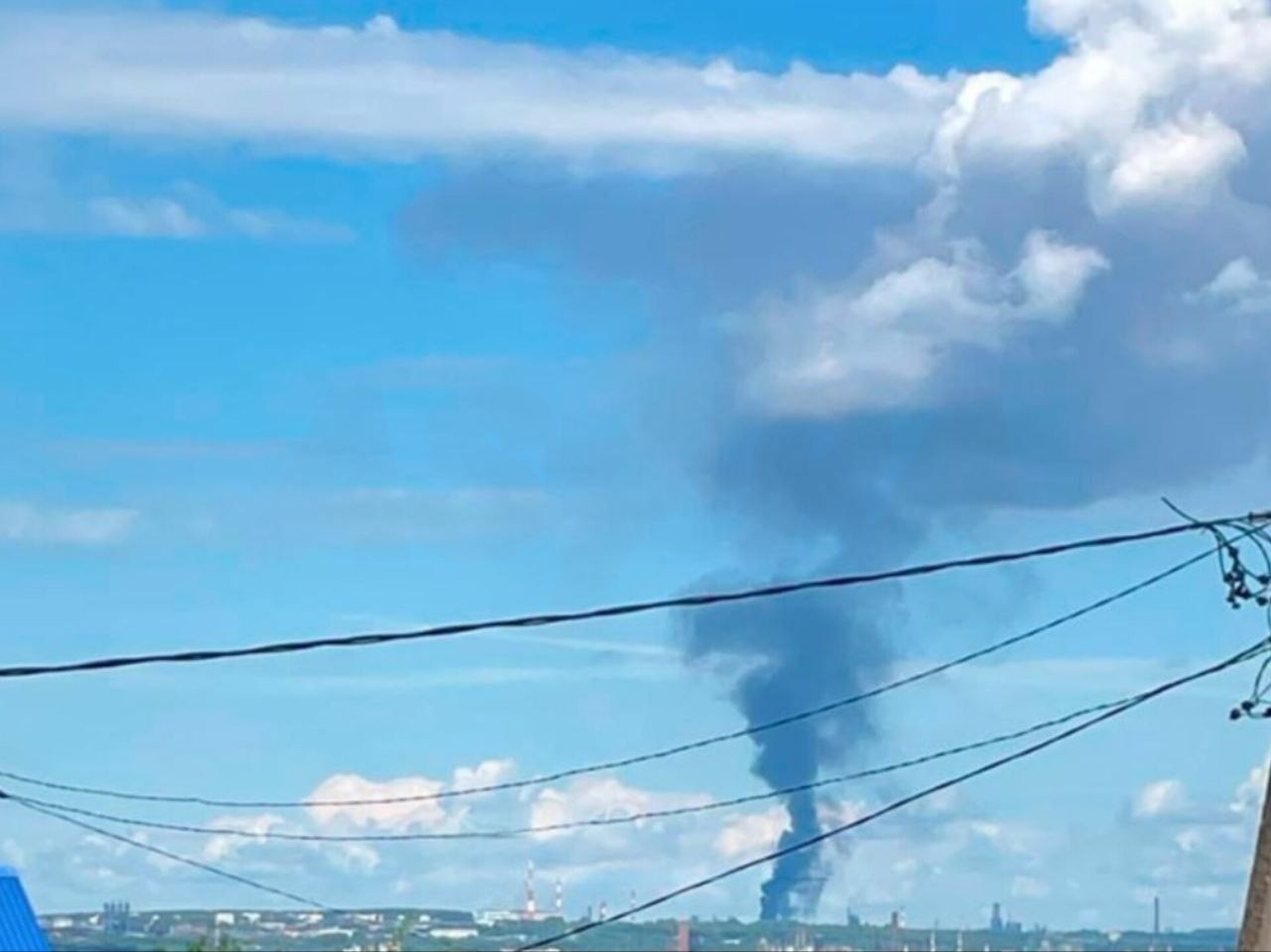
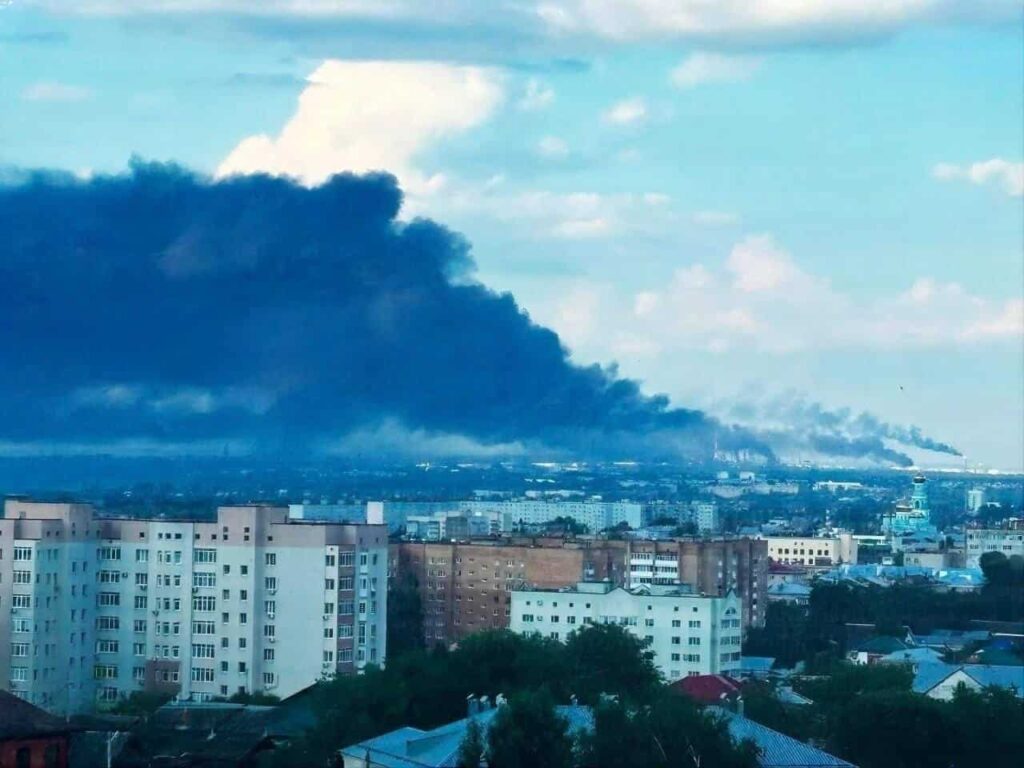
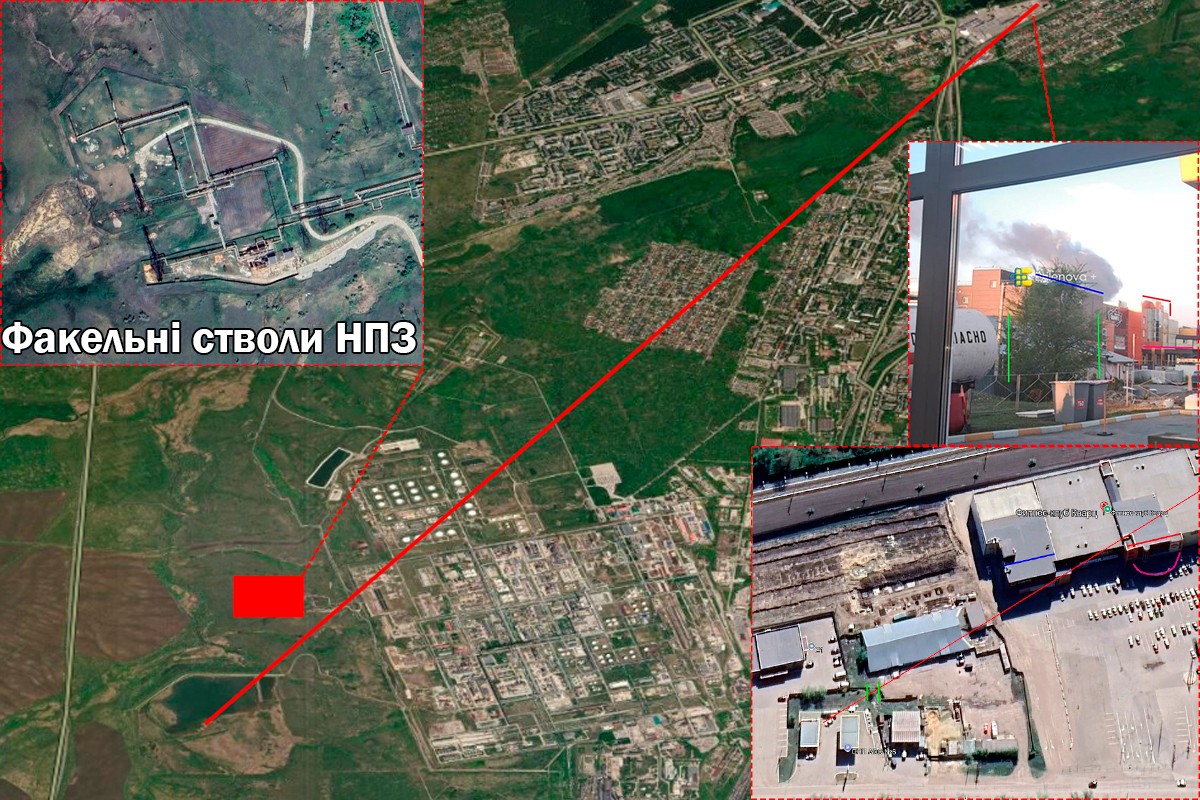
Ukrainian drones attacked the Syzran oil refinery in Samara Oblast overnight more than 800 km from the war zone in Ukraine, and Militarnyi geolocated the rising smoke to the plant. A drone-danger alert went up in the region after 1 a.m., and residents then reported explosions in the city before a column of smoke climbed over the refinery.

The plant belongs to Rosneft and processes more than 8.5 million tons of crude a year, more than 3% of Russia's national total. It turns out gasoline, diesel, aviation kerosene, and bitumen, and supplies fuel to Samara, Saratov, and Penza oblasts as well as parts of central Russia. It also feeds airfields and military units of Russia's Central and Southern military districts. The refinery sits more than 800 km from Ukraine's border.

russian refinery makes jet fuel moscow's warplanes—and ukraine keeps setting fire · post geolocation analysis marking drone's path toward syzran oil samara oblast 4 2026 задимлення на нпз в сизрані
A geolocation analysis marking the drone's path toward the Syzran oil refinery, Samara Oblast, 4 August 2026. Source: Militarnyi

Ukraine's Defense Forces have hit this refinery many times before. Drones struck it overnight on 11-12 July, starting a large fire that analysts assessed reached every primary crude-processing unit. Samara Oblast Governor Vyacheslav Fedorishchev said a fire from the attack in the region was being extinguished.

Astra says residents of Kstovo in Nizhny Novgorod Oblast reported a fire after the attack, though the struck object there stayed unclear. The city is home to a Lukoil oil refinery about 800 km from Ukraine.

Warehouses near St. Petersburg and Moscow

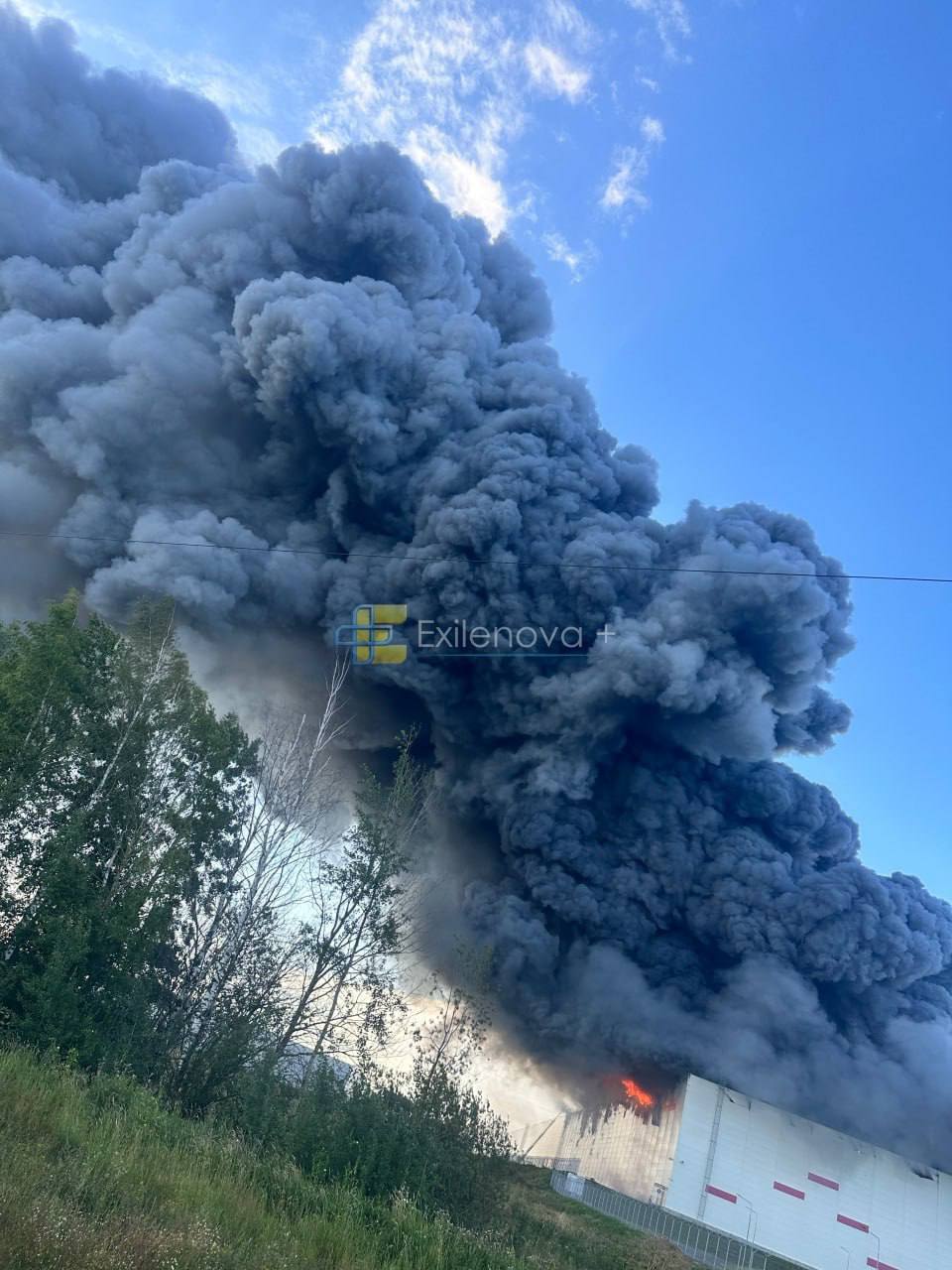
In the morning, Ukrainian drones hit a logistics compound near Krasny Bor in the Tosnensky district of Leningrad Oblast, roughly 820 km from Ukraine's northern border. Eyewitnesses filmed a heavy fire, and Wildberries confirmed a blaze at its facility there.

russian refinery makes jet fuel moscow's warplanes—and ukraine keeps setting fire · post black smoke rises over burning wildberries logistics complex leningrad oblast after ukrainian drone strike 4 2026 5445360929345313906
Black smoke rises over the burning Wildberries logistics complex in Leningrad Oblast after the Ukrainian drone strike, 4 August 2026. Photo: Exilenova+

Its Krasny Bor site covers 154,000 square meters, one of the retailer's largest surviving logistics hubs in the region. Ukrainian drones burned two others in Leningrad Oblast on 24 July.

Leningrad Oblast Governor Alexander Drozdenko claimed air defenses downed 17 drones overnight and confirmed damage to the warehouse zone near Krasny Bor. An OSINT analyst at the Russian Telegram channel Astra, reviewing eyewitness video, placed the smoke over a site holding two complexes: the Wildberries hub and a Lenta depot of 70,000 square meters. The analyst said the damaged complex could belong to either.

Flames at Russia's Saratov Oil Refinery after reported Ukrainian drone strike, 2 August 2026. Screenshot from video: Exilenova+
Explore further

Oil refinery, strategic airbase, and drone facilities: Overnight strikes hit key pillars of Russia’s war effort

Ukraine's drones hit a Wildberries warehouse near St. Petersburg

Ukrainian drones struck the logistics site at Krasny Bor, in Leningrad Oblast southeast of St. Petersburg, and a large fire broke out. Bystanders filmed thick black smoke rising over the area. The site holds a… pic.twitter.com/mCPjEk3Y1N

— Euromaidan Press (@EuromaidanPress) August 4, 2026

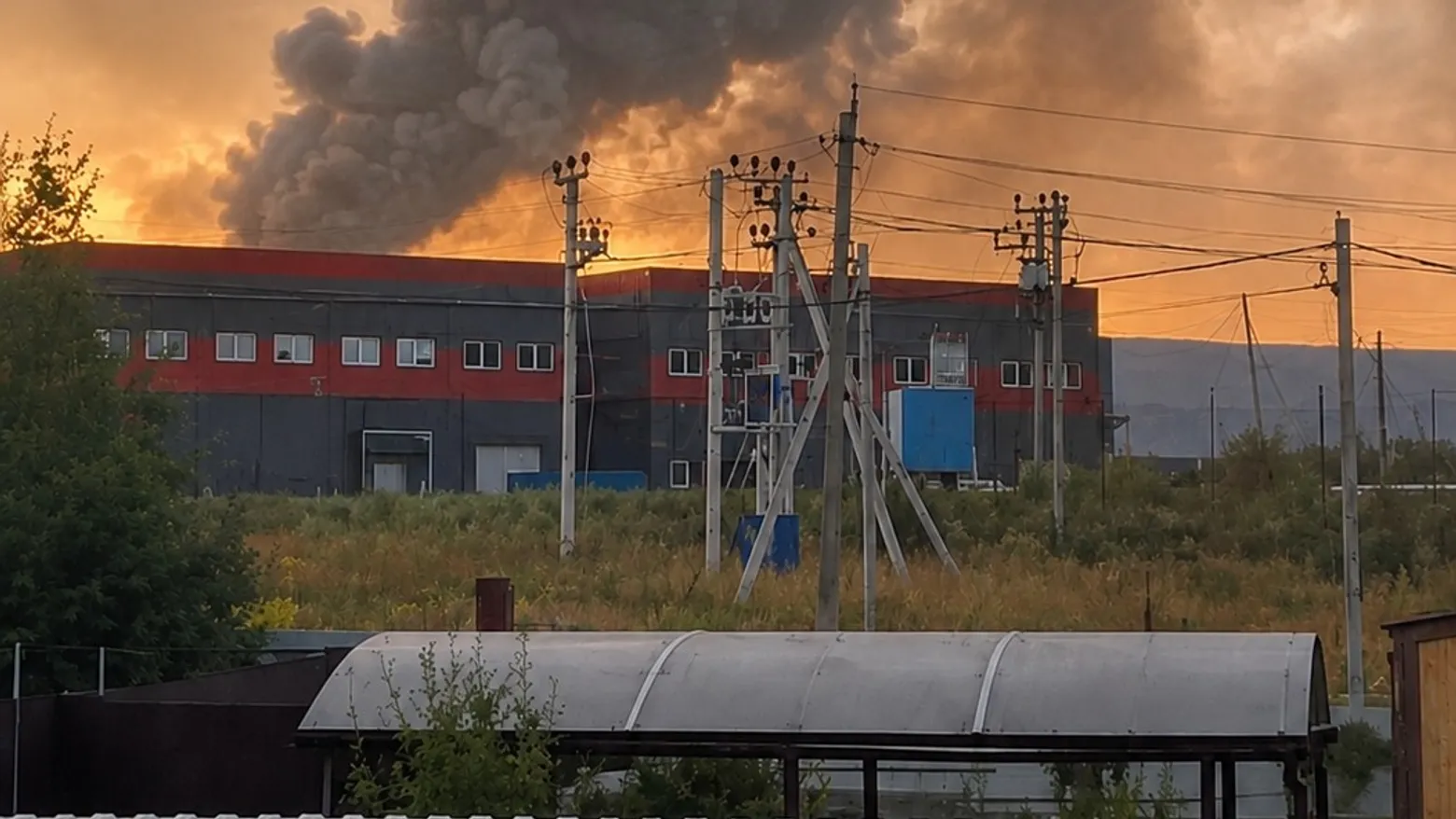
Drones also struck Chekhov near Moscow, about 400 km from Ukraine, where Astra identified the likely target as a Wildberries warehouse. Moscow Oblast Governor Andrei Vorobyov confirmed the strike and claimed five people were killed and six injured. 

russian refinery makes jet fuel moscow's warplanes—and ukraine keeps setting fire · post smoke rises over warehouse moscow oblast after ukrainian drone strike 4 2026 video supernova+ влучання у московській
Smoke rises over a warehouse in Moscow Oblast after a Ukrainian drone strike, 4 August 2026. Screenshot from video: Supernova+

Why the warehouses

President Volodymyr Zelenskyy has previously explained that Ukraine strikes what he calls "Russia's AliExpress" because the marketplace supplies occupying forces with sanctioned components for drones and navigation equipment. Ukraine's military command lists Wildberries among its long-range targets as a retailer that also moves non-lethal military gear.

Ukraine's Defense Forces began striking Wildberries logistics sites on 18 July. The company tightened rules on 3 August, allowing warehouse staff only button phones without cameras, after employees filmed the strikes and shared the footage.

Russia’s largest retailer is taking cameras away from its own workers month after eight of its warehouses burned

3 août 2026 à 18:09

drones hit volgograd kept flying 1100 km tatarstan · post large fire black smoke over russia after ukrainian drone strike wildberries logistics center 31 2026 exilenova+ ukraine news reports

Russia's biggest online retailer is trying to stop its own workers from filming air defenses. From 3 August, Wildberries has allowed warehouse employees to bring only button mobile phones without cameras to work, a decision taken after staff began filming drones and the aftermath of their strikes and spreading the material, Russian Telegram channels reported.

The ban is a reaction to Ukrainian strikes. On 31 July, employees received a message stating that photo and video recording during air-raid alerts at the warehouses supposedly poses a security threat, could reveal the location of air-defense forces, and violates Russian law, according to "Ostorozhno, novosti".

Wildberries said that after workers were allowed to bring smartphones onto warehouse grounds, cases of filming drones and their attacks, and sharing that footage, were recorded.

The camera ban follows a month of burning warehouses

The timing ties the ban directly to Ukraine's campaign. Ukrainian drones destroyed eight Wildberries warehouses in July, about 15.4% of the marketplace's total storage, killing one employee at its Elektrostal facility.

Workers inside those facilities filmed the strikes as they happened, and the footage spread across social media, documenting the fires and the damage in real time. The camera ban is Wildberries' answer to remove the phones that turned its own employees into witnesses.

The stated reason is security, the effect is silence

Wildberries framed the ban as protection. To "eliminate such risks," from 3 August, only button phones without cameras are allowed at logistics centers, the company said, adding that such devices let workers stay in touch with family while meeting security requirements.

The security rationale doubles as information control. Footage of burning warehouses is evidence of a campaign hurting a flagship Russian company, and by stripping cameras from the workforce, Wildberries removes the most direct source of that evidence. The move is a quiet admission of how much the strikes have landed: a company does not confiscate its workers' phone cameras over attacks that are not doing damage.

❌